Sunday, June 08, 2025

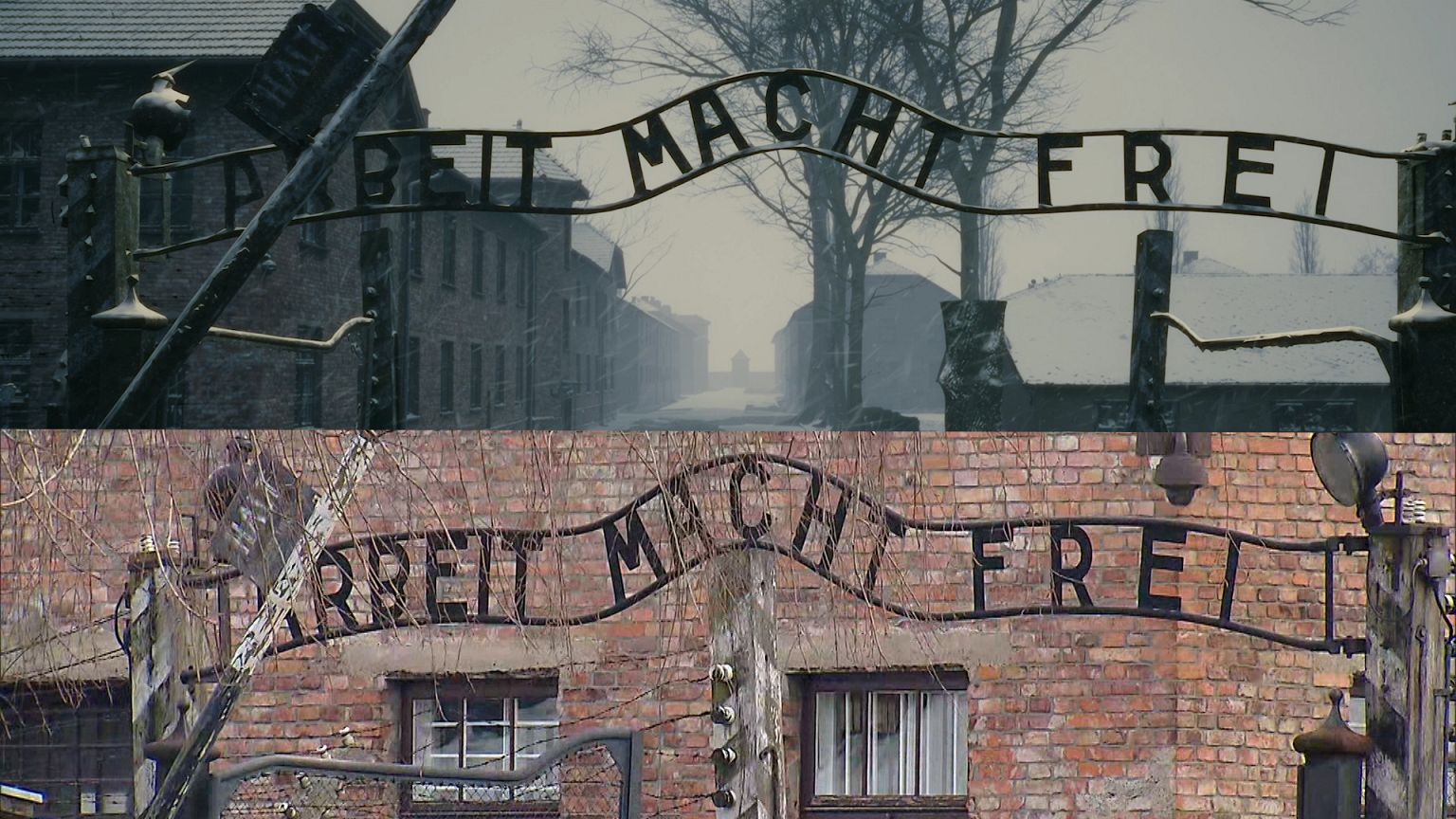
Digital replica of Auschwitz created due to growing interest from filmmakers


Copyright film.auschwitz.org

By Marcelina Burzec
Published on 07/06/2025
 EURONEWS

The technical team used the most advanced spatial scanning technologies to create a digital replica of the Auschwitz I camp. The project was recognised at the Cannes Film Festival. We interview Bartosz Bartyzel, a spokesman for the Auschwitz Museum, to learn more about the project.


Due to conservation protection, shooting films at the Auschwitz site is not possible.


In order to meet the needs of filmmakers, the Auschwitz Museum has made a digital replica, which was created "out of the growing interest of directors in the history of the German camp," explains Bartosz Bartyzel, a spokesman for the museum, in an interview with Euronews Culture.

Euronews Culture: Where did the idea to create a digital replica of Auschwitz come from?

Bartosz Bartyzel: The Auschwitz Museum has been working with filmmakers for many years - both documentary filmmakers and feature film directors. However, due to the conservation protection of the authentic Memorial Site, it is not possible to shoot feature films at the site. The idea to create a digital replica was born out of the need to respond to the growing interest in the history of the Auschwitz German camp in cinema and the daily experience of dealing with the film industry. This tool offers an opportunity to develop this cooperation in a new, responsible and ethical formula.

Why is a replica necessary?

B.B.: The regulations in force at the Memorial preclude the possibility of shooting feature films on the authentic and protected site of the former camp. However, filmmakers - especially those who want to reach for more narrative forms - need a space that allows them to tell the story faithfully. With a digital replica, they can do this without compromising the integrity of the historic site.

Were filmmakers consulted with before the implementation?

B.B.: In fact, it was the day-to-day collaboration with filmmakers and the production needs and challenges they reported that inspired the project. The idea was not detached from reality - on the contrary, it was born out of specific conversations, experiences and questions that had been coming from the creative community for years.
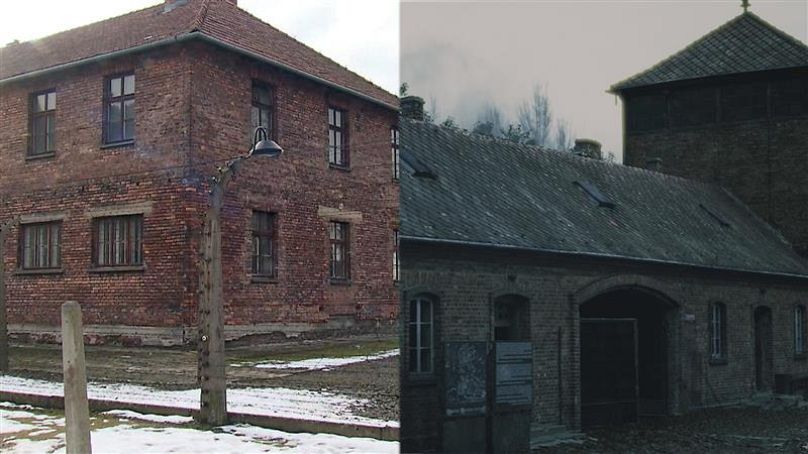


Auschwitz: zdjęcie rzeczywiste i replika cyfrowa.EBU/film.auschwitz.org

Who was involved in the creative process? How long did it last?

B.B.: The Picture from Auschwitz project is a joint initiative of the Auschwitz Museum, the Auschwitz-Birkenau Foundation and a team of technology specialists led by Maciej Żemojcin. The very concept crystallised over several months in the course of joint work and discussions. The technical team used the most advanced spatial scanning technologies to create a digital replica of the Auschwitz I camp. At the moment, the Foundation is making efforts to raise the funds needed to continue the project - to create a digital replica of the grounds of Auschwitz II-Birkenau, as well as the interiors of some of the buildings.

What reactions did you receive after the announcement of the creation of the replica?

B.B.: The reactions were definitely positive - both from the film community, which sees this as a viable and professional working tool, and from the general public, for whom this is an opportunity to learn about history in a deeper and more authentic way through the medium of film. The project has also been recognised in international debate, including at the Marché du Film in Cannes.

Are there already willing filmmakers who will benefit from the replica?

B.B.: We have already started discussions with the first filmmakers who have expressed an interest in collaborating using the digital replica. The details of these projects remain at the agreement stage for the time being, but we hope to be able to provide more information on the first productions soon.
ADVERTISEMENT
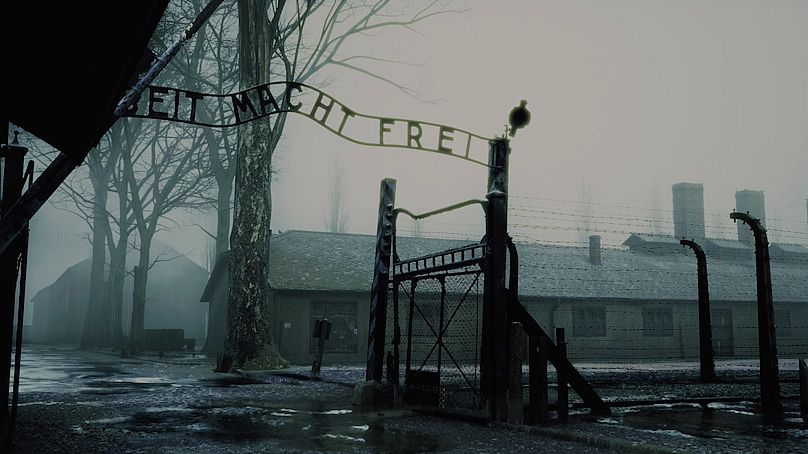

Replika cyfrowa Auschwitz.film.auschwitz.org

How has this project been funded and what will it take to sustain it?

B.B.: The creation of the replica is financed by the Auschwitz-Birkenau Foundation from earmarked donations made by private donors. The Foundation is seeking funds to continue the project. Its assumption is that ultimately the maintenance and development of the programme will be financed through licence fees paid by film producers who will use the materials within the Virtual Film Location. This way, the project will become a self-financing tool, simultaneously supporting the educational and commemorative mission of the Memorials.

What difficulties have arisen in implementing the project?

B.B.: Such large and innovative projects always face difficulties. One of the biggest was, of course, obtaining adequate funding to start and develop the project. A key challenge was also the need to reconcile high-tech solutions with the very special status of the space we were mapping. Although we are working in a digital environment, we must not forget that every step we take concerns an authentic Memorial, which is subject to unique protection. This must be a priority thought in every action.


“Whoever fights monsters should see to it that in the

 process he does not become a monster. And if you gaze

 long enough into an abyss, the abyss will gaze back into

 you.” 


SPONSORED BY BAYER


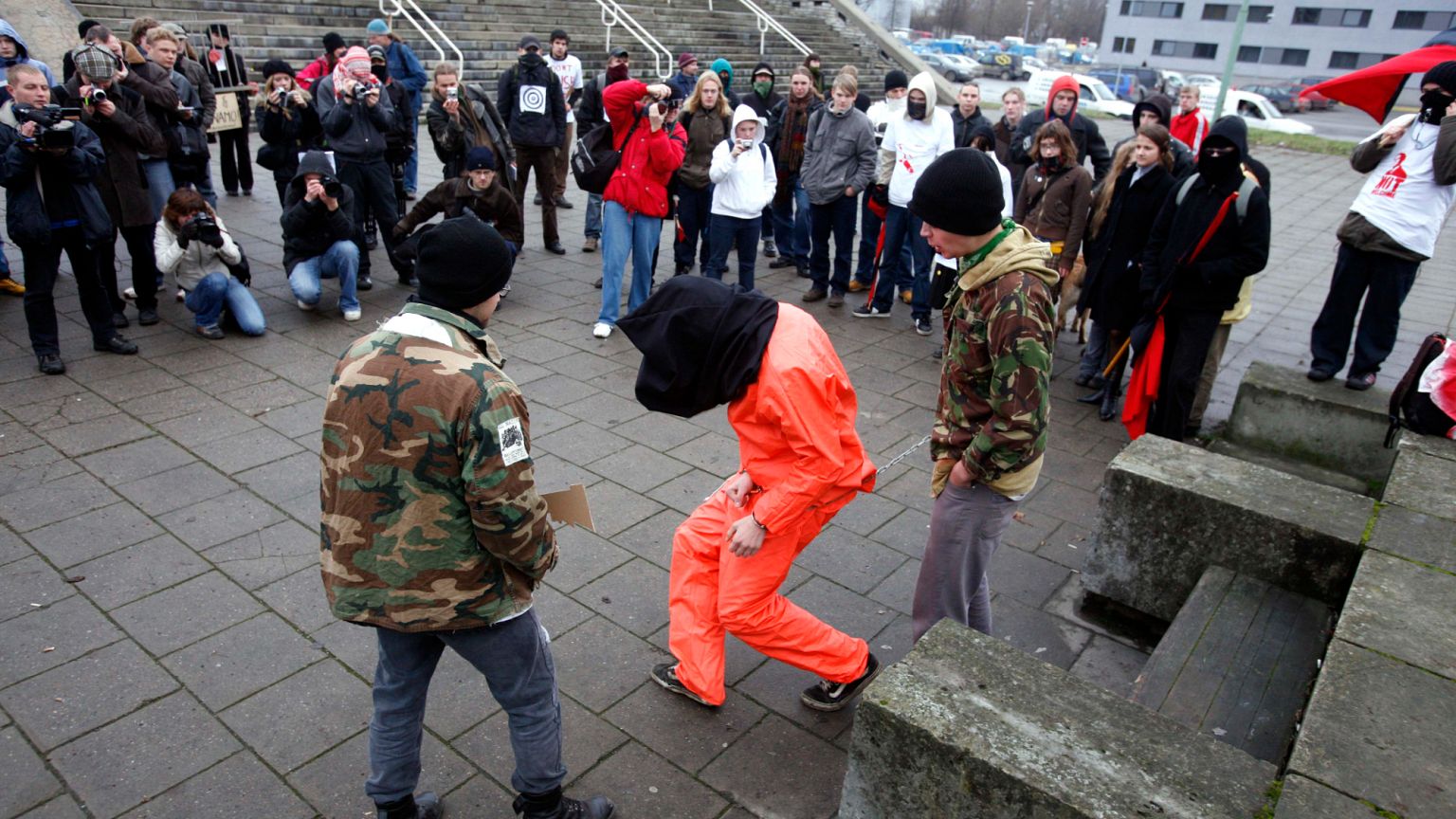
Estonia's plan to rent prison space to Sweden sparks fears of imported organised crime


Copyright Copyright 2006 AP. All rights reserved.


By Jerry Fisayo-Bambi & Andreas Rogal with EBU
Published on 07/06/2025 - 


Through the agreement, Estonia hopes to generate at least €30 million in additional revenue.

Estonia will lease space at Tartu Prison to Sweden and accept up to 600 inmates under a new agreement being negotiated between the two countries. The draft legislation has been sent to the parliament.

Meanwhile, the Estonian Office of the Chancellor of Justice and the Internal Security Service emphasise the risks that placing foreign prisoners in Tartu may bring.

Amid the possible worsening situation for the Estonian prisoners, the main concern is that people with connections to extremism or international organised crime may arrive in Estonia.

The Internal Security Service has forwarded the recommendations to the government and hopes that it will take them into account to the greatest extent possible.

Marta Tuul, spokesperson of the Internal Security Service commented on Estonian TV:

"The main concerns we see are that people with connections to extremism or international organised crime do not arrive in Estonia. We also see that foreign prisoners may begin to be visited by individuals with connections to extremism or international organised crime."

Falling numbers in Estonia

In 2023, the number of inmates in Estonia dropped below 2,000 for the first time and has been decreasing by about one hundred people each year. Meanwhile, the Swedish government aims to impose tougher and longer sentences, making it unlikely that the number of prisoners there will decline in the near future.

Indrek-Ivar Määrit, Head of Inspection Department of the Office of the Chancellor of Justice told Estonian public TV:

"For us, there are three main concerns here: Firstly, the situation of Estonian prisoners must not worsen because foreign prisoners are coming. Secondly, these foreign prisoners themselves must be treated in accordance with Estonian law and international requirements. And thirdly, in the broadest sense, Estonia's internal security should not be endangered, and we are not only mindful of the danger that these people themselves pose, but also the danger that may accompany this process."

For Swedish offenders, the Estonian state plans to use the S-Wing of Tartu Prison, which has approximately 350 places across 175 cells, followed by the E-Wing, which has 631 places in 318 cells.

Rait Kuuse, Secretary General for Prisons at the Ministry of Justice further elaborated on the plams:

"We prefer not to accept prisoners who are women or children. These would be male prisoners, either people convicted of crimes against the person or convicted of drug crimes, who do not have signs of being part of a network and who should not pose a significant threat to Estonia as a whole."

Through the agreement, Estonia hopes to generate at least €30 million in additional revenue.

Saturday, June 07, 2025


European Commission goes on the offensive in NGO accusations case

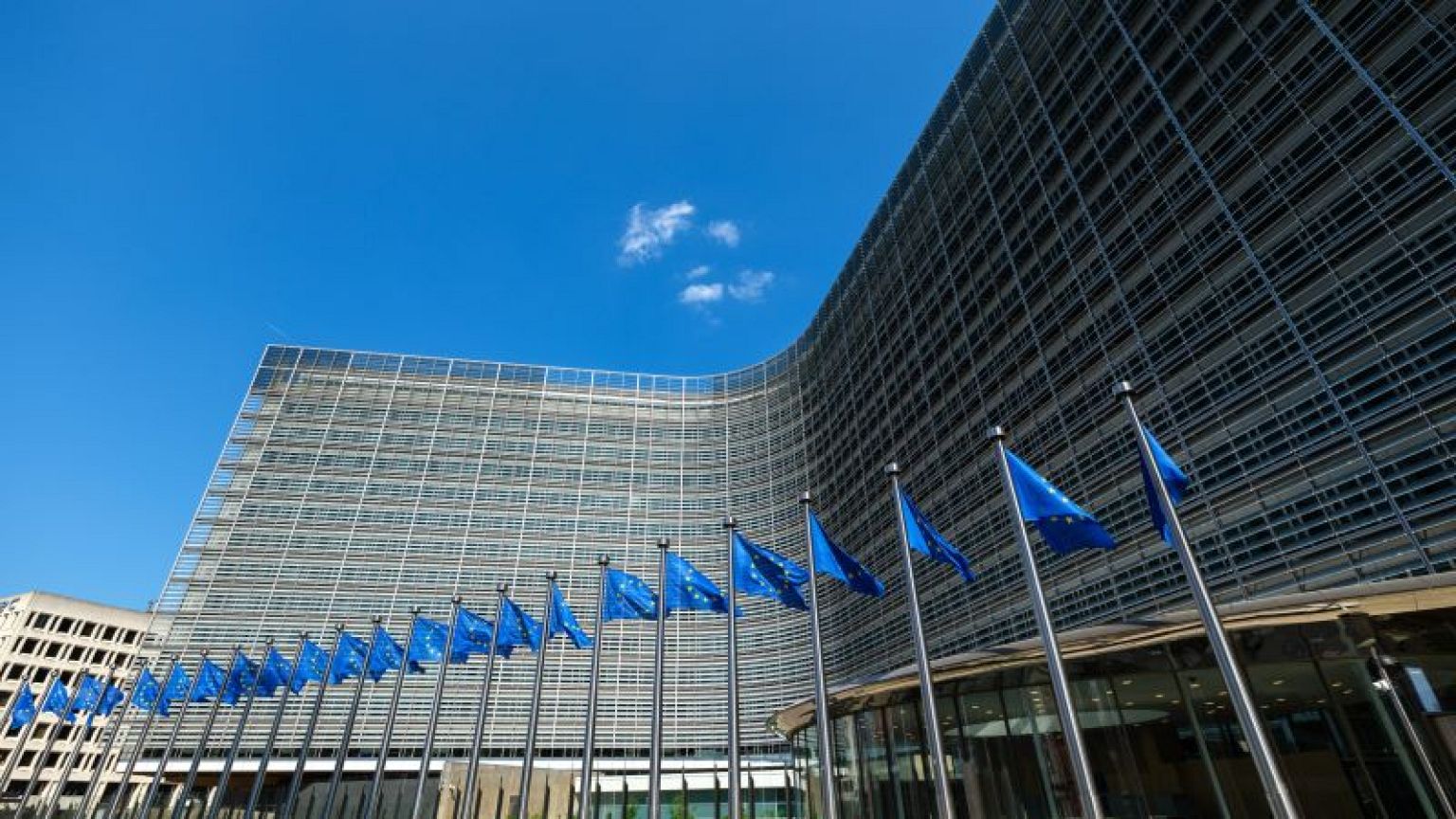
ARCHIVE: The Berlaymont building in Brussels, HQ of the European Commission
Copyright EbS Archive

By Maïa de La Baume
Published on 

The European Commission on Saturday denied German media reports that it had signed ”secret contracts” with environmental NGOs to promote the bloc’s climate policy.

The European commission on Saturday denied German media reports that it had signed ”secret contracts” with environmental NGOs to promote the bloc’s climate policy. 

”Contrary to media allegations, there are no secret contracts between the European Commission and NGOs,” a commission spokesperson told Euronews. ”The Commission exercises a high degree of transparency when it comes to providing funding to NGOs.

The commission’s denial comes after German newspaper Welt Am Sonntag claimed that the EU’s Executive arm had allegedly secretly paid environmental NGOs up to €700,000 to promote the bloc’s climate policy. 

The paper said it got hold of ”secret contracts” from 2022, which involved well-known NGOs like “ClientEarth,“ and ”Friends of the Earth.” In the Welt Am Sonntag claims, the former allegedly “received €350,000 ”and was supposed to “entangle German coal-fired power plants in court cases in order to increase the operators' financial and legal risk,” the paper said. 

On the other hand, in a statement the Head of ClientEarth’s German office Dr. Christiane Gerstetter "ClientEarth" clarified that the funding is being used "to partially support staff and operations in its German office" adding "no amount of the LIFE grant is used to fund external litigation costs."

The paper also reported that EC officials commissioned the latter to fight against the Mercosur free trade agreement between Europe and South America – ”even though colleagues in their own house were pushing it forward at the same time,” the paper reported.

In its statement to Euronews on Saturday, the European Commission underlined that “NGOs play a crucial role in shaping, monitoring, and enforcing legislation. NGOs also remain fully autonomous and free to establish their own views on all policy matter

'Inappropriate' funding in LIFE programme conceded in January

The German report comes at a time when the issue of NGO funding has become an extremely divisive political issue in Brussels. The conservative European People’s Party (EPP) has claimed that the Commission instructed NGOs to lobby members of the parliament to further specific policies within the Green Deal, a central political agenda of president Ursula von der Leyen’s first term between 2019 and 2024.

MEP Monika Hohlmeier (Germany/EPP), told Euronews back in January that her concerns were raised when she examined some 30 funding contracts from 2022 and 2023, as part of the parliament’s annual scrutiny of EU budget spending. 

In January, Budget Commissioner Piotr Serafin conceded that some financing from the EU’s €5.4 billion environmental programme LIFE may have been inappropriate. “I have to admit that it was inappropriate for some services in the Commission to enter into agreements that oblige NGOs to lobby members of the European Parliament specifically,” he said. But he also defended the role of NGOs in EU policy making. 

In April, the European Court of Auditors (ECA) also concluded following a lengthy probe that the Commission’s funding of NGOs was “opaque” and exposed the executive to “reputational risk.” But the court did not find any breach of EU values from NGOs.

'Further measures' planned to safeguard transparency

To overcome ambiguities, the European Commission issued clear guidance last year to streamline how it provides funding to NGOs.

On Saturday, the commission spokesperson told Euronews that EU funding to NGOs was provided ”based on grant agreements, which are complemented by work programmes whose preparation falls under the responsibility of NGOs.”

“As per the guidance, the Commission has instructed its services not to sign off on work programmes if those contain overly specific activities directed at EU institutions or their representatives,” the EC statement added.

The institution will take ”further measures,“ the spokesperson said, to strengthen transparency and include appropriate safeguards.

“We have been working closely with the European Parliament and the European Court of Auditors to improve this transparency even further. Information on recipients of EU funding, including the names of recipients and amounts, is publicly available on the Commission´s Financial Transparency System website,” the statement said.

Mystery of British tourist's heart "stolen" in Turkish hospital not resolved

Mystery of British tourist's heart
The late Beth Martin with husband Luke. / GoFundMe
By Akin Nazli in Belgrade June 7, 2025

The mystery of what happened to the heart of Beth Louise Eileen Martin, a 29-year-old UK mother who passed away during a holiday with her husband and two young children in Turkey, is yet to be resolved. Speculation that the organ had been stolen was published by British media after a UK autopsy on the body flown to England showed it was missing.

The culmination of a shocking sequence of events is captured by a description on a GoFundMe page set up for the grieving family: “The UK autopsy began. And then the final blow: Beth’s heart was missing.

“The Turkish hospital has removed it. No explanation. No consent. They have invaded her body and they have TAKEN her heart.”

It was on April 27 that the Martin couple together with their eight-year-old daughter and five-year-old son, from Portsmouth, southern England, flew to Turkey for a family holiday. On arrival, Beth began feeling unwell, according to the outline of the tragedy provided on GoFundMe.

On the morning of April 28, Luke struggled to get an ambulance to take Beth to hospital. In the end, he managed to take his wife to hospital by himself. After night fell, Beth was moved into intensive car, but her husband was not allowed to see her.

“Concerns with her heart”

On April 29, Beth’s mother and friend arrived in Turkey. Luke and the mother said they were told that Beth had been transferred to another hospital overnight.

Later on, however, Beth was transferred back to the first hospital and Luke was told that the move during the night took place due to “concerns with her heart”. The family was again not allowed to see her.

Quizzed by police

Meanwhile, police officers interrogated Luke at his hotel. They did not bring along a translator. Hotel staff assisted. Luke was told to sign a document.

Dead or alive?

When he later got a translation of the document he signed, Luke became informed that Beth had died at around 9am. And that the Turkish authorities were treating him as a suspect in the poisoning of his wife.

Then another strange turn of events. Beth’s mother later that day managed to see her daughter – she was still alive on life support.

The doctor asked if Beth had allergies. Luke said he had already told the paramedics when Beth got in the ambulance that she was allergic to penicillin. When told again, the doctors were shocked to hear this information.

Passed away

In the evening, the hospital called Luke. Beth, they said, had passed away. This time, it was true.

Next came continuing problems with the insurance company and the hospital. The family were asked for a payment.

Burial attempt in Turkey

Later on, the police called Luke to tell him that they planned to bury his wife the following evening. He strongly refused to agree to such a burial, telling the officers that he planned to take his wife’s body home. The police then told him to return to the hospital at 8am the next day to be interviewed by a prosecutor.

Police interview in back of a van

On April 30, he waited for the police to come and conduct the second interview. At 2pm, he was interviewed in the back of a van in the hospital car park. The chief investigator was sat at a desk bolted to the vehicle.

Eventually, the husband was cleared of any wrongdoing.

Body handed over

The body of Beth was handed to Luke, the mother and the friend in a zipped body bag.

On May 2, the family managed to arrange a flight for the body to be flown home. On May 6, the body arrived in the UK.

Autopsy finds heart missing

The results of the autopsy in the UK included the finding that Beth’s heart was missing. The Turkish hospital had removed it with no explanation and no consent. 

Beth’s death is now being investigated as a case of potential hospital negligence.

Heart found

After the story broke across the international media, Turkey’s government-run Anadolu Agency reported on May 24 that the heart was inspected at laboratories of a local forensic medicine institution with the aim of identifying the cause of death.

The official story

According to Anadolu, Beth Martin on April 28 told Marmara University Hospital Prof. Dr. Asaf Ataseven that she suspected she had contracted food poisoning from a meal.

She is said to have passed away on April 29 during treatment. The forensic medicine institution on April 30 conducted an autopsy and the body was rendered to the husband on May 1.

Officials talk of no notification option available to indicate missing organ

Information obtained by an Anadolu reporter, indicated that officials at the forensic medicine institution took the heart for further analysis after they failed to determine the cause of Beth’s death.

The institution is to release its final opinion within seven to 15 days, with the heart together with tissue samples and solutions to be delivered by the prosecutor’s office to the family.

Since in the health ministry system for notification of a death there is reportedly no option for inputting an explanation, involved officials are said to have later on in the process not reported that the heart in the body delivered to the family was not present.

UK
Tory failure to check viability of PPE has cost taxpayer £762million


2 June, 2025 
Left Foot Forward 

"The Chancellor has been clear that she wants this money - that belongs to the British people, back in our public services."


The failure of the last Tory government to check the viability of faulty PPE, which was left gathering dust in shipping containers and storage facilities has cost the taxpayer £762million.

The findings were made by the Covid counter-fraud commissioner Tom Hayhoe who Chancellor Rachel Reeves had tasked in December with trying to claw back public money lost to fraud and waste during the pandemic.

The Mirror has revealed that after Boris Johnson’s government panicked and ordered mountains of PPE, ‘long delays on checking the surplus surgical gowns, masks and visors meant that warranties had expired by the time the faulty PPE was found’.

The paper adds: “This means that taxpayers’ cash cannot be recovered through the courts and must be written off”.

So much for being the party of sound finances, not only did the last Tory government award PPE contracts to its cronies through the so called ‘VIP lane’, it’s incompetency also cost us hundreds of millions of pounds.

A Treasury source told the Mirror: “The Chancellor has been clear that she wants this money – that belongs to the British people, back in our public services.

“Tom Hayhoe is gripping the carnival of waste that we saw under the Tories and has already uncovered millions of taxpayer pounds wasted on PPE that was left to gather dust.

“Unlike the Tories, Labour won’t let fraudsters who sought to profit off the back of a national emergency line their pockets.”

Basit Mahmood is editor of Left Foot Forward
Revulsion for Israel surges worldwide, new survey finds


Ali Abunimah 
4 June 2025


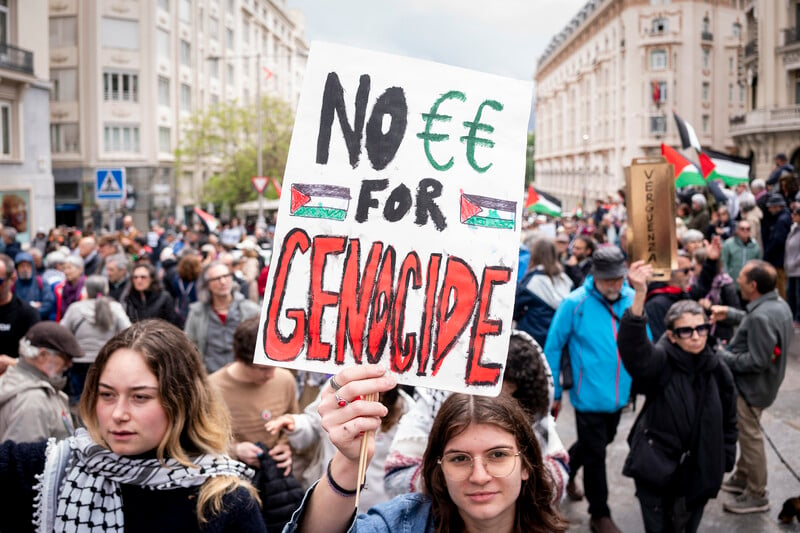
A protester holds a banner during the “Move for Palestine” demonstration in Madrid on 10 May 2025. Angel PerezZUMA Press Wire

Twenty months into its livestreamed and accelerating genocide in Gaza, it would hardly be controversial to conclude that Israel is one of the world’s most hated countries.

But a new global survey from the US-based Pew Research Center indicates just how unpopular it has become, especially in the North American and European states where Tel Aviv has always drawn its main sources of financial, military and political support.

“In 20 of the 24 countries surveyed, around half of adults or more have an unfavorable view of Israel,” Pew reported on 3 June. “Around three-quarters or more hold this view in Australia, Greece, Indonesia, Japan, the Netherlands, Spain, Sweden and Turkey.”

Pew says it last asked the question in 10 of the countries included in its new survey in 2013. “In seven of these countries, the share of adults with a negative view of Israel has increased significantly.”

Israel was most unpopular in Turkey, with 93 percent of respondents viewing it unfavorably. Turkey was the only country in the immediate region of Palestine to be surveyed by Pew

.

Israel is viewed negatively by wide majorities in most countries surveyed by Pew Research Center.

Among European publics surveyed, Israel was viewed most negatively in the Netherlands (78 percent), a remarkable fact in a country whose governments have traditionally been staunchly pro-Israel.

Even in Hungary – whose leader Viktor Orban welcomed Benjamin Netanyahu to Budapest earlier this year in spite of the international arrest warrant for the Israeli prime minister – 53 percent of the public views Israel negatively.
Historic shift in US

In the United States – Israel’s biggest financier and arms supplier – 53 percent of those surveyed now have a negative view of Israel – an 11-point surge since 2022, according to Pew.

In recent years, surveys have consistently found that Israel is overwhelmingly unpopular with majorities of Democrats, younger Americans and people of color.

But it is an entirely new phenomenon for a majority of the US population overall to view Israel negatively.

The erosion of support for Israel in the United States – particularly among younger people – has long worried Israel and its lobby groups as a potential threat to long-term US support for Israel.

That likely explains why the Trump administration has focused its unconstitutional crackdown on free speech critical of Israel on college campuses, in an effort to scare the younger generation into line.

The turn to heavy-handed censorship, not just in the US but across Europe, is also an admission that efforts to equate disapproval of Israel’s crimes with anti-Semitism, or to burnish its brand with expensive PR campaigns, can do nothing against the horrific reality streamed daily from Gaza to peoples phones.
Break on the American right?

In many of the countries where it conducted surveys, Pew observes that “people who place themselves on the left have a more negative view of Israel than those on the right.”

But that ideological gap is most pronounced in the US, according to Pew, where “74 percent of liberals have a negative view of Israel, compared with 30 percent of conservatives.”

Still, in an April survey of Americans, Pew found a sharp rise in the number of Republican voters who view Israel unfavorably – from 27 percent to 37 percent – indicating that Israel is losing support across the political spectrum.

In recent years, there has been a notable new phenomenon of prominent right-wing commentators, like Tucker Carlson, Candace Owens and Judge Andrew Napolitano, voicing skepticism and sometimes harsh criticism of Israel and US support for it that once seemed unthinkable.

The rise of Israel skeptics within the Trump administration and the US right more generally has reportedly led Netanyahu to confide in close aides that “that he misjudged the direction the US was taking on Israel and the broader Middle East,” Israel’s Ynet reported.

With notable standouts like Napolitano, a vocal supporter of Palestinian rights on moral grounds, the break in the pro-Israel consensus on the American right is driven more by disagreements about where Israel fits into an “America First” vision and a perception that Israel pushes for the US to engage in disastrous wars on its behalf.

To be sure, whatever ill feeling there may be in the White House toward Israel and its leader has not resulted in any US pressure on Israel to halt the genocide.
Israel’s reputation tanks in Europe

Public pressure does nevertheless seem to be having an effect in other Western countries, where staunchly pro-Israel governments are stepping up their criticism of Israel.

In May, France, the United Kingdom and Canada threatened Israel with unspecified “concrete actions” if it does not end its starvation siege of Gaza.

And just last week, Ireland became the first Western country and member of the EU to declare at the highest level that Israel is perpetrating genocide in Gaza.

The European Union is also “reviewing” its Association Agreement with Israel, amid growing calls to suspend the lucrative trade deal.


Given that the EU recently bragged about adopting its 17th sanctions “package” against Russia since 2022, these declarations about Israel appear woefully late and inadequate.

With Israel openly exterminating Palestinians, through relentless bombing and starvation, Brussels has yet to impose anything other than token sanctions on Tel Aviv.

And yet, there are signs of movement. Spain this week canceled a $310 million arms purchase from Israeli weapons company Rafael amid reported moves by Madrid “to reduce Spain’s reliance on Israeli defense technology in light of Israel’s ongoing military operations in Gaza.”

In Spain, according to Pew, 75 percent of the public holds a negative view of Israel.

These moves may be little and late, but they would likely not have happened at all without constant, vocal public outrage at Israel’s crimes and the complicity of European and other governments.

They are signs that public pressure and protest matter and are more important than ever to bring a halt to this genocide.

Revealed: British public overwhelmingly support Israeli arms embargo, new polling finds

4 June, 2025 
Left Foot Forward


Brits back a full arms embargo on Israel by a four-to-one margin.


Bombshell new polling shows overwhelming support for full arms embargo on Israel, with four times more people in favour than against it.

The Opinium poll, conducted on behalf of Palestine Solidarity Campaign (PSC) found that 57% of the British public support ending arms sales to Israel, while only 13% oppose doing so.

Support for an arms embargo increases to 71% among those who voted for the Labour Party at the 2024 general election.

Last September, the government suspended around 30 arms export licences after it assessed that the items might be used to facilitate serious violations of International Humanitarian Law.

Over 90% of the arms export licenses to Israel have still not been suspended.

The polling revealed similar levels of support for imposing sanctions on the Israeli government.

Out of 2,050 respondents, 53% said they would back government sanctions against Israel’s finance minister, who has called for Gaza to be “cleansed” and the destruction of “what’s left”.

In addition, a clear majority (54%) was in favour of Israel being expelled from the United Nations, while just 16% opposed the expulsion.

In regard to boycotting Israeli products, twice as many people supported supermarkets taking Israeli goods off its shelves as opposed it.

Today, thousands of PSC activists will surround Parliament with a red line when Prime Minister’s Questions will be taking place in the Commons.

They plan to hold a kilometre-long stretch of red fabric to symbolise the call for the UK to take meaningful action on Gaza by ending military support and imposing sanctions on Israel.

Two weeks ago, Foreign Secretary David Lammy called Israel’s latest offensive “morally unjustifiable” in Parliament, yet the UK continues to provide Israel with military and diplomatic backing.

The legality of UK arms sales to Israel is currently being reviewed by the High Court.

Ben Jamal, PSC Director, said: “The polling released this morning speaks to Israel’s growing isolation and the significant public support for sanctions.

“By continuing to arm and support Israel even as it enacts a genocide and a policy of forced starvation, the British government is holding on to an increasingly fringe position, completely out of sync with public opinion, and with the views of those who supported it at the last Election.

“Those bringing the demand for an arms embargo to Parliament today in a symbolic red line are doing so knowing that the demand is supported by the majority of their fellow citizens.”

Olivia Barber is a reporter at Left Foot Forward


Tens of thousands gather in Rome for demonstration against the war in Gaza

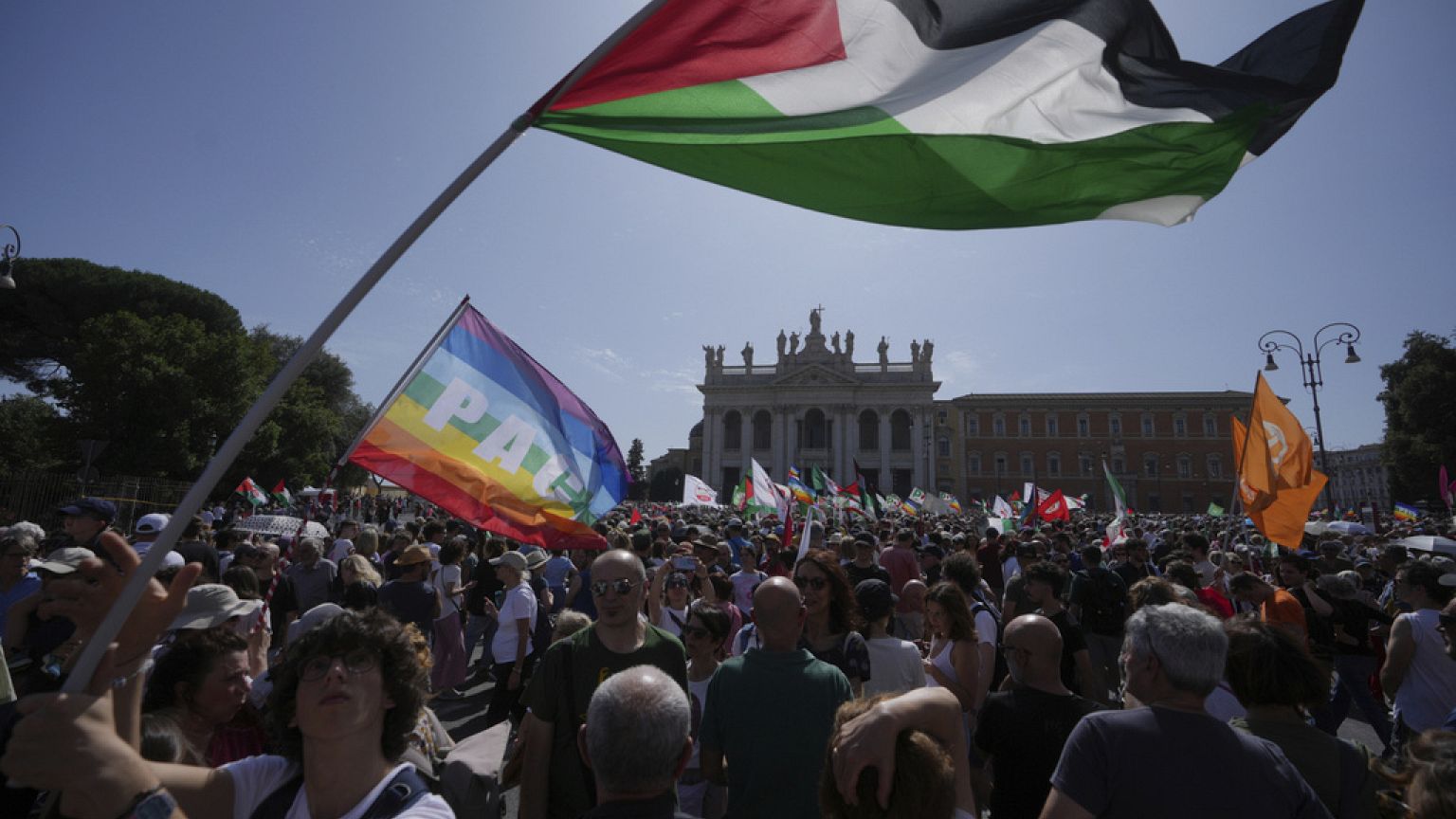
Demonstration for an end to the war in Gaza organised in Rome
Copyright Alessandra Tarantino/Copyright 2025 The AP. All rights reserved


By Fortunato Pinto
Published on 

Up to 300,000 people, according to the organisers, took part in the demonstration led by opposition parties in Rome to demand an end to the war in Gaza. Many criticised the governments of Giorgia Meloni and Benjamin Netanyahu. Among the flags flown were those of Israel.

The march, organised in Rome by the opposition forces Partito Democratico (Democratic Party), Movimento 5 Stelle (M5s) and Alleanza Verdi Sinistra Italiana (Avs), started from Piazza Vittorio Emanuele II and finished before the basilica of San Giovanni in Laterano.

Tens of thousands of people, according to the organisers, marched waving Palestine, peace and party flags and anti-war placards. But a number of Israel and peace flags with the Star of David in the centre could also be seen.

The banner reading "Gaza stop the massacre. Enough complicity" opened the procession, behind a stream of people arriving from all over Italy. According to the local authorities, at least ten thousand people lined the streets of Rome, thousands more were in the square where the procession ended.

Leading the demonstration were the leaders of the three parties, Giuseppe Conte for the M5s, Elly Schlein for the PD and for Avs, Angelo Bonelli and Nicola Fratoianni.

Speaking to reporters, PD secretary Schlein said: "It is a huge response of participation to say enough to the massacre of Palestinians and the crimes of the Netanyahu government. It is another Italy that does not remain silent, as the Meloni government does. It is an Italy that wants the recogniton of the Palestinian state and this is the Italy we want".

"This is the square of humanity against the systematic extermination that has been going on for twenty months, starting with the Italian government that is pretending not to see and is still babbling,' said Conte of the M5s.

This was not the only demonstration to end the war in Gaza. Matteo Renzi's Italia Viva and Carlo Calenda's Azione parties organised the meeting "Two peoples, two states, one destiny" at the Parenti theatre in Milan on Friday.

The second demonstration arose after a disagreement between the two centrist parties and the organisers of the procession in Rome, because Italia Viva and Azione had requested a reference to anti-Semitism in the manifesto.

This request was refused by Avs, M5s and Pd, because they considered the condemnation of the 7 October 2023 massacre carried out by Hamas in Israel to be already clear.

In recent days, deputy minister Matteo Salvini criticised the opposition for organising the event in Rome on the eve of the referendum on work and citizenship. "I hope that no one will use the deaths in Gaza to push people to go and vote", Salvini said.

‘From the river to the sea’ — Celebrities remember Palestine’s plight on Eidul Azha

Actor Nadia Jamil said the world failed Palestine as it “watched them suffer an illegal occupation and genocide for over 77 years.”


Images Staff
07 Jun, 2025
DAWN

As people celebrate Eidul Azha around the world, Palestinians continue suffering at the hands of the Israeli occupational forces, with at least 22 people killed across Gaza since dawn on Saturday.

Amid the onslaught, celebrities are reminding their followers to think of Palestine as they commemorate Eid.

Nadia Jamil


Actor Nadia Jamil, in a detailed caption on Instagram, said the world failed Palestine as it “watched them suffer an illegal occupation and genocide for over 77 years.”

“We have traded and brought goods from countries that are a part of this genocide,” she said, adding that over 50,000 children were murdered in the region.

“The elderly have been murdered. Entire families have been murdered. People sleeping have been murdered. People going to get aid have been trapped and murdered. Hospitals, schools, have been blown up, and doctors, journalists, teachers have been murdered.”


According to the Behadd actor, the world witnessed children and families starving to death, as well as “whose hand is raised to veto an end to this slaughter.” Jamil was referring to the United States after it vetoed a resolution calling for a ceasefire and unrestricted humanitarian access in Gaza earlier this week.

“We have watched and witnessed the utter impotence of all humanitarian agencies, groups and the world’s governments, in the face of this holocaust, barring a few courageous nations and people.”

Jamil continued that the world witnessed students being bullied, harassed and penalised for speaking up for Palestine, and saw who was on the “right side and who is complicit in this genocidal, ethnic cleansing and Holocaust of the Palestinian people.”

“And we will not let the world or history forget… ever. From the river to the sea. Palestine forever and always will be free.”


Talha Anjum


Rapper Talha Anjum, part of the Young Stunners, wished his followers on Eid and said, “As sacrifices are being made and blood is being spilled, don’t forget to say a prayer for the victims of genocide in Palestine.”

Anjum also urged people to be “generous when helping the ones in need.”


Saint Levant


Palestinian singer Saint Levant requested that people keep Palestinians in their thoughts as they celebrated Eid.

“It’s coming close to two years of genocide. We will one day see liberation,” he wrote on his Instagram story.
Forlorn Gaza — the world’s shame
abbas.nasir@hotmail.com
Published June 7, 2025
DAWN

The writer is a former editor of Dawn.

EXACTLY a month ahead of her country’s independence day, the US representative to the UN Security Council was vetoing a resolution demanding, “an immediate, unconditional and permanent ceasefire in Gaza” to be respected by all parties, and the “immediate, dignified and unconditional release of all hostages held by Hamas and other groups”.

The draft resolution vetoed by the solitary US vote received 14 in favour. It also called for the “immediate and unconditional lifting of all restrictions on the entry and distribution of humanitarian aid in Gaza, calling for safe and unhindered access for UN and humanitarian partners across the enclave”, said a UN release.

In what appeared to be a move coordinated with the veto, US Secretary of State Marco Rubio announced the US was sanctioning four judges of the International Court of Justice for ‘targeting’ with arrest warrants Israel’s Prime Minister Benjamin Netanyahu. Earlier, the US had sanctioned the ICJ prosecutor for the same ‘crime’.

These US actions came as the head of the International Committee of the Red Cross, Mirjana Spoljaric, described Gaza as “worse than hell on earth”. In an interview to the BBC at the ICRC Headquarters in Geneva, she said “humanity is failing” as it watched the horrors of the Gaza war.

The systematic destruction of any and all infrastructure that supports human life is near complete.

Israel’s policy, backed by its US-led Western allies and the acquiescence of the regional Arab governments, has always been aimed at the ethnic cleansing of Gaza, and its governing coalition leaders have been unequivocal in explicitly stating their military objectives.

The systematic destruction of any and all infrastructure that supports human life is near complete, with water, power, homes, schools, universities and even hospitals bombed to rubble. Of the number of functioning hospitals in Gaza, only two remain.

The UN has called for the protection of these last two hospitals, particularly providing emergency services to the Strip, which is being bombed and hit by missiles daily, causing dozens of casualties, young and old. The UN also says the percentage of malnourished children is rising by the day.

This malnourishment is due to the Israeli food blockade on Gaza. Israel has brushed aside all aid organisations’ protestations to introduce its own ‘food distribution’ points, where dozens of starving Palestinians, including women, have been killed by Israeli tank-mounted machinegun fire.

The Conservative member of the UK parliament, Kit Malthouse, defied his party’s pro-Israel policy to offer the most apt description of what is happening. Speaking in the Commons, he said Gaza has become “an abattoir where starving people are lured out through combat zones to be shot at”.

“If the situation were reversed, we would now be mobilising the British armed forces as part of an international protection force,” Mr Malthouse said, exposing Western hypocrisy and his own government’s inaction.

Adding another twist to the food crisis in Gaza is the Israeli prime minister’s confirmation — after Israeli defence sources had earlier told local journalists that accusations made by the opposition politician Avigdor Lieberman were correct — about the arming of a group that many believe comprises criminals.

Mr Lieberman, according to the BBC, told the state broadcaster that the prime minister had unilaterally approved the arming of the Abu Shabab clan and transferred weapons to it. “The Israeli government is giving weapons to a group of criminals and felons, identified with the Islamic State group.”

Sources in the know say the group is led by Yasser Abu Shahab, who was an IS commander, and is an Israeli intelligence asset. His band of about 300 men, according to the Israeli Occupation Forces, has been armed to “protect food trucks” trickling into Gaza. But sources on the ground say the group is doing the opposite in commandeering the trucks and looting the vital food supplies for the malnourished, starving Palestinians.

It is this one-sided ethnic-cleansing, being facilitated by the US and its envoy Steve Witkoff — who has been accused more than once of being economical with the truth after agreeing one thing with Hamas and then reneging on his promise and blaming the armed militant group — that may be impacting public opinion in Europe at least.

The public opinion is shifting, which is also reflected in the robust questioning of the Israeli Hasbara spin doctors in the media. These advocates for the Israeli cause are outraged even by some basic questions a few journalists are beginning to ask because they have had a free pass to spin their lies since October 2023.

The European government leaders are beginning to express unease, only in words and not deeds, in calling the Gaza situation intolerable and unacceptable but stopping well short of any concrete measures such as an arms embargo.

This rhetoric too is driven by the changing public mood reflected in a recent YouGov poll across Europe. The poll showed Israel as being viewed most unfavourably since they started polling on this issue in 2016. And Israel’s actions in Gaza are seen as disproportionate and unjustified.

Even then, President Trump is likely to be convinced his Gaza Riviera plan is on course and in the end the Palestinians will be displaced. With few friends in the Arab world, whose leaders generously opened up their cheque books for the US president and applied little, if any, pressure to secure an end to the genocide, the Palestinians seem to be on their own.

The (resource-starved) government of the ummah’s most potent military power may have co-sponsored the vetoed UN resolution, but its powerful elite queued up at the embassy gate for hours to be able to have the honour of celebrating US Independence Day inexplicably on June 4, a month earlier than July 4.

The ethnic cleansing in Gaza and, don’t forget, the West Bank will continue. The collective conscience of the people around the globe will not be able to stop it on its own. This is the world we inhabit.


Published in Dawn, June 7th, 2025