Monday, June 09, 2025

Arab elites welcome Trump as massacres in Gaza continue
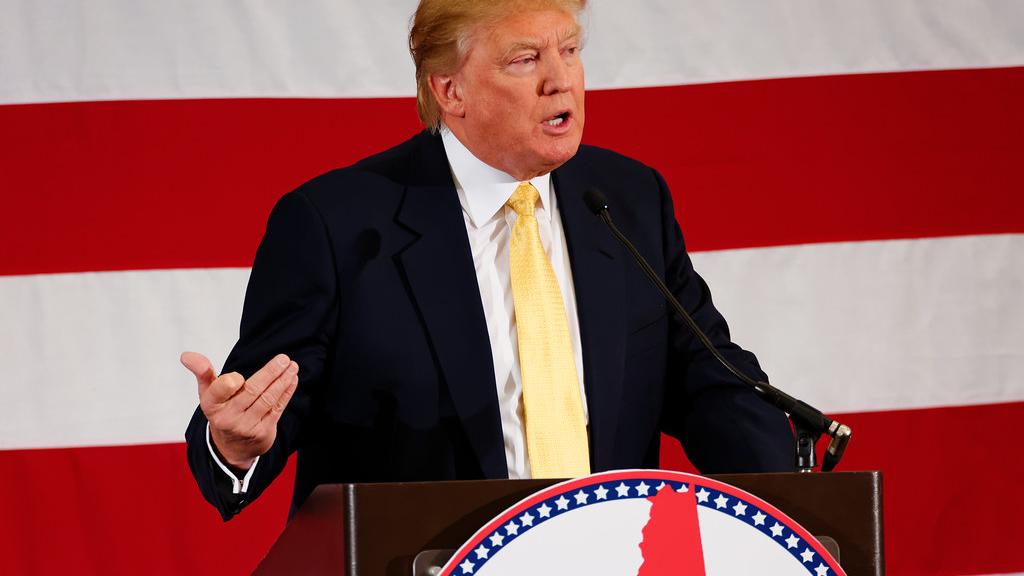

Donald Trump speaking

First published at Alternative Viewpoint.

As Israel’s war on Palestine continues to inflict suffering on Gaza, Arab monarchies busied themselves with welcoming US President Donald Trump and signing multimillion-dollar trade agreements. Between May 13 and 16, Trump visited Saudi Arabia, Qatar, and the United Arab Emirates. This marked his first official foreign trip following his attendance at the pope’s funeral after taking office in January 2025. The White House leader arrived in the region amid ongoing nuclear negotiations with Iran, the genocide in Gaza, and discussions regarding the potential lifting of sanctions on Syria.

The visit took place after the failure of Trump’s tariff hike, which was revoked in the face of opposition from all countries, the majority of the American population, and even big capitalists. His tariff wars caused widespread global uncertainty and sustained economic chaos. The Economist noted, “This catalogue of foolishness will bring needless harm to America. Consumers will pay more and have less choice.” Of course, his loyal cheerleaders, like the Indian ruling elite, were, and still are, silent on Trump’s unilateral action.

Angry Arabs

The people in the Arab region harbour strong disapproval towards Trump. The United States aids and abetted the Israeli massacre in Gaza, which they cannot accept. This ongoing tragedy has persisted for 19 months, during which Israel has claimed the lives of at least 64,000 Palestinians, destroyed all hospitals and schools, and obstructed humanitarian aid, including food, water, medicine, and fuel. They reject Trump due to his threats to attack Iran, his devastating bombing campaign in Yemen, his sanctions against Syria, and his support for Israeli aggression in Lebanon and Syria.

Trump tried to relegate his aggressive imperialist image for now. Instead, he presented himself as a “peacemaker,” striving to soothe the turbulent waters in the region. All these actions, of course, aim to uphold the long-standing US influence in the region. During his stay in the Qatari capital Doha, he initiated direct negotiations with Hamas that secured the release of a US-born Israeli prisoner in exchange for a commitment of humanitarian aid to Gaza. More than half a million Gaza residents have been on the brink of starvation since an Israeli blockade began on March 2. The World Health Organization observes:

The risk of famine in Gaza is increasing with the deliberate withholding of humanitarian aid, including food, in the ongoing blockade.

The entire 2.1 million population of Gaza is facing prolonged food shortages, with nearly half a million people in a catastrophic situation of hunger, acute malnutrition, starvation, illness and death. This is one of the world’s worst hunger crises, unfolding in real time.

The United States has conducted four rounds of talks with Iran in Oman and Italy, aiming to establish a controlled nuclear programme in Iran while also securing the involvement of Iran’s allies in West Asia — namely, Lebanon’s Hezbollah, the Yemeni Houthis, and Shiite militias in Iraq. In return for this support, the U.S. plans to ease sanctions against Iran and refrain from any military action, whether directly or through Israel. Ongoing negotiations suggest that both sides are nearing an agreement, as indicated by Trump’s caution to Israeli Prime Minister Benjamin Netanyahu against launching any airstrikes on Iranian nuclear facilities. 

Trump brokered a ceasefire deal with the Yemeni Houthis through the government of Oman. The US has called off a military strike against Yemen. This military operation, rather than defeating the Houthis, failed to weaken them in any significant way. The Houthis have already shot down seven U.S. drones, each valued at $30 million. Moreover, they destroyed two warplanes worth $67 million in the Red Sea. The 50-day invasion incurred costs exceeding $1 billion. In addition to its failure, this US aggression — according to Saudi leaders—could have jeopardised Trump’s visit to Arabia. The Houthis have the capability to attack US targets in the region, as well as the Saudi capital, Riyadh. The agreement with the Houthis mitigates the risk of attacks against US interests. However, the Houthis are currently unwilling to make any concessions to Israel. Attacks on Israeli targets have persisted. The ordinary Yemenis, however, “remain caught between the ongoing Israeli bombing campaign, US sanctions and the Houthis.”

Multi-million dollar deals

Both domestically and internationally, the US president faced criticism for merging his personal business interests with his official trip. He announced on social media that he would receive a Boeing 747-8 aircraft as a “gift” from the Qatari government, which would become the new Air Force One. He will keep the aircraft for his personal use at the end of his tenure. The Saudi monarchy holds a majority stake in a real estate company in Saudi Arabia, which has six contracts with his family to fulfil. Not to forget, in his first innings as president (2017-2020), his businesses flourished. In the first three years, he earned an estimated $650 million per year. COVID had a significant impact on these otherwise intriguing numbers. He was able to earn only US $450 million in 2020 as the economy shrank as a result of the pandemic.

In Riyadh, Trump and Saudi Crown Prince Mohammed bin Salman signed a historic economic and military deal. According to the White House, “Saudi Arabia’s $600-billion commitment to invest in the United States, building economic ties that will endure for generations to come. The first deals under the announcement strengthen our energy security, defense industry, technology leadership, and access to global infrastructure and critical minerals.” The deals include a $142 billion arms sale to Saudi Arabia, an $80 billion investment in a joint venture between Google and Oracle, and a $20 billion investment in US data centres by the Saudi company DataVolt. Additionally, AviLease, a top-10 global aircraft lessor based in the Kingdom, will buy $4.8 billion worth of Boeing aircraft, and Shamekh IV Solutions, LLC, will invest $5.8 billion in a Michigan plant to establish a high-capacity IV fluid facility.

The reactionary monarchy welcomed Trump at the beginning of his visit with an extravagant ceremony featuring a lavender carpet. Since 2021, Saudi Arabia has opted for lavender rather than red to greet state guests of the highest rank. This particular colour is said to symbolise the nobility of the Saudi dynasty. Trump’s visit included stops at various palaces and showcases of high-end luxury. Meanwhile, destruction, panic, and suffering afflict a region within 2,000 kilometres of Riyadh. Israel’s actions in Gaza, conducted with American support, represent one of the most significant crimes against humanity in recent history. Ordinary people in Lebanon, Syria, and Yemen are also victims of similar assaults. Iran has also been targeted by Israeli attacks, although the Trump administration has initiated discussions with them in Oman to annul, or at the very least limit, the nuclear programme of the Mullah regime.

With Trump and the Arab bourgeoisie preoccupied with business, the destruction of Gaza persists. The Israeli bombardment of the Gaza Strip intensified during the week of the US president’s visit to West Asia. Over 100 lives were lost on May 15, the anniversary of the Nakba. It is clear that without the backing of the United States, Israel cannot sustain such attacks. Meanwhile, Trump’s shrewd travel companion, billionaire Elon Musk, remains indifferent to the situation, openly supporting this genocide. He “called for eliminating Hamas and then treating Gaza the way the US treated Germany and Japan after World War II.” Furthermore, the Arab dynasties’ hobnobbing with the backers of this atrocity represents not only another cruel blow to the Palestinian people but also a profound insult to the ordinary citizens of the Arab lands.

In Qatar, Emir Sheikh Tamim bin Hamad Al-Thani signed an agreement with the current occupant of the White House to purchase 210 jets for a total of 100 billion US dollars. “It’s the largest order of jets in the history of Boeing; that’s good,” Trump stated during the signing. “So that’s a record, Kelly, and congratulations to Boeing.” The Emir of Doha also pledged to invest $38 billion to renovate the Al-Udeid military base, which houses approximately 8,000 US troops. This project will benefit American defence contractors, who profit significantly from weapons sales to Israel. As a diplomatic gesture, the Emir of Qatar offered his guest a gift (which some may consider a bribe) of a Boeing 747-8 aircraft. Despite numerous political and ethical concerns surrounding this matter, the US president-elect readily accepted the gift. He concluded his visit by announcing a $200 billion deal with the UAE, which included establishing an artificial intelligence centre there and investing in the hydrocarbon industry in the United States.

Meeting with Ahmed al-Sharaa

In Riyadh, the U.S. president met with Syria’s interim president and head of Hayat Tahrir al-Sham, Ahmed al-Sharaa, in a meeting that would have been unthinkable just a few months ago. Although brief, the meeting was significant. “I think he has got the potential,” Trump remarked after a 37-minute discussion with the al-Qaida-linked former Syrian rebel. The individual previously labelled a “terrorist” had a $10 million bounty on his head, which was only rescinded last December. Reports indicate that he “urged” the Syrian leader to sign the Abraham Accords with Israel, expel foreign and Palestinian militants, collaborate with the United States to counter a resurgent Islamic State, and release some political prisoners. These conditions are tied to the potential lifting of U.S. sanctions on Syria. However, Trump had stated shortly before his visit that he had already decided to lift these sanctions. The importance of this meeting for regional balance is underscored by the participation of Saudi Crown Prince Mohammed bin Salman and Turkish President Recep Tayyip Erdogan, who joined the conversation by telephone. Turkey remains a staunch supporter of Syria’s Islamic fundamentalist regime.

This former jihadist, however, is eager to win American favour. He proposed to Trump a deal to mortgage Syria’s oil and gas, along with a potential plan to establish a ‘Trump Tower’ (a shopping centre) in Damascus. It appears that the Syrian president is drawing inspiration from the type of neo-colonial agreement forged between Ukraine and the United States. Additionally, he vowed to uphold the ceasefire agreement made in 1974 between dictator Hafez al-Assad and Israel, and he audaciously arrested two members of the Palestinian Islamic Jihad residing in Syria.

The Chinese Competition

While Trump’s Saudi and Turkish allies pressured the president to suspend sanctions against Syria, the potential for a commercial and political rapprochement between Syria and China also raised concerns for the White House. Recently, China has made notable strides in the region, establishing itself as the primary trading partner for several states, including Israel, and acting as a mediator between Saudi Arabia and Iran. China’s extensive strategic presence in the Persian Gulf has positioned it as a leading trading partner, energy importer, investor, and infrastructure developer. West Asia, in general, serves as a crucial land and waterway connector between Asia and Europe – transit routes are essential to the multi-trillion-dollar Belt and Road Initiative (BRI), China’s ambitious programme aimed at establishing its influence globally. Analysts say that the president was too keen to send a message that the Gulf is no longer China’s playground.

Trump & Netanyahu

Trump’s trip to the Middle East, notably bypassing Israel, has ignited speculation regarding a possible decline in relations between the White House and Tel Aviv. So far, apart from his unwavering support for the ongoing military actions, Trump has adopted various stances on Gaza. Before taking office, he urged Netanyahu to agree to a ceasefire with Hamas, seeking to avoid inheriting a complex array of issues. Shortly thereafter, he himself cast doubt on the January ceasefire, issuing an ultimatum for the release of prisoners held by Hamas and controversially suggesting the expulsion of Gazans to facilitate the construction of luxury resorts in the region. In anticipation of his visit, Trump initiated direct talks with Hamas, which ultimately led to the release of the last American prisoner, Israeli soldier Aidan Alexander, just prior to his arrival.

There are three main reasons for the deterioration of relations with Netanyahu. First, the talks between the White House and Iran are not acceptable to Tel Aviv, which wanted an all-out offensive against Iran. The second was an agreement between the United States and the Yemeni Houthis in early May, excluding Israel. The White House promised to stop bombing Yemen in exchange for an end to militia attacks on American merchant ships in the Red Sea. The Houthis are close supporters of the Palestinians. Thirdly, the blockade and sanctions against Syria will be lifted.

The US special envoy to the Middle East, Steve Wittkopf, and the Persian Foreign Ministry are key players in the US-Iran deal. Washington is sticking to its old demands. Washington’s demands include the cessation of the nuclear programme and the cessation of support for Hezbollah. This initiative is also an attempt to undermine Tehran’s regional influence, but the lifting of sanctions is crucial for Iran. In any case, the “peacemaker” Trump has warned that if negotiations fail, he could launch a military strike targeting Iranian nuclear facilities.

As for Yemen, the White House appears to have reached an agreement of its own with the Houthis. While Houthis continue to fire missiles into Israel, Tel Aviv, on the other hand, regularly attacks targets in Yemen.

Netanyahu had no option but to oppose the lifting of sanctions on Syria. Tel Aviv exploited the chaos that followed the fall of Bashar al-Assad in 2024 to bolster its military presence in southern Syria, particularly in the Golan Heights, which it has occupied since 1967. Since then, Tel Aviv has executed approximately 750 airstrikes near the Syrian presidential residence, ostensibly to protect the Druze community, a minority group. However, reports indicate that informal discussions are taking place between Tel Aviv and the new Syrian government, although Israel remains reluctant to engage in any agreement that could curtail its expansionist ambitions.

The protagonist of MAGA is unwavering in his pursuit of US imperialist interests, indifferent to the potential consequences. He shows little concern for his long-time allies, who may need to step back temporarily for the sake of American priorities. During his visit, the tycoon, who has projected an illusion of peace in the Middle East, reiterated his stance on the ousting of the Gazans.

No more genocide!

The Arab bourgeoisie and the United States are feigning efforts to establish amicable relations in a bid to impose a compromise regarding Gaza. However, the unfortunate inhabitants of Gaza are unlikely to find any solace in this agreement. Egypt is spearheading a proposal for the reconstruction of the enclave, capitalising on the dire circumstances faced by the Palestinians. The plan requires the removal of Hamas from power and the establishment of a technocratic government before rebuilding the devastated area. Nevertheless, this Egyptian option appears to be less perilous than Trump’s proposal to expel Palestinians and Netanyahu’s plan for the liquidation of Palestine. The Palestinian Authority undoubtedly supports the Egyptian position.

We must stand resolutely with the Palestinian people against the opportunist designs of the Arab bourgeoisie and the oppression inflicted by Zionism. No more killing! We demand the immediate withdrawal of Israeli troops from Gaza, Lebanon, and Syria. No more attacks in Yemen. No more imperialism in West Asia! The Palestinians and the people of the region wish to live!


Gaza’s ‘Humanitarian’ Façade: A Deceptive Ploy Unraveled

Just one day before the so-called Gaza Humanitarian Foundation (GHF) began operating officially inside the Gaza Strip, its executive director, Jake Wood, resigned.

The text of his resignation statement underscored what many had already suspected: GHF is not a humanitarian endeavor, but the latest scam by Israeli Prime Minister Benjamin Netanyahu to control the Gaza Strip, after 600 days of war and genocide.

“It is clear that it is not possible to implement this plan while also strictly adhering to the humanitarian principles of humanity, neutrality, impartiality, and independence,” Wood said in the statement, which was cited by CNN and other media.

This begs the question: why had that realization become ‘clear’ to Wood, even though the aid operation was not yet in effect? The rest of the statement offers some explanation, suggesting that the American contractor may not have known the extent of the Israeli ploy until later, but knew that a disaster was unfolding – the kind that would surely require investigating and, possibly, accountability.

In fact, an investigation by Swiss authorities had already begun. The US news network, CBS, looked into the matter, reporting on May 29 that GHF originally applied for registration in Geneva on January 31 and was officially registered on February 12. However, in no time, Swiss authorities began noticing repeated violations, including that the Swiss branch of GHF is “currently not fulfilling various legal obligations”.

In its original application, GHF “pursues exclusively charitable philanthropic objectives for the benefit of the people.” Strangely, the entity that promised to provide “material, psychological or health” services to famine-stricken Gazans, found it necessary to employ 300 “heavily armed” American contractors, with “as much ammunition as they can carry,” CBS reported.

The ‘psychological’ support in particular was the most ironic, as desperate Gazans were corralled, on May 27, into cages under extremely high temperatures, only to be given tiny amounts of food that, according to Rami Abdu, head of the Geneva-based Euro-Med Monitor, were in fact stolen from a US-based charitable organization known as Rahma Worldwide.

Following the CBS news report, among others, and following several days of chaos and violence in Gaza, where at least 49 Palestinians were killed and over 300 wounded by those who promised to give aid and comfort, the Israeli newspaper Haaretz revealed that the funding for the operation is coming directly from Israel.

Prominent Israeli politician and Knesset member Avigdor Lieberman went even further, claiming that the money, estimated by the Washington Post to be $100 million, “is coming from the Mossad and the Defense Ministry.”

But why would Israel go through all of this trouble while it can, at no financial cost, simply allow the massive shipments of aid, reportedly rotting on the Egyptian side of the border, to enter Gaza and to stave off the famine?

In Netanyahu’s mind, the aid mechanism is part of the war. In a video message, reported by The Jerusalem Post on May 19, he described the new aid distributing points, manned jointly by GHF and the Israeli army, as “parallel to the enormous pressure” Israel is putting on the Palestinians – exemplified in Israel’s “massive (military) entrance (into Gaza)” – with the aim of “taking control of all of the Gaza” Strip.

In Netanyahu’s own words, all of this, the military-arranged aid and ongoing genocide, is “the war and victory plan.”

Of course, Palestinians and international aid groups operating in Gaza, including UN-linked aid apparatuses, were fully aware that the secretive Israel-US scheme was predicated on bad intentions. This is why they wanted to have nothing to do with it.

In Israel’s thinking, any aid mechanism that would sustain the status quo that existed prior to the war and genocide starting on October 7, 2023, would be equivalent to an admission of defeat. This is precisely why Israel labored to associate the UN Palestinian refugee agency, UNRWA, with Hamas.

This included the launching of a virulent campaign against the UN Secretary-General Antonio Guterres himself, and other top officials and rapporteurs. On July 22, the Israeli Knesset went as far as to designate UNRWA a “terrorist organization”.

Still, it may seem to be a contradiction that the likes of extremist Finance Minister Bezalel Smotrich would agree to such an ‘aid’ scheme just days after declaring that Israel’s intention is to “entirely destroy” Gaza.

However, there is no contradiction. Having failed to conquer Gaza through military force, Israel is trying to use its latest aid scheme to capitalize on the famine it has purposely engineered over the course of months.

Luring people to ‘distribution points’, the Israeli army is trying to concentrate the population of Gaza in areas that can be easily controlled through leveraging food, with the ultimate aim of pushing Palestinians out, in the words of Smotrich, “in great numbers to third countries.”

The latest scheme is likely to fail, of course, like other such stratagems in the last 600 days. However, the inhumane and degrading treatment of Palestinians further illustrates Israel’s rejection of the growing international push to end the genocide.

For Israel to stop scheming, the international community must translate its strong words into strong action and hold, not just Israel, but its own citizens involved in the GHF and other ploys, accountable for being part of the ongoing war crimes in Gaza.

Dr. Ramzy Baroud is a journalist, author and the Editor of The Palestine Chronicle. He is the author of six books. His latest book, co-edited with Ilan Pappé, is Our Vision for Liberation: Engaged Palestinian Leaders and Intellectuals Speak Out. His other books include My Father was a Freedom Fighter and The Last Earth. Baroud is a Non-resident Senior Research Fellow at the Center for Islam and Global Affairs (CIGA). His website is www.ramzybaroud.net.

Don’t Fund the Gaza Humanitarian Foundation: It’s a Genocidal Smokescreen

Chaos at Gaza Humanitarian Foundation distribution site in Rafah. Photo: AP

Recent reports say that US AID is considering giving $500 million to the Gaza Humanitarian Foundation (GHF)—an “aid” initiative launched at Israel’s request. At first glance, that might sound like a generous effort to help desperate Palestinians in Gaza. But peel back even one layer, and you’ll find a deadly political scheme masquerading as humanitarian relief.

This is not about helping hungry people. It’s about controlling them, displacing them, and starving them into submission.

Let’s start with some basics. The Gaza Humanitarian Foundation is not a humanitarian organization. It’s a U.S.- and Israeli-backed scheme run by people with no track record in neutral aid work. Its first director Jake Wood, resigned on May 25, saying the organization failed to uphold humanitarian principles. Then the Boston Consulting Group, which had secretly helped design GHF’s aid operations, pulled out and apologized to staff who were furious about the firm’s complicity in a system that enabled forced displacement and sidelined trusted UN agencies.

GHF’s brand new director is Johnnie Moore, an American evangelical PR executive best known for helping Donald Trump recognize Israeli sovereignty over Jerusalem and push the U.S. embassy move there—a move that only fanned the flames of conflict.

GHF’s entire premise is rooted in deception. It was launched with Israeli government oversight, without transparency, without independence, and—critically—without the participation of the United Nations or any respected humanitarian agencies. In fact, the UN has refused to have anything to do with it. So have groups like Doctors Without Borders, the Red Cross, and the World Food Programme, whose leaders have warned in no uncertain terms that GHF’s model militarizes aid, violates humanitarian norms, and places Palestinian lives at even greater risk.

GHF has never been about delivering aid. It’s about using the illusion of aid to control the population of Gaza—and to give cover to war crimes.

People in Gaza are starving because Israel wants them to. There are thousands of aid trucks, many loaded with supplies from the United Nations, that—for months—have been blocked from entering Gaza. They contain food, water, medicine, shelter materials—the lifeblood of a besieged civilian population. But instead of letting them through, the U.S. and Israel are pushing their own version of aid: a privatized, militarized operation. Armed U.S. contractors working with the GHF are reportedly earning up to $1,100 per day, along with a $10,000 signing bonus.

The GHF plan is to make aid available only in the south, forcibly displacing people from the north—driving them toward the Egyptian border, where many fear a permanent expulsion is being engineered.

From the very start of GHF’s operations, with the opening of two distribution sites in southern Gaza on May 26, the chaos turned deadly, with Israeli military shooting at hungry people seeking food. In its short time of operation, nearly 100 Palestinians have been killed and hundreds more wounded. These are not tragic accidents—they are predictable outcomes of militarizing aid.

Let’s also address the fear-mongering claim that when the UN was in charge of aid delivery, food was being stolen by Hamas. There is no credible evidence of this and Cindy McCain, head of the World Food Programme, has publicly refuted this allegation, saying that trucks have been looted by hungry, desperate people.

The real threat to aid integrity isn’t Hamas—it’s the blockade itself, which has created an artificial scarcity and fueled black markets, desperation, and chaos..

To truly help the people of Gaza, here’s what needs to happen:

  • Shut down GHF and reject all militarized aid schemes.

  • Restore full U.S. funding to UNRWA and the World Food Programme—trusted, experienced agencies that know how to do this work.

  • Demand that Israel end the blockade. Let aid trucks in—UN trucks, Red Cross trucks, WFP trucks. Flood the strip with food, medicines, tents.

  • Demand an immediate ceasefire to stop the killing and create space for meaningful relief and political solutions.

The starvation in Gaza is not a logistical failure. It is Israel’s political choice. And GHF is not a lifeline. It is a lie. It is complicity. It is diabolical. And U.S. taxpayers should not be forced to fund it.

Medea Benjamin is the co-founder of the women-led peace group CODEPINK and co-founder of the human rights group Global Exchange. She is the author of 11 books, including War in Ukraine: Making Sense of a Senseless Conflict, coauthored with Nicolas J.S. Davies. Her most recent book, coauthored with David Swanson, is NATO: What You Need to KnowRead other articles by Medea.

Piers Morgan Just Can’t Stop Himself Inciting against the Palestinian People


Through his dehumanisation of Palestinians, his racist incitement and mindless conflation of “Israelis” and “Jews”, Morgan continues to add fuel to the fire of genocide.

I already had a very low opinion of Piers Morgan. But I was stunned by his display of racist ignorance last night while interviewing the Palestinian journalist Ahmed Alnaouq, who showed great fortitude and dignity throughout.

Outrageously Morgan berates Alnaouq, whose entire family in Gaza was wiped out by Israel early on in its genocide, for insisting that there is a distinction – recognised by Palestinians, if not Israel – between Israelis and Jews.

Alnaouq points out that Palestinians have a problem, not with Jews, but with Israelis for violently occupying and colonising their land for many decades, and for putting Palestinians in Gaza under a brutal 17-year siege that has now been transformed into campaign of starvation.

The exchange has to be heard to be believed, starting at 59 minutes and 50 seconds.

“How can you say you have no problem with the Jews, but you have a problem with the Israelis, given that most Israelis are Jewish?” Morgan asks incredulously.

Alnaouq: “I am simply astonished that you can’t make the difference between the Jews and the Israelis, Piers.”

Morgan: “I am astonished you would try to draw a distinction.”

Morgan then insists that Hamas is a “death cult” determined to kill all Israelis because they are Jews.

Alnaouq: “It’s dangerous when you make this [out to be] a religious war.”

Morgan: “It’s dangerous when you try to pretend that they’re not after killing Jews…

“You don’t think Hamas target Jews because they are Jews.”

Alnaouq: “Of course, not.”

Morgan: “It’s nonsense.”

Alnaouq: “I am surprised that you are saying this, Piers. Genuinely, I am surprised.”

Morgan (again incredulous): “You’re surprised that I think Hamas target Jewish people.”

Alnaouq: “Of course.”

Morgan: “I find that staggering, Ahmed. It’s obviously a ridiculous thing to say.”

Alnaouq: “Why?”

Morgan: “Because obviously they target and murder as many Jewish people as they can get their hands on. And you say it’s because they are Israelis, not Jewish.”

Alnaouq: “Because they are occupiers, because they occupied our country.”

Morgan: “And because they are Jewish.”

Alnaouq: “No. Because they occupied our country, and colonised our country. Because they came to our country and kicked us out in 1948 and they killed thousands of Palestinians, including my grandparents.”

Morgan: “But you know why Israel was set up after World War Two. Because Jewish people were the victims of an appalling Holocaust by Hitler and the Nazis where 6 million of them were exterminated purely for their ethnicity and for being Jewish. So the Jewish people were given the state of Israel.”

Alnaouq: “My country.”

Morgan: “I understand that argument, but it wasn’t ‘Israelis’ given that land. It was the Jewish people.”

Alnaouq: “Who are you to give the Jewish people my country?”

You can learn much from this exchange about why the western political and media class have been so comfortable watching Israel commit a genocide against the Palestinians.

Journalists like Morgan are so immersed in their own confected narrative bubble, they have so bought into the dehumanisation of Palestinians, that Israel’s brutal, illegal occupation, colonisation and apartheid system is invisible to them – and therefore any resistance from Palestinians to their oppression by Israel can only be understood as an attack on Jews, as evidence of antisemitism.

Illustrating the trap faced by Palestinians, Alnaouq’s very attempts to make a clear distinction between “Israelis” and “Jews” is turned against him – becoming evidence for Morgan of his antisemitism.

Damned if he does, damned if he doesn’t.

Morgan introduced Alnaouq by pointing out that the Palestinian journalist had written on X / Twitter last year, after his family in Gaza were killed: “I blame you, Piers Morgan, for their murder and the murder of all innocent people in Gaza.”

Morgan’s subsequent exchange with Alnaouq proved precisely his point. Through dehumanisation of Palestinians, through racist incitement, through mindless, antisemitic conflations of “Israeli” and “Jewish”, Morgan continues to add fuel to the fire, he continues to give succour to the genocide apologists 20 months into that genocide.

His sudden, extremely belated reversal over the past two weeks about whether Israel has “overstepped the rules of war” – conveniently coinciding with a similar reassessment in European capitals – should be welcomed. It may finally help to turn the tide on Israel’s genocidal campaign in Gaza. But let us not forget that, had Morgan and others decided to turn that tide sooner, many thousands of Palestinian children might still be alive.Facebook

Jonathan Cook, based in Nazareth, Israel is a winner of the Martha Gellhorn Special Prize for Journalism. His latest books are Israel and the Clash of Civilisations: Iraq, Iran and the Plan to Remake the Middle East (Pluto Press) and Disappearing Palestine: Israel's Experiments in Human Despair (Zed Books). Read other articles by Jonathan, or visit Jonathan's website.

 Erasing Gaza: Genocide, Denial and “the Very Bedrock of Imperial Attitudes”


Noam Chomsky offered a rule of thumb for predicting the ‘mainstream’ response to crimes against humanity:

‘There is a way to calibrate reaction. If it’s a crime of somebody else, particularly an enemy, then we’re utterly outraged. If it’s our own crime, either comparable or worse, either it’s suppressed or denied. That works with almost 100 percent precision.’ (Edward S. Herman and David Peterson, The Politics of Genocide, Monthly Review Press, 2010, p.27)

Now is an excellent time to put Chomsky’s claim to the test.

A BBC headline over a photograph of an emaciated Palestinian baby read: ‘“Situation is dire” – BBC returns to Gaza baby left hungry by Israeli blockade’

‘Left hungry’? Was she peckish? Was her stomach rumbling? The headline led readers far from the reality of the cataclysm described by the World Health Organisation (WHO) on 12 May:

‘The entire 2.1 million population of Gaza is facing prolonged food shortages, with nearly half a million people in a catastrophic situation of hunger, acute malnutrition, starvation, illness and death.’

Another BBC headline read: ‘Red Cross says at least 21 killed and dozens shot in Gaza aid incident’

Given everything we have seen over the last 20 months, it was obvious that the mysterious ‘incident’ had been yet another Israeli massacre. Blame had indeed been pinned on ‘Israeli gunfire’ by Palestinian sources, the BBC noted, cautioning:

‘But the Israel Defense Forces (IDF) said findings from an initial inquiry showed its forces had not fired at people while they were near or within the aid centre.’

Again, after 20 months, we know such Israeli denials are automatic, reflexive, signifying nothing. More deflection and denial followed from the BBC. We had to keep reading to the end of the article to find a comment that rang true:

‘Mohammed Ghareeb, a journalist in Rafah, told the BBC that Palestinians had gathered near the aid centre run by the GHF when Israeli tanks approached and opened fire on the crowd.

‘Mr Ghareeb said the crowd of Palestinians were near Al-Alam roundabout around 04:30 local time (02:30 BST), close to the aid centre run by GHF, shortly before Israeli tanks appeared and opened fire.’

A surreal piece in the Guardian by Rhiannon Lucy Cosslett clearly meant well:

‘I have seen images on my phone screen these past months that will haunt me as long as I live. Dead, injured, starving children and babies. Children crying in pain and in fear for their mothers, fathers, sisters, brothers. A small boy shaking in terror from the trauma of an airstrike. Scenes of unspeakable horror and violence that have left me feeling sick.’

Such honest expressions of personal anguish are welcome, of course, but the fact is that the word ‘Israel’ appeared nowhere in Cosslett’s article. How is that possible? Of the mass slaughter, Cosslett asked: ‘What is it doing to us as a society?’ Her own failure to shame the Israeli genocidaires, or even to name them, gives an idea.

The bias is part of a consistent trend. The Glasgow Media Group examined four weeks (7 October – 4 November 2023) of BBC One daytime coverage of Gaza to identify which terms were used by journalists themselves – i.e. not in direct or reported statements – to describe Israeli and Palestinian deaths. They found that ‘murder’, ‘murderous’, ‘mass murder’, ‘brutal murder’ and ‘merciless murder’ were used a total of 52 times by journalists to refer to Israelis’ deaths but never in relation to Palestinian deaths. BBC insiders have described how the corporation’s reporting is being ‘silently shaped by even the possibility of anger from certain groups, foreign governments’.

The bias is not, of course, limited to Gaza. The BBC’s Diplomatic correspondent Paul Adams reported a Ukrainian drone attack on a Russian bomber base, noting the ‘sheer audacity’ and ‘ingenuity’ of an attack that was ‘at the very least, a spectacular propaganda coup’.

Imagine the grisly fate that would await a BBC journalist who described an attack on the West in similar terms.

The exalted BBC Verify, no less, began a report on the same ‘daring’ attack: ‘It was an attack of astonishing ingenuity – unprecedented, broad, and 18 months in the making.’

Now imagine a BBC report lauding the ‘astonishing ingenuity’ of the 11 September 2001 attacks on the US.

In similar vein, Jeremy Bowen, the BBC’s veteran International Editor, described Israel’s pager attacks on Hezbollah in Lebanon and Syria in September 2024 as ‘a tactical victory to Israel’ and ‘the sort of spectacular coup you would read about in a thriller’. Again, imagine Bowen describing a Russian attack on Ukraine as a ‘spectacular coup’ worthy of a thriller.

On X, the former Labour Party, now independent, MP Zarah Sultana commented over a harrowing image taken from viral footage showing a Palestinian toddler trying to escape from a fiercely burning building:

‘This photo should be on the front page of every major British newspaper.

‘But it won’t be — because, like the political class, they’re complicit.

‘It’s their genocide too.’

Very Modest Opposition’ From ‘The Morally Enlightened’

People utterly aghast at the political and media apologetics for, indifference to and complicity in the Gaza genocide – that is, people who missed the merciless devastation, for example, of Serbia, Afghanistan, Iraq, Libya and Syria – might like to focus on an idea as unthinkable as it is undeniable. In their classic book, The Politics of Genocide, the late Edward S. Herman and David Peterson commented:

‘The conquest of the Western Hemisphere and the wiping-out of its indigenous peoples were carried out over many decades, with very modest opposition from within the morally enlightened Christian world. The African slave trade resulted in millions of deaths in the initial capture and transatlantic crossing, with a cruel degradation for the survivors.’ (Edward S. Herman and David Peterson, The Politics of Genocide, Monthly Review Press, 2010, p.22, our emphasis)

If the ‘very modest opposition’ was ugly, consider the underlying worldview:

‘The steady massacres and subjugation of black Africans within Africa itself rested on “an unquestioning belief in the innate superiority of the white race, … the very bedrock of imperial attitudes,” essential to making the business of mass slaughter “morally acceptable,” John Ellis writes. “At best, the Europeans regarded those they slaughtered with little more than amused contempt.”’ (p.22)

Has anything changed? You may be different, we may be different, the journalists cited above may be different, but as a society, as a collective, ‘amused contempt’ is an entrenched part of ‘our’ response to the fate of ‘our’ victims.

The brutality is locked in by an additional layer of self-deception. A key requirement of the human ego’s need to feel ‘superior’ is the need to feel morally superior. Thus, ‘our’ military ‘superiority’ is typically viewed as a function of ‘our’ moral ‘superiority’ – ‘we’ are more ‘organised’, ‘sophisticated’, ‘civilised’, and therefore more powerful. But a problem arises: how, as morally ‘superior’ beings, are ‘we’ to justify ‘our’ mass killing of other human beings for power, profit and land? How to reconcile such an obvious contradiction? Herman and Peterson explained:

‘This dynamic has always been accompanied by a process of projection, whereby the victims of slaughter and dispossession are depicted as “merciless Indian savages” (the Declaration of Independence) by the racist savages whose superior weapons, greed, and ruthlessness gave them the ability to conquer, destroy, and exterminate.’ (p.22)

‘They’ are ‘merciless’, ‘they’ are savages’; we are ‘God-fearing’, ‘good’ people. The projection is so extreme, that, with zero self-awareness, ‘we’ can damn ‘them’ for committing exactly the crimes ‘we’ are committing on a far greater scale.

Thus, on 9 October 2023, Yoav Gallant, then Israeli Defence Minister, announced that he had ‘ordered a complete siege on the Gaza Strip. There will be no electricity, no food, no water, no fuel. Everything is closed.’

Barbaric inhumanity, one might think. And yet, this was the rationale:

‘We are fighting human animals and we are acting accordingly.’

In his book, Terrorism: How the West Can Win, published in 1986, Benjamin Netanyahu, now Israel’s Prime Minister, wrote:

‘In 1944 the RAF set out to bomb Gestapo headquarters in Copenhagen. The bombers, however, missed and instead hit a hospital, killing scores of children. This was a tragic accident of war. But in no sense can it be called terrorism. What distinguishes terrorism is the willful and calculated choice of innocents as targetsWhen terrorists machine-gun a passenger waiting area or set off bombs in a crowded shopping center, their victims are not accidents of war but the very objects of the terrorists’ assault.’ (Benjamin Netanyahu, Terrorism: How the West Can Win, Farrar, Straus & Giroux, 1986, p.9, our emphasis)

Perhaps a plaque bearing these sage words can be sited atop one of the piles of rubble where Gaza’s hospitals once stood. Last month, WHO reported 697 attacks on health facilities in Gaza since October 2023. As a result, at least 94% of all hospitals in the Gaza Strip have been damaged or destroyed. In March 2025, a United Nations investigation concluded that Israel had committed ‘genocidal acts’ in Gaza by systematically destroying its reproductive healthcare facilities.

Netanyahu has himself denounced the Palestinians as ‘Amalek’ – a reference to a well-known biblical story in which the Israelites are ordered by God to wipe an entire people from the face of the earth: men, women, children – everyone.

Denying Genocide Denial

Another useful way to test Chomsky’s assertion that ‘our’ crimes will be ‘suppressed or denied’ is to check the willingness of ‘mainstream’ media to mention the problem of ‘genocide denial’ in relation to Gaza.

As veteran Media Lens readers will know, the term is routinely deployed with great relish by critics of dissidents challenging the West’s enthusiasm for Perpetual War. In 2011, the Guardian’s George Monbiot devoted an entire column to naming and shaming a ‘malign intellectual subculture that seeks to excuse savagery by denying the facts’. ‘The facts’ being ‘the genocides in Bosnia and Rwanda.’ Monbiot accused Noam Chomsky, Edward Herman, David Peterson, John Pilger, and Media Lens of being political commentators who ‘take the unwarranted step of belittling the acts of genocide committed by opponents of the western powers’.

One can easily imagine a parallel universe in which journalists are having a field day denouncing the endless examples of ‘mainstream’ reporters and commentators belittling, denying or apologising for Israel’s genocide in Gaza.

Last month, the Telegraph published a remarkable piece by Colonel Richard Kemp asserting that the Israeli army ‘has been waging this hugely complex war for 19 months with a combination of fighting prowess and humanitarian restraint that no other army could match’.

Israel, it seems, has ‘been so determined to avoid killing the hostages and where possible to avoid harm to civilians in line with their scrupulously observed obligations under International Humanitarian Law’.

We can assess the evidence for this ‘scrupulously observed’ restraint in recently updated Google ‘before and after’ images of Gaza, revealing Israel’s erasure, not just of Gazan towns, but of its agriculture. Last month, the UN reported that fully 95 per cent of Gaza’s agricultural land has been rendered unusable by Israeli attacks, with 80 per cent of crop land damaged. According to the report, only 4.6 per cent of it can be cultivated, while 71.2 per cent of Gaza’s greenhouses and 82.8 per cent of its agricultural wells have been destroyed by Israeli attacks.

Using the ProQuest media database, we searched UK national newspapers for mentions of the term ‘Gaza’ and ‘genocide denial’ over the last twelve months. We found not a single mention.

No surprise, given that, as Chomsky noted, ‘our’ crimes are systematically ‘suppressed or denied’. Why would the press expose their own genocide denials?

There is another possibility, of course. Could the lack of usage instead be explained by the fact that what is happening in Gaza is not, in fact, a genocide? After all, doesn’t genocide mean killing, or trying to kill, all the people in a given group?

Answers were supplied in a report published by Amnesty International last December, ‘Israel/Occupied Palestinian Territory: “You Feel Like You Are Subhuman”: Israel’s Genocide Against Palestinians in Gaza’. The report concluded:

‘Amnesty International has found sufficient basis to conclude that Israel committed, between 7 October 2023 and July 2024, prohibited acts under the Genocide Convention, namely killing, causing serious bodily or mental harm and deliberately inflicting on Palestinians in Gaza conditions of life calculated to bring about their physical destruction in whole or in part. Amnesty International has also concluded that these acts were committed with the specific intent to destroy Palestinians in Gaza, as such, who form a substantial part of the Palestinian population, which constitutes a group protected under the Genocide Convention.

‘Accordingly, Amnesty International concludes that following 7 October 2023, Israel committed and is committing genocide against Palestinians in Gaza.’

Amnesty explained the reasoning:

‘Under Article II of the Genocide Convention, five specific acts constitute the underlying criminal conduct of the crime of genocide, including: killing members of the group; causing serious bodily or mental harm to members of the group; deliberately inflicting on the group conditions of life calculated to bring about its physical destruction in whole or in part; imposing measures intended to prevent births within the group; and forcibly transferring children of the group to another group. Each of these acts must be committed with a general intent to commit the underlying act. However, to constitute the crime of genocide, these acts must also be committed “with intent to destroy, in whole or in part, a national, ethnical, racial or religious group, as such…” This specific intent is what distinguishes genocide from other crimes under international law.’ (Our emphasis)

The report added a key clarification:

‘Importantly, the perpetrator does not need to succeed in destroying the targeted group, either in whole or in part, for genocide to be established. International jurisprudence recognizes that “the term ‘in whole or in part’ refers to the intent, as opposed to the actual destruction”. Equally important, finding or inferring specific intent does not require finding a single or sole intent. A state’s actions can serve the dual goal of achieving a military result and destroying a group as such. Genocide can also be the means for achieving a military result. In other words, a finding of genocide may be drawn when the state intends to pursue the destruction of a protected group in order to achieve a certain military result, as a means to an end, or until it has achieved it.’ (Our emphasis)

As Amnesty noted, other organisations have arrived at similar conclusions:

‘In the context of the proceedings it initiated against Israel before the International Court of Justice (ICJ)… South Africa also provided its own legal analysis of Israel’s actions in Gaza, determining that they constitute genocide against the Palestinian people in Gaza. Other states have since made public their own legal determination of genocide as part of their applications to the ICJ to intervene in the case. The UN Special Rapporteur on the Situation of Human Rights in the Palestinian Territory Occupied since 1967 reached similar conclusions in her reports in 2024. Meanwhile, the UN Special Rapporteur on the Right to Food concluded that Israel “has engaged in an intentional starvation campaign against the Palestinian people which evidences genocide and extermination”.’

Israel’s crimes clearly do qualify as a genocide. The refusal of the press to even discuss the possibility of genocide denial in relation to this assault points to their own complicity and culpability.

Media Lens is a UK-based media watchdog group headed by David Edwards and David Cromwell. The most recent Media Lens book, Propaganda Blitz by David Edwards and David Cromwell, was published in 2018 by Pluto Press. Read other articles by Media Lens, or visit Media Lens's website