Wednesday, June 11, 2025


Fire and Salvage Teams Report Progress with Wan Hai 503 Efforts
burning containership
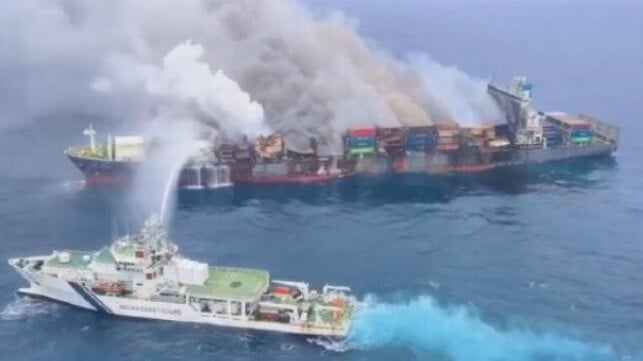
The fire has been reduced and partially contained while a tow line was attached to the vessel (Indian Coast Guard)

Published Jun 11, 2025 2:40 PM by The Maritime Executive


The teams working at the site of the burning containership Wan Hai 503 reported significant progress in their efforts during the third day of the firefight. The regional safety agency however emphasizes that the danger continues and that the fuel aboard the vessel may be becoming involved in the fire.

The onboard fire has been stabilized the crews reported approximately 40 percent of the fire was brought under control. The Indian Coast Guard was concentrating regional cooling and foam-based suppression on the forward part of the vessel and successfully reduced the fire while reports indicated they could shift toward the mid-section of the containership. So far, the stern has not become involved.

Thanks to the progress in controlling the fire, a salvage crew was able to get aboard the Wan Hai 503 for the first time. They attached a towline at the stern of the vessel and it was secured to a tug. The Indian Coast Guard reports the vessel will be moved away from the coast due to the continuing danger. Yesterday, they reported the vessel was drifting at a speed of 1 knot and a position 44 nautical miles from the coast.

Concern was raised by the specialized salvage team which observed “ongoing hydrocarbon vapor release.” They said this could indicate possible heat transfer near the fuel tanks. The Wan Hai 503 is reported to have 2,000 tonnes of fuel oil and 240 tonnes of diesel in tanks located adjacent to the fire zone.
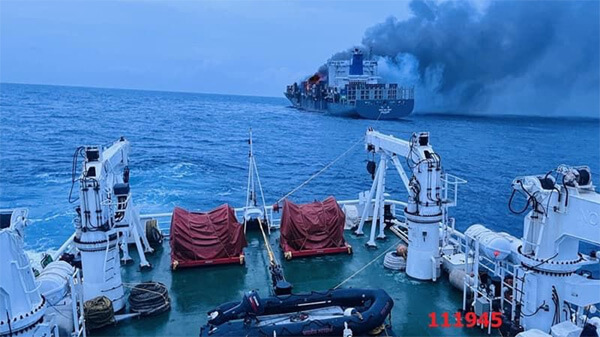
 

Teams were able to attach a towline to the stern of the vessel (Indian Coast Guard)


An area survey identified between 10 and 15 containers floating away from the burning ship. The Kerala State Disaster Management Authority reports that a salvage vessel is attempting to retrieve the floating containers but warns the containers could reach the coast by June 12. 

It also revised the details about the containers onboard after receiving the vessel’s manifest. There are a total of 1,754 containers aboard of which 1,083 are under deck. Media reports said the fire was thought to have started in the under-deck containers. There are an additional 671 containers on deck and the number for hazardous material was revised to 143 from the previous 157.

They also reported that 16 of the 18 rescued crewmembers are now out of the hospital and in a hotel in New Mangalore. Two remain in the hospital in serious condition with earlier reports saying they had respiratory burns and burns to 40 percent of their bodies.

The Indian Coast Guard reports the salvage efforts remain focused on reducing the dangers but said it is being hampered by unfavorable sea conditions.


Firefighting Continues as Flames Spread on Wan Hai Vessel off India
containership fire
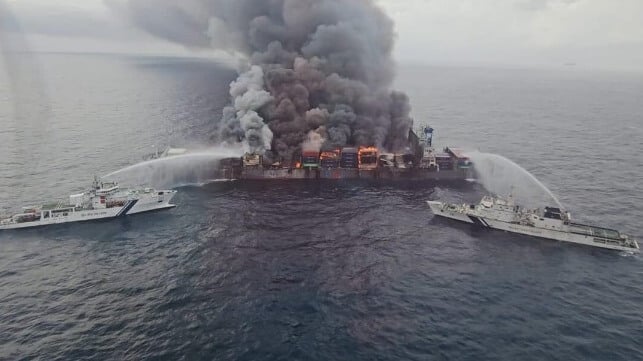
Firefighting continues as the fire has spread to the majority of the vessel (Indian Coast Guard)

Published Jun 10, 2025 1:15 PM by The Maritime Executive


A massive firefighting effort has been launched in an attempt to control the fire which has spread to large portions of Wan Hai 503 drifting approximately 40 nautical miles off the Indian coast. While reporting some progress, the Indian Coast Guard which is leading the effort emphasizes the danger reporting the fire is not contained and explosions persist aboard the vessel.

The first explosion occurred according to the rescued crewmembers around 0930 on Monday morning June 9. It is unclear how much of a firefighting effort could be mounted aboard but by 1230 the crew was advising the Coast Guard that they were abandoning ship into a lifeboat and life raft.

The Indian Navy transferred 18 crewmembers from Wan Hai 503 to shore at the New Mangalore Port. Six were admitted to the hospital with two suffering burns over 30 to 40 percent of their body and serious respiratory burns. Three other crewmembers have been released from the hospital and four remain missing. The Navy and Coast Guard said they were continuing the search for the missing crewmembers.


A total of five Indian Coast Guard vessels are in the area with two large patrol ships leading the fire fighting effort. They are dousing the fire and are also providing perimeter cooling but according to the reports, efforts were being hampered by monsoonal winds. The winds have pushed the flames nearly the length of the 890-foot (268-meter) vessel with the front of the accommodation block and bridge now showing they are also scorched.

The Coast Guard is saying that the fire is under control on the forward section of the vessel through thick smoke continues to rise from the ship. The fire moved aft with the Coast Guard reporting additional containers were catching fire and exploding. The port authority announced that the manifest it had received indicated there were 157 containers with hazardous materials aboard. 

Reports vary on the number of containers that were lost overboard in the initial incident, but there are some indications that additional boxes have gone overboard during the firefight. The authorities are warning they are drifting toward the south and the first debris should reach the coastline within three days.
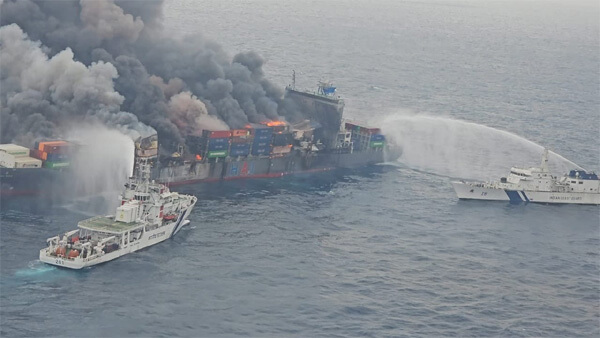


The vessel has taken on a 10-to-15-degree list which has the authorities concerned that the ship could sink. The vessel is reported to have aboard 100 tons of fuel oil.

The ship is registered in Singapore and the Maritime & Port Authority says it is also providing assistance along with the vessel’s class society. It reports that two additional vessels from the Coast Guard and a private salvage company hired by Wan Hai were due to reach the ship Tuesday evening.


Indian Police File Charges Against MSC, Captain and Crew of Lost MSC Elsa 3
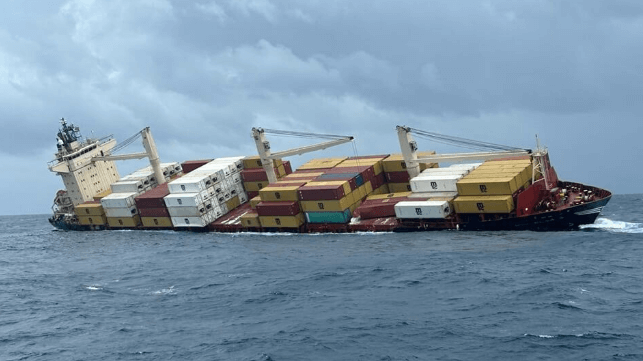
containership sinking
The police filing lists negligence in navigation and handling dangerous cargo (Indian Navy photo)

Published Jun 11, 2025 1:19 PM by The Maritime Executive


The local police in the Kerala region of India filed the first papers in a legal action against MSC Mediterranean Shipping Company, the captain, and the crew of the MSC Elsa 3 which was lost off the coast on May 24. The charges relate to negligence in handling the vessel and the dangerous cargo aboard.

The Fort Kochi Coastal police station filed what is known in the Indian legal system as the First Information Report (FIR) which outlines the various violations. The case is being brought on behalf of a resident named in the complaint and the local fishing community. The FIR outlines offenses of rash navigation, creating a danger to navigation, and negligent conduct as it relates to poisonous substances, combustible matter, and explosive substances.

According to the report, they are being accused of handling the vessel negligently which resulted in causing environmental impact. They are accused of being aware that the vessel was carrying hazardous substances but operating the vessel negligently. Further, it says the aftermath has seen dangerous plastic materials in the sea and washing ashore creating environmental concerns and financial losses to the fishing community.

The local government has been under political pressure to file charges while it raised concerns that it did not have legal standing because the casualty was outside the 12-mile limit. There had previously been media reports that the government was pursuing a legal settlement with MSC and its insurers while some reports said the government was trying to maintain good relations with MSC. It was pointed out that MSC is a major operator at the nearby Vizhininjam International Port. This week the company sent one of its 24,000 TEU containerships to the port for the first time, and it became the largest to have docked in India.

Officials have commented that the vessel’s ballast water system was not working properly contributing to its taking on a severe list. Media reports have questioned the condition of the ship noting that the vessel was flagged for multiple deficiencies on port state inspections. Issues were recorded on the last two inspections in 2023 and 2024 in India, but the vessel had not been detained. Bureau Veritas reports all the vessel’s certificates were up-to-date. 

Saying that MSC mishandled the cargo aboard the vessel, the report highlights that 12 of the containers out of the 640 onboard held declared hazardous material, and 12 contained calcium carbide. The authorities said that 61 containers washed ashore and that so far 51 have been salvaged.

The Indian Coast Guard has been highlighting efforts to deal with small bits of plastic known as nurdles that were in the water and washing up on the beaches. It reports so far approximately 500 kg of plastic nurdles have been painstakingly removed from the beaches.

Salvage efforts began this week with ROVs and divers inspecting the wreck which sank 38 nautical miles off the Kerala coast. Divers are going to attempt to seal the fuel tanks to stop a small release of oil. At the beginning of July, they are going to attempt to pump the fuel from the tanks to reduce the environmental dangers.

Salvage Divers Head for MSC Elsa 3 as India Collects Evidence
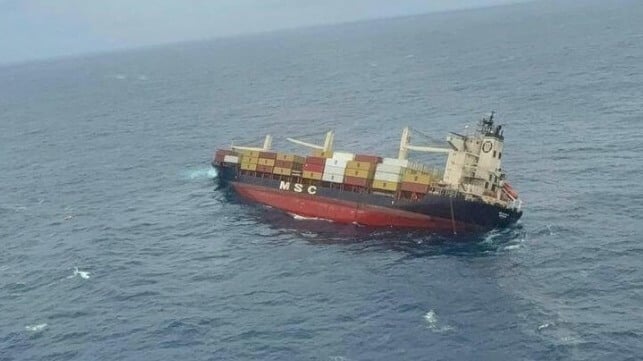
MSC containership shinking
MSC Elsa 3 heeled over before she sank on May 25 (Indian Navy)

Published Jun 9, 2025 7:30 PM by The Maritime Executive


India’s Directorate General of Shipping reports that the salvage operation for the sunken MSC Elsa 3 containership are moving into its next phase although offshore will in part be delayed by the monsoon season. This comes as the media is reporting the Indian government decided not to file criminal charges against MSC Mediterranean Shipping and instead is collecting more evidence for insurance claims while MSC continues to work with the country to recover from the casualty. 

The MSC Elsa 3 was lost on May 25 while it was 13 nautical miles off the Kerala coast. The small feeder ship built in 1997 was 23,000 dwt and had 640 containers aboard. At least 100 were reported lost overboard with 61 having so far washed ashore.

The focus is on controlling and stopping the oil that is seeping from the ship. Two offshore support vessels have remained at the site using dispersal techniques for a small amount of oil that is escaping from the vessel. So far, the Indian authorities insist the oil has not reached the coastline, but fishing in the area remains restricted. Reports indicate there are more than 80 tons of diesel and over 360 tons of heavy fuel aboard. An Indian Coast Guard pollution response vessel also remains on site.
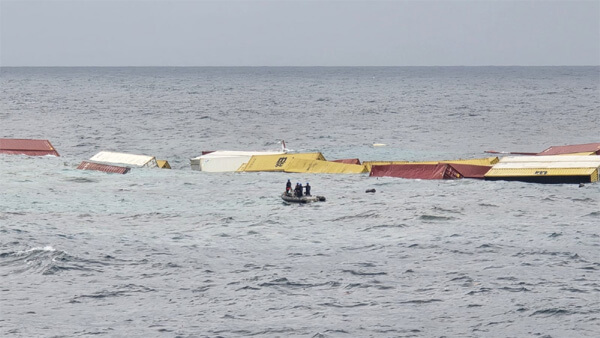
 

Containers floating at the wreck site (Indian Coast Guard)


The Diving Support Vessel SEAMEC III has now been deployed to the wreck site with a team of 12 divers aboard. The vessel has ROVs aboard as well as diving equipment, and a decompression system for diving to the wreck is at oxygen levels. Starting today, June 9, the operation is identifying openings for the fuel tanks. The divers will be working to cap the tanks to prevent further seepage.

A site survey began on June 5 using a multibeam system to map the location. This data is also being analyzed for the second phase of the operation which is scheduled to start July 3 after the monsoons but subject to weather. In July, they plan to use hot tapping to remove the oil from the tanks.

At the same time, they report that 51 containers have been removed from the shoreline. Another 10 are currently being salvaged including some that are partially submerged. The authorities report that none of the 61 containers that came ashore contained hazardous substances.

Several of the containers however did contain small plastic beads, nurdles, and they have been washing up along the coastline. Trained volunteers will be joining the efforts on the coastline to find and remove the pollution that is coming ashore.
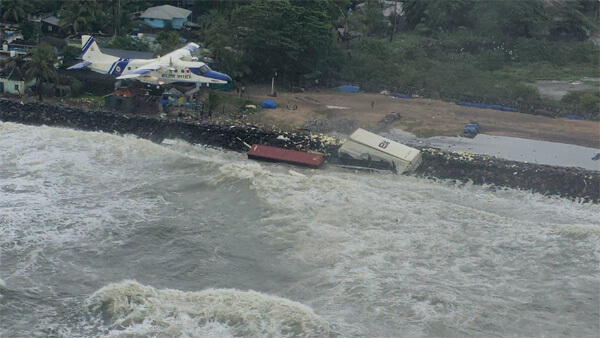
 

Coast Guard survey the boxes on the shoreline which have now been salvaged (Indian Coast Guard)


The Directorate reports MSC is closely involved having retained T&T Salvage of Singapore for the dive operation. Marine Emergency Response Services of India was also hired to manage the onshore efforts.

The state government met with representatives for the ship’s P&I club, which is listed by Equasis as the Steamship Mutual Underwriting Association with the UK P&I Club. They have also met with the ship’s owners, which Equasis reports has been with MSC for the past decade. The state government has agreed at this phase to pursue a settlement with the club following the law while it collects evidence regarding the vessel and the factors that caused it to sink so quickly while underway from Vizhinjam to Kochi. Reports have said the investigators believe there were problems with the vessel’s ballasting system that caused it to develop a 26-degree list which led to its sinking.

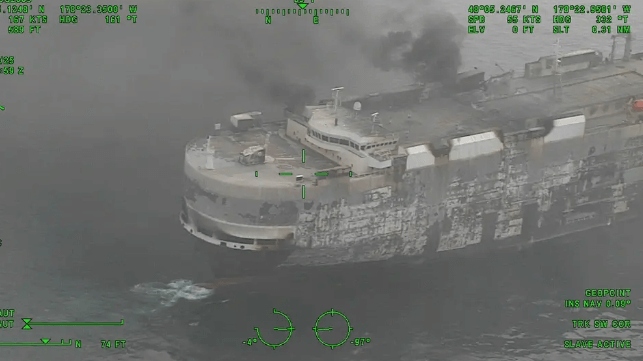
New Photos Suggest Extensive Fire Damage Aboard Burning Car Carrier

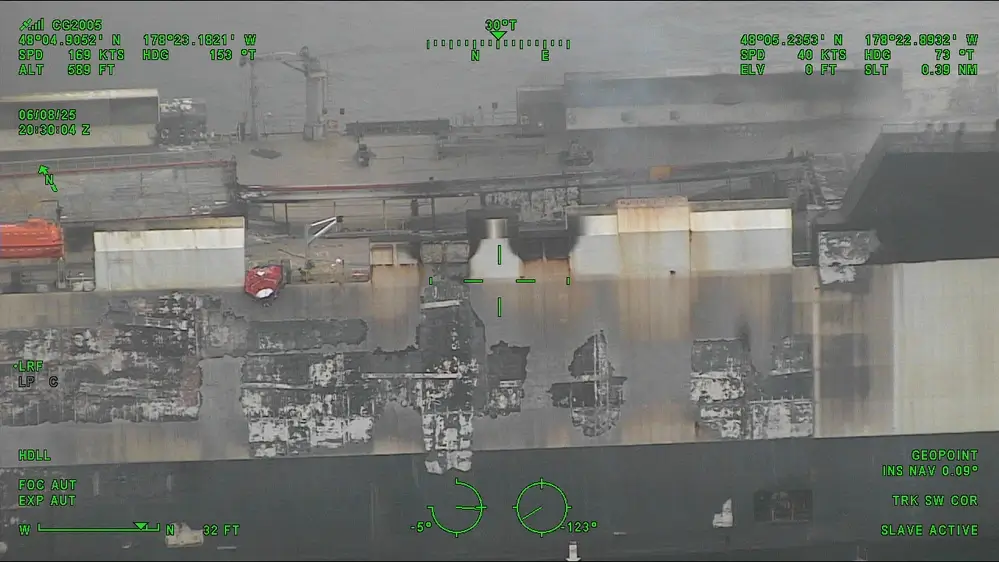
Morning Midas' fire-damaged bow, June 8 (USCG)

Published Jun 9, 2025 8:24 PM by The Maritime Executive


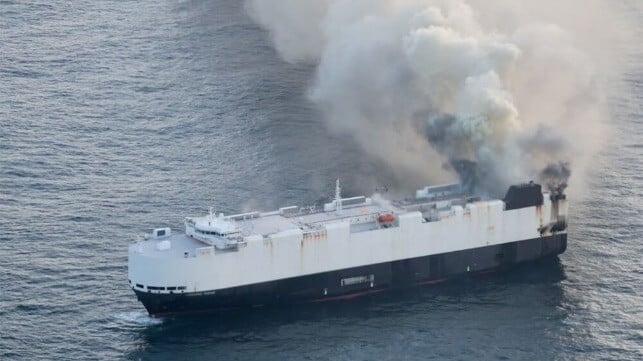
The first salvors have arrived on scene to assess the damaged car carrier Morning Midas, which caught fire off Adak last week and has burned continuously for more than six days.

Last month, Morning Midas got under way on a voyage from China to Mexico with about 3,000 vehicles aboard, including 70 electric cars and about 680 hybrids. On June 3, as she transited south of Adak, Alaska, smoke was discovered on a car deck containing EVs. Despite deployment of fixed firefighting systems, the fire grew in intensity, and the master made the decision to abandon ship into a liferaft. Luckily, weather conditions were moderate for the North Pacific, and a nearby container ship diverted to rescue the crew.

Zodiac appointed Resolve Marine as salvor, and a response team got under way aboard the tug Gretchen Dunlap, departing Dutch Harbor on June 6. The tug transited on the north side of the Aleutian Chain, then passed between Adak and Kanaga Island to head south into the Pacific.

Gretchen Dunlap arrived on scene on Monday, according to the Coast Guard. AIS data provided by Pole Star suggests the tug neared Morning Midas' position at about 1200 local time. Salvors aboard the tug have begun making a full assessment of the car carrier's condition.

New aerial photos provided by the Coast Guard show that the fire swept through multiple car decks, and the worst signs of heat damage were apparent towards the bow of the ship. Wide swaths of gray, ashen hull paint showed areas where the fire's intensity burned hottest. On the port bow, heat damage was visible from the waterline up to the top deck level (top).


Morning Midas' port side amidships, 1100 hours on June 8 (USCG)


Morning Midas' port side on June 3, shortly after the fire started (USCG)

As of midday Monday, winds had picked up to 45-50 knots and seas were still moderate. Morning Midas continued to drift northeast at a rate of about one knot, according to the Coast Guard.

"The safety of the public, responders, and vessel crews operating in the area remains our top priority," said Rear Adm. Megan Dean, commander of the Coast Guard’s Seventeenth District. "We are working closely with Zodiac Maritime to ensure a safe and effective plan to address the fire and mitigate any potential impacts to the environment.”

Proposed New Jersey Offshore Wind Farm Seeks to Cancel Regulatory Licenses

New Jersey shoreline
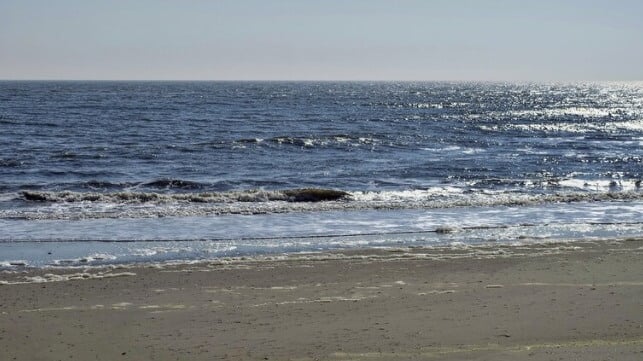
Beach at Atlantic City, New Jersey (Public domain photo)

Published Jun 9, 2025 1:34 PM by The Maritime Executive


After a series of problems and strong opposition locally and from Donald Trump, Atlantic Shores Offshore Wind made it official that it is backing away from its plan for a 1.5 GW wind farm off New Jersey. Media reports indicate the company filed a petition with New Jersey regulators to cancel licenses it has held since 2021.

Atlantic Shores was developing Project 1, a proposed 1.5 GW wind farm which it said would provide power for approximately 700,000 homes. It has repeatedly cited the project as the most developed of the proposals for New Jersey. In October 2024, it received Construction and Operations Plan (COP) approvals from the Bureau of Ocean Energy Management (BOEM) for both phases one and two of its plan, or a total of 2.8 GW of power capacity.

Despite saying it stood ready to deliver, the project had not been selected by New Jersey regulators for a power purchase agreement. New Jersey in February 2025 closed its fourth round without selecting any projects. Atlantic Shores was one of three projects bidding in the round.

The company was established as a joint venture between Shell and EDF Renewables but early in 2025, Shell announced it was backing away from its investments into offshore wind power. Atlantic Shores however said it was still committed to proceeding with its plan which also called for investments in New Jersey’s planned Wind Port in the southern part of the state in Salem, New Jersey.

Donald Trump had campaigned in New Jersey in 2024 specifically mentioning this project in his opposition to offshore wind power. In January, Trump signed an executive order freezing permitting and putting the sector under review. Shortly after that, the Environmental Protection Agency withdrew approval on an air quality permit for Atlantic Shores that would have covered construction and operations. EPA said the permitting had been rushed and required more review.

Atlantic Shores is reported to have filed on June 4 with the New Jersey Board of Public Utilities to terminate its Offshore Renewable Energy Certificates (OREC). The board meets monthly with its next session scheduled for June 18.

The withdrawal is the latest blow for the industry and specifically New Jersey which has not been able to move forward with the governor’s plans. Murphy originally called for 3.5 GW of offshore wind power by 2030 but later revised the plan to 7.5 GW by 2035. The state’s first setback came in late 2023 when Ørsted canceled plans for two large offshore projects that were set to begin construction. Governor Murphy’s term comes to an end in early 2026 likely without any wind projects approved for construction.

Atlantic Shores holds three lease areas totaling more than 400 square miles off the New Jersey coast near Atlantic City and in the New York Bight. According to media reports, the company referred in the filing to this period as a “reset” while saying it remains “ready to deliver.”

The filing, the Asbury Park Press newspaper reports, cites the uncertainty caused by the Presidential Wind Memorandum. It also cites the loss of the EPA permit and other actions taken by the “current administration.” It says that it was forced to materially reduce personnel, terminate contracts, and cancel planned project investments.

Another proposed offshore wind farm for New Jersey, Leading Light, has also delayed its review process with regulators. It cited problems in completing its plan due to challenges locating an alternate turbine manufacturer after GE Vernova canceled plans for its 18 MW turbine. The project, which is being led by Chicago-based Invenergy and energyRE, asked the New Jersey Board of Public Utilities for delays after it won its approvals in January 2024 for a massive 2.4 GW wind farm to be located approximately 40 miles off the southern New Jersey coast.


Top photo by by Bruce Emmlering (Public domain Free Photo)


U.S. Car and Container Imports Plummeted in May as Tariffs Impact Volumes

car imports
Car imports were off by nearly three quarters in May while container volume was off 10 percent due to tariffs (Port of Baltimore file photo)

Published Jun 9, 2025 4:05 PM by The Maritime Executive


Newly released data shows the depth of decline both for car and container imports into the U.S. in May. The uncertainties and back and forth on tariffs have taken a toll but the expectation is that importers will rush to bring goods in before the short-term pause on tariff increases is due to expire.

Car volumes were among the most impacted during May according to a report from Automotive News using information from logistics productivity data provider Descartes. Motor vehicle imports were off 72.3 percent in May as car companies paused shipments waiting for more favorable tariff conditions.  The well-known car industry reporter Kelly Blue Book writes that the auto industry’s pattern has been to have 60 days of inventory on hand and 15 days worth in transit. Automakers’ inventory was down to 66 days at the end of April according to the report. It however highlighted in May that brands Jaguar and Land Rover had restarted U.S. shipments after a pause due to the tariffs.

Descartes released similar container import data that shows that monthly imports fell nearly 10 percent from April to May and were down over seven percent versus the year earlier. It notes that this was the first time May container volumes were down in the last seven years except for 2020 during the pandemic.

Volumes from China were off more dramatically where its share of U.S. imports fell to just over 29 percent. Containers coming from China were off more than 20 percent month-over-month and 28.5 percent year-over-year. It was the steepest monthly decline in five years and contributed to 30 percent volume declines for both the ports of Los Angeles and Long Beach.

“After several months of import growth and following a wave of front loading of shipments in April, the impact of new tariffs began to materialize in May,” said Jackson Wood, at Descartes. “The effects of U.S. policy shifts with China are also now clearly visible in monthly trade flows.”

The retailers’ trade association National Retail Federation agrees highlighting that with front loading April’s volume was 2.21 million TEU which was up three percent over March and nearly 10 percent year-over-year.

The retailers note that the pause in tariffs on reciprocal tariffs is due to last till July 9, and for Chinese imports it is due to last until August 12. Donald Trump however infers that a deal is being finalized for the Chinese trade. U.S. and Chinese trade representatives were meeting again on Monday to go over the points the White House announced. However, unless that deal is reached the NRF highlights in the rush to get merchandise into the U.S., the peak for the winter holiday imports will come early and be simultaneous with the peak end of summer/fall season imports creating a rush on the ports.

The NRF is raising its forecasted container volume for June up 17.5 percent to 2.01 million TEU and up 20 percent in July to 2.13 million TEU. This reflects the lead time to get shipments moving and the rush to beat the scheduled tariff increases.

“This is the busiest time of the year for retailers as they enter the back-to-school season and prepare for the fall-winter holiday season,” said NRF Vice President for Supply Chain and Customs Policy Jonathan Gold. “Retailers had paused their purchases and imports previously because of the significantly high tariffs. They are now looking to get those orders and cargo moving in order to bring as much merchandise into the country as they can before the reciprocal tariff and additional China tariff pauses end in July and August.”

Retailers are forecasting without trade agreements that volumes are expected to drop sharply for the remainder of 2025, with larger year-over-year decreases. The NRF points out that retailers last year rushed shipments due to concerns about longshore workers going on strike at U.S. East and Gulf Coast ports. The NRF however expects this year volumes could be down around 20 percent per month in September and October.

The NRF is urging the administration to reach agreements with trading partners to restore predictability and stability to the supply chain. Port officials, longshore workers, and others share the same concern as the fluctuations and drops in volumes take a toll on operations and members.

TACO

Pentagon Puts AUKUS Submarine Program Under Review

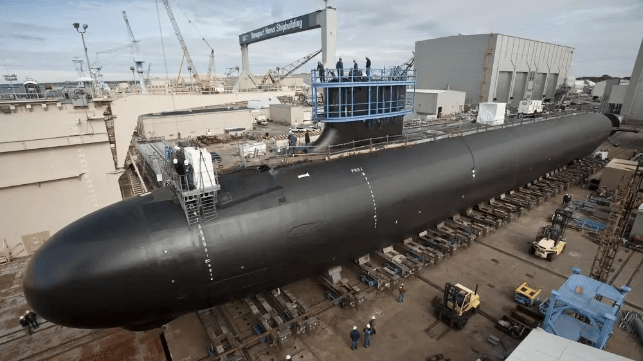
A Virginia-class boat on the ways at HII NNS (USN file image)

Published Jun 11, 2025 5:44 PM by The Maritime Executive


The Pentagon has launched a review of the U.S.-Australia-UK nuclear submarine technology-transfer and purchase agreement (AUKUS), which was negotiated by the Biden administration in 2021. The deal calls for the U.S. to sell the Australian government up to five Virginia-class nuclear attack submarines beginning in the 2030s. 

The program could have benefits for all parties. For Australia, it promises a major upgrade in defensive capability; for the U.S., it means access to basing and sub repair facilities on Australian territory, as well as five more allied attack subs to call on in time of need. For the UK, Australia would become a long-term partner in the construction of a future class of British attack subs from the 2030s onward. 

The downside of the deal for the United States is its potential drag on U.S. Navy fleet size. The Virginia-class and Columbia-class sub programs are mission-critical for the U.S. Navy, and the two yards that build these subs - GD Electric Boat and HII Newport News - are behind schedule. In addition, the Navy's public shipyards have been challenged in keeping up with submarine maintenance, reducing availability. If the U.S. submarine industrial base could not replace the AUKUS boats on time, these subs would be subtracted from U.S. Navy fleet growth. For Australia, the downside is the high cost burden of a full-scale nuclear submarine program, from acquisition through crewing and sustainment. 

As of 2023, the initial plan was for the U.S. to sell two secondhand Block IV Virginia-class attack submarines from U.S. Navy inventory in 2032 and 2035, plus one more new Block VII hull in 2038. The deal currently calls for up to five hulls, and Australia made the first $500 million down payment on that plan in March 2025. 

Predictions of the program's cancellation have circulated since the Trump administration took office in February, and those forecasts may now appear prescient. According to the Financial Times, the Defense Department has appointed undersecretary of defense for policy Elbridge Colby to conduct a review of the program; the Pentagon has confirmed the news to multiple outlets. 

"The Department is reviewing AUKUS as part of ensuring that this initiative of the previous Administration is aligned with the President’s America First agenda," a Pentagon official told USNI. "This means ensuring the highest readiness of our servicemembers, that allies step up fully to do their part for collective defense, and that the defense industrial base is meeting our needs."

Last year, Colby expressed ambivalence about the program and suggested a factual, empirical evaluation was needed. "In principle it’s a great idea. But I’ve been very skeptical in practice," he said in a social media message. "But if AUKUS can help us get more [subs] in the right place and time, then great."


Report: MSC Proposes Take Over of Romania’s Mangalia Shipyard

Romanian shipyard
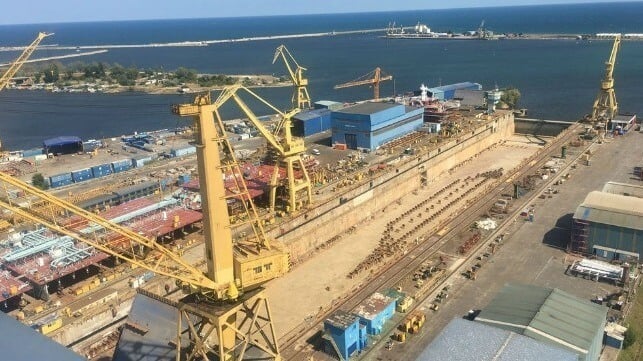
Damen had operated the yard for the past few years and now MSC is reported to be seeking the yard (file photo)

Published Jun 11, 2025 6:01 PM by The Maritime Executive


The Romanian government has according to reports in the media received a surprise proposal for the management and operation of the Mangalia shipyard from MSC Mediterranean Shipping Group. The government has been considering alternatives for the shipyard after the collapse of an agreement with Damen Group sent the yard into insolvency.

Europa Libera Romania reports it has seen a letter sent from MSC Shipmanagement to the government in April that expressed the group’s interest in the shipyard. It cites the company’s need for repair facilities as well as potentially newbuild capabilities. They report the letter says MSC would take over the management and operation of the shipyard and bring in outside management to assist in restoring the operations.

MSC says it is interested in Mangalia because its newbuilding is currently concentrated for containerships in Asia and cruise ships in Europe. MSC reportedly told the government it intends to consider the shipyard for the future construction of cruise ships, ropax, and tugboats. The company also said it was paying in advance for repair work to provide the yard funds for hiring back employees.

Owning over 600 containerships and managing a total fleet of nearly 1,000 containerships plus its cruise ships, ferries, tugs, and the recent entry into the car carrier segment, MSC reports it needs more shipyard capacity. It cites that it already owns space in Antwerp and Naples which also gives it experience in managing shipyard operations.

MSC however is reported to have competition for the shipyard. The government had started seeking investors early in 2025 and the media indicated Turkey’s Desan was in advanced negotiations for Mangalia. The media stories said Desan was proposing to rent the yard facilities from the government and hire the workforce. Desan is reported to be interested in Mangalia for additional production capacity and because it has larger dry docks which would permit work on post-Panamax vessels.

It is unclear from the reports how MSC proposed to structure its deal with the government for the yard. Mangalia is undergoing insolvency proceedings with reports it has debts of more than €400 million ($460 million). The yard may need to be reorganized before a new agreement can be completed.

Mangalia which was established by the government in 1976 had been closed since 2024 after Damen notified the government of its intent to end a joint venture in which it owns 49 percent of the yard. Damen had taken over the yard in 2018 after South Korea’s Daewoo Shipbuilding & Marine Engineer ended a partnership that had begun in 1997.

Damen highlighted when it formed the joint venture that the yard had three large drydocks and it was the largest in its group. It said Mangalia had delivered over 200 ships, but the company was hurt by the downturn in shipbuilding and especially the offshore sector.

Romanian media indicate the yard resumed work in May 2025 with two ship repair assignments and a third to follow. It reportedly has brought back approximately 800 workers and has at least 13 more repair projects scheduled for the second half of 2025. 


Davie to Acquire Texas Shipyards as it Postures for U.S. Icebreakers

Galveston shipyard
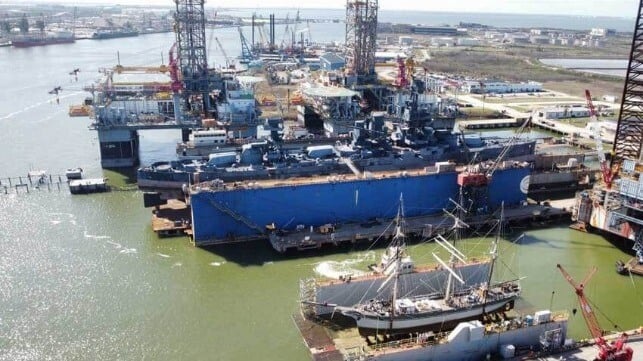
Gulf & Cooper's Galveston yard drydocked the battleship Texas during her restoration (Gulf & Cooper file photo)

Published Jun 11, 2025 4:18 PM by The Maritime Executive


Canada’s shipbuilding group Davie reports it is fulfilling its commitment to invest in American shipbuilding with an agreement to acquire facilities in Texas. The company announced a year ago that it would invest in the U.S. shipbuilding sector as it continues to seek a key role in developing future icebreakers.

Under the newly announced agreement, Davie will acquire facilities in Galveston and Port Arthur, Texas from Gulf Cooper & Manufacturing. The company reports it has two dry docks each in each of the locations and 4,000 feet of dock in Galveston and 1,000 feet in Port Arthur. Its focus is on ship repair, offshore services, and marine infrastructure. It serves the oil and gas, marine transport, petrochemical, and government sectors.

"A successful deal will open a new chapter for Gulf Copper," said Steve Hale, CEO of Gulf Cooper. "For the first time in decades, complex shipbuilding could return to Galveston and Port Arthur.”

Davie reports once it secures contacts it plans to invest $1 billion to upgrade and expand capacity in Galveston and Port Arthur. The project it says could generate approximately 4,000 American jobs, with 2,000 directly at Gulf Copper. 

“We share a vision with Gulf Copper to make Texas a world-class hub for American icebreaker and complex ship production,” said James Davies, President and CEO of Davie. 

Davie reports it needs to complete negotiation with the Galveston Wharves Board of Trustees as well as financial, legal, and regulatory closing conditions for the transaction. It expects to finalize the acquisition in the summer of 2025.

The Canadian shipbuilder has been actively pursuing the U.S. market and the opportunity for icebreakers. It is involved in the Canadian effort to build new icebreakers and received one of the two first contracts awarded in 2025 for its yard in Quebec. It previously also acquired Helsinki Shipyard, which it highlights has built half of all the icebreakers globally.

Davie states that it “possesses commercially viable, production-ready icebreaker designs that meet the U.S. mission requirements,” and would contribute to Donald Trump’s declared goal to dramatically expand the U.S. fleet. Trump has said it is an urgent national security gap that must be filled along with his calls to acquire Greenland.

The U.S. announced in 2024 a trilateral Icebreaker Collaboration Effort (ICE Pact) along with Canada and Finland to accelerate the construction of icebreakers. Davie was reported to be a driving force contributing to the agreement between the three countries. 

With its shipbuilding program years behind schedule for the new polar icebreakers, the U.S. Coast Guard recently acquired a commercial icebreaker which is currently on its first voyage bound for Alaska where it is scheduled to be officially named. The Storis will require additional upgrades to be fully operational. The USCG currently depends on two aging polar icebreakers (Polar Star commissioned in 1976 and Healy commissioned in 1999) along with 21 domestic icebreakers, and 16 ice-capable buoy tenders.


Video: Russia Claims Attack on Ukrainian Base on Black Sea Jackup Rig

Black Sea oil platofrm
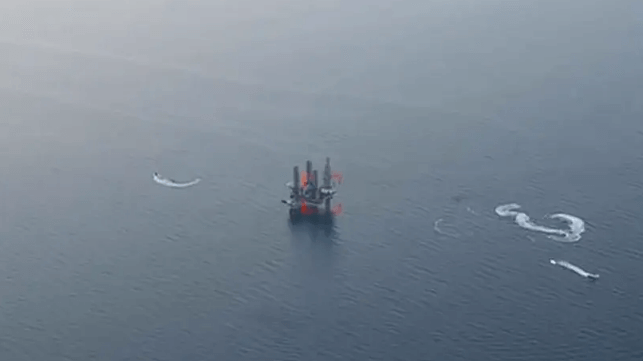
Photo of th rig released by HUR in 2023 after Ukraine retook the Black Sea platforms (HUR)

Published Jun 11, 2025 7:06 PM by The Maritime Executive


The Tavrida jackup rig located in the Black Sea near Snake Island is reported to have again come under attack. Purported Russian social media accounts announced what they called a successful attack using supersonic cruise missiles fired from bombers at the platform which has been repeatedly targeted during the war.

Tavrida was built in 1995 by Ukraine's JSC Kherson shipyard. It was positioned as part of the Ukrainian field in the Black Sea with reports it is over 7,000 gross tons and 81 meters (265 feet) in length. It however has not operated in a decade. Russia took control of the platform during the annexation of Crimea in 2014 along with other energy assets in the Black Sea. 

Early in the war, Ukraine targeted the platform in a series of attacks reported in 2022 and then in 2023 reclaimed the platform. Reports accused the Russians of having converted the platforms with electronic listening devices and other equipment.

Russia is now accusing Ukraine of doing the same with the platform, making it a base of operations to be used against Crimea. Russia alleges Ukraine was using Tavrida as a command post for its drones and other electronic warfare. They also claim it was being used as a refueling and staging point for drones and unmanned vessels attacking ports and other sites in Crimea.


The video posted online claims that Russia launched an anti-ship cruise missile from a TU-22M3 bomber, the same class of plane attacked by Ukraine in the surprise drone assault. The video is purported to show the missile striking Tavrida and causing additional damage. The reports said four additional missiles were fired at nearby targets including Snake Island.

Ukraine, of course, denies it was using the jackup rig or any of the sites in the Black Sea as a base. Reports in 2022 said Tarvida was damaged including a large hole in its helicopter pad by the prior attacks.

Russia has been stepping up its assault on Ukraine in part in retaliation for the attack on the bombers. The port complex in the Odesa region has been reported to be under attack as well as Kyiv and other cities across Ukraine. 


How Will the Next Round of Sanctions on Russia Affect Shipping?

Tanker
iStock / SHansche

Published Jun 10, 2025 4:55 PM by The Maritime Executive


Two rounds of additional sanctions against Russia are in the course of preparation, and could have a substantial effect on "shadow fleet" shipments from Russian oil ports to overseas customers.

A draft bill proposed by Senator Lindsey Graham (R-South Carolina), Chairman of the Senate Budget Committee, seeks to impose 500% tariffs on countries that buy Russian energy, possibly with some exemptions for those nations still buying Russian energy but providing assistance to Ukraine. India and China buy roughly 70 percent of Russian energy exports, and hence are potentially the most likely countries to be impacted, should the bill pass.

Democratic Senator Richard Blumenthal (D-Connecticut), who is a co-sponsor of the proposed Sanctioning Russia Act of 2025 measure, visited President Volodymyr Zelenskyy with Senator Graham on May 30. After their meeting, both senators expressed an increased determination to proceed with the measure. The Senate bill has 82 bipartisan signatures at the last count, more than is needed to protect it from Presidential veto. A companion bill circulating in draft in the House of Representatives is also attracting strong support.

On the other side of the Atlantic, the European Commission is drafting its 18th round of sanctions against Russia, which EU President Ursula Von der Leyen has said will be implemented alongside increased US sanctions, adding that “pressure works, as the Kremlin understands nothing else”. The detail of the 18th round of sanctions is being discussed in the European Council this week.

These initiatives face obstacles. In the United States, President Trump is seeking to delay and shape the legislation, and maintains that his own foreign policy initiatives should take precedence. In Europe, both Hungary and Slovakia will seek to derail the 18th sanctions round, though neither country has successfully blocked previous rounds of sanctions. European imposition of sanctions has been slow, strong on rhetoric but weak in terms of results. But the latest round in draft would be significantly more effective, as it would ban all new EU oil and gas contracts and existing short-term spot contracts with Russian suppliers by the end of 2025, and ban all remaining imports by the end of 2027.

But of particular significance in the EU’s 18th sanctions round proposal are measures to tighten and lower the Russian oil price cap and to permanently close down oil pipeline infrastructure linking Russia with its former customers in Central and Western Europe. The 18th round will also tighten sanctions listings related to “shadow fleet” oil tankers, which will affect both Russia and Iran as suppliers, and China and India in particular as customers.

In the U.S., the introduction of the sanctions bill in Congress appears inspired by the Trump administration’s mild response to Russia’s evasion of peace talks, which has not yet triggered a policy reaction from the White House (beyond strongly-worded statements). Congressional concerns in this regard may be reinforced by President Trump’s statement regarding the Act that “I'll use it if it's necessary.”

The 500% tariffs proposed in the US legislation would have a devastating impact both on the targeted countries, but also domestically, and for that reason looks likely to be modified as the legislation is debated through both houses. The US sanctions package also includes a tightening of financial and investment sanctions.

Even if the tariff measures proposed are cut back, the combined effect of the US and European sanctions would be to remove oil-carrying capacity by rendering unusable a large number of shadow fleet oil tankers, many of which should have been consigned to the scrapping beaches in Bangladesh, India and Pakistan long ago. An analyst at Lloyd’s List estimated last year that 500 shadow fleet tankers were servicing the route between Russia and China alone.

At the same time, the closure of oil and gas pipelines previously used to service customers in Europe would increase dependency on shipping to bring in alternative supplies. The tighter sanctions would also encourage Russia and others to make greater investments in pipeline links between the nations of the “Dictators’ Club” - but building out the sanctions-avoidance infrastructure to reduce dependency on seaborne shipping would take time.

The opinions expressed herein are the author's and not necessarily those of The Maritime Executive.


MAGA WAR ON NATURE

Trump admin announces plan to loosen power plant regulations

Washington (AFP) – President Donald Trump's administration proposed Wednesday to roll back measures enacted by former Democratic presidents Joe Biden and Barack Obama aimed at reducing polluting emissions from gas and coal-fired power plants.


Issued on: 11/06/2025 

Since President Donald Trump -- a proponent of fossil fuels and climate change skeptic -- returned to power, federal authorities have reversed course on US climate policy © ANDREW CABALLERO-REYNOLDS / AFP


The move "would deliver savings to American families on electricity bills, and it will ensure that they have the electricity that they need today," Environmental Protection Agency (EPA) chief Lee Zeldin told a press conference, adding that his office would balance protecting the economy and the climate.

Regulations set to be repealed include limitations on carbon dioxide emissions by power plants and a rule curbing release of hazardous air pollutants such as mercury.

The measures were meant to reduce greenhouse gas emissions by the United States, the world's top polluter, and to protect people living near power plants and exposed to elevated levels of air pollutants that can damage the nervous system and harm breathing.

The Trump administration argues the regulations are costly and rein in energy output at a time when the development of artificial intelligence is driving booming demand for electricity.

A powerful polluter

"No power plant will be allowed to emit more than they do today," Zeldin said Wednesday.

The US power sector is already one of the world's top polluters, according to a recent report by the Institute for Policy Integrity, a nonpartisan think tank at New York University.

Were it considered a country, it would have ranked as the world's sixth-biggest emitter in 2022 and contributed five percent of total worldwide emissions from 1990-2022, the institute said in a May briefing on the topic.

"The best available evidence shows that each year of greenhouse gas emissions from US coal-fired and gas-fired power plants will contribute to climate damages responsible for thousands of US deaths and hundreds of billions in economics harms," the institute said in its report.

Regulations facing the axe include requirements for coal-fired power plants to capture CO2 emissions instead of releasing them into the atmosphere, using expensive capture and storage techniques that are still not widely in use.
A change in course

Since Trump -- a proponent of fossil fuels and climate change skeptic -- returned to power in late January, federal authorities have reversed course on climate policy.

In March, the EPA said it would undo dozens of environmental measures enacted during Biden's term in office, including those cutting vehicle emissions and drastically reducing the amount of carbon dioxide that coal-fired power plants can emit.

The proposed federal rules announced Wednesday will be subject to a period of public comment before being finalized. If they become law, they would most likely be challenged in court.

© 2025 AFP