Wednesday, June 11, 2025


Swedish green steel maker mulls IPO to finance expansion plans
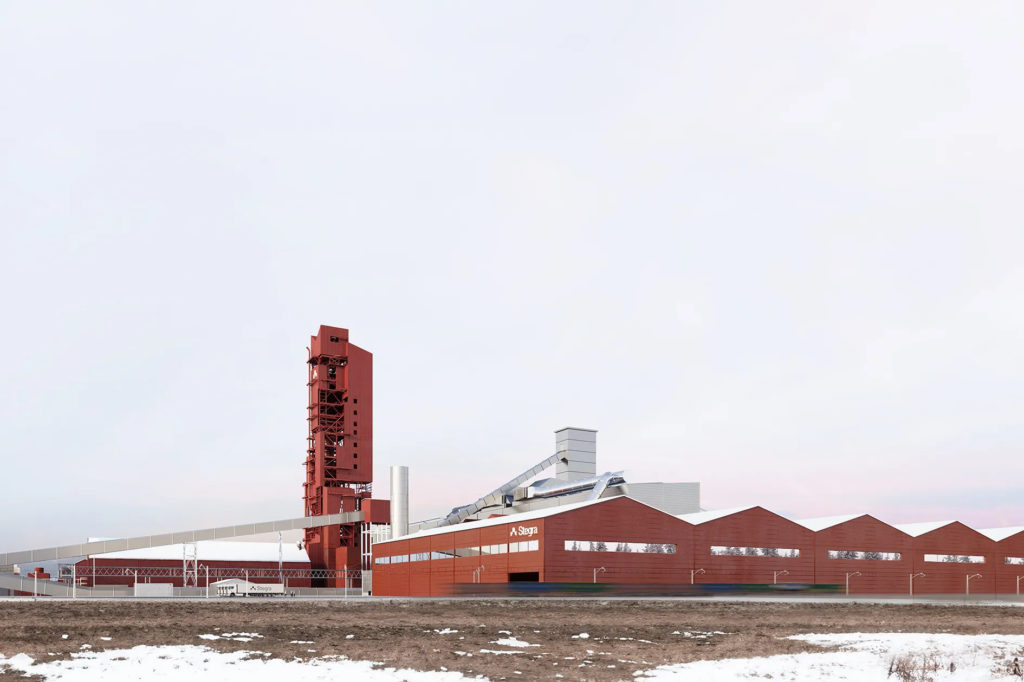
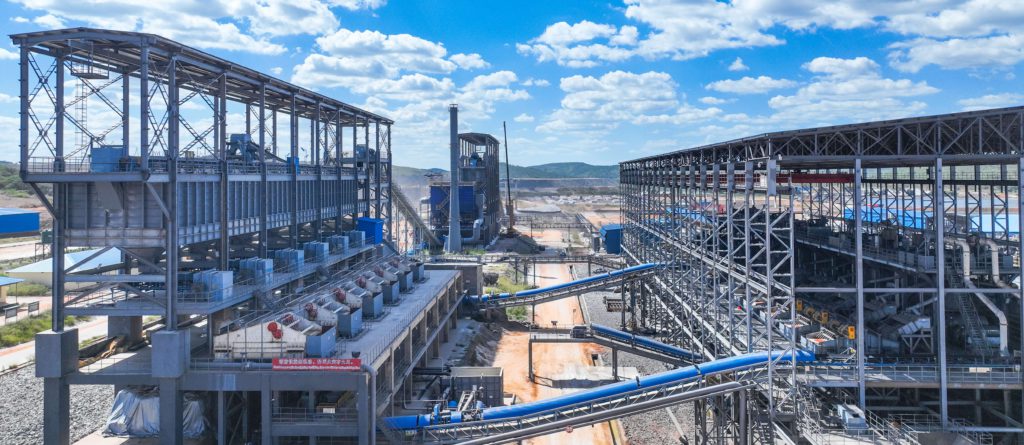
Boden plant. Credit: Stegra AB

Stegra AB, which is building the world’s biggest green steel plant in northern Sweden, is doing initial work for an eventual public listing of shares because its expansion plans may need more funding than it can raise privately.

The four-year-old startup, on track to start producing the metal by the end of next year, has raised about €6.5 billion ($7.4 billion) so far, one-third equity and two-thirds debt. That will largely be used to get the plant up and running and produce 2.5 million tons a year. A second phase could see Stegra double the production, but would require further substantial fund raising.

“I think we can do phase 1 and phase 2 through the private market, but if we want to go further than that, then it’s a lot of money to raise on the private market even if we have strong investors with us,” chief executive officer Henrik Henriksson told reporters at its inaugural capital markets day at the site in Boden. “So it’s something we’re working on to prepare for but we haven’t set a time frame.”

The firm is among a new breed of steelmakers seeking to overhaul the way the alloy is manufactured in one of the most polluting industries in the world. The sector, which has relied largely on the same production techniques for more than a century, accounts for about 7% of global carbon emissions. Stegra will largely use hydrogen made with renewables rather than polluting fossil fuels in its production process.

“We have ambitions to grow,” Henriksson said Tuesday. “First we want to complete Boden, get it up and running and show that we can start to generate money.”

His comments come as steel structures are being erected at pace on the vast plot of land just outside the small town of 30,000 people. Hundreds of cranes, diggers and trucks are in the process of building the factory where the tallest structure will stand at about 140 meters (459 feet).

About 40% of the construction is complete, according to Henriksson. Work progresses by about 1% a week and he says he expects to get to 75% by the end of the year.

Higher premiums

The company also shared some financial forecasts for the first time. Henriksson said Stegra has increased its expectation for earnings before interest, taxes, depreciation and amortization in 2030 by about 10% from a 2023 estimate of €1.1 billion as a result of higher premiums paid for green steel compared with traditional products.

Return on capital employed will be above 20% for phase 1, which is much higher than the industry average, it said.

One big stumbling block for Boden is that it hasn’t yet got a connection to the power grid for its second phase. Without it, there won’t be an investment decision, said Henriksson, adding that he hopes to get some clarity by early next year.

The steel factory is part of a cluster of projects backed by Vargas Holding AB, a Swedish impact investor whose mission is to cut global emissions by 1% — the equivalent of annual carbon pollution from Australia. But its other big industrial bet, electric-vehicle battery maker Northvolt AB, filed for bankruptcy after expanding too fast and running out of cash.

Henriksson said that both Stegra as a company, and the steel product it is making, are different from Northvolt, even though there are similarities in the funding model with supply contracts used as collateral.

(By Lars Paulsson)


The Global Race to Produce Green Steel

  • The steel industry produces 7% of global emissions, prompting innovation in hydrogen use, biocarbon, and electric arc furnaces to cut its carbon footprint.

  • Projects in Sweden, the U.S., Brazil, and China show varying levels of success and ambition in implementing green steel technologies.

  • High costs, energy demand, and limited market appetite for green steel remain major hurdles to scaling these initiatives globally.

Governments worldwide are investing heavily in finding new ways to decarbonise heavy industry, where emissions are notoriously hard to abate. While certain sectors have come leaps and bounds in decarbonising operations, several heavy industries are failing to advance. Making manufacturing and other sectors more sustainable will be key to achieving a green transition and ensuring that we meet the global heating limits stipulated in the Paris Climate Agreement. One sector that is rapidly searching for ways to decarbonise is steel, and some pilot projects that show promise are already underway. 

According to the International Energy Agency (IEA), the steel sector produces around 7 percent of the world’s greenhouse gas emissions, at about 3.5 billion tonnes a year. Meanwhile, the steel demand is expected to rise by up to 30 percent by 2050, meaning that decarbonising the industry is key to achieving a green transition. 

Scientists now believe there are a range of ways to decarbonise the industry, including switching out coal for sustainable charcoal, using green hydrogen produced from renewable energy to power operations, and using carbon capture and storage (CCS) technology to capture carbon emissions. 

In Sweden, the firm Stegra was awarded $286 million in 2023 to develop what it calls “the world’s first integrated large-scale green steel plant”. Located in Boden, in the north of Sweden, Stegra’s facility will feature a 690 MW electrolyser, which will use renewable electricity to generate green hydrogen to replace coal for powering operations. It is expected to support the production of sponge iron with a 95 percent lower carbon footprint compared to blast furnaces processes. The green sponge iron will then be melted in an Electric Arc Furnace using renewable electricity to produce steel. 

Stegra is not the only company in Sweden investing in “green steel”. Hybrit, which is short for hydrogen breakthrough ironmaking technology, is a collaboration between iron ore producer LKAB, energy firm Vattenfall, and steel manufacturer SSAB. The Hybrit project commenced in 2016 and aims to phase out the use of coal in steel production by using green hydrogen and renewable electricity. The trio ran pilot projects from 2018 to 2024, focusing on the fossil-free production of iron ore pellets, hydrogen-based reduction of iron ore, and the production of crude steel by melting sponge iron in an electric furnace. In 2023, the facility produced 3.6 million tonnes of pellets, with an estimated carbon emissions reduction of 50,000 tonnes. 

Other countries around the globe are also investing in developing their green steel capabilities. In the United States, Massachusetts-based Boston Metal expects to soon earn its first revenue for “low-carbon steel”. The firm is using a technique developed at the Massachusetts Institute of Technology, using electricity to remove contaminants from iron ore to produce just a small fraction of the emissions generated by conventional fossil fuel-fired blast furnaces. The technique releases just oxygen, instead of carbon emissions. The only greenhouse gas emissions released from the plant are those associated with the electricity used to power operations. 

Former U.S. President Joe Biden promoted green steel as part of his economic and environmental agenda, with funding support from the 2022 Inflation Reduction Act and the 2021 Bipartisan Infrastructure Law. This spurred several U.S. companies to invest in green steel operations.

The global demand for low-emissions steel is expected to rise by at least 6.7 million tons by 2030. ?“The demand for green steel is there,” said Kaitlyn Ramirez, a senior associate with the energy transition think tank RMI. ?“We’re seeing the momentum … even when there are challenges on the supply side that need to be resolved,” she added. 

In Brazil, the producer Aço Verde do Brasil is using biocarbon to replace coal in its operations, having planted 50,000 hectares of eucalyptus for sustainable charcoal. The plant, which has a capacity of 600,000 tonnes a year, has reportedly achieved carbon-neutral steel production and has been certified by Société Générale de Surveillance following the GHG Protocol, with no more than 60 to 100 kg of CO2 per tonne of steel being released from the production process.

China is also attempting to decarbonise its steel sector, which emits an estimated 2.2 gigatons of carbon a year. However, decarbonising the industry is no easy feat, and several challenges stand in the way of a transition. China has around 200 steel firms, 360 mills, and an average furnace age of just 12 years, according to Wood Mackenzie. In addition, only 30 to 40 percent of China’s steel production has neighbouring renewable energy projects, making for a difficult transition to green. In addition, there is not enough demand in the market for green steel at present, due to its higher cost, which has deterred many Chinese steel companies from investing in low-carbon technologies.

Green steel is still in the nascent stage, with several companies investing in pilot projects and just beginning to scale up production. While the shift to low-carbon steel is key to a green transition and limiting global warming, there are several challenges standing in the way of producers making the shift, including the high costs involved, a lack of demand, and a lack of availability of the renewable energy and green hydrogen needed to power operations.

By Felicity Bradstock for Oilprice.com

Land Rovers, houses and whisky: Gold rally brings riches to rural Zimbabwe

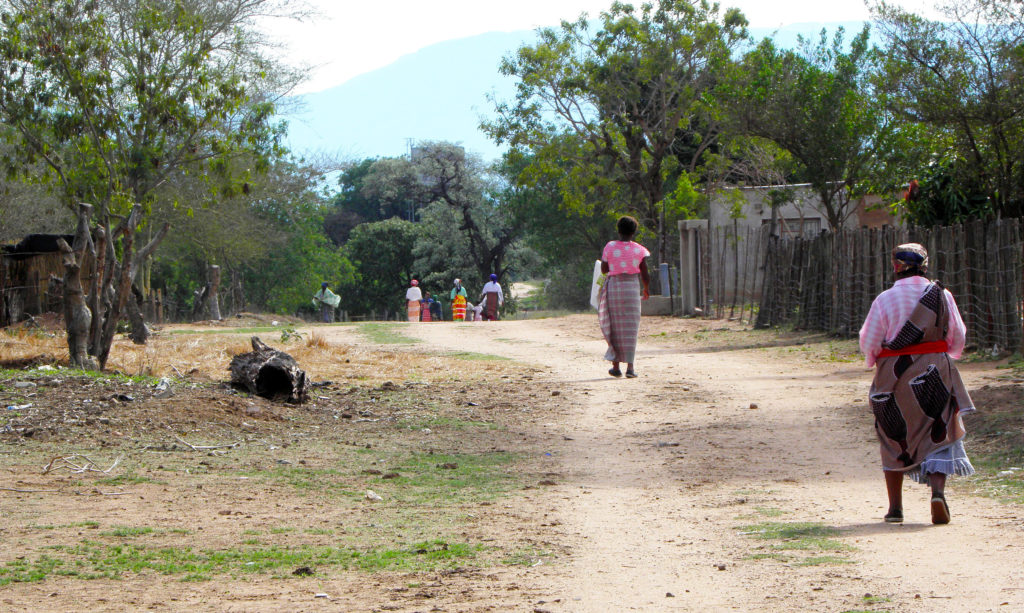
Village in Zimbabwe. Stock image.

In Filabusi, in south-eastern Zimbabwe the streets are packed with BMW X5s and Land Rover Defenders, modern houses paid for in cash are springing up and whisky is only sold by the bottle in the small town’s bars.

The three-year surge in gold prices, driven to a record this year as US President Donald Trump’s trade war bolstered its allure as a safe-haven, is enriching the country’s more than 700,000 informal, or artisanal, miners. They are flocking to gold mining belts and throwing a lifeline to an economy that’s been in turmoil since the turn of the century.

In the first five months of this year, those miners almost doubled the metal they delivered to a state refinery from a year earlier to more than 11 tons, swelling export income. At the current pace of production the country could earn a billion dollars more from gold shipments this year than in 2024.

“The prices have been very favorable to the miners which is something we are so happy about,” said Wellington Takavarasha, the president of Zimbabwe Artisanal and Small Scale for Sustainable Mining Council. “This year is looking very good. We must capitalize on this rally.”

It’s a scene that’s playing out across Africa for good and bad. Ghana, the continent’s biggest producer, expects to double the amount of gold it gets from small-scale miners to $12 billion by the end of next year and Ethiopia’s central bank said record deliveries of the metal are boosting its reserves. In the eastern regions of the Democratic Republic of Congo rebel groups are pressing ordinary citizens into mining the metal to capitalize on the price surge.

For the about 4% of people living in Zimbabwe, and their dependents, who are involved in the gold mining its been a vital source of income in a country where a botched and violent land reform program in 2000 saw exports slump, setting off a spiral of famine, hyper-inflation and currency collapses that persists to this day. Formal employment has withered and millions of citizens have emigrated to South Africa, the UK and other countries in search of economic opportunities. For now it’s their only hope and one that depends on the high prices holding.

So far there’s no sign that the rally will come to end. The price of the metal has surged 22% since Trump’s inauguration and is up by three-fifths since the beginning of last year. It hit a record of $3,432 an ounce on May 6 and Goldman Sachs forecast it will reach $3,700 by year end.

That’s pushed Zimbabwe’s central bank to paying cash for gold deliveries, targeting a record 40 tons of purchases this year after it earned $2.5 billion in 2024, a 37% jump from the year earlier. Artisanal producers supplied three-quarters of the metal delivered in April, whereas a few years ago the majority of their output would have been smuggled out of the country.

For artisanal workers like Mxolisi Dube, clad in navy blue work overalls with a miner’s torch strapped to his head as he walks through Filabusi, the gold price rally has been a boon. The 33-year-old began mining for gold illegally in 2008, becoming a “makorokoza,” a reference in the Ndebele language to the action of sifting gold-bearing river silt in a pan.

But now with higher prices and the cooperation of mine owners, who have have begun to invite artisanal workers onto their properties to boost production, his earnings have surged.

“You are assured of getting something at the end of the month,” said Dube, who has a copper dental filling and a brass chain around his neck. “You are protected. If you are not under a company you always have to run away.”

Mine owners, struggling with dilapidated equipment and a lack of finance, are increasingly urging those operators to swap the pans they used to sift through river sand for gold flecks for picks and shovels to help them extract as much gold ore to process as quickly as possible.

“This means we always have ore available and are milling more,” said Meli Nkulumo, plant manager at Macoomber 7 mine, which lies 12 miles west of Filabusi down winding dirt roads. Artisanal miners were invited onto the property two years ago.

At the mine, workers use Elon Musk’s Starlink internet service to compare the prices offered by the central bank to global benchmarks. Goldprice.org is their favored website.

“Higher gold prices are better for everyone,” said Thulani Ndlovu, the acting mine manager. “We can also look forward to a raise in salaries.”

Still, it’s backbreaking work that’s carried out around the clock. The miners break up rocks underground with picks, shovel it into a loader which is then winched to the surface. During their eight-hour shifts their only sustenance is maheu, a drink made from fermented corn meal.

But for artisanal miners the price surge has been life-changing and nowhere is that more evident than in Bekezela, a suburb of Filabusi where property owners are busy putting up brick houses ringed by electric fences and equipped with water storage tanks and solar panels. The town council is having to rezone more land for residential and commercial use and at car washes 4x4s queue to have the dust of the surrounding savannah rinsed off.

Drinking holes are busy with “all sorts of people” spending big, Thabo Mpofu, the manager of Next Generation bar, said, adding that he has seen clients buy bottles of Hennessey Cognac and pour them out on the ground as a show of wealth.

It’s also curbed crime including invasions of local mines by illegal operators.

“There’s nothing bad here that happens,” said Melusi Nyoni, the manager of Fred and Fernando mines, which are on the outskirts of Filabusi town, He now allows artisanal miners to work in shafts as deep as a kilometer (0.6 miles). “There is gold just all over,” he said.

Still, with rudimentary equipment and limited safety protocols, digging up the ore is dangerous work.

Informal miners accounted for 87% of the 186 deaths in Zimbabwean mining accidents, the Chamber of Mines said in its last annual report. As recently as late May four died at a mine near Chegutu in northern Zimbabwe when a wall of earth collapsed onto them, according to local media reports.

But as long as the rally lasts, that’s little deterrence for artisanal miners who until recently were eking out a living by camping out and panning for gold in remote wild areas for several months.

“The high prices mean in the near future I will also be seen in a car,” says Dube, a father of four. “I want a Toyota Hilux 4×4, with a 2.7 liter engine.”

(By Ray Ndlovu)

Zimbabwe to ban export of lithium concentrates from 2027

Arcadia lithium mine project in Zimbabwe. Credit: Huayou Cobalt

Zimbabwe will ban the export of lithium concentrates from 2027 as it extends its push for more local processing, mines minister Winston Chitando said on Tuesday.

Africa’s top producer of lithium, used in batteries to power renewable energy technologies, banned the export of lithium ore in 2022 and has been pushing miners to process more domestically.

Lithium miners in Zimbabwe, who are mostly from China, have been exporting concentrates to their home country.

Chitando said lithium sulphate plants were currently being developed at two Zimbabwean mines, Bikita Minerals, owned by Sinomine, and Prospect Lithium Zimbabwe, owned by Zhejiang Huayou Cobalt.

Lithium sulphate is an intermediate product which can be refined into a battery-grade material such as lithium hydroxide or lithium carbonate used in battery manufacturing.

“Because of that capacity which is now in the country, the export of all lithium concentrates will be banned from January 2027,” Chitando said during a media briefing following a weekly cabinet meeting.

In 2023, Zimbabwe gave lithium miners up to March 2024 to submit plans for developing local refineries, but softened its stance after prices of the metal collapsed.

Sinomine and Zhejiang Huayou Cobalt are part of a group of Chinese firms, including Chengxin Lithium Group, Yahua Group and Canmax Technologies, which have spent more than $1 billion since 2021 to acquire and develop lithium projects in Zimbabwe.

(By Nelson Banya; Editing by David Goodman and Jan Harvey)


Glencore halted some cobalt deliveries over Congo export ban

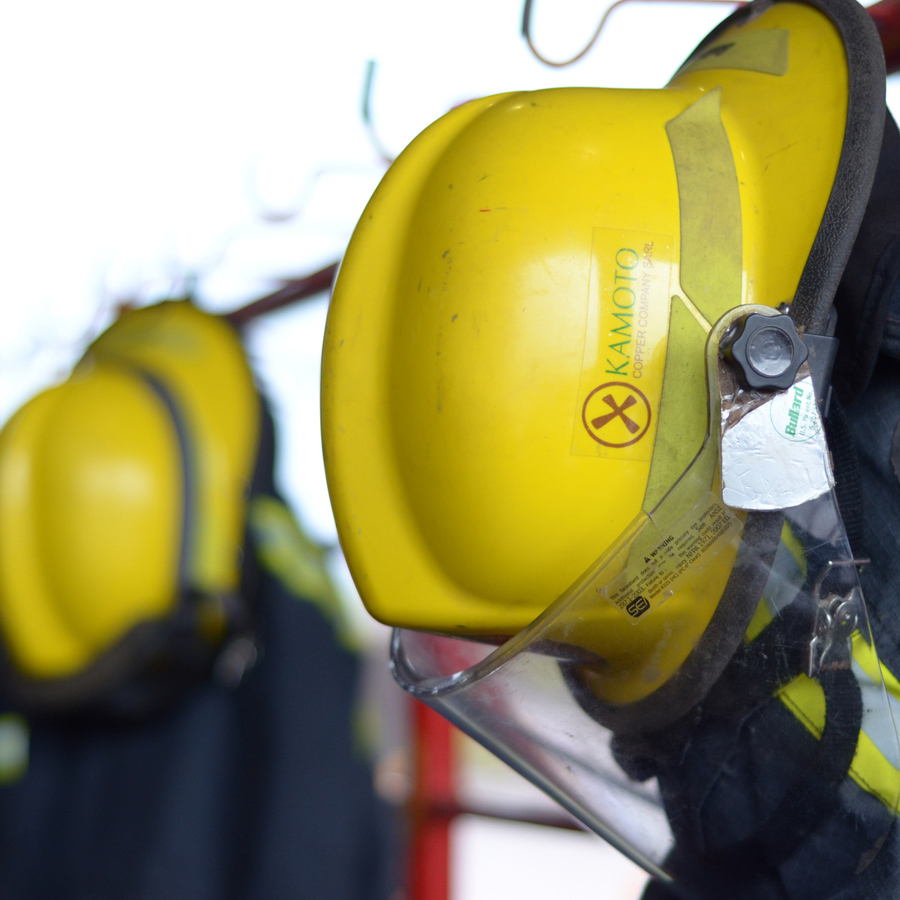
Kamoto Copper Company Fire Station, Kolwezi, DRC. Image: Glencore

Glencore declared force majeure on some deliveries of cobalt from Democratic Republic of Congo days after the government suspended exports of the battery material, three sources familiar with the matter told Reuters.

Congo, the world’s largest cobalt producing country, introduced a four-month ban on all cobalt exports in February in an attempt to curb a supply glut that helped send prices to nine-year lows and stifled its tax revenues.

As a result of the ban, London-listed Glencore took the rare step of declaring force majeure on some supply agreements for cobalt produced at its Congolese operations, invoking a measure meant for unforeseeable circumstances that prevent a contract’s execution, the sources said.

In a response to a Reuters request for comment, a Glencore spokesperson said on Wednesday that all of the company’s customers were receiving cobalt deliveries under the terms of their contracts.

Glencore, the world’s second-largest cobalt producing company, mined 35,100 metric tons of cobalt contained in concentrate and hydroxide at its Congo operations last year.

Many of its customers are still receiving cobalt under their contracts, the sources said.

Cobalt is a byproduct of copper production in Congo, which accounted for 220,000 tons, or 78%, of global cobalt output last year.

In metal form, it is used to manufacture parts for aerospace and military equipment. Most of the cobalt produced in Congo, however, comes in the form of hydroxide and is used to make chemicals for batteries used in electric vehicles and mobile devices.

Growing surpluses – partly due to lower than expected demand for electric vehicles and a supply surge from operations owned by China’s CMOC Group – drove down cobalt prices to nearly $10 a pound or $22,000 a ton in February.

Congo’s export ban and a force majeure declaration in March by Eurasian Resources Group have since helped prices recover by around 35% to trade at $15.80 a pound or $34,832 a ton on Wednesday.

Congo has not said whether the export suspension will be extended when the ban ends on June 22, or if the government would look at export quotas.

(By Pratima Desai; Editing by Veronica Brown and Joe Bavier)

Cyclic Materials to open $25M rare earths plant in Canada


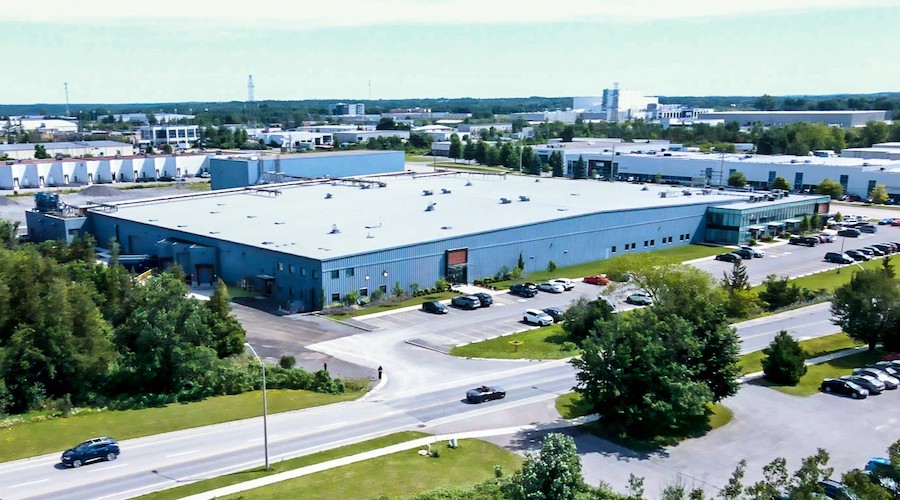
The Kingston Centre of Excellence will combine commercial-scale processing and research to advance a circular supply chain for rare earths and other critical minerals. (Image courtesy of Cyclic Materials.)

Cyclic Materials, a Canadian startup backed by Amazon and Microsoft, is investing $25 million to build a rare-earths recycling plant and research centre in Kingston, Ontario.

The company has developed proprietary technology that recovers rare earth elements from discarded products such as wind turbines and data-centre hard drives. In 2023, it launched a commercial demonstration facility using this process to extract rare earth magnets. By 2024, it had opened a second facility in Kingston to produce Mixed Rare Earth Oxide (MREO).

Last year, the federal government awarded Cyclic Materials $4.9 million to build a demonstration facility in Kingston. That project is now complete.

The new 140,000-square-foot Kingston Centre of Excellence will mark the company’s first commercial-scale “Hub” processing unit. It will begin operations in the first quarter of 2026 and is designed to process 500 tonnes of magnet-rich feedstock annually, converting it into rMREO. This recycled product contains critical components such as neodymium, praseodymium, terbium, and dysprosium. These elements are key to manufacturing permanent magnets used in electric vehicle motors, wind turbines and consumer electronics.

“With this Centre of Excellence, we’re advancing our core mission: to secure the most critical elements of the energy transition through circular innovation,”  chief executive Ahmad Ghahreman said. “Kingston is where Cyclic began—and now it’s where we’re anchoring our commercial future.”

Cyclic is also expanding internationally, with a recycling plant under construction in Mesa, Arizona, slated to open in early 2026.

Global demand for rare earths is climbing rapidly, driven by the surge in clean energy and digital technologies. China, the dominant player in the rare earth supply chain, has used its control of exports as leverage in geopolitical disputes, including in response to US tariffs.

While President Donald Trump announced on Wednesday a rare earth supply deal with Beijing, the search for secure and independent sources continues.


Rare earth startups eye slice of $1 billion bounty from Brazil

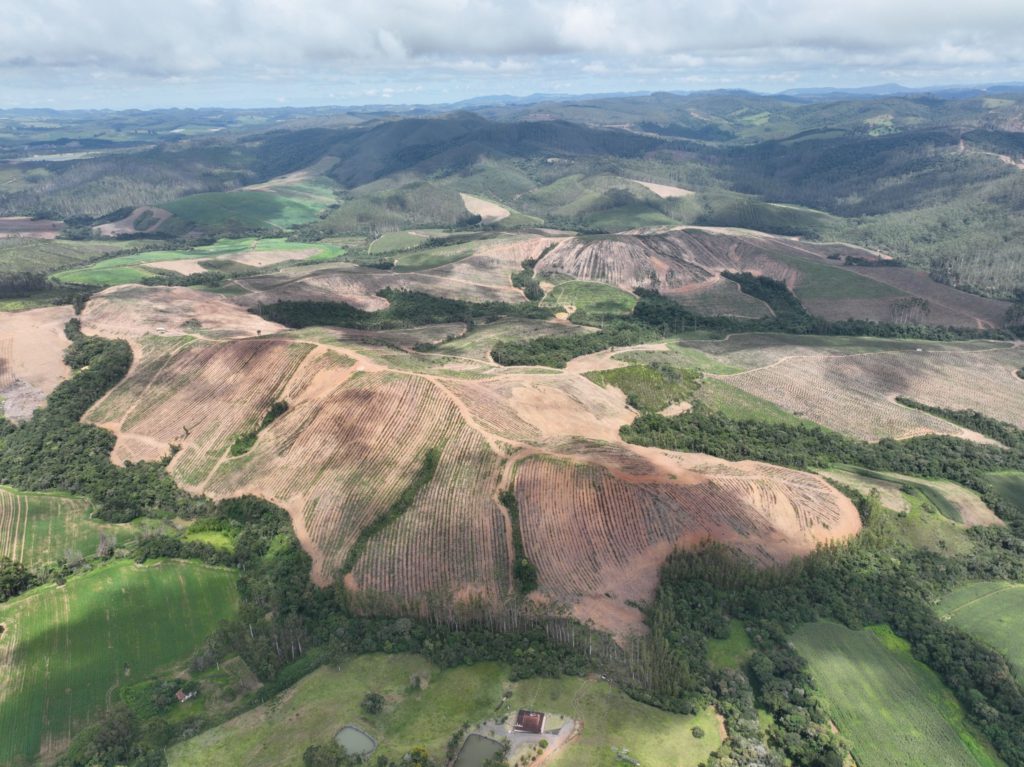
Caldeira rare earth project in Brazil. Image from Meteoric Resources.

Mineral explorers hoping to tap into surging demand for rare earths are vying for a slice of nearly $1 billion in Brazilian funding to help make their projects a reality in a nation with the biggest reserves after China.

Brazil is set to unveil on Thursday a shortlist of strategic minerals projects eligible for financial support from its development bank BNDES and government funding agency Finep. The state-owned entities have spent weeks sifting through 124 pitches for initiatives totaling $15 billion, including many by firms seeking to churn out rare earths used in magnets, batteries and high-tech gear.

The South American nation is looking to turn years of rare earth promise into reality when China is using its dominance in the industry as leverage in trade relations, prompting the US and other governments to seek stable supplies elsewhere as a matter of national security. Trade tensions over these obscure elements have created opportunities for startups.

Firms with early-stage projects in Brazil include Aclara Resources Inc., Viridis Mining and Minerals Ltd. and Meteoric Resources NL.

While a slice of the state funding may not be enough to get projects over the line, BNDES is also open to bringing in international institutions such as the Japan International Cooperation Agency — as long as projects offer a refining component. It could also mobilize private partners as well as Brazil’s climate change fund.

“The world has realized it can’t rely on just one country,” said Jose Luis Gordon, director of development, foreign trade and innovation at BNDES.

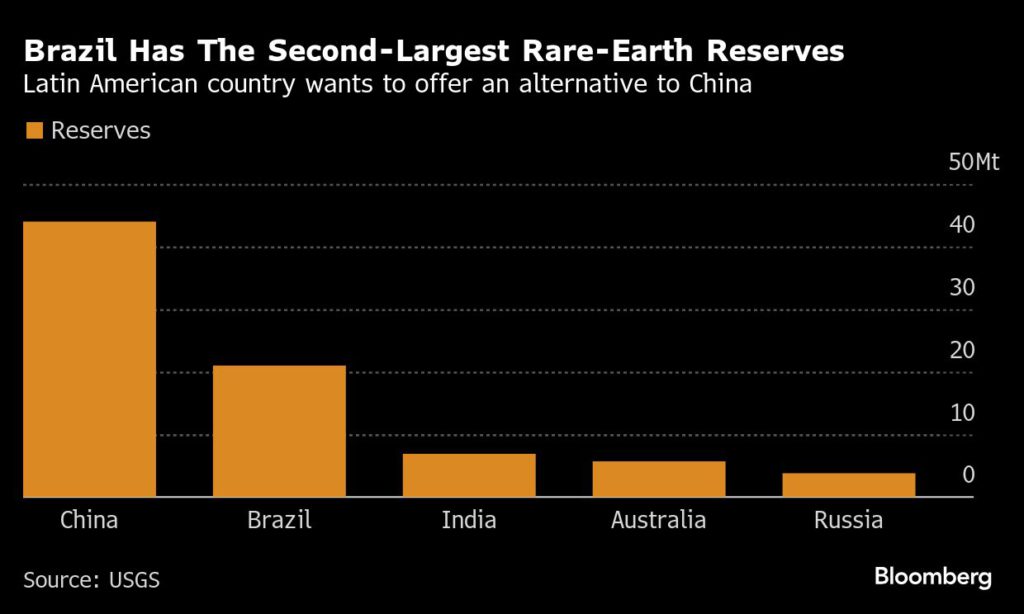
Brazil has 23% of global reserves, second only to China, according to the US Geological Survey. The country’s production is limited to Serra Verde Group — a company backed by US investors that has signed up mostly Chinese buyers.

“Brazil is copy-paste geologically to what the Chinese have,” Aclara Chief Executive Officer Ramon Barua said in an interview. “The difference is we’re doing it in a super environmentally friendly way.”

Rare earths are in the spotlight after China rolled out export restrictions while the US pushes for resource deals in Ukraine, Greenland and the Democratic Republic of the Congo. US President Donald Trump said Wednesday that a trade framework with Beijing has been completed, with China supplying rare earths and magnets.

It’s not the first time rare earths have captured global attention. In the early 2010s, companies including Molycorp Inc. and Lynas Rare Earths Ltd. rode a wave of investor interest on the obscure elements, until the market crashed as more supply came on stream and consumers switched to cheaper alternatives.

The global industry still faces plenty of hurdles beyond pulling elements out of the ground. One is competing with China in processing. Another is creating a price benchmark outside China’s opaque market. Consulting firm Wood Mackenzie estimates prices would have to double to encourage ex-China guaranteed supply.

“Investors are not willing to run all that risk, so there is a need for incentives, most likely from governments, that help them de-risk,” said Johann Schimd, head of metals consulting at Wood Mackenzie.

Prospective producers in Brazil are looking to engage with buyers in the US and other Western nations in a bet they’ll be able to tap low-cost funding. Aclara, for example, wants to mine and process in Brazil to supply a magnets plant in South Carolina.

Viridis has held talks with state banks in the US, Canada, Germany, France, Japan, Korea and Australia. The Perth-based firm is looking to diversify its pool of financiers and customers for more flexibility.

“The entire industrial chain still needs to be structured,” said Klaus Petersen, Viridis’ country manager in Brazil. “We’re only talking to development banks.”

(By Mariana Durao)


Resolution stakes claim in US critical minerals market


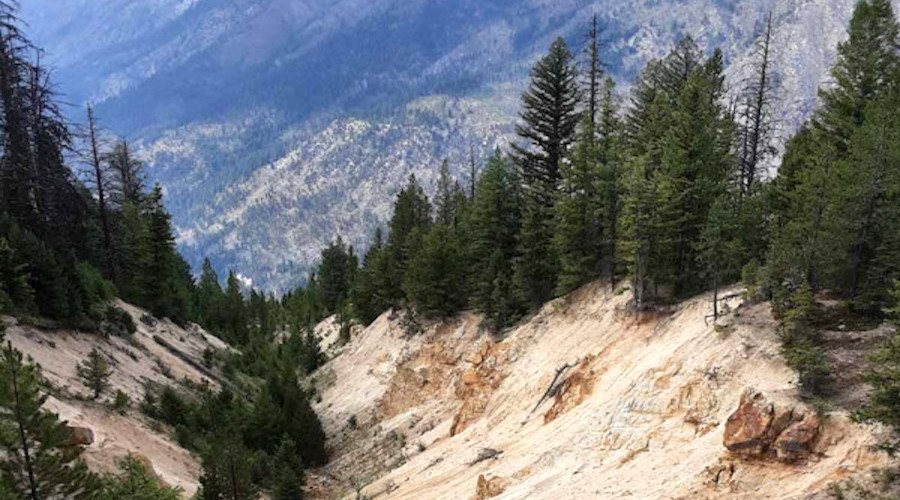
Antimony Ridge (pictured here) is one of the main exploration targets at Horse Heaven. (Image courtesy of Resolution Minerals.)

Australia’s Resolution Minerals (ASX: RML) is entering the critical minerals market in the United States with the acquisition of the Horse Heaven antimony-gold-tungsten project in central Idaho.

Located in the historic Stibnite mining district, the brownfield project borders Perpetua Resources’ (NASDAQ, TSX: PPTA) $2 billion Stibnite redevelopment, which is the only known antimony reserve in the US. 

Resolution will acquire Horse Heaven for $1 million in cash, along with 444.8 million shares and 222.4 million options exercisable at $0.018 each, expiring in July 2028. The project was previously held by Stallion Uranium (TSX-V: STUD).

The planned acquisition gives Resolution control of two highly prospective mineralized corridors — the Antimony Ridge Fault Zone (ARFZ) and Golden Gate Fault Zone (GGFZ). Both of these corridors host known gold, silver, antimony and tungsten mineralization associated with sheared and hydrothermally altered granodiorite.

The move is part of Resolution’s broader push into critical minerals, with a strategic focus on antimony and tungsten, both of which have reached record highs prices amid tightening export controls by China.

According to the US Geological Survey, China accounted for 60% of global antimony production in 2024. The US currently imports all of its antimony, which is vital for manufacturing solar panels, flame retardants and defence materials.

“As many governments around the world look to onshore their supply of critical minerals, such as antimony and tungsten, we have secured a commanding ground position with known antimony occurrences and next to what is likely to become the largest antimony producer in the US,” executive director Aharon Zaetz said. “The board considers that the acquisition of the Horse Heaven project has the potential to be a transformative event for RML,” he noted.

Shares in Resolution jumped on the news, closing nearly 6% higher in Sydney at A$0.019 apiece.  This leaves the company’s market capitalization at about A$9 million ($5.9 million). 

Resolution, which intends to start drilling this year, described Horse Heaven as a strategic complement to its existing Australian portfolio of antimony, gold and copper assets.

Horse Heaven’s neighbouring Stibnite project is one of 20 US government-prioritized assets to be fast tracked under an executive order signed by President Donald Trump, aimed at boosting domestic critical mineral production.

With an estimated 148 million pounds of antimony, Perpetua’s Stibnite project holds one of the largest reserves of the metal outside Chinese control.


GAO: The Third Ford-Class Carrier Will Be Delayed for Years

USS Gerald R. Ford
First-in-class carrier USS Gerald R. Ford was delayed for years, and workforce issues will delay the third - the future USS Enterprise - as well (USN file image)

Published Jun 11, 2025 7:07 PM by The Maritime Executive


First-in-class carrier USS Gerald R. Ford has completed her first full deployment and is gearing up for another, but problems with the Ford program remain, according to the Government Accountability Office (GAO). 

The Ford program encountered years-long delays during the construction of the first hull. The complexities added by Ford's all-electric launch and recovery gear, as well as her electromagnetically-actuated weapons elevators, caused difficulty at the yard and long after delivery. The keel laying was held in 2009 for a 2015 delivery date, but construction cost increased by $2.8 billion and the schedule for her commissioning slipped to 2017. She was delivered incomplete, without operable weapons elevators, and did not achieve initial operational capability until December 2021. Since then she has successfully deployed overseas, and she was recognized as the best all-around ship in the Atlantic Fleet last year. 

The program office has emphasized that USS Ford was a first-in-class hull, with the inherent issues that come with a first-of-a-kind vessel, and that the teething problems with her new technology were being worked out for the follow-on carriers. But in its annual assessment of defense procurement programs, GAO reports that the Navy expects significant additional delays to future hulls in the series. 

Continued issues with the weapons elevators aboard second-in-class CVN 79 could put the planned July 2025 delivery date for the vessel at risk, the program office reported. And the delivery date for CVN 80, the third Ford-class, has been pushed back to May 2030 - more than two years later than the Navy expected.

The problem, according to GAO, is in the availability of materials and skilled labor. HII Newport News has "persistent shipyard workforce issues" that the program office is trying to fix by revising schedules and creating incentives for workers, GAO said. 

Newport News has been trying to hire more yard employees, but it has been hard to retain people who are new to the shipbuilding industry, HII CEO Chris Kastner told defense media in April. The attrition rate for first-year new hires is so high - the Navy puts it at 50-60 percent per year - that HII is pivoting away from bringing in "green" staff and is focused on recruiting experienced personnel instead, competing with other yards for the same pool of skilled welders. Kastner acknowledged that this "means you're going to hire less and you're going to have to figure out how to get the work done."


Report: Constellation-Class Frigate is Three Years Late, 13% Overweight

Early illustration of the Constellation-class (USN)

Published Jun 11, 2025 7:45 PM by The Maritime Executive


The Navy's Constellation-class frigate program continues to wrestle with an incomplete functional design, which has delayed construction on the first hull and may push back delivery on follow-on vessels as well, according to the GAO. At present, the lead vessel is on track to deliver three years behind schedule and an estimated 13 percent overweight. 

"The Navy and shipbuilder continue to revise basic design documents, including the ship's general arrangement drawings - the design drawings that all other design aspects are based on - and structural components of the ship," reported GAO on Wednesday. "This approach is inconsistent with shipbuilding leading practices."

The Constellation-class began as an adaptation of the Italian-French FREMM, an existing design that has proven popular in Europe. Initially, the Navy sought to achieve cost savings and reduce technical risk by keeping 85 percent of the original design. Instead, it changed 85 percent of the design to adapt the vessel to Navy requirements, and it has yet to achieve design stability. 

In October 2024, the Navy informed GAO that it expects to see about 759 tonnes of weight growth (13 percent) "due in part to the underestimation of applying Navy technical requirements to a foreign ship design." Weight growth can affect performance, and it limits the amount of extra equipment that can be added to the warship in future years to adapt to changing technology. The program office is working with the shipyard to reduce weight "through a phased implementation across the first three ships."

Change orders and delays tend to increase costs. So far, the shipbuilder has asked for equitable adjustment of the contract payment terms five times, GAO reports - a sign that costs will rise. The Navy has not released the amounts of the requests, and the information is "not suitable for public release," GAO reported.