Wednesday, June 11, 2025

The Computing Industry is Running Out of Energy

  • The growth of energy efficiency in traditional computer chips is slowing due to physical limitations, coinciding with a rapid increase in energy demands from the tech sector, especially artificial intelligence.

  • Reversible computing, a method that saves energy by undoing computation rather than erasing it, is gaining traction as a potential solution to overcome these energy challenges.

  • Alongside reversible computing, other technologies like quantum computing and alternative algorithms are being explored to address the growing energy needs of the digital industry.

The computing industry is running out of energy. Though the technology in computer chips has been growing smaller and more energy efficient at a rapid clip for decades, advancements are set to slow down rapidly due to fundamental physical limitations. This is unfortunate timing, as the tech sector’s energy demands (and chip demands) are set to skyrocket as the growth of artificial intelligence’s already prodigious energy footprint outpaces the growth of new energy production capacity. 

“The semiconductor industry will soon abandon its pursuit of Moore's law,” Nature reported back in 2016. “Now things could get a lot more interesting.” Moore’s law refers to the principle that the quantity of transistors that fit on a microprocessor chip will double approximately every two years. While that law has largely held true, it’s no longer realistically viable. “The doubling has already started to falter, thanks to the heat that is unavoidably generated when more and more silicon circuitry is jammed into the same small area,” the Nature article continued.

According to a roadmap report from the Institute of Electrical and Electronics Engineers (IEEE), the energy efficiency of digital logic will plateau before the end of the decade. Traditional computer chips have pretty much gotten as small as they possibly can, barring a major overhaul in the most fundamental ways that computer chips work.

And some scientists argue that this is exactly what’s in order – a complete overhaul. One such alternative approach is through reversible computing. In reversible computing, no information is ever deleted – a total reorientation of how information is processed and stored. Erasing information requires computational energy, which is lost as heat. Undoing computation – rather than erasing the steps – can actually save energy in the long run. 

“We keep getting closer and closer to the end of scaling energy efficiency in conventional chips,” says Michael Frank, a pioneer and decades-long advocate of the still-nascent technology. says. According to Frank, the coming stall-out of semiconducting advancement is “going to require more unconventional approaches like what we’re pursuing.”

While this kind of computation has languished in academia and thought experiments for decades, it might finally have its day in the sun. “There aren’t that many other ways to improve power,” Christof Teuscher, a researcher specializing in unconventional approaches to computing at Portland State University, recently told Quanta Magazine. “Reversible computing is this really beneficial, really exciting way of saving potentially orders of magnitude.” As such, the relatively obscure model is gaining traction in tech circles.

This burgeoning tech theory is not new, but is more relevant – and therefore closer to becoming a practical reality – than ever before. In fact, a reversible computing chip startup called Vaire Computing is already hard at work developing a commercial model. They’ve already announced the tape-out stage of the chip design, which the company claims is capable of recovering half of the energy used in the chip’s resonator circuit.

This rapid advancement in reversible computing research and development is driven by its unique relevance and utility in the context of artificial intelligence. “Computations in AI are often run in parallel, meaning different processors each run one part of a computation. This creates an opportunity for reversible computing to shine,” stated a recent report from IEEE Insider. “If you run reversible chips more slowly, but use more of them to compensate, you end up saving energy: The advantage of running each chip more slowly wins out against the disadvantage of running more chips,” the report went on to say.

Reversible computing isn’t the only innovative response to runaway digital energy demand out there, but it may soon become one of the forerunners. It’s competing against other equally futuristic-sounding technological alternatives such as quantum computing, as well as (relatively) simpler solutions like algorithms based in integer addition instead of the more traditional floating-point multiplication (FPM). It’s still unclear which of these approaches will become the new normal, but it’s clear that as Moore’s law loses steam, disruption is impending. 

By Haley Zaremba for Oilprice.com


Corporate World Goes Quiet on Climate Pledges

  • Major companies are quietly scaling back climate language in reports, with firms like American Airlines, GM, and Coca-Cola reducing or removing net-zero and emissions-related content.

  • Profitability and political headwinds are driving the retreat.

  • Corporate climate messaging is becoming more cautious, with 80% of executives adjusting their transition narratives and half avoiding net-zero talk entirely.

Companies in various industries are removing climate change and net zero language from their reports, the Wall Street Journal reported this month, lamenting the fact that corporates were “watering down” their commitments in the area. It may be temporary—or it may be the natural thing.

Analysis of the proxy statements of a number of large businesses conducted by the WSJ showed that many of them were, it seems, less willing to discuss climate change and their response to it in as much detail as they were a few years ago. The WSJ suggested it was an about-turn prompted by the energy policies of the Trump administration and the axing of the Inflation Reduction Act.

Companies “implicated” in watering down their climate change language included American Airlines, Kroger, American Eagle Outfitters, and e.l.f. Beauty. Their crime was either reducing the amount of text dedicated to climate change and the respective company’s efforts to counter it or entirely removing such text.

The above are not the only ones that have gone rather general on climate change. Coca-Cola only mentions climate and emissions in general terms and briefly in its latest proxy statement. GM also does not go into a lot of detail on its net-zero efforts, and neither does United Airlines. Yet there are perfectly respectable reasons for this, even from a climate activist perspective.

Most of these companies produce separate reports regarding climate change and emission reduction because it is the done thing these days. Indeed, one of them told the WSJ as much. “We periodically adjust the copy used in the company’s external messaging and communications,” a spokesperson for American Eagle Outfitters told the publication. “AEO’s commitment to reducing greenhouse-gas emissions remains unchanged.”

Other comments from the mentioned companies follow the same lines: these businesses have already internalized emission-cutting language and action, and no longer feel the need to talk loudly about it. And, of course, there’s the Trump factor at work.

The current administration axed billions on subsidies for transition-related businesses. As a result, these businesses are suffering a fate even worse than theirs already was because of raw material inflation, higher borrowing costs that had nothing to do with the Trump admin, and, notably, a pullback from investors that realized they had grossly overestimated the speed, at which their investment in net zero would be returned.

Trump’s policies certainly hurt the coolness aspect of net-zero pledges and pronouncements but it was the lack of promised profits that likely played a bigger part and led to companies toning down these pledges and pronouncements.

“The whole sector — solar, wind, hydrogen, fuel cells — anything clean is dead for now,” one energy transition-focused hedge fund manager told Bloomberg earlier this year. “The fundamentals are very poor,” Gupta, who manages some $100 million, told Bloomberg, adding, “I’m not talking about long term. I’m talking about where I see weakness right now.” Apparently, the long-term outlook for net zero remains bright, but the short term is more problematic.

Yet considerable problems abound not just in the industries directly related to the energy transition, such as it is. Even companies in other industries, such as air travel and cosmetics, are finding it difficult to stick to their pledges—at least without losing a lot of money. Tracking and reporting Scope 3 emissions, for instance, requires substantial resources and carries equally substantial costs. After all, it involves tracking the emissions of an entire supply chain from suppliers to consumers. Many corporations are realizing investing the money, time, and effort in this endeavor may not be worth it, especially with a federal government that does not care about any sort of energy transition at all.

Another thing they are realizing is that, put crudely, emission tracking does not pay—not without a solid subsidy back that is at present absent. It was the Wall Street Journal again that reported how transition-focused startups were folding as Trump axed those subsidies. EV batteries, direct air capture, and even solar power, which was supposed to have become well established, are now suffering the consequences of overhyping. With the benefits that were promised to come from net zero never materializing, unlike costs related to the transition push, could anyone really blame corporate leaderships for removing net-zero language from their reports?

Indeed, a recent survey from the Conference Board that the WSJ cited in its report found that as much as 80% of corporate executives said their companies were “adjusting” their transition narrative—for fear of backlash that has prompted 50% of the respondents to entirely stop talking about net zero. That backlash can hardly be blamed on Trump. It is a natural consequence of the overhyping that never delivered on the promises made. What is happening, then, is a natural process that, one might argue, was even late in coming.

By Irina Slav for Oilprice.com

 China's Petrochemical Reliance on U.S. Outweighs Rare Earth Trade


  • China imports substantial volumes of petrochemical feedstocks from the US, far exceeding the value of rare earth metals the US imports from China, indicating a mutual dependence between the two nations.

  • Tariffs and export restrictions imposed during the trade war, particularly on feedstocks like propane and ethane, threaten to disrupt these established trade flows and impact industries on both sides.

  • China's petrochemical plants, especially those reliant on US propane and ethane, face potential shutdowns or increased costs due to difficulties in finding alternative supplies, highlighting the vulnerability of global supply chains to trade disputes.

US petrochemical producers may have found themselves on the front line of global trade wars, BNEF reports, with China’s dependence on the US for feedstocks (see "Chinese Plastics Factories Face Mass Closure As US Ethane Supply Evaporates") blunting the impact of its dominations of exports of rare earth metals.

China imported more than 565,000 barrels per day of petrochemical feedstocks from the US in 2024 according to the Energy Information Administration, with a value of over $4.7 billion. That dwarfed the $170 million of rare earths the US imported last year, about 70% of which came from China, according to the US Geological Survey.

The figures show the dependence the US and China have developed on each other by ever tightening trade links over the past few decades. While China has a tight grip on refining many metals crucial for industry, it also takes in niche chemicals from the US that are difficult to buy elsewhere.

China leans on naphtha to produce most base chemicals, which are processed further to end up in everyday items like electronics and clothing. However, some plants can switch to cheaper propane when the economics make sense, which they do regularly. Propane dehydrogenation plants however can’t process alternatives like naphtha. The US accounted for over half of all China’s propane imports in 2024. 

US producers have looked to China to buy their ballooning volumes of feedstock, the market value of which has almost quadrupled since 2020. China accounts for almost half of all new mixed-feed ethylene and propylene production capacity set to come online globally over the next four years, based on data compiled by BloombergNEF.

A forced divorce

The honeymoon period may be about to end. Following the implementation of tariffs by President Donald Trump’s administration in April, China retaliated with its own on US imports — including a 125% tariff on feedstocks like propane and ethane. The duty effectively killed the economics of importing US feedstocks. 

Alternative sources of propane may be hard or expensive to come by, with producers in the Middle East sending most of their supplies to India, South Korea and Japan. While some rerouting could take place, Middle Eastern players could use the lack of alternatives for China’s propane dehydrogenation plants to charge a premium. China’s propane dehydrogenation operators, like Hengli Petrochemical, have already suffered from weak margins over the past years. Many may opt to shut their operations temporarily.

A messy settlement

China moved quickly to remove tariffs on US ethane as trade talks commenced. However, while China seems willing to buy US ethane, the US administration may no longer allow it. Enterprise Products Partners — the largest US-based exporter of petrochemical feedstocks — received a notice on Wednesday from the Bureau of Industry and Security at the US Department of Commerce, denying licenses to export ethane to China on the basis that such flows “pose an unacceptable risk of use in or diversion to a ‘military end use’ in China.” Energy Transfer received a similar communication.

China’s ethane cracking capacity is dwarfed by its capacity to process naphtha and propane, but almost all of its ethane imports come from the US. The restrictions will have a significant impact on the Lianyungang and Tianjin plants, owned by Satellite Chemical, Sinopec and INEOS. SP Chemicals, a Singapore-based producer, sources most of its feedstock from Enterprise Products Partners.

As the trade war continues, it appears commodities may lead the confrontation, with players on both sides set to feel the pain.

By Zerohedge.com


China’s Rare Earths Weapon Could Kill Europe’s Auto Industry

  • China’s new rare earth export restrictions are throttling global supply chains, posing a direct threat to Europe’s auto industry and its mandated EV rollout.

  • Automakers warn of looming shutdowns due to complex and slow licensing requirements for rare earth magnets.

  • The crisis exposes dangerous overdependence on China, sparking renewed calls in the EU and U.S. to build independent rare earth supply chains.

China earlier this year introduced restrictions on its exports of rare earths. The move marked a new stage in the US- China trade spat, when the two sides no longer tried to out-tariff each other but took to more concrete steps. The problem is, the restrictions don’t just apply to U.S. companies. And they may well deliver the fatal blow to Europe’s struggling auto industry.

China controls 90% of the world’s rare earths processing capacity. It is the indisputable, if not exactly celebrated in the West, master of the rare earths industry. And now, it is using this position to make a point to trade partners that have gone above and beyond to restrict Chinese exports to their own countries and regions—essentially the same thing that Washington does when it uses the dominance of the dollar to sanction governments it doesn’t see eye to eye with.

Rare earths are used in a perhaps surprisingly wide variety of products. More specifically, it’s rare-earth magnets that are troubling carmakers on both sides of the ocean. “Without reliable access to these elements and magnets, automotive suppliers will be unable to produce critical automotive components, including automatic transmissions, throttle bodies, alternators, various motors, sensors, seat belts, speakers, lights, motors, power steering, and cameras,” the Alliance for Automotive Innovation, an industry body, wrote in a letter addressed to the Trump administration in early May.

The letter, cited by Reuters in a recent report on the rare earths restrictions, is one of what looks like a cry for help that is only going to get louder. It was signed by auto industry leaders including Toyota, Volkswagen, and General Motors, which thanked the administration for trying to resolve the issue. If they didn’t, the carmakers said, it would be only a matter of time before car factories started shutting down.

The same is happening in Europe, and it’s worse—because with Trump, U.S. carmakers no longer have to worry about EVs. With the current European parliament and the Commission, local carmakers do have to worry about EVs, a lot. Because EVs feature greater amounts of those rare earths than internal combustion engine cars. And European carmakers have been mandated with the production and sale of certain minimum numbers of these EVs over the next three years.

“I informed my Chinese counterpart about the alarming situation in the EU car industry — the rare earth and permanent magnets are essential for industrial production… this is extremely disruptive for industry,” the European Union’s trade commissioner, Maros Sefcovic, said this week, as quoted by the Financial Times. He added that the “Carmakers are warning of huge production difficulties in a short period of time.”

The clock, in other words, is ticking and China does not really seem in a hurry to stop it. The restrictions that Beijing implemented in mid-April are not literal—or direct. They are in the form of a new licensing regime for anyone who wants to buy rare earth magnets from Chinese producers. To do that, the prospective buyer needs to apply for a license, provide a substantial amount of information, and wait. As a Bosch spokesperson described it, the application process was “complex and time-consuming, partly due to the need to collect and provide a lot of information.”

Because of this complexity, only a few car parts suppliers have been granted such licenses, making the car companies’ freak-out only a matter of time, really. But this is coming at a really bad time for European carmakers, despite the substantial rise in EV sales. They are still to turn in a solid profit on their electric cars and they are supposed to be making ever more of these—which means a lot more rare earths.

Things are not that swell in the United States, either, after President Donald Trump accused the Chinese of violating a deal the two earlier agreed, on the temporary relaxation of trade warfare, including tariffs and other trade restrictions—only to be slapped back with the accusation that he did that first, by restricting semiconductor exports.

Things are not looking good for the car industry right now but there is, as always, a silver lining. It consists in the fact that the world is entirely dependent on a single source of rare earths and this is not a sustainable or secure state of affairs. There has been a lot of talk in both Europe and the United States about building their own supply chains in such critical materials but action has not really been forthcoming. Even if it was, building a supply chain from scratch takes many years—just ask China. Yet the rare earths drama may boost Europe’s resolve to actually start working on that supply chain, however long it takes to build it. Import dependence can be fatal.

By Irina Slav for Oilprice.com

IMPERIALISM 

Central Asia's Debt Burden to China Examined

  • China's shift from lending to debt collection under the Belt and Road Initiative is placing financial pressure on developing countries, including Central Asian states.

  • While some countries like Kazakhstan and Uzbekistan have manageable debt levels, others like Kyrgyzstan and Tajikistan risk falling into a Chinese debt trap.

  • China faces a challenge in balancing debt recovery with maintaining positive geopolitical relations, as pushback could undermine its strategic goals.

China has shifted from the world’s largest creditor nation to the globe’s biggest debt collector. Central Asian states owe billions to Chinese entities, but their geographic importance to Beijing is helping protect them from strong-arm repayment tactics.

A report issued by the Australia-based Lowy Institute, Peak repayment: China’s global lending, charts China’s transition from “lead bilateral banker to chief debt collector of the developing world.” It shows that China’s lavish loaning under the auspices of its Belt & Road Initiative (BRI) from 2013-2018 is now set to inflict lots of fiscal pain on recipients.  Debtor nations, many of them described in the report as “the world’s poorest and most vulnerable countries,” owe $22 billion to China in 2025.

“Beijing has transitioned from capital provider to net financial drain on developing country budgets as debt servicing costs on [BRI] projects from the 2010s now far outstrip new loan disbursements,” the report states. “In 2012, China was a net drain on the finances of 18 developing countries; by 2023, the count had risen to 60. In full, China’s net flows to developing countries dropped to negative $34 billion in 2024.”

At the start of 2024, Central Asian states collectively owed Chinese state entities roughly $20 billion, with Kazakhstan’s having the largest share at $9.2 billion. Kyrgyzstan’s and Uzbekistan’s debts totaled almost $4 billion each, while Tajikistan owed China about $3 billion. 

The debt amounts for Kazakhstan and Uzbekistan appear manageable within the context of those nations’ overall GDP numbers, according to economic experts. Meanwhile, Kyrgyzstan and Tajikistan can be considered prime candidates for falling into a Chinese debt trap. Turkmenistan’s debtor status, given the country’s opaque governing system, is murky, but Ashgabat at the same time is the only Central Asian state running a trade surplus with Beijing, due to its abundant natural gas exports.

A combination of factors is behind China’s transition from lender to debt collector, including the slowdown of China’s domestic economy. But the current surge in debt collection is also a natural outgrowth of the terms of many BRI loans, which included grace periods of up to five years followed by relatively compressed timelines for loan repayment. “Because China’s Belt and Road Initiative lending spree peaked in the mid-2010s, those grace periods began expiring in the early 2020s,” the report notes. “The early 2020s was always likely to be a crunch period for developing country repayments to China.”

Lowy Institute analysts seem to believe China is unlikely to turn the screws on Central Asian states. The report notes that Beijing is continuing to extend loans to “strategic and resource critical partners” including Kazakhstan, Kyrgyzstan and Tajikistan.

The change in Chinese lending behavior could well hamper the ability of developing nations, including Central Asian states, to hit growth targets, reduce poverty rates and address global-warming related issues.

“The burden from Chinese debts coming due is also part of a broader set of severe headwinds, particularly for the poorest and most vulnerable economies,” the report states. “An increasingly isolationist United States and a distracted Europe are withdrawing or sharply cutting their global aid support. Reliant on an open, rules-based global trading system, developing economies must also grapple with the impact of new trade-war shocks and the specter of punitive US tariffs being levelled against them.”

Beijing too faces tough geopolitical choices; Chinese officials will need to strike a delicate balance between pressing debtor nations to meet their obligations while not engendering hard feelings that could undermine the country’s geopolitical interests. “Pushing too hard for repayment could damage bilateral ties and undermine its diplomatic goals,” the report states. “At the same time, China’s lending arms, particularly its quasi-commercial institutions, face mounting pressure to recover outstanding debts.”

It’s not just Beijing’s debt-recovery actions that may pose an image problem for the country. An investigative report by the Uzbek outlet Anhor.uz published on June 4 indicated that Chinese entities are engaging in what appear to be predatory business practices in Uzbekistan. The report documents the influx of Chinese companies into the country’s construction sector resulting in a decrease in the price of cement to a point where local Uzbek cement-makers can’t compete and are being driven out of business. 

“Over the past two years, almost half of Uzbekistan’s cement plants have ceased operations — only 24 remain, nine of which belong to Chinese companies,” the Anhor report states.

By Eurasianet.org


Stainless Steel Market Reacts to Tariff Hikes

  • The US government doubled tariffs on steel and aluminum, causing significant disruption and price adjustments in the stainless steel market.

  • Domestic stainless steel producers are prioritizing common grades like 304, potentially leading to supply shortages for other grades.

  • While the long-term impacts are uncertain, ongoing trade negotiations suggest that further adjustments to tariffs and market conditions are likely.

Via Metal Miner

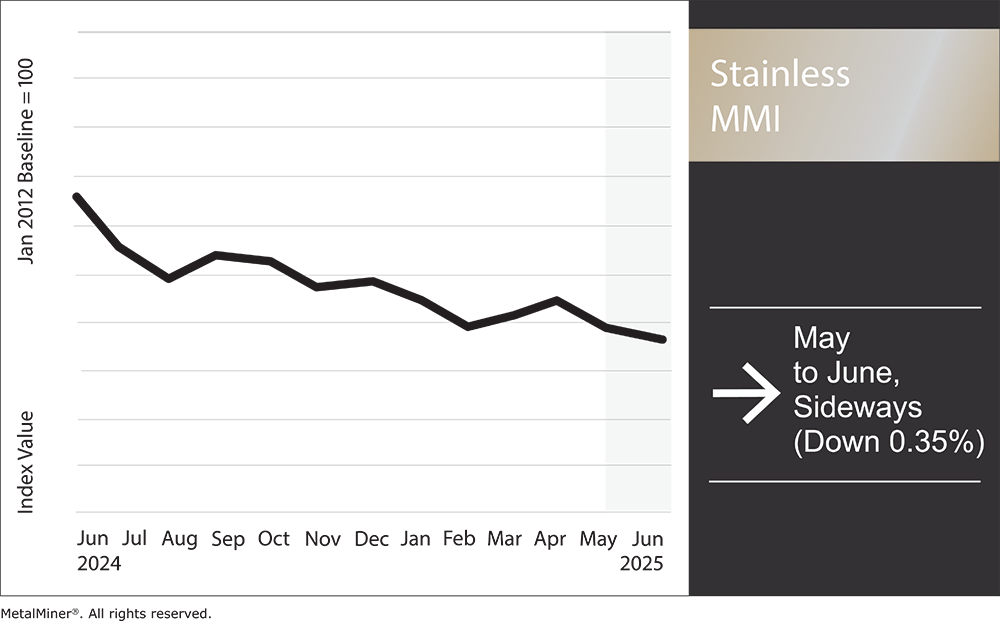
The Stainless Monthly Metals Index (MMI) moved sideways, rising by a modest 0.35% from May to June. However, the stainless steel price remains under pressure from several factors.

stainless MMI

Tariff Hike Rattles the U.S. Stainless Steel Market

In a move few saw coming, President Trump doubled Section 232 tariffs on steel and aluminum imports from 25% to 50%. The duty increase took effect on June 4, just days after its announcement, leaving both suppliers and buyers with no real window to prepare. 

The tariff increase proved controversial, drawing concern from many industry experts. According to stainless analyst Katie Benchina Olsen, “The U.S. flat-rolled stainless steel market has always required imports to satisfy the market demand. In some years, import penetration exceeded 30%, with steady state hovering around 18%.”  Because of this reliance, the “rapid implementation of a 50% tariff is wreaking havoc on the stainless steel industry. This, in turn, seems destined to also impact the stainless steel price.

Already, importers of products that U.S. mills cannot support are having to go back to their customers for the second time this year to adjust pricing. This is material that the customer has to accept to pay the 50% tariff.” Don’t miss the next tariff adjustment. Opt into MetalMiner’s free weekly newsletter.

How Stainless Mills are Responding to Tariffs

As those relying on imports get pinched by the tariff hike, the quick implementation of such a significant increase in duties also poses considerable risks for stainless steel price stability from domestic producers. The only reprieve to the tariff hike seems to be the weak market conditions, which have plagued the industry for over a year. This might explain why U.S. mills have yet to adjust prices, as market oversupply, at least for now, remains a limiting factor.

Depending on how long tariffs last, a lot could change. Higher duties will allow domestic producers to prioritize more favored grades of stainless, including common grades like 304, which represents the bulk of demand. This means most buyers will not face shortage risks, especially as common austenitic grades like 304 experienced oversupply conditions ahead of tariffs. However, the same could not be said for ferritics, where supply continues to appear increasingly tight. 

Some Stainless Grades May Feel the Pinch

While 304 will remain readily available to buyers sourcing domestically, other grades will likely prove less lucky. As mills prioritize material like 304 to fill capacity, they will likely turn away other orders more often.

Some of this behavior has already started to occur. Ahead of tariffs, Outokumpu’s discount adjustment released in February increased prices for a number of stainless grades the mill prefers not to produce. By late May, NAS had reportedly started to turn away orders for bright annealed.

Tariff Adjustments May Be on the Way

While mills will likely remain sensitive to demand destruction, price increases will probably follow in the coming months, assuming tariffs stick around. However, some argue that the latest tariffs may prove more temporary than some might expect. 

Although part of the Trump Administration’s intention is to support domestic producers, trade negotiations still represent the larger goal. As MetalMiner’s Stuart Burns points out, “the Trump administration announced the UK would not face the additional 25% increase to 50% on steel and aluminum while negotiations continue.” This decision likely serves as a cue to other countries looking to secure a new trade deal with the U.S.

Stainless Steel Prices Just Part of the Bigger Picture

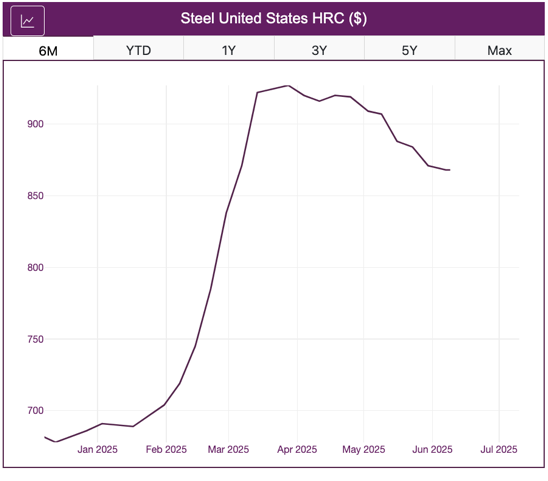
Aside from stainless, the tariff exemption appeared to temper the impact of the tariff hike on other markets. Carbon steel prices remained bearish in the following days. This signals that markets anticipate further tariff changes and reductions in the coming months.

image

While deals may begin to roll in and offer relief to stainless steel buyers, it is worth noting that supply conditions are still likely to change. Countries like Vietnam and Indonesia, the biggest culprits in suppressing global stainless steel prices, are unlikely to secure exemptions or quotas.

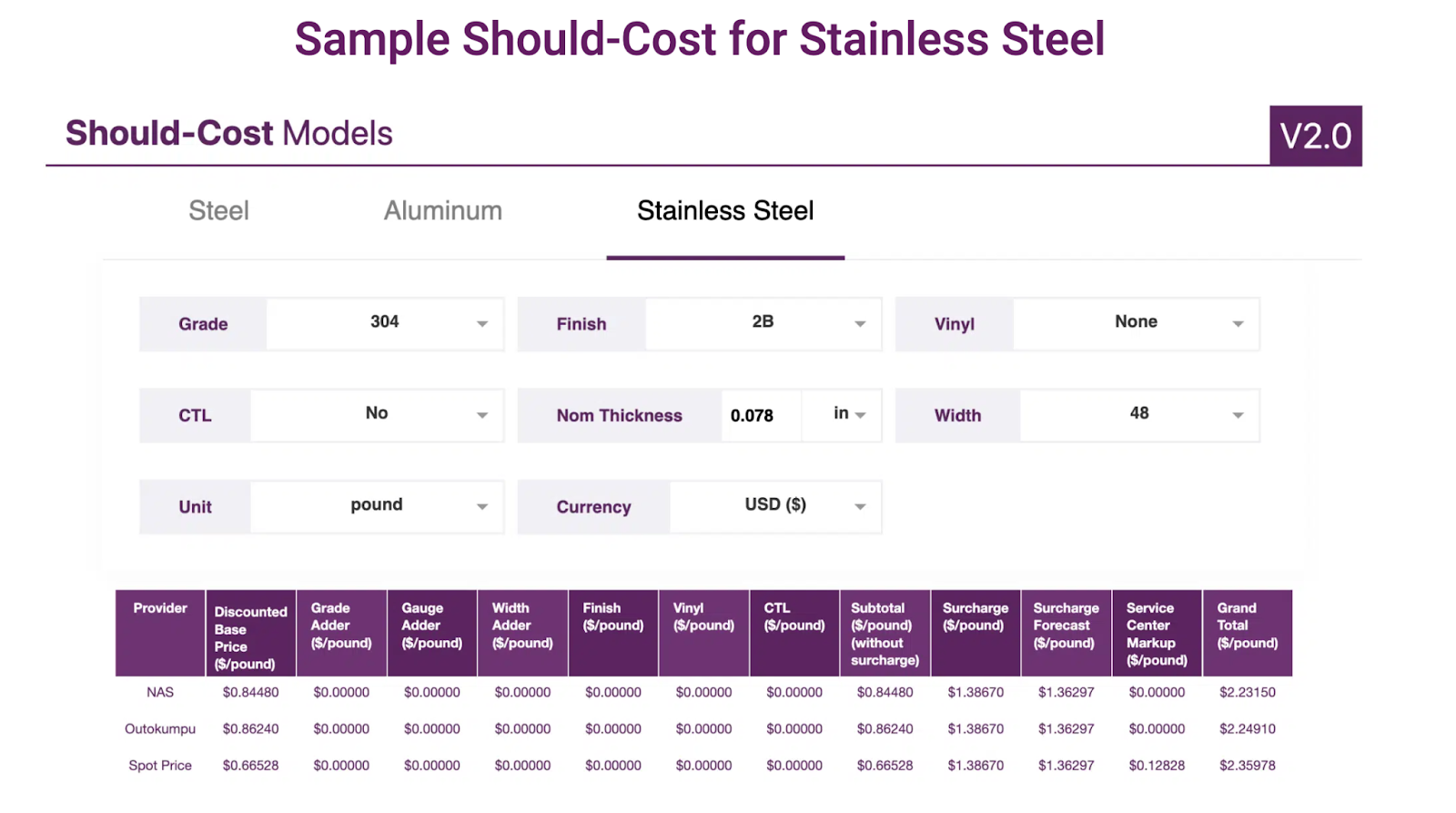
should-cost

Meanwhile, lackluster demand conditions will help mitigate the impact of higher duty rates in the short term. However, reduced supply from the cheapest Asian producers—primarily responsible for dragging the global price curve lower—will inevitably offer more leverage to domestic producers with regard to stainless prices.

By Nichole Bastin


"The Stainless Steel Rat" 

by Harry Harrison is a science fiction novel written in the late 1950s. The story follows the protagonist, James Bolivar diGriz, better known as "Slippery Jim," a clever and resourceful thief navigating a futuristic society where crime is a rare occurrence but he thrives as a master criminal. The book explores themes of individuality, freedom, and the nature of crime in an overly civilized world. In this fast-paced 


Guyana Prepares First Export Cargo from New Offshore Platform

Guyana's offshore oil industry is set to take a major leap forward as the One Guyana floating production, storage, and offloading (FPSO) vessel readies its first export cargo. According to Reuters, the inaugural shipment of the newly branded 'Golden Arrowhead' crude grade is slated for late August to early September, marking a critical milestone for the ExxonMobil-led consortium that includes Hess Corp. and China's state-run CNOOC.

The One Guyana FPSO, now the fourth production vessel operating in the prolific Stabroek Block, will push Guyana's total offshore production capacity beyond 900,000 barrels per day (bpd). The first cargo will reportedly consist of approximately one million barrels, which the consortium plans to market via a public tender in the coming weeks.

The debut of Golden Arrowhead adds a new light, sweet crude grade to the global market, positioning Guyana favorably among producers of high-quality blends highly sought after by refiners. 

Guyana is rapidly climbing up the ranks of global oil exporters, having shipped 582,000 bpd last year. Industry forecasts anticipate Guyana could reach 1.7 million bpd by 2030 if current expansion plans proceed as scheduled, as reported by Reuters. 

This latest development, including the upcoming tender, highlights Guyana’s growing strategic importance in the global crude supply chain. With ExxonMobil, Hess, and CNOOC maintaining aggressive development schedules in the Stabroek Block, Guyana is on track to retain its status as one of the fastest-growing non-OPEC oil producers.

In just six years, Guyana has transformed from one of South America’s poorest nations into the world’s newest petrostate. With a population under one million, the country is now projected to become the continent’s second-largest oil producer, trailing only Brazil. 

Guyana is now a critical supplier to the global petroleum market and is on pace to become the world’s leading per capita oil producer, with output forecast to surpass one million barrels per day by the end of 2027.

By Charles Kennedy for Oilprice.com