Thursday, June 12, 2025


Explainer: Imposing Sanctions on the International Criminal Court—A Wrong Move By the United States?
JURISTnews - law students reporting the rule of law in crisis


The year 2025 promises to bring many significant developments in the field of international law. Expect calculated and strategic weaponization of international law. Expect direct and indirect attacks on international law and institutions. Expect attempts to weaken or change international norms and efforts directed at reshaping the existing international order. One of the institutions in the direct line of fire is the International Criminal Court (ICC), the first permanent world court with a mandate to prosecute individuals accused of heinous crimes like genocide, war crimes, crimes against humanity, and crimes of aggression. According to recent news reports, work at the ICC is slowly and alarmingly grinding to a halt, a direct result of a February 6, 2025, executive order, “Imposing sanctions on the International Criminal Court” (Executive Order 14203). The Executive Order is a direct response to the warrants of arrest for Israeli Prime Minister Benjamin Netanyahu and former Israeli defense minister, Yoav Gallant that the ICC’s Pre-Trial Chamber I issued on November 21, 2024. The warrants authorized the arrest of Netanyahu and Gallant, “for crimes against humanity and war crimes committed [in Gaza].” The Chamber had concluded that there were reasonable grounds to believe that Netanyahu and Gallant at the time of the relevant conduct each bore criminal responsibility for “the war crime of starvation as a method of warfare” and “the crimes against humanity of murder, persecution, and other inhumane acts.” In response to the Executive Order, on February 13, 2025, the Office of Foreign Assets Control updated its Specially Designated Nationals and Blocked Persons List; on the list is Mr. Karim A.A. Khan KC, the Prosecutor of the ICC. The Prosecutor has since lost access to his email and has had his bank accounts frozen. Although the Prosecutor stepped down temporarily from his position on May 16, 2025, for reasons unrelated to the sanctions, the sanctions on the ICC remain.

The ICC: What Is It? What Does it Do?

The ICC came into existence on July 17, 1998, when 120 countries adopted the Rome Statute of the International Criminal Court and became operational on July 1, 2002, when the Rome Statute entered into force. The significance of the ICC lies in the fact that “[f]or the first time in the history of humankind, States decided to accept the jurisdiction of a permanent international criminal court for the prosecution of the perpetrators of the most serious crimes committed in their territories or by their nationals.” The ICC investigates and, where warranted, tries individuals charged with the gravest crimes of concern to the international community. In the event of a conviction, the ICC can impose appropriate penalties including imprisonment, fines, and a forfeiture of proceeds, property and assets derived directly or indirectly from that crime.[1] To date, 125 states, nearly two-thirds of United Nations members, have ratified the Rome Statute.

Why is the US Going after the ICC?

Why is the US going after a world court whose primary mission “is to help put an end to impunity for the perpetrators of the most serious crimes of concern to the international community as a whole“? The Executive Order accuses the ICC of asserting jurisdiction over and opening preliminary investigations concerning personnel of the US and certain of its allies, including Israel, without legitimate basis. It explicitly accuses the ICC of engaging in “illegitimate and baseless actions” targeting America and Israel and asserts that the ICC “abused its power by issuing baseless arrest warrants targeting Israeli Prime Minister Benjamin Netanyahu and Former Minister of Defense Yoav Gallant.” According to the Executive Order, the ICC’s actions “set a dangerous precedent, directly endangering current and former United States personnel, including active service members of the Armed Forces, by exposing them to harassment, abuse, and possible arrest.”

What Types of Sanction Does the Executive Order Impose on the ICC?

The Executive Order call for four actions: (i) condemnation of the warrants against Netanyahu and Gallant; (ii) sanctions against the ICC and specified foreign persons; (iii) rescission of funds to the ICC; and (iv) prohibition on future appropriation of funds for the ICC. The Executive Order calls on US allies “to oppose any ICC actions against the United States, Israel, or any other ally of the United States that has not consented to ICC jurisdiction.” Regarding sanctions, the Executive Order imposes “tangible and significant consequences” on those perceived to be responsible for the ICC’s transgressions. The sanctions are wide ranging and include blocking of property and assets, suspension of entry into the US of ICC officials, employees, and agents, as well as their immediate family members, and denial of funds to the ICC. The Executive Order also prohibits making of donations of the types of articles specified in section 203(b)(2) of the International Emergency Economic Powers Act (50 USC § 1702(b)(2)) by, to, or for the benefit of any person whose property and interests in property are blocked.

In sum, under the Executive Order, serious sanctions could be imposed on a wide group of people regardless of whether or not they are directly employed by the ICC and regardless of their nationality. Besides ICC employees, officials and agents, the Executive Order could reach hundreds of law professors, scholars, researchers, organizations, and financial institutions around the world that assist the ICC in one capacity or another. As Human Rights Watch noted:

US sanctions have serious effects on those targeted, who lose access to their assets in the United States and are denied commercial and financial dealings with “US persons,” including banks and other companies. US sanctions also have a chilling effect on non-US banks and other companies outside of US jurisdiction that could themselves lose access to the US banking system if they do not support the sanctions. US persons face penalties, including fines and imprisonment, for violating sanctions.

The order appears designed not only to intimidate court officials and staff involved in the court’s critical investigations, but also to chill broader cooperation with the ICC, affecting the rights of victims globally.

Does the ICC Have Any Defenders? Are There Possible Arguments Against the Sanctions?

The ICC has many defenders. Most scholars, non-governmental organizationsthink tanks, UN experts, and current and former presidents of the ICC’s management body oppose the Executive Order and warn that both set a dangerous precedent. In a recent piece, current and former presidents of the Assembly of States of the ICC “urge[d] States, civil society, corporations, and citizens worldwide to rally in defense of the ICC.”[2] While admitting that the ICC “is not without flaws,” they expressed committed to the ICC’s vision of justice and its mandate to ensure that no one is above the law, regardless of power. According to them, “[e]fforts to undermine the ICC are attacks on the principle that law protects the weak against the powerful.”

Judge Tomoko Akane, a current judge and the President of the ICC, has expressed “deep regret” at the issuance of the Executive Order. In Judge Akane’s view, the Executive Order would “harm the Court’s independence and its impartiality and deprive millions of innocent victims of atrocities of justice and hope.” The ICC also condemned the Executive Order and “pledge[d] to continue providing justice and hope to millions of innocent victims of atrocities across the world, in all Situations before it.” The ICC also called on its 125 States Parties, civil society and all nations of the world “to stand united for justice and fundamental human rights.”

The Coalition for the International Criminal Court and more than 140 of its member non-governmental organizations and coalitions from around the globe also strongly oppose efforts by the US to impose sanctions on the ICC. In a joint statement, the Coalition “express[ed] strong, unconditional commitment to the ICC and its critical global mandate” and urged ICC member states to “[p]ublicly condemn the use of sanctions to undermine the ICC.” According to the statement, sanctions “are a tool to be used against those responsible for the most serious international crimes, not against those seeking justice.”

What is the Future of the ICC?

From all accounts, the sanctions are severely affecting the ability of the ICC to fulfill its crucial mandate. The sanctions strike at the core of judicial independence and the rule of law and raise concerns about the future of the international criminal law regime—a regime established to address impunity in our world.

First, given that the Executive Order is a direct response to the ICC’s action against Israel, there are concerns that it effectively creates a blind spot for justice regarding certain countries. This, according to critics, “not only legalises double standards and impunity but irreparably undermines the spirit of universality that the international justice system is built upon.” According to Agnès Callamard, Amnesty International’s Secretary General, the Executive Order “sends the message that Israel is above the law and the universal principles of international justice” and “suggests that President Trump endorses the Israeli government’s crimes and is embracing impunity.” To Callamard, the Executive Order is “vindictive,” “aggressive,” and “a brutal step that seeks to undermine and destroy what the international community has painstakingly constructed over decades, if not centuries: global rules that are applicable to everyone and aim to deliver justice for all.”

Second, the possible snowball effect of a US sanction on the ICC is a major concern. The US is not the only country or even the first country to attack the ICC. In November 2024, a Russian court ordered the arrest in absentia of ICC judge Haykel Ben Mahfoudh on a charge of “illegal incarceration.” The order of the Russian court came after the ICC issued arrest warrants for former defense minister Sergei Shoigu and armed forces Chief of General Staff Valery Gerasimov over Russia’s alleged war crimes in Ukraine. There are fears that the sanctions could open the door for many other countries to do the same. Even if other countries do not follow suit, the sanctions could seriously undermine the stature and standing of the ICC in the global community.

Third, in the short term, the sanctions could damage the ICC’s independent pursuit of international justice and accountability as they will likely “embolden perpetrators, present and future” and “negatively impact the interests of all victims globally and those who look to the Court for justice in all the countries where it’s conducting investigations.” Although many established democracies have strong justice mechanisms, the truth is that “[t]he ICC performs a vital role by investigating crimes under international law, often committed by the most powerful individuals, in situations where—without its involvement—the perpetrators would benefit from perpetual impunity.”

The future of the ICC may well depend on the outcome of recent lawsuits brought by US citizens challenging the Executive Order. In April, two law professors sued President Trump, the US Department of State, and others over Executive Order 14203. On May 5, Eric Iverson, a US citizen and decorated Army veteran, filed a lawsuit also challenging the constitutionality of the Executive Order.

Conclusion

Admittedly, “[a] court that has the mandate to prosecute individuals for committing the most egregious crimes is bound to come under attackThe ICC is not perfect and is urgently in need of reform. Over the years, many scholars and experts have called for reforms to improve the ICC’s governance and resource efficiency. However, it is one thing to criticize the ICC and call for its reform, and a completely different thing to take action calculated to completely undermine and possibly destroy the court.

The ICC “is a judicial body which performs functions that align with the interests of the international community by enforcing and promoting universally recognised rules of international law, including the law of armed conflicts and human rights law.” Not only does the ICC “represent[] the most significant legacy of the immense suffering inflicted on civilians by the world wars, the Holocaust, genocides, violence and persecutions,” it is indispensable today because atrocities continue to plague the globe affecting the lives of millions of innocent children, women and men.

Judging from the atrocities unfolding in many parts of the globe and the fact that the global rule of law is coming under threat from multiple fronts, “institutions like the Court are needed more than ever to advance human rights protections, prevent future atrocities and secure justice for victims.” Kelebogile Zvobgo, a visiting fellow in the Foreign Policy program at Brookings, warns that sanctions haven’t stopped the court’s work in the past and could backfire. According to Zvobgo, “sanctions are punitive and performative and will ultimately make US leaders look ineffectual. At worst, sanctions will undermine US credibility on the world stage and give cover to US adversaries such as Russia that also oppose the ICC, thereby eroding the international rule of law.”

Uche Ewelukwa Ofodile (SJD, Harvard) holds the E.J. Ball Endowed Chair at the University of Arkansas School of Law where she has taught a broad range of courses including Public International Law, Intellectual Property Law, Copyright Law, Technology and the Law, and International Trade and Investment Law. Prof. Ofodile is a life member of the Council on Foreign Relations and was a two-time Senior Fellow of the Mossavar-Rahmani Center for Business and Government at the Kennedy School of Government at Harvard University.

[1] Rome Statute, Article 77.

[2] The authors are current and former Presidents of the International Criminal Court Assembly of State Parties: Päivi Kaukoranta (2024-2026), Silvia Fernández de Gurmendi (2021-2023), O-Gon Kwon (2018-2020), Sidiki Kaba (2015-2017), Tiina Intelman (2012-2014), Christian Wenaweser (2008-2011), Bruno Stagno Ugarte (2005-2007), and Prince Zeid Ra’ad Al Hussein (2002-2004). See We Need the International Legal Order: A Call to Protect the International Criminal Court, 27 January 2025. https://www.justsecurity.org/author/iccasppresidents/


From Haven to Hostility: India’s Changing Immigration Policy on Rohingya RefugeesCommentary
From Haven to Hostility: India’s Changing Immigration Policy on Rohingya RefugeesEdited by: Alanah Vargas | JURIST Staff, US


India has long been hailed as a moral and material sanctuary for displaced populations in South Asia. Despite not being a party to the 1951 Refugee Convention or its 1967 Protocol, the country has crafted a robust historical identity as a haven for persecuted communities. From the Zoroastrians fleeing Iran in the 8th century, to the Tibetans escaping Chinese repression in 1959, and the Chakmas and Hajongs from East Pakistan (now Bangladesh) in the 1960s, India has welcomed diversity with open arms. During World War II, India also hosted Polish refugees fleeing Nazi persecution. In the 1980s and 1990s, the country welcomed Tamil refugees arriving from Sri Lanka, which allowed them to settle in southern India with relative administrative tolerance.

India’s migration policy was based on more than cultural ethos; it was rooted in customary international law, constitutional protections, and the GandhianNehruvian vision of human dignity and asylum, and was often exercised through executive discretion and judicial compassion. India’s judiciary has traditionally defended refugee rights by invoking Article 21 of India’s Constitution which guarantees the right to life and personal liberty, through which the country has implicitly recognised the international legal principle of non-refoulement—most notably in the landmark judgment National Human Rights Commission v. State of Arunachal Pradesh (1996). In recent years, this moral high ground has slowly begun to erode. This erosion is increasingly evident in the government’s treatment of the Rohingya, a stateless Muslim minority displaced by ethnic cleansing in Myanmar.

Indias Response to the Rohingya Crisis: The Early Years

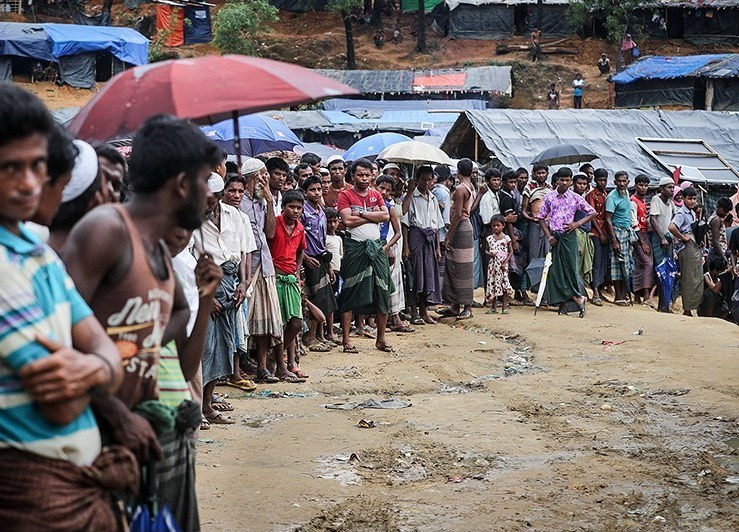
Having faced systemic discrimination in Myanmar for decades, violence toward the Rohingya people reached genocidal levels during the 2012 Rakhine State riots, and later escalated to the 2017 military-led operations that forced over 700,000 Rohingya out of Myanmar and into neighbouring countries such as Bangladesh and India. An estimated 40,000 Rohingya fled to India, settling in urban slums in the areas of Assam, Jammu, Delhi, Hyderabad, and Mewat (Haryana).

In the early days, India maintained a measured silence by allowing United Nations High Commission for Refugees (UNHCR) to both register and issue refugee status cards to Rohingya immigrants entering Delhi. At that time, UNHCR’s mandate recognized approximately, 17,500 Rohingya. Unlike the Tibetan or Tamil refugees, the Rohingya never received official refugee status by the government, nor were they socially integrated into communities. Indian officials publicly referred to them as “illegal immigrants” and “potential security threats,” greatly departing from India’s treatment of other refugee groups in the past.

By 2017, the shift became all the more apparent when the Ministry of Home Affairs announced that all Rohingya would be identified and immediately deported to Myanmar. The government cited to national security concerns and alleged terror group affiliations to justify its decision—a claim that has never been substantiated with public evidence.

May 2025 Maritime Deportation

On 6 May, Delhi police officers arrested a group of 43 refugees from Delhi under the pretext of “biometric data collection.” Among them were women, children, elderly, and individuals battling cancer—many of whom possessed valid UNHCR cards. Authorities then detained the refugees in various police stations across New Delhi for over 24 hours, denying them family visits and access to lawyers.

Later that night, authorities blindfolded the detainees, binding their hands and shuttling them to Indira Gandhi International Airport via chartered busses. From there, the detainees were flown to Port Blair in the Andaman and Nicobar Islands—approximately 2,500 kms from Delhi. Upon landing, police transferred the blindfolded detainees aboard an Indian naval vessel berthed offshore. Survivors reported being tortured, sexually abused, and accused of terrorism while onboard.

In the early hours of 8 May, and after depriving detainees of food, water and medical care for nearly two days, naval personnel threw the detainees overboord into the Andaman Sea near Myanmar. Naval personnel ordered them to swim toward a “safe” international refuge, stranding them in open water with only life jackets. While unaccompanied children and those battling illnesses faced a high risk of drowning, there are no reports to show how many survived. Of those who did, survivors later reported that they reached Myanmar shores by sheer luck given their exhausted states. According to some reports, detainees had asked the naval authorities to take them closer to the Bangladesh border due to persecution fears in Myanmar.

These events were disclosed to a Supreme Court of India bench (Justices Surya Kant, Dipankar Datta & N. Kotiswar Singh) on 8 May during ongoing the Rohingya litigation, yet the court declined to grant interim relief, adjourning the matter to 31 July 2025.

On 13 May, two of the deportees filed Mohammad Ismail v. Union of India (Diary No. 25892/2025), seeking an immediate return to Indian custody, release from unlawful detention, compensation of ₹5 million per person, and formal recognition of their UNHCR refugee status.

The parties’ petition asserts that Indian authorities subjected them to the physical brutality of being blindfolded, bound, and forced swim in international waters, referencing the procedural cruelty towards stateless persons cast adrift without due process.

Recently, Chief Minister Himanta Biswa Sarma of Assam—a border State in India—publicly acknowledged that his government would begin “pushing back” Rohingya refugees held in detention centres to Bangladesh instead of processing them through India’s legal system. He described this method as a “new approach” to immigration in which the government would use expedited returns in lieu of formal arrests and prosecution. This government action emphasizes the state’s shift from judicial oversight to summary expulsion in the handling of non-citizens.

On 15 May 2025, UN Special Rapporteur on the situation of human rights in Myanmar Tom Andrews condemned the reported maritime deportation as “nothing short of outrageous” and opened a formal inquiry into what he called “unconscionable, unacceptable acts” by Indian authorities. In the UN press release, Andrews referenced credible reports of Indian authorities blindfolding Rohingya refugees, transferring them to naval vessels in Port Blair, and then forcing them into the Andaman Sea, which he said represents a “blatant disregard for the lives and safety of those who require international protection.” Andrews implored the Indian government to “provide a full accounting of what happened,” urging the government to gather first-hand testimonies and to refrain from any inhumane or life-threatening treatment of refugees. He further warned that such acts would violate the principle of non-refoulement under international law.

In an earlier communication sent on 3 March 2025, Andrews urged New Delhi to end the arbitrary and indefinite detention of Rohingya asylum seekers, including those previously held in Assam and Delhi, and to allow UNHCR and other independent monitors full access to detention facilities. He stated that any forced repatriation of the Rohingya to Myanmar—where they face a grave risk of torture, persecution, and death—must cease immediately, and that officials responsible for these reported violations must be held accountable. This call by the Special Rapporteur is crucial to reaffirming India’s customary international law obligations and the government’s obligations under the International Covenant on Civil and Political Rights (ICCPR) to protect all individuals from refoulement and inhuman treatment.

National and International Legal Frameworks

Although India does not have a national refugee law, the Constitution offers some protection to noncitizens. Article 14 guarantees equality under the law, Article 21 protects life and liberty, and Article 51(c) provides that the government must respect both international laws and treaty obligations.

In the landmark judgements Maneka Gandhi v. Union of India and NHRC v. State of Arunachal Pradesh, the Supreme Court extended constitutional protections to all persons and not just citizens. Despite these precedents, the executive circumvented these principles by labeling the Rohingya “illegal migrants” under the Foreigners Act, 1946 and The Passport (Entry into India) Act, 1920. These laws predate the Constitution and grant the government discretionary powers to detain and deport noncitizens.

Turning to international frameworks, even though India is not a party to the 1951 Refugee Convention and its Protocol, it is still bound by customary international law and the principle of non-refoulement, which prohibits states from returning migrants to countries where they face heightened persecution risks. India is also a party to the Convention Against Torture (CAT)—which it has signed, but not ratified—and to the ICCPR, both of which prohibit states from arbitrarily detaining, torturing, and subjecting people to inhumane treatment. Article 7 of the ICCPR prohibits states from refouling migrants if such return would result in torture or degrading treatment, as this constitutes a violation of international law. Similarly, Article 9 of the ICCPR obligates India to protect a person’s liberty and security rights. Deporting migrants at sea without due process violates all of India’s international legal obligations, as does the country’s ongoing deportations of Rohinya to Myanmar despite repeated, urgent appeals from UN Special Rapporteurs and UNHCR.

Maktoob Media reports have touched on the social impacts of India’s maltreatment and deportation practices of Rohingya groups, which include social marginalisation, digital exclusion due to the government’s denial of Aadhaar and Unique Identity cards, elevated school dropout rates, and increasing economic hardship.

Many Rohingya detainees report being held indefinitely by Indian authorties and being denied access to counsel for years on end. Some had UNHCR refugee cards, which were dismissed by Indian authorities as invalid. One detainee testified that her infant daughter died due to denial of medical care after Indian authorities tear-gassed a group of Rohingya detainees trying to escape the center.

These incidents violate several fundamental legal protections, including Article 6 of the ICCPR, which guarantees the inherent right to life; Article 14, which ensures the right to a fair and public hearing; and Article 24 of the Convention on the Rights of the Child, which guarantees children’s access to medical care. They also contravene Article 21 of the Indian Constitution, which guarantees the right to life and personal liberty. UNHCR and other UN bodies have issued regular reports and updates noting India’s increasing reliance on detention and refoulement despite the UNHCR’s mandate registration of many Rohingya.

Indias Retreat from Moral Leadership

India has long positioned itself on the global stage as a moral leader—an advocate for the oppressed and a vanguard of South-South cooperation. In 1959, first Prime Minister of India Jawaharlal Nehru said of Tibetan refugees, “…we have considered it our duty to receive these Tibetan people who have come to India and to help them to rehabilitate themselves.” This political sentiment reemerged during the 1971 Bangladesh Liberation War, where India sheltered over 10 million refugees.

However, the Indian government’s current approach to Rohingya refugees marks a steep moral and strategic departure from the government’s previous mentality. Communal politics, security narratives, and majoritarian nationalism all have eclipsed India’s historical traditions of welcoming refugees. The 2019 Citizenship Amendment Act (CAA)—which explicitly excludes Muslims from fast-tracked citizenship—has further undermined India’s secular refugee policy and its commitment to upholding international law.

India’s longstanding decision not to ratify the 1951 Refugee Convention, combined with the government’s refusal to explain this stance or enact a domestic refugee law, has shifted from a posture of strategic ambiguity to one of legal hostility. Official government statements and public policy shows that refugees, especially Muslim minorities like the Rohingya, are now viewed as demographic threats instead of victims. If India continues this trajectory, it not only endangers thousands of vulnerable lives, but also forfeits its historic identity as a nation that stood quietly, but firmly, on the side of the displaced. If authorities fail to investigate the government’s recent deportation of Rohingya refugees, fail to restore legal protections, and prioritize political expedience over constitutional values, India will not merely be turning away refugees—it will be turning away from itself. The May 2025 maritime deportation marks the culmination of a policy that prioritizes majoritarian nationalism over constitutional morality. The ongoing case of Mohammad Ismail v. Union of India offers the Supreme Court a chance to reaffirm India’s Article 21 constitutional protections and its international legal obligations. There is an urgent need for judicial intervention to restore India’s asylum ethos and prevent further erosion of human dignity.

Opinions expressed in JURIST Commentary are the sole responsibility of the author and do not necessarily reflect the views of JURIST's editors, staff, donors or the University of Pittsburgh.
Colombia presidential candidate attack condemned as erosion of democracy
\
JURISTnews - law students reporting the rule of law in crisis


Human Rights Watch on Tuesday denounced the recent attack on Colombian congressman and presidential candidate Miguel Uribe Turbay, calling it an assault on the very pillars of democracy.

HRW Americas director Juanita Goebertus stated: “The attack against Miguel Uribe Turbay is a chilling reminder of the darkest chapters of political violence in Colombia.” She added: “Colombian authorities should investigate this heinous crime, avoid incendiary political rhetoric, and strengthen protections for all political candidates.”

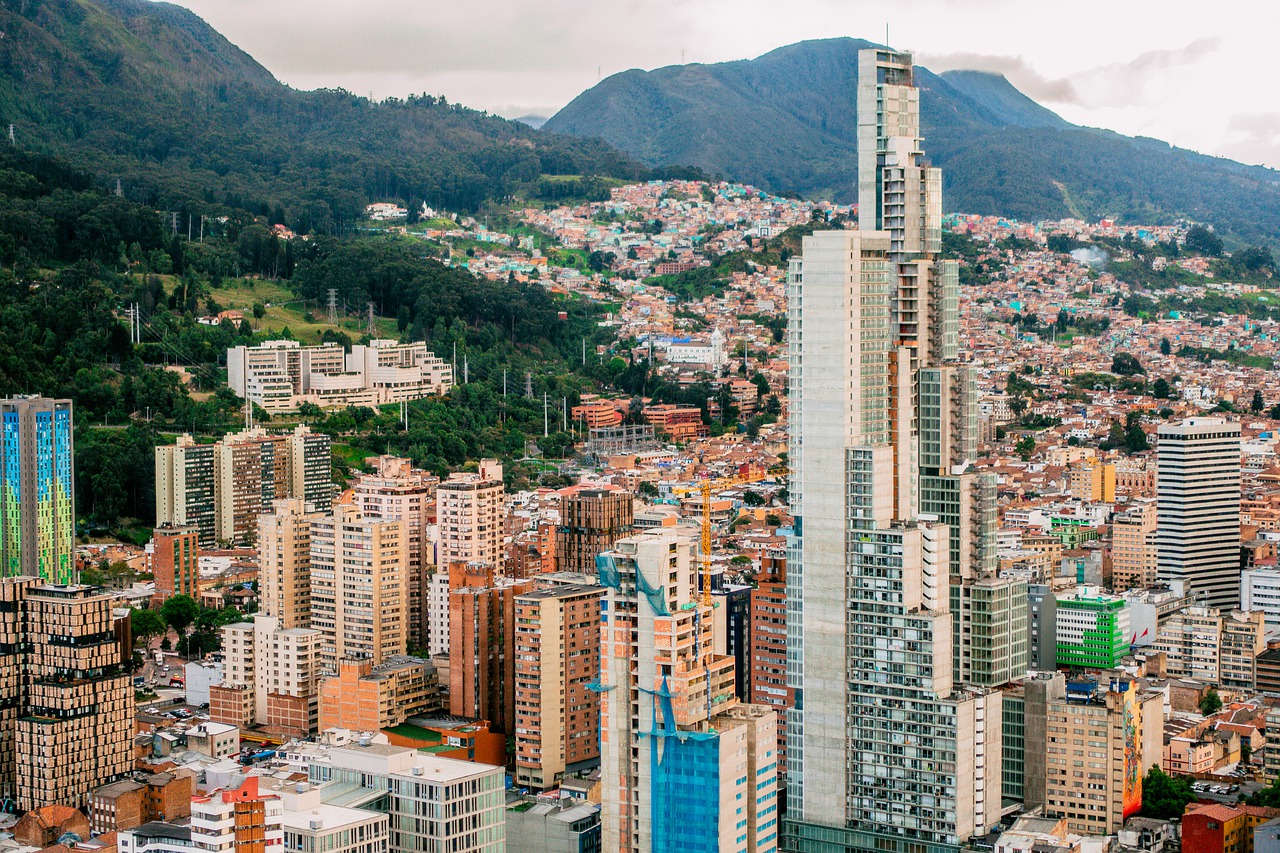
Uribe Turbay, a congressman for the right-wing party Centro Democrático and an opposition favorite to win the election, was shot by a 15-year-old boy during a campaign run in the country’s capital city of Bogotá. The attempted assassination comes at a time of great unrest, with homicides increasing by 20.9 percent, kidnappings increasing by 34.8 percent, and forced displacements quadrupling since 2016. In January, Colombian President Gustavo Petro declared a state of emergency due to the escalating unrest.

Instances of political violence in the wake of presidential elections are not unheard of in the country of over 53 million people, with the most recent assassination attempt reflecting the 1989 assassination of presidential candidate Luis Carlos Galán Sarmiento. A year later, presidential candidate Carlos Pizarro Leongómez and politician Bernardo Jaramillo Ossa were also gunned down by paramilitary organizations who disapproved of their attempts to demobilize them. The bloodshed and atrocities perpetrated by paramilitary groups and guerrilla organizations in the country have led to Colombia enduring the longest-running armed conflict in the Western Hemisphere. In 2023, the Inter-American Court of Human Rights found Colombia responsible for the mass killing of over 6,000 members of the Patriotic Union Political Party.

Although the Colombian government struck a peace deal in 2016 with the guerrilla group Revolutionary Armed Forces of Colombia, which led to an initial decline in violence, armed groups have since resorted to other forms of violence, such as massacres in remote areas and recruiting children to align with their agenda. Mass internal forced displacements in the area arose due to political violence, with armed groups “cleansing” civilians from regions dominated by their enemies or as a method to assert dominance over areas of significant economic or strategic importance.

Colombia’s violent past seems to be trickling into the future, affecting the way that future generations view legitimate democratic processes in the country. Previous efforts, such as the issuance of Decree 1290/2008, to provide reparations to individuals who had suffered from violations to their fundamental rights due to the actions of armed groups have largely been futile. Between the years of 1986 to 1994, over 20,000 civilians fell victim to political violence.

WWIII
US orders personnel out of 'dangerous' Middle East as Iran tensions escalate

President Donald Trump said on Wednesday the US was relocating personnel from the potentially "dangerous" Middle East as nuclear talks with Iran stalled, raising conflict fears. He vowed to prevent an Iranian nuclear weapon amid speculation of Israeli strikes as Tehran threatened to target US bases if conflict breaks out.


Issued on: 12/06/2025 - 
By: FRANCE 24
Video by: Fraser JACKSON

01:38
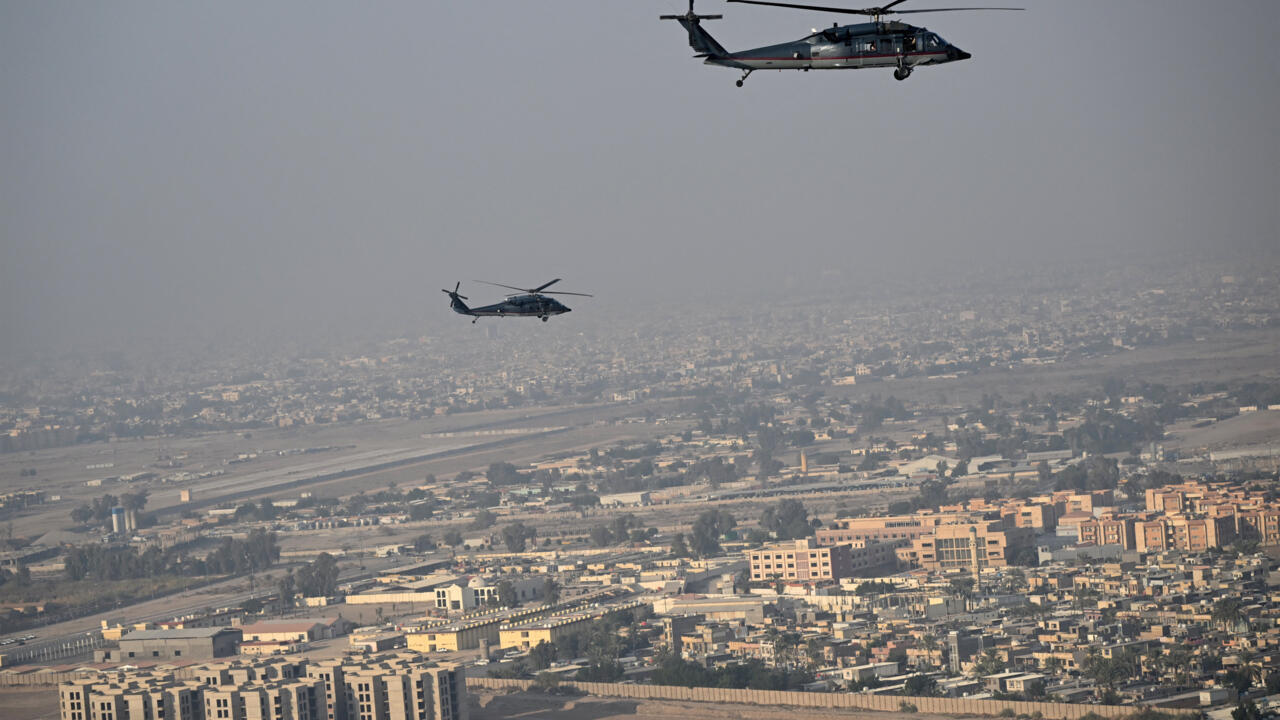
US Black Hawk helicopters escort Secretary of State Antony Blinken as they fly over Baghdad towards the US embassy headquarters on December 13, 2024. © Andrew Caballero-Reynolds, AFP


President Donald Trump said US personnel were being moved from the potentially "dangerous" Middle East on Wednesday as nuclear talks with Iran faltered and fears grew of a regional conflict.

Trump also reiterated that he would not allow Iran to have a nuclear weapon, amid mounting speculation that Israel could strike Tehran's facilities.

Iran threatened Wednesday to target US military bases in the region if conflict breaks out.

A US official had earlier said that staff levels at the embassy in Iraq were being reduced over security concerns, while there were reports that personnel were also being moved from Kuwait and Bahrain.

"Well they are being moved out because it could be a dangerous place," Trump told reporters in Washington when asked about the reports of personnel being moved.

"We've given notice to move out and we'll see what happens."

Trump then added: "They can't have a nuclear weapon, very simple. We're not going to allow that."

Tehran and Washington have held five rounds of talks since April to thrash out a new nuclear deal to replace the 2015 accord that Trump abandoned during his first term in 2018.


US Special Envoy Steve Witkoff plans to meet Iranian Foreign Minister Abbas Araghchi in Oman on Sunday and discuss Iran's response to a recent American proposal for a nuclear deal, a US official said late on Wednesday.

Trump told a podcast on Monday he was less confident that Iran will agree to stop uranium enrichment in a nuclear deal with Washington.

Since returning to office in January, Trump has revived his "maximum pressure" campaign on Tehran, backing nuclear diplomacy but warning of military action if it fails.

The US president says he has pressed Israeli Prime Minister Benjamin Netanyahu to hold off striking Iran's nuclear facilities to give the talks a chance, but has increasingly signaled that he is losing patience.

Iran however warned it would respond to any attack.

"All its bases are within our reach, we have access to them, and without hesitation we will target all of them in the host countries," Iran's Defence Minister Aziz Nasirzadeh said in response to US threats of military action if the talks fail.

02:10
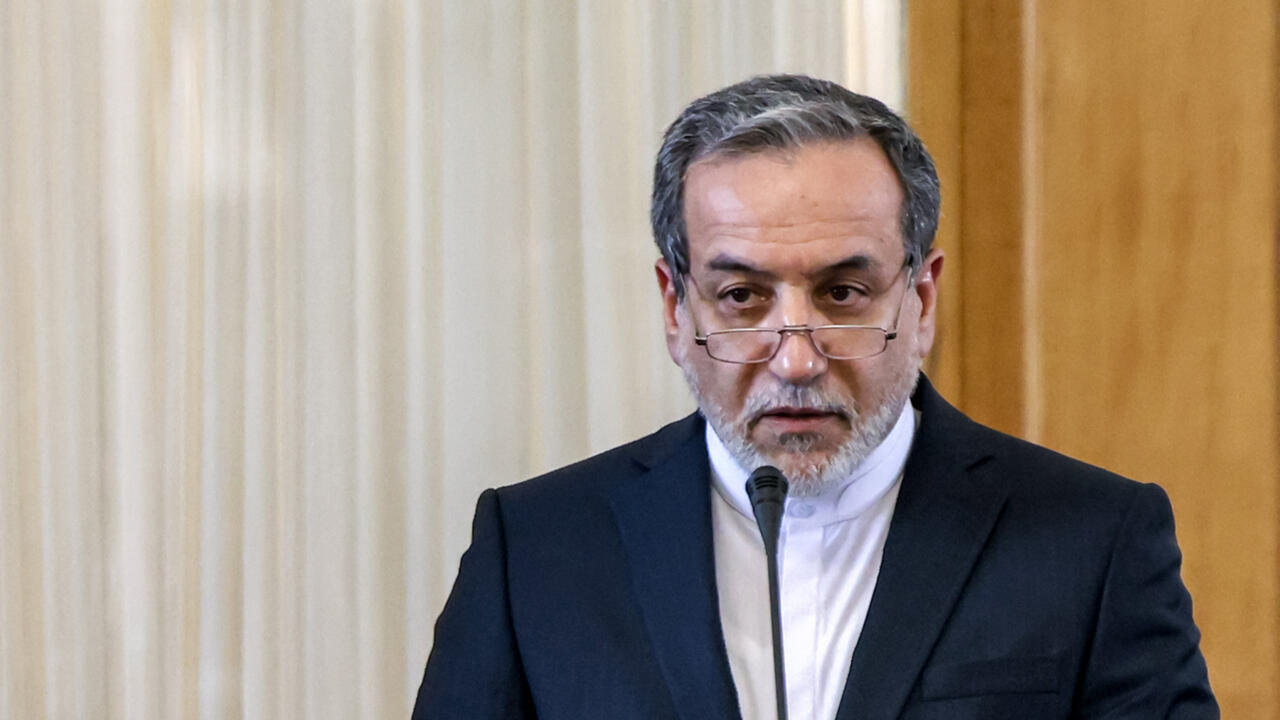
Iran’s top diplomat Abbas Araghchi in Tehran on February, 25, 2025. © Atta Kenare, AFP/File picture

'Suffer more losses'

"God willing, things won't reach that point, and the talks will succeed," the minister said, adding that the US side "will suffer more losses" if it came to conflict.

The United States has multiple bases in the Middle East, with the largest located in Qatar.

In January 2020, Iran fired missiles at bases in Iraq housing American troops in retaliation for the US strike that killed top Iranian general Qassem Soleimani days before at the Baghdad airport.

Dozens of US soldiers suffered traumatic brain injuries.

Amid the escalating tensions, the UK Maritime Trade Operations, run by the British navy, also advised ships to transit the Gulf with caution.

Read moreIran’s economic struggles: Can nuclear talks with US spark a turnaround?

Iran and the United States have recently been locked in a diplomatic standoff over Iran's uranium enrichment, with Tehran defending it as a "non-negotiable" right and Washington calling it a "red line".

Iran currently enriches uranium to 60 percent, far above the 3.67-percent limit set in the 2015 deal and close though still short of the 90 percent needed for a nuclear warhead.

Western countries have long accused Iran of seeking to acquire atomic weapons, while Tehran insists its nuclear program is for peaceful purposes.

Last week, Iran's supreme leader Ayatollah Ali Khamenei said enrichment is "key" to Iran's nuclear program and that Washington "cannot have a say" on the issue.

During an interview with the New York Post's podcast "Pod Force One," which was recorded on Monday, Trump said he was losing hope a deal could be reached.

"I don't know. I did think so, and I'm getting more and more – less confident about it. They seem to be delaying and I think that's a shame. I am less confident now than I would have been a couple of months ago," he said.

Iran has said it will present a counter-proposal to the latest draft from Washington, which it had criticised for failing to offer relief from sanctions – a key demand for Tehran, which has been reeling under their weight for years.

(FRANCE 24 with AFP)

Exclusive: Houthis Warn US and Israel of 'War' If Iran Attacked

Published Jun 11, 2025 
By Tom O'Connor
Senior Writer, Foreign Policy & Deputy Editor, National Security and Foreign Policy
Newsweek Is A Trust Project Member
A source within the Ansar Allah movement, also known as the Houthis, has shared with Newsweek a warning to Israel and the United States amid reports of a potential Israeli attack being planned against Iran.

Reports Wednesday of U.S. nonessential personnel and family members being evacuated from regional countries, including Iraq, Bahrain and Kuwait, were followed by a Washington Post article citing unnamed officials indicating that the moves were being undertaken in anticipation of an imminent Israeli strike against Iran.

Israel's Channel 14 news outlet also reported that the country was preparing to soon launch a major operation against Iran.

The soaring tensions follow an Israeli naval strike conducted Tuesday against Ansar Allah, a member of the Iran-led Axis of Resistance coalition that has been engaged in missile and drone attacks against Israel since the outbreak of the war between Israel and the Palestinian Hamas movement in October 2023.

Reacting to the reports, an Ansar Allah source told Newsweek that the group had adopted a heightened state of readiness as it was already "essentially in a state of war with the Zionist enemy entity due to its aggression and siege on Gaza, followed by its aggression against Yemen."

"In this regard, we are in a state of constant readiness and are working to escalate our operations against the usurping entity, against the backdrop of the escalating massacres in Gaza and the worsening humanitarian situation there," the Ansar Allah source said.

The Ansar Allah source also issued a warning to the U.S. should it pursue actions targeting the group or its Iranian ally.

"We are also at the highest level of preparedness for any possible American escalation against us," the Ansar Allah source said. "Any escalation against the Islamic Republic of Iran is also dangerous and will drag the entire region into the abyss of war."

"America has no right to attack the countries of our community and our region in service of the Zionist enemy entity, which is considered the primary security threat to the region," the source added. "It is certainly not in the interest of the American people to become involved in a new war in service of the Zionist entity."

Reached for comment, a U.S. Central Command (CENTCOM) spokesperson referred Newsweek to the Pentagon press office, which did not immediately respond.

Newsweek has also reached out to the Iranian Mission to the United Nations and the Israel Defense Forces (IDF) for comment.

Read more Iran
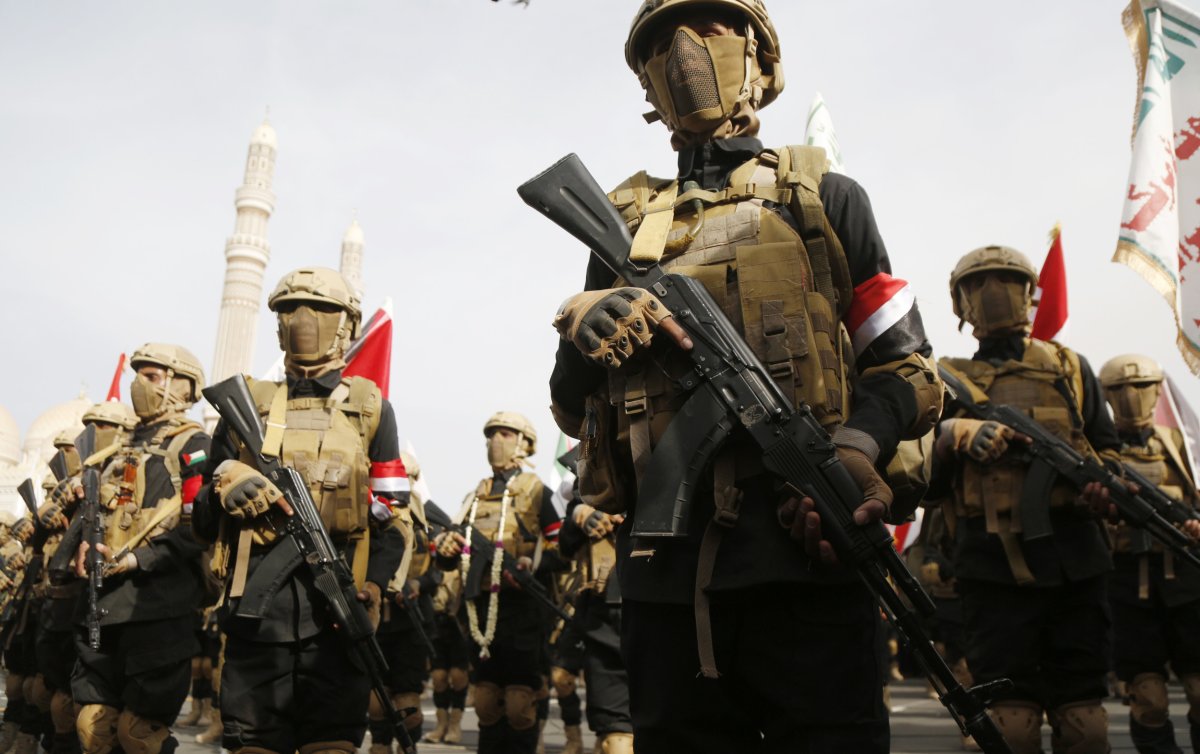
Ansar Allah fighters take part in a mass protest held against the Israeli continued bombardment and blockade of the Gaza Strip on May 23 in Sana'a, Yemen. Mohammed Hamoud/Getty Images

Between Diplomacy and War

The developments come amid new uncertainties surrounding ongoing nuclear negotiations between Washington and Tehran, which were set to enter their sixth round in Oman on Sunday.

Iranian officials were expected to counter an existing U.S. offer at the meeting, with Iranian Foreign Ministry spokesperson Esmaeil Baghaei calling the current terms "unacceptable" on Monday.

That same day, President Donald Trump indicated that Iran's response thus far had been "not acceptable," with the alternative being "very, very dire." He also told the "Pod Force One" podcast on Monday that he was becoming "less confident" in the likelihood of reaching a successful deal.

Yet sources cited by Axios and CNN indicated that Trump had once again discouraged Israeli Prime Minister Benjamin Netanyahu from taking military action against Iran when they spoke on Monday. Trump has indicated on at least two previous occasions that he had called on the Israeli premier not to conduct attacks on Iran while negotiations were ongoing.

On Tuesday, Iranian Foreign Minister Abbas Araghchi struck a more positive note regarding nuclear talks, saying that Trump's repeated vow to prevent Iran from obtaining a nuclear weapon "is actually in line with our own doctrine and could become the main foundation for a deal."

"As we resume talks on Sunday, it is clear that an agreement that can ensure the continued peaceful nature of Iran's nuclear program is within reach—and could be achieved rapidly," Araghchi, who is leading the Iranian delegation at the talks, said in a statement published to X, formerly Twitter.

"That mutually beneficial outcome relies on the continuation of Iran's enrichment program, under the full supervision of the IAEA [International Atomic Energy Agency], and the effective termination of sanctions," he added.

The statement came as the Iranian Intelligence Ministry threatened to release a trove of documents purported to be tied to Israel's own nuclear weapons, an arsenal that Israeli officials have for decades neither confirmed nor denied possessing. Iran's Supreme National Security Council stated that the sites detailed in the documents would be targeted in the event that Iran's nuclear infrastructure was subject to attack.

On Wednesday, Iranian Defense Minister Aziz Nasirzadeh warned U.S. military positions would also be hit in the event of a preemptive strike.

"Some officials on the other side threaten conflict if negotiations don't come to fruition," Nasirzadeh said, as cited by Reuters. "If a conflict is imposed on us ... all U.S. bases are within our reach, and we will boldly target them in host countries."

Hours later, CBS News reported that U.S. officials had been informed Israel was fully prepared to launch a strike against Iran and that retaliation was expected to potentially target the U.S. presence in Iraq, prompting the partial evacuation of the embassy in Baghdad.

"On June 11, the U.S. Department of State ordered the departure of non-emergency U.S. government personnel from Iraq," the U.S. Embassy in Iraq said in a statement Wednesday.

The U.S. Footprint in the Middle East

The U.S. is estimated to host around 2,500 troops in Iraq tasked with advising and training Iraqi forces in the fight against the Islamic State militant group (ISIS). While ISIS is a common foe of both Washington and Tehran, the U.S. presence in the country has been viewed as a threat by Iran.

Iran previously targeted U.S. troops in January 2020 following the assassination of top Iranian military figure Major General Qassem Soleimani. His killing was ordered by Trump in response to clashes between U.S. forces and Iraqi militias aligned with Tehran's Axis of Resistance.

Trump's predecessor, President Joe Biden, announced last September a two-phase plan to begin pulling U.S. military personnel from Iraq though the current administration has yet to confirm its commitment to the initiative.

Militias aligned to the Islamic Resistance in Iraq have repeatedly threatened to renew strikes against U.S. personnel if Washington and Baghdad failed to produce a concrete timeline to ensure the departure of U.S. forces.

The U.S. also hosts a number of key bases and facilities elsewhere in the region, particularly in Bahrain, Kuwait, Qatar, Saudi Arabia and the United Arab Emirates. As Biden signaled a gradual drawdown of U.S. troops in Iraq, he also increased the number of personnel in the broader CENTCOM area of operations from 34,000 to around 43,000, the Associated Press reported at the time.
The Houthi Threat

U.S. forces in the region have conducted direct strikes against Ansar Allah in response to its attacks on Israel as well as an unprecedented campaign that U.S. officials say targeted both civilian vessels and U.S. military vessels on hundreds of occasions between October 2023 and last month, when Trump announced a surprise deal with the group.

The U.S. leader said that Ansar Allah had agreed to suspend its maritime campaign in exchange for a halt to U.S. operations targeting the group. The deal notably did not include a pause to Ansar Allah's missile and drone strikes against Israel, which resumed in March after the breakdown of a ceasefire reached between Israel and Hamas in January.

Ansar Allah has pressed on with these long-range attacks against Israel, most recently launching a ballistic missile Wednesday just hours after the Israeli Navy targeted Yemen's Al-Hodeidah port in response to earlier strikes from the group.

The group has emerged as the most active member of the Axis of Resistance since the Lebanese Hezbollah movement signed a ceasefire with Israel last November, the collapse of Syrian President Bashar al-Assad's government to an Islamist-led rebel coalition less than two weeks later and a lull in attacks by the Islamic Resistance in Iraq following the initial Gaza truce reached in January.

Led by Abdul-Malek al-Houthi, Ansar Allah seized the Yemeni capital from the nation's a decade ago and today controls around a third of the country's territory and up to 80 percent of its population. Hostilities between the group and Yemen's Saudi-backed internationally recognized government have largely ceased since a truce mediated by the United Nations in April 2022.

To this day, the group denies receiving direct support from Iran.


'It’s more serious than any other time in the past': Israel poised to strike Iran, officials say

US officials warn nuclear talks may collapse; Trump envoy Witkoff says president called him 5 times; embassies in Mideast, Europe, Africa activate emergency teams; Trump says US military 'will summon inexhaustible courage'
Yesterday | YNET

The United States is on heightened alert amid growing fears of a potential Israeli military strike on Iran, the Washington Post reported late Wednesday, as nuclear negotiations between Washington and Tehran appear to be unraveling

The report follows a series of security moves, including U.S. orders for non-essential staff to leave its embassies in Iraq, Bahrain and Kuwait, and emergency preparations at embassies across the Middle East, Eastern Europe and North Africa.


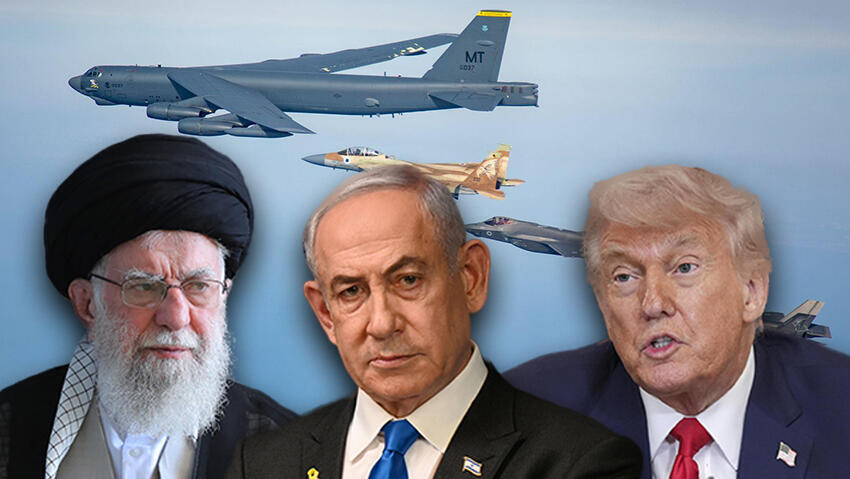
Ali Khamenei, Benjamin Netanyahu, Donald Trump
(Photo: REUTERS/Evelyn Hockstein, Iranian Leader's Press Office - Handout/Getty Images, GPO, IDF)

The Post said the U.S. State Department instructed all embassies within potential Iranian missile range to activate emergency response teams and assess how best to protect personnel amid escalating regional threats. President Donald Trump, asked why some U.S. military personnel in the region were ordered to prepare for evacuation, responded cryptically: “We’ll see what happens.”

The paper further reported that the next round of nuclear talks, scheduled for this Sunday in Muscat, Oman, may be at risk of cancellation. However, a U.S. administration official told Reuters that President Trump’s envoy to the Middle East, Steve Witkoff, is still expected to meet with Iranian Foreign Minister Abbas Araghchi on Sunday. Witkoff attended an event in New York on Wednesday night but was later summoned to the White House by Trump, telling associates that the president personally called him no fewer than five times.

Trump, who in recent days has expressed growing skepticism about the prospects for a new agreement with Iran, reiterated his support for the U.S. military in a post on Truth Social. “I am more confident than ever that in the days ahead and every generation to come, the U.S. Army will heap glory upon glory," he wrote. "You will summon inexhaustible courage. You will protect every inch of U.S. soil—and you will defend America to the ends of the earth!

The New York Times attributed the rising tensions to a breakdown in nuclear negotiations, particularly over uranium enrichment. The U.S. insists Iran must end all enrichment capabilities, while Tehran has repeatedly stated it will not surrender the right to enrich uranium on its own soil.


Late Wednesday, CBS News added to the sense of urgency, reporting that U.S. officials had been briefed that Israel has completed preparations to launch an attack on Iran. The report also said Washington fears that such a move could prompt retaliatory strikes by Iran on American targets in neighboring Iraq—one reason behind the current drawdown of U.S. presence in the region.

“We are watching and worried,” one senior diplomat in the region told the Post. “We think it’s more serious than any other time in the past.”

Iran, for its part, continued to call for a negotiated solution, with its mission to the United Nations reiterating that “diplomacy—not militarism—is the only path forward.”

Speaking at a gala for United Hatzalah in New York, Witkoff confirmed he had spoken the night before with Prime Minister Benjamin Netanyahu. Witkoff said the U.S. must never allow Iran to enrich uranium or develop nuclear capabilities. “A nuclear Iran represents an existential threat to Israel, as does an Iran with a large amount of missiles. That is as big an existential threat as the nuclear threat. And this is an existential threat to the United States and the free world and the entire GCC (Gulf Cooperation Council). We must stand resolute and united against this danger and ensure that Iran never attains the means to achieve its deadly ambitions, no matter what the cost,” he warned.


Steve Witkoff, Abbas Araghchi
(Photo: REUTERS/Evelyn Hockstein/Pool, Amer HILABI AFP, CameraObscura82/Shutterstock, Smolkov Vladislav/Shutterstock)

He also praised Trump, calling him “the only U.S. president who could also serve as Israel’s prime minister—no disrespect to Prime Minister Netanyahu.”
Adding to concerns, Reuters revealed late Wednesday that CENTCOM Commander Gen. Michael Kurilla had postponed his scheduled testimony before Congress due to the unfolding situation in the Middle East. In the wake of these developments, global oil prices jumped by roughly 5%.

The precautionary U.S. moves followed renewed threats from Tehran. Iranian Defense Minister Gen. Aziz Nasirzadeh warned that if diplomacy fails and conflict is "forced" upon Iran, the country would strike U.S. bases in the region. “The losses of the enemy would outweigh ours,” he said. “In the event of confrontation, America must leave the region, as all its bases are within our reach—we will not hesitate to target them.”

 Nasirzadeh also claimed Iran had recently tested a missile with a two-ton warhead.
A U.S. official said the State Department would instruct Baghdad embassy staff to leave via commercial flights but noted the U.S. military is ready to assist if needed. An Iraqi Foreign Ministry source confirmed a "partial evacuation" of the U.S. embassy in Baghdad due to "regional security concerns."


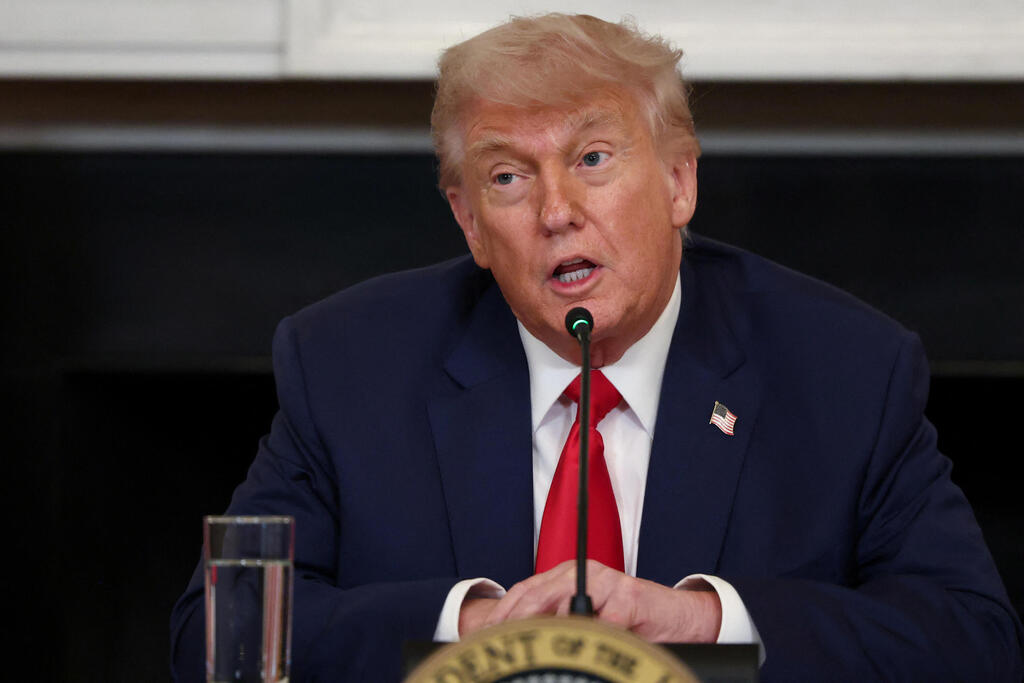
US President Donald Trump
(Photo: REUTERS/Evelyn Hockstein, AP Photo/Evan Vucci)

Amid the rising rhetoric, Iran’s mission to the United Nations released a statement
 warning that threats of “overwhelming force” would not change the reality. “Iran is not seeking a nuclear weapon, and U.S. militarism only fuels instability,” the statement read, accusing CENTCOM of enabling Israeli actions and undermining diplomatic efforts.

Meanwhile, The New York Times reported overnight that senior Iranian military and government officials have already convened to discuss their potential response to an Israeli strike. According to a high-ranking Iranian government source, Tehran has devised a retaliatory plan that would involve an “immediate counterstrike on Israel with hundreds of ballistic missiles.”

In a separate report by Al Arabiya English, sources said U.S. intelligence assessments indicate that Iranian-backed militias operating in Iraq and other regional hotspots are preparing to target American interests across the Middle East.

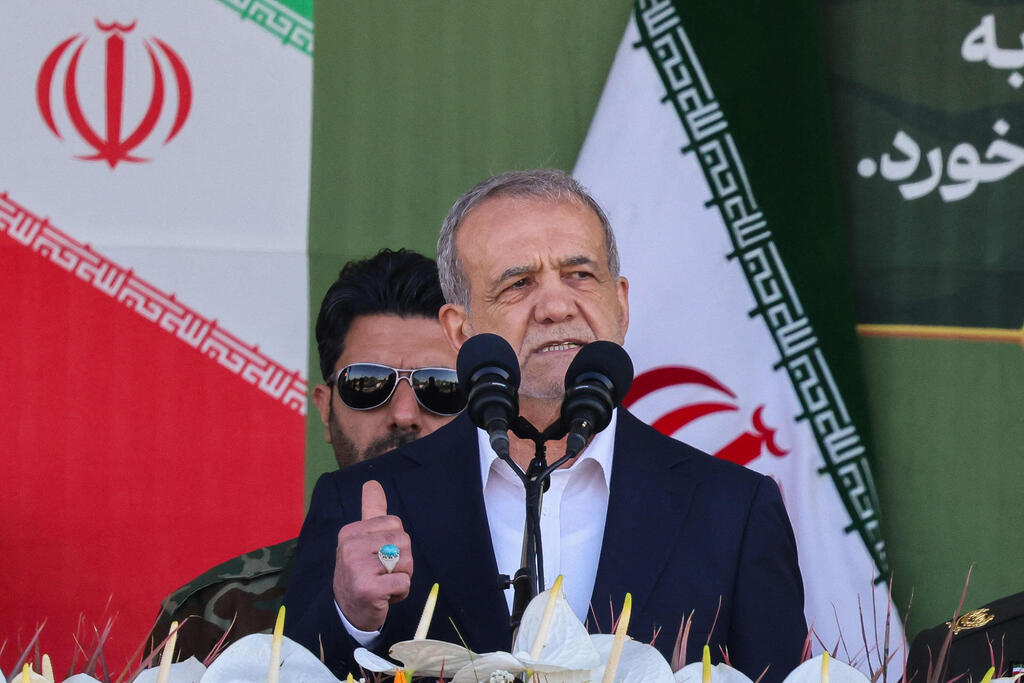
Earlier in the evening, Iranian President Masoud Pezeshkian accused foreign enemies of trying to provoke internal conflict to justify an attack. “We are in contact with the U.S. and Europe, but we will not surrender to dictates,” he said. “No one has the right to deny our scientific research in nuclear technology. We do not seek nuclear arms, but we won’t strip our capabilities so Israel can bomb us freely.”


Iranian President Masoud Pezeshkian
(Photo: Atta KENARE / AFP)

As nuclear negotiations between Washington and Tehran teeter on the brink of collapse, American officials have issued fresh warnings that failure could trigger a military response. Since April, five rounds of negotiations have taken place as talks appear to have stalled over a fundamental impasse: uranium enrichment. The U.S. insists any future deal must eliminate Iran’s capacity to enrich uranium—a process that, even at low levels, could eventually provide a pathway to a bomb. Iran, meanwhile, has repeatedly stated that enrichment on its own soil is a non-negotiable red line.

Defense Secretary Hegseth told Senate lawmakers on Wednesday that “there have been plenty of indications” Iran has been “moving their way toward something that would look a lot like a nuclear weapon.”

Meanwhile, President Trump expressed growing doubt about the prospects of reaching a deal to dismantle Iran’s nuclear program. “I don’t know,” Trump told the New York Post podcast when asked whether he still believed an agreement was possible. “I did think so, and I'm getting more and more less confident about it."

Trump voiced hope that Iran would shift course and choose diplomacy over confrontation. “They're not going to have a nuclear weapon. But it would be nicer to do it without warfare, without people dying, it's so much nicer to do it,” he said. “But I don't think I see the same level of enthusiasm for them to make a deal. I think they’re making a mistake, but we’ll see. I guess time will tell.”


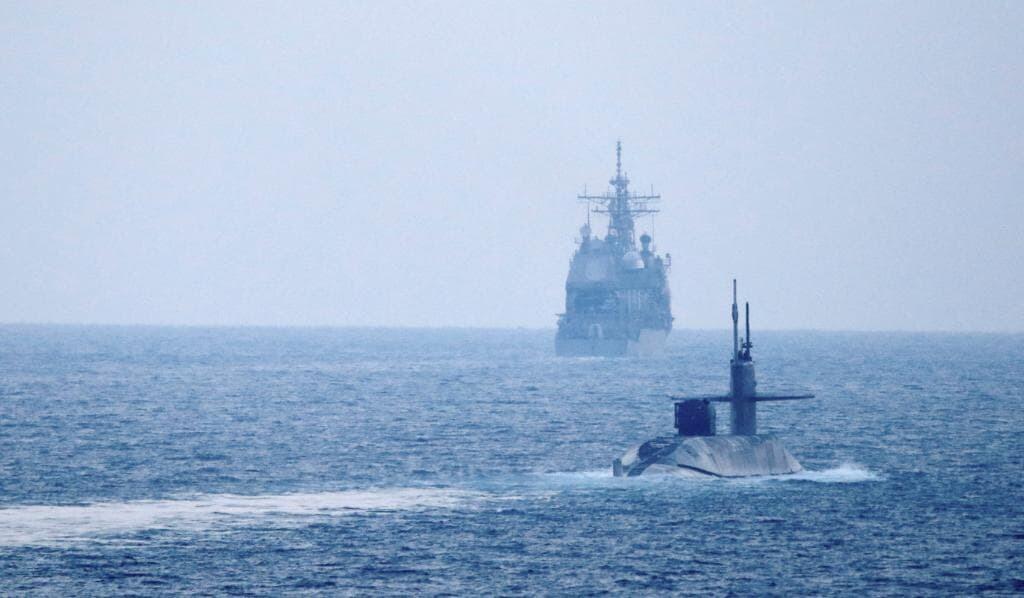
US vessels in the Strait of Hormuz

The comments mark a stark shift in tone from the White House, which had previously projected optimism about the negotiations. As recently as this week, Trump said he was “disappointed” by Iran’s increasingly aggressive stance and accused Tehran of backtracking on earlier positions.

His pessimism comes amid mounting pressure from Israel to abandon talks altogether. Prime Minister Benjamin Netanyahu reportedly urged Trump during a phone call on Monday to recognize that Iran was “stringing him along.” Still, sources say Trump is holding back from approving an Israeli military strike on Iran’s nuclear facilities. During their conversation, he is said to have told Netanyahu explicitly that he is not giving Israel a “green light” for such an operation.


Filipino families flee Northern Irish home after night of anti-immigrant violence


From left: Michael Asuro, 26, Michael Sancio, 27, Mariel Lei Odi, 27, and Jessa Sagarit 26, whose house was attacked last night and who were evacuated by Ballymena Baptist Church, now living in a caravan, sit on a couch in Cullybackey near Ballymena, following riots in Ballymena, Northern Ireland, on June 11.
PHOTO: Reuters

ASIA ONE
June 11, 2025 


BALLYMENA, Northern Ireland — Michael Sancio, a resident of the Northern Irish town of Ballymena, said he was woken at midnight on Tuesday (June 10) by masked men banging loudly on windows.

Sancio, his wife and daughter, and a couple who share their house — all originally from the Philippines — grabbed their passports and a few belongings and fled their home, sleeping at a friend's house on Tuesday night. They said they plan to stay further outside the town on Wednesday because they feel unsafe at home.

Hundreds of masked rioters attacked police and set homes and cars on fire in the town of 30,000 people for a second successive night on Tuesday. Police are investigating the damaging of property as racially-motivated "hate crimes".

"Last night I woke up at 12 midnight because I heard some people outside, and I saw in the window, I saw the other guys wearing a black jacket and black pants, and also they're wearing a mask," Sancio, 27, told Reuters on Wednesday.

Michael Sancio (left), 27, and Mariel Lei Odi (right), 27, whose house was attacked last night and who were evacuated by Ballymena Baptist Church, now living in a caravan, sit on a couch in Cullybackey near Ballymena, following riots in Ballymena, Northern Ireland, on June 11.
PHOTO: Reuters

"They started banging the window of our neighbours so I panicked because I have a daughter inside that house."

The rioters smashed the windows of the couple's car that was parked outside the house and set it and a bin on fire, said Sancio, who works at a local bus manufacturer.


The violence erupted after two 14-year-old boys were arrested and appeared in court, accused of a serious sexual assault on a teenage girl in Ballymena, a town with a relatively large migrant population located 28 miles (45km) from Belfast.

The charges were read via a Romanian interpreter to the boys, the BBC reported, adding that the lawyer told the court that they denied the charges.

Anti-migrant violence is rare in Northern Ireland, which for decades has been more familiar with sectarian violence between resident Catholics and Protestants, including in Ballymena.

While a 1998 peace deal largely ended the three decades of bloodshed between Protestants who want to remain under British rule and Catholics favouring a united Ireland, there are still sporadic clashes.
'Extreme fear'

Sancio said the masked men told them that they were not targeting Filipino people.

Around Ballymena, Filipino residents put stickers of British and Filipino flags on their doors, with messages saying "Filipino lives here" to show they were not Romanian.

Union Jack flags regularly fly in the largely pro-British town. Democratic Unionist Party councillor Lawrie Philpott told Reuters that some people who usually don't fly flags had hung Union Jacks outside their homes this week to show they are local.

Around 6 per cent of people in Northern Ireland were born abroad, according to government statistics. The foreign-born population in Ballymena is higher, in line with the UK average of 16 per cent, and includes a relatively large Filipino community.

Northern Ireland has been broadly welcoming to migrants but that has been tested recently. Violent disorder erupted in Belfast last August as part of anti-immigration protests that swept across several UK cities following the murder of three young girls in northwest England.


In the Republic of Ireland, rioting broke out in Dublin in late 2023 during anti-immigrant protests that were triggered by a stabbing attack that left a child seriously injured.

Sian Mulholland, a local lawmaker from the Alliance Party, said she was fielding calls from migrant families who in some cases had barricaded themselves into their homes until 2.30am (9.30am in Singapore) on Wednesday morning.

"I had been engaging with this community beforehand because the houses they are living in are not fit for purpose. They're (living in) squalor," she told Reuters.

Sancio's wife, Mariel Lei Odi, was working a night shift on Tuesday. When she returned home, she was worried about the safety of their two-year-old daughter, she said.

"When I (came home to) my husband and chatted about what happened last night: (I said) 'my daughter, my daughter, my daughter. What happened?'," she said.

Mariel Lei Odi (left), 27, and Jessa Sagarit (right), 26, whose house was attacked last night and who were evacuated by Ballymena Baptist Church, now living in a caravan, sit on a couch in Cullybackey near Ballymena, following riots in Ballymena, Northern Ireland, on June 11.
PHOTO: Reuters

Michael Asuro, who lives in the house with his wife, Jessa Sagarit, said he came to Northern Ireland just under two years ago to seek a better life. Sagarit said she felt traumatised by the events.

Police have said they are braced for more violence on Wednesday.

As residents boarded up broken windows and doors in Ballymena, the Filipino families wondered about their future and whether they will stay.

"We feel extreme fear," Asuro said.