Thursday, June 12, 2025

Trump sanctions Palestinian human rights organization over alleged political connections

The Trump administration has imposed sanctions on Addameer, a leading Palestinian prisoner rights group, and five other charities for alleged links to Palestinian political factions deemed by the U.S. and Israel as "terrorist organizations."
June 11, 2025 
MONDOWEISS
Benjamin Netanyahu with Donald Trump at the Ben Gurion airport in May 2017. 
(Photo: Amos Ben Gershom GPO)


The Trump administration has imposed sanctions on a leading Palestinian human rights group and five other charities for alleged links to Palestinian political factions designated by Israel and the U.S. as “terrorist groups.”

Addameer, which provides legal services to Palestinian prisoners, was designated as a terrorist group by Israel in 2021, and the country’s government has been pressuring the United States to impose sanctions ever since. Israel has refused to provide any evidence linking the organization to militants.

The other sanctioned groups are Al Weam Charitable Society, Filistin Vakfi, El Baraka Association for Charitable and Humanitarian Work, Israa Charitable Foundation Netherlands and Associazione Benefica La Cupola d’Oro.

“Today’s action underscores the importance of safeguarding the charitable sector from abuse by terrorists like Hamas and the PFLP, who continue to leverage sham charities as fronts for funding their terrorist and military operations,” said Deputy Secretary Michael Faulkender in a statement. “Treasury will continue to use all available tools to prevent Hamas, the PFLP, and other terrorist actors from exploiting the humanitarian situation in Gaza to fund their violent activities at the expense of their own people.”

In a 2022 interview, Addameer Director Sahar Francis told Mondoweiss that attacks on the group didn’t start with Israel’s designation.

“The campaign against us has been ongoing for many years: harassment, smear campaigns, defamation, the distribution of false information about us by different groups like NGO monitor, UK Lawyers for Israel, and other right wing Israeli groups,” explained Francis.

“The policy behind all these attacks is actually to terrify the donors, and to terrify those who were investing in civil society in Palestine,” she continued.

In August 2022, the Israeli army raided the offices of seven Palestinian civil society organizations in the occupied West Bank, including Addameer. The soldiers broke the office doors and confiscated material. The UN published a report finding no basis for Israel’s claims about the groups and concluded that the targeted organizations provided “critical human rights, humanitarian and development work in the Occupied Palestinian Territory.”

The Trump administration’s sanctions on the legal group comes amid the deadliest period in history for Palestinian prisoners. Addameer says that 10,100 Palestinians are currently being held in Israeli detention, twice the amount that were being held before the October 7 attack. That number does no include prisoners from Gaza being held in Israeli military facilities.

“It is important to highlight the growing number of arbitrary restrictions imposed by the occupation on legal access to imprisoned political leaders and those serving life sentences — particularly since the beginning of the genocidal war on Gaza — including prolonged solitary confinement,” reads a joint statement put out by Addameer and a number of other human rights groups last month.

“The inhumane conditions in which Palestinian political prisoners are being held represent another facet of the ongoing genocide in the Gaza Strip,” it continues. “The continued escalation by the brutal prison system against detainees in various prisons and military camps has entered a more dangerous phase than in previous months. Time has now become a critical factor in determining the fate of thousands of prisoners and detainees held by the Israeli occupation, amid a period in which Israel continues to carry out acts of genocide with complete impunity.”

The Trump administration’s sanctions were criticized by many on social media.

“The Trump administration, continuing its complicity with the Israeli regime in the perpetration of genocide in Palestine, just days after sanctioning judges of the ICC, has now announced sanctions on the celebrated & long-serving Palestinian human rights organization,” wrote human rights attorney Craig Mokhiber. “The US, on behalf of an oppressive foreign regime, is criminalizing humanitarian & human rights work.”

“Addameer is a first-rate human rights organization dedicated to exposing Israeli violations against Palestinian prisoners, which is precisely why it has been targeted by Israel’s extremist government and now the Trump administration,” tweeted author Khaled Elgindy.
The Shift: Just 12% of Dem voters sympathize more with Israelis than Palestinians

June 12, 2025 
MONDOWEISS

The Israeli and U.S. flags fly a boat sailing from Tiberias to Kibbutz Ginnosar in the Galilee. (Photo: James Emery/Wikimedia)

This week, Quinnipiac released a poll surveying U.S. opinion on a number of issues.

One of those issues was the Middle East. U.S. voters were asked whether their sympathies lie with the Palestinians or the Israelis. 37% said the Israelis, 32% said the Palestinians, and 31% did not offer an opinion.


That’s an all-time low for Israelis and an all-time high for Palestinians, since the polling center began asking voters the question in December 2001.

Among Republicans, Israel remains popular. 64% of them sympathize with the Israelis, and just 7% sympathize with the Palestinians. 29% did not offer an opinion.


However, these results require some context. That’s an 18% drop for Republicans from last year and the largest amount to offer no opinion since the poll began.

Among Democratic voters, Israel’s reputation is in shambles. Just 12% of them sympathize more with Israelis. 60% sympathize with the Palestinians and 29% did not offer an opinion.

These statistics are staggering, but they’re not altogether surprising. Israel’s brand has shown consistent decline among Democrats over the past decade, and the genocide has inevitably sped up that drop.

A March Pew Poll found that 69% of Democrats have an unfavorable view toward Israel, up 16 points from 53% in 2022.

You see a similar dip with the Quinnipiac poll. One was carried out just weeks after October 7. In that survey 41% of Democrats said they were more sympathetic to Palestinians, while 34% said Israelis. In 19 months, support for Palestinians has jumped by nearly 20 points, while support for Israelis has gone down by more than 20 points.

Amid this shift comes the New York City mayoral race, where Israel has emerged as a predominant issue with the party primaries coming up on June 24.

The mainstream media, the right-wing press, pro-Israel pundits, and local lawmakers have smeared candidate Zohran Mamdani as an antisemite for the crime of supporting BDS and refusing to publicly endorse the concept of an ethnostate.

“The Orthodox Jewish community is not afraid enough,” Sam Berger, an Orthodox Queens state assemblyman and Cuomo supporter, recently told Jewish Insider. “While the public generally takes its time to pay attention, we do not have that luxury this year. After two antisemitic attacks in under two weeks echoing the same rhetoric we have persistently warned against from the No. 2 mayoral candidate, we need to vote like our lives depend on it.”

“Jewish lives will be at stake if this man is elected,” declared pro-Israel NYC Council member Inna Vernikov. “He’s going to enable antisemitism like this city has never seen. If he wins and TRUE principled conservatives don’t remain in the Council, violence will SKYROCKET. Don’t just watch it unfold. Act. VOTE!”

A Super PAC backing frontrunner Andrew Cuomo recently sent out a mailer darkening and lengthening Mamdani’s beard.

A recent poll carried out by Justin Brannan’s city comptroller campaign doesn’t just find Mamdani surging, but taking the lead. It could be an outlier, but it will undoubtedly cause panic and prompt further attacks.

Even if Mamdani comes close to beating Cuomo, the race could have reverberations.

“I think Cuomo’s attempt to Israelize the election is going to backfire,” political consultant Peter Feld told me in April. “This could actually help give Mamdani the further strength to overtake him. If that happens, I think it’s going to set the table for some of the primaries next year.”

A recent Emerson College poll found that 53% of NYC Democratic primary voters do not think it’s important for the next mayor to be pro-Israel, while fewer than one-third (31%) think it is.

No wonder AIPAC spends millions on primaries.

Stifling dissent

This week, activists with the antiwar group CODEPINK confronted Rep. Brad Sherman (D-CA) over his consistent support for Israel.

Sherman told the protesters that their advocacy was “working for the genocide of the Jewish people.”

Not to be outdone, Rep. Anna Paulina Luna (R-FL) says that she has spoken with House Speaker Mike Johnson about banning CODEPINK from the Capitol Building. Luna claims that the group is “directly tied” to China. Johnson says he’s looking into it.

This effort is certainly not unique. The Trump administration was already aggressively targeting Palestine activists before the Israeli Embassy killings and the Colorado attack. Since then, we have seen further calls for investigations, arrests, and censorship. Now the Los Angeles protests have generated calls for more crackdowns.

Mondoweiss just ran an important piece by Ahmad Ibsais, connecting the fight for Gaza to the anti-ICE protests in the United States. It’s not just the struggles that are linked, but so are the efforts to destroy them.

Senator Josh Hawley (R-MO), who is sometimes imagined to be a populist by certain segments of social media, just launched an investigation into organizations that are allegedly “bankrolling the LA riots.”

Hawley sent letters to the Coalition for Humane Immigrant Rights, the Party for Socialism and Liberation (PSL), and Union del Barrio demanding that the groups hand over all internal communications, financial documents, travel records, and donor lists.

“Credible reporting now suggests that your organization has provided logistical support and financial resources to individuals engaged in these disruptive actions. Let me be clear: bankrolling civil unrest is not protected speech,” claims Hawley’s letter. “It is aiding and abetting criminal conduct. Accordingly, you must immediately cease and desist any further involvement in the organization, funding, or promotion of these unlawful activities.”

Senator Tom Cotton (R-AR) just introduced the No Visas for Violent Criminals Act and the Mitigating Extreme Lawlessness and Threats Act. These bills would establish mandatory minimums for “violent rioters” and require deportation for non-citizens convicted of a criminal offense during a protest.

“My bills make clear that Americans will not tolerate lawless rioting in support of illegal immigration,” declared Cotton.

Expect more of this stuff in the coming weeks.
Why the Freedom Flotilla matters to us in Gaza

We called it the Gaza Sea even though it is part of the Mediterranean, because Israel isolated us from the world and made us believe that it was unreachable. The Freedom Flotilla broke that spell.
June 10, 2025 3
MONDOWEISS

The Madleen Freedom flotilla. (Photo: Freedom Flotilla Coalition)

I was born in Gaza just a year before the Second Intifada. I do not remember a single year of my life passing in a normal rhythm. I remember squeezing into street corners to dodge stray bullets. I remember sitting at my school desk, waiting to hear the bomb fall, because hearing it meant I was not the target.

In 2007, when I was eight years old, Israel imposed a harsh siege on Gaza. I remember times when we had nothing to eat except two cans of tuna. I would go to the nearby supermarket hoping to buy some snacks, only to find the shelves empty. Life was immense in its harshness, and we lived and still live in the world’s largest open-air prison. That is all I remember.

The only place that gave us a fleeting sense of freedom was the sea. We often call it the Gaza Sea, even though it is part of the Mediterranean. Somehow, it always felt disconnected from its other parts, as if it had turned into a vast lake trapped within Israeli-made borders. It became difficult to imagine that we were close to Jaffa, or Alexandria, or Athens. Israel had successfully isolated us from the world, and eventually, we began to believe it was unreachable.

In May 2011, I was eleven. I remember watching the Mavi Marmara on TV, believing it would reach us. I pictured it coming closer, flags waving, people cheering, the ship drawing a line across the sea. I didn’t understand the politics, but I understood what it meant to hope. When it was attacked and its passengers were killed, something inside me collapsed. Even the sea had turned its back on us. It had been shut like a door. That moment reshaped how I understood space, freedom, and the future. Help had come, but was stopped before it could arrive.

Now, in 2025, there is another ship. Its name is Madleen, after a Palestinian fisherwoman from Gaza whose boat was seized by Israeli forces. Madleen did not come with weapons. It did not need to. Its mission was not to confront the blockade with force, but to confront the silence that surrounds it. It was meant to resist the idea that nothing can be done in the face of Israel’s power. It was a civilian vessel, unarmed and clear in its purpose. It carried essentials: baby formula, flour, and rice; hygiene products like diapers and sanitary pads; water desalination equipment; medical supplies, crutches, and prosthetics for children.

I imagined the scene exactly as it unfolded, even before it happened. I could see the ship approaching in my mind, slow and determined, bearing its fragile cargo and the hopes of many. But before it could reach Palestinian waters, Israeli naval forces intercepted it in international waters. Madleen was boarded, its contents confiscated, and the activists on board were arrested. The ship was detained and redirected, just like the one before it.

I believe that even those on the ship knew how it would end. On their website, they mentioned what happened to the Mavi Marmara. But they made it clear they sailed not because they believed they would win, but because they refused to surrender to silence, fear, or complicity.

What Madleen carried most was not aid. It was refusal — refusal to normalize genocide and Gaza’s forced isolation.

This kind of solidarity does not arrive through empty speeches. It comes through risk. It comes through people choosing to stand in the space between power and its consequences — choosing to be present, to bear witness, when the world has been told to look away.

This is why it matters. In Gaza, what has been taken from us is not only our loved ones, our homes, our infrastructure, or our ability to move. What has been taken is also the belief that our lives are seen as worthy. When people risk their safety to show up, not to save us, but to insist that our isolation is unacceptable, they remind the world that our lives are not collateral. We are not too far, or too dangerous, or too politically complicated to stand beside. This kind of solidarity cuts through abstraction. It says: We are with you. Not because it is easy, but because it is right.

That is why so many Palestinians in Gaza marched, despite the danger, to the port. They came not only to welcome Madleen, but to reject Israel’s seizure of the ship. They came to say: We are not invisible. We are not alone. We are seen.

Just days before the ship was stopped, another form of protest had begun on land.

In early May 2025, the al-Sumud Caravan departed from Tunis. Dozens of buses set off in a civilian-led initiative to reach Gaza by land. Crowds gathered to send them off, Tunisians and Algerians standing side by side, waving flags and chanting in unison. This is not a state-sponsored delegation or symbolic display. It is an act of direct presence rooted in the understanding that the siege is not just military but also spatial. It is meant to render Gaza unreachable.

As of now, the caravan has not arrived. Its path is uncertain. Participants are navigating a complex political terrain across borders, and it is unclear how far they will be allowed to go. But still, they move. Because doing nothing would mean accepting the logic of Gaza’s isolation. Because walking toward the border, even if stopped, is a refusal to normalize it.

These acts of solidarity are not appreciated because they will break the siege tomorrow. They matter because they break the spell that Israel is unstoppable — and for us, that the world is unreachable.
Israel’s gangsters in Gaza

Israel has long used undercover forces posing as Palestinians to sow strife. Today, it is using this strategy again in Gaza in the form of the gangs taking control over humanitarian aid. The goal is to fragment and dismember Palestinian society.

By Abdaljawad Omar
June 9, 2025 
MONDOWEISS

Palestinian police take measures set up a checkpoint on al-Rashid Street during the ceasefire between Israel and Hamas, January 26. (Photo: Omar Ashtawy/APA Images)

In the long and bitter history of Palestine’s confrontation with Zionism, few figures have produced such a deep epistemic and affective rupture as the unit of undercover special forces that pose as Palestinians. Known as the “Arabized unit,” or the “musta’ribeen,” the undercover Israeli agent, often an Arab Jew, operates not as a visible settler but as a native double. Fluent in Palestinian dialect and mannerisms, the Arabized agent moves among Palestinians as a ghostly presence that mimics and surveils from within while also conducting surprise operations meant to catch the “prey” off guard, either for arrest or assassination. He does not merely collect data; he unsettles community trust and the possibility of collective self-recognition. In this way, the musta’ribeen are not just a tactical force, but a weaponized mode of infiltration that shatters the mirror through which Palestinians see themselves.

Israel first developed these “Arab” units to carry out rapid operations within Palestinian camps, dense urban spaces that are otherwise inaccessible to uniformed soldiers, with hardly any chance of catching their targets off guard. The musta’rib was an answer to the question of how to reach the “target” before they were aware of the army’s presence.

This logic of infiltration, long a part of Israel’s colonial strategy, has reemerged in the present moment. In a recent video from Hamas’s Qassam Brigades, a Palestinian unit working with the Israeli military was designated by the resistance as musta’ribeen. In using that term to designate Palestinian collaborators – which would typically be referred to as collaborators or spies, jawasees – rather than undercover Israelis, Hamas was deliberately destabilizing the boundary between collaborator and enemy.

That Israel would find among the occupied those willing to survive through its machinery of domination is no surprise. Such complicity emerges not only from exhaustion — the attrition of spirit under unrelenting siege — but also from the flickering hope of seizing power, however marginal, within the imposed order. It is also the product of deeper entanglements: the quiet urgings and active incitements that sometimes originate within Palestinian ranks themselves. This phenomenon is rooted in the historical contradiction of resistance as governance, and governance as that which also imprisons.

One of the most infamous figures among these newly anointed Israeli proxies in Rafah is Yasser Abu Shabab, a former prisoner once sentenced for drug smuggling by the Hamas government, who has headed a group of hundreds of armed men looting aid convoys in Gaza throughout the war. His ascent exemplifies how the interplay of clan loyalties, material survival, opportunism, and tacit support from elements within the Palestinian Authority coalesces to open the space for such gangs to emerge. Their presence seeks not only to fracture the social fabric but to suture a new wound atop the open wound of genocide.

Israel’s use of these collaborator units serves various goals.

First, they serve to obstruct and reroute the flow of humanitarian aid, transforming relief into a mechanism of control.

Second, they act as informal tax collectors, extracting rents from the very economy of suffering they help sustain, thereby positioning themselves as intermediaries — not only with the occupying force, but with the increasingly privatized apparatus of international relief.

Third, they are also used as a mechanism of embezzlement, exploiting desperation to lure Gaza’s hungry and its youth. This power emerges from what they are permitted to offer: a bag of food, a promise of access, a possible exclusion from massacres. These offerings are not benign; they function as levers of control, operating within the tension between the survival of the individual family and the collective endurance (sumud) of the entire community. By inserting themselves as brokers between Israel and the population, they allow informal and formal networks of dependency, and authority to fester and grow. They become a native address that mediates with Israel.

Fourth, and perhaps most insidiously, they function as protagonists in a choreography of propaganda. Carefully staged videos — men in uniform unloading sacks of flour or gesturing at queues of the displaced — are circulated to suggest the emergence of alternative Palestinian governance, one ostensibly more “pragmatic” or pliant, and more willing to sing Netanyahu’s song.

Their role is not merely to sow chaos, but to gesture toward the possibility of another order. Their very presence foments distrust, interrupting the fragile solidarities that form under siege. They are, in a sense, the first to take the bait: the first to imagine a future nested within the apparatus of extermination. But what they are offered is not life, only its mimicry — a managed survivability within a landscape engineered to extinguish Palestinians’ presence — and to extinguish the need for them as well.

And like many such collaborationist phenomena, they disguise their brute turn against their people with mantras such as “popular forces,” the same title Abu Shabab uses to style his band of looters.

But here’s the catch: while these groups may be tactically useful to Israel — convenient for rerouting aid, disciplining hunger, and unsettling the already frayed cohesion of Gaza’s social fabric — their utility remains fundamentally limited. They are not strategic actors in any transformative sense. Their geography is narrow, their influence parasitic, and their existence tethered entirely to the protective shadow of Israeli power. They are criminals-turned-collaborators, many freshly escaped from Palestinian prisons at the outset of the war, others are previous employees of the Palestinian Authority in the West Bank, and some with claims of ties to ISIS among their rank. They live, quite literally, off the war: off the aid convoys they loot, off the weapons selectively handed down to them — and off the Israeli military’s indulgence.

Mafias without dignity


But what matters most to Israel is not their success, but their spectacle. The point is not that they will win Gaza — no one, including their handlers, imagines that they might — but that they serve as a living performance of infiltration. They become symbols of fracture, carrying with them the suggestion that Palestinian society in Gaza is penetrable, divisible, and corruptible. It shows that resistance has its counter-image.

Their real function is not to govern, but to haunt the boundary between opposition and collaboration. They circulate doubt to render the very idea of a collective will to endure suspect. In this sense, the collaborator militia is less a military asset than a narrative device — an actor in Israel’s ongoing effort to narrate Palestinian disintegration as endogenous, inevitable, and perhaps, in Zionist eyes, also “deserved.”

However, their expunged social standing — their exclusion from the communal imaginary — marks their failure to be naturalized into the Palestinian social body, unlike traditional mafias that often root themselves in kinship, neighborhood, or class solidarities. Instead, these collaborators exist in a zone of negative sovereignty: feared, but not respected, known, but not claimed, present, but disavowed. They are best understood as a colonial technology of fragmentation — gangs without loyalty and mafias without dignity.

This technology of fragmentation is, again, not novel. Israel has long cultivated alliances with local actors to manage and disrupt Palestinian cohesion. The recent rise of gangs within Palestinian communities inside Israel is one such example. The convergence of tacit Israeli backing, particularly from intelligence apparatuses, as well as the deliberate failure of policing and broader economic shifts, has produced new, more embedded structures of organized crime.

These gangs are not mere byproducts of social decay; they are symptoms of a managed disorder, cultivated and tolerated insofar as they displace collective agency and re-channel violence inward even among those Israel touts as its own citizens, and employs them happily as propaganda tools to say, “look, we have Arabs who walk the beach. Therefore, we are not racist.”

The same applies to the Palestinian Authority in the West Bank, which today represents the most advanced form of such a gang-like political culture. Cannibalizing the para-state apparatus, the PA governs not only through Israel’s shadow but also through its own weaponization of nationalist history. It redraws the boundaries of loyalty and treason, of friend and enemy, in ways that permit it to conceal its gang-like dispositions.

But perhaps this is what is most central in the context of Gaza: like humanitarianism and the obscene genocide, like the Israeli soldier’s delight and his festivity in the killing of Palestinians and the destruction of their homes — everything is now laid bare. It is a war without coverings. No sheets, no veils, no ideological blinders. The social form of this collaboration, its crude emergence into public visibility, reveals something fundamental about the nature of this war.

It is not only genocidal — it is obscene and shameless, demanding nothing of the world but passivity. What we are witnessing is not merely a military campaign, but a theater of collapse — not of Gaza, but of the ideological blinders, discourses, and moral claims of a world no longer capable of justifying itself. One gang in Gaza reflects the many gangs that rule over us.
Sweden leads EU push to sanction far-right Israeli ministers

The move comes after the United Kingdom, Canada and Australia announced sanctions against 2 members of PM Netanyahu’s Cabinet.


The EU now needs to harden its stance to increase pressure on the Israeli government, Swedish Foreign Minister Maria Malmer Stenergard said. | Caisa Rasmussen/EFE via EPA

June 12, 2025
By Nicholas Vinocur


The European Union should follow in the footsteps of the United Kingdom and other Western allies by issuing sanctions against far-right members of Israeli Prime Minister Benjamin Netanyahu’s Cabinet, Sweden’s foreign minister told POLITICO.

Brussels has so far stopped short of echoing sanctions recently announced by the U.K., Canada and Australia, which target Israeli National Security Minister Itamar Ben-Gvir and Finance Minister Bezalel Smotrich — accusing both of inciting extremist violence and abuses of Palestinian human rights.

But the EU now needs to harden its stance to increase pressure on the Israeli government, Swedish Foreign Minister Maria Malmer Stenergard said after meeting in Brussels with Kaja Kallas, the EU’s top diplomat.

“We have also been pushing for the sanctioning of extremist settlers, but we now take the next step to also push for sanctioning individual extremist ministers, because we need to see things happening on the ground,” Malmer Stenergard said.

In order to pass sanctions against Israeli government ministers, the EU would need unanimous backing from its 27 member countries. That’s unlikely to happen given opposition from staunch backers of Israel such as Hungary.

But the political mood toward Israel has been shifting in recent weeks, with a majority of countries — including France and Germany — throwing their weight behind a Dutch-led call last month to review the EU-Israel Association Agreement over the humanitarian situation caused by Israel’s actions in Gaza.

“It [the mood toward Israel] sounds a lot different now than it did only a couple of weeks ago and this is due to the fact that so many countries like Sweden are frustrated to see the suffering of the millions,” Malmer Stenergard added.

While acknowledging that the EU is unlikely to reach unanimous agreement on sanctions in the short term, she added that “we’ve seen [a] shift in many capitals, including in Stockholm. And I want to emphasize that we are true friends of the Israeli people, but it is still our obligation to put pressure now on the Israeli government.”

Malmer Stenergard pressed this view in a letter addressed to Kallas, seen by POLITICO, in which she asked that the European Council “urgently decide on targeted sanctions against Israeli ministers who promote illegal settlement activities and actively work against a negotiated two-state solution, and additional sanctions against extremist settlers.”

Any EU-level action against the Israeli ministers is likely to cause further conflict with the U.S. | Georgi Licovski/EFE via EPA

In a briefing last week, European Council President António Costa said he expected the review would find that Israel had fallen short of its humanitarian obligations. The next steps, however, remain to be seen: The Swedish minister said she expected to see “proposals” on what to do next if Israel fell short.

Another matter of concern: U.S. sanctions against four judges from the International Criminal Court over what President Donald Trump’s administration claimed was their politicized approach to justice.

Malmer Stenergard said Stockholm was “willing to explore” an EU blocking statute that would block U.S. sanctions. “I know that the host nation, the Netherlands, is also looking into ways to make sure that the sanctioned judges can carry on their important work, and we support that.”

Any EU-level action against the Israeli ministers is likely to cause further conflict with the U.S., which on Tuesday sent a diplomatic démarche discouraging governments from participating in an upcoming UN conference on the two-state solution, Reuters reported. The communication warned of diplomatic consequences for acting against U.S. foreign policy interests.
Will Netanyahu never learn?

Arming Palestinian clans in Gaza will only sow further chaos — and delay any chance of a two-state solution.


Ambassador to Israel Mike Huckabee, the two-state solution is no longer backed by the Trump administration. | Ronen Zvulun/POOL

June 12, 2025 
By Jamie Dettmer
Jamie Dettmer is opinion editor at POLITICO Europe.

Is it possible Winston Churchill might have approved of Israeli Prime Minister Benjamin Netanyahu arming criminal militia-cum-clans opposed to Hamas in Gaza?

After all, the enemy of my enemy is my friend.

On the eve of Nazi Germany’s invasion of the Soviet Union, Britain’s iconic wartime leader apparently told an aide he was ready to make common cause with longtime Bolshevik foe Joseph Stalin. “If Hitler invaded Hell, I would make at least a favorable reference to the Devil in the House of Commons,” he supposedly quipped. Similarly, there’s certainly no love lost between Hamas — the militant paramilitary group responsible for the savage Oct. 7 attacks on Israel — and the gunmen of Rafah-native Yasser Abu Shabab.

However, this approach can have its drawbacks and lead to devastating consequences, as we’ve seen in recent history: The U.S. pairing with the likes of Osama bin Laden didn’t work out so well in the end — although it was useful in humbling the Soviets in Afghanistan.

The shortcomings of this tactic — frequently adopted by Egypt in Gaza before 1967 and by Israel ever since — has also been evident in the tactical short-term embraces of secular Palestinian nationalists, the Muslim Brotherhood, Fedayeen insurgents, and an assortment of other factions, only for everything to eventually unravel.

After Oct. 7, when Hamas murderously rampaged across southern Israel, killing 1,195 and abducting 240 hostages, Netanyahu came under justified ire from politicians and citizens alike. Prior to the barbaric attacks, he had been a leading advocate of boosting the Islamist militant group in Gaza in a risky game of “divide-and-rule” — one that played the militants of Hamas leader Yahya Sinwar off against the Palestine Liberation Organization and Palestinian Authority in the West Bank.

To this end, from the late 2010s to the early 2020s, he encouraged Qatar to channel hundreds of millions of dollars to Hamas, even telling a conference of Likud lawmakers in 2019 that “anyone who wants to prevent the establishment of a Palestinian state needs to support strengthening Hamas.”

In fairness, the Israeli leader wasn’t alone in thinking Hamas could be exploited as a useful strategic asset, and that over time, the group would moderate and become more focused on governing their mini-state than on insurgency. Then, with Palestinians hopelessly divided between Hamas and the PLO, Israel could throw its hands up and insist it had no real negotiating partner, all while expanding settlements in the West Bank and avoiding any progress on a two-state solution.

Many others in Israel’s political and defense establishment were sold on the tactic too. “Senior politicians from across the political spectrum — including Naftali Bennett, Benny Gantz and Yair Lapid — bought into the idea, and it was also promoted by the Israel Defense Forces (IDF),” Michael Milshtein, a Tel Aviv University academic and former head of the Palestinian division of Israeli military intelligence, told Unpacked last year. Even Netanyahu’s messianic far-right Minister of Finance Bezalel Smotrich bought into the ploy, saying in 2015: “The Palestinian Authority is a burden, and Hamas is an asset.”

But the tactic’s apparent success arguably lulled both Netanyahu and Israel’s defense establishment into badly misreading the signs in the run-up to Oct. 7, and to blunder into a colossal intelligence failure. Warnings issued by the tatzpitaniyot — the mainly female border lookouts — were ignored, their reports of unusual activity and staged attack rehearsals dismissed, as their intelligence didn’t fit the prevailing narrative: that there was nothing to fear from Hamas.

And now, despite the fact that boosting Hamas contributed to the disaster, Netanyahu has been obliged to admit he’s “activated” some anti-Hamas Palestinian clans in Gaza — many of them notorious for drug smuggling and crime — on the grounds that they could undertake missions, thereby saving the lives of Israeli soldiers.
Despite the fact that boosting Hamas contributed to the disaster, Netanyahu has been obliged to admit he’s “activated” some anti-Hamas Palestinian clans in Gaza. | Haitham Imad/EPA-EFE

Netanyahu’s somewhat forced admission to the fact came after one of his political critics, right-wing lawmaker and former Deputy Prime Minister Avigdor Lieberman, tipped Israeli media off that the Israeli intelligence has been arming some Palestinian factions in Gaza. Lieberman warned the tactic could backfire — that the light arms and assault rifles supplied to clan factions could eventually be turned on Israelis — much as Qatari cash helped fund Oct. 7.

Reportedly, among these groups is Abu Shabab’s Popular Forces, now claiming its helping guard the new Israeli-sponsored food distribution hubs run by the Gaza Humanitarian Foundation — a private U.S. contractor Israel has earmarked to replace U.N. aid distribution. In a statement to media, the group said it’s helping “ensure that the food and medicine reaches its beneficiaries” and secure the hubs’ surroundings. And according to Abu Shabab himself, who claims to be acting “under Palestinian legitimacy,” the militia intends to protect civilians from “aid thieves,” as well as “the terror of the de facto Hamas government.”

Meanwhile, U.N. officials like Jonathan Whittall of the Office for the Coordination of Humanitarian Affairs allege that Abu Shabab’s fighters have been involved in looting U.N. aid in areas controlled by the Israeli military. And he’s fuming about the groups designation as “protectors of the goods being distributed through Israel’s new militarized hubs.”

But what could possibly go wrong with putting a fox in the henhouse?

According to Lieberman, a lot. The lawmaker claimed some of the “criminals and felons” being armed by the IDF are “identified with the Islamic State” — although he hasn’t offered evidence to substantiate this incendiary charge. Nonetheless, the individuals Netanyahu is turning to are hardly a savory bunch. Abu Shabab himself was imprisoned by Hamas for alleged drug trafficking, and it’s unclear whether he was released when Israel launched its military campaign after Oct. 7, or if he escaped from jail.

However, senior Israeli security officials told national media that Abu Shabab’s group is just the most prominent among several armed factions receiving Israeli support, as the strategy is aimed at reducing IDF casualties and weakening Hamas by coming up with “alternative governance models.” But what good governance model can emerge from aligning with criminal clans?

Instead of boosting serious, reform-minded Palestinians — of which there are plenty — turning to thugs will only add to the chaos in Gaza. In turn, this will give Netanyahu’s far-right partners Smotrich and Itamar Ben-Gvir, both of whom were sanctioned by the U.K. this week, more opportunity to argue for Jewish settlements in Gaza — a move that would undoubtedly push back any chance of serious negotiations over a two-state solution. According to new U.S. Ambassador to Israel Mike Huckabee, the two-state solution is no longer backed by the Trump administration.

Overall, the whole effort fits into the shopworn pattern of the past 70 years: Turning to a fox to distract from serious thinking about how the Israeli-Palestinian conflict could be brought to a peaceful conclusion.
Kyiv’s Fears Come True: US Defense Slashes Military Aid in Proposed Budget

“It’s completely opposite to President Trump’s intention to end the war,” Odesa lawmaker Oleksiy Goncharenko said.

by Kyiv Post | June 12, 2025

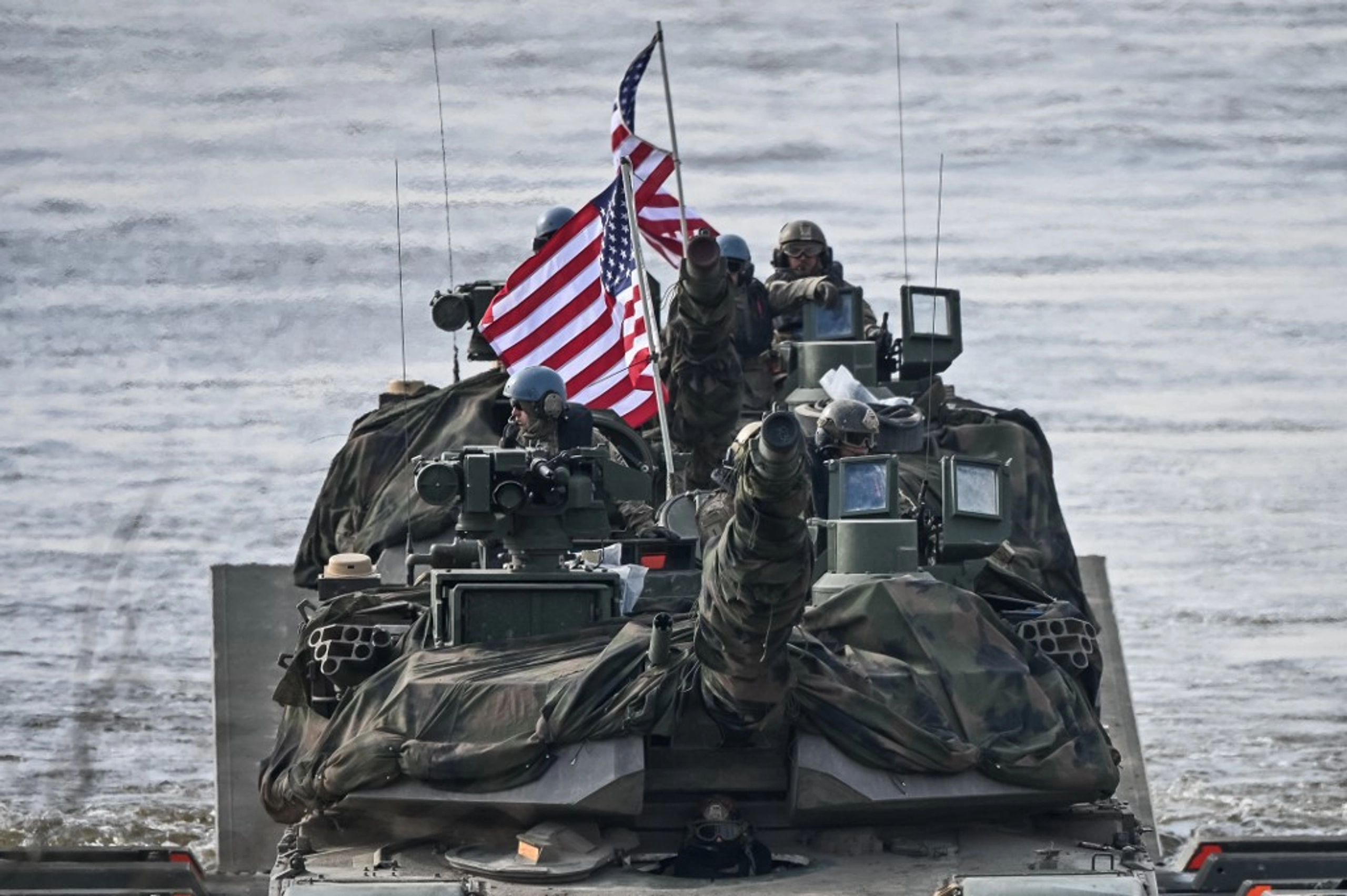
US soldiers on an Abrams tank take part in a NATO military exercise in Korzeniewo, northern Poland, March 4, 2024 (Photo by Wojtek Radwanski / AFP)

While he admitted that Russia was the aggressor in the war, US Secretary of Defense Pete Hegseth on Wednesday said, as far as his department is concerned, military aid to Ukraine will be reduced in the 2026 budget.

When pressed on Capitol Hill about whether the Defense Department intends to increase or decrease spending for Ukraine vis-à-vis previous administrations in its proposed budget to Congress, the Pentagon chief said, “It is a reduction in this budget.”

Leaders in Kyiv have publicly worried that his would be the case.

Oleksandr Merezhko, head of Ukraine’s parliamentary foreign affairs committee told Newsweek magazine on Wednesday that “such a reduction will lead to more casualties on the Ukrainian side, including casualties among civilians.”

“Anyone in the US who is acting in support of the reduction of the military aid to Ukraine becomes morally responsible for the increased casualties among civilians.”

Precise details of the department’s proposed 2026 budget to Congress were not made public.

For the first time time in the history of the Ukraine Defense Contact Group, the US Secretary of Defense declined to attend, when Hegseth took a pass on the June 4 meeting in Ramstein, Germany.

In March, the US administration ordered a pause to aid shipments to Ukraine. In an interview with Fox News two weeks later, President Donald Trump noted, “The money,” the president said, “what bothered me — I hated to see the way it was, you know, excuse me, pissed away.”

Other Topics of Interest
Russia Likely Used 600 kph Jet-Powered Kamikaze Drone in Strike on Kyiv
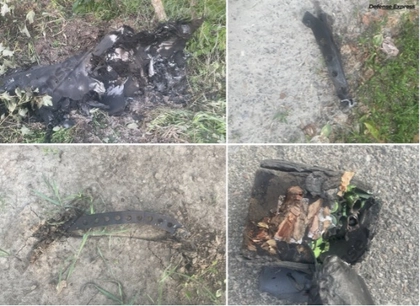
Ukraine says Russia used a new 600 kphh jet-powered kamikaze drone over Kyiv, the debris of which experts said it was to a Russian-made version of the Iranian Shahed-238.

The statement was rather misleading in that military aid for Ukraine does not arrive in the form of money, but rather weapons for US stockpiles that are later replenished by congressionally approved funds to US arms manufacturers.

Eliminating aid for Ukraine will only embolden Putin, said Oleksiy Goncharenko, a member of parliament for the Odesa region.

“It’s completely opposite to President Trump’s intention to end the war,” he told Newsweek.


Describing his position in the Capitol Hill hearings, Hegseth said, “The alternative of endless war that is largely funded by the United States and fought by Ukrainians, for which the Russians have unlimited resources to continue to pour in, does not make sense strategically for the United States.”

Ranking member of the Senate Defense Appropriations subcommittee, Chris Coons (D-DE) was one of several lawmakers on the panel to caution Hegseth against abandoning aid to Ukraine.

“It seems to me concerning that the 2026 request eliminates aid to Ukraine entirely,” he said. “We cannot abandon Ukraine. That would put us significantly at a strategic disadvantage.”


Kyiv Post
Kyiv Post is Ukraine’s first and oldest English news organization since 1995. Its international market reach of 97% outside of Ukraine makes it truly Ukraine’s Global – and most reliable – Voice.
US federal court upholds White House restrictions on Associated Press


The White House, Public domain, via Wikimedia Commons

Bekim Bruka | JURIST Staff, US
JUNE 8, 2025

A US federal appeals court ruled on Friday that President Donald Trump’s administration can bar the Associated Press (AP) from some events and spaces in the White House.

The opinion follows an AP lawsuit claiming the administration infringed upon the outlet’s First Amendment rights. Written by US Circuit Judge Neomi Rao, the 2-1 ruling stated that the government can limit speech or grant access to its property depending on where the speech occurs. Contrary to AP’s claim that they were excluded based on viewpoint, the court argued that access rules are judged based on the nature of the location and not just “press pool membership.”

Additionally, the court clarified that the First Amendment does not prevent the president from choosing which journalists to engage with, as he is free to grant interviews or briefings to reporters based on personal preference or viewpoint. The president’s private choices about interviews are not subject to the First Amendment.

Taylor Budowich, a White House deputy chief of staff, applauded the ruling as a “victory for democracy,” claiming that AP’s “irresponsible and dishonest reporting” gives them no entitlement to an “unfettered access to limited spaces.”

After the ruling announcement, AP spokesman Patrick Maks said, “[W]e are disappointed in the court’s decisions and are reviewing our options.” Maks suggested an “expedited review of the full case on its merits” to fast-track the case in upper courts instead of waiting through the appeals process.

The case began when AP was notified that the administration barred reporters from covering several White House events in February 2025. The administration cited the media’s reluctance to use “Gulf of America”—instead of “Gulf of Mexico”—as a reason for implementing the restriction. The AP sued, arguing that the exclusion violated the First Amendment. Prior to Friday’s ruling, the AP saw partial success in the case after a lower court temporarily blocked the press ban.

Press pool membership is a small and select group of journalists who have special access to cover events with high-level government officials and in places where access is limited, including Air Force One and the Oval Office.


US federal judge approves landmark settlement allowing NCAA athlete pay

A US federal judge granted approval Friday of a landmark $2.6 billion class action 

settlement that transforms college athletics by allowing schools to directly pay student-athletes for the first time in National Collegiate Athletic Association (NCAA) history.

In a released statement, NCAA president Charlie Baker said, “This is new terrain for everyone… Opportunities to drive transformative change don’t come often to organizations like ours. It’s important we make the most of this one.”

The settlement resolves antitrust claims brought by  Division I student-athletes in a class action lawsuit challenging NCAA restrictions on Name, Image, and Likeness (NIL) compensation and athletic services payments. The case affects over 389,000 class members comprised of current and former student-athletes dating back to 2016.

The settlement creates multiple funds to pay out damages, the majority of which will be paid to class members made up of football, men’s basketball, and women’s basketball players. Within each sport, damages will be paid out based on the sport, conference, years played, recruitment ratings, and various performance metrics.

Friday’s settlement also requires the NCAA to enact new rules for student-athlete compensation over the next 10 years. Schools in the NCAA’s five largest (“Power 5”) conferences will supply benefits and direct compensation to student-athletes in amounts worth up to 22% of the average annual athletic revenue for participating schools. Revenue is estimated to be more than $20 million per school in the 2025-26 school year and over $19 billion in total for the 10-year period.

Shortly after Friday’s court ruling, it was announced that former Major League Baseball executive Bryan Seeley had been appointed to run the College Sports Commission, a newly formed organization that will oversee student-athlete revenue distribution for the Power 5 schools.

The case involves a contentious legal history starting with O’Bannon v. NCAA. The 2015 case established that NCAA amateurism—a doctrine purported to maintain the fundamental character of collegiate sports—did not exempt the NCAA from federal antitrust laws. However, the court still allowed the NCAA to limit student-athlete payments to the full cost of attending college.

In 2019, California approved Senate Bill 206allowing for student-athletes playing in-state to accept NIL compensation, and several other states passed similar laws the following year. A 2021 Supreme Court ruling further established that the NCAA was violating antitrust regulations by restricting athlete pay. In July 2021, the NCAA adopted an interim policy that allowed student-athletes to receive NIL payments while maintaining amateur eligibility. NIL payments are made by “Collectives”—independent organizations that fundraise money for the universities. 

Friday’s judicial approval came from Senior Judge Claudia Wilken of the US District Court for the Northern District of California. Wilken is the same judge who originally heard O’Bannon v. NCAA.


Japan high court overturns Fukushima disaster compensation ruling


The Tokyo High Court on Friday overturned a district court ruling against the former executives of Tokyo Electric Power Company (TEPCO) which had ordered them to pay compensation of 13 trillion yen ($90 billion) for their failure to prevent the 2011 disaster at the Fukushima Daiichi nuclear plant.

The High Court’s ruling centered around TEPCO management’s failure to implement countermeasures following the government’s long-term earthquake assessment in 2002, which predicted a possible tsunami of up to 15.6 meters. The court ruled in favor of the executives, finding that the massive tsunami of up to 15 meters that caused the disaster was not foreseeable. Presiding Judge Toshikazu Kino emphasized that the government’s assessment did not provide a sufficient basis for the management to efficiently safeguard against the huge tsunami.

The ruling runs contrary to the National Diet Investigation Commission’s (NAIIC) report in 2012, which concluded that the accident was a “manmade disaster,” resulting from the “collusion between the government, the regulators and Tokyo Electric Power Co.” The report further stated that the “root causes were the organizational and regulatory systems that supported faulty rationales for decisions and actions.” The NAIIC criticized TEPCO for its poor governance and lack of safety culture, particularly regarding the risk of a predicted station blackout due to flooding. The report also recommended amending nuclear power laws and regulations in Japan to emphasize the primary responsibility of operators for safeguarding their nuclear facilities.

The civil suit was brought by 48 shareholders against the former executives of TEPCO over the nuclear disaster, which was triggered by a massive earthquake and tsunami on March 11, 2011. Although the plant’s systems detected the earthquake and automatically shut down the nuclear reactors, the subsequent tsunami overwhelmed the facility, causing massive chemical explosions. This occurred after the floodwater disabled emergency generators, leading to the reactors overheating. The incident had killed more than 180,000 people along Japan’s north-east coast.

The Tokyo District Court in July 2022 ruled that the former executives were liable for compensation after finding that the government’s assessment was “scientifically credible” and that a massive tsunami hitting the plant was foreseeable.

The High Court ruling follows Human Rights Now’s recent submission to the UN Human Rights Council’s 59th session, which noted that more than 30,000 people displaced by the Fukushima disaster are still designated as internally displaced persons (IDPs) and face persistent human rights violations.