Thursday, June 12, 2025


The Future Of Ocean Finance: Scaling Blue Bonds – Analysis

Shipping Trade Container Container Ship Port Logistics


By 

By Abhishree Pandey


The global bond market, the largest asset class in the international financial market, was valued at US$ 141.34 trillion in 2024. By 2030, the figures are expected to reach US$ 166.81 trillion. On the other hand, the blue economy is valued at US$3 trillion annually. Beyond their economic value, blue ecosystems play a vital role in climate action, capturing up to 30 percent of human-generated carbon dioxide. It is no surprise that blue bonds have emerged as a promising financial instrument in the fight against climate change.

Despite this potential, SDG 14 (life below water) currently receives the second lowest amount of invested capital compared to any other SDGs. With increasing awareness about the critical nature of healthy oceans and sea ecosystems to our well-being, blue bonds are well-poised to see rapid growth. In comparison to green bonds 10 years ago, blue bonds are at an inflexion point in 2025. Between 2018 and 2022, 26 blue bonds—with a combined value of US$5 billion—were issued globally. The market grew 10 percent year-on-year in 2024. By 2030, it is estimated that the blue bond market will hit US$70 billion. However, blue bonds remain a nascent asset type within the broader sustainable debt market. 

As the blue bond matrix gradually expands, questions about its effectiveness and long-term viability are also bound to emerge. The following case studies aim to offer optimism and caution about the role of blue bonds as a mainstream climate finance vehicle. Unless coupled with stronger frameworks and verification standards, blue bonds risk becoming more symbolic than substantive. 

Case Studies: Seychelles and Ecuador 

The Seychelles blue bond, the world’s first sovereign blue bond, was issued in 2018. Since then, it has played a central role in shaping the global landscape of blue bonds. It was facilitated by the World Bank and the Global Environment Facility (GEF), and raised US$15 million from international investors. The proceeds support marine protected areas (MPAs), fisheries management, and small-scale fishers. One of the most significant outcomes of the project was the Seychelles government exceeding their goal to protect 30 percent of the Exclusive Economic Zone (EEZ) and Territorial Sea. However, the deal’s heavy reliance on multilateral guarantees and concessional capital highlighted its limited scalability. Without a substantial de-risking mechanism, it is difficult for developing countries to replicate such an effort. It is also tough for the government to redirect its financial resources toward adaptation. If the government decides to support a different area of the blue economy, it must renegotiate terms with investors. Thus, while Seychelles stands as a pioneering example, it also highlights the role of institutional capacity and external support in determining project viability. 

In 2023, Ecuador initiated one of the largest blue bond-related debt-for-nature swaps in history by converting US$1.63 billion in sovereign debt into a US$656 million blue bond issuance. The transaction was structured by Credit Suisse and is expected to lead to a 1.6 percent reduction of Ecuador’s non-financial public sector debt stock. Furthermore, the fund is expected to generate US$323 million for marine protection in and around the Galápagos Islands, which is one of the world’s most biodiverse marine regions, over the next 18.5 years. The Galápagos bonds are insured fully by the U.S.-backed International Development Finance Corporation, and partly by private reinsurers and the Inter-American Development Bank. This means that the burden of risk has been transferred to state-backed agencies. Therefore, deals remain limited to countries possessing suitable debt volumes, technical expertise, and risk profiles. There are also concerns about whether local groups have been sufficiently consulted and involved in the bond’s design and operation.


Policy Recommendations for Mainstreaming Blue Bonds 

The following policy shifts and revisions are essential to ensure blue bonds become a mainstream financing tool. 

Market Development and Integration

There is a critical need to develop integrated blue bond taxonomies and verification standards. Similar to the International Capital Market Association (ICMA) principles that helped mature the green bond market, blue bonds require dedicated frameworks to guard against ‘greenwashing’. Transparency and accountability frameworks must be equally strengthened, which includes greater clarity on operational elements such as use of proceeds, selection criteria, and frameworks for managing proceeds.

Clear guidance on these aspects is essential to ensure investor confidence and that blue bonds deliver on their social and ecological promises. The Ecuador case underscores the risks of neglecting inclusive policy design, while the Seychelles experience reveals how rigid bond conditions can hinder fund reallocation. To ensure blue bonds remain responsive to evolving climate, social, and economic needs, more flexible financial structures are essential.

Expanding the Role of the Private Sector

Thus far, most blue bond issuance has been sovereign or multilateral-led. Expanding the role of the private sector is key to scaling the market and making it more mainstream. Recent issuances such as BDO Unibank Inc.’s US$100 million blue bond in the Philippines and Korea’s Export-Import Bank’s US$1 billion maritime-focused blue bond show that private actors can successfully raise capital for the blue economy sectors. However, governments and international financial institutions must extend technical assistance and risk mitigation strategies/measures to encourage more stakeholder participation. 

Improving the Risk-Return Profile

Climate-themed blue investments face liquidity concerns and are often perceived as high-risk and low-return investments. A key approach to address this issue and attract institutional investors is to offer attractive returns. In addition, blue bonds can be structured with longer maturities that align with the time horizons of ocean-related projects. A range of de-risking tools, such as guarantees, first-loss provisions, and insurance, can be used to improve risk profiles. To scale blue bond issuance, such financial mechanisms must be made readily available and easily accessible. 

Blue bonds have the potential to channel substantial finance into ocean ecosystems to make them more resilient. Their popularity is expected to increase in the next few years, especially among shipping groups, chemical sectors, sustainable tourism, and sea transport sectors, where investors can combine impact and return. The path forward will require a collective effort to scale institutional capacity, build investor confidence, and centre local community engagement in bond design and implementation. 


  • About the author: Abhishree Pandey is a Research Assistant at the Observer Research Foundation.


Observer Research Foundation

ORF was established on 5 September 1990 as a private, not for profit, ’think tank’ to influence public policy formulation. The Foundation brought together, for the first time, leading Indian economists and policymakers to present An Agenda for Economic Reforms in India. The idea was to help develop a consensus in favour of economic reforms.

 

Factory Farms And The Next Pandemic: How Industrial Animal Agriculture Fuels Global Health Threats – Analysis

chickens


By 

Zoonotic diseases linked to factory farming raise pandemic risks, but food tech innovations offer a safer alternative.

Throughout human history, zoonotic diseases, illnesses that jump from animals to humans, have shaped civilizations, triggered pandemics, and rewritten the course of economies. The Black Death, which ravaged Europe in the 14th century, originated from bacteria transmitted by fleas that lived on rats. Ebola, HIV, and SARS-CoV-2, which caused COVID-19, all had animal origins. As humanity’s relationship with animals has become increasingly industrialized through factory farming, the risk of zoonotic spillover has escalated.

Some diseases are transmitted through direct contact with animals, such as rabies from a bite or tuberculosis from infected cattle. Others spread through the consumption of poorly cooked meat, contaminated dairy products, or wet markets that sell live animals. Vector-borne diseases, where insects like mosquitoes and ticks act as intermediaries, transfer pathogens from animals to humans.

Factory Farms and the Growing Threat of Zoonotic Pandemics

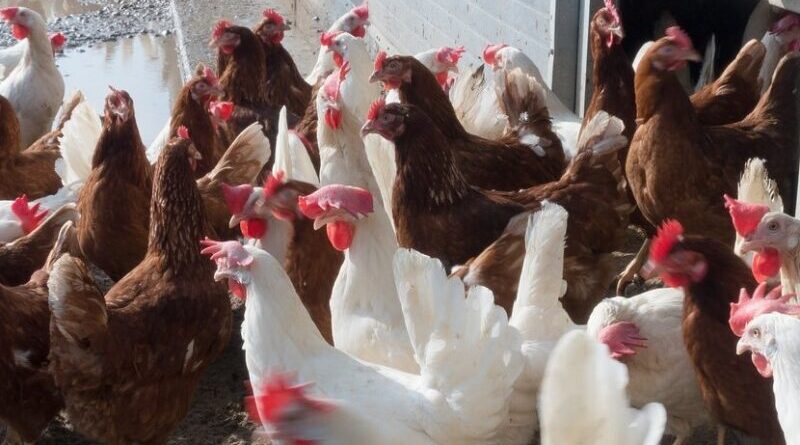
The intensification of industrial agriculture has amplified these risks. The crowded, high-density conditions of factory farms create a breeding ground for disease. Animals raised in confined spaces experience high levels of stress, which weakens their immune systems and increases their susceptibility to infections. When a pathogen emerges in this environment, it can mutate rapidly and spread with alarming efficiency.

This is particularly concerning with influenza viruses, which frequently originate in birds and pigs before adapting to humans. Bird flu has been detected in sheep, raising concerns about the virus’s ability to cross species boundaries. Such a discovery underscores the unpredictability of zoonotic diseases, particularly in terms of cross-species transmission and the potential for rapid evolution of health threats.

Philip Lymbery, author and global CEO of Compassion in World Farming, thinks the danger is serious: “Factory farms are a ticking time bomb for future pandemics,” he says. “Hundreds of coronaviruses are in circulation, most of them among animals including pigs, camels, bats, and cats. Sometimes those viruses jump to humans.”

Antibiotics, widely used in industrial farming to promote growth and prevent disease, exacerbate the issue. Overuse has led to the rise of antibiotic-resistant bacteria, which can jump to humans through direct exposure, contaminated food, or environmental runoff from farms. The World Health Organization has repeatedly warned that antibiotic resistance could become one of the greatest threats to human health, rendering common infections untreatable. COVID-19 was a wake-up call, but it was not the first time a zoonotic virus wreaked havoc on global health. The HIV/AIDS epidemic, which originated from nonhuman primates, has killed over 40 million peoplesince it emerged in the 20th century.

The 2009 H1N1 swine flu pandemic, which was linked to pig farming, spread globally within months. Bird flu strains continue to pose a significant threat, with highly pathogenic avian influenza (H5N1) causing sporadic human infections, resulting in a fatality rate of over 50 percent.

Reimagining Protein: Innovations That Could Prevent the Next Pandemic

Despite these risks, the global demand for animal protein is surging. Humans now eat 350 million metric tons of meat annually, nearly “a thousand Empire State Buildings in carcass weight,” according to academic and writer Tim Searchinger. The United Nations estimates that meat production will increase by more than 70 percent by 2050. This trajectory presents challenges not only for climate change, deforestation, and water pollution but also for the likelihood of future pandemics.

However, emerging innovations in food technology present possible solutions. Precision fermentation and cultivated meat are being explored as methods to reduce dependence on traditional livestock. Precision fermentation, which is used to produce dairy-identical proteins without the need for cows, utilizes engineered microbes to create compounds such as whey and casein.

Cultivated milk, bio-identical to cow milk but grown in a bioreactor rather than in a cow, is expected to enter the market soon. Cultivated meat, grown from animal cells in bioreactors, provides real meat without the need for slaughterhouses or crowded factory farms.

These technologies have the potential to transform global protein production, significantly lowering the risk of zoonotic disease spillover. Because they bypass live animals, they eliminate the risks associated with confined feeding operations, antibiotic resistance, and cross-species viral mutations. Studies suggest that precision fermentation and cultivated dairy could reduce greenhouse gas emissions by up to 96 percent compared to conventional dairy farming.

Jeff Tripician, who has worked in the meat industry for 40 years, recently moved to head a cultivated meat company based in the Netherlands. He told the Future of Foods Interviews podcast that, “Cultivated meat is the only solution on the table.” In regard to bird flu, he went on to say that, “Livestock disease could wipe out huge areas of herds. We’re seeing that in the U.S. with egg-laying hens. Eight percent of the supply has been euthanized.”

Challenges for alternative proteins remain, including regulatory hurdles, production scaling issues, and consumer acceptance barriers. Governments worldwide are still determining how to classify and approve these products for sale, with Singapore leading the way in regulatory approval for cultivated meat. The U.S., Israel, and UK regulators are following closely behind, but widespread commercialization is still a few years away. Affordability is also a concern. Although costs are declining, cultivated meat remains significantly more expensive than conventional meat. However, as production scales, prices are expected to fall.

A Turning Point: Reducing Pandemic Risk Through Food System Reform

The transition away from industrial animal farming will take time, but the need for change is apparent. If the world continues down its current path, the risks of future pandemics will only grow. Addressing this problem requires serious attention, including government policies that promote alternative proteins, investment in food technology, and increased public awareness of the health impacts of factory farming.

Experts in epidemiology, virology, and food innovation continue to examine the intersection of food production and disease risk. Dr. Michael Greger, physician and author of Bird Flu: A Virus of Our Own Hatching, has long warned about the pandemic potential of factory farming. Dr. Rob Wallace, an evolutionary biologist and author of Big Farms Make Big Flu, examines how industrial agriculture fuels the evolution of viruses.

Journalists covering the relationship between food, health, and climate change will need to monitor closely how food production impacts disease risk. There is no single solution, but reducing reliance on industrially farmed animals could significantly lower the likelihood of the next global pandemic.

  • About the author: Alex Crisp is a freelance journalist focusing on environment, animal welfare, and new technology. He has a background in law, journalism, and teaching. He is the host of the Future of Foods Interviews podcast.

  • Source: This article was produced for the Observatory by Earth | Food | Life, a project of the Independent Media Institute.

Alex Crisp

Alex Crisp is a freelance journalist focusing on environment, animal welfare, and new technology. He has a background in law, journalism, and teaching. He is the host of the Future of Foods Interviews podcast.

By 

Sudan’s civil war began as a struggle between two rival factions, but the battle is growing more complex as armed civilian groups, rebel fighters, and tribal and regional militias have joined the grinding, back-and-forth fray.


The paramilitary Rapid Support Forces (RSF) controlled the capital, Khartoum, for two years until March, when the national Sudan Armed Forces (SAF), led by Gen. Abdel Fattah al-Burhan, reclaimed it with the help of armed civilians.

“Khartoum was not just a battlefield defeat for the RSF,” Mohamed Saad, a researcher at Charles University in the Czech Republic, wrote for The Conversation. “It was a turning point in how the war is fought — it’s no longer a military struggle but a battle involving armed civilians across Sudan.”

According to Saad, Mohamed Hamdan “Hemedti” Dagalo built the RSF on tribal loyalty, but many factions have felt slighted by Hemedti, and the RSF’s cohesion has suffered. The RSF has been accused of committing mass killings, sexual violence and looting. The rival national forces are also accused of committing atrocities against civilians.

“Internal divisions within the RSF [also] have played a major role in its recent losses,” Saad wrote. “Some former RSF fighters have formed their own militias.”

Analysts: Additional Actors Will Prolong War

Both the SAF and RSF have made nationwide efforts to recruit new troops, and several communities across the country have chosen sides and committed to send fighters into battle. Analysts say additional actors will only prolong the war.


In urban areas in central Sudan, Khartoum, North Darfur, North Kordofan, South Kordofan and West Kordofan, neighborhood defense units have emerged. Formed to protect residents from the RSF, they have expanded their roles and increasingly operate outside SAF oversight, according to Saad. In Darfur and Kordofan, where entrenched ethnic and political rivalries have intertwined with the current war, tribal and regional militias have also become more prominent. Some of them are aligned with SAF, while others pursue their own agendas.

The Sudan People’s Liberation Movement-North, an ethnic-linked group, has expanded its operations in Kordofan and the Blue Nile state. The group has allied with the RSF to push its own agenda, which includes “securing greater autonomy for these regions and promoting a secular political framework that challenges Khartoum’s Islamist-leaning governance,” Saad wrote. Other ethnic militias operate in eastern Sudan.

Islamist-linked militias, particularly the El Baraa Ibn Malik Brigade, now a key SAF ally, also have emerged. The Brigade was named after a famous Muslim fighter during early Muslim conquests. RSF supporters have complained on social media that these fighters are remnants of the Omar al-Bashir regime that was toppled in a 2019 coup.

Another Islamist group, the Sudanese Popular Resistance Factions (PRF), supports the SAF. In 2023, it released a video in which masked gunmen pledged to “liberate Khartoum and cleanse it of the filth of these [RSF] mercenaries.” The group’s name echoes that of the resistance committees that played a role in al-Bashir’s ouster. Unlike those committees, the PRF “espouses violence rather than non-violence and emerged not from the grassroots but from the shadows,” the Sudan War Monitor reported.

If the rise of armed groups is not stemmed, Saad says they may evolve and establish territories where local commanders wield unchecked power. This would undermine the possibility of establishing central governance in Sudan.

“These groups don’t share a single goal,” he wrote. “Some fight for self-defense, others for political power. Some for revenue and wealth. Others are seeking ethnic control — Sudan’s population has 56 ethnic groups and 595 sub-ethnic groups. This is what makes Sudan’s war even more dangerous: fragmentation is creating multiple mini-wars within the larger conflict.”

Attempts at a ceasefire through talks in Jeddah, Addis Ababa and Geneva have failed to end the violence as each side seeks to gain and maintain momentum. After recent military setbacks, the RSF in late May regained control of El Dabibat, a strategic gateway between Kordofan and Darfur, after launching drone strikes and ground assaults on the SAF and allied fighters, Dabanga Sudan reported. The SAF had claimed control of the town days before.

‘A War on Your Future’

Abdul Mohammed, a former African Union and United Nations official, recently urged the Sudanese people to take ownership of their country’s path to peace, arguing that international mediation alone cannot end the war. Writing in the Sudan Transparency and Policy Tracker, Mohammed called for a grassroots movement driven by the people, rather than politicians.

“This war is not merely a military confrontation,” Mohammed wrote. “It is a war on your dignity, your identity, your communities, and your future.”


Africa Defense Forum

The Africa Defense Forum (ADF) magazine is a security affairs journal that focuses on all issues affecting peace, stability, and good governance in Africa. ADF is published by the U.S. Africa Command.