Friday, June 13, 2025

Exposure to multiple extreme climate events during pregnancy may have a cumulative effect on child brain development


A new study looks at the impact of in utero exposure to both extreme heat and a natural disaster


The Graduate Center, CUNY

Neuro images 

image: 

Neuroimaging research lead prepares MRI scanner for child brain imaging study.

view more 

Credit: Credit: Rebecca M. Lee and Abid Fahim


NEW YORK, June 11, 2025 — Climate disasters may be leaving invisible imprints on developing brains before birth, according to new groundbreaking research from The City University of New York Graduate Center (CUNY Graduate Center) and Queens College. Scientists discovered that children whose mothers experienced Superstorm Sandy during pregnancy showed distinct brain differences that could affect their emotional development for years to come.

The study, published in PLOS One, reveals that prenatal exposure to extreme climate events, particularly when combined with extreme heat, appears to rewrite critical emotion regulation centers in the developing brain. 

"We're seeing how climate change may be reshaping the next generation's brains before they even take their first breath," said lead author Donato DeIngeniis, a CUNY Graduate Center Psychology Ph.D. student. "These children's brains bear invisible scars from climate disasters they never personally experienced."

Climate Change in the Womb

The research team analyzed brain imaging data from a group of 8-year-old children whose mothers were pregnant during Superstorm Sandy, which devastated parts of New York and other coastal regions in 2012. The scans revealed that children exposed to the storm in utero had significantly larger volumes in the basal ganglia, deep brain structures involved in emotion regulation.

"The combination of storm stress and extreme heat created a perfect neurological storm in developing brains," explained Professor Yoko Nomura, principal investigator of the Stress in Pregnancy (SIP) Study and Psychology professor at the CUNY Graduate Center and Queens College. "We found that while extreme heat alone didn't significantly alter brain volume, when combined with the stress of living through a major storm during pregnancy, it amplified the effects dramatically."

The research involved MRI scans of 34 children, comparing those exposed to the storm and/or extreme heat (defined as at least one day above 95°F during pregnancy) to those who were not. The findings could have profound implications for children growing up in regions increasingly affected by climate change. 

Lifelong Effects

“As extreme weather events become more frequent and severe, we need to consider the invisible toll on future generations,” DeIngeniis noted. “Our findings suggest we must develop targeted interventions to support pregnant women during climate disasters and strengthen climate resilience in vulnerable communities."

Duke Shereen, Ph.D., director of the Magnetic Resonance Imaging facility at the Advanced Science Research Center at the CUNY Graduate Center and a co-author of the study, emphasized the long-term implications of the findings: "These imaging techniques allow us to visualize how environmental stressors can cascade through maternal experience to alter the architecture of the developing brain. What we are seeing is compelling evidence that the climate crisis is not just an environmental emergency, it is potentially a neurological one with consequence for future generations who will inherit our planet.”


About the Graduate Center of The City University of New York The CUNY Graduate Center is a leader in public graduate education devoted to enhancing the public good through pioneering research, serious learning, and reasoned debate. The Graduate Center offers ambitious students nearly 50 doctoral and master’s programs of the highest caliber, taught by top faculty from throughout CUNY — the nation’s largest urban public university. Through its nearly 40 centers, institutes, initiatives, and the Advanced Science Research Center, the Graduate Center influences public policy and discourse and shapes innovation. The Graduate Center’s extensive public programs make it a home for culture and conversation.


Naval Research Laboratory and NASA launch joint effort to study wildfire-induced thunderstorms


Naval Research Laboratory


WASHINGTON, D.C. — As wildfires grow more intense and frequent across the globe, scientists at the U.S. Naval Research Laboratory (NRL) are working to better understand a rare but powerful byproduct of these blazes: pyrocumulonimbus clouds, or pyroCbs.

“These are thunderstorms that develop directly over large and intense wildfires,” said David Peterson, Ph.D., a meteorologist with NRL. “They act like giant chimneys, rapidly accelerating smoke particles high into the atmosphere. They’re among the darkest, dirtiest storm clouds you’ll ever see.”

Unlike typical thunderstorms, pyroCbs can inject smoke into the upper atmosphere, potentially altering weather patterns, reducing visibility, and interfering with operations critical to U.S. military readiness.

“Sometimes that smoke can reach the lower stratosphere,” Peterson said. “This can affect how solar radiation is absorbed or reflected and creates a significant gap in our forecasting capabilities.”

To address that gap, NRL and NASA have teamed up to launch a new field experiment: the Injected Smoke and Pyrocumulonimbus Experiment known as INSPYRE. Led by NRL and funded by NASA, INSPYRE is a multi-year collaborative effort aimed at improving predictive weather modeling through detailed analysis of wildfire-induced atmospheric behavior.

“Reliable weather forecasting is essential for effective mission planning,” Peterson said. “The work we do at NRL focuses specifically on atmospheric hazards that impact warfighters, especially aerosol particles like wildfire smoke and their effects on radiation and visibility.”

INSPYRE will collect data on how and where smoke plumes travel, and at what altitudes, with the goal of enhancing models that inform Department of Defense operations and disaster response.

“It’s a project where many different groups will benefit,” said Peterson. “We’re proud to be at the center of this critical research. It’s an exciting time for all of us at NRL.”


About the U.S. Naval Research Laboratory

NRL is a scientific and engineering command dedicated to research that drives innovative advances for the U.S. Navy and Marine Corps from the seafloor to space and in the information domain. NRL, located in Washington, D.C. with major field sites in Stennis Space Center, Mississippi; Key West, Florida; Monterey, California, and employs approximately 3,000 civilian scientists, engineers and support personnel.

For more information, contact NRL Corporate Communications at (202) 480-3746 or nrlpao@nrl.navy.mil. Please reference package number at top of press release.

###


Exposure to air pollution during pregnancy linked with changes in fetal brain structures


A study involving over 700 pregnant women analyzes for the first time how air pollution may affect fetal brain development


Barcelona Institute for Global Health (ISGlobal)


Fetuses more exposed to certain air pollutants show changes in the size of specific brain structures, particularly during the second and third trimesters of pregnancy. This is the main finding of a new study led by the Barcelona Institute for Global Health (ISGlobal), a center supported by the ”la Caixa” Foundation, in collaboration with the BCNatal center (Hospital Sant Joan de Déu, Hospital Clínic, and University of Barcelona) and the Hospital de la Santa Creu i Sant Pau. It is the first study to specifically examine the association of air pollution on fetal brain development during pregnancy.

The study, published in The Lancet Planetary Health, analyzed data collected between 2018 and 2021 from 754 mother-fetus pairs participating in the BiSC (Barcelona Life Study Cohort) project in Barcelona. This study aimed to understand the association of air pollution on child health and brain development, and is considered one of the most comprehensive studies in this field.

During the third trimester of pregnancy, participants underwent transvaginal neurosonography, a specialized ultrasound that allows the analysis of fetal brain shape and structures. Exposure to nitrogen dioxide (NO), particulate matter (PM2.5), and black carbon was estimated with hybrid models that combine data from real measurements with advanced statistical methods. The research considered three “microenvironments”: the participants’ homes, workplaces, and commuting routes. Data on activity patterns were collected via a geolocation app installed on the participants’ mobile phones.

The research team observed that prenatal exposure to NO, PM2.5, and black carbon in all aforementioned microenvironments combined was associated with an increase in the volume of various brain cavities that contain cerebrospinal fluid. Specifically, direct associations were identified between exposure to these pollutants and increased volume of the lateral ventricles, located in each brain hemisphere, as well as an enlargement of the cisterna magna, a cavity located at the lower part of the brain. An increase in the width of the cerebellar vermis —the central part of the cerebellum, essential for balance and motor coordination— was also detected.

The study results also showed an association between higher exposure to black carbon and a reduction in the depth of the lateral sulcus (also known as the Sylvian fissure), a deep groove that runs through the brain, which might suggest less maturation of the brain.

The associations between exposure to air pollution and changes in the morphology of these brain structures were stronger during the second and third trimesters of pregnancy. “During mid to late gestation, the fetal brain enters a key phase of its development, making it particularly vulnerable to external factors such as pollution,” explains Payam Dadvand, ISGlobal researcher and a senior author of the study.

“As clinicians, we are now seeing compelling evidence that even in pregnancies that appear healthy by all conventional measures, factors such as air pollution can subtly affect fetal brain development. These findings underline the importance of increased awareness and education, both within the health community and across society,” say Elisa Llurba and Lola Gómez-Roig, clinicians at the Hospital de Sant Pau and BCNatal-Hospital Sant Joan de Déu, respectively, and co-authors of the study.

Significant Differences at the Population Level

The observed effects do not imply that the children participating in the BiSC project have pathological brain alterations. In fact, all measurements of the participants’ brain structures are within the range considered normal. “The point is that these differences, although small at the individual level, are indeed relevant from a population perspective, as they inform us about how pollution affects the fetal brain and its vulnerability to environmental exposures,” says Laura Gómez-Herrera, ISGlobal researcher and co-lead author of the study.

The research team emphasizes the need for further studies to confirm these findings and track their potential consequences over time. “At this stage, we can only report having observed differences in the brains of fetuses with higher exposure to pollution compared to those with lower exposure. Additional research is needed to determine whether these effects are reversible after birth or if they persist, and whether they have any implications for neurodevelopmental outcomes in later stages,” emphasizes Jordi Sunyer, a senior author of the study.

Despite the uncertainties that remain, this study could have significant implications for public health policy. “Our findings strengthen the evidence supporting the need to reduce pregnant women’s exposure to air pollution, particularly in urban settings,” says Yu Zhao, ISGlobal researcher and co-lead author of the study.

Reference

Laura Gómez-Herrera, Yu Zhao, Ioar Rivas, Elisenda Eixarch, Carla Domínguez-Gallardo, Toni Galmes, Marta Muniesa, Maria Julia Zanini, Alan Domínguez, Marta Cirach, Mark Nieuwenhuijsen, Xavier Basagaña, Xavier Querol, Maria Foraster, Mariona Bustamante, Jesus Pujol, Mireia Gascon, Elisa Llurba, María Dolores Gómez-Roig, Payam Dadvand, Jordi Sunyer. Air pollution and foetal brain morphological development: a prospective study. The Lancet Planetary Health, Vol 9, June 2025. https://doi.org/10.1016/S2542-5196(25)00093-2 


Tiny and toxic: Researchers track smaller air pollution particles across U.S. skies


Washington University in St. Louis


By Leah Shaffer

Air pollution causes health problems and is attributable to some 50,000 annual deaths in the United States, but not all air pollutants pack the same punch.

Scientists have tracked the scope of “PM 2.5” pollution over decades. PM 2.5 is a size of “particulate matter” that is less than 2.5 microns in diameter. But less information was available about its even tinier cousin, described as “submicron” or “PM 1” particulate matter, which is less than 1 micron in diameter. Why does that matter? Because the “little guys” might be the source of worse health effects.

With a study now published in The Lancet Planetary Health, researchers at Washington University in St. Louis have quantified the amount of PM 1 over the United States from the past 25 years.

“This measurement serves as a starting point to understand which pollutants regulators could target to make the most effective health impact,” said Randall Martin, the Raymond R. Tucker Distinguished Professor of energy, environmental and chemical engineering in the McKelvey School of Engineering. “This effort builds upon WashU’s strengths in satellite remote sensing and modeling atmospheric aerosols that were leveraged in this study,” he added.

Chi Li, research assistant professor in Martin’s atmospheric composition analysis group, is the first author of the work. Li said these estimates will enable further investigation into both the health and environmental effects of submicron particles.

Li said the very small particles quantified in this study generally come from direct air emissions, such as the black carbon particles released by diesel engines or the smoke from wildfires. Sometimes PM 1 can also form through secondary processes when sulfur dioxide or nitrogen oxides are spit out through fuel combustion and burning coal.

It makes intuitive sense that smaller particles of air pollution could do more damage to the human body because they are able to slip past the body’s innate defenses. These submicron particles are at least 6 times smaller than blood cells.

Air particles are not always one single thing, but mixtures of other materials stacked together.

The larger sizes of particles are critically more dominated by components that are not easily modifiable like mineral dust, noted Li.

The researchers were able to calculate their submicron estimates based on the known ratios of what makes up PM 2.5  particles, which include seven main components such as sulfate, nitrate and mineral dust.

“Putting the seven species together, we can calculate the total PM 1 concentration over the country,” Li said.

This research sets the stage for further analysis of where, how and why certain types of particles congregate, and how they can affect the environment and human body.

“When EPA first promulgated a fine PM air quality standard in 1997, there was considerable discussion about regulating PM 1 or PM2.5,” said Jay Turner, the James McKelvey Professor of Engineering Education and co-author on the study. “For numerous reasons, including but not limited to the lack of health impacts studies for PM 1 compared to studies for PM 2.5, the latter was chosen.  This study provides a comprehensive, nationwide dataset to examine PM1 impacts on health.”

A next step will involve working with epidemiologists to assess the association of PM 1 with health outcomes.

The new dataset revealed another notable fact: pollution regulation does help. Across the contiguous U.S., average PM 1 levels in the air people breathe dropped sharply from 1998 to 2022, thanks to decades of environmental regulations like the Clean Air Act. However, this progress has slowed since 2010, mainly because of rising wildfire activity. Future pollution controls will need to address emerging, non-fossil fuel sources, study authors said.

Other countries like China have a head start tracking nationwide PM 1, but now the U.S. can quickly catch up.

“This dataset offers unprecedented information for the United States about an important pollutant for which few other measurements exist,” Martin said.


Li C, Martin RV, van Donkelaar A, Jimenez JL, Zhang Q, Turner JR, Liu X, Rowe M, Meng J, Yu W, Thurston, GD. Estimates of submicron particulate matter (PM1) concentrations for 1998-2022 across the contiguous United States. Lancet Planetary Health. Online June 11, 2025: DOI: http://10.1016/S2542-5196(25)00094-4

Funding from National Institute of Environmental Health Sciences, National Institutes of Health.


Among new US dads, 64% take less than two weeks of leave after baby is born


Lack of leave means missing important time to bond with babies, support mothers


Northwestern University


  • Only 36% of dads reported taking more than two weeks of paternal family leave

  • Findings support U.S. lagging ‘behind the rest of the world in availability of paid family leave’

  • ‘If there was paid family leave, fathers would have fewer barriers, and they’d take it’

CHICAGO --- When it comes to family leave, American fathers are left behind.

In a survey of new fathers led by scientists at Northwestern University and Ann & Robert H. Lurie Children’s Hospital of Chicago, 64% of fathers reported taking less than two weeks of leave or no leave after the birth of their child. Only 36% of dads reported taking more than two weeks of leave. The survey is the first of a state-representative sample of fathers. 

In the survey, fathers reported that the main barrier to taking any leave or longer leave was a fear of losing their job. 

“We know the U.S. lags behind the rest of the world in availability of paid family leave,” said corresponding study author Clarissa Simon, research associate at Northwestern University Feinberg School of Medicine and senior research scientist at Lurie Children’s.“We still are not there yet. What we found with this study is that if there was the availability of paid leave, fathers would have fewer barriers, and they’d take it.”

The findings were published June 10 in the journal Pediatrics. They are the first to describe work-leave practices among a representative sample of all dads listed on the birth certificate in Georgia, including patterns and factors related to their paternal leave. 

Previous research at Northwestern has found that new fathers play an important role in the health and wellbeing of children and families, including helping mothers breastfeed for longer durations and influencing whether an infant is placed to sleep safely.

“It’s not always an easy time — you’re sleep deprived, it’s not fun — but it’s part of being a dad,” Simon said. “Fathers can and should experience the pains and the joys of parenthood, and the best way to do that is if they can take a break from work to spend time with their new baby without financial barriers or stressors like fear of job loss.”

It’s also valuable for fathers to be involved from the very beginning to more easily transition to fatherhood, Simon said. 

“They don’t go through pregnancy, so they have the baby and then they realize ‘Oh, I’m a dad now,’” Simon said. “Without leave, they do not have time to fully engage with their families in this new chapter. This is one of the first data sets to be able to answer this question.”

‘There isn’t any other data like this’

The scientists used data from the Pregnancy Risk Assessment Monitoring System for Dads (PRAMS for Dads survey), which was created by Northwestern University’s Dr. Craig Garfield and first piloted in Georgia in 2018. They analyzed answers from a representative sample of 261 fathers in the state of Georgia who were surveyed two to six months after the birth of their child (between October 2018 to July 2019).

Of the 261 respondents, 240 were employed while their infants’ mother was pregnant. Of employed fathers, 73% reported taking any leave (paid or unpaid). Among fathers taking leave, 53% reported at least some paid leave.

“The research is clear in the U.S. and abroad that fathers want to be there and be involved with their newborns, and when they are there at the beginning, it predicts much greater involvement when that baby is 9 or 12 months old,” said Garfield, professor of pediatrics and medical social sciences at Feinberg and a physician at Lurie Children’s. “That involvement is good for the baby, good for the mom and good for the dad, too. So, if we want to ensure the best outcomes for our babies, we ought to be creating policies that support fathers from the first days of a baby’s life.”

“There isn’t any other public health data like this,” Simon said. “There is no more recent or national data other than what we’re collecting right now, and there’s no reason to think those results won’t be repeated. 

Simon and her colleagues are scaling up the survey and collecting additional data in eight states: Georgia, Ohio, North Dakota, Massachusetts, parts of Michigan, Wisconsin, New Jersey and Maine. 

Moving forward, any parent will be able to complete the survey, making it a gender-neutral survey. The goal is to reach fathers and non-birthing parents to understand the behaviors and experiences of any parent raising infants, Simon said.

More about the PRAMS for Dads survey

The survey is the first-ever public health monitoring of fathers in the period from pregnancy through the first year of the infant’s life. It collects data on fathers’ physical and mental health, access to health care, use of family leave, infant engagement (safe sleep, breastfeeding) and support of mom in the immediate months after the birth. And it is inclusive — meaning the survey applies to whatever family constellation exists — same-sex, cis-gender, etc.

The tool was modeled after PRAMS, an annual surveillance tool the CDC and public health departments have used for more than 35 years to survey new mothers. PRAMS for Dads is, for the first time, providing data on the unique needs of new fathers. The survey gathers data on the health behaviors and experiences of men as they enter fatherhood. 

Garfield is the senior author on the study. Other Northwestern and Lurie Children’s authors include Dr. John James Parker, Dr. Katherine Bean and Anne Bendelow.

Funding for the study was provided by the Centers for Disease Control (CDC) and Prevention (grant U38OT00140) and CDC 2015 Innovation Fund, Office of Science and Office of Technology and Innovation.


Archaeology in the age of big data


The AI-powered software “AutArch” automatically extracts data from archaeological drawings and photographs, ensuring that findings preserved in libraries contribute to the ongoing digital revolution in archaeology


Johannes Gutenberg Universitaet Mainz


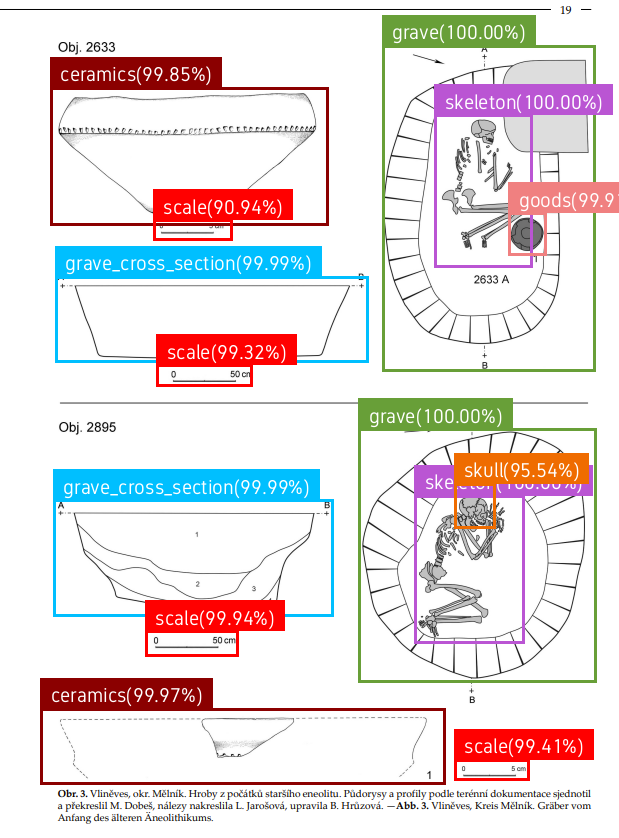
Archaeologists often face major challenges when trying to connect new discoveries with information from old books: How can the findings of two hundred years of archaeological research be combined with new data? AutArch opens up completely new avenues here. It is based on neural networks that researchers have trained to independently detect, analyze, and relate common archaeological “objects” in catalogues, such as images of graves, human remains, pottery, and stone tools. AutArch does not only locate the data, but combines them to extract meaningful information. "When analyzing a grave drawing, for instance, the software detects the north arrow and the associated scale – and can use this to calculate the actual size of the grave and its orientation”, explains Dr. Maxime Brami, who led the project at Mainz University. For archaeologists, this means they can use AutArch to automatically generate vast amounts of data, spread across many publications, to answer specific questions about the past and compare it, for instance, with 3D scans of artefacts in museum collection. “Previously, researchers had to manually extract information from images, which takes a lot of time and involves tedious tasks like resizing, reorienting, and reformatting the images”, explains Kevin Klein, software developer at JGU and first author of the study. AutArch automates the entire process. Although it uses AI, the results are never black box. A user-friendly interface allows researchers to check and adjust the automatically extracted data, ensuring accuracy and accountability.

The software is widely applicable and scalable
AutArch is scalable and can serve the needs of the ever-growing field of digital humanities. Antoine Muller, a Palaeolithic researcher and one of the authors of the study, says “the methodology is applicable to virtually any material, as long as the shape, size, and/or orientation of an object holds technological, functional, or chronological significance”. Not only can it be applied to any material, but it also grows with increasing demands. “This development represents an important step forward in the application of artificial intelligence in archaeological research,” Brami summarizes. “It has the potential to fundamentally transform data access and analysis.”

The AutArch project is an interdisciplinary and collaborative effort involving computer scientists and archaeologists from all over Europe. Ralf Lämmel, a computer scientist from Koblenz University, for instance, oversaw the implementation of the machine learning aspects and the statistical validation of the results. The project was initiated by Maxime Brami with the support of the German Research Foundation (COMOVE Project). The work also received funding from the European Research Council under the European Union’s Horizon 2020 research and innovation program (YMPACT Project, awarded to Volker Heyd).

The open-source software is available on Zenodo and GitHub at the following links:
https://zenodo.org/records/15369892
https://github.com/kevin-klein/autarch


Images:

https://download.uni-mainz.de/presse/07_iaw_AutArch_abb1.png
Example of the object detection result for one page of catalogue (here: third millennium BC site of Vliněves, Czech Republic). Copyright: Klein et al. 2025.

https://download.uni-mainz.de/presse/07_iaw_AutArch_abb2.png
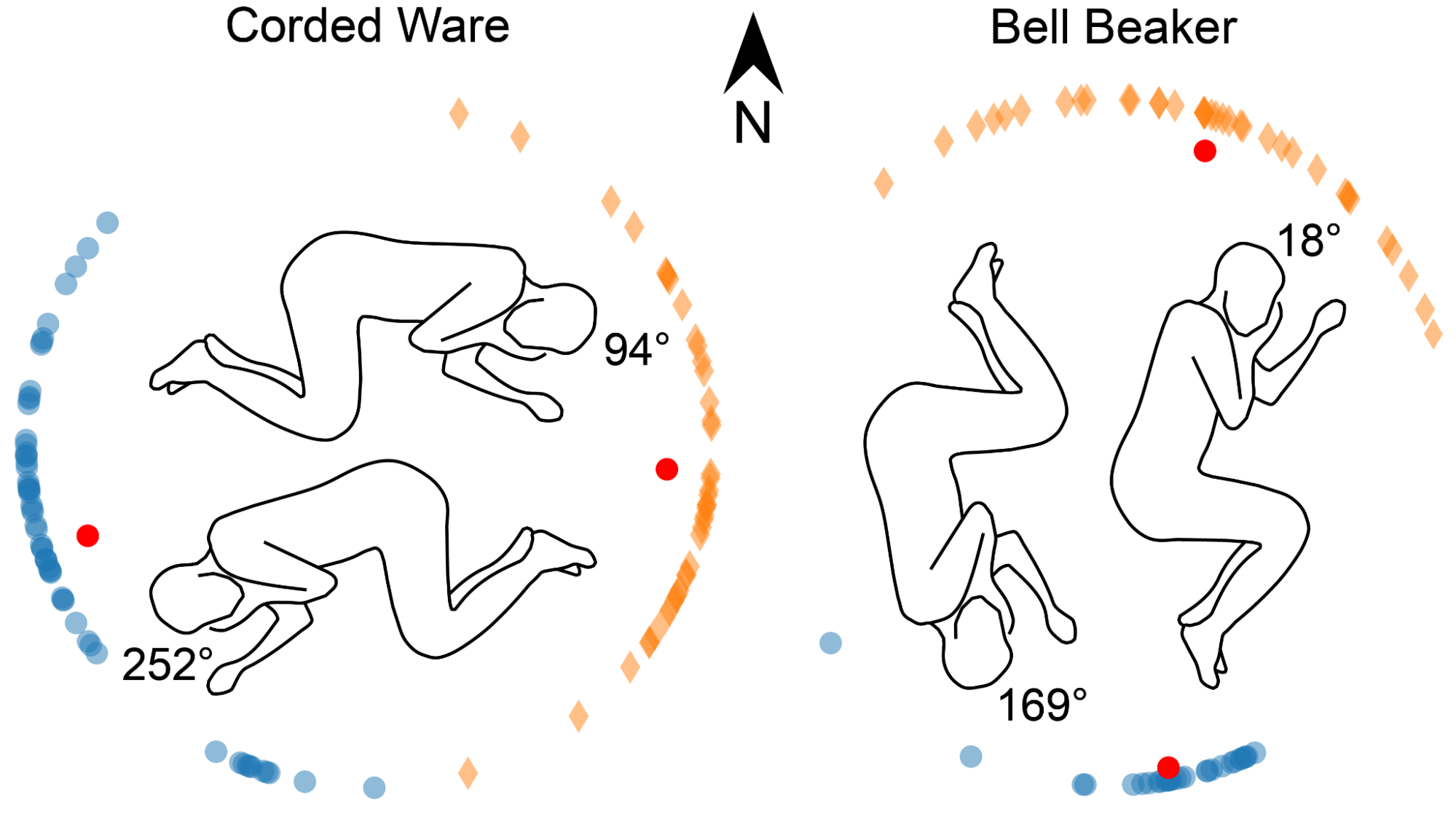
Burial orientations can be automatically retrieved from grave drawings. For instance, archaeological cultures from the third millennium BC in Central Europe buried men and women in opposite directions. This can be shown for 100 Corded Ware graves and 66 Bell Beaker graves with skeletons that have a discernible orientation from the Czech Republic analysed with AutArch. Copyright: Klein et al. 2025.

https://download.uni-mainz.de/presse/07_iaw_AutArch_abb3.png
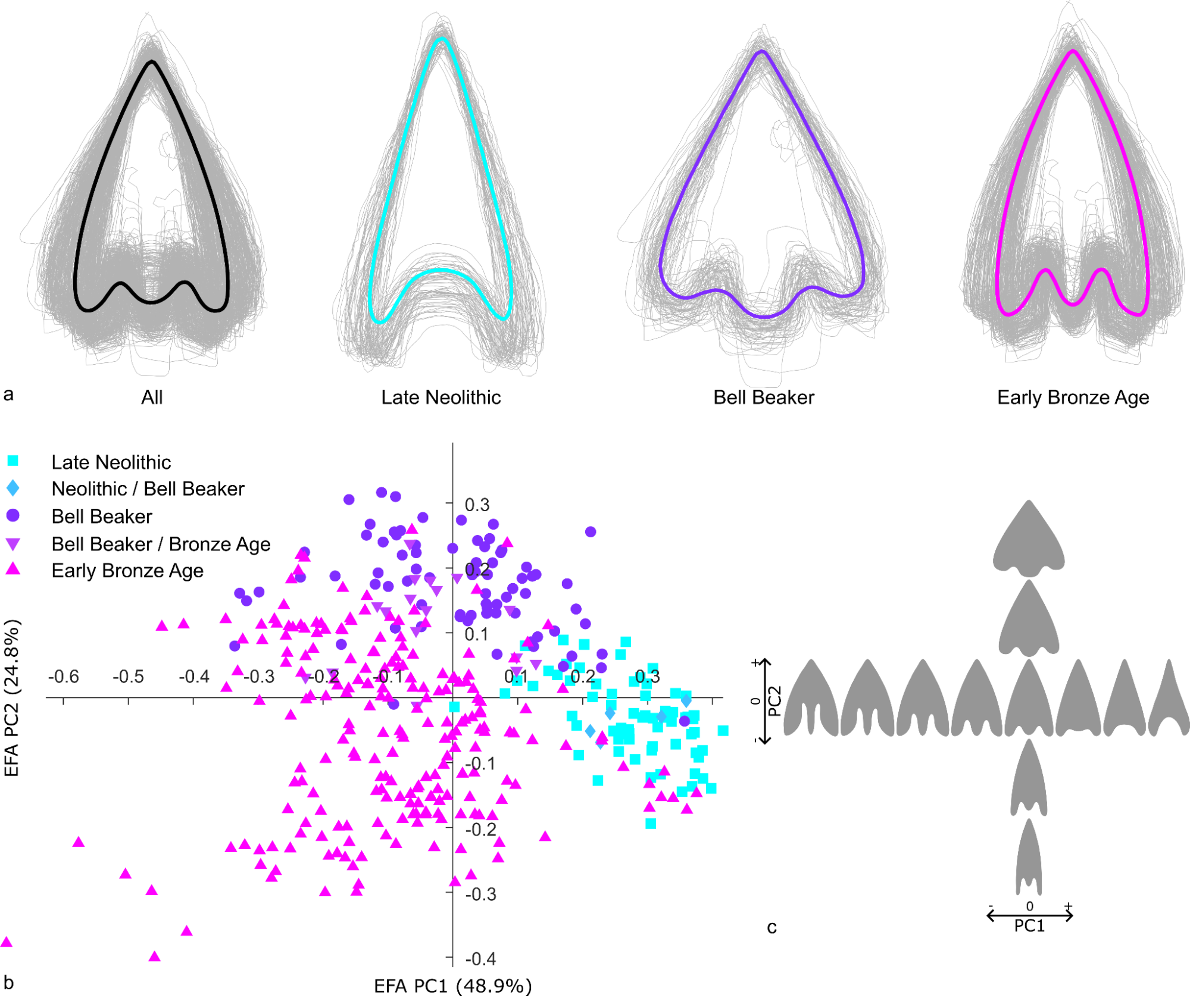
The AutArch workflow can also extract the outline of artefacts from catalogues, such as arrowheads, allowing for various shape analyses. Copyright: Klein et al. 2025.