Saturday, June 14, 2025


The hidden cost of Indonesia’s nickel ambitions

The hidden cost of Indonesia’s nickel ambitions
/ Erick Morales Oyola - Unsplash
By bno - Jakarta bureau June 12, 2025

Indonesia ranks among the top global producers of nickel, a critical component in electric vehicle batteries, smartphones, and wind turbines - making the country central to the global shift toward clean energy. To secure access to this strategic mineral, major economies like China, the US, and the EU have deepened investment ties with Indonesia.

Yet, this boom comes with a stark contradiction. While the nation reaps economic gains, nickel mining is placing growing pressure on vulnerable ecosystems, particularly in eastern regions like Raja Ampat in Southwest Papua. Gag Island, part of this biodiverse archipelago, has become a focal point in the clash between environmental preservation and industrial growth.

The beginnings of nickel mining in Raja Ampat

Investment in the nickel sector contributed over 62% of the total mineral sector investment, which reached IDR245.2 trillion ($15bn) between January and December 2024, as reported by Media Nikel Indonesia. For instance, nickel exploration on Gag Island was initiated by PT Gag Nikel, a subsidiary of PT Aneka Tambang (Antam) Tbk, under a Contract of Work granted in 1998. However, mining activities were halted in 2005 when Gag Island was designated a national marine conservation priority. According to Tempo, this conservation status led to a temporary suspension of permits. PT Gag later reapplied for environmental clearance following revisions to regional spatial planning and received approval from the Ministry of Environment and Forestry (KLHK) in 2017.

Why Gag island matters

Gag Island, spanning less than 2,000 km², technically falls under the protection of Law No. 1/2014 on Coastal and Small Island Management, which prohibits mining on small islands. However, Kompas reports that an exception was granted because PT Gag Nikel’s Contract of Work was issued before the law came into effect. Hukumonline highlighted how this legal loophole has enabled mining operations to continue - often at the expense of environmental protections.

While PT Gag Nikel is the most high-profile operator, it is far from the only one. Companies like PT Anugerah Surya Pratama (ASP), PT Anugrah Surya Indotama (ASI), and PT Kawei Sejahtera Mining (KSM) have also been linked to contentious activities in Raja Ampat. Notably, PT ASI has been accused of operating in defiance of a governor-issued moratorium, allegedly under the shield of military backing. PT KSM, one of the first to export nickel from the region in 2008, sparked fierce opposition from residents of Kawe Island. These incidents point to a troubling pattern: corporate interests frequently sidestep regulatory safeguards, often with little to no accountability.

Experts warn that Gag Island’s fragile karst ecosystem is especially vulnerable to the impacts of open-pit mining, which can lead to deforestation, polluted groundwater, and sedimentation that endangers coral reefs and marine life.

Public resistance

Opposition from local Indigenous communities continues to intensify. BBC Indonesia reports that the Maya Indigenous group, whose ancestral lands encompass parts of Gag Island, feels their customary rights (hak ulayat) have been violated. They claim they were not properly consulted, with some residents alleging pressure to accept mining projects under the guise of development. The Maya people, who have long relied on the island's ecosystems for their livelihoods and cultural practices, fear that mining will endanger their access to clean water, traditional food sources, and the preservation of their culutural identitiy. Female leaders and community elders have been particularly vocal, raising concerns over intergenerational impacts on their way of life. 

Greenpeace Indonesia has emphasised that the resistance to nickel mining in Raja Ampat is not an isolated case. During their protest at the 2025 Indonesia Critical Minerals Conference, activists criticised Indonesia’s nickel strategy for prioritising downstream industrialisation at the expense of local communities and ecosystems.

The Indonesian Forum for the Environment (WALHI) echoed these concerns, citing similar cases in Wawonii, Halmahera, and Southeast Sulawesi. In Halmahera, open-pit mining and waste disposal have reportedly polluted rivers and displaced Indigenous communities, according to Mongabay. On Wawonii Island, nickel concessions have clashed with farming areas and residential zones, sparking years of protest and even arrests of local farmers. And in Morowali, Sulawesi, rapid industrial development tied to nickel smelters has raised alarm over air and water pollution, labour exploitation, and loss of biodiversity.

These patterns point to a broader national issue: resource extraction often outpaces environmental governance, with communities left to bear the social and ecological costs.

Unequal gains and regulatory gaps

Tempo reports that PT Gag Nikel asserts its compliance with licensing protocols and claims to hold a valid Environmental Impact Assessment (AMDAL). But according to Greenpeace and WALHI, the permitting process has lacked adequate public participation and fails to uphold the principle of Free, Prior and Informed Consent (FPIC) for Indigenous peoples.

There are also growing questions about the transparency of royalty distributions and the tangible benefits for local communities. Past experiences elsewhere suggest that economic gains are often captured by a handful of local elites or contractors, rather than reaching those most affected by mining activities.

The Mining Advocacy Network (JATAM)’s latest mapping highlights that Southwest Papua, with Gag Island at the forefront, has become a prime target for extractive industry expansion. In this context, policy inconsistencies are glaring: the protection of Raja Ampat’s world-renowned biodiversity appears negotiable when weighed against investment priorities.

Government steps in 

In early June, Indonesia cancelled four mining licences in Raja Ampat due to environmental concerns and the area’s ecological significance. The decision, led by Minister Bahlil Lahadalia under President Prabowo’s directive, followed on-site inspections and revealed that the permits overlapped with protected zones. The revoked licences belonged to PT Nurham, PT Anugrah Surya Pertama, PT KW Sejahtera Mining, and PT Mulia Raymond Perkasa.

Only PT Gag Nikel, operating since the 1970s, remains active, with limited land cleared and some areas already restored. Officials emphasised that no mining is taking place near key tourist spots like Paynemo. Authorities plan to rehabilitate affected sites and encourage a shift towards sustainable industries such as tourism and community-based fishing.

This is a positive and necessary move to protect a globally important ecosystem. Still, real progress will depend on consistent follow-through, not just policy announcements. Ongoing public involvement is crucial, as Indonesia has seen policies with good intentions lose their impact when oversight fades. That’s why environmental protections must also be extended to other islands that could face similar risks from mining activities in the future.

The unfolding situation in Raja Ampat highlights Indonesia’s broader struggle: how to lead the global green energy push without sacrificing its own environment - much like what has already happened in Halmahera, Wawonii, and Morowali, where the environmental cost of nickel extraction is being deeply felt.

Raja Ampat, with its unique marine biodiversity and cultural heritage, risks becoming the next casualty if current mining models are applied there.

Yes, nickel is essential for electric vehicles and batteries. But is it worth the ecological destruction? In the short term, EVs may benefit those with access. But once Indigenous land is lost, or reefs are destroyed, they are not easily restored - if ever. Sustainability must not come at the cost of the very ecosystems and communities we claim to protect.

TEHRAN BLOG: Iranians react with anger and grief to Israeli strikes on residential areas

TEHRAN BLOG: Iranians react with anger and grief to Israeli strikes on residential areas
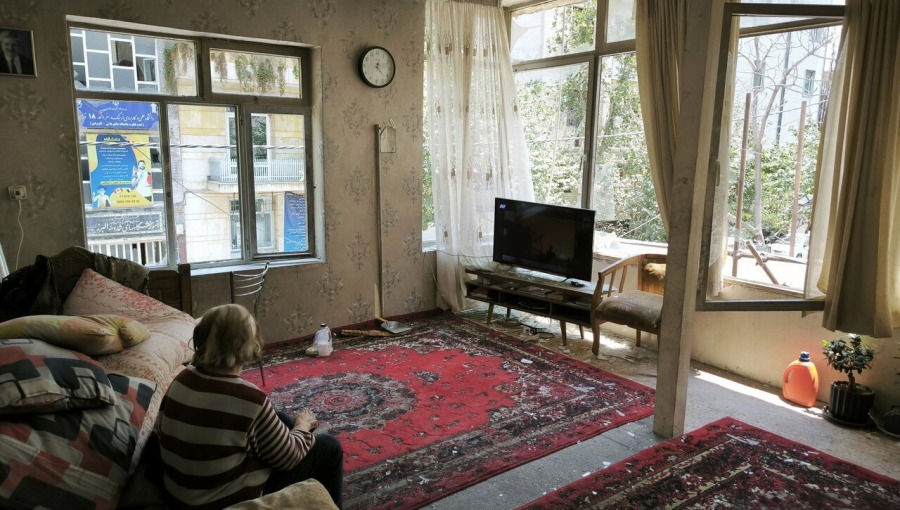
An elderly Iranian woman sits in her damaged living room surrounded by smashed glass from the June 13 airstrikes on Tehran. / bne IntelliNews: Hamhshahri newspaper.
By bnm Tehran bureau June 13, 2025

Iranians expressed shock, anger and calls for retaliation on June 13 after indiscriminate Israeli airstrikes killed the country's top military commanders and dozens of innocent civilians, with many questioning the government’s response to the escalation.

At least 78 people were killed and 329 injured in Israeli strikes on military and residential areas of Tehran province, according to unofficial figures reported by Iranian media on Friday. 

Major General Mohammad Bagheri, Iran's highest-ranking military officer, and his daughter were among several senior officials and their families killed in the pre-dawn strikes that targeted military installations and nuclear facilities. Several dozen neighbours have been killed and injured following Israel’s wave of strikes targeting residential areas in Tehran.

"Russia and China were key accomplices to Israel in this crime – they refused to sell us advanced fighter jets when we desperately needed them," said Ahmad Hosseini, 45, a shopkeeper in central Tehran.

These latest strikes also exposed what many Iranians see as their country's military vulnerabilities against a technologically superior adversary backed by the United States.

"What a terrible waste of life," said Maryam Karimi, 38, a teacher from the capital's Shahrak-e Gharb district, echoing sentiments shared by many residents.

For others, the military leaders’ death represented the loss of a respected military figure who had served since the 1980-88 Iran-Iraq War.

"General Bagheri was truly a moderate man. May God have mercy on his soul," said Hamed Mojtabaei, 52, a retired civil servant. "How shameful that some people behaved so badly towards him in recent months," he added.

The attacks came as Iran and the United States were preparing for nuclear negotiations, leading some to question the timing and effectiveness of diplomatic efforts.

"Let history record that whilst our officials were in negotiations, we were both sanctioned and had war declared upon us," said Mehran Ghorbani, 41, an engineer.

Many Iranians called for immediate retaliation, warning that further delays could invite additional strikes.

"If we don't strike back today, they'll hit other targets tonight," said Reza Sadati, 19, a university student.

Others questioned why senior military commanders were vulnerable to attack.

"Why was our top commander living in an unsecured location without proper protection?" asked Fatima Rostami, 33, a nurse in Karaj in a conversation with bnm IntelliNews.

The strikes have also reignited debate about Iran's military procurement and defence capabilities and alleged support from Russia which has claimed it was an ally of Tehran.

"If Iran had been able to purchase advanced fighter aircraft from our allies, this tragedy wouldn't have happened," said Hassan Dadgar, 56, a former defence ministry employee.

Some expressed frustration with what they saw as Iran's restrained response to previous Israeli actions.

"Don't tell us again that the era of missiles is over," said Ali Mortazavi, 27, referencing recent government statements about military capabilities.

Despite the shock and anger, several residents expressed hope that Iran's leaders would learn from what many described as a significant military and intelligence failure.

"I hope this heavy defeat we've suffered will finally be properly addressed this time," said Zahra, 39, a journalist. "The negotiations have clearly shown they won't yield any meaningful results."

Iran's Leader Ayatollah Ali Khamenei vowed revenge for the attacks, calling them a "crime" and warning that Israel had "brought a bitter and painful fate upon itself." The strikes marked the largest attack on Iran since the 1980-88 war with Iraq, according to military analysts.


ISRAEL IRAN WAR: Is this a Sarajevo moment that will lead to world war?

ISRAEL IRAN WAR: Is this a Sarajevo moment that will lead to world war?
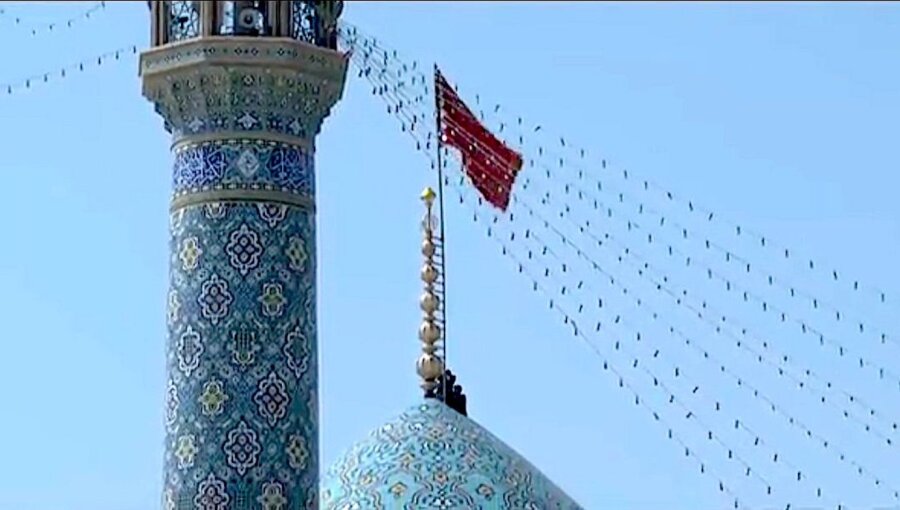
The red flag of revenge has been raised over Jamkaran Mosque in Qom, Iran. In Shi'a tradition, a red flag signifies blood unjustly shed and is a call to arms. / bne IntelliNews
By Ben Aris in Berlin June 14, 2025

Iranian missiles strikes caused destruciton in central Tel Aviv. 

With the conflict between Iran and Israel rapidly spiralling out of control has the world reached a “Sarajevo moment” where the great powers get pulled into a small regional conflict that could spark WWIII? Reaction to the start of a Israel-Iran war by the leading powers are already highly polarised along partisan lines. Israel launched a string of unprovoked attacks on June 13, starting with strikes against Iranian uranium enrichment sites and top military commanders and scientists involved in the nuclear programme. But as the day wore on it widened its attacks to take out major military installations, the air force and Iran’s air defence system in a highly coordinated and obviously well-planned attack.

The situation is now extremely unstable and could tip over into a global conflict. Polish Prime Minister Donald Tusk put it succinctly saying in a post on social media: “The confrontation between Israel and Iran is moving towards a regular war in the region that may destabilise the whole world. Since WWII we haven’t been so close to a global conflict. Europe and the US must unite their efforts to stop further escalation. It is still not too late!”

The red flag of revenge has been raised over Jamkaran Mosque in Qom. In Shi'a tradition, a red flag signifies blood unjustly shed and is a call for vengeance. Specifically, it is linked to the martyrdom of Imam Hussein, the Prophet Muhammad’s grandson, at the Battle of Karbala in 680 AD that became the foundation of Shi'a notions of martyrdom and justice and the origin of the schism that has plagued Islam ever since. The mosque is associated with the Mahdi, the 12th Imam, who is expected to return to bring justice. The last time it was hoisted was in January 2020 after the US drone strike killed General Qassem Soleimani, head of Iran’s Quds Force. The appearance of the flag will fuel nationalistic and religious fervour in Iran and is a call to arms. 

Overnight, dozens of Iranian missiles hit targets in Israel. Tehran says it’s retaliation for the nuclear site attack. At least 63 people have been injured and one killed in Israel. In Iran there are a reported 78 dead and over 320 wounded, according to local reports. Iran shot down a US fifth generation F-35 fighter jet in a first and also hit Israel's answer to the Pentagon, the HaKirya military headquarters in Tel Aviv with a missile as Iran’s rocket attacks prove to be more effective than previously thought possible.

Israel's answer to the Pentagon, the HaKirya military HQ in Tel Aviv, was targetted and struck by Iranian missiles. 

Tehran has warned any country siding with Israel will have its military bases targeted, in an implicit threat to the US that could bring the US directly into the war should Tehran hit US bases scattered throughout the region if they supply or support Tel Aviv military operations.

Tehran responded by launching drones and cruise missile attacks on Israel that managed to penetrate the Iron Dome missile defence system and cause major damage in cities like Tel Aviv and Jerusalem.

However, the fighting was threatening to spill out to surrounding countries. US and UK fighter jets were reportedly participating in the effort to shoot down inbound drones and missiles and Iran supreme leader Ali Khamenei warned that the military assets of “any country participating in the attack on Iran would be targeted.”

US Secretary of State Marco Rubio warned in a statement the same day that Iran should not target military personal or military bases in the region to “face the consequences,” threatening to join the assault on Iran with its Israeli partners should US servicemen be killed in the escalating conflict. China, Russia, North Korea and dozens of other countries came out with statements and condemned Israel’s attack in the strongest terms, pledging to support Iran in its struggle against the Israeli onslaught.

As world divides into two over the conflict, with the Western powers largely backing Israel’s “right to defend itself” vs the Global South condemnation of what they see as imperialistic bullying and unjustified use of military force by the US, the danger is that like in 1914, the conflict could spread as each side sends reinforcements and supplies to their respective proxies to prevent their defeat in the same way that triggered the first world war.

The assassination in Sarajevo on June 28, 1914, of Archduke Franz Ferdinand of Austria-Hungary and his wife acted as the immediate trigger for WWI after Austria-Hungary blamed Serbia for the killing and issued an ultimatum. When Serbia’s response failed to satisfy Vienna, Austria-Hungary declared war on July 28, setting off a chain reaction due to a web of alliances that pulled in Russia, which mobilised in defence of Serbia, Germany which declared war on Russia and France, and Germany which invaded Belgium, prompting Britain to enter the war. Within weeks, most of Europe was at war.

While the lessons of history from WWI are starkly etched into the consciousness of all world leaders and the alliances between countries like Iran and Russia are not formal treaties making the chances of a broader global conflict much less likely, an escalation is still possible but would be fought along the lines of the Ukraine war, without overt military action between, say the US and Russia in defence of their allies Israel and Iran, but covert in the form of weapons supplies, money and international pressure inflaming already poor relations and international tensions further.

United Nations Security Council emergency meeting

Iran called an emergency United Nations Security Council (UNSC) meeting the same day and its ambassador Amir Saeid Iravani accused the US of being complicit in Israel's attacks on the Republic, which Washington denied.

"Those who support this regime, with the US at the forefront, must understand that they are complicit," Iravani told the Security Council. "By aiding and enabling these crimes, they share full responsibility for the consequences."

The US ambassador McCoy Pitt countered with threats, telling Tehran that it would "be wise" to negotiate over its nuclear programme and highlighting that Washington would not tolerate any strikes against its personal or military bases in the Middle East in retribution.  "Iran's leadership would be wise to negotiate at this time," Pitt told the council. While Washington was informed of Israel's initial strikes ahead of time it was not militarily involved, he said.

After initially denying the US had any involvement, or even knowledge of the attack, US President Donald Trump said that he had given Tehran a 60-day ultimatum, which expired on June 12, and was fully aware of the upcoming strike on Iran, which Washington condoned.

Israel’s UN envoy Danny Danon cast its attack on Iran’s nuclear sites as “an act of national preservation”, claiming Iran was “days away” from producing enough fissile material for multiple bombs.

“This operation was carried out because the alternative was unthinkable. How long did the world expect us to wait? Until they assemble the bomb? Until they mount it on a Shahab missile? Until it is en route to Tel Aviv or Jerusalem?” he added. “We will not hesitate, we will not relent, and we will not allow a genocidal regime to endanger our people.”

The Russian ambassador Vassily Nebenzia, said Israel’s actions in the Middle East are “pushing the region to a large-scale nuclear catastrophe”.

“This completely unprovoked attack, no matter what Israel says to the contrary, is a gross violation of the UN Charter and international law,” he said as cited by Al Jazeera.

International reactions

Most of the world’s leading nations commented on the outbreak of war between Israel and Iran, but the reactions were starkly divided between the two camps.

North Korea, which is part of the Russia-Iran-North Korea alliance which sees itself fighting against the US via a Ukrainian proxy, came in support of Tehran. Kim Jong Un said that he was “prepared to repel the Israeli attack in cooperation with Iran.” North Korea has emerged as a major arms producer, supplying Russia in its conflict in Ukraine and also sent 10,000 troops to support the Armed Forces of Russia (AFR) earlier this year.

Russian President Vladimir Putin didn’t mince words in his condemnation of the attack, blaming the deep state for US support of Israeli aggression.

Russia's Putin  blamed the deep state for the US support of Israel in the attacaks on Iran. 

“No US president truly holds power. And now, even Donald Trump, once the loudmouth promising peace, shows his true colours by backing attacks on Iran. Just another puppet controlled by the Deep State, serving the machine while pretending to lead,” he said in a televised interview.

His comments were seen by many observers as hypocritical, urging Israeli Prime Minister Benjamin Netanyahu to “use diplomacy, not bombs” with Iran, when the Kremlin has been using bombs in Ukraine for more than three years to address its own “existential securing concerns.”

Putin told Iran's president over the phone on June 13 that Moscow “condemned Israeli actions against Tehran,” and in a separate telephone conversation told Israel's prime minister that “only diplomacy could resolve issues around Iran's nuclear programme,” Reuters reports.

Putin told Iran President Masoud Pezeshkian that Russia "condemns the actions of Israel taken in violation of the UN Charter" and expressed condolences for those killed, according to a Russian Ministry of Foreign Affairs statement, despite Russia’s own bombing campaign against civilian targets that has escalated sharply in the last month.

Russia said the Israeli strikes on Iran were “unprovoked” and accused Israel of wrecking diplomatic efforts to reach a new deal to allay Western fears over Tehran's nuclear programme. Moscow has repeatedly offered to help the US and Iran reach a deal on the nuclear programme and has considerable sway over Tehran as a key economic and military ally, relying heavily on Iran’s production of drones and missiles to supply itself in its war in Ukraine.

The outbreak of a full blown war in the Middle East will have consequences for Russia’s campaign in Ukraine as reports emerge that Tehran has suspended all arms supplies to Russia - primarily engines for the Shaheds drones, gunpowder and explosives, which the Russian occupation army desperately needs.

China also came out to stringently criticise the Israeli attack, saying it has crossed another red line.

A spokesman for China’s foreign ministry said in a statement. “We strongly condemn the Israeli attack on Iran that is in violation of Iran's sovereignty and internal integrity. We are particularly concerned they are attacking nuclear facilities, which is another red line that Israel has crossed.”

China and Russia have been promoting a multipolar model of geopolitics where countries are granted autonomy to make their own security arrangements, but disputes should be resolved at international level in bodies like the UN and not by military coalitions and the use of force. However, despite this rhetorical stance, critics point to Russia’s use of force to resolve its stated security concerns with Ukraine.

How China reacts could play a crucial role as it is in a position to provide Iran with significant military supplies. China’s growing military prowess was on display in the recent short war between India and Pakistan. Pakistan surprised the world when it employed Chinese-made Chengdu J‑10C fighter‑jets armed with PL‑15 missiles to shoot down at least two of India’s advanced aircraft, despite having the weaker air force after India launched Operation Sindoor in a border dispute. Military experts say that China could help Iran establish an air defence system capable of shooting down Israel's F-35, one of which Iran just downed for the first time ever. And both Russia and China also have advanced communication technology that can counter Mossad monitoring as well as other sophisticated electronic warfare (EW) assets to counter US-made technologies.

However, as with its commitment to Moscow’s campaign in Ukraine, Beijing will be very reluctant to get involved directly in the war in the Middle East and will be more useful to Tehran as a bargaining chip in talks with the US on a compromise solution.

Germany came out unequivocally in Israel’s support, condemning Iran for responding to the unprovoked strikes on its cities, but failing to comment on the Israeli attacks at all.

“The situation in the Middle East has escalated dramatically overnight. Israel has carried out targeted strikes against Iranian nuclear facilities. Iran is responding with hundreds of drone attacks on Israel. This development is more than alarming,” the German foreign ministry said in a statement. “We strongly condemn the indiscriminate Iranian attack on Israeli territory. Iran’s nuclear program violates the Non-Proliferation Treaty and poses a threat to the entire region – especially to Israel.”

Berlin also invoked the “right to defend itself” troupe that has become the mainstay of those defending Israel, ignoring the fact that Tel Aviv was the aggressor in these attacks, despite the possible justifications for them.

“Israel has the right to defend its existence and the security of its citizens. At the same time, we call on all parties to avoid further escalation. Germany remains committed to diplomacy – together with our partners in Europe and the United States,” the German foreign ministry said.

The International Atomic Energy Agency (IAEA) has also been accused of complicity in the Israeli attack and accused by some of supplying Tel Aviv with the names and addresses of Iran’s top nuclear scientists, several of which were targeted in the June 13 early morning missile strikes.

In a vote to censure Iran’s uranium enrichment programme, the majority of the IAEA members voted for it with only China and Russia voting against the motion. The nuclear enrichment programme, which has been limited to enriching uranium to 60% of the level needed to make a nuclear bomb, has been used by Israel’s allies as the justification for the attack in Iran.

An IAEA vote to censure Iran nuclear programme only China and Russia voted againt the montion. 

Nevertheless, the head of the IAEA took issue with the German leadership pointing out that the unprovoked attacks by Israel against Iran’s nuclear facilities are illegal under international law.

“Did anyone tell you sir that “targeted strikes against nuclear facilities” are prohibited under article 56 of the additional protocol to the Geneva Conventions to which Germany is a party, and that the use of force in international relations is generally prohibited in article 2(4) of the

@UN,” Mohamed El Baradei said in a post on social media. “You might want to familiarize yourself with the basic tenets of international law…”

Charter with the exception of the right of self defence in the case of armed attack or upon authorization by the Security Council in the case of collective security action.

India has been more circumspect in condemning the Israel attacks as it continues to follow its policy of “sovereign autonomy,” trying to keep its distance from all sides in the escalating East-West geopolitical tensions.

“Received a phone call from PM @netanyahu of Israel. He briefed me on the evolving situation. I shared India's concerns and emphasized the need for early restoration of peace and stability in the region,” Prime Minister Narendra Modi said in a post on social media.

French President Emmanuel Macron also focused on the existence of Iran’s nuclear programme which has been running since the first nuclear research centre was opened in 1967, as the justification for the Israeli attack. The programme started to cause international concern two and half decades ago with the undeclared Iranian facilities at Natanz and Arak, triggering IAEA inspections and global concerns over potential weaponization.

“France has repeatedly condemned Iran’s ongoing nuclear program and has taken all appropriate diplomatic measures in response. In this context, France reaffirms Israel’s right to defend itself and ensure its security,” Macron said in a statement. “To avoid jeopardizing the stability of the entire region, I call on all parties to exercise maximum restraint and to de-escalate.”


Middle East In Crisis: Why Did Israel Jump The Gun? – OpEd

Soldier Map Middle East Army War Military Weapon

By 

The Israeli Defence Forces called the aerial attack on Iran by some 200 planes in the early hours of Friday, June 13, as a “preemptive strike.” International law gives no scope to attack a country over 1000 kms away on a vague pretext of ‘self-defence’ — or, ‘an immediate operational necessity.’  


The UN Charter allows acts in self-defence, but there is nothing that Iran has done in the recent period — at least after President Donald Trump returned to the White House — that can be construed as threatening Israel. Israelis claim to have significantly weakened Iran’s capacity to threaten their country. 

So, call it naked aggression. The statement by US Secretary of State Marco Rubio sought to distance the US from Israeli strikes stressing that “Israel took unilateral action” and had advised Washington that “they believe this action was necessary for its self-defence.” 

Trump had been telling Israeli PM Benjamin Netanyahu that such attacks would only undermine the ongoing nuclear negotiations with Iran. The sixth round of US-Iran negotiations is scheduled to take place in Muscat on June 15.  

Rubio’s statement underscored that “We are not involved in strikes against Iran and our top priority is protecting American forces in the region.” Rubio did not make the slightest attempt to voice US support for Israel in defending against any Iranian counterstrikes. This is extremely unusual. 

The big question is, what forced Netanyahu’s hands — apart from the obvious one of distracting attention from the aggravating domestic political crisis


One factor is that his personal equations with Trump have been steadily going south, especially since the removal of Mike Waltz on May 1 from the crucial post of National Security Advisor, a key policy-shaping role in the White House. 

Waltz’s reassignment as ambassador to the UN came in the aftermath of the so-called “Signalgate” incident, but with hindsight, his leaning towards aggressive military action against arch foe Iran too weighed on Trump’s decision. 

No sooner than Waltz lost his position, a purge of key foreign policy and national security positions in the White House began. Known ‘Iran hawks’ whom Waltz had handpicked to assist him have been shuffled out while ‘America First’ realists are in ascent.

They include Eric Trager, who was heading the Middle East and North Africa portfolios for the National Security Council who is considered an ‘Iran hawk’ whom Waltz brought into the post from the pro-Israel Washington Institute for Near East Policy. Again, Morgan Ortagus, considered one of the “strongest pro-Israel supporters in the administration,” was shuffled out of her role as the Lebanon envoy under Trump’s special envoy Steve Witkoff. 

According to YNet News, Ortagus’ removal from the position “stunned officials in Jerusalem, where she is viewed as closely aligned with Israeli interests.” Also, Merav Ceran (an Israeli-American who was a former official in Israel’s Ministry of Defense) has been removed from the Iran and Israel desk in the National Security Council. 

Certainly, Israel’s moles who favoured war over diplomacy with Iran, have been shown the door while the president himself is negotiating with Iran to curb its nuclear program! (See a fuller account of the White House changes in two reports by the Responsible Statecraft website of Quincy Institute — here , here and here.)

Israelis claim that there was “full and complete coordination” with the Americans ahead of Friday’s attacks but the sentiment has not yet been echoed in Rubio’s statement. Admittedly, Rubio did issue a warning for Iran: “Let me be clear: Iran should not target US interests or personnel.” But that is more of a red line.

Another sensitive factor at work is the growing pressure on Trump from some recognised figures in the Make America Great Again (MAGA) camp backing him, such as Steve Bannon, former chief White House strategist and influential figure. They warn Trump against a hawkish foreign policy stance, particularly by way of support for military interventions abroad, as that is fraught with the risk of splintering the MAGA camp, which would be politically damaging. 

Finally, there is the big picture of geopolitical realignments. Last fortnight was a critical period. The audacious Ukrainian attack on Russian nuclear triad on June 1 prompted a call from Trump to Russian President Vladimir Putin within forty-eight hours. 

The outcome of their conversation appears to be that: i) US-Russia constructive engagement must run its course; ii) diplomacy will continue on the Ukraine issue even while new facts on the ground may keep shaping diplomacy; and iii) the US is decoupling from European allies in the proxy war in Ukraine.

The stunning part of the phone call was that Trump sought Putin’s intervention in Iran nuclear issue. Putin agreed to help. Only a week later, Iran’s government spokesperson Fatemeh Mohajerani was quoted by Russia’s state RIA news agency as saying, “Putin’s trip to Tehran is currently being worked out, preparations are underway.” 

Iran’s Supreme Leader Ayatollah Ali Khamenei holds Putin in great esteem. Succinctly put, Israel’s worst nightmare is coming true — US-Iran negotiations gaining in the statesmanlike gravitas of a world leader. Without doubt, Putin knows that this could be potentially a game changer in Russia-US relations as resolution of the Iran issue remains critical to the stabilisation of the Middle East and further opportunities may arise to address the Middle East crisis, including the Palestine issue. 

Evidently, time is running out for Israel. And Netanyahu has chosen to act now, whether Trump likes it or not. From the Iranian perspective, advantage lies in continuing the talks with Steve Witkoff in Muscat on Sunday. Any attack on the US bases in the region is avoidable in the retaliation that can be expected for sure. Let Israel stew in its aggression.  Hurt them where it matters most in the upcoming war. 

BBC reported that “In the hours before Thursday’s attacks, US officials were briefing that there would be no American support in the event of Israeli action, even going as far as to say they would not help with any aerial refuelling. That was meant for Tehran’s consumption.” 

Trump’s first reaction to Israeli strikes is also in the nature of a case for negotiations and compromise: 

“I gave Iran chance after chance to make a deal. I told them, in the strongest of words, to “just do it,” but no matter how hard they tried, no matter how close they got, they just couldn’t get it done.

“I told them it would be much worse than anything they know, anticipated, or were told, that the United States makes the best and most lethal military equipment anywhere in the World, BY FAR, and that Israel has a lot of it, with much more to come – And they know how to use it.

“Certain Iranian hardliners spoke bravely, but they didn’t know what was about to happen. They are all DEAD now, and it will only get worse!

“There has already been great death and destruction, but there is still time to make this slaughter, with the next already planned attacks being even more brutal, come to an end.

“Iran must make a deal, before there is nothing left, and save what was once known as the Iranian Empire. No more death, no more destruction, JUST DO IT, BEFORE IT IS TOO LATE. God Bless You All!” 


M.K. Bhadrakumar

M.K. Bhadrakumar is a former Indian diplomat.


Israel’s Attack On Iran Stuns Military But Could Empower Tehran’s Nuclear Drive – Analysis

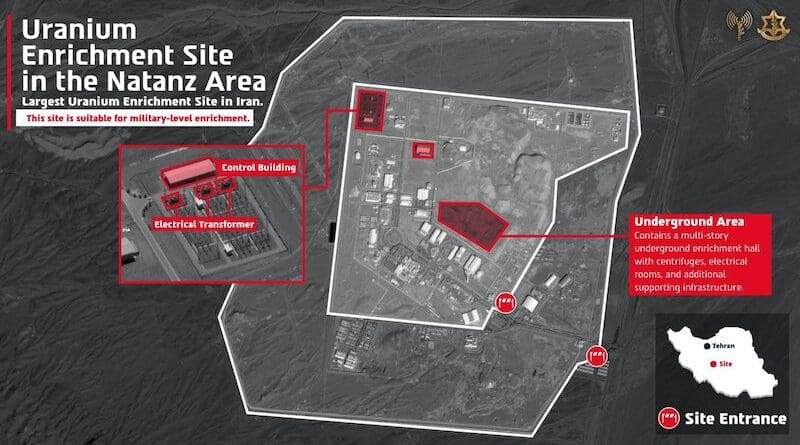
Uranium Enrichment Site in the Natanz Area. Credit: IDF


By 

By Kian Sharifi


(RFE/RL) — Israel’s large-scale assault on Iran appears to have stunned the country’s military leadership and may have delayed an immediate retaliatory strike.

But it remains unclear whether it achieved its primary objective: crippling Iran’s nuclear program, which Israel claims Tehran is on the verge of weaponizing despite claims from Iran that it is solely for civilian purposes.

Prime Minister Benjamin Netanyahu and other Israeli officials have alleged Iran recently accelerated uranium enrichment and weaponization efforts to the point where it could produce a nuclear weapon within months — or even days.

Operation Rising Lion, as Israel has named the strikes, targeted key components of Iran’s nuclear infrastructure — including the Natanz enrichment facility — as well as military installations in and around Tehran.

Israeli warplanes also struck missile production facilities and residential buildings believed to house top military officials and nuclear scientists. Among those reportedly killed was Hossein Salami, commander of the Islamic Revolutionary Guards Corps (IRGC), though Iran has not confirmed his death.


The objective, Israeli officials say, was to degrade both Iran’s nuclear capabilities and its ability to retaliate using its extensive ballistic missile arsenal — a threat Israel sees as second only to a nuclear-armed Iran.

“Netanyahu has opened a new chapter in the Middle East — an era of Israeli-Iranian nuclear war,” wrote Eran Etzion, a former deputy head of Israel’s National Security Council, on X.

“A war whose stated goal is to stop Iran’s nuclear program, but whose actual aim appears to be targeting the very foundations of the Iranian regime.”

High-Stakes Gamble

Security analysts describe the operation as a preemptive gamble — an attempt to avert what Israel sees as an existential threat, but one that risks igniting a regional war, derailing diplomacy, and even accelerating Iran’s nuclear ambitions.

Danny Citrinonwicz, a senior fellow at the Tel Aviv-based Institute for National Security Studies, said the strike dealt a significant blow to Iran’s prestige by penetrating its air defenses and eliminating senior commanders.

But, he argued, its impact on Iran’s nuclear program was “limited,” as key facilities — including the heavily fortified Fordow site — remain intact.

“This is just the opening phase of a longer campaign,” Citrinonwicz wrote on X. “Israel appears to be holding back some cards for the likely escalation ahead.”

What Are Iran’s Options?

The sixth round of nuclear talks between Iran and the United States, scheduled for June 15, is now unlikely to proceed. With diplomacy appearing to have fallen by the wayside, any Iranian response risks deepening a cycle of escalation.

Iran’s immediate reaction came in the form of around 100 Shahed drones launched toward Israel — many of which were intercepted outside Israeli airspace.

Iranian leaders have also repeated warnings that they would retaliate against both Israel and US forces in the region. Although Washington has denied involvement in the strike, Iran may still hold it responsible.

Should Tehran go through with its threat to target U.S. military bases, it could drag Washington into a broader conflict.

According to US intelligence estimates, Iran possesses some 2,000 missiles — many capable of carrying warheads with more than 900 kilograms of explosives — and is producing roughly 50 ballistic missiles per month. It remains unclear how much of this capability was affected by the Israeli assault.

Iran’s regional proxies, long viewed as force multipliers, have been severely degraded. The Gaza war has battered the US-designated Palestinian terrorist group Hamas, and the Lebanese Hezbollah is still reeling from recent clashes with Israel. That leaves the Houthis in Yemen as Tehran’s most militarily viable ally.

Tehran may also consider withdrawing from the Non-Proliferation Treaty (NPT), the cornerstone of global nuclear arms control. While US intelligence — contrary to Israeli assessments — currently believes that Iran is not actively pursuing nuclear weapons, the Islamic republic could use the Israeli attack to justify abandoning its NPT obligations and moving toward weaponization.

“Netanyahu’s government may have just handed the Iranian regime both domestic and international legitimacy to pursue nuclear weapons,” Etzion warned.

  • Kian Sharifi is a feature writer specializing in Iranian affairs in RFE/RL’s Central Newsroom in Prague. He got his start in journalism at the Financial Tribune, an English-language newspaper published in Tehran, where he worked as an editor. He then moved to BBC Monitoring, where he led a team of journalists who closely watched media trends and analyzed key developments in Iran and the wider region.

RFE RL

RFE/RL journalists report the news in 21 countries where a free press is banned by the government or not fully established.