Sunday, June 15, 2025

10,000 ex-Wilko workers will get £2 million pay out after GMB union wins legal case


12 June, 2025

The case was taken on by GMB on behalf of thousands of members who lost their job when the discount store went into administration.


TweetShareWhatsAppMail


The fight for better rights and conditions for workers against exploitative employers is continuing, with the GMB union securing a massive payout for former Wilko workers, after the company failed to properly consult with them before going bust.

The GMB says that almost 10,000 former Wilko workers will share a pay out of £2 million after it won a legal case.

A judgement handed down by the Employment Tribunal this week ruled that Wilko had failed to properly consult with workers prior to going bust in 2023.

As a result, around 9,000 former staff who worked in a store with 20 or more people will get 4 days pay, while roughly 1,100 who worked in a distribution centre or support centre role will get 13 days pay.

The case was taken on by GMB on behalf of thousands of members who lost their job when the discount store went into administration.

David Bartlett, former Wilko worker and GMB rep, said: “It has been a long, hard, slog getting this money – the very least Wilko workers deserve after the way they were treated.

“In no way will this make up for the stress and anxiety they faced during those dark days in 2023.

“But GMB hopes it will give them a much-needed boost as they move on with their new lives and careers.”

Wilko crashed into administration back in 2023, closing 400 stores and leaving thousands without a job.

Basit Mahmood is editor of Left Foot Forward
Workers at Reform-led councils ‘flock’ to join unions

11 June, 2025 
Left Foot Forward

‘Reform UK spouts a lot of nonsense about being on the side of workers, but these figures show people aren’t buying it.’


The number of council workers joining unions has increased in areas where Reform took control on 1 May.

The GMB has reported that workers are “flocking” to join unions due to fears that Reform will attack their pay, jobs and conditions.

GMB has seen increases in union membership at Reform-led Durham, Lancashire, Derbyshire, Staffordshire, Nottinghamshire and Doncaster councils.

GMB national officer Rachel Harrison told the PA news agency: “Reform spouts a lot of nonsense about being on the side of workers, but these figures show people aren’t buying it.

“Workers in Reform-led councils are flocking to join unions because they know the first thing Farage and his cronies will do is attack low-paid staff’s terms and conditions.”

After taking control of 10 councils and minority control of a further two local authorities at the start of May, Nigel Farage warned people working from home, on climate change or diversity initiatives to start “seeking alternative careers very, very quickly”.

Last week, deputy leader Richard Tice announced that new employees at councils controlled by Reform UK will get less generous pensions, and called defined benefit pension schemes “an outrage”.

Tice also suggested existing staff in the Local Government Pension Scheme (LGPS) would receive smaller pay rises to offset their “generous” pensions.

Responding to the attacks on council workers’ pensions, Harrison said: “This announcement is cruel, performative nonsense that won’t work and won’t ever happen. Why would Reform target poorly paid workers like this?

“Council staff have suffered more than a decade of savage pay cuts – slashing their pensions is the worst form of bullying.”

Not only is Reform targeting council workers, but its MPs also voted against Labour’s Employment Rights Bill, which will ban zero-hour contracts, end the practice of fire and rehire, and ensure entitlement to sick pay from day one.

Olivia Barber is a reporter at Left Foot Forward


UK

Kemi Badenoch slammed for being ‘on the side of oil and gas giants’


13 June, 2025 


The Tory leader will use a speech today to call for an end to the windfall tax and to lift the ban on new oil and gas licences


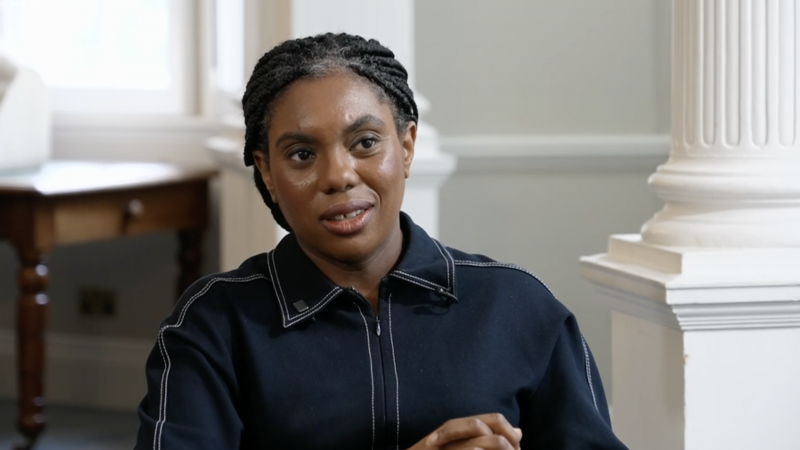
After receiving donations from oil investors and climate sceptics, Kemi Badenoch will use a speech at Scottish Conservative Party conference today to side with oil and gas companies.

Badenoch will call for the end of the windfall tax on profits that gas and oil companies generate and to lift the ban on new gas and oil licences.

The Tory leader is expected to say that “renewing our party and our country means standing up for our oil and gas industry”.

Jackie Baillie, Deputy Leader of Scottish Labour, said: “While the Tories and SNP let energy workers down by failing to plan for the future, Scottish Labour is committed to taking action towards reaching net zero, creating jobs and cutting energy bills.”

Baillie added: “The Tories are on the side of oil and gas giants rather than working Scots, but Scottish Labour will work with the UK Government and use devolved powers to deliver a just transition for the industry. With Kemi Badenoch desperately attempting to rally the few remaining Scottish Tories, it seems like it won’t be long until they can fit all of their MSPs in a single taxi.”

Badenoch will tell the conference: “When the oil and gas windfall tax, the energy profits levy, was brought in, the oil price was near a historic high, at the exact time as energy bills for the British people were sky-rocketing.

“But there is no longer a windfall to tax. It has long gone. And the longer this regressive tax on one of our most successful industries remains, the more damaging it becomes.”

She will also accuse Labour of “killing” the oil and gas industry. This comes as the impacts of climate change intensify. The UK experienced the the driest spring in 132 years, with two regions, the Northwest of England and Yorkshire, now having entered into drought status.

In January, the Tories received a donation of £50,000 from Neil Record, a climate sceptic and chair of Net Zero Watch. Record also gave £10,000 to Badenoch’s leadership campaign last year—and has since donated a further £6,000.

During February half-term Badenoch and her family attended a three-day residential hosted and paid for by Record, which cost approximately £14,350.38.

Net Zero Watch has received over half a million dollars from the climate-sceptic billionaire Koch brothers.

Olivia Barber is a reporter at Left Foot Forward

Tories scrapped net zero policy while receiving donations from oil investors and climate deniers


11 June, 2025 
Left Foot Forward


In the months leading up to Badenoch’s announcement that she would no longer be supporting net zero targets, the Tories received significant donations from individuals with fossil fuel interests, as well as the chair of a leading anti-climate campaign group.


The Tory party is up for sale! It’s been revealed that party leader, Kemi Badenoch, decided to scrap its commitment to reach net zero emissions by 2050 after receiving donations from oil investors and climate sceptics.

After its worst defeat in its Parliamentary history last year, the Tories have continuously lurched further to the right, pandering to its right-wing base by criticising and attacking net zero policies.

It’s now been revealed by journalist Sam Bright that The Conservative Party scrapped a key climate commitment in the same period that it received £250,000 from oil investors and climate science deniers.

In the months leading up to Badenoch’s announcement that she would no longer be supporting net zero targets, the Tories received significant donations from individuals with fossil fuel interests, as well as the chair of a leading anti-climate campaign group.

Sam Bright states in his substack: “New Electoral Commission records released today show that the Tories accepted £50,000 in January from Neil Record, who provided funding and office space to Badenoch’s leadership campaign last year.

“Record is the chair of Net Zero Watch – the campaign arm of the Global Warming Policy Foundation (GWPF), the UK’s foremost climate science denial group. The GWPF regularly contradicts even the most basic climate science, suggesting that CO2 emissions are “not pollution”.

It should be pointed out that Record was also former chair of the Institute of Economic Affairs, the right-wing think tank which provided the blueprint for many of the disastrous ideas contained in Liz Truss’ mini-budget.

Electoral commission records also show that the Tories accepted £117,600 from Alasdair Locke, who made his fortune in the oil industry as well as £75,000 from Lord Michael Spencer, a billionaire financier and former party treasurer who’s an investor in two fossil fuel companies.

DeSmog has previously reported that Spencer’s company, Deltic Energy, in which he was the largest shareholder, was awarded two new North Sea exploration licences by the last Tory government.

Basit Mahmood is editor of Left Foot Forward
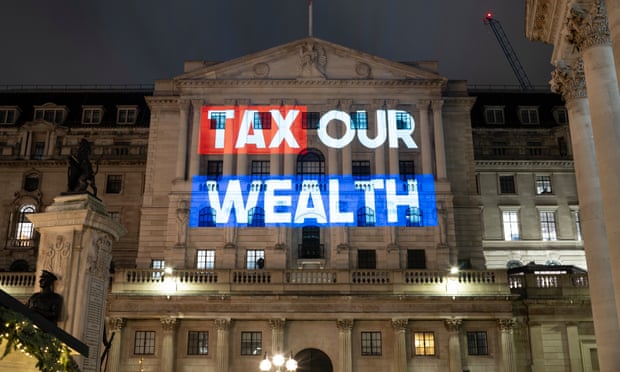
The right-wing press is wrong: Facts prove there is no exodus of millionaires from the UK over tax policies

11 June, 2025 

The facts show that there is no mass exodus of millionaires from the UK.


Over the last few months, we’ve seen consistent reporting from the right-wing press as well as claims made by right-wing MPs that there is an exodus of millionaires from the UK due to its tax policies.

Indeed, the moral panic whipped up by the right-wing press, has seen Reform’s Nigel Farage also claim yesterday that there was an exodus of millionaires from the UK, which he used as an excuse to rule out further wealth taxes should Reform come to power.

But the facts show that there is no mass exodus of millionaires from the UK.

According to the Tax Justice Network, the 9500 millionaires widely reported to be leaving the UK in 2024 represented 0.3% of the UK’s 3.06 million millionaires.

The claim of a millionaire exodus was based on a report by Henley & Partners, a firm that sells golden passports to the superrich and advises governments on setting up such schemes.

The Tax Justice Network states: “Reviewing the full period from 2013 to 2024 for which the Henley report presents estimates on millionaire migration, the Tax Justice Network finds that millionaire migration rates consistently stood at near-0% for every year.

“Academic studies consistently show that the tax responses of the wealthy involves minimal levels of migration.”

But then again, facts rarely matter to the likes of Farage and his cheerleaders in the right-wing press.

Basit Mahmood is editor of Left Foot Forward


TRUMP TOO

Ed Miliband slams Nigel Farage’s ‘fairy stories’ about bringing back coal mining

10 June, 2025 
Left Foot Forward 


'It’s almost just sort of unbelievable, because he is taking people for fools '


Ed Miliband has slammed Nigel Farage for “telling fairy stories” when he announced that his party wants to reopen coal mines in Wales.

In a bid to win votes ahead of the Senedd elections next May, yesterday Farage said his party wants to reopen coal mines in Wales and bring back the blast furnaces at Port Talbot.

The Energy Secretary dismissed Farage’s bold claim as posturing, stating that as the MP for the coalmining area of Doncaster North for 20 years, his constituents are not asking him to reopen the mines.

Speaking to Nick Ferrari on LBC, Miliband said: “I don’t think Nigel Farage understands our coalfield communities, because the people in our coalfield communities are not saying to me, let’s reopen the coal mines.

“They’re saying ‘let’s bring the good jobs of the future, like nuclear, like in renewables, like in the hydrogen economy.’”

He added: “It’s almost just sort of unbelievable, because he is taking people for fools Nigel Farage, as if he just makes up a thing that oh let’s reopen the coal mines. I mean, come off it!”.


Ferrari responded by mentioning that Farage also spoke about reopening the furnaces at Port Talbot and asked whether that would not be a welcome development if it happened.

Miliband said: “Of course, that would have been a good thing. But the truth is that those decisions were made before we came to office.”

Miliband emphasised that the business and trade secretary Jonathan Reynolds “did absolutely everything he could to try and stabilise things at Port Talbot”.

However, he continued: “But again, there’s no plan, it’s just a piece of posing, let’s be honest, from Nigel Farage.”

Port Talbot closed in September last year. Its operator Tata said it had been losing £1m a day.

A steel industry source told the BBC that the two furnaces that closed last year cannot be reused, with the structures containing hundreds of tonnes of solidified molten iron, meaning new ones would have to be built.

Building a brand new steelworks would cost around £3 billion.

After his press conference yesterday, Farage later acknowledged it would be “impossible” for the old structures to be reopened.

Olivia Barber is a reporter at Left Foot Forward


UK Assisted dying vote tracker: How will Labour MPs vote at third reading?


Photo: House of Commons

MPs are preparing to vote on the final stage in the Commons on the assisted dying bill, which if passed would allow terminally ill adults in England and Wales with less than six months left to live to take their own lives.

The Terminally Ill Adults (End of Life) Bill would require two independent doctors and a High Court judge to approve a request from a terminally ill person to end their life, provided they have the mental capacity to make such a choice.

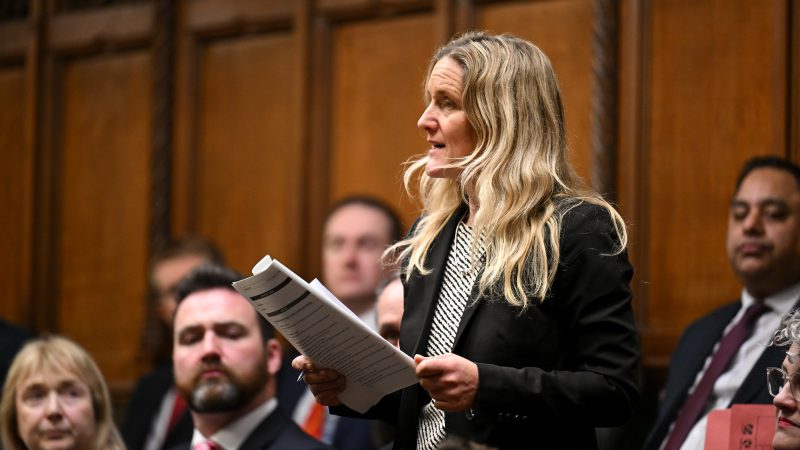
The bill has divided MPs across rather than along party lines. While some, including the bill’s proponent Spen Valley MP Kim Leadbeater, have said the bill offers strict safeguards, others have raised concerns about whether they go far enough and whether enough time has been allocated to debate the proposals.

Ahead of the third reading vote, expected on either June 13 or June 20, we are compiling a rolling list of how Labour MPs intend to vote on the bill. We will add to this list as the debate date gets closer and as more MPs signal publicly whether they will back or reject the bill – if you’re aware of any updates we should make, please get in touch at mail@labourlist.org.

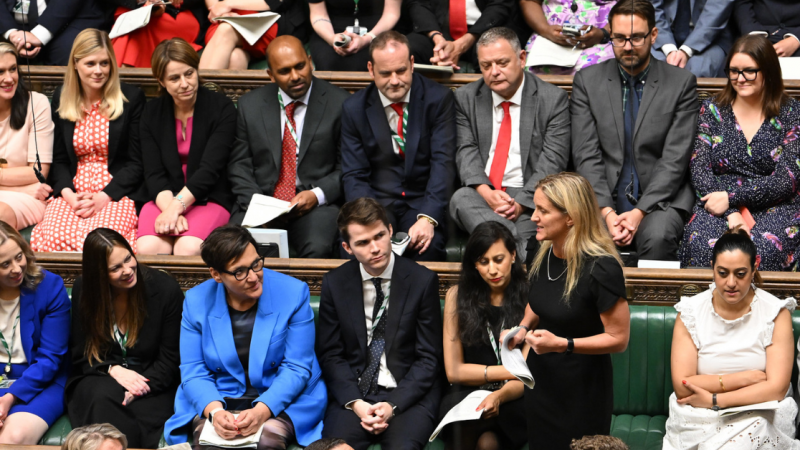
Currently, 66 Labour MPs have publicly confirmed they will be supporting the bill at third reading, with 80 planning to vote against. Four Labour MPs plan to abstain, with 11 undecided.

Several MPs have now changed their stance since the first vote. If every other MP votes the same way they did last time, it would mean 221 Labour MPs backing the bill in the third reading expected next month – down 13 from 234 at the last vote. The Labour Nos would be up nine from the last vote, to 156 MPs.

Since second reading, four suspended Labour MPs who each voted against have had the whip restored, while two MPs who voted for the bill and one who abstained have been suspended from the party.

How does the Cabinet plan on voting?

The assisted dying bill has split parties even at the highest level, including the Cabinet. While government ministers were advised not to advertise their views ahead of the second reading in November, several did, including Wes Streeting, Ed Miliband and Shabana Mahmood.

Prime Minister Keir Starmer and 13 members of his Cabinet supported the bill at second reading, including Rachel Reeves, Yvette Cooper, John Healey, Liz Kendall and Ed Miliband.

READ MORE:  Assisted dying bill: How many Labour MPs voted for, against or didn’t vote in November

Six others, including Angela Rayner,  David Lammy and Wes Streeting voted against the bill at second reading.

Ian Murray was the only member of the Cabinet to not vote. He has told constituents he was away on government business but would have voted to support the bill at second reading.


‘I support assisted dying, but safeguards in Leadbeaters bill aren’t strong enough’


Photo: House of Commons

At any point in my life so far if you had asked me if I support assisted dying, I’d have said yes. I saw it as matter of personal choice. And yet I find myself preparing to vote against this Bill. During the debates there have been moments we’ve seen Parliament at its best – words of respect, nuance and humanity. But in the end, as legislators we must vote on the Bill as written. And I am not convinced the safeguards are strong enough. 

Assisted dying has captured public attention like nothing else. I’ve had a lot of correspondence on both sides, more in fact than almost any other subject. I have spent more time thinking about and researching this issue than anything else since being elected. I’m not guided by faith – frankly if I were it might make the whole thing easier. However, I do try and approach decisions mindful of the responsibility to balance the rights of some with the safety of others. 

Conscious that representing means listening, I held two panel discussion meetings in my constituency bringing together experts, ethicists and the public. I honestly can’t think of any other subject where over 100 people would attend a meeting to discuss politics on a wet Thursday night. On a national level, Kim Leadbeater has approached the difficult task of guiding the debate with empathy. However, I think so early in a new parliament the timing is not ideal. 

I personally can imagine circumstances where I would want to have the choice to end my own life. However, not everyone approaches medical decision-making from the same place and my university education and able body inevitably shape my outlook. At the panel discussion events we talked a lot about the factors which might influence our ability to make an informed choice to end our lives. As much as we might feel perfectly able to do it, underpinning that decision are a complex web of factors such as our level of education, wealth, health status, and previous experiences with medical professionals. There are also emotions – perhaps the most powerful factor affecting our thinking and the one whose impact we are least able to judge.

‘Any bill on assisted dying must have specific measures to ensure safety from coercion’

High quality universally available palliative and social care is sadly not a reality in this country, and this could mean people in poorer areas being more likely to opt for an assisted death. People who are vulnerable for many reasons can also be subject to pressures which can’t easily be seen. As a member of Health Select Committee, I have heard groups such as Black Mothers Matter talk about patients having a lack of confidence pushing back on medical professionals’ suggestions. For that reason, I’m disappointed that measures to stop doctors suggesting an assisted death were opposed by the Bill’s supporters.

In reaching a conclusion I have read books and reports, been to meetings organised by both sides, and drawn on my own experiences. I took time to talk to those with disabilities who had concerns about the bill, and I believe the risk of coercion is very real. Coercion can be so subtle. We know that abuse in relationships happens more at the end of life, and we know that families under strain and financial pressure don’t always act in their loved one’s best interests. In my time working as a council cabinet member for social care I saw some truly distressing cases over family budgets. Any bill on assisted dying must be tightly drawn and have specific measures to ensure safety from coercion. I want more to be done to protect people at the end of their lives.

As parliamentarians the question is never easy, nor should it be. A vote one way will inevitably cause tragedy the other way. If the Bill falls there will be some people who die a painful death unnecessarily and if it passes, there will be some who feel coerced into ending their lives earlier. It’s not easy, which is why we have taken this so seriously.


Almost 9 in 10 Labour members think UK should be more critical of Israel


Gaza ceasefire protest at Scottish Labour conference. Photo: Tom Belger

Almost nine in ten Labour members think the UK government should be more critical of Israel in response to its actions in Gaza, exclusive polling for LabourList has revealed.

The poll, conducted by Survation earlier this month, found that 87% of members think the UK government should be more critical than it currently is. Just 2% of members said the government should be less critical of Israel.

The issue of Gaza has been a painful one for the Labour party. As previously reported by LabourList, it has been a major source of tensions between the party and its Muslim representatives.

Last week, a survey of Muslim Labour politicians by the Labour Muslim Network, found that 82% judged Keir Starmer’s handling of the Gaza crisis since October 2023 as fairly bad or very bad.

A further three quarters (77%) support suspending all UK arms exports to Israel, and 84% support implementing sanctions against it.

At the same time, the party has worked hard to root out antisemitism within its ranks. Keir Starmer made tackling antisemitism one of his top priorities upon becoming Labour leader in 2020, after years of complaints and scandals under Jeremy Corbyn’s tenure.

‘Escalation serves no one’

The polling comes as Israel launched a salvo of missile attacks on Iran last night, sparking fears of all-out war in the Middle East.

Starmer urged restraint following the strikes. A Cobra meeting is expected to take place today, and Foreign Secretary David Lamy has cancelled a planned trip to Washington DC to meet US Secretary of State Marco Rubio.

Starmer called for “restraint” and a “return to diplomacy”.

“The reports of these strikes are concerning and we urge all parties to step back and reduce tensions urgently.

“Escalation serves no-one in the region. Stability in the Middle East must be the priority and we are engaging partners to de-escalate.

“Now is the time for restraint, calm and a return to diplomacy.”

While posting on X, David Lammy warned that further escalation was a “threat to peace and stability”.

“Further escalation is a serious threat to peace and stability in the region and in no-one’s interest,” he said.

“This is a dangerous moment and I urge all parties to show restraint.”

Jeremy Corbyn responds to the UK Spending Review: Endless money for war and misery for millions

Featured image Jeremy Corbyn MP. Photo credit House of Commons under CC BY-NC-ND 2.0 Attribution-NonCommercial-NoDerivs 2.0 Generic


“The government could, if it wanted to, tax the wealthiest in our society in order to end child poverty, fix the social care crisis, and fund a bold programme of public investment.”

Until this government stands up to the corporate elite holding our country to ransom, it will never bring about the change the British public deserves, writes Jeremy Corbyn MP in response to the spending review.

Today, 4.3 million children are growing up in poverty in the sixth richest country in the world, yet our government still refuses to scrap the two-child benefit cap, one of the leading causes of child poverty in this country. Meanwhile, disabled people are living in fear over the government’s disgraceful welfare cuts. Are we meant to have forgotten and moved on?

The government could, if it wanted to, tax the wealthiest in our society in order to end child poverty, fix the social care crisis, and fund a bold programme of public investment. It could end the rip-off of privatisation and finally bring water and energy and healthcare into public ownership. It could take on fossil fuel giants to kickstart a Green New Deal. Instead, today’s unambitious statement bakes in decades of inequality, depriving millions of people of the resources they need.

As we speak, a quarter of a million people are homeless. For many of my constituents, the never-ending promise of “affordable housing” has been a complete con. The government must tell us: will its latest announcement result in proper social housing or subsidies for private developers? When will it get to the heart of the housing crisis and control rents?

Having enough food to eat and living without fear of eviction. That is what real security means. Instead, the government continues to find endless money for weapons of war. As conflict rages around the world, the government needs to wake up, end its complicity in genocide and stop fuelling the wars of today and tomorrow.

The best path to security is equality, sustainability and peace. This kinder future is possible. We just need the political will – and we will keep campaigning for a redistribution of wealth, ownership and power so that everyone can live in dignity.


‘The Spending Review didn’t go far enough to deal with child poverty’


© James Jiao/shutterstock.com

This week’s Spending Review simply didn’t go far enough to deal with child poverty. Especially in constituencies like Bradford East. My community was decimated by 14 years of Tory austerity cuts, something I see the effects of with my own eyes.

A recent survey by Loughborough University for the End Child Poverty Coalition showed that in Bradford East, over half of all children are growing up in poverty. That’s a deeply shocking statistic. The futures of our children are being quietly stolen in plain sight.

Child poverty is not just a statistic—it is a national disgrace. It is a moral failure of political choices that have left families behind.

And frankly, the financial statement this week didn’t go far enough to start pulling children out of poverty in my constituency. In the debate, I pushed the Chancellor to explain what more the Government plans to do to alleviate and eliminate child poverty.

Scrapping the two child benefit cap

I told the Chancellor that the Government needs to take real action. Although she described Tory austerity as destructive, this Government is still rolling it out through the two-child benefit cap. It puts 109 children into poverty every day, according to the Child Poverty Action Group.

That’s 109 children whose futures are being needlessly placed at risk. 109 families pushed into hardship through no fault of their own.

Struggling families won’t be helped until the two-child limit—the single biggest driver of rising child poverty—is scrapped. That must now happen in the Autumn Budget. Until we do that, this policy will continue to push thousands of children in my constituency and across the country into hardship. And that is unacceptable.

Because the truth is simple: we cannot tackle child poverty by tinkering at the edges. We will not fix a broken system by balancing the books on the backs of the poorest.

Too often we’re told we can’t afford to invest in children. But the truth is, we can’t afford not to. A society that fails its children is a society that pays for that failure again and again through higher demand on our health services, schools, housing, and the justice system.

That’s why I’ve consistently spoken out in Parliament to fight against punitive cuts to welfare that push families further into poverty. I’ve made clear that I will not support any measures that worsen inequality or remove the lifelines struggling households rely on.

An important shift

At the same time, I’ve called for a 2% tax on wealth over £10 million—a fair and proportionate measure that would raise £24 billion a year. That’s money we should use to fund the services our communities desperately need and invest in a future where no child is left behind.

There were parts of the financial statement that were better. The pledge to extend free school meals to an extra 500,000 children is a welcome step and one that could lift 100,000 children out of poverty. That is some progress.

The £2.4 billion to rebuild our crumbling school buildings is also a necessary move after years of Tory neglect. So too is the additional £1.6 billion to expand government-funded childcare. These are measures that will make a difference in homes across Bradford and beyond.

Subscribe here to our daily newsletter roundup of all things Labour – and follow us on  BlueskyWhatsAppThreadsX or Facebook.

The Government also announced £39 billion to build affordable and social housing— something I’ve long campaigned for as part of fixing the housing crisis—and £2.1 billion in transport investment, which includes backing for a new tram line in West Yorkshire that would be transformative for connectivity and opportunity in our region.

But we must keep perspective. These investments are welcome. They represent an important shift from the ideological Tory austerity of the last decade.

Child poverty is not inevitable but if we do not act, then it will remain a stain on our society.

Because if we are serious about levelling up opportunity, if we are serious about ending inequality, and if we truly believe in fairness then no child in this country should be left behind.

We must go further. We must scrap the two-child limit. We must stop the planned cuts to disability support. And we must build a system that invests in people from the very start so that every child, regardless of postcode or background, has the opportunity to thrive.

That is how we build a stronger society. And that is how we begin to right the wrongs of the last 14 years.

For their sake, we must get it right.

UK

“Together we are powerful”: Holly Turner, Keep Our NHS Public, addresses anti-austerity demonstration


“I stand in full solidarity with our doctors, our junior colleagues, our consultants, who are also fighting for pay restoration. We are for the fullest unity across the public sector workforce and beyond, and will not fall for this government’s divisive tactics.”

Holly Turner, NHS Workers Say NO, was amongst the speakers at the People’s Assembly Against Austerity’s national demonstration last Saturday – you can read a published version of her speech below.

Colleagues, friends, allies – I am so proud to stand with you today.

I am a learning disability nurse. I work with some of the most vulnerable people in our society—people whose needs are complex, whose voices are too often ignored.

And today, I stand here not just as a nurse—but as an advocate, and a witness to injustice at the hands of this Labour Government.

Our annual pay award was recently announced, and we are told that 3.6% is all we’re worth. That we, the people holding broken services together, showing up day after day, working with moral injury, forced to deliver sub standard care on unsafe wards, should accept another year of real-terms pay cuts. Wes Streeting, that is not recognition. That is an insult.

And it’s not just our wages they are cutting—it’s the lifelines our patients depend on. Disability benefits are being slashed, leaving families in fear, people isolated, unsupported, pushed further to the margins. It is not just cruel—it is cowardly. You do not balance the books by breaking the backs of those who are already carrying the heaviest loads.

But we are not alone in this fight. I stand in full solidarity with our doctors, our junior colleagues, our consultants, who are also fighting for pay restoration. We are for the fullest unity across the public sector workforce and beyond, and will not fall for this government’s divisive tactics.

To those in power: we are not going away. We are not backing down. You may underestimate our resolve, but hear this loud and clear: workers are the heartbeat of this NHS and we will always fight back.

We are here. We are ready. And we will not stop until care is valued, until disability is respected, and until our pay is restored.

Health workers, now is the time —not just to speak out, but to act. When your ballot arrives, vote to REJECT the insulting pay award. Reject a system that rewards burnout and punishes care.

And to every worker – this fight is yours too. Stand with us, demand the dignity we all deserve. Together, across every sector, we are powerful. Together, we can turn rejection into resistance—and resistance into change.

Solidarity!