It’s possible that I shall make an ass of myself. But in that case one can always get out of it with a little dialectic. I have, of course, so worded my proposition as to be right either way (K.Marx, Letter to F.Engels on the Indian Mutiny)
Monday, June 16, 2025
Mobile game therapy boosts social skills in teens with autism: study
A mobile game-based digital therapy has been shown to help improve social skills in adolescents with autism spectrum disorder (ASD).
A collaborative research team found that a social skills training program based on a mobile game helped improve social skills in adolescents with autism spectrum disorder.
The team was led by Professor Joung Yoo-sook of the Department of Psychiatry at Samsung Medical Center, Professor Yoo Jae-hyun of the Department of Psychiatry at the Catholic University of Korea Seoul St. Mary's Hospital, and Professor Choi Tae-young of the Department of Psychiatry at Catholic University of Daegu Medical Center.
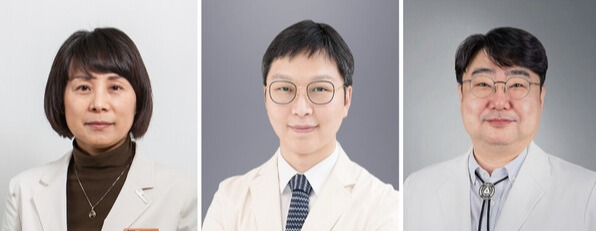
A social skills training program made into a mobile game by Korean medical experts has been shown to help improve the social skills of adolescents with autism spectrum disorder. From left, Professors Joung Yoo-sook, Yoo Jae-hyun, and Choi Tae-young (Courtesy of Samsung Medical Center)
The researchers recruited 38 adolescents aged 10 to 18 years diagnosed with ASD or social communication disorder (SCD) from Samsung Medical Center, Catholic University of Daegu Medical Center, and the Catholic University of Korea Seoul St. Mary's Hospital between August and November 2023.
All participants were classified as mild on the ASD severity scale and were able to follow the training program on their smartphones, either alone or with the help of a caregiver.
The mobile game-based training program used NDTx-01, developed by New Dive, to improve communication and interaction for children and adolescents with ASD and SCD. In January, the Ministry of Food and Drug Safety designated NDTx-01 as an innovative medical device.
NDTx-01 is designed to present a variety of situations commonly encountered in schools and requires users to solve problems by performing missions.
The researchers randomly divided the participants into a conventional treatment group (19 participants) and a mobile game intervention group (19 participants). They observed how the participants' social adaptive skills, including social communication and interaction skills, changed after six weeks, depending on the treatment. The conventional treatment included medication, psychotherapy, and social skills training.
The results showed that the mobile game intervention group improved their social skills, such as social adaptation and daily living skills.
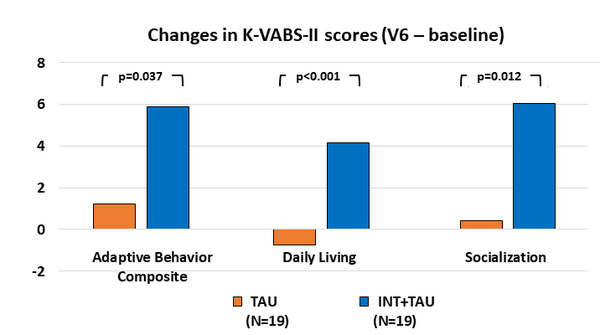
The researchers explained that the combined treatment with mobile games showed significant improvements in the daily life of adolescents with ASD/Social Communication Disorder, as assessed by the Adaptive Behavior Scale. (Courtesy of Samsung Medical Center)
According to the researchers, the Adaptive Behavior Composite, a measure of communication, life skills, social skills, and motor skills, showed a 5.89-point improvement in the mobile game intervention group, compared to a 1.21-point improvement in the conventional treatment group.
In socialization, the mobile game intervention group increased by 6.05 points, compared to 0.42 points in the traditional treatment group. In particular, when assessing daily living skills, the conventional treatment group scored 0.74 points lower than at the beginning of the treatment, but the mobile game intervention group scored 4.16 points higher.
In addition, repetitive behaviors and interests, which are key characteristics of ASD, showed a significant difference in the mobile game combination treatment group (9.11 points) compared to the conventional treatment group (2.89 points).
"The treatment using smartphones can be carried out at home under the guidance of medical staff, which makes it more accessible and immersive based on the interest in the game itself, which can be seen as an increase in the treatment effect. It can also be more useful when continuous face-to-face therapy is difficult," Professor Joung said.
The study was supported by the Healthcare Technology R&D Program of the Korea Health Industry Development Institute (KHIDI) under the Ministry of Health and Welfare and the Daegu-Gyeongbuk Advanced Medical Industry Promotion Foundation.
It was published in the latest issue of the Journal of Psychiatry and Clinical Neurosciences in Japan.
What is uranium enrichment and how is it used for nuclear bombs? A scientist explains
Natanz and Fordow are Iran’s uranium enrichment sites, and Isfahan provides the raw materials, so any damage to these sites would limit Iran’s ability to produce nuclear weapons.
But what exactly is uranium enrichment and why does it raise concerns?
To understand what it means to “enrich” uranium, you need to know a little about uranium isotopes and about splitting the atom in a nuclear fission reaction. What is an isotope?
All matter is made of atoms, which in turn are made up of protons, neutrons and electrons. The number of protons is what gives atoms their chemical properties, setting apart the various chemical elements.
Atoms have equal numbers of protons and electrons. Uranium has 92 protons, for example, while carbon has six. However, the same element can have different numbers of neutrons, forming versions of the element called isotopes.
This hardly matters for chemical reactions, but their nuclear reactions can be wildly different. The difference between uranium-238 and uranium-235
When we dig uranium out of the ground, 99.27% of it is uranium-238, which has 92 protons and 146 neutrons. Only 0.72% of it is uranium-235 with 92 protons and 143 neutrons (the remaining 0.01% are other isotopes).
For nuclear power reactors or weapons, we need to change the isotope proportions. That’s because of the two main uranium isotopes, only uranium-235 can support a fission chain reaction: one neutron causes an atom to fission, which produces energy and some more neutrons, causing more fission, and so on.
This chain reaction releases a tremendous amount of energy. In a nuclear weapon, the goal is to have this chain reaction occur in a fraction of a second, producing a nuclear explosion.
In a civilian nuclear power plant, the chain reaction is controlled. Nuclear power plants currently produce 9% of the world’s power. Another vital civilian use of nuclear reactions is for producing isotopes used in nuclear medicine for the diagnosis and treatment of various diseases. What is uranium enrichment, then?
To “enrich” uranium means taking the naturally found element and increasing the proportion of uranium-235 while removing uranium-238.
There are a few ways to do this (including new inventions from Australia), but commercially, enrichment is currently done with a centrifuge. This is also the case in Iran’s facilities.
Centrifuges exploit the fact that uranium-238 is about 1% heavier than uranium-235. They take uranium (in gas form) and use rotors to spin it at 50,000 to 70,000 rotations per minute, with the outer walls of the centrifuges moving at 400 to 500 metres per second.
This works much like a salad spinner that throws water to the sides while the salad leaves stay in the centre. The heavier uranium-238 moves to the edges of the centrifuge, leaving the uranium-235 in the middle.
This is only so effective, so the spinning process is done over and over again, building up the percentage of the uranium-235.
Most civilian nuclear reactors use “low enriched uranium” that’s been enriched to between 3% and 5%. This means that 3–5% of the total uranium in the sample is now uranium-235. That’s enough to sustain a chain reaction and make electricity.
What level of enrichment do nuclear weapons need?
To get an explosive chain reaction, uranium-235 needs to be concentrated significantly more than the levels we use in nuclear reactors for making power or medicines.
Technically, a nuclear weapon can be made with as little as 20% uranium-235 (known as “highly enriched uranium”), but the more the uranium is enriched, the smaller and lighter the weapon can be. Countries with nuclear weapons tend to use about 90% enriched, “weapons-grade” uranium.
According to the International Atomic Energy Agency (IAEA), Iran has enriched large quantities of uranium to 60%. It’s actually easier to go from an enrichment of 60% to 90% than it is to get to that initial 60%. That’s because there’s less and less uranium-238 to get rid of.
This is why Iran is considered to be at extreme risk of producing nuclear weapons, and why centrifuge technology for enrichment is kept secret.
Ultimately, the exact same centrifuge technology that produces fuel for civilian reactors can be used to produce nuclear weapons.
Kaitlin Cook DECRA Fellow, Department of Nuclear Physics and Accelerator Applications, Australian National University Disclosure statement Kaitlin Cook receives funding from the Australian Research Council.
Republish our articles for free, online or in print, under Creative Commons licence.Republish this article
“Chicken is her favorite dish. If one clucks, she comes”: how anacondas, chickens, and locals may be able to coexist in the Amazon
Q&A with Dr Beatriz Cosendey, author of a recently published Frontiers in Amphibian and Reptile Science article
As a child, I was fascinated by reports and documentaries about field research and often wondered what it took to be there and what kind of knowledge was being produced. Later, as an ecologist, I felt the need for approaches that better connected scientific research with real-world contexts. I became especially interested in perspectives that viewed humans not as separate from nature, but as part of ecological systems. This led me to explore integrative methods that incorporate local and traditional knowledge, aiming to make research more relevant and accessible to the communities involved.
Can you tell us about the research you’re currently working on?
My research focuses on ethnobiology, an interdisciplinary field intersecting ecology, conservation, and traditional knowledge. We investigate not only the biodiversity of an area but also the relationship local communities have with surrounding species, providing a better understanding of local dynamics and areas needing special attention for conservation. After all, no one knows a place better than those who have lived there for generations. This deep familiarity allows for early detection of changes or environmental shifts. Additionally, developing a collaborative project with residents generates greater engagement, as they recognize themselves as active contributors; and collective participation is essential for effective conservation.
Could you tell us about one of the legends surrounding anacondas?
One of the greatest myths is about the Great Snake—a huge snake that is said to inhabit the Amazon River and sleep beneath the town. According to the dwellers, the Great Snake is an anaconda that has grown too large; its movements can shake the river’s waters, and its eyes look like fire in the darkness of night. People say anacondas can grow so big that they can swallow large animals—including humans or cattle—without difficulty.
What could be the reasons why the traditional role of anacondas as a spiritual and mythological entity has changed? Do you think the fact that fewer anacondas have been seen in recent years contributes to their diminished importance as an mythological entity?
Not exactly. I believe the two are related, but not in a direct way. The mythology still exists, but among Aritapera dwellers, there’s a more practical, everyday concern—mainly the fear of losing their chickens. As a result, anacondas have come to be seen as stealthy thieves. These traits are mostly associated with smaller individuals (up to around 2–2.5 meters), while the larger ones—which may still carry the symbolic weight of the ‘Great Snake’—tend to retreat to more sheltered areas; because of the presence of houses, motorized boats, and general noise, they are now seen much less frequently.
Can you share some of the quotes you’ve collected in interviews that show the attitude of community members towards anacondas? How do chickens come into play?
When talking about anacondas, one thing always comes up: chickens. “Chicken is her [the anaconda’s] favorite dish. If one clucks, she comes,” said one dweller. This kind of remark helps explain why the conflict is often framed in economic terms. During the interviews and conversations with local dwellers, many emphasized the financial impact of losing their animals: “The biggest loss is that they keep taking chicks and chickens…” or “You raise the chicken—you can’t just let it be eaten for free, right?”
For them, it’s a loss of investment, especially since corn, which is used as chicken feed, is expensive. As one person put it: “We spend time feeding and raising the birds, and then the snake comes and takes them.” One dweller shared that, in an attempt to prevent another loss, he killed the anaconda and removed the last chicken it had swallowed from its belly—"it was still fresh," he said—and used it for his meal, cooking the chicken for lunch so it wouldn’t go to waste.
Some interviewees reported that they had to rebuild their chicken coops and pigsties because too many anacondas were getting in. Participants would point out where the anaconda had entered and explained that they came in through gaps or cracks but couldn’t get out afterwards because they ‘tufavam’ — a local term referring to the snake’s body swelling after ingesting prey.
We saw chicken coops made with mesh, with nylon, some that worked and some that didn’t. Guided by the locals’ insights, we concluded that the best solution to compensate for the gaps between the wooden slats is to line the coop with a fine nylon mesh (to block smaller animals), and on the outside, a layer of wire mesh, which protects the inner mesh and prevents the entry of larger animals.
Are there any common misconceptions about this area of research? How would you address them?
Yes, very much. Although ethnobiology is an old science, it's still underexplored and often misunderstood. In some fields, there are ongoing debates about the robustness and scientific validity of the field and related areas. This is largely because the findings don’t always rely only on hard statistical data.
However, like any other scientific field, it follows standardized methodologies, and no result is accepted without proper grounding. What happens is that ethnobiology leans more toward the human sciences, placing human beings and traditional knowledge as key variables within its framework.
To address these misconceptions, I believe it's important to emphasize that ethnobiology produces solid and relevant knowledge—especially in the context of conservation and sustainable development. It offers insights that purely biological approaches might overlook and helps build bridges between science and society.
What are some of the areas of research you’d like to see tackled in the years ahead?
I’d like to see more conservation projects that include local communities as active participants rather than as passive observers. Incorporating their voices, perspectives, and needs not only makes initiatives more effective, but also more just. There is also great potential in recognizing and valuing traditional knowledge. Beyond its cultural significance, certain practices—such as the use of natural compounds—could become practical assets for other vulnerable regions. Once properly documented and understood, many of these approaches offer adaptable forms of environmental management and could help inform broader conservation strategies elsewhere.
How has open science benefited the reach and impact of your research?
Open science is crucial for making research more accessible. By eliminating access barriers, it facilitates a broader exchange of knowledge—important especially for interdisciplinary research like mine which draws on multiple knowledge systems and gains value when shared widely. For scientific work, it ensures that knowledge reaches a wider audience, including practitioners and policymakers. This openness fosters dialogue across different sectors, making research more inclusive and encouraging greater collaboration among diverse groups.
The OSUCCC – James survey found that only 13% of U.S. adults—just over 1 in 10 —correctly identified testicular cancer as most commonly affecting men under 40. This is significant, as the disease is most prevalent among men between the ages of 20 and 40.
Additionally, two-thirds (65%) of respondents believe an evaluation should be part of an annual exam after age 40. However, cancer experts note that self-exams are most relevant between the ages of 20 and 40.
“In my experience, a lot of men are surprised that testicular cancer is most common among young men,” said Shawn Dason, MD, urologic oncologist at the OSUCCC – James. “It's something you're just not expecting in your twenties or thirties. A lot of young men’s focus might be on developing their career, their day-to-day life. That's a very different track of mind than perhaps your health.”
Survey results In the survey of 1,008 respondents aged 18 and older, 6 in 10 (63%) correctly identified that testicular cancer is often curable if caught early, and just over half (54%) correctly said that monthly self-checks should be conducted.
“We are really fortunate in testicular cancer that the vast majority of patients are diagnosed at an early stage,” said Dason, also an associate clinical professor of urology at Ohio State College of Medicine. “That means the vast majority of patients are actually diagnosed before the cancer has had an opportunity to spread to other parts of the body.”
Younger Americans, age 18-29, and adults, age 30-49, were more likely than their older counterparts to say that testicular cancer affects fertility (68% and 61%, respectively). However, younger adults were also more likely than all other age groups to incorrectly agree with the statement that testicular cancer symptoms are always painful (18%).
“Testicular cancer does not typically come with painful symptoms,” said Dason. “That’s why routine self-exams are so important to detect any lumps or changes to the testicle. If you feel something out of the ordinary, like a lump or bump, or if the testicle changes in size, call your doctor.”
Survey methodology This survey was conducted by SSRS on its Opinion Panel Omnibus platform. The SSRS Opinion Panel Omnibus is a national, twice-per-month, probability-based survey. Data collection was conducted from May 2 – May 5, 2025, among a sample of 1,008 respondents. The survey was conducted via web (n=978) and telephone (n=30) and administered in English. The margin of error for total respondents is +/-3.6 percentage points at the 95% confidence level. All SSRS Opinion Panel Omnibus data are weighted to represent the target population of U.S. adults ages 18 or older.
To learn more about cancer treatment and clinical trials at the OSUCCC – James, visit cancer.osu.edu or call 1-800-293-5066.
Jay Riepenhoff undergoes chemotherapy treatment for stage three testicular cancer at The Ohio State University Comprehensive Cancer Center after it spread to his lymph nodes.
Credit
Please courtesy: The Ohio State University Comprehensive Cancer Center
Shawn Dason, MD, examines a patient’s lymph nodes—areas that can be affected if testicular cancer isn't detected early through self-exams.
Credit
Please courtesy: The Ohio State University Comprehensive Cancer Center
England’s diabetes prevention program as blueprint for Canada
Canada can learn from England’s successful diabetes prevention program to build its own programs to tackle diabetes prevention across the country, argue authors in an analysis in CMAJ (Canadian MedicalAssociation Journal) https://www.cmaj.ca/lookup/doi/10.1503/cmaj.250057.
In 2022, Canada released a diabetes framework that calls on provincial and Indigenous governing bodies to build community-based programs to help address increases in new cases of diabetes.
Based on evidence showing positive preventive benefits of diet and exercise on type 2 diabetes, England’s National Health Service (NHS) created publicly funded prevention and remission programs that have been successful. The initiative has reduced diabetes rates from 64.3 to 53.4 per 1000 person-years in people with prediabetes and is projected to save $121 million over 35 years.
A Quebec-based team of clinician–scientists, legal experts, and health economist researchers, with funding from the Canadian Institutes of Health Research, several of whom are Diabetes Quebec professional council members, have partnered with leaders from the NHS to investigate whether a similar program could be rolled out in Quebec. The idea is to start in Quebec and trigger action in other parts of Canada. It would be akin to what happened with Quebec’s early child education and care program, which Canada’s federal government has adopted to deliver similar programs across the country.
“Our goal is to build successful programs in Quebec that will catalyze programs across Canada,” writes Dr. Kaberi Dasgupta, Research Institute of the McGill University Health Centre, Montréal, Quebec, with coauthors.
“In our view, if 1 province successfully builds a program, it will catalyze others and attract federal funding.”
As another example of change in one part of the country leading to change in other parts, medicare, which was originally a provincial initiative in Saskatchewan, was rolled out nationally and is the basis of Canada’s publicly funded health systems.
Various reports have linked loneliness to premature death, with some — including the U.S. Surgeon General — suggesting that loneliness is as harmful to one’s health as smoking 15 cigarettes a day.
However, a new international study led by researchers at the University of Waterloo’s School of Public Health Sciences has found that while loneliness is common among older adults receiving home care, it is not associated with an increased risk of death.
The researchers analyzed data from more than 380,000 home care recipients aged 65 and older in Canada, Finland and New Zealand. Using standardized assessments and survival analysis, they found that lonely individuals had a lower risk of dying within one year compared to their non-lonely counterparts after adjusting for health conditions, age and other risk factors.
“Our findings suggest that loneliness may not independently increase the risk of death after controlling for other health risk factors among older adults in home care,” said the study’s lead author, Dr. Bonaventure Egbujie, a professor in Waterloo’s School of Public Health Sciences. “This contradicts much of the existing literature based on the general population.”
Loneliness prevalence — defined as the number of people per 100 who report feeling lonely — ranged from 15.9 per cent of home care recipients in Canada to 24.4 per cent in New Zealand. Interestingly, people in better physical shape and who got less help from family or friends were likelier to feel lonely, suggesting a complex link between health status, caregiving needs, and social connection.
The study urges policymakers and health-care providers to treat loneliness as a quality-of-life issue rather than focusing solely on its potential link to mortality.
“Loneliness is a serious threat to psychological well-being. The mental health consequences of loneliness make it an important priority for public health, even if loneliness doesn’t kill you,” said the study’s senior author, Dr. John Hirdes, a professor in Waterloo’s School of Public Health Science.
“Home and community care services must play a protective role by supporting social contact for isolated people.”
The authors call for longer-term studies to better understand the causal relationship between loneliness and health outcomes and to explore how cultural and care system differences influence these dynamics.