Monday, June 16, 2025

Taking control: zombie stories are rooted in reality


Credit: Naughty Dog/HBO.

We are taking a look back at stories from Cosmos Magazine in print. From parasitic wasps to body-hijacking fungi, the natural world is full of real-life zombification. But could our favourite post-apocalyptic TV shows come true? Imma Perfetto investigated in September 2023.

The Last of UsThe Walking DeadWorld War ZZombielandShaun of the Dead… I could keep going but I think you get the gist.

Zombies are everywhere in fiction, from movies to TV shows, video games to books.

These stories are usually pretty hand-wavey about the actual science that has turned humans into mindless, shambling, killing machines, but you might be surprised to know that there are actually some pretty gruesome examples of zombification in real life.

If you can stomach it, come with me on a tour into the lives of parasitic wasps, worms, single-celled organisms, fungi, viruses – and even into our own brains.

Horror authors and script writers, listen closely – because we all know that some of the scariest stories are the ones rooted in reality.

I could keep going – there are so many more thrillingly grisly examples of zombification in nature – but you might need some fresh air and recovery time.

“Nature is rife with examples of parasitic puppeteers infecting their host.”

Just one more thing before you go. These examples of zombification fit the major zombie stereotypes: increased aggression, a loss of ­autonomy and a compulsion to bite or to ensure the spread of the parasite or virus infecting the host. But thankfully, there aren’t any known diseases or afflictions in nature that can continuously reanimate corpses – so the undead remain firmly within the realms of fantasy.

Maybe that will help you rest easy at night – or maybe I’ve already infected your nightmares with mind-controlling worms and fungi that will ­consume you from the inside out.

Sweet dreams.

Not your typical swimming lesson

Gordian worm
Credit: Greg Barton

The first stop on our super fun and not-at-all ­distressing zombie extravaganza is parasites. These are organisms that live on or inside an organism of another species, its host.

Gordian worms, also known as horsehair worms, are long, thin parasitic worms found in fresh water all over the world. The larvae bore into the body of a host, initially other larvae in the water, which then get snatched up and eaten by unfortunate insects like grasshoppers or crickets. There, the worm grows inside the insect’s body cavity to as long as 30 centimetres, secreting digestive enzymes from their skin to absorb their host body’s nutrients.

If that isn’t spine-chilling enough, it gets worse. Hosts infected with a gordian worm will, despite avoiding water in all other cases, perform a deadly cannonball into the next aquatic environment they come across and drown. The worm then bursts out of a borehole and swims off in search of a mate, starting the cycle all over again.

How the worms manage to manipulate the insects’ cognitive functions is not fully understood, but researchers believe the worms produce molecules that act on the development of their host’s central nervous system, thus altering physiological responses and behaviours.

Home sweet zombie spider home

Spider
Credit: Greg Barton

If those tapeworms from hell made you squeamish, get a sick bucket ready because there are far worse parasites to contend with.

Nature is rife with examples of parasitic ­puppeteers infecting their host and inducing some pretty strange behaviour. One of my favourites is from a 2018 study published in Ecological Entomology, which discovered a previously unknown species of wasp deep in the Ecuadorian Amazon jungle – with the ability to transform a species of spider into a zombie-like drone.

These spiders (Anelosimus eximius) are known for living together in large colonies, where they cooperate to hunt and parent. Think Aragog and his giant Acromantula children chilling together in Hogwarts’ Forbidden Forest.

But the study, led by scientists from the University of British Columbia in Canada, found that Zatypota wasps intrude on this idyllic social life by laying eggs on the abdomens of the spiders, which then hatch into larvae that feed on the ­spider’s internal body fluid. The larvae finally take ­complete control of the spider’s body, hijacking its brain and triggering some unusual behaviour.

The researchers don’t know yet how the wasps manage total control, but suspect it may involve the wasp larva injecting hormones into the spider.

The result is that the spider does something against its own behavioural tendencies: it leaves the colony and builds a densely woven, cocoon-like nest where the larvae can grow safely and comfortably into adult wasps, devouring their host in the process.

Delicious.

This fungus is trending

Fungus
Credit: Greg Barton

We can’t cover real-life inspirations for zombie apocalypses without talking about Cordyceps. It’s possibly the world’s most infamous fungus thanks to its starring role in the video games The Last of Us Parts I and II, as well as the live-action TV ­adaptation released earlier this year.

Cordyceps and Ophiocordyceps are genera of fungi that include about 750 species worldwide, most of which are parasitic and infect insects and other arthropods, like carpenter ants and trapdoor spiders. Infection starts when a fungal spore gets inside an organism, like an ant, and begins growing.

The ant’s behaviour gets hijacked and it prioritises its parasite’s reproduction over everything else. It stops foraging for the colony and communicating with its nest mates, becomes hyperactive and wanders off on its own to find a spot to climb up to.

It then chomps down on a piece of vegetation in a move called the “death grip”. The muscles in its mandibles then atrophy, locking it in place for the final throes of its life.

The fungus consumes everything inside the host, killing it, then uses those nutrients to sprout a fruiting body out the top of the host’s head. Spores form and drift off to infect more unwary hosts.

How is this piece of horrid biology possible? Again, it comes down to secreted chemicals and their effect on the host’s physiology. For example, a 2015 study led by researchers at Pennsylvania State University in the US identified a range of secreted proteins produced increasingly by the fungi during the strange biting behaviour. These may affect a range of processes including immune responses, stress responses and impairing the production of chemicals used in communication between insects.

It’s a viral sensation

Rabies
Credit: Greg Barton

This deep-dive into grossity wouldn’t be complete without mentioning rabies – the virus that inspired the zombies of the horror classic 28 Days Later.

A rabies infection has all the symptoms of your typical zombie: a compulsive need to bite, a fear of light and mindless aggression. The virus is usually transmitted through bites and scratches from an infected animal, and it takes time to travel to the brain before causing symptoms – which is absolutely essential if you’re going to have the ­requisite scene where a person tries to hide their bite, but gets progressively sicker until the group confronts them and finds out they’re infected.

This incubation period typically lasts 2–3 months for rabies, but can vary from one week to a year. Rabies progresses to the central nervous system where it causes inflammation of the brain and spinal cord, triggering symptoms in two different forms.

There’s paralytic rabies, which occurs in about 20% of human cases. Here, muscles become progressively paralysed, and the person falls into a coma before dying.

Then there’s furious rabies, like your more World War Z flavour of zombie, which causes irrational aggression, hyperactivity, hallucinations and a fear of water and fresh air.

A catastrophe waiting to happen

Credit: Greg: Barton

A little closer to home, there’s the single-celled parasite Toxoplasma gondii that infects the brains of our kitty cats, and ours too.

A 2014 study published in PLoS ONE actually estimates that up to half of the world’s human ­population is infected, though most of us have no symptoms. That’s pretty alarming to contemplate, since Toxoplasma has been shown to change the behaviour of infected mice, who become hyper­active and lose their innate fear of cats – in some cases even appearing to be attracted to them.

There’s evidence that also suggests toxo­plasmosis might be linked to personality changes in humans too. One study found an ­association with impulsivity in younger men and increased aggression in women, while another found a positive association between national homicide rates and prevalence of the parasite in the population – although correlation is not causation.

Christian nationalists tend to imagine God as benevolent, angry over sins, and (POLITICALLY) engaged


Recent research found that U.S. Christians who believe that God is benevolent, angry, and engaged tend to express stronger religious nationalism. In turn, stronger religious nationalism was associated with greater conspiracy mentality and higher levels of xenophobia. The paper was published in Political Psychology.

Religious views often play a significant role in shaping national identity. They influence cultural traditions, values, and historical narratives. In many countries, dominant religions are deeply intertwined with national symbols, holidays, and public life. In some nations, such as Iran or Israel, religion is a foundational component of the state itself. In others, like the United States or India, religious diversity coexists with strong national identities, though tensions may arise when one faith is perceived as more representative than others.

National identity can be reinforced by shared religious practices, which create a sense of belonging and continuity among citizens. However, when national identity becomes too closely linked to a single religion, it can marginalize religious minorities and fuel exclusion or conflict. Secular states attempt to separate religion from national identity, promoting citizenship based on civic values rather than faith. Still, even in secular societies, religious history often remains a powerful undercurrent in how people understand their national identity.

Sometimes, individuals combine their religious beliefs with their views on the nation-state. This gives rise to the ideology of religious nationalism. Religious nationalism occurs when people merge traditional religious beliefs in divine law and religious authority with the modern concept of the nation-state. This ideology moralizes political issues using religious principles and supports policies and leaders who promote one’s religious identity.

Religious nationalism “promotes the narrative that one’s nation is drifting away from its religious roots and needs its citizens to adhere to and promote this worldview. This narrative can further paint one’s religious followers as victims of a global conspiracy to obstruct one’s religion,” the study authors explain.

Study author Joseph A. Wagoner and his colleagues sought to explore whether religious nationalism is associated with the way people imagine God. They focused on four potential images of God: benevolent, authoritarian, engaged, and angry over sin. They conducted two studies, both examining the relationship between these images of God and religious nationalism.

In the first study, they analyzed data from the Baylor Religion Survey to investigate whether different images of God are associated with religious nationalism among U.S. Christians. Data came from two waves of the survey, involving 1,619 respondents in the first wave and 1,648 in the second.

The second study had a similar aim. Participants included 300 Christians from the United States and 299 from Italy, all recruited via Prolific. They completed an online survey that also asked about their attitudes toward government and political issues specific to their country.

Results from the first study showed that endorsement of all four images of God was associated with greater religious nationalism. However, the association was stronger—moderate in magnitude—for beliefs in a benevolent, engaged, or sin-angry God. The association between religious nationalism and belief in an authoritarian God was weaker.

In the second study, results from the U.S. sample indicated that beliefs in a benevolent God and a God angered by sin were associated with stronger religious nationalism. In turn, stronger religious nationalism predicted higher levels of conspiracy mentality and xenophobia.

In the Italian sample, beliefs in a benevolent, engaged, and angry God were all associated with higher levels of religious nationalism. Individuals with stronger religious nationalist beliefs were more likely to express negative attitudes toward their government and to endorse separatism, populist views, conspiracy theories, and xenophobia.

“Overall, we provide evidence that images of God uniquely predict religious nationalism across numerous contexts and that stronger religious nationalism relates to various contemporary sociopolitical outcomes,” the study authors concluded.

The study sheds light on the links between religious nationalism and how individuals imagine God. However, it should be noted that the study’s design does not allow for causal conclusions to be drawn from the results.

The paper, “Different images of God predict religious nationalism among Christians,” was authored by Joseph A. Wagoner, Moussa Diarra, Barbara Barbieri, and Matteo Antonini.


You’ll Guffaw When You Hear How Much Self-Driving Waymos Cost Compared to Human-Driven Ubers

This doesn't seem worth it.


Waymo Money
Jun 14, 2025
FUTURISM


Image by Benjamin Hanson / Middle East Images via AFP

The whole point of self-driving taxis is, in theory, to save costs on human labor — but Waymo, Google's glitchy robotaxi service, doesn't appear to be any cheaper at all, at least for now.

In a report shared with TechCrunch, the ride-hailing data aggregator Obi found that riding with Waymo is pretty much always more expensive than taking a ride with a human-driven Uber or Lyft.

For its analysis, Obi analyzed roughly 90,000 records from Uber, Lyft, and Waymo rides between March 25 and April 25 in San Francisco. After comparing estimated arrival times, prices, and routes, the data firm found that Waymo averaged $20.43 per ride, while Uber clocked in at $15.58 and Lyft at $14.44.

The increase seems to be worse at peak hours, when a Waymo ride will run consumers $11 more than a Lyft and almost $9.50 more than an Uber, Obi found.

What's more, Waymo's pricing model is counterintuitive, making it more expensive for shorter rides and cheaper as the rides get longer. A ride that would be inexpensive on Uber or Lyft would roughly cost, on average, 30 to 40 percent more when taken with Waymo, the analysis found.

Still, despite Waymo costing more than a rideshare driven by a human and having a propensity to glitch out and plug up traffic in SF's already-busy streets, people are still uber-excited — pun not intended — to experience the novelty of a robotaxi.

"I didn’t expect consumers being willing to pay up to $10 more," admitted Ashwini Anburajan, Obi's chief revenue officer, in an interview with TechCrunch. "I think [that] speaks to a real sense of excitement for technology, novelty, and a real preference to sometimes be in the car without a driver."

Those don't seem to be one-and-done bucket list experiences for Waymo riders in SF, Los Angeles, and Phoenix. As Obi found, 70 percent of people who had taken a ride with the Google-owned robotaxi service said they prefer driverless rides to ones facilitated by fellow humans.

As strange as that preference may seem, the Obi CRO had a few ideas as to why Waymo riders like it so much.

"There’s something about being in the car alone," Anburajan explained. "It is there for you to, like, kind of live in a little bubble and get from point A to point B, and be very comfortable doing so."

More on Waymo: 
Companies Bragging About Their AI Furious as Job Applicants Use AI During Interviews
Double standard much?


Image by Getty 


Jun 14, 2025
Futurism


Goldman Sachs wants those applying for jobs at the investment bank to stop relying on AI while interviewing — a glaring double standard, considering it's made massive bets of its own on the tech, launched its own AI platform and rolled out AI tools across its businesses.


As Fortune reports, the bank's campus recruitment team sent out an email, warning students that "Goldman Sachs prohibits the use of any external sources, including ChatGPT or Google search engine, during the interview process."

The financial services company even outsourced the triaging of job candidates to the video interviewing firm HireVue — a talent evaluation platform that's powered by AI. Applicants have 30 seconds to prepare and two minutes to give answers to questions.

Instead of cribbing from a chatbot, in other words, applicants will have to learn rote datapoints about the company's financial results and core values by heart. That's the workplace of the future, baby!

The company's policy obviously rings hypocritical. On one hand, Goldman Sachs has long boasted that generative AI will boost productivity, yet those who are trying to kickstart a career are somehow not allowed to make use of the tech.

Despite having launched a proprietary AI assistant for its employees to summarize emails and translate code in January, the company says that it cares about what its future staffers have to say for themselves.

"This language is consistent with what we send to any of our campus applicants across all positions," spokesperson Jennifer Zuccarelli told Fortune. "We want to hear from our applicants in their own voice."

It's not just investment banks barring job applicants from using AI. In an arguably even more egregious example, leading AI company Anthropic — yes, the folks building AI, including the chatbot Claude — wrote in job postings that "we want to understand your personal interest in Anthropic without mediation through an AI system."

Amazon has equally warned recruiters that any candidates who are caught using the tech should be disqualified, as Business Insider reported in February.

"To ensure a fair and transparent recruitment process, please do not use GenAl tools during your interview unless explicitly permitted," the e-commerce giant wrote in internal guidelines. "Failure to adhere to these guidelines may result in disqualification from the recruitment process."

That's despite Amazon encouraging staffers to use AI tools to boost productivity and pouring immense resources into the tech.

It's reflective of a broader trend. The already-abysmal job-seeking industry has dramatically changed with the advent of human resources-specific AI tools. Both recruiters and applicants are making heavy use of the tech, whether they're allowed to or not, turning an already soul-sucking process into an even more insufferable experience.

Case in point, a deranged video that went viral last month shows an AI-powered job recruiter melting down during a call with a human applicant.

Having companies threaten to disqualify job seekers for using AI isn't just the peak of hypocrisy, it's a race to the bottom that needlessly puts strain on those who are simply looking for employment.

More on AI and job search: AI Is Helping Job Seekers Lie, Flood the Market, and Steal Jobs
MEN'S HEALTH

Problematic porn use remains stable over time and is strongly linked to mental distress, study finds

by Eric W. Dolan
June 14, 2025
PSYPOST


A new longitudinal study has found that problematic pornography use tends to remain stable over time and is strongly associated with psychological distress such as anxiety and depression. The findings, published in the journal Addictive Behaviors, suggest that while some people may experience short-term relief from distress through pornography use, long-term patterns of dysregulation are tied to more persistent psychological difficulties.

Pornography is widely used in the United States and globally, but for some individuals, it can become problematic. People who experience problematic pornography use often report difficulty controlling their use and suffer negative consequences in their personal, professional, or emotional lives. The condition has recently gained clinical recognition under the diagnostic label of Compulsive Sexual Behavior Disorder in the World Health Organization’s latest classification system. Despite this recognition, little research has explored how problematic pornography use develops and changes over time, especially in relation to mental health symptoms.

Robin Engelhardt of Bundeswehr University, the lead author, was motivated by “the necessity to scientifically catch up in this field. Previous studies depicted comparatively high prevalence rates of problematic pornography use and associations with psychological distress.”

The researchers conducted a one-year, three-wave longitudinal study of over 4,300 U.S. adults. They wanted to examine how problematic pornography use and psychological distress influence each other over time and whether these patterns are stable or fluctuate. Their work builds on previous research that identified a link between pornography dysregulation and psychological distress but could not determine whether one causes the other.

Participants were recruited through a national polling company and included a combination of a general population sample and an oversample of sports bettors to increase statistical power. The final sample included 4,363 individuals between the ages of 18 and 96, with an average age of 50 and a gender distribution of roughly equal numbers of men and women. The study took place over three timepoints: March-April 2022, September-October 2022, and March-April 2023.

To assess problematic pornography use, the researchers used the Brief Pornography Screen, a five-item questionnaire designed to measure symptoms of dysregulation, such as difficulty resisting urges or using pornography in ways that cause distress. A score of 4 or higher on this measure was considered a potential indicator of problematic use. Psychological distress was measured through widely used tools for assessing anxiety and depression: the Generalized Anxiety Disorder-2 and the Patient Health Questionnaire-9. The researchers combined responses from both scales into a single composite reflecting overall distress.


The study found that problematic pornography use was highly consistent across time. Correlations between timepoints were strong, and most participants remained in the same clinical category—either below or above the threshold for potential problematic use—throughout the year. About 67% of participants consistently scored below the clinical threshold, while 14% consistently scored above it. Only a small proportion moved between categories, indicating either recovery or the development of problematic use.

Psychological distress was also stable across timepoints, and the researchers found a strong positive association between pornography dysregulation and distress at the level of individuals. That is, people who tended to score higher on pornography problems also tended to report more distress, and vice versa. This suggests a stable, trait-like relationship between the two.

Interestingly, when the researchers examined how changes in one variable might predict changes in the other over time, the results were more nuanced. They found small, negative within-person effects: when an individual experienced an increase in pornography dysregulation at one time point, they were slightly less likely to report increased psychological distress six months later. The reverse was also true. This pattern was unexpected, as many theories in psychology predict that distress and problematic behaviors reinforce one another over time.


The researchers offered a few potential explanations for this finding. One possibility is that pornography use may provide temporary relief from emotional distress, functioning as a short-term coping strategy. People experiencing anxiety or depression may turn to pornography for distraction or mood regulation, which could lead to a slight reduction in distress in the short run. However, over time, this pattern may backfire, leading to a worsening of dysregulation and deepening of psychological problems.

Another interpretation centers on the effects of depression itself. Depression can dampen a person’s general motivation and reduce interest in activities, including sexual ones. This might result in lower pornography use during depressive episodes, even among people with a history of dysregulation. In this way, depression could inhibit some of the behavioral patterns associated with problematic pornography use, at least temporarily.

Despite these small short-term effects, the dominant pattern was one of a strong and consistent link between problematic use and psychological distress across individuals. This means that, in general, people who have more difficulty regulating their pornography use are also more likely to struggle with anxiety and depression. These findings echo previous research and align with the idea that both problematic pornography use and psychological distress can reinforce each other in the long term, even if their moment-to-moment dynamics are more complex.


The findings provide evidence of “a trait-like connection between problematic pornography use and psychological distress,” Engelhardt told PsyPost. “They appear to be the same construct — problematic pornography use appears a part of psychological distress and psychological distress a part of problematic pornography use. However, cross-sectional studies may not depict this underlying strong time-consistent association due to small time-dependent inhibition effects that let the association appear smaller.”

The study has several important strengths, including its large sample size, use of validated measurement tools, and robust statistical modeling techniques that distinguish between stable traits and temporary fluctuations. However, the authors caution that the findings are based on self-report data, which can be influenced by social desirability or memory biases. Additionally, the study focused on dysregulation rather than the frequency of pornography use, which could be an important factor in understanding how and why pornography affects mental health.

Future research, the authors suggest, should investigate these dynamics in clinical populations and over longer periods. They also recommend using more fine-grained, daily tracking methods to examine short-term interactions between distress and pornography use in real-world settings. Experimental studies could also help clarify whether reducing pornography use leads to improved mental health outcomes.


The study, “Problematic pornography use and psychological distress: A longitudinal study in a large US sample,” Robin Engelhardt, Rahel Geppert, Joshua B. Grubbs, Timo von Oertzen, Dominik Trommer, Jürgen Maes, and Shane W. Kraus.
'Gas station heroin’ is technically illegal and widely available. Here are the facts


This photo provided by the FDA shows bottles of Neptune’s Fix Elixir, a product labeled to contain tianeptine.
(FDA Office of Regulatory Affairs, Health Fraud Branch / AP)

By Matthew Perrone
June 14, 2025 


WASHINGTON — Health officials want you to think twice before buying one of those brightly colored little bottles often sold at gas stations, convenience stores and smoke shops.

Sometimes called “gas station heroin,” the products are usually marketed as energy shots or cognitive supplements but actually contain tianeptine, an unapproved drug that can be addictive and carries risks of serious side effects.

U.S. poison control centers have reported a steady rise in calls linked to the drug for more than a decade. And last month the Food and Drug Administration sent a warning to health professionals about “the magnitude of the underlying danger or these products.”


Here’s what to know about gas station heroin.

How are these products sold in the U.S.?

Tianeptine is approved in a number of foreign countries as an antidepressant, usually as a low-dose pill taken three times a day. But it has never been approved by the FDA for any medical condition in the U.S.

Additionally, the drug cannot legally be added to foods and beverages or sold as a dietary supplement — something the FDA has repeatedly warned U.S. companies about.

Still, under-the-radar firms sell tianeptine in various formulas, often with brand names like Zaza, Tianaa, Pegasus and TD Red. Although that is technically illegal, the FDA does not preapprove ingredients added to supplements and beverages.

“It’s kind of this gray area of consumer products, or supplements, where the contents are not regulated or tested the way they would be with a medication,” said Dr. Diane Calello of the New Jersey Poison Information and Education System.

Last year, Calello and her colleagues published a study documenting a cluster of emergency calls in New Jersey tied to a flavored elixir called Neptune’s Fix. People experienced distress, rapid heartbeat, low blood pressure and seizures after drinking it. More than a dozen of the 20 patients had to be admitted for intensive care.

Why use these products?

Many tianeptine products claim — without evidence or FDA approval — to help users treat medical conditions, including addiction, pain and depression.

In 2018, the FDA issued a warning letter to the maker of a product called Tianna, which claimed to provide “an unparalleled solution to cravings for opiates.”

While tianeptine is not an opioid, the drug binds to some of the same receptors in the brain, which can temporarily produce effects akin to oxycodone and other opioids. Tianeptine also carries some of the same physiological risks of opioids, including the potential to dangerously depress breathing.

“That’s what tends to get people into trouble,” said Dr. Hannah Hays of Nationwide Children’s Hospital in Columbus, Ohio. “They use it for opioid-like effects or to self-treat opioid withdrawal and that can lead to slow breathing and problems like that.”

People dealing with opioid addiction, pain, depression, anxiety and other conditions should see a health professional to get a prescription for FDA-approved treatments, Hays said.

Is tianeptine use going up?

Experts aren’t sure but national figures show a big rise in emergency calls involving the drug.

Calls to poison control centers increased 525% between 2018 and 2023, according to a data analysis published earlier this year. In about 40% of cases, the person had to seek medical care, with more than half of them needing critical care.

One explanation for the rise in calls is simply that more Americans are using the products.

But experts also say that the products are triggering more emergencies as they become more potent and dangerous. And the researchers in New Jersey who analyzed Neptune’s Fix found that the liquid also contained synthetic cannabis and other drugs.

“You never quite know what’s in that bottle,” Calello said. “It’s important for people to know that even if they have used a product before, they could get a bottle that contains something very different from what they’re looking for.”

Are there policies that could reduce tianeptine use?

Tianeptine is not included in the federal Controlled Substances Act, which bans or restricts drugs that have no medical use or have a high potential for abuse, such as heroin, LSD and PCP. But about a dozen states have passed laws prohibiting or restricting tianeptine, including Alabama, Georgia, Michigan, Minnesota, Ohio and Tennessee.

In some cases, those laws have led to more cases of withdrawal among users of tianeptine, which can be chemically addictive. But state data also show some success in reducing harm tied to the drug.

Until recently, Alabama had the highest rate of tianeptine-related calls in the southern U.S., which increased more than 1,400% from 2018-21. But after the state restricted tianeptine in 2021, calls began modestly decreasing while calls across other Southern states continued to climb.

Perrone writes for the Associated Press.
Meet The Bird That Soars Higher Than Any Other. Hint: It Flies Higher Than Commercial Airplanes


By Scott Travers,
Contributor. I write about the world of biology.
Jun 14, 2025,
FORBES


Most bird species don’t fly above a few thousand feet in the air. But there are a few outliers. Here ... Moregetty

Most birds don’t fly that high in the air. In fact, some birds – such as the emu or the cassowary – don’t fly at all. They have wings, but only in the “vestigial” sense, meaning that their wings are non-functional remnants of their flying ancestors. Evolution went even further in New Zealand’s moas, which were completely wingless.

Yet there are some flight-capable bird species with a knack for soaring really high in the air. While this may sound like a matter of choice, it’s actually quite complicated. Flying at high altitudes requires birds to be more efficient in their movement and energy production.

For instance, research published in the Journal of Experimental Biology suggests that high-altitude birds have developed unique specializations such as more effective breathing patterns, larger lungs and blood with a higher oxygen affinity.

These adaptations, according to the research, allows birds to “improve the uptake, circulation and efficient utilization of oxygen during high-altitude hypoxia.”

High-flying birds also tend to have larger wings than their low-flying cousins, presumably to allow the birds to soar without expending as much energy.

Research has identified a handful of bird species that are known to soar at altitudes of 20,000+ feet – the most notable and highest soarer being the Ruppell’s griffon. Here is more detail on the record-setting, “Chuck Yeager’s” of the bird world.


Ruppell’s Griffon (37,000+ ft.)


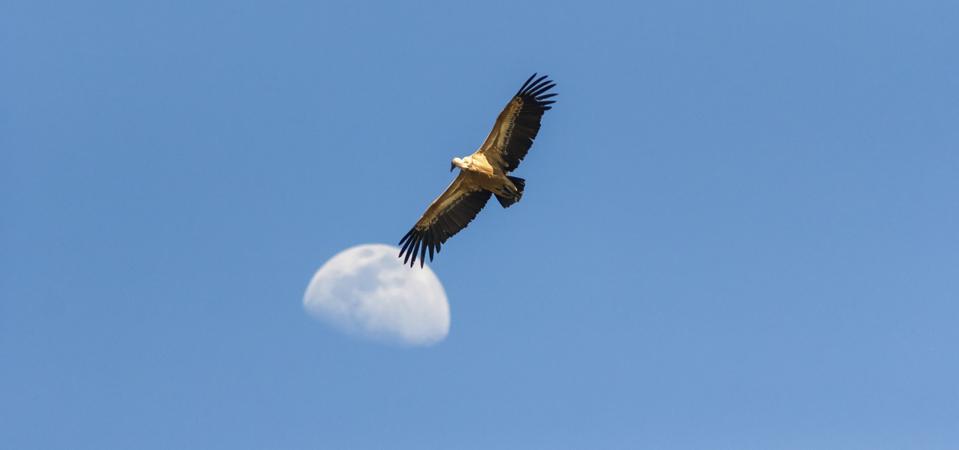
Ruppell's griffon, the highest-flying bird ever recorded, shown in flight.

This African vulture holds the record for the highest known bird flight. In fact, a Ruppell’s griffon collided with a commercial aircraft over western Africa at an altitude of 37,000 feet, higher than the cruising height of most airliners. The species is uniquely adapted to extreme altitudes, with hemoglobin that binds oxygen more effectively than that of almost any other bird. These vultures rely on powerful soaring techniques and can cover vast distances in search of carrion, making use of rising thermal currents to stay aloft with minimal energy expenditure.

Bar-Headed Goose (27,000+ ft.)


This bird is known for its grueling migrations over the Himalayas, including Mount Everest. Bar-headed geese have been recorded flying at elevations above 27,000 feet during their seasonal journeys between Central Asia and the Indian subcontinent. To cope with the thin air, they possess a high lung capacity and their muscles are particularly efficient at using oxygen. These physiological traits allow them to flap continuously, rather than just soar, even in oxygen-starved environments.


Alpine Chough (25,000+ ft.)


The alpine chough, a member of the crow family, lives in mountainous regions across Europe, North Africa and Asia. Though not migratory in the same way as the bar-headed goose, this species regularly forages and nests at high altitudes. Observations have documented Alpine choughs flying at over 25,000 feet. Their strong, curved wings and acrobatic flight style allow them to navigate rugged terrain with ease, making the most of updrafts and wind currents that sweep over alpine cliffs.

Whooper Swan (25,000+ ft.)


Known for their distinctive trumpet-like calls, whooper swans are powerful, long-distance migrants. These swans have been spotted by pilots at heights of up to 25,000 feet during their transcontinental migrations between Europe and Asia. Despite their large size, their strong wings and streamlined bodies help them maintain high-altitude flight over long distances. They often travel in V-shaped formations that improve aerodynamic efficiency and conserve energy among the flock.

Steppe Eagle (24,000+ ft.)


The steppe eagle is a bird of prey that breeds in the open plains and steppes of Central Asia. These eagles are skilled soarers, often riding thermal updrafts to reach extreme heights. Their broad wings and keen eyesight make them efficient hunters and scavengers, capable of spotting prey from great distances. Their long-distance migratory routes take them across mountainous regions where such high-altitude flights are essential.

Lammergeier (24,000+ ft.)


Also known as the bearded vulture, the lammergeier is a striking bird that thrives in mountainous regions from Europe to the Himalayas. It has been recorded flying at heights of up to 24,000 feet, gliding on thermals. Unique among vultures, lammergeiers primarily feed on bone marrow, often dropping large bones from great heights onto rocks to crack them open. Their adaptations for high-altitude flight include long, narrow wings and a lightweight frame, enabling them to maneuver with precision in thin air.


Demoiselle Crane (24,000+ ft.)


Despite their delicate appearance, demoiselle cranes are among the toughest migratory birds in the world. Each year, they make a perilous journey over the Himalayas to reach their wintering grounds in India. Flying at altitudes up to 24,000 feet, they endure fierce winds, cold temperatures and low oxygen levels. These cranes are known for their resilience and strong familial bonds, often migrating in flocks that include young birds guided by their experienced elders.


U$  Senior care insurance costs double over a decade with steepest risks for SNFs

KIMBERLY MARSELAS
@KIMMARSELAS

KIMBERLY BONVISSUTO
JUNE 14, 2025

Falls continue to be the most frequent source of liability claims in senior care facilities. (Photo: Getty Images)


The average payment for senior care liability claims doubled in the decade ending in 2024, with skilled nursing and other higher-acuity settings facing the highest increases.

Liberty Mutual highlighted courtroom tactics as one reason for the steep rise in its recent 2025 senior care claims study.

“Factors contributing to the increase in average indemnity payments include legal system abuse and plaintiffs’ counsel use of reptile theory courtroom tactics to inflame the jury,” the report noted. “By focusing on the providers’ chronic understaffing and payment of low employee wages, plaintiffs claim gross negligence in an effort to circumvent damage caps.”

While some states are targeting tort reform as a result, the insurance company offered other insights about the current market and where providers can make improvements to protect themselves from incidents, claims and liability.

Its study analyzed 2,500 closed claims reported under Liberty Mutual/Ironshore policies resolved within the past 12 years.

Overall, the average claim rose to $226,028 across senior care sectors by the end of 2024.

Falls drive claim volumes


Falls-related injuries (45% of all claims, the biggest percentage by far) consistently drove the overall volume of claims, pressure ulcers and abuse — although less frequent — led to higher claims costs.

“Although fall-related injuries generate more claims overall, the financial severity (average gross incurred) is notably greater for pressure ulcers, abuse, and elopements,” the study found. “These categories, while fewer in number compared to falls, present significant financial consequences, particularly in skilled nursing facilities, where residents’ mobility is often limited due to comorbidities.”

In addition, 40% of closed claims contained wrongful death allegations, a large drive of claim frequency.
(Source: Liberty Mutual 2025 Senior care claims study)

Failure to treat/prevent pressure ulcers resulted in 331 claims in skilled nursing, 30 claims in assisted living, and just one claim in independent living.

For falls, nursing homes experienced 557 claims, with 209 in assisted living and 75 in independent living.

The report authors said that the data underscore the need for “consistent and meticulous” documentation regarding resident assessments for care plans, falls risks and wound care management, as well as the “critical” need for comprehensive safety plans. The report also emphasized the importance of implementing resident monitoring systems, employee training on safety protocols and comprehensive care plan interventions to prevent elopements.
Costs vary by care level

Skilled nursing providers saw the highest average claims cost at $210,000 per incident, followed by assisted living communities at $159,000 and independent living settings at $74,000.

Those costs often were doubled when indemnity was involved, due to the associated expenses to launch a “robust defense.”
(Source: Liberty Mutual 2025 Senior care claims study)

The report authors attributed the cost disparities to the inherent vulnerabilities of residents in higher levels of care. In addition, as the level of care escalated, so did the complexity and expense of defending and settling claims, including the need for specialized expert witnesses, extensive medical records reviews and in-depth analysis of comorbidities.

Failure to protect residents from abuse led to the highest claims costs. Four claims in independent living had an average cost of $568,000, compared with 23 claims in assisted living at an average cost of $227,000 and 28 claims in skilled nursing settings costing an average of $286,000.

“The financial liabilities linked to allegations of abuse and elopement are viewed through a lens of perceived preventability, particularly in settings with vulnerable populations,” the report read. “This emphasizes the critical importance of regular staff training on the facility’s abuse policies, safety protocols, de-escalation techniques and thorough pre-employment screening to mitigate risks.”
Sri Lanka’s elephant corridor plan ‘unscientific’


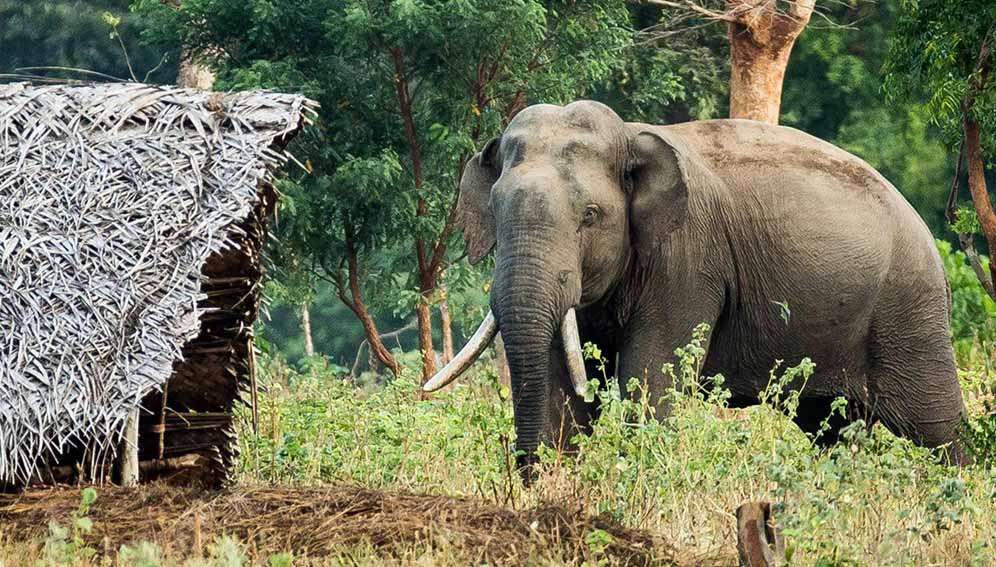
An elephant near a 'guard hut' in Chena farmland, in Sri Lanka. Nearly 5,000 elephants and 1,600 people in the country have been killed in the last 15 years by human-elephant conflict. Copyright: Rajiv Welikala


Speed read

Sri Lanka’s human-elephant conflict is costing lives 
(BOTH HUMAN AND ELEPHANT)

Government plans to adopt ‘elephant corridors’

But experts say approach is unscientific


By: Malaka Rodrigo
13/06/25
 SciDev.Net


[COLOMBO, SciDev.Net] Wildlife experts question the wisdom of adopting “elephant corridors” in Sri Lanka to end the country’s deadly human-elephant conflict, calling instead for a more science-based approach.

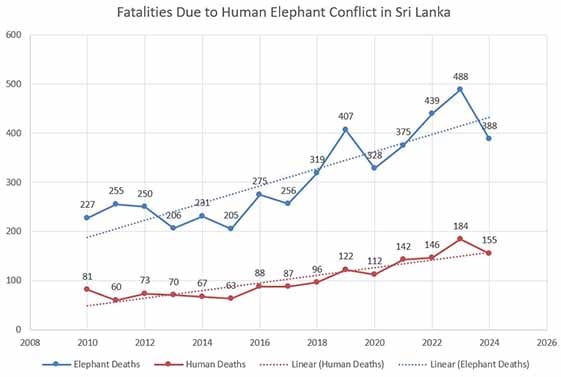
Nearly 5,000 elephants and 1,600 people have been killed in the last 15 years in clashes between elephants and humans in Sri Lanka, home to one of the largest remaining populations of Asian elephants, according to official figures seen by SciDev.Net.

Gunshots, electrocution and homemade explosives hidden in food, called hakka patas or jaw bombs, are the leading causes of elephant deaths.

Human deaths occur mostly when elephants raid crops and homes in search of food and water. But they are sometimes also caused by irresponsible behaviour such as approaching wild elephants, especially under the influence of alcohol, and harassing or chasing them.


Graph showing fatalities in human-elephant conflict in Sri Lanka

To try to end the conflict, the Sri Lankan government plans to introduce elephant corridors, based on long-distance migration models used in other countries.

According to Sri Lanka’s deputy minister of environment, Anton Jayakody, four major elephant corridors have been selected as first step. Sources close to the ministry say these will be designated as protected areas to mark World Environment Day on 5 June.

However, Prithiviraj Fernando, chief scientist and top official at Sri Lanka’s Centre for Conservation and Research, thinks the strategy ignores the basic behaviour of the country’s elephants.

‘Wishful thinking’


“Sri Lanka’s elephants are non-migratory, so corridors don’t work when elephants don’t move between parks,” Fernando tells SciDev.Net.

Fernando, who used GPS tracking to study elephant movements for decades, says that 70 per cent of Sri Lanka’s less than 6,000 remaining elephants live outside protected areas, and many stay outside these areas even when roaming for food.

“The idea of confining elephants to parks is based on wishful thinking, not science,” he says.

Last year, Sri Lanka’s Department of Wildlife Conservation recorded 157 human deaths and over 200 injuries linked to elephant encounters. Property and crop damage claims exceeded 3,700 cases, costing the government Rs385 million (US$1.3 million) in compensation.

“Most of the victims are poor farmers in rural Sri Lanka,” says E.G. Wickramasinghe, divisional secretary of the town of Galgamuwa in the North Western Province — one of the hardest-hit areas.

Government compensation stands at one million Sri Lankan rupees (around US$3,330) per human fatality. But for many families, this does little to replace the loss of a breadwinner, says Wickremasinghe.

Failed attempts


In the first four months of this year, 150 elephants and 50 humans had already died, leading authorities to resume traditional tactics such as elephant drives. In one such effort, rangers attempted to drive the elephants into Wilpattu National Park in northwestern Sri Lanka. But the operation resulted in elephants congregating in a village, intensifying conflict in that area.


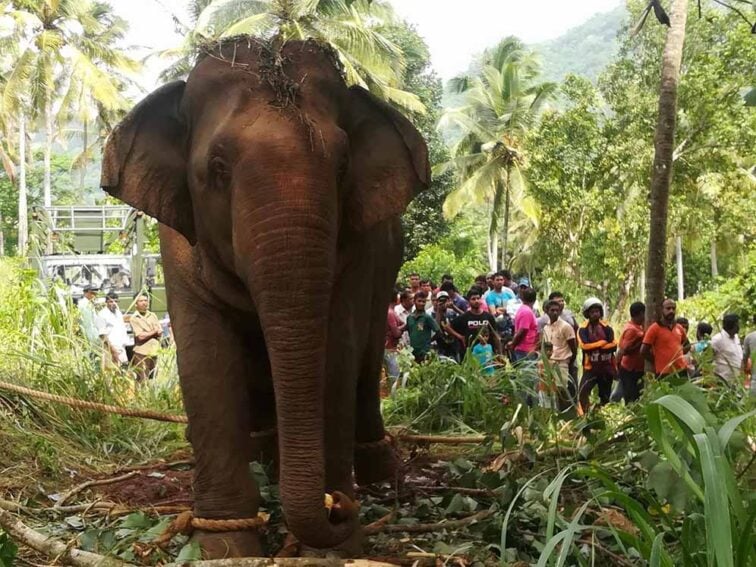
Attempts to relocate elephants have failed to end clashes between the animals and local populations. Photo courtesy of DWC.

A controversial elephant holding ground, established in 2013 to detain rogue elephants, ended in failure, with most animals unaccounted for after relocation.

“There is no record of a successful elephant drive in Sri Lanka as elephants return and they’re more aggressive because they associate humans with trauma,” says Sumith Pilapitiya, elephant biologist and former head of the Department of Wildlife Conservation.

In Sri Lanka, electric fences designed to deter elephants often fail due to poor maintenance, misplacement and limited community involvement. Elephants are also intelligent enough to learn techniques to breach the fences, making them less effective.

Despite mounting evidence, successive governments have ignored scientific advice looking for instant results, according to Fernando.

“The science is clear. Protected areas are at carrying capacity, [meaning the area can’t support any more of the species] so the elephant conflict mitigation must adapt,” he says.

Science-based plan


One attempt to shift towards evidence-based solutions was Sri Lanka’s National Action Plan for the Mitigation of human-elephant conflict, developed by a presidential committee chaired by Fernando in 2020. The plan proposes community-managed electric fences, mobile fencing around seasonal farmland, and managed elephant ranges to allow elephants to roam freely in specific landscapes.


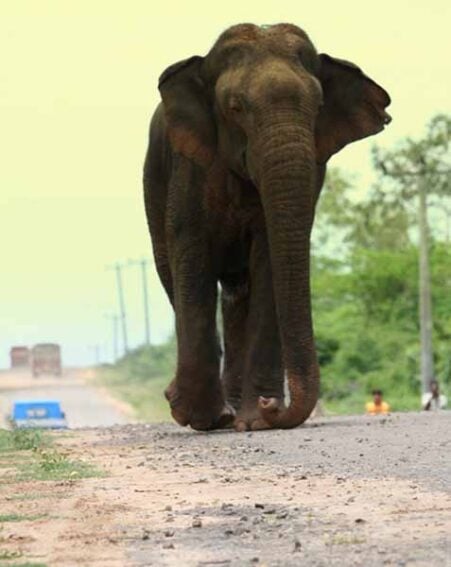
An elephant walking on a road in Sri Lanka. Photo courtesy of CCRSL.

These interventions proved successful when piloted last year and both elephant and human fatalities declined. However, since a change in government in late 2024, the action plan has been set aside.

Conservationists warn that abandoning science-based policy could reverse recent gains.

“The National Action Plan is a scientifically grounded, peer-reviewed framework and Sri Lanka’s best chance to reduce conflict gradually and sustainably,” Pilapitiya tells SciDev.Net.

“The human-elephant conflict doesn’t have instant solutions, so it is of utmost importance to carry out science-based solutions to get results.”

Emerging from its worst economic crisis, Sri Lanka has cut conservation budgets, impacting wildlife efforts. But the real obstacle to implementing evidence-based solutions is weak political will and poor understanding, says Pilapitiya.

Hemantha Withanage, executive director and senior environmental scientist at the Centre for Environmental Justice, says that unplanned development — particularly agricultural encroachment — is a major driver of the conflict.

Withanage also stresses the need to use science and technology to improve yields from existing farmlands, to lessen the need for new areas to be cleared. He urges authorities to declare any remaining forest patches that are important elephant habitats as protected areas.

“Unless land use is regulated and wilderness preserved, the problem will only escalate,” he adds.

This piece was produced by SciDev.Net’s Asia & Pacific desk.
India-Pakistan water pact ‘outdated’ in climate era


A boat on the Indus River in Makhad, Punjab, Pakistan. Water experts have suggested that the India-Pakistan water treaty (which governs the sharing of the Indus River) should be strengthened to factor in challenges such as climate change or be scrapped entirely.
Copyright: Iqbal Khattak (Pexels)


Speed read

India unilaterally suspended the 1960 Indus Water Treaty with Pakistan

It cited cross-border terrorism but had already been demanding changes

Treaty needs updating to cover climate change, population growth, say experts


By: Ranjit Devraj
13/06/25
 SciDev.Net


[NEW DELHI, SciDev.Net] A disputed India-Pakistan water treaty should be strengthened to factor in challenges such as climate change or scrapped entirely, say water experts amid heightened tensions between the two countries.

The Indus Water Treaty has governed the sharing of the Indus River for 65 years, with Pakistan and northern India heavily dependent on its waters.

But the bilateral agreement was suspended by India following the killing in April of 26 tourists in Indian-administered Kashmir by militants who allegedly crossed over from Pakistan.

India’s foreign minister S. Jaishankar said the treaty would be put on hold until Pakistan “credibly and irrevocably” stopped supporting cross-border terrorism, leaving experts to speculate on the future of the Indus waters.

Shakil Ahmad Romshoo, vice chancellor of the Islamic University of Science and Technology, Srinagar and expert in hydrology and glaciology, says the suspension of the treaty might not significantly alter Indus water flows in the short-term.

“However, over the long term, spanning a decade or more, the upstream country (India) could develop the capacity to regulate flows more assertively, potentially affecting water availability downstream (in Pakistan) if the present impasse continues,” Romshoo told SciDev.Net.

A fresh treaty involving all basin countries, including China and Afghanistan, “seems unlikely” to Romshoo, given the political tensions.

“A more practical approach would be to strengthen the existing Treaty by addressing common concerns like climate change, groundwater availability, pollution and water variability within its current framework,” he said.


Map showing Indus River Basin without boundaries of disputed region. (By Kmhkmh and boundaries of disputed regions removed by Fowler&fowler).

Dan Haines, associate professor at the department of risk and disaster reduction of University College, London, said renegotiation of the treaty is the most likely path to resolving the situation. The other possible options are conditional reinstatement of the existing treaty or scrapping it permanently, he said.

Nine in every ten Pakistanis live within the Indus Basin and major cities like Karachi and Lahore rely on the Indus River and its five tributaries for drinking water. About 80 per cent of the country’s irrigated agriculture depends on its waters.

For more than a decade, India has been pressing for changes to the Treaty to incorporate new engineering techniques, climate change and faster melting of the Himalayan glaciers and snow. Pakistan has brushed off India’s requests, resulting in a breakdown of data exchanges and communication mandated by the treaty.

“It is a horrible treaty,” said Daanish Mustafa, professor in critical geography at King’s College, London.

“It is outdated, and a fresh agreement taking in the views of all stakeholders, including the Kashmiris, is the best way forward.

“It has already enabled the ecocide of the Indus Rivers’ fragile ecology and deprived millions of fisherfolk of their livelihoods.”

The treaty has been overshadowed by the dispute between the neighbours over Kashmir, through which most of the waters flow.

The agreement was signed in 1960 after lengthy negotiations mediated by the World Bank, with the five tributaries divided between India and Pakistan.

The eastern Sutlej, Beas and Ravi rivers were allocated for India’s exclusive use while the waters of the western rivers, Indus, Jhelum and Chenab, were given to Pakistan.

India had limited rights to non-consumptive uses such as navigation, power generation and agriculture, leading to long-running wrangles.

Antagonism and separation “are written into the DNA of the treaty”, says Mustafa.

“Unlike the 1947 partitioning of the land between the two countries, water does not lend itself to partition,” he added, referring to the division of British-ruled Indi, which preceded the treaty.

“The results are there to see in terms of catastrophic floods, environmental degradation in the delta and high rates of malnourishment in Pakistan’s irrigated districts.”

If renegotiated, the treaty could potentially benefit from the 2014 UN Watercourses Convention, which codifies international law on transboundary water resources.

“If India and Pakistan agree to go back to first principles and entirely reimagine how water-sharing works across borders in the Indus Basin, then the UN Water Convention could be a starting point,” said Haines.

However, he added: “I do not think that is very likely because both countries are heavily locked into the existing model of water use in the basin.”

Mustafa said that giving India exclusive rights to the eastern rivers was inconsistent with international law, which may have given some rights to Pakistan as the lower riparian.

“India cannot easily divert the waters of the eastern rivers as this could result in flooding (in India), especially during the monsoons,” he said.

Pakistan has denied involvement in the 22 April killings and described the suspension of the Treaty as an “act of war”.

India retaliated with bombing raids on suspected militant training camps in Pakistan triggering four days of fierce clashes involving frontline fighters, missiles and drones that ended with a ceasefire on 10 May.

This piece was produced by SciDev.Net’s Asia & Pacific desk.