Tuesday, June 17, 2025

U$ AUSTERITY

UNHCR Forced To Make Deep Cuts, Despite Rising Needs Worldwide
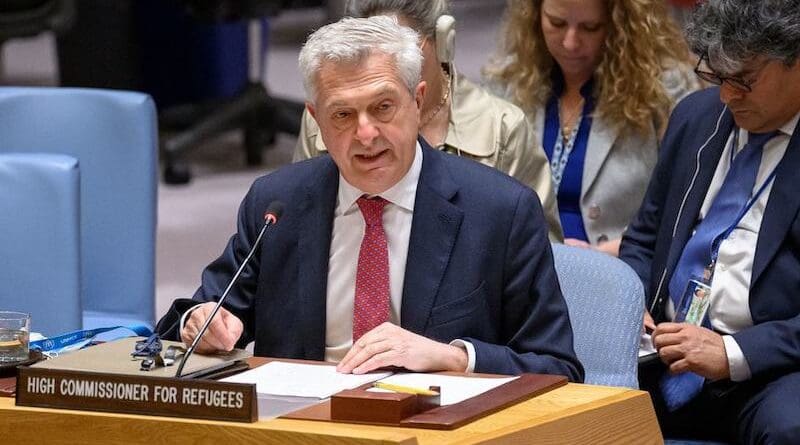
Filippo Grandi, UN High Commissioner for Refugees (UNHCR), briefs members of the UN Security Council. Photo Credit: UN Photo/Loey Felipe


By 

The UN refugee agency (UNHCR) announced on Monday that it is cutting global staffing costs by around 30 per cent, following a comprehensive review of its activities, spending, staffing and structure, prompted by major funding shortfalls.


This will entail cutting just under half of all senior positions at the agency’s Geneva headquarters and regional bureaux. 

Around 3,500 permanent staff posts have been discontinued, hundreds of temporary staff positions have been terminated, and some offices have been downsized or closed worldwide.

According to the report, decisions on where to cut costs were guided by the priority to maintain operations in regions with the most urgent refugee needs.

Financial realities

The announcement follows a warning in March from UNHCR that severe funding cuts were putting millions of refugee lives at risk, with immediate and devastating consequences.

The agency anticipates it will end the year with available funding at roughly the same level as a decade ago – despite the number of refugees forced to flee having nearly doubled in that time to over 122 million.


“In light of difficult financial realities, UNHCR is compelled to reduce the overall scale of its operations,” said Filippo Grandi, the United Nations High Commissioner for Refugees. “We will focus our efforts on activities that have the greatest impact for refugees, supported by streamlined headquarters and regional bureau structures.” 

‘Unshakeable’ commitment to refugees

Despite the prioritisation of refugee needs, key programmes – including financial assistance to vulnerable families, health, education, and water and sanitation – have been significantly impacted. 

In response, UNHCR is coordinating with UN partners, aid groups and host countries to mitigate the impact on those who rely on its support by streamlining operations, exploring new models and utilising technology to enhance efficiency.

“Even as we face painful cuts and lose so many dedicated colleagues, our commitment to refugees remains unshakeable,” said Mr. Grandi. 

“Although resources are scarcer and our capacity to deliver is reduced, we will continue to work hard to respond to emergencies, protect the rights of refugees and pursue solutions.”  

'Brutal' funding cuts push UN to slash humanitarian operations

Millions of vulnerable people face heightened risk after the UN announced it would scale back aid programmes amid unprecedented global funding cuts. OCHA chief Tom Fletcher called for more solidarity to prevent needless suffering.


Issued on: 16/06/2025 -


“Announcing the deepest funding cuts in the UN’s history on 16 June 2025, OCHA chief Tom Fletcher said the organisation would be forced to scale back humanitarian operations worldwide, potentially leaving tens of millions in urgent need without help.” © AP Salvatore Di Nolfi

The United Nations has announced it is drastically scaling back its global humanitarian operations due to what it describes as the most severe funding shortfall in its history – a move that could leave tens of millions without crucial support.

The UN Office for the Coordination of Humanitarian Affairs (OCHA) revealed on Monday that it now seeks $29 billion (€25 billion) in funding for 2025, a significant drop from the $44 billion originally requested in December.

The pared-down appeal is described as “hyper-prioritised”, focusing only on the most life-threatening crises.

The funding squeeze comes at a time when global needs are soaring.

The return of Donald Trump to the White House in January has seen the United States – historically the world’s largest donor – slash its foreign aid budget dramatically, sending shockwaves through the humanitarian sector.


'Brutal cuts'


Other major donor countries have followed suit, tightening their purses amid economic uncertainty.

“Brutal funding cuts leave us with brutal choices,” said OCHA chief Tom Fletcher in a statement.

“We’re asking for just one percent of what the world spent last year on war. But more than money, this is an appeal for humanity, for global responsibility and solidarity to prevent needless suffering.”

While visiting a hospital in Afghanistan’s Kandahar province earlier this year, Fletcher warned that cutting support to those most in need is not something to celebrate.

“The impact of aid cuts is that millions die,” he said plainly.

UN brands record 110 million displaced people an 'indictment' of the state of the world
'Difficult decisions'

So far this year, the UN has received only $5.6 billion of the $44 billion initially requested – just 13 percent of what it needs to help the world’s most vulnerable communities.

Originally, the plan was to reach 190 million people across more than 70 countries.

Even then, the UN acknowledged it would still leave 115 million people beyond its reach.

With the funding gap widening, aid officials are now forced to make difficult decisions.

“We have been forced into a triage of human survival,” Fletcher admitted. “Too many people will not get the support they desperately need, but we will save as many lives as we can with the resources at hand.”

In practical terms, this means aid will now target the most severe emergencies first, prioritising those in “extreme or catastrophic conditions”.

Fletcher emphasised that every dollar must go where it can save the most lives, as swiftly as possible.

Macron calls malnutrition a 'fight for peace' as donors pledge €25bn
'Catastrophic hunger'

Monday's announcement came alongside a stark joint report by the UN’s Food and Agriculture Organization and World Food Programme, which highlighted worsening hunger in 13 global hotspots.

Five countries – Sudan, the Palestinian territories, South Sudan, Haiti and Mali – are on the brink of famine, with millions at risk of starvation.

“This report is a red alert,” said WFP chief Cindy McCain. “Without urgent funding and safe access, we simply cannot save lives. The window to prevent catastrophic hunger is closing fast.”

The WFP itself is grappling with a 40 percent cut to its budget for 2025, threatening critical food assistance for 58 million people worldwide.

Despite the scale of the challenge, Fletcher insists the world must not lose hope.

“Human solidarity can still turn this tide,” he said. “With swift, united action, we can prevent the worst and protect the most vulnerable among us.”

(With newswires)


WAR! ON THE MEDIA


BREAKING: Israel strikes Iran's state broadcaster during live transmission

BREAKING: Israel strikes Iran's state broadcaster during live transmission
VIDEO: Iran state television IRIB news channel 5 hit by Israeli missile. / bne IntelliNewsFacebook
By bnm Tehran bureau June 16, 2025

Israeli forces targeted Iran's state broadcasting headquarters on June 16, with explosions occurring during a live television transmission that forced presenters to evacuate.

The attack struck the Islamic Republic of Iran Broadcasting building, destroying the news network's studio whilst programmes were being aired, according to Iranian reports.

News presenter Sahar Emami continued broadcasting immediately after the strike, stating that national media transmission would continue with full strength despite the attack.

"What we witnessed moments ago in the news building is a clear and obvious example of the fight against freedom of expression," Emami said during the broadcast.

IRIB's public relations department advised viewers to follow programmes through Telewebion if they experienced signal disruptions from provincial or national networks.

Several employees were reportedly killed in the attack on the broadcasting facility, though casualty numbers could not be independently verified.


Israeli Defence Minister Israel Katz had previously warned that Iran's state television and radio, which he described as the "propaganda and incitement megaphone," were targets for elimination.

The strike represents a direct attack on Iran's primary state media infrastructure and its ability to communicate with the domestic population.

Iran's state broadcaster serves as the government's main communication channel with citizens and the international community.

The attack occurred as tensions between the two countries reached new heights following reciprocal military strikes over recent days.

Broadcasting continued from alternative facilities as Iranian authorities worked to restore full transmission capabilities across the country.

The targeting of media infrastructure marks an escalation in the scope of military operations between Iran and Israel.

Iranian officials described the attack as an assault on press freedom and civilian media facilities.

Israel strikes Iran's 'propaganda' state TV station taking broadcast off the air


Copyright Copyright 2025 The Associated Press. All rights reserved


By Sertac Aktan with AP
Published on 16/06/2025 - 

Israel's Defence Minister confirmed the attack, which followed an Israeli evacuation warning. An anchor reported 'bodies of reporters' at the site.

An Iranian state television reporter had to stop a live broadcast on Monday when an explosion occurred an hour after Israel issued a warning to evacuate the area of Tehran where the TV studios are located.

Smoke was seen rising from at least three sites in the Iranian capital.

The reporter for the Islamic Republic of Iran News Network said the studio was filling with dust after "the sound of aggression against the homeland, the sound of aggression against truth and righteousness."

Anchor Sahar Emami rushed off-camera as the screen behind her cut out and people were heard saying "Allahu akbar," Arabic for God is great.

The broadcast quickly switched to pre-recorded programmes. Later, state TV aired live video of the building on fire.

Soon, Emami came back live from another studio and was seen speaking with another anchor. She said that "bodies of reporters" were at the site of the initial broadcast, and images showed smoke and flames in the sky.

Israel's defence minister Israel Katz took credit for the attack as he called it a strike on the "propaganda broadcast authority."

"The Iranian regime's propaganda and incitement broadcasting authority was attacked by the IDF after a widespread evacuation of the area’s residents. We will strike the Iranian dictator everywhere," he said in a statement.

An hour earlier, the Israeli military had issued an evacuation warning affecting up to 330,000 people in a part of central Tehran that includes the country's state TV and police headquarters, as well as three major hospitals.

In response to the attack, Iran also issued evacuation warnings for Israeli news channels, Iranian state TV reported.

The attack came on the fourth day of the escalating conflict, as the IDF claimed it had achieved air superiority above the Iranian capital and could fly over the city without facing major threats.


STATIST CENSORSHIP

Togo suspends French broadcasters RFI, France 24 for three months


Togo late Monday announced it was suspending French public broadcasters RFI and France 24 for three months, for an alleged lack of impartiality in their reporting.


Issued on: 17/06/2025 -

Members of the Togolese Gendarmerie are seen operating in Lome on 6 June, 2025. Gendarmes and police officers were deployed in force in several locations in the Togolese capital, Lomé, on Friday, after dispersing anti-government protesters earlier in the day.

 AFP - -

"This measure follows repeated failings, already reported and formally recalled, in matters of impartiality, rigour, and fact-checking," according to a statement from Togo's High Authority for Audiovisual Communication (HAAC).

"Several recent broadcasts have relayed inaccurate, biased, and even contrary to established facts, undermining the stability of republican institutions and the country’s image," it said in the statement.

"Freedom of the press cannot be synonymous with disinformation or interference."

The agency didn’t provide any details on what reporting by the French networks led to the decision.

'Serious attack' on press freedom


In a statement, the management of RFI and France 24 stated that they were "surprised to learn of the suspension of their broadcasts without notice".

RFI and France 24 "reaffirm their unwavering commitment to the ethical principles of journalism, as well as their support for their teams who deliver rigorous, independent, verified, impartial, and balanced information every day, in compliance with the provisions of the agreement signed between the HAAC and France Médias Monde," the statement concluded.

Camille Montagu, from the independent organisation Reporters Without Borders (RSF) Sub-Saharan Africa Desk told RFI that tje decision by the Togo authorities "constitutes a serious attack on press freedom and the right to information".

"Suspending these two international media outlets, which have only professionally covered the country's recent political developments, will not erase the turmoil facing Togo," she says.

The move to censor foreign media outlets comes as President Faure Gnassingbé faces increasing pressure from critics over recent changes in the constitution that could effectively keep him in power indefinitely. Critics have called the changes a constitutional coup.

Fabrice Petchez, chair of the Togolese Media Observatory told The Associated Press that while he understood the ruling, they did not support the decision. "We hope steps will be taken to quickly restore these media operations in the country.

"But since early June, tensions have been rising, particularly on social media," he continued. "I do hope, however, that a dialogue can be opened between the media concerned and the authorities."

Mali suspends French news channel LCI for two months

The broadcasting ban comes against a tense political backdrop, with anti-government protests scheduled for next week following a crackdown on protests earlier this month.

Dozens of people were arrested in the capital, Lomé, after police dispersed protesters with tear gas on the night of 5-6 June in several districts, including near the presidential palace.

The government swiftly said it had released more than 50 people but several remain in police custody.

Civil disobedience campaign

The state prosecutor slammed the demonstrations as "clearly part of a revolt against the institutions of the republic".

Togolese opposition parties and civil society groups on Thursday demanded Gnassingbé step down.

Togo opposition cries foul as election vote count favours government

He "must return power to the Togolese people to whom national sovereignty belongs", the National Alliance for Change (ANC), Democratic Forces for the Republic (FDR) and civil society groups said in a statement.

The groups urged citizens to launch acts of civil disobedience from 23 June to thwart the "illegitimate" regime.

Protests have been banned in Togo since 2022, following a deadly attack at Lomé's main market, though public meetings are still allowed.

(with newswires)
WAR IS RAPE

Survivors of Bosnia 'rape camps' come forward 30 years on

Sarajevo (AFP) – It took years for Zehra Murguz to be able to testify about what happened to her and other Muslim women in the "rape camps" run by Serb forces during the war in Bosnia.


Issued on: 17/06/2025 

Bosnian survivor Zehra Murguz brought her rapist to justice © ELVIS BARUKCIC / AFP

One of the awful memories that drove her to give evidence was of seeing a girl of 12 "with a doll in her arms" dragged into one of them.

Murguz felt she was also speaking "in the name of all the others, of that girl of 12 who will never talk... who was never found".

The horror began for her in the summer of 1992 when Serb forces took the mountain town of Foca and Murguz was taken to the Partizan gym, one of several notorious rape camps the Serbs ran.

For months dozens of Muslim women and girls were gang raped and forced into sexual slavery there. Others were sold or killed.

At least 20,000 people suffered sexual violence across Bosnia as Yugoslavia collapsed into the worst war Europe had then seen since 1945.

Most victims were Bosnian Muslims, but Serbs and Croat women also suffered.

In 2001 the International Criminal Tribunal for the former Yugoslavia became the first court in Europe to recognise rape as a crime against humanity in an historic verdict against three Bosnian Serb army officers from Foca.

While a handful of survivors driven by a thirst for justice continue to collect thousands of testimonies, many remain locked in silence more than three decades on.

Triple murder and rape

Murguz, 61, began her judicial journey when she returned to Bosnia in 2011 -- after years living in exile in Montenegro, Serbia and Croatia -- to bring her neighbour to book for raping her during the war.

Stitching her life back together: Zehra Murguz © ELVIS BARUKCIC / AFP

"If I don't speak, it will be as if the crime never happened," she told herself. He was still living in Foca and "wasn't hiding", she said.

He was arrested and tried in the local court in 2012.

Going there was "like going back to 1992", to the "agony" of that time, Murguz recalled. "I came face to face with him, we looked each other in the eye, and justice won out," she said.

The man was jailed for 14 years, a "light sentence", said Murguz "for the murder of three people and a rape".

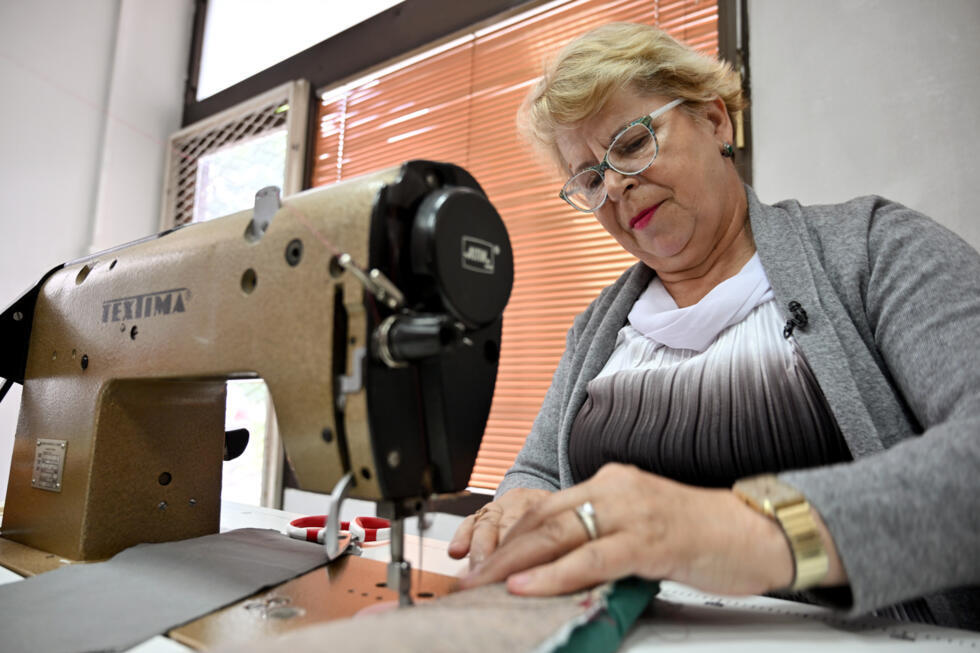
But the conviction at last "stamped him with his true identity -- war criminal", she told AFP from a sewing workshop in Sarajevo run by the Victims of the War Foca 1992-1995 group.

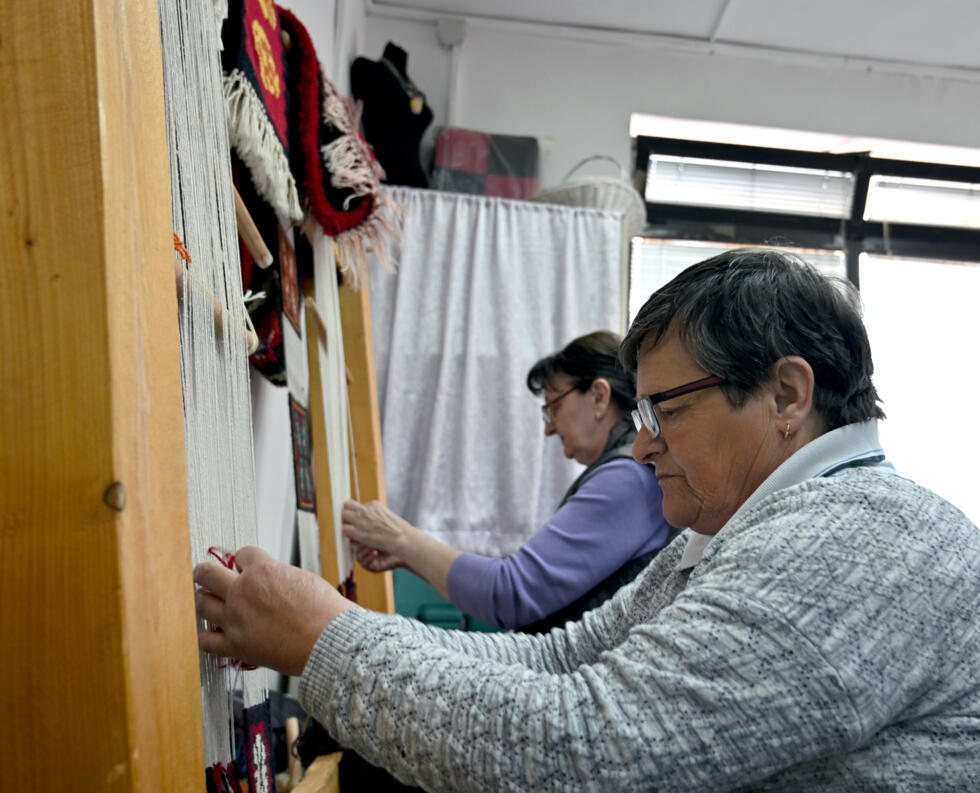
Around her other survivors wove fabric together, a form of collective therapy.

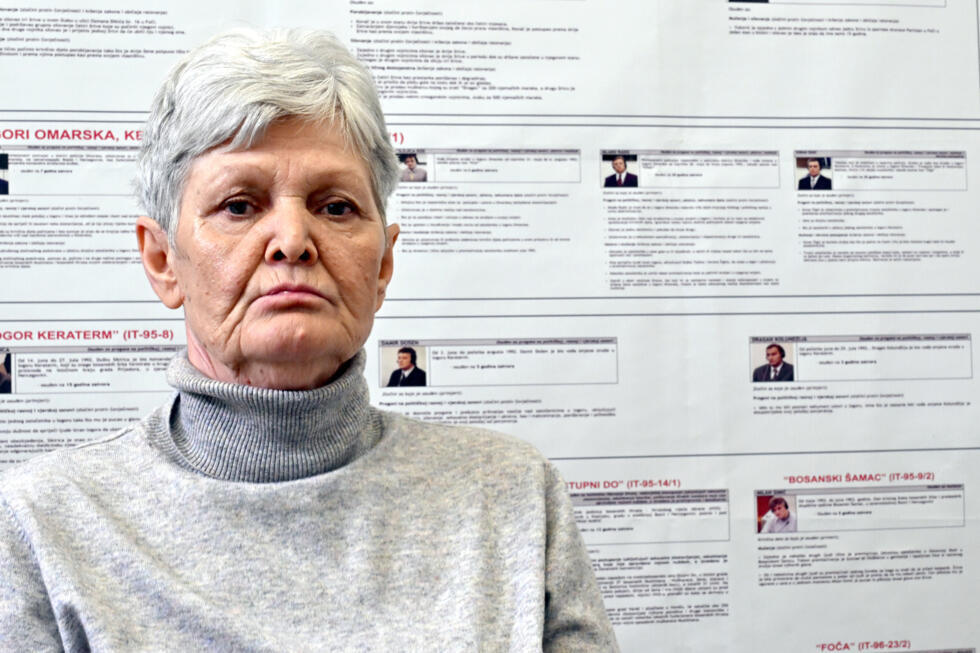
"To this day, only 18 verdicts have been delivered for crimes of sexual violence committed in Foca," said the group's president, Midheta Kaloper, 52.

"Three trials are ongoing. A lot of time has passed, and witnesses are exhausted."

She herself was a victim of "an unspeakable, inexplicable crime" in Gorazde, the "worst torture a girl can endure", she said.

She still hopes the suspect will be tried in Bosnia, not in Serbia where he now lives.

Bosnian rape survivors weave together in a therapy centre in Sarajevo 
© ELVIS BARUKCIC / AFP

But Kaloper warned that things have "stagnated" over the last five years, with 258 cases involving 2,046 suspects still needing to be judged, according to figures from the High Council of Magistrates.

Bosnian judges had tried 773 war crime cases by the end of last year -- over a quarter involving sexual violence -- according to the OSCE monitoring mission.

It said there had been "significant delays" in hundreds of others where the suspects have yet to be identified.

"What kills us most is the excessive length of these proceedings," said Kaloper.
'Timebomb'

"We have been fighting for 30 years, and our only real success has been obtaining the law on civilian war victims," under which survivors can be given a pension worth about $400 a month, she said.

However, the law only covers the Muslim-Croat half of Bosnia and those living there, and not those living in the self-governing Serb Republika Srpska (RS) and the small mixed Brcko District in the northeast, which have different judicial systems.

Glorifying guilty men: a monument to Bosnian Serb fighters in Foca © ELVIS BARUKCIC / AFP

Around 1,000 survivors have obtained war victim status in the Muslim-Croat federation and some 100 more in the RS and Brcko, said Ajna Mahmic, of the Swiss legal NGO Trial International.

Rape, she said, still carries a particular stigma. "Unfortunately, as a society we still put the blame and shame on the victims rather than the perpetrators.

"Many of the survivors do not feel secure," Mahmic told AFP. "Some of the perpetrators are still living freely and some are working in public institutions," some in positions of authority.

Not to mention the continued glorification "of war criminals (in the Balkans) and the minimisation of the suffering we have endured", Kaloper added.

Nearly half of ongoing cases are held up because the accused are abroad, an OSCE report said in January.

Another "worrying trend is the widespread failure of courts to grant victims compensation" in criminal cases, the OSCE added.

While witnesses could testify anonymously in The Hague, there is nothing to protect their identity in civil compensation proceedings in Bosnia.

Bakira Hasecic: 'Even today it is very difficult for victims to speak' © ELVIS BARUKCIC / AFP

"Even today it is very difficult for victims to speak," said Bakira Hasecic, 71, head of the Women Victims of War group, and they keep the "weight of this tragedy in their hearts".

Many follow what their former torturers are up to on social networks.

It is an emotional "timebomb that can explode at any moment and drives some to call us", she said.

Though over 30 years have passed, 15 more victims stepped forward needing to talk in the last few months alone, Hasecic said.

© 2025 AFP


How Do Japan’s Electronics Giants Develop The Elderly Care Industry? – Analysis

Nursing Home People Old Love Care Seniors Health


By 

By Xia Ri


As a major global challenge, population aging is an imminent reality that many countries need to confront. Currently, Japan has the highest aging rate in the world. As of 2024, 29.3% of its population is aged 65 and over, 16.8% are 75 and over, and 10.4% are 80 and over. Due to the large scale and promising prospects of the elderly care industry, many major Japanese companies are actively entering the field. Among them, electronics giants Sony and Panasonic have leveraged their respective business areas and technological strengths to develop uniquely distinctive models for the elderly care industry.

In 2014, Sony established Sony Lifecare as an independently operated entity under Sony Financial Group, focusing on the elderly care sector. Subsequently, Sony accelerated its expansion through acquisitions. In 2017, it acquired a professional elderly care company that operated 28 nursing homes, quickly gaining operational experience and expanding its facility network. This marked the shift of the company from “trial-and-error at individual sites” to “chain-based operations”. By 2020, Sony had opened several high-end nursing homes in Tokyo and surrounding areas, with individual facilities reaching up to 66 rooms, such as the project in Saitama Prefecture.

Compared to Sony, Panasonic entered the elderly care industry much earlier and has been deeply involved for many years. In 1998, Panasonic established a subsidiary called Panasonic Age Free Services. In 2016, it was renamed Panasonic Age-Free Co., Ltd., marking the beginning of efforts to build a large-scale service network. By 2020, Panasonic had established 66 senior housing and nursing home facilities, 184 care service centers, 124 caregiving shops, and completed 29,000 home modifications for aging in place, creating a nationwide elderly care service network across Japan.

What then, are the common characteristics of these two electronics giants in developing the elderly care industry? According to analysis and summaries by researchers at ANBOUND, they can be mainly categorized into three key aspects.

First, both companies focus on high-end services. Unlike public elderly care, which is more inclusive and universal, these two electronics giants, despite differing in their specific approaches, primarily target the high-end elderly care market, offering highly standardized services. For example, Panasonic Age-Free operates a high-end nursing home in the suburbs of Tokyo, featuring 36 rooms, each measuring between 18 and 25 square meters. The facility accommodates both single individuals and couples. Some rooms are equipped with kitchens and private bathrooms, while the building also includes shared bathing facilities. Personalized nursing care and meal services are also provided.


However, the cost of living in these facilities is quite high. For example, at Panasonic’s high-end nursing home, even the smallest single room requires an initial payment of several hundred thousand yen, with monthly fees ranging from approximately JPY 240,000 to JPY 280,000. Additional services such as cleaning and laundry incur extra charges. Sony follows a similar model. At its nursing home in Saitama Prefecture, the monthly fee for a single room is about JPY 400,000, while a double room costs up to JPY 760,000. These facilities are targeted at Japan’s high-income retired population and are equipped with caregivers, physical therapists, personalized meal services, and dedicated activity spaces such as mahjong rooms and calligraphy areas.

Second, both companies leverage their own strengths to carry out elderly-friendly modifications. The two electronics giants actively incorporate their products and technologies into age-care settings, adapting them for aging populations and thereby unlocking new markets and enhancing the value of their offerings. For example, Panasonic takes into account the specific needs of seniors in all aspects, from overall spatial design to the smallest product details. Cabinet countertops are extended beyond the standard depth to make them more accessible for wheelchair users. Handrails are made of wood for a more comfortable touch, and their installation angles are carefully designed for each type of space. Walls and floors are made of non-slip, eco-friendly materials that can be quickly installed for localized renovations.

In addition, Panasonic has developed a range of elderly-friendly products, including smart toilets, foldable shower chairs, and electric adjustable beds. One example is the smart electric bed model PN-CG51M, which features back-lifting pressure-relief technology and a waterproof, non-slip surface. This design helps reduce pressure on internal organs and enhances comfort for bedridden users. Another product, the straight cane PN-GY04A(B/K) from Panasonic’s health and wellness line, features a non-slip base and soft rubber materials to improve walking safety. Sony, on the other hand, is working to adapt all of its products to be accessible and user-friendly for both the elderly and people with disabilities.

In 2023, Sony announced that by fiscal year 2025, it aims to make, in principle, all of its products and services accessible to these communities, improving overall ease of use. Additionally, Sony has incorporated specific considerations into its product quality standards, such as including text labels on the four color-coded buttons of remote controls to assist users who have difficulty distinguishing colors. By 2025, nearly all major product categories, including TVs, audio systems, cameras, and smartphones, are expected to comply with such accessibility standards. The number of supported product types is projected to reach several hundred, excluding small accessories.

Both Sony and Panasonic are leveraging their strengths in digital technology to provide smart elderly care services, enhancing safety and quality of life for seniors. Sony, for instance, has introduced intelligent health monitoring systems in its nursing homes, using smart mattresses or ceiling sensors to track heart rate, breathing, and activity in real time, generating health reports and issuing automatic alerts when abnormalities are detected. It also offers remote medical services, enabling video consultations and automatic measurement of blood pressure and blood glucose, with data sent directly to medical centers. Additionally, IoT-based safety measures, such as sensors embedded in shoes or bags to track dementia patients’ locations, and smart clothing like the Hamon line, which monitors vital signs and sends emergency alerts, further ensure comprehensive, tech-enabled care.

By comparison, Panasonic takes a slightly different approach. In its master bedrooms, Panasonic installs a deep-sleep and refreshed-wake system that uses smart monitoring to create an optimal sleep environment. Sensors analyze heart rate, breathing patterns, and sleep stages to provide personalized adjustments for better rest. In terms of safety, a 3D body posture sensor predicts fall risks, a smart electricity system ensures safe power usage, and location-tracking name tags monitor seniors’ movements. Finally, to enhance daily convenience, Panasonic offers a smart mirror with intercom and entertainment functions, as well as smart terminals that integrate medical, social, and other services to improve overall quality of life.

All in all, Japan’s leading electronics companies have responded to the country’s severe population aging by proactively entering the elderly care industry and developing their own distinctive models. This is reflected in three main aspects: first, targeting the high-end market to achieve differentiated positioning; second, leveraging their core strengths to carry out age-friendly adaptations; and third, harnessing digital technologies to deliver smart, tech-enabled care services.

Currently, China faces the same aging population challenges as Japan, arguably even more severe. On one hand, China’s aging population is characterized by its large scale, fast pace, and the reality of aging occurring before reaching economic prosperity. On the other hand, the country’s manufacturing sector is grappling with intense internal competition and external trade barriers amid an unfavorable macroeconomic environment. In this context, Chinese manufacturing companies should consider the realities of domestic aging and actively learn from the models developed by Japan’s electronics giants in the elderly care industry. By adapting and innovating based on these approaches, they can create elderly care models with distinct Chinese characteristics, unlock new market potential for their products, and drive new revenue growth for their businesses.

Final analysis conclusion:

As the country with the highest aging rate in the world, Japan’s leading electronics companies have proactively entered the elderly care industry, developing their own distinctive models. These models are mainly reflected in three areas: first, focusing on high-end services to achieve differentiated market positioning; second, leveraging company-specific strengths to carry out age-friendly adaptations; and third, accelerating digital empowerment to provide smart care solutions. Chinese manufacturing enterprises can adapt these approaches, taking into account the country’s specific demographic realities, and provide better services for the elderly population.

  • Xia Ri is an Industry Researcher at ANBOUND, an independent think tank.


Anbound
Anbound Consulting (Anbound) is an independent Think Tank with the headquarter based in Beijing. Established in 1993, Anbound specializes in public policy research, and enjoys a professional reputation in the areas of strategic forecasting, policy solutions and risk analysis. Anbound's research findings are widely recognized and create a deep interest within public media, academics and experts who are also providing consulting service to the State Council of China.


Pensioner poverty in Europe: Which countries have the highest rates?

Pensioners holding a banner saying, ''Do not be stealing our pension'' in Spain in 2013.
Copyright AP Photo

By Servet Yanatma
Published on 

Pensioners tend to face greater financial difficulty in Eastern Europe, while poverty rates are generally lower in Nordic and Western European countries. Switzerland and the UK are outliers here, showing comparatively high levels of pensioner poverty.

In most European countries, the average income of people over 65 is lower than that of the total population, according to the OECD. In several cases, elderly incomes fall below 80% of the national average, contributing to significantly high poverty rates among pensioners.

So, how do these levels of financial precarity vary across Europe? In which countries do pensioners face the highest levels of poverty? And how does elderly income compare to the national average?

Income poverty rates measure the proportion of people at the lower end of the income distribution scale. Specifically, the poverty rate refers to the share of the population whose income falls below the poverty line. According to the OECD, this is defined as 50% of the median household income of the total population.

For example, in 2022, the median disposable household income in France — adjusted for household size — was €26,410. This means the poverty line stood at €13,205.

In 2022, the pensioner poverty rate across 30 European countries ranged from 3.1% in Iceland to 37.4% in Estonia, measuring the share of people over 65 with incomes below half of the median household disposable income.

Eastern vs Northern Europe

Pensioners tend to be more financially vulnerable in Eastern Europe, particularly in the Baltic states and several post-communist countries.

Following Estonia, the highest pensioner poverty rates were recorded in Latvia (33%), Croatia (28.5%), and Lithuania (24.6%).

Pensioner poverty rates tend to be lower in Western and Northern Europe. Iceland (3.1%), Norway (4.1%), Denmark (4.3%) and Finland (5.5%) have some of the lowest rates. These countries benefit from strong welfare systems and universal pension schemes.

However, Switzerland (19.8%) and the UK (14.9%) stand out with relatively high pensioner poverty rates.

Among Europe’s five largest economies, the UK has the highest rate, followed closely by Germany (14.1%) and Spain (13.1%). 

Italy performs slightly better at 12%, while France stands out with the lowest rate by far — at just 6%.

In general, the female pensioner poverty rates are much higher than those for men, partly due to higher life expectancies.

Key factors behind pensioner poverty

“Low pension payments are the main contributing factor to pensioner poverty,” Andrew Reilly, pension analyst at the OECD, told Euronews Business. 

“Even with relatively long working careers, pensions are low in Estonia, Japan, Korea, Latvia and Lithuania.”

Reilly noted that these countries have some of the highest rates of pensioner poverty.

“In the Baltic states, the high poverty rates are the result of low earnings-related pensions and relatively low safety-net benefits,” he added.

The strength of first-tier pensions — also known as state pensions — can lower poverty rates amongst older citizens by providing a guaranteed minimum income.

“Those countries that have large safety-net benefits for pensioners, whether targeted only to the poorest or universally paid to all, tend to have lower levels of poverty amongst the older age groups compared to the overall population figures e.g. Denmark, Iceland, and Norway,”  Reilly said. He added that Latvia and Lithuania have low levels of safety-net benefits.

Elderly income compared to the national average

The average income for people over 65, when considered as a percentage of the total population's average income, varies significantly across Europe.

In 2022, it ranged from 66.3% in Estonia to 107% in Luxembourg. This means that in Estonia, older adults received just two-thirds of the national average income.

Among 29 countries, the income ratio for people over 65 falls below 80% in several cases. These include Lithuania (66.5%), Latvia (71.4%), Croatia (73.4%), Belgium (76.2%), Czechia (76.7%), Bulgaria (77.2%), and Switzerland (79.4%).

At the top of the list, Luxembourg leads with 107%, followed by Italy (98.8%), Portugal (97.1%), and Spain (96.7%).

Among Europe’s largest economies, Italy and Spain have the highest elderly income ratios, closely followed by France at 94.3%. The UK stands lower at 82.1%. Despite Germany’s high pensioner poverty rate, the elderly income ratio there still reaches 90%.

For example, in 2022, the mean disposable household income in France — adjusted for household size — was €30,500. People over 65 received an average of €28,750.

This ratio can fluctuate significantly from year to year in some countries. For example, in Turkey, it was 97.3% in 2019. It then rose to 103% in 2020, and it dropped to 84.5% by 2022.

Purchasing power

On the other hand, the OECD’s Pensions at a Glance 2023 report notes that “these numbers are based on income data, and the considerable country differences in wealth (housing or otherwise) held by older people may not be reflected in income poverty rates”.

In other words, both the amount of pension income and its purchasing power should be considered when assessing which countries offer the best conditions for retirement.

EU targets Trump's 'Big Beautiful Bill' over tax provision in tariff talks

The EU has put on the table of the tariffs negotiation with the US a provision of the US budget bill targeting foreign investments to the US.
Copyright J. Scott Applewhite/Copyright 2025 The AP. All rights reserved

By Peggy Corlin
Published on 

The US budget bill could impose a tax of up to 20% on US-sourced income received by foreign investors. The provision of the bill, which has raised concerns within the EU, is currently part of the ongoing negotiations on tariffs, according to EU lawmaker Markus Ferber.

The EU is wrangling over a provision of Donald Trump's so-called "Big Beautiful Bill" for the US budget that could see European companies taxed higher than others in retaliation for certain taxes imposed on US enterprises overseas, the vice-chair of the European Parliament’s tax subcommittee has told Euronews.

The German European People's Party MEP Markus Ferber said the European Commission has raised the proposed legislation—already approved by the House of Representatives—in ongoing tariff negotiations with the Trump administration.

“We are concerned because within this ‘One Big Beautiful Bill’ there are special taxes aimed at jurisdictions that impose taxes on the US,” Ferber told Euronews.

He added that jurisdictions like the EU, which have already implemented the OECD agreement establishing a global minimum tax of 15% on multinationals, are directly targeted.

“It could also affect member states that have introduced a digital services tax,” he noted.

The OECD agreement, approved by 140 countries - though as yet unratified by the US - introduced a global minimum tax of 15% on the profits of multinational companies, regardless of where those profits are declared, with effect from 1 January 2024. The EU has transposed the agreement into law and applies it to multinationals operating within the Union, to the ire of the Trump administration.

Meanwhile countries such as Denmark, Portugal and Poland have implemented digital services taxes targeting US tech giants, while others are in the process of creating one.

The US is now looking to retaliate against taxes it deems unfair through a provision of the "Big Beautiful Bill” which would hit foreign investors with a bump in US income tax by five percent points each year, potentially taking the rate up to 20%, in addition to existing taxes.

The Commission is concerned, officials said.

According to Ferber, the EU executive has put this provision of the US budget bill on the negotiating table. “But we are not sure yet that the US agreed to put it in the basket,” the MEP said.

For several weeks, the EU and the US have been discussing a resolution to the trade dispute that has been ongoing since mid-March.

The US impose 50% tariffs on EU steel and aluminium, 25% on cars and 10% on all EU imports.

For its part, the EU has prepared countermeasures targeting around €115 billion worth of US products. These measures are either suspended until July or still awaiting approval by EU member states.

Volvo Cars CEO: dual tech for China and the West is new trade reality

Copyright AP/Virginia Mayo

By Eleanor Butler
Published on 

Tech restrictions and tariffs show “we’re going into a more regional world” said the head of the Swedish automaker.

Volvo Cars will develop different technologies for products offered to Chinese and Western customers as trade becomes more fragmented, said CEO HÃ¥kan Samuelsson on Monday. 

“It's our target now to have two versions of software and silicon components, the computer in the car,” he told Euronews at the EVS38 symposium in Gothenburg, Sweden.

“We need to have a Western version and a Chinese version. That’s something we just need to live with and adapt to.”

Volvo Cars has been headquartered in Gothenburg since its creation in 1927, although the firm has been majority owned by China’s Geely Holding Group since 2010.

If efforts weren't made to tailor products to different markets, the firm's Chinese R&D could complicate exports to the US, especially as Washington seeks to distance itself from Chinese tech.

In January, the Biden administration finalised a rule banning smart cars from China and Russia over concerns linked to potential US data leaks. Some feared that these cars could also be used by foreign states to interfere with the US electric grid or other critical infrastructure.

“We don't see any risk … that we will be using Chinese technology in the US. That will not happen,” said Samuelsson.

A focus on China and the US

In this year’s first quarter earnings report, Volvo Cars reported a drop in profits, which it partly blamed on the “current turbulence in the broader world economy”.

New US tariffs of 25% on foreign cars and car parts are notably causing a headache for the firm, dampening consumer appetite as well as raising import costs.

In the report, Volvo Cars announced an action plan to improve profitability, “focusing on the US and China markets, as priorities”.

Samuelsson told Euronews on Monday that he wanted to change the firm’s approach to the Chinese market, tailoring it to local demands.

“We need to listen more to the local people in the region and adapt to local habits and tastes — and perhaps also have some special cars for the Chinese market,” he said.

Samuelsson pointed to the new XC70, an extended-range plug-in hybrid recently launched in China, aimed at pulling market share away from competitors like BYD.

Volvo Cars’ retail sales decreased by 12% year-on-year in China in the first quarter, with electric vehicles and plug-in hybrids accounting for 10% of this total.

In the US, Volvo Cars’ sales jumped by 8% — potentially linked to tariff frontloading — with electric vehicles and plug-in hybrids making up 28% of that total.

Tech restrictions in Europe

Although the firm has signalled a desire to focus more on US and Chinese customers, Volvo Cars still relies heavily on the European market. The region represented nearly half of its total sales for 2024, as well as the same proportion of sales in Q1 2025.

When it comes to manufacturing these vehicles, some are made on Belgian and Swedish sites, while others are made in China and shipped to Europe.

This means that — on certain vehicles — Volvo is exposed to EU duties, introduced last year in response to alleged unfair subsidies from Beijing. 

“Tariffs are not going to help the European industry to be more competitive long-term,”  said Samuelsson.

“We should have an attitude of free trade and free competition…but realistically that will not happen. I think we're going into a more regional world.”

A recent action plan published by the European Commission suggested that Chinese carmakers operating in the EU may be obliged to enter joint ventures with European companies or license parts of their technology.

Asked how Volvo Cars would be affected given its ties with Geely, Samuelsson suggested the firm would be untouched, underlining that a significant amount of development is still happening in Europe.

“I don't see any problems with the Chinese technology in our cars in this respect…the software products in the car are to a large extent adapted and developed by Volvo,” he said.