Saturday, June 21, 2025


Why Washington Targets Iran and Venezuela


Empire, Energy, and Ideology


Venezuela and Iran hold the largest and third-largest petroleum reserves in the world, respectively. Both have also been targeted for regime change by Washington. The two commonalities are not unrelated.

Of course, the world’s hegemon would like to get its hands on all their oil. But it would be simplistic to think that would be only for narrow economic reasons. Control over energy flows – especially from countries with large reserves – is central to maintaining global influence. Washington requires control of strategic resources to maintain its position as the global hegemon, guided by its official policy of “full spectrum dominance.”

For Venezuela and Iran, sovereign control of vast hydrocarbon assets is a precondition for exercising a modest level of independence and even some regional and global influence in a geopolitical landscape dominated by the US and its allies.  But their drive for self-determination is animated by a third and essential shared characteristic. That is, the political one; both are led by revolutionary administrations.

The Bolivarian Revolution in Venezuela and the Islamic Revolution in Iran were both of necessity anti-imperialist. And it for this political reason, even more than the economic, both have earned Washington’s hostility. Conversely, the Iran-Venezuela political relationship is rooted in mutual support against US aggression and a commitment to sovereignty and non-interference.

Venezuela-Iran relations

 Venezuela has been at the forefront of Iran’s engagement in Latin America. The two nations were founding members of the OPEC alliance of oil-producing countries in 1960.

Venezuelan President Hugo Chávez made his first visit to Iran in 2001. Since then the two countries have forged close relations, especially regarding energy production, industrial cooperation, and economic development. Chávez awarded visiting Iranian President Mohammad Khatami with the Order of the Liberator, praising him as an anti-imperialist. Venezuela and Iran “are firm in the face of any aggression,” said Chávez.

With Mahmoud Ahmadinejad’s election as Iran’s president in 2005, he and Chavez visited each other multiple times forming a self-described “axis of unity” against US imperialism. Hundreds of bilateral agreements were executed between the two oil-producing states. Chavez supported Iran’s nuclear program, pledging in 2006 to “stay by Iran at any time and under any condition,”

In a prescient address at Tehran University, Chávez admonished: “If the US empire succeeds in consolidating its dominance, then humankind has no future. Therefore, we have to save humankind and put an end to the US empire.” With the passing of Chávez and the election of Nicolás Maduro, Venezuela-Iran relations continued to consolidate.

In 2015, US President Barack Obama declared Venezuela an “extraordinary threat” to US national security as an excuse to impose unilateral coercive measures on Caracas. By 2017, US President Donald Trump intensified the hybrid war against Venezuela with a “maximum pressure” campaign.

Amid crippling US sanctions, Iran dispatched multiple tanker shipments in 2020 to help stabilize Venezuela’s fuel supply. Iran, along with China, also sent technicians to help repair refineries. It is no exaggeration to say that Iran’s assistance was been a lifeline for Venezuela.

Joint projects have included ammunition plants, auto assembly (Venirauto), a cement factory, the Venirán Tractor Factory, and refinery upgrades. An Iranian supermarket chain even opened stores in Venezuela.

Then Iranian President Ebrahim Raisi signed a 20-year cooperative agreement with Venezuela in 2020. Besides tourism, food production, and opening airplane routes, the agreement addressed mutual defense, including the continued transfer of drone-making technology. Raisi complemented Caracas for “exemplary resistance against sanctions and threats from enemies and imperialists.”

In 2022, agreements were signed to restore Venezuela’s El Palito refinery and explore nanotech collaboration. This year, the two countries established a fiber optic factory. Plus, there have been extensive cultural and educational exchanges.

In Washington’s crosshairs

 The refusal of Venezuela and Iran to align with the US geopolitical agenda is a key factor in Washington’s coercive strategy. It reflects the hegemon’s broader pattern of targeting resource-rich, independent states that resist integration into its “world order.”

 Both countries have rejected Western dominance and have nationalized their considerable oil sectors. Prime Minister Mohammad Mossadegh established NIOC in Iran in 1951, precipitating the CIA/M16 coup that disposed him. Venezuelan President Carlos Andrés Pérez established PDVSA in 1976, later expanded and reoriented by President Chávez after 2002.

Current US sanctions on Iran and Venezuela reduce their ability of to sell oil freely. This limits alternative energy markets that could compete with US-aligned suppliers such as the Gulf states. It also reduces petrodollar diversification. Both countries have tried to trade oil outside the dollar system, including via a system of barter with allies.

Moreover, Venezuela and Iran have been targeted for their non-aligned foreign policy. Central has been Iran’s pivotal position in the resistance to Zionism. Iran supports Hezbollah, the former government in Syria, Ansar Allah (Houthis), and above all the Palestinian struggle. Likewise, Venezuela has been among the foremost supporters in Latin America of the Palestinian’s right to self-determination, having severed relations with Israel in 2009. Caracas has also opposed US-backed regional blocs and supports socialist and anti-neoliberal movements (e.g., ALBA, ties with Cuba and Nicaragua).

Confronted by aggressive hostility by the US and its allies, both Iran and Venezuela have pivoted toward China, Russia, and the BRICS+ coalition as alternatives. Sanctions from the US and its partners have accelerated the creation of alternative financial, logistical, and diplomatic systems that bypass Washington’s control (e.g., INSTEX, barter, crypto, regional banks).

In a recent interview, Iranian diplomat Ali Faramarzi affirmed that Venezuela and Iran are bound by profound affinities. They have significantly deepened what TeleSUR calls their “symbiotic” relationship, forging an alliance that spans political solidarity, economic cooperation, military collaboration, and shared ideological stances. Both nations, facing intense pressure and sanctions from the US, have found common cause in resisting Western hegemony and promoting a multipolar world order.

Regime change in Iran could have major negative consequences for Venezuela. Reestablishment of a US client-state, as it was under the Shah of Iran, would mean the loss of diplomatic support for Caracas, the probable end to energy cooperation, greater defense vulnerabilities, and cascading adverse economic and trade repercussions.

Roger D. Harris was an international observer for Venezuela’s 2024 presidential election. He is with the US Peace Council and the Task Force on the AmericasRead other articles by Roger.

Marea Socialista: Against bureaucratic authoritarianism and capitalist exploitation in Venezuela
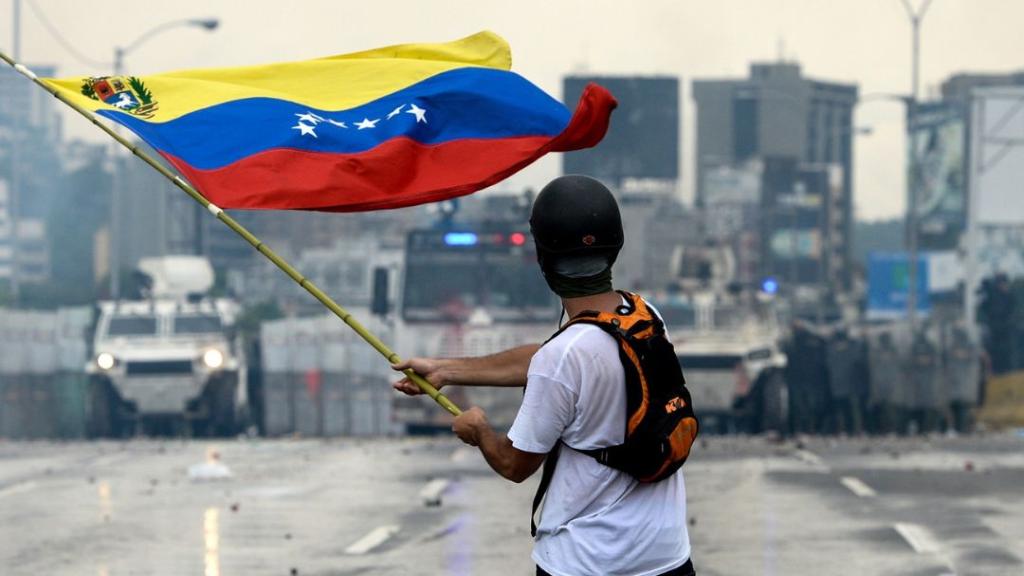


Venezuela protest

First published in Spanish at Aporrea. Translation by Anderson Bean published in Tempest along with introductory note.

Tempest is publishing the following English translation of a statement issued by the Venezuelan socialist organization Marea Socialista. A longstanding anti-capitalist and anti-bureaucratic current within the Venezuelan Left, Marea Socialista emerged from the revolutionary process begun under Chávez but broke with the ruling party as it shifted toward authoritarianism and neoliberalism.

The statement offers a powerful critique of the Maduro government and its increasing authoritarianism, as well as the complicity of both traditional right-wing opposition forces and international actors. At the same time, Marea Socialista puts forward an urgent call for rebuilding working-class organization and political independence in Venezuela, situating their struggle within a broader internationalist and anti-capitalist framework.

This statement was originally published in Spanish in Aporrea on May 21 and reflects the perspective of a left force in Venezuela that rejects both the repression of the Maduro regime and the neoliberal alternatives promoted by the traditional opposition. Tempest presents this translation in the spirit of international solidarity and to help amplify the voices of those resisting authoritarianism and exploitation from below. Minor translation edits have been made for clarity.


The first months of the year in Venezuela have been and continue to be marked by several key issues, such as Trump’s sanctions, announcements of constitutional reform, the economic emergency decree, the deportation and imprisonment of Venezuelan migrants in El Salvador at the behest of the U.S., continued political detentions and criminalization of activism under Maduro, forced disappearances, the continuation of the “zero wage” policy for the working class, and the regional and legislative elections scheduled for the end of May. Also significant are the diverging strategies among factions of the right-wing opposition.

The phase opened on January 10 and its international framework

In previous statements, we noted that Venezuela had already fully entered into a de facto government. Maduro’s swearing-in occurred without proper electoral records from the National Electoral Council (CNE), meaning the regime is upheld by repression from the military-police apparatus, authoritarian control by a bureaucratic caste, and state management for the benefit of a corrupt, lumpen-bourgeois elite.  All of this took place in a geopolitical environment characterized by Trump’s hostility toward Venezuela. After an apparent initial “flirting,” the US tightened its pressure and Venezuela returned to prioritizing alliances with China and Russia. However, Venezuela has not been truly able to escape the conditions imposed on the production and sale of its oil by the United States. Despite Venezuela’s nationalist rhetoric, actual sovereignty has been lost, worsened both by sanctions and by the regime’s own destruction of the productive apparatus and national treasury.

The policy of the Maduro-Military-PSUV (United Socialist Party of Venezuela) government prolongs the worst aspects of the period opened by the economic sanctions. The US withdrawal of licenses for doing of business with Venezuela affects not only Chevron — which was being positioned to replace PDVSA (Petróleos de Venezuela, S.A., the state-owned oil and gas company of Venezuela) amid the collapse of the “corruptocracy” — but also undermines Venezuela’s trade relations with other nations and companies, once again triggering a drastic drop in national income and worsening the hardships faced by the Venezuelan people. Maduro uses these sanctions to justify repressive anti-worker measures.

Trump not only attacks Venezuelan migrants who hoped to improve their lives by living and working in the U.S. due to the unlivable conditions in Venezuela, but also makes life even harder for the Venezuelan people back home. We reject these sanctions, which primarily harm the population and serve as an economic and political excuse for the government’s authoritarian and anti-worker practices.

The government’s lack of transparency and its arbitrary handling of resources, revenue, and their distribution make it difficult to clearly determine how much damage is due to the economic sanctions and how much is the government’s own responsibility. However, in a country that has already suffered massive embezzlement — greater than its foreign debt and occurring even before the sanctions — it is clear that the sanctions have only intensified and worsened harm that was already being done to the population.

Subservience and right-wing complicity with Trump’s attacks on Venezuela

In this regard, we denounce the complicity of right-wing and pro-imperialist opposition sectors, such as those led by María Corina Machado, who are calling for and supporting sanctions that are more harmful to the Venezuelan people than to the government itself. In exchange for overthrowing Maduro, they offer to hand the country over to the United States and transnational corporations, and to continue the worst exploitation of ultra-cheap labor we have ever known. In this last point, they hardly differ from Maduro; only that Machado aligns with the US  and is a groveling ally of Trump, while Maduro pragmatically relies on whoever serves him best to stay in power and sides with Washington’s competitors. But both, Maduro and Machado, represent two modalities of Venezuelan capitalism and two sectors vying for power against the interests of the working class.

A sector of the bourgeoisie adapts to and benefits from Maduro’s policies

There are, however, other sectors of the ruling class and their politicians, who, seeing no prospects for Maduro’s departure, are accommodating themselves by seeking some benefit or opting for coexistence with the regime to endure and wait for a more favorable time. They are trying to survive politically (and economically) and gain some ground, such as the Rosales and Capriles, and others of their ilk, by taking advantage of the electoral loopholes that will allow them to reappear after the latest government fraud in the presidential elections of July 2024.

The obstacles of the flawed electoral system and repression

In those last elections, Marea Socialista (with other leftist organizations) called for null votes because it was impossible to run candidates who represented working class and popular interests due to electoral obstacles, bans and disqualifications. We did not do this because we are abstentionist by principle, despite the difficulties, we have tried to participate in elections in the past without renouncing the vote. We have always sought to use even the narrowest democratic margins to bring our politics to the heart of the people. But, for us, participation in elections is a tool to advance the workers’ and popular struggle with anti-capitalist objectives and to defend the rights of the exploited.

Marea Socialista and other leftist organizations opposed to this corrupt, counterrevolutionary, and authoritarian government have been obstructed, impeded, or arbitrarily prohibited from participating in elections with their own candidates. The government, the National Electoral Council (CNE) and the Supreme Court (TSJ) readily authorize political parties that negotiate with Maduro, but they exclude and trample on the left that confronts him and denounces his poor parody of “socialism,” the usurpation of revolutionary banners, and the imposition of a form of capitalism even more brutal than that known in the past.

In response to this, there have been — and still are — some sectors of the anti-Maduro left that choose to support bourgeois candidates, supposedly in order to pave the way for “Maduro’s departure.” Unfortunately, this approach ends up strengthening the very forces that exploit the people and abandons the struggle for independent, working-class goals. Instead of building class consciousness, organizing autonomously, and mobilizing from below, these groups align themselves with the political representatives of wealthy business interests or affluent bureaucrats — both of whom act against the interests of the working class.

For all these reasons, and even more so after the events surrounding the the July 2024 elections and the unilateral self-proclamation in January 2025, we reaffirm that there are no electoral or democratic guarantees, nor are there any candidates worthy of our votes among those who can (or are allowed to) run under the current situation. We are not excluding ourselves voluntarily; rather, we have been forcibly excluded from electoral participation due to the complete absence  of guarantees to exercise this right, as well as the lack of respect for democratic norms, and the will of the electorate.

They left us no alternative but electoral abstention — but for us, this does not mean withdrawing from politics. On the contrary, it means channeling all our efforts into organizing, denouncing injustice, political education, and defending rights in every social and public space. Our goal is to help build an independent social and political force rooted in the working class and the people — free from the political leaderships mentioned above, from the government bureaucracy, and from capitalist sectors who, even if they claim to “oppose” the government, benefit from or exploit its anti-worker policies. These sectors are complicit in maintaining the most miserable wages seen in the country in decades — even by the standards of the most impoverished nations in Latin America and the world.

Our fundamental task is to resist and rebuild the social and political strength of the working class

Our central task is rebuilding autonomous organizations of workers and popular sectors, strengthening their capacity for mobilization around their own agenda — rather than the one imposed by the government or the political opposition of the business class. In this regard, we have joined efforts like the National Meeting for the Defense of People’s Rights, alongside the Communist Party of Venezuela (PCV-Dignidad), the historic leadership of Patria Para Todos (PPT-APR), the Party of Socialism and Freedom (PSL), and Communist Revolution. We also regularly coordinate joint actions with the Socialist Workers League (LTS), with various unions and labor movements, feminist groups, and committees demanding freedom for political prisoners. By developing this kind of social and political force, we will be better positioned to keep moving forward to continue fighting for democratic, economic, and social rights, and to bring closer the horizon of political change that empowers the working class and allows us to win better living conditions — on the path toward a government of workers and the people, one that wrests control from the bureaucracy and capital and drives the transformations needed in favor of the vast majority.

The fight for wages is central to improving living conditions and promoting mobilization

Right now, our top priority is the fight to defend wages against the starvation-level and semi-slavery pay imposed by the Maduro–military–PSUV government and the business elite, who have repeatedly violated the Constitution by enforcing what we call a “zero wage” policy. For years, the minimum wage has remained stagnant and currently sits below two US dollars a month — sometimes even less, due to the ongoing collapse of the bolívar. Meanwhile, the cost of a basic food basket1 exceeds $500, and the full basic basket2 is over $1,000. This clearly violates Article 91 of the Bolivarian Republic of Venezuela’s Constitution, which states that the minimum wage must be based on the cost of the basic basket. And if there is no wage, all other rights are lost or severely undermined.

We reject the adaptation of union bureaucracies to the agenda of corporate interests, which simply aims to convert government-paid bonuses into formal wages and set the minimum wage at just $200. But that’s far below what people need to live — less than half the cost of the food basket (just food), and less than 10 percent of the full basic basket (which includes housing, transportation, education, health, etc.).

We also reject the common excuses that sanctions prevent higher wages, or that the economy must grow first, or that higher wages are simply not “realistic” or “possible,” especially since those same officials never sacrifice the profits they earn through corruption, nor does it sacrifice the profits businesses earn by squeezing nearly all wages into surplus value since wages don’t even cover the cost of getting to work.

The myth that raising wages causes inflation has long been debunked, as we have endured hyperinflation for years while wages have remained frozen. The looting of the country has been so extreme that any real “economic recovery” would have to begin with the expropriation of all those who have been robbing us in one way or another through dirty dealings and corruption.

We welcome any step that moves toward restoring the constitutionally guaranteed minimum wage, but only as a step in the larger fight to secure what is our legal right — one that is non-negotiable and should not be undermined by the constitutional reform the government now seeks, aimed at eliminating Article 91, the very article they have blatantly violated.

Constitutional reform to “legitimize” its own violations of rights

The unconstitutional reform and the state of economic emergency decree serve no other purpose than to undermine our rights and give a veneer of legitimacy to the violations that have already been committed and those still to come — disguising everything in the misleading language typical of the leaders of the PSUV and the government. We demand: No rollbacks on the rights formally won under the 1999 Constitution!

We have no doubt that this reform would pave the way for greater authoritarianism and repression, and more discretion in the corrupt or elitist handling of national resources.

Reclaiming class organization and political independence

Let us reclaim our organization, our union, and political independence and democratically forge our own agenda for struggle without subordinating it to the bureaucracy or to capital. Let us reclaim union democracy, coordinate our struggles, and practice solidarity among workers as a path to recovering our identity and strength. Through the patient and gradual reconstruction of the working-class social fabric, let us prepare ourselves to help catalyze and channel the uprising of the people in defense of their freedom and justice.

Let us not follow those who tell us to obey the ruling bureaucracy or the millionaire owners of major corporations, transnationals, and their revolving candidates. We call on the people who oppose Maduro to break with those in Venezuela who serve Trump’s agenda and who tighten the noose of misery around Venezuelan workers and the broader population. We call for a break with those who today show not the slightest concern for the Venezuelans who were forced to migrate due to this disastrous government — and yet support the US president who deports them as if they were criminals and sends them to prison camps for “terrorists” in El Salvador (as we’ve already denounced in a previous statement). We are speaking, among others, about the positions taken by María Corina Machado and Edmundo González.

The issue of Venezuelan migration

We therefore denounce María Corina Machado for being an accomplice to Trump in his measures against Venezuelan migrants, just as we denounce Trump and Bukele for practicing forced disappearances, human trafficking, kidnapping, and legally imprisoning innocent people in prisons, without due process and with total disregard for human rights, maintaining a slave regime in prisons and commercializing the judicial-prison system.

Maduro, for his part, does something similar with Venezuela’s judicial system, police forces, and prisons, using them to persecute and imprison political opponents, dissenters, and social activists. The very abuses Maduro criticizes Trump and Bukele for, his own government commits in Venezuela, violating democratic and human rights.

We welcome the social mobilizations in defense of immigrants in the United States, not just out of solidarity, but also as essential to combating the authoritarian and fascist threat emerging in that country, one that endangers the entire world, seeks to dismantle hard-won rights, and which is complicit in the genocide in Gaza and the attacks on civilians in Yemen, among other crimes.

The alternative we need

We need an anti-capitalist, anti-bureaucratic, and internationalist alternative, because the current situation cannot be resolved by repackaging the same failed model. Any real solution must connect with the struggles of the working class and oppressed people internationally. This is not a crisis that can be solved within the borders of a single country — it demands global resistance against the dominant powers that exploit and oppress us. That is why we aim to strengthen both Marea Socialista and maintain its ties with the international organization of revolutionary parties, the International Socialist League (ISL), a global network of revolutionary parties. That is why we also want to strengthen the Venezuelan opposition left and advocate for abandoning the positions of left-wing sectors that, pretending to bet on a false “lesser evil,” support the right in an attempt to “get rid of Maduro by any means necessary.”

The path is one of class consciousness and political independence — organizing and mobilizing around our own struggles, building the political tools we need, and forging alliances from below to overcome bureaucratic authoritarianism and capitalist exploitation in Venezuela.

  • 1

    The canasta alimentaria, or the food basket, includes only essential items needed to meet the minimum nutritional requirements for a family, typically of five people, over a month. It reflects the cost of basic subsistence and is tracked monthly by organizations like the Centro de Documentación y Análisis Social de la Federación Venezolana de Maestros (CENDAS-FVM). Items include staples like rice, flour, meat, milk, eggs, beans, pasta, oil, vegetables, and others.

  • 2

    The canasta básica, or the basic basket, includes the food basket plus other essential goods and services, such as housing (rent, maintenance), health care, education, transportation, clothing, personal hygiene products, household cleaning supplies. It reflects the total monthly cost of living for a typical family to maintain a minimally decent standard of living.

Demonising Nicolás Maduro: Fallacies and consequences
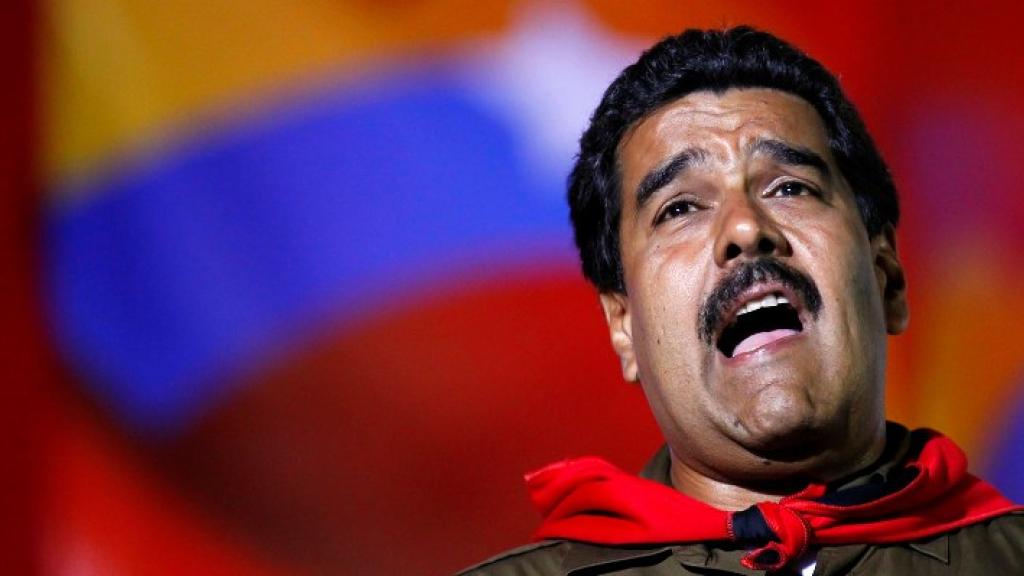

Nicolas Maduro Venezuelan flag

Criticism of Venezuelan president Nicolás Maduro from a leftist perspective is absolutely necessary. Some of it comes from those who, to varying degrees, support his government. Emiliano Teran Mantovani and Gabriel Hetland — who recently criticised my position on Maduro — and I are in agreement on the importance of such critical analysis. 

However, in spite of this common denominator, there are fundamental differences between us with regard to my insistence on the need to contextualise the errors committed by Maduro and go beyond a simplistic binary of uncritical support for Maduro versus demonisation. 

These issues have far-reaching implications. The failure to objectively contextualise errors, transcend binaries and recognise shades of differences translates into an underestimation of the gravity of US sanctions and the denial of positive aspects of the Maduro government. These positions and shortcomings seriously undermine international solidarity work and anti-imperialism in general. 

Centring the US war on Venezuela

Teran begins his article stating, “I want to make my position clear … these sanctions are entirely condemnable,” a position that he acknowledges is “universally shared” on the Venezuelan left and even by “some liberal scholars, intellectuals and opposition figures.” His pronouncement, however, glosses over one of my main points. It is misleading to say “I am opposed to the sanctions” and then proceed to attack government policy as if they are two separate topics. 

My article explains in detail why the war on Venezuela needs to be placed at the centre of any serious analysis of the Maduro presidencies. The Washington-orchestrated war on Venezuela extends well beyond sanctions since it encompasses a broad array of regime-change and destabilisation actions. Yet Teran, like Hetland, limits his references regarding Washington machinations to the sanctions. 

To make matters worse, Teran, in effect, downplays the severity of the sanctions, claiming they “do not explain the root causes” of the nation’s crisis. For Teran, the sanctions only had a “subsequent negative impact” — subsequent, that is, to the allegedly grievous errors committed by Maduro, and Chávez before him. 

One example of Teran’s underestimation of the effects of the sanctions is his statement: “Ellner refers to the sanctions imposed by the Barack Obama administration in 2015, but those were limited to freezing assets and bank accounts in the US…” Teran portrays Obama’s executive order as an innocuous, symbolic measure. It hardly was. 

As I noted, Obama’s order, which declared Venezuela “an unusual and extraordinary threat” to US national security, “signaled an escalation of hostility from Washington.” Even Hetland, writing a few years back, points out that Obama “pressured American and European banks to avoid business with Venezuela, starving Venezuela of needed funds.” It is not difficult to grasp why US companies operating factories in Venezuela disinvested in response to the president of their country calling Venezuela a threat to US national security. 

As I previously wrote, “Obama’s executive order sent a signal to the private sector. After the order was implemented, various large U.S. firms including Ford and Kimberly Clark closed factories and pulled out of Venezuela.” They were soon followed by General Motors, Goodyear, and Kellogg’s, as well as Japanese firm Bridgestone. 

Indeed, even before Donald Trump assumed the presidency in 2017, a de facto financial embargo had already been imposed on Venezuela. Opposition spokesperson and economist Francisco Rodríguez noted back then that “the financial markets are closed to Venezuela.” 

Teran’s minimisation of the effects of the war on Venezuela reinforces and legitimises the opposition’s narrative, which ridicules Maduro’s assertion that Washington’s actions are responsible for Venezuela’s dire economic situation. Moisés Naím, one of the architects of Venezuela’s neoliberal policies of the 1990s, for example, writes: “Blaming the CIA … or dark international forces, as Maduro and his allies customarily do, has become fodder for parodies flooding YouTube.” 

Similarly, Teran says: “Followers and supporters of Maduro’s government seem to always prefer to look for external scapegoats.” In my article, I cite specific examples of the abundant, well-documented literature that substantiates Maduro’s allegations regarding generously financed “dark international forces.” 

In his effort to discard the relevance of the war on Venezuela, Teran even suggests that explanations of Maduro’s implementation of neoliberal policies on the basis of US imperialist aggression are akin to those put forward by those who seek to justify Netanyahu’s genocide against Palestinians on the basis of Hamas’ October 7 attack. 

But it should seem pretty obvious to anyone on the left that drawing an equivalence between US imperialism and the October 7 attack is somewhat far fetched, and that placing Maduro’s economic policies in the same category as Netanyahu’s genocide is even more outrageous.

Neither praise nor condemnation

Turning to the second area of contention, serious analysis of Maduro needs to avoid absolutes with regard to either praise or condemnation of his government. Failing to grasp the complexity of how a progressive government is forced to navigate a situation imposed by the world’s most powerful nation located in the same hemisphere, leads to simplistic conclusions that often align with those of the political right. 

Teran accuses me of being one-sided. He claims my “arguments lack nuance” and that I fail to “avoid simplistic binaries.” In doing so, he overlooks the criticisms of Maduro that I presented in my article and have analysed in greater detail in other publications. 

Accusing me of one-sidedness mirrors what others who vilify Maduro do when they brand supporters of progressive Latin American governments as “campist,” or upholding “a Manichaean outlook” – a phrase used by Teran. Both terms are reminiscent of McCarthyism, with its attack on the entire left for being crypto-Communists or fellow travelers. 

By failing to recognise the validity of the position of critical support for Maduro, Teran shows he is on board with a polarisation of Venezuelan politics that leaves gradations out of the picture. For example, Teran (like Hetland) unfairly accuses me of justifying repression by omission, adding that after the July 28, 2024 presidential elections, “sectors of the international left” ended up “legitimising the brutal repression.” 

He neglects to mention that I suggested the evidence of significant right-wing and foreign involvement in the post-July 28 violent protests does not rule out the possible use of excessive force by the Venezuelan state, as the two are not “mutually exclusive”.

Which left?

Teran ends by asking why, instead of providing critical support to Maduro, does the international left not “dedicate their energy, resources, support and advocacy to strengthening a left-wing opposition [in Venezuela] that might someday challenge for political power?” The question, however, is somewhat ambiguous. 

If Teran is referring to what political scientists call “a loyal opposition” — one that recognises the challenges facing Maduro, does not hesitate to support him in his denunciation of imperialist aggression, and avoids equating him with the Venezuelan far right — then such a proposition sounds reasonable. 

But the bulk of the Venezuelan left opposition hardly fits this description. It demonises Maduro, just as Teran and Hetland do, and the actions of many of these leftists play into the hands of the political right. 

If Maduro is brought down, the far right — headed by María Corina Machado, who says she wants to see Maduro and his family behind bars — will undoubtedly dominate the new regime, with Washington’s blessing. If this were to happen, the most likely scenario would be the kind of brutal repression that has historically followed the downfall of progressive governments, from Indonesia in 1967 to Chile in 1973. The anti-Maduro left is simply too weak to shape the course of such events.  

It is troubling, for instance, that the Communist Party of Venezuela (PCV), in spite of its glorious history dating back to its founding in 1931, endorsed the presidential candidacy of Enrique Márquez in last year’s election. Márquez was a prominent leader of one of the main parties that actively promoted destabilisation and regime change in the protracted street protests against Maduro in 2014 and 2017, and wholeheartedly supported the right-wing parallel government of Juan Guaidó after 2019.

International solidarity

Two key implications of the debate over the demonisation of Maduro hold particular significance for the solidarity movement. First, vilifying Maduro discourages solidarity work. I have reached this conclusion based on my experience giving numerous talks sponsored by solidarity groups in cities throughout the US and Canada since 2018. 

Solidarity activists have made clear to me that a fairly favourable view of the Maduro government — specific criticisms notwithstanding — is a motivating force for them. By contrast, those who despise a government are unlikely to work with the same degree of enthusiasm in opposition to US interventionism.

In this respect, the solidarity movement differs from the anti-war movement, which tends to be less focused on the domestic politics of the nations of the South and more concerned with military spending and the death of US soldiers, in addition to the devastation caused by US armed intervention. 

Secondly, an analysis that contextualises government errors and the erosion of democratic norms leads to a fundamental conclusion. The extent to which the war on Venezuela is relaxed directly correlates with the potential to deepen democracy, invigorate social movements and expand the government’s room for maneuver, thereby increasing the likelihood of overcoming errors. 

History, after all, teaches us that war and democracy are inherently incompatible. In their vilification of the Maduro government, Hetland and Teran overlook this simple truth.

Caught between the military junta and Arakan Army: Rohingyas and the fight for Myanmar’s Rakhine state


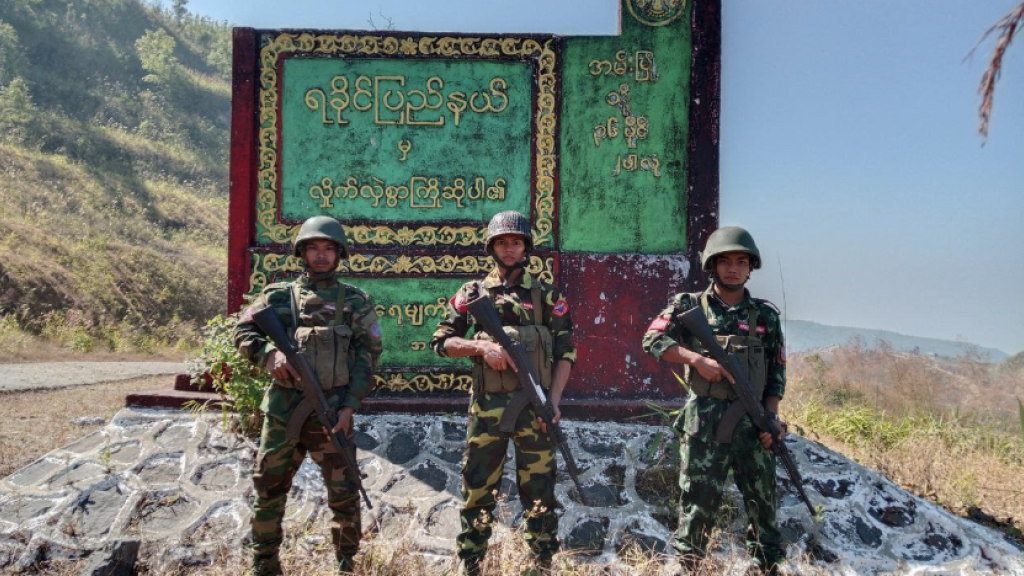
Arakan Army on the border

Myanmar has been embroiled in a complex civil war since the military coup in February 2021. This has exacerbated long-standing ethnic conflicts, including those involving the Rohingya , a minority Muslim ethnic group that mostly originate from the state of Rakhine (formerly Arakan). 

The Rohingya have historically faced persecution, with significant displacement following military crackdowns, notably in 2017. Rohingya factions that fought the military junta before the Arakan Army (AA) took control of Rakhine continue resisting armed groups that refuse to recognise them as citizens. 

The AA is an armed ethnic Rakhine Buddhist group that has engaged in a long-standing conflict with the Myanmar military (Tatmadaw). As the AA steadily expanded its control over Rakhine, it refused to recognise the rights of the Rohingya, leading to tensions with Rohingya groups, especially the Arakan Rohingya Salvation Army (ARSA) and the Rohingya Solidarity Organisation (RSO). These tensions have escalated into violent clashes in the region, with Rohingya groups and AA locked in a permanent state of conflict. 

Recent developments in 2025 indicate that Rohingya armed groups, such as the ARSA and RSO, have become more active amid the broader conflict between the Myanmar military junta and various ethnic armed organisations, particularly the AA. Another strong Rohingya group, Islami Mahaz, has a clear plan to counter the movements of the AA while training its members in Arakan land. They have not attacked anyone yet though, remaining extremely secretive and very shrewd about their future moves. 

Rohingya groups are striving to bring justice for their people. As long as the oppression of the Rohingya people in the Myanmar state of Rakhine (formerly Arakan) continues, Rohingya groups will keep fighting to reclaim their rights — against the AA, the military junta and any other power responsible for their persecution. 

The report below expands on the current situation, looking at the key domestic groups, individuals and arms/drugs traders involved, as well as interested foreign parties. It synthesises as much of the available information as possible at the time of writing (March 30, 2025) to best reflect the existing reality.

Territorial clashes, humanitarian impacts

The conflict between the AA and Rohingya armed groups remains violent and unresolved, with Rohingya civilians caught in the crossfire. As the AA consolidates power in Rakhine, the humanitarian crisis deepens, while a long-term solution remains uncertain. The international community, including the US, has stepped in with aid, but without a political resolution, Rohingya communities continue to face persecution and instability.

The AA has sought diplomatic engagement with Bangladesh, particularly regarding border trade, but has not addressed Rohingya repatriation or inclusion in governance. This has created uncertainty about the future of displaced Rohingya populations, as Bangladesh refuses to accept more refugees and the AA is reluctant to integrate the Rohingya politically. 

The main conflict zones include Maungdaw, Buthidaung and Rathedaung, where intense clashes between Rohingya groups and the AA are ongoing. By late 2024 and early 2025, the AA had successfully taken over Maungdaw, Buthidaung and Paletwa townships, establishing its rule in areas that include significant Rohingya populations. The AA’s expansion brought it into direct conflict with ARSA and RSO, groups accused of collaborating with the Myanmar military against the AA. 

The following is a short timeline of recent events:

  • Mid-2024 — Clashes between the AA and ARSA intensified in Maungdaw and Buthidaung townships, leading to casualties and displacement of Rohingya civilians.

  • August 5, 2024 — A major attack in Maungdaw reportedly resulted in the deaths of more than 200 Rohingya civilians. The attack was allegedly carried out by the AA, after RSO fighters were spotted in the area.

  • December 2024 — Fresh fighting broke out in northern Maungdaw, as the AA continued its operations against ARSA.

  • January 2025 — The AA established fully local governance structures, solidifying its rule while suppressing remaining Rohingya armed factions.

The conflict has severely impacted Rohingya civilians, leading to widespread displacement, extrajudicial killings, and destruction of homes. Some example of these are as follows:

  • May 2024 — The AA allegedly burned down parts of Buthidaung, forcing thousands of Rohingya to flee.

  • August 2024 — Drone attacks  attributed to the AA occurred on fleeing Rohingya civilians near the Naf River.

  • March 2025 — The arrest of ARSA leader Ataullah abu Ammar Jununi in Bangladesh further weakened ARSA’s ability to resist the AA.

Based on daily field information and expert observations, it seems Rohingya groups are primarily on the defensive, protecting Rohingya civilians in Rakhine, despite their weaker military capacity. 

However, in the refugee camps of Cox’s Bazar (a majority Rohingya refugee camp in Bangladesh), some Rohingya factions have been known to attack individuals who disobey their directives. Members of these groups, whether inside the camps or in Rakhine, have been involved in violent actions against the population, much like the AA targeted Rohingya civilians.

The following is a short breakdown of the fighting involving Rohingya groups, assessing their role based on data available up to March 30, 2025. 

Northern Rakhine state (Maungdaw and Buthidaung townships)

  • Current status — These townships remain the epicentre of active fighting involving Rohingya groups.

  • Context — Northern Rakhine, particularly Maungdaw and Buthidaung, has been a hotspot due to its proximity to the Bangladesh border and significant Rohingya population. Since the AA relaunched its offensive against the junta in November 2023, the region has seen intensified conflict. The AA has made significant territorial gains, capturing Maungdaw Township last December, including the last junta outpost (Border Guard Police Detachment No. 5) on December 8. The AA’s offensive has expanded beyond northern Rakhine to capture towns such as Rathedaung (March 17, 2024) and Ramree (March 12, 2024). While these areas are not primary Rohingya strongholds, the junta’s use of forcibly conscripted Rohingya as human shields has been reported, notably during the defense of Rathedaung.

  • Recent developments — Clashes between the AA and Rohingya armed groups (ARSA and RSO) persist into 2025. Posts on X from March 29 indicate “intense clashes” between ARSA and the AA in Maungdaw and Buthidaung. Similar clashes were reported in northern Maungdaw in December, highlighting a pattern of sustained conflict.

  • Other actors — The Myanmar junta has been largely pushed out of Maungdaw, but retains some presence in the region through airstrikes and alliances with Rohingya militias. The junta has forcibly recruited Rohingya men and boys, using them as human shields or fighters against the AA, complicating the conflict dynamics.

Bangladesh-Myanmar border areas 

  • Current status — Sporadic fighting and cross-border incidents continue, indirectly involving Rohingya groups, such as the ARSA and RSO.

  • Context — The border region has seen spillover effects from the Rakhine conflict, with junta forces and AA actions occasionally impacting Bangladesh. For example, in February 2024, mortar shells and bullets landed in Bangladesh, injuring residents. More than 200 Myanmar Border Guard Police fled into Bangladesh seeking refuge from AA advances. In January 2025, landmine explosions near Naikhongchhari, Bandarban, injured Bangladeshis, allegedly due to AA-planted mines.

  • Rohingya involvement — While direct fighting by Rohingya groups in Bangladesh is limited, recruitment and mobilisation occurs in refugee camps in Cox’s Bazar. Reports from late 2024 indicate that 3-5000 Rohingya fighters have been recruited from these camps to join the conflict, often aligning with the junta against the AA.

Rohingya groups: On the defensive or offensive?

The role of Rohingya armed groups in the conflict varies depending on their alignment, objectives and specific engagements. In many instances, Rohingya groups, particularly ARSA and RSO, appear to be on the defensive. The AA’s territorial dominance in Rakhine has put pressure on Rohingya communities and their armed factions. 

The March 29 clashes in Maungdaw and Buthidaung suggest a response to AA aggression, after the AA was accused of targeting Rohingya civilians and burning their villages (for example in May 17-18, 2024, in Buthidaung). ARSA’s claims of “defensive actions” in past statements (for example in August 2017) align with this pattern. Reports from August 2024 indicating AA attacks, possibly triggered by RSO gatherings, on Rohingya civilians in Maungdaw Township, killing more than 200, further suggesting a defensive stance by Rohingya groups against AA advances.

The junta’s conscription of Rohingya men and boys, often under duress, places them in defensive roles as human shields or unwilling combatants against the AA, rather than as proactive attackers.

Despite a predominantly defensive stance, Rohingya groups have engaged in offensive actions against the AA, particularly when the AA is allied with the junta. The December 27, 2024, clashes in northern Maungdaw between ARSA and the AA indicate proactive engagement, possibly to counter AA control or protect Rohingya interests.

ARSA’s video statements in March 2025 (for example, Sheikh Burhan’s call to fight “continuously” against the AA and junta) suggest an intent to take offensive action in Rakhine.
ARSA’s coordinated attacks on police posts in August 2017 also demonstrated a capacity for offensive operations, though such large-scale actions have been less frequent in 2025.

The recruitment of thousands of Rohingya from Bangladeshi camps to fight in Myanmar indicates an offensive strategy, albeit often under junta influence and targeting AA-held areas. Many Rohingya fighters are aligned with the junta, either voluntarily or forcibly, complicating their role. This alliance pits them against the AA offensively, but their lack of autonomy suggests limited strategic initiative.

Clashes between ARSA and RSO, as well as with the AA, indicate internal divisions among Rohingya factions, with some engagements reflecting territorial or ideological disputes rather than a unified offensive or defensive strategy.

Rohingya civilians are often caught in the crossfire, with both junta and AA forces committing atrocities (extrajudicial killings, arson, etc), forcing armed groups to react to protect their communities, blurring the line between defense and attack.

Who is backing the Rohingya?

The situation remains fluid, with Rohingya groups’ shaped by external pressures (junta conscription, AA dominance) and internal motivations (self-defense, territorial claims). A lack of mass support within the Rohingya community, combined with their statelessness and vulnerability, limits their ability to sustain a coherent offensive campaign, leaving them caught between larger forces in Myanmar’s civil war.

Most of the weapons possessed by Rohingya groups were captured from the military junta. Much like the AA acquired arms by seizing military bases and checkpoints during their battles with the junta, Rohingya groups have also found ways to obtain firepower. For example, on October 9, 2016, ARSA captured a significant number of weapons after a surprise attack on the military. In August 2017, they seized small checkpoints belonging to border guard police and looted military storage sites.

Rohingya groups primarily rely on locally made weapons, as external supplies remain difficult to obtain. While the AA receives arms from Thailand, China, Laos, and India, Rohingya groups lack stable suppliers. In Bangladesh, they have no access to significant external or internal arms supplies. However, some local criminal networks in Bangladesh have been known to facilitate illicit arms deals, selling low-grade weapons to Rohingya factions, often in areas outside the camps or near border regions.

There is no confirmed large-scale external support for Rohingya fighters. However, some wealthy individuals — primarily from the Middle East — provide financial assistance through private donations. These contributions mostly come from independent benefactors and family networks rather than organised governmental or institutional backing.

Some Rohingya groups receive backing from individuals in Saudi Arabia. There have been reports indicating that certain Rohingya factions maintain connections with Saudi-based supporters, though the full extent of these relationships remains unclear. Support from Saudi Arabia is largely informal, coming through local community networks and private donors rather than official government channels. These funds are often transferred through unofficial means, making them difficult to trace. 

There is no evidence of official support from Bangladesh or Pakistan. Due to this lack of structured assistance, Rohingya fighters are primarily reliant on local resources and occasional illicit transactions to acquire supplies.

There is no verifiable evidence indicating direct support from Pakistan’s Inter-Services Intelligence (ISI) to Rohingya fighters. While some Rohingya fighters receive aid from individuals in Pakistan, ISI itself has not provided any structured support, as Rohingya factions remain relatively unrecognised on a global scale. 

Since Rohingya factions lack strong international support, there is no significant movement of funds through major financial networks. Most of their funding comes from private donors abroad, often transferred through bank accounts in Thailand. Some Thai nationals assist in processing these transactions and facilitating access to Myanmar-based bank accounts. Additionally, some Rohingya fighters have illegally established Myanmar bank accounts by bribing government officials with large sums of money, allowing them to receive funds discreetly.

There are no credible reports confirming Rohingya fighter training programs in Bangladesh, Myanmar or Pakistan. However, in the past, Rohingya fighters were known to undergo training at the “Zero Point border” between Bangladesh and Myanmar. After the dismantling of that location, they are now primarily trained in the jungles of Myanmar near the border. There are reports suggesting that some Rohingya fighters received training from the military junta in 2024, when they were briefly aligned with them.

What is China’s role?

China’s role in the Myanmar conflict, particularly regarding the AA and the Rohingya, is complex and appears driven by strategic self-interest rather than a clear alignment with any single faction. There is no definitive evidence that China is explicitly helping the AA target the Rohingya, but its actions suggest it is pragmatically engaging multiple sides to secure its geopolitical and economic goals.

China has historically supported Myanmar’s military junta, providing arms and diplomatic backing, as seen in its long-standing trade ties and infrastructure projects, such as the oil and gas pipelines in Rakhine. However, China has adapted its approach as the junta has weakened. 

Since the 2021 coup, the junta has lost significant territory to rebel groups. Reports indicate China has engaged with the AA as it progressively gained control over much of Rakhine. This shift is not necessarily about targeting the Rohingya, but reflects China’s interest in stabilising the region to protect its investments and border security. China’s indirect support for the AA, through alleged arms flows, could be seen as tacitly enabling its actions, which include accusations of atrocities, such as forced displacement and killings. However, it is not clear this is intentional. 

Meanwhile, China has also pushed for Rohingya repatriation talks between Myanmar and Bangladesh, positioning itself as a mediator. This suggests it is not fully siding against the Rohingya either; playing both sides seems more likely. 

China arms and influences the junta, has engaged with the AA as it gains power, and maintains a public stance of neutrality on the Rohingya crisis. This hedging ensures China retains leverage regardless of who controls Rakhine, a region critical to its Belt and Road Initiative (BRI). Recent news, such as Bangladesh’s March 2025 talks with China on the Rohingya issue, reinforces this view. The Chinese government wants stability in Myanmar to progress the BRI, rather than a specific outcome for any group.

So, while China’s actions may indirectly bolster the AA’s campaign, which harms the Rohingya, the evidence points more to a calculated balancing act than a deliberate anti-Rohingya agenda in Arakan (Rakhine) state.

Who are some of the key individuals?

Dil Mohammed, a prominent Rohingya spokesperson, is currently in the refugee camps of Cox’s Bazar, where he has secured protection from certain influential figures within Bangladesh’s internal government networks. Mohammed plays a dual role, actively influencing Rohingya fighters through corruption and financial exploitation while serving as a key fundraiser. Although he lacks formal political expertise, his control over funding sources enables him to exert significant influence over armed groups operating in the region. 

Mohammed uses alleged profits from drug trafficking, including yaba and heroin, to finance Rohingya fighters. He maintains control over these groups by distributing large sums of money, which allows him to dictate their activities. His operations are largely concealed from higher-level government authorities in Bangladesh, having allegedly bribed multiple officials responsible for refugee protection.

Mohammed’s deep financial ties with corrupt officials, particularly within Bangladesh’s Directorate General of Forces Intelligence (DGFI), enable him to continue his illicit activities unchecked, reinforcing his influence over the Rohingya armed factions. Powerful individuals, such as Refugee Relief and Repatriation Commissioner (RRRC) Secretary-General Mirzanur Rahaman, also support him secretly under the pretense of working towards better solutions for the Rohingya. However, this has little effect, as Mohammed exploits these connections for his own benefit, positioning himself as a key representative of the Rohingya, despite his questionable dealings.

According to field-level sources, Rohingya Islamist cleric Abu Dhar Azzam is not directly involved in armed combat but has been consistently providing ideological support to Rohingya jihadists. As a member of the Islamic Movement of Uzbekistan, he continues to encourage Rohingya jihadists through online and personal communication to keep their morale high.

While there is no direct evidence of logistical or financial support from Al-Qaeda and Pakistani Mujahideen networks, Abu Dhar maintains ideological connections with these groups. He continues to advocate for their ideological vision, though there is no proof of active networking with these groups at this point.

After a long period of silence, Abu Dhar released a voice clip expressing sorrow over the arrest of ARSA leader Abu Ammar and praying for his release. In this clip, he urged ARSA jihadists to continue their struggle, demonstrating his ongoing support for the Rohingya militant cause.

There have been no direct statements or evidence showing that Abu Dhar has called for attacks on Chinese projects in Myanmar. However, there have been rumours in certain circles that some Rohingya militant factions, including ARSA, might be targeting Chinese infrastructure as part of their broader opposition to foreign influence in Myanmar. Abu Dhar has not openly advocated for such actions.

Where are the weapons and drugs coming from?

In Myanmar, the civil war has supercharged the trade in arms and drugs, which groups use to fund their operations. The Golden Triangle, where Myanmar, Thailand, and Laos, meet remains a hub. A critical corridor has also emerged in this region being the Myanmar-Bangladesh-India border region, especially Rakhine and India’s Northeast. 

Pinpointing the exact “key brokers” handling weapons and drugs between Myanmar, Bangladesh and India is tricky because these networks operate in the shadows, and concrete, up-to-date evidence is often fragmented or classified. This is a fluid and opaque network hard to nail down without insider leaks or fresh investigations. The real brokers stay faceless, leveraging chaos and corruption to keep the pipelines open. 

Based on available patterns and reports, we can piece together a picture of the types of actors involved. Broadly, the trade involves a mix of ethnic armed organisations, insurgent groups, criminal syndicates, corrupt officials and border traders. No single “kingpin” emerges from public data, but the ecosystem thrives on middlemen: militia leaders, rogue traders and firms exploiting weak border controls. Within Rohingya factions, the primary brokers are small-scale local groups and criminal gangs operating within Bangladesh. 

Myanmar’s Shan State is the epicentre of synthetic drug production (typically yaba, a methamphetamine mix), which is controlled by groups such as the United Wa State Army (UWSA) and smaller militias. These drugs flow into India’s Northeast (Manipur, Mizoram) and Bangladesh (Cox’s Bazar) via land and maritime routes. 

The AA has been linked to drug trafficking to finance its fight against the junta. The AA has a well-established network inside Bangladesh, particularly in Bandarban and Nhila, which facilitates the supply of new drugs such as yaba, meth and heroin. 

Rohingya factions, including those associated with Mohammed, lack the capacity to operate international routes and can only conduct drug activities within Bangladesh. In contrast, the AA actively smuggles drugs into India, particularly through Manipur, leveraging its support networks that extend from Rakhine to various locations inside India. This has been a consistent practice since the AA’s establishment.

Between Bangladesh and Myanmar, Cox’s Bazar in Bangladesh is a hotspot for drug mule recruitment. Rohingya refugees, desperate for income, have been roped into smuggling yaba, even though they are small fry compared to Bangladesh and Myanmar-based syndicates. 

Insurgent groups in India’s Northeast, such as the United National Liberation Front (UNLF) and People’s Liberation Army (PLA), have camps in Myanmar’s Sagaing and Chin regions, where they are suspected of trading drugs and arms, often using opium as currency.

On the arms side, Myanmar’s military junta relies on brokers to procure weapons despite sanctions. Companies like International Gateways Group (IGG), led by Naing Htut Aung, have been sanctioned by the US and European Union for supplying fighter jets and gunships, often via China. 

Justice For Myanmar has identified 116 firms — mostly Myanmar and Singapore-based — that have been brokering arms post-coup, with 255 directors and shareholders involved. Singapore serves as a financial and transit hub, while firms from India (for example, Sandeep Metalcraft, which ships explosive fuses) and China feed the junta’s arsenal. The junta’s Directorate of Defense Industries (DDI) runs factories (KaPaSa) that assemble these imports, with raw materials coming from at least 13 countries.

In contrast, weapons such as AK-series rifles, M16s, RPGs and sniper rifles, are rarely accessible to Rohingya factions. The vast majority (about 97%) of the weapons in their possession are pistols, along with a few unbranded firearms sourced from local traders.  Rohingya factions primarily acquire these weapons from local black markets, rather than sophisticated international arms networks. Most of these arms originate from Southeast Asian sources, including Thailand and Laos. Indian-manufactured weapons, such as INSAS rifles, are rarely found among Rohingya factions.

The AA relies on a network of Rakhine-affiliated armed groups operating along the tri-border area for its weapons. Reports also suggest that certain individuals based in Manipur, particularly those with Rakhine family ties, are involved in this trade.

In India’s Northeast, Manipur and Mizoram are transit hubs. It is widely believed that Northeast Indian rebel groups benefit from the arms trade linked to the AA. While the specific names of these groups remain unclear, several active insurgent factions near the India-Rakhine border reportedly engage in weapons transactions with the AA. This includes dealings involving arms, drugs, and even military-grade equipment such as drones. The AA has established strong connections in these areas, facilitating the flow of illicit arms into Northeast India.

A 2023 bust in Manipur nabbed the Chin Kuki Liberation Army (CKLA) with AK-47s, M16s and opium. This suggests Myanmar-based militants broker both arms and drugs across the porous 1643 kilometre border. The Free Movement Regime (allowing 16 kilometres of cross-border travel) aids this flow. Assam Rifles and police seizures — $267 million in contraband in 2022-23 — point to sophisticated networks, likely involving local traffickers and Myanmar rebels.

Currently, there is no confirmed evidence of ISI involvement. However, there are speculative reports suggesting that ISI might be considering collaboration with certain groups to counter the armed factions persecuting Rohingya in Rakhine, whether it be the AA or Myanmar military. Some discussions among Rohingya militant circles have hinted at potential ISI involvement in future operations, but nothing concrete has surfaced.

Among all this, China’s shadow looms large, arming the junta and possibly rebels, but direct links to specific brokers are murky. The AA’s rise in Rakhine, controlling the Bangladesh border by early 2025, might shift dynamics, potentially making it a bigger player in both trades.

Noor Sadaque can be reached at noorsadeque97@gmail.com.


Magically reducing errors in quantum computers


Researchers from The University of Osaka invent a technique to dramatically decrease overhead of quantum computers


The University of Osaka

Fig. 1 

image: 

Comparison of zero-level distillation (right) and logical-level distillation (left).

view more 

Credit: QIQB Quantum Computing Team, The University of Osaka


Osaka, Japan – For decades, quantum computers that perform calculations millions of times faster than conventional computers have remained a tantalizing yet distant goal. However, a new breakthrough in quantum physics may have just sped up the timeline.

In an article published in PRX Quantum, researchers from the Graduate School of Engineering Science and the Center for Quantum Information and Quantum Biology at The University of Osaka devised a method that can be used to prepare high-fidelity “magic states” for use in quantum computers with dramatically less overhead and unprecedented accuracy.

Quantum computers harness the fantastic properties of quantum mechanics such as entanglement and superposition to perform calculations much more efficiently than classical computers can. Such machines could catalyze innovations in fields as diverse as engineering, finance, and biotechnology. But before this can happen, there is a significant obstacle that must be overcome.

“Quantum systems have always been extremely susceptible to noise,” says lead researcher Tomohiro Itogawa. “Even the slightest perturbation in temperature or a single wayward photon from an external source can easily ruin a quantum computer setup, making it useless. Noise is absolutely the number one enemy of quantum computers.”

Thus, scientists have become very interested in building so-called fault-tolerant quantum computers, which are robust enough to continue computing accurately even when subject to noise. Magic state distillation, in which a single high-fidelity quantum state is prepared from many noisy ones, is a popular method for creating such systems. But there is a catch.

“The distillation of magic states is traditionally a very computationally expensive process because it requires many qubits,” explains Keisuke Fujii, senior author. “We wanted to explore if there was any way of expediting the preparation of the high-fidelity states necessary for quantum computation.”

Following this line of inquiry, the team was inspired to create a “level-zero” version of magic state distillation, in which a fault-tolerant circuit is developed at the physical qubit or “zeroth” level as opposed to higher, more abstract levels. In addition to requiring far fewer qubits, this new method led to a roughly several dozen times decrease in spatial and temporal overhead compared with that of the traditional version in numerical simulations.

Itogawa and Fujii are optimistic that the era of quantum computing is not as far off as we imagine. Whether one calls it magic or physics, this technique certainly marks an important step toward the development of larger-scale quantum computers that can withstand noise.

###

The article, “Efficient Magic State Distillation by Zero-Level Distillation,” was published in PRX Quantum at DOI: https://doi.org/10.1103/thxx-njr6.

Detail of zero-level distillation

Credit

QIQB Quantum Computing Team, The University of Osaka

About The University of Osaka

The University of Osaka was founded in 1931 as one of the seven imperial universities of Japan and is now one of Japan's leading comprehensive universities with a broad disciplinary spectrum. This strength is coupled with a singular drive for innovation that extends throughout the scientific process, from fundamental research to the creation of applied technology with positive economic impacts. Its commitment to innovation has been recognized in Japan and around the world, being named Japan's most innovative university in 2015 (Reuters 2015 Top 100) and one of the most innovative institutions in the world in 2017 (Innovative Universities and the Nature Index Innovation 2017). Now, Osaka University is leveraging its role as a Designated National University Corporation selected by the Ministry of Education, Culture, Sports, Science and Technology to contribute to innovation for human welfare, sustainable development of society, and social transformation.

Website: https://resou.osaka-u.ac.jp/en

Huawei and ByteDance plan significant Brazil tech investments amid US-China rivalry

Huawei and ByteDance plan significant Brazil tech investments amid US-China rivalry
Brazil has positioned itself as an attractive destination for AI development, leveraging its clean energy resources and maintaining an open investment approach that puts it at odds with American national security-based restrictions. / Kārlis Dambrāns
By bne intellinews June 20, 2025

Chinese technology major Huawei Technologies and TikTok owner ByteDance are preparing substantial investments in Brazil's cloud infrastructure and artificial intelligence sectors, developments that may intensify US concerns regarding Beijing's expanding digital influence across Latin America, SCMP reported.

Brazilian newspaper Folha de S. Paulo reported that Huawei is poised to announce an agreement with Dataprev, a state-operated technology firm managing the nation's social data systems, to utilise its data centres.

Huawei is also negotiating with Edge UOL, a cloud services division of Grupo UOL PagSeguro, to launch cybersecurity and AI services across Brazil.

“We want to be the bridge between China and Latin America,” said Mark Chen, president of Huawei Cloud regional division, calling the Brazilian firm a “strategic service partner”.

The proposed expansions emerge as Washington has intensified warnings regarding Chinese investments in critical technology infrastructure across Latin America, highlighting risks of data theft, surveillance and strategic leverage.

US officials contend that Chinese companies, including Huawei and ByteDance, could be obligated under Beijing's national intelligence laws to surrender sensitive information, regardless of overseas data storage regulations.

ByteDance has faced US scrutiny over connections to AI platforms accused of tracking users and channelling information to China, whilst Huawei remains blacklisted by the US over alleged state surveillance links.

"The company [Huawei] is deeply tied not only to China but to the Chinese Communist Party. And that connectivity, the existence of those connections, puts American information that crosses those networks at risk," the first Trump administration said back in 2019 following Huawei's ban.

For its part, Huawei has consistently rejected allegations of government, military or intelligence service control from the Chinese government.

Brazil has long maintained a policy of "strategic non-alignment," seeking to balance relationships with both Washington and Beijing whilst prioritising economic growth and digital inclusion.

Brazil has positioned itself as an attractive destination for AI development, leveraging its clean energy resources and maintaining an open investment approach that puts it at odds with American national security-based restrictions. This stance has thrust the nation into the centre of escalating technological competition between Washington and Beijing.

But the country has rebuffed US calls to block Chinese technology firms, citing cost, development requirements, and energy benefits.

Meanwhile, TikTok's parent company is also reportedly examining new data centre projects in Brazil, including discussions for a facility in Ceara involving a 300-megawatt data centre with potential to triple in scale, alongside renewable energy provider Casa dos Ventos.


Minister’s denial of 1998 mass rapes in Indonesia sparks outcry

Minister’s denial of 1998 mass rapes in Indonesia sparks outcry
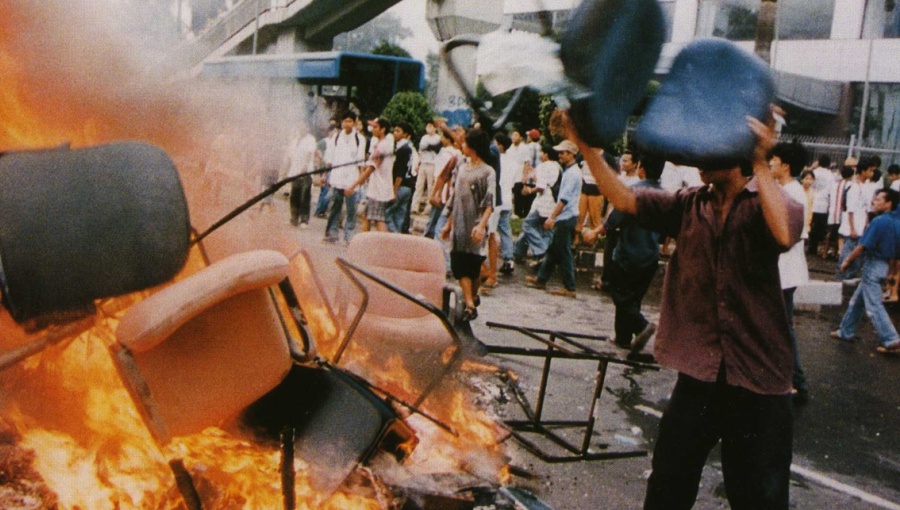
Riots in the Indonesian capital Jakarta in May 1998 / Office of the Vice President of Indonesia
By bno - Surabaya Office June 20, 2025

An Indonesian minister’s denial of the mass rapes that occurred during the May 1998 riots has provoked fierce backlash from rights activists, survivors’ advocates, and the National Commission on Violence Against Women, Channel News Asia reports.

Culture Minister Fadli Zon drew criticism after claiming the rapes were "hearsay" and based on "rumours", sparking alarm over the government’s plan to publish a new series of history books that critics say may gloss over major human rights violations.

“What actually happened? We never truly know. Who said it was mass rape? It was all hearsay,” Fadli said in a recent podcast interview with IDN Times. His remarks were made while discussing the release of a new 10-volume national history series planned for Indonesia’s Independence Day on August 17.

Fadli’s comments directly contradict the findings of a government-sanctioned fact-finding team, which reported 85 cases of sexual violence, including 52 rapes, during the 1998 turmoil. The report was submitted to former President BJ Habibie, who publicly expressed sorrow over the atrocities.

Commissioner Dahlia Madanih of the National Commission on Violence Against Women condemned Fadli’s remarks, saying: “Denying the official findings is denying this nation’s collective efforts to seek justice. The survivors have carried this trauma silently for decades.”

The 1998 riots, driven by economic collapse and growing resentment towards President Suharto’s regime at the time, saw widespread attacks against the Chinese-Indonesian community. Many Chinese-Indonesian women were specifically targeted in acts of sexual violence.

Diyah Wara Restiyati of the Indonesian Chinese Youth Association called Fadli’s remarks "deeply hurtful", saying, “When officials claim the rapes didn’t happen, it reopens old wounds, especially for Chinese-Indonesian women.”

Jakarta councillor Fatimah Tania Nadira Alatas also criticised the minister, calling his comments unethical and a dismissal of historical pain. “These wounds cannot be erased or rewritten,” she stated on the Jakarta NasDem Party’s social media.

In response to mounting criticism, Fadli clarified that he was not denying that sexual violence occurred, but rather urging “academic and legal caution” in classifying the events as "mass rapes". He argued on platform X (formerly Twitter) that the fact-finding report lacked verified details such as names or locations, and warned that such terminology affects national dignity.

The government’s upcoming history books have drawn widespread concern. A 30-page draft reviewed by historians reportedly omits or downplays numerous human rights violations and presents a glorified view of the Suharto era.

Only two of the 17 gross rights violations recognised by the National Commission on Human Rights were included, according to Nikkei Asia. Some of the omitted events are reportedly linked to President Prabowo Subianto, who has not commented on the matter.

Prabowo, a former general and Suharto’s ex-son-in-law, has previously been accused of orchestrating the 1997–1998 abduction and torture of 22 student activists, 13 of whom remain missing. He denies involvement.

Fadli, a senior figure in Prabowo’s Gerindra party, claimed these accusations have been discredited.

Historian Asvi Warman Adam told The Jakarta Post that the new history project appears to sanitise the past, while a coalition known as the Indonesian Historical Transparency Alliance called it a “deliberate effort to engineer the past”.

The House of Representatives' Commission X, which oversees education and culture, has pledged to meet with the Culture Ministry. Chairwoman Hetifah Sjaifudian vowed to push for the removal of the "official" label from the books to ensure historical discourse remains open.