Thursday, June 26, 2025

CCS

USC technology may reduce shipping emissions by half


New research shows how a shipboard system using limestone and seawater could cut maritime CO2 emissions by 50%.


University of Southern California

Will Berelson and Jess Adkins 

image: 

William Berelson of USC, left, and Jess Adkins of Caltech are studying processes that would trap and store greenhouse gases out at sea. (USC Photo) screenshot from video.

view more 

Credit: USC


Scientists at USC and Caltech, in collaboration with startup company Calcarea, have developed a promising shipboard system that could remove up to half of carbon dioxide emitted from shipping vessels by converting it into an ocean-safe solution.

The breakthrough, described in Science Advances, describes how the system could reduce carbon emissions from the shipping industry — one of the world’s most difficult-to-decarbonize sectors.

“What’s beautiful about this is how simple it is,” said William Berelson, the Paxson H. Offield Professor in Coastal and Marine Systems at the USC Dornsife College of Letters, Arts and Sciences and co-corresponding author of the study. “We’re speeding up a process the ocean already uses to buffer CO2 — but doing it on a ship, and in a way that can meaningfully reduce emissions at scale.”

The process mimics a natural chemical reaction in the ocean. As ships move through seawater, CO2 from their exhaust is absorbed into water pumped onboard, making it slightly more acidic. That water is then passed through a bed of limestone, where the acid reacts with the rock to form bicarbonate — a safe, stable compound that exists naturally in seawater. The treated water, now stripped of CO2, is then discharged back into the ocean.

“What’s most exciting to me is that this started as a pure science question: How does the ocean buffer CO2?” Berelson added. “From there, we realized we might have a real-world solution that could help fight climate change.”

From lab to sea

Maritime shipping accounts for nearly 3% of global greenhouse gas emissions. Yet current solutions, like low-carbon fuels and electrification, remain expensive or impractical for long-distance voyages.

“We see our approach as a complementary strategy that could help ships reduce their environmental impact without major design overhauls,” said Jess Adkins, co-founder and CEO of Calcarea and the Smits Family Professor of Geochemistry and Global Environmental Science at Caltech.

In the lab, the researchers tested key elements of the process, using controlled amounts of seawater, limestone and CO2. Their experiments aligned closely with theoretical predictions, giving them confidence to scale up their modeling to the size necessary to work on real vessels.

“We wanted to show that we not only understood the chemistry — we could also predict how much CO2 would be neutralized,” Berelson said. “That allowed us to model what this might look like on an actual ship.”

The study also used sophisticated ocean modeling to examine what would happen when the bicarbonate-rich water is released back into the sea. Simulations tracked a hypothetical ship traveling repeatedly between China and Los Angeles over a 10-year period, discharging treated water along the route. The models showed negligible impact on ocean pH and chemistry — an important validation for the technology’s environmental safety.

The researchers estimate that widespread adoption of the technique could reduce shipping-related CO2 emissions by 50%.

“This is the kind of scale we need if we’re going to make a real dent in global emissions,” Berelson said. “It’s not going to happen overnight, but it shows what’s possible.”

Bringing the technology to market

The academic work is running in parallel with Calcarea, a startup company working to bring the technology to market. The company is in early discussions with commercial shippers and exploring pilot programs that would test the technology on working vessels.

Calcarea previously announced a collaboration with Lomar Shipping’s corporate venture lab, Lomar Labs, to commercialize and deploy their shipboard carbon capture system.

“Scalability is built into our design,” Adkins said. “We’re engineering a system that can integrate with existing vessels and be adopted fleetwide. By working directly with industry partners, we’re accelerating the path from lab to ocean.”

Berelson, a co-founder and scientific advisor for Calcarea, continues to study the science behind the approach, including reaction rates and long-term impacts on ocean chemistry.

 Prototype of ocean carbon capture device 

The carbon capture device mimics the ocean’s natural carbon capture process but at a faster rate. (USC Photo/Nina Raffio)

USC Dornsife’s William Berelson explains the technology behind the carbon capture device. (USC Photo/Nina Raffio)

Will Berelson’s grad students test the project’s tech on Catalina Island. (Jason Goode/USC Wrigley Institute)


New study identifies brain networks underlying psychopathy


A research team has used the Julich-Brain Atlas to uncover neuroanatomical correlates of antisocial behaviour.


EBRAINS

Associations of brain structure with psychopathy 

image: 

Coloured regions show where brain volume was associated with deviant lifestyle and antisocial behaviour in individuals with psychopathic traits.

view more 

Credit: Pieperhoff, P., Hofhansel, L., Schneider, F. et al. Eur Arch Psychiatry Clin Neurosci (2025)


A new study published in the European Archives of Psychiatry and Clinical Neuroscience has shed light on the brain structure differences associated with psychopathy — a condition known to be one of the strongest predictors of persistent violent behaviour. Using advanced neuroimaging and the Julich-Brain Atlas, researchers from Forschungszentrum Jülich, RWTH Aachen University ,Heinrich-Heine-University Düsseldorf, Georg August University, (Germany) and University of Pennsylvania (USA) have identified specific brain networks that appear to be structurally altered in individuals exhibiting psychopathic traits. The Atlas can be freely accessed via the EBRAINS Research Infrastructure. 

The study examined structural MRI data from 39 adult male participants diagnosed with psychopathy, compared with matched control subjects. Researchers assessed psychopathic traits using the Psychopathy Check-List (PCL-R), a well-established diagnostic tool that evaluates two key dimensions: interpersonal-affective traits (factor 1) and lifestyle-antisocial behaviour (factor 2). 

Results revealed that higher scores on factor 2 — related to antisocial tendencies — were linked to reduced volumes in multiple brain regions. These included subcortical areas such as the basal ganglia, thalamus, and basal forebrain, as well as parts of the brainstem (pons), cerebellum, and cortical areas in the orbitofrontal and insular regions. These areas are known to play roles in emotion regulation, decision-making, impulse control, and social behaviour. 

In contrast, associations with factor 1 traits, such as pathological lying and lack of empathy, were weaker and more variable. Some volume differences were noted in the orbitofrontal, dorsolateral-frontal and left hippocampal areas, but the patterns were less consistent across individuals. 

Group comparisons also revealed a significant reduction in total brain volume in the psychopathy group, with the most notable localised difference in the right subiculum, a part of the hippocampus involved in memory. 

The study’s authors highlight that the findings suggest a particularly strong neurobiological link between antisocial behaviour and reduced brain volume across widespread regions. 

The study advances research on the neuropsychobiological correlates of aggression, which will be intensively investigated in the next years at RWTH Aachen together with the universities in Heidelberg and Frankfurt, the Central Institute in Mannheim, as well as Forschungszentrum Jülich within the research initiative SFB TRR 379 (Neuropsychobiology of Aggression: A Transdiagnostic Approach in Mental Disorders.)

Read the full article: 

Associations of brain structure with psychopathy 

Peter Pieperhoff, Lena Hofhansel, Frank Schneider, Jürgen Müller, Katrin Amunts, Sabrina Weber-Papen, Carmen Weidler, Benjamin Clemens, Adrian Raine & Ute Habel  
Eur Arch Psychiatry Clin Neurosci (2025). https://doi.org/10.1007/s00406-025-02028-6 


ABOUT EBRAINS

EBRAINS is Europe’s Digital Neuroscience Research Infrastructure. Built by the EU-funded Human Brain Project, it provides open access to computational modelling, brain atlases, shared digital analysis tools, and unique open datasets to advance brain research and medicine, enabling large-scale collaboration.

Through EBRAINS, scientists can perform complex analyses, using brain maps to facilitate neuroimaging, model the brain across scales, access supercomputers, and manage vast amounts of data. These capabilities accelerate research and drive innovation in medical applications – such as exploring disease mechanisms through datasets and digital tools, and developing digital twins of the brain. Additionally, EBRAINS contributes to broader scientific advancements by fostering AI-driven neuroscience, supporting the creation of a European Health Data Space, and strengthening collaboration between research infrastructures.

Lessons from Vieques: Resisting U.S. Militarism, Building Unity


Around two years ago, I watched a puppet show, created by a group of eight to 16-year-olds at the summer camp where I worked, about the eviction of the U.S. Navy from the island of Vieques. After I conducted a few brief workshops reviewing the island’s history of military occupation and contamination, the campers immediately grasped the importance of the decades long struggle to evict the U.S. Navy, which they represented with a puppet of a venomous snake; on the other hand, they used the iconic native Puerto Rican frog, the coquí, to depict participants in the popular uprising against the U.S. military.

This May marked 22 years since the US Navy was evicted from the island of Vieques. The story of Vieques should be understood by us organizers, just as it was by these campers through their puppet show, as we seek to build an anti-militarist climate movement that breaks down silos between supposedly separate organizing spaces. As we seek to build an anti-militarist climate movement and shape the global narratives in upcoming events, looking at Vieques’ past and present history is crucial.

Vieques is an island off the coast of mainland Puerto Rico, a U.S. colony since 1898, in a state of limbo where Boricuas (Puerto Ricans) have U.S. citizenship but cannot vote, and at the same time, are unable to pursue self-determination through independence. Vieques was long exploited by wealthy landowners and the U.S. mainland’s economy for sugar production. In 1941, the Navy seized Vieques, with the goal of creating a colonial outpost in the Atlantic Ocean to mirror its base occupying Hawai’i, Pearl Harbor, in the Pacific. The island’s population of 10,000 was then forced to relocate to a small area of the island. Some wealthy landowners sold their land, while the U.S. government confiscated other plots of land for “public” use.

For over 60 years, the U.S. Navy used Vieques as a bomb testing site, scorching the crust of the island by dropping around three million pounds of napalm, depleted uranium, and other toxic chemicals onto the land. Many of these bombs would then go on to be used on the people and soil of Palestine, itself a deadly testing ground for the U.S. war machine. Despite the extraordinary levels of chemical pollution, there was no hospital on the island. Additionally, the 1920 Jones Act restricted Puerto Rico to importing only U.S.-built, U.S.-owned, U.S.-operated, and U.S.-crewed cargo. This stranglehold continues to make any resources for the island extremely expensive.

These were clear-cut conditions. The U.S. empire was poisoning the island and cutting it off from necessary goods, demonstrating Puerto Rico’s broader colonial status. In 1999, Daniel Sanes Rodriguez, a civilian employee of the naval base, was killed by an accidental off-target bomb. This was the spark of a protest movement made up of tens of thousands of people demanding the U.S. military leave the island. Protest tactics included encampments in the bomb range, graffiti, destruction of military property, and marches that included every sector of society, including religious leaders, fishers, environmental activists, students, and labor leaders. It also included leaders who were independence activists, statehood advocates, and advocates for commonwealth status.

In 2001, President George Bush announced that the naval base would be closed. In May 2003, the U.S. Navy left the island and, ironically, converted the former base into a nature reserve. While the U.S. government has stalled for two decades in its promises of clean-up, this was a moment of victory. This monumental achievement was brought about by as wide an array of groups as the base impacted. By uniting in a popular struggle against U.S. militarism, the people of Vieques showed the world that the naval base had absolutely no business continuing to occupy their land. This moment was also considered a massive touchstone in the fight for a free and independent Puerto Rico.

This isn’t to say that these tactics, this moment, or this rubric for what constitutes victory can be applied to every situation. But we can learn a lot about movement building and breaking out of what can appear to be separate organizing spaces. This was a win for independence, environmentalists, survival, and sovereignty. It’s pretty simple: wherever the U.S. war machine is active, the fight against it and for sovereignty is the fight for the land.

So why isn’t this mirrored within the belly of the beast? Sometimes it is, in the examples of protests to stop the building of Cop City in Atlanta and in protests against the construction of new prisons. But when we discuss “the climate movement” and “the anti-war movement,” we must address why they’re institutionally separated through organizations, slogans, and targets. It’s no mystery – we can go down the list: funding, “pragmatism,” societal conditioning, greenwashing, internalized racism.

With COP, the U.N. Climate Conference, less than six months away, it’s time to clarify our targets and identify the flashpoints of struggle. However toothless, co-opted, and irredeemable the annual “diplomatic” event is, with countries around the world cyclically refusing to take any meaningful action to address the climate crisis, it is also an event where the world’s climate movement plays a large role in shaping narratives, either in the conference itself or in people’s counter-conferences.

We must call attention to  Puerto Rico – how it has been used for NATO training to continue escalation in the environmentally catastrophic Ukraine war, and how it has served the U.S.’s claim of Latin America and the Caribbean as its so-called backyard through its role in the U.S. Southern Command. Just as U.S. militarism in Hawai’i and the Philippines has been used to claim the Asia-Pacific in its escalation against China. We must trace the deadly supply chain of the bombs tested on Vieques, which have since been used to decimate entire communities in  Palestine, destroying the local and global environment. And we must highlight the poisoning of the soil in Vieques, where residents are 27% more likely to be fighting cancer than the rest of Puerto Rico, and 280% more likely to be fighting lung cancer specifically. The same empire that poisoned Vieques now strangles Cuba, Nicaragua, and Venezuela with sanctions, blocking their ability to address the climate crisis effectively. These sites of struggle for national sovereignty are just as much about our collective survival.

This year, at COP and in every climate space, our only hope is to learn from and center the past and present struggle in Vieques and everywhere else bearing the brunt of U.S. militarism, to clearly understand where our enemies converge, and to act accordingly because one thing that we can learn from Vieques and from the eight to 16-year-old campers telling Vieques’ story is that it’s clear when something is a venomous snake.


Zionist “anti-Semitic racism” Report Expected to be Given to School Boards Canada-wide


Ontario’s education ministry supposedly bans “political” bias, but with the TDSB, that “bias” means banning support of Palestinian rights: Zionism is not apparently “political”!  The most  disturbing aspect is that these damaging CIJA-developed recommendations will probably be attempted at school boards across Canada.

Director of Education LaTouche, and Trustees:

Many of us have been disappointed by the TDSB’s highly political pro-Israel actions for years, but the actions this year (the trustees’ secret discussion and support of the “Affirming Jewish Identities & Addressing Antisemitism” report not to mention it’s support of the discredited “Nova Music Festival Exhibit” and dismissing of “No Other Land”!) have crossed a line of what should be acceptable by any school board.

I read the “Affirming Jewish Identities” report and believe that, if it were implemented, it would damage all non-Jewish students by giving Jewish students and staff the power to complain about what should be Charter- protected speech (and action).  Its recommendations could be entitled, No Jew may be offended.  The Toronto TDSB’s efforts to ensure students are exposed only to (political!) Zionist perspectives are described.

I attended the Nova Exhibit when I read that TDSB had sent students there and was appalled by the pornographic propaganda: tales that had been thoroughly documented as untrue before this exhibit was constructed. My experience visiting the Nova exhibit are described here.

I spent hours trying to find the Trustees’ discussion about this report in the public February meeting, but realized that that discussion had been held secretly and with voting results that were not visible.  I understand that holding secret discussions like that is not legal in Ontario.  On February 24th, the Justice Center for Constitutional Freedoms sent a complaint to the Waterloo Catholic District School Board (WCDSB) that its secrecy in a public meeting was unconstitutional.

My attempts to find out the status of the possible implementation of this report have been disappointing, with no response to calls to my trustee, the head trustee, or my letter to Education Director LaTouche.  I have had the impression for the last several years that if a member of their public does not agree with TDSB’s Zionist agenda, no Trustee or employee feels any obligation to have any contact with them.  The TDSB looks as if it is run like a little fiefdom with no responsibility to deal with any dissent from those who voted them in.

As things now stand, I would not want any child in our family to attend a TDSB school until it shows that it is fully compliant with Charter rights and the implications of international humanitarian law in Canada.  It is unacceptable that children in at least one TDSB school have been subjected to racist hatred: “Kids in Gaza deserve what they get.”  TDSB’s “anti-racism” program should deal with all racism together, not piece-meal.

Karin Brothers is a freelance writer. Read other articles by Karin.

A Silence that is Defining Our Age and Which


is Deafening


Bearing witness is baring one's soul to the grand collective humanity of the humane


Note: Another long opinion piece in the local rag, Lincoln County Leader, June 18, 2025.


First, though, let me explain. The idea is to not just rattle my fellow citizens’ cages, those self-imposed prisons of the mind. It’s my own journalistic and controlled demolition of the grand narratives this country has foisted on a public that has not only become unsuspecting, but absolutely habituated into brands, and consumer dialogue, talks about trips to Costco or Costa Rica, it’s all the same fucking 24 pack of paper towels to throw at hurricane victims in Puerto Rico.

This is the spawn of Nazis, the good Germans, the guy who is now a Jew, who was trained by Jew York Jews like Roy Cohen, and alas, his grandkiddos are Jewish, and that daughter is Jewish, and the mafia in his Minyan is composed of Jews and even freak Zionists like RFK, Jr.

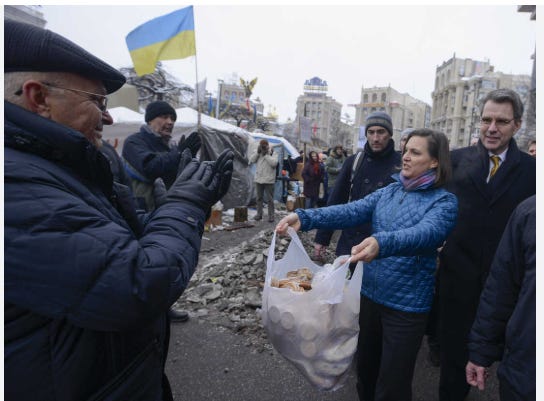
It is a sickness that isn’t just one chapter in the DSM-V: Victoria Nuland and cookies, man.

What is the DSM-5?

The Diagnostic and Statistical Manual of Mental Disorders, often known as the “DSM,” is a reference book on mental health and brain-related conditions and disorders. The American Psychiatric Association (APA) is responsible for the writing, editing, reviewing and publishing of this book.

The number “5” attached to the name of the DSM refers to the fifth — and most recent — edition of this book. The DSM-5®’s original release date was in May 2013. The APA released a revised version of the fifth edition in March 2022. That version is known as the DSM-5-TR™, with TR meaning “text revision.”

IMPORTANT: The DSM-5 and DSM-5-TR are medical reference books intended for experts and professionals. The content in these books is very technical, though people who aren’t medical professionals may still find it interesting or educational. However, you shouldn’t use either of these books as a substitute for seeing a trained, qualified mental health or medical provider.

Additionally, the APA also publishes books that supplement the content in the DSM-5-TR. Examples of these supplement publications include the DSM-5 Handbook of Differential Diagnosis and DSM-5 Clinical Cases.

What is the purpose of the DSM-5?

The first step in treating any health condition — physical or mental — is accurately diagnosing the condition. That’s where the DSM-5 comes in. It provides clear, highly detailed definitions of mental health and brain-related conditions. It also provides details and examples of the signs and symptoms of those conditions.

In addition to defining and explaining conditions, the DSM-5 organizes those conditions into groups. That makes it easier for healthcare providers to accurately diagnose conditions and tell them apart from conditions with similar signs and symptoms.]

[Photo: While Ronald Reagan demonized the welfare system as a whole in familiar terms, his ire was largely directed toward single mothers, and his racially coded language was sufficient to make clear his overarching intentions.]

All these things, these economic things, they are on people’s minds. The chaos of Trump and Company, as he plays out his dictator role, all of that is on everyone’s minds.

The cost of being poor is rising. And it’s worse for poor families of color. Great headline.

But the point of my short op-ed was to discuss how the silence of this genocide is deafening, in fact, defeating. This has a deep deep psychological effect on those who might have cared to speak up and who are distressed by the murder incorporated on a mass murder scale that the Jews in Israel are undertaking.

But the empire of chaos is about that chaos, and the chaotic nature of our news cycle with the demented POTUS and his even more demented cabinet members and his MAGA mutt followers, that this imploding diesel belching engine has thrown so many people into discombobulation syndrome.

Chaos of thought and passion, all confused;
Still by himself abused or disabused;
Created half to rise, and half to fall;
Great lord of all things, yet a prey to all;
Sole judge of truth, in endless error hurled,
The glory, jest, and riddle of the world.

— Alexander Pope, An Essay on Man

The poor and forgotten nations of the world can blame their downward spiral on an emerging world order that Samir Amin in this brilliant essay calls the “empire of chaos.” Comprised of the United States, Japan, and Germany, and backed by a weakened USSR and the comprador classes of the third world, this is an empire that will stop at nothing in its campaign to protect and expand its capitalist markets.

The interview with Professor Samir Amin was conducted on 6 May 2018 in Beijing, by Professor Lau Kin Chi and Professor Sit Tsui Jade. Professor Amin criticized monopoly capitalism and the collective imperialism of the Triad (USA, Europe, and Japan). He analyzed the current major challenges to China. He strongly suggested that China should not join financial globalization, but on the contrary, keep capital account and exchange rate under control, as well as maintain collective ownership of land and the small peasantry. These were great weapons against financial globalization. He also discussed the possibilities of building people’s internationalism.

*****
Israel’s culture of genocide is spreading globally. We must build an alternative” by Abed Abou Shhadeh

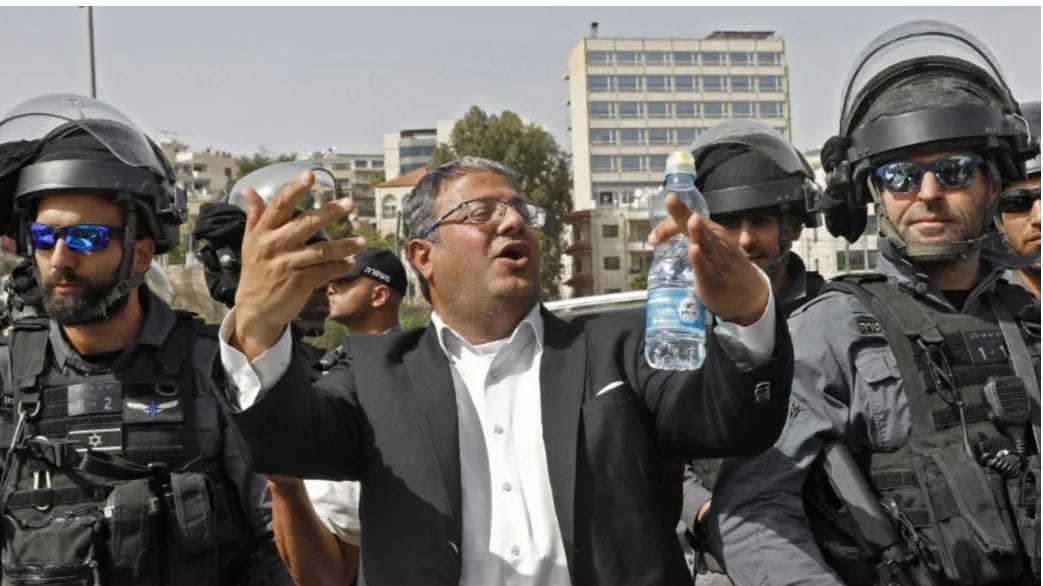
Even as Israeli violence becomes more visible, politicians like Ben Gvir are welcomed as honoured guests in the US

‘The crimes [in Gaza] are so egregious that are being carried out… The attempt to cover them up and whitewash them is failing’ Since 7 October, western media coverage of Israel’s war on Gaza has come under intense scrutiny, particularly for the language and terminology used by many outlets. As a result, the coverage has been accused of bias against Palestinians effectively providing cover for Israel’s war on Gaza. To delve into this, we’re speaking to Assal Rad, an Iranian-American scholar of the modern Middle East and fellow at DAWN, who’s also made it her mission to call out and ‘fix’ misleading headlines. Her widely shared posts earned her the title of ‘headline fixer’, turning this into a trend of its own online.

This is just a watered-down version of what I really would love to write every day, and in a sense have the public square to discuss this silence, this mute echo of silence has pushed a collective insanity and amnesia into the populous.

The Silence is Deafening

The silence is deafening, here on the coast, and throughout most of the land. Forget about large universities and valiant young people and some faculty protesting the genocide which by many expert accounts — not cited in so-called legacy media – are 100,000 murdered civilians.

Targeted assassinations of journalists and of medical workers? And the AMA is silent. The American Medical Association represents hundreds of thousands of doctors.

“We’re seeing hospitals being bombed, ambulances being bombed, doctors and other medical workers being targeted and shot. The AMA is the sixth-largest lobbying organization in the United States, it’s bigger than Boeing. It’s bigger than Lockheed Martin, it’s bigger than the National Rifle Association. They have a tremendous amount of domestic and international influence, and because they carry such weight within the realm of health care, we felt it would be appropriate for them to use their voice in this way.”

Emily Hacker, a member of Healthcare Workers for Palestine, outlined that an important reason healthcare workers want the “AMA and all other healthcare institutions to be involved in ending the Israeli occupation of Palestine”  is that “the US can spend billions and billions of dollars on bombs and bullets, but there are 26 million Americans with no health insurance and 150 million Americans rely on Medicare or Medicaid.”

“People can’t afford their insulin, but there’s always money for bombs,” Hackerarticulated.

Cognitive dissonance is more than just interesting as a theory to study. In our daily lives we for the most part are silent. Hands down. No discussion of Israel’s genocide and the United States’ and Britain’s complicity because most Americans are dangerously poorly educated.

Miseducated. Brainwashed.

This is what many call “deep” or “master narratives” – that somehow the settler colonial apartheid state of Israel is the most democratic state in the Middle East. I witnessed genocide silence at the Yachats Commons June 1, where we listened to Oregon Black Pioneers presenter Zachary Stocks discuss the origin of black exclusion laws in our state as well as the pro-slavery mentality that dominated many of the state’s politicians and newspaper editors.

Good stuff he presented to a largely greying and older population. We did get some land acknowledgment from Joanne Kittel, known for her work around the Amanda Trail.

“For those of you who travel through Yachats, I ask you to pay respect to and honor the Alsea, Siuslaw, Lower Umpqua and Coos people who lost their lives as a result of their forced incarceration and mistreatment in Yachats, Waldport and Florence areas. The Amanda Trail that connects Yachats to Cape Perpetua is a spiritual and solemn path that remembers in perpetuity.” Joanne Kittel wrote this as a blurb for a book, Seeking Recognition: The Termination and Restoration of the Coos, Lower Umpqua, and Siuslaw Indians, 1855-1984 by David R.M. Beck.

No moment of silence for Gaza? It would have been appropriate.

Deep, grand, meta or master narratives are dominant or commonly-shared stories within a society or culture. They are tools for shaping a collective idea or consciousness about who we are as a society, culture or people. Master narratives also limit our understanding of context and historical causes and effects, and they’re deployed to perpetuate stereotypes or dominant ideologies.

Erasing knowledge and context is the coin of the realm now especially with a shallow and sallow-minded president. This POTUS isn’t the be-all and end-all, but for the past five months people have been scrambling to anticipate his administration’s brand of proto- or neo-fascism. Erasing Black Medal of Honor winners or Jackie Robinson’s portrait from various locations and websites is just the tip of the iceberg of flipping around of history.

“A good Indian is a Dead Indian.” Or, from the other POTUS, Teddy Roosevelt: “I don’t go so far as to think that the only good Indians are the dead Indians, but I believe nine out of every 10 are,” Roosevelt said during a January 1886 speech in New York. “And I shouldn’t like to inquire too closely into the case of the tenth.”

And now why is it the genocide of our times is never discussed in public or around dinner tables? Imagine that during World War Two not a word about Nazism or fascism in Italy and Spain. Silence? The price of bacon?

A Jewish Canadian journalist, many reading this might not know, Aaron Mate, says it bluntly about that Grand Narrative of Israel and Judaism: “Everything I Was Taught… Was a Lie” He says the indoctrination of how Israel is this grand democracy and mothership for all Jews starts early.

“This Jewish state commits genocide in our name. It’s a moral obligation to resist this,” Mate states.

It is more than bizarre and Orwellian, this current rampant ideology of “silence is transparency and lies are truth.”

Doctors, nurses, and medics are murdered and hospitals bombed. And no one in mixed company discusses Gaza, the genocide, the dehumanization of Palestinians, which is a dehumanization for us all.

Doctors? I have MDs in my family and I was a pre-med student for a while. Here is an anonymous statement I agree with, from a doctor condemning the American Medical Association’s complicity:

“As a doctor, I am saying loud and clear I am against all war and especially GENOCIDE. AMA and all our medical institutions that have remained silent and practiced unethical silencing, doxxing, firing of peace supporters or those speaking up for Palestine cast a long shadow of shame on our great profession.”

Silence, and the grand narrative just crumbles.

Paul Haeder's been a teacher, social worker, newspaperman, environmental activist, and marginalized muckraker, union organizer. Paul's book, Reimagining Sanity: Voices Beyond the Echo Chamber (2016), looks at 10 years (now going on 17 years) of his writing at Dissident Voice. Read his musings at LA Progressive. Read (purchase) his short story collection, Wide Open Eyes: Surfacing from Vietnam now out, published by Cirque Journal. Here's his Amazon page with more published work AmazonRead other articles by Paul, or visit Paul's website.