Thursday, June 26, 2025

Amnesty International: Cambodian Government allows slavery and torture to flourish


By Dr. Tim Sandle
June 26, 2025
DIGITAL JOURNAL


Campaigners from one of Cambodia's few environmental activism groups were sentenced to between six and eight years in jail for plotting to commit crimes in their activism - Copyright AFP TANG CHHIN SOTHY

The human rights situation in Cambodia is facing growing criticisms both within the country and from an increasingly alarmed international community. For example, the United Nations has outlined Cambodia’s increasing lack of press freedom and freedom of expression

As a serious example, apparent police collusion is allowing the trafficking and enslavement of huge numbers of people, which has been reported by the human rights group Amnesty International in relation to Cambodia.

Specifically, this occurs at so-termed ‘scamming compounds’, despite efforts to close these bases down.

More than two-thirds of the scamming compounds identified continue to operate after police raids. Within these centres, first-hand testimony exposes massive and extremely violent criminal operation.

According to Amnesty, the Cambodian government is deliberately ignoring human rights abuses including slavery, human trafficking, child labour and torture that are being carried out by criminal gangs on a vast scale in more than fifty scamming compounds located across the country.

A scamming compound is a collection of large fraud organisations usually involved in human trafficking operations, generally found in Southeast Asia and usually operated by a criminal gang.

Survivors interviewed for the 240-page report “I Was Someone Else’s Property”, believed they were applying for genuine jobs but were instead trafficked to Cambodia, where they were held in prison-like compounds and forced to conduct online scams in a billion-dollar shadow economy defrauding people around the world.

The situation has led Agnes Callamard, Amnesty International’s Secretary General, to state: “Deceived, trafficked and enslaved, the survivors of these scamming compounds describe being trapped in a living nightmare enlisted in criminal enterprises that are operating with the apparent consent of the Cambodian government.”

Callamard adds: “Jobseekers from Asia and beyond are lured by the promise of well-paid work into hellish labour camps run by well-organised gangs, where they are forced to scam under the very real threat of violence.”

Amnesty’s findings suggest there has been coordination and possibly collusion between Chinese compound bosses and the Cambodian police, who have failed to shut down compounds despite the slew of human rights abuses taking place inside.

The report has identified at least 53 scamming compounds in Cambodia and interviewed 58 survivors of eight different nationalities, including nine children. Amnesty also reviewed the records of 336 other victims of Cambodian compounds. Those interviewed had either escaped from compounds, been rescued or had a ransom paid by their families.

As part of its 18-month-long research, Amnesty visited all but one of the 53 scamming compounds located in 16 towns and cities across Cambodia, as well as 45 similar sites also strongly suspected to be scamming compounds. Many of the buildings were formerly casinos and hotels repurposed by criminal gangs – mostly from China – after Cambodia banned online gambling in 2019.

Compounds appeared designed to keep people inside, with features such as surveillance cameras, barbed wire around perimeter walls and large numbers of security personnel, often carrying electric shock batons and in some cases firearms. Survivors reported that “escape was impossible”.

Amnesty presented the findings of the report in a press conference at the Foreign Correspondents’ Club of Thailand in Bangkok on Thursday 26 June, 2025.


‘Mass scale’ abuses in Cambodia scam centres: Amnesty


By AFP
June 26, 2025


Cambodia has become a Southeast Asian hotspot within the multibillion-dollar illicit scam industry that has defrauded victims around the world - Copyright AFP/File STR
Sally JENSEN

While looking for jobs on Facebook, Jett thought he had found a well-paying opportunity working in online customer service in his home country of Thailand.

Following instructions to travel across the kingdom, the 18-year-old ended up being trafficked across the border to a compound in Svay Rieng, Cambodia.

There Jett was beaten, tortured and forced to perpetrate cyberscams, part of a multibillion-dollar illicit industry that has defrauded victims around the world.

He was forcibly held at the compound for seven months, during which “there was no monetary compensation, and contacting family for help was not an option”, he told AFP.

“Will I survive, or will I die?” Jett (a pseudonym to protect his identity) recalled asking himself.

Abuses in Cambodia’s scam centres are happening on a “mass scale”, a report published Thursday by Amnesty International said, accusing the Cambodian government of being “acquiescent” and “complicit” in the exploitation of thousands of workers.

The report says there are at least 53 scam compounds in Cambodia, clustered mostly around border areas, in which organised criminal groups carry out human trafficking, forced labour, child labour, torture, deprivation of liberty and slavery.

Amnesty’s Montse Ferrer said that despite law enforcement raids on some scam compounds, the number of compounds in Cambodia has increased, “growing and building” in the last few months and years.

“Scamming compounds are allowed to thrive and flourish by the Cambodian government,” she told AFP.

The Cambodian government has denied the allegations.

Jett was made to romance his wealthy, middle-aged compatriots on social media, gaining their trust until they could be tricked into investing in a fake business.

“If the target fell into the trap, they would be lured to keep investing more until they were financially drained — selling their land, cars, or all their assets,” he said.

Scam bosses demanded exorbitant targets of one million baht ($31,000) per month from overworked employees –- a target only about two percent of them reached, he said.

“Initially, new recruits wouldn’t face physical harm, but later, reprimands escalated to beatings, electric shocks, and severe intimidation,” Jett told AFP.


– ‘Woefully ineffective’ –


The other employees in his multi-storey building were mostly Chinese, with some Vietnamese and some Thais.

Amnesty International says none of the ex-scammers of the 58 they interviewed for the report were Cambodian, and “overwhelmingly” were not paid for their labour.

Most of the scam centre bosses were Chinese, Jett said, adding that they used Thai interpreters when meting out punishments to those who performed poorly.

“Sometimes they’d hold meetings to decide who would be eliminated tomorrow,” he said. “Or who will be sold (to another scam compound)? Or did anyone do something wrong that day? Did they break the company rules?”

He claims a colleague falsely accused him of wrongdoing to the Chinese bosses for a bounty. He pleaded his innocence but they “just didn’t listen”.

Ferrer said Cambodian government interventions against the scam centres had been “woefully ineffective”, often linked to corruption by individual police officers at a “systemic and widespread level”.

Government spokesman Pen Bona told AFP: “Cambodia is a victimised country used by criminals to commit online scams. We do recognise that there is such thing, but Cambodia has taken serious measures against the problem.”

The UN Office on Drugs and Crime said in April that the scam industry was expanding outside hotspots in Southeast Asia, with criminal gangs building up operations as far as South America, Africa, the Middle East, Europe and some Pacific islands.

In Cambodia, Jett ultimately staged a dramatic escape after a particularly severe beating in which his arm was broken. He jumped out of a building, passed out and later woke up in hospital.

“Whether I died or survived, both options seemed good to me at the time,” he said. “Consider it a blessing that I jumped.”

He is now seeking legal recourse with assistance from Thai government agencies who have categorised him as a victim of human trafficking.

But Ferrer said effective action to help end the industry must come from the Cambodian government.

“We are convinced that if the Cambodian government wanted to put a stop they would be able to put a stop. At the very least they would be able to do much more than what we’re seeing,” she said.


UK

Short-changing students: Poor Internet connectivity and online universities


By Dr. Tim Sandle
DIGITAL JOURNAL
June 23, 2025


Image: — © Digital Journal

The University of Manchester is the UK university with the worst Internet, getting a download speed of only 7.3 Mbps, according to a new survey. In contrast, standing out with the best Internet connection is the University of Glasgow, with an average download speed of 273.8 Mbps.

Geographically, students in London universities experience the most Internet speed issues, with over 5.1 million searches.

UK universities experienced multiple Internet outages in 2024-2025, with recurring failures during critical academic periods. A recent study by the firm Elevate analysed university campuses across the UK to identify the universities with the best and worst Internet connection.

By comparing them across key metrics, including download and upload speed, and Google search volume for Internet-related issues, the research ranked the universities from worst to best.


The findings are:

 Universities with the Worst Internet Connection   
 UniversityCity Average Upload SpeedAverage Download SpeedOverall Search Volume of Internet Related issues
1University of ManchesterManchester3 Mbps7.3 Mbps445,930
2University of NottinghamNottingham9.1 Mbps32 Mbps33,390
3Cardiff UniversityCardiff5.6 Mbps36.2 Mbps100,400
4University of YorkYork14.8 Mbps38.3 Mbps 380,380
5University of LeedsLeeds68.1 Mbps59.4 Mbps 272,840
As indicated above, the UK university with the worst Internet is the University of Manchester, with a download speed of only 7.3 Mbps. The upload speed here is also the lowest in the ranking, at 3 Mbps. When it comes to Internet speed issues, they are still common in Manchester, with 445.9K related searches.

The University of Nottingham ranks 2nd among the UK universities with the worst Internet, with a download speed of 32 Mbps, over 4 times faster than in the University of Manchester. Upload speed here is also a little bit higher, but still averages at only 9.1 Mbps.

Cardiff University follows closely with third place and an average Internet speed of 36.2 Mbps. The upload speed here is slower than at the University of Nottingham, at 5.6 Mbps on average. The most common search queries about Internet issues here are speed tests and “Wi-Fi not working”.

The University of York takes fourth place, with an average download speed of 38.3 Mbps. At the same time, upload speed is twice as low, at only 14.8 Mbps. The city of York often experiences connectivity problems, with 380.3K Google searches.

The University of Leeds is fifth on the list of UK universities with the worst Internet connection, getting an average download speed of 59.4 Mbps, over 10 Mbps higher than at the University of York. There are also fewer Internet connectivity issues here, with 272.8K searches.


n contrast, universities coming top are:

 Universities with the Best Internet Connection   
 UniversityCity Average Upload SpeedAverage Download SpeedOverall Search Volume of Internet Related issues
1University of GlasgowGlasgow93.6 Mbps273.8 Mbps316,400
2Imperial College LondonLondon82.9 Mbps221.6 Mbps5,152,250
3University of BirminghamBirmingham38.6 Mbps180.3 Mbps627,470
4University of KentCanterbury50.9 Mbps158.3 Mbps34,660
5King’s College LondonLondon75.6 Mbps155.2 Mbps5,152,250
The UK university with the best Internet connection is the University of Glasgow, with an average download speed of 273.8 Mbps. The upload speed here is also one of the highest among all universities in the UK, at 93.6 Mbps. The connectivity issues in Glasgow are a little less common than in York, with 316.4K related searches.

The Imperial College of London takes second place on the list of UK universities with the best Internet, with an average speed of 221.6 Mbps. London experiences the most connectivity issues, with a total of 5.1 million searches about Internet problems and low wifi speed.

The University of Birmingham gets third place, with a download speed of 180.3 Mbps, almost 100 Mbps below the University of Glasgow. The upload speed here is also very low, compared to other universities at the top, at 38.6 Mbps.
CRIMINAL CAPITALI$M

Metaverse: Home of the fraudulent adverts?


By Dr. Tim Sandle
DIGITAL JOURNAL
June 25, 2025


Meta ditched third-party fact-checking in the United States in January - Copyright AFP Brendan SMIALOWSKI

Thousands of fraudulent ads have been allowed to run on Meta platforms, according to a recent report. Investment fraud on social media has surged dramatically over the past three years, with Instagram and Facebook the most frequently reported platforms, while TikTok and LinkedIn are linked to the highest average financial losses per victim. In fact, £75m is lost each year to investment scams on social media alone.

Where in the world are users most exposed to these ‘dodgy’ financial ads? The firm BrokerChooser has scraped the Meta Ads Library and analysed more than 5,000 active finance-related ads to identify the countries where users are most susceptible to this growing wave of online financial deception.

Meta flooded with dodgy finance ads: Where users are most at risk

RankCountryTotal finance- related ads on MetaSafe  ads %Risky ads %Scam ads %Proportion of dodgy ads (risky & scam)
1South Africa320.00%62.50%37.50%100.00%
2Belgium685.88%83.82%10.29%94.12%
3Turkey2158.37%78.14%13.49%91.63%
4Germany449.09%79.55%11.36%90.91%
5United Arab Emirates1309.23%79.23%11.54%90.77%
6Pakistan1859.73%74.05%16.22%90.27%
7Spain5510.91%83.64%5.45%89.09%
8Australia9816.33%66.33%17.35%83.67%
9India29617.91%71.96%10.14%82.09%
10United States25224.21%62.30%13.49%75.79%
11France1625.00%75.00%0.00%75.00%
12Italy2630.77%65.38%3.85%69.23%
13United Kingdom6533.85%56.92%9.23%66.15% 

With the table:


Scam ads: Make unrealistic financial claims, promise guaranteed returns or risk-free passive income. Risky ads: Promote speculative strategies or unregulated endorsements without proper risk disclaimers. Safe ads: Educational or neutral content promoting regulated services without exaggerated claims.

In terms of the data findings, social media users in the UK are comparatively less exposed to misleading financial promotions, with the lowest share of dodgy ads identified (66.15%), likely due to stricter regulations and enforcement.

A third of ads (33.85%) were classified as safe, with Italy following closely behind with 30.77% of ads deemed safe and a notably low share of scam ads of just 3.85%. However, over half of financial ads in the UK (56.92%) are still classified as risky, often promoting speculative investment strategies without proper risk disclaimers, while 9% are outright scams.

South Africans are the most vulnerable to financial scams on social media, with all finance-related ads analysed on Meta identified as either risky or outright scams. Of these, over a third (37.50%) were confirmed scams, while around three in five (62.50%) were deemed high-risk. This reflects South Africa’s broader cybersecurity challenges as the country ranks fifth globally for cybercrime density.

Belgium ranks second with over 94% of financial ads on Meta platforms considered dodgy. The country has the highest share of risky ads at 83.82%, exposing Belgian users to misleading content that blurs the lines between legitimate investments and scams. Many promote speculative digital currencies and prop trading, boasting claims like “instant account” and “no challenge sign up”, large funding offers up to 500K, and access to “100+ digital currencies” with “ultra-low spreads”. Slogans like “fire your boss” are used to lure users with promises of financial independence.

Turkey online users are the third most at risk, with 91.63% of financial ads on Meta deemed dodgy. Safe ads only make up 8%, while over three-quarters (78.14%) are risky. They tend to promote forex trading, enticing users to “join telegram for daily updates & profits” or offering “free daily forex signals with 85%+ win rate accuracy”. Scam ads (13.49%) frequently promise guaranteed returns—such as “$1500 per week from a $300 investment”—and push AI-driven trading platforms, claiming “99% accuracy” and with “no effort needed”. These too-good-to-be-true claims are typical hallmarks of fraud.

Germany and the United Arab Emirates round out the top five with 90.91% and 90.77% of finance-related ads considered dodgy, respectively. In the UAE, scammers commonly use high-pressure language to create urgency such as “Hurry! Invest now in stock market before the prices totally go up” and tout unrealistic gains like “120% refund on your first payout” and “Get up to 220% return on investment within 50 days“. This inflated and time-sensitive language is a clear red flag.

Tech giants’ net zero goals verging on fantasy: researchers


By AFP
June 25, 2025


AI is driving a rapid increase in energy use in the tech sector, and the CO2 emissions that come with it - Copyright AFP/File Manaure QUINTERO
Marlowe HOOD

The credibility of climate pledges by the world’s tech giants to rapidly become carbon neutral is fading fast as they devour more and more energy in the race to develop AI and build data centres, researchers warned Thursday.

Apple, Google and Meta said they would stop adding CO2 into the atmosphere by 2030, while Amazon set that target for 2040.

Microsoft promised to be “net negative” — pulling CO2 out of the air — by the end of this decade.

But those vows, made before the AI boom transformed the sector, are starting to look like a fantasy even as these companies have doubled down on them, according to independent analysts.

“The greenhouse gas emissions targets of tech companies appear to have lost their meaning,” Thomas Hay, lead author of a report by think tanks Carbon Market Watch and NewClimate Institute, told AFP.

“If energy consumption continues to rise unchecked and without adequate oversight,” he added, “these targets will likely be unachievable.”

The deep-dive analysis found the overall integrity of the climate strategies at Meta, Microsoft and Amazon to be “poor”, while Apple’s and Microsoft’s were deemed “moderate”.

When it came to the quality of emissions reduction targets, those of Meta and Amazon were judged “very poor”, while Google and Microsoft scored a “poor” rating. Only Apple fared better.

The expanding carbon footprint of the five top tech behemoths stems mostly from the breakneck expansion of artificial intelligence, which requires huge amounts of energy to develop and run.

Electricity consumption — and the carbon emissions that come with it — has doubled for some of these companies in the last three or four years, and tripled for others, the report found.

The same is true across the sector: operational emissions of the world’s top 200 information technology companies was nearly 300 million tonnes of CO2 in 2023, and nearly five times that if the downstream use products and services is taken into account, according to the UN’s International Telecommunications Union.

If the sector were a country, it would rank fifth in greenhouse gas emissions ahead of Brazil.

Electricity to power data centres increased on average 12 percent per year from 2017 to 2024, and is projected to double by 2030, according to the IEA.


– ‘Quite unregulated’ –


If all this extra power came from solar and wind, CO2 emissions would not be rising.

But despite ambitious plans to source their energy from renewables, much of it is still not carbon neutral.

Studies estimate that half of the computing capacity of tech companies’ data centres comes from subcontractors, yet many companies do not account for these emissions, the study points out.

The same is true for the entire infrastructure and equipment supply chain, which accounts for at least a third of tech companies’ carbon footprint.

“There is a lot of investment in renewable energy, but overall, it has not offset the sector’s thirst for electricity,” Day said.

Given the status of AI as a driver of economic growth, and even as a vector for industrial policy, it is unlikely that governments are going to constrain the sector’s expansion, the report noted.

“So far the whole AI boom has been altogether quite unregulated,” Day said.

“There are things these companies can and will do for future proofing, to make sure they’re moving in the right direction” in relation to climate goals, he added.

“But when it comes to decisions that would essentially constrain the growth of the business model, we don’t see any indications that that can happen without regulatory action.”

The report identifies a number of ways in which the tech sector can curb its carbon footprint, even as it develops AI apace.

Ensuring that data centres — both those belonging to the companies as well as third party partners — run on renewable electricity is crucial.

Increasing the lifespan of devices and expanding the use of recycled components for hardware production could also make a big difference.

Finally, the methods use for calculating emissions reduction targets are out-of-date, and in need of revision, the report said.
Dem rips GOP witnesses at DEI hearing: 'Keep MLK's name out of your mouth!'

BLACK WORDS WHITE MOUTHS


David Edwards
June 25, 2025 
RAW STORY


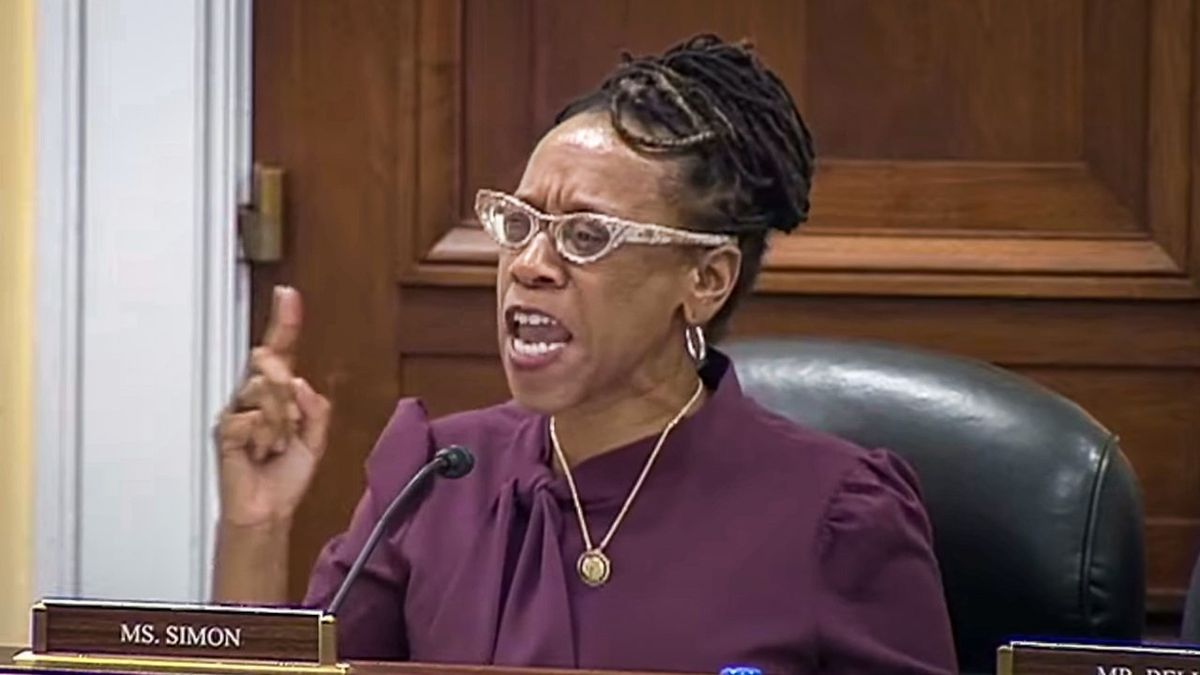
House Oversight subcommittee/screen grab

Rep. Lateefah Simon (D-CA) blasted four Republican witnesses for appropriating the words of Dr. Martin Luther King Jr. at a hearing on diversity, equity, and inclusion (DEI).

Speaking Wednesday before a House Oversight subcommittee, Simon addressed the majority's witnesses: Dan Lennington of the Wisconsin Institute for Law & Liberty, Judge Glock of the Manhattan Institute, and Erec Smith of the Cato Institute.

"This is a very, very difficult conversation," she explained. "I'm a great-granddaughter of someone who had a literal yoke on her neck. A literal yoke."

"And I wanna be clear that four out of the five of you last year posted on your social media the words of Dr. King," she continued, "and there are so few folks who actually have studied who are clear on the theology of freedom of King. Very few of you have read and studied and have sat in Ebenezer Baptist Church, so I would ask you to keep Dr. King's name out of your mouth!"

"If you, like me and the many scholars who will be watching studied King, you know that he and the mothers and the fathers of the civil rights movement and of the movement for emancipation not only would be struck by the conversations in this room, but would be shattered by the consequence of lives of hatred, of abuse of this administration, in the name of folks who worked to make this country more free."

Simon noted that "it was never the plan to have people of color" in Congress.

"In fact, folks had to fight tooth or nail to gain access to the front door to this Capitol," she remarked. "Today's hearing says quietly, and actually out loud, who the majority believe is allowed to belong in this country. They used Dr. King's name in deep vein, who has a place in the hierarchy that was never meant to be questioned."

The lawmaker accused Republicans of wanting to "push us back to a segregated America based on race."

"It is a bigotry. It is a hypocrisy," she insisted. "Republicans, like I said before, will quote Dr. King all day, will bring forth Lincoln and will talk about Frederick Douglass in the same breath that they are gutting civil rights offices in our governments, in the same breath where they seek to ban AP African-American studies that tells the true story of this country."

"These attacks are central to a broader agenda," Simon added, "that bans books, that erases history, and redefines its national identity in narrow and violent terms."

"A 1950s America is what the goal of this conversation is, and some of us say hell no."

Watch the video below or click here.


'God spared your life' to bomb Iran: Trump touts praise from Christian leader


David Edwards
June 26, 2025 
RAW STORY

President Donald Trump touted the praise of a Christian leader who claimed God prevented his assassination so he could order a strike on Iran.

In a Thursday post on Truth Social, Trump shared a message from Ralph Reed, the former chairman of the Georgia GOP and founder of the Faith and Freedom Coalition.

"THANK YOU for your bold decision to strike the nuclear sites in Iran," the evangelical Christian wrote to Trump. "You had the guts to do what no other president would do."

"I believe God spared your life in Butler PA & again at Trump International so you could be here today to make this historic decision," he added. "It was a Reaganesque & Churchillian moment. America, Israel and the world thanks to you."

Hurricane expert sounds alarm that Trump's admin killed key weather satellites

Sarah K. Burris
June 26, 2025 
RAW ST0R

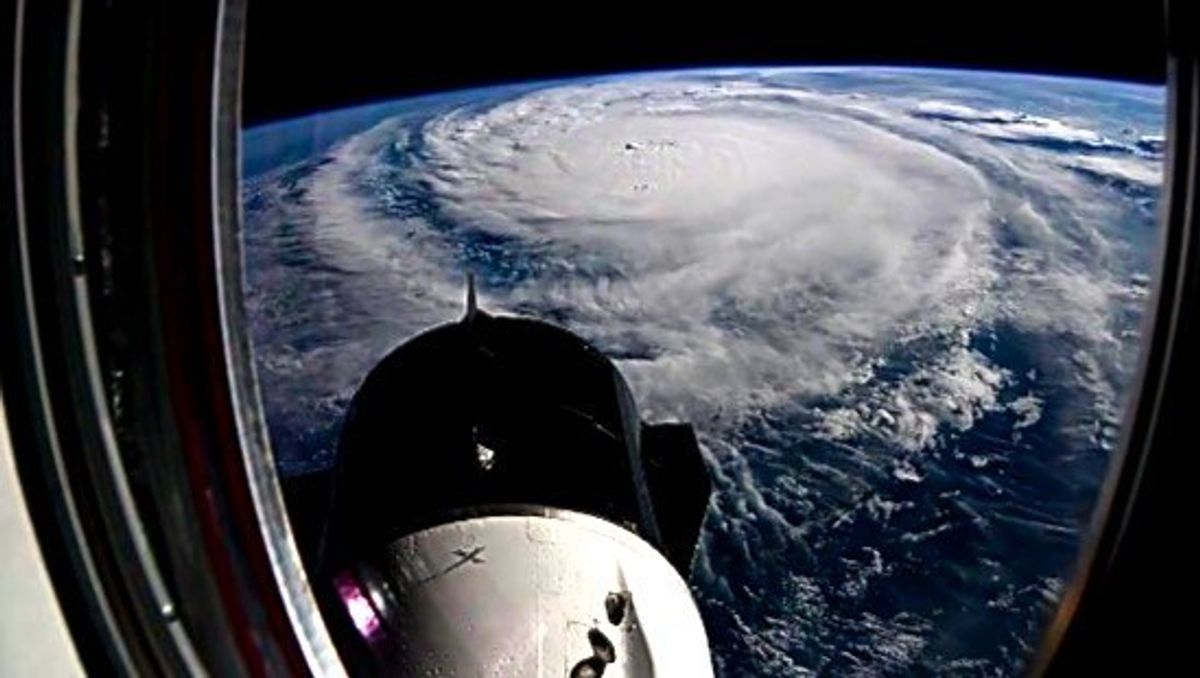
Hurricane Milton as seen from the International Space Station (Screen cap via NASA)

Hurricane and storm surge expert Michael Lowry penned a column on Thursday, warning of a recent decision by President Donald Trump's administration to kill three weather satellites just as hurricane season is ramping up.

He wrote that on Monday, the U.S. Department of Defense announced it would "stop ingesting, processing, and transmitting data essential to most hurricane forecasts."

By Tuesday, the National Oceanic and Atmospheric Administration (NOAA) confirmed the news in a "a service change notice to all users," which included those monitoring the Atlantic's skies at the Hurricane Center.

"By next Monday, June 30th, they would no longer receive real-time microwave data collected aboard three weather satellites jointly run by NOAA and the U.S. Department of Defense," wrote Lowry.

The Atlantic's hurricane season begins June 1, but this week was the first time a named storm popped up in the ocean. Lowry noted on X that the accumulated cyclone energy (ACE) was extremely low and it dissipated by Wednesday. Being able to chart that information in the future might be more difficult without access to the data gathered by the three satellites. Those three provide about half of all forecasters with scans needed to track and predict hurricanes.

The specific information gathered comes from the Special Sensor Microwave Imager Sounder (SSMIS), wrote Lowry. The loss of information runs the risk of forecasters missing an increase in hurricane severity when the sun comes up.

"Since hurricanes form and strengthen over the open water where direct observations are scarce or nonexistent, forecasters rely largely on data remotely gathered from satellites," explained Lowry. "While hurricane hunting airplanes help to close that gap, they’re only available for about 1 in every 3 hurricane forecasts in the Atlantic and virtually none – except for a handful of stronger storm exceptions – in the Pacific.

Traditional satellites lack the capability for forecasters to look beneath the clouds and access the key data necessary to make accurate predictions. Lowry described it as similar to an MRI scan for the storm. Sometimes an X-ray or physical exam is fine, while other injuries or diseases require more information.

Retired National Hurricane Center branch chief James Franklin, told Lowry, “Their loss is a big deal."

Until his retirement in 2017, Franklin oversaw all of the hurricane forecasters in the NHC/

“Without this imagery, there will be increased risk of a ‘sunrise surprise,’ the realization from first-light images that a system had become much better organized overnight, but it wasn’t recognized because structural details are so hard to discern from [infrared satellite]," he said.

At the start of hurricane season earlier this month, Miami meteorologist John Morales‬ showed a clip of a 2019 storm where he assured those on the east coast of Florida that the hurricane would turn. Given the budget cuts at NOAA and the NHC, Morales warned his audience that he would not have enough information to be certain.

"I'm here to tell you I'm not sure I can do that this year. Because of the cuts — the gutting, the sledgehammer attack on science, in general, and I could talk about that for a long, long time and how that's affecting the leadership and science over the years and how we're losing that leadership, and that is a multi-generation impact on science in this country," he said.

This year, more meteorologists will be forced to tell their audiences that, due to budget cuts, they have a lack of certainty. Information like that helps people decide whether or not they should flee the area.

Those at the National Hurricane Center are now preparing to suddenly handle the next few months without the critical forecast data they need for predictions. Now, Lowry wrote, the weather and climate community is "scrambling to understand the rationale behind the abrupt termination." No one seems clear on why the real-time data would be cut.

All of the states along the Gulf Coast and the Southeast Coast are states that supported Donald Trump in the 2024 presidential election. They will now be the states most impacted by the budget cuts, according to experts.

Read Lowry's full column on his Substack here.