Thursday, June 26, 2025

Mexican lawmakers vote to ban dolphin shows


By AFP
June 26, 2025


MENAGE A TROIS

Mexico is banning entertainment shows involving captive dolphins and other marine mammals - Copyright AFP/File Jospin Mwisha

Mexico’s Congress on Thursday approved a ban on entertainment shows involving dolphins and other marine mammals, the lower house announced, delighting animal rights campaigners.

The reform, which won unanimous support, has already been passed by the upper house and now goes to the president to be signed into law.

It means that dolphinariums will be phased out in Mexico, which is home to eight percent of the world’s captive dolphins, according to figures published by Congress.

Marine mammals will only be allowed to be caught in the wild or bred in captivity for conservation purposes.

The NGO Humane World for Animals Mexico hailed the vote as “a decisive move toward ending the exploitation of whales, dolphins and other marine mammals for entertainment.”

The ban marked “a major stride forward in animal welfare and conservation efforts in Mexico,” it added.

The NGO said that there were an estimated 350 dolphins in captivity in Mexico that would now have to be relocated to sea pens.
Rwanda, DRC to ink peace deal in US but questions remain


By AFP
June 26, 2025


M23 rfighters stand guard during a service organized by rebels' administration at a stadium in Goma on May 18, 2025 - Copyright AFP/File Jospin Mwisha

Shaun TANDON

Rwanda and the Democratic Republic of Congo will sign an agreement in Washington on Friday to put an end to a conflict in the eastern DRC that has killed thousands, although broad questions loom on what it will mean.

President Donald Trump has trumpeted the diplomacy that led to the deal and publicly complained that he has not received a Nobel Peace Prize.

But the agreement has also come under scrutiny for its vagueness including on the economic component, with the Trump administration eager to compete with China and profit from abundant mineral wealth in the long-turbulent east of the vast DRC.

The M23 rebel group in late 2021 launched a new offensive that it escalated sharply early this year, seizing broad swathes of territory including the key eastern DRC city of Goma.

The Kinshasa government has long alleged that M23, consisting mostly of ethnic Tutsis, receives military support from Rwanda. These claims are backed by Washington.

Rwanda has denied directly supporting the rebels but has demanded an end to another armed group, the Democratic Forces for the Liberation of Rwanda (FDLR), which was established by ethnic Hutus linked to the massacres of Tutsis in the 1994 Rwanda genocide.

The Rwandan and DRC foreign ministers will sign the agreement in Washington in the presence of Secretary of State Marco Rubio, State Department spokesman Tommy Pigott said.

In a joint statement ahead of the signing, the three countries said the agreement would include “respect for territorial integrity and a prohibition of hostilities” as well as the disarmament of all “non-state armed groups.”

The agreement was mediated through Qatar, a frequent US partner, and Massad Boulos, a Lebanese-American businessman and father-in-law of Trump’s daughter Tiffany tapped by the president as a senior advisor on Africa.

The statement also spoke of a “regional economic integration framework” and of a future summit in Washington bringing together Trump, Rwandan President Paul Kagame and DRC President Felix Tshisekedi.


– Controversy over economic ties –


Denis Mukwege, a gynecologist who shared the 2018 Nobel Peace Prize for his work to end the DRC’s epidemic of sexual violence in war, voiced alarm that the agreement was too opaque.

He said that the talk of economic cooperation was an unjust reward for Rwanda.

The deal “would amount to granting a reward for aggression, legitimizing the plundering of Congolese natural resources, and forcing the victim to alienate their national heritage by sacrificing justice in order to ensure a precarious and fragile peace,” he said in a statement.

On the eve of the signing, news outlet Africa Intelligence reported that the deal asks Rwanda to withdraw its “defensive measures” and for the DRC to end all association with the FDLR.

Rwandan Foreign Minister Olivier Nduhungirehe on X denied the account.

“As a matter of facts, the words ‘Rwanda Defense Force’, ‘Rwandan troops’ or ‘withdrawal’ are nowhere to be seen in the document,” he said.

Congolese Foreign Minister Therese Kayikwamba Wagner, on a visit to Washington in April to jumpstart negotiations on the deal, said that Rwanda should be obliged to withdraw from her country, which has been ravaged by decades of war.

Both countries have sought favor with the United States. The DRC — whose enormous mineral reserves include lithium and cobalt, vital in electric vehicles — has pitched an agreement to seek US investment, loosely inspired by the Trump administration’s minerals deal with Ukraine.

Rwanda has been discussing taking in migrants deported from the United States, a major priority for Trump.

Rwanda, one of the most stable countries in Africa, had reached a migration deal with Britain’s former Conservatives government but the arrangement was killed by the Labour government that took office last year.
Syria’s wheat war: drought fuels food crisis for 16 million


By AFP
June 26, 2025


Copyright AFP Delil SOULEIMAN


Maher Al Mounes with Jihad Darwish in Qamishli

Rival Syrian and Kurdish producers are scrambling for shrinking wheat harvests as the worst drought in decades follows a devastating war, pushing more than 16 million people toward food insecurity.

“The country has not seen such bad climate conditions in 60 years,” said Haya Abu Assaf, assistant to the United Nations Food and Agriculture Organization (FAO) representative in Syria.

Syria’s water levels have seen “a very significant drop compared to previous years, which is very worrying”, Abu Assaf told AFP, as a relatively short winter rainy season and decreased rainfall take their toll.

“A gap of between 2.5 to 2.7 million tonnes in the wheat crop is expected, meaning that the wheat quantity will not be sufficient to meet local needs,” Abu Assaf said, putting “around 16.3 million people at risk of food insecurity in Syria this year”.

Before the civil war erupted in 2011, Syria was self-sufficient in wheat, producing an average of 4.1 million tonnes annually.

Nearly 14 years of conflict have since crippled production and devastated the economy.

The FAO estimates that harsh weather has impacted nearly 2.5 million hectares of wheat-growing land.

“Around 75 percent of the cultivated areas” have been affected, as well as “natural pastures for livestock production”, said Abu Assaf.


– Imports, competition –


To bridge the wheat gap, imports would be essential in a country where around 90 percent of the population lives in poverty.

Before his ouster in an Islamist-led offensive in December, Syria’s longtime ruler Bashar al-Assad used to rely on ally Russia for wheat.

In April, new authorities reported the first wheat shipment since his removal arrived in Latakia port, with more Russian shipments following.

Iraq also donated more than 220,000 tonnes of wheat to Syria.

During the war, Damascus competed with the semi-autonomous Kurdish administration in the northeast to buy wheat from farmers across fertile lands.

Last year, Assad’s government priced wheat at $350 per tonne, and the Kurds at $310.

After Assad’s ouster, Damascus and the Kurds agreed in March to integrate Kurdish-led institutions into the new Syrian state, with negotiations ongoing on implementation.

Damascus set wheat prices this month at between $290 and $320 per tonne, depending on the quality, plus a $130 bonus.

The Kurdish-led administration offered $420 per tonne including a $70 bonus.


– ‘Poverty and hunger’ –


Damascus’ agriculture ministry expects a harvest of 300,000 to 350,000 tonnes in government-controlled areas this year.

Hassan Othman, director of the Syrian Grain Establishment, acknowledged Syria was not self-sufficient, in comments on state television.

But he said authorities were working “to ensure food security by importing wheat from abroad and milling it in our mills”.

In northeast Syria’s Amuda, farmer Jamshid Hassu, 65, inspected the tiny wheat grains from his fields, which cover around 200 hectares (around 500 acres).

Despite heavy irrigation efforts to offset scarce rainfall, he said, production has halved.

The FAO’s Abu Assaf said indicators showed that “about 95 percent of rain-fed wheat has been damaged and affected”, while irrigated wheat yields were down 30 to 40 percent.

Hassu, who has been farming for four decades, said he had to pump water from depths of more than 160 metres (525 feet) to sustain his crops as groundwater levels plunge.

Agriculture remains a vital income source in rural Syria, but without urgent support, farmers face ruin.

“Without support, we will not be able to continue,” Hassu warned.

“People will suffer from poverty and hunger.”
UN conference seeks foreign aid rally as Trump cuts bite


By AFP
June 26, 2025
Valentin BONTEMPS, Imran Marashli

Spain will host a UN conference next week seeking fresh backing for development aid as swingeing cuts led by US President Donald Trump and global turmoil hinder progress on fighting poverty, hunger and climate change.

French President Emmanuel Macron, South Africa’s Cyril Ramaphosa and Daniel Noboa of Ecuador will headline the around 70 heads of state and government in the southern city of Seville from June 30 to July 3.

But a US snub at the Fourth International Conference on Financing for Development underlines the challenges of corralling international support for the sector.

Joining the leaders are UN chief Antonio Guterres, more than 4,000 representatives from businesses, civil society and financial institutions, including World Bank head Ajay Banga.

Such development-focused gatherings are rare — and the urgency is high as the world’s wealthiest countries tighten their purse strings and development goals set for 2030 slip from reach.

Guterres has estimated the funding gap for aid at $4 trillion per year.

Trump’s evisceration of funding for USAID — by far the world’s top foreign aid contributor — has dealt a hammer blow to humanitarian campaigns.

Britain, France, Germany, the Netherlands and Belgium are among the other rich nations that have announced recent aid cuts as economic and security priorities shift and national budgets are squeezed.

From fighting AIDS in southern Africa to educating displaced Rohingya children in Bangladesh, the retreat is having an instant impact.

The UN refugee agency has announced it will slash 3,500 jobs as funds dried up, affecting tens of millions of the world’s most vulnerable citizens.

International cooperation is already under increasing strain during devastating conflicts in the Middle East and Ukraine, while Trump’s unpredictable tariff war plunges global trade into disarray.


Donald Trump's evisceration of funding for USAID has dealt a hammer blow to humanitarian campaigns - Copyright AFP John Falchetto


– Debt burden –


Reforming international finance and alleviating the huge debt burden under which low-income countries sag are key points for discussion.

The budgets of many developing nations are constrained by servicing debt, which surged after the Covid-19 pandemic, curbing critical investment in health, education and infrastructure.

According to a recent report commissioned by the late Pope Francis and coordinated by Nobel laureate economist Joseph Stiglitz, 3.3 billion people live in countries that fork out more on interest payments than on health.

Critics have singled out US-based bulwarks of the post-World War II international financial system, the World Bank and the International Monetary Fund, for reform.

Seville represents “a unique opportunity to reform an international financial system that is outdated, dysfunctional and unfair”, Guterres said.

At a preparatory meeting at UN headquarters in New York in June, countries except the United States unanimously agreed a text to be adopted in Seville.

The document reaffirms commitment to achieving the 2030 UN sustainable development goals on eliminating poverty, hunger and promoting gender equality.

It focuses on reforming tax systems, notably by improving the Global South’s representation within international financial institutions.

The text also calls on development banks to triple their lending capacity, urges lenders to ensure predictable finance for essential social spending and for more cooperation against tax evasion.

The United States said it opposed initiatives that encroach on national sovereignty, interfere with international financial institutions and include “sex-based preferences”.


– Lack of ambition? –


While the European Union celebrated achieving a consensus, NGOs have criticised the commitment for lacking ambition.

For Mariana Paoli, global advocacy lead at Christian Aid, the text “weakens key commitments on debt and fossil fuel subsidies — despite urgent calls from the Global South”.

“Shielded by US obstructionism, the Global North continues to block reform. This isn’t leadership — it’s denial.”

Previous failures by rich countries to keep their promises have eroded trust.

After promising to deliver $100 billion of climate finance a year to poorer nations by 2020, they only hit the target in 2022.

Acrimonious negotiations at last year’s UN climate summit in Azerbaijan ended with rich countries pledging $300 billion in annual climate finance by 2035, decried as too low by activists and developing nations.

Independent experts have estimated the needs upwards of $1 trillion per year.

Spain will be the first developed country to host the UN development finance conference. The inaugural edition took place in Mexico in 2002, followed by Qatar in 2008 and Ethiopia in 2015.
16 dead, thousands of businesses destroyed after Kenya protests


By AFP
June 26, 2025


Protests in Nairobi's business district left the area in ruins
 - Copyright AFP Alessandro RAMPAZZO


Mary KULUNDU

At least 16 people died in protests across Kenya on Wednesday, Amnesty International said Thursday, as businesses and residents were left to clean up the devastation in the capital and beyond.

The marches had been called to mark one year since anti-tax demonstrations that peaked when a huge crowd stormed parliament and dozens were killed by security forces.

The anniversary marches began peacefully Wednesday but descended into chaos as young men held running battles with police, lit fires, and ripped up pavements to use as projectiles.


“What unfolded yesterday was not a protest. It was terrorism disguised as dissent,” Kipchumba Murkomen, interior cabinet secretary, said in a televised speech.

“We condemn the criminal anarchists who in the name of peaceful demonstrations unleashed a wave of violence, looting, sexual assault and destruction upon our people,” he added.

In Nairobi’s business district, the epicentre of the unrest, AFP journalists found entire shopping centres and thousands of businesses destroyed, many still smouldering.

At least two banks had been broken into, while businesses ranging from supermarkets to small electronics and clothing stores were reduced to ashes or ransacked by looters.

“When we came we found the whole premise burnt down,” said Raphael Omondi, 36, owner of a print shop, adding that he had lost machines worth $150,000.

“There were guys stealing, and after stealing they set the whole premises on fire… If this is what protest is, it is not worth it.”

“They looted everything… I do not know where to start,” said Maureen Chepkemoi, 32, owner of a perfume store.

“To protest is not bad but why are you coming to protest inside my shop? It is wicked,” she added.

Several business owners told AFP that looting had started in the afternoon after the government ordered TV and radio stations to stop broadcasting live images of the protests.


– ‘All died of gunshot wounds’ –


Amnesty International’s Kenya director Irungu Houghton said the death toll had risen to 16.

Rights group Vocal Africa, which was documenting the deaths and helping affected families at a Nairobi morgue, said at least four bodies had been brought there so far.

“All of them had signs of gunshots, so we suspect they all died of gunshot wounds,” its head Hussein Khalid told AFP.

“We condemn this excessive use of force,” he said. “We believe that the police could have handled themselves with restraint.”

“You come out to protest police killings, and they kill even more.”

A coalition of rights groups had earlier said at least 400 people were wounded, with 83 in serious condition in hospital. It recorded protests in 23 counties around Kenya.

Emergency responders reported multiple gunshot wounds, and there were unconfirmed local media reports that police had opened fire on protesters, particularly in towns outside the capital.

There is deep resentment against President William Ruto, who came to power in 2022 promising rapid economic progress.

Many are disillusioned by continued economic stagnation, corruption and high taxes, as well as police brutality after a teacher was killed in custody earlier this month.
Over 80,000 people flee severe flooding in southwest China


By AFP
June 25, 2025


Flooding in China's southwest has driven more than 80,000 people from their homes - Copyright AFP/File Nhac NGUYEN

Jing Xuan TENG

Flooding in China’s southwest has driven more than 80,000 people from their homes, state media said on Wednesday, as a collapsed bridge forced the dramatic rescue of a truck driver left dangling over the edge.

China is enduring a summer of extreme weather, with heat waves scorching wide swaths of the country while rainstorms pummel other regions.

Around 80,900 people had been evacuated by Tuesday afternoon in the southwestern province of Guizhou, state news agency Xinhua reported.

In Rongjiang county a football field was “submerged under three meters of water”, the news agency said.

Footage from state broadcaster CCTV showed severe flooding has inundated villages and collapsed a bridge in one mountainous area of the province.

Rescuers pushed boats carrying residents through murky, knee-high water and children waited in a kindergarten as emergency personnel approached them, the footage showed.

“The water rose very quickly,” resident Long Tian told Xinhua.

“I stayed on the third floor waiting for rescue. By the afternoon, I had been transferred to safety.”

A team was also seen preparing a drone to deliver supplies including rice to flood victims.

And in a video circulated by local media, truck driver You Guochun recounted his harrowing rescue after he ended up perched over the edge of a broken bridge segment.

“A bridge collapsed entirely in front of me,” he said.

“I was terrified.”


– Extreme weather –


Floods have also hit the neighbouring Guangxi region, with state media publishing videos of rescuers there carrying residents to safety.

Tens of thousands of people were evacuated last week in the central Chinese province of Hunan due to heavy rain.

And nearly 70,000 people in southern China were relocated days earlier after heavy flooding caused by Typhoon Wutip.

Chinese authorities issued the year’s first red alerts last week for mountain torrents in six regions — the most severe warning level in the country’s four-tier system.

Some areas in the affected regions were “extremely likely to be hit”, Xinhua reported, with local governments urged to issue timely warnings to residents.

Climate change — which scientists say is exacerbated by greenhouse gas emissions — is making such extreme weather phenomena more frequent and more intense.

Authorities in Beijing this week issued the second-highest heat warning for the capital on one of its hottest days of the year so far.


Last year was China’s hottest on record and the past four were its warmest ever.

China is the world’s largest greenhouse gas emitter but is also a renewable energy powerhouse, seeking to cut carbon dioxide emissions to net zero by 2060.
‘Single shot’ malaria vaccine set to transform global immunisation


By Dr. Tim Sandle
June 26, 2025
Digital Journal


China becomes the 40th territory certified malaria-free by the WHO - Copyright AFP Olympia DE MAISMONT

Inadequate booster uptake threatens the success of immunisation campaigns as seen with the recently rolled-out R21 malaria vaccine. With a new solution, Oxford University researchers have developed programmable microcapsules to deliver vaccines in stages, potentially eliminating the need for booster shots and increasing immunisation coverage in hard-to-reach communities.

Malaria remains one of the greatest global health threats. There are an estimated 247 million infections and over 600,000 deaths, mostly in sub-Saharan Africa. Innovative research approaches are therefore urgently needed to achieve long-term progress in prevention and treatment.

Native to tropical and subtropical regions around the world, female Anopheles mosquitoes pass parasites to humans through saliva shared when they bite. Parasites attack and reproduce within the liver and red blood cells causing a variety of symptoms ranging from mild to severe. If left untreated, malaria can lead to brain damage, organ failure and even death, especially among children and other vulnerable populations.

The innovative vaccine delivery system can provide full course of immunisation – both initial and booster doses – to be delivered in just one injection. In preclinical trials, the technology provided strong protection against malaria, matching the efficacy of traditional multi-dose vaccination regimens.

Luca Bau, Senior Researcher from the Institute of Biomedical Engineering, says in a research note: “Reducing the number of clinic visits needed for full vaccination could make a major difference in communities where healthcare access is limited. Our goal is to help remove the barriers that stand in the way of people benefiting from life-saving medical innovations.”

The findings offer hope for a simpler, more effective approach to immunisation, particularly in regions where access to follow-up healthcare is limited.

A new weapon in the fight against preventable diseases

The research addresses a major challenge in global health: ensuring people return for all required vaccine doses. Missed boosters are one of the biggest barriers to achieving full immunisation, leaving millions vulnerable to preventable infectious diseases.

To tackle this, the Oxford team developed tiny biodegradable capsules that can be co-injected with the first vaccine dose and programmed to release the booster dose weeks or months later. In a mouse model, this “single shot” strategy using the R21 malaria vaccine protected against the disease nearly as effectively as the standard two-dose schedule.

Simple, scalable, and injectable

The microcapsules are made using a patented chip-based microfluidics system that is compatible with existing pharmaceutical production methods. This means the technology can be scaled up rapidly for clinical use and eventual deployment in the field.

The microcapsules are precisely engineered to act as a tiny, timed-release vault, allowing us to dictate exactly when the booster dose is released. We believe this could be a gamechanger not just for malaria but for many other vaccines requiring multiple doses or other complex therapeutic regimens.

The capsules are made from an approved biodegradable polymer (PLGA) and filled with the R21 malaria vaccine. Once injected, the priming dose works immediately, while the capsules burst within the body to release the booster after a set delay. Researchers were able to fine-tune this delay from two weeks to several months.

Next step

The researchers are working to adapt the manufacturing process in preparation for early-stage human trials, attracting interest from pharmaceutical partners and global health organisations.

The research paper ‘Core-shell microcapsules compatible with routine injection enable prime-boost immunization against malaria with a single shot’is published in Science Translational Medicine.
Child vaccine coverage faltering, threatening millions: global study

By AFP
June 25, 2025


More than half of the world's completely unvaccinated children live in just eight countries, research finds - Copyright AFP John WESSELS


Daniel Lawler

Efforts to vaccinate children against deadly diseases are faltering across the world due to economic inequality, Covid-era disruptions and misinformation, putting millions of lives at risk, research warned Wednesday.

These trends all increase the threat of future outbreaks of preventable diseases, the researchers said, while sweeping foreign aid cuts threaten previous progress in vaccinating the world’s children.

A new study published in The Lancet journal looked at childhood vaccination rates across 204 countries and territories.

It was not all bad news.

An immunisation programme by the World Health Organization was estimated to have saved an estimated 154 million lives over the last 50 years.

And vaccination coverage against diseases such as diphtheria, tetanus, whooping cough, measles, polio and tuberculosis doubled between 1980 and 2023, the international team of researchers found.

However the gains slowed in the 2010s, when measles vaccinations decreased in around half of the countries, with the largest drop in Latin America.

Meanwhile in more than half of all high-income countries there were declines in coverage for at least one vaccine dose.

Then the Covid-19 pandemic struck.

Routine vaccination services were hugely disrupted during lockdowns and other measures, resulting in nearly 13 million extra children who never received any vaccine dose between 2020 to 2023, the study said.

This disparity endured, particularly in poorer countries. In 2023, more than half of the world’s 15.7 million completely unvaccinated children lived in just eight countries, the majority in sub-Saharan Africa, according to the study.

In the European Union, 10 times more measles cases were recorded last year compared to 2023.

In the United States, a measles outbreak surged past 1,000 cases across 30 states last month, which is already more than were recorded in all of 2024.

Cases of polio, long eradicated in many areas thanks to vaccination, have been rising in Pakistan and Afghanistan, while Papua New Guinea is currently enduring a polio outbreak.


– ‘Tragedy’ –


“Routine childhood vaccinations are among the most powerful and cost-effective public health interventions available,” said senior study author Jonathan Mosser of the US-based Institute for Health Metrics and Evaluation (IHME).

“But persistent global inequalities, challenges from the Covid pandemic, and the growth of vaccine misinformation and hesitancy have all contributed to faltering immunisation progress,” he said in a statement.

In addition, there are “rising numbers of displaced people and growing disparities due to armed conflict, political volatility, economic uncertainty, climate crises,” added lead study author Emily Haeuser, also from the IHME.

The researchers warned the setbacks could threaten the WHO’s goal of having 90 percent of the world’s children and adolescents receive essential vaccines by 2030.

The WHO also aims to halve the number of children who have received no vaccine doses by 2030 compared to 2019 levels.

Just 18 countries have achieved this so far, according to the study, which was funded by the Gates Foundation and the Gavi vaccine alliance.

The global health community has also been reeling since President Donald Trump’s administration drastically slashed US international aid earlier this year.

“For the first time in decades, the number of kids dying around the world will likely go up this year instead of down because of massive cuts to foreign aid,” Bill Gates said in a separate statement on Tuesday.

“That is a tragedy,” the Microsoft co-founder said, committing $1.6 billion to Gavi, which is holding a fund-raising summit in Brussels on Wednesday.

CRIME AGAINST HUMANITY

US halts funding to global group that provides vaccines to low-income countries

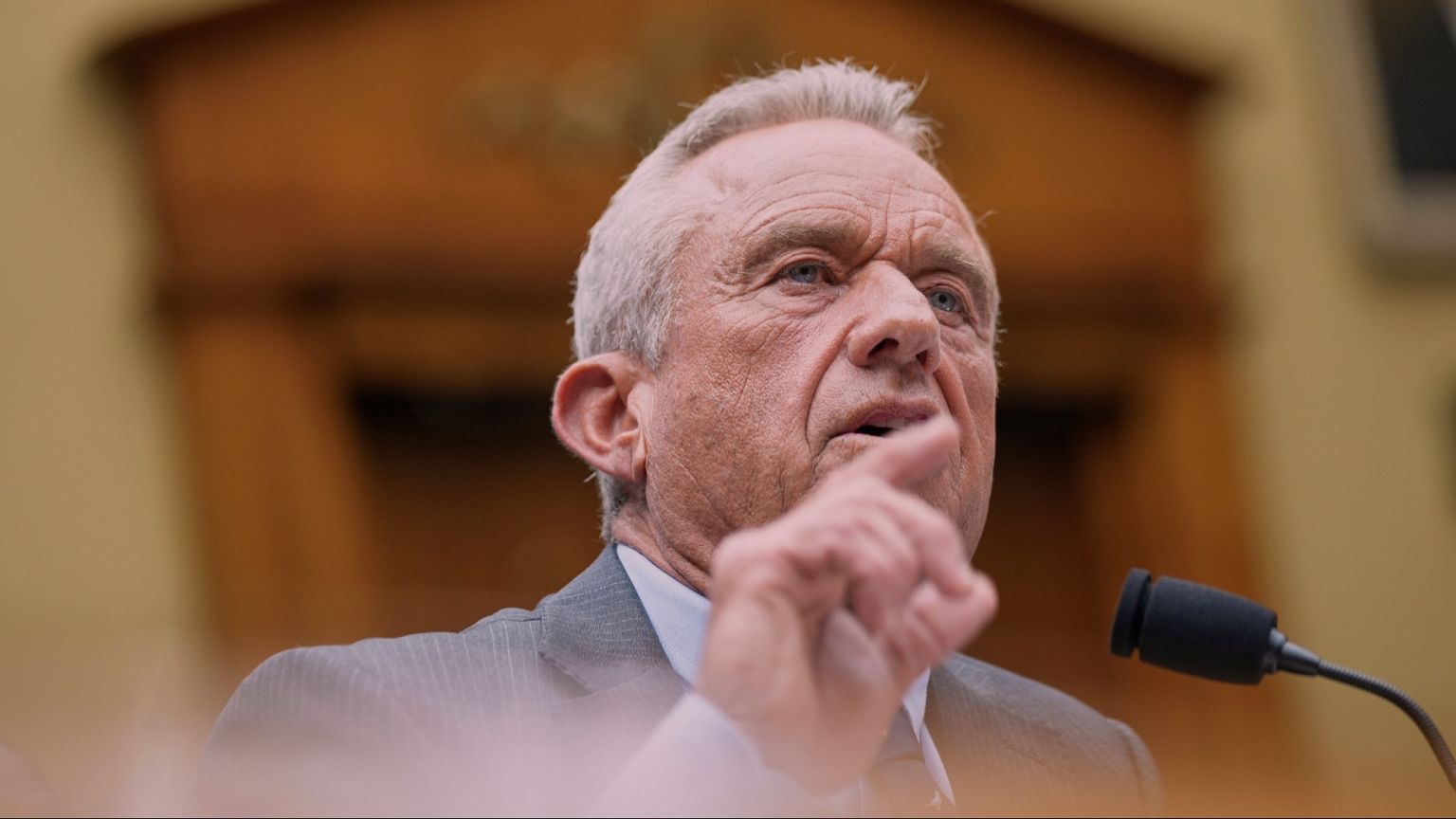
US health secretary Robert F Kennedy Jr is pictured in Washington, DC, on June 24, 2025.
Copyright Mariam Zuhaib/AP Photo


By Gabriela Galvin & Gerardo Fortuna
Published on 

GAVI had aimed to raise €7.9 billion to fund its work over the next five years, but reportedly fell short after the US said it would not deliver on a previous pledge.

The United States will halt funding for a global organisation that provides vaccines to millions of children in lower-income countries, which comes after the most senior US health official said the group has “ignored the science” on safety issues.

US health secretary Robert F Kennedy Jr, a longtime vaccine sceptic and activist, said the country will not deliver on a $1.58 billion (€1.39 billion) pledge made by the previous Biden administration until GAVI – which procures and distributes jabs around the world – changes its approach to vaccine safety research and assessment.

“There is much that I admire about GAVI,” Kennedy said in video remarks. “Unfortunately, in its zeal to promote universal vaccination, it has neglected the key issue of vaccine safety”.

He raised concerns about the safety of a vaccine used to protect infants against diphtheria, tetanus, and pertussis, also known as whooping cough (DTP), which is a routine childhood immunisation.

Kennedy cited a 2017 study from Danish researchers that found infants who received the type of DTP vaccine offered by GAVI were 10 times more likely to die from any cause than unvaccinated babies in their first six months of life – though other experts have since identified flaws in those findings.

GAVI hit back at some of Kennedy’s comments, saying it had “full confidence” in the DTP vaccine.

GAVI said it offers the jab in lower-income countries because they have a much higher disease burden and are less well-equipped to offer regular booster doses than wealthy countries, which commonly use another version of the DTP vaccine that offers less long-lasting protection.

The vaccine group had aimed to raise $9 billion (€7.9 billion) to fund its work over the next five years from international donors as part of its summit in Brussels this week, but reportedly fell short of that target.

In an interview with Euronews ahead of the event – and Kennedy’s announcement – GAVI chair and former European Commission President José Manuel Barroso had struck a more optimistic tone about the group’s partnership with the US.

“We are working constructively with this administration,” Barroso told Euronews.

But he is also toeing a difficult line, navigating US leadership that has embraced vaccine conspiracy theories and slashed funding for global health programmes.

Speaking broadly, Barroso said “there are campaigns of disinformation” related to vaccines, particularly on social media.

“What we have to do is to work with science and to give the facts,” he said.


RFK Jr. Ripped Over 'Reckless and Deadly'

Halt on US Support for Global Child

 Vaccine Program

"Kennedy is either misinformed or lying," said one critical physician, "but either way, children will die as a result."
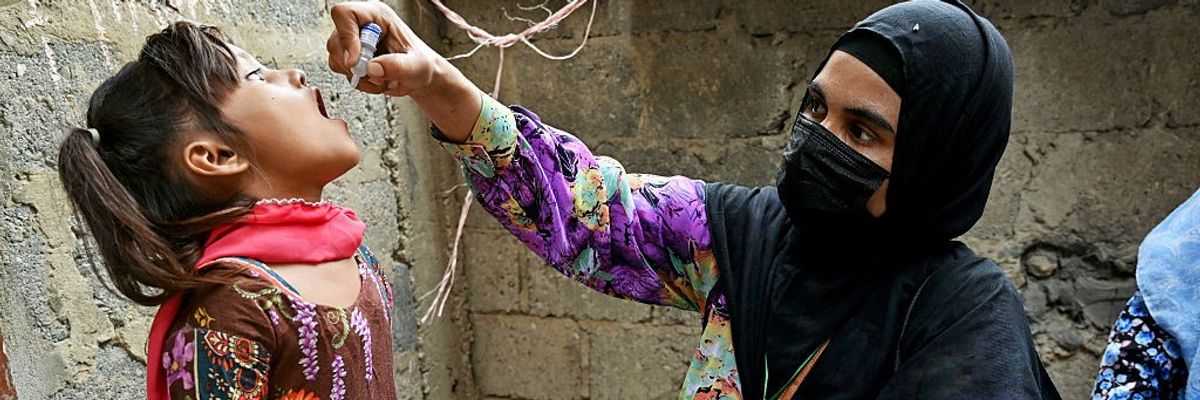

A health worker administers polio vaccine drops to a child during a poliovirus eradication campaign in Karachi on May 26, 2025.
(Photo: Asif Hassan/AFP via Getty Images)

Brett Wilkins
Jun 25, 2025

 Common Dreams 

In an incendiary stunner delivered via a prerecorded video statement played Wednesday to attendees of the global vaccine summit in Brussels, U.S. Health and Human Services Secretary Robert F. Kennedy Jr. announced that the United States is suspending financial contributions to the lifesaving organization as it aims to vaccinate hundreds of millions of children around the world.

Kennedy—described by a coalition of green groups during his quixotic 2024 presidential campaign as "a dangerous conspiracy theorist and science denier whose agenda would be a disaster for our communities and the planet"—accused Gavi, the Vaccine Alliance of having "ignored the science" on childhood vaccination.

"The U.S. is turning its back on women and children at risk of death and disability."

"When vaccine safety issues have come before Gavi, Gavi has treated them not as a patient health problem, but as a public relations problem," Kennedy alleged in his video message, without providing any evidence to support his claim. "In its zeal to promote universal vaccination, it has neglected the key issue of vaccine safety."

"I'll tell you how to start taking vaccine safety seriously: Consider the best science available, even when the science contradicts established paradigms," he added. "Until that happens, the United States won't contribute more to Gavi."

Gavi responded to Kennedy's allegations in a statement asserting that the organization's "utmost concern is the health and safety of children."

"Any decision made by Gavi with regards to its vaccine portfolio is made in alignment with recommendations by [the World Health Organization's] Strategic Advisory Group of Experts on Immunization (SAGE), a group of independent experts that reviews all available data through a rigorous, transparent, and independent process," Gavi added. "This ensures Gavi investments are grounded in the best available science and public health priorities."


Gavi's Health and Prosperity through Immunization summit—which is co-hosted by the European Union and the Gates Foundation, with Global Citizen as a key partner—seeks to secure $9 billion to fund the immunization of 500 million more children, a move Gavi says will prevent 8-9 million deaths over the next five years.

"Over the past 25 years, Gavi, the Vaccine Alliance has helped to immunize more than a billion children, meaning one-eighth of humanity has received a vaccine funded by Gavi," the organization said. "Today we help give half the world's children access to vaccines every single year."

"The scale is massive, and so is the impact," Gavi added. "Since we were founded in 2000 child mortality in the lower-income countries we work with has halved, with Gavi's vaccines averting more than 18 million deaths."

Since taking office in January, Kennedy—a prolific purveyor of conspiracy theories including one that vaccines cause autism—has restricted Covid-19 vaccine access and fired everyone on the Centers for Disease Control and Prevention's (CDC) vaccine advisory panel and replaced them with his own controversial picks.

On Wednesday, Kennedy announced that the panel will review the long-standing U.S. childhood vaccination schedule, raising concerns about possible ideology-driven revisions. This, as a new study published in the peer-reviewed British medical journal The Lancet sounded the alarm over flagging global childhood vaccination rates driven by inequality, Covid-era disruptions, and misinformation.

Dr. Tom Frieden, who led the CDC during the Obama administration, said on the social media site Bluesky that "Secretary Kennedy's statement to Gavi, the Vaccine Alliance, is literally sickening."

"Sickening because millions of children's lives are in the balance because of Mr. Kennedy's fringe beliefs and misinformation on vaccines," Frieden added. "Sickening because the U.S. is turning its back on women and children at risk of death and disability. And sickening because it reflects the invasion of anti-vaccination falsehoods into life-and-death programs."

Dr. Ashish Jha, former President Joe Biden's coronavirus response coordinator, slammed Kennedy's decision as "terrible but totally predictable."

"Gavi helps poor kids around the world get vaccinated against polio and measles and other life-threatening diseases," Jha said. "This is just mind-bogglingly awful."


Canadian health law and policy expert Timothy Caulfield said on the social media site X: "Just horrible. Sickening. Evil."

"This decision will kill children," Caulfield added. "We all knew RFK Jr. was the worst person for this job. He's lived up to the hype. The f*cking worst."Liza Barrie, director of Public Citizen's Global Vaccines Access Campaign, called Kennedy's suspension of Gavi funding "reckless and deadly."

Barrie continued:
The Trump administration is turning its back on a program that has helped vaccinate more than a billion children and save over 17 million lives—while Kennedy spreads lies about science, safety, and one of the world's most effective public health efforts. The facts are clear. Gavi exists to get vaccines to children who need them most. It works with governments in lower-income countries, health workers, and communities to stop deadly diseases. Because of Gavi, millions of children who would have died are alive today.

Kennedy claims that Gavi ignored science are entirely false. Gavi's recommendations are grounded in global evidence and reviewed by independent experts. His suggestion otherwise fuels the same disinformation that has already led to deadly measles outbreaks and the resurgence of vaccine-preventable diseases, including polio.

"This isn't about protecting children. It's about abandoning them," Barrie added. "Choosing to walk away from a program that saves lives—knowing full well what the consequences will be—isn't just reckless. It's cruel."

Barrie urged Congress to protect the funding for Gavi already allocated in this year's federal budget, "which the Trump administration is now trying to claw back through its rescission proposal."

"The United States must not walk away from global vaccine access," Barrie stressed. "Not now, not ever. Turning away would be a choice to let disease spread and let children die."


GOOD NEWS

Vietnam abolishes death penalty for spying, anti-state activities


By AFP
June 25, 2025


Vietnam's National Assembly has approved abolition of the death penalty for spying, attempting to overthrow the government and six other offences - Copyright AFP/File Nhac NGUYEN

Vietnam has abolished the death penalty for eight crimes including espionage, graft and attempting to overthrow the government, state media said Wednesday.

The number of offences facing capital punishment will be almost halved from an original 18 to 10 from July, according to the penal code approved by the National Assembly, the official Bao Chinh Phu news portal reported.

According to the amended law, the crimes no longer punishable by death include attempting to overthrow the administration, sabotaging state facilities, production and trade of counterfeit medicine, illegal transportation of narcotics, sabotaging peace and waging war, espionage, property embezzlement and bribe-taking.

Convicts would instead be given the maximum sentence of life in prison.

Minister of Public Security Luong Tam Quang said “the current structure of capital punishment was problematic and, in some cases, misaligned with evolving socio-economic conditions and the realities of crime prevention.”

One of the reasons for the move given by Minister of Justice Nguyen Hai Ninh was that in most cases people sentenced to death for the above crimes were not actually executed.

“The abolishment of capital publishment for several crimes will also serve international cooperation work, especially when Vietnam is promoting closer relations on the basis of mutual trust,” Ninh was reported as saying.

Vietnam has carried out death sentences by lethal injection since 2013 when it replaced execution by firing squad.

The number of executions has not been made public, but Amnesty International estimates more than 1,200 people were on death row in Vietnam by the end of 2023.

Under Vietnamese law, those sentenced to death for the above eight crimes before July 1 will have their sentences converted to life imprisonment by the chief judge of the Supreme People’s Court.