Friday, June 27, 2025

 REST IN POWER


Mourning Bill Moyers


Bill Moyers, the esteemed journalist, presidential adviser and philanthropist, died on Thursday at age 91 in New York. In the early 2000s, Moyers played a pivotal role in creating and promoting Free Press and delivered a series of powerful appearances at the National Conference for Media Reform.

“You will search the dominant media largely in vain for journalists that tell the truth about the fading of the American dream,” Moyers told a crowd of more than 3,000 people assembled at the 2008 conference in Minneapolis. “So it’s up to you to remind us that democracy only works when ordinary people claim it as their own. It’s up to you to write the story of an America that leaves no one out.”

Moyers called on people to build “a movement to challenge the stranglehold of mega-media corporations over our press and to build alternative and independent sources of news and information that people can trust.”

Free Press President and Co-CEO Craig Aaron said:

“Bill Moyers was a legend who lived up to his reputation. Moyers believed that journalism should serve democracy, not just the bottom line. He believed deeply in the power and potential of public media, and he set the standard for public broadcasting by telling stories you couldn’t find anywhere else. He always stood up to bullies — including those who come forward in every generation to try to crush public media and end its independence. We can honor his memory by continuing that fight.

“Moyers was a giant, who used his wide reach and wise words to lift up the voices of activists and change-makers, including the co-founders of Free Press. It’s no exaggeration to say that Free Press would not exist without Moyers’ support and encouragement. He was among the earliest supporters of Free Press and encouraged many others to join him. His wise and inspirational words motivated generations of media activists.

“Above all, Moyers was a kind and generous man, mentoring young journalists and activists – including me – and leading by example. We send our deepest condolences to his family, many friends and devoted colleagues, and millions of fans. There won’t be another Bill Moyers, but legions of us will try to carry on his work.”

Free Press is a nonpartisan organization fighting for people’s rights to connect and communicate. Free Press does not support or oppose any candidate for public office. Read other articles by Free Press.


What It Means to Be Human


How do you think- in words or images?


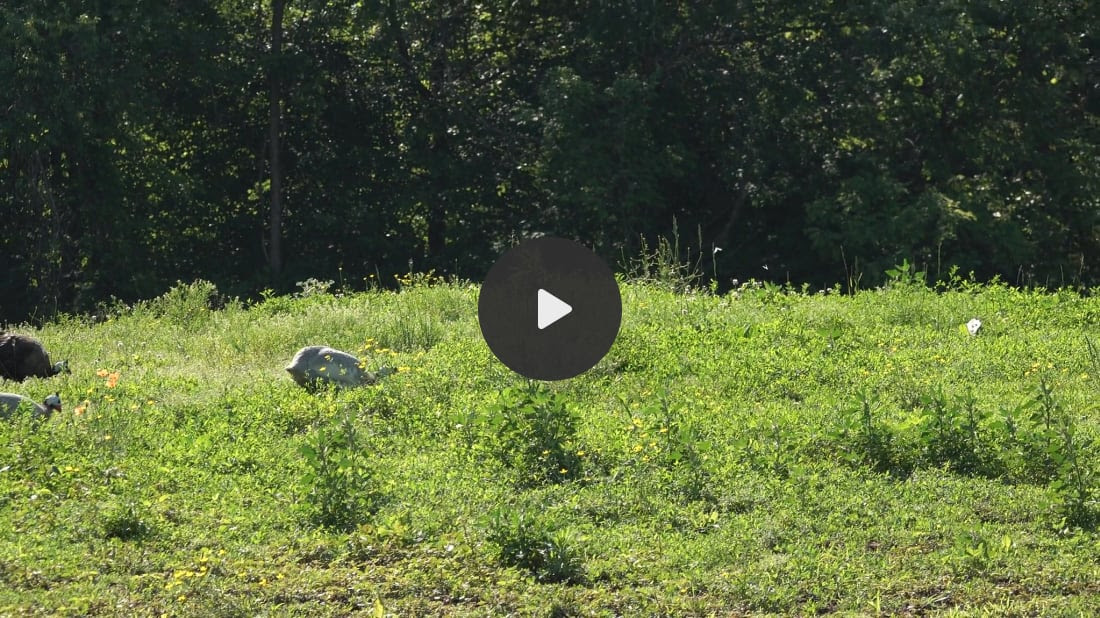
Various domesticated bird species usually run around the farm, including guinea fowl. We love our guinea fowl because they spend their days eating bugs: including ticks, flies, and other noxious pests. Guinea fowl are funny creatures, with colorful bald heads, speckled feathers, long legs, and oddly shaped bodies. We often view them as comic relief as they run around squawking and scurrying from here to there. They like to hang out under the horses, snapping up bugs that the horses disturb as they graze. Guinea fowl are a very primitive bird; they really aren’t very intelligent. Honestly, at times they seem to barely have two brain cells to rub together. Originating from Africa, they are not very domesticated. Guineas act on instinct and are often considered difficult to raise, due to flightiness and a complete lack of “good sense.” However, guineas eat bugs and ticks are at a rate that seems almost unimaginable. Our property is virtually devoid of ticks in the tall grasses. For those who are unclear what a guinea fowl looks like:

So, Jill, my wife, was thrilled when one of our guineas had her first clutch of eggs, and it was even more exciting when she hatched them out! She had raised this particular guinea hen from a young chick and felt “bonded” to her. Although she felt that way, as she discovered later, the hen did not feel kindly disposed towards her when she had her babies hatch. Furthermore, the act of leaning over the bird triggered a defensive reaction from the bird, as that is what predators do. Within the blink of an eye, Jill went from protector to predator.

The particular guinea had laid her eggs far away from food or water in an old barn. Being the good guardian, Jill put food and water in bowls and began to set them out for her. She felt that she “knew” this bird. Jill had raised, fed, and kept her safe at night. Certainly, the bird knew that. As the guinea had babies clustered around her body, she bent down to put the food bowl on the ground.

As Jill put the dishes down, seemingly out of nowhere, this hen flew directly at her face and clawed right down both sides of her cheeks with her talons, drawing deep scratches. With blood literally pouring down her face, she told me later that she felt like a stupid fool for taking liberties. If she were to think back on her relationship with this bird, it had never given her any reason to believe that it appreciated or understood her efforts on the bird’s behalf. Jill just assumed that her attentions and care for the bird were understood. Jill had “felt” like the bird clearly could “see” that Jill was trying to feed and care for the mother hen and her brood. In that instant, the guinea thought Jill was going after her offspring, and she reacted without hesitation.

Her maternal instinct was so quick and so fierce that at first, Jill didn’t even realize what had hit her. The human ability to feel empathy, to believe that what she feeling would be reciprocated, led her right down the path of assuming something that wasn’t.

This is a typical trap that we humans tend to fall into when working with other species. Patricia D. McDonnell , in her book, The Other End of the Leash: Why We Do What We Do Around Dogs (ref), gives the example of the little girl bending down to hug and kiss a dog. The child is doing just what baby humans do everywhere. She is hugging, kissing, and wanting to hold on to those close to her, just as her ancestors did in the past. She has the innate behavior of hugging and hanging on to her mother, because that is what human babies do.
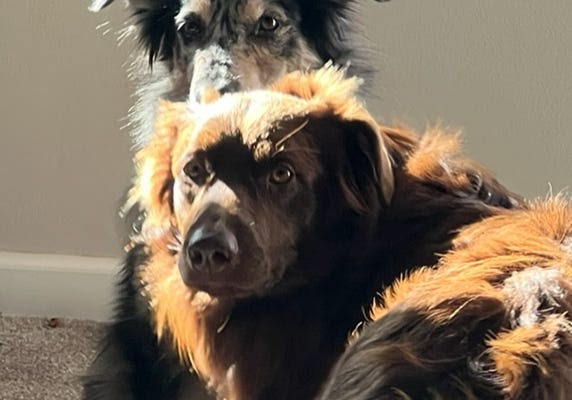
But the dog feels very differently when hugged and kissed. Dogs are four-legged pack animals. They do not hug. When dogs are young, they do not hang on to their mother’s belly as she trots through the underbrush. The only time adult canines throw their bodies at each other’s heads is during periods of intense fighting.

When a little girl swings her arms around a dog’s neck and kisses him, the initial reaction of the untrained dog is to react defensively and bite. With all the best of intentions and instinct, this is a clear example of a human sending all the wrong signals to another species.

But why do we do what we do? The first step to understanding our own behavior is to accept both that we are different from other mammals and yet the same. When one goes to the zoo, or watches a nature program on non-human primates, it is a useful exercise to think: “I am related. I need to understand that creature, to better understand myself.” By taking that step, which is not always a pleasant step, a person can begin to understand what it is to be human and to be an animal. One must understand our relationship to other animals to truly understand the human condition. They are the building blocks that allowed us to become human. It is not something to be ashamed of but something to be understood and cherished. The commonalities will enable us to bridge the minds of other species (being careful not to take liberties, like Jill did with the guinea hen). But because we are humans, our reactions are often very different from those of other species.

How are we the same as other species? Sometimes it is just obvious. When I sit in the warm sun, I know that my dog can sit in the same sun and feel the same warm tingling on her skin. When I see my horse, laying in the pasture, with her body positioned to pick up the early morning rays, I don’t have to be up close to know how she feels as the warm sun penetrates her thick hide. Likewise, we can understand the pleasure of sex, of sleep, of eating, and of being warm that other mammalian and even avian creatures enjoy.

But do we think differently than other animals? And if so. How do we think differently? Most animals think in images, not words. We, too, can think in images, although sometimes we have to remember how. To think like an animal, we have to (re)connect to those animal parts of our brain. So some people, this is an easy exercise, for others, it can be challenging.

Do you think in words or images?

By trying to see images of our world through the eyes of an animal, we have to clear our brains of words. To think in images only. Thinking in images can be a calming and centering exercise to give ourselves when our over-analytic brain can’t turn off. To be able to create an image in our mind, whether it is of a special place, or a pleasurable past experience, is a gift from our animal mind. It is a trick often used in meditation to calm and relax the mind. Many a yoga class will involve an exercise of asking people to imagine themselves in a forest or field full of flowers, to bring them back to a mind without words, back to a place in the brain, where words are not needed.

Some say that animals don’t think about the future. I believe they do. So, here is a thought exercise to show how an animal might think about what is to come. Clear your mind. Then think about your next dinner or meal, picture yourself or someone preparing the meal. The next step is to view the table, with the food laid out ready to eat. See the textures, the dishes, the glasses, the food, and imagine (without words), eating that food. Taste it, feel it, smell it –but don’t cheat. No words. Let the images emerge, and explore that world. That is how I believe animals foresee the future. Words are not needed to envision what might come or what they wish to come. Likewise, they might envision even their darkest fears of the future. Using images, they can even think about changing the future. Is it a simple world, compared to our many words, syntax, grammar, descriptors, nouns, verbs, and complex sentence structures, but the point is that it does allow animals to strategize and think about the future. It just uses images instead of word strings.

Animals think in images because they are wired differently, and their brain centers are of different sizes and variations from our own. Thinking in images, for lack of a better term, as those images are probably being viewed in motion, is primarily associated with the right hemisphere of the brain.

There is are right and left hemispheres to mammalian brains. Scientists have concluded that the left part of the human brain has the logic centers; it is rational, logical, and analyzes the world in parts. The left brain is where most of our language processing occurs. Our right brain is the hemisphere that controls images, creativity, and sees the world as a whole.

Overall, animals use both hemispheres, but the side they use more depends on the context: the left for familiar, routine, and logical tasks, and the right for novel, emotional, or stressful situations. The right hemisphere of the human brain is used more for functions involving creativity, spatial ability, artistic and musical skills, intuition, and the recognition of faces, places, and objects.

The right brain is considered by many to be the “animal brain”, and animals are often considered more right-brained. The left side of the brain allows for complex language and tool use. Those of us who are considered more right-brained may feel more connected to our animal heritage because, at some level, right-brained people probably think in images more often or more clearly, just like their animal counterparts. Interestingly, across cultures, women tend to be more right-brained than men. However, modern neuroscience has shown that thinking about people as left or right-brained, as a strict division, is oversimplified.

It is thought that thinking in the right brain can also lead to heightened “anxious arousal” (intense fear, panic or both). A study conducted in 2007, used MRI during an emotional task to demonstrate distinct neural patterns: anxious apprehension (e.g., worry) correlated with left-hemisphere dominance, while anxious arousal (e.g., panic) showed right-hemisphere activation (right inferior temporal area (ref).

When working with prey animals, such as horses, the link to our right brain will often be the key to understanding their psychological states. One must remember how their brain is constructed to understand their world better. They are prey animals; they think in images and have a patina of instincts that direct their thought patterns to be ready for flight in an instant. One must get the horse to be calm, to quiet the right brain centers. Only then can one connect with their left brain to train effectively.

But how else are humans different from their animal counterparts? Many scientists believe that what sets humans apart from the rest of the animal species is not our ability to use tools, communicate with language, or think logically, but rather our large brain size combined with the complex foldings of the human brain to create more room for neurons. There is a simple allometric equation used to determine the slope between brain size and body size. The higher the slope, the larger the brain compared to body size. I believe the human species is different from other species because we are smart; we simply have a larger brain and more brain power. This is a big part of what it means to be a human.

What does it mean to be an animal? From our limited perspective as human beings, are we qualified to answer that question? I believe that we are. Each species has a unique footprint, a specific collection of qualities that sets it apart from all other species. There is no one species called animal. Each species has similarities and differences from the rest of the animal kingdom.

We all share certain similarities in being mammals, even in being alive. We all eat, sleep, defecate, procreate, communicate, have internal heating and cooling systems, fur or hair, and transport ourselves on various configurations of arms and legs. But the differences in how we go about feeding, sleeping, socializing, procreating, and heating are vast. For instance, I know little about how a lioness understands when her newborn babies are hungry or cold. Nor do I know about how a rhinoceros initiates a sexual advance.

As a human species, we have convinced ourselves that our superior brain power can allow us to communicate not just with other humans but with other species as well, and that we can analyze another species’ behavior and draw conclusions. Often, this is true. But sometimes, the very act of being a human directly interferes with our ability to communicate with other animals effectively.

Jill should have known, logically, that her bending over the guinea fowl might set the bird into attack mode. She had not analyzed her behavior as she bent over the bird to put down the feed; she was acting like a predator. But she didn’t make that leap of logic at the time. Instead, she viewed the little bird through her own human eyes and soul –the heart of an empath, and what she was doing was what humans do. Wanting to be close, to reach out. A lesson learned the hard way.

Robert W Malone MD, MS is president of the Malone Institute whose mission is to bring back integrity to the biological sciences and medicine. The Malone Institute supports and conducts research, education, and informational activities. Contact: info@maloneinstitute.orgRead other articles by Robert, or visit Robert's website.


Consortium aims to kickstart large-scale carbon removal


University of Exeter


Experts will gather in Exeter next week to help kickstart a “new carbon economy”.

The New Carbon Economy Consortium (NCEC) will hold its annual meeting at the University of Exeter from Sunday 29 June to Tuesday 1 July.

The consortium brings together universities, national labs and NGOs, working in partnership with industry leaders.

It aims to bring about a “prosperous, growing economy that captures and stores more carbon than it emits”.

While reducing global greenhouse gas emissions is essential for addressing the climate crisis, carbon capture and storage will be necessary to tackle past emissions.

“Emerging innovative technologies and land management practices hold the potential to transform carbon in the atmosphere into a valuable, productive resource,” said Klaus Lackner, founding director of the Center for Negative Carbon Emissions and professor at Arizona State University (ASU).

“Our vision is to shift away from our history of extraction and degradation towards a future where we harness our lands to boost crop yields and soil health and transform carbon emissions into better chemicals and building materials.

“Under this revolutionary paradigm, new and reimagined industries can provide jobs, economic opportunity and prosperity, while mitigating climate change and supporting other important environmental goals.”

The consortium’s vision is based on:

  • Engineered solutions – technologies and systems that capture, convert and store CO₂ from the air and oceans, converting it into valuable products such as concrete or fuels, or accelerating mineralisation for storage.
  • Biological solutions including ecosystem restoration, improved forestry and agricultural practices, improving soil health, and cultivating and converting algae into valuable products such as fertiliser and animal feed.
  • Hybrid Solutions such as bioenergy with carbon capture, biochar production, waste to energy systems, and carbon cultivating aquaculture.

NCEC co-chair Amanda Ellis, former Ambassador to the United Nations for New Zealand, said: “This gathering, co-hosted with the University of Exeter, is really unique in that we are bringing together scientists, industry experts, financiers and policymakers from a broad range of countries – from Australia to Panama to Uganda – to really advance the entire ecosystem for a new carbon economy.”

Professor Martin Siegert, Exeter’s Deputy Vice-Chancellor (Cornwall), said: “With our community of leading climate and environmental experts, we are well positioned to understand how responsible approaches to carbon dioxide removal might impact our climate systems.

"We can also investigate the complex social, ethical, economic and policy, and governance implications of such approaches.”

The University of Exeter is working on a variety of climate solutions, including carbon-removal projects and its Green Futures Solutions initiative. These include SeaCURE, which is developing technology that removes carbon dioxide from seawater, and CASPER, which investigates what happens in soil to encourage carbon storage and how long carbon will stay there once it’s stored. 

The NCEC annual meeting is being held as the University of Exeter hosts the Exeter Climate Forum – a major gathering of scientists, policymakers and businesses to discuss the climate emergency, and action to address it.


Majority of Medicaid managed care plans cover opioid overdose reversal drug naloxone


A new study found that almost all plans in 40 states and Washington, DC covered at least one form of the opioid overdose reversal drug naloxone, although certain restrictions and quantity limits may still prevent people from accessing this drug.


Boston University School of Public Health

Figure.  Proportion of Medicaid Managed Care Plans (MCP) in State Covering at Least 1 Generic Injectable or Generic or Brand Intranasal Naloxone Formulation Without Any Restrictions 

image: 

Figure illustrates the proportion of Medicaid managed care plans (MCP) in state covering at least one generic injectable or generic or brand intranasal naloxone formulation without any restrictions. The crosshatch pattern indicates the state had an opioid overdose death rate per 100, 000 people in the 75th percentile or above (32.5%).

view more 

Credit: Boston University School of Public Health


FOR IMMEDIATE RELEASE

Friday, June 27, 2025

## 

Majority of Medicaid Managed Care Plans Cover Opioid Overdose Reversal Drug Naloxone

A new study found that almost all plans in 40 states and Washington, DC covered at least one form of the opioid overdose reversal drug naloxone, although certain restrictions and quantity limits may still prevent people from accessing this life-saving drug.

In 2023, the US Food and Drug Administration approved the overdose reversal drug naloxone, commonly known as Narcan, for over-the counter (OTC) use. While hailed as a public health success for increasing access to this life-saving drug, this OTC option remains out of reach for people who cannot afford the $45 average price tag for a two-dose box.

Medicaid recipients are a low-income population that disproportionately experiences opioid overdoses, so access to low- or no-cost naloxone through insurance can help to save lives. A new study led by Boston University School of Public Health (BUSPH) investigated Medicaid managed care plan coverage of naloxone across the nation.

Published in JAMA Network Open, the study found that almost all Medicaid managed care plans (MCPs) cover at least one of the four formulations of naloxone. Eighty percent of Medicaid recipients, which include more than 70 million people, are enrolled in these plans. The study is the first to assess naloxone coverage within MCPs.

“These findings are important because over-the-counter naloxone can still be very expensive and insurance coverage can reduce the cost barrier to accessing this drug,” says study lead and corresponding author Sage Feltus, research associate in the Department of Health Law, Policy & Management (HLPM) at BUSPH. “The overdose death rate among Medicaid beneficiaries is twice as high as the overdose rate among the general US population. Low-barrier and low-cost naloxone could help get this essential medication into the hands of people who are at high risk for overdose death.”

The study’s senior author is Dr. Maureen Stewart, research associate professor in HLPM at BUSPH, and coauthors include Dr. Jeffrey Bratberg, clinical professor at The University of Rhode Island College of Pharmacy, and Sophia Balkovski, a doctoral trainee at the Heller School for Social Policy and Management at Brandeis University.

After rising sharply during the COVID-19 pandemic, drug overdose deaths involving opioids declined to 83,140 in 2023, followed by a significant drop to 54,743 deaths in 2024, according to provisional data from the Centers for Disease Control and Prevention. Naloxone, which is considered the cornerstone of the harm-reduction approach to the nation’s opioid overdose emergency, can quickly reverse the effects of opioids such as heroin, oxycodone, and fentanyl. Experts have long sought to increase awareness of and access to this medication to safely and effectively reduce deaths from opioid use.

For the study, the researchers reviewed the preferred drug lists from 264 MCPs that covered 65.3 million Medicaid recipients in 40 states and Washington, DC. Insurance companies and states can use these preferred drug lists to negotiate rebates with drug manufacturers. The team examined MCP reported coverage and management of all available formulations of naloxone: brand and generic 4-mg nasal sprays; a generic injectable; and a newer, high-dose, brand nasal spray in 8 mg. They also reviewed publicly available data on state-level opioid overdose deaths.

While quantity limits and other restrictions varied by plan, 94 percent of plans reported covering at least one generic injectable or 4-mg generic/brand versions of the nasal spray of naloxone, and 91 percent covered the 4-mg generic or brand nasal spray and injectable formulations. The generic versions of the drug were the most common forms listed on PDLs. Over half of plans (covering 42 million Medicaid recipients) had state-defined PDLs, and these plans were less likely to report covering the generic injectable naloxone.

Notably, three states with no MCPs covering at least one form of naloxone—Ohio, Kentucky, and Tennessee—had high opioid overdose rates, although the researchers caution that more data is needed to understand the causes of these high death rates. The findings did show that MCPs in states with low overdose rates were more likely to cover all forms of naloxone and less likely to impose quantity limits. Further research should identify how Medicaid coverage of naloxone contributes to recipients’ health, and MCPs should work to ease restrictions that make it difficult for people to actually receive this medication.

“Reporting coverage is a critical first step,” Feltus says. “Removing prior authorization requirements may ease administrative burden for providers prescribing naloxone. We don’t know as much about the impact of quantity limits on naloxone but this restriction could present a barrier for Medicaid recipients who may need more than the allowed amount per month or year.”

States can take action to increase access to naloxone, she adds. 

“States can require that MCPs cover all forms of naloxone by including all formulations on a uniform preferred drug list, or in contract requirements with MCPs.”

** 

About Boston University School of Public Health 

Founded in 1976, Boston University School of Public Health is one of the top ten ranked schools of public health in the world. It offers master's- and doctoral-level education in public health. The faculty in six departments conduct policy-changing public health research around the world, with the mission of improving the health of populations—especially the disadvantaged, underserved, and vulnerable—locally and globally.


Postpartum Medicaid use in birthing parents and access to financed care


JAMA Health Forum


About The Study: 

The results of this study suggest that extending Medicaid coverage for 12 months postpartum was associated with expanded opportunities for greater access to Medicaid-financed medical and behavioral health care. Both prevention and ongoing treatment of chronic conditions may help mitigate key adverse outcomes. The findings may help policymakers and public health officials understand how extended coverage affects access to Medicaid-financed care.


Corresponding Author: To contact the corresponding author, Jonas J. Swartz, MD, MPH, email jonas.swartz@duke.edu.

To access the embargoed study: Visit our For The Media website at this link https://media.jamanetwork.com/

(doi:10.1001/jamahealthforum.2025.1630)

Editor’s Note: Please see the article for additional information, including other authors, author contributions and affiliations, conflict of interest and financial disclosures, and funding and support.

#  #  #

Embed this link to provide your readers free access to the full-text article 

 https://jamanetwork.com/journals/jama-health-forum/fullarticle/10.1001/jamahealthforum.2025.1630?utm_source=For_The_Media&utm_medium=referral&utm_campaign=ftm_links&utm_term=062725

About JAMA Health Forum: JAMA Health Forum is an international, peer-reviewed, online, open access journal that addresses health policy and strategies affecting medicine, health and health care. The journal publishes original research, evidence-based reports and opinion about national and global health policy; innovative approaches to health care delivery; and health care economics, access, quality, safety, equity and reform. Its distribution will be solely digital and all content will be freely available for anyone to read.


Building breast tissue in the lab to better understand lactation


Researchers at ETH Zurich are developing a model in the lab made from human breast milk cells. They hope it will help them understand how breast milk is made – a little-researched area of female biology.


ETH Zurich


Human breast milk is uniquely adapted to meet an infant’s nutritional needs. Surprisingly, we still know very little about how milk is even made in the breast. A team of ETH Zurich researchers led by Marcy Zenobi-Wong, Professor of Tissue Engineering and Biofabrication, want to change that. In the lab, Zenobi-Wong and her team developed tiny replicas of lactating breast tissue. This involved isolating cells from human breast milk that are naturally found in milk. Some of the cells from lactating breast tissue and the so-called lactocytes – the cells in breast tissue that produce milk – end up in breast milk during lactation. 

Printed from real tissue using light

The centrepiece of the research project is a novel tissue model that the researchers produced using a special light printing process. The volumetric bioprinting process involves a laser beam that is shone into a liquid from several angles. The liquid then hardens precisely where the light dose accumulates. In seconds, this gives rise to small structures that are similar to real milk ducts and alveoli where the milk is produced in the breast. The material used comes from bovine udder tissue and contains similar components to human breast tissue. 

The researchers populated these mini milk ducts with cells that they extracted directly from human breast milk. These so-called mammary epithelial cells formed a dense layer of cells on the inside wall of the milk ducts. As the researchers were able to demonstrate, this resulted in functional tissue: the cells began producing typical milk components, such as β-casein and milk fat globules. “It took several attempts to find out how we could best make the cells grow. Many of my colleagues were surprised to learn that milk-epithelial cells could grow at all,” says Amelia Hasenauer, doctoral student in Zenobi-Wong’s team and first author of the external pagestudy, published at the beginning of June in the journal Science Advances.

No artificial milk, but a key research instrument

Despite the impressive findings, the two researchers emphasise that they are not yet producing complete breast milk: “We have identified the first components, but milk is made up of hundreds of different ones, including complex sugars, proteins, lipids, immune cells and living microorganisms,” says Zenobi-Wong. 

Hasenauer adds: “Above all, our cell culture model is designed to help better understand the lactation process. I know many women who have struggled to breastfeed. Our model could one day help find answers.” The model is a key step forward for research. It allows lactating cells to be observed and manipulated under controlled conditions in the lab for the first time. This opens up an array of possibilities. Besides lactation research, other possible areas that could be studied are the impact of medications and chemicals on lactation and models of breast cancer. “The next step is to increase the throughput of the milk collection, something which is achievable through 3D printing,” says Zenobi-Wong.

Greater visibility for aspects of female biology

The work by Zenobi-Wong’s research group is an example of how little scientific research has been carried out on certain processes in the female body. Models like the new breast tissue printing could change that. Because unlike many other biomedical studies, this research isn’t based on invasive surgery or animal experiments, but on cells that occur naturally in breast milk. This makes it easier, ethically justifiable and accessible to such research topics. 

Both researchers hope that their work will bring greater visibility not only to the topic of lactation, but also to a whole range of long-neglected areas of women’s health. “There are so many unanswered questions, from endometriosis to mastitis and fertility issues,” says Zenobi-Wong. “It all warrants more scientific attention.”