Tuesday, July 01, 2025


US Senate votes to stop proposal on statewide AI regulation in 99-1 vote


Copyright AP Photo/Jacquelyn Martin

By Anna Desmarais & AP
Published on 01/07/2025 -

US Senators voted against a 10-year ban on regulating AI at the state level.

US senators defeated a proposal that would ban states from regulating artificial intelligence (AI) companies.

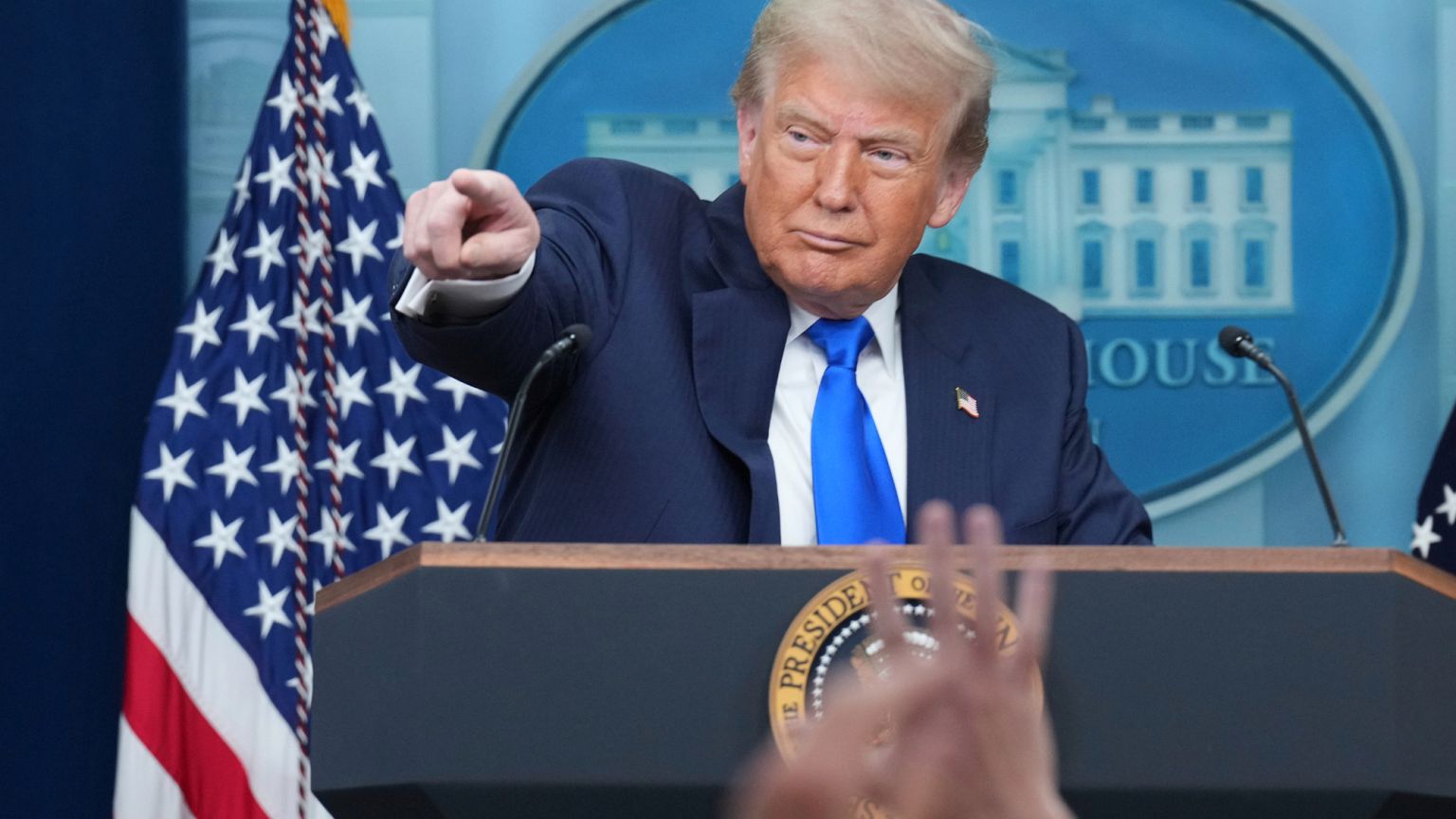
The US Senate voted 99-1 on Tuesday to get rid of the provision from President Donald Trump's big bill of tax breaks that would've banned any AI regulation for 10 years at the state level.

Under the original proposal, states that wanted federal AI investment would have to “pause any enforcement of any state restrictions, as specified, related to AI models, AI systems, or automated decision systems” for a decade.

Republicans tried to save the provision by bringing it down to five years but that was later abandoned when Republican senators Edward Markey, Maria Cantwell and Marsha Blackburn introduced a late-night motion to scrap the entire proposal

'Massive bipartisan opposition'

State lawmakers and AI safety advocates argued that the rule is a gift to an industry that wants to avoid accountability for its products

"Congress will not sell out our kids and local communities in order to pad the pockets of Big Tech billionaires," Senator Markey said in a statement after the vote, noting that the provision to strip AI regulation is "dangerous".

Max Tegmark, president of the Future of Life Institute, said in a statement that the "overwhelming rejection" to the amendment "underscores the massive bipartisan opposition to letting AI companies run amok".

The CEO’s of these corporations have admitted they cannot control the very systems they’re building, and yet they demand immunity from any meaningful oversight.
Max Tegmark
President of the Future of Life Institute

"The CEO’s of these corporations have admitted they cannot control the very systems they’re building, and yet they demand immunity from any meaningful oversight," he wrote.

Those in President Trump's camp like argue that a patchwork of state and local AI laws could hinder the country's progress in the industry and could hurt its capability of competing with China.

Earlier this year, a report from Stanford University found that the US is still in the lead, followed closely by China, in the global race to become an AI leader.

World leaders say that winning the race is critical to national security, developments in health, business and technology.
What do US Big Tech companies think?

Big Tech companies are split on how far AI regulation should go and who should be enforcing it.

OpenAI, the parent company of ChatGPT, said in its submission for the US AI Action Plan that it favours a "regulatory strategy that ensures the freedom to innovate," which would include "voluntary partnership" between government and the private sector.

Google advised lawmakers to "preempt a chaotic patchwork of state-level rules on frontier AI development," by focusing on the existing regulations that are already in place.

In its submission, Meta quoted US Vice President JD Vance who said earlier this year that "excessive regulation of the AI sector could kill a transformative industry just as its taking off".

Meta specified that it considers regulations that impose restrictions on AI models "based on obsolete measurements," or impose "onerous" reporting or testing would "impede innovation in the US".

Along with changes to state AI legislation, Meta also asked the Trump administration to "reduce barriers to AI infrastructure investment," such as permitting barriers for data centre investments.
What has Trump done so far on AI?

In one of the first acts of his second term, Trump released an executive order that called for the end of "AI policies and directives that act as barriers to American AI innovation," so the country can retain "global leadership".

Trump also removed a 2023 executive order from former president Joe Biden that increased the federal government's capacity to "regulate, govern and support responsible use of AI".

Trump has also introduced another executive order to enhance the use and teaching of AI systems in US schools, revised government procurement laws so agencies can adopt AI and launched an AI action plan that is currently under review.


CANADA

The Scab Ban Is A Huge Win, But It Must Be Enforced


By Adam D.K. King • 30 Jun 2025 View in browser


Labour organizations across Canada have been celebrating lately as the new federal anti-scab law finally came into force on June 20.


From now on, employers in inter-provincial transportation, telecommunications, banking and broadcasting can no longer use replacement workers during strikes and lockouts. The law marks a significant victory for workers across the country.

To highlight the law’s impact, the Canadian Labour Congress shared stories from union members whose right to strike had previously been compromised by employers using scabs. Such narratives track strongly with those I previously heard from workers in Manitoba. The new replacement worker ban will thus strengthen bargaining leverage for workers at telecom giants such as Rogers and international logistics hubs like the ports of British Columbia.

“Today’s implementation is not just symbolic – it changes the rules of the game. For far too long, federally regulated workers have been denied the same protection that exists in some provinces. With these new provisions, employers can no longer undermine the power of collective action by recruiting scabs. It’s a critical step forward for fairness and respect on the picket line,” said United Steelworkers’ national director Marty Warren in a union press release.

Though Bill C-58 received royal assent on June 20, 2024, the government unnecessarily granted employers an additional year in which to freely use scabs. This didn’t stop the bosses and their organized representatives from decrying the law and predicting economic catastrophe. They’ll now have to adapt to the new ‘rules of game.’

“A strong economy depends on stable labour relations. These amendments to the Canada Labour Code will improve labour relations, protect workers’ right to strike, limit interruptions to collective bargaining and provide greater stability to the economy during federal labour disputes,” the government said when announcing the law’s coming into force.

Yet the Liberals only committed to an anti-scab law as part of the 2022 supply-and-confidence agreement with the New Democrats. Former prime minister Justin Trudeau and many other Liberals had long been on record opposing bans on replacement workers. With the previous government in a minority position, unions were able to capitalize on a brief political opening to push through this pro-worker reform.

While the scab ban strengthens unions’ bargaining power by limiting employers’ ability to undermine strikes, it doesn’t address the government’s own frequent interference in the bargaining process, including by ordering striking workers back to the job. The Liberals’ recurrent use of undemocratic back-to-work orders over the past year underlines the fact that the government remains no friend of organized labour.

The federal law also importantly brings fairness to workers in the three provinces that already have replacement worker bans in place: Quebec, British Columbia and Manitoba. Prior to June 20, federally regulated workers in these three provinces had no anti-scab protection, unlike their counterparts working for provincially regulated firms.

The urgent task ahead, therefore, is to pass anti-scab laws in the remaining provinces that still allow employers to use replacement workers. In Ontario, for instance, an employer at an assisted living facility continues to use scabs against striking personal care workers. Examples such as this surely abound across the country.

During consultations prior to the tabling of Bill C-58, the federal government disclosed that between 2012 and 2022, employers used scabs in 42 per cent of strikes. Niall Harney at the Canadian Centre for Policy Alternatives in Manitoba reported that scabs were used in nearly 35 per cent of strikes between 2016 and 2023 in that province. Were comparable data consistently tracked across the country, they would likely show a similar pattern.

Accompanying the federal replacement worker ban are changes to the “maintenance of activities” provisions in the Canada Labour Code. These legislative reforms set out an updated process for negotiating essential services requirements. Whereas unions and employers could voluntarily negotiate maintenance of activities rules before a strike or lockout previously, parties are now required to have an agreement in place within 15 days of a notice to begin collective bargaining.

There was some understandable concern that these new essential service requirements might create additional administrative burdens or limit workers’ ability to strike. However, similar processes were also attached to the newly enacted scab ban in Manitoba, which so far seems not to have generated such impediments. In fact, as a recent strike by Manitoba child and family service workers demonstrated, a streamlined and formalized process for setting essential staffing levels during a strike can redound to the benefit of the union.

Despite being in place for only a few days, the federal ban on scabs has already been tested. The law came into force during a lockout involving more than 2,100 Unifor members at global logistics firm DHL. After workers voted 97 per cent in favour of strike action in early June, Unifor reported that DHL Express Canada was busing in hundreds of scabs to a facility in the Hamilton, Ont., area in preparation for a work stoppage. The company then locked the union out on June 8 and continued partial operations with replacement workers.

As June 20 approached, DHL wrote to Minister of Jobs and Families Patty Hadju to request a “special exception” from the effects of the anti-scab law. As Unifor noted in its public response, DHL has “aligned itself” with an employer organization calling itself “Moving Economies,” which is actively lobbying the government to weaken union protections and labour laws in the federal logistics sector.

“They chose confrontation. Now, instead of negotiating a fair agreement at the table, DHL is running to Ottawa to ask for special treatment to get around a law designed to protect workers and safeguard the integrity of collective bargaining. Unifor will stand firm, and we expect the federal government to do the same. No exemptions. No bending the rules,” Unifor president Lana Payne said in a union press release.

When the law came into force, DHL announced that it would suspend operations and cease using scabs for the duration of the work stoppage. And yet, striking workers claimed that scabs continued to enter the company’s Hamilton-area sorting facility, which prompted the union to file a complaint with the Canada Industrial Relations Board (CIRB). Unifor charged that DHL was not only using scabs in Ontario cities Hamilton, Brampton and Scarborough, but also employing third-party contractors in the Greater Toronto Area and Vancouver to continue fulfilling local deliveries during the lockout.

Companies can be fined up to $100,000 per day for violations of the replacement worker ban and CIRB may issue decisions based on submitted evidence without holding a hearing.

However, on June 25, Unifor and DHL announced that they had reached a tentative agreement, ending the nation-wide job action. Although the union made no mention of the CIRB complaint, it is common for unions and employers to withdraw such submissions if an agreement is settled before the labour board has rendered a decision. We may thus have to wait to see how the CIRB will handle complaints filed under the new law.

As the case of DHL demonstrates, unions will need to remain on guard to ensure the law is enforced. Employers in nearly every jurisdiction in Canada have long been given free reign to deploy scabs and undermine workers’ right to strike. And with a government that routinely violates workers’ right to strike, it’s no surprise that companies like DHL think they should be entitled to do the same.

A ban on scabs is a huge win, but enforcing the law remains part of the struggle.


Recent Class Struggle Issues
June 23 | The Liberals Are Bailing Out Canada Post Management Again
June 16 | Exploring Our 300,000-Year Struggle for Equality
June 9 | Workers’ Rights Are Collapsing Globally. Canada Is No Exception
June 2 | Israeli Products Should Have No Place In Canada


Before You Go

We’re a small team with a shoestring budget. It’s only thanks to the support of readers like you that we can publish stories that the corporate press won’t. If you’re interested in further supporting our work, here are a few ways you can help:

Share The Maple on Twitter and help us spread the word!

Make a one-time donation to our Freelancer Fund and help us commission top Canadian journalists.

Sharing is caring: forward this newsletter to a friend and encourage them to subscribe today! (Hint: you can sign up here).

Prefer listening to your news? Check out our podcast here.



Danish publishers sue OpenAI after failing to strike rights deal

The OpenAI logo is displayed on a cell phone in front of an image generated by ChatGPT.
Copyright Michael Dwyer/Copyright 2023 The AP. All rights reserved.


By Cynthia Kroet
Published on 

The collective action comes as Denmark starts chairing meetings of the EU member states.

An industry group representing almost all of Denmark’s media outlets including broadcasters and newspapers has said it's suing ChatGPT’s parent company OpenAI for using its content, in a statement issued on Tuesday.

“Big tech must respect national laws, and as such, DPCMO has a responsibility to act. Pursuing legal action is not a choice; it’s a necessity,” the Danish Press Publications’ Collective Management Organization (DPCMO) said, claiming that: “OpenAI has used DPCMO repertoire in its training, [and] OpenAI does not respect reservations in terms & conditions of a website.”

DPCMO said it reached out to OpenAI “long ago”, in a bid to learn about the product, data, technology and the company as they use information from DPCMO’s members “to train its app ChatGPT”. 

But an attempt to negotiate with the publishers as a collective failed, according to the group, and OpenAI told it "they would not prioritise Denmark”, DPCMO said.

Nor did an intervention by the country’s Minister for Culture succeed, the group claimed.

A spokesperson for OpenAI told Euronews that the company "already held direct talks with the DPCMO on this issue and as a result we do not use its members’ content for search results or training. We have not received any information about legal proceedings but are confident in our position.”

Until now, OpenAI has been striking deals with publishers individually, such as with British newspaper the Guardian, and France’s Le Monde.

The company agreed in June 2024 to remove press publications of DPCMO's members from training sets.

Code of practise

The action - filed at the City Court in Copenhagen - comes as Denmark starts chairing the meetings of EU ministers on Tuesday.

AI and copyright are at the forefront of ongoing discussions between the European Commission and rightsholders as the EU executive is set to publish the Code of Practice on general-purpose AI (GPAI) before 2 August.

The Code, a voluntary set of rules, aims to help providers of AI models, such as ChatGPT and Gemini, comply with the EU’s AI Act. The final version of the Code was set to come out early May but has been delayed.

The process has been criticised throughout, by tech giants as well as publishers and rights-holders concerned that the rules violate the EU’s Copyright laws.

The use of creative content by AI tools and companies has sparked debates, not only in Europe, but globally. In 2023 Hollywood writers fought to protect creative work from the use of large language models like ChatGPT.

Defence sector outpaces overall job market in Europe amid rising security priorities


Copyright Copyright 2025 The Associated Press. All rights reserved

By Servet Yanatma
Published on 30/06/2025 

EU defence spending rose by over 30% between 2021 and 2024, driving increased labour demand across the sector. Defence job postings have outpaced the wider job market since 2022.

EU member states increased their total defence spending by over 30% between 2021 and 2024, rising from €214 billion to an estimated €326 billion, according to the European Defence Agency.

Europe’s defence industry is also facing growing labour needs, leading to a rise in job postings. Hiring has increased sharply across Europe’s defence sector compared to the broader job market, according to global hiring platform Indeed.

Defence-related job postings have outpaced overall market trends since 2022. France, Germany, and the UK remain the main hubs for defence recruitment.

Security has long been a key priority for Europe, but it has taken on greater importance since the Russian invasion of Ukraine in early 2022. More recently, tensions have also escalated in the Middle East due to the conflict involving Israel and Iran. Job postings data suggests that all have an impact on Europe’s defence industry, according to Indeed.

Following a pandemic-driven decline in 2020, job postings in both the defence sector and the overall labour market initially recovered at a similar pace. However, their paths diverged sharply beginning in early 2022, around the time of Russia’s invasion of Ukraine in February.


Overall job postings peaked in July 2022 at 46% above their 2021 average. The index used for this data sets 2021 average monthly postings at 100. Since that peak, overall postings have declined.

In contrast, defence-related postings continued to rise, reaching twice their 2021 average by November 2022, when the index peaked at 201.

Although postings in the defence sector have eased somewhat since then, they remained 41% above 2021 levels as of May 2025. The broader job market, by comparison, has dipped slightly below its 2021 benchmark, standing at 99.5 index points.

The companies included in the analysis are mostly private-sector employers. Roles within the armed forces are not considered.

“Jobseeker interest in the defence sector has increased since the outbreak of the war, particularly in Germany, where search activity spiked in early 2022 and has remained elevated,” Virginia Sondergeld, economist at Indeed Hiring Lab, told Euronews Business.

“This illustrates how geopolitical events can shape public perception of the sector and potentially attract new talent.”

She noted that sustaining and expanding a skilled workforce in defence requires long-term public investment.

“If such funding continues, the sector could experience a structural rise in its relevance within the labour market,” she added.


Related


France dominates defence

 job postings in Europe

France accounts for the largest share of European job postings from major defence companies, with about 43% as of May 2025. This is down from 57% in early 2020.

Germany and the UK each make up 17% of postings. The share from other European countries has grown from 7% to 23% in this period. This is “reflecting geographical diversification of defence investment and hiring” according to Indeed economist Alexandre Judes and Virginia Sondergeld.

France, Germany, and the UK each have large and specialised defence industries. Judes and Sondergeld explained that France aims for full-spectrum autonomy through companies like Dassault, Thales, and Safran. Germany, home to Rheinmetall and Hensoldt, plays a key role in NATO’s future land systems and the UK has a strong presence in naval and aerospace platforms through BAE Systems. As these firms expand production and innovation, demand for skilled talent in software, engineering, and manufacturing continues to grow.

Several major European defence firms operate across borders. Companies like Airbus Defence and Space, MBDA, and KNDS lead joint European programmes in aerospace, missile systems, and armoured vehicles.

In the UK, jobseeker interest in defence rose slightly after the Ukraine war began in 2022 but has stayed mostly flat since. In contrast, interest has grown in France and Germany.

“In the UK, the defence sector was already relatively large, and policy changes were more incremental, attracting less public attention and likely resulting in smaller shifts in jobseeker perception,” Virginia Sondergeld said.

In France, defence-related searches reached 0.18% in April 2025, up from 0.08% in 2021. Germany saw the sharpest early increase. The share of searches jumped from 0.026% in January 2022 to 0.084% in March 2022 and has stayed high.

Despite these changes, Indeed economists point out that defence remains a niche field. Even in countries with rising interest, defence-related searches still make up a small share of total job searches.
RelatedHighest-paying jobs in Germany: Official data and job postings reveal top salaries
Who earns the most in France? Official stats and job listings reveal best-paying jobs
Software development and engineering lead in defence hiring

Software development leads in the UK, making up 14.5% of total job postings by major European defence companies. Its share is 11.9% in France and 10.2% in Germany.

In France, industrial engineering ranks highest, accounting for 19% of postings. Engineering, manufacturing, and management roles are also key across defence firms.

Sondergeld said that current market conditions may favour defence recruiters as postings in traditional tech roles have declined sharply across Europe in recent years.
Role of rise in defence spending

Dr. Calle HÃ¥kansson, a researcher at the Swedish Defence Research Agency, explained that the increase in defence job postings and hiring is clearly linked to rise in defence spending across Europe. Defence companies—from major prime contractors to smaller subcontractors— need to recruit more personnel to meet growing demand in light of the deteriorating security situation in Europe and globally.

He pointed out that global military expenditure has actually seen its steepest rise since the end of the Cold War according to recent figures from Stockholm International Peace Research Institute (SIPRI).

“This development is clearly impacting the defence industry across Europe, with steadily growing order books and increased demand for production capacity which consequently affects hirings within the sector,” HÃ¥kansson told Euronews Business.

He stated that growing security concerns in Europe have increased interest in careers within the defence sector.

“For example, in Sweden, the defence company Saab has recently become one of the most attractive employers among newly graduated engineers,” he added.

Dr. Caroline Batka, senior military analyst at Comenius University, emphasised that Europe's defence industry is expanding as NATO has proposed raising defence spending to above 2% of GDP.


France, African countries form coalition to tax luxury air travel

France, Kenya, Barbados, and Spain were among the countries that on Monday launched a coalition advocating for taxes on affluent air passengers, with the aim of supporting poorer nations in their response to climate change, according to the French presidency.


Issued on: 01/07/2025 - RFI

Eight countries including France, Kenya, Barbados and Spain on 30 June, 2025, launched a coalition to push for taxes on wealthy air passengers to help poorer nations respond to climate change. 
DPA/AFP/File

The coalition, which also brings together Somalia, Benin, Sierra Leone and Antigua and Barbuda, said it would work to increase the number of countries taxing plane tickets, including business-class travel, and private jets.

The announcement came during a UN development conference in Spain that aims to deliver fresh impetus for a sector reeling from severe cuts to foreign aid, which have repercussions for poor countries' battle against climate change.

The air industry is a major source of the polluting emissions that contribute to global warming, which inflicts its worst impacts on vulnerable developing countries that are least responsible.


Ahead of November's UN climate summit in Brazil (Cop30), the French presidency said in a statement the group would work on making the aviation sector contribute more to funding climate adaptation.

The aim would be to plough at least some of the tax proceeds into "resilient investments and fair transitions" and help poorer countries raise more domestic revenue, a key factor for development, the statement added.

France, Kenya and Barbados have previously lobbied for such "solidarity levies" to raise money for climate action, suggesting taxes on shipping, fossil fuels, plastic and cryptocurrency.

Bold action needed


The group has suggested levies on flying could raise up to €187 billion ($220 billion) if they were applied across the board.

Greenpeace welcomed an "important step" to raise more money from "the most elite and polluting form of travel", which has remained "undertaxed".


"Bold, cooperative action that makes polluters pay is not just fair – it's essential," Greenpeace's global political lead Rebecca Newsom said in a statement.

Wealthy nations that have historically done the most to drive climate change are obliged to provide finance to help poorer countries adapt to its consequences under the 2015 Paris Agreement.

Guterres told the opening of the conference in Seville that two-thirds of UN sustainable development goals set for 2030 were "lagging" and more than $4 trillion of annual investment were needed to achieve them.

He urged nations to "change course" and "repair and rev up the engine of development to accelerate investment" in "a world shaken by inequalities, climate chaos and raging conflicts".

(with AFP)


Torn between grief and political gain, Kenya's 'Gen Z' takes stock

Evans Mwangi is one of several young Kenyans still missing since anti-governemonstrations shook the country in June and July 2024. His story captures the lingering pain that haunts many families – a reminder that while the protests transformed Kenya’s political landscape, they also left deep scars.


Issued on: 30/06/2025 - RFI

Young men protest against police brutality in the streets of Nairobi, Kenya, June 2025. © RFI / Anne Macharia

By:Anne Macharia in Nairobi

Every morning, Mama Evans places a plastic chair outside her mabati house in Kayole and waits. It’s the same spot where her 22-year-old son, Evans used to sit before he vanished during last year’s protests driven by Gen Z (generation of people born between 1997 - 2012).

"One year. No answers. No body. Just silence," she says, gripping a worn photograph of him in a graduation gown. "If he’s gone, let them give me his body. I just want to bury my son."

The 2024 finance bill was the spark that set off what was already an explosive social situation.

It proposed sweeping tax hikes on essential goods and digital services burdens falling squarely on a young population already grappling with unemployment and rising living costs.

'Fearless'

By June 2024, thousands of young Kenyans, many in their early 20s, had taken to the streets, organised not by political parties or unions, but by spontaneous online coordination, carried by hashtags and influencers.

"Gen Z did what older generations feared: they called out the system with no apologies," Dr. Samora Mwaura, a youth policy expert based in Nairobi tells RFI.

"They were the heartbeat of a new kind of politics: raw, informed, and fearless."

The protests quickly spread from Nairobi to Kisumu, Eldoret, Mombasa, and Nakuru. But what began as peaceful marches soon turned deadly.

Protesters carry the body of a man who was shot during a protest over proposed tax hikes in a finance bill in downtown Nairobi, Kenya Tuesday, 25 June, 2024. © Andrew Kasuku / AP


A trail of trauma

In Mathare, Kevin Otieno is learning to walk again. A year ago, the 25-year-old boda boda (motorcycle taxi) rider was caught in police crossfire on his way to make a delivery.

"They shot me in the leg. I wasn’t even part of the protest that day," he says, lifting his jeans to show the metal brace screwed into his thigh. "Since then, I’ve lost my job, my independence, and my peace."

Kevin’s story is echoed in hospitals, homes, and informal settlements across the country.

According to local human rights groups, at least 39 protesters were killed, hundreds injured, and scores went missing during the police crackdown.

The Kenya National Commission on Human Rights called for investigations, but prosecutions have been slow or nonexistent.

"We’ve documented arbitrary arrests, disappearances, and excessive force," says Mary Wanjiku, a legal officer. "Yet accountability remains elusive."

Kenya protests reignited by custody death, but ‘Gen Z' movement remains divided
From protests to political power

Despite the pain, the protests ignited something lasting. For the first time in decades, youth particularly Gen Z became a decisive force in shaping national discourse.

Their activism led to the recall of several tax proposals and forced President William Ruto’s administration into dialogue.

Politicians, once dismissive of social media activism, began hosting X (formerly Twitter) Spaces and TikTok forums to engage young voters.


Young men protest against police violence in Nairobi, Kenya, June 2025. 
© RFI / Anne Macharia

"Something shifted," explains Lydia Wanjiru, a professor at the University of Nairobi. "Gen Z became both a moral and political voice. They know their power now and the country knows it too."

Grassroots movements born in the protests have since evolved into civic tech platforms, voter registration drives, and online watchdog groups. A year later, Gen Z’s presence remains visible not just in protests, but in policy.


Cry for justice

Yet for families like Mama Evans', the political wins offer little comfort.

"People move on. But for me, every day is July 2024," she says, brushing a tear from her cheek. Her home is now a shrine of sorts Evans’ clothes folded neatly, his phone untouched, his slippers by the door.

Authorities initially promised DNA testing of unclaimed bodies at City Mortuary. She submitted samples. Months passed. Still nothing.

"Just tell me the truth. I can take it," she whispers. "This waiting is the hardest part."

Then, after a pause, her voice hardens: "For years we’ve cried for justice and they’ve given us more coffins."


Protesters surrounded by smoke in the streets of Nairobi, Kenya, June 2025. 
© RFI / Anne Macharia


What Next?

As Kenya marks the one-year anniversary of the Gen Z uprising, the country stands at a crossroads. The youth movement has cracked open the political conversation but the state’s reluctance to deliver justice threatens to undo the trust it inspired.

"There can be no healing without accountability," says Dr. Mwaura. "Otherwise, we are just postponing the next eruption."

One year on, the fire has not gone out. Across Nairobi, Kisumu, and parts of the coast, small pockets of protests have flared again, this time against ongoing extrajudicial killings and police brutality, particularly in connection to the death of teacher Albert Ojwang in custody.

From placards to petitions, Kenya’s youth continue to demand an end to state violence.

Mama Evans agrees. But for now, her revolution is quiet, a candle burning next to Evans’ photo, a prayer whispered every night, a hope that somehow, one day, someone will knock on her gate with the truth.

Demonstrators react to the death of Kenyan blogger Albert Ojwang, who died while in police custody in Nairobi, Monday, 9 June, 2025. © Andrew Kasuku / AP
Ugandan opposition MP abducted and tortured ahead of elections

Barnabas Tinkasiimire, a Ugandan member of parliament critical of President Yoweri Museveni, was abducted over the weekend and apparently tortured before his release, a member of the law society said on Monday. Uganda has seen increased pressure on opposition figures ahead of presidential elections in January. Museveni announced he will seek to extend his nearly 40 years in power.


Issued on: 01/07/2025 - RFI


Uganda's President Yoweri Museveni delivers the 2025 State of the Nation Address at Kololo Ceremonial Grounds, in Kampala, Uganda, on 5 June 2025. REUTERS - Abubaker Lubowa

The Uganda Law Society raised the alarm over the "enforced disappearance" of Barnabas Tinkasiimire, a lawyer and MP, after his family told them on Sunday that he had been picked up by "heavily armed, drone-operating security operatives" at a petrol station in the capital Kampala.

Tinkasiimire's wife said he had since been found in a suburb of the city.

"They dumped him in Namungoona in the early morning hours," she said, adding that he went missing on Friday.

"He is alive but very weak. We have taken him for medical attention," she said.

Tinkasiimire's wife later told the law society that he had "torture marks on his body", according to its vice-president, Anthony Asiimwe.

"We are concerned that a legislator and an advocate can be tortured," Asiimwe told news agencies.

"It is disturbing and we demand that the government get to the root of what happened to him," he added.


Outspoken critic

Though Tinkasiimire is a member of Museveni's ruling party, the National Resistance Movement, he has been an outspoken critic of some aspects of the president's rule in Uganda.

In a post on social media, opposition leader Bobi Wine said Tinkasiimire "has been very critical of Museveni's effort to impose his brutal son on our country, which his family believes is the reason he is being persecuted and held incommunicado".
Bobi Wine raises his hand during a hearing at a Kampala courthouse on 29 April 2019. © AFP - Nicholas Bamulanzeki

Museveni's son, Muhoozi Kainerugaba, is the head of the Ugandan army and widely seen as the likely successor to his father.

Kainerugaba last month boasted on social media that he had kidnapped one of Wine's aides and was torturing him in his basement.

The United Nations and several rights organisations have expressed concern about repression against opposition groups ahead of the election.

"Enforced disappearances are currently a serious problem in many parts of Uganda," the law society said.


Almost half a century in power

Meanwhile, Museveni has confirmed he intends to contest in next year's presidential election, potentially extending his rule in the east African country to nearly half a century.

In a post on social media, late on Saturday, Museveni said he had "expressed my interest in running for... the position of presidential flag bearer," for his ruling National Resistance Movement (NRM) party.

The 80-year-old has been ruler of Uganda since 1986 when he seized power after leading a five-year guerrilla war.

The ruling party has changed the constitution twice in the past to allow Museveni to extend his rule, and rights activists have accused him of using security forces and patronage to maintain his grip on power. He denies the accusation.

Museveni said he is seeking reelection to grow the country to a "$500 billion economy in the next five years." Uganda's GDP currently stands at about $66 billion, according to the finance ministry.

The country will hold its presidential election next January, when voters will also elect lawmakers.

(with newswires)


Novel modelling links sea ice loss to Antarctic ice shelf calving events


New research has for the first time tracked ice shelf, sea ice and ocean swell wave conditions over multiple years in the lead-ups to three large-scale iceberg ‘calving’ events in Antarctica, revealing common patterns


University of Melbourne


New research has for the first time tracked ice shelf, sea ice and ocean swell wave conditions over multiple years in the lead-ups to three large-scale iceberg ‘calving’ events in Antarctica, revealing common patterns.

Published in Nature Geoscience, the study, led by the Universities of Melbourne and Adelaide, found long periods of sea ice loss surrounding the ice shelves in the six to 18 months prior to calving, as well as the collapse of the ‘landfast’ sea ice attached to the ice shelves only weeks prior to the calving events.

University of Melbourne Professor Luke Bennetts explained that the researchers also developed a novel mathematical model to quantify the ice shelf flexing caused by the huge Southern Ocean swells.

“Sea ice is retreating at an unprecedented rate all around Antarctica and our work suggests this will put further pressure on already thinned and weakened ice shelves,” Professor Bennetts said.

“This could lead to more large-scale calving events, with profound implications for the future of global sea levels.”

The Antarctic Ice Sheet is the thick layer of ice that sits on top of Antarctica. It holds enough fresh water to raise current sea levels by over 50 metres.

Ice shelves are floating platforms formed as glaciers flow off the Antarctic continent onto the ocean, whereas sea ice forms when the surface of the ocean freezes.

“Except for a relatively short period around summer, sea ice creates a protective barrier between the ice shelves and the potentially damaging swells of the Southern Ocean,” Professor Bennetts said.

“Without this barrier, the swells can bend and flex pre-weakened ice shelves until they break.”

Professor Bennetts said previous research has shown that warming temperatures are causing more rapid melting and more frequent ‘calving’ of icebergs from some ice shelves.

“Increased melting and calving does not directly increase sea levels as the ice shelves are already floating on the ocean, but it reduces the ability of the ice shelves to push back against the glacial flow into the ocean – which does raise sea levels,” he said.

There is currently no observation system for routinely recording ocean waves in Antarctic sea ice and ice shelves, so mathematical modelling is essential to quantify the connection between the observed ocean swells, sea ice conditions and the response of the ice shelves.

The research was funded by the Australian Antarctic Science Program and the Australian Research Council and collaborators included the University of Melbourne, the University of Adelaide, the Australian Bureau of Meteorology, the University of Tasmania, and the Australian Antarctic Division.


Consequences of low Antarctic sea ice


PNAS Nexus
Antarctic ice infographic 

image: 

Extreme lows in sea ice induce many changes in the physical, ecological, and societal systems of Antarctica and the Southern Ocean. A: an average sea ice summer. B: an extreme low sea ice summer. In B) fast ice and pack ice have both retreated, ice floes within the pack ice are smaller, the surface albedo has decreased, and the surface ocean has warmed. There is also an increase in precipitation over the ice shelf. The reduction in sea ice has exposed the ice shelf to ocean waves, inducing fractures near the calving front, and leading to increased iceberg calving. There is a transition from sea ice associated productivity in a) to open ocean productivity in b) with a concomitant reduction in krill and silverfish biomass. In b) the seals are forced to seek shelter on smaller ice floes, while much of the landfast ice used by the penguins in a) has disappeared in b). In b) an opportunistic tourist vessel visits a region that was previously inaccessible due to ice cover.

view more 

Credit: Doddridge et al.


Antarctic sea ice is more than just a platform for penguins. The sea ice’s high reflectivity influences the whole Earth’s climate, and the ice is a key habitat for underwater as well as above-water ecosystems. Antarctic sea ice cover is becoming much more variable as the climate changes; there has been a string of record high years followed by years with record low areas of ice. Edward Doddridge and colleagues studied these record-low years, which they expect will become more common as the climate warms. Using observations and modeling, the authors find a host of effects of ultra-low ice years, including warming of the Southern Ocean, increased ice-shelf calving, and stronger phytoplankton blooms. Low sea-ice area negatively affects krill, small crustaceans that feed and find refuge beneath the sea ice, as well as fatty silverfish. Reductions in krill and fish populations affect their predators, including whales. Penguins and seals that use ice floes to moult, nest, or grow new fur will struggle if low sea ice continues for many years. Finally, a reduction in the area of firm ice affixed to the land makes it more difficult for humans to operate on the continent, affecting Antarctic science. According to the authors, additional research is needed to fully understand the impacts of low Antarctic sea ice on the physical, ecological, and societal systems within and around Antarctica, and they call, in particular, for reliable, year-round, long-term measurements of sea-ice thickness.