Wednesday, July 02, 2025


EU’s Encryption Reforms Sparks Widespread Expert Concerns And Alarm – OpEd

computer encryption


By 

In recent months, a heated debate has emerged within technological, legal, and civil rights circles regarding the European Union’s latest proposal to modify and potentially weaken encryption standards across digital platforms.

=

While the intention behind the initiative is to enhance law enforcement’s ability to combat serious crimes such as terrorism, child exploitation, and organized crime, many experts believe that the risks and unintended consequences far outweigh the potential benefits. This has led to widespread concern among cybersecurity professionals, privacy advocates, and digital rights organizations who warn that such measures could fundamentally undermine the security and privacy of millions of users across Europe and beyond.

The Importance of Encryption in Modern Society

Encryption acts as the digital shield that protects the confidentiality and integrity of our online communications. Whether it’s sending a private message, conducting a financial transaction, or browsing confidential health records, encryption ensures that sensitive information remains inaccessible to unauthorized parties. It is the backbone of trust in the digital economy and personal privacy, enabling individuals and organizations to operate securely in an increasingly interconnected world.

Over the years, encryption has become a cornerstone of cybersecurity, with many countries and companies investing heavily in developing robust encryption protocols. These standards are designed to keep data safe from hackers, cybercriminals, and malicious actors, who are constantly seeking vulnerabilities to exploit.

The EU’s Proposal: A Shift Toward Backdoors?

The European Union’s recent proposal aims to introduce “lawful access” mechanisms into encryption systems—often referred to as backdoors—that would enable law enforcement agencies to access encrypted data when investigating criminal activities. The rationale is straightforward: criminals and terrorists often use encrypted platforms to coordinate illicit activities, and without the ability to access these communications, law enforcement officials argue they are fighting a losing battle against crime.

However, the proposal raises profound concerns among experts who worry that creating intentional vulnerabilities in encryption could have disastrous consequences. Cybersecurity specialists warn that backdoors are inherently insecure because they can be exploited by malicious actors if discovered or misused. “It’s like leaving a spare key under the doormat,” explains Dr. Emily Carter, a cybersecurity professor at a leading university. “While it might help law enforcement, it also provides a shortcut for hackers, foreign adversaries, and other malicious entities to break into systems they otherwise couldn’t access.”

=

The Risks of Weakening Encryption

One of the central arguments against weakening encryption is that it compromises the very fabric of online security. When encryption standards are deliberately made less secure, the risk of data breaches, identity theft, and financial fraud increases dramatically. Cybercriminals are already adept at exploiting vulnerabilities, and adding intentional backdoors only broadens the attack surface.

Moreover, experts emphasize that once encryption is weakened for one purpose, it becomes exceedingly difficult to limit access solely to lawful entities. Cybercriminals often find ways to exploit legal loopholes or develop their own methods to bypass security measures. As a result, the initiative could inadvertently create new vulnerabilities that malicious actors can exploit on a massive scale.

The potential for mass surveillance is another area of concern. Critics argue that weakened encryption could lead to the erosion of privacy rights, enabling authorities or even authoritarian regimes to monitor citizens’ private communications without their knowledge or consent. Such practices threaten fundamental freedoms and could set dangerous precedents for government overreach.

The Balance Between Security and Privacy

While the EU’s goal of making society safer from criminal threats is understandable, experts caution that there are more effective and less invasive ways to achieve this objective. Many suggest that law enforcement should invest in advanced investigative techniques, data analysis, and international cooperation rather than compromising encryption standards.

There are also technical solutions that aim to strike a balance between privacy and security. For example, “client-side scanning” or “privacy-preserving investigations” enable authorities to detect illegal content without decrypting entire communications. These methods are still under development but represent promising alternatives to weakening encryption altogether.

Civil Rights and Democratic Values at Stake

Beyond technical considerations, the debate touches on broader issues related to civil liberties and democratic principles. Encryption protects individuals from unwarranted surveillance and intrusion by both governments and private corporations. Weakening encryption could lead to a chilling effect, discouraging free expression and open communication.

Organizations like the European Digital Rights (EDRi) and the Electronic Frontier Foundation (EFF) have voiced strong opposition to the EU’s proposals. They argue that such measures threaten to undermine the rights of ordinary citizens and set a dangerous precedent for other nations contemplating similar actions.

Public and Expert Reactions

The response from the tech community has been swift and vocal. Many cybersecurity firms, privacy advocates, and academics have issued statements emphasizing that security measures should never come at the expense of fundamental rights. “Building secure digital infrastructure requires trust,” said Sarah Johnson, a privacy advocate. “Weakening encryption erodes that trust and makes everyone more vulnerable.”

Lawmakers and policymakers are also divided. Some see the EU’s initiative as a necessary step to modernize crime-fighting capabilities, while others recognize the potential for abuse and the long-term consequences of weakening security standards.

Moving Forward: A Cautious Approach

As discussions around the EU’s encryption proposals continue, experts agree on the need for a cautious, well-informed approach. Any measures that compromise core security principles must be scrutinized rigorously, with input from technologists, human rights advocates, and the public.

Ultimately, safeguarding privacy and security should be a shared goal. Innovations in digital security should aim to protect users without creating vulnerabilities that threaten the integrity of the entire digital ecosystem. Transparency, accountability, and respect for fundamental rights must guide any policy decisions in this sensitive area.

Conclusion

The debate over the EU’s plan to weaken encryption underscores a fundamental dilemma faced by societies worldwide: how to effectively combat crime while preserving the rights to privacy and security. While the intentions behind the proposal may be rooted in public safety, experts warn that the potential risks could undermine the very freedoms and protections that encryption provides.

As technology continues to evolve, so too must our approaches to cybersecurity and privacy. Striking the right balance is no easy task, but it is essential to ensure that efforts to keep us safe do not inadvertently open the door to new threats and abuses. The coming months will be critical in shaping the future of digital rights and security in Europe and beyond.


Henry Davies

Henry Davies is a proficient Media Researcher with expertise in audience insights, media trends, and content strategy. He is dedicated to data-driven storytelling, crafting compelling narratives and strategies that foster media innovation and enhance audience engagement.

 FRANCE

The Water Management Of Ancient Arles

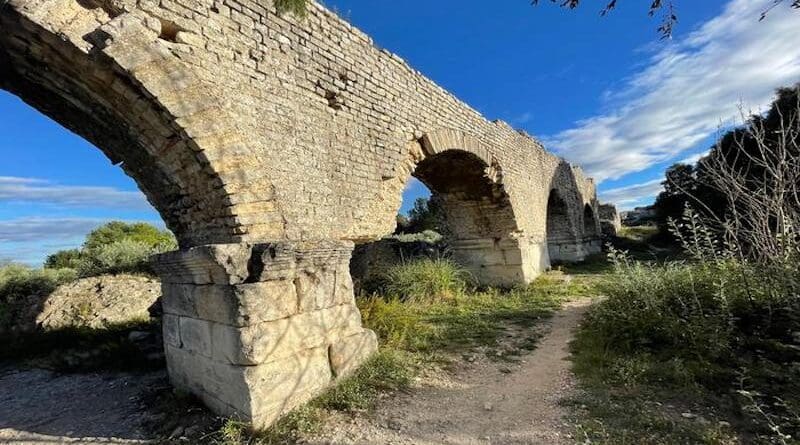
Bridge of the Roman aqueduct in Arles CREDIT: Cees Passchier


By 

Researchers from Johannes Gutenberg University Mainz (JGU), the University of Oxford, and the University of Innsbruck have deciphered the complex history of the ancient aqueduct system of Arles in Provence.


This was made possible by aqueduct carbonates – limescale deposits – that had deposited in the aqueducts, basins, and lead pipes, as well as lumps of aqueduct carbonate that had been used as building aggregate in the roof of the Baths of Constantine. The researchers published their findings in the renowned scientific journal Geoarchaeology.

Carbonates for the Complete Picture

“This study clearly shows how a Roman aqueduct worked over several centuries and was transformed at different times by the Romans, efficiently maintained and modified, and hence this is one of the clearest examples of a sustainable water management system from antiquity,” says Dr. Gül Sürmelihindi from the Institute of Geosciences at JGU who conducted the study.

“Unlike previous studies, where we mostly dealt with a single aqueduct, here we investigated the complex water supply of ancient Arles, consisting of several aqueducts, a basin and connected water structures in the city,” added Prof. Dr. Cees Passchier from the Institute of Geosciences at Mainz University, who participated in the study.

While some relationships between different elements of the city’s water supply system had been suggested for some time, the researchers have now succeeded in confirming the picture with solid archives from the Arles water system and proving the long-life cycle of the Roman aqueduct of Arles. Initially from 3 BCE onwards, an aqueduct from the south flank of the Alpilles hills supplied the city of Arles with water.

However, after almost a hundred years, an additional aqueduct was built from the northern side of the same hills, whose water joined that of its southern counterpart in an existing basin that was part of the original aqueduct. With the opening of the northern aqueduct, the southern one took on a new purpose: it was now diverted to power a huge 16-wheeled complex of water mills at neighbouring Barbegal, as the researchers confirmed in an earlier study – also through the analysis of the carbonates.


The researchers further confirmed that the basin originally functioned as a header basin upstream of an aqueduct arcade bridge: such basins were inserted so that sand and other suspended matter could settle. The northern aqueduct was then added later in an improvised manner, which can be seen from the architectural remains of its higher-level entrance to the basin. Another piece of the puzzle came from collapsed ceiling pieces of the Baths of Constantine in Arles, whose water supplier was so far unknown.

“We found aqueduct carbonates in these collapsed ceiling fragments that belonged to the northern aqueduct. Evidently, when the baths were built in the early fourth century AD on the orders of Emperor Constantine, the aqueduct was apparently restored and the chipped-off carbonates were used here as building material in the roof of the bath,” said Sürmelihindi.

In this way, the researchers were able to answer the previously unanswered question of how the bath was supplied with water and until when the Roman aqueduct was in use – at least until the time when the baths were built, since the carbonate cleaned out of the aqueduct was used in its construction, and most likely the aqueduct worked well into the fifth century AD until the arrival of invading Franks and Burgundians.

The role of large lead pipes from Roman time that ran across the bed of the Rhône River and were discovered in the 19th century was also debated for a long time. In which direction did these pipes transport water? The researchers were also able to solve this with the help of carbonates: deposits with similar isotopic composition to those found in the aqueducts in the north and south branches were also found in the lead pipes, confirming that an inverted siphon from the Arles aqueduct was supplying the Trinquetaille quarter on the opposite side of the river.

Isotope analysis provides insight into the deposition period

“Without the aqueduct carbonate archives, it would be impossible to reconstruct these relationships” said Passchier. “But because the deposits are heavily contaminated with clay, they cannot be dated using standard dating technologies. Instead, we analyzed stable oxygen and carbon isotopes from the carbonates and cross-correlated the isotopic profiles to see the times of their simultaneous deposition,” added Sürmelihindi. “This allowed us to identify the same annual layers in the carbonates and thus determine their relative depositional periods and thus the historical timing of modifications and changes made to the Arles water supply system.”


Spain And Brazil Push Global Action To Tax The Super-Rich And Curb Inequality

Luxury Jet Airplane Aircraft Business limo

By 

Spain and Brazil have launched a joint initiative to promote higher tax contributions from the super-rich worldwide, aimed at tackling soaring inequality by ensuring those with the most pay their fair share.


Presented during the UN’s 4th International Conference on Financing for Development – taking place this week in Sevilla, Spain – the proposal highlights a growing problem: the richest individuals often contribute less to public finances than ordinary taxpayers, thanks to lower effective tax rates and legal loopholes.

“Our countries need more and more public revenues to meet their needs. Inequality is a problem everywhere and the richest pay less than the middle class – even less than lower-income taxpayers,” said Spain’s Secretary of State for Finance Jesús Gascón, during a press conference at the conference venue, where temperatures have soared to record highs in recent days.

The two governments are calling on others to join a drive for a fairer, more progressive global tax system. They point to a stark reality: the wealthiest one per cent of the global population owns more than 95 per cent of humanity combined.

Sharing knowledge, closing gaps

In today’s interconnected world access to reliable data is essential. The initiative prioritises information sharing – between governments and tax authorities – to help expose gaps in tax systems, close loopholes and combat evasion and avoidance.

Improving data quality and building national capacities for data analysis will help tax administrations identify where and how wealth is concentrated, how much is currently being paid and what needs to change.


Though some progress has already been made, the countries say much more must be done and many more countries should come on board.

“There’s a real need to know who the beneficial owners are behind companies and legal structures used to conceal wealth,” said Mr. Gascón. The initiative also proposes technical cooperation, training in data analytics and peer review mechanisms to strengthen national tax systems.

A global wealth registry?

Spain and Brazil are even considering steps toward a global wealth registry – acknowledging that this would take time, political will and major national efforts.

But the aim is clear: more transparency, more accountability and fairer contributions from the richest.

“We cannot tolerate the intensity of inequality, which has been increasing in recent years,” said Brazil’s Minister-Counsellor to the UN, José Gilberto Scandiucci denying that this was some kind of far-leftist agenda.

“This is a moderate initiative to confront a very radical reality.”

The proposal forms part of the Seville Platform for Action, which is turbocharging voluntary actions to help reach the Sustainable Development Goals (SDGs) – currently way off track for the 2030 deadline.

G20 highlights ‘high worth’ factor

It also follows the 2024 agreement by the G20 industrialised nations who met in Rio (Brazil) last year – the first international accord to commit to a joint tax agenda for high-net-worth individuals.

A three-month work plan is now being drawn up with regular meetings planned to track progress. The goal – bring more countries, international organisations and civil society on board to push forward tax reforms targeting the ultra-rich.

“If we want to effectively tax the super-rich, fight inequality and make our tax systems fairer and more progressive, we need political will – and we need to act within our means,” Mr. Gascón added.


Violent Extremism Erodes Local Climate Resilience In The Sahel – Analysis

Africa globe


By 

Jihadist groups and militarised counter-terrorism responses have weakened traditional approaches to resolving climate disputes.


By Fahiraman Rodrigue Koné

The Sahel is one of Africa’s most climate-vulnerable areas. The region increasingly experiences extreme weather such as floods and droughts, and ongoing land degradation, depleting the natural resources vital to local economies.

Between 1979 and 2010, average temperatures in the region rose by 0.6°C to 0.8°C, and further increases of 3°C to 6°C are projected by the end of the 21st century.

Recent Institute for Security Studies (ISS) research examining the nexus between climate change and insecurity reveals that rural Sahelians have long relied on indigenous dispute resolution mechanisms to address climate-related tensions. The effects of climate change and rapid population growth have intensified competition over arable land, water and pasture – often leading to local conflicts. 

Historically, the peaceful management of such tensions ensured the equitable use of scarce resources during periods of climatic stress. However, the intensification of jihadist violence in the Sahel is eroding social cohesion in several localities. That makes it more difficult for communities to resolve resource-based tensions and in doing so, withstand the effects of climate change.


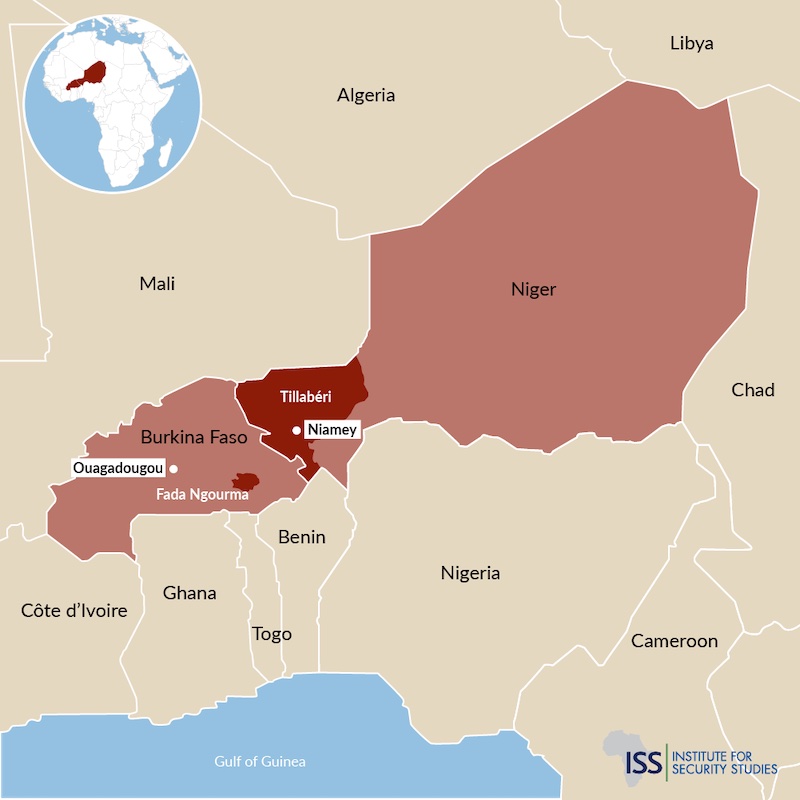
Tillabéri in Niger and Fada-Ngourma in Burkina Faso

ISS research in Tillabéri and Fada-Ngourma (see map) reveals that natural resource management is traditionally based on the coexistence of three production systems – pastoralism, agriculture and fishing, particularly around the Niger River.

These systems often compete for limited resources. They have coexisted through codified practices and norms grounded in customary law that govern interactions among socioeconomic groups. This approach represents a complex social architecture overseen by lineage heads, land chiefs, village chiefs and religious leaders, who monitor resource access and resolve disputes. Their authority maintains harmony within families, clans, casts and ethnic groups.

Nonetheless, the study found that resource-based conflicts continue in the context of increasing resource scarcity. These disputes include tensions between sedentary and nomadic herders, farmers, transhumant herders and farmers, and breeders and fishermen. The most frequent conflicts – particularly during periods of scarcity – arise between farmers and herders.

Most interviewees had greater trust in customary institutions than in the state’s formal dispute resolution structures

In response, Burkina Faso and Niger have established structures to arbitrate these natural resource disputes. In Niger, the Rural Code enabled land commissions at regional, departmental, communal and village levels. In Burkina Faso, legislation on rural land tenure created a Village Land Conciliation Commission in each village. But these entities – typically headed by prefects, governors or central government officials – struggle to manage tensions effectively.

In both ISS case studies, most interviewees expressed greater trust in customary institutions than in the state’s formal dispute resolution structures, which were often perceived as lacking legitimacy, impartiality and transparency. Concerns about corruption also undermine their credibility. In contrast, the strength of traditional institutions lies in their proximity to local communities and their ability to avoid cumbersome bureaucratic processes.

Trust in these institutions is rooted in two factors. First, the moral legitimacy of customary figures such as religious leaders, land chiefs and village heads, who are widely recognised as guardians of social order. Second, their conciliatory approach to dispute resolution, which prioritises the preservation of communal harmony and familial ties.

This traditional governance structure has long supported community resilience to climate shocks. However, it is increasingly threatened by the growing influence of violent extremist groups and the overly militarised counter-terrorism responses of Sahelian states.

Groups such as Jama’at Nasr al-Islam wal-Muslimin (JNIM) and the Islamic State in the Greater Sahara have frequently attacked communities and local religious leaders. With their deep-rooted authority and strong influence, these leaders are targeted for several reasons.

Many community leaders have been killed or displaced, leading to a reduced capacity to mediate social tensions

First, to weaken their influence and impose the jihadist groups’ authority by subjugating dissenters. Second, because the leaders represent a community order that the groups seek to dismantle. This is either because the hierarchical structures of customary or religious leadership conflict with the extremists’ egalitarian vision of Islam, or because the local leaders are viewed as state collaborators.

Many community leaders have been killed, threatened or displaced, leading to a loss of authority and a reduced capacity to mediate social tensions. In some areas, jihadist groups impose governance systems based on oppressive rules that directly challenge the legitimacy of traditional land tenure systems and destabilise local governance. 

Several leaders and fighters within extremist groups originate from the Fulani community. Generalisations implying widespread Fulani sympathy for jihadist groups have fuelled retaliatory attacks, cycles of violence and social exclusion. In turn, these dynamics have led some Fulani individuals to join armed groups – either as a means of self-protection or to seek revenge against security forces.

State-led security initiatives have sometimes aggravated local tensions. In Burkina Faso, the recruitment of civilian volunteers for counter-terrorism operations has inadvertently exposed some communities to jihadist reprisals, further eroding public trust in the state to provide security.

These ongoing cycles of violence and deteriorating local governance undermine the social consensus needed to manage natural resources. Ultimately, it is not just resource scarcity that threatens climate resilience in the Sahel, but the breakdown of the traditional systems that once ensured their equitable management.

Strengthening community resilience to climate change requires strengthening local governance structures

The Sahel crisis underscores the need for a multidimensional approach to regional stability. While climate adaptation strategies must include technical interventions such as agronomic innovations, long-term resilience demands that the underlying drivers of insecurity are addressed. These drivers fuel the region’s political, humanitarian and environmental fragility.

Strengthening community resilience to climate change requires strengthening local governance structures. Sahelian governments – particularly in Niger, Mali and Burkina Faso – must go beyond military responses and invest in restoring social cohesion.

A sustainable future also depends on meaningful support for community dialogue, conflict mediation and empowering traditional institutions as part of a comprehensive strategy for peace and stability.


ISS

The Institute for Security Studies (ISS) partners to build knowledge and skills that secure Africa’s future. Our goal is to enhance human security as a means to achieve sustainable peace and prosperity. The ISS is an African non-profit organisation with offices in South Africa, Kenya, Ethiopia and Senegal.