Wednesday, July 02, 2025


New fossils from Earth’s most famous extinction show climate tipping point was crossed


University of Leeds

Images available here  

New fossils from Earth’s most famous extinction show climate tipping point was crossed 

The collapse of tropical forests during Earth’s most catastrophic extinction event was the primary cause of the prolonged global warming which followed, according to new research. 

The Permian–Triassic Mass Extinction – sometimes referred to as the "Great Dying," happened around 252 million years ago, leading to the massive loss of marine species and significant declines in terrestrial plants and animals. 

The event has been attributed to intense global warming triggered by a period of volcanic activity in Siberia, known as the Siberian Traps, but scientists have been unable to pinpoint why super-greenhouse conditions persisted for around five million years afterwards. 

Now a team of international researchers led by the University of Leeds and the China University of Geosciences in Wuhan has gathered new data which supports the theory that the demise of tropical forests, and their slow recovery, limited carbon sequestration – a process where carbon dioxide is removed from the atmosphere and held in plants, soils or minerals.    

During extensive field studies, the team used a new type of analysis of fossil records as well as clues about past climate conditions found in certain rock formations to reconstruct maps of changes in plant productivity during the Permian–Triassic Mass Extinction.  

Their results, which are published today in Nature Communications, show that vegetation loss during the event led to greatly reduced levels of carbon sequestration resulting in a prolonged period where there were high levels of CO2. 

The paper’s lead author, Dr Zhen Xu, from the School of Earth and Environment, University of Leeds, said: “The causes of such extreme warming during this event have been long discussed, as the level of warming is far beyond any other event.  

“Critically, this is the only high temperature event in Earth’s history in which the tropical forest biosphere collapses, which drove our initial hypothesis. Now, after years of fieldwork, analysis and simulations, we finally have the data which supports it.” 

The researchers believe their results reinforce the idea that thresholds, or ‘tipping points’ exist in Earth’s climate-carbon system which, when reached, means that warming can be amplified. 

China is home to the most complete geological record of the Permian-Triassic mass Extinction and this work leverages an incredible archive of fossil data that has been gathered over decades by three generations of Chinese geologists.  

The lead author Dr Zhen Xu is the youngest of these and is continuing the work begun by Professor Hongfu Yin and Professor Jianxin Yu, who are also authors of the study. Since 2016, Zhen and her colleagues have travelled throughout China from subtropical forests to deserts, including visiting areas accessible only by boat or on horseback.  

Zhen came to the University of Leeds in 2020 to work with Professor Benjamin Mills on simulating the extinction event and assessing the climate impacts of the loss of tropical vegetation which is shown by the fossil record. Their results confirm that the change in carbon sequestration suggested by the fossils is consistent with the amount of warming that occurred afterwards. 

Professor Mills added: “There is a warning here about the importance of Earth’s present day tropical forests. If rapid warming causes them to collapse in a similar manner, then we should not expect our climate to cool to preindustrial levels even if we stop emitting CO2.  

“Indeed, warming could continue to accelerate in this case even if we reach zero human emissions. We will have fundamentally changed the carbon cycle in a way that can take geological timescales to recover, which has happened in Earth’s past.” 

Reflecting on the study’s broader mission, Professor Hongfu Yin and Professor Jianxin Yu of the China University of Geosciences, underscored the urgency of blending tradition with innovation: “Paleontology needs to embrace new techniques—from numerical modelling to interdisciplinary collaboration—to decode the past and safeguard the future,” explained Professor Yin. 

Professor Yu added: “Let’s make sure our work transcends academia: it is a responsibility to all life on Earth, today and beyond. Earth’s story is still being written, and we all have a role in shaping its next chapter.” 

Ends 

Early Triassic super-greenhouse climate driven by vegetation collapse is published today (2 July) in Nature Communications. 

The DOI is 10.1038/s41467-025-60396-y 

Images available here 

Photo captions:  

Photo 1 of pre-extinction tropical rainforest seed fern, Gigantopteris, (giant leaves) courtesy of Dr Zhen Xu. 

Photo 2 of Dr Zhen Xu on horseback during a recent fieldtrip in China, courtesy of Dr Zhen Xu. 

Media enquiries:  

Please contact the University of Leeds press office via pressoffice@leeds.ac.uk 

Further information 

This research is primarily funded by the UK Research and Innovation (UKRI) and the National Natural Science Foundation of China (NSFC), with additional funding for collaborators provided by UKRI, ETH+, and the Australian Research Council. The work was conducted in collaboration with the following institutions: 

  • School of Earth and Environment, University of Leeds, Leeds, LS2 9JT, UK 

  • State Key Laboratory of Geomicrobiology and Environmental Changes, School of Earth Sciences, China University of Geosciences, Wuhan, 430074, P.R. China 

  • School of Physics, Chemistry and Earth Science, University of Adelaide, Adelaide, SA 5005, Australia 

  • Birmingham Institute of Forest Research, University of Birmingham, Edgbaston, Birmingham, B15 2TT, UK 

  • Department of Biosystems Science and Engineering, ETH Zürich, Basel, 4056, Switzerland 

  • Computational Evolution Group, Swiss Institute of Bioinformatics, Lausanne, 1015, Switzerland 

  • State Key Laboratory of Geological Processes and Mineral Resources, China University of Geosciences, Wuhan, 430074, P.R. China 

  • Department of Biology, Howard University, Washington DC, USA 

  • Géosciences Environnement Toulouse, CNRS-Université de Toulouse III, Toulouse, France 

  • CEREGE, Aix Marseille Université, CNRS, IRD, INRA, Coll France, Aix-en-Provence, France 


University of Leeds  

The University of Leeds is one of the largest higher education institutions in the UK, with more than 40,000 students from about 140 different countries. We are renowned globally for the quality of our teaching and research.  

We are a values-driven university, and we harness our expertise in research and education to help shape a better future for humanity, working through collaboration to tackle inequalities, achieve societal impact and drive change.   

The University is a member of the Russell Group of research-intensive universities, and is a major partner in the Alan Turing, Rosalind Franklin and Royce Institutes www.leeds.ac.uk   

Follow University of Leeds or tag us in to coverage: Bluesky | Facebook | LinkedIn | Instagram 


Gene therapy restored hearing in deaf patients


Karolinska Institutet


Gene therapy can improve hearing in children and adults with congenital deafness or severe hearing impairment, a new study involving researchers at Karolinska Institutet reports. Hearing improved in all ten patients, and the treatment was well-tolerated. The study was conducted in collaboration with hospitals and universities in China and is published in the journal Nature Medicine.

“This is a huge step forward in the genetic treatment of deafness, one that can be life-changing for children and adults,” says Maoli Duan, consultant and docent at the Department of Clinical Science, Intervention and Technology, Karolinska Institutet, Sweden, and one of the study’s corresponding authors.

The study comprised ten patients between the ages of 1 and 24 at five hospitals in China, all of whom had a genetic form of deafness or severe hearing impairment caused by mutations in a gene called OTOF. These mutations cause a deficiency of the protein otoferlin, which plays a critical part in transmitting auditory signals from the ear to the brain.

Effect within a month

The gene therapy involved using a synthetic adeno-associated virus (AAV) to deliver a functional version of the OTOF gene to the inner ear via a single injection through a membrane at the base of the cochlea called the round window.

The effect of the gene therapy was rapid and the majority of the patients recovered some hearing after just one month. A six-month follow-up showed considerable hearing improvement in all participants, the average volume of perceptible sound improving from 106 decibels to 52.

Best results in children

The younger patients, especially those between the ages of five and eight, responded best to the treatment. One of the participants, a seven-year-old girl, quickly recovered almost all her hearing and was able to hold daily conversations with her mother four months afterwards. However, the therapy also proved effective in adults.

“Smaller studies in China have previously shown positive results in children, but this is the first time that the method has been tested in teenagers and adults, too,” says Dr Duan. “Hearing was greatly improved in many of the participants, which can have a profound effect on their life quality. We will now be following these patients to see how lasting the effect is.”

No serious adverse reactions

The results also show that the treatment was safe and well-tolerated. The most common adverse reaction was a reduction in the number of neutrophils, a type of white blood cell. No serious adverse reactions were reported in the follow-up period of 6 to 12 months.

“OTOF is just the beginning,” says Dr Duan. “We and other researchers are expanding our work to other, more common genes that cause deafness, such as GJB2 and TMC1. These are more complicated to treat, but animal studies have so far returned promising results. We are confident that patients with different kinds of genetic deafness will one day be able to receive treatment.”

The study was conducted in collaboration with a number of institutions, including Zhongda Hospital, Southeast University, China, and was financed by several Chinese research programmes and Otovia Therapeutics Inc., the company that has developed the gene therapy and that employs many of the researchers involved in the study. See the published paper for a full list of conflicts of interest.

Publication: “AAV gene therapy for autosomal recessive deafness 9: a single-arm trial”, Jieyu Qi, Liyan Zhang, Ling Lu, Fangzhi Tan, Cheng Cheng, Yicheng Lu, WenXiu Dong, Yinyi Zhou, Xiaolong Fu, Lulu Jiang, Chang Tan, Shanzhong Zhang, Sijie Sun, Huaien Song, Maoli Duan, Dingjun Zha, Yu Sun, Xia Gao, Lei Xu, Fan-Gang Zeng, Renjie Chai, Nature Medicine, online 2 July 2025, doi: 10.1038/s41591-025-03773-w.


Survey finds Trump losing favor, Newsom gaining


Harris could win if she runs for governor, according to UCI-OC Poll


University of California - Irvine


Irvine, Calif., July 2, 2025 — President Donald Trump’s approval ratings among California residents are tanking while Gov. Gavin Newsom’s favorability has improved, according to the latest UCI-OC Poll, administered by the University of California, Irvine School of Social Ecology. 

In late May and early June, Newsom’s approval ratings looked nearly as bad as those for Trump. Fifty-nine percent of Californians disapproved of the governor’s job performance, nearly a third of them strongly at the time. Californians disapprove of Trump by more than a 2:1 ratio.

The federal government’s clash with California over recent immigration raids seems to have improved Californians’ impression of Newsom. Fifty-six percent of Californians now rate Newsom as “somewhat favorable” or “strongly favorable.”

“There is no mistaking that Newsom’s battle with Trump has been good for his standing in the state, certainly among Democrats and also with Independents,” says Jon Gould, dean of the School of Social Ecology, who oversees the UCI-OC Poll. “Newsom has an upside, which may help him if he chooses to run for president.”

Former Vice President Kamala Harris has not entered the gubernatorial race, but if she were a candidate, voters would prefer her, according to the Poll. When presented with a binary choice between Harris and an unnamed Republican, 41 percent of survey respondents chose Harris, 29 percent chose the Republican, 16 percent were undecided, and 14 percent said they would not vote. Harris maintains an 11 percent net favorability rating among Californians, the highest of candidates tested. Many respondents had never heard of several candidates, including those who have run statewide before.

“The path to governor seems well-paved for Vice President Harris if she decides to run. Although she lacks majority support at the moment, people know her better than the other candidates and generally view her favorably,” Gould says.

The Poll also found that Californians believe the state is on the wrong track by a 2:1 margin. The rate is 4:1 among Republicans and nearly 3:1 for Independents, whereas Democrats are evenly split. Among racial and ethnic groups, African Americans are an exception in narrowly believing that the state is headed in the right direction. Across age groups, only those Californians over 80 believe the state is on the right track.

Asked about funding priorities for the state, 70 percent of Californians named housing. Indeed, 33 percent listed housing as the top priority, mentioned almost twice as often as the next highest priority — health care. 

However, significant partisan differences exist. 

“Republicans differ from other Californians in their lower prioritization of housing and higher ranking of regulation relief, just as Democrats diverge in their higher prioritization of health care and education and lower rank for law enforcement and public safety,” Gould notes. “Perhaps the only issue on which there is broad agreement across partisan identification is the modest ranking for road and bridge maintenance and construction.”

Overall, the study, which polled more than 4,600 California residents in three separate surveys, found a disenchanted electorate, one worried about the direction of the state and concerned about several key policy issues.

“We’re in a period of disappointment and distrust,” Gould says. “No one seems happy with anything. And, the chasm between Democrats and Republicans is real and shows no signs of faltering.”

In addition, he says, “there has been a lot of talk — at least nationally — of the dire straits in which Democrats find themselves. In California, by contrast, Democrats may find their strength and future: they haven’t lost some key voting groups yet, several voters’ funding priorities (even among Independents) favor them, and Newsom just showed the potential political benefits of standing up to Trump. The question is whether the Democrats will be able to capitalize on those opportunities.”

The full UCI-OC Poll report is available online. For more information about the UCI-OC Poll, visit the website.


Religion, politics and war drive urban wildlife evolution


Washington University in St. Louis


The downstream consequences of religion, politics and war can have far-reaching effects on the environment and on the evolutionary processes affecting urban organisms, according to a new analysis from Washington University in St. Louis. 

Typically viewed from a sociological perspective, the implications of religion, politics and war are rarely discussed in the field of evolutionary biology. That should change, according to an international team of biologists, including Elizabeth Carlen in Arts & Sciences at WashU, co-lead author of a new review published in Nature Cities

Better understanding the effects of religion, politics and war on urban evolutionary biology can enhance our ability to design and remodel cities to make them better for people while supporting the environment and evolutionary potential within the city, study authors said.

“For a long time we have separated humans from biology. But humans, especially in urban areas, are a very active part of biology, and our decisions have consequences,” said Carlen, a Living Earth Collaborative postdoctoral fellow. 

She helped organize a team of contributors from five of the seven continents of the world to offer global and local perspectives on the social processes discussed in the paper. 

Starting with religious practices, the authors described ways that socially driven interactions between humans and urban wildlife can lead to evolutionary change for animals or plants. While previous research has established that religious practices have shaped urban biodiversity, the study authors argue that such practices also generate downstream evolutionary change in urban wildlife. 

In one example, when walls were constructed around religious buildings in the city of Oviedo, Spain, that change led to genetic drift and resulted in population differences among fire salamanders (Salamandra salamandra) within and outside the walled area. 

In another religion-related example, the ritual release of prayer animals — the paper mentions birds, fish and even bullfrogs — in cities often involves the capture and release of wild animals; this release may occur far from where the animal was captured, leading to human-facilitated gene flow.

The study authors offer a list of testable hypotheses for future research furthering our understanding of the impact of religion, politics and war on urban evolutionary biology. They also encouraged scientists to think about how they could record changes as they are happening. “Digital technology has allowed us to revolutionize what kind of data we’re collecting,” Carlen said. 

“One of our co-authors published a paper on social media accounts of animal changes during war,” she said. “So, for example, going through Twitter and Instagram and finding posts that people had put up showing a polecat that’s stuck in the crater of a bomb. We now have that capability to document things like that, even though a war is going on.”

In her own work in the American Midwest, where Carlen is studying the impacts of environmental management decisions on wildlife, including Eastern gray squirrels, politics can exert a sizable influence on biodiversity and evolution, she said. 

In St. Louis, political mandates have led to a crime prevention approach in certain areas of the city that can have an impact on biodiversity, Carlen said. “Places like Fountain Park and Fairground Park don’t have any low bushes and don’t have any small trees. This is partly because it enables police to see across the landscape.

“But you can imagine, if you’re a small animal, moving across that same space becomes much more difficult,” she said. “Raccoons moving across an open space are more vulnerable than if there’s a bush that provides cover.”

The biologists emphasized the need for additional research to tease apart how evolution is being shaped by human conflict and socially driven choices.

“Religion, politics and war are all highly interconnected,” Carlen said.”It’s difficult to separate these processes in many instances, making things messy for human societies, biologists and the wildlife being influenced by our human actions.”


Peeking inside AI brains: Machines learn like us


New research reveals a surprising geometric link between human and machine learning. A mathematical property called convexity may help explain how brains and algorithms form concepts and make sense of the world


Technical University of Denmark

The connection between human and machine learning 

image: 

A new connection between human and machine learning has been discovered: While conceptual regions in human cognition for long have been modelled as convex regions, Tetkova et al. present new evidence that convexity playes a similar role in AI. So-called pretraining by self-supervision leads to convexity of conceptual regions and the more convex the regions are, the better the model wil learn a given specialist task in supervised fine-tuning

view more 

Credit: DTU


New research reveals a surprising geometric link between human and machine learning. A mathematical property called convexity may help explain how brains and algorithms form concepts and make sense of the world.

In recent years, with the public availability of AI tools, more people have become aware of how closely the inner workings of artificial intelligence can resemble those of a human brain.

There are several similarities in how machines and human brains work, for example, in how they represent the world in abstract form, generalise from limited data, and process data in layers. A new paper in Nature Communications by DTU researchers is adding another feature to the list: Convexity.

"We found that convexity is surprisingly common in deep networks and might be a fundamental property that emerges naturally as machines learn," says Lars Kai Hansen, a DTU Compute professor who led the study.

Convexity may bridge human and machine intelligence

To briefly explain the concept, when we humans learn about a "cat," we don't just store a single image but build a flexible understanding that allows us to recognise all sorts of cats—be they big, small, fluffy, sleek, black, white, and so on.

Coming from mathematics to describe, e.g., geometry, the term convexity was applied to cognitive science by Peter Gärdenfors who proposed that our brains form conceptual spaces where related ideas cluster. And here's the crucial part: natural concepts, like "cat" or "wheel," tend to form convex regions in these mental spaces. In short, one could imagine a rubber band stretching around a group of similar ideas—that's a convex region.

Think of it like this: Inside the perimeter of the rubber band, if you have two points representing two different cats, any point on the shortest path between them also falls within the mental "cat" region. Such convexity is powerful as it helps us generalise from a few examples, learn new things quickly, and even helps us communicate and agree on what things mean. It's a fundamental property that makes human learning robust, flexible and social.

When it comes to deep learning models - the engines behind everything from image generation to chatbots - they learn by transforming raw data like pixels or words into complex internal representations, often called "latent spaces." These spaces can be viewed as internal maps where the AI organises its understanding of the world.

Measuring AI's internal structure

To make AI more reliable, trustworthy and aligned with human values, there is a need to develop better ways to describe how it represents knowledge. Therefore, it is critical to determine whether machine-learned spaces are organised in a way that resembles human conceptual spaces and whether they also form convex regions for concepts.

First author of the paper, Lenka Tetkova, who is a postdoc at DTU Compute, dove into this very question, looking at two main types of convexity:

First is Euclidean convexity, which is straightforward: if you take two points within a concept in a model's latent space, and the straight line between them stays entirely within that concept, then the region is Euclidean convex. This is like generalising by blending known examples.

The other is graph convexity, which is more flexible and especially important for the curved geometries often found in AI's internal representations. Imagine a network of similar data points—if the shortest path between two points within a concept stays entirely inside that concept, then it's graph convex. This reflects how models might generalise by following the natural structure of the data.

"We've developed new tools to measure convexity within the complex latent spaces of deep neural networks. We tested these measures across various AI models and data types: images, text, audio, human activity, and even medical data. And we found that the same geometric principle that helps humans form and share concepts—convexity—also shapes how machines learn, generalise, and align with us," says Lenka Tetkova.

AIs hidden order

The researchers also discovered that the commonalities are found in pretrained models that learn general patterns from massive datasets and finetuned models that are taught specific tasks like identifying animals. This further substantiates the claim that convexity might be a fundamental property that emerges naturally as machines learn.

When models are fine-tuned for a specific task, the convexity of their decision regions increases. As AI improves at classification, its internal concept regions become more clearly convex, refining its understanding and sharpening its boundaries.

In addition, the researchers discovered that the level of convexity in a pretrained model's concepts can predict how well that model will perform after finetuning.

"Imagine that a concept, say, a cat, forms a nice, well-defined convex region in the machine before it's even taught to identify cats specifically. Then it's more likely to learn to identify cats accurately later on. We believe this is a powerful insight, because it suggests that convexity might be a useful indicator of a model's potential for specific learning tasks," says Lars Kai Hansen.

A route to better AI

According to the researchers, these new results may have several important implications. By identifying convexity as a pervasive property, they have better understood how deep neural networks learn and organise information. It provides a concrete mechanism for how AI generalises, which may be like how humans learn.

If convexity does prove to be a reliable predictor of performance, it may be possible to design AI models that explicitly encourage the formation of convex concept regions during training. This could lead to more efficient and effective learning, especially in scenarios where only a few examples are available. The findings may therefore provide a crucial new bridge between human cognition and machine intelligence.

"By showing that AI models exhibit properties (like convexity) that are fundamental to human conceptual understanding, we move closer to creating machines that 'think' in ways that are more comprehensible and aligned with our own. This is vital for building trust and collaboration between humans and machines in critical applications like healthcare, education, and public service," says Lenka Tetkova.

"While there's still much to explore, the results suggest that the seemingly abstract idea of convexity may hold the key to unlocking new secrets on AI's internal workings and bringing us closer to intelligent and human-aligned machines."

The project

The research carried out within the research project “Cognitive Spaces – Next generation explainable AI” funded by the Novo Nordisk Foundation. The project’s aim is to open the machine learning black-box and build tools to explain the inner workings of AI-systems with concepts that can be understood by specific user groups.


‘Mystery of Cleopatra’ exhibit in Paris pushes back against clichés


For centuries, depictions of Cleopatra have emphasised her beauty and romantic entanglements – much more so than her two-decade rule of Egypt. The Institut du monde arabe (Arab World Institute) in Paris aims to change that with “The Mystery of Cleopatra”, a new exhibit running until January 11, 2026.


Issued on: 26/06/2025 - FRANCE24
By: Vitoria Barreto

"The Death of Cleopatra", oil on canvas, Toulouse, Musée des Augustins, 1874. 
© Jean-André Rixens


Cleopatra has become an icon throughout the centuries, depicted in both classical art and pop culture as a strategic seductress who had relationships with Julius Caesar and Marc Antony, overshadowing her role as a head of state.

“The Mystery of Cleopatra” exhibit at the Institut du monde arabe in Paris, on view until January 11, 2026, aims to push back on these clichés. It opens with archaeological and historical information about her reign, then shifts to explore how the myth of her was constructed through cinema and contemporary art – and, ultimately, how Cleopatra is being reimagined as a symbol of resistance.

A 17th-century white marble statue of Cleopatra, standing tall with a snake wrapped around her body, is the first element a visitor encounters, which sets the tone for the rest of the show.

Cleopatra dying, standing, 17th century Versailles, châteaux de Versailles et de Trianon. © Château de Versailles, Dist. GrandPalaisRmn, Didier Saulnier

Exhibit curator Claude Mollard points out that from the 15th century onwards, Cleopatra was presented as a seductress. Even Cleopatra’s death has been sexualized. But he says artists have also long been fascinated by her as a symbol of freedom and defiance: she ultimately chooses death over submission. “She is a free woman,” he says.

Cleopatra “preferred to kill herself rather than submit to Octavian, who wanted to take her prisoner and present her in Rome as evidence of his triumph and then, perhaps, execute her".

Born in Alexandria around 69 BCE, Cleopatra was both Greek and Egyptian – a descendant of the Macedonian Ptolemaic dynasty that had ruled Egypt since 305 BCE.

Watch moreIn Paris, a museum displays "rescued treasures from Gaza"

Mollard describes Cleopatra's Alexandria as a relatively tolerant regime where multiple religions coexisted and ethnic groups governed themselves through their own courts.

“The Jews had their courts, the Greeks had their courts, and the Egyptians had their courts,” he says. “It was hyper modern, hyper tolerant."

Burial urns and figurines of deities from the time included in the exhibition depict the juxtaposition of religions living in relative harmony.

Egypt’s political structure at the time was unique: men and women often ruled together, often through symbolic sibling marriages, as was the case with Cleopatra and her brother, whom she eventually displaced with Caesar’s support.

Following Caesar’s assassination, Cleopatra allied herself with Marc Antony, continuing Egypt’s co-sovereign tradition within the Roman political framework. But as Octavian moved to consolidate Rome under his rule, Cleopatra and Antony resisted, eventually committing suicide after Octavian defeated their forces. Their deaths marked not just the end of a dynasty, but the fall of an entire system of governance.

“The death of Cleopatra marks the end of a tolerant, mixed way of governing and its replacement by a paternalistic male government, which would spread throughout Europe all the way to General [Charles] de Gaulle” and even the conflicts of today, says Mollard.

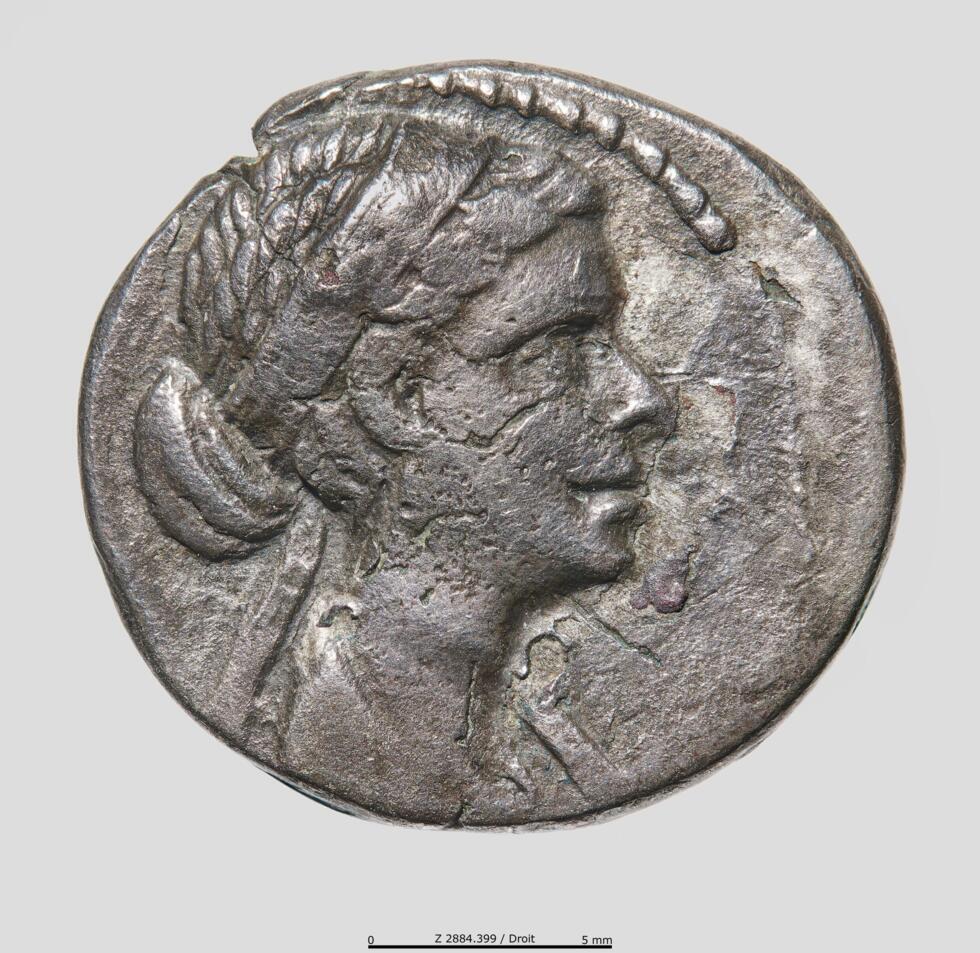
With Octavian’s victory, the Roman patriarchal regime expanded across Egypt and the Middle East. But Cleopatra’s legacy endured. Coins bearing her face – the only evidence we have of what she looked like –remained in circulation and were cherished by Egyptians for more than 150 years.
Coin of Cleopatra VII, made in Alexandria (Egypt). 
© National Library of France, Paris, Department of Coins, Medals and Antiques


Sexualization of a queen

In the second part of the exhibition, both Roman and Arabic texts discuss how Cleopatra’s image has been shaped throughout time.

At the entrance to this section, a wall of sculpted noses is a reference to French physicist Blaise Pascal’s quote: “The nose of Cleopatra: if it had been shorter, the whole face of the earth would have changed.” Pascal’s attribution of the reasons for the Egyptian queen’s influence to a single facial feature illustrates how Western narratives often objectified her, erasing her political legacy.

"About 2 inches long", 2020 (production 2025). © Esmeralda Kosmatopoulos

These reductive portrayals date from Ancient Rome, when Octavian spread rumours about his erstwhile competitor by calling her a “prostitute queen”. Roman society followed suit, and coins bearing her image were vandalised.

Roman poets including Horace, Virgil and Propertius celebrated the defeat of the last Hellenistic queen in their poems, with Propertius deriding her as a whore-queen who dared to usurp masculine authority.

The exhibit suggests that Arabic thinkers held a different view of Cleopatra. Historian Ibn Abd al-Hakam (803-871 AD) described her as a "builder queen concerned with ensuring the safety and well-being of her people” even crediting her with the construction of the legendary Lighthouse of Alexandria.

The exhibit’s final section looks at what modern art and pop culture has made of Cleopatra.

From myth to symbol of resistance

Renaissance portrayals of the death of Cleopatra fill a section of the exhibition, leading visitors to a dark room with a screen showing how cinema has told Cleopatra’s story over time.

Cleopatra costumes, from Monica Bellucci’s in "Asterix & Obelix: Mission Cleopatra" to Elizabeth Taylor’s iconic performance, fill the room. Elements from commercials and consumer goods that commodify the queen’s image are also on display.
"Cleopatra's Kiosk", Shourouk Rhaiem, 2025. © Collection of the artist Alberto Ricci

These final rooms present her as a symbol of both feminist and colonial resistance. She became a symbol of anti‑colonial defiance during British rule of Egypt and she inspired African‑American pride during and after the Civil War in the United States.

Contemporary feminist artists also contribute to this reframing, exposing the deep misogyny of the way Cleopatra has been portrayed throughout history. One installation revisits ancient texts that once vilified her, now marked in red and rewritten.

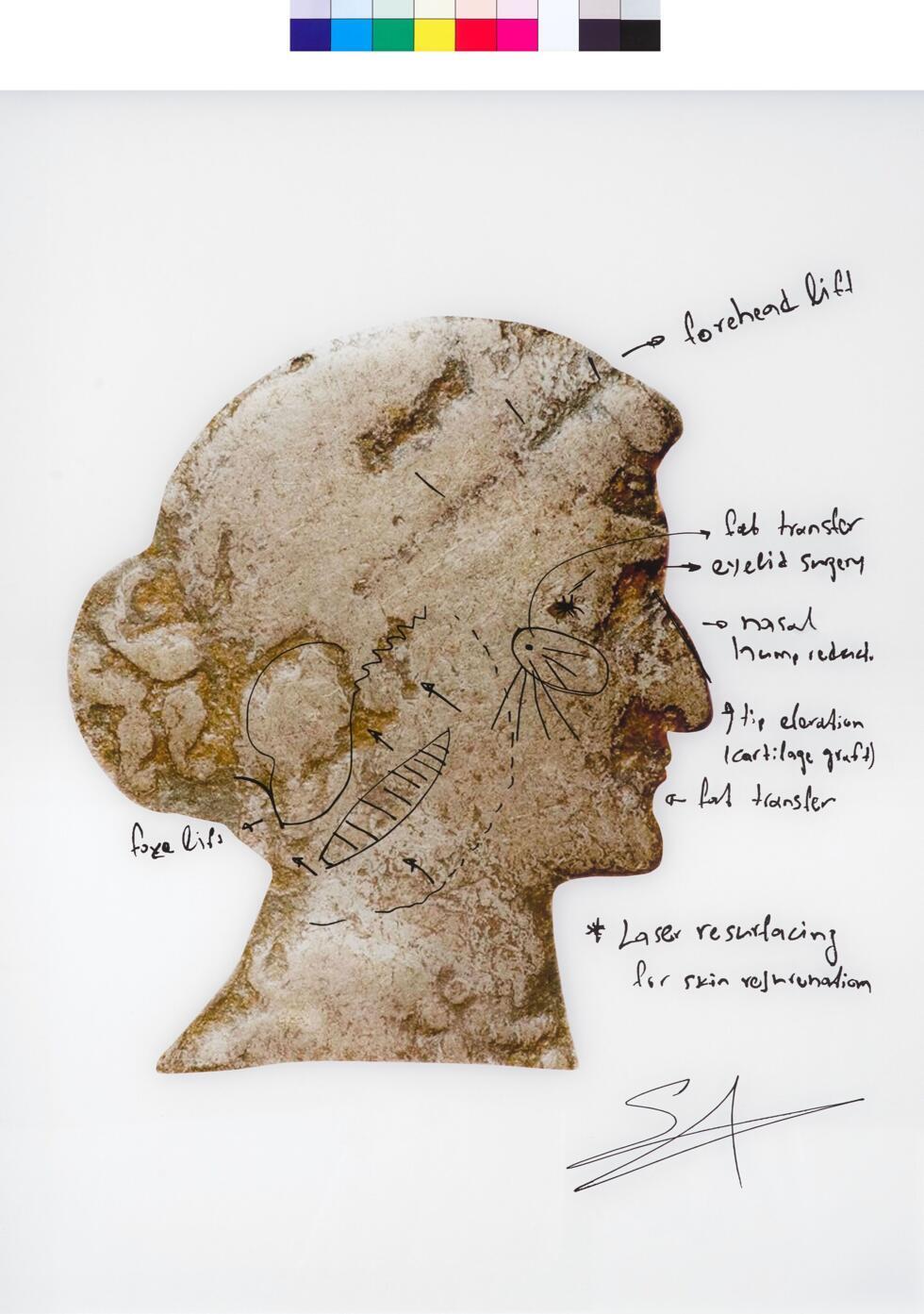
One of the most striking final pieces is a coin depicting her profile that includes notations of the cosmetic procedures Cleopatra would have to undergo to meet modern-day beauty standards.


"I want to look like Cleopatra #1", 2020. © Esmeralda Komatopoulos

“Cleopatra is a feminist woman who resists the obstacles the Romans place in her path. And so, she has become an example, especially today, when we live in an international period in which the use of brute force is increasing every day," Mollard says.