Wednesday, July 02, 2025

GREEN CAPITALI$M REDUX

The Quiet Comeback of Voluntary Carbon Markets

  • Voluntary Carbon Markets (VMC's) though still small, are poised for a major resurgence.

  • High-quality, engineered carbon removal solutions, such as mineralization, require large investments to scale and reduce costs.

  • Experts believe a revitalized VCM could fund these breakthroughs and significantly boost global decarbonization efforts.


It is widely agreed that a large part of decarbonization will occur through market-based solutions that put a price on carbon.

A growing part of the world’s carbon emissions are covered by mandatory carbon markets – regional or national – the so-called compliance markets. But market watchers see an ongoing need for voluntary markets, in which companies and organizations purchase carbon credits to offset their carbon emissions.

In fact, a convergence of voluntary and compliance markets is beginning to appear, potentially opening new demand for credits from projects around the world, including carbon removal projects through technical and natural methods.

This growing convergence opening large sources of new demand for carbon credits promises to provide essential funding for breakthrough technologies in carbon-free energy.

The voluntary carbon market (VCM), which has at times been on the verge of extinction over the past two decades, may well be on the cusp of a resurgence that draws private capital into promising technologies and projects, especially projects in lower-income countries.

Tiny market, huge potential

Compared to compliance markets, the VCM is quite small. Yet around it has developed a remarkable infrastructure of registries, standard-setting bodies, project developers, rating agencies and brokers. Its basic unit is a ton of carbon permanently removed or not put into the atmosphere.

“It’s a tiny market, covering perhaps 0.3 percent of global emissions,” says Lars Kroijer, Managing Director, AlliedOffsets, a UK-based data and market intelligence provider for the VCM. “It’s a rounding error of a rounding error.”

With his company tracking thousands of projects from some 8000 developers listed on numerous registries, for corporate clients worldwide, he’s gained global perspective and sees enormous potential in the VCM.

“This space has tremendous potential, it can be a hundred times bigger and still be small,” he says. 

He thinks the voluntary market can play a key role to spur investment in tech solutions, specifically carbon dioxide removals (CDR). Such solutions extend beyond nature-based tree-planting, which cannot scale enough. They require sustained investment in research and engineering.

Now, engineered CDR projects are the most expensive in the market, their credits costing up to $500 and more. The key factor for any breakthrough technology is that it must scale quickly at much lower cost.

AlliedOffsets has created a database of what it calls ‘moonshots’; projects that are underway now.

“It’s a way to keep track of where we are with potentially huge, game changing solutions, in addition to some of the less scalable stuff,” says Kroijer.

“Because we need a lot of money to go into this space, not just planting trees,” he says. “It needs a lot of investment and costs to come down by a large factor, more than solar did, for it to be competitive decarbonization.”

Now, with the expansion of national and regional compliance markets, he says there’s a huge incentive to allow voluntary credits into compliance markets, creating new demand for projects that could potentially, with enough funding, change the world.

As an example, Kroijer suggests mineralization; a rock combined with a chemical process that can capture and hold carbon. There are actual projects like this. If one breakthrough project could be made to scale, to become 1000 times more efficient, it could bring the cost of a captured ton of CO2 way down.

“It’s why CDR can be so exciting,” he says. “But one problem is that it's so tiny, that so few credits are generated, and they're still incredibly expensive.”

He believes the voluntary market can generate significant investment for new ventures across a range of technologies.

Factors fueling demand

“The voluntary carbon market has had to weather multiple storms over the years, but it’s evolving not collapsing,” says Xavier Pye, an associate at Correggio Consulting Ltd. in Abu Dhabi. He gained insights on the VCM while leading business development at AirCarbon Exchange (ACX), which briefly operated an exchange in Abu Dhabi’s financial district.

“Governments are waking up to the opportunity the VCM offers in directing private finance, provided they adopt the right eligibility criteria for credits, and the project methodologies are sound.

“They see the value of the VCM for reducing the cost of mitigation activities and allowing private sector involvement to meet net-0 targets,” he says.

He also sees the growing convergence of voluntary and compliance markets potentially fueling new demand for credits.

“Voluntary carbon credits are being increasingly accepted in compliance schemes that provide a ready market for them,” he says.

Currently, some 40 percent of emissions trading schemes worldwide allow for some form of offsets, mostly domestic, to be used within their compliance regimes. An example is Singapore, where companies under its carbon tax scheme can meet up to 5 percent of their liabilities with eligible carbon credits.

Other factors should fuel rising demand in the VCM.

An important one is CORSIA, the Carbon Offsetting and Reduction Scheme for International Aviation, now in Phase 1. It compels airlines to purchase carbon credits in the voluntary market to offset emissions associated with international flights. The standards for these credits are quite high, ensuring their quality, while the market for them is anticipated to expand after 2027 when most countries are expected to join Phase 2.

There is also the emerging UN framework for international trade of carbon credits. Article 6.2 of the Paris Agreement governs bilateral agreements for carbon transactions between countries. Article 6.4 will go further to provide a centralized UN registry allowing transfers between countries.

“The development of the Paris agreement’s Article 6 framework is turbocharging the merge between voluntary and compliance markets,” says Xavier Pye.

A good example is Switzerland, which is a leading buyer of carbon offsets under Article 6. The country has entered into agreements with Ghana and Thailand, which have authorized the transfer of cross-border carbon credits. In Ghana, a Swiss foundation is supporting a cookstove project and an electric bike startup.

The credits, expected to prevent hundreds of thousands of tons of CO? emissions by 2030, are known as Internationally Transferable Mitigation Outcomes (ITMOs) under Article 6.2.

There are great expectations for this emerging global market.

“It provides an amazing tool for climate finance, because countries will be receiving hard currency in the form of project investment,” says Pye.  

“And they’ll also earn hard currency through sale of credits, all the while hopefully getting improved environmental outcomes within their national boundaries.” 

“It’s perhaps one of the best exports a developing country can have,” he says.

Get your carbon credits now

For firms anticipating the need to acquire carbon credits in the near future, possibly before 2030 when national net-0 targets kick in, Pye offers some advice. For companies not under a compliance scheme, he urges them to purchase credits now while they’re relatively inexpensive and building a portfolio from diverse projects.   

“Come 2030 there’s going to be a lot of companies rushing to buy carbon units, and they will need to continue to purchase offsets for years,” he says.  

“Naturally, with the uncertainty of the market, early movers will be rewarded.

“Of course they are taking risk in investing in projects, because the credits may not be eligible under compliance schemes in the future,” he says. “But having a diverse portfolio will help to abet such risk.”

He thinks that as carbon offsets gain more access to expanding compliance markets, the VCM will become a crucial piece in the world’s decarbonization toolbox.

By Alan Mammoser for Oilprice.com

Fossil Fuels Still Dominate Despite Renewable Growth

  • The 2025 Statistical Review of World Energy introduces Total Energy Supply (TES) as a new, more accurate metric for global energy supply, replacing the older Primary Energy Consumption method.

  • Global energy demand reached an all-time high in 2024, with record consumption across all major energy sources including fossil fuels and renewables.

  • Despite rapid growth in renewable energy, global carbon dioxide emissions also rose, indicating that clean energy is currently augmenting rather than replacing conventional sources at scale.

Last week the Energy Institute (EI) released the 2025 Statistical Review of World Energy, which was published previously for more than 70 years by BP.

The full report and all data can be found at this link.

The Statistical Review is instrumental in providing comprehensive data on global oil, gas, and coal production and consumption, as well as on carbon dioxide emissions and renewable energy statistics.

Over the next month, I will delve into the various categories from the report. But today, I want to highlight a foundational change in how global energy supply is measured—along with a few key findings that set the stage for what’s to come.

Total Energy Supply

The 2025 edition marks a major shift in how global energy supply is calculated. For decades, the industry relied on “Primary Energy Consumption” as a benchmark.

That’s now changing. The Statistical Review—citing the methodologies used by the International Energy Agency (IEA), U.S. Energy Information Administration (EIA), BP, and Eurostat—has adopted a metric called Total Energy Supply (TES).

So, what is TES, and why does it matter?

In a nutshell, Total Energy Supply reflects the actual amount of energy available to meet a country’s demand. It accounts for production and imports, subtracts exports and storage, and adjusts for losses during conversion and transmission. It captures the energy that reaches end users in a usable form—whether that’s electricity, gasoline, or thermal energy.

The older method used for primary energy calculations tended to treat all energy sources as if they had the same conversion losses. For example, fossil fuels may be burned to generate electricity, but a significant portion of that energy is lost as heat in the process. Non-combustible renewables like wind, solar, nuclear, and hydro don’t incur those same losses. Yet under the old method, those renewables were still penalized with assumed inefficiencies, making their contribution appear smaller than it actually was.

By contrast, TES offers a more apples-to-apples comparison. It gives a truer sense of how much useful energy is actually delivered to society. This is particularly important as countries transition away from combustion-based energy and toward more direct-use sources like electricity from wind and solar.

An Illustrative Example

Some may view this change as an attempt to exaggerate the progress of renewables. Others may not understand what this definition change really entails. Thus, a simplified example may help.

Suppose a country burns 1 million barrels of oil to generate electricity in a year. Due to conversion losses, only about 40% of that energy makes it to the grid. Under the old system, all 1 million barrels were counted as primary energy, even though the usable output was far less.

Now imagine that same country uses wind power to generate the equivalent 400,000 barrels’ worth of electricity. Under the old approach, analysts would reverse-engineer how much oil that displaced and also credit wind with 1 million barrels of primary energy—treating it like oil to keep the comparison consistent.

Under TES, both sources are measured based on actual usable output. In this example, oil and wind each contribute 400,000 barrels’ worth of delivered energy. It’s a more consistent, technology-neutral reflection of what is really powering the system.

Some skeptics may view this change as an attempt to inflate the contribution of renewables, but in reality, it removes distortions that previously exaggerated fossil fuel inputs. The authors of the Statistical Review concluded that TES offers a better lens for measuring the true structure and direction of the global energy system.

Highlights of the 2025 Statistical Review

Global energy demand rose by 2% in 2024, reaching a new all-time high. In fact, every major energy source—coal, oil, gas, renewables, hydro, and nuclear—hit record levels of consumption.

Electricity demand outpaced overall energy growth at 4%, reinforcing the growing shift toward electrification. Meanwhile, wind and solar power expanded by 16%, driven primarily by China, which accounted for 57% of all new additions. Global solar capacity has nearly doubled in just two years.

But the broader picture is more complicated. Fossil fuel use also increased—albeit modestly—demonstrating that while clean energy is growing fast, it’s being layered on top of rising demand, not yet replacing conventional sources at scale.

Global carbon dioxide emissions rose another 1% in 2024, marking the fourth consecutive annual record. It’s a sobering reminder that despite extraordinary progress in renewable deployment, the world is still struggling to decouple economic growth from emissions.

Looking Ahead

This edition of the Statistical Review highlights a central tension of the energy transition: we’re building more clean energy than ever before, but we’re not yet letting go of the old. 

Over the coming weeks, I’ll take a closer look at trends in oil, gas, coal, renewables, and emissions—providing deeper insight into what’s driving growth, what’s slowing it down, and where the world’s energy trajectory may be headed next. 

By Robert Rapier


Behind Syria’s Oil Restart Lies a Bigger Geopolitical Game

  • Syria’s return to oil exports after the fall of the Assad regime is seen by many as a sign that Iran’s Shia Crescent of influence is weakening.

  • Despite Assad’s ousting, Beijing and Moscow continue to pursue long-term infrastructure projects.

  • Iran, China, and Russia had been developing a strategic “Land Bridge” from Tehran to the Mediterranean for both economic and military purposes.

Until the U.S.- and U.K.-orchestrated removal of longtime Syrian President Bashar al-Assad from office in December, the Shia Crescent of Power held an extraordinary sway over the political, economic, and security trajectories of the Middle East. With Iran at its ideological centre, the Crescent comprised key strategic assets in Iraq, Syria, Lebanon, and Yemen, with inroads being made in Azerbaijan (75% Shia and a Former Soviet Union state), Turkey (25% Shia and furious at not being accepted fully into the European Union), Bahrain (75% Shia), and Pakistan (up to 25% Shia and a home to multiple terrorist groups antagonistic to the West). Just over a week ago, Syria’s largest oil refinery, Banias, restarted fuel shipments for the first time since the regime was changed. Many observers have cited this as marking a new era for the country, and a wider portent of things to come in the region as the power of Iran and its Shia Crescent wanes. But is this true?

While Iran was the prime mover on a day-to-day basis across the Crescent, the longer-term power players were China and Russia. For these two countries, this Iran-led alliance formed along sectarian religious lines was crucial to their multi-pronged, multi-generational strategic plans for the Middle East, for three key reasons. First, the Crescent could be used to hold the U.S. in check in those areas. Second, it offered several direct transport routes into Europe that could be utilised overtly or covertly as required. And third, some if its principal members heldhuge oil and gas reserves, much of which could be exploited very cheaply given the right sort of cooperation deals being agreed. A perfect example of these dynamics in place was the ‘Iran-China 25-Year Comprehensive Cooperation Agreement’ first revealed anywhere in the world in my 3 September 2019 article on the subject, and analysed in full in my latest book on the new global oil market order. As part of this agreement, Iran’s then-First Vice President, Eshaq Jahangiri announced in August 2019 that his country had signed a contract with China to implement a project to electrify the main 900-kilometre railway connecting Tehran to the north-eastern city of Mashhad, close to the border with Turkmenistan. Adjunct to this was the plan to extend this upgraded network to the northwest through Tabriz, home to several key sites relating to oil, gas and petrochemicals, and the starting point for the Tabriz-Ankara gas pipeline. Ultimately, the Mashhad-Tehran high-speed train link would be a key part of the 2,300-kilometre New Silk Road that links Urumqi, the capital of China’s western Xinjiang Province, to Tehran, and connecting Kazakhstan, Kyrgyzstan, Uzbekistan and Turkmenistan along the way. After that, the Chinese plan is to extend the railway links through Tabriz into Turkey and then Bulgaria, and then into the rest of southern Europe.

A vital adjunct to these transport links running across the Shia Crescent countries was the China- and Russia-sponsored building out of a pan-Shia Crescent/Middle Eastern power grid, again with Iran at its centre. This was based around oil, gas and electricity supplies, which allow not just for the installation of permanent infrastructure linking one country to another but also for the on-site presence of permanent ‘technical and security’ personnel, many of which would be Iranian and/or Chinese and/or Russian. In just the same way that Russia’s huge level of gas supplies to Europe gave it immense power across that continent up until changes to that arrangement were made after the invasion of Ukraine, so Iran’s electricity and other power supplies would do the same across the Middle East. Towards this end, 2020 saw Iran’s Energy Minister Reza Ardakanian state that Iran and Iraq’s power grids had become fully synchronised to provide electricity to both countries by dint of the new Amarah-Karkeh 400-KV transmission line. He added that Iranian and Iraqi dispatching centres were fully connected in Baghdad, the power grids were seamlessly interlinked, and that Iran had signed a three-year co-operation agreement with Iraq. In the meantime, Iraq’s then-Electricity Minister, Majid Mahdi Hantoush, announced that Iraq working on connecting its grid with Jordan’s electricity networks through a 300-kilometre-line, and that plans were also being finalised for the completion of Iraq’s electricity connection with Egypt within the next three years. This, in turn, he added, would be part of the overall project to establish a joint Arab electricity market.

However, it was perhaps in Syria that China’s and Russia’s grandest ambitions for the Shia Crescent of Power lay. Moscow had already laid extensive groundwork in the country through several deals aimed at resuscitating the country’s once very significant oil and gas sectors, as also analysed in full in my latest book on the new global oil market order. It should be remembered that before the removal of longstanding leader Muammar Gaddafi in 2011, Syria had been producing around 400,000 barrels per day (bpd) of crude oil from proved reserves of 2.5 billion barrels. Prior to that – before the recovery rate started to decline due to a lack of enhanced oil recovery techniques being employed at the major fields -- it had been producing nearly 600,000 bpd. The country’s gas sector was at least as significant as its oil one, with output of about 316 billion cubic feet per day (bcf/d) of dry natural gas, and proven reserves of 8.5 trillion cubic feet (tcf). This involvement on Syria’s key revenue-generating sector allowed Russia to establish the country as its premier military and intelligence base in the Middle East. This included one major naval base (Tartus – and Russia’s only Mediterranean port), one major air force base (Khmeimim) and one major listening station (just outside Latakia).

Most curiously of all was that just before the removal of al-Assad from power by Washington and London, Iran, Russia and China had been putting the final touches to a plan that would see the long-anticipated ‘Land Bridge’ come into being. This would run from Tehran to Syria’s Mediterranean Sea coastline and crucially was aimed at exponentially increasing the scale and scope of weapons delivery into southern Lebanon and the Golan Heights area of Syria for use in attacks on Israel. Additional support for these plans along much of the Land Bridge route had come from plans agreed between Iraq and China to construct the US$17 billion Strategic Development Road. This would create its own transport corridor from Basra to southern Turkey (close to the Syrian border), and link in with China’s Belt and Road Initiative. The aim on Iran’s part was to attempt to unite the world’s Islamic countries against what it sees as an existential battle against the broadly Judeo-Christian democratic alliance of the West, with the U.S. at its centre. This neatly fitted into the Chinese and Russian push towards a multi-polar world in which the U.S. is the core of just one of three main spheres of influence – the others dominated by Beijing and Moscow. This idea has also been at the centre of Chinese President Xi Jinping’s more aggressively anti-U.S. policy in the Middle East in recent years as seen in a series of meetings held with Middle East leaders in December 2022 and January 2023. The principal topics of conversation were to finally seal a China-Gulf Cooperation Council Free Trade Agreement (comprising Bahrain, Kuwait, Oman, Qatar, Saudi Arabia, and the United Arab Emirates) and to forge a “deeper strategic cooperation in a region where U.S. dominance is showing signs of retreat”.

Given the extraordinarily high stakes for China and Russia in Syria, it seems highly unlikely that either of them are going walk away from this critical phase in the development of the post-al-Assad regime. It should be remembered that it was Russia – in the shape of Deputy Foreign Minister Mikhail Bogdanov – that paid the first high-level international visit to Damascus on 28 January after the coup. There he met with the new President of Syria, Ahmed al-Sharaa, together with his Foreign Minister Asaad al-Shaibani and Minister of Health Maher al-Sharaa. The very recent visit to Damascus of an Iraqi delegation led by the head of its National Intelligence Service, Hamid Al-Shatri, is part of this ongoing push by Moscow, a senior security source in the European Union (E.U.) exclusively told OilPrice.com. “Russia is quietly laying the groundwork for an eventual re-mergence in Syria’s oil and gas sector as it has considerable experience there, and China is not going to abandon its BRI-related plans involving Syria or the [Shia] Crescent either,” he said. “Both are just playing a waiting game, until Trump’s attention switches to something else, or until he is no longer president – they can afford to wait as long as it takes,” he concluded.

By Simon Watkins for Oilprice.com


Chile cuts mining permitting times by up to 70%


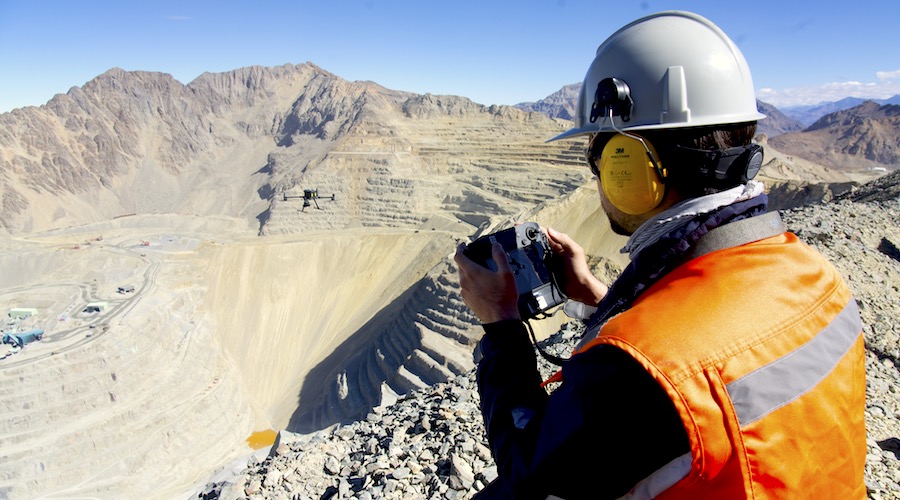
Los Bronces copper mine in Chile. (Image courtesy of Anglo American | Flickr.)

Chile’s Congress has approved sweeping legislation to slash permitting times for mining and energy projects, aiming to boost investment in the world’s top copper producer and second-largest lithium supplier.

The amendments, which passed with 93 votes in favour, 27 against, and 17 abstentions, amends over 40 sectoral regulations and now awaits the president’s signature to become law. The government says it will cut permit processing times by 30% to 70% without lowering environmental or regulatory standards.

“This will allow us to substantially reduce permitting times while maintaining our regulatory rigour,” Economy Minister Nicolás Grau said in a statement.

The long-awaited overhaul responds to pressure from the mining industry and renewable energy companies, which argued that protracted approval processes were stifling billions in potential investment. In the mining sector alone, project approvals can take up to 12 years.

Despite recent declines in copper production, Chile is projected to retain its position as the world’s leading copper producer. Its share of global copper output is expected to rise from 23.6% last year to 27.3% by 2034, according to country’s state copper commission, Cochilco.

Jorge Riesco, president of the National Mining Society (SONAMI), called the reform a step in the right direction but said more work is needed. “We value the efforts by the Executive Branch, particularly the Ministry of Economy, but we believe this is just the beginning,” he said.

The changes are expected to have the most impact in northern Chile’s Antofagasta region, a hub for mining investment. “Improved permitting timelines not only streamline project execution but also offer greater certainty for regional and national economic planning,” Matías Muñoz, Regional Secretary of Economy, noted.

A cornerstone of the reform is the institutionalization of the SUPER platform, which is a mandatory digital one-stop shop for permit applications. The system promises end-to-end traceability, service interoperability, and real-time case tracking. 

The online application portal will work alongside a newly established Sectoral Authorizations and Investment Office, which will coordinate, advise, and modernize the permitting framework.

___________________________
Related: BHP gives Chile a $13 billion reason to cut red tape for mines


Codelco secures lithium quota needed for SQM partnership

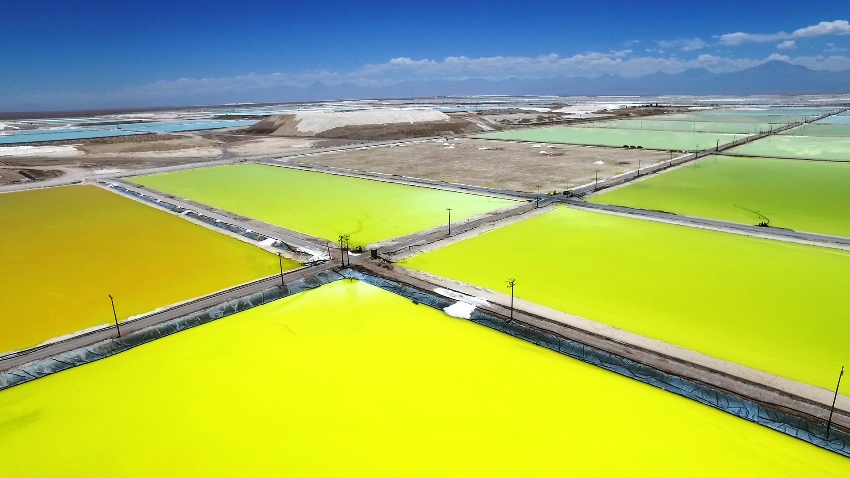
Lithium brine ponds in northern Chile. (Image courtesy of SQM)

Chile’s state-run copper producer Codelco said on Tuesday it has secured regulatory approval for a new lithium quota, clearing one of the remaining hurdles to produce the battery metal through its joint venture with miner SQM.

Chile’s nuclear energy regulator CCHEN has approved extraction of 2.5 million metric tons of lithium metal equivalent (LME) from 2031 to 2060, Codelco said.

The approved amount could rise to 3.02 million metric tons for the same three-decade period if the joint venture secures environmental permits for expanded production.

If CCHEN grants the higher quota, it would allow for the production and sale of up to 330,000 tons of lithium carbonate equivalent (LCE) a year for the three-decade time span, Codelco said.

The nuclear agency has authorized lithium quotas and exports since 1979, when the military government of ex-dictator Augusto Pinochet declared lithium “strategic” because of its nuclear applications. The metal is now a key element of electric vehicle batteries.


The Codelco-SQM deal, which will bring the state into lithium production in Chile for the first time, still requires two key elements before it can be finalized – regulatory approval from China, and the completion of a consultation with local indigenous groups. The deal required approvals from a number of countries because of SQM’s presence in international markets.

A senior Codelco source told Reuters this week that it expects both conditions to be met by September.

At present, Santiago-based SQM and US firm Albemarle are the only lithium miners in Chile, which is the world’s second-largest producer of the metal. SQM’s current approved quota for lithium production is due to expire at the end of 2030.

(By Fabian Cambero; Editing by Daina Beth Solomon and Paul Simao)

IMPERIALISM

India sends geologists to Zambia to explore copper and cobalt deposits


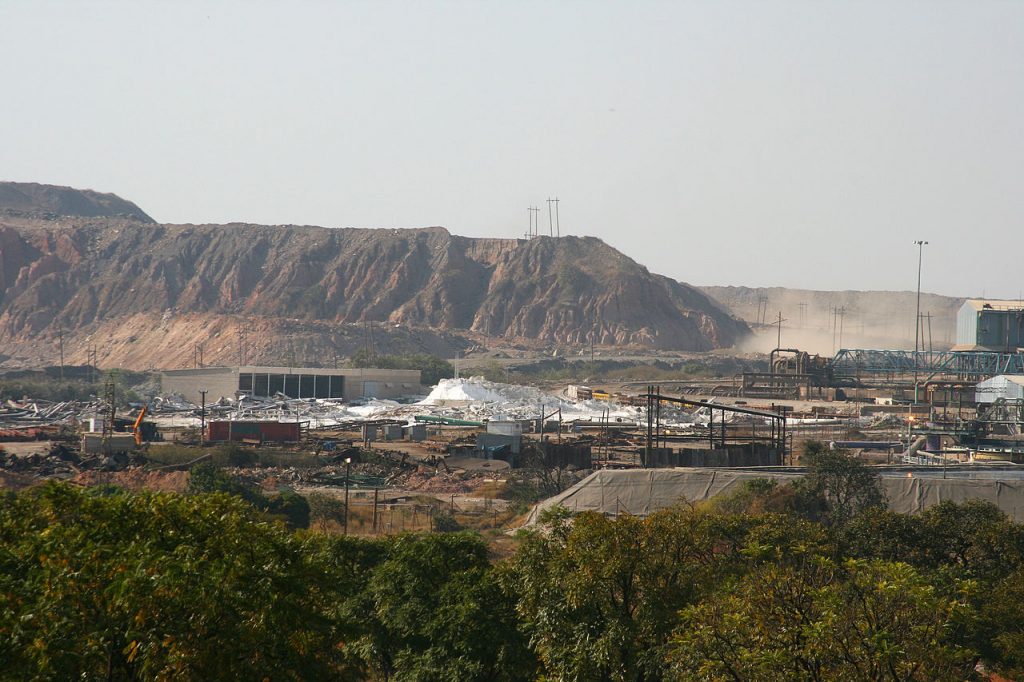
Konkola Copper Mines (KCM) is Zambia’s largest copper producer. (Image courtesy of Wikimedia Commons)

India has dispatched a team of geologists to Zambia to explore copper and cobalt deposits, two Indian government sources said, as New Delhi steps up efforts to secure critical mineral supplies essential to its energy transition.

The Zambian government this year agreed to allocate 9,000 square km (3,475 square miles) to India for the exploration of cobalt – a key component in batteries for electric vehicles and mobile phones – as well as for scouting copper, which is widely used in power generation, electronics, and construction.

The exploration project will last for three years and most of the analysis will be done in laboratories in India, one of the sources said.

The team is expected to make multiple visits over the course of the entire project, said the sources, who declined to be identified because the information is not public.

After assessing the mining potential, the Indian government will seek a mining lease from the Zambian government and may also invite private-sector companies to participate in the project, the sources said.

India’s Ministry of Mines did not respond to a request for comment.

New Delhi has been in talks with several African countries to acquire critical mineral blocks on a government-to-government basis, while also exploring opportunities in Australia and Latin America.

India is also in discussions with the Democratic Republic of Congo to sign an initial agreement to secure supplies of cobalt and copper, Reuters reported in March.

An Indian delegation attended a mining conference in Congo last month and toured local mines, the ministry said in a post on X.

India has held internal discussions over its growing vulnerability to a tightening global copper market and plans to explore ways to secure supply from resource-rich countries during ongoing trade negotiations, Reuters reported last week.

India’s copper imports have risen sharply since the 2018 closure of Vedanta’s Sterlite copper smelter. The country imported 1.2 million metric tons of copper in the fiscal year ending March 2025, up 4% from the previous year.

India is almost entirely dependent on cobalt imports and shipments of cobalt oxide rose 20% in 2024/25 to 693 metric tons, government data showed.

(By Neha Arora; Editing by Mayank Bhardwaj and Jamie Freed)


Critical minerals to top Modi’s agenda in five-nation tour


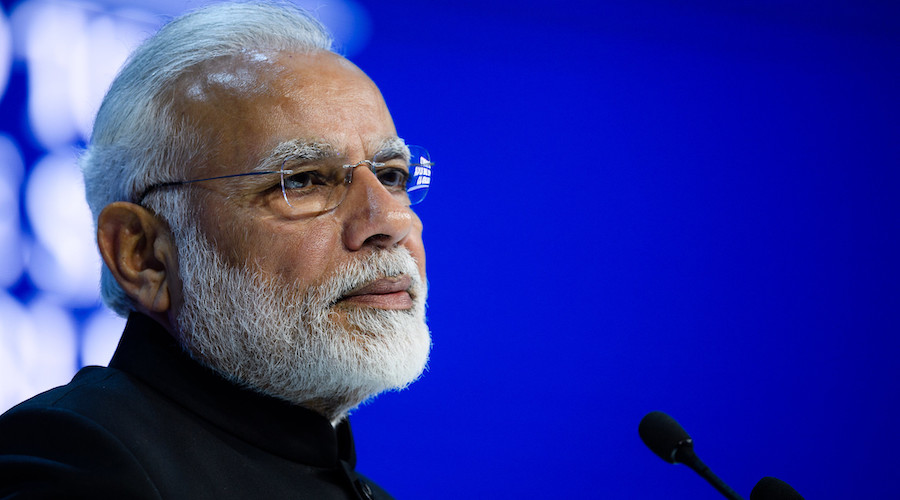
India’s Prime Minister Narendra Modi. (Image by the World Economic Forum, Flickr.)

Supply agreements for critical minerals will dominate Indian Prime Minister Narendra Modi’s visit to Ghana, Namibia, Brazil, Argentina and Trinidad & Tobago starting Wednesday as the South Asian country’s industry grapples with restricted supplies from China.

“We have achieved good progress in Argentina,” Dammu Ravi, secretary for economic relations in the Ministry of External Affairs, told reporters in New Delhi on Monday ahead of the five-nation tour. “India’s state-owned Khanij Bidesh India Ltd. and NMDC Ltd. are looking at partnerships in Africa.”

China, the world’s biggest producer of rare earth elements, has begun restricting exports of the minerals as it increasingly uses its dominance for geopolitical leverage. The export curbs on rare earth magnets — used in everything from mobile phones to electric vehicles — are worrying Indian automakers fearing disruption to production.

Khanji Bidesh and Coal India Ltd. have four mining concessions for rare earths in Latin America and India is speaking with Argentina, Peru and Bolivia to acquire more concessions, Periasamy Kumaran, secretary in India foreign ministry, said.

(By Sudhi Ranjan Sen)


India Eyes New Sites to Boost Strategic Oil Reserves

India, the world’s third-largest crude oil importer, which depends on imports for about 85% of its daily consumption, considers building three new sites to raise its strategic petroleum reserves.

Engineers India Ltd, a state-run engineering consultancy, is doing feasibility studies, L R Jain, chief executive at the state company managing the reserve, Indian Strategic Petroleum Reserve Ltd, told Reuters on Wednesday.

“In case of exigencies, we will be better prepared,” Jain said.

Currently, India’s underground Strategic Petroleum Reserve storage has a total capacity of 5.33 million metric tons of crude oil, equal to only 39 million barrels of crude oil, or eight days’ worth of India’s oil consumption.

The storage sites are located in Vishakhapatnam in the state of Andhra Pradesh, and Mangaluru and Padur in the state of Karnataka.  

Private companies, including Abu Dhabi National Oil Company (ADNOC), have been using and storing petroleum at the existing SPR sites.

With spiking petroleum demand and about 85% of its crude coming from imports, India is now looking to expand its SPR storage sites.

India’s storage capacity, including the SPR and other sites held by private companies and in transit, is currently enough to meet the country’s fuel demand for 75 days.

“We are looking for 90 days of reserves,” Jain told Reuters, adding that India needs additional storage sites as fuel demand keeps rising.

Reserves of at least 90 days of worth of oil consumption would allow India to join the International Energy Agency (IEA), which requires members to have a minimum of 90 days of oil reserves.

The new sites proposed for India’s SPR include another site at Mangalore, salt caverns in Bikaner in the desert state of Rajasthan in northwestern India, and a site at Bina in the central state of Madhya Pradesh, Jain told Reuters.

By Charles Kennedy for Oilprice.com


Peru copper transport disrupted as informal miners block roads

(Reference image by the Peruvian Ministry of Energy and Mines, Twitter).

Roadblocks by informal miners in Peru are disrupting transport of copper from some large mines, including those owned by MMG Ltd. and Hudbay Minerals Inc., in the latest threat to global metal supplies.

Artisanal miners are staging blockades in one of the world’s biggest copper-producing nations to push for a regulatory framework that caters specifically to small-scale mines. Copper futures traded near the highest level in more than three months on Wednesday.

While on-site operations are unaffected by the protests, transport of semi-processed copper from MMG’s Las Bambas and Hudbay’s Constancia have been interrupted, said people briefed on the matter, asking not to be identified as they’re not authorized to speak publicly.

Chinese-owned MMG confirmed that Las Bambas and other mines have been impacted by the roadblocks, even as production continues as normal. “We remain in regular contact with authorities regarding progress to resolve these roadblocks,” MMG said in an emailed response.

Hudbay didn’t respond to requests for comment.

Rising metal prices have boosted informal activity, which is encroaching on concessions held by large companies and threatening development of some of the world’s biggest deposits. That’s adding risk to global supply that’s been constrained by the shutdown of a mine in Panama and, more recently, setbacks at a major operation in the Democratic Republic of the Congo.

In Peru, many small-scale miners use a temporary registry called Reinfo, which allows them to operate as they go through the process of formalizing. Reinfo, which has been extended until the end of 2025, is widely opposed by big mining, which sees it as a cover for illegal activity.

The protesters are demanding that the government extend the formalization process without restrictions and are pushing lawmakers to pass proposed legislation for artisanal and small-scale mining, dubbed the MAPE Law.

(By James Attwood)


Adriatic Metals reaches commercial production at Vareš silver mine in Bosnia

Vares is the first new mine to open in Europe in over a decade. 
(Image courtesy of Adriatic Metals.)

Adriatic Metals (ASX: ADT; LSE: ADT) announced this week that its Vareš silver operation in Bosnia and Herzegovina has reached commercial production.

Commercial production has been declared based on maintaining plant throughput levels of 75% over a 14-day period, including 80% over 7 days, and reaching 2,000 tonnes per day (90%) in late June.

This milestone follows the resolution of previous constraints related to tailings management, the company said.

Construction of the Veovača tailings storage facility (TSF) was completed in March, with initial tailings deposition commencing in April. A dedicated access road linking the Vareš processing plant to the TSF was completed and has been operational over the past month.

Mining activities at Rupice are progressing well, the company said, adding that with approximately 900 metres of underground development completed in the second quarter (a quarterly record).

The plant is performing consistently, and key necessary permits, equipment and personnel are in place to maintain stable production, it added.

“We are proud to announce the achievement of commercial production at the Vareš silver operation, marking a significant milestone that demonstrates our ability to operate at production levels that support strong cash generation,” Adriatic CEO Laura Tyler said in a news release.

Vareš began production early last year, becoming Europe’s first new mine in over a decade.