Monday, July 07, 2025

INDIA

Telangana Factory Blast: Death Toll From Sigachi Industries Explosion Rises to 42

The company stated that, since the time of the accident, the firm has been coordinating the emergency response, family support, and extending cooperation with the investigation and compliance efforts.

Outlook Web Desk
Updated on: 7 July 2025


Fire at chemical factory in Telangana Photo: | PTI |

The death toll from the Sigachi Industries explosion increased to 42 on Sunday after Jitendra Kumar (30) from Uttar Pradesh died from his injuries.

The dismembered remains of a worker were confirmed to be Chikkan Singh, who was from Madhya Pradesh. His DNA matched with his relatives. Both individuals were operators within the production unit. With the identification of Chikkan Singh, the number of missing persons currently totals eight.

The incident took place on June 30 at Sigachi Industries Pvt. Ltd., located in the Pashamylaram industrial area in Telangana. The blast reportedly occurred in one of the reactor units of the facility, followed by a major fire and partial structural collapse.


Sigachi Pharma Factory Blast: Rescue Work Continues Amid Heavy Rain, Chemical Fumes, Excess Debris Hamper Operations
BY K A Shaji

A distress call was received by the Fire Control Room at 9.37 a.m., prompting the deployment of eleven fire tenders.

The company later stated that the accident was not caused by a reactor explosion. They said they will continue to send more updates as and when they receive information from the ongoing investigation, while the plant operations will remain temporarily suspended for approximately 90 days.

In a press release issued on Wednesday, July 2, the company confirmed that the blast on June 30 led to the deaths of 40 workers and left 33 others injured, as per PTI.

"It is with anguish that we share details of the accident that occurred at the Sigachi Industries' pharma unit in Telangana’s Sangareddy district, resulting in the loss of 40 valued team members and one that left over 33 injured," the company said in a statement.

The company further stated that, since the time of the accident, the firm has been coordinating the emergency response, family support, and extending cooperation with the investigation and compliance efforts.



Indonesia's Mount Lewotobi erupts again, spews ash 18km high

This is the third time the volcano has erupted in as many months.


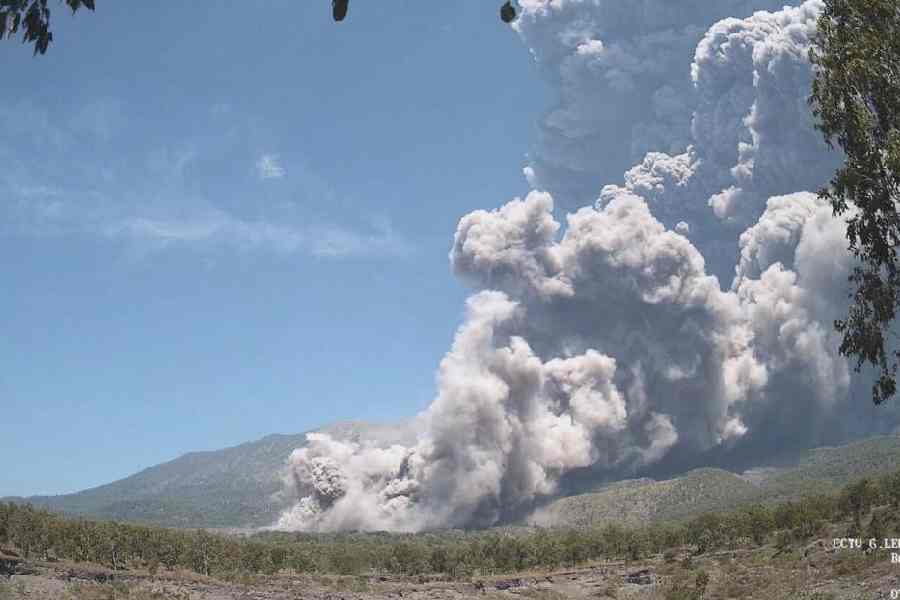
Mount Lewotobi Laki-laki in Indonesia's East Nusa Tenggara province erupted on Monday (Jul 7), spewing a towering ash cloud 18km high.
PHOTO: Screengrab/TikTok/bobedwinmau and indopacific

July 07, 2025 
By Sean Ler

Mount Lewotobi Laki-Laki in eastern Indonesia erupted on Monday (July 7), spewing a towering ash cloud 18km high and depositing ash on villages, according to the country's volcanology agency.

The 1,584m-high twin-peaked volcano on the tourist island of Flores erupted at 11.05am local time (12.05pm Singapore time), the volcanology agency said in a statement.

"An eruption of Lewatobi Laki-Laki volcano occured... with the observed ash column height reaching approximately 18,000m above the summit," the agency said.

This comes nearly one month after the volcano erupted and spewed towering ash clouds some 11 km high, leading to flight cancellations in and out of the nearby island of Bali, Reuters reported.

The volcano's alert level status remains at the highest level. According to the Associated Press, the Indonesian authorities have doubled an exclusion zone to a 7-kilometre radius since June 18 as eruptions become more frequent.

There were no immediate reports of damages or casualties.

Indonesia has over 120 active volcanoes and sits along the "Ring of Fire", a horseshoe-shaped series of seismic fault lines encircling the Pacific Basin.

One of Indonesia's largest volcano eruptions since 2010: Mount Lewotobi sends ash 11 miles high

Indonesia's Geology Agency said in a statement it recorded the volcano unleashing an avalanche of searing gas clouds down its slopes during the eruption; There were no immediate reports of casualties.


(AP) Published 07.07.25,

Mount Lewotobi Laki Laki spews volcanic materials during an eruption in East Flores, IndonesiaPTI

Indonesia's rumbling Mount Lewotobi Laki Laki erupted Monday, sending a column of volcanic materials as high as 18 kilometres into the sky and depositing ash on villages.

The volcano has been at the highest alert level since last month and no casualties were immediately reported.

Indonesia's Geology Agency recorded an avalanche of searing gas clouds mixed with rocks and lava traveling up to 5 kilometres down the volcano's slopes during the eruption. Observations from drones showed lava filling the crater, indicating deep movement of magma that set off volcanic earthquakes.


The column of hot clouds that rose into the sky was the volcano's highest since the major eruption in November 2024 that killed nine people and injured dozens, said Muhammad Wafid, the Geology Agency chief. It also erupted in March.

“An eruption of that size certainly carries a higher potential for danger, including its impact on aviation,” Wafid told The Associated Press from Switzerland where he was attending a seminar. “We shall reevaluate to enlarge its danger zone that must be cleared of villagers and tourist activities.”

The volcano monitoring agency had increased the alert status for Mount Lewotobi Laki Laki to the highest level after an eruption on June 18, and more than doubled an exclusion zone to a 7-kilometre radius since then as eruptions became more frequent.

After an eruption early last year, about 6,500 people evacuated and the island's Frans Seda Airport was closed. The airport has remained closed since then due to the continuing seismic activity.

The 1,584-metre mountain is a twin volcano with Mount Lewotobi Perempuan in the district of Flores Timur.

Monday's eruption was one of Indonesia's largest volcano eruptions since 2010 when Mount Merapi, the country's most volatile volcano erupted on the densely populated island of Java. That eruption killed 353 people and forced over 350,000 people to evacuate affected areas.

Indonesia is an archipelago of more than 280 million people with frequent seismic activity. It has 120 active volcanoes and sits along the “Ring of Fire,” a horseshoe-shaped series of seismic fault lines encircling the Pacific Basin.

Indonesia's Mount Lewotobi Laki Laki volcano erupts again

Column of volcanic ash shoots up as high as 18 kilometers into sky, according to authorities

Anadolu staff |07.07.2025 - TRT/AA

ANKARA

Thick columns of volcanic ash burst into the sky after Indonesia’s Mount Lewotobi Laki Laki erupted Monday, the country's Geology Agency said.

The eruption sent a column of volcanic materials as high as 18 kilometers (11 miles) into the sky and deposited ash on villages.

There were no immediate reports of casualties.

The volcano unleashed an avalanche of searing gas clouds down its slopes, said the agency that had increased the volcano’s alert status to the highest level after an eruption on June 18.

At least nine people were killed and dozens were injured following an eruption of Mount Lewotobi Laki Laki last November.

The 1,584-meter (5,197-foot) mountain also erupted in March but caused no casualties.

It is a twin volcano with Mount Lewotobi Perempuan in the district of Flores Timur.

Indonesia has 120 active volcanoes and sits along the “Ring of Fire,” a string of seismic fault lines encircling the Pacific Basin.

Also, dozens of neighborhoods in the capital Jakarta were inundated due to heavy rain that has been pouring since Saturday, the local English daily Jakarta Globe reported on Monday.

*Writing by Aamir Latif
No, Trump hasn't threatened to bomb Norway if he doesn't get Nobel Peace Prize


By James Thomas
Published on 07/07/2025
EURONEWS

Trump has previously been nominated for the award and has claimed that it is rigged against him. So far, he has never won it.

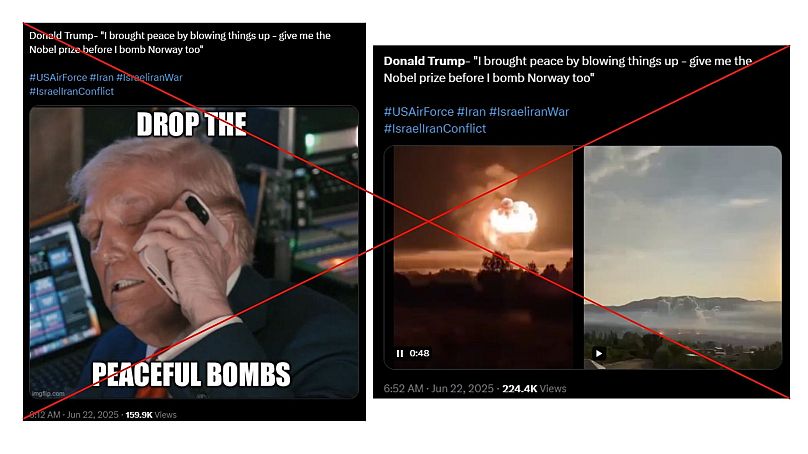
Misleading claims are circulating online that US President Donald Trump has threatened to bomb Norway if he doesn't receive the Nobel Peace Prize.

Posts on X and other social media platforms like those pictured below suggest that Trump said he brought peace in the Israel-Iran war "by blowing things up", and that he can do the same in Norway to secure the prestigious award.

The claims are sometimes shared with pictures of Trump or even footage of various explosions.
Some of the posts have been shared by known parody accounts
Euronews


Nevertheless, a Google search for any trace of Trump ever making such remarks yields very few results.

Searching for terms like "Trump", "Norway", "bomb" and "Nobel Prize" doesn't point to any official communication by the US president. There are also no reputable news reports about any such comments either, apart from other fact-checkers also debunking the claims.

The closest thing that appears is an article published on 26 June by The Borowitz Report, which carries the headline that Trump has warned he'll attack Norway if he doesn't get the Nobel Peace Prize.

However, the website's About page says that it's a satirical news site created by Andy Borowitz, a writer and comedian.

"I've been writing satirical news since I was eighteen," Borowitz says in the About section. "This represents either commitment to a genre or arrested development."

It reads that Chinese media once believed a satirical story that Borowitz published about Trump wrapping the White House's phones in tinfoil.

Related


Could Trump win the Nobel Peace Prize?

The US president has been nominated for the Nobel Peace Prize before and has repeatedly made the case that he deserves it. However, he's never won it. Trump claims that the Nobel committee is deliberately ignoring him and is politically biased.

In June, he published on his Truth Social platform: "No, I won't get a Nobel Peace Prize no matter what I do, including Russia/Ukraine, and Israel/Iran, whatever those outcomes may be, but the people know, and that’s all that matters to me!"

Recently, Pakistan put Trump forward to receive the award for what it said was his role in resolving Islamabad's conflict with India.

It described him as a "genuine peacemaker" in the nomination, but a day later condemned the president for violating international law after the US bombed Iranian nuclear sites.

Republican politician Buddy Carter also nominated Trump for bringing about a ceasefire between Israel and Iran.

Oleksandr Merezhko, the head of Ukraine's parliamentary foreign committee, meanwhile, withdrew his nomination for Trump because he said he'd "lost any sort of faith and belief" in the president's ability to secure a ceasefire between Kyiv and Moscow.

Merezhko originally nominated Trump for the prize in November, soon after his victory in the 2024 US presidential election.

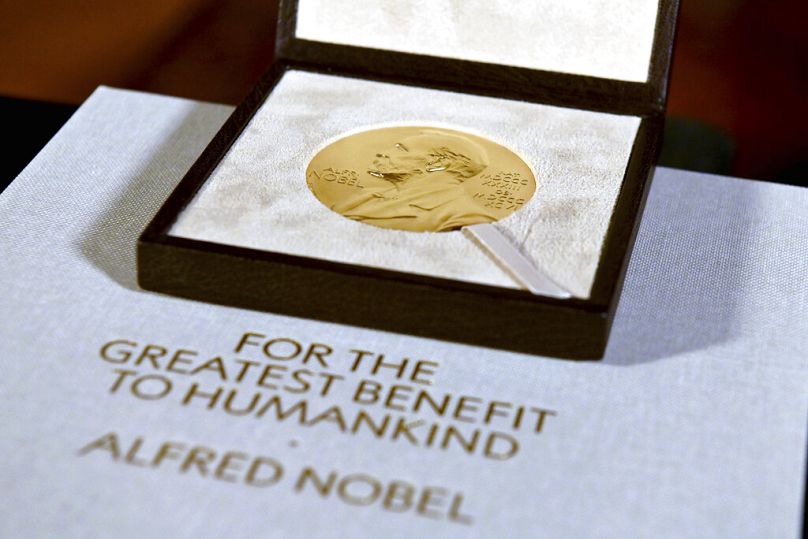
A Nobel diploma and medal are displayed, Tuesday, Dec. 8, 2020, during a ceremony in New York.Angela Weiss/Pool Photo via AP

The Nobel Peace Prize is awarded by the Norwegian Nobel Committee, which is typically made up of five members appointed by the Norwegian parliament, as per the will of Swedish chemist Alfred Nobel.

This is unlike the other Nobel prizes, such as the prizes for literature, physics and medicine, which are handed down by different Swedish bodies depending on the award.

The Norwegian Nobel Committee shortlists nominations and consults experts before deciding on a winner for the Peace Prize. Nominations for the annual award can only come from certain recognised bodies or individuals, such as national governments, professors of law, history or religion, or past winners.

Nobel said in his will that it should go to the person who has done the most for "fraternity between nations" and the abolition of standing armies.

US presidents have won the Nobel Peace Prize before. Theodore Roosevelt was the first to do so in 1906 for mediating the end of the Russo-Japanese War, followed by Woodrow Wilson in 1919 for founding the League of Nations (the precursor to the United Nations).

In 2002, Jimmy Carter was awarded the prize for decades of peaceful conflict resolution, the promotion of democracy, and humanitarian work, while Barack Obama received it in 2009 "for his extraordinary efforts to strengthen international diplomacy and cooperation between peoples".

So, in theory, there is no bar to Trump winning the award, provided he receives a valid nomination and as long as the Norwegian Nobel Committee and its consulted experts deem his claimed contributions to peace as valid and extensive enough to warrant the prize.
Syria fights 'catastrophic' wildfires for fourth consecutive day


Syrian authorities said wildfires have turned 100 sq km (40 sq miles) of forest "to ash" in Latakia province, as Jordanian firefighters arrived Sunday to help battle blazes for a fourth day. Crews face extreme heat, winds, rough terrain, and unexploded ordnance amid Syria's protracted conflict and economic crisis.


Issued on: 07/07/2025 - 
By: FRANCE 24


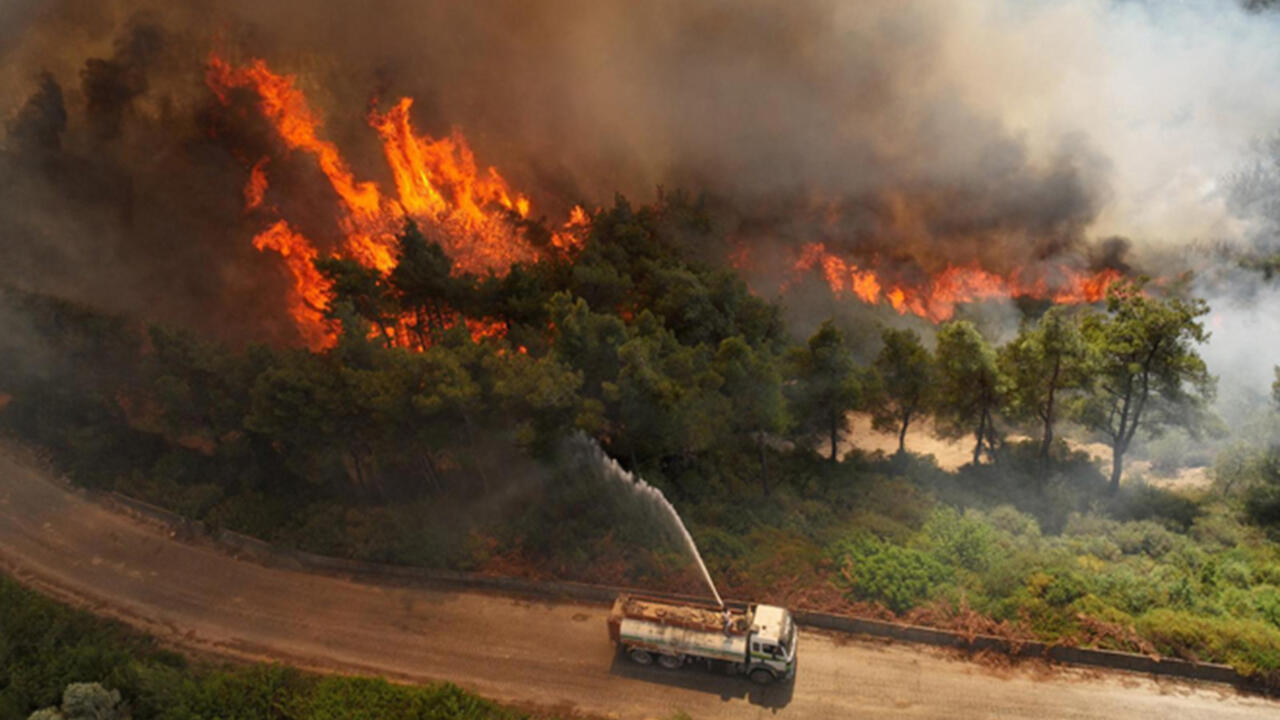
Syrian authorities said some 100 square kilometres (40 square miles) of forest had "turned to ash" in wildfires as firefighters from neighbouring Jordan arrived Sunday to battle a fourth day of blazes in the province of Latakia.

Syrian emergency workers have faced tough conditions including high temperatures, strong winds, rugged mountainous terrain in the coastal province and the danger of explosive war remnants, in a country worn down by years of conflict and economic crisis.

An AFP correspondent in Latakia's Rabiaa region saw emergency workers battling a blaze near homes, while vast swathes of forest and olive groves were burnt and smoke filled the air over a long distance.

Jordanian civil defence teams crossed into Syria on Sunday morning, the Syrian ministry for emergencies and disaster management said, after Turkey sent assistance a day earlier.


Minister Raed al-Saleh said on X that "hundreds of thousands of forest trees over an estimated area of around 10,000 hectares (25,000 acres) in 28 locations have turned to ash".

He later decried "a real environmental disaster" at a press conference in the province.

More than 80 teams including civil defence personnel have been helping battle the blaze, he said, noting local organisations and residents were also providing assistance, in addition to teams and firefighting aircraft from neighbouring Jordan and Turkey.

Saleh said it would take days to declare the blazes completely extinguished once the fire was brought under control, calling them "catastrophic".


Firefighters battling forest fires in the Turkmen mountains in the al-Rabiah area of Syria's western Latakia's governorate. © AFP


More assistance needed

Syria's defence ministry said the air force was assisting, publishing images of a helicopter collecting and dropping water.

Jordan's public security directorate said in a statement that the "specialised firefighting teams from the civil defence... have been provided with all the modern equipment and machinery necessary to carry out their duties to the fullest extent".

Swathes of forested area and farmland have burnt and some villages evacuated as the fires raged including near the Turkish border.

The United Nations deputy envoy to Syria Najat Rochdi said in a statement Sunday on X that Damascus "needs more international assistance" to face the fires.

A statement from the UN resident and humanitarian coordinator for Syria Adam Abdelmoula said that "UN teams are on the ground conducting urgent assessments to determine the scale of the disaster and to identify the most immediate humanitarian needs".

Nearly seven months after the ousting of longtime ruler Bashar al-Assad, Syria is still reeling from more than a decade of civil war that ravaged the country's economy, infrastructure and public services.

With man-made climate change increasing the likelihood and intensity of droughts and wildfires worldwide, Syria has also been battered by heatwaves and low rainfall.

In June, the United Nations Food and Agriculture Organisation told AFP that Syria had "not seen such bad climate conditions in 60 years".

(FRANCE 24 with AFP)
Sudan's 'forgotten war' 

Civilians in Sudanese city El Fasher 'at risk of mass killings and starvation'

Mass killings and starvation threaten hundreds of thousands of people trapped in El Fasher, the capital city of North Darfur, as fighting closes in, the charity Doctors Without Borders has warned its latest report.


Issued on: 04/07/2025 

This November 2024 photo provided by the World Food Program shows a young internally displaced boy at the Zamzam camp in El Fasher. AP - Mohamed Galal

The medical NGO, known by its French name Médecins Sans Frontières (MSF), said a full-scale attack could lead to more bloodshed, as seen in the massacres that struck other parts of Darfur last year.

Its report, published on Thursday, documents killings, sexual violence, looting and attacks by the paramilitary Rapid Support Forces (RSF) and their allies.

"People are not only caught in indiscriminate heavy fighting between the Rapid Support Forces and the Sudanese Armed Forces and their respective allies – but also actively targeted by the RSF and its allies, notably on the basis of their ethnicity,” said MSF head of emergencies, Michel Olivier Lacharité.


Food and water cut off

The conflict in North Darfur has worsened since May 2024. The RSF and its allies have surrounded El Fasher and the nearby Zamzam camp, a large settlement for displaced people just outside the city, blocking people from getting food, water or medical aid.

MSF’s report is based on its own field data, direct observations and more than 80 interviews carried out between May 2024 and May 2025 with patients and displaced people.

One man told MSF that in Zamzam, people sometimes went three days a week without eating.

Another woman said children died from malnutrition and families survived on scraps meant for animals. “We were eating ambaz [the residue of peanuts ground for oil], like everyone, although usually it’s used for animals,” she said.

Fuel shortages have shut down wells, leaving water scarce and expensive.

“Zamzam was completely blocked,” another displaced person said. “Water wells depend on fuel and there was no access to fuel, so all of them stopped working.”

RSF drone strikes pound Port Sudan, putting aid deliveries at risk
Fears of ethnic cleansing

Some witnesses said that RSF soldiers had spoken of plans to “clean El Fasher” – with the goal of removing its non-Arab community.

“In light of the ethnically motivated mass atrocities committed against the Masalit in West Darfur in June 2023, and of the massacres perpetrated in Zamzam camp in North Darfur, we fear such a scenario will be repeated in El Fasher,” MSF humanitarian affairs advisor Mathilde Simon said.

In April, the RSF and its allies launched a ground attack on the Zamzam camp, forcing an estimated 400,000 people to flee in less than three weeks. Many went to El Fasher, where they now remain trapped without aid.

Many who try to escape face huge risks. Roads are dangerous, and men and boys risk being killed or abducted, while women and girls face sexual violence. Witnesses say the danger is even worse for Zaghawa communities.

“Nobody could get out [of El Fasher] if they said they were Zaghawa,” one displaced woman said.

Another described fleeing to eastern Chad: “They would only let mothers with small children under the age of five through. Other children and adult men didn’t go through. Men over 15 can hardly cross the border [into Chad]. They take them, they push them aside and then we only hear a noise – gunshots – indicating that they are dead.”


Healthcare in ruins

Most health centres in El Fasher and Zamzam have been damaged or destroyed in the past year.

“Currently, there is only one hospital with surgical capacity that functions partially, for a population estimated at nearly 1 million people,” Simon said.

One woman told MSF the SAF bombed her neighbourhood by mistake, then came back to apologise. She said SAF planes sometimes struck civilian areas even when there were no RSF fighters. “I saw it in different places,” she said.

Repeated attacks forced the charity to shut down its work in El Fasher in August 2024 and in Zamzam in February this year. Recent promises of a local ceasefire have not changed conditions on the ground, MSF said, warning that time is running out for people trapped in El Fasher.
China flexes its cuddly clout as Labubu monsters set off a global frenzy

Chinese toymaker Pop Mart’s Labubu monster dolls have become a global craze. They bare their teeth from the handbags of Rihanna and Dua Lipa and have driven fans to break-ins and brawls as shoppers scramble to get hold of them – breaking new ground for Chinese pop culture.


Issued on: 06/07/2025 - RFI

Labubu: a mischievous elf from a magical world, and an instrument of soft power for Beijing. 
© Ng Han Guan / AP

In 2022, the Financial Times asked Camille Gaujacq, a specialist in Chinese market research, whether the Beijing-based company Pop Mart, which had recently set up shop in London, could meet its goal of making more than 50 percent of its revenue abroad within five years.

Gaujacq was cautious, saying it was hard to know “to what extent a growth model based on stimulating a consumer trend” would work in the West.

Three years on, customers around the world are queuing overnight – and in some cases coming to blows – to buy a Pop Mart-exclusive product: the Labubu.

These half-cute, half-sinister monsters with pointed teeth and bunny ears were created by Hong Kong designer Kasing Lung and inspired by Norwegian folklore. Sold as plush toys, bag charms and figurines, they have become a global hit – along with the chaos that surrounds them.

UK retailer suspends Labubu toy sales amid safety fears

In Singapore late last year, CCTV footage showed a family stealing Labubu dolls from a vending machine, according to online media outlet AsiaOne, while The Sun newspaper reported that in California a car was broken into and three Labubu toys that had been on display taken.

French news agency AFP reported in May that Pop Mart had pulled the toys from all 16 of its UK stores to "prevent any potential safety issues" after customers, some of whom had travelled from abroad to purchase the dolls, were involved in physical fights over them.

TikTok (another product of China) has paved the way for their popularity, with more than 1.7 million Labubu videos on the platform. Their celebrity fans include Rihanna, Dua Lipa, Kim Kardashian, a host of K-pop stars and even David Beckham.

And France is not immune to their charms – in Paris, Pop Mart now has stores in the shopping centres Les Halles de Châtelet, Bercy Village and the Carrousel du Louvre, as well as at Opéra.

The Pop Mart shop at Paris shopping centre Châtelet-Les Halles, 29 June. 
© RFI


The element of surprise

Pop Mart was launched in 2010 by Chinese businessman Wang Ning, 38, who as of this month is China's 10th richest person, with an estimated fortune of $22.7 billion according to Forbes magazine.

A key element of the company's strategy has been to sell Labubu dolls, which it has produced since 2019, in "mystery boxes", with the surprise element and the ensuing obsessive quest for particular models driving sales.

As Filipino newspaper The Inquirer notes: "The Pop Mart product range remains attractive to enthusiasts and collectors, all the more so as some items are becoming harder to find. Blind unboxing has created a vibrant community on social networks, where collectors share their unboxing experiences, stimulating engagement."

The most sought-after models are being resold for exorbitant sums on the second-hand market, and in early June a Labubu figurine sold at auction in Beijing for 1.08 million yuan (€132,000).


Furry ambassadors

Labubus are part of a rising tide of Chinese cultural exports gaining traction abroad, acting as furry ambassadors of a "cool" China even in places where a more negative public opinion of Beijing is usually to be found, such as Europe and North America.

While neighbouring East Asian countries South Korea and Japan are globally recognised for their musical and cinematic contributions to pop culture and their fashion and beauty exports, China's heavily censored film and music industry means it has struggled to attract international audiences. Meanwhile, the country's best-known clothing exporter is fast-fashion online retailer Shein.

Faced with stereotypes of low-quality products, Pop Mart is among the few success stories of Chinese companies selling higher-end, desirable goods under their own brands. "It has been hard for the world's consumers to perceive China as a brand-creating nation," the University of Maryland's Fan Yang told AFP.

However, China is "undergoing a soft power shift where its products and image are increasingly cool among young Westerners," said Allison Malmsten, an analyst at China-based Daxue Consulting. She believes social media – such as TikTok – is boosting China's global image, and compared the Labubu effect to that of Pokémon on Japan's image abroad.

Hong Kong-based designer Kasing Lung was inspired by Norwegian folklore when creating the Labubu character. © AP

Joshua Kurlantzick, of the Council on Foreign Relations, agreed that: "TikTok probably played a role in changing consumers' minds about China."

However, he added that such a change of image could only go so far. "I don't know how much, if at all, this impacts images of China's state or government," he said, pointing to how South Korea's undeniable soft power has not translated into similar levels of political might.

But while soft toys alone might not translate into actual power, the United States' chaotic global image under the Trump presidency could benefit perceptions of China, the University of Maryland's Yang said.

"The connection many make between the seeming decline of US soft power and the potential rise in China's global image may reflect how deeply intertwined the two countries are in the minds of people whose lives are impacted by both simultaneously," she told AFP.

At the very least, Labubu's charms appear to be prompting interest in China among the younger generation abroad.

"It's like a virus. Everyone just wants it," Kazakhstani mother-of-three Anelya Batalova told AFP at Pop Mart's theme park in Beijing.

Meanwhile 11-year-old Maryam Hammadi, from Qatar, posed for photos in front of a giant Labubu statue. "In our country, they love Labubu," she said. "So, when they realise that the origin of Labubu is in China, they'd like to come to see the different types of Labubu in China."

Despite its popularity abroad, closer to home there may be some who are not so enamoured of the Labubu. The Bloomberg financial news agency reports that the Chinese Communist Party-backed People's Daily newspaper has published a commentary calling for tougher regulations on "surprise gift boxes” – accusing them of encouraging addiction among children.

Story written with AFP and partially adapted from this article from RFI's French service.
River frog scales new heights on Tanzania's Kilimanjaro in rare alpine find

Local guides in Tanzania have made an unexpected discovery on the icy heights of Kilimanjaro – a river frog spotted at over 4,000 metres altitude. While its spectacular leap to Africa's highest mountain reveals the potential of the continent's little-known alpine wildlife, it also raises concerns over climate change.


Issued on: 05/07/2025 - RFI

A female Amietia wittei adult in its habitat at 3,870 metres altitude in a stream near the Scott Fischer camp. 
© Jack Wardale


Named Amietia wittei after Belgian herpetologist Gaston-François De Witte, the frog was thought to live only at lower altitudes, so members of an expedition up Kilimanjaro were not looking for amphibians.

“We wanted to observe the scarlet-tufted malachite sunbird – a tiny colourful bird resembling a hummingbird, fond of nectar,” said Dmitry Andreichuk, co-founder of Altezza Travel agency.

“We know it lives between 2,000 and 4,500 metres altitude, so we thought in this part of Kilimanjaro we should definitely find some.”

But it was not a bird that took Andreichuk’s breath away.

“I start descending the slope, and there, I see something jump into the water... I think: ‘Did I really see that?’ Then I move forward again, and I see a second thing jump... and there, I realise it’s a frog!”

That memorable day was in late June on the Shira plateau, at the foot of the memorial to mountaineerer Scott Fischer who died on Everest.

Andreichuk immediately called his brother, who asked him to wait to be sure they were not mistaken. They waited two hours, their feet in icy water, until the frogs reappeared.

It turned out they had seen Amietia wittei, a river frog widespread in Africa but which had never been seen this high before.

The expedition team members photograph the Amietia wittei frog's belly to help identify it. © Jack Wardale


Surviving in icy water

In an environment where "even staying 30 seconds with your feet in the water chills you to the bone", Andreichuk notes, the frogs appear to thrive. The small stream – barely 10 centimetres deep – houses a hundred tadpoles and several adults.

“We immediately knew it was something important. We didn’t yet know if it was a new species, but we knew river frogs normally don’t climb this high.”

Professor Alan Channing, a specialist in amphibians at Northwest University in South Africa, confirmed that it was indeed Amietia wittei. The frog had already been found on several high plateaus of East Africa – notably in Kenya (Aberdare, Mount Elgon, Mount Kenya) and Uganda – but never at this altitude.

"These frogs have an incredible capacity for adapting to the cold," Channing explains. "Their metabolism works at slow speed. They can survive in icy waters, sometimes even covered with surface ice. They've been there for millions of years."

The eastern branch of the river Simba during the dry season – 3,870 metres high on Mount Kilimanjaro. © Jack Wardale


Limited escape routes

With global warming, the frogs are moving higher to stay cool. “If streams continue to flow at higher altitude, they could climb even more,” he notes.

The frogs rely on cold water and mountain micro-ecosystems, so they may not keep pace with rising temperatures. “They flourish in cool zones, but if temperatures rise too much, their survival will be compromised.”

Other related species, like Amietia nutti, already live lower down and have fewer options. Kilimanjaro reaches nearly 6,000 metres, but other East African mountains such as Mount Elgon or the Aberdares are lower, leaving limited escape routes.

On these ranges, some frogs already live at the top, and if the planet keeps heating, they will have nowhere left to go.

A 45-day mission to Kilimanjaro is now planned to watch the frogs and learn more about how they survive.

Andreichuk's discovery could herald others.

"We weren't even doing research, we were just hiking for pleasure," he says. "And yet, we made an extraordinary discovery. Imagine what specialised researchers could find.

“Kilimanjaro still has a lot to show us.”

This article was adapted from the original version in French by RFI's Christina Okello


UNESCO warns majority of World Heritage sites at risk from drought or flooding

Almost three-quarters of the world's cultural and natural heritage sites are under threat from drought or flooding as a result of global warming, the United Nations cultural agency said this week.


Issued on: 05/07/2025 - RFI

The Yamuna river rose to the periphery of the Taj Mahal monument in Agra, India, on 18 July, 2023. © Aryan Kaushik / AP


Seventy-three percent of all 1,172 non-marine sites on the Unesco Heritage List are exposed to at least one severe water risk, the Unesco study "Mountains and glaciers: Water towers" showed.

These risks include water stress, drought, river flooding and coastal flooding, as extreme weather events including hurricanes, droughts, floods and heatwaves become more frequent and intense thanks to rising temperatures.

"Water stress is projected to intensify, most notably in regions like the Middle East and North Africa, parts of South Asia and northern China, posing long-term risks to ecosystems, cultural heritage and the communities and tourism economies that depend on them," the report said.

According to Unesco, cultural sites are most commonly threatened by water scarcity, while more than half of natural sites face the risk of flooding from a nearby river.

In India, the Taj Mahal monument in Agra "faces water scarcity that is increasing pollution and depleting groundwater, both of which are damaging the mausoleum". While in the United States, "in 2022 a massive flood closed down all of Yellowstone National Park and cost over $20 million in infrastructure repairs to reopen".

The pre-Colombian city of Chan Chan in Peru faces an extremely high risk of river flooding. © Wikimedia/CC

Iraq's southern marshes – the reputed home of the biblical Garden of Eden – "face extremely high water stress, where over 80 percent of the renewable supply is withdrawn to meet human demand," the report added.

Competition for water is expected to increase in the marshes, where migratory birds live and locals raise buffalo, as the region grows hotter in coming years.

UN chief says aid surge needed to face 'climate chaos, raging conflicts'

On the border between Zambia and Zimbabwe, the Victoria Falls has faced recurring drought and is sometimes reduced to a trickle.

In Peru, the pre-Colombian city of Chan Chan and its delicate 1,000-year-old adobe walls face an extremely high risk of river flooding, while in China, rising sea levels driven in large part by climate change are leading to coastal flooding, which destroys mudlands where migratory waterbirds find food.

(with AFP)
Wake-up call for France as climate experts push for new action on emissions

France’s top climate advisory body has called for renewed urgency in tackling climate change, warning that recent setbacks and a slowdown in decarbonisation efforts risk undermining the country’s environmental goals.


Issued on: 03/07/2025 - RFI

The top section of the Eiffel Tower was closed on 1 July as Paris was put on the highest level of alert for extreme heat. 
AFP - THIBAUD MORITZ


France is falling behind on its climate promises as extreme weather claims lives, hits food supply chains and strains public budgets, the country’s top climate advisory council warned on Thursday.

In its annual report, the High Council for the Climate (HCC) painted a bleak picture of France's fight to cut greenhouse gas emissions. Political instability and stop-start funding are holding back the changes needed to adapt to a fast-warming world, it said.

France’s climate plan has “stalled” this year, the HCC added, blaming a lack of clear leadership and poor coordination between government ministries.

“Is there still a pilot on this plane while the turbulence is getting worse?” the report asked. The HCC, created in 2018, was renewed for five years last year.


It comprises 12 independent experts and is chaired by Jean-François Soussana, an agronomist and the vice-president of France’s national research institute for agriculture and the environment.


France warming faster than average


The council’s seventh annual report landed during a heatwave that has swept across France and the rest of Europe – the fastest-warming continent. It shows the country is not on track to reach carbon neutrality by 2050, and that it is heating up faster than the global average.

Over the last 10 years, mainland France has warmed by 2.2°C. If the global average rises by 1.5°C, on the current trajectory that will means a rise of around 2°C for France.

If the world reaches 2°C, France could see 2.7°C, and a global rise of 3°C would mean a 4°C rise in France, the HCC said.


It warned that the occurrence of heatwaves could triple in the next five years, and become five times more common by 2050 compared with the late 20th century.

Pointing to the consequences of rising temperatures, the report said: "In recent years, impacts have reached levels never seen before."

In 2024, heat caused more than 3,700 deaths during the summer in France. Cereal harvests fell to their lowest in 40 years. The cost of floods last winter reached €615 million.
Cuts in emissions too slow

Although France did meet its second carbon budget, from 2019 to 2023, progress has declined sharply since then. France’s greenhouse gas emissions fell by 6.7 percent between 2022 and 2023, but only dropped 1.8 percent between 2023 and 2024.

Next year’s drop is likely to be just 1.3 percent – a figure which needs to be doubled to reach the 2030 target.

The building sector, which contributes 15 percent of emissions, needs to cut emissions nine times faster than it currently does. But sales of gas boilers rose by 15 percent this year, while sales of heat pumps have fallen by 40 percent.

The waste sector has increased its emissions, and must cut them by a factor of 29.

The HCC also said that only one third of emissions cuts came from climate policies this year, with the rest due to temporary factors such as increased nuclear energy, fewer cattle, a mild winter and good rainfall which benefited hydropower.


Policy rollbacks

“The strengthening of existing policies would help restart the drop in emissions,” the HCC wrote. But this will need “strong political support” and steady funding, both of which were lacking last year.

The council listed a series of rollbacks: social leasing for electric cars was paused, support for home insulation was cut, low-emission zones were scrapped and rules to protect soil from construction were weakened.

Agriculture too remains a sticking point. The HCC said the French government’s response to farmers’ protests at the start of the year had weakened efforts to cut farm emissions.

“The political response to the farmers’ protests has slowed the sector’s agro-ecological transition,” the report said, adding that new laws risk locking agriculture into high-emission models instead of shifting to greener, more sustainable methods.


Key plans delayed

In addition, France’s climate plans are behind schedule. The third National Adaptation Plan came out in March but the new Low Carbon Strategy will not be ready before the end of this year, while the new energy plan is expected by the end of summer.

“Without these, France risks missing its 2030 and 2050 targets,” the HCC warned. Diane Strauss, a member of the council and an expert on transport and energy, said: "Government uncertainty weighs on the survival of public policies."

France’s main planning office for climate action, the SGPE, lost its head in February. Antoine Pellion, who had led the office since it was set up in 2022, resigned over cuts to green policies and lack of political support.


Public trust at risk


The Climate Action Network, which brings together 40 environmental groups, released its own list of “more than 43 environmental rollbacks” by the government or parliament over the last six months.

It added a 44th when President Emmanuel Macron said he wanted to revisit the EU’s goal to cut emissions by 90 percent by 2040. “Where is the compass of the French government?” the group asked.

Soussana warned that climate policies must benefit everyone to maintain public support, as climate change worsens social divides.

“There is a temptation to polarise the debate on climate and ecology, which could threaten targets and budgets," he said. "Some people feel policies have not helped everyone equally, so there is some support for tearing them down. But all French people suffer during heatwaves, so we need policies that help everyone."


By 

By Brett Rowland


(The Center Square) – President Donald Trump’s plan to create a sovereign wealth fund that’s the world’s envy remains undefined.

In the meantime, Norway’s Government Pension Fund Global is among the largest in the world, with more than $1.8 trillion in assets. 

In February, Trump told Treasury Secretary Scott Bessent and Commerce Secretary Howard Lutnick they had 90 days to present him with a plan for a sovereign wealth fund. That time has passed and no plans have been released. 

“Treasury and Commerce Departments have formulated plans for a Sovereign Wealth Fund, but no final decisions have yet been made,” White House spokesperson Kush Desai said. 

Ana Nacvalovaite, a sovereign wealth funds research fellow at the University of Oxford’s Kellogg College, said the fund’s appearance depends on the details, including funding mechanisms, investment strategies, fund structure, and governance.


Nacvalovaite noted that relatively little information is known about the U.S. plans for a sovereign wealth fund. However, she said many other countries have established funds that the U.S. could follow, but the U.S. will likely face challenges.

Saudi Arabia’s Public Investment Fund, with $925 billion in assets, was established by royal decree in 1971. That could be one roadmap, but America has a different culture and government.

“There is a huge difference between a fund run by a country … where the Royals rule everything, versus an American system where it doesn’t quite work that way,” Nacvalovaite said. 

Another question that remains unanswered is how the administration would seed the fund and whether it would need help from Congress, which traditionally allocates federal revenue. The U.S. has $36.2 trillion in debt and hasn’t had a surplus budget since 2001. The White House noted in February that the U.S. government holds about $5.7 trillion in assets. The administration said the U.S. holds far more in natural resources.

Trump also is bringing in new revenue through tariffs. Just how much that generates could vary based on the final terms of trade deals the White House initially hoped to complete by July 9. Tariffs are taxes on imported goods paid to the federal government by the company that imports the goods.

In Norway, the government declared it owned all offshore oil in the North Sea in 1963. Much of the money in the Government Pension Fund Global now comes from a mix of investments, including stocks and real estate. The fund reports it owns nearly 1.5% of total shares in the world’s publicly listed companies.

Most SWFs don’t report everything, which could raise concerns in the U.S.

“Any state-owned investment vehicle must have a focused mandate and a highly transparent and accountable governance structure,” Adnan Mazarei, Anna Gelpern and Edwin M. Truman wrote in a report for the Peterson Institute for International Economics after Trump’s executive order.

Nacvalovaite said some SWFs share more information publicly than others.

“Let’s not forget that there are some sovereign wealth funds which are not transparent,” she told The Center Square.

Four months ago, Bessent said the U.S. would have a fund “within the next 12 months.” That timeline could prove challenging. 

Control in the U.S. would almost certainly be an issue. Some nations assign the task to a central bank or government agency. 

Norway’s Ministry of Finance has overall responsibility for the fund. It also issues management guidelines. Norges Bank manages the fund. 

Norway’s government gets some of the money to spend.

“The Norwegian government can spend only a small part of the fund, but this still amounts to almost 20% of the government budget,” according to the bank.

On average, the Norwegian government spends only the returns – estimated to be around 3% per year – not the fund’s capital.

The report from Peterson Institute for International Economics said the proposal carries risks, especially in absence of more information

“Without much greater clarity and a broadly shared understanding on these issues, a US SWF risks becoming a misplaced fiscal gimmick and an inefficient and potentially corrupt diversion of public resources that could do long-term damage to the US and global economy and financial markets,” it concluded.


The Center Square

The Center Square was launched in May 2019 to fulfill the need for high-quality statehouse and statewide news across the United States. The focus of their work is state- and local-level government and economic reporting.