Monday, July 07, 2025

UK Halts Typhoon Production Amid Lack of Orders


Roman Pryhodko
July 7, 2025


A Typhoon FGR.4 fighter jet at BAE Systems in Warton, England. Photo: BAE


British aerospace company BAE Systems has announced it would suspend production of Eurofighter Typhoon fighter jets due to a shortage of orders.

According to the Financial Times, the decision to pause manufacturing at the Warton facility in Lancashire is mainly attributed to a lack of new orders from the UK government, coupled with the absence of anticipated export contracts that BAE Systems had hoped to secure.

As a result, production of this aircraft type will be halted in the United Kingdom. However, manufacturing will effectively continue in three other European countries—Germany, Spain, and Italy—which will carry on producing the jets for their own requirements.
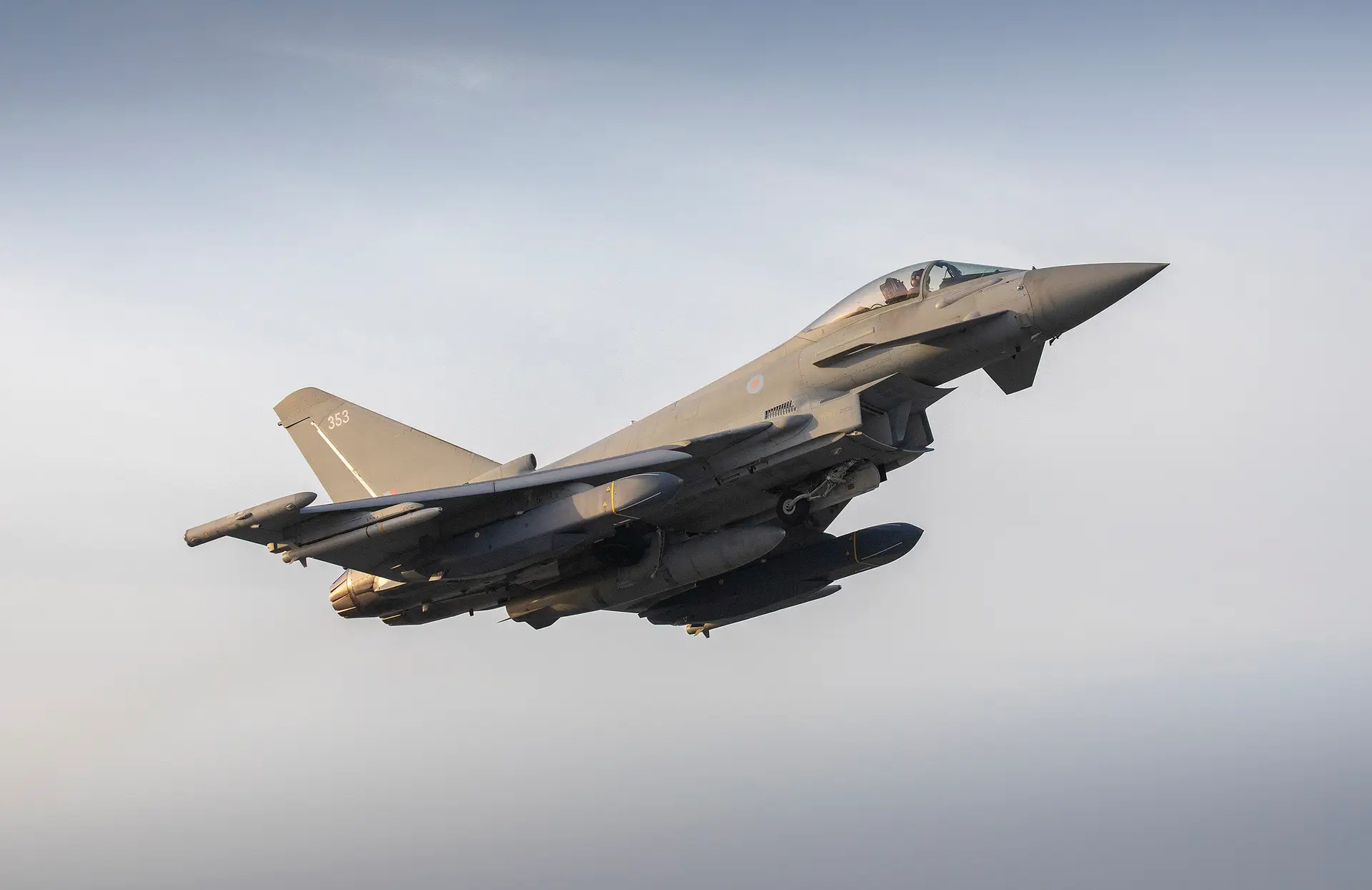

Typhoon FGR.4 multirole fighter from the No. 1 Squadron RAF. Photo credits: RAF

Additionally, the halt of production in the United Kingdom does not mean the country is leaving the Eurofighter consortium. BAE Systems and other contractors will continue manufacturing components for new aircraft.

It is worth noting that in Germany, Airbus Defence and Space in Manching is responsible for assembling the jets for the German Air Force, producing the central fuselage section, and conducting testing.

In Italy, final assembly takes place at Leonardo’s facility in Turin, where the front fuselage and wing components are also manufactured. Meanwhile, Spain carries out final assembly at Airbus’s plant in Getafe, supplying aircraft for the Spanish Air and Space Force.

Additionally, the consortium plans to increase the annual production of this aircraft type to supply the main participating countries with new jets, including a specialized electronic warfare version for the German Air Force.
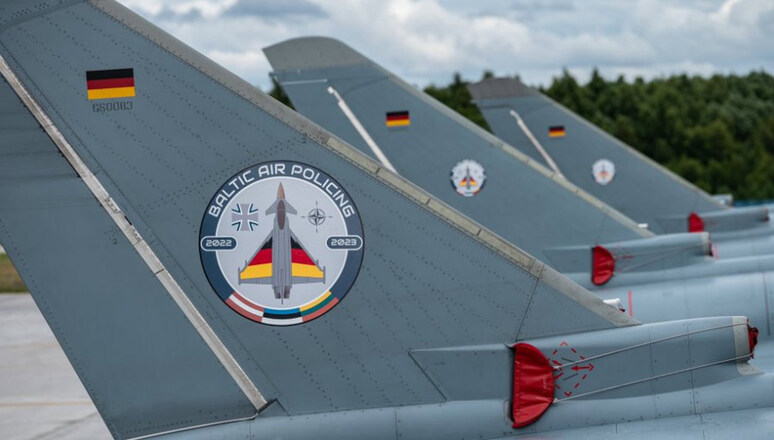
German Air Force’s Typhoon fighters as part of Air Baltic Policing. Photo credits: Luftwaffe

According to Eurofighter CEO Jorge Tamarit Degenhardt, the consortium is prepared to produce up to 30 Typhoon jets per year if export orders are received.

He noted that currently, 14 Eurofighter Typhoons are produced annually, with plans to increase this number to 20 units per year over the next three years.

In addition to orders from consortium member countries, Eurofighter is primarily targeting export contracts with four nations that could significantly boost production volumes in the long term: Austria, Poland, Turkey, and Saudi Arabia.

Militarnyi previously reported that Italy had ordered new Eurofighter Typhoons to modernize its Air Force fleet. The contract for the delivery of up to 24 combat aircraft was signed by the representatives of the Eurofighter consortium and NETMA (NATO Eurofighter and Tornado Management Agency).




Georgian Leadership Sent ‘Threatening, Insulting’ Letter To Trump Administration

THE COUNTRY NOT THE STATE

July 07, 2025 
By Nino Gelashvili,
andRay Furlong


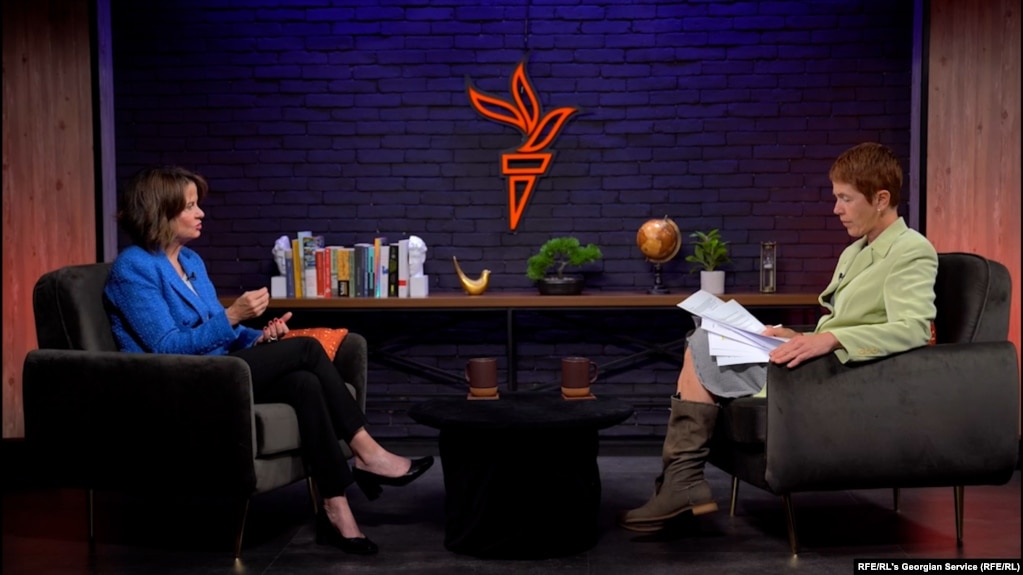
Outgoing US Ambassador to Georgia Robin Dunnigan speaks with RFE/RL's Georgian Service in Tbilisi.
Share


Print


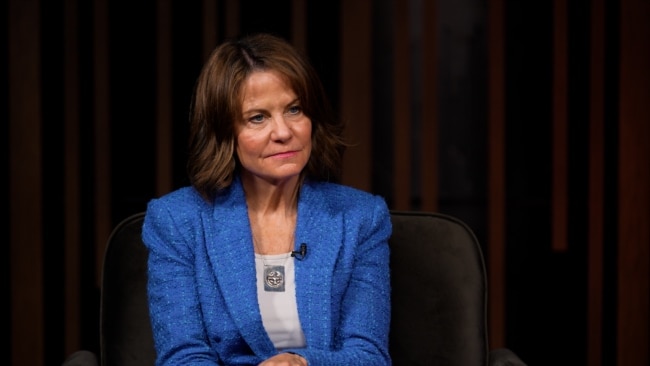
Outgoing US ambassador to Tbilisi Robin Dunnigan says the ruling Georgian Dream party leadership sent a private letter to the Trump administration that was “threatening, insulting, unserious, and was received extremely poorly in Washington.”

In an interview with RFE/RL’s Georgian Service in Tbilisi on July 3, Dunnigan laid bare how ties between the two countries have continued to deteriorate since Donald Trump replaced Joe Biden as US President.

Georgia, once a close US ally, has angered Washington with a perceived tilt toward Russia and a violent crackdown on dissent.


US Ambassador Reveals 'Insulting' Georgian Letter


Dunnigan said she traveled to Washington in the first days of the Trump administration to meet senior officials and then returned to Georgia with US conditions to reset relations.

She said these were 2-3 simple steps that included stopping “anti-American rhetoric,” and that she then relayed them in a meeting with Georgian Foreign Minister Maka Botchorishvili.

The private letter came three days later.

Dunnigan said the Trump administration was so surprised by the content of the letter that it “took us a while to come up with a response.”

In May, Georgian Prime Minister Irakli Kobakhidze wrote an open letter to Trump complaining that there had been no answer.

The open letter also complained about Biden-era sanctions -- which are still in force -- and a bill in Congress called the MEGOBARI Act that seeks increased scrutiny of the Georgian government's actions and its ties to Russia and other authoritarian regimes like China.

Kobakhidze also emphasized Georgia’s desire to improve ties with the United States, a priority that officials in Tbilisi have repeatedly declared.
Georgia's Most Powerful Man

But an additional problem then emerged.

US Secretary of State Marco Rubio prepared a response to the private Georgian Dream letter but told Dunnigan to deliver it to Bidzina Ivanishvili, the Russia-friendly billionaire considered Georgia's most powerful political figure.

He is also the founder and "honorary" leader of the Georgia Dream party, which officially is headed by Kobakhidze.

But Ivanishvili refused to meet her, saying that he felt it was wrong to do so while he himself was still under US sanctions. He added that the sanctions amounted to “personal blackmail.”

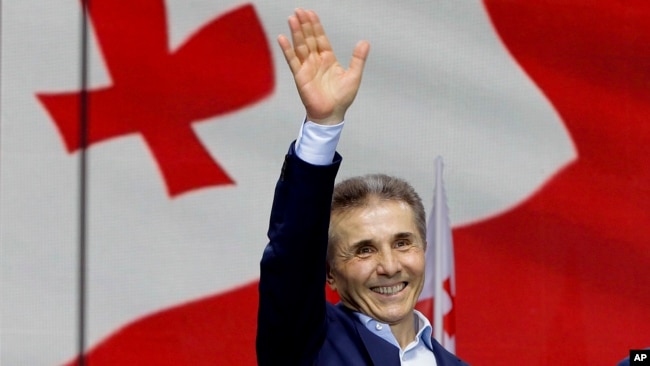
Bidzina Ivanishvili during a rally in Tbilisi, Georgia, on April 29, 2024.

“If the de facto leader of this country is unwilling to meet with leadership of the United States or receive a message from the Trump administration he is, in fact, putting his personal interests against the interests of the Georgian people,” Dunnigan said.

Dunnigan was offered a meeting with Kobakhidze, instead, but turned it down. “I wasn't asked to deliver (the US response) to the Prime Minister,” she told RFE/RL.
Dunnigan Steps Down

Appointed during the Biden-era, Dunnigan is leaving her post this month in what she has said was a personal decision. In the interview, Dunnigan rejected what she called “disinformation” by Georgian Dream that she was being recalled by the US government.

Reflecting on the changes she had seen in Georgia since arriving in October 2023, Dunnigan said there had been a brief chance for a meeting with Ivanishvili but that it was blown by last year’s Georgian parliamentary elections.

Georgian Dream claimed victory but the Organization for Security and Cooperation in Europe (OSCE) said the process was marred by instances of vote-buying, double-voting, physical violence, and intimidation.

Mass street protests met a violent response from security forces, prompting US sanctions in December 2024.

Dunnigan said the situation remained “very difficult” today, citing “the imprisonment of political opposition figures, the targeting of civil society” along with concerns over the rule of law and media freedom.

“The relationship between our governments is in a very difficult situation, and I think Georgia’s reputation has really suffered,” she said.

Looking forward, Dunnigan said she believed Washington could harden its stance toward Tbilisi. In May, the MEGOBARI act was approved by the House of Representatives and is now in the Senate.

“I've heard from several people in the Senate that they believe it will eventually pass,” she said. “It shows you in part what's happening to Georgia's reputation.”

RFE/RL's Georgian Service
RFE/RL's Georgian Service is a trusted source of politically and financially independent journalism in a country where much of the media is aligned with the government or the opposition.
webteam@rferl.org
Subscribe via RSS


Ray Furlong  is a Senior International Correspondent for RFE/RL. He has reported for RFE/RL from the Balkans, Kazakhstan, Georgia, and elsewhere since joining the company in 2014. He previously worked for 17 years for the BBC as a foreign correspondent in Prague and Berlin, and as a roving international reporter across Europe and the former Soviet Union.

Trade Unions Resist EU Bid to Weaken Corporate Sustainability Laws

Global labour leaders warn that proposed changes could leave millions of workers exposed.

u4219834671f 3

Major trade unions are mounting fierce resistance against European Union proposals to dilute key corporate sustainability laws, warning that the changes could strip away vital protections for workers worldwide.

IndustriALL Global Union and industriAll European Trade Union have issued a strongly worded open letter calling on lawmakers to reject pressure to weaken corporate human rights due diligence rules. The unions represent millions of manufacturing, energy, and mining workers across industries fundamental to global economies.

The controversy centres on the EU’s Omnibus Directive Package I and II, which propose revisions to two cornerstone pieces of sustainability legislation.

The Corporate Sustainability Reporting Directive and the Corporate Sustainability Due Diligence Directive currently require companies to conduct thorough assessments of their human rights and environmental impacts.

“Weakening HRDD laws will leave workers exposed and unprotected,” said Kemal Özkan, assistant general secretary of IndustriALL Global Union. “Strong, legally binding HRDD is key to rebuilding trust, strengthening democracy and ensuring fundamental rights are upheld in a fairer global economy.”

The proposed changes, framed under a “competitiveness” agenda, would substantially roll back corporate sustainability and reporting obligations. Union leaders argue this would discourage businesses already implementing these standards through workplace dialogue and other established mechanisms.

Many companies have embraced the existing legislation and are actively working to implement its requirements. Watering down these tools would represent a serious setback for these industry leaders, the unions argue.

The pushback has gained support from international bodies. The UN Working Group on Business and Human Rights has warned that the proposed packages do not align with the UN Guiding Principles of Business and Human Rights and risk undermining important progress on corporate accountability.

Business sentiment also appears to contradict the need for weaker rules. A survey of 1,350 German business decision-makers revealed strong support for due diligence regulations, with 69 per cent rating them as important and many reporting competitive benefits from compliance.

Paradoxically, more than half of the surveyed businesses reported that the proposed Omnibus changes would introduce confusion and delay investments. This suggests that weakening the rules could harm rather than help competitiveness.

“This is a wrong signal to workers and business in the current global context,” said Judith Kirton-Darling, industriAll Europe’s general secretary. “We condemn the proposals since they are a direct attack on workers’ rights and corporate accountability. And send a very worrying message to workers.”

The union opposition comes at a critical time for global labour rights. According to the 2025 ITUC Global Rights Index, workers’ rights are deteriorating worldwide, with Europe and the Americas recording their worst scores ever.

The timing of the proposed weakening has particularly alarmed union leaders. They argue that strengthening rather than diluting corporate accountability measures is essential in the current global context.

IndustriAll Europe and industriALL Global Union are demanding that European policymakers abandon plans to weaken the two directives. Instead, they are calling for these laws to be strengthened to ensure robust protection of workers and communities everywhere.

The battle over these directives represents a broader struggle over the balance between corporate competitiveness and social responsibility in an increasingly interconnected global economy.

This post is sponsored by industriAll

Why Progressive Governments Keep Failing — And How to Finally Win Back Voters

Social Europe

Progressives must act fast, make change visible, and perform powerfully — or watch populists fill the void.

u4219834675 4ff1 998a 404323c89144 1

For UK Prime Minister Keir Starmer and other leaders confronting right-wing populist headwinds, the challenge is not only to govern competently, but to do so in ways that make reform visible, fast, and politically meaningful to persuadable voters. Otherwise, with voters in many countries beginning to doubt that public policy can actually improve their lives, populism will keep gaining ground, fed by the idea that progressive politics amounts to technocratic talk with no results. 

Democratic governments of all political stripes are almost universally failing to recognize this new terrain of political legitimacy. Too many policy programs are built on assumptions from a bygone era: that a consensus can be built gradually, that behavioural change (like the shift to preventive health systems) will be politically rewarded, that evidence-based policymaking can overcome “alternative facts.” 

This failure reflects a political choice. After all, fiscal rules are almost always broken for war. Hence, in March, incoming German Chancellor Friedrich Merz, before he even took office, convinced the Bundestag to loosen the country’s constitutional “debt brake” to allow for €500 billion ($589 billion) in off-budget infrastructure investments, and to exclude defence spending above 1% of GDP from the government borrowing limit. 

To be sure, defence has long been a powerful tool to galvanize citizens. But it is a go-to issue for populists, who rely on nostalgia for a mythical past when the nation was supposedly strong and united. For those who genuinely want to lead the nation, such rhetoric won’t work. Whether he intended it or not, Starmer’s recent speech echoing the nationalist and racially charged “rivers of blood” speech of Enoch Powell, a British Tory of the 1960s and 1970s, will only alienate many of his voters. Such language inevitably rings hollow in a country as deeply multicultural as today’s United Kingdom. 

The choice for progressives is whether to focus on building more housing and other “stuff,” or to reimagine the political and institutional machinery that provides for such goods. The first option may bring some wins in the short term, but only the second one can deliver a lasting transformation that voters will not soon forget. 

Besides, too many governments lack the capacity to deliver even short-term wins. Reform plans tend to be overly bureaucratic, and old technocratic habits have dulled the current generation’s political instincts. While plans often read well in manifestos, they fail to shift public perceptions or deliver outcomes that ordinary voters will feel and appreciate. 

To develop the organizational muscles to deliver meaningful results fast, progressive governments must invest in creative, agile bureaucracies that know how to get things done. The situation demands not only more ambition, but also a sharper sense of how reforms will be received in a political ecosystem defined by short attention spans and deep institutional distrust. Policies need to be thought through both strategically (for the long term) and tactically (short term). 

That means focusing on local settings, where legitimacy is rooted. Cities are not only ideal testing grounds. They also are where many elections are won, where social and economic divides are most visible, and where inclusive, experimental governance can make a direct, tangible difference. Rather than pursuing national reforms that will take a decade or more to implement, progressive leaders should craft local policies to deliver results (from green jobs and affordable housing to preventive health care) within a single mayoral term. 

Governments can learn from their digital and design teams. The UK’s Government Digital Service and New York City’s Civic Service Design Studio have shown how cross-disciplinary teams working outside traditional silos can create new channels for citizen engagement, streamline public services, and change the bureaucracy from within. These efforts are effective not only practically, but also politically, offering proof that governments can learn, adapt, and deliver. This – not Elon Musk wielding a chainsaw – is what government efficiency really looks like. 

The climate agenda underscores the need for public-sector agility. Although climate-risk messaging is strong and based firmly in science, it has failed to jump-start the necessary reforms at scale. Clearly, the green transition must be treated not only as an environmental issue, but as a defence strategy – as the only path for achieving durable economic and territorial security. The UK’s new industrial strategy, the first of its kind in almost a decade, is a step in this direction

But individual policy programs are tactical. Democratic governments also need new foundations for how to think about the economy, statecraft, and value creation over time. That means moving beyond the narrow metrics of cost-benefit analysis or GDP growth. 

These metrics reflect a linear logic that no longer applies. Our policy tools must reflect the nonlinear, adaptive, and deeply interconnected character of the problems we face, whether they be climate collapse, rising inequality, or technological disruption. Public finance, for example, should be seen not as a constraint but as a tool for shaping innovation and investment. Outcomes-oriented budgets – not fiscal conservatism – should be a government’s default position. 

Such a broad intellectual shift must be institutionalized across the public sector, including through expert communities that can inform policy from within the government to ensure delivery. Governments will need to build this capacity as a core function of statecraft, not as an add-on. 

Make no mistake: the populist far right has not only moved fast; it has built a powerful, well-organized movement that has achieved outsize influence, especially through control of the media narrative. To confront this, democratic-minded governments need to distinguish between the populists’ illusion of speed (all the “efficiency” propaganda) and the reality of what it takes to govern and build lasting capacity. 

The right often champions static efficiency – doing the same things faster or cheaper. But what we need is dynamic efficiency: the ability to adapt, learn, and transform systems to meet complex, evolving challenges. 

Reform can no longer be treated as a technical process, because politics inevitably involves theater. Progressives must put on a performance with a purpose. The reform process needs rituals, symbols, and stories grounded in everyday experiences, not Excel spreadsheets. 

The far right has understood this, to devastating effect. While the West’s democratic governments should not mimic their populist opponents, they do need to meet them on the emotional and cultural terrain where politics is ultimately decided. The future of democratic governance depends on it.

Copyright Project Syndicate

Mariana Mazzucato

Mariana Mazzucato is professor in the economics of innovation and public value at University College London, founding director of the UCL Institute for Innovation and Public Purpose and a co-chair of the Global Commission on the Economics of Water.

Repeating old journalistic mistakes in the digital age

There is a deliberate recreation of old journalistic mistakes, as if we were outside the digital era.

Monday 07/07/2025
MEO
MIDLE EAST ONLINE

The nature of discourse in the Arab media today is almost identical to that of thirty years ago

This occurred during a time of complete journalistic collapse. Not only was there a shortage of paper and ink, but there was also a dearth of ideas. This devastating slumber affected everything in the country, leaving it weak and emaciated. Newspapers became brief, unhelpful bulletins that were no longer sufficient to cover even the news about the president and ministers, no matter how insignificant it was to people starving in the streets.

In the 1990s, while the rest of the world was entering a new digital era, Iraq was living under a blind siege. There was no place for journalism that had not yet embraced the computer age.

Journalism that could not craft ideas for life could not survive in a country where death was certain and hunger was widespread. It wasn’t just the people waiting for their demise; the language itself had dried up. Journalists resorted to silence in the face of global injustice, while others cheered on defeat as though it were victory.

I recall the painful scenes Iraq experienced more than three decades ago. Today, this shallowness manifests itself in the form of noisy media, buffoonery, journalistic chaos and meaningless writing that defends killers, militias, corrupt governments and failed states.

There is a deliberate recreation of old journalistic mistakes, as if we were outside the digital era. This means errors will be exposed more than they should, provoking public outrage as they can no longer be hidden from the smartphone generation.

As the nature of discourse in the Arab media today is almost identical to that of thirty years ago, I will revisit an incident from that time which is being repeated today, without any sense of shame, in both written articles and the continuous absurdities of well-known media figures on social media.

Back then, a highly important journalist, who was managing editor of the state newspaper, presented himself in the lowest form of desperation when he wrote an article on behalf of his wife, complaining about their poverty and the dire conditions caused by the siege. The family was starving and had nothing to fill their bellies, let alone meet other essential needs such as clothing. Hunger was a daily concern for Iraqis at the time.


The 'desperate journalist' excelled at writing the article in his wife's voice. At the right moment, he replied to her complaint with a corrupt exaggeration that demeaned them both, blaming his wife for complaining about the hardships of life when there was a great and inspiring leader whose job it was to feed the hungry and embrace the poor during the country's struggle. He scolded his wife for complaining, promising her that 'good things' would come from a compassionate father — the 'president and leader' — tomorrow morning. He wrote this article in the hope that the president would read it and reward him with money.

The unexpected surprise came from the president himself, offering a lesson to any journalist who compromises their values. He commented on the newspaper article in blue pen, encircling the piece with mocking, circular lines and directing his words to the state newspaper: 'Doesn’t your managing editor feel ashamed to beg publicly?'

The managing editor, who had been one of the journalist’s key allies, took the most embarrassing action after seeing the president’s comment on the front-page article he was in charge of. He decided to make the situation even more scandalous by having multiple copies of the comment photographed and distributed across all the newspaper's departments so that everyone could see the disgrace. He also posted a permanent copy on the bulletin board, which editors and staff passed by every day.

To me, this story is one of the most famous cases of journalistic desperation in contemporary media. While it could be argued that it happened during a difficult time when dignity collapsed under the weight of necessity, it will always serve as a reminder of the lengths journalists will go to in their desperation. Unfortunately, such articles are far too common today.


Similarly, amid political chaos and government control of the media, we have witnessed disgraceful examples of journalistic desperation and blatant lies presented as facts in articles that are not even remotely ashamed of themselves. It is as though they are inspired by the story of the journalist begging the president for mercy. Now, however, the idea of seeking truth is absent, and journalists “sell their journalistic services” in a striking manner. In return, there is a daily stream of nonsense and media chaos that praises religious figures and militia leaders who shamelessly assume the positions of lords of death.

In his book Breaking News, Alan Rusbridger, former editor-in-chief of The Guardian, suggests that journalists should rid themselves of the role of cheerleaders for a team that is always losing while its supporters continue to cheer. 'No one loves us; we don’t care.'

If journalism is a public service to some extent, then journalists must understand the spirit of public service, which adds value to society without necessarily generating direct financial returns. This means thinking about journalism in the same way as a police officer, ambulance driver or firefighter. As a citizen, you expect these services to be efficient, but you don't expect them to be justified based on profit.

However, even though Rusbridger lives in a democracy with many checks and balances to prevent powerful individuals from acting corruptly, he admits that, as a British journalist, he once doubted the validity of this. This prompts us to compare Rusbridger's experience with that of a journalist in the Arab world.

The brilliant British journalist Suzanne Moore had previously called on journalists to abandon the 'idea of hesitation' in such matters. The world is engaged in a battle over information, and journalists are not exempt from this conflict. The truth exists, yet people are still falling for lies due to the continuous and escalating spread of falsehoods.

Karam Nama is a writer and journalist based in London
Greenpeace stages protest in Berlin against deep-sea mining with giant octopus

Environmental group demands moratorium as international negotiations begin on controversial seabed exploitation, placing German government under pressure to adopt stronger stance

Anadolu staff |07.07.2025 - TRT/ AA


Greenpeace stages protest against deep-sea mining in Berlin

BERLIN

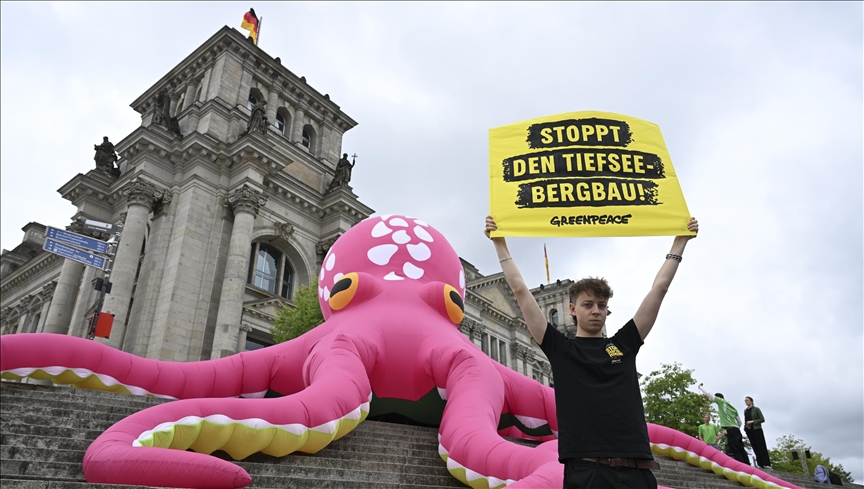
Greenpeace activists deployed a massive 10-meter (33-foot) octopus model outside Germany's parliament on Monday, demanding an immediate halt to deep-sea mining plans as critical international negotiations began.

The demonstration featured more than a dozen activists holding banners that read "Declare a moratorium - stop deep-sea mining" and "Protect the deep sea."

It coincided with the start of the International Seabed Authority's (ISA) annual assembly in Jamaica, where 170 member states will negotiate regulations for mining international waters.

"The German government needs to make a clear commitment against the start of deep-sea mining to prevent irreversible damage to the seabed," Anna Saito, Greenpeace deep-sea mining expert, said.

"They must advocate for a global moratorium that stops the exploitation of the deep sea."

Germany currently holds exploration licenses for a 75,000 square kilometer area containing manganese nodules in the Clarion-Clipperton Zone in the Central Pacific.

The German government's position has been criticized by environmental groups for supporting only a "precautionary pause" rather than a full moratorium, which would still allow preparations for mining operations.

The ISA negotiations, running until July 25, are considered crucial for determining the future of international deep-sea protections and resource extraction regulations.
Japanese firms take steps to protect outdoor workers as heatwave sizzles on
July 7, 2025

TOKYO, July 7 (Reuters) - Japan endured another day of a searing heatwave on Monday, with temperatures soaring to the highest this year in Tokyo and leaving those having to work outside vulnerable to the risk of heatstroke.

Heatstroke alerts were issued in 30 of Japan's 47 prefectures, the highest this year, after the country suffered its hottest June on record.

The extreme heat, which has become a norm in summertime Japan, has turned into a major workplace hazard, prompting the government to roll out labour safety regulations from last month requiring companies to implement protection measures against heatstroke.

Employers are now required to ensure employees wear clothing that allows air to pass through easily, to install a ceiling to block sunlight and to provide a break space with air-conditioning or shade.

At an apartment construction site in Tokyo, where temperatures exceeded 35 degrees Celsius (95 degrees Fahrenheit) for the first time this year on Monday, workers for Daito Trust Construction (1878.T), opens new tab donned puffy air-conditioned jackets equipped with cooling fans on their backs while at work.

The custom-made jacket, which the company developed with a construction supplies manufacturer, uses thermoelectric effects to enhance cooling and has been distributed to 1,500 workers.

"When I wear this vest, I don't sweat as much, so I don't lose physical strength," said 47-year-old construction worker Atsushi Mizutani.

Construction workers are particularly at risk of heatstroke. They accounted for nearly 20% of deaths or illnesses caused by heatstroke in the workplace in 2023, labour ministry data showed. The overall number of heatstroke cases at work more than doubled that year from a decade ago.

"In the past, we didn't wear air-conditioned jackets or anything like that and there weren't as many cases of people collapsing (due to heat stroke) as there are now," said Takami Okamura, 57, who has been a construction worker for 34 years.

"In recent years, air-conditioned jumpers and other such items have become a necessity, which makes me realise just how hot it gets."

Greece orders workers to down tools as another heatwave takes hold


Temperatures are expected to exceed 40 degrees Celsius


Anna Loren
Monday 07 July 2025 
THE INDEPENDENT

From reproductive rights to climate change to Big Tech, The Independent is on the ground when the story is developing. Whether it's investigating the financials of Elon Musk's pro-Trump PAC or producing our latest documentary, 'The A Word', which shines a light on the American women fighting for reproductive rights, we know how important it is to parse out the facts from the messaging.

At such a critical moment in US history, we need reporters on the ground. Your donation allows us to keep sending journalists to speak to both sides of the story.

The Independent is trusted by Americans across the entire political spectrum. And unlike many other quality news outlets, we choose not to lock Americans out of our reporting and analysis with paywalls. We believe quality journalism should be available to everyone, paid for by those who can afford it.Your support makes all the difference.Read more

Greece has introduced mandatory work breaks in regions where temperatures are forecast to exceed 40 degrees Celsius (104 degrees Fahrenheit), as a heatwave is set to grip the country until Thursday.

The labour ministry has ordered a halt to outdoor manual labour and food delivery services from midday to 5pm in central Greece and several islands.

Employers have also been advised to offer remote work options.


Despite the intense conditions, no emergency measures have been implemented in Athens.

The current hot spell comes after similar sweltering temperatures struck Europe, reaching 46C in part of Portugal.

Greek authorities say they are taking long-term steps to address the effects of climate change, including the deployment this summer of a record number of firefighters.


open image in galleryA man cools off at a beach near Athens (AP)

Last week, at least 5,000 tourists were forced to evacuate parts of Crete as a massive wildfire scorched forests and olive groves on the Greek island.

Around 230 firefighters, along with 46 engines and helicopters, rushed to tackle the blaze on Thursday.


It had broken out the day before in the forested hills near Lerapetra on the island’s southern coast.

People from villages including Achlia, Ferma, Agia Fotia and Koutsounari and surrounding tourist resorts and hotels were evacuated to Ierapetra’s indoor sports hall for shelter.


open image in galleryTourists drink water at the Parthenon in Athens as a heatwave engulfs parts of Europe (Getty)

Greece and other countries in the Mediterranean are in an area scientists have called “a wildfire hotspot”, with blazes common during hot and dry summers.

These have become more destructive in recent years, authorities say, due to a fast-changing climate.


Meanwhile, in Turkey last week, thousands fled wildfires as the country battled blazes in the Cesme and Odemis districts in the western coastal province of Izmir.


Winds hindered their efforts as the flames approached a main highway to Cesme, local TV footage showed, and thick smoke billowed over mountainous areas.

Evacuation orders were also issued for five communities south of Athens as a large wildfire, fanned by strong winds and exacerbated by Greece's first summer heatwave, raged near the capital.


As Temperatures Rise, European Workers Face a Looming Threat


The European Trade Union Confederation is urgently calling for a new directive to protect workers from the escalating dangers of extreme heat.

u42198346c3fba71fa474 0

While the characters in Game of Thrones dreaded winter, in reality, the phrase “summer is coming” now serves as a stark warning of occupational hazards. This growing concern is amplified by the undeniable impact of climate change.

On 4 March, the European Trade Union Confederation (ETUC) adopted a resolution outlining the content of a future directive aimed at preventing occupational heat risk. This is not the first time the ETUC has sought greater protection in this area. Heat poses significant social and environmental consequences, evident in recent events such as the wildfires in California last February, last summer’s heatwaves across Europe, and the Intergovernmental Panel on Climate Change (IPCC) projections of continuously rising and intensifying temperatures in the coming decades.

The world of work is far from immune to these risks. Climate change, and the associated rise in temperatures, directly threatens workers’ health and safety. The International Labour Organization (ILO), in its latest report “Ensuring Safety and Health at Work in a Changing Climate,” has already issued a warning on this critical issue. The report indicates that 2.41 billion workers worldwide are exposed to excessive heat, with the European figure reaching 130 million. Crucially, foresight studies suggest these risks will continue to escalate.

Why the Delay in Action?

It is only a matter of time before news reports detail rising temperatures and their debilitating effects on workers. This begs an important question: why wait to act? Discussions surrounding excessive heat in the workplace often narrow the focus to fatalities. However, this creates a “tunnel vision” effect, addressing only the visible tip of a much larger iceberg. The real problem is far more extensive, encompassing a diverse range of short-term and long-term consequences. A clear example is the wide spectrum of health effects linked to excessive heat, including “heat stress, heatstroke, heat exhaustion, rhabdomyolysis, heat syncope, heat cramps, heat rash, cardiovascular disease, acute kidney injury, chronic kidney disease, and physical injury.” More recently, the European Agency for Safety and Health at Work (EU-OSHA) has identified eco-anxiety as an emerging occupational safety and health risk directly tied to rising temperatures.

Furthermore, while excessive heat primarily affects outdoor workers, other sectors are by no means unaffected. The same applies to individual worker characteristics, such as age, gender, or pre-existing health conditions, which can heighten vulnerability. Therefore, regulation must address both the common and differentiated needs that excessive heat creates. For instance, consider a worker performing duties outdoors where temperatures exceed 40°C. Now, imagine that same worker in an industrial laundry facility, where industrial irons reaching 150°C significantly elevate the working environment temperature. Finally, consider that worker to be 55 years of age and in the premenopausal stage. The conclusion is self-evident: as workers face varying levels of vulnerability, the protective measures in place should accommodate these differences.

A Comprehensive and Necessary Directive

The proposed Directive outlines adaptation tools aimed at reducing workers’ vulnerability to the risks posed by extreme heat, adopting a comprehensive perspective. Key aspects of the resolution include calls for establishing maximum working temperatures, while factoring in sectoral and personal conditions. It also advocates for mandatory heat risk assessments, which would necessitate a clear definition of heat stress. Additionally, it would be crucial to adopt more suitable risk assessment methods, such as Wet Bulb Globe Temperature (WBGT), ensuring they are inclusive, given that the risk disproportionately affects vulnerable groups. Another proposed tool is the implementation of heat management plans, which would regulate responses to adverse weather conditions. Some countries, such as Spain, already have regulations requiring companies to communicate alerts issued by meteorological authorities.

Moreover, workers should be afforded specific rights, including health monitoring related to their individual vulnerability to extreme heat, and the right to receive training on this issue. They should also have the right to suspend work in the event of imminent risk, and even to receive social protection during work stoppages. It is worth noting that the resolution aligns with the logic of the Framework Directive on occupational health and safety by advocating the STOP approach, which prioritises: (1) Substituting or eliminating the risk where possible; (2) implementing Technical measures (e.g., cooling areas); (3) adopting Organisational measures (e.g., concentrating work during cooler hours); and (4) providing Personal protective equipment. Ultimately, the ETUC’s proposal is both necessary and appropriate. It seeks to adapt work to a specific and growing risk that increasingly affects workers, consistent with the EU legal framework for occupational health and safety, where emerging and unaddressed risks demand targeted regulatory action.

Examples to Follow and Gaps to be Filled

This proactive perspective has been adopted by some countries, such as Spain, which is committed to establishing a comprehensive regulation on the protection of workers against climate change-related risks. While this regulation is not yet in place, the government has pledged to approve it within the current year. Greece has also temporarily approved the suspension of outdoor work during periods of extreme temperatures. However, both measures were implemented as direct responses to specific climate change-related events.

Currently, regulations and measures on this topic are not harmonised across Europe. This places additional pressure on the European Commission, as some Member States will begin to acknowledge the risk and take action, while others will remain without specific protections. This lack of harmonised protection could be effectively addressed with such a Directive. Furthermore, it is important to recognise that other extreme weather events, such as droughts, floods, and heatwaves, also have occupational health and safety components that must be addressed in the near future.

Looking ahead, this problem will only continue to grow. The Mediterranean region, in particular, is expected to experience significant temperature increases. This means that, over time, the consequences for workers’ health and safety will become more severe, making efforts to address them increasingly complex. Both the EU and its Member States must adopt proactive and coordinated action instead of merely reactive approaches.


Marouane Laabbas-el-Guennouni

Marouane Laabbas-el-Guennouni is a researcher at the European Trade Union Institute (ETUI), focused on the impacts of climate change and the ecological transition on occupational safety and health.
Trial set to begin over Trump’s attempt to deport pro-Palestinian academics: Report

Lawsuit asserts crackdown interferes with constitutional rights of free exchange of ideas

Zehra Nur Celik |07.07.2025 - TRT/AA


ANKARA

A federal trial is set to begin Monday in Boston over a lawsuit challenging President Donald Trump’s crackdown on foreign students and academics involved in pro-Palestinian activism, Politico reported Sunday.

In recent weeks, multiple federal judges have blocked Trump’s attempts to deport student activists supporting Palestinian rights.

The lawsuit centers on five international scholars – Mahmoud Khalil, Mohsen Mahdawi, Yunseo Chung, Rumeysa Ozturk and Badar Khan Suri – who were targeted for deportation after Secretary of State Marco Rubio labeled them threats to US foreign policy interests, according to Politico.

Courts, however, have repeatedly ruled that the government’s justification for deporting them violated their constitutional rights, resulting in their release or protection from detention.

Now, academic organizations are taking the broader policy to court, accusing the Trump administration of interfering with the rights of US citizens to freely exchange ideas with foreign-born colleagues.

US District Judge William Young, a Reagan-era appointee, is presiding over the bench trial.

The case is an early test of Trump’s second-term agenda and is being heard by a judge who has previously challenged the administration’s immigration and funding policies.
JUST SAY NO!

Back to the Barracks? European Countries Debate Return of Compulsory Service

World » EU | July 7, 2025, Monday // 13:18


The return of compulsory military service is once again at the center of political debate in Europe, driven by heightened security concerns following Russia’s invasion of Ukraine, growing tensions in the Middle East, and the renewed presence of Donald Trump in the White House. These developments have reignited discussions around defense preparedness across the EU, with many countries now reassessing how to staff their armed forces.

NATO countries recently committed to boosting defense spending to 5% of GDP, but military funding alone isn’t enough. Without sufficient personnel, readiness remains a challenge. This has brought the question of reinstating conscription back into mainstream political discourse. A recent survey by the European Council on Foreign Relations showed that in countries like France, Germany, and Poland, there is majority public support for the idea - though younger generations, particularly those aged 18 to 29 in Germany and Poland, are less enthusiastic.

While many EU countries phased out mandatory service after the Cold War, nine member states continue to enforce it: Austria, Cyprus, Denmark, Estonia, Finland, Greece, Latvia, Lithuania, and Sweden. Each applies different terms - ranging from universal drafts to selective recruitment systems.

Croatia, which scrapped conscription in 2008, is now preparing to reintroduce basic military training in 2026. The two-month training will be compulsory, with alternatives like civil defense or community service available to those citing religious or ethical objections. Recruits will receive €1,100 monthly, have food and transport costs covered, retain their employment status during service, and benefit from hiring preferences in public institutions.

In Germany, the Bundeswehr aims to increase its ranks by at least 60,000 soldiers, sparking calls for reinstating military service. CDU leader Friedrich Merz recently declared the abolition of conscription a mistake and suggested it should return. However, under the coalition agreement with the Social Democrats, only voluntary service is currently permitted. The SPD, while under pressure, recently approved a measure allowing the state to track and register eligible men for service, while emphasizing all voluntary options must be exhausted first.

Portugal is also revisiting the topic. Although military service was abolished in 2004, the country still requires young citizens to attend National Defense Day, a one-day event tied to civic responsibilities like obtaining a passport or applying for public sector jobs. The armed forces continue to function through voluntary enlistment and fixed-term contracts. Supporters of conscription argue it enhances civic responsibility, while critics cite logistical hurdles and stress the need for a modern, professional army.

Bulgaria, a former heavyweight in the Warsaw Pact, transitioned to a fully professional army in 2008. Today, it faces a personnel shortfall of nearly 22%. Despite recent pay hikes, recruitment lags. Defense Minister Atanas Zapryanov has mentioned possible limited compulsory training - focused on basic firearm skills - but stopped short of endorsing full conscription. However, if voluntary enlistment continues to falter, reintroducing the draft remains a possibility.

Romania, which ended conscription in 2007 upon joining NATO and the EU, legally retains the ability to reinstate it in wartime. Though online discussions about its return have grown since the start of the war in Ukraine, Romania’s defense ministry has dismissed such ideas, favoring volunteer reserves and improvements to recruitment channels.

In Poland, Prime Minister Donald Tusk has already voiced plans to bring back a form of service, targeting the involvement of 100,000 people per year. France, where military service was abolished in 1997, has seen a resurgence of the debate under President Emmanuel Macron. His administration is considering a sweeping overhaul of national service. A recent report estimates that reinstating universal service for both sexes would cost €15 billion annually.

Belgium, which ended conscription in 1993 but never outlawed it, has also revived discussion following Russia’s invasion of Ukraine. Although there’s no public momentum for reinstating the draft, and the country lacks the infrastructure to implement it, the government has announced a new voluntary one-year service. Starting in 2026, 18-year-olds will be invited to participate, with the first group capped at 500 and monthly pay set at around €2,000.

Meanwhile, several European countries remain firmly opposed to compulsory military service. Spain’s Defense Minister Margarita Robles made it clear that conscription is off the table, regardless of rising security threats. Slovenia also has no plans to return to the draft. Defense Minister Borut Sajović pointed out that conscription is not a universal solution, noting the varied experiences across the continent.

Slovakia has similarly rejected mandatory service. Prime Minister Robert Fico and other leaders are instead exploring incentives and reserve force reforms to tackle ongoing recruitment problems. Albania, which moved to a professional army in 2010, has shown no signs of reversing course. Ireland, which has never enforced conscription since gaining independence, maintains its stance against mandatory service.

The debate also intersects with gender. A 2023 study revealed that women make up just 13% of Europe’s military personnel. Only Sweden and Denmark currently require both men and women to serve. Denmark recently adopted a law to draft women beginning in 2026. Defense Minister Truls Lund Poulsen defended the move, saying it was necessary to ensure the country has enough people capable of national defense.
Nairobi Tense as Kenya Marks Democracy Uprising
 
by Staff Writer with AFP
07/07/25


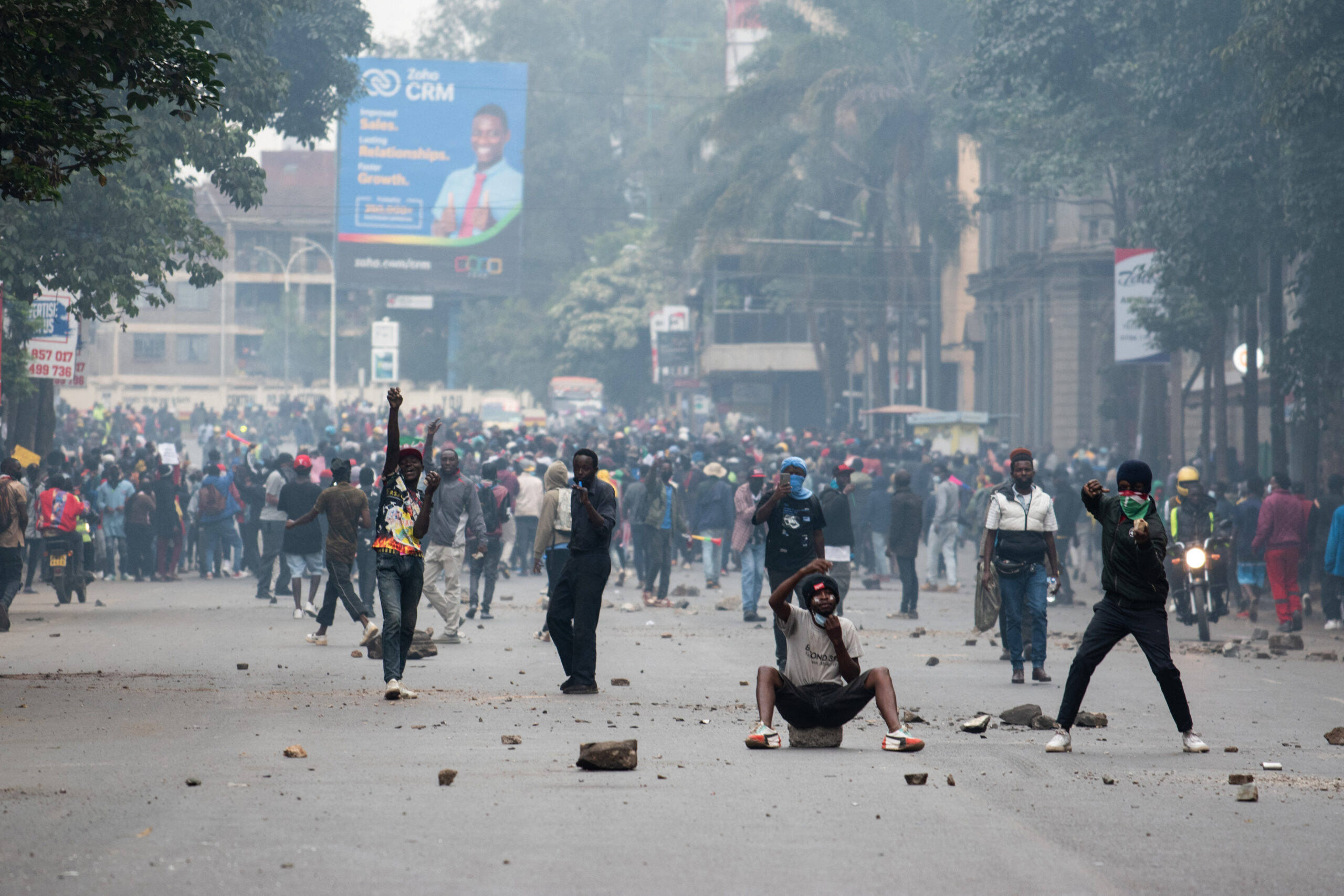
Kenya, Nairobi, 2024-07-16. Protesters in the streets. For the fifth week, thousands of young Kenyans take to the streets across the country in an unprecedented large scale movement against corruption and extra-judicial police killings. 
Photograph by Claudia Lacave / Hans Lucas. Kenya, Nairobi,

Kenya marked its fight for democracy on Monday, with police blocking main roads in Nairobi ahead of potential protests, after last month’s demonstrations descended into violent clashes.

Saba Saba Day marks the uprising on July 7, 1990 when Kenyans demanded a return to multi-party democracy after years of autocratic rule by then-president Daniel arap Moi.

This year’s event comes as young Kenyans – frustrated over economic stagnation, corruption, and repeated acts of police brutality – are once again engaging in protests that have degenerated into looting and violence, leaving dozens dead and thousands of businesses destroyed.

Protesters accuse the authorities of paying armed vandals to discredit their movement, while the government has compared the demos to an “attempted coup.”

On Monday, the streets of Nairobi were eerily quiet after police mounted roadblocks on the main roads, preventing most people from entering the centre, with many businesses closed for the day.

Leading activist Hanifa Aden wrote on X: “the police getting rained on as they block every road while we stay at home warming our beds.”

“Total shutdown and forced holiday executed by the state,” she said.

On Sunday afternoon, a press conference by the Kenyan Human Rights Commission calling for an end to “enforced disappearances and extrajudicial killings” was broken up when men, some armed with sticks, forced their way into the compound.

Social media and rising economic expectations have created anger at inequalities in a country where around 80 percent are trapped in informal, poorly paid jobs.

But the violent response of the police – at least 80 people have died in protests since June 2024 and dozens detained illegally – has scared many off the streets.
‘The World is Different’

Politically, President William Ruto – elected in 2022 – still holds a strong position, having forged an alliance with the main opposition leader Raila Odinga, leaving no clear challenger ahead of the next vote in 2027.

But each violent crackdown is fueling further unrest, said activist Nerima Wako.

“Every time people organise a protest, they kill more people, so it just continues to feed off itself,” she said.

It is as though the government is recycling tactics from the 1990s, said Gabrielle Lynch, an African politics expert at Britain’s University of Warwick.

“But we’re not in the nineties,” she said. “They don’t seem to have realized the world is different.”

“People don’t have the same inbuilt fear of the state.”