Wednesday, July 09, 2025


Just 111 of the world’s biggest companies are causing $28 trillion worth of climate damage, says study

Just 111 of the world’s biggest companies are causing $28 trillion worth of climate damage, says study
Gazprom is one of the 100 companies causing $28 trillion worth of climate damage every year, and the Russian state-owned gas champion is responsible for a tenth of that by itself. / bne IntelliNews
By Ben Aris in Berlin July 8, 2025

Just 111 of the world’s largest fossil fuel companies are collectively responsible for an estimated $28 trillion in climate-related economic damage, and just ten of those companies are responsible for half of that total, a study published in Nature found.

Researchers from Dartmouth College used emissions data and economic modelling to calculate the costs of extreme heat attributable to individual companies since 1990. The findings, based on peer-reviewed attribution methods and empirical climate economics, provide new tools in the effort to hold corporations financially liable for global warming and the ecological damage it causes.

“Here we detail the scientific and legal implications of an ‘end-to-end’ attribution that links fossil fuel producers to specific damages from warming,” the researchers wrote. “Using scope 1 and 3 emissions data from major fossil fuel companies, peer-reviewed attribution methods and advances in empirical climate economics, we illustrate the trillions in economic losses attributable to the extreme heat caused by emissions from individual companies.”

The cost of the damage done by ignoring the Climate Crisis vastly outweighs the amount of money being invested into the green transformation and efforts to reduce emissions. According to the most recent estimates, some $1.8-$2 trillion is being invested annually in containing the Climate Crisis, according to BloombergNEF’s Energy Transition Investment Trends 2024 report. Renewable energy alone attracted about $660bn, while electric vehicles and charging infrastructure received $634bn.

IEA (International Energy Agency) recently estimated that a record $3.3 trillion will be invested into global energy in 2025 with about two thirds of that going into green energy generation capacity: solar, wind, grids, energy efficiency and low-emission technologies.

But this money has been ineffective against the damage caused by the world’s biggest energy companies that have sent emissions soaring to new all-time record highs and the pace of growth is still accelerating. Experts have already warned of “cascading” climate tipping points appearing after seven of the nine crucial thresholds have already been breached. The last COP29 climate meeting ​​concluded that all the climate crisis warning lights flashing red and all the evidence points to the ongoing use of fossil fuels are the main culprit. The United Nations’ Intergovernmental Panel on Climate Change (IPCC) has already concluded that the 1.5C-2C Paris Agreement target increases above the pre-industrial benchmark have been missed and the world is on course for a catastrophic 2.7C-3.1C increase in temperatures.

Who are the bad guys?

The study named names and identified several household names amongst them. Russia’s state-owned gas champion Gazprom and the Kingdom of Saudi Arabia’s oil and gas giant Saudi Aramco were named as the single two largest contributors to climate damage, each responsible for more than $2 trillion in economic losses due to heat, or around a fifth of the total, by themselves.

Other major emitters outed by the reports included Chevron, BP, Shell, ExxonMobil, Pemex, Coal India, the British Coal Corporation and the National Iranian Oil Co., each of which is reportedly responsible for more than $500bn in economic losses.

According to the analysis, each 1% of global greenhouse gas (GHG) emissions released since 1990 has led to $502bn in heat-related economic harm. The $28 trillion estimate does not include damages from floods, droughts or hurricanes.

Lead author Christopher Callahan of Stanford University said the research aimed to clarify the “causal linkages that underlie many of these theories of accountability” in global climate liability efforts. “Drawing quantitative linkages between individual emitters and particularised harms is now feasible, making science no longer an obstacle to the justiciability of climate liability claims,” Callahan said.

The team traced emissions back 137 years using data on fossil fuel combustion, then ran 1,000 simulations comparing current warming to a baseline world without emissions. For instance, they found Chevron’s historical pollution had raised global surface temperatures by 0.25C.

They also used 80 additional simulations to estimate how individual companies contributed to the planet’s five hottest days, applying a formula that linked extreme heat intensity to fluctuations in economic output.

“This study really laid clear how the veil of plausible deniability doesn’t exist anymore scientifically. We can actually trace harms back to major emitters,” said co-author Justin Mankin, a climate scientist at Dartmouth.

As the damage caused by climate changes become more visible as the annual disaster seasons get underway, and the damage of the storms, flooding and drought starts to run into the billions of dollars, Zero Carbon Analytics reports that 68 climate damage lawsuits have been filed worldwide, more than half in the United States. Insurance companies are also reassessing their business models and the scale and volumes of climate related damage starts to balloon.

According to Swiss Re, one of the world’s largest reinsurance companies, global insured losses from natural catastrophes totalled $108bn in 2023, of which a large proportion was climate-related. This figure follows $125bn in 2022 and $121bn in 2021, keeping annual payouts above the $100bn pre-Climate Crisis norm for four consecutive years. The Insurance Information Institute reported that the number of weather related billion-dollar disasters quintupled to 25 compared to just six two decades earlier. The companies are raising premiums and some are withdrawing products like hurricane coverage completely. The Swiss Re Institute forecasts that climate-related insured losses could reach $1.6 trillion globally between 2020 and 2030, and annual losses exceeding $200bn by the end of the decade under current warming trends.

“Everybody’s asking the same question: What can we actually claim about who has caused this?” said Mankin. “And that really comes down to a thermodynamic question of can we trace climate hazards and/or their damages back to particular emitters?” He added: “The answer is yes.”

Global North responsible for 86% of cumulative emissions

While the largest companies in oil-rich countries like Russia and KSA individually cause the most damage, it is the collective Global North countries that are responsible for 86% of cumulative emissions, in excess of the safe planetary boundary, according to a separate report by Global Inequality based on research that first appeared in The Lancet. The two biggest contributors to excess emissions are the United States (38%) and the EU-28 (28%).

China is the biggest emitter of GHG in absolute terms, but responsible for only 1% of the total cumulative emissions since industrial revolution times. The rest of the South Global and peripheral Europe is responsible for another 13%, according to the “carbon budget” calculation set up by the 2015 Paris Agreement. The shares are calculated from taking the safe carbon budget and dividing it into national "fair shares" on a per-capita basis, and then assessing national emissions against national fair-shares.

The carbon budgets allotted in Paris take into account the historical accountability for emissions. As Europe and the US have been adding to the CO₂ emissions since the start of the industrial revolution, they bear the lion’s share for today’s climate problems, whereas countries like China and India have only industrialised relatively recently and so have contributed much less, which is reflected in their carbon budgets.

As reported by bne IntelliNews, although in terms of nominal volumes, China remains the largest emitter, followed by the US and India, in terms of their allotted carbon budgets of what they can emit and still hit the Paris targets of holding temperature rises to 1.5C, both China and India remain comfortably within their allotted budgets. Indeed, it appears that China, the global green energy champion, has already passed peak emissions a decade earlier than planned. India has also embraced renewables as the cheapest form of power available.

The US by contrast, has ignored its budget and “spent” twice as much emissions as it was allotted under the Paris Agreements. Under US President Donald Trump’s “drill, baby, drill” policies of expanding oil and gas production, that deficit will only grow even larger.

“The Global South as a group is actually still within its fair share of the planetary boundary (350 ppm), since the few "overshooting" countries are compensated for by "undershooting" countries,” Jason Hickel, Professor at ICTA-UAB and Visiting Senior Fellow at LSE said in a social media blog.

The worst is yet to come

While the Dartmouth report estimates that the top companies are responsible for $28 trillion worth of damage this year, that total will increase to $38 trillion by 2050 according to another study by Germany’s Potsdam Institute for Climate Impact Research (PIK) published in Nature last year, affecting most the countries that have contributed the least to climate change.

“Our study highlights the considerable inequity of climate impacts: We find damages almost everywhere, but countries in the tropics will suffer the most because they are already warmer. Further temperature increases will therefore be most harmful there. The countries least responsible for climate change are predicted to suffer income loss that is 60% greater than the higher-income countries and 40% greater than higher-emission countries. They are also the ones with the least resources to adapt to its impacts,” said co-author of the study Anders Levermann, PIK’s head of research department complexity science, as cited by EcoWatch.

The authors said that without mitigating climate change the economic damage will only become worse in the second half of this century, amounting to up to 60% on global average by 2100 – and that is without even considering non-economic impacts such as loss of life or biodiversity, co-author Leonie Wenz said in the report. Incomes will fall by an estimated median of 19% in just the next 25 years, the study found.

Strong income reductions are projected for the majority of regions, including North America and Europe, with South Asia and Africa being most strongly affected, the study found. These are caused by the impact of climate change on economic growth inputs such as agricultural yields, labour productivity and damage to infrastructure.

The research published in the Lancet came to the same conclusion: the countries that have contributed the least to emissions are going to be affected the most by global warming. Two maps that show those who are overshooting their emission targets caps are amongst the least affected by warmer temperatures and visa versa.

With a 2.7C temperature increase by 2050 – current the best-case scenario – an estimated 2bn people will be exposed to extreme temperature that will push the limits of what humans can survive and indeed go beyond those limits. Of these 2bn people exposed to these conditions, 99.7% of them are in the Global South.

More than 100 injured and hundreds more evacuated as wildfire rages near French city of Marseille


Copyright Lewis Joly/Copyright 2025 The AP. All rights reserved.


By David O'Sullivan
Published on 09/07/2025 


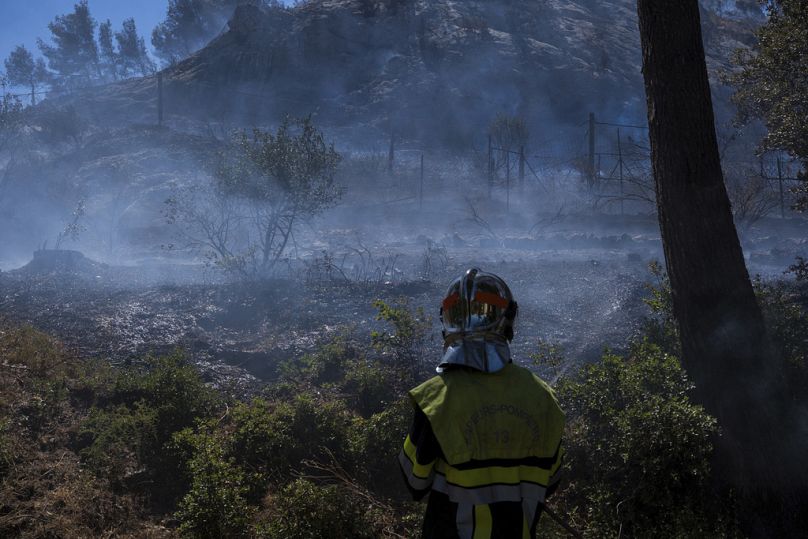
A wildfire reached the edge of France's second largest city of Marseille. Strong winds have fanned the flames, causing it to move exceptionally fast. Scores have been injured and hundreds evacuated.

More than 100 people were injured in a fast-moving wildfire threatening the southern French city of Marseille, according to local authorities. 

French Interior Minister Bruno Retailleau said around 800 firefighters were at the scene and would work “all night” to contain the blaze. He said that if the wind weakens as forecast overnight, it would “allow us to determine the situation in the coming hours.” 

No deaths have been reported by late Tuesday evening, according to the French minister. 

Marseille’s mayor BenoĆ®t Payan said emergency services were “waging guerrilla warfare, hoses in hand.” The fire spread at a rate of 1.2km per minute at its peak, he added. 

French media report that at least 400 people have been evacuated from their homes. This includes 71 residents of a nursing home in Pennes-Mirabeau. 


This photo provided by the fire brigade Pompiers13, shows a firefighter trying to extinguish a fire, near Marseille, southern France, Tuesday, July 8, 2025.AP/AP

Nine firefighters have been injured. Residents have been warned to stay indoors and not evacuate unless they were instructed to, so the roads would be clear for emergency vehicles. 

Authorities also urged people to keep windows closed to prevent toxic smoke from entering their homes. 

French President Emmanuel Macron expressed support for the firefighters in the region, condolences for the injured and urged caution and adherence to safety instructions. 

The local fire service said the fire reportedly broke out near the town of Les Pennes Mirabeau. 

Flights to and from Marseille were suspended on Tuesday and traffic at the city’s main station was disrupted due to the wildfire. Sections of two major motorways were also closed to traffic. 

As a safety measure, the city's Hospital Nord switched to generators “due to micro power cuts.”  

Several weeks of heat waves combined with strong winds have increased the risk of wildfires in southern France, with several breaking out over the past couple of days. 

Climate change has made wildfires in the area even more destructive.  

Climate change tripled death toll of latest European heatwave, first ever rapid study finds

A ‘silent killer’, the June to July heatwave is estimated to have claimed many more lives than the Valencia floods last year.


Copyright AP Photo/Paul White

By Lottie Limb
Published on 09/07/2025 -

An estimated 1,500 people across 12 European cities were killed by human-caused climate change during the latest heatwave, a quickfire study has found.

Burning fossil fuels has made heatwaves up to 4°C hotter in Europe, tripling the number of heat-related deaths that occurred between 23 June and 2 July, according to scientists at Imperial College London and the London School of Hygiene & Tropical Medicine.

It is the first time that a rapid analysis - a type of study that measures the influence of climate change on an extreme weather event - has been carried out for a heatwave. Since the analysis covers only a dozen cities, researchers estimate that the true death toll across Europe stretched into the tens of thousands.


“It shows that climate change is an absolute game changer when it comes to extreme heat, but still very much under-recognised,” says Dr Friederike Otto, Professor in Climate Science at the Centre for Environmental Policy, Imperial College London.

“If we continue to follow the wishes of the fossil fuel industry and delay serious mitigation further, more and more people will lose their lives, for the financial benefit of only a tiny, rich, loud, influential minority.”
How can heatwave deaths be estimated?

To estimate how many excess heat deaths were caused by climate change, the researchers first analysed historical weather data to see how intense the temperatures would have been in a world that hadn’t been warmed by 1.3°C.

Climate change - caused primarily by the burning of oil, coal, and gas, and to a much lesser extent deforestation - made the heatwave 1-4°C hotter, they found. It’s also making heatwaves strike earlier in June.


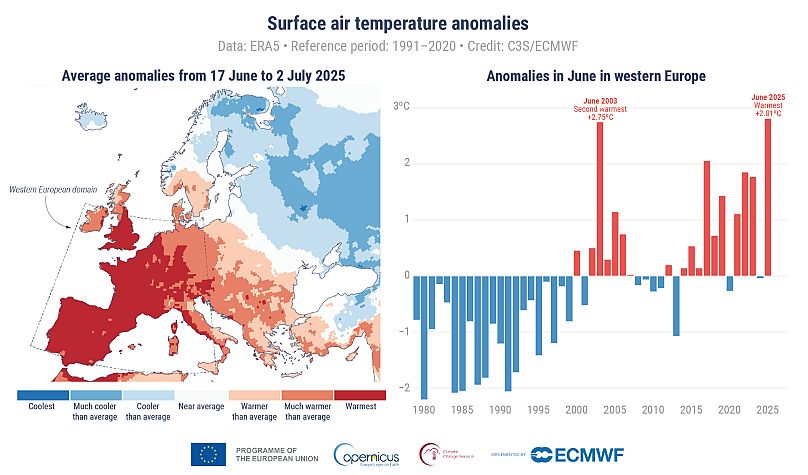
Separate research from the EU’s climate change service Copernicus, also published today, shows that June 2025 was the fifth hottest June on record in Europe, marked by two significant heatwaves. During the second event between 30 June and 2 July, surface air temperatures exceeded 40°C in several countries, spiralling up to 46°C in Spain and Portugal.
June 2025 as a whole was the warmest June on record for western Europe, with a monthly average temperature 2.81°C above the 1991–2020 average. C3S/ECMWF

The World Weather Attribution team then used previous research on the relationship between heat and the number of daily deaths, regardless of cause, in the 12 cities. They estimated the number of heat-related deaths in both the recent heatwave and a hypothetical cooler event over ten days.

The study estimates that about 2,300 people died in the extreme temperatures across the cities, from Lisbon to Budapest. If the climate hadn’t been heated up, there would be about 1,500 fewer excess deaths, meaning climate change is behind 65 per cent of these excess deaths.

These numbers represent real people who have lost their lives in the last days, due to the extreme heat.

“While the number of heatwave deaths are estimated, as it is impossible to get real time statistics, they are in the right ballpark - as has been shown in many peer-reviewed studies,” Dr Otto told reporters.

“These numbers represent real people who have lost their lives in the last days, due to the extreme heat. And two-thirds of these would not have died if it wasn’t for climate change.”
RelatedClimate change could cause millions more temperature-related deaths in Europe by 2099, study says

Where did the heatwave claim the most lives?

Climate change was behind 317 of the estimated excess heat deaths in Milan, 286 in Barcelona, 235 in Paris, 171 in London, 164 in Rome, 108 in Madrid, 96 in Athens, 47 in Budapest, 31 in Zagreb, 21 in Frankfurt, 21 in Lisbon and 6 in Sassari, the findings show.

This means the likely death toll was higher than other recent disasters, including last year’s Valencia floods (224 deaths) and the 2021 floods in northwest Europe (243 deaths).

Although the greatest number of excess deaths occurred in Milan, the highest proportion is estimated to be in Madrid: 90 per cent, due to the large increase in heat that pushed temperatures past a threshold where heat deaths increase rapidly.
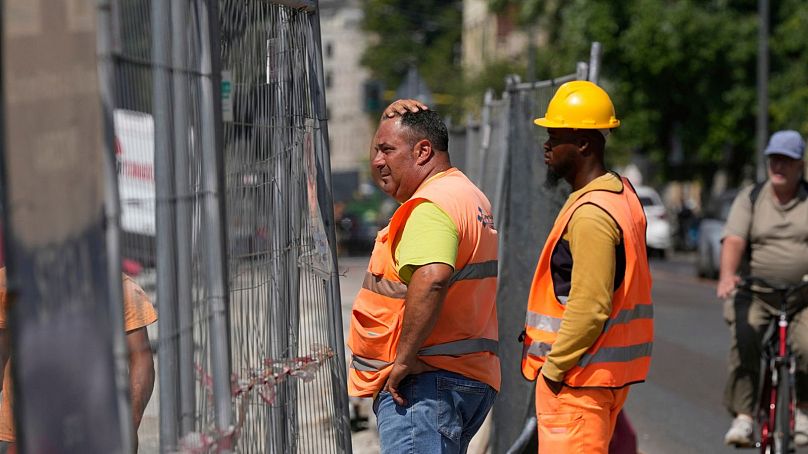
Workers operate under the hot sun at a road construction site in Milan, 2 July 2025. AP Photo/Luca Bruno

One reason for this is Madrid’s central position in Spain, the researchers explain. The further away from the coast, the stronger the “climate change signal” is in extreme heat - because the ocean warms slower than the land. Lisbon, by contrast, benefited from being coastal.

“This study shows that every fraction of a degree of warming makes a huge difference - whether it is 1.4, 1.5 or 1.6°C,” says Dr Garyfallos Konstantinoudis, lecturer at the Grantham Institute – Climate Change and the Environment, Imperial College London. “These seemingly small changes will result in hotter heatwaves and huge surges in heat deaths.”

People aged 65 and over made up 88 per cent of the deaths linked to climate change, the study reveals, highlighting how those with underlying health conditions are most at risk of premature death in heatwaves.

In contrast to climate-driven floods and wildfires, heatwaves are regarded as a silent killer.

“Most people who die in heatwaves pass away at home or in hospitals as their bodies become overwhelmed and give in to pre-existing health conditions [such as heart disease, diabetes, and respiratory problems],” says Dr Malcolm Mistry, Assistant Professor at the London School of Hygiene & Tropical Medicine.

But people of all ages need to take the threat seriously - contrary to what some media images of people playing on beaches might suggest. "A lot of people might feel they are invincible, but they are not," says Dr Otto.


European countries are tightening up their heat action plans

Good progress has been made in Europe on developing heat action plans, the researchers note. These national plans set out the actions that can be taken before and during dangerous high temperatures, and authorities have got better at spreading the message widely.

However, to protect people from more dangerous heatwaves, long-term strategies to reduce the urban heat island effect are crucial - such as expanding green and blue spaces – as well as short-term measures like cooling centres and support systems for vulnerable citizens, they add.

Ultimately, the best and most efficient measure of all is to drastically cut our greenhouse gas emissions. “The only way to stop European heatwaves from becoming even deadlier is to stop burning fossil fuels,” says Dr Otto.

“A warming climate sure as hell makes heatwaves worse," comments Richard Allan, Professor of Climate Science at the UK's University of Reading, who was not involved with the "forensic" analysis.

“Communities need to adapt to an increasingly dangerous world through more resilient infrastructure and improved warning systems, yet it is only with rapid and massive cuts in greenhouse gases through collaboration across all sectors of society that worsening of weather extremes can be reined in.”

Dr Chloe Brimicombe, climate scientist at the Royal Meteorological Society, adds that, "Research like this is important and being used more in climate litigation cases where groups take countries and companies to court over climate change."


When domesticated rabbits go feral, new morphologies emerge


University of Adelaide
Rabbit credit Michael SY Lee 

image: 

When domesticated rabbit breeds return to the wild and feralise, they do not simply revert to their wild form – they experience distinct, novel anatomical changes.

view more 

Credit: Michael SY Lee.


Originally bred for meat and fur, the European rabbit has become a successful invader worldwide. When domesticated breeds return to the wild and feralise, the rabbits do not simply revert to their wild form – they experience distinct, novel anatomical changes.

Associate Professor Emma Sherratt, from the University of Adelaide’s School of Biological Sciences, led a team of international experts to assess the body sizes and skull shapes of 912 wild, feral and domesticated rabbits to determine how feralisation affects the animal.

“Feralisation is the process by which domestic animals become established in an environment without purposeful assistance from humans,” says Associate Professor Sherratt, whose study was published in Proceedings of the Royal Society.

“While you might expect that a feral animal would revert to body types seen in wild populations, we found that feral rabbits’ body-size and skull-shape range is somewhere between wild and domestic rabbits, but also overlaps with them in large parts.

“Because the range is so variable and sometimes like neither wild nor domestic, feralisation in rabbits is not morphologically predictable if extrapolated from the wild or the domestic stock.”

Associate Professor Sherratt, who performed this study as part of her ARC Future Fellowship, says the greater diversity seen in the skull shape of feral rabbit populations could be related to changes in evolutionary pressures.

“Exposure to different environments and predators in introduced ranges may drive rabbit populations to evolve different traits that help them survive in novel environments, as has been shown in other species.

“Alternatively, rabbits may be able to express more trait plasticity in environments with fewer evolutionary pressures.

“In particular, relaxed functional demands in habitats that are free of large predators, such as Australia and New Zealand, might drive body size variation, which we know drives cranial shape variation in introduced rabbits.” she says.

Associate Professor Sherratt plans to follow up this research by looking into what environmental factors drive the observed variation in body size and skull shape of Australia’s feral rabbits.

“We found Australian feral rabbits are quite a lot larger than European rabbits. We intend to find out why,” she says.

“And we focus on skull shape because it tells us how animals interact with their environment, from feeding, sensing and even how they move.

“Understanding how animals change when they become feral and invade new habitats helps us to predict what effect other invasive animals will have on our environment, and how we may mitigate their success.”

The University of Adelaide and the University of South Australia are joining forces to become Australia’s new major university – Adelaide University. Building on the strengths, legacies and resources of two leading universities, Adelaide University will deliver globally relevant research at scale, innovative, industry-informed teaching and an outstanding student experience. Adelaide University will open its doors in January 2026. Find out more on the Adelaide University website.


Rain events could cause major failure of Waikīkī storm drainage by 2050


University of Hawaii at Manoa
High tide at Ala Wai 

image: 

Ala Wai Canal at high tide. 

view more 

Credit: Matthew Gosner; Courtesy Hawai‘i Sea Grant King Tides Project.


Existing sea level rise models for coastal cities often overlook the impacts of rainfall on infrastructure. Researchers at the University of Hawai‘i at Mānoa discovered that by 2050, large rain events combined with sea level rise could cause flooding severe enough to disrupt transportation and contaminate stormwater inlets across 70% of WaikÄ«kÄ« on O‘ahu, Hawai‘i, due to interactions with water in the Ala Wai Canal. Their study was published recently in Scientific Reports.

“We’ve known that sea level rise will reduce the capacity for our drainage system to handle surface runoff, however, including rainfall events in our models showed that WaikÄ«kÄ«’s drainage infrastructure could fail sooner than we anticipated,” said Chloe Obara, lead author of the study who was a graduate student in the Department of Earth Sciences at the UH Mānoa School of Ocean and Earth Science and Technology (SOEST) at the time of this research. “This study highlights the importance of incorporating rainfall and drainage infrastructure into coastal flood models to better understand how drivers of coastal flooding change over time.”

“The many factors affecting flooding should be included in risk assessments and resiliency planning for WaikÄ«kÄ« and other coastal urban areas. Only with accurate information can we strategically mitigate urban flood risks in Honolulu’s tourism hub and other coastal areas,” said Chip Fletcher, study co-author, director of the Coastal Research Collaborative, and Dean of SOEST.

SOEST researchers developed a computer model of the WaikÄ«kÄ« storm drainage system. They also installed ten sensors throughout the storm drainage system—including at street-level inlets and canal or oceanside outfalls—which recorded water depth during two rain events to calibrate and validate their model. They simulated various scenarios of sea level rise and rainfall to determine where and under what conditions the storm drainage system will experience failure.

They determined rainfall is the dominant driver of drainage backflow currently and until sea level rises two feet. Once four feet of sea-level rise is reached, the dominant driver of drainage backflow was determined to be high tidal levels. 

“Management practices aimed at reducing rainfall runoff will help minimize compound flooding in the short-term, but management to reduce tidal backflow, such as pumped drainage, is also urgent, as storm drains are presently impacted by high sea levels and will continue to fail as sea level rises,” said Obara.

Over 75% of the storm drainage system in WaikÄ«kÄ« is connected to the Ala Wai Canal, which is known to be heavily contaminated. Accounting for precipitation, the new study determined that 100% of the outfalls of the WaikÄ«kÄ« storm drainage system will fail by 2050, causing backflow of potentially contaminated water. 

“This research contributes to the growing body of knowledge warning of present and near future climate challenges that will affect transportation, recreation, and accessibility in WaikÄ«kÄ«,” said Obara. “Additionally, it raises awareness of the potential health hazard posed by the presence of drainage backflow containing highly contaminated water from the Ala Wai Canal.”

With this research, the team aims to inform and prepare planners and managers so they can be better positioned to take action to allow Honolulu to continue serving the people of Hawai‘i.


A storm drain in Waikīkī is nearly full of water during a king tide. In this state, the drainage system has limited capacity to drain storm water out of the streets.

Credit

Hawai’i and Pacific Islands King Tides Project, University of Hawai’i Sea Grant


Development of a quality design method for real-time videos from uncrewed aerial vehicles UAV


University of Tsukuba


Tsukuba, Japan—Uncrewed aerial vehicle (UAV) video surveillance systems equipped with computers can monitor real-time images of areas that are not easily accessible to humans. However, a high-quality, reliable video surveillance system that properly integrates computers, UAVs, networks, and surveillance software is difficult to design. During the early design phase, before the system is implemented on-site, valuating the quality and considering uncertain factors that might affect the system performance are complicated tasks. This study introduces SPADE, which creates a virtual environment closely resembling the actual operating environment of a UAV video surveillance system. Using video data of a UAV flying in this virtual environment, SPADE enables detailed quality evaluations without real-world manipulations.

SPADE collects virtual images using a UAV flight simulator. The recorded images are processed by an actual computer, which measures the processing accuracy, performance, and power consumption of the UAV. These data are introduced to a state transition model of the system for quality evaluation and trade-off analysis. The SPADE method can evaluate the effects of resolution differences among the input images on the quality of the system for real-time object detection by a UAV.

Various UAV video surveillance systems can be designed through this approach. Future research will develop methods that efficiently design complex, large-scale systems involving multiple UAVs working in coordination.

###
This work was supported in part by the grant of the Telecommunications Advancement Foundation.


Original Paper

Title of original paper:
SPADE: Simulator-assisted Performability Design for UAV-based Monitoring Systems

Journal:
Future Generation Computer Systems

DOI:
10.1016/j.future.2025.107967

Correspondence

Associate Professor MACHIDA, Fumio
Institute of Systems and Information Engineering, University of Tsukuba

Qingyang Zhang
Doctoral Program in Computer Science, Degree Programs in Systems and Information Engineering, Graduate School of Science and Technology, University of Tsukuba

Related Link

Institute of Systems and Information Engineering


New “bone-digesting” cell type discovered in pythons


Society for Experimental Biology


Research into the intestinal cells of Burmese pythons has revealed the existence of a previously unknown cell type, responsible for completely absorbing the skeletons of their prey.

Most carnivores eat only the flesh of their prey and avoid eating the bones or pass them undigested, but many snakes and reptiles often consume their prey whole, including the bones. The cellular mechanisms that enable them to do this have remained mysterious until now.

Snakes that are fed on boneless prey suffer from calcium deficiencies, and so bones are a required part of their diet. However, absorbing all the available calcium from a skeleton could result in too much calcium entering their bloodstream. “We wanted to identify how they were able to process and limit this huge absorption of calcium through the intestinal wall,” says Dr Jehan-HervĆ© Lignot, a Professor at the University of Montpellier.

Dr Lignot and his team analysed the enterocytes, or intestinal lining cells, of Burmese pythons (Python bivittatus) using both light and electron microscopy alongside blood calcium and hormone measurements. This study revealed the presence of a new type of cell along the intestine that is involved in the production of large particles made from calcium, phosphorus and iron.

“A morphological analysis of the python epithelium revealed specific particles that I’d never seen in other vertebrates,” says Dr Lignot. These particles were found inside the internal “crypt” of specialised cells that differed from traditional intestinal cells. “Unlike normal absorbing enterocytes, these cells are very narrow, have short microvilli, and have an apical fold that forms a crypt,” adds Dr Lignot.

To assess the function of these new cells, the intestinal cells of pythons were analysed after they had been fed on three different diets: a normal diet of whole rodents, a low-calcium diet of “boneless prey” and a calcium-rich diet of boneless rodents supplemented with injections of calcium.

The researchers found that when fed with boneless prey, these calcium and phosphorus-rich particles were not produced, but when fed with either a whole rodent or the calcium-supplemented diet, the cell’s crypt filled with large particles of calcium, phosphorus and iron. No bone fragments were found in the python’s faeces, confirming that skeletons were always entirely dissolved inside the body.

This new specialised bone-digesting cell has now been identified in several python and boa species, as well as the Gila monster, a venomous lizard native to the Southwestern United States and Mexico.

However, bone-filled diets aren’t limited to reptiles and there are many other carnivores that eat bony animals whole. “Marine predators that eat bony fish or aquatic mammals must face the same problem,” says Dr Lignot. “Birds that eat mostly bones, such as the bearded vulture, would be fascinating candidates too.”

This research is being presented at the Society for Experimental Biology Annual Conference in Antwerp, Belgium on the 9th July 2025.