Wednesday, July 09, 2025

CONSPIRACY THEORY

Thirteen top officials and executives have died in suspicious circumstances since the start of the war in Ukraine

Thirteen top officials and executives have died in suspicious circumstances since the start of the war in Ukraine
Former Transport Minister Roman Starovoit killed himself only hours after being sacked by President Putin, sparking fresh speculation over the dangers of working for the Russian government in war time. / bne IntelliNews
By Ben Aris in Berlin July 8, 2025

The death of Roman Starovoit, who killed himself on July 7, only hours after being fired by Russian President Vladimir Putin as Russia’s transport minister, has spurred fresh talk of the life-threatening dangers of working for the Russian government. There have been thirteen sudden deaths of Russian energy and transportation executives since 2022, Meduza reports.

Starovoit was found dead from a gunshot wound in the back of his car, in what officials have described as an apparent suicide. It is ther first time in modern hisotry that a serving minister has killed himself. Starovoit's motivation for taking his own life remains unclear. Some have speculated it was simply remorse, but the former governor of the Kursk region has also been linked to corruption investigations into the misuse of public funds to build fortifications while he was running the region that borders Ukraine and was invaded by Ukraine's armed forces last summer.

The death of Starovoit only adds to suspicions that some high ranking Russian officials are routinely murdered by the powers that be in Putin’s Russia. The Russian outlet Meduza reports that a total of thirteen officials and managers of state-owned enterprises have died suddenly since the start of the war, with defenestration being a surprisingly frequent cause of death. Standing next to a window seems to be a dangerous thing to do in Russia if you run a big company.

No official statement has yet been released by the Investigative Committee of Russia, though anonymous law enforcement sources told Russian news outlets that the case is being treated as a suicide. A pistol was reportedly found near the body, though no further details have been confirmed, reported Meduza.

“The full-scale invasion of Ukraine has been an unusually dangerous time for Russian officials and senior executives responsible for state and private oil and gas companies. Death has claimed top managers at corporations such as Gazprom, Lukoil, and Transneft,” Meduza reports.

Below is a list of deaths published by Meduza:

January 2022: Leonid Shulman, head of the transport service for Gazprom Invest, was found dead in the bathtub of his country house in an affluent neighbourhood outside St. Petersburg.

February 2022: Alexander Tyulyakov, deputy director of Gazprom’s Unified Settlement Center for Corporate Security, was found hanged in the garage of his house in a cottage settlement outside St. Petersburg.

April 2022: Vladislav Avaev, vice president of Gazprombank, was found shot dead in his Moscow apartment. The bodies of his wife and their young daughter were discovered nearby, shot to death, by a surviving daughter. Investigators said the doors to the apartment were locked from the inside, and no sign of forced entry was found.

April 2022: Sergey Protosenya, former top manager of Novatek, was found dead at his villa in Spain. The bodies of his wife and teenage daughter were found in their beds, having been brutally murdered with an axe and a knife.

May 2022: Alexander Subbotin, a former member of Lukoil’s board of directors, was found dead in Mytishchi, a city outside Moscow in the basement of a private residence reportedly belonging to a self-styled shaman who provided alternative medical treatments. According to Russian news agencies, Subbotin had visited the residence seeking treatment for hangover-related symptoms involving toad venom therapy.

Preliminary reports attributed the death to acute heart failure.

July 2022: Yuri Voronov, founder of Astra-Shipping (a Gazprom subcontractor), was found dead in a swimming pool in a cottage settlement in Leningrad Region with a gunshot wound to the head.

August 2022: Ravil Maganov, chairman of Lukoil’s board of directors, fell from a window at a hospital in Moscow where he was undergoing treatment, a death Russian authorities described as suicide.

December 2022: Oleg Zatsepin, general director of Kogalymneftegaz (a Lukoil subsidiary in the Khanty-Mansi Autonomous District), was found dead in his office.

February 2023: Vyacheslav Rovneyko, co-founder of Urals Energy, an oil businessman from the late 1990s, and former business partner of Boris Yeltsin’s son-in-law, was found dead in his house on Rublyovskoye Highway, Moscow’s most exclusive residential area.

October 2023: Vladimir Nekrasov, chairman of Lukoil’s board of directors, died of acute heart failure.

March 2024: Vitaly Robertus, vice president of Lukoil, was found dead in his Moscow office. The cause of death was not officially disclosed by the company or Russian authorities.

July 2025: Andrey Badalov, vice president of Transneft, fell from the window of his apartment on Rublyovskoye Highway in Moscow.

July 2025: Roman Starovoit, dismissed from his position as Russia’s transportation minister, took his own life in a parking lot outside Moscow.

Death toll from Kenya’s latest anti-government protest surges to 31


Copyright Brian Inganga/Copyright 2025 The AP. All rights reserved

By Euronews with AP
Published on 09/07/2025 -

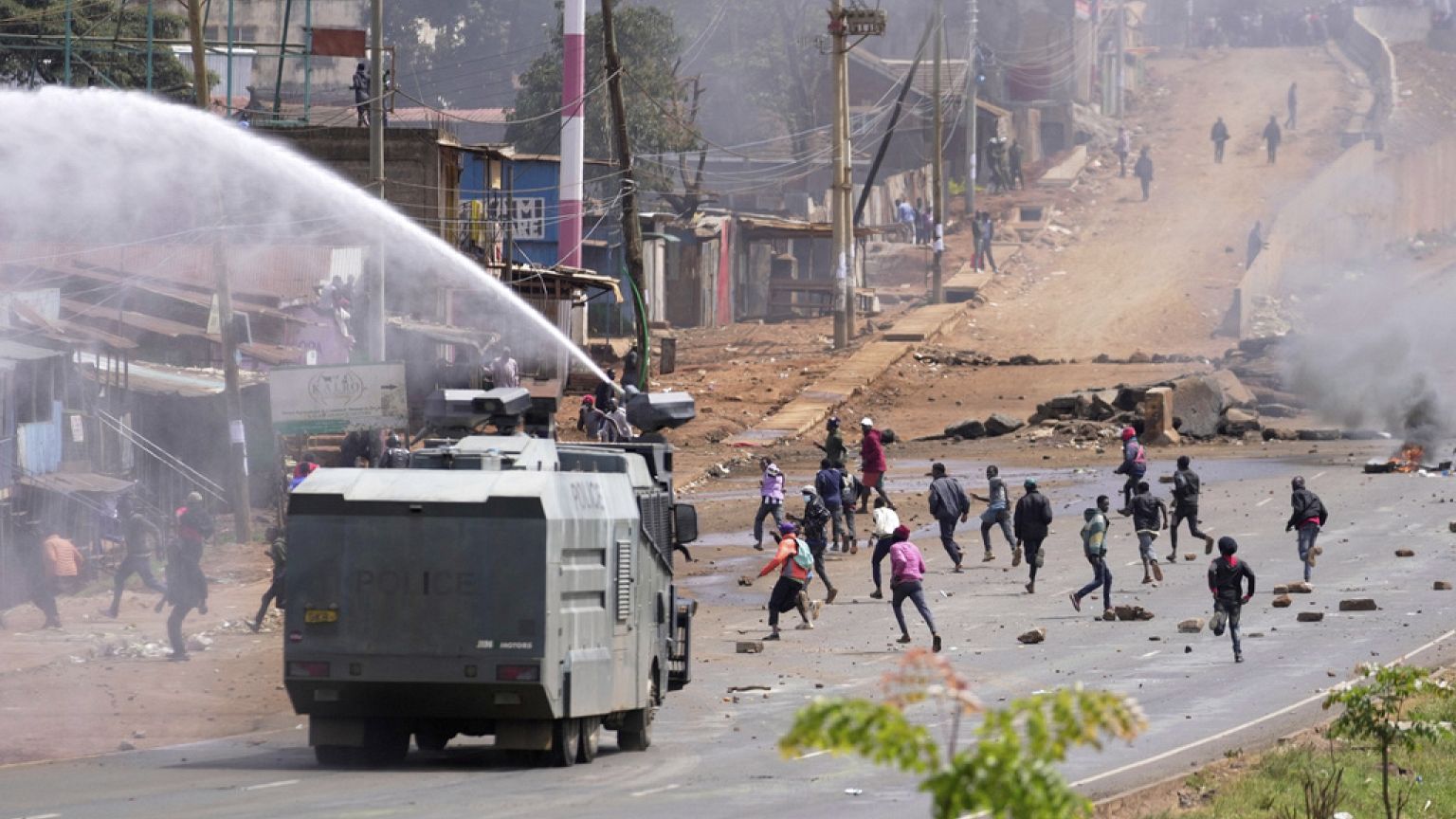
Monday’s demonstrations, which were met with police roadblocks preventing access to downtown Nairobi, were planned to coincide with the 35th anniversary of the historic Saba Saba pro-democracy protests.

The death toll from Kenya’s anti-government protests on Monday has surged to 31, the state-funded human rights commission said on Tuesday.

It marks the highest single-day toll since demonstrations began earlier this year. Over 50 people have reportedly been killed over the past two weeks.

A further 107 people were injured and more than 500 arrested amid widespread destruction to property, including supermarkets. The arrest figure largely matched with that issued by Kenyan police.

The death toll did not specify whether security forces were included.

The protests are led by youth and civil society groups and have rocked Kenya for weeks. Driven by anger over police brutality, alleged government corruption and a rising cost of living, many demonstrators have called for the resignation of Kenyan President William Ruto.

Ruto has not commented on Monday’s violence or the rising death toll.

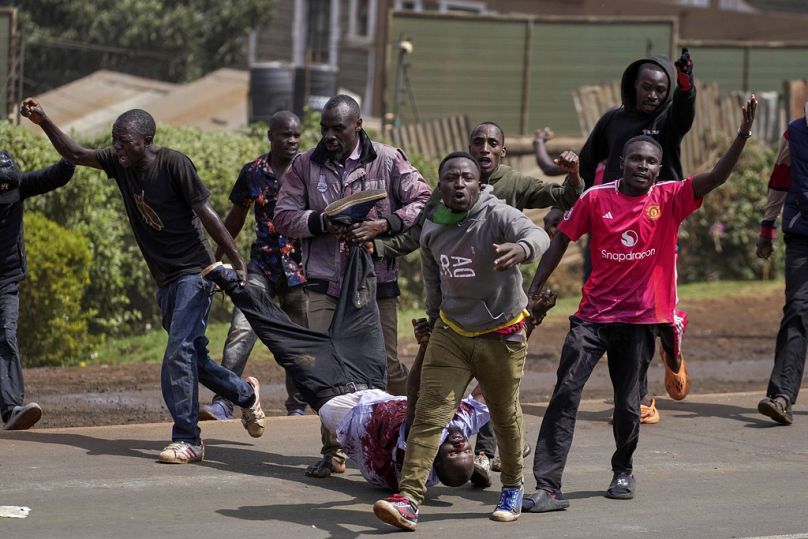
Protesters carry a man who the crowd claimed had been shot by police during demonstrations in the Kangemi slum of Nairobi, Kenya, Monday, July 7, 2025.Brian Inganga/Copyright 2025 
The AP. All rights reserved

UN High Commissioner for Human Rights Volker Türk urged Kenyan authorities to address the root causes of the protest. His spokesperson Ravina Skamdasini renewed calls for “calm and restraint, and full respect for the freedom of expression, associated and peaceful assembly.”

Tensions in Kenya escalate since the death of a blogger in police custody last month and the June 17 shooting of a protester at close range. On June 25, thousands rallied across the country in protest.

Some businesses reported significant losses due to looting during the unrest.

Kenyan Interior Minister Kipchumba Murkomen last week urged police to “shoot on sight” anyone approaching police stations during protests.

The Kenya National Cohesion and Integration Commission on Tuesday urged politicians to avoid stoking ethnic divisions and condemned the police for excessive use of force.

Trump announces tariffs on imports from Serbia and Bosnia

The US will impose a 35% tariff on imports from Serbia starting August 1, still the highest in the region and amongst the highest globally. 

Trump announces tariffs on imports from Serbia and Bosnia
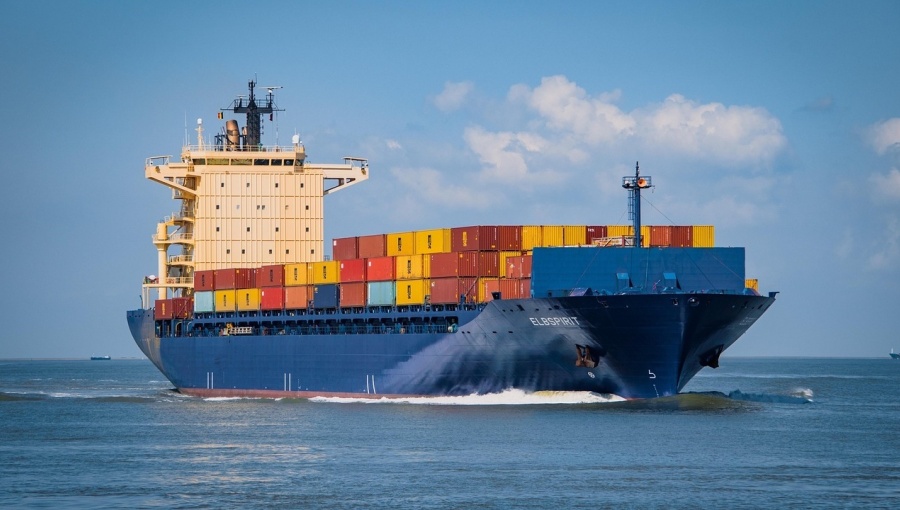
/ Freddy via Pixabay

By bne IntelliNews July 9, 2025

Both Serbia and Bosnia & Herzegovina are among the countries informed by US President Donald Trump they will face high new tariff rates from August 1. 

While Trump signed an executive order extending the previously announced pause on tariffs, as announced on July 7, 14 countries including Serbia and Bosnia have been sent letters warning tariffs will be imposed from August 1.

The US will impose a 35% tariff on imports from Serbia starting August 1, Trump announced on July 7. The new rate is slightly lower than the delayed reciprocal tariffs announced at the beginning of April — 37% for Serbia — but still the highest in the region and amongst the highest globally. 

In a letter addressed to Serbia's President Aleksandar Vucic and published on Trump’s Truth Social platform, the president suggested that the tariff rates could still be adjusted, depending on Belgrade's response and future trade negotiations.

“If you want to open your hitherto closed trade markets to the US and perhaps eliminate your tariff and non-tariff policies and trade barriers, we will consider changes to this letter,” wrote the president.

Trump warned that any retaliatory tariffs by Serbia would trigger further increases.

Serbia’s economic exposure to the US remains limited; the US ranks 19th among its export destinations, with most of Serbia’s trade tied to the European Union and neighbouring countries. Nonetheless, the steep tariff is a symbolic blow amid otherwise cordial ties between Washington and Belgrade.

US-Serbia relations have remained warmer under Trump compared to the Biden administration, which imposed sanctions on Serbia's oil company NIS days before Trump assumed office in January 2025. The Trump administration has repeatedly postponed enforcement of those measures.

Meanwhile, Trump has imposed 30% tariffs on imports from Bosnia from August 1, according to statement published on the White House website.

In a letter to the current chair of Bosnia’s state tripartite presidency, Zeljka Cvijanovic, published on Truth Social, Trump explained that the goal of the tariffs is to make the trade relations between the two countries more balanced and fairer.

“Regardless of that, we have decided to continue, but only with more balanced and fairer trade. Therefore, we invite you to participate in the exceptional US economy and by far the number one market in the world,” the letter states.

“Our relationship is, unfortunately, far from reciprocal. Starting August 1, 2025, we will only charge BiH a 30% tariff. Please keep in mind that 30 percent is far less than the percentage needed to eliminate the disproportionate trade deficit,” Trump said.

As reported by bne IntelliNews earlier this year, Trump’s tariff formula seems to be based on a shockingly simplistic calculation: taking the trade deficit with the US and dividing it by a country's total exports to the US. This approach treats trade deficits as equivalent to tariffs, without regard for the actual tariff structures in place in these countries.

Trump also threatened that should Bosnia respond with tariffs on imports from the US, that amount would be added to the 30% tariff.

He said that the tariffs will not apply to those from Bosnia that decide to move production to the US.

The initial round of tariffs was unveiled in April, with the implementation date pushed to July 9 for most countries. The current August 1 deadline offers a short reprieve but extends uncertainty for importers and exporters alike.

Other countries included in the announcement on July 7 include Bangladesh (35%), Japan (25%), Kazakhstan (25%), Myanmar (40%), South Korea (25%), Thailand (36%) and Tunisia (25%).

Serbia: Vučić’s Self-Critical Turn, A Chance To Overcome The Current Situation? – Analysis

Serbia's President Aleksandar Vučić. Photo Credit: Aleksandar Vučić, X


By 

Serbia stands at a critical political and societal crossroads. What began as a student-led protest has evolved into a wider civic movement, exposing two sharply contrasting visions of the country’s future. Pressure is mounting on all fronts. The question that will shape the coming period is whether the current momentum will be seized to pursue reforms and restore confidence, or whether it will lead to an even tighter state control.

Resolving Serbia’s pressing political and social challenges requires a comprehensive approach focused on de-escalation and the restoration of public trust in institutions. Sustained efforts are needed to reinforce and uphold democratic standards. While Serbia is a democratic country, it is still undergoing a prolonged transitional phase. In Turkey, the rise of Recep Tayyip Erdoğan to power marked the beginning of a transitional process characterised by the elimination of the military’s role and “Kemalism” – a shift that remains incomplete. All countries in the region are still going through different stages of transition. The protests against Erdoğan began in Istanbul’s Gezi Park in the summer of 2013 as environmental demonstrations, but their underlying objective was to remove him from power. The tensions culminated in 2016 with an attempted coup aimed at toppling Erdogan. A comparable pattern – including signs of foreign involvement – can now be seen in Serbia.

Therefore, Serbia needs to initiate processes built around several key points: 1.) The authorities should invite students to an open dialogue between the government, students and other key actors. Students must select their own representatives for the talks, as refusing to engage in dialogue with the authorities will gradually erode public sympathy, since the goal of any society is to resolve social problems. 2.) The potential holding of early parliamentary elections, which would provide new legitimacy to the government (whether the existing or a new one), would reset the political landscape and enable an overall societal renewal. 3.) Institutional reform and the rule of law, including reform of the police, judiciary and public administration, supported by the EU, as well as a transparent investigation into violence against demonstrators and infrastructural failures (e.g. the case of Novi Sad). 4.) Protection of civil liberties without the use of repressive measures against protesters and journalists. Freedom of the media must be ensured as the foundation of social dialogue. 5.) Political renewal of the Serbian Progressive Party (SNS) through internal reform and distancing from compromised officials. If this is not done, democratic change in government becomes increasingly likely. 6.) The role of the international community — the EU should become more actively involved not only through criticism, but also by offering concrete incentives and accelerating Serbia’s path towards the EU.

Analysts believe that the way out of the current situation lies not in the use of force, but in the power of dialogue, trust and accountability. A government that recognises its own mistakes and demonstrates readiness for change has a chance to lead society forward. One that fails to do so will be replaced through the will of the people. Serbia is therefore at a historic turning point.

Vučić’s self-critical turn– a chance to overcome the current situation?

In his recent public appearances, Serbian President Aleksandar Vučić (SNS) has increasingly acknowledged the government’s mistakes, shown a measure of self-criticism, and has not shied away from directing sharp remarks at certain officials from his Serbian Progressive Party (SNS). Such an approach, rarely witnessed on the political scene of the Western Balkans, may be interpreted as an attempt to seize the initiative amid growing societal tensions, political pressure, and international challenges. 

It is precisely this ability to publicly recognise the shortcomings of his own political apparatus that gives Vučić the credibility to position himself as a leader capable of resetting political direction and offering solutions to Serbia’s current predicament. Although critics dismiss this move as tactical manoeuvring ahead of upcoming elections, the fact remains that political self-criticism—if authentic and supported by concrete action—can create space for systemic change. 


The key issue now is whether Vučić will use this momentum for a genuine break with compromised cadres and the politics of closed power circles, or whether his self-criticism will merely serve to preserve the status quo under the guise of reform.

The dark side of the Serbian student movement

In a recent article titled “Bones, Ancestors, Homeland”[2]Frankfurter Allgemeine Zeitung journalist Michael Martens warns that Greater Serbian nationalism has taken hold of the student protests in Serbia, emphasising: “This trend has been emerging for some time, but has largely gone unnoticed abroad. Within the student movement, which remains the main driving force behind the protests, Greater Serbian nationalism has now become dominant.” 

The author argues that this was already apparent in the line-up of speakers chosen by the students for the 28 June 2025 rally: “Nationalists and war crimes apologists competed in spreading Greater Serbian slogans. The student-selected moderator was no exception. Other speakers gave the impression that they cared little about the original goals of the protest movement—namely, the restoration of democracy and the rule of law in Serbia—and were more focused on inciting new wars in Kosovo or Bosnia.”[3]

Analysts believe that the student movement only appeared to have formed spontaneously in response to the tragedy in Novi Sad. Certain opposition political parties and foreign actors have exploited the student protests as a tool to advance their own interests, often without genuine concern for the students’ actual demands. This has undermined the movement’s authenticity and understandably fuelled public scepticism.

Radicalisation and the loss of control leading to street violence during the protests, bin fires and clashes with the police, though often provoked, compromise the peaceful character of the movement. The involvement of more extreme groups, such as football hooligans and ideological factions, has distorted both its message and narrativeNo democratic country tolerates barricades. The French state took a hard line against the so-called “Yellow Vests” and their disruption of public order in 2018, when ten people were killed and 2,800 protesters were arrested. Similar incidents occurred in Italy, Belgium, and the Netherlands. Nothing must stand above the law and institutions, which are essential for maintaining public order and peace.

The movement suffers from a lack of clear organisational structure and leadership. Although it prides itself on its “horizontal” model, the absence of defined leadership and strategy leaves it vulnerable to fragmentation and instrumentalisation. Only elected representatives of the student movement can serve as legitimate counterparts in dialogue with the authorities. Without credible, publicly visible negotiators—not shadowy ones—and internal cohesion, the movement risks losing its negotiating power. 

The media landscape surrounding the protests has become saturated with unverified claims, fake news, and conspiracy theories, circulated by both activists and their opponents. Disinformation undermines the movement’s credibility and plays into the hands of regime propaganda.

Much of the movement’s activity unfolds on social media, where students are often confined to ideologically homogeneous circles. This can foster an illusion of widespread support and lead to detachment from broader society—particularly older and rural populations.

Some individuals within the movement use their position for personal promotion, crafting the image of “protest heroes” while lacking any real political vision. This kind of performative activism risks being short-lived and ultimately counterproductive.

The student movement in Serbia holds historical significance and stems from a legitimate cause, but it is not immune to distortion. To stay relevant and credible, it must resist radicalisation, political manipulation, disorganisation, and external interference or co-optation. Otherwise, it risks fading into a passing phenomenon rather than a driver of democratisation.

Serb–Bosniak relations, or Bosniak–Serb relations

Relations between Serbs and Bosniaks represent one of the most crucial and sensitive aspects of the political, historical and social dynamics in the former Yugoslavia, most notably in Bosnia and Herzegovina, but also in Serbia and the Sandžak region. While burdened by the difficult legacy of the 1990s, they still carry the potential for cooperation, stabilisation and reconciliation in the region.

Historically, Serb–Bosniak relations have alternated between coexistence and conflict. Prior to the war, Bosniaks and Serbs lived side by side for centuries, often in mixed communities marked by mutual respect, particularly in Bosnia and Herzegovina.

With the dissolution of Yugoslavia, relations deteriorated significantly, culminating in the war in Bosnia and Herzegovina (1992–1995), during which war crimes—particularly against innocent civilians—inflicted profound trauma on both Bosniaks and Serbs.

While the Dayton Peace Agreement of 1995 established formal peace, it did not bring about reconciliation—interethnic mistrust remains deeply entrenched and is currently at its lowest point since the agreement was signed.

Relations between Serbia and the Bosniaks today remain complex. While the official rhetoric from Belgrade has become more moderate, the refusal to acknowledge the Srebrenica genocide continues to hinder genuine reconciliation.

The Sandžak region continues to be marked by tension and marginalisation, although the ruling SNS party has established coalition relations with the two leading Bosniak parties in the region and maintains good cooperation. Sandžak can serve as a bridge and a zone of cooperation rather than of tension—provided that Bosniak identity and distinctiveness are respected.

While political leaders from Republika Srpska—such as Milorad Dodik—continue to deny the genocide, glorify war criminals and advocate secession, directly undermining Bosniak identity and the sovereignty of Bosnia and Herzegovina, Bosniak leaders often respond in a purely defensive manner and lack a clear strategy for building a shared future.

Nevertheless, there are common interests in areas such as economic cooperation, poverty reduction, European integration, and collaboration in education, culture and sport.

A meaningful dialogue between the Serbian Orthodox Church (SPC) and the Islamic Community in Bosnia and Herzegovina could also contribute constructively—provided both institutions move beyond nationalist frameworks.

Key obstacles to improved relations include historical revisionism, war crimes denial, the politicisation of history, nationalist discourse, media propaganda, and a lack of genuine political will on both sides.

Improved relations require mutual recognition of the truth and respect for all victims, open dialogue involving intellectuals, religious leaders and civil society, stronger economic and educational cooperation, political leadership focused on the future—not anchored in the past, and appropriate support from the international community in reconciliation efforts. Relations between Serbs and Bosniaks are essential for the stability and future of Bosnia and Herzegovina—naturally, not at the expense of any third party.

While relations between Serbs and Bosniaks are still weighed down by the past, they are far from hopeless. Reconciliation calls for political courage, moral clarity, and a shared vision of the future. Without these, the past will keep fuelling new divisions. Remaining mired in historical grievances for too long may lead to political stagnation and squander critical opportunities for lasting stability and prosperity—for both Serbs and Bosniaks.


[1]  IFIMES – International Institute for Middle East and Balkan Studies, based in Ljubljana, Slovenia, has a special consultative status with the United Nations Economic and Social Council ECOSOC/UN in New York since 2018, and it is the publisher of the international scientific journal “European Perspectives.” Available at: https://www.europeanperspectives.org/en 

[2] Frankfurter Allgemeine Zeitung: Knochen, Ahnen, Vaterland. Available at: https://fazarchiv.faz.net/faz-portal/document?uid=FAZ__FD02025070450102882462582

[3] DW: Njemački list: Tamna strana srpskog studentskog pokreta, (DW: German media: The dark side of Serbia’s student movement). Available https://www.dw.com/sr/nema%C4%8Dki-list-tamna-strana-srpskog-studentskog-pokreta/a-73153931


IFIMES

IFIMES – International Institute for Middle-East and Balkan studies, based in Ljubljana, Slovenia, has special consultative status with the Economic and Social Council ECOSOC/UN since 2018. IFIMES is also the publisher of the biannual international scientific journal European Perspectives. IFIMES gathers and selects various information and sources on key conflict areas in the world. The Institute analyses mutual relations among parties with an aim to promote the importance of reconciliation, early prevention/preventive diplomacy and disarmament/ confidence building measures in the regional or global conflict resolution of the existing conflicts and the role of preventive actions against new global disputes.


Climate crisis hits critical tipping point as temperatures soar

Climate crisis hits critical tipping point as temperatures soar
Global climate change reaches warning threshold amid rising temperatures. / bne IntelliNews
By bnm Gulf bureau July 8, 2025

Climate change is becoming increasingly damaging to urban populations, and officials in the Middle East are now warning that entire cities could be in danger of mass water shortages and desertion if trends continue in the warming direction.

According to a senior official from Iran's Meteorological Organisation, climate change has brought the country's water resources to crisis point, with temperature increases of 2-3 degrees Celsius, reduced rainfall and 25cm annual water evaporation, Mehr News Agency reported on July 8.

Ahad Vazifeh, head of the National Climate Centre and Drought Crisis Management at the Meteorological Organisation, said Iran's average temperature has increased between 2 to 2.5 degrees Celsius over the past 50 years, reaching 3 degrees in central plateau regions.

The official made the comments as dust storms and wildfires have ravaged the region, with Syria, Turkey and Greece all currently fighting wildfires as summers continue to dry out. 

"Temperature increases have caused greater evaporation, reduced atmospheric humidity and increased plant water requirements," Vazifeh said.

"According to scientific data, each degree of temperature increase raises evaporation capacity by approximately 7%."

The official added that annual rainfall in that country has also declined, with the country's average annual precipitation falling from approximately 255mm in past decades to around 200mm currently. Vazifeh said evaporation potential has increased from approximately 1,100mm in the past to 1,350mm. "This means that on average, approximately 25cm more water evaporates annually from the country's surface," he said.

This evaporation level places additional pressure on water resources, particularly as rainfall patterns have changed to become more irregular and uneven, according to the climate official.

The official warned about pessimistic climate change scenarios, stating that if current conditions are not controlled and temperatures rise by 8 degrees, many major cities bordering deserts such as Yazd, Kerman and Isfahan will no longer have suitable living conditions and will become practically uninhabitable.

The official said Iran's summer season has extended significantly, previously beginning in July but now starting in May and continuing until October. "In other words, Iran's summer has effectively increased to 4 to 5 months," Vazifeh said.

Regional disparities

Middle Eastern and Central Asian countries now face mounting environmental challenges as climate change accelerates across the globe, with water scarcity becoming an increasingly critical issue for countries across the region.

Earlier on July 7, bne IntelliNews reported that world leaders must act with “immediate, unprecedented” urgency to prevent cascading climate tipping points that could have catastrophic consequences for billions of people, according to a joint statement released at the Global Tipping Points Conference held last week at the University of Exeter.

The statement, endorsed by nearly 200 scientists and experts, warns that global warming is on track to exceed 1.5°C within the next few years – a level that would activate irreversible shifts in critical Earth systems. “Already tropical coral reefs have crossed their tipping point and are experiencing unprecedented dieback, impairing the livelihoods of hundreds of millions who depend on them,” the statement said.

"Humanity faces threats of an unprecedented magnitude from these tipping points," warned Tim Lenton, a climate scientist at the University of Exeter, in an earlier report on the danger of tipping points.

Tipping points

A series of severe heatwaves swept across the Middle East in 2025, breaking temperature records and putting immense pressure on health systems, energy infrastructure and water resources, Reuters reported on July 6.

In Iran and Iraq, temperatures surpassed 50°C in May, prompting the Iranian Meteorological Organisation to issue rare heat alerts. Power outages were reported in major cities as electricity demand soared. Dust storms exacerbated air quality concerns, with hospitals in Tehran and Baghdad admitting increased numbers of patients suffering from heat exhaustion and respiratory issues.

The United Arab Emirates experienced its hottest May on record, with extreme temperatures disrupting daily activities and leading to a surge in energy consumption. The UAE’s National Centre of Meteorology reported that peak demand placed significant strain on the country’s grid, with scheduled outages implemented to stabilise supply.

Prolonged hot spells in the Levant, including Syria, Lebanon, Jordan and Israel, saw temperatures frequently exceed 40°C during June and July. The Ministry of Agriculture in Lebanon reported crop failures and water shortages in the Bekaa Valley, while Jordan’s Water Authority warned of critically low reservoir levels. In Amman, authorities implemented water rationing as demand outstripped supply.

In July, parts of the Arabian Peninsula, including Bahrain, Kuwait and eastern Saudi Arabia, recorded temperatures up to 50°C. The Bahrain Meteorological Directorate forecast highs of 47°C, with persistent heat above 44°C. Local media reported that schools in Kuwait City closed early to protect students from the extreme conditions.

The World Health Organization’s regional director for the Eastern Mediterranean, Dr Ahmed Al-Mandhari, said: “We are witnessing a clear increase in the frequency and severity of heatwaves across the region, which poses significant risks to public health and livelihoods.”

According to the International Energy Agency (IEA), the Middle East is warming at twice the global average, making such extreme events more common. The United Nations Environment Programme noted that climate change is likely to intensify heatwaves and droughts in the coming years.

The Iranian Ministry of Energy stated that electricity demand in June reached 72,000 MW, a record high, forcing authorities to implement rolling blackouts.

Global sea temperatures reach 21°C to set new all-time record high in June

Global sea temperatures reach 21°C to set new all-time record high in June
Average sea temperatures have already hit new all-time highs of 21°C in June, and the Mediterranean is even hotter at 30°C. / bne IntelliNews
By bne IntelliNews July 9, 2025

According to the European Union’s Copernicus Climate Change Service, the global average sea surface temperature reached 20.96°C in June, the highest for the month since records began.

The data, released on July 8, indicates that ocean temperatures have remained persistently elevated since early 2023, contributing to widespread marine heatwaves and intensified weather patterns globally.

In the Mediterranean, sea surface temperatures have also climbed significantly in recent weeks to reach as much as 30°C in some isolated cases.

The Spanish meteorological agency AEMET reported that temperatures in parts of the western Mediterranean now exceed 28°C, only slightly below the all-time high of 30°C recorded in July 2023. These temperatures are well above seasonal averages and raise concerns about the ecological and climatic impacts across southern Europe and North Africa.

“The Mediterranean is again experiencing marine heatwave conditions that can affect marine biodiversity and coastal economies,” said Julien Nicolas, senior climate scientist at Copernicus, in a statement on July 8. He added that unusually warm waters could also contribute to more intense summer heatwaves on land.

As bne IntelliNews reported, the heating of seas can have dramatic effects on rainfall and also power deadly storms that suck up the energy on offer from hot water. In 2023 Storm Daneil was powered by an overly hot Mediterranean and eventually killed over 11,000 people when it made landfall in Libya.

Marine heatwaves have become more frequent and severe due to climate change, with warmer seas disrupting fisheries, coral reefs, and weather systems. Scientists warn that a tipping point has already been reached that will kill off coral around the world that will dramatically affect the fish ecosystem. The Mediterranean, already one of the fastest-warming seas globally, is particularly vulnerable due to its enclosed geography and limited water exchange with the Atlantic.

The World Meteorological Organization warned in June that sustained high ocean temperatures are likely to continue into the second half of 2025, driven by ongoing greenhouse gas emissions and the after-effects of El Niño conditions.

“The persistent marine heat is a worrying signal of accelerating climate trends,” said WMO Secretary-General Celeste Saulo during a climate briefing in Geneva on July 4.

ECOCIDE

Massive landfill fire in Albania contained after blazing for eight days

Massive landfill fire in Albania contained after blazing for eight days
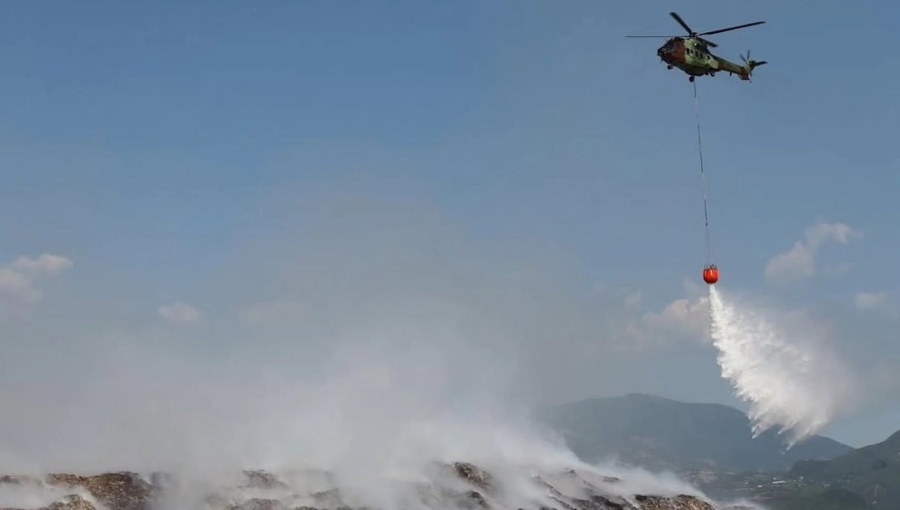
A firefighting helicopter deployed to contain the blaze at the Elbasan landfill. / elbasani.gov.al


By bne IntelliNews July 8, 2025

Firefighters managed to contain a large blaze at the Elbasan landfill on July 8 that had swept through the site over the past week, raising concerns over environmental safety during a spell of high summer temperatures.

Elbasan, located in central Albania, has struggled with waste management challenges in recent years, and local authorities have called for increased investment in technology to improve emergency response capabilities.

Defense Minister Pirro Vengu and Interior Minister Ervin Hoxha inspected the landfill alongside local officials, praising the coordinated efforts of firefighters, civil emergency teams and the armed forces in preventing what they said could have been a major environmental disaster.

“The rapid response and coordinated intervention protected the community’s health and avoided a wider environmental catastrophe,” Vengu said during the visit, adding that drones had been used to monitor the site and identify active fires.

Authorities deployed more than 100 personnel, dozens of fire engines and emergency helicopters to tackle fires that had spread from surrounding hills and forests to the landfill, exacerbated by hot weather and wind. At one point, workers dumped 10,000 tonnes of soil over burning waste in an effort to smother underground flames.

Vengu said the incident highlighted the need to modernise Albania’s civil emergency systems, proposing the installation of thermal cameras for landfill monitoring and the permanent stationing of firefighting vehicles near waste sites.

He added that the state-owned company KAYO had begun producing fire extinguishers and other emergency equipment domestically to reduce reliance on foreign suppliers.

A working group, including foreign experts, has been established to assess the impact of the fire and recommend measures to prevent similar incidents, officials said.

Landfill fires are a sporadic event in the Western Balkans. Two years ago, a huge fire broke out at the landfill in the Albanian coastal city of Vlora, a popular tourist destination. 

Like other Western Balkan countries, Albania is gradually improving its waste management systems but the process is a slow one. Across the region, waste generation has increased sharply in recent decades, but waste management infrastructure has in general failed to keep up. 

In Serbia, Europe’s largest unmanaged landfill at Vinca, near the capital Belgrade, was shut down in 2021, finally bringing to an end the constant threat to the city’s residents of air pollution. Frequent fires at the landfill used to engulf parts of the city in toxic fumes, with one of the worst breaking out just weeks before the closure of the site and covering the city with smoke and haze. 

In Montenegro’s second city, Nis, the Budos Hill landfill once burned for 45 consecutive days in 2020. 

Albania still lags behind other countries in the region. Until 2016, the country did not have a single landfill site; waste was left in the streets, piled up and burnt or dumped in rivers, mountains or the sea.

Three waste-to-energy incinerators, built to address the problem, became the centre of a high-level scandal. In 2022 it was revealed that the incinerators, at Elbasan, Fier and Tirana, had been built at a cost of hundreds of millions of euros but two had never been put into operation. 

An investigation was launched into the distribution of around €430mn to the firms tasked with building and operating the three incinerators. Among those sentenced in the case are former environment minister Lefter Koka, who was given two years in prison for abuse of office in the Tirana incinerator case.