Thursday, July 10, 2025

Lawsuit Blames Oil Companies For Washington State Woman’s 2021 Heat Wave Death
Pumpjack Energy Oil Industry Sunset Fossil Fuel Silhouette Resource


By 

By Carleen Johnson 


(The Center Square) – In what appears to be a first-of-its-kind lawsuit, big oil companies – including ExxonMobil, Chevron, BP and Shell – are facing a climate change wrongful death lawsuit from the family of a Seattle woman.

The lawsuit, filed in King County Superior Court on May 28, alleges the oil companies knowingly fueled climate change and misled the public about the risks and consequences that the suit claims contributed to the record-high temperatures that blanketed western Washington in the final week of June 2021.

Julie Leon died of hyperthermia on June 28, 2021,  Seattle’s hottest day on record, when temperatures soared to 108 degrees.

“On that day, Julie was overcome by heat while driving through Seattle with her windows rolled down. She managed to safely pull off the highway and onto a residential street before losing consciousness. Roughly two hours later, a good Samaritan discovered her, unresponsive and hot to the touch. First responders administered over a dozen rounds of CPR and other lifesaving measures but could not revive her,” the legal filing reads.

The lawsuit contends the extreme heat that killed Leon was directly linked to fossil fuel-driven alteration of the climate.


“Indeed, scientists have determined that an event as severe as the Heat Dome would have been ‘virtually impossible’ without anthropogenic warming,” according to the filing.

Cliff Mass, a professor in the Department of Atmospheric Sciences at the University of Washington, told The Center Square that the plaintiffs don’t have a chance with the lawsuit.

“Global warming only contributed a very small amount of the increase in temperature during that heatwave,” Mass said.

In a detailed July 5, 2021, blog, Mass said that the unusual spike in temperatures 30 to 40 degrees above normal during the final week of June that year was the result of a convergence of several factors that came together simultaneously.

Mass said climate change and warming of the planet only contributed about a 1- to 2-degree increase in extreme heat.

“The key factor in this and previous regional heatwaves is the development of an unusually strong and persistent area of high pressure over the Northwest,” Mass wrote.

Mass noted that if global warming produced extreme heatwaves in our region, “there would be a long-term trend towards more extreme high temperatures.  A single event does not reflect climate, only a trend or changes in long-term average do.”

Plaintiffs argue that oil companies have known for decades that the burning of fossil fuels would eventually lead to catastrophic climate change.

“Defendants conspired to discredit the burgeoning scientific consensus on the existence and cause of climate change, deny their own knowledge of climate change-related threats, create doubt about the consequences of burning fossil fuels, and delay the transition to a lower-carbon future,” the lawsuit maintains. “Defendants publicly downplayed the risks of using their products and the severity of climate change.”

Donald Kochan is a professor of law and executive director of the Law & Economics Center at George Mason University’s Antonin Scalia Law School.

He told The Center Square that none of the recently filed climate activist-inspired lawsuits have gone to trial.

“These lawsuits are not being filed for the purposes of ever getting to that stage,” Kochan said. “They’re being filed for public relations effect and for leverage and for ways in which they can try to demonize or shame productive industries.”

Kochan explained the critical decision defendants will have to make regarding the settlement of the case, assuming the King County judge allows proceedings to move toward trial.

“You need a corporation [that] has the guts to make that long-term assessment and is willing to sort of dredge it through to get the victory, which I think that they would get in this situation just because our causation standards really are high,” he noted.

Kochan was referencing the causation standard of proving that fossil fuel emissions alone led to the extreme heat, which directly caused the victim’s death.

“We can prove that but for your actions, this person would not be dead … and they can’t meet that here,” he said.

Kochan noted many large corporations will settle cases like this to avoid media attention, but in this case, he suggests it would be worth the time and larger cost to go to battle so as not to open the floodgates to similar litigation.

“The more sophisticated corporate manager would explain to their shareholders, we need to spend the money to defend this and also to defend the reputation of this company,” he said, conceding that dragging the case out toward trial also costs three to four years of potentially bad press for the defendants.

At a recent U.S. Senate Subcommittee hearing, David Arkush, director of the Public Citizen’s Climate Program, a climate litigation group that has championed similar lawsuits, admitted that he believes oil and gas companies should be prosecuted for murder over climate change.

A couple dozen states and dozens of local governments have taken big oil companies to court in an attempt to make them pay for the consequences of weather events they blame on climate change, but Leon’s case is believed to be the first that seeks to hold them accountable for the death of an individual.

The suit seeks unspecified financial damages.


The Center Square

The Center Square was launched in May 2019 to fulfill the need for high-quality statehouse and statewide news across the United States. The focus of their work is state- and local-level government and economic reporting.

 

Duration of heat waves accelerating faster than global warming


The longest and rarest heat waves — which can last for weeks — show the greatest increase in frequency


University of California - Los Angeles


Key takeaways

  • Each fraction of a degree of warming will have a bigger impact than the last on lengthening heat waves, with the most extreme heat waves lengthening the most.

  • Tropical regions will see larger changes than temperate regions, and summer heat waves will lengthen more than winter warm spells.

  • Researchers led by UCLA and the Universidad Adolfo Ibañez in Santiago, Chile, developed an equation that has the flexibility to analyze one region or to gain additional broad insight by analyzing multiple regions as a whole.

New research finds that not only will climate change make heat waves hotter and longer, but the lengthening of heat waves will accelerate with each additional fraction of a degree of warming.

In the study published July 7 in the journal Nature Geoscience, researchers led by UCLA and the Universidad Adolfo Ibañez in Santiago, Chile, found that the longest heat waves will see the greatest acceleration, and the frequency of the most extreme heat waves will increase the most. The duration of a heat wave exacerbates the risk to people, animals, agriculture and ecosystems.  

By incorporating variables into climate models that account for how each day’s temperature influences the temperature of the following day, the researchers detected this acceleration at a global level. The equation they developed has the flexibility to analyze one region or to gain additional broad insight by analyzing multiple regions as a whole, said senior author and UCLA climate scientist David Neelin.

“Each fraction of a degree of warming will have more impact than the last,” said Neelin, a distinguished professor of atmospheric and oceanic sciences who studies climate variability. “The acceleration means that if the rate of warming stays the same, the rate of our adaptation has to happen quicker and quicker, especially for the most extreme heat waves, which are changing the fastest.”

People have already begun feeling longer heat waves in recent decades, Neelin noted. Just this month, a late-June heat dome settled over much of the U.S., breaking daily heat records, damaging a Virginia drawbridge and causing heat illness among dozens at a high school graduation. Europe sweltered through the first week of July as heat closed the Eiffel Tower and Wimbledon launched “Operation Ice Towel” for its record hottest opening day.

“We found that the longest and rarest heat waves in each region – those lasting for weeks – are the ones that show the greatest increases in frequency,” said lead author Cristian Martinez-Villalobos, an assistant professor of engineering and science at the Universidad Adolfo Ibáñez with expertise in theoretical modeling. “By taking into account the natural variation of temperatures at each location, we find that recent observed trends of heat wave durations already follow a similar pattern of acceleration predicted by climate models.”

Seasons and places that currently have less variability in their weather will see the biggest changes, Neelin said.

“If you have large variations in current climate, then a fraction of a degree change will have less impact than if you have a more stable climate,” Neelin said. “So impacts in tropical regions tend to be bigger than in temperate regions, and winter warm spells will change less than summer because summer tends to have smaller variability.”

Southeast Asia and the equatorial regions of South America and Africa will likely see some of the greatest impacts. The research projected that heat waves in equatorial Africa lasting more than 35 days would happen a whopping 60 times more often in the near future (2020 to 2044) compared with the recent past (1990 to 2014).

This research’s contribution of a formula that can describe climate change impacts across regions is a valuable tool, Neelin said. Future research will need to evaluate how the longer heat waves will affect variables like soil moisture and wildfire risk, which in turn will help inform critical adaptations for agricultural planning, utility sector strategies and urban planning from cooling centers to shade plantings.

“Addressing those will depend on having high-accuracy weather and climate models, but the current federal budget is putting a pause on the United States’ capabilities and eliminating excellent young scientists from the field,” Neelin said. “Deprioritizing and defunding climate and science research will limit our capacity to make region-specific projections for risk management. Without that, we’ll have much less ability to adapt to climate change at the very time when we need to accelerate adaptation planning.”

The research was supported by a grant from the National Science Foundation.

Turkey tries to neutralise PKK tunnels in Iraq despite the dissolution of the Kurdish organisation

While the PKK has announced its dissolution and its desire to stop the fighting, clashes continue in Iraqi Kurdistan between the Kurdish guerrillas and the Turkish army. The latter is seeking to neutralise the PKK's extensive network of tunnels in the Gara Mountains. A war in an isolated region that takes place away from the cameras.


Published: 10/07/2025
FRANCE24
By: The Observers

LONG READ

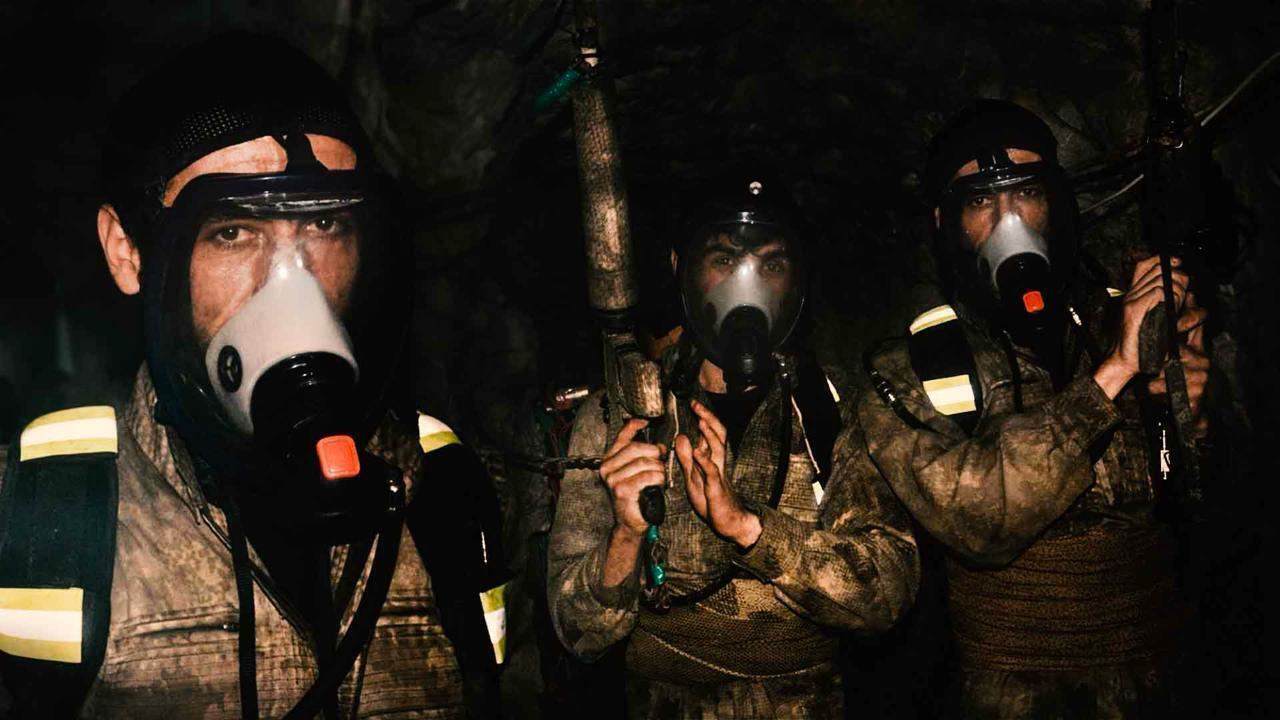
PKK militants in the tunnels from which they organise their actions against the Turkish army in Iraqi Kurdistan. © Telegram, gerilaname1

It had been more than 26 years since the general public had heard the sound of his voice. The leader of the Kurdistan Workers' Party (PKKAbdullah Öcalan - detained by Turkey on the prison island of Imrali since 1999 - spoke at a press conference on Wednesday 9 July. He said he "did not believe in weapons, but in the power of politics and social peace."

Since February 2025, Abdullah Öcalan has been multiplying his outings in favour of a peaceful settlement of the conflict. These announcements surprised as much as they raised hope: since the 1980s, the PKK - officially created in 1978, and considered terrorist by the European Union and the United States - has been fighting by arms for the recognition of the Kurdish identity, a people scattered between Turkey, Iraq, Syria and Iran.

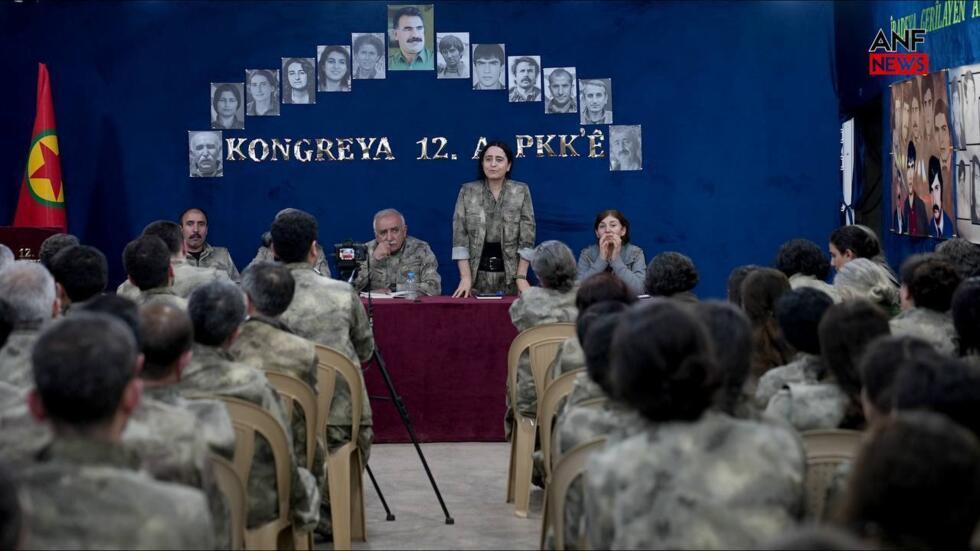
On March 1, the organization announced that it was moving towards the implementation of a ceasefire. Although Turkey has offered no guarantees on an end to the fighting, the party announced its dissolution on May 12, 2025 at its twelfth congress.


Several PKK cadres met at the twelfth congress of the organisation and pronounced its dissolution. © ANF News


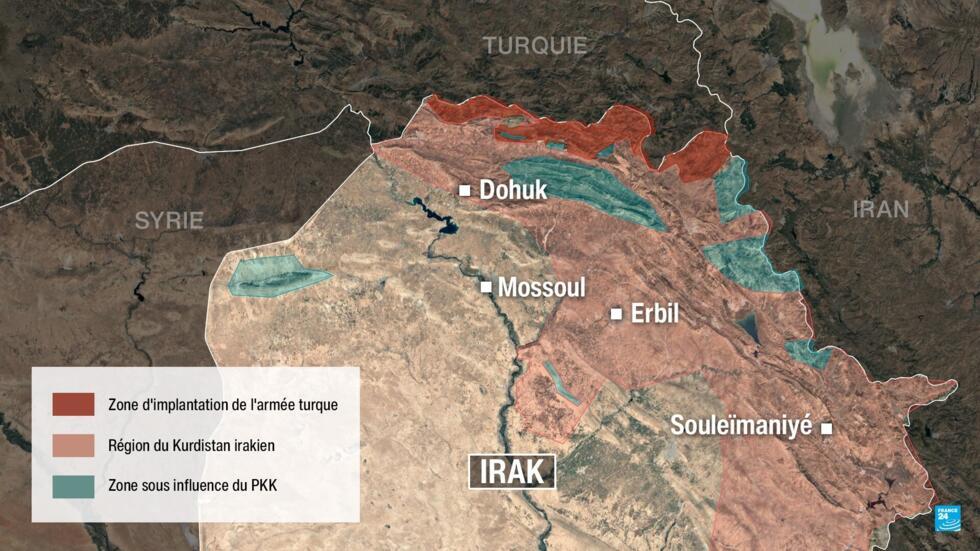
On 11 July, PKK fighters will symbolically lay down their weapons in the Suleimaniyah region. However, the fighting has not stopped between the Kurdish organisation and Turkey. Historical PKK leaders, such as Mustafa Karasu, denounce "a blockage [...] of which the attitude of the government is the cause". The clashes take place outside Turkish territory. Since the PKK's departure from the Turkish mountains in 2013, Turkey has continued guerrilla warfare in the Iraqi mountains. In June 2024, it announced that it wanted to create "a security corridor of 30 to 40 kilometres crossing the country's border with Iraq and Syria". The Turkish army's aim is to neutralise the PKK's network of tunnels located in the Gara Mountains.


These images, published in July 2025 by a media outlet close to the PKK, show the lives of Kurdish fighters in the tunnels. © ANF, Telegram, rojev_mexmur

"Turkey is unable to seal off the areas it wants to control"

It is from these tunnels that the Kurdish guerrillas have been launching attacks on Turkish bases in Iraq for years. These underground passages have become vital for the PKK in order to escape the Turkish drones that fly over the area constantly. According to journalist and doctoral student at CERI (Sciences Po/CNRS) Iris Lambert, this is a conflict that has been stagnating for a long time:

"For the moment, the main area of confrontation is between the two mountain ranges of Matina and Gara, in the governorate of Duhok [in Iraqi Kurdistan]. But it is a very mountainous area that the PKK knows perfectly. In general, Kurdish fighters are divided into small units. They are entrenched in the tunnels to escape the constant surveillance carried out by Turkish military drones.

For its part, Turkey is increasing its artillery fire. These strikes are made possible because the Turks are building many military bases to ensure a network of the territory. Recently, it was estimated that 136 bases they have built. But Turkey is not able to seal off the areas it wants to control, and the PKK is not making much progress, but it is not retreating either. So it is a very fixed situation."

Despite the announcement of the ceasefire, the France 24 Observers team was able to identify several traces of confrontation.


On the evening of the announcement of the cease-fire by the PKK, pro-Kurdish sources had published videos of bombings carried out by the Turkish army in the vicinity of the village of Guharze.

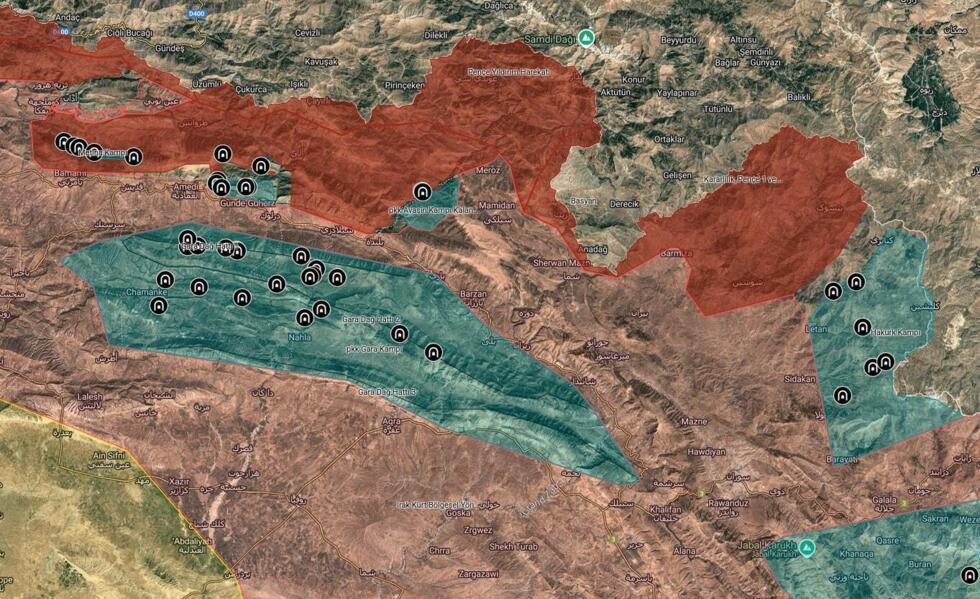
This map, drawn up by a pro-Turkish analyst, shows the deployment of Turkish troops (in red), the PKK (in green) and the troops of the autonomous government of Iraqi Kurdistan (in pink). The tunnels of the Kurdish guerrillas are marked with black symbols. © Shiya Ordu


On the pro-Turkish side, Telegram channels mentioned the intervention of T-129 Atak helicopters in the same locality.

This image from a video released on March 2, 2025, shows shelling by the Turkish army in the mountains overlooking the village of Guharze. © Telegram / Senger / WarOfSoldier
"Turkey is trying to use the ceasefire to its advantage"

In the months following the ceasefire, Turkish strikes have increased, as Kamaran Osman, a member of the NGO Community Peacemaker Teams, explains:

On 27 February, PKK leader Abdullah Öcalan announced his desire to start a peace process. If we compare the week following this announcement to the previous weeks, we see an increase in Turkish bombing of 145%. While there was a slight decrease in March, there was a 332% increase in bombing in May compared to March. For example, Turkey carried out 510 strikes in May.

For its part, the PKK has carried out only about twenty attacks against Turkish forces. This shows a clear decline in the organisation's activity. In April, the attacks were concentrated on the governorate of Duhok because Turkey wants to clean these Gara Mountains of the tunnels they shelter.

For Turkey, this mountain range is strategic because it is the border from which the PKK can reach Turkish territory. Turkey is trying to use the ceasefire to its advantage. Its military is taking advantage of the drop in attacks carried out by the organisation to try to take control of mountains that they did not control before. The PKK is using this mountain range to reach Syria to the west [where the Kurdish region of Rojava, a territory controlled by the Kurdish YPG forces, is located] or the Erbil region to the east.


Bombed tunnels

Most of the Turkish army's activity is aimed at the tunnels of the Kurdish guerrillas. The Observers' editorial team was able to locate several images of strikes on the mountains where the tunnel entrances are said to be located.

Among these shots, one targeted a tunnel located near the village of Belave. According to a pro-Turkish Telegram channel that follows the progress of operations in the region, the bombing was carried out by Turkish army planes.


This video broadcast on June 27 by a pro-Turkish Telegram channel shows a bombing by the Turkish army. Location: 37° 4'46.97"N 43°35'49.90"E Telegram/akincitimi

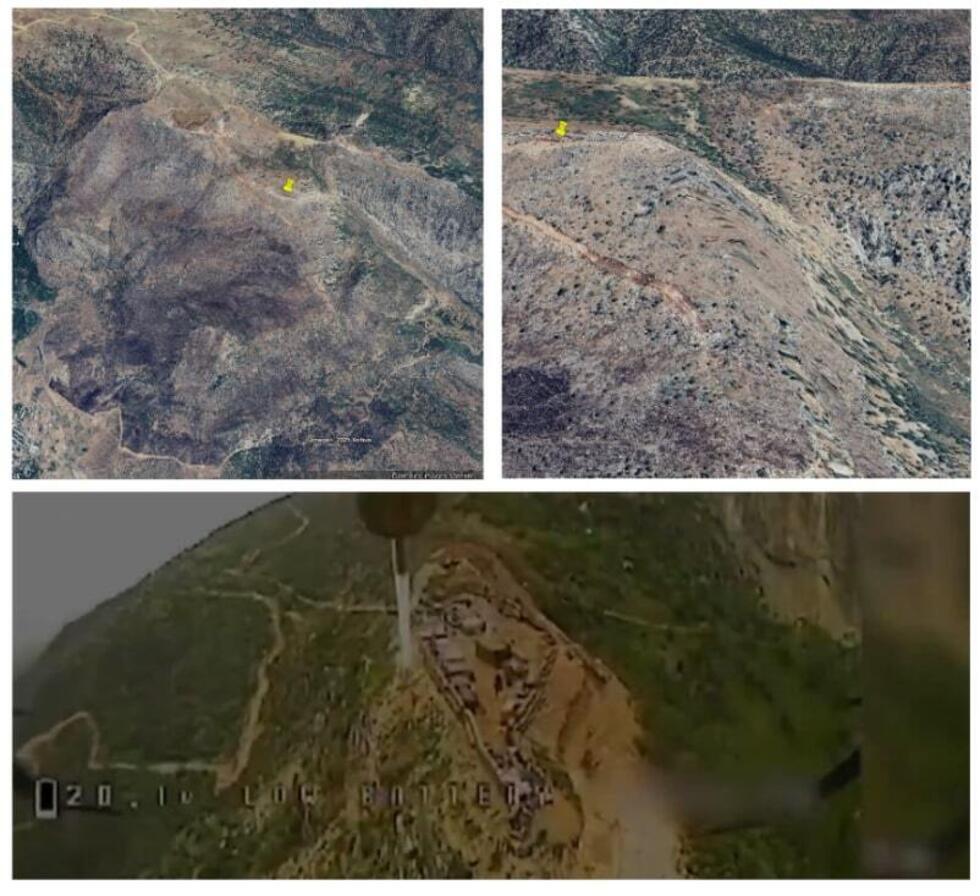
Satellite images make it possible to geolocate the bombing which was filmed at the foot of the village of Belave.

On the left, an image of the PeakVisor mapping site. In the centre and right, images of a video of Turkish bombing of the mountains that are said to contain PKK tunnels. Location: 37°4'46.97"N - 43°35'49.90"E. © Telegram / Akincitimi

"Last week, there were more than 40 strikes a day"

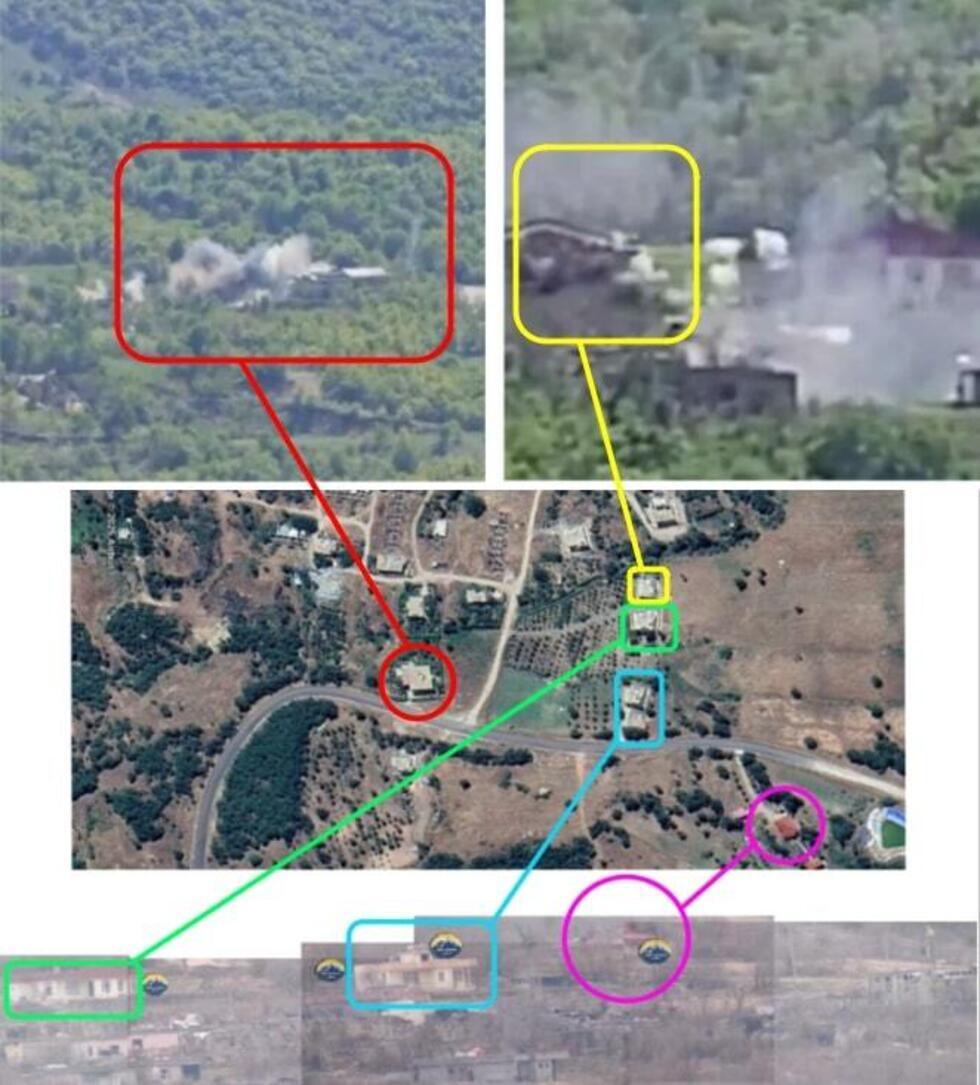
Turkey has also targeted valleys where there are houses. The Observers team was able to geolocate images that show houses directly hit by strikes, such as in the village of Spindare on 17 April. According to the Turkish media close to the army, Siyah Ordu, the village of Spindare would serve as a place of "supplies" for PKK fighters and the Kurdish forces would have "many positions" located near this village and that of Mije.

Geolocation of the images filmed and broadcast by the local media Spindar Xilfu Baregare. Location: 37°3'2.53"N - 43°34'1.41"E. 
© Spindar Xilfu Baregare / Google Earth


Rizgar (not his real name) lived in Spindare:

In the last three days, the shelling has decreased. But last week, there were more than 40 strikes a day. Turkey usually targets the village with planes and artillery. All the houses were damaged and many of them were completely destroyed.

We were forced to evacuate the village in September 2024 because of the fighting. We are forbidden to enter the village. There are 15 other villages around which have all been evacuated. All the inhabitants of the village are farmers and our livelihood depends on our land.

"Turkey sees civilians as an obstacle to the full deployment of its troops in the region"

For Kamaran Osman, the fate of the village of Spindare is not an isolated case.

Farmers and their homes are often targeted by Turkish bombing because Turkey wants to create a buffer zone. Turkey therefore sees civilians as an obstacle to the full deployment of its troops in the region.

In total, 185 localities have been completely evacuated. Residents are sometimes unable to return to their villages of origin because of the destruction, as is the case in 405 localities. Sometimes, Turkish army soldiers burn down farmland or homes themselves in order to force people to leave. In total, 183 villages have been completely emptied of their population. By targeting civilians, Turkey wants to send a clear message to the locals: you must have no connection to the PKK.

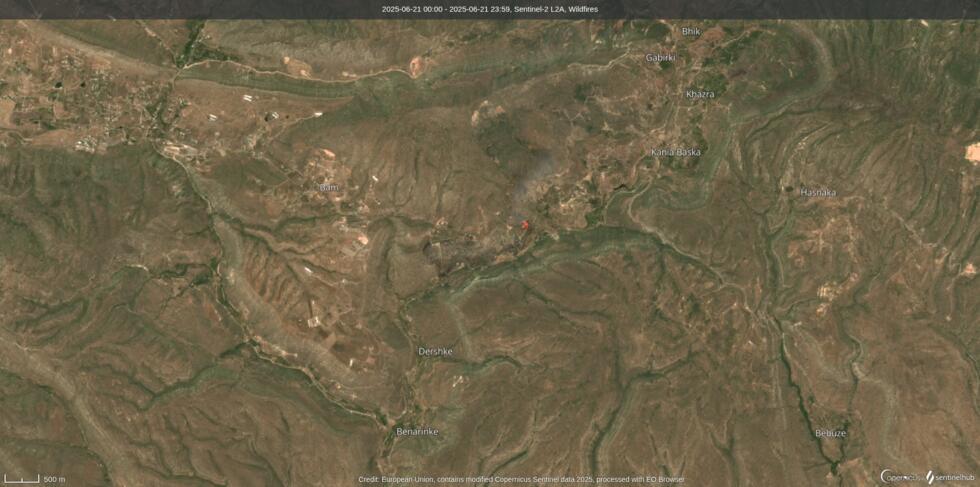
In this satellite image dated June 21, fires are visible in the Deraluk area. © Sentinel Hub

Twelve Turkish soldiers killed in cave

In addition to the bombings, Turkish ground operations are not stopping. On 6 July, the Turkish Ministry of Defence announced the death of 12 of its soldiers. The operation reportedly took place in the governorate of Duhok.


This communiqué from the Turkish Ministry of Defence published on 6 July shows the faces of four of the twelve soldiers who died in an operation against the PKK. © X / tcsavunma


According to the statement, the soldiers died during the inspection of a cave that was used as a hospital by PKK members. According to the Turkish authorities, the soldiers were poisoned by methane while trying to find the body of another Turkish soldier who disappeared in May 2022.

On the left, the location of the tunnel where the bodies of the Turkish soldiers were found. On the right, images of the bodies exhumed from the tunnel by the Turkish army. Localisation: 7°5'34.16"N - 43°56'2.97"E. © Observers / akincitimi / Telegram


The pro-Kurdish media ANF published images of the corpse of one of the deceased Turkish soldiers. According to other sources favourable to the PKK, the Turkish soldiers were victims of their own chemical weapons and not of methane poisoning. However, it is not possible to independently confirm or deny this allegation.


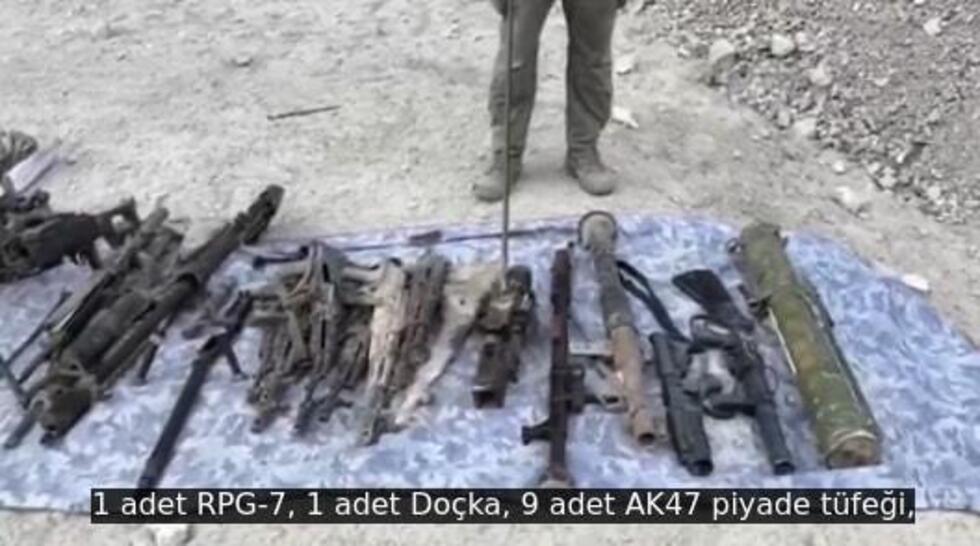
In this video released by the Turkish Ministry of Defence on 21 June, a Turkish soldier lists the weapons seized. © X / tcsavunma


On 21 June, the Turkish Ministry of Defence claimed to have neutralised a PKK arms cache. This arms cache was discovered in the area of the Turkish "Pençe-Kilit" operation.


"Reprisal" strikes announced by the PKK

In its communiqués published after the announcement of its dissolution, the PKK clearly states that it reserves the right to defend itself in the event of an attack by the Turkish army. In total, the Observers' editorial staff has been able to count five filmed attacks claimed by the Kurdish guerrillas since the announcement of the unilateral ceasefire. These attacks are carried out by means of FPV drones, small kamikaze drones that appeared in Ukraine and rush at full speed towards their target and explode.
This video released in May 2025 shows a Kurdish FPV drone blowing itself up against a 23mm cannon. X/ScharoMaroof

The Observers team was able to geolocate the drone attack on a mountain near the town of Amadiye. Location: 37°06'23.5"N - 43°32'16.9"E. © Observers


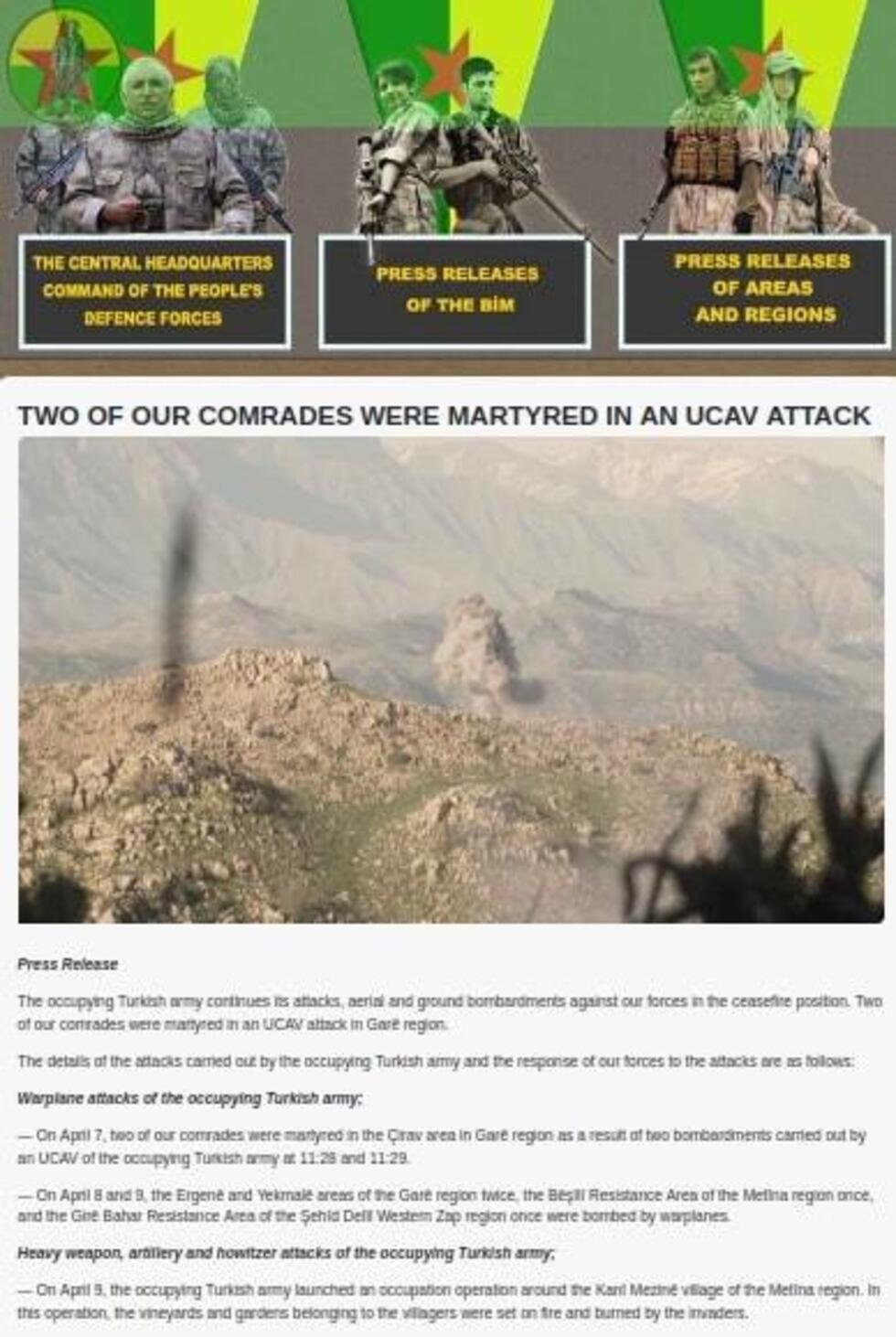
Since the cease-fire was announced, the PKK's armed wing in Iraq – the HPG – has claimed that two of its fighters have "fallen as martyrs".

In this statement published on 12 April, the HPG acknowledged the death of two of its members after the Turkish bombings. © Hezaparastin.com

However, despite the drone strikes carried out by its guerrilla forces, the PKK seems determined to show international opinion that it wishes to carry out the cease-fire, as Abdullah Öcalan again indicated on 9 July.
Analysis

Konstantin Strukov or the announced fall of a Russian gold oligarch


How did Russian billionaire Konstantin Strukov end up in the Kremlin's crosshairs? Despite being considered loyal to Vladimir Putin, the boss of Uzhuralzoloto, a Russian company specialising in gold mining, is on the verge of being dispossessed of his empire. The desire to nationalise his group illustrates the hardening of the Kremlin, which no longer demands only "loyalty but submission".


Published : 08/07/2025 - 
FRANCE24
By:  Sébastian SEIBT


Konstantin Strukov on board his private plane, which was immobilized shortly before takeoff by the airport's security services. 
© Telegram screenshot/ images taken by Russian law enforcement

From king of Russian gold to Vladimir Putin's target in the blink of an eye or almost. Konstantin Strukov is losing his empire of the precious metal to the Kremlin, and risks serious trouble with the law.

The billionaire - Russia's 78th richest person - was reportedly prevented from leaving the country by the police, while he was already on board his private jet leaving for Turkey on Saturday, July 5. At least that's what the business daily Kommersant suggests, which publishes a photo of him on board his plane facing airport security agents.

The gold tycoon, whose passport was cancelled, disputed this version of the story, without explaining where the incriminating photo came from.
Advertising


"Bling-bling" lifestyle abroad


However, no one disputes that Konstantin Strukov will not remain at the head of Russia's third largest gold producer for much longer, behind the private company Polyus Gold and the state-owned giant Polymetal International.

Russia's prosecutor general has asked the Russian judiciary to seize all of Konstantin Strukov's assets in order to transfer them to the state, the Russian news agency Tass said on Thursday 3 July. The gold tycoon is accused of corruption and the authorities are also demanding that the Kremlin obtain control of other companies that Konstantin Strukov has registered in several European countries in the name of his daughter, who lives in Switzerland.

In the indictment, the Russian authorities denounce the way in which the billionaire allegedly took part of his fortune out of Russian borders to protect it and to finance a very bling-bling lifestyle, made up of the purchase of yachts, cars and luxury homes.

This behaviour is the opposite of what Russian President Vladimir Putin has been demanding of wealthy Russian businessmen since the start of the war of invasion of Ukraine in February 2022. "A responsible entrepreneur is a real Russian citizen who does not open companies abroad to invest part of his assets and thus puts himself at the mercy of foreign powers," the Russian president said in March 2023 at the Russian Entrepreneurs' Forum.


The loyal billionaire portrayed as a bête noire of power

The indictment against Konstantin Strukov, whose fortune is estimated at $1.9 billion by Forbes, is particularly hostile.

The authorities have brought out the very heavy artillery. In addition to the corruption charges, the FSB - the domestic intelligence service - searched the Moscow headquarters of Uzhuralzoloto as part of investigations, one into violations of environmental standards at several of the group's gold mines and the other following several deaths at the company's sites.

A real downfall for Konstantin Strukov who appeared, until recently, as the example of the great Russian boss with irreproachable loyalty. The business leader was also a member of the presidential party and elected to the parliament of the mountainous region of Chelyabinsk, on the border with Siberia. He was also decorated with the Medal of Merit in 2021. Konstantin Strukov has also led the gold giant Uzhuralzoloto since its privatisation in 1997 without offending the sensitivities of the government, unlike many oligarchs, businessmen who became rich after the fall of the Soviet regime.


Konstantin Strukov therefore had all the appearances of a rich and good little soldier of the Putin cause. His downfall implies that "appearances of loyalty no longer seem to be enough," says Stephen Hall, a Russia specialist at the University of Bath.

For this specialist, the Kremlin is sending a signal to all billionaires who think they can have the best of both worlds: proclaiming their support for the war in Ukraine while sending their children to study at the best Western universities. "Vladimir Putin had to decide that the 78th richest man in the country could be sacrificed to make it clear that he wants not loyalty but submission," says Stephen Hall.

The bonus effect is that the money that the Kremlin should recover at the end of this golden nationalisation should allow Vladimir Putin "to cajole a little more the billionaires who are more important in his eyes", continues Stephen Hall.
Strategic assets and scapegoats

This state takeover also takes place in a particular context. The Attorney General's Office has assured that nationalizations since 2022 have brought in $30 billion for the state.

Initially, it was mainly a question of getting their hands on the Russian branches of foreign groups that could no longer or did not want to do business in Russia because of sanctions and the war. But the example of Uzhuralzoloto shows that Russian groups are not immune either. "There is a resumption of control of so-called strategic or critical sectors, such as gold, and other raw materials, particularly agriculture," said Maximilian Hess, founder of the consulting firm Ementena Advisory and author of "Economic War: Ukraine and the Global Conflict between Russia and the West".

In February, Moscow decided to nationalise Rodnye Polya, Russia's largest grain exporter. Vadim Moshkovich, the boss of Rosagro, Russia's largest agri-food group, was accused of fraud and imprisoned in March. "These are assets that the government does not want to see fall into the wrong hands," confirms Stephen Hall.

And especially not at the moment. The race for nationalisations, which, in the opinion of the prosecutor's office, has been accelerating since the beginning of 2025, should allow Moscow to get its hands on assets that are profitable and worth a lot "while the Russian economy is showing serious signs of slowing down and could even enter a recession," says Maximilian Hess.

Konstantin Strukov is not the only one to suffer Moscow's ire either. Viktor Strigunov, who was the deputy director of the National Guard until 2023, was arrested on charges of corruption and abuse of power in early July. Other members of the National Guard are also being investigated for similar incidents, the Moscow Times, an independent Russian-language news site, added.

"This is a sign that Vladimir Putin is pulling out the old tricks he has already used in the past, which consists of increasing arrests to give the impression that the country's problems come from corrupt individuals and that he is the only one who can fix the situation," said Maximilian Hess. For this specialist, the fall of Konstantin Strukov and the multiplication of nationalisations of strategic companies aim to further strengthen Vladimir Putin's almost exclusive control over the Russian economic and political apparatus.
The Instant +: Tutankhamun's famous treasure unveiled to the public at the end of 2025


At the Grand Egyptian Museum in Cairo, golden coffins, gold amulets, pearl necklaces and other treasures of Tutankhamun will be presented to the general public at the end of the year. An exhibition made possible thanks to the restoration work of 150 professionals.


Published : 10/07/2025 - 
By:  FRANCE 24


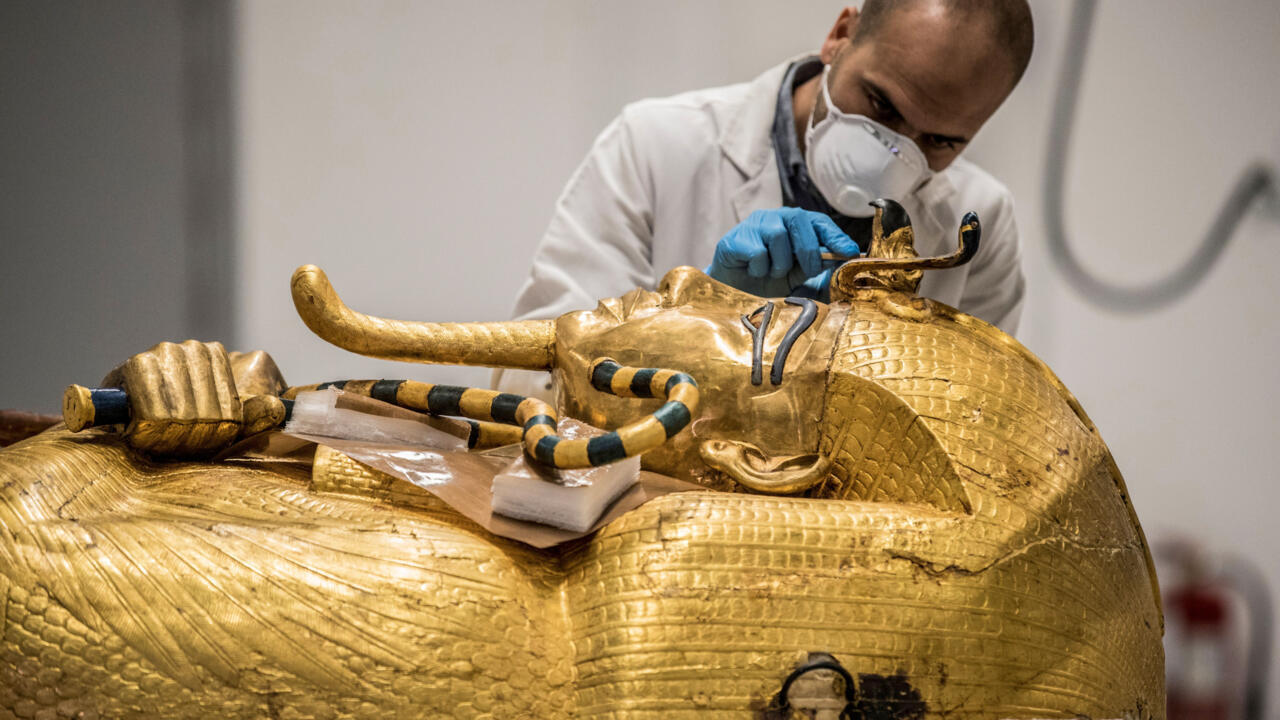
An archaeologist performs restorations on the sarcophagus of Pharaoh Tutankhamun in the restoration laboratory of the Grand Egyptian Museum in Cairo, Egypt, in 2020. © Khaled Desouki, AFP

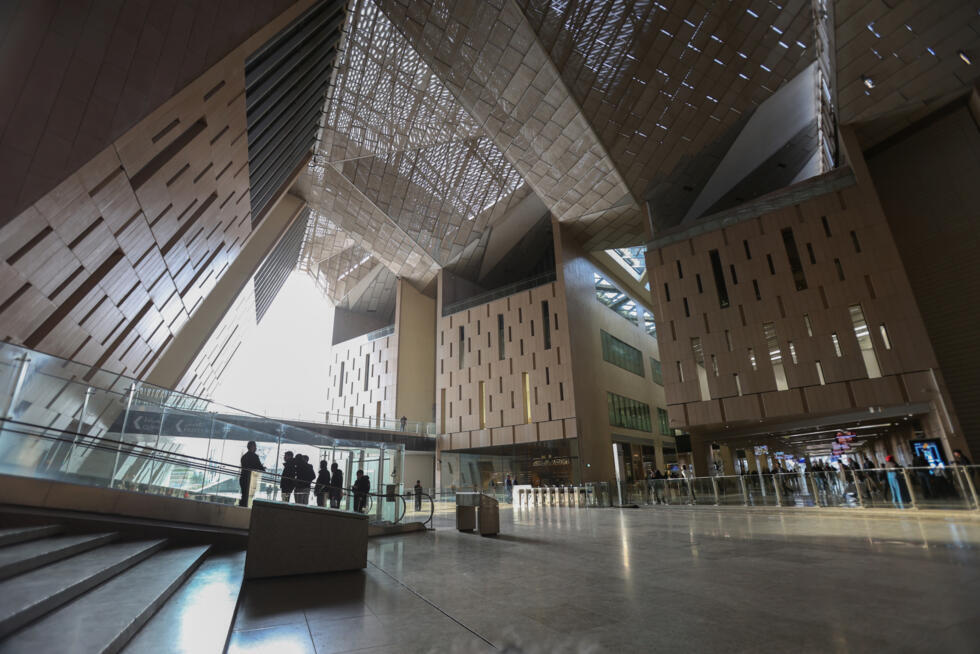
The 5,000 or so objects in Tutankhamun's treasure will be on display at the end of 2025 at the official inauguration of the Grand Egyptian Museum (GEM) and permanent exhibition in Cairo.

As a teenager, Eid Mertah spent hours reading books about King Tutankhamun, tracing hieroglyphics with his finger, dreaming of one day holding the famous golden mask of the young pharaoh in his hands.

He is now one of 150 professional Egyptian restorers who work in the GEM's conservation laboratories and treat, among other things, the precious collection of funerary objects discovered in 1922 in a tomb in the Valley of the Kings, spared by looters.

Observe the life of a conservation laboratory

"It is thanks to Tutankhamun that I chose to study archaeology," the 36-year-old expert told AFP. "I dreamed of working on his treasures — and that dream came true."

"I think we are more eager to discover the museum than the tourists themselves," said Mohamed Moustafa, a 36-year-old restaurateur.

The state-of-the-art building built near the Giza Pyramids on a budget of more than $1 billion will offer visitors a rare experience: observing the life of a conservation laboratory and the work of experts on Pharaoh Khufu's 4,500-year-old solar boat behind a glass wall, according to information obtained from the museum's management.


The GEM's Tutankhamun collection comes from several museums and storage sites, including the Egyptian Museum in Cairo. © Khaled Desouki, AFP

"When visitors walk through the museum, they will admire the beauty of these artifacts. But for us, each piece is a reminder of countless hours of work, passionate debates and intensive training," says Mohamed Moustafa.

Originally scheduled for July 3, the Egyptian authorities justified the postponement of the exhibition by geopolitical tensions in the region, after several postponements related to political upheaval and the Covid-19 pandemic.


Golden coffins and miniature shrines

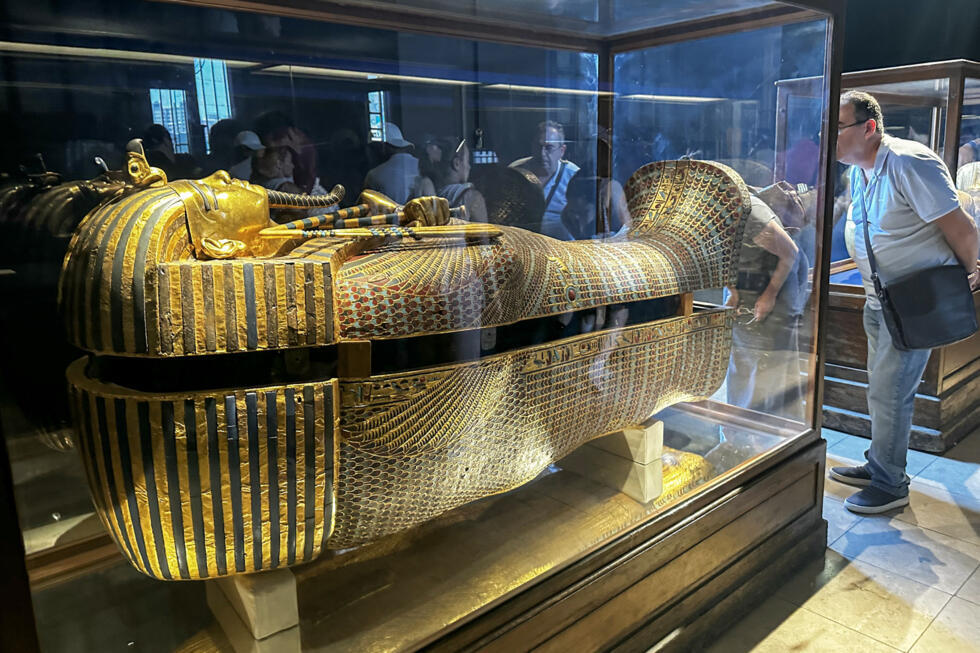
Tutankhamun's hoard includes his iconic gold funerary mask, gilded coffins, gold amulets, pearl necklaces, linen gloves, statues, miniature shrines, ceremonial chariots, as well as two mummified fetuses, presumed to be his stillborn daughters.

Many of these objects had not been restored since their discovery by British archaeologist Howard Carter. Conservation techniques used at the time were intended to protect the objects, but more than a century later complicate their restoration.

Applying wax to the gold surfaces helped "preserve the objects at the time," Bayyoumi says, "but then it masked the details that we want to reveal to the world today."

For several months, the 39-year-old professional and her colleagues painstakingly removed the wax that had, over time, trapped the dirt and tarnished the shine of the gold.

The Grand Egyptian Museum in Giza is now scheduled to open at the end of the year, after multiple delays. © Hasan Mroue, AFP

"A huge puzzle"

The restoration was the result of close cooperation between Egypt and Japan, with Tokyo providing $800 million in loan funding as well as technical support for restoration, transportation, and museum management.

Egyptian restorers, many of whom were trained by Japanese experts, conducted their cutting-edge work in nineteen specialized laboratories: wood, metal, papyrus, textiles, etc.

The restoration of Tutankhamun's coffin, transferred directly from his tomb, proved to be one of the most delicate operations.

At the wood laboratory, restorer Fatma Magdy, 34, has mobilized magnifying glasses and photographic archives to carefully reassemble the fine gold leaf.

"It was like putting together a huge puzzle," she says. "The shape of the breaks, the tracing of the hieroglyphics - every detail mattered."


"Every object tells a story"


The Tutankhamun collection has long been scattered across several sites, including the Egyptian Museum in Tahrir Square, the Luxor Museum, as well as the tomb itself, in the Valley of the Kings. Some objects have undergone light restoration before being transferred for safe transport.

Before any manipulation, the teams carried out photographic documentation, X-ray analyses and various tests to assess the condition of each piece.

"We had to understand the condition of each object — the layers of gold, the adhesives, the structure of the wood — absolutely everything," says Eid Mertah, who worked on the ceremonial shrines of the young pharaoh at the Egyptian Museum in Tahrir Square.

The philosophy that guided the team throughout the process was to "do the bare minimum necessary — while respecting the history of the object," says Mohamed Moustafa.

"Every object tells a story," he concluded.

With AFP
Syria: seven months after the fall of Bashar al-Assad, a journey through a changing country

From our special envoy in Syria – Six months after his first trip through Syria, Wassim Nasr, a specialist in jihadist movements at France 24, once again travelled the country for ten days. From Damascus to Aleppo, via Homs, Manbij, and even Deir Ezzor, a region that has long remained inaccessible to journalists since Bashar al-Assad's flight, this travel diary plunges us into a country in full transformation, faced with the challenge of reconstruction and national unity.


Published : 10/07/2025 - 
By:FRANCE24
Video by: Wassim NASR


Une vue de la ville de Deir Ezzor, dans l'est de la Syrie, presque entièrement détruite après une décennie de combats.
 © Wassim Nasr, France 24


1 - In the ruins of Aleppo

The itinerary of our journalist Wassim Nasr through Syria. © Graphic Studio France Médias Monde


This journey was supposed to start at Damascus airport, but the Israel-Iran war decided otherwise. The North was therefore chosen as the starting point for a ten-day journey through Syria.

On the road leading to Aleppo, a city devastated by fourteen years of war, a landscape of destruction passes as far as the eye can see. But here and there, cinder blocks placed in front of ruined buildings indicate that reconstruction has begun. This is the hope of a new era for Syria, as Washington has just eased most of its sanctions to facilitate Damascus' return to the international financial system and encourage foreign investment.

A collapsed building in the city of Aleppo in Syria. 
© Wassim Nasr, France 24


As elsewhere in the country, the new government of Ahmed al-Sharaa offers guarantees of protection to religious minorities after the March massacres in the Alawite community and clashes between Druze and armed groups. But in the Aleppo region, the authorities also have to deal with a Sunni majority fractured between supporters of the revolution and former pro-Assad supporters.

A symbol of this fragile balance is the tense relations with former members of the armed group Liwa al-Baqir, which, after supporting the Assad regime, has turned around to join the rebel coalition. This allowed the capture of the city of Aleppo, a decisive step on the road to Damascus. Seven months after the fall of Bashar al-Assad, the Bakara clan to which the group belongs believes that it has not sufficiently reaped the fruits of its alliance with the new masters of Syria.

In the Aleppo mosaic, the Kurds of the YPG maintain their control over the districts of Ashrafieh and Sheikh Maqsoud. These two neighbourhoods are to gradually return to government control while retaining some autonomy under the agreements signed in March to integrate the Kurds into the Syrian state. For the moment, according to various sources involved in the case, these agreements remain without decisive effects.


2 - The Manbij Tunnels

To the east, still in the governorate of Aleppo, are the fortifications of Manbij, a former stronghold of the Islamic State organisation that passed into the hands of Kurdish forces, supported by the United States, then retaken last December by the Syrian National Army (SNA) supported by the Turkish army.


Beneath the city winds a network of tunnels, some of which are large enough to carry vehicles. In the military hospital, the former headquarters of the YPG, tunnel entrances are hidden behind simple doors. On the heights, the private university is in ruins. But clearing work has begun, a sign that the population is ready to return to the site.
The entrance to a tunnel in the military hospital in Manbij, Aleppo governorate. 
© Wassim Nasr, France 24

However, there are still many challenges in this locality undermined by drug trafficking and facing a series of attacks. In February, a car bomb explosion killed at least 15 people, mostly women. The eighth attack since the fall of Bashar al-Assad.

All the interlocutors interviewed point the finger at the YPG, whose hardline wing is said to be ready to do anything to derail the resumption of control of the city. Manbij is a foretaste of the problems that await the Syrian government in the north-east of the country, if a political agreement is not reached and respected.


3 - Homs and Damascus under tension

Now it's off to southern Syria and the city of Homs, which is also facing major security challenges amid communal tensions. On the spot, kidnappings have become commonplace. According to our information, about sixty Alawite women have been kidnapped in recent months between the Homs region and the Syrian coast.

Homs also has a high number of killings linked to campaigns orchestrated on social networks: former soldiers or militiamen are found to be handed over to popular vindictiveness. The Syrian state responds to these acts of expeditious justice by carrying out campaigns of arrests of former regime members, to try them and try as best it can to prevent blood feuds and maintain social cohesion.


On the day of our arrival in Damascus, June 22, a suicide bombing hit the Church of St. Elijah in the Dwelaa neighborhood. An attack claimed two days later by a small Sunni extremist group, linked to the Islamic State group according to the authorities, which sowed terror in the Christian community and weakened the bonds of trust with the new authorities.

This photo shows the damage caused by the explosion set off by a suicide bomber in the Church of St. Elijah in Damascus. 
© Wassim Nasr, France 24


At the funeral of nine of the victims, the Greek Orthodox Patriarch of Antioch and All the East, John X, denounced an "unacceptable massacre" and criticized the authorities, calling on them to "assume their responsibilities." These words were broadcast uncensored on Syrian television.


4 - Palmyra, the devastated jewel


Under 45 degrees, on a road in a pitiful state, the Syrian desert opens its arms. On the side of the road, the carcass of a Russian-made T-72 tank, a vestige of the fighting between rebels and loyalist forces. On the way, we see a railway line, a crucial infrastructure for transporting the region's abundant mineral resources, especially phosphate.

But here again, danger lurks. The Islamic State organization is still active in the region. According to our information, many of its members went to the surrounding towns as soon as the regime fell to better blend in with the crowd and, for some, to prepare attacks.

Finally, the desert gives way to the green oasis of Palmyra and its famous ancient city damaged by the Islamic State group and Russian strikes. Until 2011 and the beginning of the Syrian civil war, more than 150,000 visitors came to admire this UNESCO World Heritage Site.


The Greco-Roman temple of Baalshamin destroyed by the Islamic State organization in Palmyra. © Wassim Nasr, France 24


Nearby, the modern city, which houses the Tadmor prison, is in ruins. One cannot help but note the propensity of the former regime to build its most sinister prisons in tourist regions, such as Saydnaya. As if the Assad clan wanted to make all the tourists who flocked to these places complicit in its crimes.


5 - Deir Ezzor, life despite the war


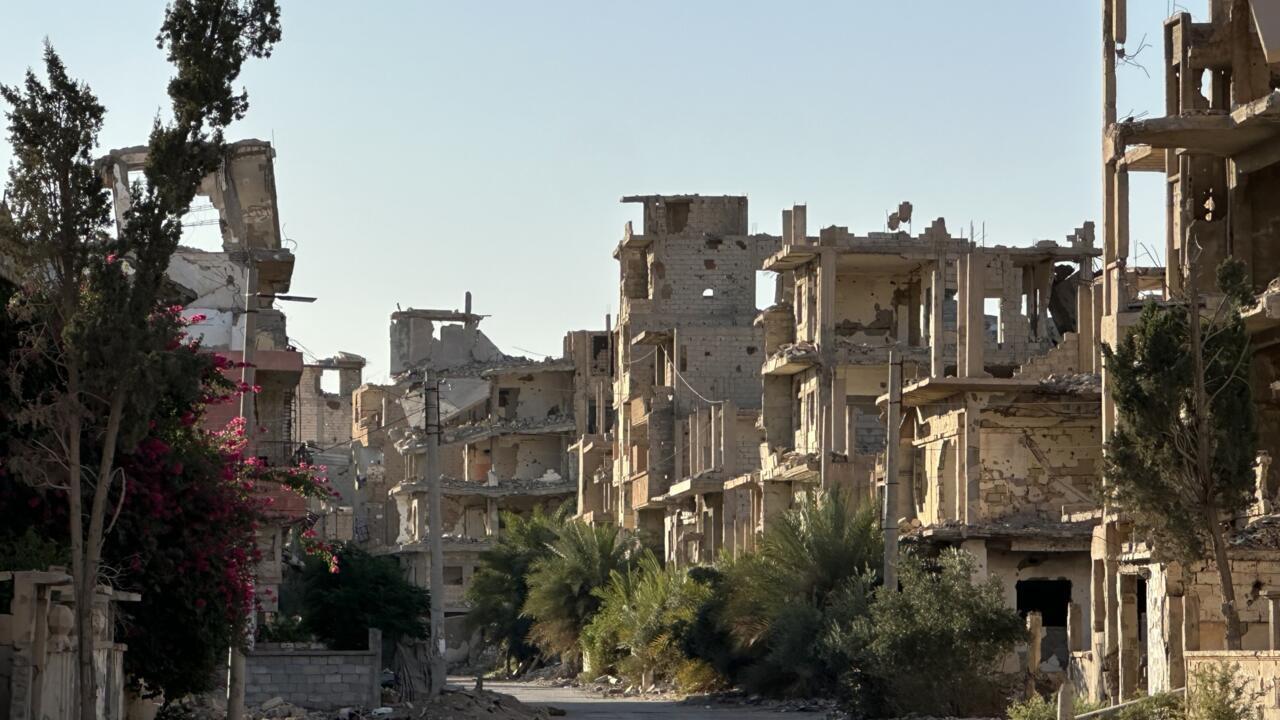
Since the fall of Bashar al-Assad, no foreign journalist has set foot in Deir Ezzor, in Syria's far east. On the road, the line of humanitarian aid trucks from neighbouring Iraq is impressive. After a decade of deadly fighting that has led to the destruction of nearly 90% of buildings, the city on the banks of the Euphrates is now a shadow of its former self.

The fall of the regime also led to three days of looting and a brief occupation by Kurdish forces. Today, the former prosperous agricultural town has only 154,000 inhabitants compared to more than 280,000 fifteen years ago. Paradoxically, rents are very high due to the shortage of habitable housing.


While the city was once famous for its bridges over the Euphrates, including the suspension bridge built in the late 1920s under the French Mandate, nothing remains of these structures bombed during the Syrian civil war. To be able to move between the two banks, the inhabitants have improvised a single rubble bridge or use barges.

A barge on the banks of the Euphrates River in Deir Ezzor, eastern Syria. 
© Wassim Nasr, France 24


At the end of the day, when the heat becomes less stifling, many enjoy a refreshing swim by the river, where floating cafes play music. A sign that life continues in Syria, despite the gaping scars of the war.


A travel diary by Wassim Nasr, story by Grégoire Sauvage.
U.S. sanctions UN rapporteur for Palestinian territories


Marco Rubio announced Wednesday that the United States will impose sanctions on Francesca Albanese, the UN special rapporteur for the Palestinian territories in Geneva. The head of American diplomacy questioned her in particular for her "shameful efforts" to get the ICC to take action against American and Israeli officials.


Published : 10/07/2025 
By:FRANCE 24


Francesca Albanese in the United States' sights. The head of American diplomacy, Marco Rubio, announced on Wednesday 9 July that Washington will impose sanctions on the UN special rapporteur for the Palestinian territories in Geneva.

Marco Rubio questioned on X the "illegitimate and shameful efforts (of Francesca Albanese) to incite the International Criminal Court (ICC) to take action against American and Israeli officials, companies and leaders".

In a statement, the secretary of state later denounced the UN expert's virulent criticism of the United States. According to him, she had recommended that the ICC issue arrest warrants for Israeli Prime Minister Benjamin Netanyahu.


According to the same source, the rapporteur took part in "biased and malicious activities", with Marco Rubio accusing her of "uninhibited anti-Semitism" and "support for terrorism".

She also allegedly wrote "threatening letters" to several American companies, making what Marco Rubio described as "unfounded accusations" and recommending legal action against these companies and their executives.
Denunciation of Israeli 'genocide' in Gaza

Francesca Albanese presented a report to the United Nations Human Rights Council in July in which "the mechanisms of companies that support the Israeli colonial project of displacement and replacement of Palestinians" were studied.

In February, she also denounced a plan to occupy the Gaza Strip and displace its population, announced by Donald Trump, as "illegal" and "completely absurd".

The US president had said he wanted to take "control" of the war-torn Gaza Strip and repeated that its inhabitants could go and live in Jordan or Egypt, despite the opposition of these countries and the Palestinians themselves.


"It's illegal, immoral and irresponsible. It is completely irresponsible because it will aggravate the regional crisis," said the UN expert, who reiterated her accusations of Israeli "genocide" in Gaza.

Israel's ambassador to the UN, Danny Danon, praised the US secretary of state's decision on X, denouncing the "relentless and partisan campaign against Israel and the United States" led by Francesca Albanese.

With AFP