Thursday, July 10, 2025

Crackdown in Kenya: Can authorities silence Gen Z protests?


Issued on: 09/07/2025 - FRANCE24
Play (44:48 min
)
From the show


Rubber bullets, tear gas, water cannons and live rounds: can Kenya's police beat the defiance of a new generation into submission? Monday's Saba Saba Day marches, marking 35 years since the spark of the movement that led to a return of multiparty rule, were the latest protests to turn deadly.

We ask about the 31 people killed on the day, the increasingly heavy hand of authorities since last year's anti-tax demonstrations and the demands of the so-called Gen Z movement.

Ahead of Saba Saba Day was the funeral in his home village of 31-year-old blogger Albert Ojwang, who died last month in police custody. How much of a test is this for Kenya's democracy, one of the few in the region?

President William Ruto, who in a past life was cleared over post-electoral violence at the International Criminal Court, had managed to recast himself as a mainstream politician courted on the world stage. He's defiant in the face of those calling for his departure before the end of his mandate in 2027. What next for Ruto and the largely leaderless movement defying him?

Produced by Rebecca Gnignati, Elisa Amiri and Ilayda Habip.

Our guests
Olivia BIZOTFRANCE 24 Nairobi correspondent

Otsieno NAMWAYAAssociate Director for Africa, Human Rights Watch

Robert PUKOSE SATIAMP, United Democratic Alliance (UDA)

Francis AWINOPresident, Bunge la Mwananchi


Aboriginal-led inquiry finds genocide committed against Indigenous Australians

PERSPECTIVE © FRANCE 24
08:38
Issued on: 09/07/2025 - 

From the show


As Indigenous Australians mark NAIDOC Week – a time to celebrate the history, culture and achievements of Aboriginal and Torres Strait Islander peoples – the country is grappling with the findings of a landmark Aboriginal-led inquiry. The commission found that First Peoples in the state of Victoria suffered genocide and crimes against humanity from the beginning of British colonisation. "Between the 1830s and 1851, it is estimated that the Indigenous population of Victoria was reduced from 60,000 to 15,000," historian Romain Fathi told FRANCE 24 in Perspective.

The report also stresses that Aboriginal Australians continue to face systemic injustice. "Today, incarceration rates of Indigenous Australians are not the same, life expectancy is not the same; these are not problems that have gone away," Fathi added.

With 100 recommendations laid out to "redress harm", the commission demonstrates there is a long way to go in Australia's fraught road to reconciliation.

Video by: Carys GARLAND


Clothes discarded by UK consumers choke Ghana's protected wetlands


Issued on: 10/07/2025 - 7:38 min


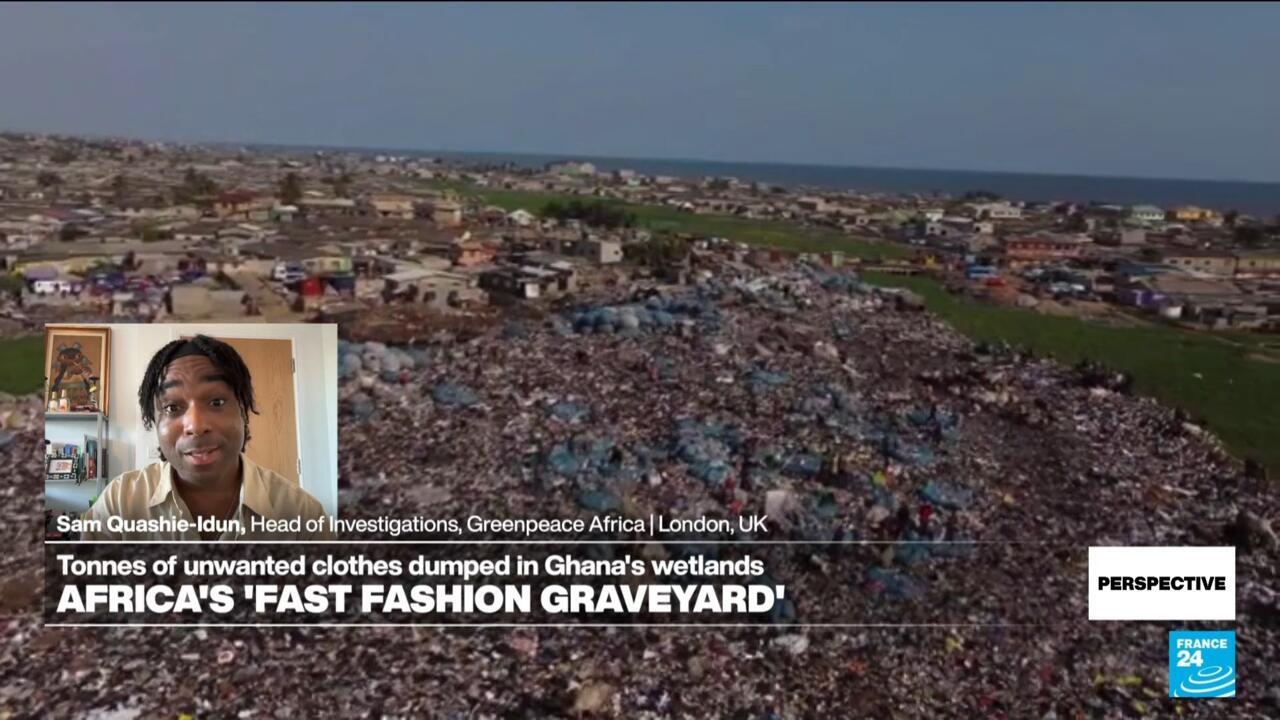
Ghana is already known as a "fast-fashion graveyard", but a new study has shown unwanted clothing is now being dumped beyond urban areas. Reporters at Unearthed, working with Greenpeace Africa, found mounds of clothes from brands including Next, Primark and H&M clogging areas of the protected Densu Delta. Sam Quashie-Idun, the head of investigations at Greenpeace Africa, told FRANCE 24's Perspective programme that one particular dumpsite now "looms taller than a two-storey building".


The textile waste in Ghana is causing concern for the environment, with the garments often made up of synthetic fibres. "These materials can take centuries to break down and as they do, they'll also be releasing microplastics and toxic chemicals into the soil; into the water," Quashie-Idun added.


Green activism or public threat? 

UK cracks down on environmental groups


Issued on: /2025 - 


From the show
Down to Earth

In the UK, an ongoing crackdown on environmental activists is becoming ever tighter. Those who cause "public nuisance" by sitting on a road to block it, or spraying paint on a building or work of art can now be punished not by a simple fine, but a prison sentence of up to 10 years. It's part of the 2022 Police, Crime, Sentencing and Courts Act. Over the past three years, more than 3,000 members of Just Stop Oil and other groups have been arrested. The British government has justified this crackdown by saying that the groups' actions cost tens of millions of pounds in public spending every year. The Down to Earth team takes a closer look.


China’s 2024 annual temperature hit a new high with serious floods


Institute of Atmospheric Physics, Chinese Academy of Sciences

Distributions of annual temperature anomalies and major disaster events in China in 2024 

image: 

Distributions of annual temperature anomalies and major disaster events in China in 2024

view more 

Credit: Yundi Jiang


Climate is a major factor affecting economic and social outcomes. In China, the country’s National Climate Center releases an annual climate report that comprehensively covers China’s achievements and progress that year in climate monitoring and impact assessment. This series of reports has been published in Atmospheric and Oceanic Science Letters  for seven consecutive years since 2019, and the “State of China’s climate in 2024” is now available.


The current report provides a summary of the main climate features and high-impact weather and climate events in China in 2024.


“The overall climate condition in 2024 over China was worse than normal, presenting a warm–wet climate with the highest annual mean temperature and second-highest number of hot days in history,” says the first author of the study, Jiang Yundi.


“The annual precipitation ranked as the fourth highest on record, with the anomalies in the central and eastern parts of China exhibiting a pattern of above-normal levels in the north while near-normal levels in the south”, Jiang adds.  


In 2024, China experienced severe rainstorms and flooding disasters. From 9 June to 2 July, the Yangtze River basin and regions south of the Yangtze witnessed the strongest rainstorm process since 1961. During the flood season, northern China saw frequent rainstorm events with highly overlapping affected areas. Intense rainfall caused a rapid transition from drought to flood in North China and other regions. From early July to mid-September, a historically extensive and prolonged heatwave persisted across central and eastern China, ranking as the second-longest such event on record. Autumn typhoon activity also displayed exceptional intensity, with Typhoon Yagi triggering significant impacts in Hainan, Guangdong, and Guangxi. In the late spring and early summer, meteorological droughts developed in stages across the Huang-Huai, Jiang-Huai, and North China regions.

No, recent cloud seeding did not trigger the deadly Texas flash floods


FRANCE24
Issued on: 05:20 min

From the show
Truth or Fake

As the death toll from catastrophic flash floods in Texas continues to climb, weather conspiracies on social media began to circulate. Users suggested a cloud seeding operation – carried out two days before the floods by the company Rainmaker – was to blame for triggering the flooding. These claims have been slammed by weather experts and meteorologists. Vedika Bahl explains in Truth or Fake.


As Marseille reels from early summer wildfire, France rolls back environmental protections


© France 24 07:50
Issued on: 10/07/2025 -

A wildfire that reached France's second-largest city and left 110 injured was in ‘’net regression'', after racing toward the historic Mediterranean port city, but was not yet fully extinguished. Spurred by exceptionally hot summer winds, the fire grounded all flights to and from Marseille and halted train traffic. All the while, the French government has been rolling back several notable environmental policies in 2025 and weakening regulatory commitments both domestically and within the EU. In the aftermath of the wildfire, FRANCE 24's François Picard welcomes Mathilde Ceilles, Journaliste at Le Figaro in Marseille.

Video by: François PICARD
Climate change pushed temperatures in latest European heatwave up by 4C

Human-driven climate change intensified the most recent European heatwave by as much as 4C in several cities, raising temperatures to levels that posed serious health risks to thousands of people, scientists reported on Wednesday.

Issued on: 10/07/2025 - RFI

Paris was put on red alert for extreme heat on 1 July, after Western Europe saw the hottest June on record. 
AFP - EMMA DA SILVA

This is likely to have led to far more heat-related deaths than would have occurred without the influence of global warming, a study conducted by more than a dozen researchers from five European institutions concluded.

Temperatures between late June and early July soared well above 40 degrees Celsius in many European countries, as the first heatwave of the summer broke records and triggered health warnings.

Hottest June on record

The European Union's climate monitoring service Copernicus on Wednesday said that Western Europe had seen its hottest June on record, with some schools and tourist sites shuttered as the mercury soared.

To assess what role climate change had played, scientists compared the intensity of the heatwave with one that would have occurred in a world that had not warmed due to burning of fossil fuels.


Using historical weather data, they concluded that a heatwave "would have been 2-4C cooler" without human-induced climate change in all but one of the 12 cities studied.

The 4C elevation greatly increased the risk to health in the 12 cities, which included Paris, London and Madrid, and have a combined population of more than 30 million.

"What that does is it brings certain groups of people into more dangerous territory," said researcher Ben Clarke from Imperial College London, which co-led the study with the London School of Hygiene and Tropical Medicine.

"For some people it's still warm, fine weather. But for now a huge sector of the population, it's more dangerous."

Death toll

The study also sought to estimate the death toll from the heatwave in the 12 cities studied, and how many of these deaths could be attributed to climate change.

Based on peer-reviewed scientific methods and established research on heat and mortality, the study concluded that the heatwave likely caused around 2,300 deaths between 23 June and 2 July across the 12 cities studied.

Around 1,500 of these deaths would not have occurred had climate change not pushed temperatures to such dangerous highs, researchers said, whole stressing that this was an estimate as no official death toll was not yet available.


Heatwaves are particularly dangerous for the elderly, those with health conditions, young children, outdoor workers and anyone exposed to high temperatures for prolonged periods without relief. The impact on health is also compounded in cities, where heat is absorbed by paved surfaces and buildings.

Copernicus said large parts of southern Europe experienced so-called "tropical nights" during the heatwave, when overnight temperatures don't fall low enough to let the body recover.

"An increase in heatwave temperature of just two or four degrees can mean the difference between life and death for thousands of people," said Garyfallos Konstantinoudis, a lecturer at Imperial College London. "This is why heatwaves are known as silent killers. Most heat-related deaths occur in homes and hospitals out of public view, and are rarely reported."

Authorities say it could take weeks to calculate a definitive death toll from the recent heatwave, but similar episodes have claimed tens of thousands of lives in Europe during previous summers.

(with AFP)


Europe hit by storms and wildfires after heatwave - is climate change also to blame?

The Balkans have been pounded by storms, while wildfires broke out in Türkiye, Spain and France in the last week.
Copyright Copyright 2025 The Associated Press. All rights reserved.

By Rebecca Ann Hughes with AP
Published on 

The Balkans have been pounded by storms, while wildfires broke out in Türkiye, Spain and France in the last week.

Europe has been experiencing dozens of extreme weather events in recent weeks, from blistering heatwaves to raging storms.

Many of these rapidly fluctuating phenomena have already been attributed in part to human-induced climate change.

And they are only expected to increase in frequency and intensity due to global warming, scientists say, bringing further substantial damage and loss.

Experts warn that Europe should brace for another summer of weather whiplash as it oscillates between droughts and floods.

“These events are unfortunate reminders of the changing and volatile climate that Europe needs to adapt and prepare for, while taking action to drastically reduce carbon emissions in order to slow down and limit climate change,” the European Environment Agency says.

Wildfires in Marseille, Spain and Türkiye were ‘inevitable’ in current weather conditions

In southern France, wildfires are encroaching on the port city of Marseille. More than 1,000 firefighters have deployed to tackle the blaze, which broke out near the town of Les Pennes-Mirabeau on Tuesday.

Some 720 hectares have been consumed by the flames, the prefecture said, and hundreds of homes have been evacuated. Marseille Airport is experiencing a second day of flight disruptions, and train traffic has also been plunged into chaos.

Climate data scientist Max Dugan-Knight at Deep Sky Research warns there is a clear link between the wildfires and climate change.

“The direct cause of the fire that is rapidly spreading near Marseille was apparently a car which caught on fire. But the real culprit is the current extreme fire weather conditions in France and across Europe,” he says.

“In these dry, hot, and windy conditions, even the smallest ignition would have spread quickly and caused serious damage.”

Syrian minister of emergency and disaster management Raed al-Saleh called the situation “extremely tragic.”Copyright 2025 The Associated Press. All rights reserved.

It is the same story for other recent blazes, Dugan-Knight says: “Just as high winds fanned flames and led to massive destruction in Los Angeles in January, winds are spreading fires across France and Spain.

“When high winds combine with a record-breaking heatwave and dry conditions, wildfires are inevitable.”

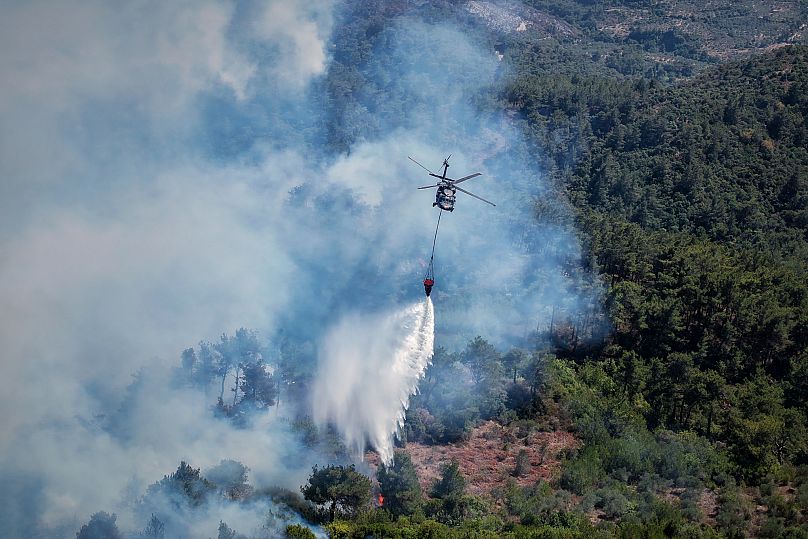
Last week, a similar incident occurred in Türkiye. While the official cause of wildfires in Izmir was faulty power lines, they were made more likely and more intense by the soaring temperatures, strong winds, and low humidity that the area has been experiencing.

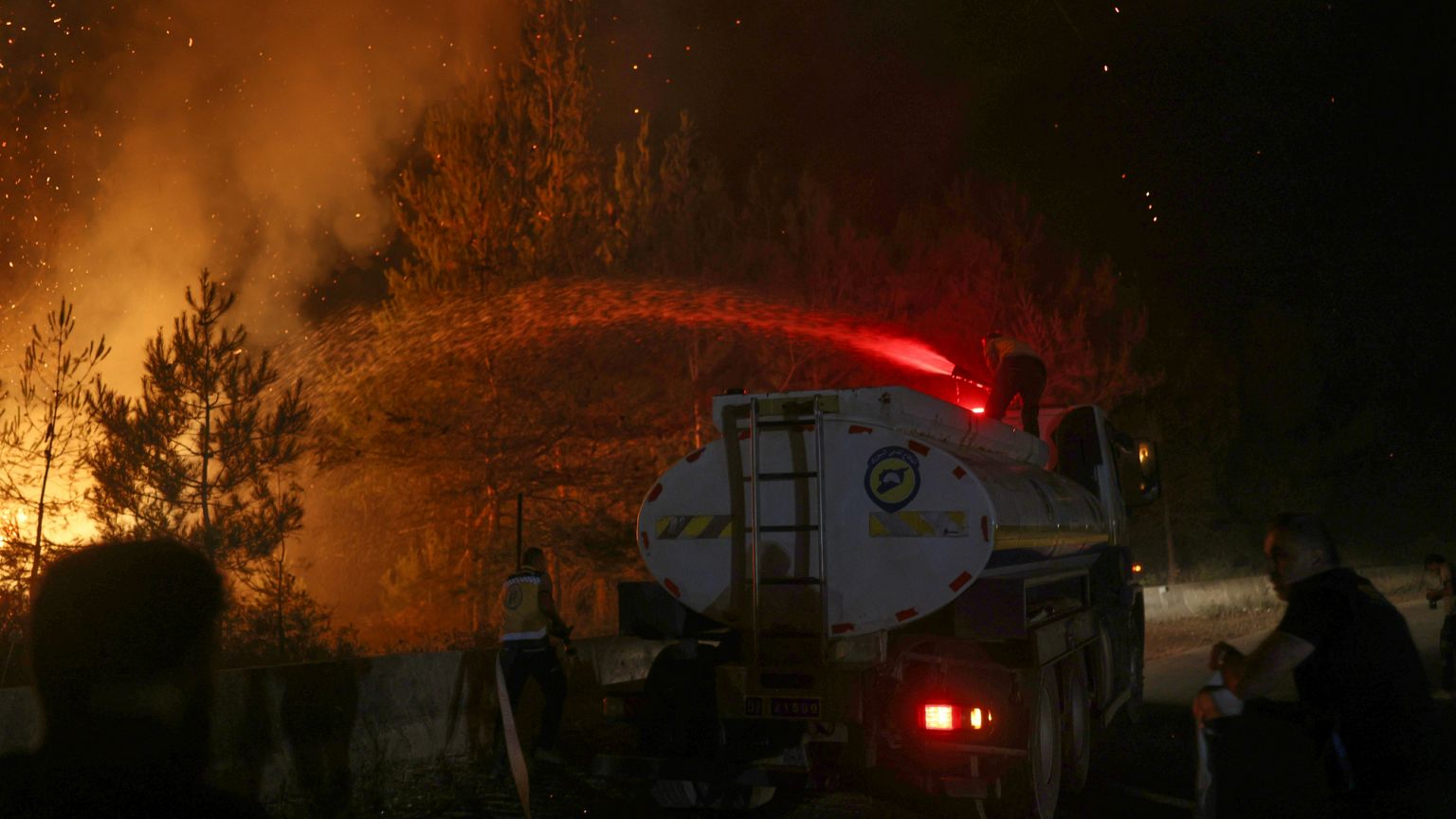
Fires also broke out along the Turkish-Syrian border. Syrian minister of emergency and disaster management Raed al-Saleh called the situation “extremely tragic.”

In a statement posted on X, he said the fires had destroyed “hundreds of thousands of trees” covering an area estimated at 10,000 hectares.

“We regret and mourn every tree that burned, which was a source of fresh air for us,” al-Saleh said.

‘Hydroclimate whiplash’ is exacerbating extreme weather

Climate change is also contributing to a phenomenon known as “hydroclimate whiplash”, which refers to large swings between heavy rainfall and extreme drought conditions.

This is particularly dangerous as the vegetation growth that happens after the rainfall is immediately dried out, becoming ready fuel for wildfires, Dugan-Knight explains.

“Through its impact on heatwaves and precipitation, climate change is making wildfires more common and more deadly,” he adds.

He also warns that the emissions from wildfires “point to a cruel irony and a vicious cycle where climate change makes wildfires more common, and wildfires’ emissions contribute to climate change.”

Balkans pummelled by storms after extreme heat

The Balkans are currently experiencing just such rapidly changing weather phenomena.

A severe hailstorm ripped up trees and roofs in Croatia on Tuesday, coming right on the heels of a 40°C heatwave.

At least three people were injured, and severe damage was reported across the city, including downed trees and flooded streets.

An Index news portal report quoted the Split meteorological service as saying that “such storms are usual after a long period of heat with extremely hot days.”

The weather service in neighbouring Slovenia said on Tuesday that snow fell at high altitudes in the Alps while the rest of the country has been pounded with heavy rain and hail.

Climate change-induced extreme weather is putting Europeans at risk

After battering Croatia, the storm later swept through Serbia. It came after firefighters battled more than 600 wildfires on Monday that injured six people.

Serbia has been hit by a severe drought this summer that has endangered crops and led to restrictions in supplies of drinking water throughout the country.

It is a concrete example of the findings of the first European Climate Risk Assessment (EUCRA). The report identifies 36 climate risks that pose a threat to Europe’s energy and food security, ecosystems, infrastructure, water resources, financial stability, and people’s health.

It shows that many of these risks have already reached critical levels and can become catastrophic without urgent and decisive action.

“Without strong adaptation and mitigation actions, hundreds of thousands of people could die from heatwaves, and economic losses from coastal floods alone could exceed €1 trillion per year in a high warming scenario,” the EEA says.


Recurrent wildfires across the Mediterranean region are changing its landscape

Multiple countries in the Mediterranean region have been battling intense wildfires this summer, including France, Greece, Syria and Turkey. These aggressive, recurring fires suggests a new normal of altered lives, landscapes and economies in the Mediterranean basin.


Issued on: 09/07/2025 - 
By: Diya GUPTA
An aerial view shows a fire truck driving down a road as firefighters battle forest fires in the coastal Syrian province of Latakia on July 5, 2025. © Omar Haj Kadoor, AFP


After sizzling in an early summer heatwave, large swaths of the Mediterranean region are ablaze.

Parts of southern France, Greece, Turkey, and Syria have been engulfed in flames in the past few weeks. The city of Marseille is still battling an enormous fire that scorched homes on its outskirts and forced the closure of its airport. Flames disrupted the local economies of the Greek islands of Crete and Evia and forced thousands of people to evacuate their homes. Acres of land were left charred in Turkey’s Izmir province, with smoke visible from satellite imagery. And after years of continued political instability, Syria is faced with uncontrollable wildfires that have burned more than three percent of the country's forest cover.

These events are part of a broader pattern. The Mediterranean has always been a fire-prone region due to its hot, dry summers and quickly flammable vegetation. But climate change has significantly amplified the occurrences and severity of wildfire. The European Forest Fire Information System (EFFIS) said Tuesday that over 214,000 hectares have burned in wildfires across the EU in 2025 so far – more than double the average for this time of year over the past two decades. This escalation is directly linked to climate change, which has made heat-induced wildfires much more likely in the Mediterranean basin.

People look on near the Plage des Corbieres in Marseille, southern France on July 8, 2025, as smoke from a wildfire looms. © Clement Mahoudeau, AFP

There is no question that without drastic preventative action, summer wildfires will continue to scorch the region. Overall, the number of wildfires are predicted to rise by 50 percent by 2100 – making the flames spreading across the continent not an anomaly, but an inevitability that experts say we are not yet prepared for.

A land forged in fire

Wildfires have always been part of the life-cycle of the Mediterranean ecosystem. In fact, some species like the plant family Cistaceae have evolved to coexist and even thrive within the summer flames.

These unassuming flowering shrubs known as "rock-roses" – occasionally, "children of fire" – are distributed throughout the Mediterranean basin. Their seeds reflect the hardiness of the region in which they thrive: as the dry summer vegetation falls prey to fire, the Cistaceae seed’s impermeable coating breaks open and a tiny shoot is born from the soil. Many species of flora in the region do not germinate until fire ignites.

But these adaptations are dependent on predictability. Wildfires in the region are evolving – they start earlier in the year and last longer, burning through the native olive trees and Mediterranean shrubbery with increased speed and intensity. Not even the hardy seeds of the Cistaceae will survive through such aggressive fire.

Firefighters battle a blaze on the southern Greek island of Crete on July 3, 2025. © Costas Metaxakis, AFP

This also means that ecosystems will take longer to recover and are likely being fundamentally altered by the increasing frequency and intensity of wildfires. The land tends to stay dry for longer and the rising aridity may be converting Mediterranean forests into open shrubland. Studies suggest that water stress hampers post-fire recovery, potentially pushing ecosystems past a tipping point where forests cannot reestablish, giving way to more flammable shrub species that recover quickly after fires. Depending on the species, vegetation needs between 25 to 250 years to reach maturity. So after an intense wildfire, new vegetation is smaller, younger, drier – and by extension, more flammable – than before.

Ferocious forest fires can also strip away the protective plants that hold topsoil together with their roots. When they burn, this plant-supporting top layer of soil, rich in organic matter and nutrients, erodes. The soil becomes less fertile, leading to further biodiversity loss and contributing to desertification, a growing concern in the Mediterranean.

Adapting to a new normal


The Mediterranean is condemned to bear a disproportionate burden from climate change as it warms 20 percent faster than the global average, according to the UN. The cultural identity of Mediterranean communities is tied to their landscapes, which support livelihoods through agriculture and tourism (30 percent of world tourism). Just as the Mediterranean landscape evolves, so must its people.

A burnt residence in the District of Marseille, southern France on July 9, 2025 after a wildfire swept through areas close to the centre of the Meditteranean port city. © Viken Kantarci, AFP

About 60,000 forest fires rage through the EU each year – most of them in the Mediterranean region – claiming lives, torching homes and destroying crops. An extraordinary half a million hectares is burnt repeatedly, year after year, causing economic losses of over €2 billion. According to a European Central Bank official, extreme weather events such as heatwaves, floods and wildfires could wipe as much off Eurozone GDP in the next five years as the global financial crisis or the Covid-19 pandemic.


With a population of over 500 million people in the Mediterranean, within and beyond the EU, curbing the ecological and economic impact of wildfires is of critical importance to local decisionmakers.

"The Mediterranean is also currently a hotspot of social and political instability, experiencing economic losses, conflicts and significant suffering of populations; even if the causal links with climate change cannot be demonstrated, expected future changes are so great that the risk of increased instability is significant and will require major adaptation efforts," Wolfgang Cramer, a specialist of Mediterranean ecology at France's National Centre for Scientific Research, writes in The Conversation.


Strengthening local capacity to respond to wildfires, through early warning systems and evacuation plans, is essential to safeguard both lives and cultural heritage. Thousands of people have been saved across the region because of timely warnings and preparedness.

Adapting to the recurrent wildfires will certainly mean investing time and money in prevention. Experts say that planned reforestation, building climate-resistant cities, and adapting farming practices to climate conditions could prevent future fires to an extent, or at least reduce the damage.

The long-term outlook for the Mediterranean region under the influence of climate change and wildfires suggests a new normal of altered landscapes. Change is inevitable, and it will have a ripple effect on various species of flora and fauna, as well as the cultural heritage of the people so inextricably linked with the land.

FOCUS © FRANCE 24
05:44
Raging wildfire in France shuts down Marseille airport

A wildfire that had reached the northwestern outskirts of France's second city of Marseille lost intensity overnight on Wednesday, but the airport remained closed as firefighters continued to battle the flames.


Issued on: 09/07/2025 -  RFI

People look on near the Plage des Corbieres, in Marseille, southern France on 8 July, 2025, as a smoke from a wildfire rages in the background. 
© AFP - Clément Mahoudeau

Tuesday's fire started in a vehicle in the area of Pennes-Mirabeau to the north of Marseille, on the road to its airport, roaring across 350 hectares by the afternoon, firefighters said.

It sent plumes of acrid smoke billowing into the sky, causing the airport to close its runways shortly after midday and cancel at least 10 flights, a spokesman for the Marseille Provence airport said.

The air hub's website showed departures – including to Brussels, Munich and Naples – had been called off.

The fire had burnt through 700 hectares but no fatalities had been reported. It decreased in intensity overnight but has not stabilised, the city's prefecture said on Wednesday morning.

Rail travel in Marseille was also affected. More than a dozen trains in and out of the city were cancelled on Tuesday, according to the SNCF national rail operator's website. Traffic was expected to return to normal on Wednesday.

A police officer helps local residents to extinguish a fire during a wildfire spreading in L'Estaque district of Marseille, southern France on 8 July, 2025. 
© AFP - Clément Mahoudeau

Marseille mayor Benoit Payan had on Tuesday warned residents that the fire was now "at the doors of Marseille", urging inhabitants in the north of the city to refrain from taking to the roads to leave way for rescue services.

Payan announced on Wednesday morning that that part of town was "no longer under lockdown" and residents were allowed out, while calling on them to "exercise the utmost caution in the area, as emergency services are hard at work".

The mayor of Pennes-Mirabeau, where the fire began, said two housing estates had been evacuated. It was too soon for the hundreds of residents who had fled from the wildfire to return, officials said.


More destructive wildfires


The fire near Marseille is just the latest to have hit southern France in recent days, fanning out at speed due to wind and parched vegetation after a heatwave.

To the west along the Mediterranean coast, near the city of Narbonne, more than 1,000 firefighters from around the country battled to contain another blaze that had crept across 2,000 hectares of trees. It started on the property of a winery on Monday afternoon, they said.

The fire near Narbonne caused authorities to temporarily close the A9 autoroute to Spain.

Climate change has made wildfires more destructive in Mediterranean countries in recent years.

Over the last 10 days, fires have raged in northeastern Spain, on the Greek island of Crete and in Athens.

(with newswires)