Thursday, July 10, 2025


Irish watchdog begins probe into TikTok’s data transfers to China

Video Sharing platform TikTok was fined €530 million in April.
Copyright Ashley Landis/Copyright 2025 The AP. All rights reserved

By Cynthia Kroet
Published on 

In April, the video sharing platform was hit with a €530 million fine.

The Irish Data Protection Commission (DPC) opened a new inquiry into TikTok’s transfers of EU users’ personal data to servers located in China after new information emerged, it said in a statement on Thursday.

The probe comes after the DPC issued a €530 million fine against the video sharing platform in April for failing to protect personal data of EU users when transferring it to China.

The watchdog said that during the investigation, TikTok claimed that transfers of EU users’ personal data to China took place by way of remote access only, and that the data was not stored on servers in China. 

But TikTok subsequently told the DPC that it discovered in February 2025 that limited EU personal data had been stored in China, by contrast with its previous claims. 

The DPC - the lead privacy watchdog in Europe for TikTok’s owner ByteDance - said in its decision that it is concerned about the inaccurate information provided and that it consulted other national data protection authorities about what regulatory steps to take. 

The new investigation will determine whether TikTok has complied with its obligations under the General Data Protection Regulation (GDPR) in the context of third country transfers.  

A spokesperson for TikTok said in a statement that the teams "proactively discovered" the issue.

"We promptly deleted this minimal amount of data from the servers and informed the DPC. Our proactive report to the DPC underscores our commitment to transparency and data security," the spokesperson said.

The EU has so-called adequacy agreements – which means that the regions acknowledge each others’ data protection frameworks -- with several countries such as the US, Switzerland and Argentina, but that list does not include China.

Tighter borders and aid cuts could risk greater instability, UN migration chief warns


Copyright AP Photo
Published on 10/07/2025 -


Amy Pope's comments come as European countries shift towards stricter migration policies, with more funding for expanded deportation efforts and for transit countries to deter migrants.

The head of the United Nations migration agency warned on Thursday that Western nations risk creating greater instability by simultaneously tightening borders and reducing development aid to countries experiencing mass migration.

In an interview with the Associated Press, Director General of the International Organisation for Migration (IOM), Amy Pope, said that an approach focused solely on border enforcement without addressing causes of migration was "short-sighted" and could destabilise origin countries further.

"If you want to manage irregular migration, then you need to make investments in stabilising populations closer to where the migration begins," Pope said.

"It is short-sighted to cut foreign assistance without identifying alternatives to make sure that populations are not on the move."

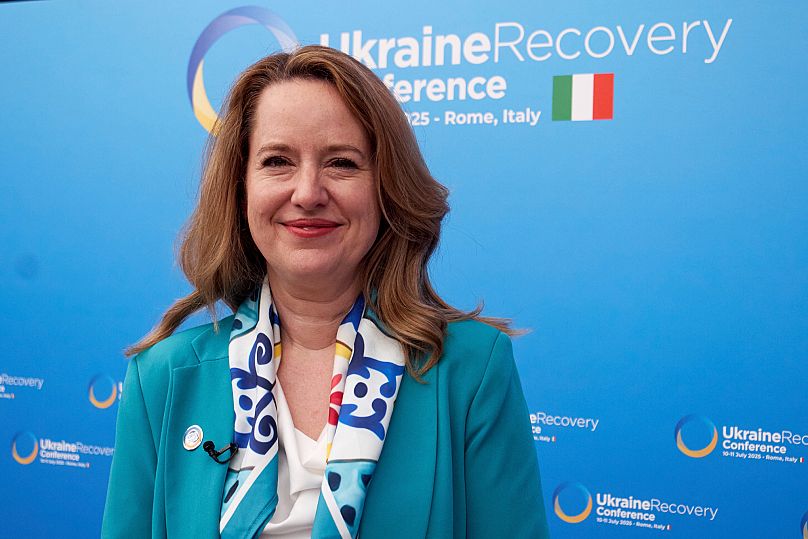
Amy Pope, Director General of the IOM, photographed in Rome, 10 July, 2025AP Photo

Pope became the first woman to lead the IOM in 2023 after serving as a White House advisor on migration and homeland security under the Obama and Biden administrations.

She spoke to the AP at an international conference in Rome to support Ukrainian reconstruction.

Her comments come as European countries shift towards stricter migration policies, with more funding for expanded deportation efforts and for transit countries to deter migrants.

The Greek parliament was expected to adopt a proposal on Thursday to suspend asylum applications for all migrants traveling by sea from Libya, following a spike in arrivals.

Pope singled out Syria as a concern, cautioning that premature repatriation could prove counterproductive.

Related
Fact check: Which EU country returns the most irregular immigrants?
Greece suspends asylum claims for migrants arriving by sea from North Africa, PM Mitsotakis says

"If Syrians go home too quickly and they’re facing further destabilisation, further conflict, if their children aren’t safe, if their homes are still destroyed and they have nowhere to go, that could actually backfire," she said.

Pope noted that tougher US border policies have already created ripple effects throughout Latin America.

"We're seeing a reversal of the flows. Not only are fewer people coming to the United States and Mexico border, more are actually heading south," she said, raising concerns about capacity and support for countries along alternative migration routes including Panama, Costa Rica and other Central American nations.

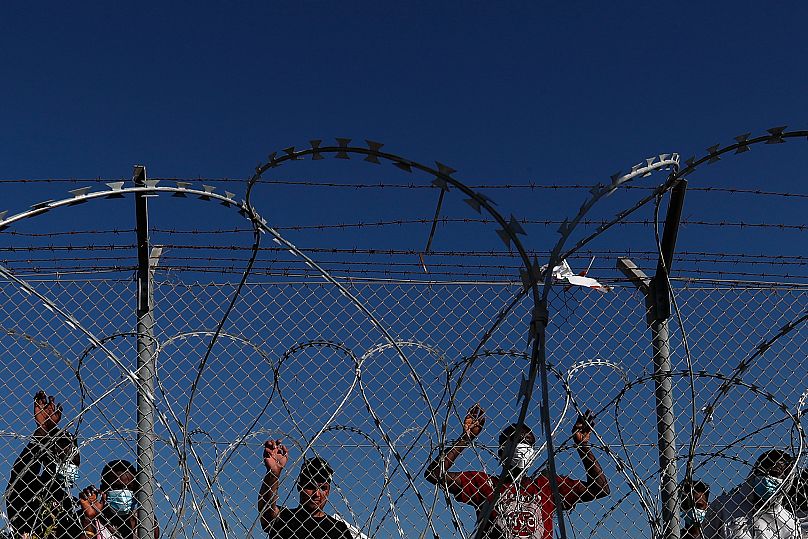
Migrants stand behind a fence inside a refugee camp in Kokkinotrimithia outside the capital Nicosia, 5 February, 2021AP Photo

The IOM chief was supportive of Italy's approach, which combines strict border measures with expanded legal migration channels.

Italy plans to provide nearly 500,000 permits for non-EU workers, starting in 2026 and staggered over three years, working with employers to identify labour needs.

"You can't have enforcement on its own without addressing the pull factors that are encouraging migrants to come," Pope said, calling Italy's strategy an "experiment" worth watching.

"We encourage other governments to watch what’s happening in this space closely."

Additional sources
Exclusive: Abu Shabab forces emerge as new militia in Gaza to challenge Hamas' control
Copyright AP Photo


By Aleksandar Brezar & Gregory Holyoke
Published on 10/07/2025 -


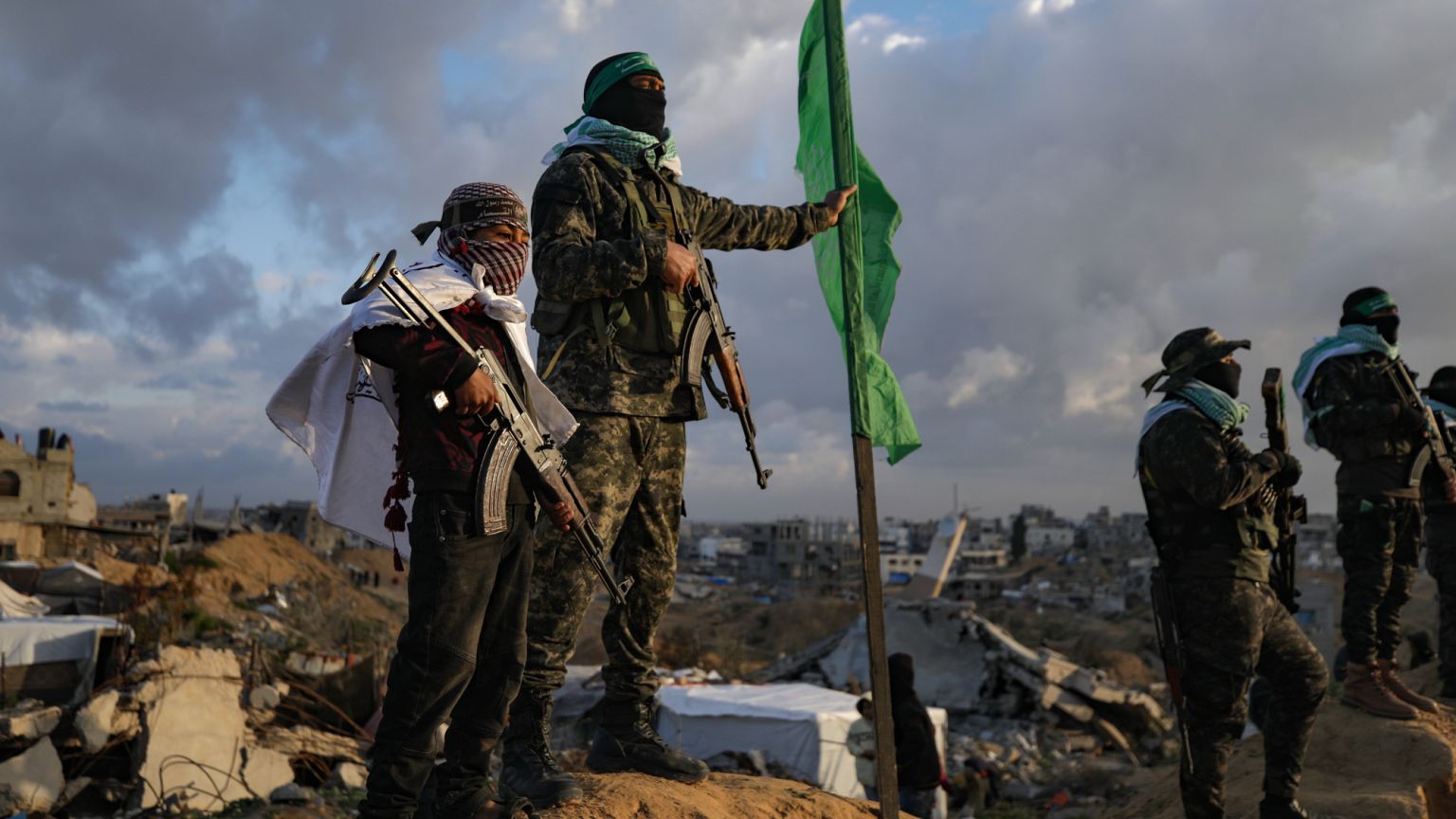
The Popular Forces, a new Palestinian militia in Gaza, aims to challenge Hamas and its rule. However, scepticism surrounds the group over its ability to assert itself, as well as its leader Yasser Abu Shabab and his criminal past.

A 300-member-strong Palestinian militia has emerged in Gaza, aiming to liberate the Strip from Hamas — and now it says it has the backing of Israel.

The group, calling itself the Popular Forces, operates in eastern Rafah under the leadership of Yasser Abu Shabab, a Bedouin man in his thirties who spent years in Hamas detention for criminal activities before the 7 October attacks freed him from prison.

According to comments made exclusively to Euronews, Abu Shabab’s group — not to be confused with Somalia’s Islamist extremists, Al-Shabaab — first banded together in June 2024.

The Popular Forces, who also go by the moniker Anti-Terror Service, describe themselves as "volunteers from among the people" who protect humanitarian aid from "looting, corruption and organised theft" by Hamas-affiliated groups.

"We are not professional fighters, nor are we a militia, as we do not engage in guerrilla warfare tactics," the group said in a statement to Euronews.

Hamas has responded with direct assassinations against Popular Forces members, going on a show of force against potential rival organisations despite months of Israeli military strikes.

"Hamas has killed over 50 of our volunteers, including members of Commander Yasser's family, while we were guarding aid convoys," the Popular Forces spokesperson said.
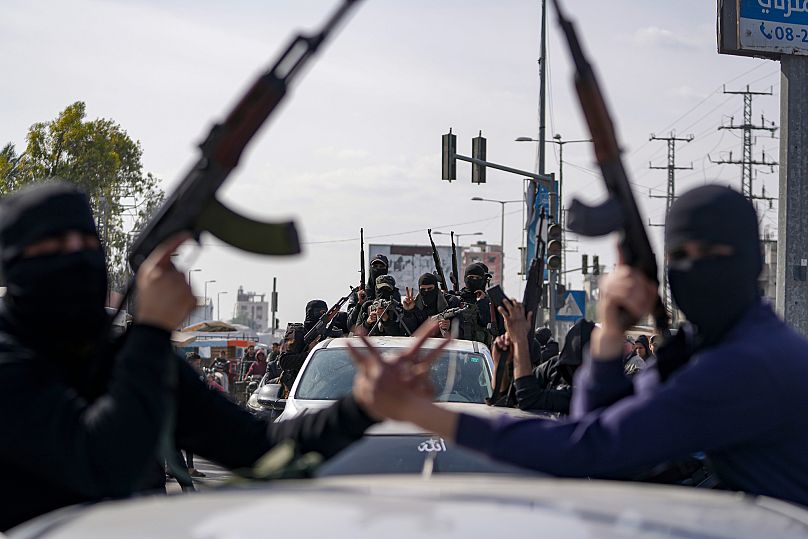
FILE: Members of the al-Qassam Brigades, armed wing of Hamas, take part in a parade as they celebrate a ceasefire between Hamas and Israel in Deir al-Balah, 19 January 2025AP Photo

Earlier, Hamas firmly rejected allegations of war profiteering and humanitarian aid theft, also levelled at them by Israel — something the Popular Forces insist is in fact still happening.

Meanwhile, Yasser Abu Shabab himself revealed his group is “coordinating” with the Israeli army in Rafah.

In an interview on Sunday with Israeli public broadcaster KAN’s Arabic-language radio, Abu Shabab said his group is cooperating with Israel on “support and assistance” but not “military actions,” which he explained were conducted solely by his group.

While the Popular Forces have since denied that Abu Shabab gave the interview to KAN altogether after coming under fire from critics in Gaza, the arrangement would represent Israel's latest attempt to cultivate local partners who might challenge Hamas’ control of the Strip.

A broader coalition, including the Palestinian Authority (PA), Egypt, the UAE and the US, is reportedly involved in seeking alternatives to Hamas rule.

But not everyone is convinced this strategy is bulletproof.

"These popular forces are a two-edged sword," Fleur Hassan-Nahoum, Jerusalem's deputy mayor and Foreign Ministry special envoy, told Euronews.

"We're not talking about peace-loving democrats. We're talking about gangs who've had enough of the biggest gang of all, which is Hamas."

Although wary of Abu Shabab, Hassan-Nahoum also acknowledged Israel has little choice. "There were two Gazas," she explained. "There was the Gaza of Hamas ... and then there was the second Gaza of the disenfranchised people who weren't part of Hamas."

And some among the disenfranchised have simply reached a breaking point, Hassan-Nahoum said. "These gangs, I believe, have just gotten to the point where they feel that Hamas is weak, and obviously, they've created the biggest catastrophe for the Gaza Strip in history."

Syria's Ahmed al-Sharaa, who transitioned from al-Qaeda affiliate leader and wanted terrorist under the nom de guerre Abu Mohammad al-Jolani to a legitimate political role as the country’s leader, was an example where the 180-degree turn could work despite scepticism, Hassan-Nahoum added.

"Al-Jolani in Syria was also running a gang (...) and look, he's stepping up. So you don't know who could step up out of these gangs."

'Imagine Pablo Escobar as president of Colombia'

Rami Abou Jamous, a Gaza-based journalist who previously worked for France 24 before establishing GazaPress, vehemently disagrees. According to him, Abu Shabab is no al-Sharaa — and in the context of the Strip, the militia leader’s claims should be taken with a grain of salt.

Despite his own strong critique of Hamas, Abou Jamous did not see the Popular Forces’ leader as viable or credible alternative.

“Imagine if Pablo Escobar became the president of Colombia. That’s exactly what this is: a drug trafficker collaborating with an occupying army against his own people,” Abou Jamous told Euronews.

Yasser Abu Shabab has long faced accusations by members of his own family — including one who was once part of his group — that he was involved in smuggling cigarettes and drugs from Egypt and Israel into Gaza through crossings and tunnels before the war.

He had been in prison on trafficking charges on 7 October, but was freed along with most other inmates when the war began in October 2023, an anonymous relative told international outlets.
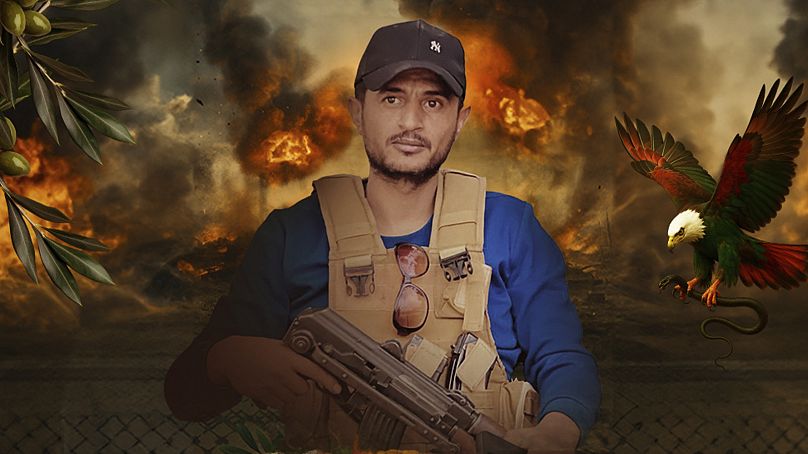
Yasser Abu Shabab in a promotional pamphlet shared on the Popular Forces' Facebook page   Courtesy of the Popular Forces

While Abu Shabab now presents himself as a leader of an ever-growing cohort working in the interest of ordinary Palestinians, Abou Jamous contended that, “we shouldn’t really call them a ‘force’.”

“It’s a few dozen people from a clan called Asalamu Alaykum, originally involved in diverting humanitarian aid,” he explained.

“He claims to be protecting (aid) trucks or the UN, but that’s like someone filming in his own house and saying he’s protecting his dog — if the dog leaves, he can do nothing.”

“What he’s doing now is propaganda — a bubble created for international consumption,” Abou Jamous, who recently won three awards at the prestigious Bayeux Calvados-Normandie Prize for his reporting from Gaza, concluded.


'It was a huge mistake'


Israeli military and intelligence veterans expressed sharp criticism of the strategy, which has previously created stronger adversaries.

Guy Aviad, a former IDF military historian and Hamas expert, pointed to Israel's support for Christian militias in Lebanon, which backfired and ended up with 18 years of Israeli military involvement in the country’s south.

"We helped them a lot against the PLO in Lebanon. But they dragged us into their own country," he told Euronews, describing the period from 1982 to 2000 as marked by "a lot of bloodshed in the Lebanon area."

Then there was Israel's tacit support for the Muslim Brotherhood in Gaza during the 1980s, intended to counter the Palestine Liberation Organisation (PLO) — whose militant wing conducted acts of violence against the Israeli army and civilians at the time — but ultimately gave rise to Hamas itself.

"Israel thought at the time that the main adversary in the Gaza Strip was, of course, the PLO, so they tried to strengthen the force of the Muslim Brotherhood," Aviad explained. "But of course, in retrospect, we see that it was a huge mistake."

"I think the security services and also the Israeli government didn't know military history enough," Aviad said. "I think that the Abu Shabab gang in the southern Gaza Strip will not be a game-changer in the Israel-Hamas war."

Michael Milshtein, former director for Palestinian affairs in Israeli intelligence, was more direct. The Popular Forces represent "the gang of Abu Shabab clan" that was "involved in criminal cases, smuggling, robbing, every negative aspect" before 7 October, he told Euronews.

"I am very much a critic toward this policy or this move," Milshtein said. "We ignore the basic DNA, the basic nature of such a gang. You know, they are thieves."

Simply put, Israel is repeating the same mistakes yet again, he warned. "It seems to me that we learned nothing from history," Milshtein concluded.
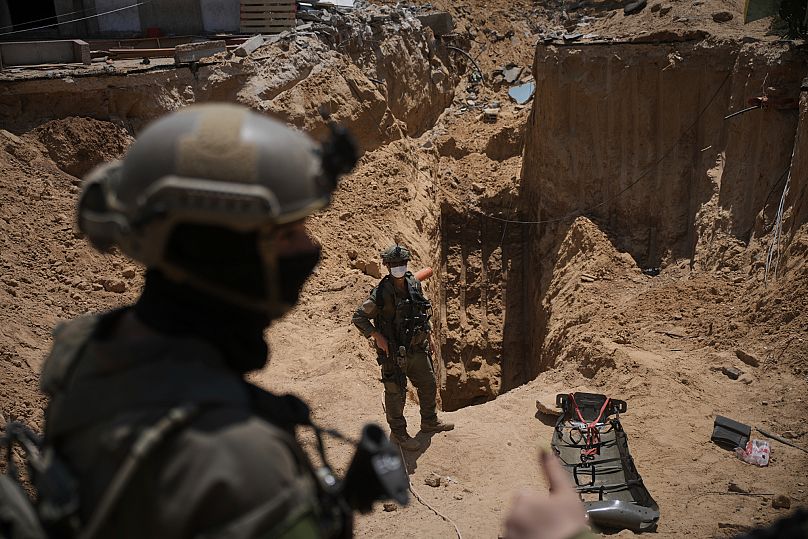
Israeli soldiers stand next to an entrance of a tunnel under the European Hospital in Khan Younis, where the Israeli military claims that Hamas militants operated, 8 June 2025AP Photo

In turn, some Israeli officials defended the arrangement as necessary given the absence of practical alternatives in Gaza.

Power vacuums inevitably get filled, Hassan-Nahoum argued. "I'm a big believer that there's never a vacuum of power," she said. "When one hole is created, somebody comes and fills it up. And this is what's happening."

And with Hamas’ aggressive approach backfiring, putting the group in Israeli gunsights, the gangs might be reconsidering their approach, she argued. "Let's try plan B, get along with Israel and maybe we'll be better off."

A former senior member of the Mossad’s counterterrorism unit, who spoke to Euronews under the condition of anonymity to avoid interfering with the Israeli government’s work, acknowledged the group's criminal nature but suggested support for them amounted to pragmatic necessity.

"They're not people I see as an alternative for long term in Gaza, I mean they are gangsters, but sometimes you have to work with gangsters to overthrow Hamas," they told Euronews.

Intelligence sources who spoke to Euronews described Israeli support as "a short-term tactical move," with these groups unable to serve as "a substitute for a long-term strategic plan."

Others join in to protect aid convoys

Meanwhile, the ongoing humanitarian crisis, which has placed some 2 million Palestinians in peril of starvation, might turn into a key political, ideological and armed battleground in Gaza.

In recent weeks, further self-organised groups with no links to either Hamas or Abu Shabab have come forward in a bid to provide armed protection to aid deliveries in the Strip.

In late June, a group of Gaza's influential residents announced that they had initiated an independent effort to secure aid convoys from looting.

“We gather in this place to announce with a loud cry and a loud voice that these trucks that come to Gaza, the besieged city … must reach families there and those in need,” the National Gathering of Palestinian Tribes, Clans and Families said in a video statement seen by Euronews.

“Do not be part of a group that is misled by the robbers and the smugglers. They are selling (aid) in the markets at high prices,” the group said.

“We must eradicate this evil phenomenon, and we must stop these smugglers from taking the trucks, and let the trucks go to the warehouses safely, until they are distributed to everyone, and each person takes their share,” they concluded.
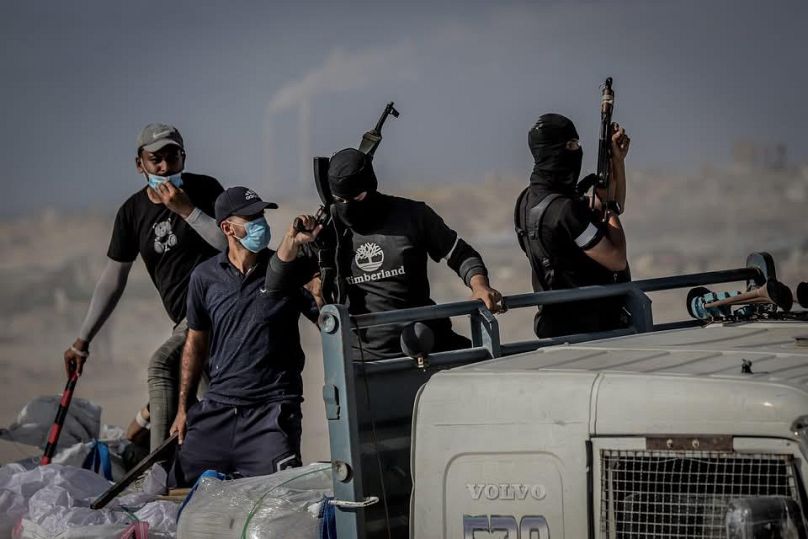
A self-organised group of Gaza residents protect an aid convoy, 25 June 2025Courtesy of Said Jaras

However, these initiatives remain confined to pockets of the Strip, and whether they can challenge Hamas’ ironclad grip on Gaza remains dubious, experts say.

The Popular Forces’ 300 fighters alone represent a fraction of Gaza's population and lack the infrastructure to partake in its administration in any meaningful way, compared to Hamas’ well-organised and robust mechanism, which does not bode well for the likes of Abu Shabab.

"Hamas knows how to suppress popular uprisings or organisations that try to challenge them," Aviad said. "Hamas has a very sophisticated, very efficient security apparatus that knows how to find those who collaborated with Israel."


Can a true contender step up?

The biggest challenge any newcomer faces is winning over the hearts and minds of Palestinians, as Hamas has controlled Gaza since 2007, or nearly two decades.

"Most of the population knows only the Hamas movement. More than half of the population in the Gaza Strip is under 18," Aviad explained. "So, most of the population was educated by the Hamas system; that's what they are familiar with."

And Abu Shabab cooperating with Israel might prove counter-effective, as the devastation of the Israel-Hamas war has deepened anti-Israeli sentiment in the Strip.

"After a very, very bloody war in Gaza, there is not a single person in Gaza who hasn't lost someone in their family or friends," Aviad observed. "So, none of them are going to like the Israeli regime more."
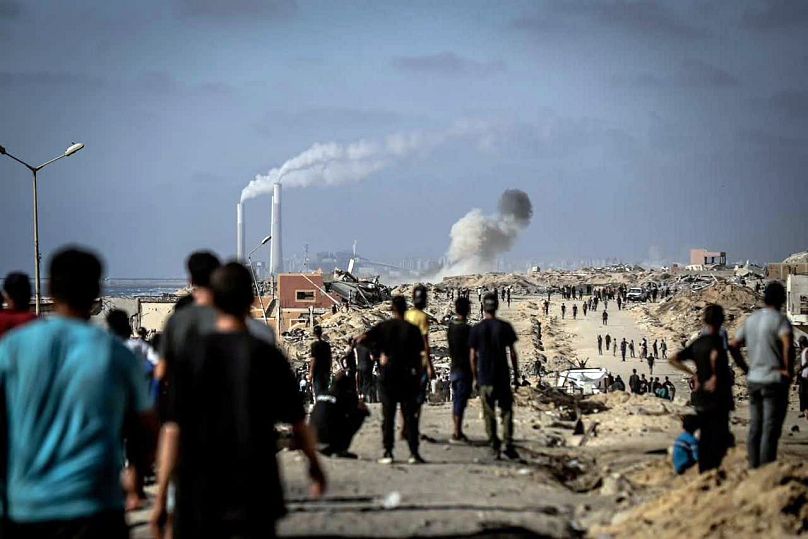
A general view of Gaza near Rafah, 25 June 2025Courtesy of Said Jaras

And in Gaza, contenders have been hard to come by anyway. The Israeli government has rejected the Palestinian Authority — who remain the recognised political representatives of the occupied West Bank — return to the Strip, while no credible alternative has emerged.

"There are two main blocs in Palestinian society: the secular one, which is led by Fatah or the Palestinian Authority, and the religious one, ruled by Hamas and Islamic Jihad," Aviad concluded. "There is no third alternative."

Meanwhile, the Palestinian Authority’s influence has come into question even further, after a group of sheikhs in the West Bank announced over the weekend they are interested in declaring an emirate in Hebron and joining Israel’s Abraham Accords, in what they say is an attempt at finally reaching peace in the region.

In Gaza, the fundamental question remains whether supporting criminal gangs can provide a pathway to post-Hamas governance. "We want somebody to come and say, you know, we are the viable rulers,” Hassan-Nahoum explained.

“And on the other hand, if ideologically they're still on the same page as Hamas, then what did we achieve here?”

'Manosphere' influencers prey on the insecurities of young men, expert says

The UN has recently warned about the dangers of online misogyny, specifically in relation to the so-called 'manosphere' - a network of communities that claim to address men’s struggles, but often promote harmful advice and attitudes, as well as false narratives about gender equality. FRANCE 24's Sharon Gaffney speaks to sex counsellor and therapist Claire Ferrero. She says that online mysogynist influencers prey on the insecurities of young men for profit.


Video by:  Sharon GAFFNEY  

FRANCE24
Issued on: 17/06/2025 - 


1 in 5 young people  GIRLS

in Spain have had nude AI deepfakes made of them, Save the Children says

A teenage girl uses her mobile phone.
Copyright Canva


By Christina Thykjaer & Euronews en español
Published on 

A Save the Children study reveals that nearly all young people in Spain have suffered some form of digital sexual abuse before the age of 18.

One in five young people in Spain say fake nude images of them have been created using artificial intelligence (AI) and spread online without their consent when they were still minors.

This is revealed in a new study by Save the Children, which also points out that 97 per cent of those surveyed experienced some form of sexual abuse online before the age of 18.

The report, produced in collaboration with the European Digital Transition Partnership, is based on a survey of more than 1,000 young people aged 18-21 between March and April this year.

Through this research, Save the Children aims to highlight the extent of online sexual violence suffered by children and adolescents in Spain, as well as the emerging role of technology as a tool for abuse.

According to the report, most young people have not experienced abusive behaviour online, but they have also had contact with adults for sexual purposes on social networks, video games, or streaming services. Girls are at higher risk.

In addition, a significant proportion of respondents reported being pressured to send intimate images and, in some cases, being threatened or blackmailed.

Save the Children warned that these forms of violence are not always visible.

"These figures represent only the tip of the iceberg, as most cases go unreported due to underreporting and difficulties in detecting them, especially in the digital environment," said Catalina Perazzo, the organisation's director of influence and territorial development.

Many young people do not think sharing intimate images is risky

One of the recent cases illustrating this problem occurred in Alicante, where a 12-year-old girl was threatened with the publication of AI-generated nude images of her if she did not forward a sex video she had received.

According to a Save the Children educator who dealt with the case, the girl had not previously shared intimate content, but still felt responsible for the situation.

The research also highlights the normalisation of sending sexual content among adolescents. Almost half of young people surveyed said they do not perceive any risk in sharing intimate images, while many share them with the hopes of winning affection, attention, or another perceived benefit.

Only a fraction recognise the dangers involved in contacting strangers or sharing such content.

Perazzo stresses that even when these behaviours are done voluntarily, the risks are high. Once an intimate image is shared, control over its dissemination disappears and opens the door to multiple forms of victimisation.

The consequences can range from redistribution of the content without consent to its use for blackmail or sexual abuse by adults.

Save the Children called for stricter laws and digital education to protect children and teenagers from sexual abuse online.


Rebooted and 'vulnerable': Superman is back on screens

The Guardian newspaper was withering, saying it amounted to Superman having "an uninteresting crisis of confidence in Gunn's cluttered, pointless franchise restarter"

Paris (AFP) – A rebooted Superman is flying into cinemas around the world this week, with critics mostly positive about the latest version of the caped hero who has been updated for the modern world.

Issued on: 10/07/2025 - 

Nicholas Hoult, Rachel Brosnahan and David Corenswet attending Monday's Los Angeles premiere of "Superman" © VALERIE MACON / AFP

Director and screenwriter James Gunn said he set out to make the benevolent world-saver "a little less powerful" in what is a tenth silver-screen version of the original 1930s DC Comics character.

The 1978 classic starring Christopher Reeve remains the reference point, but other outings include the little-loved 2013 "Man of Steel" by Zack Snyder, 2016's "Batman v Superman: Dawn of Justice" and 2017's "Justice League".

Gunn's Superman, played by square-jawed David Corenswet in his biggest role to date, appears at times naive and awkward, and has to contend with criticism on social media and angry talk shows.

"I wanted Superman to be vulnerable," Gunn told Rolling Stone magazine last month.


"A lot of people are like, 'I like Batman better (than Superman) because he can actually be beat, and I get that," he explained. "So we have a Superman that can be beat."

Critical reaction to the Warner Bros. Discovery production has so far been broadly positive, even though Hollywood studios are facing rising criticism over their reliance on reheated classics and comic book characters.

Review aggregator website Rotten Tomatoes gave it a high 83 percent rating based on the views of 230 critics.
'Charming' or 'pointless?

The New York Times said Gunn's "charming take on the Superman myth succeeds -- it even won over a particular superhero-weary critic."
David Corenswet is in his biggest role to date as the new Superman © VALERIE MACON / AFP

"It’s a sincere but also goofy movie, with a few well-timed twists on the mythology and a couple of added characters," it added.

These include Superman's dog Krypto and fellow meta-humans Green Lantern, Mister Terrific and Hawkgirl, who appear alongside beloved original characters such as journalist Lois Lane, played by Rachel Brosnahan from "House of Cards".

"Gunn's bright and bouncy film conceives of the hero as just one of Earth's many gifted do-gooders," read a generally positive review in The Atlantic magazine.

The BBC was less keen, however, with its critic saying Gunn's "wacky take on Superman's mythos soon comes to feel exhaustingly self-indulgent."

The Guardian newspaper was withering, saying it amounted to Superman having "an uninteresting crisis of confidence in Gunn's cluttered, pointless franchise restarter".

The main plot sees Superman torn between his alien Kryptonian identity and his bond with humanity as he strives to protect the people of Earth.

He finds himself under fire when he intervenes in a foreign conflict in which a dictator is waging war on a defenceless nation for its wealth, a possible allusion to Russian President Vladimir Putin's 2022 invasion of Ukraine.

© 2025 AFP

Baby bust: Why the French want fewer children – or none at all

Long Europe’s baby-making champions, the French are increasingly aiming to have smaller families or no children at all, a trend driven by changing social norms, economic constraints and the concerns and aspirations of a younger generation.


Issued on: 10/07/2025 - 
FRANCE24
By: Barbara GABEL

France's traditionally resilient birth rate has dropped sharply in recent years, fuelling talk of the end of the country's “demographic exception”.
 © Joël Saget, AFP file photo

From her teenage years, Bettina Zourli knew she would be the “cool auntie” – but not a mother herself. It’s a choice she recalls having to justify time and time again.

“People told me that I was bound to change my mind, that it was in the female nature to want children,” says the 31-year-old feminist writer and activist, whose Instagram account @jeneveuxpasdenfant ("I don’t want children") has more than 65,000 followers.

Zourli's views on the matter are increasingly common in a country that used to stand out from its European neighbours for its high birth rate, but has recently fallen in line.

Last year, 12.2 percent of French people said they didn’t want to have children, more than twice the number from 2005, according to a study released on Wednesday by national demography institute INED.


The figure is even higher in the 18-29 age group, roughly equivalent to “Gen Z”, with 15% percent of men and 13.3 percent of women saying they do not want to be parents.

The shifting numbers are the latest indicator of changing attitudes to parenthood and the steady erosion of France’s so-called “demographic exception”.
‘Changing social norms’

Zourli says it’s often hard to pinpoint a particular reason for not wanting children.

“It’s just the absence of desire,” she says. “It’s more of an innate thing. You can’t explain why you don’t want kids.”

According to the INED study, neither gender, nor standard of living, nor professional category alone can explain why a growing number of people say they have no desire for children. It points instead to how “attitudes and opinions” increasingly weigh in the balance.


Didier Breton, a professor of demography at the University of Strasbourg and associate researcher at INED, cautions against reading the figures as evidence of a fading desire to have children.

“It’s more a matter of changing social norms,” he says. “Twenty years ago, it was less acceptable for people to say they didn’t want children, particularly for women. Today, it’s easier to express such a choice.”

Breton points to several possible motives for not wanting children, including the physical transformations associated with pregnancy, a refusal to accept the constraints of parenthood, and a desire to preserve one’s freedom and independence.

“It’s about making life-defining choices, such as prioritising your career, travelling, or simply not reproducing the family model you’ve known,” he says.
Gender inequality

A 2021 survey of people who did not want children found that 86 percent cited the desire to devote themselves to “private life, relationships, friends and travel”. In second place, 71 percent of respondents said they didn’t identify with parenthood.

The latter figure conceals a major gender gap, with 45 percent of women answering “not at all” against 29 percent for men – a discrepancy that is even wider among people aged under 30.

“Gender inequality is a major factor in women’s stance on whether or not they want children,” says French sociologist Charlotte Debest, whose book “Elles vont finir seules avec leur chats” ("They will end up alone with their cats") will be published later this year.

“The unequal division of domestic labour makes it harder for women to see themselves as mothers,” Debest explains. “Many women refuse to accept traditional models of the ‘good mother’ that persist to this day. Such models are out of step with the aspirations of many young women.”

Concern about climate change and the future of the planet is another major factor.

In the 2021 survey, 63 percent of respondents cited environmental protection as a reason not to have children. The high percentage reflects both growing ecological awareness and a tendency to seek an ethical motive for remaining childless, argues Debest.


“Using the ecological argument gives social legitimacy to people who choose not to have children,” she explains. “Instead of just saying, ‘I don’t want children’, it’s a way to say you’re giving up on children for their own good.”

She adds: “Of course, there are many childless people who are genuinely committed to environmental activism or concerned about the future of the planet.”
The end of the three-child model

Such concerns are fuelling a rapid drop in France’s fertility rate, which slumped to 1.62 children per woman last year, down from 2.02 in 2010, hitting its lowest level since the end of the First World War.

The steady decline in recent years has prompted President Emmanuel Macron to call for a “demographic rearmament” of the nation with new reforms making it easier for people to have children – which are yet to come into law.


08:31


According to the INED study, people who do want children are increasingly aiming for smaller families, largely because of economic constraints.

Among women under 30, the desired number of children has fallen from an average of 2.5 in 2005 to 1.9 in 2024, the study found.

“The high cost of living coupled with job and housing instability mean many people feel they simply cannot afford another child,” says Debest. “There is a new awareness of the cost of bringing up children.”

Whereas 26 percent of French people said they wanted three children in 2005, the figure has now dropped to 15.5 percent.

“We are witnessing the erosion of the three-child family model, which was once highly valued in France,” says Breton, for whom the model is “destined to disappear”.

Zourli says she regularly receives Instagram messages from mothers wondering whether they should have a second child, and that many thank her for making them feel “less guilty”.

“The societal pressure to have a nuclear family with a boy, a girl and their heterosexual parents remains strong,” she adds. “But it's being questioned more and more.”

This article was adapted from the original in French by Benjamin Dodman.


Egypt's $1 billion marvel: Arts24's exclusive look inside the Grand Egyptian Museum


From the show
arts24

Join arts24 presenter Eve Jackson on an exclusive journey inside the Grand Egyptian Museum – a colossal cultural masterpiece just a mile from the Great Pyramids of Giza. The museum's grand debut has faced multiple delays and was set to open this July, but ongoing tensions in the Middle East have pushed back the opening once again, making this your rare opportunity to explore its wonders ahead of time. 

After two decades and a billion-dollar build, this stunning museum showcases over 100,000 artefacts, including the full collection of Tutankhamun's treasures – reunited under one roof for the very first time.

With cutting-edge restoration labs, sustainable design that cuts energy use by 60 percent and panoramic views of the ancient pyramids, this is more than a museum – it’s Egypt's bold statement to the world, bridging 7,000 years of history with modern ambition.

Watch Eve uncover the stories behind colossal statues, revolutionary architecture and the experts bringing the past back to life.

No, French nuclear waste wasn't secretly sent to Armenia

TRUTH OR FAKE © FRANCE 24  
Issued on: 08/07/2025 - 
05:44 min
From the show


An artificial intelligence-powered website impersonating FRANCE 24 and its journalists has published a hoax claim that France exported nuclear waste to Armenia. The hoax was picked up by pro-Russian and Azerbaijani accounts, as well as the scientific journal Science & Vie, which acknowledged the "mistake" to our editorial staff. We explain in this edition of Truth or Fake.


Mahmoud Khalil sues Trump administration for $20 million over detention


Mahmoud Khalil, a top US pro-Palestinian protest leader, sued the Trump administration on Thursday for $20 million over his arrest and detention by immigration agents. Khalil, a legal permanent resident married to a US citizen with a US-born son, was detained in March. The lawsuit alleges wrongful imprisonment.


Issued on: 11/07/2025 -
By:FRANCE 24


Former Columbia University graduate student Mahmoud Khalil (L) spent 104 days in federal detention after being targeted by the Trump administration for deportation 
© kena betancur, AFP


Mahmoud Khalil, one of the most prominent leaders of US pro-Palestinian campus protests, sued the Trump administration Thursday for $20 million over his arrest and detention by immigration agents.

Khalil, a legal permanent resident in the United States who is married to a US citizen and has a US-born son, had been in custody following his arrest in March.

The 30-year-old was freed from a federal immigration detention center in Louisiana last month, hours after a judge ordered his release on bail.

"The administration carried out its illegal plan to arrest, detain, and deport Mr. Khalil 'in a manner calculated to terrorize him and his family,' the claim says," according to the Center for Constitutional Rights which is backing Khalil.

© France 24
02:02


Khalil suffered "severe emotional distress, economic hardship (and) damage to his reputation," the claim adds.

The Columbia University graduate was a figurehead of student protests against US ally Israel's war in Gaza, and the Trump administration labeled him a national security threat.

Khalil called the lawsuit a "first step towards accountability."

"Nothing can restore the 104 days stolen from me. The trauma, the separation from my wife, the birth of my first child that I was forced to miss," he said in the statement.

"There must be accountability for political retaliation and abuse of power."

Read morePro-Palestinian protests spread at US universities as police crack down

Khalil has previously shared his "horrendous" experience in detention, where he "shared a dorm with over 70 men, absolutely no privacy, lights on all the time."

President Donald Trump's government has justified pushing for Khalil's deportation by saying his continued presence in the United States could carry "potentially serious adverse foreign policy consequences."

Khalil's detention came amid Trump's campaign against top US universities in recent months, with the president facing off against Columbia, Harvard and other schools over foreign student enrollment while cutting federal grants and threatening to strip accreditation.

Beyond his legal case, Khalil's team has expressed fear he could face threats out of detention.

(FRANCE 24 with AFP)

Families of Srebrenica massacre victims seek peace 30 years on


Srebrenica commemorates the 30th anniversary of the 1995 massacre, where Bosnian Serb forces killed over 8,000 Bosniak men and boys in the UN -protected enclave. The International Court of Justice and the International Criminal Tribunal for the former Yugoslavia recognised the atrocity as genocide, the worst in Europe since World War II.


Issued on: 11/07/2025 -
By: FRANCE 24

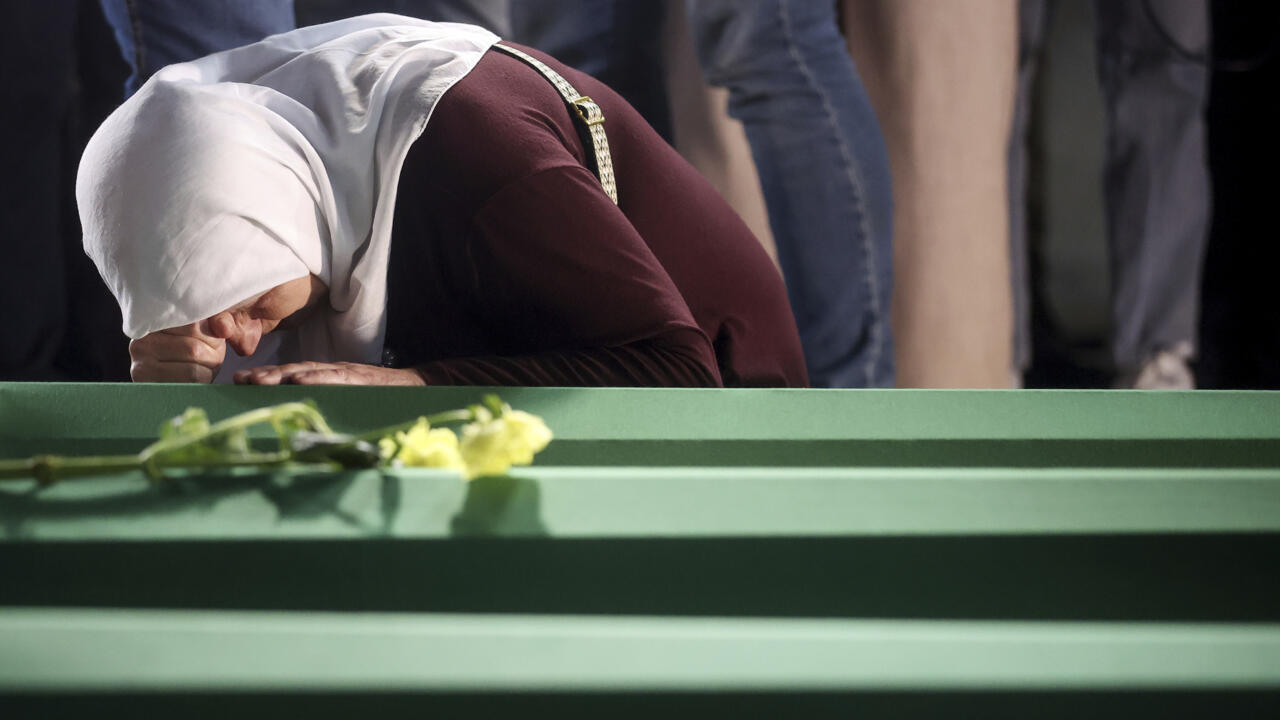
A woman mourns next to a coffin, containing remains of her relative, a newly identified victim of the Srebrenica genocide, in Potocari, Bosnia, Wednesday, July 9, 2025. © Armin Durgut, AP

Officially, Sejdalija Alic and Hasib Omerovic have finally been found and will be buried on Friday next to thousands of other victims killed exactly 30 years ago in the Srebrenica genocide.

But their loved ones will lay in the ground only a bone or two, hoping it will be enough to bring peace to both the dead and the living.

The two men were among the more than 8,000 Muslim men and boys killed by Bosnian Serb forces after they captured the town on July 11, 1995, in one of Europe's worst atrocities since World War II.

About 1,000 victims are still reported missing, according to authorities.


"Everyone called him "Brko" ("Moustache"). I never saw him without his moustache. What a charmer he was!" said Mirzeta Karic of her father, Sejdalija Alic, with a gentle smile on her face.

In December 1993, more than a year after the start of Bosnia's inter-ethnic war, "Brko" and his daughter, then aged 18, were the last to flee their village of Jagodnja, in the Srebrenica area, under fire from Bosnian Serb forces.

"It was snowing and I only had socks on my feet. Each of us with a fifty-kilo (110-pound) bag of cereals on our backs, we headed for Srebrenica", Karic, now 50, said.

REVISITED © FRANCE 24
15:58


The United Nations had declared the ill-fated town a "protected zone", drawing in tens of thousands of Muslims hoping to find refuge.

But they were trapped.

In early 1994, Karic was on the road again, evacuated from Srebrenica in a Red Cross convoy with her mother and her pregnant sister-in-law.

Her sick father and brother Sejdin remained.

"My father took me in his arms and started to cry. He told me: 'We'll meet again one day'. His words still ring in my ears. I never saw him again, and neither did I see my brother," Karic, who has lived in Sweden since 1998, told AFP.

She is now returning to Bosnia to attend her father's funeral on Friday.

He will be the 50th member of her family to be laid to rest at the memorial cemetery in Potocari alongside her five uncles and their five sons.

Her brother Sejdin, aged 22 when he was killed, was buried in 2003.


'One bone only'

"I've been able to endure everything, but I think this funeral will be the worst. We're having a bone buried. I can't describe the pain," said Karic, who named her son after her father.

Only the lower jaw of her father was found in the mass graves where Bosnian Serb forces moved the corpses of the victims months after the massacre in a bid to cover up the crime.

Many of their remains were shredded by heavy machinery in the process, experts have said, often leaving forensic experts with not much more than a few bones to identify victims through DNA testing.

A jawbone will also be placed in the coffin of Hasib Omerovic, who will be buried on Friday.

"Thirty years on, I have nothing to wait for anymore," said his wife, Mevlida Omerovic.

"It's better to have them buried, even if it's just two bones, and to be able to visit his grave with the children," the 55-year-old added.

Hasib Omerovic and his brother were detained together and probably executed at one of the five main mass execution sites in the Srebrenica region, she said. He was 33 years old.

The family separated on July 11, 1995, when Mevlida Omerovic left with their nine-year-old daughter and six-year-old son for the UN base.

Hasib and Mevlida said goodbye in the street.

"All he told me was: 'Take good care of our children'. Those were his last words," she remembered in tears at her current home in Srebrenik, in Bosnia's northeast.

"When I look at my children, I see him. He was at the best age to live, handsome as can be, like a rose, intelligent. But it is fate."

Family members mourn and pray next to the grave of their relative, a victim of the Srebrenica Genocide, prior to the mass burial ceremony in Potocari, Bosnia, Thursday, July 10, 2025. © Armin Durgut, AP

'We were happy'

Hasib's sister will not be attending his funeral. She died a week before.

"Her three sons were killed, her husband, her two brothers. She lost all her men. Her heart couldn't hold on any longer," Mevlida Omerovic said.

The woman still hopes to find the remains of another brother, Senad, aged 17 when he was killed, in the woods around Srebrenica.

With her brother's photo in one hand and her husband's in the other, Mevlida Omerovic recalled their pre-war life with a spark in her blue eyes.

The couple had just constructed a house. Hasib worked in a large bauxite mine, where he maintained the machines, and Mevlida worked in a village grocery store.

"A beautiful soul, nice with everyone. He had a lot of Serb friends who respected him (before the war) and I thought that would save him," she said.

"We loved and respected each other. We were happy. That's the greatest wealth. One can buy everything but not happiness. However, happiness doesn't last long. Everything beautiful is short-lived," she said.

(FRANCE 24 with AFP)