Friday, July 11, 2025

A political earthquake in New York City: Socialist Zohram Mamdani wins Democratic mayoral primary

Published 8 July, 2025


United States socialist candidate Zohram Mamdani’s win in the June 24 Democratic primary race for mayor of New York City (NYC) has been described as a “political earthquake”. Mamdani, who is a member of the Democratic Socialists of America (DSA), was up against the deep pockets of the Democratic establishment, but handily defeated former governor Andrew Cuomo and an array of other candidates.

The win has been celebrated by socialists and the broader left around the world, as a spark of hope in an era that has seen the rise of the far right, particularly boosted by the election of Donald Trump last year. DSA member Winnie Marion, who was involved in Mamdani’s mayoral run, spoke with Isaac Nellist for LINKS International Journal of Socialist Renewal, to discuss the campaign victory and its broader implications for US politics.

There have been a lot of theories put forward to explain the success of Mamdani’s campaign. Why do you think it was so successful?

We have been experiencing this rise in far right politics in the US and around the world. In our two party system we have been offered two options: the far right extreme view that puts working class people under the bus to serve the billionaires and, alternatively, people that are unwilling to stand up to that agenda and continue to uphold the status quo.

The Democratic establishment has not been able to present an alternative vision that has inspired or excited people to fight for things that make their lives better. When inflation and rent costs are so high, nobody has any confidence in the political system. That is why Zohran has been successful, because he has presented a vision that inspires people.

A lot of first time voters and younger voters, people who have otherwise not participated in politics in NYC, were excited by a vision for the future they can believe in and that presents an alternative to the right-wing movement. The Trump administration has been attacking our city’s institutions, even on a municipal level. Having somebody who can confidently say they will stand up to Trump and his far-right administration has excited a lot of people.


What can you tell us about your experience being part of the campaign? What kind of campaign infrastructure was established? 

It has been amazing on the ground to have so many people supporting the campaign. Alexa Avilés, the DSA city council member I work for, is also running for re-election and having so many people canvass for her was so exciting. We would talk to young people who knew about Zohran’s campaign and older people who knew Alexa, so our previous work helped to reach a broad base. 

We have had 50,000 volunteers door knocking 1.5 million doors and making millions of phone calls. It is an extremely energised movement. Structurally, we have field leads, who are generally DSA members or part of other organisations, taking on leadership roles and helping take in new volunteers. It is inspiring to talk to so many people who have never been involved in a political campaign before. 

I joined DSA in 2020 through the Bernie Sanders campaign and there was a lot of excitement at the time that, ultimately, was let down when Joe Biden won the nomination. So, a lot of socialists have felt like we are building towards a future campaign.

We have built institutional knowledge and structures over the past five years that all came together for this mayoral campaign. We have nine state and local elected officials in NYC. 

It is tied to a moment where people feel such dissatisfaction with politics, particularly with the past year-and-a-half of witnessing a genocide. 

So, this all came together to encourage people to join the campaign. Many have also gone on to join DSA. 

What role did DSA play in the campaign? What lessons is it drawing from the experience?

The campaign's infrastructure was built on the infrastructure established in previous DSA campaigns. A lot of the same people are involved, and are often in DSA leadership positions. DSA has played a huge role in providing volunteers to canvass and phone bank, and taking on leadership positions.

A coalition of other organisations were also involved in the campaign, but DSA were the main energy behind it. Zohran has been involved with DSA for a long time, and DSA ran his previous campaign in 2020.

There are a lot of lessons to take away from the campaign. One key lesson is that being able to experiment at a time when there is so much dissatisfaction with politics is very important. Trying large-scale campaigns in strategic moments is something we can explore. Also not being afraid to embrace issues that people generally think candidates should avoid, such as using the word “socialist” or supporting Palestinian liberation. People connected with that message.

The other takeaway is the importance of a very clear policy platform with a few key programs that are beneficial and tangible to working-class people. For example free buses, making groceries more affordable by setting up public grocery stores, universal childcare, rent freezes for rent stabilised apartments — programs that connect to people’s daily lives and do not go into technical jargon that disconnects people.

The focus is on what can make your life better this year, or in this mayoral term, and how we can work together to achieve that. 

What impact did Israel’s genocide in Gaza and the Palestine solidarity movement have on the campaign? 

Zohram’s campaign has elicited a lot of anger from the Zionist lobby. People have been witnessing a genocide for a year-and-a-half and have been completely demoralised.

Last year, we had encampments at universities across the country and university administrations collaborated with militarised police officers to crack down on students exercising their free speech. At Columbia University, in NYC, they sent NYPD police officers to suppress protests.

The corporate media has targeted protesters and aided Trump to deport people involved in the protests and demand colleges give lists of those who participated in protests. He has also threatened to defund colleges that allow protests to continue. 

A lot of the young people who voted for Zohran have seen this in person or on social media, or have been following the detention of Mahmoud Khalil, who was detained for months by ICE for participating in Palestine solidarity protests. We see daily detentions by ICE and the horrors going on in Gaza and most politicians have been afraid to speak up about it. 

The fact that Zohran has spoken up about the crisis in Gaza, and that our taxpayers dollars are funding this militarsation and genocide, instead of addressing the affordability crisis in the US, has boosted his campaign. 

Additionally, the campaign is working to address racism and hate crimes in a broad and systemic way. However, Zohran has been the target of Islamophobia, including from elected representatives. 

What impact will Mamdani’s win in this primary race — and potential win in the mayoral election in November — have on politics in Trump’s US?

It is hard to predict how Trump will react. Everyday I am shocked by how horrible and heartless his political agenda is, especially on immigration issues.

People are being forced to grapple with the fact that the Democratic Party has not presented a vision that excites people for many years. This has led to a rising class consciousness, as working-class people see themselves connecting to a socialist campaign. 

I think a lot of establishment progressive campaigns will try to adopt a lot of the language and messaging that Zohran used to attract votes, but they are not accountable to the movement like Zohran and other DSA candidates are. We will have to work to differentiate between that style of faux progressivism and socialist politics tied to a movement.

The right will attempt to use Zohran to advance their political agenda. Historically, there has been collaboration between the federal government and the mayor of NYC — it will be interesting to see how that plays out. Eric Adams, the current NYC mayor who is running as an independent in November, has been aligning himself with Trump’s interests. The City Council has filed a lawsuit against Adams over his plan to support Trump’s deportation drive in the city by setting up ICE on Rikers Island [which houses NYC’s largest jail].

It is in Trump’s interests for Adams to defeat Zohran. He will try to make NYC an example for other cities in the US. We will have to set up a front [to defend] our city’s infrastructure, politics and movements to combat this increasingly fascistic agenda. 

What does the Mamdani campaign reveal about the strengths and weaknesses of socialists engaging in electoral politics?

A lot of working class people only connect to politics during elections, and do not yet see themselves as people who can participate in politics in everyday life. It is important that we use the ballot box to mobilise and excite people towards socialist politics. Running campaigns that speak about socialism unabashedly and are excited about our movement, as Zohran has done, is really important for us.

We use elections to organise people, show them a better vision for the future and build class consciousness. Electoral politics are a helpful tool to talk to people about socialist politics, to build power, pass legislation and stand up to the far-right. We should use these platforms to talk with people about what it means to have socialist politics and to present a vision for the future beyond voting for “the lesser of two evils”.

At the same time, we acknowledge that Zohran cannot implement everything on his own. The funding for his opponents does not stop after the election, and it will be very hard to implement his policy platform. He will be getting attacks from all angles for what he is doing.

So, we should see this as a first step in building a movement that supports what the campaign stood for. 


Lessons From the Mamdani Campaign


 July 11, 2025


What should we make of Mamdani’s stunning victory? Much of the commentary —regardless of vantage point— is grandiose, highly speculative, and without context. So let’s ground ourselves in the broader politics, available evidence, and, above all, history.  Then maybe we can figure out what to do.

To The Organizers Go The Victories

Mamdani won the NYC primary because his campaign put together an impressive ground game. This is the first, most important takeaway.  The credit goes to the DSA, Working Families Party, and many others who knocked on doors and lit up the phone lines. There are no victories of any kind — electoral or movement-building — without basic organizing. 

The ground game was all the more important because unions — who have run and staffed the Democrats’ GOTV operation for decades — split between Cuomo and Mamdani, but gave the lion’s share of support to Cuomo.  

UAW Region 9A and IATSE Local 161 ranked Mamdani No. 1. District Council 37, Unite HERE Local 100, and Teamster 804 ranked him No. 2. The influential Professional Staff Congress made the kind of endorsements only possible through Ranked Choice Voting (RCV). They advised their members to rank Mamdani as 1, 2, or 3 alongside Landers and Adrienne Adams as they saw fit. They understood that their members would benefit from economic reforms and recognized how RCV was altering the political landscape.

Among the unions for Cuomo were: 32BJ SEIU, 1199 SEIU United Healthcare Workers East, Teamsters Local 237, IBEW Local 3, NYC Deputy Sheriffs’ Association, NYC Coalition of the International Union of the Operating Engineers, FDNY EMS Local 2507 and Uniformed EMS Officers Union Local 3621, NYS Iron Workers District Council, Teamsters Joint Council 16, Uniformed Firefighters Association, Uniformed Firefighters Officers Association, Uniformed Fire Alarm Dispatchers Benevolent Association, the Building and Construction Trades Council of Greater New York. 

Mamdani’s working-class-oriented “affordability” platform certainly won many votes. Why wasn’t it enough to win the unions? 32BJ SEIU has already moved to Mamdani. Will the rest follow?

Ranked Choice Voting Makes A Difference.

RCV allowed a different electoral landscape to emerge, where candidates more easily formed alliances. “Cross endorsement” cannot exist under the dominant winner-takes-all, plurality system. Yes, Brad Landon was a real mensch to cross-endorse Mamdani, but that would have been impossible without electoral reform. RCV allowed voters to act more in accordance with their values by undermining the lesser evil voting strategy.

Now, will the Mamdani campaign or DSA advocate for RCV or other reforms, such as proportional representation, in every election?

The Peace Movement Prepared The Way For Mamdani

Mamdani did not win the election despite being Muslim and pro-Palestine, but because of it. Public attitudes have shifted. Zionism and the Democratic machine are on the wrong side of history.    

While Jewish Voice for Peace endorsed Mamdani, the influence of the peace movement ran much deeper. With an urgency and militancy far exceeding the glacial pace of electoral compromise, peace activists plowed the field that Mamdani harvested.  

All those students and protesters who were arrested, surveilled, punished, beaten, even kidnapped, changed the climate of opinion and cleared the way for voting against genocide. Their “outside” position made this “inside’ victory possible. 

Consider this perceptive appeal by Miriam Markowitz:

“To all the people who are anti-genocide but remain too afraid to say it: Signaling support for the Democratic nominee for mayor of New York City, even if you don’t live there, is a good way to pop into the conversation without having to say the word “Gaza” or issue a mea culpa….[T]his is your very easy onboarding to the ethical issue of our time as well as the locus of the fight for democracy, such that it exists.”

Risky activism for some made “easy onboarding” for others. It’s ok: welcome aboard! In organizing, we look for an easy first step. 

The question is: what is the next step? Palestinian solidarity cannot afford to wait for elections, because the answer can only be found somewhere in the wild weeds of anti-imperialist and anti-colonial resistance, in the building of mass movements, and in forcing actual constraints — political and material — on the war machine. 

Mamdani and the Burden of History

He ain’t the mayor yet. The hits are already coming on hot and heavy from both ruling parties. They are about to prove again that the top priority for ruling parties is to maintain control here on the home front. The Democrats specialize in stopping threats from the left, but this time they will get plenty of help from the Republicans. Mamdani’s economic proposals are seen as a challenge to Big Money.

Consider what happened when India Walton, a Black working-class socialist, won the 2021 Democratic mayoral nomination in Buffalo. The city’s Democrats and Republicans joined forces against her. India’s defeat in the general is a cautionary tale that the ruling class doesn’t just roll over and play dead.

Even if Mamdani prevails, he will still face an ambush not unlike the one Sanders might have faced in 2016 and 2020 had he won. Sanders dared not defy the big guns of empire, capital, and the Democratic machine. He chose surrender and appeasement.

The machine will do everything to box Mamdani in. Will he disappoint the soaring expectations of the “hot takes?” Can he resist the forces of assimilation that drew in Sanders and the Squad? Tlaib remains an outlier on Palestine; maybe Mamdani will be one too. Time will tell. 

History offers us a real solution to Mamdani’s power paradox, but we have yet to build it.

Mayor La Guardia and the New Deal

Mayor Fiorello La Guardia (1934-1946) could well be seen as a forerunner to Mamdani, but the history of his reign contains the seeds of either victory or defeat.

La Guardia was a product of the New Deal, which was driven by the activism of millions of workers, farmers, and Blacks, often led by socialists and communists. Third parties held seats in Congress, and populists found a broad audience. Without similar deep roots and varied branches, Mamdani is, and will remain, out on a limb. Evidence? Mamdani’s weak showing among sectors of Black voters and the poorest New Yorkers shows that, without a powerful opposition movement, the Democratic machine is able to dominate politics just as it did with many labor unions.

His maverick campaign benefited from an electoral reform called “fusion,” which allowed candidates to run on multiple party tickets. We don’t hear much about fusion today; the Democrats largely dismantled it. La Guardia took refuge from the Democratic machine in the Republican Party, but he was a New Deal Republican.

The beating heart of the New Deal was the “United Front.” Even though La Guardia ultimately betrayed the United Front, he could never have come to power without it; with it, Mamdani has a chance at greatness.

The Rise and Fall of the New Deal: From United Front to Popular Front 

The New Deal rose and fell in stages. The “United Front” strategy of the early years showed us the way forward, while the later “Popular Front” led to defeat. The final deathblow was delivered by Cold War/Anticommunism, through purges within and beyond the labor movement. The defeat was codified in law and still sets limits on our “common sense” of what is politically possible.[1 ]

But, for a time, militant class and racial struggles, political independence, the emergence of third parties, union organizing, and efforts among the unemployed made the United Front a force to be reckoned with. Issues of race were inseparable from class. Support for the Scottsboro Boys was a pivotal move in the making of the United Front.[2]

The United Front is one of the most underappreciated developments in 20th-century US history — everyday people actually built an effective opposition of mass movements and revolutionary political parties. Hundreds of thousands came to see their self-interest and class interests as contrary to those of the bosses and bankers. United Front leadership was a quarrelsome but functioning counter-hegemonic bloc of radicals, anarchists, unionists, activists, and socialists, with the Communist Party its largest and most coherent force.

The United Front is the history that proves the oppositional politics we so desperately need today are possible.

But, the “United Front” was abandoned for the “Popular Front” in the late 1930s and 1940s. The Communists made a pragmatic alliance with the US ruling class in the hopes of defending the Soviet Union and defeating Fascism.

Crucially, the Communist Party, politicians, and union leaders sought to maintain the class peace they thought necessary for the war by enforcing a deeply divisive “no-strike pledge.”[3]

They sacrificed hard-won solidarity with the workers who were the grassroots leaders of the United Front — just as workers were leading a historic strike wave. La Guardia, it must be remembered, joined with the Communist Party and union officials in punishing and smearing striking workers.

As John Munro summarized it:  “The Popular Front…meant quieting critiques of state repression, capitalist exploitation, and racial oppression.”[4]  

The no-strike pledge was one-sided political surrender. 

As World War II quickly morphed into the Cold War, the Communist Party, like the Soviet Union, became the new existential threat. Big money, anticommunist unions, and the ruling parties turned against their now-weakened former allies. They were purged from labor and smeared as political pariahs. Unions were also punished — despite their enforcement of the no-strike pledge — with the passage of the Taft-Hartley Act, which has hobbled unions ever since.

The Popular Front was a disaster that the working class and the left have never recovered from.

So forgotten is this history that what is often presented as a united front against fascism or Trump is little more than “fall in line” behind the Democrats and a return to the failed Popular Front of the 1940s.

Social Movements Save The Day

But all is not lost. The brightest lights found a way forward out of the dark days of Cold War. The social movements led by the Civil Rights and Black Power struggles reclaimed and legitimized dissent after the purges. The Peace movement, Women’s movement, Environmental Movement, LGBT movement, Community Organizing, rank-and-file union caucuses, and all their many descendants continue to be the “left” we actually have and the one that matters most.

The Burden of History We All Bear

Most of the self-described left still hold the position bequeathed to them by the Cold War. When they support Democrats based on “pragmatism” or “reality,” the Popular Front is the reality they have internalized and repeat.  

The DSA has engaged in a lengthy debate about whether to break with the Democrats. The debate remains unresolved, and it’s too early to tell how Mamdani’s victory will impact it. On the other hand, the oppositional left is showing signs of revival, but remains small and scattered, without a significant national role in the unions or the community. But, no part of the left — or even the sum of all its parts — has roots in the working class anywhere near the scale of the United Front of the 30’s.

Mamdani and the DSA have the potential to start building a united front, and we desperately need that.

History is a guide, but current models do exist. Kshama Sawant and Workers Strike Back’s campaign for Congress — with its fusion of electoral and social movement activism, political independence, opposition to genocide, as well as its crystal-clear socialist politics — is the best example that truly aligns with the history of the United Front.

We lack massive movements, but the day will surely come when many millions take to the streets again, as they did during Occupy or the George Floyd protests. Right now, the present-day civil rights movement confronting ICE and the burgeoning police state, and today’s peace movement in solidarity with Palestine, are the best steps forward. Any party or political formation that can join them, serve them, lead them, become their architect, or electoral wing, will be well-positioned to help us — Mamdani and all — shoulder the burdens of history and build the United Front we need.

Notes.

1. In his article “The Popular Front Didn’t Work” Charlie Post sets out the history of the United Front and Popular Front with far more detail than my short summary. It’s an indispensable read.

2. In his insightful new book, Class War in America, Jon Jeter demonstrates how the campaign to free the Scottsboro Boys served as a catalyst for working-class resistance.

3. See Martin Glaberman, “Wartime strikes: The struggle against the no-strike pledge in the UAW during World War II.” 

4. John Munro, ” A Tool for Our Times: Legacies of Black Radicalism and Communism” in Black Perspectives.


Richard Moser writes at befreedom.co where this article first appeared.


The social cost of China’s resistance to Trump’s tariff war


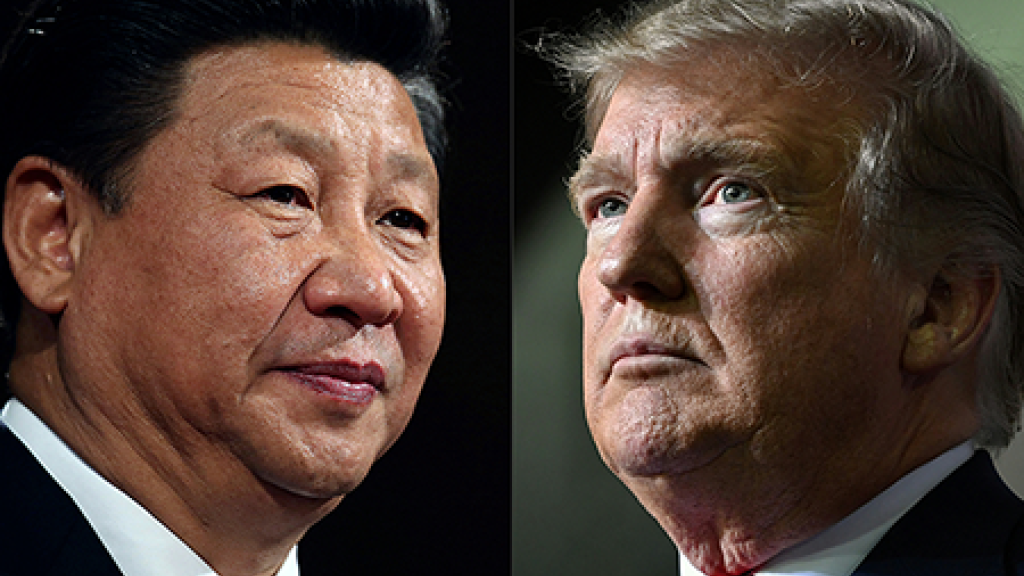
Xi and Trump

First published at International Viewpoint.

Trump’s tariffs bullied the whole world. Both Canada and China reacted strongly against them, most countries did not. This garnered a lot of international support for Beijing,. A global poll conducted by Morning Consult showed that in January last year, the U.S. in various countries scored more than 20 points while China scored negatively. However, by the end of May this year, after Trump’s “Liberation Day”, the perceptions reversed, with the U.S. at -1.5 and China at +8.8. Many see this as a reflection of people’s sympathy with China’s resistance to Trump. This comes with a heavy price, however. China’s exports have already slowed down since early 2025, and in May it plunged 34.5% year-on-year.

The secrets of China’s resilience

Which side is more resilient in the tariff war between the two largest economies in the world? Some see China as more resilient. This is plausible. Beijing has prepared for this scenario since the 2018 first trade war with the US. Since then, the export-oriented manufacturing and trading companies have raised their overseas investment and connections with local partnerships with the goal of getting round tariffs and other trade obstacles. Once the Trump 2.0 trade war started Chinese firms quickly used these overseas outlets to bypass the Trump’s tariffs. In addition, Chinese firms like BYD can use cut-throat competition / export dumping because of the general over-capacity of EV cars in China. The New York Times reported that “shipments of goods to the United States plunged by 21 percent in April, but spiked to Asia as President Trump imposed sky-high tariffs on China … they are gearing up product for ASEAN countries because that is where they have set up their factories in preparation for this situation.” And not only Asia. EU is very worried about a surge of Chinese imports after Trump declared his most aggressive tariff war against China.

On top of these tactical moves and responses between the two sides, we need to be aware of the basic differences in terms of their respective strategy of capital accumulation. Both sides are some form of mixed economy between market and state intervention but the US has been more in the “free enterprises” mode, whereas China’s state capitalism gives the party state a paramount guiding role. The latter seems to be more tuned to crisis management than a liberal democracy in time of economic crisis.

In 2008 when the financial crisis exploded, the US congress hotly debated Bush the junior’s rescue package while the nation looked on in great anxiety. In contrast China under Primier Wen Jiabao, without much debate at all, swiftly rolled out a 4 trillion RMB rescue package to save a collapse in exports. Although the party has allowed the private sector to thrive, it possesses ultimate power over all government departments, all public and private businesses, all classes, and can coordinate different entities in tackling the crisis. The party’s motto is Quanguo yipan qi, or “to ensure coordinated national responses, just like chess players do with their pawns”.

However, the above statement must be heavily qualified when it comes to provincial governments, which enjoy some form of discretionary power in their implementation of central government policy hence they are also capable of twisting or overdoing the policy to their benefit, often at the expenses of the Central government. One can looks at the example of how provincial governments made use of the 2003 Central government policy of turning the real estate industry into a pillar of economic growth — so much so that they created the biggest property bubble in the world. But this often takes a long time to make its negative effect felt, meanwhile the synchronization of both the Central and local government in rolling out rescue package might already be good enough to contain or ease that particular crisis within a relatively short period of time. This swiftness in reacting to economic crisis in a huge country is impressive.

This time is different

But this time the Chinese crisis is much more complicated and serious than the one in 2008-9. Now we have both a fully home-grown economic crisis compounded by Trump’s tariff war. Worse still, we have an autocrat who lacks good judgement. The seemingly effectiveness of Chinese state capitalism was conditional on the top leader’s good judgement — good in the sense that they managed capitalism well enough to avoid the big crash in property market to spread further ; but not necessarily good for working people.

Xi Jinping’s zero Covid policy was both ineffective and bad for the economy and the people. He reaped his own bitter fruit — an economic slow-down followed by the 2022 White Paper movement. He had not performed well enough in relation to the bursting of the property market bubble as well — his much-delayed rescue exacerbated the crisis so much that, although slightly abated, yet it is still with us today. The Economist’s report acknowledged the easing of the great crisis in the property market, but also warned that “there are still dangers. The trade war is a drag on confidence. Home prices across 70 cities … declined by about 2% in April from a month earlier. Things are not getting much worse but they will probably not get better without more government support.”

Xi Jinping’s rescue package itself is also problematic — again it is chiefly pumping money into the banks and developers to relieve their debts, plus a supply side stimulation, that is, to fund more investment in the manufacturing and infrastructure. The authors (and some economists) always argue for rebalancing the economy from a heavily investment led growth to one which is more driven by demand. This needs to be not just any demand but rather a significant rise of workers’ level of consumption through higher wages, which continues until the long-term decline of labour share of national income be reversed and returned to the level of 1990’s. This would serve the purpose of improving workers’ livelihoods and their education (which in turn would also raise their productivity). It would also meet the goal of expanding the domestic market, which in turn would also alleviate China’s tension with other countries which are fearful of its export dumping — a product of the domestic vicious cycles of “over investment > over-capacities >surged export”. However, our top leaders have never shown any real interest in this option.

The tariff war will bring even worse things: reduced income, unemployment, and unpaid wages. A Yiwu boss surnamed Gong interviewed by the website ‘Guanfengwen’ said: “I can’t sleep all night… Spent the whole month borrowing money, asked all my friends.. Workers’ wages, raw materials, all places need money.” Mr. Zhang, the owner of a Christmas tree business, mentioned that one of his counterparts, who relies on the US market for 80 percent of their business, could not afford to maintain factory operations and let all the workers take a month’s vacation. The media did not report the feelings of those workers.

Take a look at personal income, the business situation of neighborhood stores, or the sales of online shopping, it is hard for ordinary people to feel optimistic. Then look at the news, you will find more negative sentiment: the US-China tariff war is threatening export industries; a record 12.22 million college graduates will join the workforce in June; the rising price of gold reflects pessimism about the international situation...

When international observers praise China’s resilience one must ask the question again and again — who is going to pay the price? Obviously, it is the workers and farmers who will be most hard-hit. After all, back in 2018 when Trump started the first trade war a Chinese official responded with a remark “we Chinese can get by this trade war by eating grass for a year”. What he had not mentioned was that common folks might have to eat grass but not necessarily so for the party officials. Not to mention that when workers survive by eating grass they must have been so absolutely penniless that they would not be buying domestically produced products any time soon.

“Chinese can eat grass for a year”

After all the pains the regime has inflicted on the people in the last seventy years it is, unfortunately, true that Chinese people in general have learned the skill of surviving in a situation of great adversity. Against the backdrop of the tariff war, Chinese companies are adapting fast. The website Sohu interviewed a boss named Zhang, who produces Christmas trees, and his experiences are quite lamentable: In 2014, Russia’s invasion of Crimea led to a financial crisis due to the dual impacts of Western sanctions and the plunge in international oil prices - his Christmas trees worth over 1 million yuan were sent to Russia, but the buyer refused to pay.

Starting from 2015, the party discouraged the people to celebrate “foreign festivals” in China, and in some provinces setting up Christmas trees would lead to a fine of 5000 yuan, hence Mr. Zhang received almost no domestic orders. Now with the trade war his orders from the U.S. which worth over 10 million yuan were forced to be put on hold, with over half of them already produced and piling up in warehouse. Yet this boss, who had experienced many storms, stated that he felt “surprisingly calm”.

On Chinese social media, a YouTuber discovered that the cotton socks in a store in Yiwu were only 1.5 yuan a pair and asked the shopkeeper: “How do you make any profit at such a low price?” The reply was: “The profit is less than 0.01 yuan for a pair of socks!” This really means zero profit. This also reflects the low costs in China’s labor-intensive industries. An article on the ‘Sina Finance’ website described it this way: “To make labor-intensive products with quality, currently there is no second Yiwu in the world... If you want to make a keychain, you can find multiple suppliers and the most diligent workers to produce it at the fastest speed, and even the logistics companies in Yiwu are the cheapest.”

American merchants may find workers with lower wages in other parts of the world, but there is no substitute for Yiwu if they want a industrial center where raw materials, labour cost, components, utilities, catering, logistics, and other production factors are all cheap and efficiently supplied.

The bursting of the property market bubble has impoverished the once vibrant middle class, as most of them had invested in the property market. For propertyless working people the slowing down of the economy since 2020 has left many of them jobless, especially those working in construction and other industries related to the property market. The tariff war will further exacerbate unemployment.

According to the National Bureau of Statistics, the first quarter of 2025 growth rate was 5.4%, while unemployment stood at 5.3%. Since the tariff war just started these figures are not reflecting what is happening during this second quarter — it could be even worse than the first quarter.

China’s statistics are not known for their credibility. According to a SCMP report China’s unemployment statistics exclude “149 million self-employed business owners and nearly 300 million migrant workers. Youth unemployment rate was quoted as 21.3% but some challenged it and put the figure at 50%, the authorities simply stopped releasing the statistics altogether. And when they appeared again, they had changed the methodology of statistics by excluding university students. Without the party state’s straitjacket on accountability and freedom of press it would not have been possible for it to be so successfully making the world believing in its propaganda and its “united front” policy — both have been essential for Beijing to win over friends and investors from all parts of the world.

Nevertheless, Chinese bosses have reaped significant profits during their good days, but it is a different story for workers. An ancient Chinese motto taught us that “When the nation thrives, the common people suffer; when the nation collapses, the common people also suffer.” During good business times, they are forced to work overtime to fulfill orders, endure harsh working conditions and chemical exposure, live in crowded factory dormitories, and frequently encounter bosses who refuse to pay social insurance contributions. The low-cost products from Yiwu rely on two things — the workers’ high tolerance of oppression and the Chinese government’s tacit consent to employers’ violations of labor laws. This is the extreme version of the global “race to the bottom”.

Desperate people do desperate things

On May 20, a worker at a textile factory in Zigong, Sichuan Province, set fire to the factory where he had just quit his job. The fire burned for 37 hours, and the cause of the incident became a hot topic and a target of censorship. According to local police, the suspect resigned because he was suicidal. They said he was eager to get his wages to send to his mother before committing suicide. Because he could not get the money in time, he decided to take revenge on the factory.

This incident was not directly related to the tariff war, but it shows that after 40 years of embracing capitalism in China, for people like this worker, hard work is still not enough to lift working families out of poverty, and a few hundred or a few thousand yuan can still be the straw that breaks the camel’s back. Chinese workers maybe resilient to great pain but ultimately there are limits.

The oppressed people would have risen up and toppled their bosses long ago if not for the fact that the party state always steps forward to help the bosses. On top of the “invisible hands of the market” which disciplines workers through the threat of unemployment there are the visible boots of the state which trample on workers.

Some may now be nostalgic about the Hu Jintao era with his relatively “liberal” policies. But when the 2008-9 financial crisis hit China, his government did not hesitate to cut the minimum wage to give the bosses more leverages to sail through the storm. The premier Wen Jiabao also “encouraged” migrant workers to go back to their home village so that jobless workers would not present any public safety problems for the municipal governments.

Since Xi came to power in 2012 he has gone far beyond his predecessors by shutting down the small number of labour NGOs which supported workers, while continues to crush workers’ strikes and protests. At the height of his zero Covid policy his government also helped the bosses of twenty-two industries by suspending their contribution to the social security fund Will Xi once again shift the burden of economic crisis to workers in the midst of the tariff war? He may or may not, but when workers are denied basic rights to organising and to strike, he can do whatever he likes. This is the most horrific part of the story.

Next time someone tells you how brave and resilient the Chinese government has been in standing up against Trump, remind them this part of the story.

False anti-imperialism and the class struggle in Venezuela

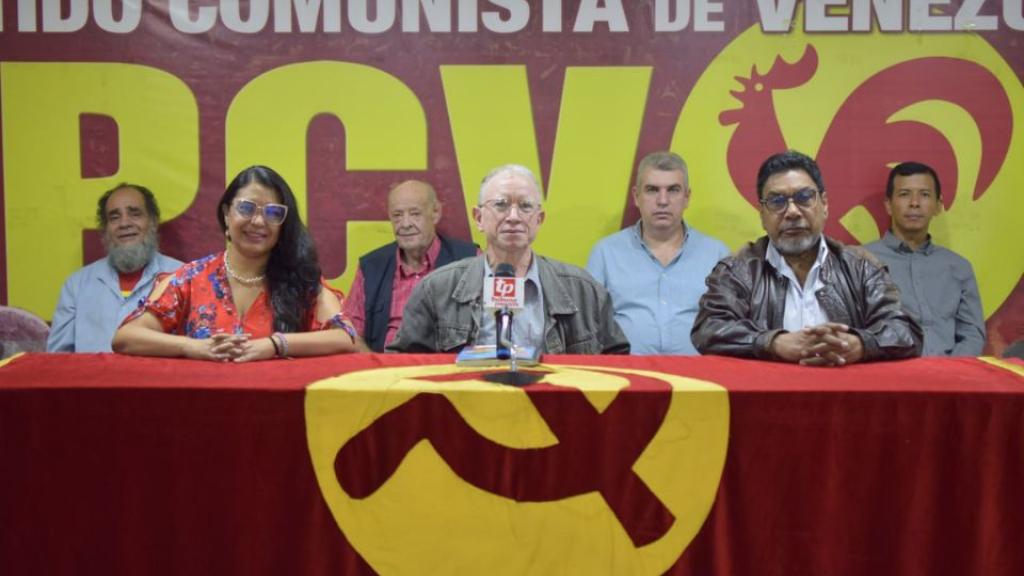
PCV Pedro Eusse

An interesting debate has opened up in the prestigious online media outlet LINKS International Journal of Socialist Renewal regarding the character of the Venezuelan government and the position organisations and intellectuals belonging to the popular and left camp should adopt towards it. 

We, the Partido Comunista de Venezuela (Communist Party of Venezuela, PCV), believe it is necessary to participate in this debate, not only because we have been mentioned, but because we are convinced of the need to speak the truth about the economic, social, and political situation in Venezuela, and confront manipulations and deceptions that distort objective reality.

Below, we will first provide a general outline of the PCV’s position on the so-called Bolivarian process or Bolivarian Revolution and the Nicolás Maduro government, addressing key aspects of the debate. Then, we will respond specifically to some statements made by Steve Ellner regarding our party.

Tensions within the Bolivarian alliance

As is well known, the PCV was part of the alliance of political and social forces that supported the “Bolivarian process”, starting with the election of Hugo Chávez Frías in 1998 (as the first political party to support his candidacy), through to the approval of the Constitution of the Bolivarian Republic of Venezuela in 1999 (considered a great popular achievement) and then successive re-elections of Chávez and Nicolás Maduro. That was until 2019, when our final withdrawal from the alliance took place after an intense and broad internal debate.

It has been our programmatic goal to forge a broad alliance of forces to defeat the neoliberal policies imposed since the mid-1980s and strengthen national sovereignty; to promote a better distribution of oil resources geared toward the country’s industrialisation and satisfaction of people’s needs; to promote the democratisation of society with the leading participation of the working class; and to combat corruption and pave the way for structural change. The PCV was a part of this heterogeneous alliance, accepting its internal contradictions and recognising its limitations, weaknesses and inconsistencies.

Within this alliance, we sought to achieve a balance of forces favourable to the working class and working people, with the goal of advancing toward profound transformations from a truly revolutionary perspective. This would inevitably generate divisions and regroupments, and deepen the confrontation with forces serving the national and transnational oligarchy. We understood that real progress toward revolutionary change depended on the balance of class forces in Venezuelan society, not just on the will of the individual leaders of the Bolivarian Revolution.

Back in 2011, we warned of the growing prevalence of reformist, regressive and corrupt tendencies gaining ground within Chávez’s government. The 14th National Congress of the Communist Party of Venezuela (PCV) concluded that Venezuela was not experiencing a true revolution, but rather a process of social and political reforms that kept capitalism and the rentier accumulation model intact.

Naturally, to the extent that the PCV acted with class independence and upheld its own principled positions, frictions and tensions arose within the alliance. This became public and notorious when we refused to accept Chávez’s call to dissolve the PCV into the Partido Socialista Unido de Venezuela (United Socialist Party of Venezuela, PSUV) (2007-2008).

Another source of tension, albeit less publicly visible, between the PCV and the PSUV political leadership during the Chávez era was this leadership and its followers’ support for so-called 21st-century socialism. This current promoted a reformist, gradualist and class-collaborative vision for building socialism that did not entail dismantling the bourgeois state or capitalist relations of production, and denied, among other fundamental aspects, the very existence of class struggle.

This conception has predominated in the narrative of reformist ideologues in Venezuela and Latin America. Furthermore, it serves the capitalist sectors that have benefited from the virtues of so-called progressivism. In Venezuela, under the Maduro administration, it has become a reactionary and regressive counter-reform, imposed through a mixture of extreme authoritarianism and demagogic manipulation.

The crisis did not begin with the sanctions

Ellner states in one of his articles that “Maduro’s errors” are mostly “overreactions to Washington-backed provocations,” and that those who do not agree with him have lost sight of “the devastating effect of the war on Venezuela.” Those sectors of the international left that still support Maduro try to justify his anti-popular actions (the few they acknowledge) by pointing to imperialist aggression. 

However, they ignore — whether through ignorance or complicity — the fact that starting in the first years of his administration (2013-17), Maduro established a governmental orientation that was clearly favourable to the capitalist class, restricting labour rights and dismantling any possibility of exercising social, worker and popular control over productive processes.

Maduro’s economic policy — even before the consequences of the US unilateral coercive measures became clear — has been designed to transfer substantial state resources to new economic groups they cynically call the “revolutionary bourgeoisie,” which has profited from the reprivatisation of companies under advantageous conditions, the handing back of expropriated land, tax exemptions and the relaxation of labour rights.

This left, which focuses its analysis on “external enemies,” also fails to consider — or simply ignores — the fact that strategic disinvestment in the oil industry and the progressive weakening of national sovereignty over hydrocarbon activities are not a direct consequence of international sanctions, but rather precede them. Their origin lies in rentism, which, far from being overcome under the Chávez and Maduro governments, has been reinforced. After 25 years, Venezuela remains subject to the dictates of the imperialist centres and devoid of a strategy for sovereign industrial development.

For these and other reasons, we maintain that the current economic crisis was not caused by the sanctions, although these sanctions — extremely serious and reprehensible — dramatically intensified the crisis, especially after 2017 when the US imposed sanctions on the state oil company PDVSA and stopped buying Venezuelan oil.

We want to be clear and emphatic: for the PCV, all sanctions imposed on a nation (or individuals) for political reasons, in addition to being illegal, are unacceptable and must be rejected by the people, especially by organisations that have the strategic objective of burying capitalism.

But it is also true that governments or individuals who are victims of such measures are not necessarily revolutionaries nor do they necessarily express popular interests; rather, they typically represent capitalist factions that are in temporary or strategic conflict with other capitalist factions and specific capitalist powers. In other words, the unilateral coercive measures imposed by the US and the European Union against Venezuela are not the result of us having a “socialist” government; rather, they seek to prevent Chinese and Russian capital from taking exclusive control of the country’s strategic resources.

Everything indicates that the true intention of the US and its allies’ policy of aggression toward the Venezuelan government has not been its overthrow, but its subordination. This became evident during the Joe Biden administration, when a license was granted to partially resume oil exports to the US under conditions imposed by Washington. As part of that agreement, special privileges were granted to the multinational Chevron, including the appointment of one of its executives as president of the joint venture Petropiar, in open violation of the Constitution and the principle of sovereignty over hydrocarbons. This pact, protected by the so-called “Anti-Blockade Law” — an unconstitutional instrument — was signed in an opaque manner.

The government’s use of resources — those generated both by oil sales and mining activities in the south of the country — has also been kept a secret from the Venezuelan people. During 2023 and 2024, government spokespersons boasted that the country was experiencing economic growth as a result of the oil license granted by Biden. However, salaries and pensions remained frozen while importing and financial capitalists had access to billions of dollars at subsidised prices for their businesses, thanks to the Central Bank of Venezuela’s intervention in the foreign exchange market.

Maduro’s neoliberal shift

Since August 2018, a neoliberal adjustment program has been implemented in Venezuela, presented under the refined name of the Economic Recovery, Growth and Prosperity Program. Its implementation has resulted in a drastic reduction in public spending, price liberalisation and the de facto dollarisation of the economy.

We do not exactly know what Ellner is referring to when he claims there are “positive aspects” to Maduro’s administration. What is clear, based on the concrete reality of the Venezuelan people, is that the economic package implemented over the past seven years has consisted of a series of measures that shift the cost of the crisis and sanctions onto the shoulders of the working class. To attract foreign investment and retain local capital, the government has offered tax exemptions, an extremely cheap labour force, and the dismantling of the working class’s organisational and fighting capacities as “comparative advantages”.

Based on these objectives, the PSUV and its satellite parties in parliament approved the Organic Law on Special Economic Zones, which offers territories, cheap energy, the use of natural resources and the non-application of labour rights, primarily to foreign investors. The script is quite clear: low-cost profits and overexploitation of labour.

In practice, the labour policy imposed by the PSUV leadership has transformed the entire country into a vast “special economic zone.” Collective bargaining agreements were de facto dismantled following a memorandum from the Ministry of Labour, issued in October 2018, which allowed employers to ignore economic clauses they considered burdensome. Since then, the minimum wage has become the only valid parameter for setting salary scales and calculating legal compensation, in open violation of labour and contractual rights established by law.

This measure automatically led to the loss of economic gains for broad sectors of workers, both in the public and private sectors. Added to this were the devastating effects of the monetary reconversion implemented in August 2018 — eliminating five zeros from the national currency — which led to the virtual disappearance of accumulated social benefits, the collapse of pension funds, the depletion of savings accounts and the financial impairment of union organisations.

Wage destruction and expansion of labour exploitation

During Maduro’s administration, the gap between wages and profits has widened dramatically. According to economist Pascualina Curcio, in 2014, of the income share of all production in Venezuela, “36% went to the 13 million wage earners, while 31% went to the 400,000 employers.” However, in 2017 (the latest figure published by the BCV), “only 18% was distributed to the 13 million workers, while the 400,000 capitalists appropriated not 31% … but 50%, or half.”

Although the Maduro administration’s wage destruction policy began early on in 2014, when wages were reduced and non-wage income increased, it was in 2022 that it dealt a definitive blow to the wages of Venezuelan workers, one which also affected pensions. Since then, the minimum wage has remained frozen at 130 bolivars (equivalent to just over a dollar a month), while only non-salary benefits, known as bonuses and received exclusively by public sector workers, have increased.

These bonuses, which represent more than 99% of a worker’s income, are not taken into account when calculating compensation or social benefits such as vacation pay, Christmas bonuses, etc, which are calculated exclusively on the minimum wage. This mechanism, sometimes difficult to understand for those who do not live or work in Venezuela, constitutes an outright fraud against labour legislation and the constitution, as the government has illegally substituted the concept of “integral minimum income” in place of salaries. 

This policy allows employers, both public and private, to save significant sums by not paying fundamental items such as social benefits (compensation accrued at the end of the employment relationship), annual vacation bonuses (recreational bonuses for public sector retirees), and (end-of-year) Christmas bonuses or profit-sharing payments. In exceptional cases, these losses are smaller in certain private sectors with robust collective bargaining agreements, although even then there is a threat of losing these gains. 

This is due to a political-institutional environment favouring the reduction of wage payrolls, one promoted especially by the leadership of Fedecámaras — the main organisation of Venezuelan capitalists — which has strengthened ties with the Maduro government and promotes the establishment of a “new compensation model” in which salaries, as traditionally understood in Venezuela and enshrined in the Organic Labor Law, could permanently disappear.

The majority of Venezuelan private-sector workers are unorganised and unprotected by collective bargaining agreements, which forces them to accept non-wage compensation in addition to a minimum wage that barely exceeds one dollar a month. They also face up to 12-hour workdays, sometimes with no days off. This reality particularly affects thousands of young employees in large businesses, who basically work without rights and in a complete state of vulnerability, as any attempt to unionise is often met with persecution or dismissal.

Criminalisation of workers’ struggle

Just as Ellner asserts that the “war on Venezuela needs to be placed at the centre of any serious analysis of the Maduro presidencies,” it is equally essential, for any honest assessment, to consider the systematic criminalisation of labour struggles in the country. Beyond illegal dismissals — direct or covert — the Venezuelan state resorts to police repression and judicial coercion against workers and union leaders who dare to defend their rights or denounce acts of corruption, as evidenced by the case of Alfredo Chirinos and Aryenis Torrealba at PDVSA.

Since the early years of Maduro’s administration, and with increasing intensity since 2018, hundreds of labour movement activists have been detained without due process and frequently subjected to cruel and inhuman treatment. Most are charged with inciting hatred, criminal association or terrorism, in a repressive pattern aimed at disciplining the union movement and facilitating the imposition of policies clearly favourable to capital.

It is deeply troubling that those who claim to be left activists, revolutionaries and even Marxist-Leninists remain indifferent to these extremely serious events, which reveal the exploitative and oppressive class nature of the Venezuelan state and its current administration. This is not a matter of repression motivated by political or partisan motives, but rather an institutionalised pattern of anti-union persecution aimed at neutralising any form of resistance to a government agenda dedicated to dismantling labour rights for the benefit of corporate sectors.

The enthusiastic support currently expressed for the executive branch’s policies by organisations such as Fedecámaras, Conindustria and Consecomercio — the very same organisations that actively participated in the coup d’état against Chávez in April 2002 — should be a source of concern to left sectors that support Maduro. 

Perhaps these comrades do not know — or do not want to see — that in Venezuela, union freedom is systematically restricted through administrative and judicial instruments, such as the National Registry of Trade Union Organisations (attached to the Ministry of Labour) or the National Electoral Council (CNE), which prevent the registration of independent unions and sabotage their electoral processes. Meanwhile, powerful business union organisations operate with complete freedom and in collaboration with state authorities.

Maduro has no legitimacy: Authoritarianism and repression

The authoritarian and anti-democratic nature of Maduro’s government has deepened as his social support base weakened. This was clearly demonstrated in the repressive violence used before and, especially, after the presidential elections of July 28, 2024, not only against politicians and journalists, but against workers and students living in working-class neighbourhoods who spontaneously protested the lack of transparency and consistency in the election results.

We do not deny that, in the hours following the announcement of Maduro’s supposed re-election, isolated episodes of extreme violence were reported. However, the response by police forces and paramilitary groups was disproportionate and criminal, leaving more than 20 people dead. The government itself acknowledged the arrest of more than 2000 citizens, mostly young people, including minors who were not even participating in the demonstrations but were accused of terrorism.

The escalation in repression did not end in the days following the elections. Irregular detentions, including forced disappearances, incommunicado detention, denial of the right to defense and cruel treatment have continued to this day. This entire display of repression and political persecution aims to crush all resistance and denunciations of the illegality and illegitimacy of Maduro’s inauguration as the supposedly re-elected president.

From our perspective, Maduro’s inauguration is illegal, as the presidential election process was not properly concluded. The CNE failed to comply with legally established procedures: it failed to publish official results in the Electoral Gazette or present data broken down by polling stations that could clearly demonstrate Maduro’s victory. Furthermore, the Supreme Court of Justice, under PSUV control, usurped the CNE’s functions to obstruct the clarification of the election results.

The PSUV leadership recently announced a constitutional reform. Although no one knows for sure what the changes will be, it is not difficult to deduce that they will establish rules that legalise the authoritarian exercise of power, without social control and in favour of capital.

Necessary clarifications of the PCV’s politics

Regarding Ellner’s mention of the PCV in this debate, we think it is necessary to clarify a few points. In his first response to Gabriel Hetland, Ellner described the government’s recognition of a “splinter faction” of the PCV instead of the legitimate party as “a minus for the Maduro government.” This statement indicates a lack of understanding of the facts.

Following the PCV’s formal break with the government, the PSUV leadership — headed publicly by Diosdado Cabello — unleashed a campaign of systematic attacks against the PCV’s legitimate leadership, using public media spaces without allowing a right of reply. At the same time, the PSUV promoted a judicial intervention into the PCV, relying on individuals from outside the Communist movement (some with a past relationship), whom the TSJ imposed as an “ad hoc junta” that continues to usurp the PCV’s acronym, symbols and voter registration card with its emblematic Red Rooster.

Ellner presents the contradictions between the PCV and PSUV as “secondary,” but the aspects presented in this article make clear the nature and class orientation of the PSUV leadership. The objective of the judicial assault on the PCV was none other than to derail the growth of a popular and revolutionary alternative that could denounce and confront the neoliberal, authoritarian and anti-popular drift of the PSUV government.

As a result of this judicial intervention, we have been prevented from legally participating in electoral processes, and our political activity has been criminalised. Despite this, we continue to organise the struggle for the unity of social, political, democratic and revolutionary forces against the pro-capitalist Maduro government and the pro-capitalist opposition led by María Corina Machado, a representative of imperialist interventionism.

Ellner also criticised the PCV for supporting a social democratic candidate, Enrique Márquez, in the July 28 presidential elections. It should be noted that Márquez has been subject to an enforced disappearance since January, after being arbitrarily detained. To date, neither his lawyers nor his family have had any contact with him, the formal charges against him are unknown, and his appearance before the courts has not been confirmed, all of which constitute a serious violation of his fundamental rights.

It is of some concern that Ellner not only remains completely silent on Márquez’s kidnapping, but that he deliberately omits the political and programmatic debate that led the PCV and other left-wing sectors to support Márquez’s presidential candidacy, notwithstanding Ellner’s constant insistence on the need to “contextualise”.

Support for this candidacy was the result of an intense discussion at the PCV’s National Conference, which decided to build a political-electoral alliance beyond the left on a program of struggle for the restitution of the labour, social and political rights of the people, thereby projecting an alternative to the government and the pro-imperialist opposition.

The media censorship that was imposed — given total government control of public and private media — prevented many from learning that the PCV, without a voter registration card due to the aforementioned judicial assault, had previously attempted along with other leftist organisations to register journalist Manuel Isidro Molina’s candidacy, but was blocked by the CNE. We also attempted to register an electoral organisation to participate, a move that was denied by the PSUV-run body.

In this context, the decision was made to support an already registered candidate who positioned themselves independently from the two dominant poles — Maduro and Corina Machado — and who would be willing to make a clear programmatic commitment to defending labour rights and democratic freedoms.

Márquez spoke out against interventions by foreign powers, including the US, and denounced the loss of Venezuelan oil sovereignty due to dictates in favour of Chevron. His candidacy managed to unite Venezuelan left organisations and figures, including  (anti-Maduro) Chavista activists. Of course, this was hidden by the government-controlled media. Incidentally, it is quite striking that Márquez is in custody, while [right-wing opposition leader and former self-declared “interim president”] Juan Guaidó was never arrested or prosecuted and left the country without incident, and Corina Machado, accused of treason, has never been brought to justice.

Throughout this controversy, there has been a rightful emphasis on overcoming Manichean approaches, and we will be no exception. Currently, the PSUV is promoting a costly propaganda campaign, both nationally and internationally, aimed at convincing popular and revolutionary forces that the anti-imperialist struggle can be separated from the struggle against capitalism. Those who insist on prioritising denunciations of the “empire” and limiting criticism of the catastrophic situation of the Venezuelan working class end up, consciously or unconsciously, fueling this clearly reactionary offensive.

Despite the criminalisation and harassment imposed on us by this tyranny, the PCV continues to fight for the rights of working people and actively works for the unity of all genuinely democratic social and political forces that are committed to defending the constitution against the government’s authoritarian drift and US imperialism’s interventionist threats.

Pedro Eusse is a member of the Political Bureau of the Central Committee of the Communist Party of Venezuela. Translated by Richard Fidler.