It’s possible that I shall make an ass of myself. But in that case one can always get out of it with a little dialectic. I have, of course, so worded my proposition as to be right either way (K.Marx, Letter to F.Engels on the Indian Mutiny)
Friday, July 11, 2025
Ferry Sinks Passenger Vessel After Going Adrift in Severe Storm in Croatia
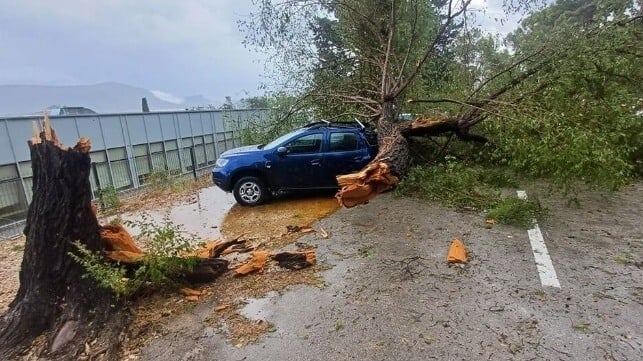
Storm damage in Split (courtesy Marjan Forest Park)
On Tuesday morning, a sudden storm swept over the coast of Croatia, tearing down trees and disrupting traffic - and sending a runaway ferry careening into a line of moored passenger vessels.
At the port of Split, Croatia, the ferry Petar Hektorovi? was tied up at the pier when the storm hit. In unexpectedly high winds, its lines parted, and it drifted into two vessels. First it made contact with a catamaran, then struck a tourist excursion vessel, which was damaged by the impact and sunk. No passengers were aboard and no personnel were injured, harbormaster Zvone Perkusic told local outlet tportal - adding that it could have been much worse. The crew of the Hektorovi? dropped both anchors and started the main engines quickly, averting further damage, operator Jadrolinija said.
"The ferry captain's ingenious and courageous maneuver should be commended, thanks to which a tragedy and much greater damage were avoided," Perkusic said.
First responders and a commercial salvage company attended the scene to control the risk of pollution.
The storm also injured at least three people on shore in Split, and was powerful enough to damage the roof of the city's soccer stadium. Further up the coast, in Barbariga, a waterspout was reported just offshore.
Separately, near the island of Kaprije, a small excursion catamaran capsized, and nine people - including seven Swedish nationals and one German - went over the side. Good Samaritans and police responders rescued all nine and brought them to shore, including two who were taken to a hospital for medical care.
One Big Beautiful Bill Hands U.S. Coast Guard Billions for Shipbuilding
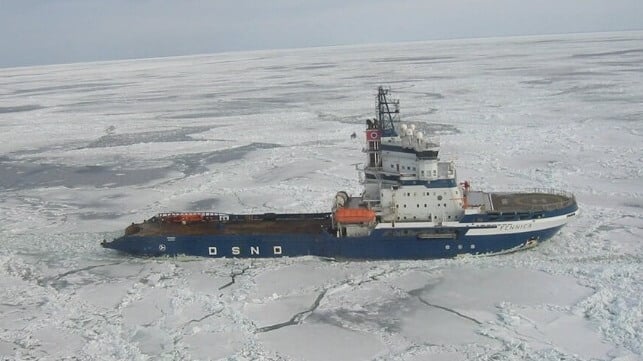
The package includes $3.5 billion for medium icebreakers like the Fennica, built by Rauma Marine Constructors in Finland (Marcusroos / CC BY SA 3.0)
The One Big Beautiful Bill Act put down serious money towards fixing the U.S. Navy's long-term supply challenges, but it contains even more funding for another pressing maritime challenge: recapitalizing the aging assets of the U.S. Coast Guard, from cutters to aircraft to shore infrastructure. No longer in second place for resources, the agency is set to receive $24.5 billion to spend on things it badly needs - if it can use all the funding before it expires in late 2029.
First on the list, the bill authorizes billions of dollars for the Coast Guard's icebreaker programs. The Polar Security Cutter - a three-ship replacement program for the aging heavy icebreaker Polar Star - has been plagued by delays and cost overruns, but it will now have the financial resources to power through the challenges. The bill appropriates $4.3 billion to pay for the service's future heavy icebreakers, ensuring the service has the ability to reach Antarctica's McMurdo Station for annual resupply missions (and any other location with 20-foot-plus ice).
The service's proposed medium icebreaker acquisition also received a $3.5 billion injection of cash. Though barely in the planning phase, the service suddenly has enough financing to complete construction of multiple hulls. The cost of building each vessel is not yet known, but earlier this year, the Coast Guard began soliciting information from U.S. and foreign shipyards for an "Arctic Security Cutter" that could deliver within three years of an order signing, in time for the first vessel to enter service during President Donald Trump's current term.
As a practical matter, the three-year delivery timeline for the Arctic Security Cutter would restrict the potential bidders to a handful of foreign yards that build icebreakers at high speed: Irving Shipbuilding, which has an active production line for Canada's AOPS ice-class patrol vessel, a light icebreaker; Davie-owned Helsinki Shipyard; and Rauma Shipyard, which has been linked in the Finnish press to ongoing negotiations with the U.S. Coast Guard. Helsingen Sanomat reports that Rauma has proposed to build five medium icebreakers for the USCG for a price of about $2.7 billion - though the deal is not final, and the Coast Guard has been talking with other yards.
In addition to the Arctic Security Cutter program, the bill sets aside another $816 million for light and medium icebreakers "from shipyards that have demonstrated success in the cost-effective application of design standards and in delivering, on schedule and within budget." President Trump has negotiated with the president of Finland for the purchase of one or more commercial icebreakers, and has taken a personal interest in the terms of the sale.
Other Coast Guard shipbuilding programs also received ample support: $162 million for inland buoy tenders (Waterways Commerce Cutters); $1 billion to buy more of the service's small but successful Fast Response Cutters; and $4.3 billion to acquire more Offshore Patrol Cutters, the long-delayed replacements for the aging Medium Endurance Cutter (WMEC) fleet.
Beyond shipbuilding, the bill includes a much-needed $4.4 billion for reconstructing shoreside facilities. The Coast Guard has long had to choose between procurement, operations and maintenance, with the repair of its bases often ending up as a "pay-for." With the signing of the bill, USCG facilities across the country can share a combined $2.8 billion appropriation for construction; the Coast Guard Yard is getting a new floating drydock for $500 million; Alaska is getting a new icebreaker homeport for $300 million; and the service's enlisted bootcamp at Cape May is getting a $425 million revamp.
These extra line items dwarf the normal FY2026 budget request for everyday Coast Guard operations and procurement, which totals about $14.5 billion. In comparison with typical funding levels in previous years, the bill gives the Coast Guard a giant infusion of capital to replace aging assets and carry the service forward.
Turkey's Shipbuilders Face Economic Headwinds in Export Market
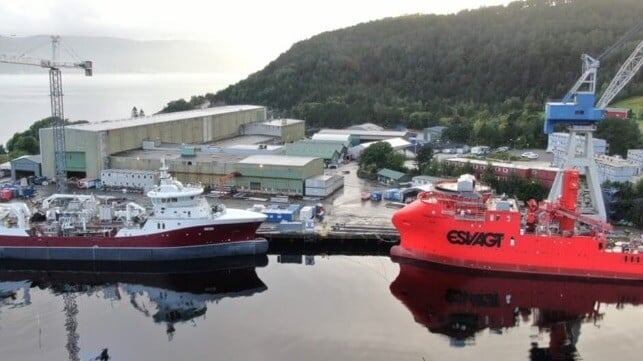
Some big-name Turkish shipbuilders are now setting up shop abroad instead, like Tersan, which recently bought Havyard Leirvik in Norway (above, courtesy Tersan)
Turkey's shipbuilding sector has been a dominant force in the specialty-vessel market for years, but it appears to be losing ground, based on a string of disappointing sales numbers.
Last month, sales of Turkish ships and yachts fell by more than 60 percent year on year, the latest data from the Turkish Exporters' Assembly (TIM) shows. Just $84 million in orders came in for the month, making shipbuilding the sector that lost the most export business in the Turkish economy. Eexport numbers are expected to shrink by 15 percent for the full year, and payrolls are already on the decline.
The problem, according to Ship, Yacht and Services Exporters' Association (GYHIB) chairman Cem Seven, is the high inflation rate that has afflicted Turkey's economy for years, alongside a weak exchange rate, limited access to finance and high interest rates on loans. These factors make it hard to keep costs down, and Turkish builders now have a hard time competing on price with premium yards in Norway.
He told Turkish outlet Ekonomim that some big names in Turkey are now looking to invest in shipbuilding abroad, given the obstacles at home. Specialist shipbuilder Tersan has already done so with the acquisition of Havyard Leirvik Shipyard.
Turkey's central bank is taking strong action to rein in runaway inflation through tight monetary policy, pushing its benchmark rate to an astonishing 49 percent in recent months (making bank lending expensive in the process). Though Turkey's domestic economy is strengthening, exporters like shipyards face headwinds for the next few years, according to the World Bank.
"Export growth is likely to be limited by the real appreciation of the [Turkish] lira, subdued euro area demand, and uncertainty surrounding trade policies in major economies," the World Bank said in its 2025 forecast.
DOT Expands US Marine Highway Program, Adding 850 Miles of Waterways
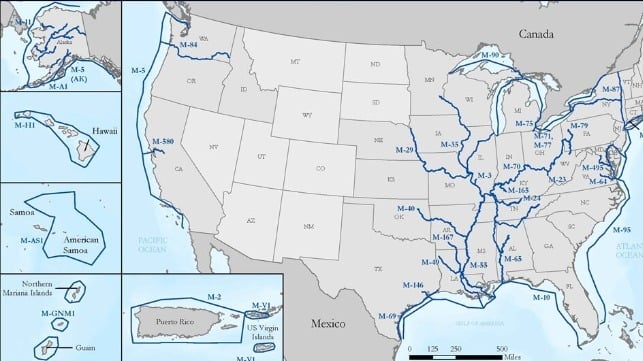
Designated Marine Highway routes around the U.S. and outlying territories (MARAD)
The U.S. Maritime Administration has added nearly 850 miles of inland waterways to the Marine Highway Program, expanding federal grant eligibility for shipping development projects to new routes.
“Coming from the Midwest, I’ve seen firsthand how maritime dominance isn’t just about our oceans. Our nation's many rivers and inland ports are crucial resources to moving great American products to markets across the country and around the world," said U.S. Transportation Secretary Sean P. Duffy. “Expanding the Marine Highway Program will strengthen the Great Lakes economy and other regional communities.”
The expansion centers on a route that runs through the Great Lakes, dubbed M-90. This corridor is more than 2,300 miles long, and stretches all the way from Minnesota to New York. The expansion includes the addition of new authorized project sponsors on the M-90 route: the states of Wisconsin, Illinois, Minnesota, Michigan, and New York, along with Ports of Indiana and the Erie-Western Pennsylvania Port Authority.
The expansion also authorizes four new routes on the Big Sandy River (Kentucky/West Virginia), Cumberland River (Kentucky/Tennessee), Green River (Kentucky) and Ouachita River (Louisiana/Arkansas).
The Marine Highway designation allows local stakeholders to apply for federal grant funding for waterborne transport projects. Marine Highway Program dollars support services to shift more freight from the road to the waterway, like container-on-barge operations. The program often underwrites terminal improvements like new port cranes, cargo handling equipment or wharf construction. MHP grants usually total in the range of $5 to $40 million per year, depending upon funding availability.
Secretary Duffy is about to tackle much larger budget lines as the newly-appointed acting administrator of NASA, taking over from interim administrator Janet Petro. On Wednesday, President Donald Trump added NASA to Duffy's portfolio on a temporary basis while the administration looks for a replacement for former NASA chief nominee Jared Isaacman, a close associate of SpaceX owner Elon Musk. Isaacman's name was withdrawn in late May after the falling-out between Trump and Musk, with Trump citing a review of Isaacman's "prior associations."
MARAD also remains without a confirmed administrator, six months after the resignation of former agency chief Adm. Ann Phillips. Nominee Stephen Carmel awaits confirmation by the Senate, and MARAD is currently run by a longtime congressional aide, Sang Yi.
South Africa Moves to Ban Strikes for Some Port Workers
South Africa’s government is moving to forestall port strikes, which in the past have left a massive dent to the country’s economy. In a new directive, the Department of Labor is proposing to expand its list of essential services to include port operations. This step would ban strikes for certain categories of employees of Transnet, the national port and rail authority.
The government directive suggests that marine services, including navigation, pilotage, towage and berthing, will be listed as essential services. Cargo services will also fall under this category when the cargo to be offloaded consists of explosives, flammable and pharmaceutical products. Port security, emergency and firefighting personnel have also been added to the essential services list.
The directive, which was published last month, comes a few weeks after Transnet and its majority union UNTU reached a wage agreement. UNTU members had voted to approve a labor action back in May, and the deal averted a major port strike in South Africa. Transnet agreed for an 18 percent salary increase over three years, although UNTU was pushing for a 10 percent rise in a single year agreement. Earlier in March, the smaller union SATAWU had settled for a 17.5 percent increase over three years.
In 2022, an UNTU-led port strike almost left South Africa’s economy at a standstill, with serious disruption to exports of minerals and fresh products. According to the South African Association of Freight Forwarders (SAAFF), the 11-day strike (beginning October 6, 2022), led to over $3 billion in export losses.
The new directive on port services is seen as part of a government reform effort to return Transnet to profitability. In the six months to September 30 last year, Transnet reported a loss of $117 million, citing higher costs and operational challenges. In May, the government agreed to give the state-owned logistics group a $2.8 billion guarantee facility. The funding would go to operations, servicing debt and capital investments over a period of two years.
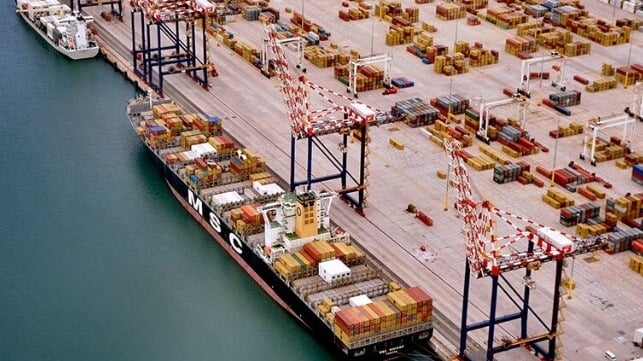
However, Transnet in the last two months has celebrated achieving significant milestones in its port operations. With MSC now deploying ultra-large containerships to Africa, Transnet has successfully berthed this kind of vessels at its two ports. In June, Port of Durban received MSC Rifaya, the largest boxship to ever dock at the port. The vessel is nearly 400 meters long and has capacity for up to 19,499 TEUs.
Last week, Transnet celebrated yet another historical moment with the docking of MSC Nicole Mastro at the Port of Ngqura, in the Eastern Cape. Mastro is larger than Rifaya and has capacity for around 24,000 TEUs.
Typhoon disaster knowledge service driven by large language models: Key technologies and applications
This study is led by researcher Yi Huang and Yongqi Xia (School of Internet of Things, Nanjing University of Posts and Telecommunications), researcher Xueying Zhang and Yehua Sheng (Key Laboratory of Virtual Geographic Environment, Nanjing Normal University, Ministry of Education), and researcher Peng Ye (Urban Planning and Development Institute, Yangzhou University). The researchers first introduce a comprehensive framework for typhoon disaster knowledge services, comprising three interconnected layers as data, knowledge, and service.
At the data-to-knowledge layer, this study proposes an LLM-driven automated method for constructing typhoon disaster knowledge graphs (KGs). This method employs a "pre-training + fine-tuning" paradigm to transform unstructured textual data into a structured knowledge representation. A specialized training dataset was then curated, incorporating typhoon-related texts with explicit temporal and spatial attributes. The resulting KG integrates 7,221 nodes, 52 edges, and 5,776 triplets, capturing spatiotemporal dynamics and disaster impact mechanisms.
The aforementioned structured knowledge forms a foundation for the subsequent service layer, where an LLM-based intelligent question-answering system is developed. Utilizing Graph Retrieval-Augmented Generation (GraphRAG), the system retrieves contextually relevant knowledge from the KG and generates user-specific guidance, such as evacuation plans and resource allocation strategies. The authors demonstrate the effectiveness of this system by substantial experiments, which achieves high accuracy in concept, entity, attribute, and relation extraction. Such knowledge-to-service layer ensures seamless conversion of structured knowledge into practical services, such as personalized evacuation plans or resource allocation strategies.
To sum up, this study highlights the transformative potential of LLMs in typhoon disaster management and lays a foundation for integrating LLMs with geospatial technologies. For more details, please refer to the original article:
Typhoon Disaster Knowledge Service Driven by Large Language Models: Key Technologies and Applications
https://www.sciengine.com/JGIS/doi/10.12082/dqxxkx.2025.250175 (If you want to see the English version of the full text, please click on the 科大讯飞翻译(iFLYTEK Translation) in the article page.)
Typhoon Disaster Knowledge Service Driven by Big Language Model: Key Technologies and Applications
Underserved youth less likely to visit emergency department for concussion in Ontario, study finds
Institute for Clinical Evaluative Sciences
Toronto, ON, July 11, 2025 — A new study finds socioeconomic disparities in rates of emergency department (ED) visits for concussion among children and youth.
Researchers from ICES, York University, Toronto Metropolitan University, and the University of Calgary found an increase in ED visits for concussion among all age groups prior to the pandemic, with the biggest increase among older children and teens (ages 10 to 19 years). However, children in the highest socioeconomic status group accounted for significantly more concussion-related ED visits than children in the lowest socioeconomic status group.
“These trends are concerning, and flag a potential issue of equity among youth who may not have access to the same protocols and support for concussion care that we see in higher income populations,” says lead author Dr. Alison Macpherson, a professor in the School of Kinesiology and Health Science at York University and senior adjunct scientist at ICES.
The study, published in the BMJ journal Injury Prevention, analyzed data for all Ontario ED visits for children and adolescents (ages 0 – 19 years old) with a diagnosis of concussion between 2010 and 2020. Socioeconomic status was assessed using categories of household material deprivation, which includes low income, unemployment, single parent families, parents without a high school diploma, and living in dwellings in need of major repair. The data were analyzed by age and sex.
There was a rise in concussion-related ED visits for all age groups. The 10-14 and 15-19 age groups had the greatest increases, from 350 and 382 per 100,000 in 2010 to 737 and 872 per 100,000 in 2019, respectively.
Further, rates among children with the lowest socioeconomic status rose from 36.7 in 2010 to 43.3 in 2020, compared to 62.6 and 61.8 for children in the highest socioeconomic status group.
While a large proportion of concussions are related to sports, which may be inaccessible to children with lower socioeconomic status, the socioeconomic gradient remained in 2020 when most organized sports were put on hold due to the COVID-19 pandemic. It is unlikely that sport participation is the only reason for the differences and there may be systemic barriers to concussion diagnoses.
The researchers suggest that reasons for lower rates of emergency department use among children and youth from low socioeconomic populations could be children's distance to hospitals, lack of information about concussion, and language or cultural barriers.
This is one of the first large, population-based studies to reveal an association between socioeconomic status and emergency department visits for concussion, while also showing changes in concussion visits over time, analyzed by age and sex. One limitation is that concussions may have been underrepresented if children did not seek medical attention for their injury, or if they saw a family doctor or other health care provider instead of visiting the ED. The researchers note that further study is needed to understand the full scope of concussion-related healthcare utilization.
“It’s important that policy-makers, school boards, and coaches and teachers are aware of the socioeconomic differences in concussion-related emergency visits, so that they consider equity when creating policies about concussion and when delivering concussion prevention programs,” says senior author Dr. Linda Rothman, an associate professor for the School of Occupational and Public Health at Toronto Metropolitan University.
ICES is an independent, not-for-profit research and analytics institute that uses population-based health information to produce knowledge on a broad range of healthcare issues. ICES leads cutting-edge studies and analyses evaluating healthcare policy, delivery, and population outcomes. Our knowledge is highly regarded in Canada and abroad and is widely used by government, hospitals, planners, and practitioners to make decisions about healthcare delivery and to develop policy. For the latest ICES news, follow us on BlueSky and LinkedIn: @ICESOntario
York University is a modern, multi-campus, urban university located in Toronto, Ontario. Backed by a diverse group of students, faculty, staff, alumni and partners, we bring a uniquely global perspective to help solve societal challenges, drive positive change, and prepare our students for success. York's fully bilingual Glendon Campus is home to Southern Ontario's Centre of Excellence for French Language and Bilingual Postsecondary Education. York’s campuses in Costa Rica and India offer students exceptional transnational learning opportunities and innovative programs. Together, we can make things right for our communities, our planet, and our future.
Toronto Metropolitan University is a world-class research institution and Canada’s leader in innovative, career-oriented education. TMU offers more than 60 undergraduate programs, over 65 graduate programs, and 80 continuing education certificate programs. The university boasts ten faculties, including the Lincoln Alexander School of Law and the new TMU School of Medicine, which is launching in September 2025. Established in 1948, TMU is home to nearly 48,000 students, including 2,900 Master’s and PhD students, 4,000 faculty and staff, and over 245,000 alumni worldwide. For more information, visit torontomu.ca.
Emergency department visits for concussion in children and youth by age, sex and material deprivation in Ontario, Canada, 2010–2020: a population-based study
Article Publication Date
11-Jul-2025
Newly discovered remains of ancient river landscapes control ice flow in East Antarctica
The remains of landscapes thought to have formed when ancient rivers flowed across East Antarctica have been discovered – and could help predictions of future loss from the ice sheet.
Researchers led by Durham University, UK, examined radar measurements of ice thickness and found extensive, previously unmapped, flat surfaces buried beneath a 3,500 km stretch of the East Antarctic coastline.
These surfaces were once connected and it is believed were formed by large rivers after East Antarctica and Australia broke apart approximately 80 million years ago, and before ice covered Antarctica about 34 million years ago.
The flat surfaces are now hidden beneath the ice sheet and separated by deep troughs, which fast-flowing glaciers are steered through. The ice above the surfaces is moving much more slowly, the researchers say.
Ice loss from Antarctica is increasing, but the flat surfaces act as barriers to ice flow and may currently be regulating the rate of ice loss.
East Antarctica has the potential to raise global sea levels by 52 metres if it were to melt completely.
Adding the newly discovered surfaces’ effects into models of future ice-sheet behaviour could help refine projections of how the East Antarctic Ice Sheet might react to climate change and what its impact on global sea levels could be, the researchers add.
The findings are published in the journal Nature Geoscience.
Research lead author Dr Guy Paxman, a Royal Society University Research Fellow in the Department of Geography, Durham University, said: “The landscape hidden beneath the East Antarctic Ice Sheet is one of the most mysterious not just on Earth, but on any terrestrial planet in the solar system.
“When we were examining the radar images of the sub-ice topography in this region, these remarkably flat surfaces started to pop out almost everywhere we looked.
“The flat surfaces we have found have managed to survive relatively intact for over 30 million years, indicating that parts of the ice sheet have preserved rather than eroded the landscape.
“Information such as the shape and geology of the newly mapped surfaces will help improve our understanding of how ice flows at the edge of East Antarctica.
“This in turn will help make it easier to predict how the East Antarctic Ice Sheet could affect sea levels under different levels of climate warming in the future.”
The extensive flat surfaces were found beneath approximately 40% of the East Antarctic Ice Sheet’s 3,500km-long coastline between Princess Elizabeth Land and George V Land.
The preservation of these enigmatic surfaces over tens of millions of years indicates a lack of intense, selective erosion of these areas throughout Antarctica’s glacial history.
The research team also included the universities of Newcastle, Edinburgh and Exeter, UK, the British Antarctic Survey, the Alfred Wegener Institute, Germany, the Polar Research Institute of China, and Beijing University of Technology.
Research co-author Professor Neil Ross, Professor of Polar Science and Environmental Geophysics, Newcastle University, said: “We’ve long been intrigued and puzzled about fragments of evidence for ‘flat’ landscapes beneath the Antarctic ice sheets.
“This study brings the jigsaw pieces of data together, to reveal the big picture: how these ancient surfaces formed, their role in determining the present-day flow of the ice, and their possible influence on how the East Antarctic Ice Sheet will evolve in a warming world.”
The researchers emphasise the need to further explore the influence of these flat surfaces on ice sheet movement during past warmer climates.
This would include drilling through the ice to retrieve rock from the flat surfaces to understand when they were last free from ice cover. This will help improve predictions for how the ice around this large section of the East Antarctic margin will respond as the climate and ocean warms.
The research was funded by the UK’s Natural Environment Research Council, a Leverhulme Trust Early Career Fellowship, the European Research Council, the AWI INSPIRES III programme and the Natural Science Foundation of China.
ENDS
Bunger Hills, a small exposed fragment of a larger flat surface at the edge of the East Antarctic Ice Sheet.
The Windmill Islands, small nunataks protruding above the surface of the East Antarctic Ice Sheet
The Windmill Islands (Wilkes Land), looking towards Vanderford Glacier.
Credit
David Small
Crevassed ice in Princess Elizabeth Land.
Credit
Xiangbin Cui
Configuration of East Antarctica, Australia, and India prior to continental break-up. Red outlines show the flat surfaces mapped in this study.