It’s possible that I shall make an ass of myself. But in that case one can always get out of it with a little dialectic. I have, of course, so worded my proposition as to be right either way (K.Marx, Letter to F.Engels on the Indian Mutiny)
Friday, July 11, 2025
Disabled Eimskip Vessel to be Towed to Port by Iceland’s Coast Guard
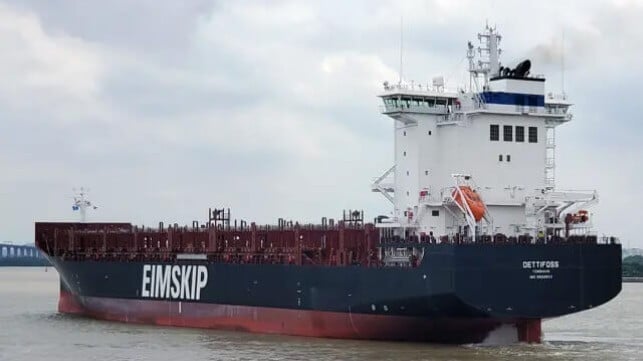
Dettifoss is drifting in the Atlantic off Iceland waiting for a tow to port (Eimskip)
Icelandic shipping company Eimskip confirmed that one of its newest and largest containerships, Dettifoss (25,690 dwt), is currently disabled and drifting in the Atlantic. The Iceland Coast Guard vessel Freyja has been dispatched and is expected to reach the ship overnight on July 11 to begin the tow back to Reykjavik.
Eimskip reports the vessel experienced a main engine failure on July 9 while it was approximately 390 miles southwest of Iceland bound for Nuuk, Greenland. The company said the crew and the vessel are in no immediate danger as the weather is calm in the area.
Dettifoss was built in China and delivered in 2020. It is considered to be one of the company’s most advanced ships, designed Eimskip said with good maneuverability and well equipped to sail in the North Atlantic. The ship, which is 180 meters (590 feet) in length with a capacity of 2,150 TEU, is ice class and designed in accordance with the Polar Code, which is mandatory for sailing in the ocean around Greenland. When the ship was delivered, the company said it had a 17,000 kW (23,000 hp) main engine, which is Tier III compliant. It was especially built to lower NOx (Nitrogen Oxide) emissions and has a scrubber system to reduce SOx (Sulfur Oxide) emissions.
The ship is deployed in a joint service with Greenland’s shipping company Royal Arctic Line, sailing between Aarhus and Helsingborg in Denmark, Bremerhaven, Germany, the Faroe Islands, Iceland, and Greenland. It is registered in the Faroe Islands.
Freyja is no stranger to ocean rescues of commercial ships. Last year, it went to the aid of another containership that had blacked out and was drifting toward shore, while in 2023 it assisted a small cargo ship, Wilson Skaw (6,460 dwt), which had grounded northwest of Iceland in rough weather. In 2022, it responded to reports of an explosion and fire aboard the EF Ava (8,168 dwt), which was operating under charter to Eimskip. The Lagarfoss (11,800 dwt), also operated by Eimskip, reported in 2020 that its main engine had malfunctioned, requiring the Freyja to tow the ship back to port in heavy winter weather.
Dettifoss will be towed to Reykjavik for repairs. Eimskip reports the ship is expected to resume its scheduled service next week.
Netherlands Provides Support to Damen Naval as German Frigates are Delayed
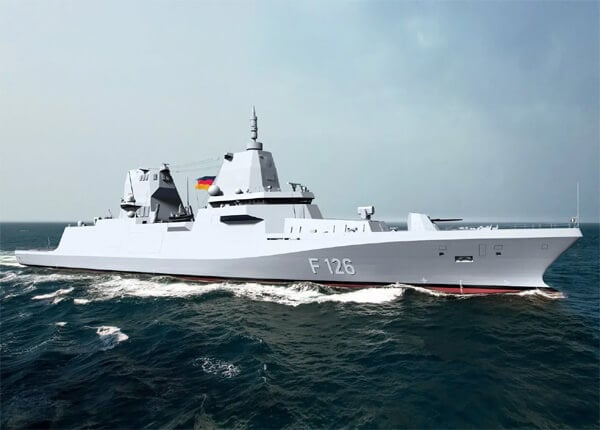
Media reports as that the Netherlands will support Damen Naval during delays on the German frigate program (file photo)
Reports in the Dutch media and by Bloomberg indicate that the Netherlands government has decided to provide support to help Damen Naval as it works to address challenges in its building program for a new generation of German frigates. The shipbuilder has reportedly told the German Defense Ministry that it expects delays as it works to resolve issues with the IT interfaces in the design and manufacturing system for the new F126 frigate.
In June 2020, Damen and the German government signed a contract for the design and construction of the new multi-role combat ships for the German Navy. Known as the Class 126 Frigate, the vessels will each be 10,000 tons displacement and 166 meters (545 feet) in length, making them the largest and most sophisticated vessels in the German Navy. Damen is responsible for the design of the vessels, which it says will be versatile multi-mission platforms that can operate all over the world and in all conditions, from the tropics to the polar regions. They will be capable of engaging surface, aerial, and underwater targets and are expected to play a key part in expanding NATO’s defense capabilities.
Damen is implementing the contract as general contractor together with its partners Blohm+Voss and Thales, and numerous German suppliers. While the ship design is being provided by Damen in the Netherlands, Thales is responsible for the command and weapon system, and the ships will be built by Blohm+Voss in Hamburg, Wolgast, and Kiel. The first ship is scheduled to be delivered to the German Navy in 2028, and the sixth in 2034. Steel cutting began in December 2023.
Damen Naval is general contractor and responsible for the design of Germany's new frigates (Damen Naval)
According to the media reports, due to the delays in the project, which is valued at nearly €9 billion ($10.5 billion), Germany, while looking to support Damen Naval, is also planning to withhold payments until key milestones are met. As such, the Netherlands government, Dutch broadcaster NOS reports, is planning €270 million (approximately $315 million) in support for Damen Naval while the issues are resolved. NOS reports that the houses of Parliament are convening to discuss the package, but it has not been announced if it will be a loan or in the form of guarantees.
Damen Naval is seen as a critical element of the country’s defense, and NOS says the government is anxious to ensure the stability of the business. In addition to its contract with Germany, Damen Naval is building ships for the Netherlands and other NATO countries. Damen Naval is closely involved with the replacement of the current Dutch naval fleet, including orders for frigates for both the Netherlands and Belgium. In March 2025, Damen Naval handed over a new combat support ship to the Royal Netherlands Navy.
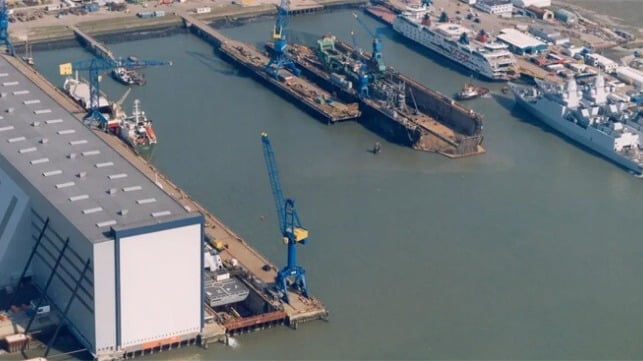
The shipyard traces its origins to 1875 and the establishment of Royal Schelde Shipyard (Koninklijke Maatschappij De Schelde) in Vlissingen. One of the leading shipbuilders in the Netherlands, the company was acquired in 2000, becoming part of the family-owned Damen Group. Damen has 35 shipyards in 20 countries and is a leading builder both for navies and commercial shipping.
Advanced Ocean Research Vessel to be Built by Fincantieri’s VARD
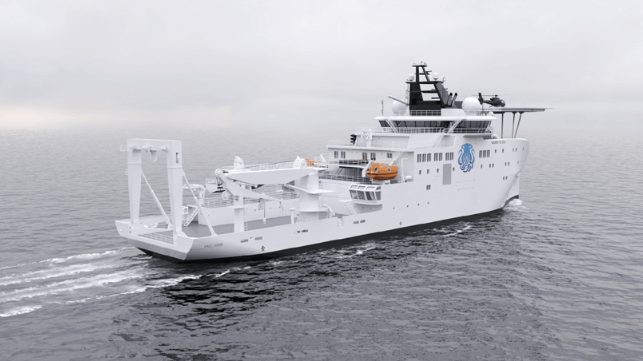
VARD will build the new research platform for Inkfish
VARD, which is already known for unique specialized vessels, reports it has received the contract for what is being billed as one of the most advanced research vessels ever built. The custom-built research vessel, designated Project RV6000, is specifically designed for scientific exploration and will support seabed mapping, submersible support, and ROV operations for an equally innovative research platform known as Inkfish.
"The agreement with InkFish confirms the role of VARD and the Fincantieri Group as leading technological partners in the design and construction of highly specialized and advanced naval vessels," said Pierroberto Folgiero, CEO of Fincantieri. "The project reflects our commitment to driving technological progress in the naval sector and to addressing the challenges of an ever-evolving global market with vision and expertise, transforming them into opportunities for growth and innovation."
The vessel will be 100 meters long and 20.7 meters wide, with a maximum speed of 15 knots and an operational autonomy of up to 30 days. VARD reports that among the RV6000’s capabilities will be an ROV capable of operating at depths of up to 6,000 meters. It will be capable of supporting two manned submersibles and will feature an A-Frame system aft and a large hangar for maintenance and storage. An offshore crane equipped with an AHC system will also be installed for operations at depths of up to 2,500 meters. Further, the vessel will be equipped with a hydroacoustic survey system capable of high-resolution seabed mapping, with a resolution of 0.5 x 1 degree, and analyzing the water column at all depths.
The technical configuration will include hybrid power generation and propulsion. The hull VARD says is designed to ensure advanced performance in seabed mapping and excellent seakeeping qualities through the use of cutting-edge anti-roll technologies that reduce movement and acceleration, ensuring excellent stationary performance.
The vessel will also be equipped with state-of-the-art laboratories, offices, and workshops, as well as high-quality accommodations and recreational areas designed for maximum comfort. These spaces will support up to 70 crew members.
The unique vessel is being built for Inkfish, which is owned by Gabe Logan Newell, an American video game developer and businessman who is recognized as one of the wealthiest people in the United States. He established Inkfish, which says it integrates marine science, engineering, medical innovation, and operational expertise to develop new technologies and support marine research initiatives. Inkfish currently operates two other research vessels, RV Hydra and RV Dagon, to support global marine research, and highlights that all the data collected will contribute to open-source repositories.
Inkfish's Hydra recently completed the platform's expedition of the Solomon Islands. After a major refit, the vessel was used to study the coral reef system and also visited World War II wreck sites. Dagon in 2023 undertook a research project exploring transits in the south-eastern Pacific Ocean in collaboration with the British Geological Survey.
VARD will manage the vessel construction process, from hull design and construction to outfitting, integration, and commissioning, including supply by the Group's subsidiaries: Seaonics, Vard Electro, and Vard Interiors. The project is valued at over €200 million ($234 million). The hull will be built at one of VARD's shipyards in Romania, while final outfitting, commissioning, and delivery will take place at one of the Group's shipyards in Norway. Delivery is scheduled for the second quarter of 2028.
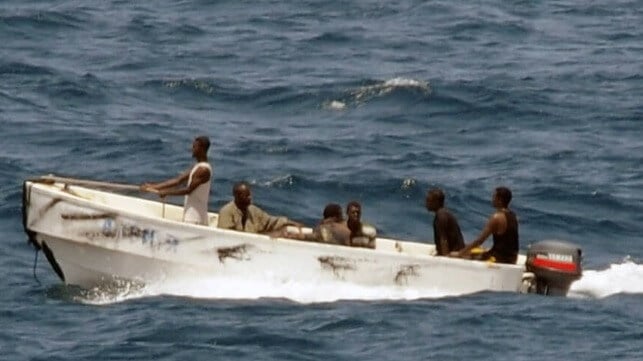
Piracy Incidents Surge to Five-Year High Driven by Singapore Strait
Report shows a dramatic increase all coming from the region around the Singapore Strait
The mid-year report on piracy and armed robberies against ships shows the number of incidents surged up 50 percent in the first six months of 2025, reports the ICC International Maritime Bureau (IMB). The Piracy Reporting Center is urging caution and expressing strong concern, noting that the rise of incidents in the Singapore Strait corresponds to a critical shipping route handling nearly a third of global trade flows.
There was a total of 90 reported incidents in the first six months of the year compared with 60 in the first six months of 2024. IMB reports that it is the highest incident rate for the first half of a year since 2020. Further, it raises concern because in 90 percent of the cases, the vessels, while mostly underway, were successfully boarded. This year’s mid-year total is also three-quarters of the way to the total of 116 incidents reported for all of 2024.
Nearly two-thirds of the total number of incidents reported were in the region around the Singapore Strait. IMB received reports of 57 incidents this year compared with just 15 in the first half of 2024. The data shows a steady range of less than 20 incidents in the first half of each of the past few years.
“The boarding of large vessels exceeding 150,000 dwt in this narrow and congested waterway remains a significant concern, particularly given the 95 percent success rate of boardings in the Singapore Strait,” writes IBM in its report. “Although relatively low-level incidents, this risk is further compounded by the continued use of guns and knives in 34 of the 57 reported incidents. Crew safety and wellbeing also remain fragile, with 13 crew members held hostage during incidents, five threatened, three injured, and one assaulted.”
The region monitoring operation in Asia ReCAAP has also been sounding the alarm over the increase in incidents in the region and specifically around the Singapore Strait. It shows a current tally of 107 reported incidents across Asia so far in 2025.
In the past week (June 30 to July 7), ReCAAP reports a total of 11 incidents of armed robbery in Asia with all of them on vessels in the eastbound lane of the Singapore Strait. There were three incidents on July 1 and another three on July 4, with the others distributed across the week. In four of the cases, engine spare parts were stolen, and in one case, a CMA CGM containership discovered boarders had gotten aboard for 10 minutes going undetected. None of the crew was injured in any of the cases, but it highlights the increased dangers.
Overall, the IMB calculates that 40 crew were taken hostage, 16 kidnapped, five threatened, three assaulted, and three injured so far in 2025. The Gulf of Guinea, while recording a lower number of overall incidents this year, accounted for 87 percent of the crew kidnappings. There were a total of 12 incidents reported, which is in the range of 10 to 14 incidents in recent first half of the year.
Other regions remained overall calm with only a small number of piracy incidents reported. IMB urges seafarers to exercise vigilance, noting that the risks remain. It notes, for example, that there have been no incidents off Somalia since April 2025, but as monsoon season subsides, the risk will increase.
Iberdrola and Masdar Complete Largest Offshore Wind Financing in a Decade
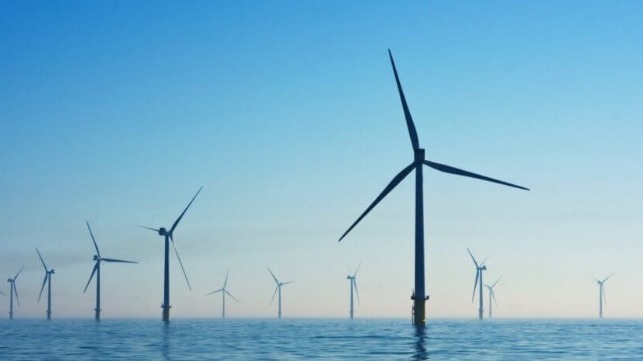
Iberdrola and Masdar completed the largest financing in a decade for an offshore wind project
Iberdrola, one of the world’s largest energy companies, and Masdar, Abu Dhabi's state-owned renewable energy company, marked key milestones in their partnership, which was launched in 2023 to invest in renewable energy. The companies reported they completed the largest offshore wind transaction in a decade for the financing of the UK’s East Anglia Three Project, while they also reached full energization of their first joint project.
The alliance was launched for a planned investment of up to €15 billion in projects across the UK, Germany, and the U.S.. The company called it one of the largest bilateral alliances in the global clean energy sector.
Advancing their goals, they reported signing the project financing for the UK project. A consortium of 24 international banks will provide approximately €4.1 billion ($4.8 billion) for the East Anglia Three project, which is projected to have a total cost of €5.2 billion ($6 billion). The project financing round was 40 percent oversubscribed by the banks, making it one of the largest transactions of its kind.
Located off the Suffolk coast in the UK, East Anglia Three will become one of the world’s two largest offshore wind farms when it comes into initial operation in Q4 2026. The plan calls for 1.4 GW of power, with Iberdrola and Masdar each owning 50 percent of the joint venture. It will provide the power equivalent of 1.3 million homes. East Anglia Three is a critical component of the UK’s plan to reach 50 GW of offshore wind capacity by 2030, up from its current approximate 15 GW capacity.
The project is supported by a 15-year CPI-linked Contract for Difference awarded by the UK government in rounds four and six. Further, the partners entered into a power purchase agreement in 2024 with Amazon.
“Masdar and Iberdrola are continuing to forge one of the largest and most powerful strategic clean energy partnerships to accelerate capacity growth in Europe and worldwide,” said HE Dr. Sultan Al Jaber, UAE Minister of Industry and Advanced Technology and Chairman of Masdar. “With demand surging due to exponential AI growth and the rise of emerging markets, projects such as these have never been more critical."
The partnership also reported that on July 9, its inaugural project, Baltic Eagle in Germany, reached full energization with a capacity of 476 MW. While it is the first for the JV, it is the second for Iberdrola in Germany. The company is developing three projects, with the others being with Wikinger (350MW, in operation) and Windanker (315MW, in planning). Collectively, these offshore wind farms form Iberdrola's Baltic Hub.
The companies report they continue to explore other opportunities aligned with the growing global demand for power.
Masdar-Iberdrola Clean Energy Pact Reaches Major UK and Germany Milestones
Masdar and Iberdrola have hit two major milestones in their €15 billion clean energy alliance, announcing a €5.2 billion joint investment in the UK’s East Anglia THREE offshore wind farm and the full energization of their 476 MW Baltic Eagle project in Germany.
The East Anglia THREE deal marks one of the largest offshore wind transactions of the decade. Each company will hold a 50% stake in the 1.4 GW wind farm, located off the Suffolk coast. With all conditions precedent now satisfied, the transaction is set to close soon. The project is backed by a 15-year Contract for Difference (CfD) and a long-term power purchase agreement (PPA) with Amazon. Expected online in late 2026, East Anglia THREE will generate enough electricity to power 1.3 million UK homes and create more than 2,300 construction jobs, with 100 permanent roles supported during its operational life.
Project financing for East Anglia THREE was secured on July 9, totaling £3.5 billion (~€4.1 billion) from 24 international banks in an oversubscribed deal. The financing structure ensures that the debt is not consolidated into either partner’s balance sheet.
Meanwhile, the partners have successfully completed their first joint project, the Baltic Eagle wind farm in the German Baltic Sea. With a capacity of 476 MW, the wind farm will supply clean power to approximately 475,000 households and avoid around 800,000 tons of CO? emissions annually. It is part of Iberdrola’s growing Baltic Hub, alongside the Wikinger and planned Windanker wind farms.
Masdar and Iberdrola’s partnership—formed in late 2023—is aimed at accelerating offshore wind and green hydrogen deployment in Europe and the U.S., with further joint investments already under consideration. Masdar, targeting 100 GW of global clean energy capacity by 2030, has expanded rapidly in Europe with major acquisitions in Spain and Greece. Iberdrola, for its part, invested €17 billion in 2024, adding 2.6 GW of renewable capacity and strengthening its leadership in long-term green PPAs.
GE Vernova to Pay Nantucket $10.5M for Offshore Wind Turbine Blade Failure
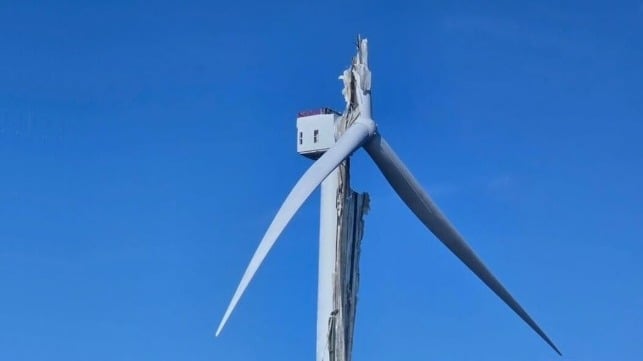
Damaged blade at Vineyard Wind off Nantucket in 2024 (ACK4whales on X)
Nantucket’s city government has reached a $10.5 million definitive settlement agreement with GE Vernova, the manufacturer of the offshore wind turbine blade that failed in 2024 and littered the coastline with debris. The Town of Nantucket commended GE Vernova for its leadership in reaching the agreement, while it was noted by observers that the developer of the Vineyard Wind farm is not a direct party to the settlement.
A portion of the settlement money will be placed in a third-party administered Community Claims Fund to provide compensation for claims of economic harm made by residents and local businesses. The administrator will accept claims for the next six months but will require proof of the expenses or losses.
The settlement relates to the failure of a turbine blade on one of the GE Vernova Haliade-X turbines that had been installed at the site, which is about 15 miles southwest of Nantucket. The wind farm developed had highlighted that first power was coming from the project early in 2024, and by mid-year, it reported that 10 turbines had been commissioned and that a total of 21 of the planned 62 turbines were in place and preparing for commissioning.
One of the approximately 350-foot blades malfunctioned on the night of July 13. The turbine was taken offline, but debris from the blade was spotted floating in the ocean and began washing up on Nantucket beaches. Some pieces of the blade were resting on the foundation and others dangled from the turbine. Later reports indicated that additional debris had fallen into the ocean.
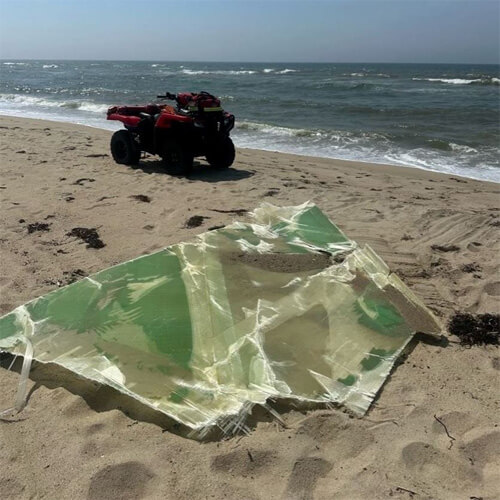
Nantucket says in the settlement announcement that when the blade failed, debris settled on the ocean floor, entered the water table, and littered Nantucket’s beaches for months, requiring an extensive cleanup effort. It says the incident scattered foam, fiberglass, and other debris along Nantucket’s shores during the height of the summer tourist season.
GE Vernova quickly identified a deviation in the manufacturing process at its plant in Quebec. It said the adhesion was improper and should have been caught in the quality control process.
Nantucket reported fining pieces of debris for months (Government of Nantucket photo)
Installation at the Massachusetts offshore wind farm was suspended for months with GE Vernova using high-tech crawlers and other inspections of the approximately 60 blades that had already been installed. The company agreed to remove blades from up to 22 wind turbines that showed manufacturing deviations and substitute blades from a plant in Europe. U.S. regulators permitted the foundation work to resume in the fall and full installation to resume in 2025.
Vineyard Wind, which is a joint venture between Avangrid and Copenhagen Infrastructure Partners, has said it remains committed to the project. Vineyard Wind commissioned one turbine at the beginning of 2025 but has not given an updated timeline for when the project will be completed.
Critics of the sector pounced on the failure saying that it demonstrated some of the risks of offshore wind power. They have continued to oppose the industry while the Trump administration has taken steps to stop future offshore wind power developments. While Vineyard Wind and the nearby Revolution Wind are proceeding, the zone, which was viewed with promise, has seen most of the planned projects put on hold due to the current uncertainties.
Research Reveals Hidden Fatigue Risks in Offshore Wind Turbine Structures
The case study demonstrates how reliability-based inspection can help manage fatigue-driven risks in offshore wind turbine support structures.
Some offshore wind turbine (OWT) support structures may fall short of required fatigue life expectations, according to a new Lloyd’s Register (LR) report.
The case study evaluated a North Atlantic offshore wind farm of 60–70 turbines (500–600 MW capacity). Offshore wind turbines are typically designed for 25 years of service, using a fatigue design factor of three—implying a minimum required fatigue life of 75 years. However, the study found that a critical joint in the jacket foundation would reach the end of its fatigue life after just 52 years, falling short of this design requirement.
Instead of redesigning the joint, the study took a reliability-based inspection (RBI) approach to identify and mitigate potential failure through targeted, risk-based maintenance.
The study combined a S-N (Stress vs. Number of cycles) model, to estimate when structural safety drops below acceptable thresholds, with Fracture Mechanics (FM) crack growth analysis, to predict the probability of failure over time and inform inspection intervals. This approach incorporates inspection results via Probability of Detection (PoD) curves to allow inspection schedules to be dynamically updated, responding to real-world conditions and inspection findings.
The results suggest that the first inspection should be carried out around year nine. After that, depending on the inspection method, further inspections might be needed every year to maintain acceptable safety margins.
However, the case study highlights the limitations of current inspection methods. Visual and ultrasonic inspections were found to be less effective for fatigue-critical components. More advanced techniques, such as Eddy Current or ACFM, offer greater reliability and allow for longer inspection intervals, but only when operators were willing to adopt slightly lower safety thresholds.
While RBI planning is effective in reducing in-service life costs and ensuring the longevity and safety for OWT structures, it requires expert input, reliable models, and software tools that can handle complex calculations. Ongoing research aims to refine the models and address the challenges during their application. Reliability updating, especially when integrating PoD curves, requires complex modelling and precise calibration of parameters such as initial crack size and stress intensity factors, areas often underdeveloped in practice.
The study calls for wider industry collaboration to refine inspection standards, share real-time monitoring data to refine fatigue predictions, and adopt more flexible definitions of acceptable reliability where appropriate.
Kourosh Parsa, Global Head of Technology - Offshore and Subsea, LR, said: “Many offshore wind assets are designed to a standard fatigue factor, but real-world conditions often expose critical vulnerabilities. Our findings show that using reliability-based methods allows operators to focus inspections where the risks are greatest. By integrating sophisticated models and real-world inspection data, we can extend asset life, reduce costs and, most importantly, maintain safety.”
Manuel Ruiz, Head of Offshore Renewable Solutions, LR, added: “By focusing on the areas with the greatest risk, we can not only help to manage fatigue-related issues more effectively — we’re also enabling developers and operators to make better-informed decisions that optimise asset life and performance. This proactive, risk-based approach is exactly how we support our clients in navigating complexity, controlling costs, and ensuring the long-term viability of their offshore wind investments.”
ExxonMobil and Qatar Energy have hit another natural gas find in the Block 10 lease south of Cyprus, adding to a previous discovery in the same area. The positive E&P results add to Cyprus' strong portfolio of offshore gas prospects for possible export development.
Exxon's Pegasus-1 well found about 350 meters of gas-bearing reservoir in a deepwater well in about 6,000 feet of water. Exxon said only that further assessment will be needed to evaluate the results fully.
Two nearby wells in the same block, Glaucus-1 and Glaucus-2, also turned up a high quality gas-bearing reservoir. Cypriot officials estimate the resource base in the Glaucus reservoir to be in the range of 3.7 trillion cubic feet of natural gas. (Another nearby field, Elektra, looked promising at first but turned out to contain noncommercial quantities.)
Cyprus is a new frontier region for gas production, with at least five and possibly six large fields ready for development. Cypriot offshore energy would be a geostrategic win for Europe, which is in need of natural gas to replace sanctioned Russian volumes. A subsea gas pipeline from Cyprus to Greece would go a long way towards solving the EU's energy problems.
However, the cost and the political obstacles to production are significant. Turkey objects to Cypriot-managed offshore E&P without a share for Northern Cyprus, the Turkish-aligned half of the island, and it opposes any pipeline connecting Cyprus to Greece. The United States withdrew its support for that pipeline route in January 2022, and the proposal has been dormant since.
An alternative export route exists to the south. Italian oil major Eni has signed a deal to pipe Cypriot gas from the Cronos field to Egypt's Damietta LNG plant for liquefaction and shipping to global markets. Other projects in the southern Cypriot EEZ could use similar development arrangements. There is also the FLNG option: At Chevron's Aphrodite gas field, Cypriot authorities have approved a plan to use a floating liquefaction plant (FLNG) for export.
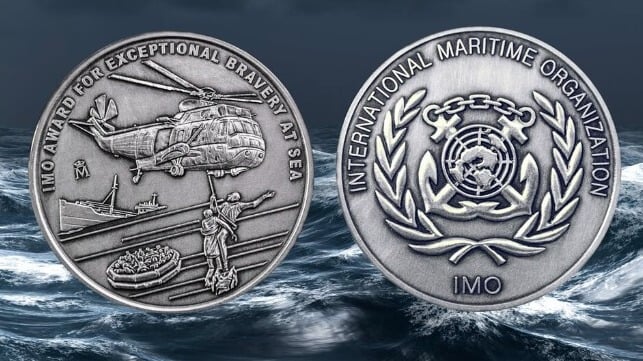
The IMO Council has decided to award its Exceptional Bravery at Sea award to Korean officer Lee Tae-Young, who helped save his crewmates aboard a sinking fishing vessel in November last year. Lee was selected out of 60 submissions from around the world.
In the early hours of November 8, 2024, the Korean fishing vessel Geumseong 135 capsized suddenly and unexpectedly while hauling in its catch, forcing the crew to abandon ship into the water. Some of the survivors managed to hang on to the propeller, which remained abovewater, while others drifted off in the currents.
Lee, an officer aboard Geumseong, threw two liferings to survivors and took action to save the 12 crewmembers who were still hanging on to the propeller, at risk to his own life. He helped the survivors climb up aboard a rescue boat, and he was the last up the ladder. Ultimately 13 crewmembers survived the ordeal.
"Honoring his sacrifice and dedication will go beyond the mere act of awarding a prize and it serves as a profound inspiration to all seafarers," said the ITF, which nominated Lee.
Commendation awards went to:
- The Canadian Airforce aircrew that rescued the crew of the MSC Baltic III in extreme winter weather
- The captain and crew of the tug Aigaion Pelagos for exceptional bravery and skill during the salvage of the burning tanker M/T Sounion in the Red Sea
- Members of a rescue team from the Japan Coast Guard who dived into the interior of a capsized tug to rescue a survivor
- USCG rescue swimmer Micheal Diglio, who saved two people from a disabled sailing vessel in the middle of Tropical Storm Debby, despite 50-knot winds, high waves and strong currents.
IMO also agreed to award its International Maritime Prize to Australian lawyer Dr. Rosalie Balkin, Secretary-General of the Comité Maritime International (CMI). Dr. Balkin formerly served as IMO's director of legal affairs, then later as assistant secretary general.
During her tenure at IMO, Dr. Balkin contributed to the passage of multiple major conventions on safety and environmental protection, including the Hazardous and Noxious Substances Convention and the Nairobi Convention on shipwreck removal.
"Dr. Balkin’s distinguished career embodies the dedication, mastery and leadership needed to uphold a robust global maritime legal framework that ensures safety, security and sustainability for this vital industry. Her pioneering contributions have paved the way for greater inclusion and diversity within the maritime community," said IMO Secretary-General Arsenio Dominguez in a statement.
Young Stewardess Found Dead Aboard Superyacht in Suspected Murder
A young South African national who worked as a stewardess aboard a $10 million superyacht died in an apparent attack last Friday, and one of her crewmates stands accused of killing her.
Paige Bell, 20, was working aboard the yacht Far From It on a voyage in and around the Bahamas. Last week, the vessel was anchored off the glamorous community of Harbour Island, an exclusive getaway that has long been popular with celebrities and ultrawealthy vacationers.
Authorities were alerted midday Friday when the crew of the Far From It reported Bell missing. On arrival at the scene, local police found her in the engine room, seriously injured with apparent defensive wounds, partially undressed, and unresponsive. A doctor arrived shortly after and pronounced her dead on scene.
The yacht's chief engineer, identified as Brigido Munoz, 39, was next to her when the police arrived. He had serious injuries to his arms, which police told the Daily Mail they believe to be the result of an unsuccessful suicide attempt. Munoz has been charged with murder and held without bail; his next court appearance is scheduled for November.
A GoFundMe for support for Bell's parents has already raised $47,000, about three times the goal of $16,000.
The captain and crew of Bell's previous yacht, Sweet Emocean, wrote a heartfelt remembrance in her honor. "Paige was more than a teammate, she was family. Her radiant spirit, infectious laughter, and boundless compassion made an unforgettable impact on everyone lucky enough to know her. Whether it was long days at sea or quiet moments under the stars, she brought light and warmth wherever she went," wrote Capt. Frank Prest, joined by the crew of the Sweet Emocean.
The Irish Coast Guard and defense forces report they were aware of a replica Russian sailing vessel that was sailing through coastal waters and made an unannounced middle-of-the-night stop in a remote Irish seaport. They are investigating what might officially have been a violation of the sanction against Russia, while the master of the vessel told the Irish media that the Coast Guard took a “human approach” to his making the port call.
The vessel named Shtandart had drawn criticism as it approached Ireland and anchored in Killiney Bay near Dublin on Monday, July 7. According to the media reports, several crewmembers and supplies were shuttled to the vessel on launches while it was in the bay.
An Irish charity working with the Ukrainian community protested the port call, asserting that it was a Russian vessel and Ireland and the EU have blocked all port calls by Russian ships. They called on the authorities to deny entry to Irish ports to the vessel.
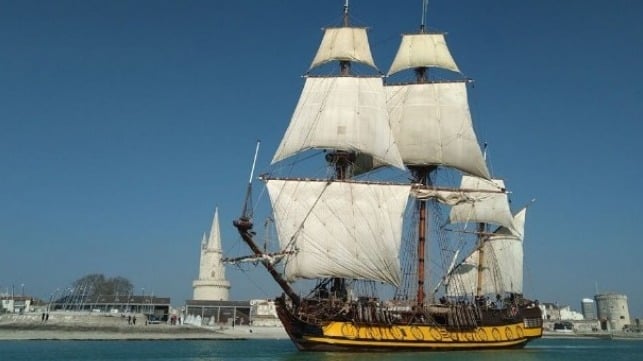
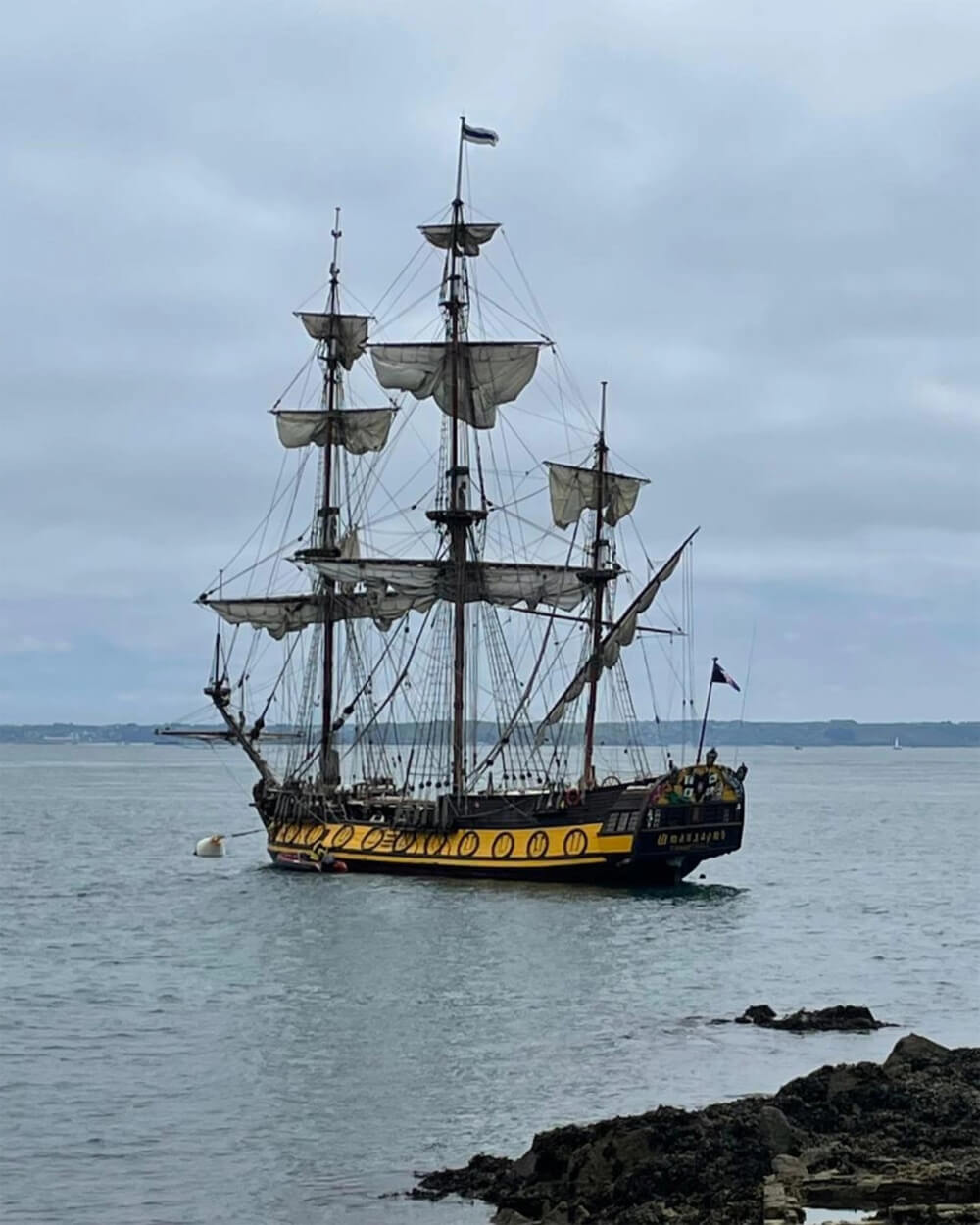
Shtandart is a 220-ton, 25.5-meter (83-foot) replica of a warship built by Tsar Peter the Great in 1703. The project to recreate the vessel started according to the Shtandart Project in 1988, sponsored by the State Hermitage Museum in St. Petersburg, Russia. It was challenging as no original plans survived for the vessel, but construction finally began in 1999 using traditional wooden shipbuilding methods. In a nod to the modern day, the vessel has a Volvo engine aboard.
The operators, which have an office in Germany, deny it is a Russian vessel, although the charity says the ship was operated from Russia under the Russian flag till 2024. It is now registered in the Cook Islands, which they allege is a sanctions dodge. The operators and master highlighted that it is an educational vessel and is used for training and goodwill. They called the criticism “unjust and unfair.”
Replica frigate stopped for two days south of Dublin and made a middle-of-the-night fresh water call in a remote port (Shtandart Project)
The ship departed St. Malo, France, and is heading to the North of Scotland to participate in Tall Ships Aberdeen. It is sailing along the Hebridean coast and plans stops in Aberdeen and Kristiansand, Norway. The master told the Irish media that there are 22 people aboard with 12 nationalities.
Ireland’s Department of Transport said it was aware of the vessel but noted it had not made an application to dock in Ireland. The Irish Navy said it was being tracked as part of routine operations. When it departed the Dublin area Tuesday afternoon, the master did say they would need to stopover “somewhere” to take on fresh water.
The vessel “snuck” into Ireland’s Port Oriel, a small fishing harbor in Clogherhead at around 0100 Wednesday, July 9. The Coast Guard and the Department of Transport informed the local authorities, and a visit was made to the vessel.
It confirmed that the Shtandart docked at around 0130 at an “unmonitored pier” to take on fresh water. The master later confirmed to the media that “friendly fishermen” had helped out. He said the Coast Guard boarded the vessel and checked its papers. He said they were “very friendly,” and took “a very human approach,” not making a problem. Shtandart was back underway between 0500 and 0600 Wednesday morning and has left the Irish EEZ.
The Irish authorities said they would let the local authorities investigate the situation. A spokesperson for the Department of Transport told the media they were waiting for a report from the local council, while the master said he was advised by the Irish authorities that there would not be a problem.