[By Mikael Lind, Rajelle Barbe, Sandra Haraldson, Wolfgang Lehmacher, Daniel Adam, David Bianchi, Chrystold Chetty, Sony Payet, Phillippa Samson, and Lennart Swenson]
On 6 May 2025, the Seychelles Port Authority (SPA) and Sweden’s RISE have signed a landmark Memorandum of Understanding (MoU) on collaboration on developing green port capabilities, aiming to position Port Victoria, Seychelles, as a role model for Small Island Developing States (SIDS) in sustainable and resilient port operations. The MoU results from months of thorough, deep communication and work between parties.
H.E. Caroline Vicini, Swedish Ambassador to Seychelles, and David Bianchi, Principal Secretary, Ministry of Transport, Republic of Seychelles, joined the signing ceremony. This brings together two parties that are able and willing to make a dent in sustainable global shipping. The partnership between SPA and RISE marks a pivotal move toward embedding sustainability at the heart of port infrastructure development. Leveraging its deep expertise, RISE will contribute advanced sustainable port solutions, spanning environmental best practices, digital innovation, and economic viability. Through this collaboration, Port Victoria's USD 100 million reconstruction will not only modernize its facilities but also integrate green technologies and sustainable processes from the beginning.
A vision for sustainable ports in the SIDS carries the MoU. Research Institutes of Sweden (RISE) is a world leader in sustainable port development and was selected as the perfect partner to ensure that the green agenda is integrated in the USD 100 million Port Victoria reconstruction project. This article explains how the sustainable port concept is expected to guide the transformation of Port Victoria and how a broader innovation initiative involving ports relevant to Seychelles across the Indian Ocean region is anticipated to support the emergence of sustainable practices throughout the region and the SIDS.
Transforming Port Victoria into a Catalyst for Climate Action Among Small Island States
Most 39 Small Island Developing States (SIDS) are geographically distant from global markets, yet they remain essential to many people. Conditions on these islands often depend on limited resources and are marked by a significant imbalance between imports and exports. SIDS are among the world’s most vulnerable communities. These nations face distinct challenges due to their size, remote locations, and reliance on a narrow range of resources and exports. Such factors expose them to external economic, social, and environmental shocks. While SIDS are on the frontlines of the climate crisis, they are also leading the way in developing climate solutions. Many have demonstrated strong political will by committing to a net-zero carbon and climate-resilient future.
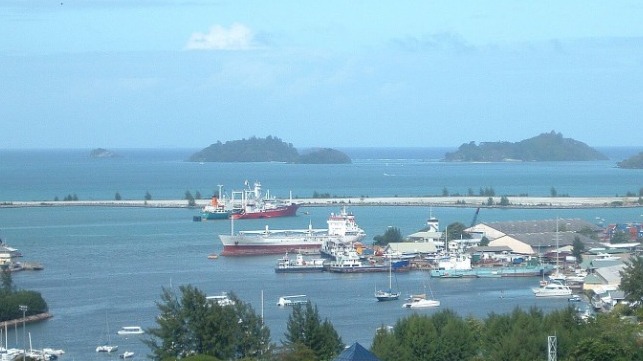
One example of such a state is Seychelles, which has laid the groundwork for a substantial upgrade of its port, Port Victoria, with reconstruction expected to start early 2026. This port handles 95% of all imports, serves approximately 100,000 inhabitants and visiting tourists, and acts as a gateway to other ports across the archipelago. The investment totals approximately USD 100 million, and the terminal operator concession is about to be renewed.
As this major reconstruction project, which is significant for the Seychelles, is now becoming a reality, the Seychelles Port Authority also wants to ensure that the green port agenda is fully integrated in the planning and execution. This is a foundation to align the Seychelles with necessary climate actions, positioning the country as a role model for other SIDS. RISE is a world leader in developing sustainable port concepts. Therefore, the Swedish Institute was identified as an ideal partner by the Ministry of Transport and the Seychelles Port Authority. RISE has developed deep and robust experience that contributes to the agenda for the sustainable development of Sweden’s 52 ports. SPA wants to collaborate with RISE on the SIDS Green Port agenda, applying the Sustainable Ports Concept co-created by the Swedish ports.
The Swedish Sustainable Port Concept: A Strategic Framework for Integration and Innovation
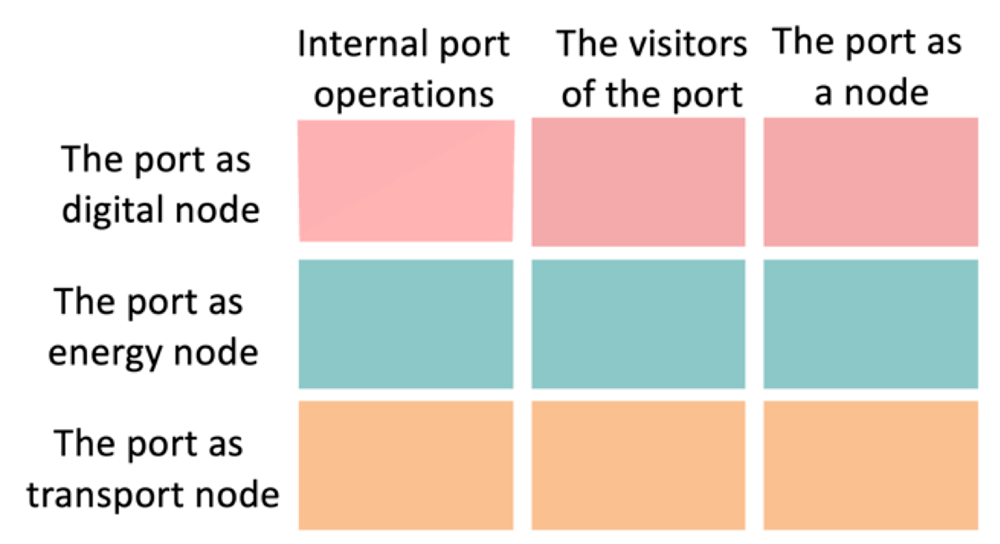
The Sustainable Port Concept, developed by the 52 Swedish ports orchestrated by RISE, Chalmers University of Technology, and Gothenburg University, represents a strategic model for transforming ports into efficient, resilient, and environmentally responsible nodes. Central to this model is a framework that categorizes the port’s roles across three key dimensions - transport, energy, and digital node, each intersecting with three implementation levels: internal operations, services to port visitors, and the port as a node in the broader system. This matrix (Figure 1) guides the port’s sustainability efforts, enabling structured development across all functional and stakeholder areas. It provides a framework for creating a roadmap based on the current maturity of the port.
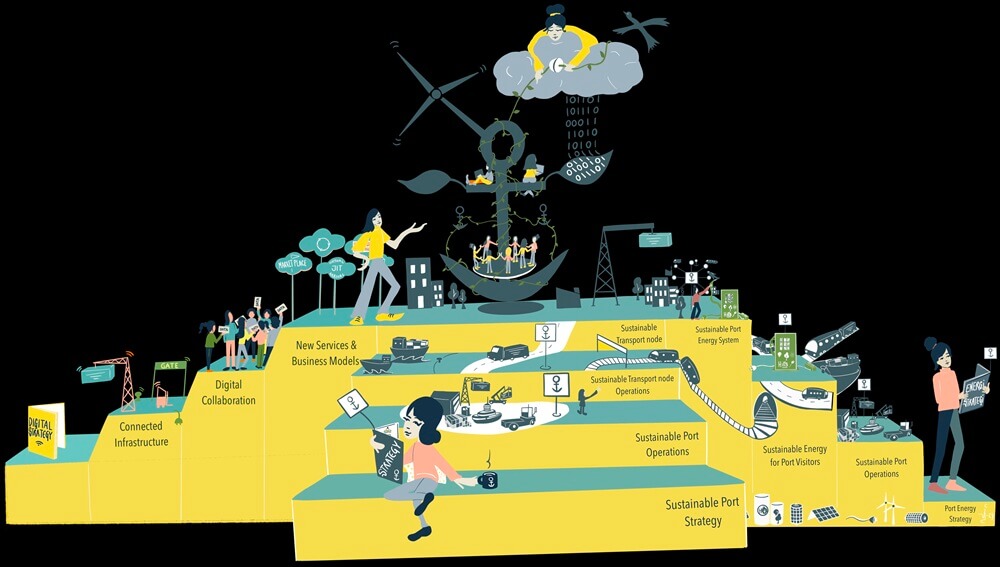
A foundational principle of the Sustainable Port Concept is that the maturity of port capabilities is continuously evolving, taking the port's current level of maturity as the point of departure (Figure 2). This development is not incidental but is driven by a deliberate and strategic process grounded in clearly articulated plans tailored to specific areas of concern, such as logistics, energy management, digital infrastructure, governance, and stakeholder engagement. These strategies serve as both a roadmap and a catalyst, guiding ports through targeted actions and investment decisions that align with long-term sustainability goals.
Figure 1: Implementation framework: Sustainable ports
Capability maturity is viewed as a dynamic, ongoing process in which each area of focus contributes to an integrated and adaptable port ecosystem. Digitalization advancements boost operational efficiency and enhance energy monitoring and emissions reporting, feeding into environmental performance and regulatory compliance. Robust stakeholder engagement strategies foster trust, enable coordinated action, and ensure ports are responsive to shifting societal and market expectations.
Figure 2: Maturity framework: The port as a transport node with energy node and digital node capabilities
(Illustration: Sandra Haraldson)
As each strategic area matures, it strengthens the port’s overall resilience, competitiveness, and sustainability. This structured approach ensures that development is not fragmented or reactive but incremental, transparent, and aligned with international best practices and frameworks such as the UN Sustainable Development Goals. The Sustainable Port Concept enables ports to stay agile, forward-looking, and impactful in an increasingly complex worldwide transport and energy landscape by embedding capability development into a continuous improvement cycle.
RISE and Seychelles: Partnering for Port Victoria’s Sustainable Future
RISE will contribute to the development of Port Victoria as a green initiative and expand its expertise in applying sustainable port concepts. Port Victoria, in turn, is committed to ensuring that all dimensions of port greening are addressed as substantial investments are made. Both parties share the goal of making Port Victoria a role model for how SIDS can adopt the Sustainable Port Concept. This shared vision has shaped the dialogue about the port project between the two complementary parties since April 2024. Since then, they have scoped and outlined the joint endeavor. RISE’s visit to the Seychelles helped the institute to get familiar with the local situation. RISE joined the mission of the Swedish ambassador to Seychelles to sign an MoU effective until the end of 2030. The joint document includes:
- SPA and RISE will collaborate on the integration of green port capabilities in the Victoria Port reconstruction project
- The cooperation will focus on strategic guidance, knowledge sharing, capacity building, and exploring pilot initiatives to position SPA as a role model for SIDS in sustainable and resilient port operations.
Step by Step toward Sustainability: Port Victoria’s Journey to 2030
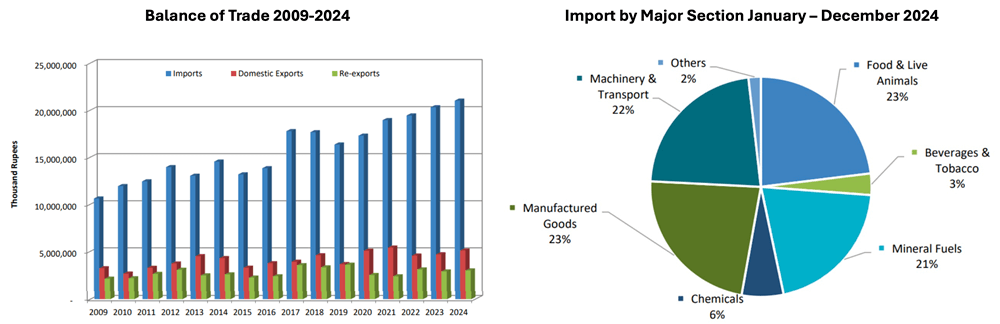
The reconstruction project at Port Victoria includes extending the quay to accommodate larger ships calling at Seychelles. Like many other remote countries, the Seychelles face challenges related to its power supply, which is primarily generated using fossil fuels. In addition, the country must manage a high volume of empty containers due to the persistent trade imbalance.
Figure 3: Balance of trade and distribution of imports (Source: National Bureau of Statistics Seychelles, 2025)
Seychelles has expressed its ambition to use the port upgrade to start transitioning toward a greener future and develop a smart port that meets modern operational standards, aligns with sustainability goals, and leverages digital capabilities where relevant.
The transformation of Port Victoria is planned to use a structured, stepwise approach and a collaborative effort between SPA and RISE. The initiative focuses on strengthening Port Victoria’s transport, energy, and digital node role. It has started with a preparatory phase from the fourth quarter of 2024 to the first quarter of 2025 and is now entering the implementation phase, which will last till 2030. Key activities include diagnostic assessments, developing a tailored roadmap, integrating green technologies, and building capacity. Two Swedish reference ports have been selected, Port of Helsingborg and Kvarken Ports Umeå, which will provide inspiration and practical insights to guide the transition.
The project adopts a progressive approach to building green port capabilities, with clearly defined stages of maturity. While significant progress is expected by 2027, positioning Port Victoria as an internationally recognized model for SIDS, which is the ultimate milestone, will be realized by 2030, when the port aims to achieve a credible and comprehensive level of sustainability. This long-term perspective ensures sustainability becomes an embedded, self-sustaining part of the port’s operations.
The Social Dimension of Port Sustainability
When applied to Seychelles, the Sustainable Port Concept will also enhance Victoria Port’s social dimension of sustainability. While environmental and economic elements, such as emissions reduction, digital transformation, and operational efficiency, are generally considered, social sustainability is regularly neglected. In SIDS like Seychelles, where ports are central to economic survival, cultural identity, and societal cohesion, embedding social concerns is essential. These concerns include quality employment, gender equity, health and safety, cultural preservation, and good governance, all vital for an inclusive and resilient transition in the Seychelles.
A strategic approach aligned with key SDGs will be worked out. These include decent work (SDG 8), reduced inequalities (SDG 10), gender equality (SDG 5), and sustainable communities (SDG 11). The European Union’s Corporate Sustainability Reporting Directive (CSRD), which came into force in 2023, provides further guidance on how ports and related operators can report on their environmental, social, and governance (ESG) impacts, including how sustainability issues affect them and how their operations impact people and the planet. This dual perspective reinforces the need to integrate social sustainability into port governance and planning.
The social responsibility maturity model (see table below) is central to this effort, which follows the design principles of the broader implementation framework used for sustainable port development. This ensures coherence with existing energy and digital node strategies. The model consists of four interconnected layers: strategic foundation, internal focus, external engagement, and ecosystem integration. Each layer targets specific focus areas, sets clear objectives, and connects with relevant CSRD social disclosure requirements. By embedding this structured model into the implementation framework, ports like Port Victoria are able to enhance their role as socially responsible operations rooted in community needs and sustainability mandates. Strengthening the Sustainable Port Concept by integrating social sustainability aspects is thus an essential part of the Port Victoria restoration age.
Maturity Layer | Focus Area | Key Objectives | Relevant CSRD Social Disclosure Areas |
Layer 1: Strategic Foundation | Social Responsibility Strategy | Establish guiding principles, governance, and social impact goals | Human rights policy, due diligence, stakeholder engagement, risk management |
Layer 2: Internal Focus | Workforce Wellbeing and Equity | Ensure fair labor practices, inclusion, and staff development | Working conditions, occupational health and safety, diversity, equal opportunities |
Layer 3: External Engagement | Responsibility Toward Visitors and Users | Provide safe, inclusive services for all external port users | Impacts on contractors and transport workers, fair treatment, access and service equity |
Layer 4: Ecosystem Integration | Regional Social Contribution | Support local communities, education, culture, and regional cooperation | Community engagement, local development, support for regional social sustainability goals |
Consequently, the implementation framework for sustainable ports depicted in Figure 1 will be enhanced by a fourth node dimension (a fourth row) capturing the port social responsibility maturity model. Considering the port as an energy node, provides the final dimension and all aspects together generate a solid foundation for CSRD reporting.
Transferring the approach to other SIDS: From Island Innovation to Ecosystem Innovation
The Seychelles project will be referenced as an island innovation. Island innovation typically refers to localized, context-specific efforts to address the unique challenges island communities face, including limited resources, geographic isolation, and vulnerability to climate change. These innovations often emphasize self-sufficiency, resilience, and tailored technological or policy solutions. While crucial, such approaches risk becoming siloed if they do not account for the broader interdependencies that islands, especially island ports, have with regional and global systems.
In contrast, ecosystem innovation adopts a systems-thinking perspective, recognizing that no island, port, or institution operates in isolation. Ports are prime examples of interdependence: critical national infrastructure and regional and global supply chain nodes. Ships, cargo, data, energy, and knowledge flow in and out, connecting islands and mainland markets. As such, innovation within one port has limited impact unless it is mirrored by others or coordinated with change initiatives in the wider maritime and logistics ecosystem.
In the Port Victoria project, a two-step collaborative approach will be adopted:
National Alignment in Seychelles: All relevant actors — including the Seychelles Ports Authority, government ministries, educational institutions, private sector stakeholders, and civil society — must align their strategies, investments, and initiatives with a shared port sustainability agenda. This collaboration will be essential for turning strategic frameworks into tangible outcomes that benefit the Seychellois people.
Regional Alignment Across the Indian Ocean: Building on its national efforts, Seychelles has the opportunity and the influence to lead a wider regional push toward port sustainability. By working through regional bodies like the Port Management Association of Eastern and Southern Africa (PMAESA) and forging partnerships with other ports, Seychelles can help align standards, share innovations, and coordinate capabilities. Port Louis in Mauritius, with support from UNCTAD, also recognizes the importance of enhancing the green capabilities of ports in SIDS in the Indian Ocean. These alignments would position the Indian Ocean region as a collaborative force for resilient, inclusive, and low-carbon maritime development.
This shift from island to ecosystem innovation is particularly relevant in the Indian Ocean due to the region's vulnerability. While Port Victoria is capable of pursuing green upgrades and digital improvements, the full value of these efforts will only be realized if similar transformations in connected ports across the region complement and support the Seychelles’ efforts. This requires collaboration through port associations such as PMAESA, joint sustainability frameworks, harmonized data standards, and shared training and innovation platforms. Figures 4 and 5 depicts the Port Victoria’s regional connections through ship movements.
Figure 4: Top 5 port connections to Port of Victoria and vessel composition (Source: PortWatch 2025)
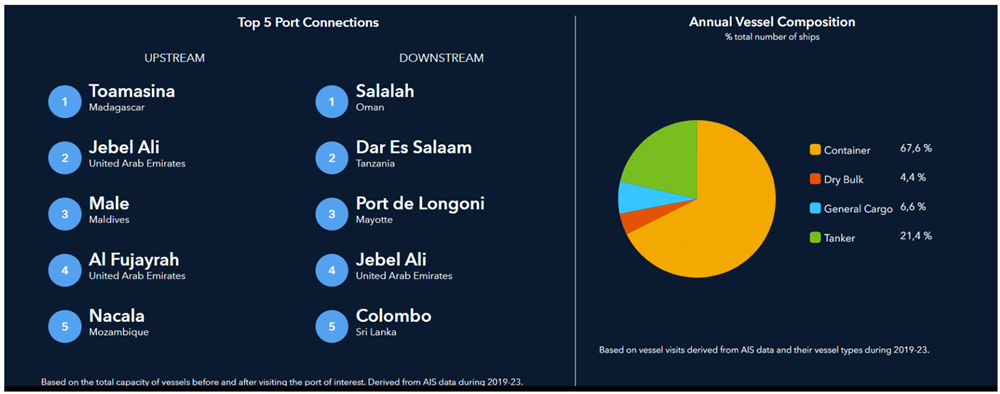
Ecosystem innovation promotes collective resilience, accelerates regional decarbonization goals, and allows for the scaling of best practices. It also enables small island states to pool resources, align with international regulations, and amplify their voice in global maritime governance. Ultimately, moving from island innovation to ecosystem innovation is not a departure from local needs, but a strategy to embed local actions within a coordinated, multi-port effort to achieve broader and more sustainable impact.
Figure 5: Sea traffic to/from Seychelles the last three months (Source: Marine Benchmark)
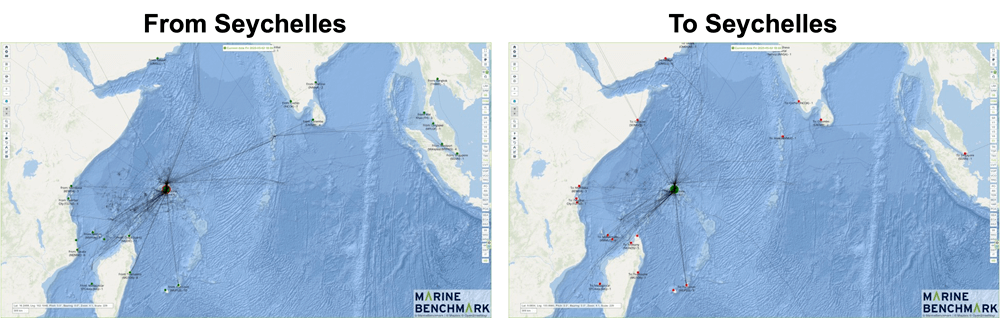
Using the extended Sustainable Port Concept as a vehicle for transferability across different contexts, the underlying categories that form the concept are expected to facilitate the sharing of experiences between diverse port situations and environments. The plan is for PMAESA to be informed by the Seychelles initiative during 2025, with one port in the Indian Ocean joining in 2026, another in 2027, and two more in 2028. By 2029, it is anticipated that concrete collaborations with other SIDS outside the region can be initiated.
Final Remarks
The transformation of Port Victoria into a green, smart, and socially responsible port is an infrastructure project that represents a bold step toward redefining what ports are capable of being for island nations. By expanding the Sustainable Port Concept to include social responsibility as a fourth strategic node, Seychelles demonstrates how environmental, digital, and economic progress must be integrated with good governance, social inclusion, workforce development, and community wellbeing.
This enhanced framework, aligned with the CSRD, provides the structure and strategic depth needed to support ports in delivering measurable and meaningful impact across all sustainability pillars. It positions Seychelles to meet them and act as a role model for other SIDS.
The combination of all steps offers a solid and promising path forward, turning ports into agents of positive change for trade, transport, and logistics, climate action, social progress, and regional collaboration.
About the authors
Mikael Lind is the world’s first (adjunct) Professor of Maritime Informatics engaged at Chalmers and Research Institutes of Sweden (RISE). He is a well-known expert frequently published in international trade press, is co-editor of the first two books on Maritime Informatics, and is co-editor of the book Maritime Decarbonization.
Rajelle Barbe is an Environment, Social Impact, Health and Safety Manager at Seychelles Ports Authority, pioneering sustainable port operations since 2023. With over seven years in environmental management and community engagement, she implements green port strategies, leads climate adaptation initiatives, and holds a First Class BSc Environmental Science Honours. She also serves as a member of the board of the Land Waste Management Agency.
Sandra Haraldson is Senior Researcher at Research Institutes of Sweden (RISE) and has driven several initiatives on digital collaboration, multi-business innovation, and sustainable transport hubs, such as the concept of Collaborative Decision Making (e.g. PortCDM, RailwayCDM, RRTCDM) enabling parties in transport ecosystems to become coordinated and synchronised by digital data sharing.
Wolfgang Lehmacher is a global supply chain expert, partner at Anchor Group, and advisor at Topan AG. The former director at the World Economic Forum, and CEO Emeritus of GeoPost Intercontinental, is an advisory board member of The Logistics and Supply Chain Management Society, ambassador F&L, and advisor Global:SF and RISE. He contributes to the knowledge base of Maritime Informatics and co-editor of the book Maritime Decarbonization.
Captain Daniel Adam is the current Chief Executive Officer at the Seychelles Maritime Safety Authority. He has served as master in the merchant navy for four years. Additionally, he has a MSc in Port Management and has published an article on the benefits for the bunker industry in adopting blockchain technology for dispute resolution.
David Bianchi is the newly- appointed Principal Secretary in the Department of Civil Aviation, Ports and Marine in the Ministry of Transport in Seychelles. As the former Director for Strategies at the Seychelles Ports Authority, he is one of the strongest advocates of sustainability in port. In his new role, he will continue to push at Ministerial level, for Green solutions in port and would like to extend this effort to the airport in the Seychelles.
Chrystold Chetty is a governance and transparency advocate based in Seychelles. He has extensive experience in public policy, civic engagement, and anti-corruption initiatives, and serves as Chair of the Seychelles Revenue Commission, with oversight for customs and border control. He is also the Honorary Consul for Sweden.
Sony Payet was appointed as the Chief Executive Officer of the Seychelles Ports Authority (SPA) on 01st July 2022, Mr Sony Payet is an experienced Civil Engineer specialising in construction and maritime. He has a long track record of successful management competencies. With his extensive experience in management, Mr Payet is now serving his second mandate at the authority. He also holds the post of Chairman of the Association of Indian Ocean Islands Ports.
Philippa Samson is the Deputy CEO of the Seychelles Ports Authority. She's a member of the boards of the Seychelles Airports Authority and the Development Bank of Seychelles. She's the project manager of the Port Victoria Rehabilitation & Extension Project which entails the redevelopment and modernization of the Commercial Port at Mahe Quay, the only deep water port in Seychelles capable of accommodating container vessels, petroleum tankers and cruise ships. She holds a BSc in Business Computing & Information Systems from Lancaster University and a Chartered Banker MBA from Bangor University.
Lennart Swenson is the Seychelles Honorary Consul General to Sweden. He has been in environmental commitments the past 25 years related to active MOU:s between the City of Umeå and the Government of Seychelles, in particular Ministry of Environment/Waste Management, Ministry of Education, and Ministry of Health.
The opinions expressed herein are the author's and not necessarily those of The Maritime Executive.