Friday, July 11, 2025


GM-backed EnergyX buys lithium-rich acreage in US Smackover formation
Credit: Pantera Lithium

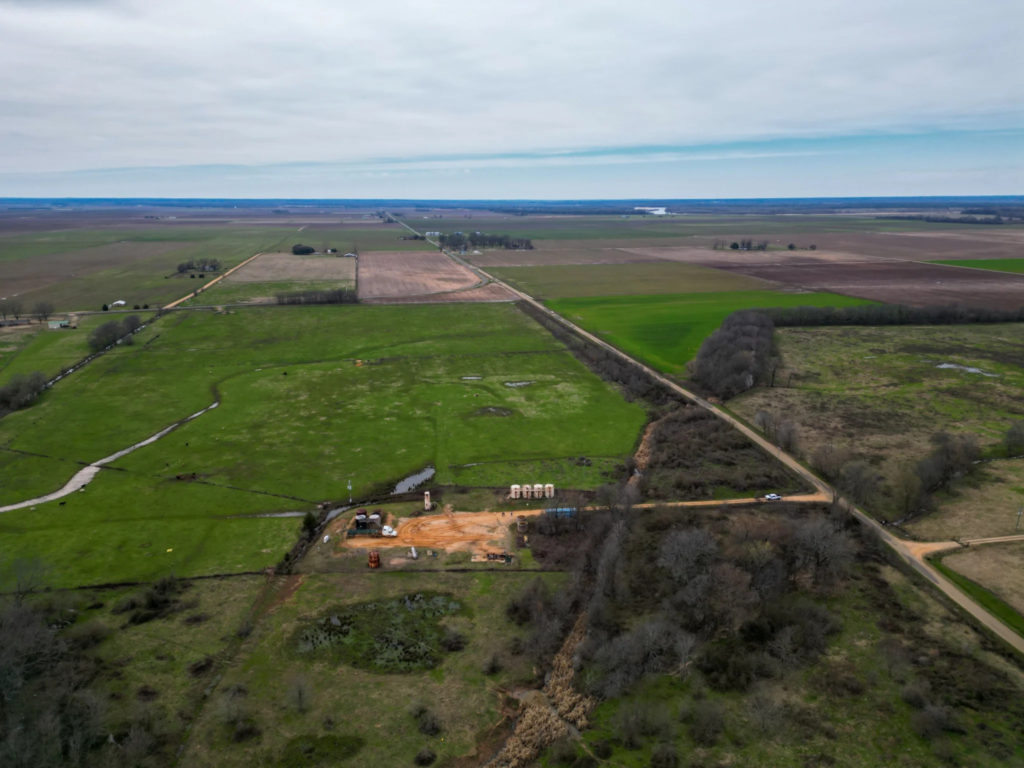
EnergyX, the lithium technology startup backed by General Motors, has bought 35,000 acres in the Smackover formation from Pantera Lithium, the latest deal for access to the US brine formation teeming with supplies of the battery metal.

The deal boosts the holdings of privately held EnergyX to roughly 47,500 acres in the Smackover, an underground geological formation stretching from Florida to Texas filled with lithium-rich brine. It also underscores the growing interest in boosting US production of the metal despite low market prices.

Chevron in recent weeks has bought Smackover acreage, joining Exxon Mobil, Albemarle, Standard Lithium and others with holdings in the region.

Analysts estimate the Smackover could contain more than 4 million metric tons of lithium, enough to make millions of electric vehicles and other electronic devices.

EnergyX’s A$40 million ($26.1 million) agreement to buy the acreage in southern Arkansas from Australia-based Pantera includes A$6 million in cash as well as roughly 2.3 million shares in EnergyX that the companies are valuing at A$14.50 ($9.47) each.

EnergyX, which is controlled by CEO Teague Egan, has discussed a public listing in the past. Pantera, which itself had first agreed to buy the acreage in 2023, will be a minority shareholder in EnergyX after the deal closes, expected later this year.

EnergyX is also building a lithium refinery in nearby Texas that will process lithium from the Smackover brine. The company aims to be producing 12,500 metric tons of lithium per year by 2028 and 30,000 metric tons per year by 2030.

GM, which led a $50 million financing round for the company in 2023, has the right of first refusal to buy lithium from any project that EnergyX develops.

All of the companies aiming to extract lithium from the Smackover will need to use direct lithium extraction (DLE), something that has never been done before at commercial scale.

EnergyX will also have to apply for a lithium royalty rate from Arkansas officials, who in recent weeks have approved rates for nearby lithium projects from Exxon and Standard Lithium.

EnergyX tried unsuccessfully last year to buy Galan Lithium’s assets in Argentina. A consortium led by South Korean conglomerate Posco Holdings is an EnergyX investor.

EnergyX is also developing a lithium project in northern Chile.

($1 = 1.5328 Australian dollars)

(By Ernest Scheyder; Editing by Matthew Lewis)


Philippine miner sees surge in nickel shipments to Indonesia


Massive sulfide nickel ore rock. (Stock image)

Nickel ore shipments to Indonesia from the Philippines are expected to surge this year to meet demand from Chinese-owned refineries affected by Jakarta’s curbs on domestic production, according to the head of a Philippine miner.

Exports from the Philippines to Indonesia will likely rise to between 5 million and 10 million tons this year from around a million tons at the end of 2023, according to Tulsi Das Reyes, president of Philippine conglomerate DMCI Holdings Inc.’s mining unit.

The bulk of the Philippines’ nickel ore output of more than 30 million tons remains bound for top market China, but shipments to neighboring Indonesia have increased in recent years as Jakarta tightens its reins on mining in a bid to shore up prices.

Part of DMCI’s projected nickel ore shipment of 2 million tons this year is expected to go to Indonesia, he said. The trend of increasing flows from Manila to Jakarta is unlikely to last, but should remain stable, Reyes added.

“If I were Indonesia, I’d maximize what I have internally,” he said in an interview on Thursday. “I don’t think they would want more Philippine imports to be coming in” and Chinese plant owners will also likely prioritize sourcing from their partner mines in Indonesia, he said.

The Philippines is the world’s second-largest nickel ore producer, but it has lagged top-ranked Indonesia in developing its own downstream industry because of the intensive capital needed for processing facilities. A recent attempt to ban raw mineral exports to push miners to invest in refineries was dropped by Philippine lawmakers last month amid opposition from the industry.

But some Philippine miners have not abandoned their nickel processing plans. DMCI partnered with its larger peer Nickel Asia Corp. to study the feasibility of building a refinery. The companies are considering constructing a high-pressure acid leaching plant worth around $1.5 billion and have held talks with foreign companies for technical expertise and potential investment, Reyes said.

A decision on whether to proceed will depend on the pace of mine exploration because it would need a nickel ore reserve of around 300 million tons of a particular grade for 30 years, the DMCI Mining chief said. The company currently has two nickel mines and is looking at developing new sites.

DMCI Mining, which returned to profitability in the first quarter after losses a year ago, expects to ship between 2.5 million and 3 million tons of ore next year, with China remaining its main market. The impact of US President Donald Trump’s so-called reciprocal tariff policy on China could pose risks for miners down the line.

“All of our business growth depends on what happens in China,” Reyes said.

(By Cliff Venzon)


Ecuador court to decide on fee that mining industry says imperils drilling


Stock image.

Ecuador’s government and its fledgling mining industry are heading into a legal battle over a controversial fee announced last month.

The industry sees the measure as a tax that will stymie exploration, with the mining chamber filing a cancellation request through the Constitutional Court. The government says the measure will benefit the industry by raising funds for efforts to counter informal mining.

“I’m looking forward to the hearing to tell my side,” Minister of Energy and Mines Ines Manzano told reporters.

The South American nation is facing a growing threat from illegal mining that can be linked to narcotics traffickers. A gang massacred 11 soldiers in May as they attempted to dismantle an illegal gold mining camp in the Amazon region. The government says the new fee will generate $229 million annually for regulator ARCOM.

The industry counters that some junior exploration firms would have to pay more in fees than their market value, limiting the scope to tap more of the nation’s sizable gold and copper deposits. It “would simply remove Ecuador from the investment destination map in the region,” chamber boss MarĂ­a Eulalia Silva said.

The legal dispute could take two years, although the chamber hopes it can get a ban placed on the fee’s collection within several weeks.

(By Stephan Kueffner)


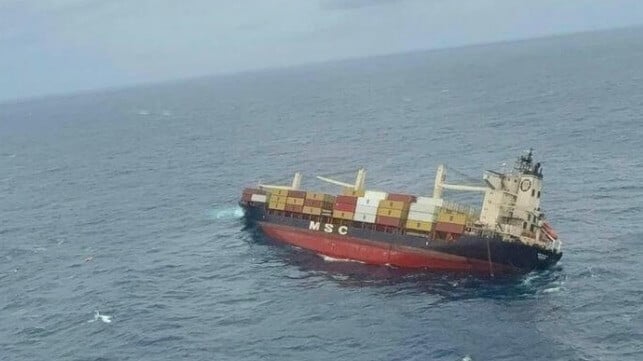
MSC Refutes India’s Compensation Claim and Declines to Post Bond

Sinking MSC containership
Court hearings begin in the compensation claim from the loss of the MSC Elsa 3 (DGS)

Published Jul 11, 2025 12:58 PM by The Maritime Executive


The Kerala High Court in India held its first hearing related to India’s nearly $1.1 billion compensation claim related to the sinking of the MSC Elsa 3 off the coast of India in late May. MSC’s lawyers called the claims “highly exaggerated,” while lawyers for the state government said the extent of the damages is “incalculable and continuing.”

MSC is arguing that the state provided no evidence to support its claims, while it reiterated that there has been no significant oil leak from the vessel. It was highlighted that the oil sheen around the vessel was limited to within one nautical mile of the wreck.

The state countered by saying that the recovery of plastic nurdles continues on a daily basis with reports that it has now reached 450 tonnes. The clean-up is ongoing and in part delayed by discussions over the best methods to be used. One local area is barring the use of seawater washing to separate the nurdles, although the authorities contend it has proven effective elsewhere on the coastline.

The court papers also said that nearly 78,500 fishermen have been compensated for the loss of their livelihood. They contend the fish market has collapsed due to a lack of confidence. The fishermen received a financial award as well as a distribution of free rice.

The state was successful at the court earlier in the week in having the containership MSC Akiteta II detained pending the posting of a bond. The company argued for the release of the vessel while declining to post a bond. The state cites the ownership structure of the vessels in independent companies, contending that it is “highlighting a pattern of deliberate corporate structure to defeat potential claims.”

The court ruled that the vessel, which has been detained in Vizhinjam port this week, shall remain in the port until a bond is posted. The court had previously briefly detained two other MSC vessels, MSC Manasa F and MSC Polo II, during their local port calls until bonds were posted for cases involving private claims related to the loss of the vessel.

The state was given two weeks to file additional supporting information for its claims, while MSC also asked for time to respond to the claims. The court scheduled a follow-up hearing about the detention and the claims for August 6.

In the court papers, the state highlights that the vessel was loaded with 643 containers when it went down, with reports that approximately 60 have washed ashore. Based on the manifests, they contend the wreck is releasing plastic pellets, oil, calcium carbonate, and other materials into the ocean. The Directorate General of Shipping, which is overseeing the salvage efforts, said in its recent report that there remains an intermittent oil sheen near the wreck, but divers last month capped the tank ports that had been seeping oil. A new salvage program with saturation diving is due to begin in August in an effort to pump the oil from the vessel, which lies at a depth of 167 feet (51 meters). 


Norway to Tighten Restrictions on Russians Navigating in Local Waters

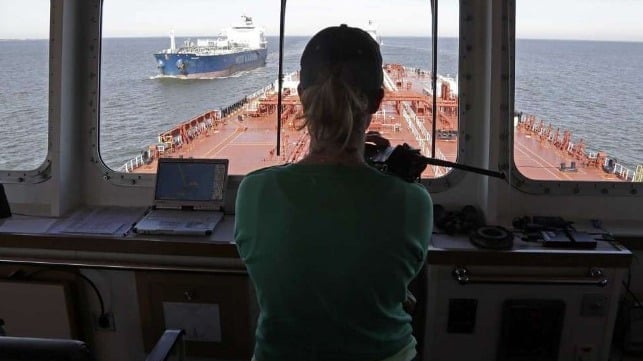
pilot on bridge
Norway is looking to require pilots aboard all ships navigated by Russians (file photo)

Published Jul 11, 2025 3:10 PM by The Maritime Executive


The Norwegian government is the latest to report it will tighten the restrictions on Russian navigators sailing in its waters in response to the perceived dangers to navigation and espionage. The step comes as the EU and many Scandinavian and Baltic countries have moved to impose more restrictions on vessels specifically targeting shadow fleet tankers after the undersea cable incidents and risks of pollution.

Norway reports it has implemented several measures to strengthen maritime security in light of the increasingly demanding security policy situation. Now, the government says it will phase out the ability for Russian navigators to operate larger ships without a pilot in Norwegian waters.

“Maritime security and situational awareness in our immediate areas are key priorities in the national security strategy,” said Minister of Fisheries and the Oceans Marianne Sivertsen Naess. “We are now proposing clear restrictions on the pilot certificate scheme to limit the possibility of intelligence activity from civilian vessels.”

Currently, navigators with a valid pilot certificate have documented the necessary knowledge and experience from the area they are sailing in, and can carry out mandatory pilotage voyages without a pilot. The Norwegian government on July 11 reported it is proposing a phasing out of pilot certificates for Russian navigators. This means that they will no longer be issued new pilot certificates or have their pilot certificates renewed when they expire.

The Norwegian Coastal Administration announced that it is suspending applications from Russian navigators for pilot certificates or renewed pilot certificates until any new rules come into force.  A consultation on the proposed rule change is running through August 25. 

The announcement said the proposal is based on open threat assessments from the Norwegian Police Security Service (Politiets Sikkerhetstjeneste or PST) and the Intelligence Service for 2025, in addition to security-graded assessments of the threat and risk picture.

The Danish Pilots and other organizations have previously also voiced concerns about a lack of pilots and the dangers. Factions in Denmark have called for a similar mandatory requirement for pilots aboard all vessels in the Danish Straits. Last year, it was reported that one in five Russian tankers was refusing the use of Danish pilots despite sailing in congested waterways into and out of the Baltic. 


Royal Caribbean Takes Delivery of Next Giant as MSC Confirms Orders

ultra-large cruise ship
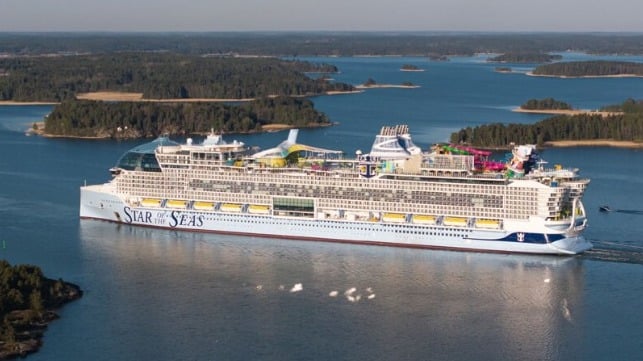
Star of the Seas during her trials earlier this year (Meyer Turku)

Published Jul 10, 2025 8:05 PM by The Maritime Executive


The mass market segment of the cruise industry continues to push forward with its efforts to build a new generation of ultra-large cruise ships designed to compete with theme parks and land-based resorts. Royal Caribbean International marked a milestone with the delivery of the second, world’s largest cruise ship, while MSC Cruises completed the previously announced order for two more giant ships.

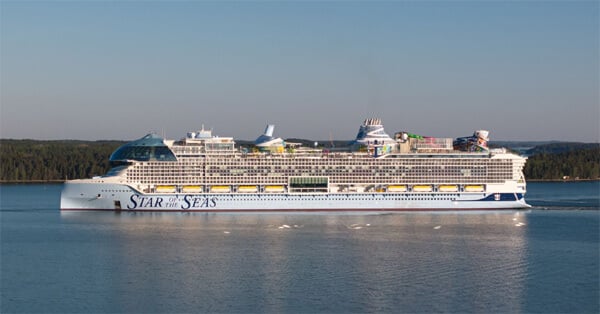
Meyer Turku in Finland completed the handover of Star of the Seas on July 10 to Royal Caribbean International. At 248,663 gross tons, she is a duplicate of the first vessel, Icon of the Seas, which was introduced in January 2024. Each of the ships is 1,196 feet (364 meters) in length with a massive 219-foot (66-meter) beam. Passenger spaces are spread across 20 decks with 2,805 staterooms. Royal highlights double occupancy capacity of 5,610 passengers, while total capacity is approximately 7,600 people.

Keeping with the theme of floating theme parks, the ship offers eight spaces for passengers that the company calls “neighborhoods.” They range from the largest waterpark at sea, complete with six waterslides, to areas for relaxation, young families, children, and adult-only spaces. There are 26 spaces for dining or fast-service food as well as 18 bars and lounges. The massive ship is topped off by a signature dome that houses an aqua theater with performances by high divers, aerialists, robots, and more.


Star of the Seas is designed to compete with land-based resorts and theme parks (Meyer Turku)


"The delivery of Star of the Seas marks another bold step forward in Royal Caribbean Group's journey to reimagine the future of vacations," said Jason Liberty, president and CEO, Royal Caribbean Group “Star and the Icon Class are a symbol of what's possible when innovation, imagination and our relentless focus on delivering exceptional experiences come together, ultimately creating unforgettable memories for millions of families and vacationers.”

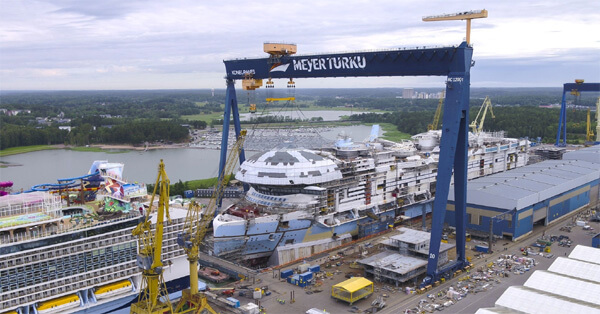
Delivery of the ship also marks a key milestone for Meyer Turku, which has been assembling the vessel for over two years. Portions of the vessel are built at the company’s Neptune Werft yard in Germany and barged to the Finnish yard. After challenges with Icon of the Seas, the yard is highlighting that Star of the Seas is being delivered ahead of the originally announced schedule. Royal Caribbean added some preview cruises ahead of the official maiden voyage from Port Canaveral, Florida, on August 31,

“We were able to make use of the lessons we gained during the prototype vessel construction process, and the Star was finished in record time," said Casimir Lindholm, who recently took the role of CEO of Meyer Turku.

Meyer Turku reports the cruise ship is due to depart the yard by mid-July and will proceed to Cadiz, Spain, for additional outfitting before proceeding to Port Canaveral. Royal Caribbean noted that more than 1,250 crewmembers took part in the handover ceremony as the ship staffs up to a full crew of 2,350 people. 

The cruise industry, however, is far from finished with the build out of giant ships. In the assembly dock behind Star of the Seas is Legend of the Seas, the third ship of the class. Last week, Meyer Turku highlighted the lifting of the dome onto the ship as one of the last pieces of the structure, and they reported that the ship will be moved from the dry dock by the end of the summer. Steel work is already underway on the fourth ship of the class, and Royal Caribbean has options for two more ships.


Legend of the Seas was "topped out" with the addition of the entertainment dome over the bridge (Meter Turku)


MSC Cruises reported today, July 10, that it also executed the contract for the fifth and sixth ships of its World Class. Due for delivery in 2029 and 2030, the class started in 2022 with MSC World EuropaMSC World America launched this spring, and MSC World Asia and MSC World Atlantic are under construction at Chantiers de l’Atlantique in France. Each of the ships is 215,800 gross tons and 1,092 feet (333 meters) in length, with accommodations for over 6,700 passengers.

Both Carnival Cruise Line and Norwegian Cruise Line have also ordered ultra-large cruise ships to be built by Fincantieri. Carnival’s Project Ace ships will be 230,000 gross tons with a maximum capacity of approximately 8,000 passengers. Norwegian Cruise Line reports its class will be approximately 227,000 GT with accommodations for 5,000 or more passengers.

MSC Cruises has been rumored for more than a year to be working on what would become the world’s largest cruise ships. Details have not been confirmed, but reports indicate they are looking at a design that would be 260,000 to 270,000 gross tons. The ships, which would be nearly 1,200 feet (365 meters) in length, would be built by Meyer Turku.


Big Gets Bigger as Largest Container Carriers Continue Growth

containership shipbuilding
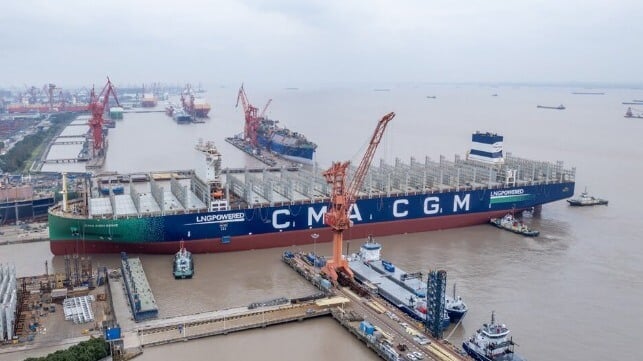
Ultra-large containership floated out in China for CMA CGM (Hudong-Zhonghua Shipbuilding)

Published Jul 9, 2025 3:50 PM by The Maritime Executive


The largest container carriers are continuing their capacity growth, although at a slower pace so far in 2025, according to a new report from Alphaliner. It points out that while MSC Mediterranean Shipping Company continues to pull away from the pack, other carriers are also accelerating growth, and for the first time, CMA CGM topped the 4 million TEU capacity mark.

In the first half of 2025, Alphaliner reports saw an additional 1.18 million TEU of capacity added to the global fleet. They note it was less than four percent, which marks a break from recent growth-fueled years, but the orderbook remains strong. The sector reached a total global capacity of 32.7 million TEU with 7,336 active vessels representing a combined total of 388 million dwt, Alphaliner calculates.

The report highlights that nine of the top ten carriers each added capacity in the first half of 2025, with an average increase of approximately four percent in capacity. Only Zim, which is challenged by regional geopolitical issues reduced its capacity since the start of the year.

MSC’s growth is predictable, but it accounted for nearly a third (31 percent) of the growth in the sector. It continues to move away from the pack with a total capacity of 6.6 million TEU. By comparison, Maersk remains at 4.6 million TEU while CMA CGM topped the 4 million mark for the first time.

“MSC's fleet has expanded by 365,173 TEU since the start of the year,” highlights Alphaliner. “This growth stems from newbuilding deliveries and ongoing second-hand tonnage acquisition. So far in 2025, MSC has received 25 newbuildings (316,691 TEU), including 12 'Neo-panamax' vessels (15,400– 16,200 TEU), bolstering its standalone network. This consistent expansion is not new for the Geneva-based carrier - MSC has been the strongest growing carrier for several years running, with notable increases of 12.3 percent (2024), 22.0 percent (2023), 7.5 percent (2022), and 10.7 percent (2021).”

The fastest growing carrier, however, was Ocean Network Express (ONE), which added nearly six percent to its capacity. “This year marks a strategic shift for ONE, as it began taking delivery of new capacity under direct ownership,” notes Alphaliner.

CMA CGM added four percent to its capacity this year as it executes a growth strategy. Alphaliner highlights that as of the beginning of July, the French carrier reached a capacity of 4 million TEU. It has a fleet of 683 owned or chartered containerships. Alphaliner calculates CMA CGM has quadrupled its since in the last 16 years. It reached 1 million TEU in 2009 after the large acquisitions of ANL, American President Lines, and U.S. Lines, as well as smaller regional carriers. 

Faced with political issues and Donald Trump’s tariffs, the sector near term is facing uncertainty. Xeneta, in its weekly update notes, continues declines in freight rates, highlighting for example, that in the Transpacific trade, “carriers are now deploying more capacity above the level required to meet shippers’ demand.” It notes, however, that “more ‘severe’ overcapacity was seen into the U.S. East Coast in the early days of July.”

Despite these concerns, carriers are continuing their growth plans. MSC has the largest orderbook, reports Alphaliner with a “whopping 135 vessels on order for a total of 2.2 million TEU.”

CMA CGM, however, is the one to watch. Alphaliner reports it has 95 vessels on order, which represents 1.5 million TEU. The French carrier is less than 600,000 TEU behind Maersk. With the Danish company having said it plans to keep its capacity stable, CMA CGM continues to be on track to surpass Maersk for the number two position in the industry.


Hamburg to Invest €1.1B to Expand Port and Modernize Operations for Growth

Hamburg port
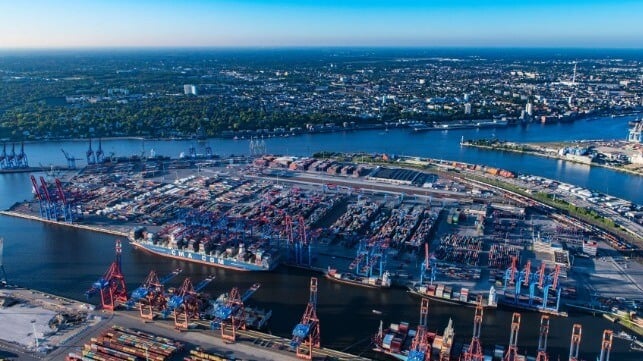
Hamburg will create a larger turning basin and other improvements to support ultra-large containerships and modernize operations (HPA file photo)

Published Jul 9, 2025 7:23 PM by The Maritime Executive


The Port of Hamburg announced a series of new projects that will be undertaken to enhance operations and modernize and expand terminal operations, especially for the largest containerships. It comes as the port continues to experience strong competition and needs to support the growth in the size of containerships.

"Today, we are laying the groundwork to ensure that Hamburg is well-prepared to meet the challenges of tomorrow,” said Hamburg’s Minister for Economic Affairs, Senator Dr Melanie Leonhard. “This infrastructure will help ensure that large vessels will be handled reliably and efficiently in the Port of Hamburg. It also strengthens Hamburg's service capacity and reinforces its role as a key hub on major international shipping routes."

The Elbe approach to the Waltershofer Hafen is to be enhanced to accommodate the largest containerships. The port highlights that around 90 percent of the ultra-large container vessels calling at Hamburg are currently handled at the Waltershofer Hafen.

The turning basin will be widened from its current 480 meters to 600 meters (1,575 feet to 1,968 feet). Port officials explained that vessels will have a larger water surface available for turning maneuvers, ensuring optimal performance and safety. They said it will enhance navigational safety and operational efficiency for current and future vessel sizes at Hamburg’s busiest container throughput area, while improving navigability and resilience along the River Elbe. All berths in the Waltershofer Hafen will benefit from this measure, which is expected to increase throughput efficiency.

Navigation towards the port’s two other large container terminals, Container Terminals Buchardkai (CTB) and Container Terminal Hamburg (CTH), will also be easier and faster. 

The creation of additional berths will also improve terminal workflows, the operators noted. They said going forward, processes can be automated and electrified. The project will also provide for additional terminal yards. New land for terminal operations will create additional capacity and enable further modernization of container throughput operations.

"The urgently needed expansion of the turning basin, along with the enlargement and modernization of throughput facilities, are key decisions that will help secure a positive future for the Port of Hamburg,” said Tom Eckelmann, Managing Director of EUROKAI and Chairman of the Group Management Board of EUROGATE. “With the enlargement and modernization, we are initiating the transition from manual operations to an automated terminal concept at the Hamburg site. We will design superstructure, heavy equipment, and IT infrastructure, starting with the existing terminal, to support a fully automated throughput system across the entire terminal, including the expansion area.”

The bulk of the project will be completed with public funding. Preliminary estimates indicate a total cost in the region of EUR 1.1 billion (nearly $1.3 billion). The infrastructure works are to be completed by the Hamburg Port Authority (HPA) by the mid-2030s.

In addition to the public investment, Eurogate has signed a preliminary lease agreement for the new areas and will invest at least EUR 700 million ($820 million) in expanding the existing container terminal, with completion planned within two years of the handover of the newly developed land. It will lease the land from the Hamburg Port Authority, and these areas will be integrated into the road and rail networks. The area will be created by infilling the existing basin along the Bubendey bank.


Crowley Adds Newest LNG Ship to Fleet Expanding Caribbean & Central America

Crowley
Tiscapa Will Offer Service Connecting U.S. and Dominican Republic

Published Jul 10, 2025 5:55 PM by The Maritime Executive


[By: Crowley]

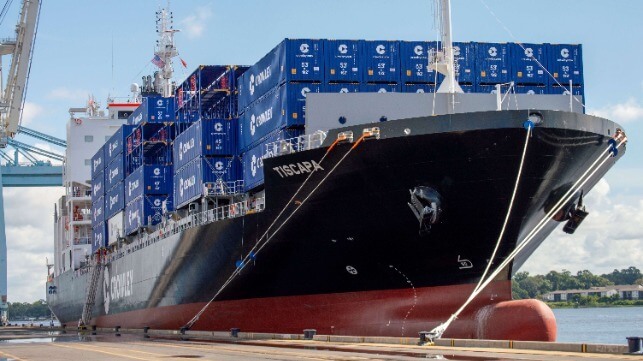
Crowley’s newest, LNG-powered containership Tiscapa began its inaugural service today, adding faster, bigger options for timely ocean cargo transport around the U.S., Caribbean and Central America.

Like its sister ships in the Avance Class, Tiscapa features container capacity for 1,400 TEUs (20-foot equivalent units), including 300 refrigerated units. This ship was specifically designed to quickly and frequently deliver cargo while using lower emission liquefied natural gas (LNG) for fuel.

“The addition of Tiscapa to our fleet marks another milestone in Crowley’s commitment to delivering efficient and reliable logistics solutions across the region,” said Andrew Davis, vice president of operations for Crowley Logistics. “With its LNG-powered design and expanded capacity for dry and refrigerated goods, Tiscapa enhances our ability to provide faster, dependable service for customers moving essential goods throughout the U.S. and Caribbean Basin.”

Tiscapa departed from the Port of Jacksonville, Florida, for its first commercial voyage serving the Caribbean Basin. Following a transition period of service for the region, Tiscapa will begin providing regular service between the U.S., Dominican Republic and Central America, offering direct market connections for goods such as medical devices, household goods, food and perishables.

This follows sister ships Quetzal and CopĂ¡n, which are also strategically built to serve El Salvador, Guatemala, Honduras and Nicaragua, and the growing trade between the U.S. and Central America.

Avance Class ships, operated under charter from Eastern Pacific Shipping, are named to honor the cultural aspects of Central America, where Crowley has operated shipping and logistics services for more than 60 years. Located in the capital city of Managua in Nicaragua, Tiscapa is a lagoon of volcanic origin that formed over 10,000 years ago. The area surrounding it contains pre-Columbian remains and a massive Augusto Sandino statue, an iconic symbol of the city.

The fourth and final Avance Class ship, Torogoz, which is named for the national bird of El Salvador, is due to enter service this August.

The products and services herein described in this press release are not endorsed by The Maritime Executive.


AkzoNobel Marine Coatings Protecting World 1st Sail-Assisted Aframax Tanker

AkzoNobel

Published Jul 10, 2025 12:43 PM by The Maritime Executive


[By: AkzoNobel]

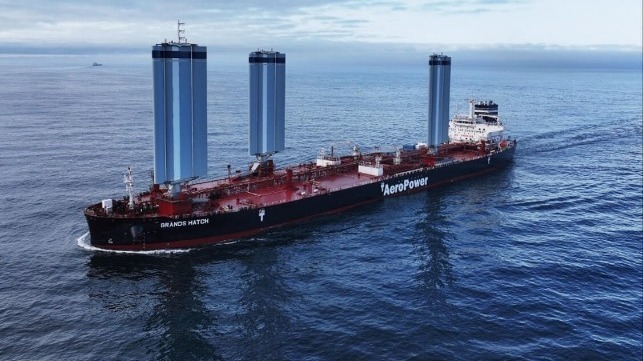
The world’s first Aframax oil tanker to use wind-assisted propulsion has been built in China, with AkzoNobel making an important contribution to the landmark project by supplying 350,000 liters of International® marine coatings.

The Brands Hatch is regarded as a major innovation in sustainable shipping technology and the entire vessel – including the underwater hull, deck and cargo oil tanks – features the company’s high-performance products. They’ll provide comprehensive protection and critical technical assurance for the tanker’s eco-efficient operation.

Built by Shanghai Waigaoqiao Shipbuilding Co., Ltd., it has three intelligent fiberglass sails which are projected to reduce fuel consumption by around 12% a year and slash annual carbon emissions by 5,000 tons under normal operating conditions.

“We’re very proud to have contributed to this landmark project,” says Rob Leslie, Commercial Director of Marine and Protective Coatings for AkzoNobel Greater China. “The successful application of our coatings not only validates the performance of our International fouling control and anti-corrosive technologies, but also demonstrates the company’s commitment to enabling decarbonization through sustainable innovation.” 

The products used included Intercept® 8500 LPP – one of the highest-performing fouling control technologies in the International range – which was applied to the vessel’s underwater hull. This advanced coating delivers consistent and effective performance for a clean, foul-free hull. By combining linear polishing technology with an optimized biocide package, the coating contributes to significant fuel savings and reduced CO? emissions.

Built for UK shipping company Union Maritime, the Brands Hatch is an Aframax ship, a type of oil tanker with a capacity between 80,000 and 120,000 deadweight tons. They’re primarily used for short to medium-haul crude oil transportation.

It's the third milestone vessel built in China to be coated by AkzoNobel in recent years. The company also supplied more than 300,000 liters of International marine coatings for Dream – the country’s first domestically designed and built ultra deep-sea drilling vessel – while Intersmooth® fouling control technology was used on Adora Magic City, the first large cruise ship to be constructed in China.

The products and services herein described in this press release are not endorsed by The Maritime Executive.