Friday, July 11, 2025


Shell Obtains Permission to Drill for Oil and Gas Offshore South Africa

Shell has received environmental authorization to drill up to five deepwater wells to explore for oil and gas off the west coast of South Africa.

“Should viable resources ?be found offshore, this could significantly contribute to? South Africa’s energy security and the government’s economic development programmes,” the supermajor said in a statement carried by Reuters.

The company did not provide details of the drilling plans.

Shell applied last year for environmental authorizations to drill ultra-deepwater wells offshore South Africa, targeting drilling in the Northern Cape Ultra Deep Block (NCUD) in the Orange Basin off South Africa’s west coast.

Previous attempts by Shell to drill offshore South Africa have ended up in court as environmental campaigners have challenged oil and gas exploration activities.

Analysts believe some offshore formations that South Africa shares with the offshore areas of Namibia – the latest deepwater exploration hotspot – could hold great resource potential.

Shell and another supermajor, TotalEnergies, have already made large discoveries offshore Namibia, in the same Orange Basin that spans South African and Namibian waters.

The basin extends to South African waters to the south and the majors are now looking to tap into these areas hoping to find huge resources similar to the ones in the Namibian portion of the Orange Basin.

However, red tape and court challenges to drilling offshore South Africa have impeded the majors from exploration off the country’s west coast.

While South Africa struggles to launch a domestic exploration and production sector, Namibia is weighing potential further incentives and financing options to offer to international majors preparing plans for oil production offshore the African country.

Namibia looks at financing mechanisms, including credit support instruments and partnerships with international lending institutions, Kornelia Shilunga, special adviser and head of upstream petroleum unit in the Namibian Presidency, told Bloomberg last month.

Namibia expects TotalEnergies and Norway’s BW Energy to take final investment decisions on oil projects in late 2026, a senior Namibian official said in May.

By Charles Kennedy for Oilprice.com

Oil at the Center as U.S. and Brazil Edge Toward a Trade War

Brazil is preparing to defend its oil export sector as U.S. President Donald Trump threatens to impose a 50% tariff on Brazilian imports starting August 1. The move has escalated tensions between the two countries, with Brazilian President Luiz InĂ¡cio Lula da Silva vowing reciprocal action: “If he charges us 50%, we’ll charge him 50%,” Lula told local media outlet Record.

Oil is Brazil’s top export to the United States, and until now it had been exempt from a 10% tariff already imposed on other Brazilian goods. In 2024, Brazil exported a record 1.78 million barrels per day (bpd), of which 243,000 bpd were shipped to the U.S., according to government data compiled by consultancy StoneX. The prospect of a steep tariff on crude has raised concerns about short-term disruption but not long-term damage.

“These tariffs may generate short-term noise in trade flows and impact margins on spot contracts, but do not represent a structural risk,” BTG Pactual analysts Luiz Carvalho and Gustavo Cunha said in a client note. They expect Petrobras—Brazil’s largest oil producer—to remain largely unaffected, noting that only 4% of its oil exports went to the U.S. in Q1 2024.

While the U.S. market accounts for roughly 37% of Petrobras’ refined product exports, analysts believe these flows can be redirected with minimal impact. “In absolute terms, it’s a small volume, and Petrobras should be able to find alternative buyers,” BTG added.

Still, the Brazilian Petroleum Institute (IBP), which represents oil majors like Petrobras, Shell, TotalEnergies, and Equinor, has expressed concern and urged the government to pursue a diplomatic resolution. The Institute is awaiting clarification on whether oil will remain exempt under Trump’s revised tariffs.

Lula has convened a ministerial group to study Brazil’s response, warning that the country may also appeal to the World Trade Organization. He cited Brazil’s new Reciprocity Law as a legislative tool to counter tariff hikes from foreign governments.

As U.S. tariffs are delayed until August 1, Brazil is attempting to safeguard a sector that has become increasingly important for its economy. With export volumes rising and diversification underway, Brazil may weather the immediate fallout—but a prolonged trade war could test even its flexible energy strategy.

By Charles Kennedy for Oilprice.com


U.S. and Brazil Become Key Oil Suppliers to India

India has sharply increased its crude oil imports from the United States and Brazil in the first half of 2025, marking a strategic deepening of ties with non-OPEC suppliers amid heightened global volatility and supply risk recalibrations.

According to new data from S&P Global Commodity Insights cited by Indian media outlets, US crude shipments to India rose 51% year-on-year to 271,000 barrels per day between January and June, up from 180,000 bpd a year earlier. Imports from Brazil surged 80% to 73,000 bpd, compared to 41,000 bpd during the same period in 2024. These were the highest growth rates across India’s import portfolio, underscoring a decisive pivot toward Western Hemisphere barrels.

The increase follows multiple converging developments. India’s state-run refiners have sought to insulate procurement from OPEC+ volatility and disruptions in the Middle East. Reduced Chinese liftings of US crude opened spot-market opportunities, while freight rates from the Atlantic Basin fell, improving arbitrage economics. Diplomatic engagement also played a role. Petroleum Minister Hardeep Singh Puri met with Brazilian energy officials earlier this year, and Prime Minister Narendra Modi’s Washington visit in April included energy cooperation as a key agenda item.

Russia retained its top position with 1.67 million bpd in H1 2025, though growth plateaued. Iraqi and Saudi volumes declined marginally, while Nigerian shipments rose 26% to 158,000 bpd.

India doubled US crude liftings in Q1 partly as a signal to US policymakers amid trade pressures. Broader tariff negotiations are still underway. A temporary 90-day suspension on select US-India duties enacted in April is set to expire in August, and energy trade is now a central bargaining chip as talks enter a sensitive phase.

By Charles Kennedy for Oilprice.com 

Barrick hit again as Mali helicopters take off with $117M in gold

Stock image by spacekris.

Mali’s military government has seized over $117 million worth of gold from Barrick’s (TSX: ABX)(NYSE: B) Loulo-Gounkoto mine, days after junta leader Colonel Assimi GoĂ¯ta signed a law allowing himself to stay in power indefinitely.

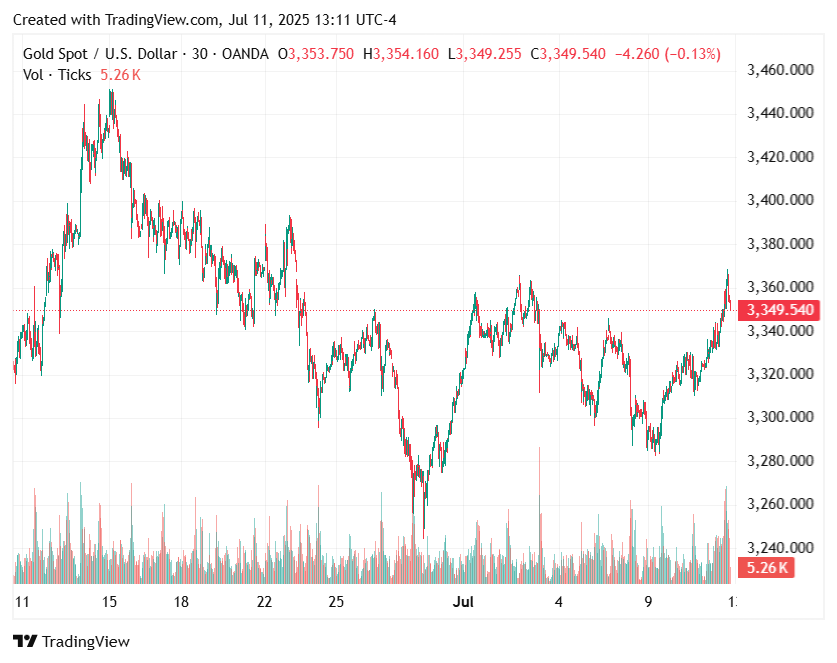
The seizure took place when state helicopters landed unannounced at the site and removed roughly 35,000 ounces of gold or slightly over one metric tonne. One metric tonne of gold is worth about $106.4 million on Friday, with gold trading at around $3,349 per ounce.

Barrick said on Friday the metal was likely taken for sale by the provisional administrator appointed to oversee the mine. Details remain unclear and the situation is still unfolding, it said in a specially created section of the company’s website.

This is the latest escalation in a bitter dispute between the Canadian mining giant and Mali’s ruling junta, which has controlled the country since a 2021 coup — GoĂ¯ta’s second in under a year.

The seizure follows a June court ruling that placed Loulo-Gounkoto, one of the world’s largest gold operations, under the control of a government-appointed official for six months. Barrick says it has yet to be formally told who the administrator is but has been informed that Samba TourĂ©, a former employee involved in Mali’s controversial mining audit, is advising the government.

Mining at the site has been suspended since January, when authorities initially seized three tonnes of gold and blocked export authorizations. In response, Barrick initiated international arbitration through the International Centre for Settlement of Investment Disputes (ICSID), which is now underway.

“I want to reaffirm Barrick’s commitment to Mali, even as we navigate extraordinary and unprecedented challenges,” chief executive Mark Bristow said on Friday. “While we continue to engage constructively with the government of Mali, the ICSID process provides the legal certainty and international oversight necessary to resolve this dispute definitively”.

‘Unprecedented challenges’

Despite the deepening conflict, Bristow reiterated the company’s commitment to Mali. “We are navigating extraordinary and unprecedented challenges,” he said. “But our position is legally sound, and we remain confident in our ultimate success. We continue to work toward a resolution that serves all stakeholders.”

The gold seizure coincided with the junta’s latest political move: a law granting GoĂ¯ta an indefinite mandate “until the country is pacified,” according to France24.

Mali has been plagued by Islamist insurgencies for over a decade, with violence spilling into neighbouring Burkina Faso and Niger. Military rule has done little to curb the attacks.

Tariffs, uncertainty, pushing nations to tighten grip on critical minerals
Loulo-Gounkoto gold mining complex. (Image: Barrick Gold.)

—————————————————————————————————————————————

Timeline: Barrick’s dispute with Mali’s junta

  • 2021
    A military junta led by GĂ©nĂ©ral d’ArmĂ©e Assimi GoĂ¯ta seized power in Mali.
  • August 2022
    Mali’s Minister of Economy and Finance ordered an audit of the mining sector. The audit, conducted by Inventus Mining, run by former Barrick staff, and Mazars Senegal, took place through 2022 and 2023.
  • March 2023
    Preliminary audit findings aired on national TV criticized the mining sector but omitted industry responses. Observers noted the report was biased and flawed.
  • August 2023
    Mali adopted a new mining code without consulting the industry, despite repeated calls for inclusive dialogue.
  • October 2023
    The government launched a review of existing mining contracts, led by the same audit group—raising conflict-of-interest concerns. The 2023 code didn’t legally apply to pre-existing contracts, including Barrick’s.
    Barrick offered to transition to the new framework, if exemptions could preserve project viability. It submitted several proposals, but the Renegotiation Committee refused to engage with data-driven terms.
  • Late 2023–2024
    Barrick made successive concessions during MoA talks, while Mali increased demands. In parallel, authorities launched unfounded investigations and detained local Barrick staff.
  • October 2024
    Barrick paid $83 million in good faith and outlined a path to resolve disputes. Authorities released the detained employees.
  • November 2024
    Four more employees were arrested on unproven charges and remain in detention. Authorities also issued an arrest warrant for Barrick’s CEO.
  • Since November 14, 2024
    Mali has blocked gold export authorizations, halting Barrick’s exports.
  • December 2024
    Barrick initiated ICSID arbitration over violations of its legal rights.

    2025
  • January
    Authorities seized over three tonnes of gold, forcing Barrick to suspend Loulo-Gounkoto operations.
    Negotiations briefly resumed later in the month, but the Renegotiation Committee backtracked. It submitted a flawed MoA.
  • February 17
    To secure its employees’ release, Barrick signed the MoA. The government never countersigned and escalated tensions by asking a local court to place the mine under provisional administration.
  • May 29
    The company asks the arbitration tribunal of the World Bank to intervene in the legal proceedings.
  • June 16
    The Bamako Tribunal of Commerce appointed Soumana Makadji as provisional administrator. He has indicated plans to resume gold exports and restart operations.
  • July
    Arbitration proceedings advanced. A hearing on provisional measures is scheduled for late July. On July 7, local lawyers finally got an appeal heard regarding the employees’ detention—months late. A ruling is expected July 22.
  • Government helicopters landed unannounced at Loulo-Gounkoto on July 10, seizing over a tonne of gold, likely for sale by the provisional administrator. The situation remains fluid.

    ** Data sources: Barrick Mining and MINING.COM archives.


Mali selling gold from mine seized from Canadian firm

By AFP
Updated: July 10, 2025 at 3:46PM EDT

This photo taken on Monday Jan. 22, 2020 shows the gold mine digs in Kidal, Mali. 
(AP Photo/Baba Ahmed)

Authorities in junta-led Mali are selling gold from a major mine seized from Canadian firm Barrick last month, with the aim of restarting operations, official sources told AFP Thursday.

A court ruled in June that the western Loulo-Gounkoto mine, one of the world’s largest gold complexes, would be managed for six months by a government appointed official instead of the Toronto-based firm.

No mining had taken place at Loulo-Gounkoto since January when Malian authorities seized some three tonnes of gold from the mine’s reserves.

The new administrator is selling some gold stock to finance the restarting of operations, an economy ministry source told AFP.

The Malian government and Barrick have been at loggerheads as Bamako attempts to assert greater control of its riches, including by raising royalties from foreign miners.

Mali authorities have accused Barrick of failing to pay hundreds of millions of dollars in taxes.

A mining ministry source told AFP the gold sale is part of an attempt by the new administrator to manage financial issues including salary arrears.

The sources did not indicate how much gold has been sold.

Barrick has an 80 per cent stake in the Loulo-Gounkoto complex, while the Malian state holds the rest.

“While Barrick’s subsidiaries remain the legal owners of the mine, operational control has been transferred to an external administrator”, Barrick confirmed last month following the court decision.

It said arbitration had started through the International Centre for Settlement of Investment Disputes, a World Bank arbitration panel.

One of the poorest countries in the world, Mali is ruled by a junta which came to power in back-to-back coups in 2020 and 2021.

Loulo-Gounkoto, in western Mali near the border with Senegal, was opened two decades ago and the first gold from underground operations was produced in 2011.

According to the trade publication Mining Technology, the mine contributed around $1 billion to the Malian economy in 2023.

Crypto firm Tether said to have $8B worth of gold stockpiled in Swiss vault

Stock image.

Tether Holdings SA, issuer of the world’s largest stablecoin, is said to have stockpiled $8 billion worth of gold in a secure vault in Switzerland, according to Bloomberg report.

In a statement to Bloomberg this week, the El Salvador-based crypto firm confirmed that it holds around 80 metric tons of gold, the majority of which are owned outright by the company. The amount, it adds, makes Tether “one of the largest gold holders in the world outside of banks and nation states,” comparable to that of UBS Group.

Tether is the issuer of the USDT stablecoin, a cryptocurrency whose value is pegged to the USD on a near one-to-one basis. The company receives dollars in return for the tokens it issues and makes money from that collateral by investing in assets like gold.

Since its launch in 2014, USDT has grown to become the largest cryptocurrency by trading volume, with about $159 billion currently in circulation. According to the company’s latest report issued in March, bullion accounts for 5% its reserves, with a market value of approximately $8 billion.

In an interview with Bloomberg, Tether chief executive Paolo Ardoino described its gold vault as “one of the most secure in the world,” though he did not provide further details aside from a generic location (Switzerland), citing security reasons.

Explaining the company’s strategy to accumulate gold, Ardoino said he views gold a “safer asset” than any national currency, including the US dollar, particularly when there are rising concerns over America’s debt levels. He went on to say that central banks within the BRICS nations have been stockpiling bullion, which contributed to rising gold values.

However, its growing allocation to gold could raise regulatory challenges due to the soaring popularity of stablecoins in recent years. Draft legislation in the US such as the GENIUS Act, and European frameworks like MiCA, would restrict stablecoin reserves to cash or near‑cash instruments – excluding commodities like gold. If these rules take effect, Tether may need to adjust its holdings to maintain compliance in regulated markets.

In addition to USDT, the company also issues the XAUT stablecoin, which is backed one-to-one by an ounce of gold and can be redeemed for physical gold, collected directly in Switzerland. To date, it has issued tokens equivalent to 7.7 tons of gold or $819 million, a paltry amount relative to the more liquid gold-backed exchange-traded funds.

Ardoino also noted that the company opted to self‑custody its bullion to avoid the costs associated with commercial vault operators, which typically charge around 50 basis points. If Tether’s gold token were to grow to $100 billion in circulation, “it’s a lot of money to pay”, he said.

Gold prices have rallied about 25% this year, as investors reach for safe havens to hedge against geopolitical tensions and an expanding trade war. Strong demand from central banks and sovereign institutions has also supported bullion’s rise.


Gold price climbs to two-week high as Trump unleashes new tariffs

Stock image.

Gold climbed to its highest in two weeks on Friday as investors rushed toward the safe-haven metal after US President Donald Trump widened the global trade war with a new wave of tariffs.

Spot gold gained as much as 1.2% to $3,368.88 per ounce during the early hours of trading, before settling around the $3,350 mark. US gold futures rose 1.6% to $3,381.60 an ounce.

Meanwhile, global equities fell after Trump ramped up his tariff assault on Canada with a 35% tariff and unveiled plans to impose blanket tariffs of 15% or 20% on most other trading partners.

The US President also announced a 50% tariff on copper imports earlier this week, sending the industrial metal’s price to a record.

“We are in an environment where the uncertainty premium is back in the market, and gold is getting a safe-haven bid,” Aakash Doshi, global head of gold strategy at State Street Global Advisors, told Reuters.

“I think the range in the third quarter is most likely between $3,100 and $3,500. It’s been a very strong first half of the year, and I believe we’re now in a bit more of a consolidation phase.”

Further supporting bullion is the rising likelihood of a US rate cut later this month following the latest comments by Federal Reserve governor Christopher Waller. A lower borrowing rate typically benefits gold, as the metal yields no interest.

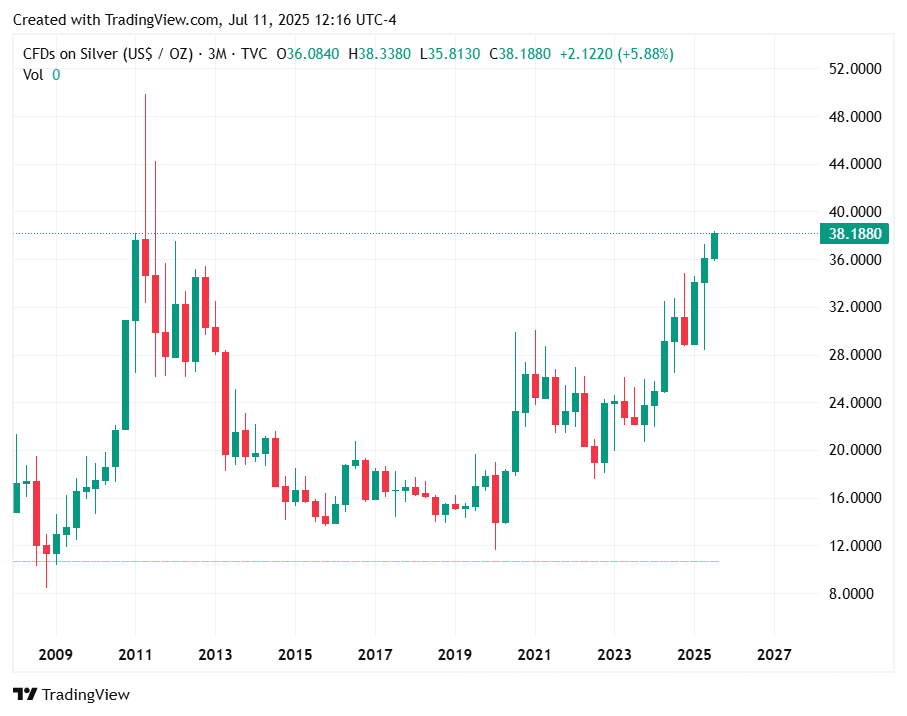
Elsewhere, gold’s sister metal silver hit its highest level since September 2011 following a surge in the US premiums. With these gains, the silver-to-gold ratio has risen far above historical norms.

Both metals have gone up by 27% year to date.

(With files from Reuters)


Silver price soars to $39, the highest since 2011

Stock image.

Silver jumped to a near 14-year high Friday amid signs of a short squeeze on the precious metal in the London market that led to a surge in US premiums.

Spot silver rose as much as 3% to $38.34 per ounce, the highest since September 2011. US silver futures climbed even higher at nearly 4%, with September contracts touching an intraday high of $39 an ounce.

Silver is closing in on the $40/oz. mark

Such a wide price gap between the two major markets is unusual, as it is typically eliminated quickly through arbitrage. Earlier this year, silver experienced a similar price dislocation amid speculation of US tariffs on precious metals.

That arbitrage opportunity also pushed leases up, as traders looked to secure metal for shipment to COMEX-linked warehouses in New York. However, the rush to move silver ended quickly once the White House exempted bullion from the levies.

Higher lease rates normally indicate a tightening market. On Friday, the implied annualized one-month borrowing costs for silver in London jumped to approximately 4.5%, well above the typical near-zero rate.

Most of the silver in London is held by exchange-traded funds (ETFs), meaning it is not available to lend or buy. The metal has recently been bolstered by solid inflows into ETFs, with holdings up by 1.1 million ounces on Thursday, according to data compiled by Bloomberg.

Daniel Ghali of TD Securities has argued that the outflow of silver caused by the tariff arbitrage opportunity has left inventories of freely available silver in the market critically low.

“Our estimates of LBMA silver’s free-float now stands at its lowest levels in recorded history,” Ghali wrote in a note Thursday. “Silver’s illusion of liquidity tells us that silver markets will only rebalance through some form of a squeeze on physical.”

Silver has risen 27% this year, with gains recently outpacing its sister metal gold. Silver has a dual character, valued both for its uses as a store of value and an industrial input.

Due to its importance in clean energy technologies, in particular solar panels, demand for silver is expected to remain strong in the coming years, with the market facing another year in deficit, according to industry group the Silver Institute.

(With files from Bloomberg)


MMG, Hudbay warn Peru copper production at risk amid wildcat protests


Constancia mine, in Peru. (Credit: Hudbay Minerals)

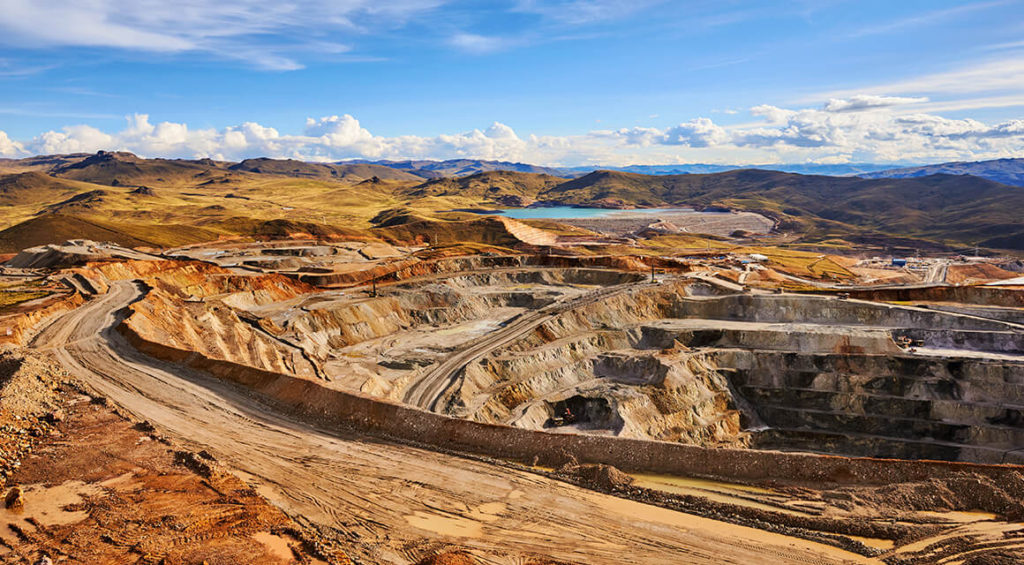
MMG and Hudbay Minerals executives met with Peru’s cabinet chief this week to warn that production at their copper mines could be affected if a two-week protest by informal miners along a major transit route continues, two sources told Reuters on Friday.

The Las Bambas mine of Chinese firm MMG and the Constancia mine of Canadian company Hudbay in the Cusco region are among Peru’s top ten copper producers.

The companies did not immediately reply to requests for comment. A person familiar with Las Bambas said the site’s production remained normal for now.

One of the sources, who attended the meeting but was not authorized to comment, said concern at Las Bambas and Constancia was mounting over the inability for copper-loaded trucks to transit freely.

The blockades along a road that is essential for connecting mines to the coast began in late June as hundreds of informal miners pressed Peru’s government to extend a deadline to regularize their operations.

“Large vehicles that supply and transport the mineral cannot pass,” the person said. “Both companies are still operating, but they mentioned that if the situation continues for much longer, it could become complicated.”

Las Bambas produced more than 320,000 metric tons of copper last year, making it the fourth-biggest miner in Peru. Constancia ranked ninth, with about 99,000 tons of copper.

Glencore’s Antapaccay copper mine, which uses the same transit route, has not yet reported production impacts.

Peru is the world’s third-largest copper producer, and it exports most of the red metal to China.

Peru’s cabinet chief, Eduardo Arana, in a statement on Thursday evening said he met with mining representatives, including from Hudbay and MMG, and emphasized the government’s commitment to fostering dialogue between companies and communities.

The statement did not provide further details about the protests, or address their potential impact on copper output.

Despite the protests, which have also taken place in the capital Lima and other areas, Peruvian officials are taking steps to end a temporary program that allowed informal mining, called REINFO, by year’s end.

Last week they removed from the program more than 50,000 mining operations that failed to properly register.

Informal miners have protested numerous times to extend REINFO. It began in 2012 as a short-term scheme to formalize miners operating outside the law, but has been criticized for enabling illegal mining that harms the environment.

(By Marco Aquino and Daina Beth Solomon; Editing by Chizu Nomiyama and Matthew Lewis)