Saturday, July 12, 2025

ASEAN Regional Forum urges nuclear weapon states to advance towards nuclear disarmament

Group discusses Myanmar's humanitarian situation, Gaza, North Korea's denuclearization, Ukraine war

Saadet Gokce |12.07.2025 - TRT/AA


ISTANBUL

The Association of South East Asian Nations (ASEAN) Regional Forum meeting has urged the nuclear weapon states to "fulfil their obligations in advancing nuclear disarmament" and to "recognize the need to completely eliminate nuclear weapons."

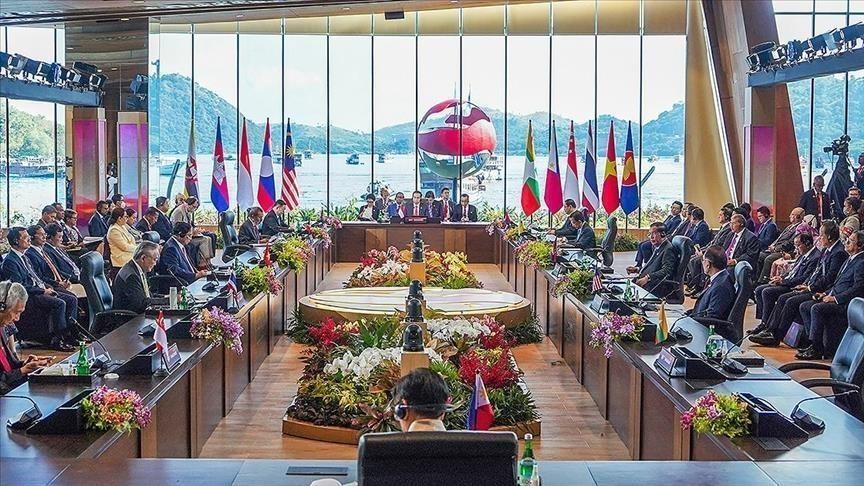
ASEAN, along with several other nations, including the US, during the 32nd ASEAN Regional Forum in Malaysian capital Kuala Lumpur on Friday, reiterated "the importance of strengthening international and regional cooperative efforts in nuclear non-proliferation," according to a statement from the chair.

The meeting reaffirmed the group's commitment to "preserving the Southeast Asian region as a Nuclear Weapon-Free Zone."

It emphasized the importance of strengthening "mutual trust and confidence" and exercising self-restraint "in the conduct of activities that would complicate or escalate disputes and affect peace and stability, and avoid actions that may further complicate the situation" in the South China Sea.

The meeting also expressed "deep concern over the escalation of conflicts and humanitarian situation in Myanmar" and denounced "the continued acts of violence against civilians and public facilities," while also urging all parties to "take concrete action to immediately halt indiscriminate violence."

It stressed the importance of "resuming peaceful dialogue among all concerned parties in order to realize lasting peace and stability in a denuclearized Korean Peninsula," expressing its "grave concern over the recent surge in North Korean intercontinental ballistic missile testing and ballistic missile launches."

The meeting underscored the importance of "immediate cessation of hostilities and the serious engagement in a genuine dialogue for the peaceful resolution of the conflict" in Ukraine.

The meeting also urged an "immediate and permanent ceasefire" in Gaza and "the immediate and unconditional release of all hostages, especially women, children, the sick and the elderly," condemning "all attacks against civilians and civilian infrastructure."

It reaffirmed its "longstanding support for the inalienable rights of the Palestinian people, including the rights to self-determination, and to their homeland," and called on all parties "to work towards a peaceful resolution to the conflict with a view to realizing the two-State solution in accordance with international law."

The expanded security forum is attended by the US, China, Japan, South Korea, North Korea, and the EU, as well as other countries in South Asia and the Pacific in addition to the ASEAN members.

Notably, Pyongyang did not attend this year's session, for the first time since 2000, according to the Yonhap News.


ARF Members Express Concern over Korean Peninsula Security, Calls for 'Complete Denuclearization'

Written: 2025-07-12 

ARF Members Express Concern over Korean Peninsula Security, Calls for 'Complete Denuclearization'

Photo : Ministry of Foreign Affairs

Southeast Asian countries and Indo-Pacific partners, including South Korea and the United States, have expressed concern over the security situation on the Korean Peninsula, calling for efforts to achieve "complete denuclearization" of the peninsula.

In a Chairman's Statement adopted Friday at the 32nd ASEAN Regional Forum(ARF) in Kuala Lumpur, participants expressed serious concern over North Korea’s growing number of intercontinental ballistic missile (ICBM) and other missile launches, as well as the rising tensions on the peninsula.

Top diplomats from the participating nations urged the North to fully comply with all relevant UN Security Council(UNSC) resolutions, while calling for dialogue among the concerned parties to achieve lasting peace and stability on a denuclearized peninsula.

This year's statement only called for the North's denuclearization to be "complete," omitting the phrase "complete, verifiable, and irreversible" which had appeared in ARF statements over the past three years. Some observers see the softer tone as reflecting the new South Korean government's more conciliatory approach.

The ARF is an expanded security forum led by the ten-member ASEAN bloc and includes 17 other participants, such as South Korea, the U.S., China, Japan, the European Union, and North Korea.

However, North Korea did not attend this year’s forum for the first time, amid strained diplomatic ties with host country Malaysia.
China's Xi to visit South Korea for APEC summit, Trump yet to confirm: Report

South Korean president mulling over attending Beijing's World War II commemorative military parade in September, says journalist, citing president

Saadet Gokce |12.07.2025 - TRT/AA


ISTANBUL

China’s President Xi Jinping is reportedly planning to attend the Asia-Pacific Economic Cooperation (APEC) summit later this year in South Korea, while US President Donald Trump has yet to make a decision, Yonhap News Agency reported Saturday.

The report cited journalist Jeong Kyu-jae, who shared details of his Friday luncheon meeting with South Korean President Lee Jae Myung on his YouTube channel.

“Xi Jinping will visit the APEC summit in Gyeongju,” Jeong quoted Lee as saying.

Lee "effectively said that US President Donald Trump also needs to attend, but a decision has apparently not been made yet,” Jeong added, according to the news agency.

The 2025 APEC summit is scheduled to be held in the South Korean city of Gyeongju between late October and early November.

Lee has not yet decided whether he will attend China’s military parade in September, which commemorates the 80th anniversary of the end of World War II, according to the report.

“I got the impression that he is considering the issue of attendance very carefully,” Jeong said, noting that former South Korean President Park Geun-hye faced displeasure from Washington after attending the same parade in 2015.
Bosnia’s missing persons institute offers hope, stands as global model

Nearly 80% of missing from 1990s war identified, but thousands still wait to be found

Vesna Besic |12.07.2025 -  TRT/AA


SARAJEVO, Bosnia and Herzegovina

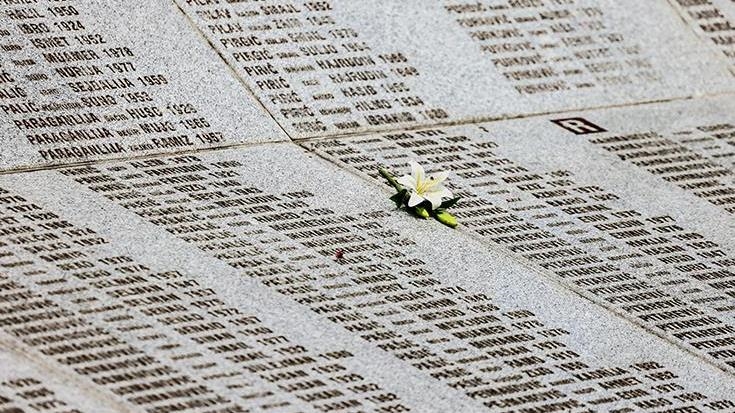
In a country where tens of thousands disappeared during the 1992-1995 Bosnian war, Bosnia and Herzegovina’s Institute for Missing Persons has emerged as a beacon of hope, reuniting families with their loved ones and setting a model for post-conflict recovery worldwide.

The state-level institute, established to trace and identify those who vanished during the war, was made a permanent fixture in Bosnia, unlike other countries, which tend to rely on temporary commissions or international bodies.

Today, nearly 80% of the 32,000 people reported missing during the war have been found and identified — a rate unmatched globally — while more than 7,600 remain unaccounted for.

Around 1,300 unidentified remains are still held in mortuaries across the country.

Pioneering approach born of necessity

Amor Masovic, the institute’s former director and co-founder, said Bosnia began documenting missing persons as early as April 1992, during the first months of the conflict, recognizing the importance of systematic record-keeping.

“My advice to countries in conflict is clear: start documenting disappearances immediately, including locations and circumstances,” Masovic told Anadolu.

He emphasized that the missing are often victims of serious crimes, including war crimes and genocide, underscoring the urgency of their recovery for both justice and reconciliation.

After the 1995 Dayton Peace Agreement, Bosnia had three separate agencies working on missing persons cases which would frequently duplicate efforts or obstruct one another.

Determined to unify these efforts, Masovic enlisted the support of the International Commission on Missing Persons to create a single, coordinated body.

In 2004, Bosnia passed a groundbreaking law on missing persons — the first of its kind globally — which established the institute as a unified national body and granted legal rights to the families of the missing.

Model for world

The institute’s success has been recognized by the UN as a “colossal achievement.” Neighboring countries — including Croatia, Serbia and Kosovo — have adopted similar approaches, and the model is now being studied for possible use in Ukraine.

Emza Fazlic, a spokesperson for the institute, highlighted its exceptional track record, noting that while conflict-affected regions typically identify up to 30% of missing persons, Bosnia has identified nearly 80%.

“This institute has become a pillar of the search for the missing in our country,” Fazlic told Anadolu.

Despite these successes, however, challenges still remain.

Masovic explained that between 2,200 and 2,400 of the missing are believed to be among the unidentified remains stored in mortuaries but cannot be matched due to the absence of DNA from close relatives.

Others were misidentified in the immediate post-war years, complicating later efforts to establish identities.

To address these challenges, Masovic has proposed using DNA samples from deceased parents to match unidentified remains, allowing families to finally lay their loved ones to rest.

“The institute is a unique organization dedicated to finding missing persons from all backgrounds and has proven to be the most effective way to search for the missing,” Masovic said.
After decades of insurgency against Turkey, PKK begins disarming in step toward peace

Jul 11, 2025 
PBS NEWSHOUR 

By — Nick Schifrin
By —Zeba Warsi
By — Sonia Kopelev
By — Dan Sagalyn

For the first time in four decades, the Kurdistan Workers Party, known as the PKK, is laying down its arms and says it will end its insurgency against Turkey. The separatist group’s disbandment comes after its imprisoned leader announced an end to its 41-year armed struggle and a transition to democratic politics. Nick Schifrin reports.

Read the Full Transcript

Notice: Transcripts are machine and human generated and lightly edited for accuracy. They may contain errors.

Amna Nawaz:

Today, for the first time in four decades, the Kurdistan Workers Party, known as the PKK, is laying down its arms and says it will end its insurgency against Turkey. The separatist group's disbandment comes after its imprisoned leader, Abdullah Ocalan, announced an end to its 41-year armed struggle and a transition to democratic politics.

Today marks the PKK's first concrete steps toward peace.

Here's Nick Schifrin with more.


Nick Schifrin:

Today, they came down from the mountains. So rifles that for four decades have been drenched in blood can now be destroyed by fire.

Kurdish separatists hope their armed struggle for independence can now become peaceful, said 47-year-old Kurdish separatist leader Bese Hozat.


Bese Hozat, Co-Chair, Kurdistan Communities Union (through interpreter):

To wage our freedom, democracy and socialist struggle with methods of legal and democratic politics, we voluntarily destroy our weapons before your presence as a step of goodwill and determination.


Nick Schifrin:

For years, these fighters, often no older than 20, and their weapons targeted Turkish forces, as seen in their propaganda videos. Some 30 million Kurds live across Turkey, Syria, Iraq and Iran. And in Southeast Turkey and across the border in Iraq, the Kurdistan Worker's Party has been waging an insurgency, demanding greater rights and an independent state.

Their methods have been bloody and include terrorist attacks on civilian targets. Turkey says the 41-year conflict has killed more than 40,000 people.


Zubeyir Aydar, Executive Council Member, Kurdistan Communities Union (through interpreter):

The Kurds and the Kurdish movement took these steps for a peaceful solution and an honest solution. The Kurds took a risk, but this risk has been taken for a peaceful democratic solution.


Nick Schifrin:

Zubeyir Aydar heads the Kurdish separatist movement's political wing. Turkey put out a warrant for his arrest in 2009. He lives in exile. We spoke to him from Brussels.

A Turkish official today said this was a — quote — "irreversible turning point toward peace." Do you believe this is a pause in fighting or this is an irreversible step toward peace?


Zubeyir Aydar (through interpreter):

We don't want to be cheated or lied to and we don't want to cheat anyone. We deeply hope that the opposite side, the Turkish side, is honest as well in the peaceful negotiations.


Nick Schifrin:

For years, Kurdish protesters have accused the Turkish state of cracking down on Kurdish rights and culture. And, for years, the Turkish military has attacked the Kurdistan Worker's Party and its allies in Turkey and beyond with airstrikes that international humanitarian organizations say have violated human rights.

Turkey has set up military bases and outposts in Northern Syria, where Kurds backed by the United States have fought ISIS. Turkey's also created bases in Northern Iraq, where the Kurdistan region is semiautonomous. But, earlier this year, longtime Kurdistan Worker's Party leader Abdullah Ocalan called for peace.

And in a rare video this week, he said his group would disarm and expected Turkey to provide greater rights.


Zubeyir Aydar (through interpreter):

First of all, the Kurdish community should be constitutionally recognized in Turkey. The Kurds have been ignored for a very long time. The Kurds need to be able to live with their own identity and their own culture. Political prisoners must be released and the fighters need to have rights to live and do politics in Turkey.


Nick Schifrin:

And have you seen today Turkey take any of those steps?


Zubeyir Aydar (through interpreter):

Turkey says with words they will take these steps, but these steps haven't been taken. We hope that Turkey will not miss this opportunity, this peace opportunity.


Nick Schifrin:

Turkish President Recep Tayyip Erdogan has long advocated for harsh crackdowns on the Kurds, but this week he predicted peace.


Recep Tayyip Erdogan, Turkish President (through interpreter):

The winners of this will be the whole of Turkey, Turks, Kurds and Arabs. Then it will be our entire region and all our brethren in the region.


Nick Schifrin:

And I'm now joined by Jim Jeffrey, the former U.S. ambassador to Turkey, as well as to Iraq, who was most recently the special representative for Syria under the first Trump administration.

Ambassador Jeffrey, thanks very much. Welcome back to the "News Hour."

Bottom line, how significant is this event that we saw today? The Kurdistan Worker's Party burning their rifles, calling for their armed struggle to be now waged peaceful?

James Jeffrey, Former U.S. Ambassador to Turkey: This is a huge step forward of a process that began about six months ago. It signifies the end of a 40-year terrorist insurgent campaign in Turkey, Iraq and Syria against the Turkish state and at times against various other elements.

It is a dramatic move forward for the whole region and is something that will really stabilize the Northern Levant in very many important ways.


Nick Schifrin:

You heard President Erdogan say in the story that ran just before you and I started speaking, say that the winners of this will be the whole of Turkey.

Of course, he was not the one who really pushed this. It was actually a member of his coalition. Nonetheless, why has he come out and supported this, and why now?


James Jeffrey:

Well, why now is partially domestic politics in Turkey. Erdogan wants to move forward with changes in the Constitution.

And the PKK, besides a terrorist movement, has also an associated political party that has the third largest number of seats in Parliament. So, there is somewhat opportunistic political reason for this as well.

But, nonetheless, Erdogan, back more than a decade ago when I was in Turkey as ambassador, was working hard to try to get cease-fires and some kind of understanding with the PKK and other Kurdish groups.


Nick Schifrin:

In the story that we ran right before, you heard Zubeyir Aydar, the Kurdish separatist political leader, say a few things.

He said — quote — "The Kurds took a risk" and — quote — "We deeply hope that the opposite side, the Turkish side, is honest."

Do you believe that Turkey will proceed honestly going forward?


James Jeffrey:

I believe that the Turkish government, particularly the president, Erdogan, and the leader of the other coalition party, Bahceli, are very serious.

Now, what the Kurds are talking about is continued democratic processes that would give Kurds their rights, language rights, other equality within Turkey. And that is still something that we have to see how it develops on the ground.


Nick Schifrin:

Not only that. Zubeyir Aydar listed a few things that he expected Turkey to do. He said that the Kurdish community should be constitutionally recognized in Turkey, Kurds need to be able to live with their own identity, their own culture, political prisoners need to be released, and fighters need to have rights to live and do politics in Turkey.

Can all that really happen?


James Jeffrey:

That's a good starting list. I can see the Turks granting some of it because some of it's already been granted, Turkish identity, particularly in areas where they're the majority.

And the Turks are talking about reconciliation, but they're also talking about accountability. And some of these PKK fighters have verifiable charges of terrorism against them, and that's going to have to be worked out as well.


Nick Schifrin:

As you know better than anyone, these divisions here are deep. How can this peace really hold, given those divisions?


James Jeffrey:

Well, for two reasons.

First of all, the armed struggle hasn't worked. The PKK has been decisively defeated militarily. But, secondly, over the past 20-plus years, particularly since President Erdogan came to power, the Turkish state has been somewhat more open to Kurdish identity, Kurdish culture, Kurdish language, and other things.

It's not what many Kurds want, but it is a huge step forward from the Turkey that I knew in the 1980s and 1990s.


Nick Schifrin:

And, finally, Jim Jeffrey, the U.S, of course, has had a complex relationship with Kurds across the region, but have allied with Kurds, especially in Syria, against the Islamic State. How does a deal like this today affect the U.S. relationship with Kurds in the other countries, but especially Syria?


James Jeffrey:

It's huge.

Kurds, including the PKK Kurds and the many Kurds in Iraq and Turkey and elsewhere who are not part of the PKK, know that we were an honest broker. They know that we were pushing for both peace and, at the same time, helping Ankara fight terrorism. We also had people on the ground, Foreign Service offices, so important to our diplomacy, working with all sides, often in dangerous conditions, to try to move this forward.

Again, the credit goes to the Turkish people, the government, the PKK and their supporters, but the U.S. played a big role here also.


Nick Schifrin:

Ambassador James Jeffrey, thank you very much.


James Jeffrey:

Thank you.

Kurdish PKK fighters destroy their weapons at disarmament ceremony

ENDING THE ARMED STRUGGLE WITH TURKIYE


Last updated: July 11, 2025 


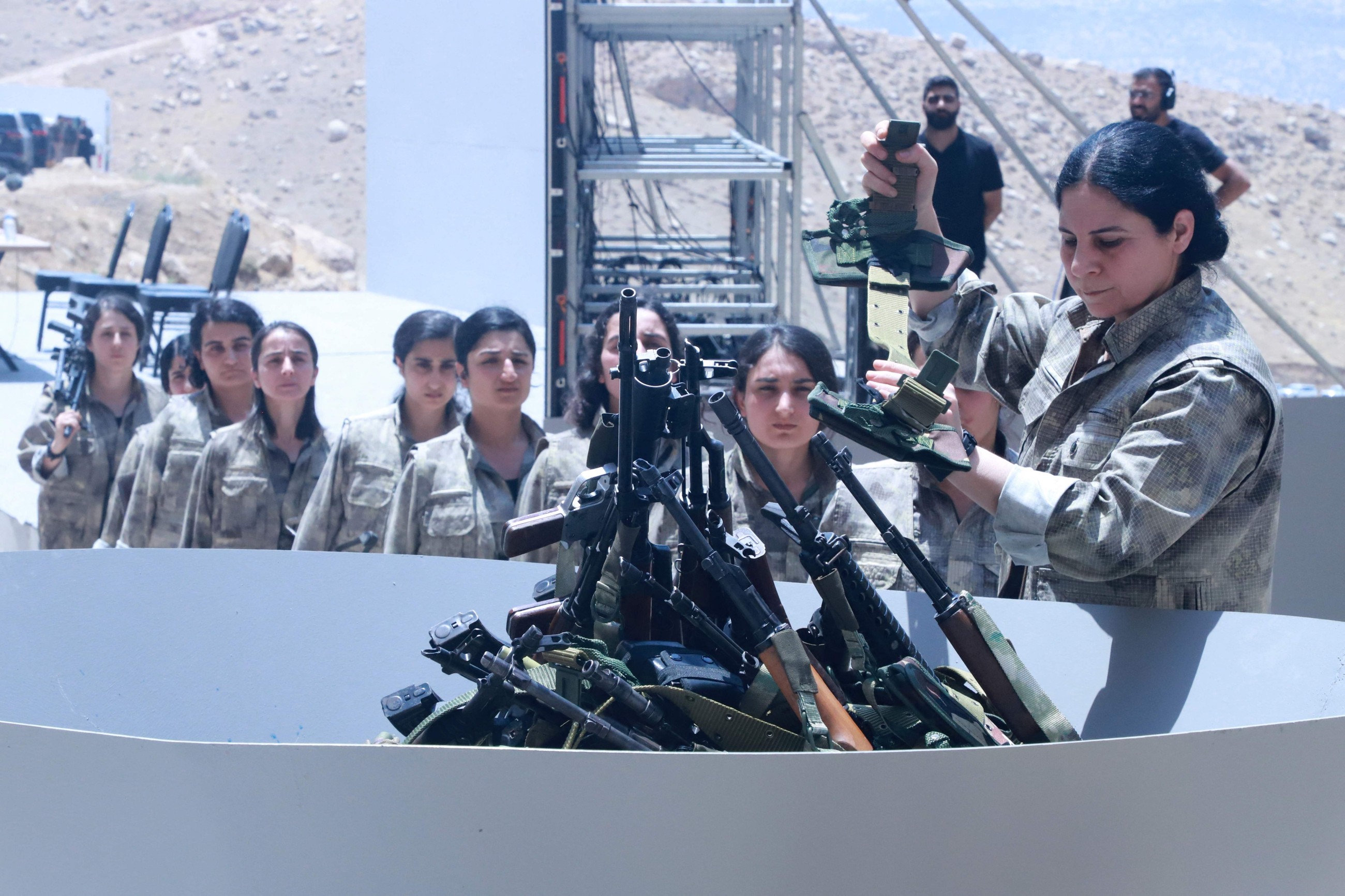
Fighters with the Kurdistan Workers' Party line up to put their weapons into a pit during a ceremony in Sulaimaniyah, Iraq, on Friday. AFP


Thirty PKK fighters destroyed their weapons at a symbolic ceremony in Iraqi Kurdistan on Friday, two months after the Kurdish rebels ended their decades-long armed struggle against the Turkish state.

The ceremony marked a major step in the transition of the Kurdistan Workers' Party (PKK) from armed insurgency to democratic politics, as part of a broader effort to bring an end to one of the region's longest-running conflicts.

Analysts say that with the PKK weakened and the Kurdish public exhausted by decades of violence, Turkey's peace offer handed its jailed founder Abdullah Ocalan a chance to make the long-desired switch away from armed struggle.

The PKK's disarmament also grants President Recep Tayyip Erdogan the distinction of being the Turkish leader who managed to draw a line under a bloody conflict that cost more than 40,000 lives and wrought havoc in Turkey and beyond.

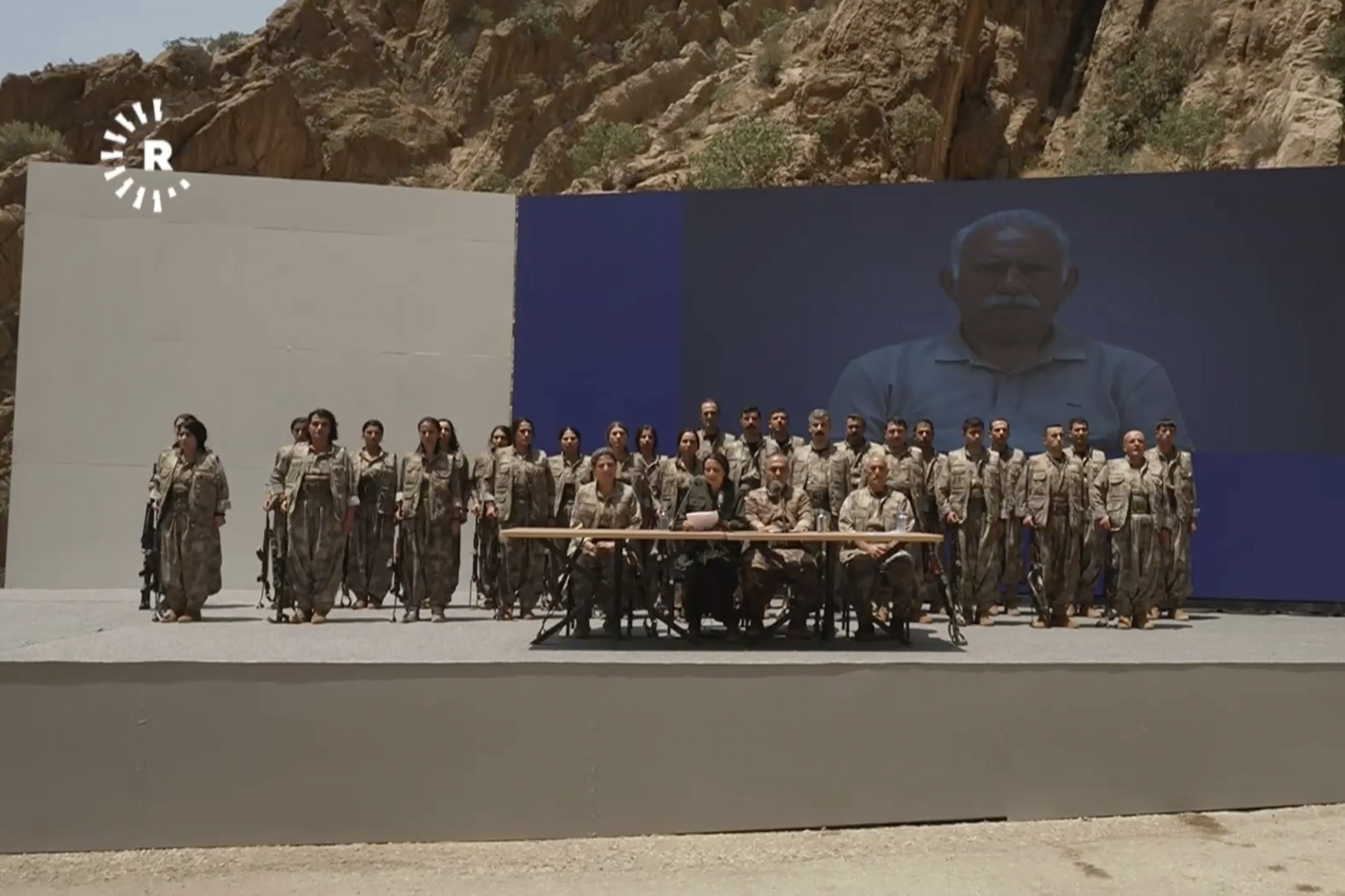
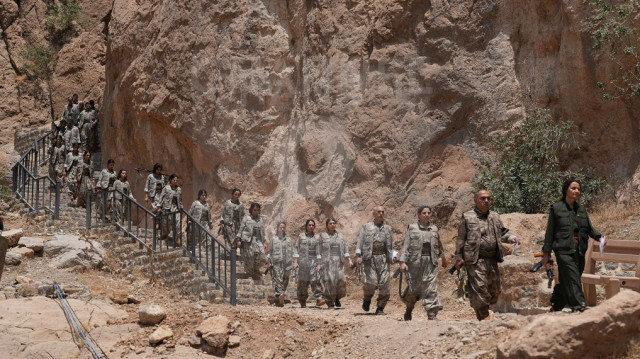
Outside the ancient cave of Casene, a group of 30 PKK fighters, men and women, gathered on a stage in khaki fatigues, their faces uncovered, in front of an audience of around 300 people, an AFP correspondent at the scene said.


This frame grab from video released by Rudaw TV shows PKK fighters standing next to a photo of their jailed leader Abdullah Ocalan during a symbolic disarmament ceremony. AP

One by one, they walked down to lay their weapons in a cauldron in which a fire was lit. Most were rifles but there was one machine gun and a rocket-propelled grenade launcher.

As they looked on, people in the crowd started cheering while others could be heard weeping

After the ceremony, the fighters returned to the mountains, a PKK commander said.

Speaking to AFP after the ceremony, the PKK's top female commander Bese Hozat said that for the process to succeed, it was essential to release Ocalan — known to his followers as 'Apo' — who has been serving life in solitary confinement since 1999.

"Ensuring Leader Apo's physical freedom via legal guarantees, is essential... he should be able to freely lead and manage this process. This is our primary condition and demand," she said.

"Without this development, it is highly unlikely that the process will continue successfully."

Erdogan hailed the ceremony as an "important step" on the path to a "terror-free Turkey", expressing hope it would lead to "the establishment of lasting peace in our region."


And a senior Turkish official source described it as a "concrete and welcome step." "We view this development as an irreversible turning point," he said, adding that the move to decommission weapons was part of a broader five-stage process.

The following steps would involve the legal reintegration of former fighters into society, the establishment of mechanisms for their lawful return and for justice, ensuring accountability and stability.


Agence France-Presse


PKK disarmament opens new page for Turkey, President Erdogan says

Erdogan said the recent steps to disarm have united Turkey, and now the parliament will help facilitate the disarmament process.

By REUTERS
JULY 12, 2025 12:41

Turkish President Recep Tayyip Erdogan on Saturday called for full support of the disarmament of Kurdish militants that began with a handover of the first batch of weapons by Kurdistan Workers Party (PKK) forces, a step he said opened a new page for the country.

Thirty PKK militants burned their weapons at the mouth of a cave in northern Iraq on Friday, marking a symbolic but significant step toward ending a decades-long insurgency against Turkey.

"As of yesterday, the scourge of terrorism has entered the process of ending. Today is a new day; a new page has opened in history. Today, the doors of a great, powerful Turkey have been flung wide open," Erdogan told members of his AK Party in Ankara.

He said the recent steps have united the nation, and now the parliament will play a critical role in setting up a legal framework for completing the disarmament process.

An armed PKK fighter places a weapon to be burnt during a disarming ceremony in Sulaimaniya, Iraq, July 11, 2025, in this screengrab obtained from a handout video. (credit: KURDISTAN WORKERS PARTY MEDIA OFFICE/Handout via REUTERS )

Turkey forms parlimentary commission for PKK disarmament"I hope that our parliament will support this process with the broadest possible participation," Erdogan said.

Ankara has taken steps toward forming a parliamentary commission that will oversee the disarmament and PKK's transition into democratic politics.

The PKK, locked in conflict with the Turkish state and outlawed since 1984, decided in May to disband, disarm, and end its separatist struggle after a public call to do so from its long-imprisoned leader Abdullah Ocalan.


What to Know about the Latest Effort to End Türkiye's 40-year Kurdish Conflict


FILED - 02 November 2041, Hesse, Frankfurt_Main: A man displays a flag with the image of imprisoned Kurdish leader Abdullah Ocalan at the Kurdish Newroz celebration in Frankfurt. Photo: Boris Roessler/dpa

Asharq Al Awsat
12 July 2025 
AD ـ 17 Muharram 1447 AH

A group of 30 Kurdish fighters clad in camouflage fatigues burned their weapons in a large cauldron in northern Iraq on Friday, in a symbolic gesture marking the first concrete step in an effort to end one of the Middle East’s longest-running insurgencies.

The ceremonial laying down of arms by members of the Kurdistan Workers’ Party, or PKK -- including 15 women — comes months after the group’s imprisoned leader, Abdullah Ocalan, called on it to disarm and disband as part of a new peace effort with Türkiye. Ocalan repeated that call in a video message to his fighters this week.

The process in Türkiye was initiated in October by Devlet Bahceli, a firebrand ultranationalist politician who has usually opposed any concessions to Kurdish identity or rights.

While Turkish officials have welcomed the first step toward the PKK’s disarmament, questions remain about the future of Kurdish fighters in Syria.

What is the PKK? The Kurdistan Workers’ Party, or PKK, has waged an armed insurgency against Türkiye since 1984, initially with the aim of establishing a Kurdish state in the southeast of the country. Over time, the objective evolved into a campaign for autonomy and rights for Kurds within Türkiye.

The conflict between militants and state forces, which has spread beyond Türkiye’s borders into Iraq and Syria, has killed tens of thousands of people. The PKK is considered to be a terrorist organization by Türkiye, the United States and the European Union.

Who is Ocalan? Abdullah Ocalan, who as a student of political science in Ankara became deeply involved in leftist movements, formed the PKK in 1978 as a Marxist organization. He fled to Syria in 1979, along with other PKK members, where he remained until 1998, when Syria expelled him under intense pressure from Türkiye.

Ocalan was captured in Kenya in 1999 and imprisoned on Imrali island in the Sea of Marmara, where he remains to this day. His death sentence for treason was commuted to a life term in prison after Türkiye abolished the death penalty.

The 76-year-old endures as a symbol for Kurdish independence and rights and continues to wield influence over the Kurdish movement, with past messages relayed through family members or lawyers resonating beyond Türkiye, in Iraq and Syria.

Push for peace

In October, Bahceli, a close ally of President Recep Tayyip Erdogan, suggested Ocalan could be granted parole if he renounces violence and disbands the PKK.

It was a major shift for the hardline politician who had previously strongly supported the state’s military action against the militant group and its affiliates in neighboring Syria and rejected any notion of negotiation.

In a message delivered through senior officials of the pro-Kurdish People's Equality and Democracy Party, or DEM, Ocalan called on the PKK leadership to take the decision to disband and disarm in February.

The PKK announced a unilateral ceasefire in March in response to Ocalan’s call and later announced its decision to disarm.

It was not immediately clear what concessions, if any, the Kurdish groups would get in return. PKK officials have said they expect former fighters to be given a path to integrate into the political system in Türkiye.

There are also concerns that some splinter groups may emerge within the PKK and that attacks may continue.

Soon after Bahceli's announcement, the PKK claimed an attack on Türkiye’s key aerospace company outside of Ankara that killed several people.

Previous attempts

There have been several peace efforts between the Turkish state and the PKK over the years, including secret negotiations held in Oslo, Norway from 2009 until 2011. However, none have yielded results.

The last attempt to reach a peace deal took place between 2013 and 2015 with a series of talks between Turkish officials and Ocalan, who declared a ceasefire and withdrew fighters to bases in northern Iraq.

Turkish officials took steps to improve Kurdish rights, including allowing Kurdish-language broadcasts. The process collapsed in July 2015, after a series of violent attacks, including one by the ISIS group that killed 33 pro-Kurdish activists.

Since then, Türkiye has cracked down on its pro-Kurdish movement and has jailed thousands of people, including the former leader of the main pro-Kurdish political party, Selahattin Demirtas, over alleged links to the PKK.

Reshaping the region

The latest peace effort comes at a time when Türkiye and the Kurds are both seeking security to face the challenges in the Middle East.

The renewed peace initiative unfolds amid fundamental changes reshaping the region, including the reconfiguration of power in Syria after the toppling of President Bashar Assad, the weakening of the Hezbollah militant movement in Lebanon, and the ongoing Israel-Hamas war in Gaza.

Türkiye strongly supports a deal reached between Syria’s new administration and the Kurdish-led and US backed Syrian Democratic Forces under which the SDF forces would merge with the new Syrian national army. The US envoy to Syria told The Associated Press this week that the sides remain at odds over the merger.

Hamish Kinnear, Senior Middle East and North Africa Analyst at risk intelligence company Verisk Maplecroft, said Ocalan’s decision to abandon the armed struggle coincides with a period when the PKK’s leverage is weak due to military setbacks and regional isolation.

“The PKK’s armed struggle was already faltering in the face of advances by Türkiye’s military, while its popularity among its traditional base was in decline,” Kinnear said. ”Ultimately, the peace talks were a useful off ramp in which improvement of Kurdish rights could still be pursued."

However, some believe the main aim of the reconciliation effort is for Erdogan’s government to garner Kurdish support for a new constitution that would allow him to remain in power beyond 2028, when his term ends.

Bahceli has openly called for a new constitution, saying it was essential to keep Erdogan in power for Türkiye’s future. Erdogan and Bahceli are reportedly seeking parliamentary support from the DEM.


US envoy urges PKK/YPG to act quickly on integration to avoid issues with Türkiye, Syria

'It's not unthinkable that whoever the constituency is for YPG or SDF has distanced themselves from PKK. So, I don't think it's a derivative. It's another organization,' Tom Barrack tells Anadolu

Serife Cetin and Serdar Dincel 
 |12.07.2025


'One country, one nation, one military is dictated by that nation, which we're now recognizing,' Barrack says about Syria

'I think issues that will arise is they're going to have disagreement with the Syrian government, they're going to have disagreement with the Türkiye government,' Barrack says about issues that may arise if PKK/YPG-led SDF does not act quickly on integration process into Syria's state institutions

US envoy says Washington will usher PKK/YPG-led SDF “to the point of vetting all of their issues, and we'll do the best job we can, making sure that there's a fair and accurate decision.”

'Intent is not to keep it (US military presence in Syria) forever,' says Barrack

NEW YORK/ISTANBUL

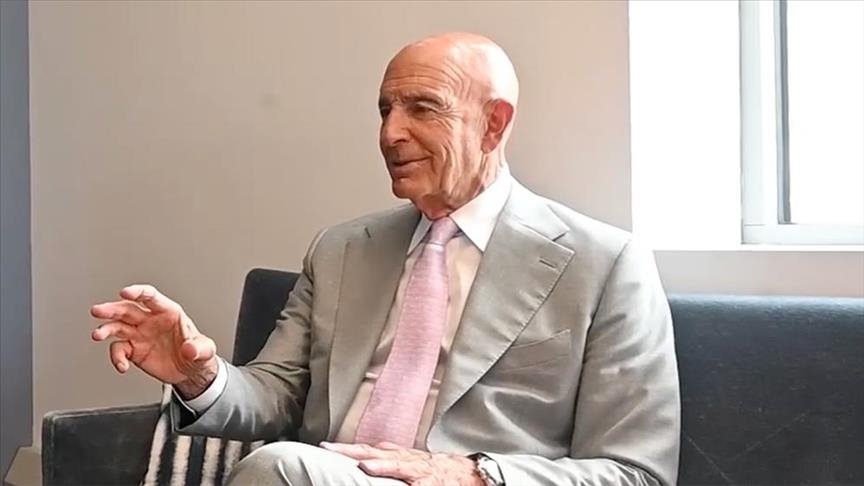
US Ambassador to Türkiye and Special Envoy for Syria, Tom Barrack, said that if the terrorist organization PKK/YPG in Syria does not act quickly on integration, it will face problems with the Turkish and Syrian governments.

"The US will do its best to ensure a fair and proper decision is made. If they want to come to America and live with us, they can do so." Barrack told Anadolu following his press conference in New York on Friday.

He explained the origins of the groups by saying, “The YPG emerged from various offshoots of the PKK, and the SDF emerged from various offshoots of the YPG.” When reminded of his previous statement that “the SDF is the YPG and the YPG is a derivative of the PKK,” he emphasized, “I have never said that the SDF is a derivative of the PKK.”

"It's not unthinkable that whoever the constituency is for the YPG or the SDF has distanced themselves from the PKK. So, I don't think it's a derivative. It's another organization," Barrack told Anadolu.

When reminded that the terrorist organization PKK/YPG, which uses the name SDF in Syria, has sent messages about the need to use time effectively in the integration process, and asked what problems might arise if they do not, Barrack responded:

“The problems that will arise are disagreements with the Syrian government and the Türkiye government. The US government has stated that it will review all their issues and do its best to ensure a fair and accurate decision. If they want to come to America and live with us, they can do so.”

On March 10, the Syrian presidency announced the signing of an agreement for the integration of the SDF into state institutions, reaffirming the country's territorial unity and rejecting any attempts at division.

Bashar Al-Assad, Syria’s leader for nearly 25 years, fled to Russia on Dec. 8, ending the Baath Party’s regime, which had been in power since 1963.

Ahmed al-Sharaa, who led anti-regime forces to oust Assad, was declared president for a transitional period on Jan. 29.

In its 40-year terror campaign against Türkiye, the PKK -- listed as a terror organization by Türkiye, the US and the EU -- has been responsible for the deaths of more than 40,000 victims, including women, children and infants. The YPG/PYD, which also uses the name SDF, is the PKK’s Syrian offshoot.

PKK terrorists often hide out in northern Iraq to plot cross-border attacks in Türkiye, while the YPG/PYD has tried to establish a terror corridor in northern Syria along Türkiye’s borders.

'One country, one nation, one military is dictated by that nation, which we're now recognizing'

Regarding the reasons why talks between the SDF and the Syrian government have not yielded results, Barrack said the actual issue is whether it will align with the Syrian Arab Republic.

"One country, one nation, one military is dictated by that nation, which we're now recognizing. So that's the issue. Forget about whatever the genetics are from where it came. All of these minority groups might lust for a federalistic environment.

"That's not what's being dictated to them to be invited into. That's not up to us. It's not up to us to referee the intellectual discussion. Is that the right thing? Is that the wrong? Do you want a parliamentary system? Do you want a republic? Do you want a confessional system? How do you blend and protect minority rights?

"All of us, the UN in particular, are cheering and saying this is really important if you want our help. These are the requirements that we want to see," said Barrack.

"We want to see what you're going to do with foreign fighters. Are you integrating them? Are you not integrating them? Are you sending them home or not?"

'Intent is not to keep it (US military presence) forever'

Regarding the US military presence in Syria, Barrack highlighted that the fight against ISIS continues, stating: "The intent is not to keep it forever.

"That as we combat ISIS and counterterrorism, over time we'll decide on reducing those troops, just as all the troops should be reduced if you have a new Syrian government which is going to be independent."

Highlighting the risks regarding the integration process in Syria, Barrack said: "I think it's this transition period where seven months in there's not alignment and there's fear that the vagaries of the past will continue in the future.

"That's what's happening is will there be fairness on the part of the Syrian government?"

He, however, added that Washington is there to "usher" it, not to "enforce" it.

Agreement between Syrian government, SDF not specific enough 'to have made it work'

When asked whether the forces in El Tanf will be integrated into the Syrian army as the Pentagon has requested a budget for the armed groups in the El Tanf region, Barrack said Washington does not intend to establish a permanent presence anywhere in Syria, and US bases have "defensive" purposes.

Noting that Syria needs an extensive military presence "both on the outside and on the inside," the US envoy stated: "So the logical thing to do is incorporate SDF, who are the best of a fighting class."

Barrack said the integration between the SDF and the Syrian government will take time "because there's no trust" between the parties. "There's not enough specifics in the agreement to have made it work."

He noted that the US is trying to "punctuate those specifications so they can come together."

Barrack also said he believes that the parties are going to "come together and that would be a beautiful marriage."

US envoy rules out independent SDF state, affirms YPG-PKK ties

ANKARA


U.S. Ambassador to Türkiye and Special Envoy for Syria Tom Barrack has stated that Washington owes no obligation to help establish an independent state for the Syrian Democratic Forces (SDF), while openly acknowledging the group's ties to the YPG, the Syrian branch of the PKK terrorist organization.


Haberin Devamı

In an interview with CNN Türk, Barrack addressed questions on topics ranging from PKK disarmament to broader U.S.-Türkiye relations.

“SDF is YPG. YPG is a derivative of PKK,” Barrack said in response to a question during a press briefing at the Foreign Press Center in New York. “YPG was a spin-off of PKK that we allied with to fight ISIS,” he said, using the alternative name for the ISIL.

“So there’s a big sentiment that, because they were our partners, we owe them. The question is, what do we owe them? We don’t owe them the ability to have their own independent government within a government,” he said.

He said the Syrian government rejects federalism and ruled out the attempts to divide the country along ethnic or sectarian lines as unworkable, adding: “You can’t have a separate Druze force dressed like Druze, separate Alawite force dressed like Alawites, separate Kurd force dressed like Kurds, and on and on. There’s going to be one entity.”

He noted a failed March agreement: "There was an agreement in March. They reached a principled understanding, but it didn't work. Why? Because everyone rushed to an accord without clarifying details. Details matter. Now it's time to clarify details, bring everyone together.

The SDF thinks the U.S. owes them. The U.S. says, 'We owe you reasonableness, but if you're not reasonable, other alternatives come into play.'"

Barrack noted that the U.S. is encouraging dialogue but made clear that it will not remain in Syria “forever.”

“We’ll bring you together, we’ll arbitrate, we’ll mediate, we’ll help, but we’re not going to stick around,” he said, adding: “If you guys don’t agree, don’t agree, but we’re not going to be here forever as the babysitter.”

The Turkish government has repeatedly stressed over the years that the so-called SDF is led by the YPG, the Syrian branch of the PKK, which is designated a terrorist organization by both the U.S. and Türkiye.

Successive U.S. administrations, however—including President Trump’s first term, as well as those of Presidents Obama and Biden—have regarded the SDF as their primary partner in the fight against ISIL in Syria.

Ankara has criticized U.S. support for the YPG under the SDF umbrella, arguing it threatens regional stability and Türkiye's security.

Türkiye's mediation role

Shifting to defense matters, Barrack hailed Türkiye's advancements.

"Türkiye's UAVs are probably the world's best. TB2s are being used in the Ukraine war."

He highlighted Türkiye's key role in Ukraine-Russia and Middle East affairs, crediting strong ties with all actors, including the U.S..

Barrack praised President Recep Tayyip Erdoğan, MİT chief İbrahim Kalın, and Foreign Minister Hakan Fidan for their pivotal contributions.

Barrack underscored Türkiye's constructive efforts in regional crises: "Türkiye played a major role in the Ukraine-Russia grain deal and Gaza ceasefire attempts. Diplomacy in the region couldn't proceed without Türkiye and Qatar. Türkiye became one of our strongest mediators on Gaza."

In closing, he affirmed the Trump administration's emphasis on redefining ties with Türkiye:

"Türkiye has NATO's second-largest army and is central. It has made significant progress in defense industry. If issues like S-400s are resolved, the F-35 process can return. President Trump showed flexibility on this. We believe our forward-looking cooperation with Türkiye will increase."

UN welcomes PKK terrorist group disarmament process

11/07/2025, Friday
TRT/AA

File photo

'We hope that it will encourage further steps towards lasting peace in region,' says spokesperson

The UN on Friday welcomed the start of the PKK terror group's disarmament process.

"I can tell you that we very much welcome the operationalization of the agreement, at least the first step of the operationalization," UN spokesperson Stephane Dujarric said at a news conference.

His remarks came after a group of 30 PKK terrorists, including 15 women, on Friday laid down their weapons and destroyed them in northern Iraq's Sulaymaniyah province.

The group of PKK terrorists gathered in a cave within the boundaries of the Surdas sub-district of Sulaymaniyah, emerged with their weapons, and then proceeded to a site prepared for the disarmament process.

"We hope that it will encourage further steps towards lasting peace in the region," Dujarric said, adding the UN's readiness to "support this in any way that we can, should we be asked."

In May, the terror group PKK decided to dissolve and lay down its arms. The announcement followed a February statement by jailed PKK ringleader Abdullah Ocalan, who called for the dissolution of the PKK and its affiliated groups, urging an end to the armed campaign that has lasted for more than four decades.

In its 40-year terror campaign against Türkiye, the PKK – listed as a terrorist organization by Türkiye, the US, and EU – has been responsible for the deaths of over 40,000 people, including women, children, infants, and the elderly.

PKK terrorists have used northern Iraq, near the Turkish border, to hide out and plan attacks on Türkiye.


Mass arrests and executions: Kurds in Iran bear the brunt of war with Israel

As Iranian forces crack down on Kurdish regions in the wake of the war with Israel, locals face arrests, executions and rising repression, with activists and analysts warning of deepening isolation and a broader struggle for democratic change

Lior Ben Ari|
Ynetnews


The war with Israel has deeply affected the lives of Kurds in Iran. Kurdish regions made headlines during the war, primarily because they lie along the country’s western border—seen as a gateway for Israeli strikes. Following the outbreak of war, the regime began arresting Kurds for allegedly aiding Israel.

Razaneh, a Kurdish international relations researcher who lived in Iran until 2020 and now resides in Europe, spoke to Ynet about the complex situation facing Iran’s Kurdish population and the impact of the recent war. “Under the Islamic Republic, the Kurdish population numbers between 9 and 12 million, representing 12–17 percent of Iran’s total population,” she said.

Kurds in Iran are concentrated in the northwest, in the region of Iranian Kurdistan, which also spans northern Iraq, southeastern Turkey and northeastern Syria. “Most Iranian Kurds live in the western provinces,” Razaneh explained, citing Kurdistan, Kermanshah, West Azerbaijan, Ilam and Lorestan, with smaller communities in northeastern Khorasan. They speak various Kurdish dialects. Most are Sunni Muslims, though there are also Shiite Kurds and followers of other faiths.


“Kurds in eastern Kurdistan (Iran), like others across Kurdistan, are generally not radical in their religious outlook,” she noted. “Most are more secular in their lifestyles and beliefs. The Kurdish political parties are not religious and tend to adopt leftist or social-

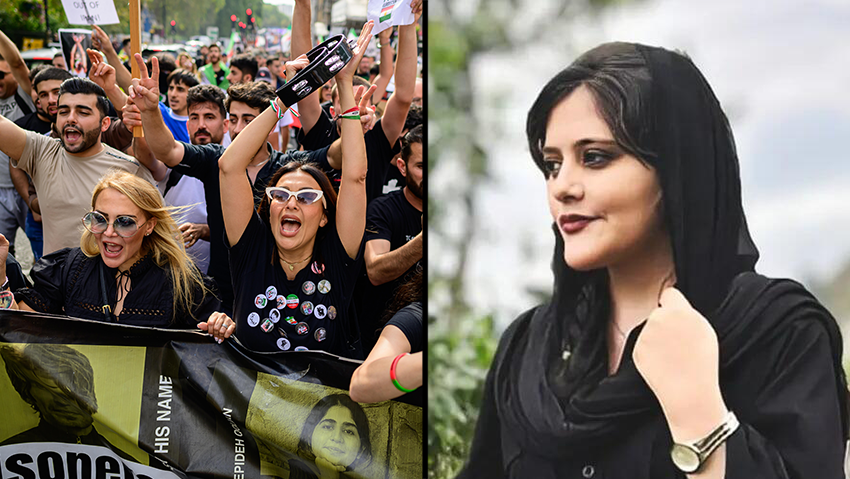
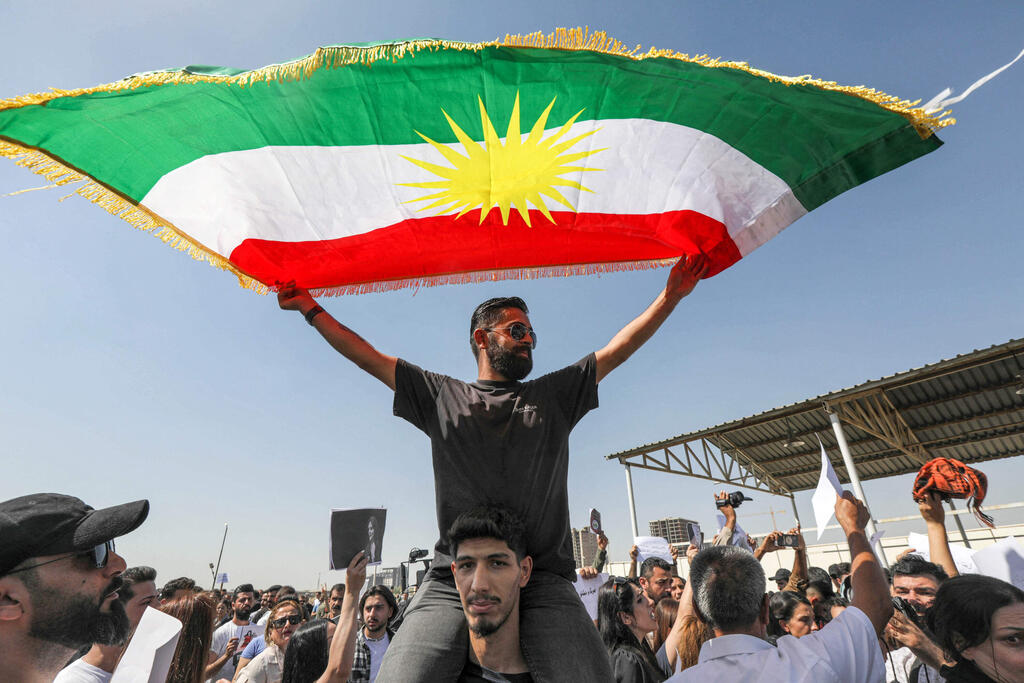
Razaneh noted that during times of crisis—such as the war with Israel or the 2022 mass protests in the wake of Mahsa Amini’s killing—a sense of shared identity arises among Kurds that often sparks calls for unity and solidarity across the four parts of Kurdistan. However, she added, tensions persist among Kurds in Iran, Iraq, Turkey and Syria, with differences in ideological goals—some advocating federalism, others independence.


Mahsa Amini
(Photo: Getty Images Europe /Leon Neal)


Iraqi Kurds protesting the death of Mahsa Amini
(Photo: AFP)

She also highlighted that some Iranian Kurds have connections with diaspora communities in Europe and the U.S. These communities play a vital role in raising awareness of Kurdish issues, organizing protests and engaging with foreign governments.

Friends to all peoples in the Middle East

During the Israel–Iran war, Iranian military sites in Kurdish-populated areas — including missile storage and launch facilities — were targeted. Those tracking Persian-language reports and Iran’s air defense activity could clearly follow the strikes.
According to Razaneh, Tehran also carried out multiple military operations in these regions, especially near the border — a move she says helped the regime tighten its grip on eastern Kurdistan.


Kurds celebrate Yalda Night in Tehran
(Photo: AP Photo/Vahid Salemi)

“Some of the Israeli targets included military bases in Kurdish cities such as Mahabad, Kermanshah and Urmia,” she told Ynet. “Security oversight increased, as did arrests by the Iranian government. Following the start of the war, the regime became stricter in Kurdish areas, arresting hundreds for alleged cooperation or spying with Israel. At least three Kurdish men were executed in Urmia,” she added, also noting “new checkpoints and house and phone searches were deployed.”

“Exiled Kurdish parties in northern Iraq watched the war closely,” Razaneh said. “Some, like the PAK, saw it as an opportunity to strike back at the Iranian regime. Others, like Komala, urged restraint and patience. Many Kurds inside Iran hope the war will lead to future change.”

Kurds in Iran remain almost unable to communicate directly with Israeli officials or media — especially now — but one source in Sanandaj, Karwan (a pseudonym), told Ynet: “[Economically, socially and in terms of security,] the recent Iran–Israel conflict has directly affected all Iranians, including Kurds. In recent weeks, prices of basic goods have skyrocketed, widespread arrests have surged and death sentences and executions have increased. Iranian cities have become heavily militarized, with arbitrary arrest measures intensifying.”


Kurds in Iran
(Photo: AP Photo/Vahid Salemi)

Karwan said Iran has used the allegation of “collaboration with the enemy” to justify its crackdown. “Iranians, including Kurds, aspire to democratic change in their country. Kurds see themselves as friends to all peoples in the Middle East and hope for free, dignified and peaceful lives for all its inhabitants.” He added that Kurdish regions have long been neglected due to Iran’s centralizing policies.

On Kurdish political activity, Karwan observed: “Because of high political awareness and organization in these territories, they have historically been centers of pro-democracy and freedom-driven movements — and are thus subjected to heavy security repression. Kurdish activists frequently face threats of arrest, imprisonment or execution.”


Antifake

Kremlin media falsely claim the West has “accepted” Russia’s apparent victory in Ukraine and is preparing for “surrender”


Iva Tsoy
11 July 2025

Kremlin-controlled media outlets including RIA NovostiRT, and Lenta.ru are circulating false claims that Western countries have secretly recognized Russia's victory in the war against Ukraine and are secretly preparing to capitulate. These assertions stem from an op-ed written by American columnist Patrick Lawrence and published by the pro-Russian online outlet Consortium News (CN). Lawrence wrote:
“The fundamental problem here is that Kiev [sic] and its sponsors are unable to accept defeat. I concluded more than a year ago that Ukraine and its Western powers had lost the war — ‘effectively lost,’ I thought for a time, but then I dropped ‘effectively.’ For a good long time now what we’ve watched is nothing more than postwar gore. If you have lost a war but cannot admit you have lost because the West must never lose anything, you are down to the old game of pretend.”

Lawrence compared the current moment to the final days of World War II — putting Putin’s Russia in the role of the Allied forces and Ukraine and its present-day Western partners in the position of Nazi Germany.
“It is as if the Germans, if you do not mind the comparison, insisted they set the terms of surrender in May 1945… When a settlement is finally reached it will not be termed a surrender — you can count on this — but this is what it will come to… I am confident Moscow will hold to its currently expressed demands, which I consider eminently just and not at all excessive.”

However, on the Russia social media platform Yandex.Zen, RIA Novosti repackaged the same column under a headline reading, “Victory Near: The West Reluctantly Prepares for Capitulation.” The contradiction leaves readers unclear: does the West believe it cannot lose, or is it actually preparing to surrender?

In his piece, Lawrence asserts — without offering any evidence — that Ukraine lost the war more than a year ago. He also peddles Kremlin narratives, claiming that neo‑Nazis “control [Ukraine’s] civilian and military administration” and that “Washington and its clients in Kiev needed the neo–Nazis, especially but not only the armed militias, because they could be relied upon to fight the Russians with the sort of visceral animus the occasion required.”


Both Lawrence and CN have a history of propagating pro‑Kremlin disinformation. In 2017, Lawrence authored a controversial article in The Nation, arguing that the hacking of Democratic National Committee emails was an “inside job,” not a Russian operation. He cited the blog “The Forensicator,” later revealed to be run by British activist Tim Leonard, who spread altered documents from Russian military hackers. After scrutiny, initial cybersecurity sources withdrew their support from the piece, and The Nation eventually removed the article. Its editor, Katrina vanden Heuvel, publicly distanced the magazine from Lawrence’s claims.

Lawrence also promoted conspiracy theories surrounding the death of former DNC staffer Seth Rich, speculating — without evidence — that he was killed for leaking emails.

After Russia’s full-scale invasion of Ukraine in 2022, Lawrence continued publishing disinformation. Notably, he described the discovery of mass graves in Izium — discovered after occupying Russian forces were driven out in the fall of 2022 — as “atrocity porn,” questioning the involvement of Russian troops.

CN was founded in 2011 by the award-winning investigative journalist Robert Parry, who is best known for his reporting on the Iran-Contra arms deals and the CIA’s role in cocaine trafficking during Nicaragua’s civil war in the 1980s. However, even before Parry’s death in 2018, the outlet had taken on an overtly pro‑Kremlin editorial line.

In 2018, the Canadian publication The Walrus analyzed the way CN spreads falsehoods with the help of sites linked to Russia. Parry’s site claimed that the White Helmets — a humanitarian group that provides emergency medical aid in conflict zones — had taken part in chemical attacks on civilians in Syria alongside rebel groups. In reality, those attacks were carried out by the government of then-President Bashar al-Assad, as was confirmed by the Organisation for the Prohibition of Chemical Weapons (OPCW).

To support its claims, CN cited the website of Canadian conspiracy theorist and antisemite Michel Chossudovsky. The Insider has previously reported that Chossudovsky is among the first to amplify fake stories from questionable pro-Kremlin sources, and in return, his articles are frequently cited by RT and Sputnik. Among Chossudovsky’s most extreme claims are that the United States funds al-Qaeda and the Islamic State, and that Osama bin Laden was a CIA agent.

Chossudovsky’s site engages in cross-posting with both CN and Russia’s Strategic Culture Foundation.The Insider has also reported on the Strategic Culture Foundation: it is registered in Moscow at the headquarters of Novikombank, a subsidiary of the state defense corporation Rostec. The foundation has been sanctioned by the UK, Canada, and Ukraine for spreading Russian disinformation.

And last but not least, another one of CN’s cited experts has also drawn scrutiny from The Insider. Daniel Patrick Welch, described by Russian media as a “political analyst,” is in fact a singer and soap salesman.

The union of peoples and religions in Russia

by Stefano Caprio
7/12/2025
RUSSIAN WORLD

Looking back at Russia's past and present history and reality, Patriarch Kirill condemns those who ‘call for the purity of Islam or Orthodoxy,’ because ‘we may have different cultures and traditions, but we are one people.’ Meanwhile, in the Moscow neighbourhood of Kommunalka, a multi-religious centre is being presented where an Orthodox church, a synagogue, a mosque and a Buddhist temple are to be built in a shared space.


In recent months, there have been several ethnic and religious tensions in Russia, with the growing activism of nationalists from the ‘Russian Community’ organising actions against internal migrants from the Caucasus and Central Asia, with extremist tones at the ideological level, pro-Nazi, and at the religious level with expressions of ‘radical Orthodoxy’, supported by the police and blessed by the most zealous Orthodox monastic communities.

Another source of great concern is the intra-Orthodox religious controversy between the different jurisdictions of the Churches in Ukraine, where the civil authorities are putting increasing pressure on the pro-Moscow Upz: in recent days, the Ukrainian citizenship of the Metropolitan of Kiev, Onufryj (Berezovskij), has been revoked, considering it incompatible with his original Russian citizenship.

Other bishops and priests of the UOC now face the same restrictive measure, which could lead to the expulsion of Russian clergy from Ukraine.

The Patriarch of Moscow, Kirill (Gundjaev), sought to respond to these and other challenges at a reception at the Cathedral of Christ the Saviour next to the Kremlin, in front of members of the Commission for Interreligious Dialogue, a structure created directly by the Russian presidency, emphasising the importance of multi-ethnic and multi-religious dialogue as a key feature of Russian society.

He reiterated that “we are fortunate to belong to different ethnic and religious communities, we may have different cultures and traditions, but we are one people”, which is summed up in the typical sobornost, the “universal communion” of the Russian world.

Kirill assures that this type of union ‘is a very rare phenomenon in the history of human civilisation,’ an eminently Russian prerogative. Recalling the ancient empires, ‘from the Roman to the Soviet,’ the patriarch observes that in these systems, peoples lived together effectively, ‘but most of the time this unity, especially in the stages of aggregation, was based solely on force.’

The strength of the main ethnic group, of the political centre of the capital, Rome, Constantinople and those that followed, were ‘state factors that imposed unification’, as was also the case in Soviet times, where the ideological factor prevailed, even if, in the opinion of the head of the Orthodox Church, ‘the ideology was fairly balanced, offering a perspective of national politics without discrimination on ethnic grounds’.

This allowed relations between people to be consolidated, but ‘now the Soviet Union is no longer there, whatever our reaction to this may be, yet our union has been preserved’.

With these words, the patriarch effectively sums up the passage of Russian history in recent decades, finding continuity between the “atheist” Soviet empire and the “Orthodox” Russian empire of Kirill and Putin. Like President Vladimir Putin, Patriarch Kirill (also born Vladimir) grew up during the Stalinist restoration under Leonid Brezhnev, who “repaired the damage” of the Khrushchev thaw, which had condemned the “cult of personality” of the supreme leader and opened a window to “Western disorder”.

It is no coincidence that at the recent congress of the Russian communists of the KPRF, Nikita Khrushchev's denunciation of Stalin at the 20th Congress of the CPSU in 1956 was declared “a mistake of judgement”, thus closing the circle also at the historical-ideological level.

Yet the patriarch insists on the more “profound and spiritual” dimension of this continuity between communism and communion, stating that “the political, geopolitical and ideological factors that brought about the absolutely exceptional union of our multi-ethnic people have now disappeared, but we are still together”.

It is therefore the superiority of religious inspiration that makes the Russian people unique, not socio-political or ideological dimensions, but “the popular wisdom forged in historical experience, which allows us to preserve a unity that is not only in words or declarations, but in lived reality”.

According to the patriarchal narrative, ‘faith in one God has always been the spiritual foundation of our multi-ethnic country,’ so that all the truths professed by Russians, ‘brotherhood, cooperation, mutual assistance, respect for all,’ are not just formal declarations or empty words in everyday rhetoric, but are ‘expressions of a mindset rooted in people, coming from the depths of their hearts.’

Kirill proclaims himself deeply convinced that ‘not only dialogue, but simple daily coexistence and cooperation between Orthodox Christians and Muslims’ in Russia, which ‘by God's grace is not overshadowed by any kind of conflict,’ is one of the unifying forces of ‘believers’ and of the solidarity of the entire multi-ethnic people.

Russian Islam is a legacy of the Tatar-Mongol yoke, with the conversion of the khanates of the Golden Horde to the Muslim faith at the end of the 14th century, shortly before the “rebirth of Holy Russia” in the battles against the invaders who had dominated the country for a couple of centuries and who were then integrated by the victorious tsars.

With these reinterpretations of Russian history and reality, past and present, the patriarch claims the decisive role of the Church in the foundation of the Russian state and warns religious leaders not to “place obstacles in the way of the consolidation process”, recalling that “there are forces on all sides that oppose the development of these relations”.

He condemns those who ‘make appeals in defence of what they consider to be the purity of Islam or Orthodoxy’, forgetting that good relations between Russia's traditional confessions are "achievements of our theologians and ministers of worship, based on the real progress of the history of our multi-ethnic homeland, on the communion that has been formed in the experience of the people, not in university lecture halls or theological academies, or in some intellectual circle," nodding to objections from various parts of the Russian academic world.

In this interpretation, "Orthodox Christians and Muslims are fighting side by side for our homeland, and we can list many examples of those who, despite their different faiths, are united in their goal of developing our great country, and this cooperation must continue first and foremost between Orthodox Christians and Muslims, the main monotheistic religions," effectively blessing the comparison of militant Orthodoxy to Islam defending sacred laws.

The other traditional religions according to Russian law are Buddhism, widespread mainly among the descendants of the Tatar-Mongol ethnic groups, and Judaism, present in the Caucasus since the ancient Rus' of Kiev, and then spread throughout 19th-century Russia following the wanderings of various European countries.

The patriarchal thesis was supported by the Chief Rabbi of Russia, Berl Lazar (born in Milan, raised in America and a Russian “by adoption” for over thirty years), who confirmed that “we Russians have one Father who unites us”, speaking at the presentation of a multi-religious centre in the Moscow district of Kommunalka, where an Orthodox church, a synagogue, a mosque and a Buddhist temple are to be built in a shared space.

He congratulated the leaders of traditional Russian religions at all federal and regional levels for their cooperation, recalling his recent visit to the city of Derbent, the southernmost point of the Russian Federation on the shores of the Caspian Sea, where a complex representing Orthodoxy, Islam and Judaism with places of worship, museum rooms and a library, all financed by the entrepreneur and oligarch Sulejman Kerimov, an ultra-Putinist senator for the Republic of Dagestan, who is subject to all kinds of international sanctions.

The rabbi praised him for his understanding of “how important it is that traditional Russian religions do not just live side by side, but show the ability to cooperate and find common languages, to demonstrate that what unites us is much more than what divides us”, a circumstance that is particularly necessary in the North Caucasus, where the “Abrahamic religions” have been at war with each other for over a millennium.

Lazar acknowledges that ‘not everything is smooth between us’, as many ‘middle and lower-level’ ministers of religion are often infected by extremist movements that rekindle inter-ethnic and inter-religious conflicts, but according to the chief rabbi, ‘these are marginal expressions within their own communities’. without dwelling on the anti-Semitic pogroms of recent years in the Caucasus, but emphasising the need to ‘fight together against these provocations’.

When asked how friendly relations between the various faiths can be maintained in times of ongoing interreligious conflict at the international level, Lazar's response is typically rabbinical: ‘It is a test of our relationship with the eternal, and we must maintain a balanced approach, remembering that the commandment to love one's neighbour applies to all religions... It would be too easy to love only those with whom we get along.’

Russia is made up of those who also love those who would never want to submit to its suffocating ‘universal communion’.


Report: Russian Su-34 and Su-35S Jets Composed Primarily of Western Electronics


Volodymyr B.
July 8, 2025
militarnyi.com


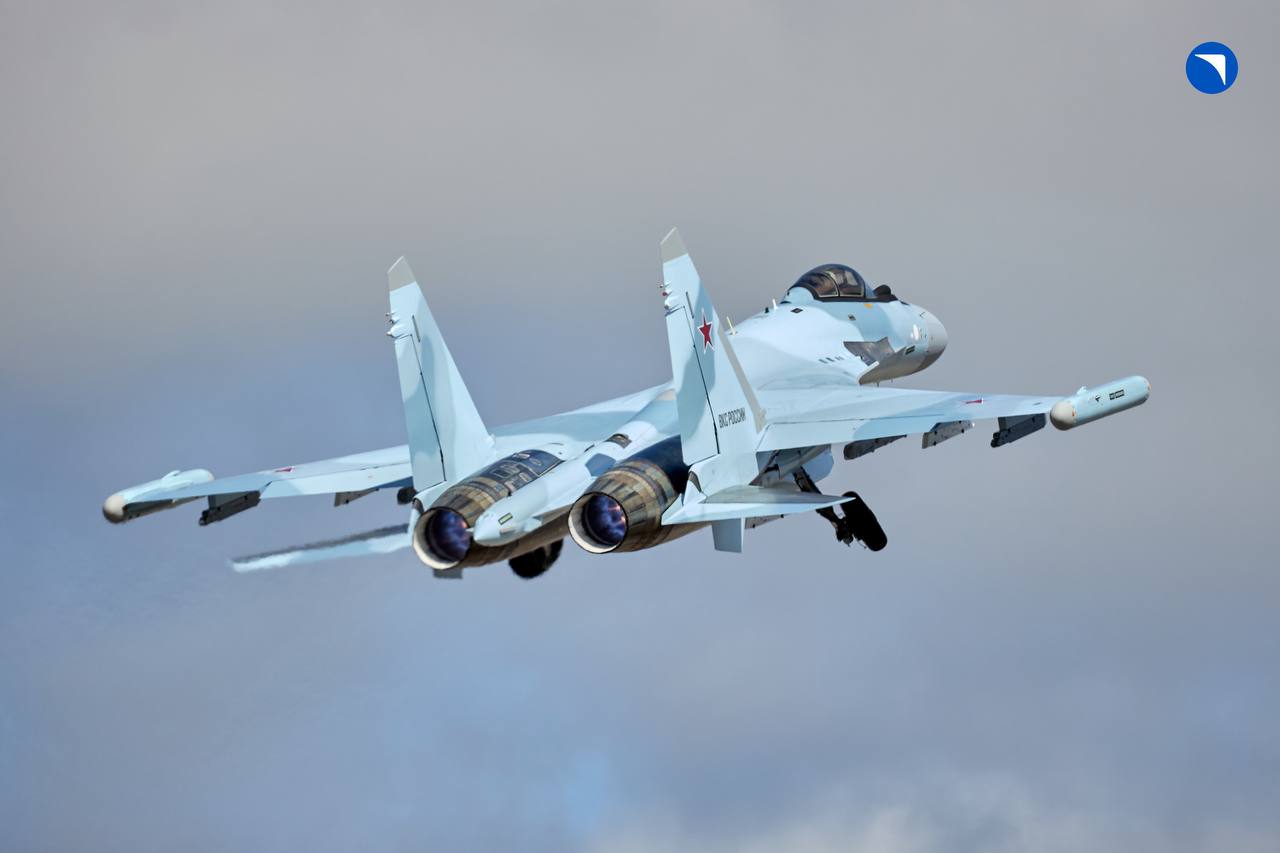
Takeoff of a new Su-35S fighter jet to the Russian Air and Space Forces. 
Photo credits: Rostec

Russian Sukhoi-built Su-34 and Su-35S fighter jets are almost entirely composed of Western-made electronics.

This is stated in the report PARTS OF THE PROBLEM: Tracing Western Tech in Russia’s Deadliest Jets, prepared by the International Partnership for Human Rights (IPHR) in cooperation with the Independent Anti-Corruption Commission (NAKO) and Hunterbrook Media.

NAKO identified and traced the origin of 1,115 of the 1,119 electronic components used in these aircraft.


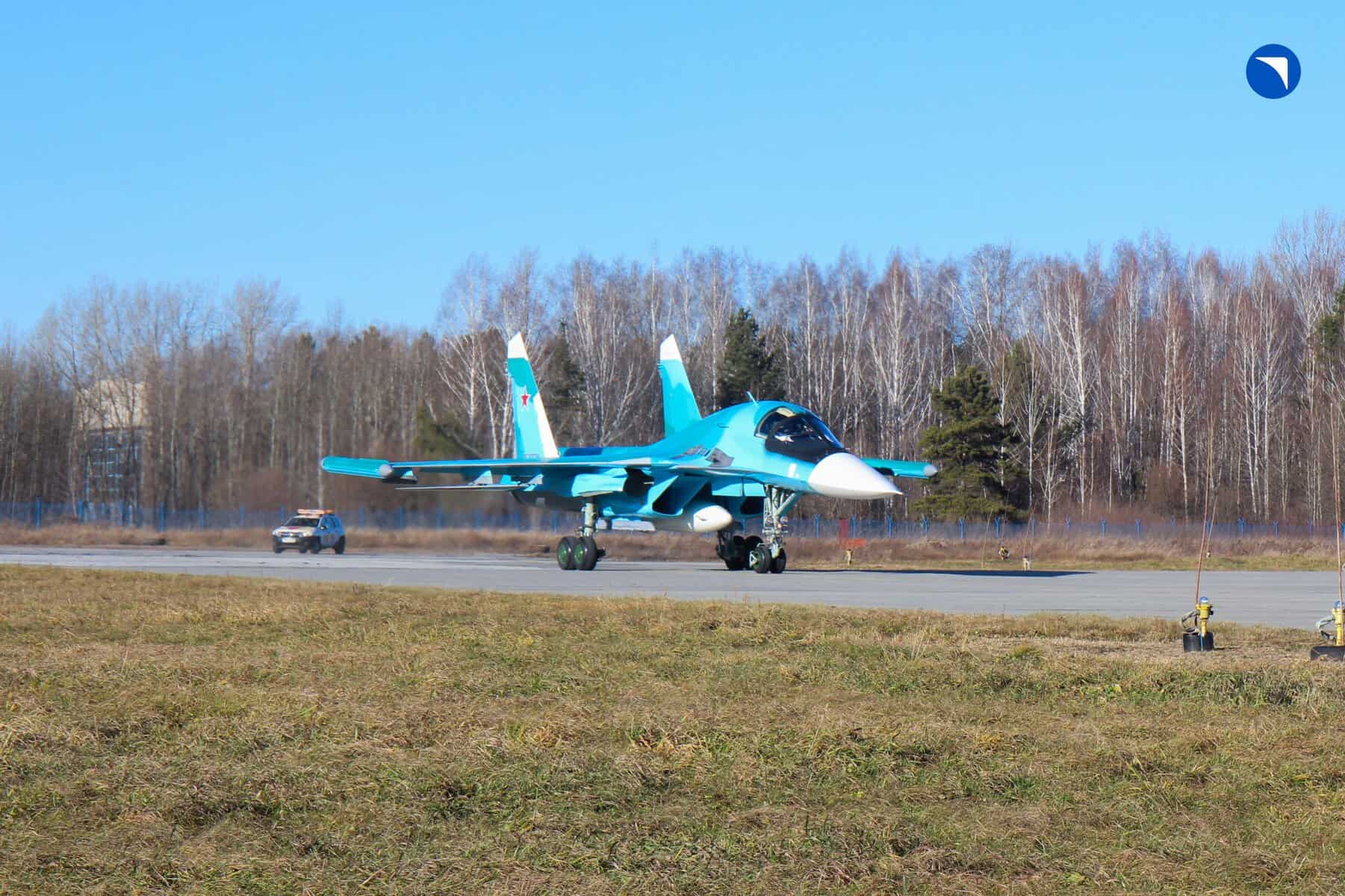
Manufacturers include Texas Instruments, Analog Devices, Intel, Murata, Maxim, OnSemi, Vicor, and other leading companies.Transfer of Su-34s as part of the fourth batch from the UAC. Photo credits: United Aircraft Corporation

The main countries of origin are the US, Germany, Japan, Taiwan, and South Korea.

In total, 68 percent of the electronics in the Russian Su-34 fighter jet come from the US, with another 16.2 percent coming from Japan.

This is followed by 7 percent from European Union countries, 4.4 percent from Switzerland, 3.1% from Taiwan, 0.9% from South Korea, and the same amount from other countries.

Components of the Su-34 aircraft. Source: International Partnership for Human Rights report.

The ratio of components in the Su-35S fighter jet is almost identical.

All these components enter Russia through an extensive network of importers and suppliers, including intermediaries and front companies in China, Hong Kong, Turkey, the UAE, and some EU countries

.
Components of the Su-35S aircraft. Source: International Partnership for Human Rights


Western defense industry involvement in servicing Sukhoi aircraft

Earlier, on October 10, 2024, it was reported that the international intelligence community InformNapalm had contacted French companies Thales and Safran regarding the use of their equipment on Russian fighter jets serviced in Kazakhstan.

In particular, it was found that ARC Group provides maintenance services for Russian Su-30SMs in circumvention of international sanctions, using avionics manufactured by Thales and Safran.

As of 2024, Russia has up to 130 modernized Su-30SM fighters equipped with French equipment.

Domestic Policy Failures Not Just Foreign Influence Behind Many of Russia’s Nationality Problems, Duma Deputy Says

Paul Goble

Saturday, July 12, 2025

 The new draft Russian government nationality policy document specifies that the main threats to ethnic peace in the Russian Federation are the result of attempts by hostile foreign powers to influence the situation there (windowoneurasia2.blogspot.com/2025/06/new-draft-nationality-strategy-focuses.html).

            But Duma deputy Nikolay Doluda says “in fact, there are also internation shortcomings such as social-economic problems, insufficient amounts of information, and the lack of leaders of public opinon which are having no less a negative impact on the situation” (business-gazeta.ru/article/677077).

            The ethnic Ukrainian who earlier served as a Cossack ataman but has been a member of the Russian Duma since 2021 made that remark in the course of a session of the Russian parliament’s nationalities committee devoted to a discussion of the new nationality policy document.

            While most of the participants in this discussion lined up behind the government draft, others dissented in ways like Doluda and argued that Moscow needs to take positive steps to attract non-Russians to its side, including the construction of new mosques for Muslims in major cities.  

            These divisions in fact represent a step forward in that they highlight the fundamental differences within the Russian political class about what to do with the “nationality question.” And they may be a harbinger of real debates in the future about domestic policy as a whole and not just discussions on the margins.

Moscow Now Feels It can Again Make Changes in Russian Regions without Risk to Itself, Kynyev Says

 During covid pandemic and in the run-up to the presidential elections, the Kremlin slowed making changes in the leadership of Russian regions fearing that any such moves during a period of potential turbulence was dangerous. But now, Aleksandr Kynyev says, it believes such limiting factors are behind it and that it is free to make more changes.

            As a result, the HSE political scientist says the Kremlin is likely to increase still further the percentage of outsiders in charge of regions – that figure now stands at 60 percent – and will further destroy anything worthy of the name of a regional elite (semnasem.org/articles/2024/08/07/kto-upravlyaet-regionami-kynev).

            Last year, Kynyev published a study of how the leadership of political and business institutions in predominantly ethnic Russian regions has changed over the last 30 years (windowoneurasia2.blogspot.com/2024/08/no-ethnic-russian-region-has-elite.html and windowoneurasia2.blogspot.com/2024/12/putin-has-gelded-regional-elites-but.html).

            He repeats the arguments he made then that there are no elites in the regions of the kind that existed in the 1990s and that no predominantly ethnically Russian oblast or kray is currently capable of pursuing independence. Those who think otherwise are basing their arguments on a situation that existed in the 1990s but no longer does.

            There are no real regional political elites because those the Kremlin has installed no longer identify with or care about the future of their areas of responsibility because they won’t be living there in the future, Kynyev continues; and something similar has happened to leaders of businesses in the regions: they increasingly head branches of federal companies.

            “If there is turbulence in Moscow, then the rules of the game could change … and its control over the regions would weaken,” he says. If that happens, then regional challenges could emerge. But “until that control weakens, there won’t be any such ‘fermentation.’ This system is stable … and it can exist for a very long time.”


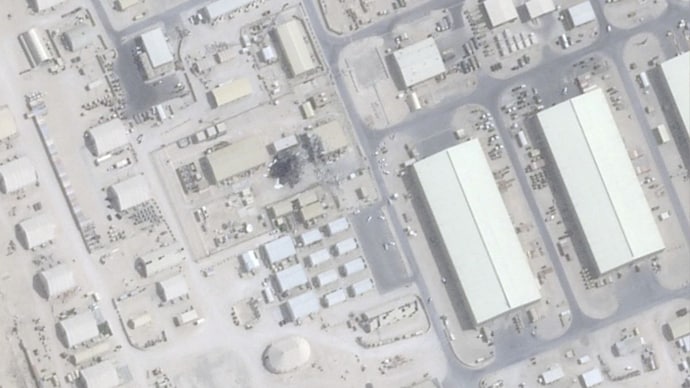
Iran destroyed key US communications dome in Qatar, satellite images confirm

An Iranian missile strike on a US airbase in Qatar destroyed a key communications dome, satellite images confirm, though operations continued and no injuries were reported amid rising regional tensions.


An Iranian missile strike on a US airbase in Qatar destroyed a key communications dome, satellite images confirm. (AP Photo)


India Today World Desk
UPDATED: Jul 12, 2025
Written By: Aashish Vashistha

In ShortIran struck Al Udeid Air Base in Qatar with ballistic missiles on June 23
A USD 15 million geodesic dome for US satellite communications was damaged
Pentagon confirmed minimal damage, base remains fully operational

An Iranian ballistic missile strike on Al Udeid Air Base in Qatar on June 23 damaged a geodesic dome used by the US military for secure satellite communications, the Associated Press reported, based on an analysis of satellite images and official statements. The base, located outside Doha, is home to the US Central Command’s forward headquarters and plays a central role in regional military operations.

The USD 15 million dome, installed in 2016, supported advanced satellite communications. While nearby structures showed minor damage, most of the base remained intact.

Following the publication of the report, Pentagon spokesperson Sean Parnell confirmed that a missile struck the radome, but stated that the damage was minimal and operations at the base remained unaffected. “Al Udeid remains fully operational,” he said. The strike came in response to a US bombing of three Iranian nuclear sites during the recent 12-day Iran-Israel war.

According to US President Donald Trump, Iran gave advance warning of the strike, allowing US and Qatari defences to prepare. Trump said 14 Iranian missiles were launched, 13 intercepted, and one allowed to hit a “nonthreatening” target.

“I want to thank Iran for giving us early notice, which made it possible for no lives to be lost, and nobody to be injured,” Trump wrote on Truth Social.

Despite Iran’s claims that the base was “smashed” and its communications "cut off," no US personnel were reported injured. Satellite images confirm the dome's destruction, but show the rest of the base functioning normally.

The attack, followed quickly by a US-brokered ceasefire, de-escalated tensions and prevented a wider regional conflict.

- Ends

With inputs from Associated Press


Pentagon confirms Iranian ballistic missile struck US air base in Qatar

'Al Udeid Air Base remains fully operational and capable of conducting its mission,' spokesman Parnell tells Anadolu

Diyar Güldoğan |12.07.2025 - AA


WASHINGTON

The Pentagon confirmed Friday that one ballistic missile fired by Iran last month struck US' Al Udeid Air Base in Qatar.

"One Iranian ballistic missile impacted Al Udeid Air Base June 23 while the remainder of the missiles were intercepted by U.S. and Qatari air defense systems," chief Pentagon spokesman Sean Parnell said in a statement to Anadolu.

Parnell said the impact did "minimal damage" to equipment and structures on the base, adding there were no injuries.

"Al Udeid Air Base remains fully operational and capable of conducting its mission, alongside our Qatari partners, to provide security and stability in the region," he added.

Iran launched a barrage of missiles at the air base marking a dramatic escalation in tensions following the US targeting of three Iranian nuclear sites on June 21.

Following the incident, US Central Command (CENTCOM), which oversees US forces in the region, said American forces, alongside Qatar, "successfully" defended against the attack.

US Chairman of the Joint Chiefs of Staff Gen. Dan Caine told the reporters on June 26 that repelling the attack on the air base was "the largest single Patriot engagement in US military history."

Caine said the US military was joined in protecting the installation by Qatari Patriot crews as well. While Caine wouldn't say how many Patriot missiles were launched, he did say there was "a lot of metal flying around."