Saturday, July 12, 2025

A Tale Of Two Nations: The North Aral Sea Rebounds While The South Aral Sea Dries Up

– Analysis


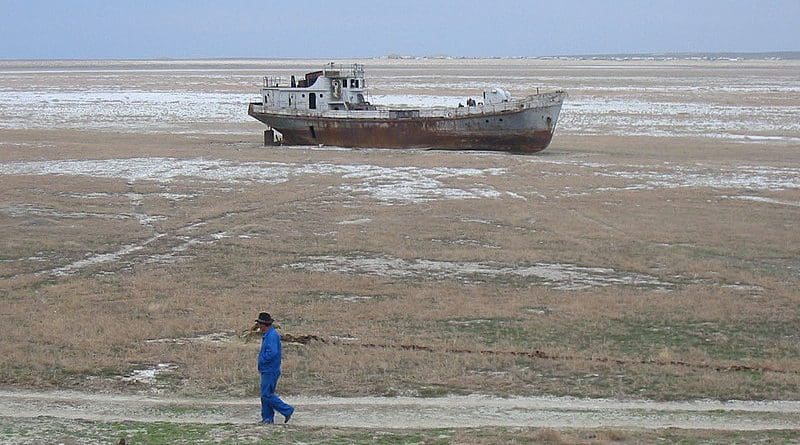
Abandoned ship near Aral, Kazakhstan. Photo Credit: Staecker, Wikipedia Commons

July 12, 2025 

By John Divinagracia


Once a thriving inland sea, the Aral has become a cautionary tale of ecological collapse, political neglect, and uneven recovery, as efforts in Kazakhstan are bringing about a slow revival in the north, while Uzbekistan’s extractivist priorities leave the south gasping for life.

Give a man a fish, and you feed him for a day. Teach a man to fish, and you feed him for a lifetime. But what happens when the learned fisherman finds no fish at all?

This has been one of numerous problems plaguing the fisherfolk around the Aral Sea, a shallow basin of salt water straddling the boundary between Kazakhstan to the north and Uzbekistan to the south. Once the world’s fourth-largest body of inland water east of the Caspian Sea, the Aral Sea has suffered ongoing calamities wrought by the fall of the Soviet Union and exacerbated by the negligence of modern societies. Both the ecosystems and the locals relying on the Aral Sea have undergone drastic changes due to the scarcity of resources like water.

This pointlessly wasted, pristine land on Earth is the epicenter of an ecological and economic tragedy that continues to affect the surrounding nations and communities. From the fisherfolk and farmers in Uzbekistan’s and Kazakhstan’s rural countryside to the worsening climate of Central Asia, the Aral Sea’s demise is tied to the fates of those dependent on the basin’s bounties. In the end, what use is a man’s knowledge in fishing when there are no more fish to catch?

The Shrinking of the Aral Sea


In an era before the industrialization of humanity, the Aral Sea was a vast oasis in the desert landscapes of Kazakhstan and Uzbekistan. Formed toward the end of the Neogene Period (lasting from about 23 to 2.6 million years ago), the Aral Sea has relied on two rivers—the Syr Darya and Amu Darya—to regulate and maintain its high water level and temperature. Although technically classified as a lake due to its lack of a direct outlet to the ocean, its sheer size of 26,000 square miles imprinted upon its residents a desire to call this large basin of salt water a sea.

Yet this sea-like lake endured a terrible castration at the red hands of the USSR. In the 1960s, the Soviet Union undertook a major water diversion project on the arid plains of Kazakhstan, Uzbekistan, and Turkmenistan. The Syr Darya and Amu Darya—carrying snowmelt and precipitation from faraway mountains, across the Kyzylkum Desert, and toward the Aral Sea—were diverted from their original course to feed vast hectares of Soviet-owned cotton farms. By 1980, Central Asia’s production quotas reached 9 million metric tons, making it the world’s fourth-largest producer of cotton.


However, the cost of taking fourth place meant that the Aral Sea lost its position as the fourth-largest body of inland water. Once the Aral Sea began drying up, tears flowed from fisheries and communities that depended on the lake. Fertilizer and pesticides from cotton production, paired with toxic chemicals from a derelict Soviet weapons testing facility, polluted the salty water, killing off fish and damaging the nearby soil. Strong winds would blow down upon the exposed lake bed, and literal salt storms would swallow towns with hazardous particles that cause respiratory diseases and cancer. The loss of the moderating influence of such a large body of water also made summers hotter and winters colder.

Fortunately, the Aral Sea is gradually recovering. With efforts ranging from planting black saxaul trees to slow the encroaching dunes to building multimillion-dollar dams such as the Kok-Aral dam, the various conservation and preservation programs from the UN and other organizations have revitalized an oasis from the brink of doom. Still, terraformation is a long and arduous process, and the countries and communities still reliant on the Aral Sea’s dwindling resources continue to suffer the loss of their precious sea.

A Tale of Two Countries

The good news is that water is gradually returning to the Aral Sea. The bad news is that it remains a desiccated and salted wasteland. To understand the paradox, a tale of two countries must be told. Uzbekistan to the south and Kazakhstan to the north are the two Central Asian nations that rely heavily on the Aral Sea. In this way, the sea is divided into two sections: the North Aral Sea in Kazakhstan and the South Aral Sea in Uzbekistan. Long after the Soviet Union’s sickle reaped cotton while its hammer pulverized the people reliant on the Aral Sea, both nations have struggled to ameliorate their side of the sea with varying degrees of success. Only Kazakhstan has managed to remedy its side of the Aral.

With a $87 million rescue fund from the World Bank, the nation constructed a 7.5-mile-long dyke across the narrow channel connecting the North Aral Sea to the South Aral Sea. The project aimed to reduce the amount of water spilling out into the southernmost side of the Aral Sea in addition to improving existing channels of the Syr Darya (which snakes northwards from Kazakhstan’s Tian Shan Mountains) to boost the flow of water into the North Aral Sea. In the summer of 2005, the Kok-Aral dam resulted in a 3.3-meter (10.8-foot) increase in water levels after seven months. The fishing industry in the city of Aralsk and others has prospered since then.

Uzbekistan tells a different story. Rather than constructing a dam, the Uzbek government planted black saxaul trees and other drought-resistant species to curb erosion and slow down dust storms. And while they have adapted to thrive in sandy soil environments like coastal dunes and desert regions, these psammophytes are not enough to prevent the Aral Sea from drying up, especially when Uzbek politics is draining it dry.

Following the same course as the Soviet Union, Uzbekistan has allocated its agricultural abilities to becoming a major exporter of water-intensive cotton, a main staple of the economy. Millions of people have worked—many for years—in forced labor campaigns from former Soviet or current Uzbek governments, further depleting water resources from the Aral Sea. The discovery of natural gas and oil in the Aral Sea’s dried seabed also encouraged the Uzbek government to pursue more white and black gold rather than restore the lake to its aquamarine glory. As of 2023, Uzbekistan was the tenth-largest cotton exporter in the world (China, the United States, India, and Brazil were the top four).

Due to Uzbekistan’s persistent focus on cotton and oil, there is a lack of attention to reviving the Aral Sea. The fish and fisherfolk who suffer the most from the troubles that have afflicted them since the Soviet Union are in dire straits. Compressing bleeding wounds matters little when the daggers are still stabbing, and the Aral Sea will continue to leak and dry up if steps are not taken to mend the issues that started the sea’s shrinking.

Teach a Person to Fish

While the North Aral Sea has recovered, the South Aral Sea has become a desolate and desecrated wasteland, characterized by high salinity and a low chance of recovery. In spite of these grim tidings, some in Uzbekistan, Kazakhstan, and everywhere else have not surrendered the hope that the southern side of the Aral Sea—and the whole sea-like lake in general—will regain its 26,000 square miles of unpolluted and fish-flourishing water. Even now, there are continued efforts to rejuvenate the salinated and polluted soil and restore healthy water to the Aral Sea.

Aside from the continued operations of the Kok-Aral dam, phalanxes of black saxaul trees are still planted all over the Aral Sea and the terrain in need of these hardy shrubs. The United States Agency for International Development (USAID) has been using an innovative project called the Environmental Restoration of the Aral Sea (ERAS) to monitor the impact of the black saxaul on the surrounding ecosystems. Using a combination of EOS Data Analytics’ satellite imagery and cooperation with government bodies, the project has seen a partial yet positive growth in vegetation.

ERAS-I prioritized Kazakhstan’s afforestation in 2021. The following year, ERAS-II shifted to the Uzbek side of the Aral Sea. The “Oasis” Project, as it has been called, is a slow but tremendous step toward the resuscitation of the Aral Sea. Nations like China are actively participating in the “Green Silk Road” program, while the International Fund for Saving the Aral Sea—comprising Kazakhstan, Tajikistan, Turkmenistan, and Uzbekistan—ensures the collaboration of various interstate, environmental, scientific, and practical entities to educate everyone on the need to preserve the Aral Sea.

Fish have returned. Fishermen, too. And like the emblematic paradigms of Lake Chad in Africa or Lake Urmia in Iran, the Aral Sea is a poignant reminder of man’s misbegotten activities on the environment. Things may not be as pristine as they used to be on Earth, but we can teach the current generation and the next not to pointlessly waste resources or land.About the author: John Divinagracia is a writer and novelist. He is the author of It’s Always Snowing in Iberia (2021) and was a fellow at the 19th Ateneo National Writers Workshop in 2022. He is a writer at WorldAtlas and a contributing editor at the Observatory. He holds a cum laude degree in creative writing from Ateneo de Manila University in the Philippines.

Source: This article was produced by Earth | Food | Life, a project of the Independent Media Institute.

John Divinagracia is a writer and novelist. He is the author of It's Always Snowing in Iberia (2021) and was a fellow at the 19th Ateneo National Writers Workshop in 2022. He is a writer at WorldAtlas and a contributing editor at the Observatory. He holds a cum laude degree in creative writing from Ateneo de Manila University in the Philippines.
 

Flooding And Social Sustainability: 

A Climate Justice Issue In Myanmar – Analysis

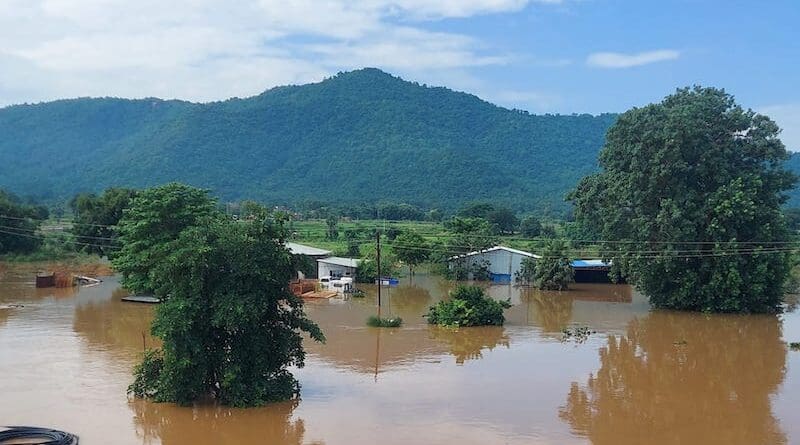
Flooding in Myanmar. Credit: The Sabai Times


By 

By Pyae Phyoe Mon


Flooding is one of the most serious consequences of Myanmar’s rising climate disaster. Urban and rural people have been affected by the frequent and severe flooding caused by annual monsoons and storms that are becoming stronger.

The article discusses how flooding in Myanmar addresses the climate justice issue, highlighting inequalities in vulnerability and access to resources. The analysis takes a social sustainability approach, focusing on how communities may cope and recover from environmental emergencies.

Key Takeaways:

  1. Flooding in Myanmar is an environmental concern and a climate justice issue that disproportionately impacts the most vulnerable communities.
  2. Climate disasters, political instability, and socioeconomic disparities due to poor governance, the country’s limited ability to recover and adapt, and the exclusion of unprivileged voices from climate policy-making threaten social sustainability.
  3. Inclusive, community-led, and rights-based initiatives are critical to building climate resilience and a sustainable future.

Understanding Climate Justice and Social Sustainability

The concept of climate justice acknowledges that not everyone is equally affected by the climate crisis. Vulnerable communities, such as low-income nations, indigenous people, people of color, women, ethnic and religious minorities, and people with disabilities who contribute the least to climate change, are disproportionately impacted by climate disasters like floods, droughts, wildfires, and rising sea levels. Additionally, these groups frequently lack institutional and financial resources to adapt or recover from the consequences of climate change, which exacerbates already-existing social and economic inequalities.

Social sustainability means creating resilient, inclusive, and equitable communities that can recover and adapt to challenging situations while ensuring that all people, especially marginalized communities, can access resources and meet their needs. It incorporates social well-being, environmental, and economic factors to promote sustainable development.

Indeed, climate change-related flooding and disasters disproportionately affect marginalised populations, such as rural communities, ethnic minorities, women, and children, who frequently lack adequate infrastructure, financial resources, and social support networks to respond and recover. Social sustainability implies specific efforts to reduce imbalances and ensure that vulnerable groups are not left behind.


Climate Justice in Myanmar: Who Suffers the Most?

Myanmar has faced catastrophic flooding due to monsoon rainfall and climate change since September 2024. Recent floods have ruined several places, causing damage to infrastructure, housing, and agriculture. The impact is particularly severe in conflict-affected areas, including Kachin, Sagaing, and Magway. Rising floodwaters cause damage to houses, cut off towns, and restrict critical supply routes. Farmers have experienced significant losses due to flooding, threatening their food security and livelihoods. The combination of broad devastation and ongoing civil war worsens the challenges these people face, hindering relief and recovery efforts. As a result, the socioeconomic consequences are expected to be significant and long-lasting.

Flooding in Myanmar raises a concern for climate justice that threatens social sustainability, has an unequal impact on vulnerable groups, and indigenous communities. Generally, these communities lack the basic flood protection, early warning systems, and infrastructure required to manage or predict extreme weather conditions or environmental changes. This difficulty is worsened by limited disaster preparedness, continuous conflicts, political instability, weak governance, superstitious beliefs in local communities, and historical injustices that have affected specific communities for so long. Flooding can also create long-term health, education, and economic stability challenges, as well as immediate risks to safety and livelihoods. Therefore, promoting inclusive, rights-based solutions that empower local communities and address the root causes of vulnerability is critical.

Furthermore, cultural and religious beliefs shape how societies perceive and react to climate-related challenges. While these beliefs can sometimes strengthen resilience, they may also hinder effective adaptation. A Study in Africa indicates that various communities in South Africa have distinct responses to climatic disasters, influenced by their religious perspectives. Some individuals may adopt a passive approach, interpreting disasters as divine will or punishment rather than as environmental events. In contrast, others may proactively adapt when faith-based organizations offer practical assistance and promote community support.

These two considerations underscore the necessity of integrating disaster risk reduction and climate adaptation strategies in Myanmar that reflect vulnerability’s social and spiritual aspects, alongside providing financial aid and technical support. Understanding and collaborating with local religious leaders and their beliefs in Myanmar is essential. Acknowledging these concepts and involving the community improve the development of more effective strategies for anticipating and alleviating the impacts of flooding, ultimately strengthening community safety and resilience in the long run. Although limited studies specifically address this issue in Myanmar, global research findings highlight the importance of incorporating local values and social contexts into the country’s response initiatives.

Social Sustainability in Myanmar Under Threat

Myanmar has struggled with social sustainability challenges since the military gained control in 2021. This is due to a dramatic increase in poverty, harsh economic conditions, ongoing conflicts, and climate-related disasters. The continuous conflict has displaced 3.5 million people, about one-third of whom live in Myanmar’s flood-prone southeast. Conflict and natural catastrophe events increase the cycle of displacement, undermining the coping strategies of already vulnerable populations. These communities also face greater unemployment rates and inadequate access to basic services such as healthcare and education. Meanwhile, weak disaster preparedness and poor governance create socioeconomic inequalities and weaken institutional trust from the public.

Traditional support networks collapse due to repeated shocks, including man-made and climate-related disasters, putting societal cohesion at risk. As these networks break down, communities experience disruptions that increase feelings of fear, distrust, and marginalization, threatening social stability and collective resilience.

Myanmar’s social fabric will keep getting worse in the absence of inclusive policies and community-led resilience efforts as a result of long-term instability and hardship. Therefore, to ensure social sustainability, we must address these interconnected vulnerabilities through adequate climate action, enhanced local governance, and investment in people-centered recovery.

Silenced Stakeholders: Indigenous Peoples and the Climate Crisis in Myanmar

Indigenous communities in Myanmar, particularly in regions such as Kachin, Chin, Tanintharyi, and Rakhine, are at the forefront of the climate issue; however, they are excluded from national climate policy and land governance frameworks.Indigenous land management considerably improves ecological resilience, yet contemporary legal institutions typically neglect and undermine indigenous groups’ rights. These communities employ traditional methods, such as terraced farming and forest conservation, which mitigate the effects of climate-related disasters, including floods. However, institutional interests’ land acquisitions and exploitative projects frequently force people to shift, threatening their cultural heritage and means of livelihood.

Despite facing man-made disasters caused by large-scale development projects, deforestation, and mining operations that threaten their lands and ways of life, indigenous people are often left out of the consultation, planning, and decision-making process for climate policies and environmental governance in Myanmar. Ensuring their rights and meaningful involvement is vital to the future of Myanmar’s just and sustainable climate. Without their voices, climate action is incomplete and unjust.

An Inclusive Path Forward: Recommendations for Climate Justice in Myanmar

Climate initiatives must prioritise fairness and inclusive, rights-based methods in Myanmar to achieve green security and social equity. This means identifying the disproportionate effects of floods on marginalised communities and addressing the underlying structural inequities that increase their vulnerability. Whether from foreign assistance or domestic investments, climate financing should prioritise community resilience-building activities while maintaining openness and accountability. Collaboration among government agencies, civil society, indigenous leaders, and global partners is critical. In addition, advancements in education, innovation, and the preservation of traditional ecological knowledge can all help to accelerate transformative development.

Creating the Loss and Damage fund, which was announced during COP27holds hope or opportunity for Myanmar. This global fund is intended to provide finance and necessary assistance to countries most vulnerable to climate impacts, climate-related losses, and damages. Accessing the Loss and Damage fund could significantly impact Myanmar’s efforts to support resilience and recovery in the areas most affected by climate change.

Conclusion

Flooding in Myanmar is more than just an environmental disaster; it provides an essential perspective on deeper climate justice issues, governance, and social sustainability. The combination of the country’s socioeconomic inequality and geographic vulnerability exacerbates the impact of climate disasters on marginalised populations.

Good governance is also critical to effectively implementing climate strategies and transparent and inclusive systems that bridge the gap between national policies and local needs, especially for vulnerable groups. In contrast, weak governance marked by corruption, poor coordination, and exclusion leads to ineffective disaster response and deepens inequalities.

To address the complicated nature of this scenario, solutions must be as diverse as the problems they seek to solve. Aside from providing urgent disaster relief, mitigating climate-induced flooding requires long-term measures that promote better land-use policies, sustainable infrastructure, and increased community involvement.

The reason for this is apparent: social equity and climate justice should be mutually reinforcing. Vulnerable communities frequently experience the most serious consequences, so policymakers and local leaders must ensure they receive the support and opportunities needed to adapt and rebuild. Focusing on these components can create a more just and resilient society for all, ensuring no one is left out when the storms rise.


Shwetaungthagathu Reform Initiative Centre

The Shwetaungthagathu Reform Initiative Centre (SRIc) is a hybrid think tank and consultancy firm committed to advancing sustainable development and promoting sustainability literacy in Myanmar. Through its Sustainability Lab, SRIc conducts public policy research and analysis to promote Sustainable Development in Myanmar and guide the country toward a sustainable future. SRIc also offers consultation, CSR strategy development, and Sustainability roadmaps focused on Environmental, Social, and Governance (ESG). SRIc equips individuals and organizations with actionable strategies for sustainable growth through capacity-building programs, customized training, publications like Sabai Times, and outreach initiatives such as webinars and podcasts. By merging research insights with practical consultancy, SRIc fosters responsible business practices, develops CSR strategies, and creates sustainability roadmaps, contributing to local and global sustainability efforts.
Comparative Study Of Reconciliation Efforts In Post-Conflict Societies – Analysis


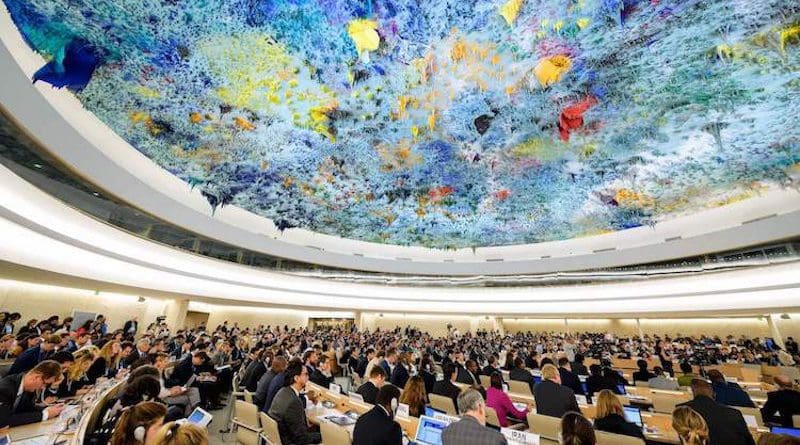
File photo of UN Human Rights Council in Geneva. Credit: Wikimedia Commons.

July 12, 2025 

By Prof Anis Bajrektarevic

Key Takeaways from selected regions of the world 
(African, American, Asian and European continent)

Reconciliation after violent conflict is neither a certain nor linear process—it requires time, patience, and constant efforts in understanding and appreciating the unique socio-political dynamics on national, sub-national and communal level. Countries and regions emerging from protracted violence often turn to cooling and reflection that leads further on to truth-telling, justice, community healing, and power-sharing as tools of post-conflict transformation. This mini comparative study explores how nine diverse regions: Northern Ireland, South Africa, Sri Lanka, Thailand’s Deep South, Canada, Mindanao, Austria, W Sahara, and Aceh—have approached reconciliation, offering valuable lessons for future peace processes worldwide.

Northern Ireland: Institutionalized Peacebuilding and Community-Led Dialogue


The Good Friday Agreement (1998) was a landmark in ending three decades of violent conflict in Northern Ireland, that exploited the pro-Irish and pro-British as well as Catholic and Protestant sentiments for political polarisation and conformation. These bloody decades are generally referred as The Troubles. This Acord established a power-sharing government between Unionists and Nationalists and introduced significant reforms in policing, civil rights, and cross-border cooperation with the Republic of Ireland.

Despite the political success, deep sectarian divisions remain. Post-agreement reconciliation has relied heavily on community-based organizations such as the Corrymeela Community, which fosters dialogue across religious and political divides. Educational institutions like Queen’s University Belfast also support peacebuilding through academic research and policy development.

Key takeaway: Sustainable reconciliation requires both top-down political structures and bottom-up social healing mechanisms. The Northern Ireland case shows that institutional peace must be supported by grassroots trust-building and continuous civic engagement.


South Africa: Truth, Justice, Forgiveness, and the Restoration of Moral


The Truth and Reconciliation Commission (TRC) of South Africa remains one of the most internationally referenced examples of restorative justice. Created after the fall of apartheid in 1994, the TRC allowed both victims and perpetrators to testify, often publicly, about atrocities committed during decades of racial segregation and oppression.

Chaired by Archbishop Desmond Tutu, the TRC emphasized truth-telling over punishment, acknowledging that uncovering the past was essential to forging a shared future. While widely admired for encouraging forgiveness and national dialogue, critics point out that structural inequalities, cultural and socio-economic injustices remain inadequately addressed.

Key takeaway: South Africa’s experience highlights the power of moral leadership, the importance of truth-telling, and the necessity of socio-economic redress to fully heal societies fractured by state-sponsored violence.


Sri Lanka: A Struggle Between Narrative and Justice

Following the end of a 26-year civil war between the Sinhalese-dominated government and the Tamil Tigers in 2009, Sri Lanka faced the urgent need to address ethnic grievances, war crimes, and mass displacement. The government created the Lessons Learnt and Reconciliation Commission (LLRC), which recommended several reforms including demilitarization, language rights, and transitional justice mechanisms.

However, the LLRC has been widely criticized for lacking independence and failing to hold perpetrators accountable. Progress has been further hindered by political denial of civilian casualties, slow justice processes, and a lack of international engagement.

Like with some other conflicts noted here as well, this refers to the so-called Dual Pressures. The coercion and abuse streams from the rival group- externally, but also from the ‘own’ group – internally. Hence, the ‘own’ group often conducts intimidation, kidnaping summary executions, forced taxation, or forced recruitments for the violent ends, including the (ritual) acts as a demonstration of loyalty. Dual Pressures eliminates neutral and sober voices. Ultimately, it complicates peace building between the waring groups as well as the confidence building measures within the civilian population.

Key takeaway: Without genuine political will and transparent accountability, truth and reconciliation processes risk being perceived as overly formal or even harmful. Reconciliation in Sri Lanka illustrates the dangers of state-controlled narratives that suppress rather than heal. Therefore, the community level civic involvement is detrimental. The big neighbour refrained from involvement, and thus helped the architecture of constructive surrounding.

Thailand’s Deep South: Cultural racial and religious sensitivities, Reconciliation localised

Thailand’s southernmost provinces—home to a Malay-Muslim majority, but also the Thai-Muslim minority of this predominantly Buddhist country —have experienced decades of low-intensity insurgency, driven by ethnic and religious marginalization. While the central government has occasionally engaged in mediation and reconciliation – on its own, or catalysed by the bilateral talks with Malaysia, most efforts have focused on community dialogue and local peace initiatives.

These include incorporating religious leaders, village heads, and Islamic schools in conflict mediation. Unlike in some other contexts, traditional and informal dispute-resolution mechanisms have been given prominence, which has helped build local ownership of peace.

Interestingly, the Thai-Muslim minority of Thailand’s Deep South often felt either excluded or disillusioned by both, Bangkok’s and Kuala Lumpur’s efforts. Their perception of inferiority vis-à-vis Malaya-Muslim minority (who, by their own perception, have the powerful supporter from ‘motherland’, hence more respect in Bangkok, too) must be addressed and adequately refuted.

Key takeaway: In culturally distinct and racially sensitive conflict zones, top-down approaches often fall short. Thailand’s experience suggests that reconciliation benefits from decentralized, context-sensitive models that respect local traditions and languages. Singular approach is also inadequate; the Thai-Muslim and Malaya-Muslim minorities deserve full recognition of their peculiarities.


Canada: Lessons learned, still to be (fully) lived

Truth and Reconciliation in Canada refers to the ongoing process of addressing the historical and intergenerational harm caused by the residential school system, which forcibly removed Indigenous children from their families in an effort to assimilate them into Euro-Canadian culture. The Truth and Reconciliation Commission of Canada (TRC), established in 2008, gathered testimonies from survivors and released its final report in 2015, including 94 Calls to Action aimed at redressing the legacy of residential schools and advancing the process of reconciliation. This effort seeks to foster healing, acknowledge past injustices, and build respectful relationships between Indigenous and non-Indigenous Canadians, with a focus on justice, education, and systemic change.

Key takeaways: The TRC teaches us that (i) the Regretacknowledgment is essential; (ii) through and fair listening of survivors matters; (iii) the reconciliation is a long-term process; (iv) (full and lasting access to) Education and justice is essential; and finally that the (v) sustained action on all levels must always follow words.


Mindanao, Philippines: Inclusivity and the Power of Gender-Sensitive Peacebuilding


The long-standing Moro insurgency in the southern Philippines resulted in decades of conflict, civilian strives and displacement. A significant breakthrough came with the Comprehensive Agreement on the Bangsamoro (CAB) in 2014, which granted autonomous governance to the Bangsamoro people.

One of the most notable aspects of this peace process was its inclusive nature, despite very sensitive Christian-Muslim clash trajectory. Women played a central role, both as negotiators—such as Miriam Coronel-Ferrer, the first female chief negotiator in a major peace process—and as grassroots mobilizers. Traditional communal leaders (datus) and religious authorities (ulama) also helped mediate and legitimize the agreements locally.

Key takeaways: Mindanao shows that inclusive participation across gender, religion, and community lines enriches the legitimacy and sustainability of peace agreements. The deliberate inclusion of marginalized voices increases public buy-in and supports a more comprehensive reconciliation. Powerful neighbours (although predominantly Muslim, Indonesia and Malaya) refrained from involvement, and thus helped the architecture of constructive surrounding, and final reconciliatory enterprise.


Aceh, Indonesia: Peace and Rebuilding in the Wake of Disaster

Aceh’s separatist conflict between the Free Aceh Movement (GAM) and the Indonesian government had persisted for nearly 30 years when the 2004 Indian Ocean tsunami devastated the province. Ironically and tragically enough, the natural disaster provided a rare opening for peace, as both sides recognized the necessity of cooperation during the colossal human catastrophe and massive humanitarian crisis.

The 2005 Helsinki Agreement granted Aceh special autonomy, including control over natural resources and local governance. Peace was reinforced through general amnesty and reintegration of ex-combatants, livelihood projects, and leveraging traditional customs such as “gotong royong” (mutual cooperation) for community rebuilding.

Key takeaways: Aceh illustrates how a non-man-made crisis (natural disaster) can catalyse socio-economic and politico-military reconciliation. Central government in Jakarta rapidly responded with the decentralisation notion. Subsequent customary practices and collective recovery efforts were central in restoring community cohesion and trust.

This is the first time in modern history that the cataclysmic environmental shock put all to the peace- and confidence- building trajectory.

Western Sahara: The Unfinished Struggle for Self-Determination


Western Sahara, a former Spanish colony in North Africa, remains one of the world’s longest-running and unresolved territorial disputes. After Spain’s withdrawal in 1975, Morocco claimed much of the region, prompting armed resistance from the Libya and Algeria-backed Polisario Front, which declared the Sahrawi Arab Democratic Republic (SADR) in pursuit of independence. A 1991 UN-brokered ceasefire promised a referendum on self-determination, but it has never materialized due to political deadlock.

Today, Morocco controls the majority of the territory, while the Polisario maintains a government-in-exile and refugee camps in Algeria. The region remains tense, with periodic clashes and stalled diplomatic progress. Morocco is often criticised for the poor human rights record and for altering demography of the contested territory.

Key takeaways: Western Sahara demonstrates that (i) decolonization can remain incomplete decades later; (ii) lack of political will can undermine international legal promises; (iii) unresolved status contributes to long-term humanitarian crises; (iv) external actors’ ambivalence weakens mediation; and (v) the credibility of international institutions suffers when agreed solutions are indefinitely delayed.


South Tyrol, Italy: Quiet Autonomy – Wisdom winning over emotional charge


South Tyrol (Alto Adige), a predominantly German-speaking province in northern Italy, experienced decades of ethnic tension following its annexation from Austria after World War I. Fascist-era policies of forced Italianization, contested by the post-Hapsburg monarchic legacy sparked deep resentment and, by the 1950s–60s, led to a violent autonomy movement, including bombings by German-speaking militants.

Back then, both leaderships – in Rome and in Vienna, exercised restrained and wisdom – agreeing (after the repeated attempts to resolve issue bilaterally) – that they disagree on all, and handed over the case to the United Nations. It led to the 1972 Autonomy Statute, which granted the contested territory of South Tyrol extensive self-governance. The agreement ensured proportional political representation, cultural and linguistic rights, and control over key areas like education and access to public services. Full implementation in the 1990s transformed South Tyrol into one of Europe’s most stable and prosperous regions.

Key takeaway: South Tyrol illustrates how deeply rooted identity-based (ethnic, cultural and linguistic) conflicts can be resolved through domestic restraint, external mediation, legal guarantees of cultural rights, and meaningful decentralization. De-escalation and management of the emotional charge through the reasonable and rational politics is a true study-case par excellence. The South Tyrol autonomy model remains a quiet but powerful example of a lasting peaceful coexistence.

Conclusion: Deescalate, Reflect, Reconcile, Build the Future

Reconciliation is more than a singular process. It is a long-term, evolving commitment to truth, justice, inclusion, and social cohesion of all societal stakeholders. It can be initiated and accelatered by the external force, but it can be only delivered domestically.

 Neighbours cannot clean up the house, it has to be done by the household members.

Each of the elaborated regional case studies offers unique insights:Northern Ireland emphasizes the importance of institutional reform alongside community dialogue.
South Africa offers a compelling case for truth-telling and moral leadership, though it shows that forgiveness alone cannot substitute for economic justice.

Sri Lanka warns of the pitfalls of state-dominated narratives and highlights the necessity for genuine transitional justice and community-level engagement.

Thailand’s Deep South presents a model for decentralized, culturally embedded reconciliation that respects local traditions and identities.

Canada underscores the importance of survivor-centered truth-telling, institutional accountability, and sustained, intergenerational commitment to justice, education, and healing.

Mindanao exemplifies the transformative role of inclusive, gender-sensitive negotiations, as well as the power of local leaders and religious actors in legitimizing peace.

Aceh illustrates how external shocks like natural disasters can open windows for reconciliation, and how traditional customs can support social rebuilding.

Western Sahara is a sobering example of how the powerful neighbours and failure of international community to deliver (similar like the post-Dayton Bosnia) entrenched cycles of displacement, marginalization, fragmentation and disenchantment.

South Tyrol demonstrates how deeply rooted identity conflicts can be transformed through restraint, international mediation, and legally protected autonomy—becoming a powerful case of peaceful coexistence within a multilingual and multicultural framework.

These examples make clear that there is no “one-size-fits-all” approach to reconciliation. Successful processes are those that are locally grounded, inclusive,truthful, andpolitically supported. They combine formal institutional reformswithinformal community-based efforts, and critically, they address the structural inequalities that often lie at the heart of conflict.

Ultimately, reconciliation is not just about ending violence—it is about transforming relationships. It requires a deliberate shift from a logic of exclusion and vengeance to a culture of coexistence, where multiple identities are not only tolerated but respected and empowered in the shaping of a shared future.

The above contrasted and compared cases do problematize the central dilemma: More/longer international presence in the post-conflict society, or more national re-building and sovereignty regain? It is safe to conclude that the longer international presence (with the governing prerogatives at its hand) remains, the more nationhood drifts and erodes, making the complete re-sovereignisation utterly unattainable.

To support that claim, see charts and the 30-year comparison data below.

Finally, before closing the tentative proposal for the future:

Proposals for Improving Post-Conflict Recovery: Prioritize Skilled National Workforce Over International Officials Recovery led by local professionals (currently at home or abroad) is cheaper, more effective and sustainable than externally driven efforts.

Example: The prolonged post-conflict stagnation in the Balkans highlights the limitations of international-led recovery.

Mobilize Skilled Diaspora for Nation Rebuilding
Engage diaspora professionals in rebuilding public administration, judiciary, and economic sectors.

These individuals bring both technical expertise and cultural competence critical for local governance, while relaxing tensions within the host countries.

Create Diaspora-Investment Hedge Funds
Establish funds that pool diaspora capital with resources from international development institutions. (We already developed our own model.)

Use these funds to invest in job creation, SMEs, and infrastructure—supporting socio-economic stabilization.

Offer Incentives for Western Unemployed Skilled LaborInstead of spending heavily on unemployment benefits, Western countries could offer voluntary opportunities for skilled professionals to contribute to rebuilding post-conflict countries.

This approach helps psychologically, socio-economically and politically by turning the domestic underemployment into a tool for global development.

Above is the author’s keynote address at the UN Conference in Vienna to mark 11th July (Endorsed by the UN General Assembly as the International Day of Reflection and Commemoration of the 1995 Srebrenica Genocide).


Prof Anis Bajrektarevic

Prof. Anis H. Bajrektarevic, Geopolitics of Energy Editorial Member, Chairperson for Intl. Law & Global Pol. Studies. Former legal practitioner and the president of Young Lawyers Association of BiH Bar (late 1980s). Former MFA official and career diplomat (early 1990s). Research Fellow at the Institute for Modern Political-history analyses, Dr. Bruno Kreisky Foundation as well as the Legal and Political Advisor for CEE at the Vienna-based Political Academy, Dr. Karl Renner (mid 1990s). His previous book "Geopolitics of Technology – Is There Life after Facebook?" was published by the New York’s Addleton Academic Publishers. Just released is his newest book" Geopolitics – Europe 100 years later." contact: anis@bajrektarevic.eu
UK

Corbynism returns: a new party on the Left

Jeremy Corbyn and Zarah Sultana's breakaway progressive party has already got off to a shaky start


Zarah Sultana and Jeremy Corbyn speaking at the 2021 Labour Conference
(Image credit: Leon Neal / Getty Images)


By The Week UK
JULY 12, 2025

"To launch a political party is quite something," said Quentin Letts in the Daily Mail. "To bungle the launch of one," though, requires a special type of incompetence. This was on full display last week when firebrand Coventry South MP Zarah Sultana announced she was quitting Labour to co-lead a new left-wing party with Jeremy Corbyn - only for the whole project to collapse into farce within moments of its unveiling.


Sultana had proudly declared the (as yet unnamed) Leftist breakaway movement on X, saying that at the next election, voters would face a choice between "socialism or barbarism". Problem is, she appears to have "jumped the gun". "Comrade Corbyn" was reportedly blindsided by her post and furious; he refused to confirm he would be co-leading the party, only going so far as to say that a "real alternative" to Labour was coming. The chaos was an "absolute gift" to Keir Starmer, said Zoë Grünewald in The i Paper. Rocked by the biggest rebellion of his career over welfare reform, the PM should have been left "on the ropes" by the prospect of a credible left-wing alternative. Instead, it was his challengers who looked "confused and divided".

It wasn't the smoothest of debuts, said Peter Franklin on UnHerd, and the turbulence may continue. It has been reported that Corbyn and Sultana want their alliance to be based on opposition to the "genocide in Gaza" and on the cost of living. That will mean rallying support from among secular progressive Leftists and Muslim voters - which won't be easy. These factions "agree on foreign policy and largely on economics", but they're "worlds apart on social issues such as abortion".

But if the left-wingers do get their act together, said Andrew Grice in The Independent, it could spell catastrophe for Starmer. A Corbyn-led party would attract at least 10% of the vote, according to More in Common - more than enough to unseat scores of Labour MPs. Cabinet big-hitters such as Wes Streeting and Jess Phillips, whose constituencies have large Muslim populations, and who only just staved off challenges from "Gaza independents" at the last election, would very likely lose their seats if Corbyn's alliance comes to fruition. The Greens may well also be losers here - unless they form a pact with the left-wingers.


It seems the death of the Labour Left was exaggerated, said Aletha Adu in The Guardian. A year ago, riding high on electoral victory and having suspended Corbyn and removed the whip from Sultana, Starmer's team gloated that they'd buried the Left. But if the welfare rebellion and this alliance are anything to go by, it is "very much alive".