Sunday, July 13, 2025

CRT

The Rediscovery Of America From Within – Book Review

The Rediscovery of America: Native Peoples and the Unmaking of US History,  
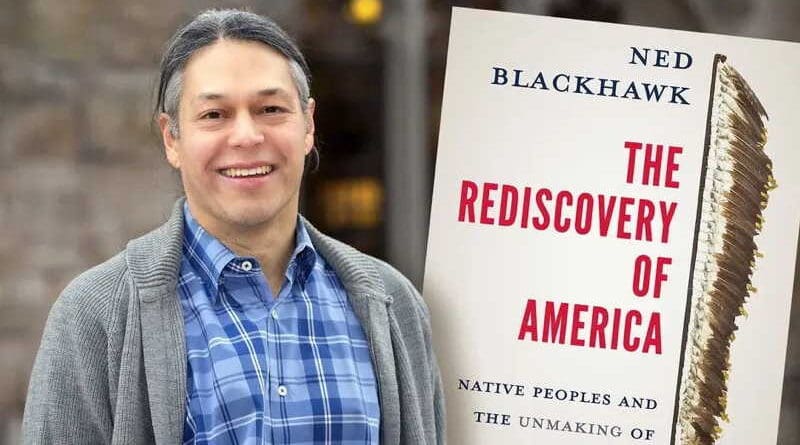
Ned Blackhawk and "The Rediscovery of America"

By 

In 2019, The New York Times published “The 1619 Project” by Nikole Hannah-Jones. Four centuries after African captives arrived on the Virginia coast, this project reshaped America’s origin story, centering on slavery and the contributions of African Americans. An updated version appeared in 2021 and was summarized in a review as “Decentering Whiteness and Uplifting Black Voices.”


It was a long-awaited correction to white, Eurocentric narratives that still dominate. This new narrative questions concepts like discovery (by Columbus) and colonization (by Europeans) and places Indigenous peoples at the center of American history. The list of First Nation History analyses has since grown considerably. Along with Kathleen DuVal, history professor at the University of North Carolina, Chapel Hill, and recent Pulitzer Prize winner, Ned Blackhawk’s “The Rediscovery of America” ​​serves as a central piece in these kinds of overviews.

Ned Blackhawk, a member of the Te-Moak tribe of the Western Shoshone in Nevada —a board member of the School for Advanced Research, the Howard R. Lamar Professor of History and American Studies at Yale University, and winner of numerous professional awards for his research on the influence of Indigenous peoples on and in the formation of the United States— asks, “How can a nation founded on the homelands of dispossessed Indigenous peoples be the most exemplary democracy in the world?” (p. 1). This opening question hangs over the book like a specter, a ubiquitous reminder of the centuries-long struggle for land and resources by Native Americans.

And how have historians ignored the central role of Indigenous peoples in American history? In this, Blackhawk belongs to a new generation of historians who no longer view America and its history from a Eurocentric perspective, but instead recognize the influence of the countless Indigenous peoples. And the impact was significant, for by 1492, the date Columbus officially “discovered” the Americas, it was already home to 75 million indigenous peoples (p. 19). (Other estimates range from 8 to 142 million, with the majority around 40 million.)

“The Rediscovery of America,” as a synthesis, aligns with other research and uses primary sources on seminal events in American history to emphasize the involvement of indigenous peoples in those events. Indigenous peoples have always played a central role in American history, Blackhawk argues, but scholars of American history have often ignored the significance of indigenous peoples in shaping American history.

The book also debunks the myth that indigenous peoples were quickly overrun by superior European colonists. Indigenous peoples were able to retain most of their territory in the United States until the 19th century. In the early 19th century, following the American Revolution and a more robust westward expansion of white settlers with financial and military support from the federal government, most Indigenous peoples were dispossessed of their lands and driven westward.


Blackhawk thus debunks common mythologies about American history and Indigenous peoples. Events considered fundamental often revolve around war and violent confrontations between settlers and Indigenous peoples. 

‘Another’ History

To tell this “other” history of the United States, Blackhawk rejects narratives of discovery and emphasizes a long history of encounters between Indigenous peoples and newcomers in North America, as well as the influence and mobility of Indigenous peoples.

He describes some of the interactions between Indigenous peoples and Europeans that shaped the development of the United States. Each tribe, of course, has its own history, and Blackhawk necessarily selects a part of this complex history. A key theme is how Indigenous peoples forced colonists to recognize and respect the sovereign rights of Indigenous peoples.

Thus, Ned Blackhawk weaves together five centuries of Indigenous and non-Indigenous history, from Spanish colonial exploration to the rise of Native American self-determination in the late twentieth century. Native Americans played a fundamental role in shaping American constitutional democracy, he argues, even as they were murdered and dispossessed of their lands.

The various layers of influence and interaction aren’t always what we learned in school, but Blackhawk aims to make the gaps in that history of the United States more coherent. He advocates for a paradigm of “encounter” rather than “discovery,” in which Europeans and their colonist communities are not the exclusive subjects of study. He points to a generation of scholars who have demonstrated that “American Indians were central to every century of American historical development,” particularly during the era of the American Revolution.

In this transformative synthesis, he demonstrates that

• European colonization in the 17th century was never a predetermined success;

• Indigenous peoples helped shape the crisis of the English empire;

• the initial impetus for the American Revolution was provided by Indian affairs in the interior;

• the common myths about relations between Indigenous people and colonists, such as the myth of Thanksgiving, were often based on peaceful coexistence, from which cultural influences (and even intermarriage) arose;

*California Native Americans targeted by federally funded militias were among the first casualties of the Civil War;

• The Union victory led to a definitive reassessment of Native communities in the West; and

• Twentieth-century reservation activists reshaped American law and politics.

Structure

The book is divided into two parts, each containing six chapters.

Part I, aptly titled “Indians and Empires,” outlines the history of encounters between Indigenous peoples and the Spanish in the southern borderlands, moves to the Northeast and the rise of British North America, and highlights the development of New France.

The second half of Part I examines the struggle for the heart of the continent, focuses on the Indigenous origins of the American Revolution, and concludes with the creation of federal Indian policy in the aftermath of the Revolution.

Part II, “Struggles for Sovereignty,” begins with the dispossession of Indigenous peoples in the early years of the republic, jumps to the West Coast to outline the region’s role in the Monroe Doctrine, and connects the Civil War with what Blackhawk calls “the Indigenous West.”

The final three chapters focus on the reservation era (specifically, the seizure of both Indigenous lands and Indigenous children), the rise of Indigenous activism in the early twentieth century, and, finally, Indigenous resistance to the severance policy and the push for self-determination.

Blackhawk moves easily across time and space, connecting crucial events in Indigenous history with broader themes and events in American history. While he doesn’t shy away from describing the violent ways in which Indigenous peoples were torn from their homelands, these descriptions are never gratuitous—instead, Blackhawk details the deliberate processes by which the US government sought to dispossess Indigenous peoples and disenfranchise them. “While violence was an essential component of colonialism, it was never sufficient to achieve permanent goals for the empire,” Blackhawk argues (p. 81).

The Rediscovery of America is therefore not intended to be a sensational account of Native American history, one that describes the wars, massacres, and outbreaks that devastated indigenous peoples. But Blackhawk convincingly argues that identifying American history as a history of genocide complicates the prevailing, rather “Eurocentric” narrative, and the book aims to clarify these contested meanings.

The Seven Years’ War (1756-1763) between Great Britain and France

Consider, for example, the Seven Years’ War between Great Britain and France, which began as a dispute over North American land claims in the region around Pittsburgh and ended in 1763 when France ceded Canada to Great Britain.

Under the leadership of Pontiac, a chief from Odawa (Ottawa), the Native Americans took up arms against the British in what became known as Pontiac’s Rebellion. A conflict ensued that would inflame tensions between the British Crown and its own subjects and herald the demise of the British Empire in North America.

The movement of settlers into Native American territory led British officials to prohibit colonization west of the continental divide along the Appalachian Mountains in the hastily drafted Proclamation of 1763.

Front settlers seeking to organize more land protested this British policy. Resistance to centralized authority and hostility toward Indigenous peoples along the frontier therefore played a major role in the lead-up to the American Revolution. Interestingly, frontiersmen who resisted British colonial officials often disguised themselves as Native Americans, even before the famous Boston Tea Party, when men dressed as Native Americans threw tea into Boston Harbor in protest against British trade restrictions.

Unlike typical American histories, which tend to place all Native American tribes diametrically opposed to the colonists, Blackhawk emphasizes how tribes sometimes sided with the colonial powers, such as the French-Algonquian alliance in the Seven Years’ War. Complex narratives like these demonstrate how Native American tribes wielded power and influence in the geopolitical conflicts of colonial America, both in conflicts with colonists and in strategic alliances with colonial armies that strengthened their strategic position in a multipolar world. 

Blackhawk explains: “The colonists moved inland after the Seven Years’ War and began building small farms and orchards and raising cattle and hogs. During the late 1750s and early 1760s, they were ready to conquer more land inland.

The Native Americans resisted this, and the British Crown, deciding that another war inland was too costly, issued a royal proclamation in 1763 to prevent its colonists from moving inland.

“The colonists defied British authority. One way they did this was by killing Native Americans who they believed were encouraging trade with Pontiac’s allies in places like Detroit and across a road between Philadelphia, a seaport city, and Pittsburgh, which had recently been founded and renamed after the future British Prime Minister William Pitt. Along this 300-mile stretch of road, known as Forbes Road, militias began raiding not only Native American communities they feared were trading with Pontiac, but also British supply trains, as the British attempted to make peace with Pontiac. These weren’t raiders. They were rebels. They were insurgents with a kind of political psychology designed to disrupt the loyalty of the native Indians.

The End of the Frontier

The author adds: “There the Revolution finds some of its most formative fuel. The idea of ​​a frontier attacked by ‘merciless Indian savages’ appears in the Declaration of Independence. Where does that idea come from? American historians have failed to adequately explain the origins and genealogy of that language, that ideology, and essentially that history that would permeate the early republic.

“It is no coincidence that there are no federally recognized tribes in the states of Ohio and Pennsylvania, where these conflicts were most intense.”

The 1890 census was the first time censustakers could no longer draw a boundary between inhabited and uninhabited territory. Frederick Jackson Turner called this the “end of the frontier,” an event he considered a turning point in American history. 

The frontier helped shape individualism and opposition to government control. Turner argued that westward migration and the establishment of new frontiers were transformative processes that shaped the idea of ​​American exceptionalism. Not coincidentally, 1890 was also the date of the last “battle” between the US and a Native American people, the massacre at Wounded Knee Creek in North Dakota.

The perceived threat of the Native Americans was crucial, Blackhawk argues, for the formation of a central government that could extend its authority over national affairs. A federal constitution was drafted to unite the 13 states and manage their territorial expansion.

That alternative perspective is clear from the outset: While the nation may have been founded on the ideal of universal equality, readers should consider that turning points such as the Constitutional Convention, the Haitian Revolution, and the Louisiana Purchase “transformed and limited that concept,” especially as the newly formed and ever-changing systems of US government, naturalization, and property ownership, excluded more people than they admitted (p. 239).

New Century, Old Problems

In the chapters on the early twentieth century, Blackhawk highlights activists who worked to protect the rights of Native American peoples and preserve indigenous cultures. He highlights several well-known figures from Native history, such as Tisquantum, Pontiac, and Popé. The book also highlights influential Native women, such as Toypurina, Ada Deer, and Laura Cornelius Kellogg, who are often overlooked in settler or mainstream histories.

An important, yet sometimes overlooked figure, according to Leonard Carlson, associate professor emeritus at Emory University, was Charles Curtis, a member of the Een Kaw Nation. Curtis served as Speaker of the House of Representatives from 1929 to 1933, Senator from Kansas, and Vice President of the United States under Herbert Hoover. 

Efforts to privatize Native American lands ended with the election of Franklin D. Roosevelt in 1932 and the passage of the Indian Reorganization Act (also known as the Wheeler-Howard Act) in 1934. This law, drafted by John Collier, who became Commissioner of Indian Affairs, ended land allotments, the division of reservations into individual landholdings, and encouraged people on each reservation to adopt a written constitution that established formal tribal government within their reservations.

Blackhawk concludes his book at the end of the twentieth century, warning that Native American activism for justice and sovereignty must not rest: “At the beginning of the twenty-first century, continuing challenges to these sovereign gains resurfaced as members of Congress, judges, and other power centers refocused their attention on Indian lands, jurisdiction, and resources” (p. 445). 

According to Anthony Earth, an international lawyer and foreign policy expert, this ongoing reckoning poses a different question than the one Blackhawk posed at the beginning of his book: “How can Indigenous peoples persuade the world’s leading democracy to atone for the injustices they have inflicted by dispossessing their homelands and ensuring that tribal sovereignty supports Indigenous self-determination?”

Answering that question presents serious challenges, especially in a divided America struggling to remain a leading democracy. Currently, atonement for past injustices against Indigenous peoples lacks political visibility and support, especially compared to campaigns for reparations for slavery. 

But what tribal sovereignty and rights mean in the American political and legal order remains contested, as evidenced by recent Supreme Court cases involving Native American tribes and child custody, criminal law, and water rights. Therefore, according to Earth, the indigenous power praised by Blackhawk calls upon us to “imagine a future freed from historical facts. This responsibility is therefore an act of resistance to the past that dictates the future.”

Tribal Sovereignty

The book also highlights the contemporary achievements of the Native American civil rights movement, including the growing economic and political influence of reservations on the national stage.

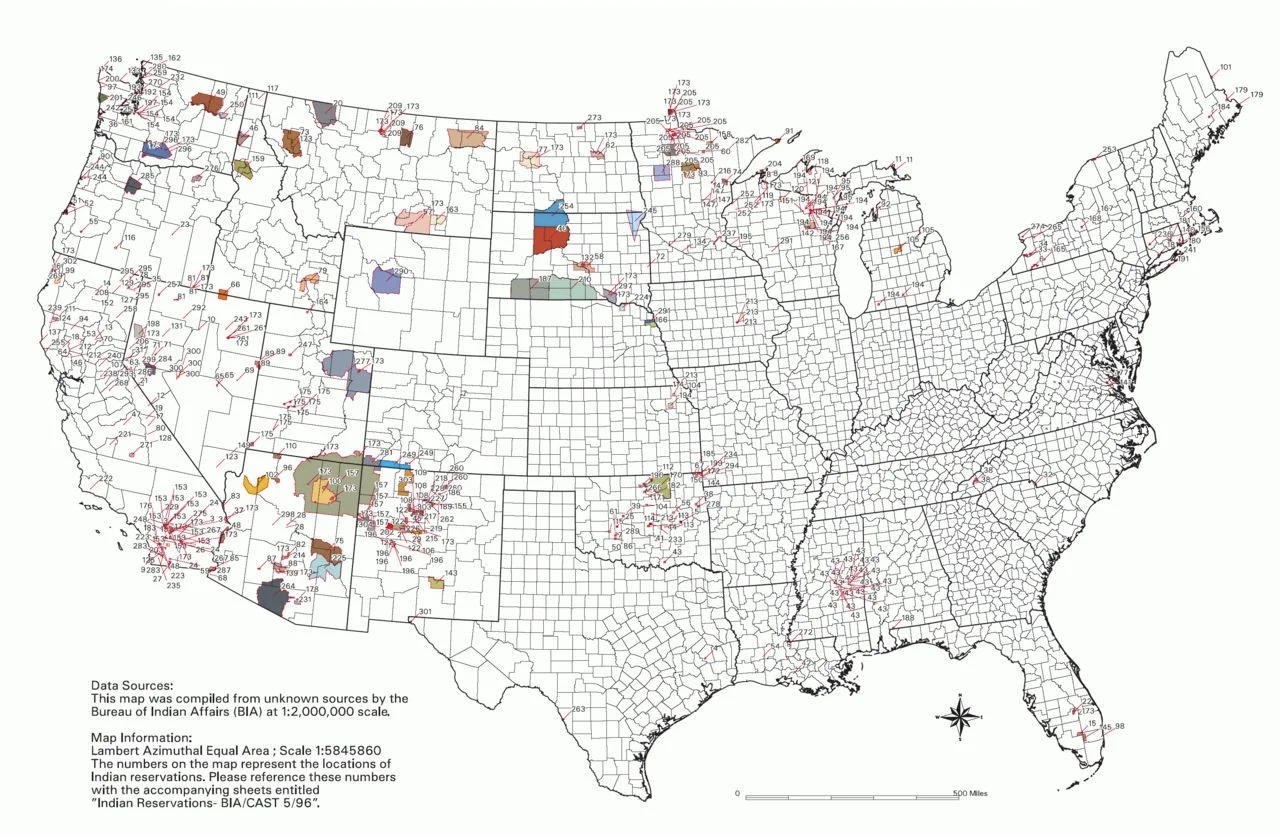
Tribes and their supporters have worked to defend tribal sovereignty. Since 1970, numerous groups have petitioned the federal government and have been recognized as tribes. Officially, there are 574 federally recognized American Indian and Alaska Native tribes in the United States today. These tribes are recognized as separate political entities with a governmental relationship with the U.S. federal government.

Each tribe has had to develop policies for its internal governance, resource management, and land administration. Blackhawk discusses some examples of complex legal issues that tribes faced in the latter half of the twentieth century. These include the question of whether a tribe can allow gambling on its lands even if the state in which the tribe resides prohibits gambling (tribal casinos and gambling rights are a significant source of revenue for some tribes), and legal battles in Washington state by Native communities to defend fishing rights established in treaties dating back to the 1850s.
In short

“The Rediscovery of America” ​​effectively deconstructs common misconceptions about early American history for the uninitiated reader. It offers a useful starting point for readers unfamiliar with Indigenous perspectives on the subject.

Blackhawk’s retelling of American history acknowledges the enduring power and survival of Indigenous peoples, resulting in a more truthful picture of the United States.

Reference:


Jan Servaes

Jan Servaes was UNESCO-Chair in Communication for Sustainable Social Change at the University of Massachusetts, Amherst. He taught 'international communication' in Australia, Belgium, China, Hong Kong, the US, Netherlands and Thailand, in addition to short-term projects at about 120 universities in 55 countries. He is editor of the 2020 'Handbook on Communication for Development and Social Change', and 'SDG18. Communication for All' (2 volumes, 2023).

 

Furious protesters fight back with Molotov cocktails against Albanian PM’s war on illegal construction

Furious protesters fight back with Molotov cocktails against Albanian PM’s war on illegal construction
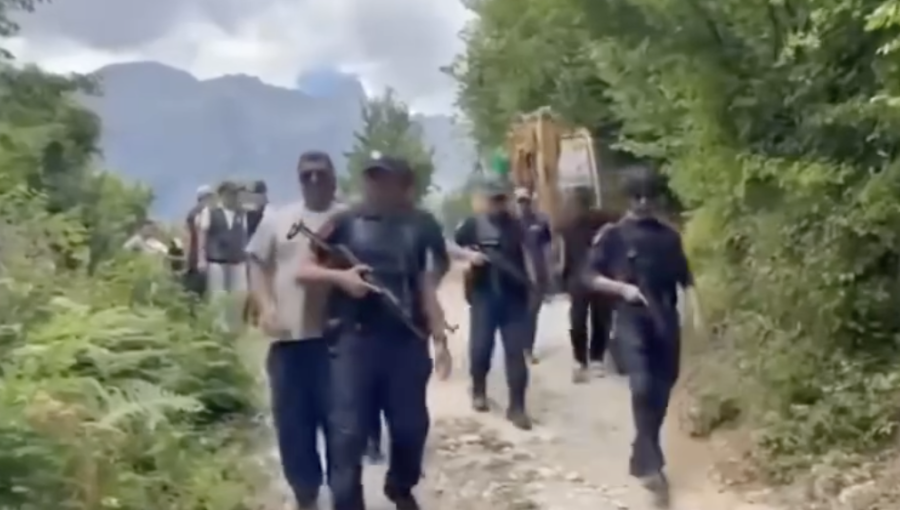
Armed police escort an excavator in Albania's Theth. / Democratic Party via Facebook


By bne IntelliNews July 12, 2025

Furious residents hurled Molotov cocktails at police and demolition teams in Albania’s northern Theth region on July 12, as Prime Minister Edi Rama’s latest crackdown on illegal construction ignited violent protests and raised concerns over the country’s image during the peak tourist season.

The violence followed Rama’s announcement of a renewed push to dismantle illegal constructions across Albania, targeting both informal housing and unpermitted businesses. 

“The occupation of public spaces in any city will no longer be tolerated,” Rama said this week, as he presented new measures to local mayors in Durres, according to a government statement. These include a digital monitoring system for construction sites, mandatory GPS and camera surveillance, and stricter penalties for violations.

Video from the scene showed a bridge in the Gjelaj neighbourhood set on fire after an unidentified man threw a Molotov cocktail at police officers stationed nearby. No injuries were reported, but the attack prompted a rapid deployment of heavily armed officers and specialised police units from Shkodra and Tirana. 

Elsewhere in Theth, a Molotov cocktail was thrown at a vehicle escorting officials from the National Inspectorate of Territorial Defense (IKMT), which is overseeing demolitions of structures built without permits. The vehicle sustained minor damage, and demolition operations continued under police protection.

Opposition figures, including Democratic Party leader Sali Berisha have accused the government of heavy-handed tactics. Pictures posted by Berisha on Facebook show a scuffle between police and the Democratic Party’s Luciano Boçi and MP Bardh Spahia, claiming the newly appointed police director in Shkodra threatened to drag them away during confrontations with locals. Another video shows armed police escorting an excavator. 

“Tourists leave in panic,” wrote Berisha. “I condemn with the greatest force the state terror of Edi Rama and his gangs in uniform against the residents of Theth.” 

Theth, a rugged alpine village renowned for its dramatic peaks and traditional stone houses, has seen a sharp increase in tourism in recent years. However, rapid development and unregulated construction have outpaced local infrastructure and planning. Residents argue that many of the targeted structures are essential guesthouses and family businesses that provide livelihoods in the remote region.

The crackdown has already triggered a wave of reservation cancellations from tourists, local operators said, as reported by Top Channel TV. 

While Albania has long struggled with illegal construction, critics argue that the government’s approach unfairly targets ordinary citizens while allowing politically connected developers to circumvent regulations, according to an exposé published by the Albanian Center for Quality Journalism in 2023.

Under a 2022 government decree, developers who exceed their permitted building limits can have the additional space confiscated and then repurchased at market value while paying a fine, effectively legalising violations without criminal consequences. Meanwhile, under Albania’s criminal code, individuals who build without permits on private or public land face prison sentences of up to five years, or up to eight years if the construction is deemed profit-driven or has serious consequences.

Thousands of Albanians have spent years attempting to legalise homes, while others have faced prosecution for minor violations, such as adding windows or building small structures on their land.

While the violence in Theth has captured headlines, the IKMT and municipal police are continuing demolition operations in other parts of Albania, including Durrës, where authorities have removed unauthorised kiosks and structures near the train station and cleared tables and tents illegally occupying sidewalks along Epidamn Boulevard. 

Similar actions were recently carried out at Kavaja Rock, a popular seaside location, where illegal beachfront structures were demolished. In smaller operations, police removed unauthorised sun-loungers and umbrellas from beaches in several tourist hotspots, according to a series of police announcements. 

Rama’s government argues that reclaiming public spaces and enforcing building codes are critical steps in Albania’s European Union integration process and necessary to protect public interest and the environment. 

However, the timing of high-profile demolitions during the summer tourism season has raised questions about their impact on Albania’s tourism sector, has emerged as an important pillar of the country’s economy.

On top of the violent clashes in Theth, the American Chamber of Commerce in Albania warned on July 10 that water supply issues, pollution, and infrastructure shortcomings are negatively affecting the quality of life and the operational environment for businesses, including those in the hospitality industry.


Global warming may create a "permanent El Nino", changing the world's weather patterns

Global warming may create a
Global warming could create a permanent El Nino that will change the weather and dramatically alter ecosystems around the world. / bne IntelliNews


By Ben Aris in Berlin July 11, 2025

Scientists are warning that global warming is disrupting the natural rhythm of the El Niño-Southern Oscillation (ENSO), potentially creating the conditions for a type of “permanent El Niño” climate state, with significant consequences for global weather patterns, food security, more extreme storms and putting large ecosystems in danger.

A study published in Nature Reviews Earth & Environment in April found that “the Northern Hemisphere mid-latitudes are now in a permanent El Niño-like state” due to rising greenhouse gas (GHG) emissions and hotter-than-ever oceans.

ENSO, a naturally recurring climate pattern originating in the tropical Pacific Ocean, alternates between El Niño, La Niña and neutral phases. However, this cyclical behaviour is increasingly being distorted by anthropogenic climate change.

El Niño refers to the warming of sea surface temperatures (SSTs) in the central and eastern Pacific Ocean, typically resulting in weaker Pacific trade winds and drier conditions in Australia and Southeast Asia, while bringing heavier rainfall to parts of South America and the southern United States. It is also associated with short-term increases in global temperatures.

La Niña, characterised by cooler-than-average SSTs in the same region, brings strengthened trade winds and generally opposite weather patterns: wetter conditions in Australia and Indonesia, and droughts in western South America. It can temporarily lower global temperatures. ENSO phases are monitored using the Southern Oscillation Index (SOI), which tracks air pressure differences between Tahiti and Darwin, Australia.

The 2023-24 ENSO cycle saw a strong El Niño event that ended in June. Meteorological agencies, including the US National Oceanic and Atmospheric Administration, now predict a transition to La Niña by late 2025. However, this year's cooling phase appears significantly weaker than previous cycles. Recent SOI readings have remained close to neutral, reflecting a diminished atmospheric response and fuelling concerns that La Niña may fail to appear.

“The long-term warming of the ocean is increasingly pushing the climate system into an El Niño-like state, even during ENSO-neutral years,” said Lee Simons, a climatologist.

Sea surface temperatures are currently off the scale as the temperature of the oceans gets hotter every year, moving the planet towards a cascade of tipping points, warn scientists. The Mediterranean is currently the temperature of bathwater as Europe swelters in a record breaking heatwave. Scientists warn that persistent warmth could amplify rainfall shifts, extend droughts and increase extreme weather events across continents. As bne IntelliNews reported, changes in rainfall patterns can be as destructive, or even more so, than extreme weather events like heatwaves or hurricanes.

Research published in Nature Climate Change indicates that a permanent El Niño-like state could lead to more erratic monsoon behaviour in Asia and reduced rainfall in the Amazon basin, threatening ecosystems and biodiversity.

“We are seeing signals that the Indian monsoon is weakening and shifting, with potentially dire implications for agriculture and water security,” said Anja Wimmer, a lead author of the study.

Growing number of wildfires, associated with climate changes, could turn the Amazon rainforest into a desert as human activity and climate change threaten “lungs of the world”, bne IntelliNews reported. The Amazon rainforest could face “large-scale collapse” by 2050 according to research released last year. Trees are “coughing not breathing” due to climate crisis stress, according to another study and going from a carbon sink to becoming a net contributor to CO₂ emissions and the crisis accelerates.

In South America, a drier Amazon and shifting precipitation patterns have already reduced forest resilience, while in Africa and Australia, prolonged droughts linked to weakened ENSO variability are expected to increase. Scientists are also observing persistent changes in the jet stream, causing longer-lasting weather extremes and slower-moving storm systems.

“ENSO is a key driver of global climate variability, and its destabilisation could have far-reaching effects on food security and carbon feedback,” said Simons.

GREENWASHING


EU biofuel projects in the ‘breadbasket of Congo’ could threaten food security, investigation finds

Copyright Marien Nzikou-Massala/ONE EARTH

By Francesco De Augustinis
Published on 13/07/2025 - 

The company claims it is using ‘degraded lands’, but Congo is in dire need of more homegrown food according to the UN.

Some fields are abandoned, others are being ploughed again by local families in Louvakou, in the Niari department of southwestern Congo. We fly a drone over rain-soaked lands, where until a year ago one of the agricultural projects of Eni Congo, a subsidiary of the Italian oil company Eni, was located.

The project was managed by the Luxembourg-based company Agri Resources, which had a concession of 29,000 hectares of land and experimented with the cultivation of castor oil, intended to supply Eni’s biofuel production in Italy.

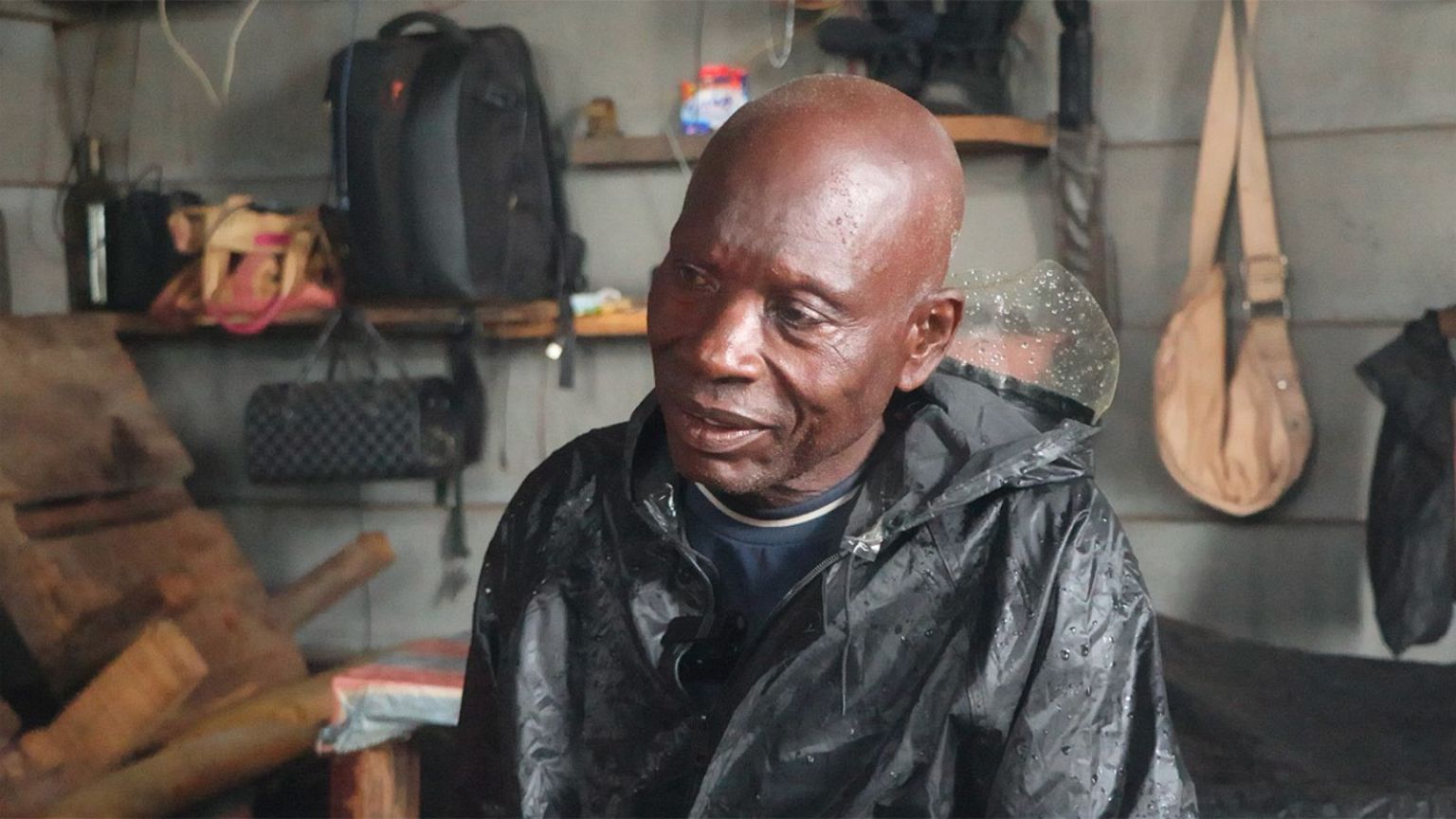
“Agri Resources is not here anymore,” says Joseph Ngoma Koukebene, chief of the nearby Kibindouka village during our visit last November. The chief sits in his yard while telling us that the project has failed, apparently due to poor productivity.

Joseph Ngoma Koukebene, chief of the Kibindouka village.Marien Nzikou-Massala/ONE EARTH

Louvakou is one of three sites in the Republic of Congo where Eni began experimenting in 2022 with the cultivation of castor oil, a non-food crop to be grown “on degraded lands” as a “sustainable agri-feedstock” for biofuels, it said. These are vegetable oils that are not meant to cause deforestation nor compete with food production.

But while these projects are abandoned or still under evaluation, in May this year the company began producing agri-feedstock with other edible crops, such as sunflower and soy, which could have a negative impact on local food security.
RelatedThese 36 fossil fuel firms are responsible for half of global emissions, report reveals

What is an Italian oil company doing in Congo?

Eni plans to increase its global bio-refinery capacity from 1.65 million tonnes per year to 5 million tonnes of biofuels and over 2 million tonnes of Sustainable Aviation Fuels by 2030.

To date, Eni mainly produces biofuels using controversial palm oil by-products imported from Indonesia and Malaysia such as PFAD and POME, and Used Cooking Oils.

In order to produce alternative feedstocks and increase production, the company has launched agricultural projects in several countries since 2021, including Congo, Kenya, Mozambique and Ivory Coast.

“To address the availability of feedstock, we have several ongoing projects called agri-hubs, which are focused on producing vegetable oils grown on degraded lands,” Stefano Ballista, director of Enilive, another satellite company of Eni, tells us during a visit in June to a biorefinery in Porto Marghera, Venice.

According to Ballista, the company “aims to produce 700,000 tonnes of vegetable oils” globally by 2028.

In Congo, Eni had originally planned to produce 20,000 tonnes by 2023 from castor oil, brassica and safflower, reaching 250,000 tonnes by 2030. But things went differently: the castor oil project in Louvakou closed its doors, while two others, in the departments of Bouenza and Pool, are still in an experimental phase.

Meanwhile, at the end of May, Eni Congo inaugurated an agri-hub in Loudima, in the Bouenza district.

According to the local press, this pressing plant will produce 30,000 tonnes of vegetable oils destined for bio-refining in 2025, and is supplied by an agricultural production of 1.1 million tonnes of agricultural products such as soy and sunflower, grown on 15,000 hectares.

Degraded land and food security

According to Chris Nsimba, a farmer in Loudima who attended the launch in May, “castor production is still there, but it has been scaled back in favour of other products.”

In 2021 Eni Congo signed an agreement with the Congolese government for the “development of bio-refining agro-feedstock sector,” with a duration of 50 years, involving an area of ​​150,000 hectares.

The company says its agricultural production in Bouenza will reach 40,000 hectares in 2025.

“We have grown sunflowers, in lands abandoned for decades, with very good yields,” Luigi Ciarrocchi, director of the Agri-Feedstock programme at Eni, told us. According to Ciarrocchi, the use of castor oil in Congo is still “under evaluation.”

Luigi Ciarrocchi, director of Eni's Agri-Feedstock programme.
Francesco De Augustinis/ONE EARTH

Sunflower, like soy or rapeseed, is a food crop. Although Bouenza is called “the breadbasket of Congo” due to its highly fertile grounds, Ciarrocchi claims that Eni is using “degraded lands” that have become less fertile after being abandoned following large-scale agricultural projects in the 1970s and 1980s.

“Our products, which come from this supply chain, are certified at the European level,” Ciarrocchi claims, to ensure that “they meet advanced sustainability criteria, and therefore avoid conflict with the food chain.”

According to the United Nations, in the Republic of Congo “domestic food production meets only 30 per cent of the country’s needs, forcing heavy reliance on food imports.” Meanwhile “chronic malnutrition is a pressing concern, particularly among children under the age of five, of whom 19.6 per cent are affected.”

Ciarrocchi claims that Eni’s agri-hub contributes to the local economy, and has a positive impact on food security through the production of “cakes,” a byproduct of oil production “which has a strong protein component” and will be used as a feed for the local livestock.


Related Mining metals vital for EVs is ‘wrecking lives’ in the Democratic Republic of Congo, report finds


Lobbying for biofuels and traditional cars

Europe reduced its support for biofuels in 2022, when the revision of the Renewable Energy Directive (RED II) discouraged “first-generation” biofuels. These are fuels based on the use of vegetable oils, such as palm oil, which are responsible for deforestation and competition with food security.

EU legislation also bans the sale of internal combustion engine vehicles by 2035, in favour of electric cars, though it recognises a role for “sustainable” biofuels for air transportation.

Eni is part of a coalition which is lobbying the European Commission to recognise traditional vehicles as “zero-emission” through the use of biofuels, claiming that the CO2 produced is the same captured in the atmosphere by crops.

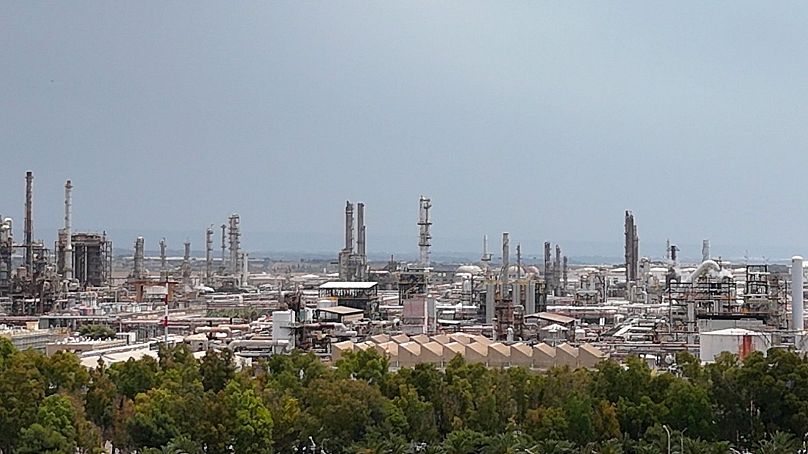
An Eni biorefinery in Gela, Italy.
Francesco De Augustinis/ONE EARTH

“We have two large manufacturing industries - vehicles and fuel producers - that have come together, united by a single goal,” Emanuela Sardellitti, a senior executive at FuelsEurope told us during an industry event at Eni’s headquarters in Rome in June.

“To prove that even an internal combustion engine vehicle, which is banned by the auto CO2 legislation, therefore by a European standard, starting from 2035, is actually a vehicle that can be qualified as a zero-emission vehicle, through the use of renewable fuels,” she said.

The Italian government backs this campaign in Brussels, and promotes the biofuel feedstock production in Africa through the “Mattei Plan for Africa,” a development plan taking its name from the founder of Eni, Enrico Mattei.


Related  Carbon capture: The inside story of how a ‘delay tactic’ became a darling of the EU

“The Mattei Plan is a vehicle that serves [...] for the countries of North Africa and all of Africa to develop agricultural production,” Gilberto Pichetto Fratin, Minister of the Environment and Energy Security of Italy, said at the event at Eni’s headquarters. “And to benefit those countries, but also our country and all of continental Europe, with the consequent production of fuels,” he said.

In Loudima, farmers have an ambivalent opinion of large-scale agricultural projects, such as Eni's agri-hub.

“Clearly we need everything [...] for the development of the Bouenza," Nsimba told us, “but these are crops that the population does not benefit from, because they are mostly sold on the international market.”

This story was supported bythe Pulitzer Center Rainforest Reporting Grant.

Marien Nzikou-Massala contributed to this report.
Medieval Hungarian library battles beetle infection to save national treasures


Copyright AP Photo/Bela Szandelszky


By Andreas Rogal with AP
Published on 13/07/2025 - 1

The abbey at Pannonhalma was founded in 996, four years before the establishment of the Hungarian Kingdom. Sitting upon a tall hill in northwestern Hungary, the abbey houses the country's oldest collection of books, as well as many of its earliest and most important written records.

Tens of thousands of centuries-old books are being pulled from the shelves of a medieval abbey in Hungary in an effort to save them from a beetle infestation that could wipe out centuries of history.

The 1,000-year-old Pannonhalma Archabbey, or Territorial Abbey of Saint Martin on Mount Pannonhalma, is a sprawling Benedictine monastery that is one of Hungary's oldest centres of learning and a UNESCO World Heritage site.

Restoration workers are removing about 100,000 handbound books from their shelves and carefully placing them in crates, the start of a disinfection process that aims to kill the tiny beetles burrowed into them.

The drugstore beetle, also known as the bread beetle, is often found among dried foodstuffs like grains, flour and spices. But they also are attracted to the gelatin and starch-based adhesives found in books.

They have been found in a section of the library housing around a quarter of the abbey's 400,000 volumes.

“This is an advanced insect infestation which has been detected in several parts of the library, so the entire collection is classified as infected and must be treated all at the same time,” said Zsófia Edit Hajdu, the chief restorer on the project. “We've never encountered such a degree of infection before.”

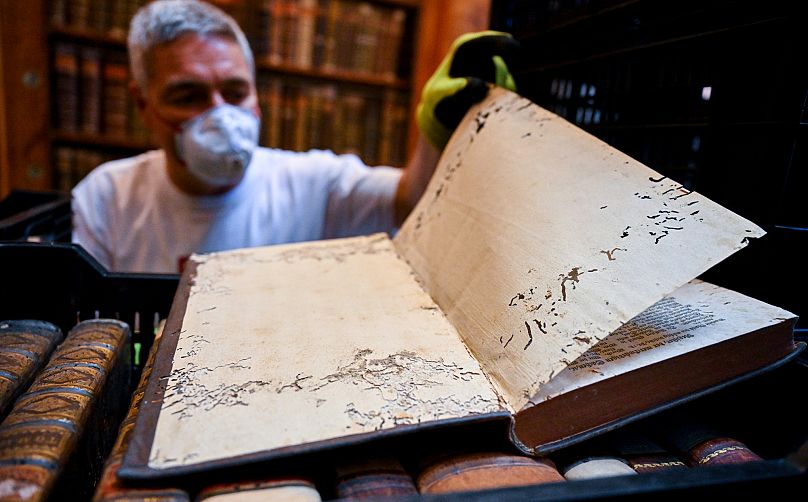
The beetle invasion was first detected during a routine library cleaning. Employees noticed unusual layers of dust on the shelves and then saw that holes had been burrowed into some of the book spines. Upon opening the volumes, burrow holes could be seen in the paper where the beetles chewed through.

Home to many historical treasures

The abbey at Pannonhalma was founded in 996, four years before the establishment of the Hungarian Kingdom. Sitting upon a tall hill in northwestern Hungary, the abbey houses the country's oldest collection of books, as well as many of its earliest and most important written records.

For over 1,000 years, the abbey has been among the most prominent religious and cultural sites in Hungary and all of Central Europe, surviving centuries of wars and foreign incursions such as the Ottoman invasion and occupation of Hungary in the 16th century.

A restorer shows an old book with holes in its pages due to a drugstore beetle infestation, at the Pannonhalma Archabbey's library in Hungary, July 3, 2AP via Pannonhalma library

Ilona Ásványi, director of the Pannonhalma Archabbey library, said she is “humbled” by the historical and cultural treasures the collection holds whenever she enters.

“It is dizzying to think that there was a library here a thousand years ago, and that we are the keepers of the first book catalogue in Hungary,” she said.

Among the library’s most outstanding works are 19 codices, including a complete Bible from the 13th century. It also houses several hundred manuscripts predating the invention of the printing press in the mid-15th century and tens of thousands of books from the 16th century.

While the oldest and rarest prints and books are stored separately and have not been infected, Ásványi said any damage to the collection represents a blow to cultural, historical and religious heritage.

“When I see a book chewed up by a beetle or infected in any other way, I feel that no matter how many copies are published and how replaceable the book is, a piece of culture has been lost,” she said.

To kill the beetles, the crates of books are being placed into tall, hermetically sealed plastic sacks from which all oxygen is removed. After six weeks in the pure nitrogen environment, the abbey hopes all the beetles will be destroyed.

Books are kept in hermetically sealed plastic sacks for disinfection at the Pannonhalma Archabbey's library in Hungary, Thursday, July 3, 2025Copyright 2025 The Associated Press. All rights reserved. Photo: Bela Szandelszky

Before being reshelved, each book will be individually inspected and vacuumed. Any book damaged by the pests will be set aside for later restoration work.


Climate change to blame?


The abbey, which hopes to reopen the library at the beginning of next year, believes the effects of climate change played a role in spurring the beetle infestation as average temperatures rise rapidly in Hungary.

Hajdu, the chief restorer, said higher temperatures have allowed the beetles to undergo several more development cycles annually than they could in cooler weather.

“Higher temperatures are favourable for the life of insects,” she said. “So far we've mostly dealt with mold damage in both depositories and in open collections. But now I think more and more insect infestations will appear due to global warming.”

The library’s director said life in a Benedictine abbey is governed by a set of rules in use for nearly 15 centuries, a code that obliges them to do everything possible to save its vast collection.

“It says in the Rule of Saint Benedict that all the property of the monastery should be considered as of the same value as the sacred vessel of the altar,” Ásványi said. “I feel the responsibility of what this preservation and conservation really means.”


Czech government bans DeepSeek in public administration, warning the AI company products pose 'High' threat

Czech government bans DeepSeek in public administration, warning the AI company products pose 'High' threat
Worried that the Chinese might be watching, the Czech government has banned the use of China's DeepSeek AI. / bne IntelliNews
By bne IntelliNews July 10, 2025

The Czech government has banned the use of the Chinese artificial intelligence company DeepSeek and its products in the country’s public administration.

The ban comes together with an official warning against the use of DeepSeek by the Czech Cyber and Information Security Agency (NÚKIB), rating the threat in connection with DeepSeek as “High” with “probability ranging from likely to very likely.”

“Based on these findings and the NÚKIB analysis, the government decided to ban the use of products, applications, solutions, or web services offered by the DeepSeek company in the Czech public administration,” the Czech Prime Minister, Petr Fiala, was quoted as saying by the Czech Television (CT) on Wednesday, July 9.

Fiala made the comments following the cabinet session on Wednesday and also warned that DeepSeek data is stored in China and Russia without sufficient protection and that DeepSeek may be obliged to make the data available to the Chinese government.

“In the analysis that led to this warning, we relied on a combination of our own findings and information from out international partners,” NÚKIB director Lukáš Kintr said a in a press release NÚKIB issued on July 10, adding that company products “handle data in a way that may pose a security risk for entities falling under the Act on Cyber Security."

Kintr also recalled the large-scale cyberattack by the China-linked ATP31 group, which targeted the Czech Ministry of Foreign Affairs and which prompted EU, Nato and US officials to condemn China for the attack.

“It shows that Beijing is prepared to act in direct contradiction to the interests of the Czech Republic,” Kintr concluded.

As bne IntelliNews reported in May, Czechia blamed China for being behind cyberattacks against its Ministry of Foreign Affairs, through which hackers could have obtained access to thousands of emails, including while Czechia held the EU’s rotating presidency.

“China is meddling with our society [by] manipulation, propaganda, cyberattacks,” the country’s Minister of Foreign Affairs, Jan Lipavský, posted on his X social media profile on May 28, adding that “we have uncovered the attackers right during the attack.”

As in Fiala’s statement, NÚKIB warned against the use of DeepSeek products, applications, solutions, websites and web services, including application programming interfaces (so-called APIs), as well as the same array of tools provided by DeepSeek “predecessors, successors, parent, subsidiary or affiliated companies.”

The ban on the use of DeepSeek in the Czech public administration comes just weeks after the US MFA officials warned against DeepSeek and its links to the Chinese state surveillance and espionage, CT noted.

Climate change devastates global cocoa supplies as prices remain high

Climate change devastates global cocoa supplies as prices remain high
/ bne IntelliNews
By bne IntelliNews July 11, 2025

Cocoa prices have surged to unprecedented levels as climate change wreaks havoc on West African crops, creating the world's largest supply deficit in more than 60 years and threatening chocolate availability worldwide.

The cost of cocoa shot up by 136% between July 2022 and February 2024, with the price per tonne crossing $10,000 for the first time ever on March 26, according to the UN Conference on Trade and Development. The price of cocoa remains above $8,000 US per tonne despite recent price drops causing having across the industry.

The International Cocoa Organization projects a global supply deficit of 374,000 tonnes for the 2023-24 season compared to 74,000 tonnes last season, marking the most severe shortage in over six decades.

West Africa, which produces 70% of the world's cocoa, has been devastated by extreme weather patterns driven by climate change. Climate change has added about 40 days per year with maximum temperatures above 90°F in cacao-growing regions of Côte d'Ivoire and Ghana, which together account for over half of global cocoa production.

Excessive rainfall in Ghana and Côte d'Ivoire during the fourth quarter of 2023 led to a flare-up of swollen shoot virus and black pod disease, causing cocoa pods to rot and harden. The two countries produced 58% of the world's cocoa between 2022 and 2023.

The International Cocoa Organization projects that global cocoa supply will drop by 13% to 4.38bn tonnes in 2024, with cocoa stocks potentially hitting their lowest levels in 45 years.

Temperature increases are particularly damaging to cacao cultivation. Research conducted across Brazil, Ghana and Indonesia found that sites where temperatures were up to 7°C warmer had 20-31% lower cocoa yields, according to a University of Oxford study.

Cacao thrives in warm temperatures up to 90°F, but temperatures above this range can reduce the quality and quantity of harvests. Climate change is also disrupting rainfall patterns crucial for cacao growth, which requires annual rainfall between 1,500-2,000mm with dry spells lasting no longer than three months.

The crisis affects millions of smallholder farmers across the tropics. Cocoa is a vital cash crop for four to six million small-holder farmers and supports a global chocolate industry valued at over $100bn annually.

J.P. Morgan Research expects chocolate market inflation to accelerate potentially to the low-teens in 2025, describing it as "largely unprecedented in recent history".

UK chocolate prices have risen 17% year-on-year as of March 2025, whilst the average price per kilogram of cocoa beans imported into Britain has increased 32% over three years.

The shortage is forcing chocolate manufacturers to pass costs to consumers through price increases, shrinking bar sizes, or reformulating products to use less cocoa with reports of worsening quality in several major brands of late due to the changing climate conditions.