Monday, July 14, 2025

Challenging China's Shipbulding Dominance
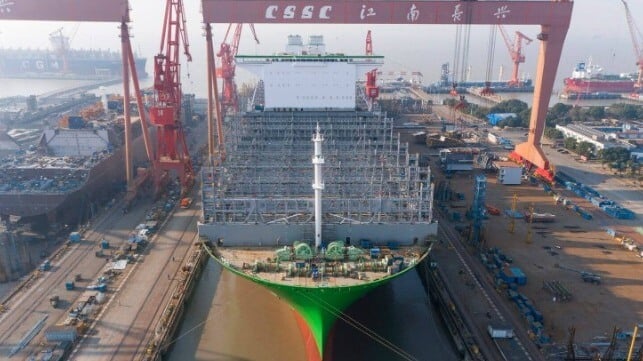
CSSC
Courtesy CSSC Hudong-Zhonghua

Published Jul 14, 2025 6:11 PM by Paul Benecki


(Article originally published in May/June 2025 edition.)


China has become the most dominant player in the shipbuilding industry since World War II, when American builders like Henry Kaiser cranked out thousands of ships for the war effort.

U.S. tonnage ruled the waves in the 1940s, but times have changed. Chinese yards took home three-quarters of the world's newbuild orders by gross tonnage in 2024, according to the latest numbers. But competitors are pushing back to rebuild sovereign capacity and regain market share.

In the E.U., a nascent effort to launch a bloc-wide maritime industrial strategy promises more support for high-end shipbuilders like Meyer Werft, Remontowa and Damen. In the U.S., leaders in Congress and the White House are contemplating the most significant structural supports for shipbuilding in a generation: steep tariffs on Chinese ships, strengthened cargo preference rules for U.S.-built tonnage and a "strategic commercial fleet program" to underwrite construction of 250 new ships, among many other provisions.

The measures would create much-needed demand for American yards of all shapes and sizes – from builders like NASSCO and Philly Shipyard to repair specialists like Detyens and Colonna's Shipyard.

These plans interconnect. U.S. policymakers want to attract foreign expertise from South Korea and the E.U. to revitalize American shipbuilding and even export the most successful products (like Fincantieri's Constellation Class frigates) to allied nations. Shipbuilding is a strategic, sovereign capability, but it's also an ideal opportunity for international collaboration.

AMERICAN ROOTS, FOREIGN EXPERTISE

For decades, America's shipbuilding industry has benefited from the technology and support of foreign investors like Norway's Aker Group, South Korea's Hanwha Ocean and Italian shipbuilding giant Fincantieri, which has invested heavily on the Great Lakes.

Fincantieri Marine Group (FMG) has a history in U.S. shipbuilding dating back to 1918, the year a predecessor company opened its doors in Sturgeon Bay, Wisconsin. Its Bay Shipbuilding division is still famous for its work on "lakers," the iconic bulkers that trade the Great Lakes – like the 2022-built Mark W. Barker, the first new full-size American laker since the 1980s.

Today, Bay Shipbuilding is leading the way forward with pace-setting projects like the LNG barge Progress, the largest Jones Act-compliant LNG carrier. The 400-foot barge entered service last year and carries up to three million gallons of LNG at a time to bunker dual-fuel boxships at the Port of Savannah, Georgia. Operated by Crowley and chartered by Shell, it provides clean-burning fuel for the growing number of LNG-powered container ships that call at U.S. ports, and FMG takes pride in serving that mission.

"From a shipbuilder's perspective, being involved in a build like this is extremely rewarding," said Bay Shipbuilding Director of Program Management Jeff Frank on the occasion of the barge's delivery. "Part of you is in the ship. It goes with the ship when it leaves the yard."

FMG takes a forward-looking approach to workforce development, a pressing concern for American shipbuilders (and for many of those abroad, too). In an "extremely tight" shipbuilding labor market, it's boosted the pay and benefits package for mission-critical employees at its Marinette Marine division. As an incentive, staff at Marinette Marine may be eligible for up to $10,000 in retention bonus payments over 2024-25 plus up to $5,000 in tax-free benefits for child care.

"This benefit gives you peace of mind that your child is being cared for," says Marinette Marine engineer Hilary Homa. "Both parents can work to provide for their family."

HIGH-PROFILE JOBS

Gulf Copper has developed a reputation for tackling some of the biggest and most challenging jobs on the U.S. Gulf Coast – a region with plenty of shipbuilding expertise – like its work on the high-value, high-profile TX-10000 (formerly the VB-10000), the largest heavy-lift vessel ever built in the U.S.

TX-10000 removed the wreck of the car carrier Golden Ray from Georgia's St. Simons Sound in 2021, and her new owners picked Gulf Copper to perform a complex, five-year drydocking on this one-of-a-kind vessel, completed earlier this year.

Gulf Copper also gets the call for demanding emergency repair jobs. When the ultra-luxury cruise ship Scenic Eclipse developed problems with an azipod last September, the "discovery yacht" went to Gulf Copper for a short-notice replacement. The job was so urgent that the owner had a spare thruster flown out to Galveston aboard one of the world's largest cargo aircraft. Gulf Copper got the new azipod installed ahead of schedule and put Scenic Eclipse back in the water, allowing the "six-star" expedition cruise vessel to depart in time for its Antarctica cruise season.

The project that really sets Gulf Copper apart, though, is the ongoing refit of the USS Texas (BB-35), the last surviving dreadnought battleship from the First World War era. Texas fought in both the Atlantic and Pacific Theaters during WW II, and she provided fire support for four of the most important amphibious operations of the war – the Allied invasion of North Africa, the D-Day landings in Normandy, the Battle of Iwo Jima and the invasion of Okinawa.

USS Texas was given to the State of Texas after the war to serve as a museum ship and operated by the nonprofit Battleship Texas Foundation on the state's behalf since 2020. The foundation's biggest job on taking over management was to arrange a much-needed drydocking, the first out-of-water repair period for the century-old ship since the early 1990s.

As the battleship's long-term berth was in Houston, Gulf Copper's nearby Galveston yard was a natural choice. But the shipyard didn't have a drydock that would work for the job. As an inventive and swift solution, Gulf Copper acquired a damaged floating drydock in the Bahamas, carried out structural repairs to put it back in service, then had it towed all the way to its new home in Texas.

In 2022, when the dock was ready, USS Texas got under way on a short transit from her berth to the Gulf Copper yard. Once the battleship was out of the water, workers fitted massive new torpedo blister tanks to the hull and replaced hundreds of tons of steel from wasted framing and shell plating.

In March 2024, after an estimated 200,000 man-hours of work, USS Texas was successfully refloated and towed to a nearby pier. Final repairs and fitting-out are still under way including removal and reinstallation of the 40-ton steel foretop – the enclosed crow's nest atop the ship's superstructure that housed the directors for her 14-inch guns. (T&T Salvage donated the use of a giant floating crane for the hoisting.) Workers are also installing thousands of square feet of pine decking on her weather decks, and from top to bottom she's getting a clean new coat of period-correct Navy Blue.

The quality and thoroughness of the work were enough to win the USS Texas project the Excellence Award from Naval History and Heritage Command in 2024 – a recognition that puts Gulf Copper's Galveston yard permanently on the map. When the multimillion-dollar project is completed later this year, USS Texas will move to a new permanent berth at Galveston's Pier 15, ready for her next 111 years on the water.

TUG SPECIALISTS

In the global market for specialty vessels, Turkish yards have a prominent presence.

Tugs have been a staple of Turkish shipyard production for years, and they remain a key area of strength – especially high-spec harbor tugs with advanced technology. The country even beat out shipbuilding giant China for tugboat exports in 2023, according to Turkey's Ship, Yacht and Services Exporters' Association (GYHIB).

Sanmar Shipyard, based in Tuzla, has been building tugs for export for decades. In recent years its footprint has grown to include two yards and a block-building shop, and it can produce dozens of tugs a year. Sanmar is known for world firsts like the first LNG-powered tug and the first remote-operated tug, and it's a leader in the production of battery-electric tugs as well. To date, it's delivered more than half a dozen all-electric tugs and has plans for more.

"Our fully electric tugs stand out with zero carbon emissions, silent operation and environmental sensitivity," says Fatma Karagöl, Sanmar's public relations specialist. "These tugboats contribute to future-oriented port operations with minimal environmental impact. A fully electric tug must be considered as a whole – combining energy efficiency, long-life system design and low operating costs. This is exactly the approach we follow."

In a competitive global market, Sanmar can draw on more than 50 years of experience in tug construction, supported by its long-running collaboration with Robert Allan Ltd., the Canadian design house known for innovation in towing technology. Sanmar's portfolio covers diesel, hybrid and LNG power options, but Karagöl says green propulsion is in demand thanks to global regulations and carbon-neutral targets: "In coming years, we expect green technologies to make up a larger portion of our portfolio."

Working with the Robert Allan team and battery-maker Corvus Energy, Sanmar is making that ambition a reality. Its ElectRA series has been selected for first-of-a-kind, battery-electric projects on three continents: the BB Electra, the first electric tug in Europe; the Trapananda, the first in Latin America; and the HaiSea Wamis, the first in Canada.

Wamis is one of three Sanmar-built electric vessels imported by Seaspan's HaiSea Marine. In April, together with sister vessels HaiSea Brave and HaiSea Wee'git, Wamis welcomed the first LNG carrier to call at Canada's first West Coast LNG terminal, marking the start of a new era for the Canadian energy economy.

The opinions expressed herein are the author's and not necessarily those of The Maritime Executive.

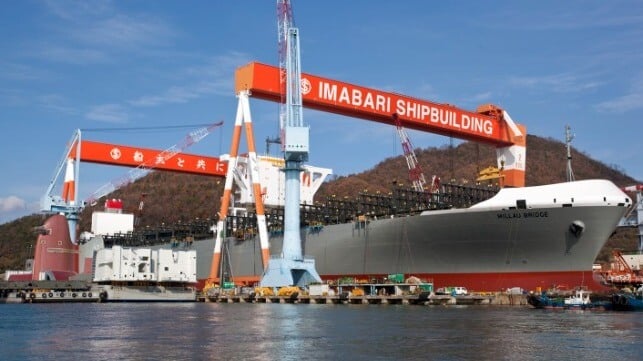
Seven Injured in Accident at Imabari Shipbuilding

Imabari
File image courtesy Imabari Shipbuilding

Published Jul 14, 2025 3:34 PM by The Maritime Executive


More than half a dozen workers were injured in a crane accident at Imabari Shipbuilding last weekend, according to local police. 

Just before 1200 hours on Saturday, the police and fire departments in Imabari City received an emergency call about an accident at the shipyard. The caller reported that a heavy object had fallen from a crane during an assembly operation, injuring seven people. 

All seven were conscious and responsive when fire department responders arrived on the scene, and after initial treatment, the survivors were taken to a nearby hospital. Three had serious fracture injuries in their arms and hips. 

The cause of the accident is under investigation. It is the latest setback for Imabari, which lost its license to recruit and train foreign workers because of safety concerns earlier this year. Japan's Immigration Services Agency found that the shipbuilder had violated industrial safety and health laws, and as an administrative punishment, the agency revoked Imabari's critically-needed license to recruit foreign labor for a period of five years. All of Imabari's 2,000-plus foreign "trainees" were transferred to other employers. The details of the alleged violations were not disclosed. 

Japan's shipbuilding order books have been in decline for years, and its yards are trying to consolidate and restructure in order to remain competitive. Last month, Imabari announced plans to absorb the smaller Japan Marine United (JMU) as a fully-controlled subsidiary, taking over its management and integrating its design and purchasing functions to pursue economies of scale. 

 6 Confirmed Survivors, 9 Presumed Dead After Houthi Attack on Bulker

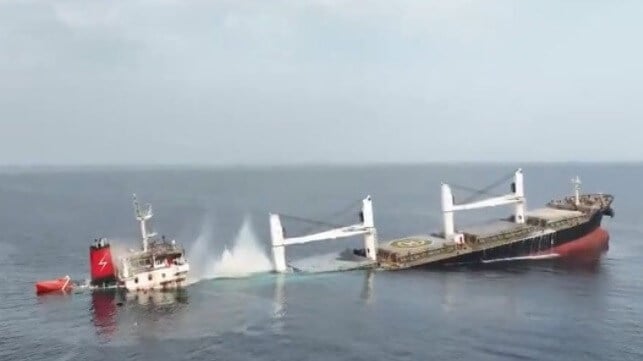
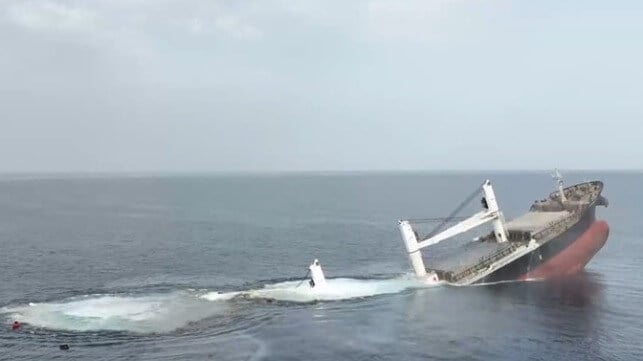
Eternity C was the fourth ship sunk by Houthi forces and the second in one week

Eternity C going down
Courtesy Houthi Military Media

Published Jul 14, 2025 3:05 PM by The Maritime Executive


The ten rescued crewmembers from the lost bulker Eternity C have arrived safely at a port in Saudi Arabia, bringing a saga that began seven days ago to a close. 

Six Filipino crewmembers from the ship were pulled from the water and taken to Yemen by the Houthi militants who sank the ship, according to a final tally from maritime risk management firm Vanguard Tech. At least four crewmembers are believed to have died from injuries sustained in the initial attack, and five others are missing and now presumed dead (nine presumed fatalities). The lost include seven Filipinos, one Russian national and one Indian security guard. The owner of the Eternity C has called off the search for the remaining missing crewmembers, according to maritime security advisory Diaplous Group.

The government of the UK has called for the immediate and unconditional release of the crewmembers taken by Houthi forces. The UK noted that the crewmembers had no connection to the Israeli-Palestinian conflict, which motivates the Houthis' anti-shipping campaign, and it called the attack on their vessel a terrorist act.

In a statement, the Houthi communications center confirmed that "several" crewmembers were pulled from the water by the attackers. The center claimed that the survivors were provided with medical care and taken to a "safe location." The group did not provide a timeline for their release and repatriation.

On July 7, the bulker Eternity C was transiting about 50 nautical miles southwest of Hodeidah when it was assaulted by personnel in multiple skiffs. The vessel was then hit by multiple missile strikes, disabling its engine and causing it to flood. Photographic evidence from the scene shows two penetrations in the hatch cover of the aftmost hold, one penetration in the deckhouse, and one apparent internal blast in the engine room - evidenced by a hole in the hull with outward petaling of the shell plating, according to analyst Basha Report. 

Eternity C was the fourth ship sunk by Houthi forces and the second in one week, following the attack on the Magic Seas on July 6. All four of the vessels attacked and destroyed by Houthi forces were hit by multiple modes of assault, including missiles, bomb boats and (in three cases) hand-placed charges. A fifth vessel - the crude oil tanker Sounion - failed to sink despite severe damage and was successfully salvaged, averting a major oil spill. 

The environmental impact of these sinkings is still being assessed. Satellite imaging obtained over the weekend shows oil slicks extending from the wreck sites of the Magic Seas and Eternity C, as would be expected from leaks from their bunker tanks.  


Search for Missing Crew From Bulker Eternity C Called Off

Eternity C sinks
Courtesy Houthi Military Media

Published Jul 13, 2025 11:40 PM by The Maritime Executive


The owner of the bulker Eternity C has called off the search for the remaining missing crewmembers, according to maritime security advisory Diaplous Group. 

On July 7, the bulker Eternity C was transiting about 50 nautical miles southwest of Hodeidah when it was assaulted by personnel in multiple skiffs. The vessel was then hit by multiple missile strikes, disabling its engine and causing it to flood. Four crewmembers are believed to be dead, 10 survived, and an unconfirmed number were rescued (captured) by the Houthis.  

European, Egyptian, Saudi and Chinese naval forces are all within a few days' transit distance of the area, but no government assets appear to have joined directly in the search for the missing. The U.S. Navy wound down its maritime security presence in the Red Sea area after reaching a bilateral ceasefire deal with the Houthis in May.  

A private security mission led by Diaplous and Ambrey rescued the 10 confirmed survivors, including eight Filipino crewmembers and two guards. That mission has now headed back to a safe port. 

"At the owner's request, Diaplous and Ambrey have had to end their search for the remaining crew of the Eternity C. The decision to end the search has been taken by the vessel's owner reluctantly but it believes that, in all the circumstances, the priority must now be to get the 10 souls safely recovered alive ashore and to provide them with the urgent medical support they need," Diaplous said in a statement. 

The shipowner may not have had war risk insurance for this particular transit, according to Lloyd's List. The outlet reports that the Eternity C's war risk insurer took the rare decision to decline cover for a passage of the southern Red Sea. The hazard to Eternity C may have been elevated because of the profile of the owner's fleet: the Houthis have previously threatened to attack the interests of shipowners who have any vessels that call in Israel, and Eternity C's owner has at least two other ships that have visited Israeli ports, according to maritime risk consultancy Vanguard Tech.  


IMO and ILO Highlight Growing Issue of Seafarer Criminalization

Prison
iStock

Published Jul 14, 2025 5:40 PM by Phil Schifflin


Earlier this month, in my capacity as Director for the Seamen’s Church Institute’s (SCI) Center for Mariner Advocacy (CMA), I had the good fortune to attend two significant international meetings in London, both addressing critical issues concerning the rights and safety of seafarers.

The first was a one-day conference titled “Protecting Seafarers Against Criminalization: What More Can Be Done?”, co-hosted by the International Maritime Organization (IMO), International Labour Organization (ILO), International Chamber of Shipping (ICS), and the International Transport Workers’ Federation (ITF). The event aimed to highlight and promote the implementation of the newly adopted Guidelines on Fair Treatment of Seafarers Detained in Connection with Alleged Crimes. These guidelines are the result of several years of collaborative work at the IMO and ILO, of which SCI has been privileged to be part of these proceedings and contribute to their development.

The conference addressed the growing concern surrounding the criminalization of seafarers and explored potential mechanisms for better monitoring such cases. One idea under discussion was whether criminalization cases could be tracked in a manner similar to how abandonment cases are currently recorded. Another proposal involved the possibility of initiating independent investigations in instances where seafarers allege unfair treatment in criminal proceedings. While there was strong interest in these ideas, consensus was not reached, acknowledging the practical and logistical challenges of implementation. Nevertheless, there was clear agreement on the need for continued international engagement on this issue.

Following that conference, I participated in the IMO Maritime Safety Committee meeting, where several agenda items that directly impacted seafarers were discussed, 

  • The human element in the context of autonomous vessels, including which safety and training considerations must be addressed immediately versus those that can be gradually implemented;
  • Shipboard security improvements, especially in response to threats related to piracy and cybersecurity;
  • Design enhancements to ensure safer escape routes from lower machinery spaces;
  • Prevention strategies for accidental falls from height; and
  • The integration of human-centered design principles into vessel architecture.

Of particular concern was the recurring discussion on seafarer fatigue. This topic includes issues such as working hours, rest periods, and appropriate manning levels. While time constraints prevented an in-depth discussion of the issue during a previous ILO session in April 2025, I was glad that it was revisited with a sharper focus at this IMO meeting. Fatigue mitigation is a longstanding challenge with direct implications for both safety and seafarer wellbeing. SCI and all of us who work to support seafarer wellbeing consider this to be one of the most urgent areas for advocacy, and CMA intends to prioritize it as a core element of our future engagement with international maritime policy.

Philip C. Schifflin, Jr., Esq., is Director of the Center for Mariner Advocacy at the Seamen’s Church Institute.

The opinions expressed herein are the author's and not necessarily those of The Maritime Executive.


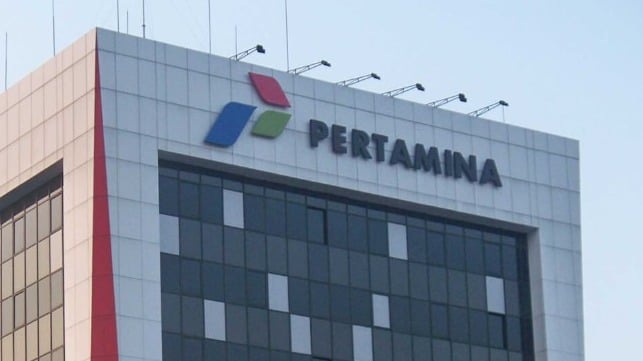
Trafigura Employee Named in Pertamina Oil Graft Investigation

Pertamina
Akhmad Fauzi / CC BY SA 3.0

Published Jul 14, 2025 8:23 PM by The Maritime Executive


Commodity trader and shipowner Trafigura has been named in past scandals in AngolaIvory CoastBrazilMyanmar and Mexico, and one of its employees is now implicated in Indonesia's oil-import fraud scandal as well. A sales manager of the Switzerland-based commodities giant has been detained in connection with an investigation into suspicious oil trading at state petroleum firm Pertamina, a scheme that spanned five years and allegedly cost the Indonesian state at least $12 billion. 

Last Thursday, Indonesia's attorney general named nine new suspects in the sprawling case, doubling the size of the existing list. Prosecutors allege that the suspects were involved in a scheme to improperly import fuel and oil; one of the accused is a business development manager at Trafigura's Indonesian operating company, identified only as "MH." Trafigura said in a statement that it is providing the employee with legal representation, and awaits more detail on the specifics of the allegations. 

Also named in the attorney general's announcement was Mohammad Riza Chalid, a well-known Indonesian businessman with a controversial past. Chalid owns shipowner PT Navigator Khatulistiwa and terminal operator PT Orbit Terminal Merak. An international manhunt for Chalid is said to be under way, and he is believed to be in Singapore. 

Prosecutors allege that Pertamina - which has a near-monopoly on fuel sales in Indonesia - was improperly importing foreign oil and fuel, even though domestic sources were available. The state oil company is required by law to first source its products domestically, then resort to foreign suppliers only if there is no alternative. In this case, adequate domestic supplies existed, but Pertamina bought foreign imports anyways, prosecutors allege. The second part of the scheme allegedly saw Pertamina fraudulently sell a low-grade fuel blend to motorists as "premium" gas at inflated prices. The third and last component was an alleged scam to inflate the cost of Pertamina's petroleum shipping. Each step in this chain cost money for the Indonesian state - Pertamina's owner - while enriching the participants, according to prosecutors.  

Top image: Akhmad Fauzi / CC BY SA 3.0


How a Tragic Pilot Ladder Accident Led to Enhanced Protections

Pilot ladder
Public domain

Published Jul 14, 2025 7:36 PM by Clayton L. Diamond


In a milestone for maritime pilots’ safety, on June 26, 2025, the International Maritime Organization (IMO) significantly improved Pilot Transfer Arrangement (PTA) requirements by adopting amendments to International Convention for the Safety of Life at Sea (SOLAS) regulation V/23, as well as new mandatory PTA Performance Standards. The Performance Standards are incorporated into SOLAS, giving them the full force of international law.

The path to this achievement began on a tragic day more than five years ago. On December 30, 2019, Captain Dennis Sherwood, a New York State-licensed pilot, was killed in a fall while embarking a container ship using a combination arrangement with a trapdoor. This arrangement did not comply with either V/23 or IMO Assembly Resolution A.1045(27) (“Recommendation on Pilot Transfer Arrangements”), the relevant international standards. While advocating for pilot safety has always been a key role for the American Pilots’ Association (APA), Captain Sherwood’s death was an impetus for APA to immediately redouble its domestic and international efforts in this area.

APA’s domestic strategy included communications with shipping companies, reaching out to state pilot oversight authorities, and working with the U.S. Coast Guard (USCG). In January 2020, APA sent letters to shipping lines stressing the necessity to provide compliant PTAs. These letters also explained existing requirements and recommendations for the three main types of PTAs – a single pilot ladder for climbs 9m or less, and for climbs over 9m, a pilot ladder combined with a platform (with or without a trapdoor) and an accommodation ladder.  

This prompted several shipping lines to improve their PTAs. In January 2020, APA followed up with an alert to state pilot oversight authorities that explained the rules and asked them to reiterate to pilots their right to refuse to use a noncompliant PTAs. It also urged them to remind shipping interests of the obligation to provide compliant PTAs. Numerous state pilot oversight authorities responded to APA’s requests.

APA also reached out to the USCG to ask for assistance. In January and February 2020, APA met with USCG officials to discuss PTA safety. While the USCG’s actions were delayed while Captain Sherwood’s incident was under investigation, the agency eventually  issued a safety bulletin and supporting PTA regulatory efforts at IMO.

In addition to working to improve PTA at home, APA reached out to the International Maritime Pilots’ Association (IMPA), which was able to get PTA on the IMO agenda. IMPA President, Captain Simon Pelletier, and current IMPA Secretary General, Mr. Matthew Williams, were responsive to APA’s requests and particularly effective in advancing pilot safety at IMO. On January 17, 2020, Captain Pelletier made a powerful intervention at the 7th Session of IMO’s Subcommittee on Navigation, Communication, and Search and Rescue (NCSR 7).

Captain Pelletier explained that Captain Sherwood was killed while using a combination trapdoor arrangement which “involved a trapdoor in the platform of the accommodation ladder with the pilot ladder hanging from a bar near the bottom of the platform and the top step of the pilot ladder significantly below the level of the platform. This requires a pilot to pull himself or herself up through the trapdoor while twisting to get a secure footing on the platform.” He noted that this arrangement clearly did not meet IMO’s requirements and urged all parties to help make PTA safer.   

Because IMO’s process for taking up issues is purposefully deliberate, it took until November 2022 for PTA to be formally placed on IMO’s agenda. APA Executive Director-General Counsel, Clay Diamond, served on the U.S. Delegation to Maritime Safety Committee 106, while Captain Jorge Viso, APA President served on the IMPA delegation. Viso and Diamond would continue to represent the interests of U.S. pilots at IMO throughout the multi-year process of strengthening PTA requirements.

In May 2023, IMO’s Subcommittee on Navigation, Communication, and Search and Rescue (NCSR 10) made a pivotal decision regarding the future of PTA standards. In response to proposals by IMPA and IMO member states, NCSR 10 agreed that all PTA standards should be mandatory and contained in a single “performance standard,” as opposed to the existing structure of a mandatory SOLAS regulation coupled with IMO recommendations. NCSR 10 authorized a "correspondence group” to meet via email between NCSR sessions to begin drafting V/23 amendments and the Performance Standards. IMPA and APA participated in this correspondence group.

At NCSR 11 (June 2024), deliberations concluded on amendments to SOLAS V/23 and the Performance Standards. Within this new international PTA regulatory scheme, the revised SOLAS V/23 is now restricted to essential provisions, such as application dates, while the technical specifications for PTAs are delineated within the mandatory Performance Standards. The updated PTA safety framework includes key improvements such as:

• Application to existing ships with no “grandfather clause;”

• Application to SOLAS and non-SOLAS ships;

• Third party type approval of pilot ladders, manropes, and means of securing pilot ladders deployed at intermediate lengths;

• Clarification and strengthening of the requirements for combination trapdoor arrangements;

• A maximum service life for pilot ladders and manropes, including spares, of 36 months from the date of manufacture;

• Strengthening requirements for securing pilot ladders deployed at intermediate lengths;

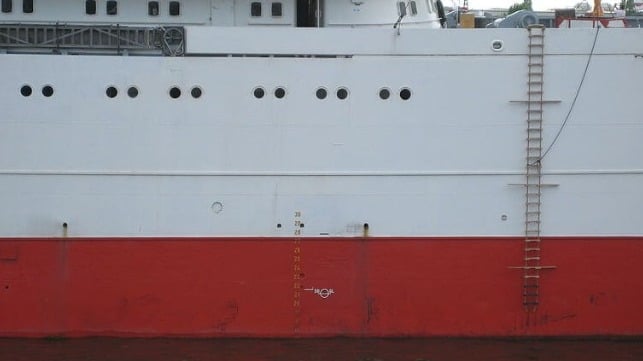
• Making the “pilot mark” (indicating the maximum climb of 9m) on ships’ hulls mandatory;

• Increasing breaking strength requirements of strongpoints, shackles and securing ropes; and

• Explicit recognition of the right of pilots to refuse to use an unsafe or noncompliant PTA.

While NCSR 11 agreed on the text of the amended V/23 and Performance Standards, both then had to be approved at MSC 109 and then adopted at MSC 110. In December 2024 MSC 109 did approve the revised PTA requirements. At MSC 110 in June 2025, after several days of a MSC 110-established drafting group’s effort to finalize the text, IMO adopted the amended V/23 and Performance Standards.

Because SOLAS is an international convention with mandatory rules for global shipping, sufficient notice of any amendments must be given to allow ships time to comply. As such, the entry into force of the new PTA requirements will be phased in beginning on January 1, 2028 and concluding by April 1, 2030. Considering this unavoidable delay, IMPA successfully advocated for an IMO circular encouraging governments to voluntarily implement the PTA requirements before the entry into force date.

This successful outcome required constant communications with IMPA, regular meetings with the USCG, and numerous meetings of IMO committees, subcommittee, and other subgroups. APA applauds the USCG for its support for enhancing PTA safety and for working with APA prior to and during IMO deliberations. This crucial project also benefited immensely from the work of IMPA, and APA thanks Captain Simon Pelletier and Mr. Matthew Williams for their persistence, support, leadership, and technical expertise. This major safety milestone would not have been possible without IMPA’s efforts.

The opinions expressed herein are the author's and not necessarily those of The Maritime Executive.
 

A chance spotting of a fossil results in a major scientific discovery


Ichthyosaur fossil confirmed for the first time in western Japan — also the first late Triassic ichthyosaur found in Japan


Okayama University of Science

A Closer Look at a Rock That Made Paleontological History 

image: 

From left to right: Dr. Hirokazu Yukawa, Professor Takafumi Kato, and Curator Kyoko Ikari examine the Triassic fossil-bearing rock that led to the discovery of Japan’s first ichthyosaur from western Japan.

view more 

Credit: Okayama University of Science


A vertebrate fossil discovered in a rock from the Late Triassic period (approximately 220 million years ago) in Takahashi City, Okayama Prefecture, has been confirmed through joint research by Okayama University of Science and other institutions to be the first ichthyosaur fossil ever found in western Japan. The discovery was announced by Professor Takafumi Kato of the Department of Dinosaur Paleontology and his research team at the Palaeontological Society of Japan’s annual meeting, held on June 29 at Hokkaido University. This marks the first time an ichthyosaur has been identified from strata dating to this period in Japan. Experts in ichthyosaur research have called attention to the find, noting that ichthyosaur fossils from this era are “exceptionally rare worldwide.”


The fossil was embedded in a block of muddy sandstone measuring 59 cm wide, 34.5 cm deep, and 26 cm high. The rock had been on display at the Nariwa Museum of Art in Takahashi City as a fossil of Monotis, a Late Triassic index fossil bivalve. Records show the specimen had already been on display prior to the museum’s 1994 renovation and was known to have been sourced from Takahashi.

On July 26, 2023, while leading an educational field program for middle and high school students, Professor Kato, along with his longtime colleague Dr. Hirokazu Yukawa of the Fukui Prefectural Dinosaur Museum, happened to glance at the side of the rock during a lecture in the museum’s fossil gallery—and noticed a sizable bone fragment embedded in it. “Wait—that’s a bone!” he exclaimed. Upon closer inspection, he observed a porous structure typical of spongy bone, with a very thin layer of compact bone—features characteristic of marine-adapted reptiles. With his expertise in paleontology, Professor Kato quickly realized the significance.


Wondering how much fossil material was inside, the team cut a 14 cm-thick slab from the rock and examined it using a CT scanner at the University of Fukui’s School of Medical Sciences. They confirmed 21 bone fragments, including ribs, vertebrae, and a scapula. Their analysis revealed four distinct characteristics:

  1. The vertebrae were thin and had a distinctive hourglass shape.
  2. Each vertebra featured two rib articulation surfaces.
  3. The ribs were grooved and had a gourd-shaped cross-section.
  4. The scapula was slender and constricted in the middle.

These features led the team to conclude that the fossil belonged to an ichthyosaur.


Until now, all ichthyosaur fossils discovered in Japan—including Utatsu Gyoryu (Utatsusaurus) from the Early Triassic, Kudanohama Gyoryu (Mixosaurus) from the Middle Triassic, and Hosoura Gyoru (Leptopterygius) from the Early Jurassic—had been found in Minamisanriku, Miyagi Prefecture.


Commenting on the discovery, Dr. Ryosuke Motani, a leading authority on ichthyosaurs from the University of California, Davis, stated:

“The Norian age represents a critical transition in ichthyosaur evolution, when open-ocean species were nearly fully developed from their coastal ancestors. However, ichthyosaur fossils from this era are extremely rare globally, with well-preserved examples only known from British Columbia, Canada. The fact that one has now been found in Japan suggests that these advanced ichthyosaurs may have been capable of crossing the Panthalassic Ocean, which was even larger than today’s Pacific. This is a highly significant finding.”

The Norian is a stage of the Late Triassic spanning approximately 227 to 206 million years ago. The Panthalassic Ocean was the massive global ocean that surrounded the supercontinent Pangaea during that time.


Before the academic presentation, a press conference was held at Takahashi City Hall. Among those present were Mayor Yoshio Ishida, Professor Kato, Dr. Yukawa, and Nariwa Museum of Art curator Kyoko Ikari. Mayor Ishida expressed his enthusiasm for the discovery, stating, “We’re hopeful that continued research will lead to even more findings. We see this discovery as an opportunity to stimulate regional revitalization and public interest.”


Professor Kato emphasized the importance of the museum’s role in preserving local specimens and serving as an educational resource. “This discovery was made possible because the Nariwa Museum of Art has continuously maintained and managed regional materials, and because it functioned as an educational platform,” he noted. Speaking about the fossil itself, he added, “The shape of the scapula is particularly telling. It may indicate a high swimming ability, though further detailed analysis is needed. In any case, this fossil will serve as a valuable clue in understanding ichthyosaur evolution.”


Reflecting on the moment of discovery, he shared:

“I’ve made it a habit to look at rocks and fossils from different angles, always thinking, ‘Is there something more here?’ After doing this for over 40 years, this is the first time I’ve stumbled upon something like this. It was truly an unforgettable moment.”


The ichthyosaur fossil is scheduled to be on display for about a month at the Nariwa Museum of Art during the summer break. It is expected to be a valuable educational tool, helping children learn about both Earth’s profound history and their local heritage.