Tuesday, July 15, 2025

By 

Humans are remarkable creatures. We’ve mastered flying, we’re living longer and longer, we’ve cracked the genetic code and DNA, developed quantum mechanics, ethics, and democracy, we’ve been to the moon, and yet, despite these unparalleled achievements, we can still be… quite stupid, argues Polish-born Cezary Pietrasik.


We may no longer be ‘Homo sapiens’—the “wise man.” Nor are we ‘Homo economicus’, the supposedly rational actor in classical economics. It’s a measurable, observable trend known as the Negative Flynn Effect: a documented decline in IQ scores in developed countries over the past few decades. We are increasingly becoming ‘Homo idioticus’—a being defined not by wisdom or logic, but by emotional impulses, misinformation, and intellectual inertia.

The author, Cezary Pietrasik, is an economist by training and co-owner of Synerise, the AI company for predicting human behavior. Cezary graduated from LSE (London), SGH (Warsaw), and WU (Vienna). Passionate about social systems, he has researched structures ranging from economies to institutions in each of the seven countries he has lived in and the more than 80 he has visited. He was the founder and CEO of Healthdom, a preventive medicine company in San Francisco. He worked at McKinsey, advised technology, media, and telecom clients at JPMorgan, and was a private equity investor at Warburg Pincus in London. He was chairman of the Butterfly Effect Foundation, which helps children from disadvantaged and rural areas, and a member of the Future Leaders initiative for young directors in private equity in the UK. In his spare time, he enjoys swimming and horseback riding.

People are stupid!?

Pietrasik defines “stupidity” as “a relatively broad term encompassing irrational behavior that, given the available data, knowledge, and circumstances, produces suboptimal results for people. So, stupid can mean anything from irrational to illogical; from uneducated to unnecessarily aggressive; from primitive or backward to overconfident to wasteful” (p. 8).

In the book, he systematically describes this “paradox of human intelligence and irrationality.” He examines the roots of this idiocy, from biology to societal norms and systemic flaws, and uses vivid historical and modern examples to illustrate these follies. He tackles this paradox with a mix of humor, hard data, and storytelling that makes complex topics both digestible and engaging.

The three central questions, which comprise equal parts of the book, are:


• How have societal, political, technological, and economic factors led to our irrational behavior and, moreover, perpetuated it?

• Why does a combination of deep-seated biological, psychological, sociological, and institutional factors limit our cognitive capacity and lead to suboptimal decision-making?

• What can we do about this?: Are there practical, feasible strategies to promote smarter decision-making, both at the individual and societal levels, that can save humanity from its own self-destruction?

These examples come primarily from the countries where he has lived for extended periods (the US, the UK, and Poland). He admits that he has not “lived in Asia or Africa, and my knowledge of those cultures is limited. … In any case, if we can point to so much stupidity in relatively well-organized, wealthy, developed, and apparently well-functioning states, then the outlook for the rest of the world looks bleak” (p. 9).

Some numerical examples

• Our DNA is 99% the same as that of chimpanzees and bonobos, 98% of gorillas and pigs, and 65% of chickens;

• Nearly 40% of the world’s population has not finished high school;

• IQ in developed countries has been declining since 1995;

• 40% of Americans reject the theory of evolution;

• 86% of American teenagers cannot distinguish between facts and opinions;

• 10% of Americans use their phones during sex;

• 10% of Americans do not believe the climate is changing, 15% doubt it.

Using more examples, ranging from military blunders to societal norms, “Homo idioticus” criticizes our susceptibility to misinformation and poor judgment.

The book explores why irrational behavior is so widespread—and connects it to everything from evolutionary biology and societal structures to technology addiction and media manipulation. From interesting statistics to hilarious anecdotes, Pietrasik keeps you captivated and challenges you to keep thinking critically.

How? And Why?

The first part successively maps out six forms of stupidity: individual, societal, political, technological, economic, and “beautiful” stupidity.

The second part searches for explanations in biology, psychology, sociology, and institutions.

From the Flynn Effect to its Demise?

In the 1980s, New Zealand intelligence researcher James R. Flynn observed a steady rise in IQ scores worldwide throughout the 20th century. This became known as the Flynn Effect and was initially interpreted as evidence that humanity was getting smarter—possibly thanks to better nutrition, education, and healthcare.

But in the 1990s, the trend reversed.

The first major alarming finding came from Norway. Through compulsory military service, the country had built up a vast database of cognitive tests—containing data from more than 730,000 young men from 1962 to the present. The results were striking: IQ scores peaked in people born around 1975 and have been declining ever since. The average decline is about 7 points per generation. 

Flynn himself later confirmed similar trends in the United Kingdom, where teenagers in the 2000s achieved lower scores than teenagers in the 1980s. And it wasn’t just a fluke—researchers worldwide observed the same pattern in developed countries.

Why are we losing our edge?

One prominent theory is that the decline isn’t genetic, but environmental—a reflection of how modern life shapes our brains. Today’s children grow up in a world of screens, scrolling, and superficial content. Quick dopamine hits from social media and 30-second videos have replaced deep reading and problem-solving. 

Education systems, under pressure to meet standardized criteria, often “study for the test” instead of encouraging independent thinking.

Even daily digital distractions have an impact: studies suggest that simply checking your phone or email can temporarily lower IQ by as much as 10 points. If that’s the cognitive cost of a “hit,” what are the costs of a life online? 

We’ve also lost the traditional filters for intellectual quality. Before social media, books and journalism were rigorously edited. Now, content floods our feeds without any form of control. As a result, many people are absorbing the thoughts not of experts or teachers, but of influencers, bloggers, and pseudo-celebrities—some of whom haven’t even graduated from high school.

The Hidden Epidemic: Functional Illiteracy

Perhaps even more alarming is the rise of functional illiteracy—the inability to perform basic reading and arithmetic tasks necessary for daily life.

In the UK, for example, 1 in 10 people couldn’t find the best deal between a 10% discount and a £30 discount on a £250 television (the latter saving more money).

In the EU, up to 40% of adults in countries like Romania and Portugal are considered functionally illiterate. Even in high-performing Sweden, that figure still sits at 8%.

The US paints a similarly bleak picture. Approximately 45 million Americans read below a fifth-grade level. And in 2018, a Pew Research study found that only 26% of Americans could distinguish fact from opinion in written text. Among 15-year-olds worldwide, that percentage drops to just 14%.

This isn’t just about failing schools or lazy students. It’s about a culture where intellectual laziness is not only tolerated but increasingly rewarded. When celebrity trumps expertise, when emotional outrage outweighs rational discourse, and when the loudest voice trumps the most informed—what hope is there for cognitive resilience?

So… declining IQs, widespread functional illiteracy, declining media literacy, and a cultural environment where critical thinking is a niche skill, not the norm. Is there still hope in the digital age?

There is still hope!

What truly sets this book apart is the hopeful tone of the third section. Rather than simply diagnosing the problem, it sometimes offers clever, practical ways to combat our own cognitive blind spots—both as individuals and as a society.

Pietrasik argues that we urgently need to rethink our cultural, educational, and digital environments. Do we want future generations raised on TikTok algorithms and celebrity gossip, or on reason, science, and creativity?

We need to refocus on education: “In the long run, education is a panacea for almost all our problems! Both the quality and quantity of education in today’s world are woefully inadequate” (p. 247).

Pietrasik believes that the quality of education can be improved with artificial intelligence (AI) and the cultivation of critical thinking. But that requires a different approach and mindset — “As we know, most countries are institutionally integrated interested in keeping their populations stupid, manipulable, and susceptible to propaganda” (p. 256).

The decline isn’t inevitable, he argues, but reversing it requires awareness, effort, and a willingness to confront uncomfortable truths. We must stop celebrating ignorance and instead embrace our intellect, Pietrasik believes.

“Homo Idioticus is a sharp, witty, and profound look at one of humanity’s most puzzling contradictions: how we can be simultaneously brilliant and breathtakingly foolish,” he concludes. The book is therefore recommended for anyone curious about human behavior and committed to making better decisions in an increasingly irrational world.

A Cross-Disciplinary Scientific Study of Human Behavior


For those who want to delve deeper and more comprehensively into this issue, we highly recommend Robert Sapolsky’s 2018 book, “Behave: The Biology of Humans at Our Best and Worst.”

Robert Morris Sapolsky is the John A. & Cynthia Fry Gunn Professor at Stanford University, specializing in biology, neurology, and neurosurgery. He trained at The Rockefeller University and Harvard University. His research focuses on neuroendocrinology, particularly with regard to stress. It describes how various biological processes influence human behavior, at scales ranging from less than a second before an action to thousands of years before.

A review in The Guardian called ‘Behave’ “a marvelous synthesis of scientific domains.” A review in the Minnesota Star Tribune considers ‘Behave’ Sapolsky’s magnum opus and “a stunning achievement and an invaluable addition to the canon of scientific literature.”

In the epilogue to his book, Sapolsky writes: “If you had to sum up this book in a single sentence, it would be: ‘It’s complicated.’ Nothing seems to cause anything; instead, everything merely modulates something else. … Fixing one thing often ruins ten others, because the law of unintended consequences reigns. … You don’t have to choose between being scientific and being compassionate” (pp. 674-5).

In Short

With historical examples, research-driven insights, and a thoughtful multidisciplinary approach, both ‘Homo Idioticus’ and ‘Behave’ offer a profound exploration of how humans can be their own worst enemies—and how we, both individually and collectively, can fight back. Must-reads for anyone interested in a better future for ourselves and for future generations.

References:

Cezary Pietrasik
Homo Idioticus. Why We Are Stupid and What to Do About It.
Belvedere Media, San Francisco
2025, 327 pp.
ISBN: 979-8-9924108-1-5


Jan Servaes

Jan Servaes was UNESCO-Chair in Communication for Sustainable Social Change at the University of Massachusetts, Amherst. He taught 'international communication' in Australia, Belgium, China, Hong Kong, the US, Netherlands and Thailand, in addition to short-term projects at about 120 universities in 55 countries. He is editor of the 2020 'Handbook on Communication for Development and Social Change', and 'SDG18. Communication for All' (2 volumes, 2023).

World Nuclear News

In pictures: Second Hinkley Point C unit gets its polar crane


Monday, 14 July 2025
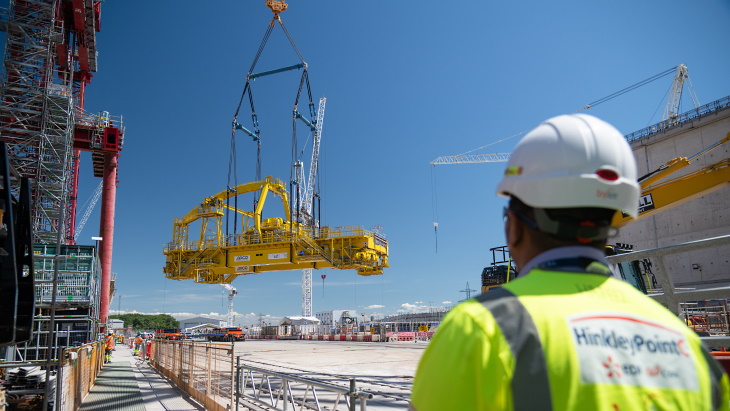
The polar crane has been installed within the reactor building of the second reactor under construction at the Hinkley Point C nuclear power plant in southwest England. It comes days before the unit's dome is due to be lifted into place.
In pictures: Second Hinkley Point C unit gets its polar crane
(Image: EDF Energy)

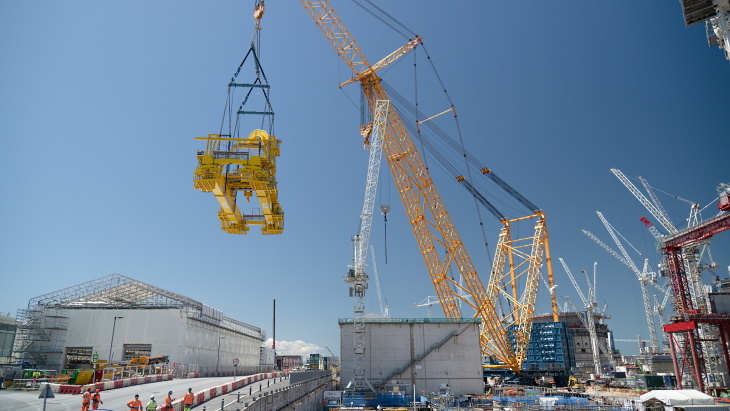
The 750-tonne polar crane was hoisted into position in a two-day operation using Big Carl, the world's largest crane.

The polar crane is able to rotate 360 degrees around the top of the reactor building and will be used to install heavy equipment during construction, such as the reactor and steam generators. It will also be used when the power station is operational for refuelling and maintenance.


(Image: EDF Energy)

It is one of the last pieces of equipment to be installed in the reactor building before the 245-tonne dome is lifted into place, which EDF Energy said is scheduled "later this week".


(Image: EDF Energy)

Construction of Hinkley Point C - composed of two EPR pressurised water reactors of 1630 MWe each - began in December 2018, with unit 1 of the plant originally scheduled to start up by the end of 2025, before that was revised to 2027 in May 2022. Last year, EDF announced that the "base case" was now for unit 1 being operational in 2030, with the cost revised from GBP26 billion (USD32.8 billion) to between GBP31-34 billion, in 2015 prices.

When complete, the two EPR reactors will produce about 10% of the UK's electricity, and are expected to operate for as long as 80 years.


(Image: EDF Energy)

The polar crane of the first Hinkley Point C reactor was hoisted into place in early December 2023, with the dome of the unit installed a couple of weeks later.

"Thanks to experience gained from unit 1, the second polar crane was assembled 40% faster, showing the big benefits of building and repeating an identical design with the same people," EDF Energy said.

The planned Sizewell C plant in Suffolk would be a similar design to the two-unit plant being built at Hinkley Point C in Somerset, with the aim of building it more quickly and at lower cost as a result of the experience gained from what is the first new nuclear construction project in the UK for about three decades.

PEJ seeks European Commission approval for nuclear project


Monday, 14 July 2025
Polskie Elektrownie JÄ…drowe has officially notified the European Commission about its investment project involving Poland's first nuclear power plant, in accordance with its obligations under the Euratom Treaty.

PEJ seeks European Commission approval for nuclear project
How the plant in Pomerania could look (Image: PEJ)

Notification under the Euratom Treaty is a legal requirement for nuclear projects in European Union member states. Its purpose is to allow the European Commission to evaluate a project for its compatibility with the objectives of the Euratom Treaty, including security, sustainable development and efficient use of resources.

The outcome of the notification procedure will be an opinion from the European Commission on the project, which is necessary, among other things, to obtain a construction licence issued by the President of the National Atomic Energy Agency (PAA).

"The investor's notification of the project to the European Commission in accordance with the Euratom Treaty is an important milestone in the delivery of Poland's first nuclear power plant," said Wojciech Wrochna, Government Plenipotentiary for Strategic Energy Infrastructure. "The progress being made in delivering Poland's first nuclear power plant project reflects our determination to ensure that Poland has a safe and stable source of energy for decades."

Marek Woszczyk, President of the Management Board of Polskie Elektrownie JÄ…drowe (PEJ) added: "Notification under Article 41 of the Euratom Treaty is one of the key stages in the preparation of the investment project. It is also an expression of our commitment to deliver the project in accordance with the highest standards of the European Union. By notifying the project, we are confirming the progress already made in the project delivery and our proactive approach to further activities."

Notification by the investor of an investment project under the Euratom Treaty is a separate process from the state aid notification procedure for the project conducted at the state's initiative.

In December 2024, the European Commission launched an investigation into whether the planned public support for Poland's first nuclear power plant complies with EU rules on state aid. It has yet to give its approval.

Under EU state aid rules, the European Commission analyses the compatibility of the measure under Article 107(3)(c) of the Treaty on the Functioning of the European Union, which enables Member States to support the development of certain economic activities under certain conditions. The support should remain necessary and proportionate and not adversely affect trading conditions to an extent contrary to the common interest.

In November 2022, the then Polish government selected Westinghouse AP1000 reactor technology for construction at the Lubiatowo-Kopalino site in the Choczewo municipality in Pomerania in northern Poland. In September 2023, Westinghouse, PEJ - a special-purpose vehicle 100% owned by Poland's State Treasury - signed an 18-month Engineering Services Contract under which Westinghouse and Bechtel will finalise a site-specific design for a plant featuring three AP1000 reactors. The aim is for Poland's first AP1000 reactor to enter commercial operation in 2033. The total investment costs of the project are estimated to be about PLN192 billion (USD49 billion).

Chinese regulator must keep up with nuclear expansion, says IAEA


Monday, 14 July 2025
Although China has made significant progress in further strengthening its regulation of nuclear safety, the staffing levels of the country's regulatory body must keep up with China's fast-growing nuclear industry, an International Atomic Energy Agency team of experts said.
Chinese regulator must keep up with nuclear expansion, says IAEA
(Image: NNSA)

An Integrated Regulatory Review Service (IRRS) team concluded a 12-day mission to China on 11 July, a full-scope review covering all facilities, activities and exposure situations. The 24-member expert mission was conducted at the request of the government and hosted by the Ministry of Ecology and Environment (the National Nuclear Safety Administration (NNSA)), which regulates nuclear safety in China.

IRRS missions are designed to strengthen the effectiveness of the national nuclear and radiation safety regulatory infrastructure, based on IAEA safety standards and international good practices, while recognising the responsibility of each country to ensure nuclear and radiation safety.

The previous IRRS mission to China – a follow-up review – was carried out in 2016, when it had 32 nuclear power reactors in operation. China is currently operating 59 reactors generating around 5% of its electricity. In addition, it is constructing 32 reactors and planning to build another 21 units.

The IRRS team reviewed areas including: responsibilities and functions of the government and the regulatory body; the activities of the regulatory body including authorisation, inspection and enforcement processes; development and content of regulations and guides; emergency preparedness and response; radiation sources; research reactors; nuclear power plants; fuel cycle facilities; radioactive waste management facilities; transport of radioactive material; decommissioning; occupational exposure; control of medical exposure and public exposure; and interfaces with nuclear security.

Two policy issues were discussed during the mission: the impact of the rapid development of artificial intelligence on regulation and the shortage of human resources due to the surge in the number of operating reactor units in China.

While identifying several good practices by the NSSA, the team made a number of recommendations and suggestions for further improvement of the overall effectiveness of China's regulatory system, These include: clarifying protection strategies in the case of a nuclear or radiological emergency; providing a documented process for developing inspection plans for nuclear facilities; establishing and implementing a comprehensive safety culture oversight programme; and enhancing its processes to ensure that updates to department rules, guides, and standards are completed to appropriately align with the latest IAEA safety standards.

"Over the past decade, China has made impressive headway in establishing a capable and independent regulatory body and promoting a healthy nuclear safety culture," said IRRS team leader Mark Foy, former Chief Executive and Chief Nuclear Inspector of the UK's Office for Nuclear Regulation. "China has a strong, competent and trusted national regulator that works effectively to ensure the safety of the public and environment.

"The fast growth in China's nuclear power programme will require the recruitment and training of a significant number of additional nuclear professionals in the regulatory field in the coming years. Its use of technology to support the effectiveness of its national regulator is an exemplar for all of us to learn from."

Baotong Dong, Ministry of Ecology and Environment Vice Minister and NNSA Administrator, said: "China has established a regulatory system that aligns with international standards while meeting national conditions. The government will further enhance its regulatory capabilities, accelerate the development of a modern nuclear safety regulatory system, and promote a virtuous cycle of high-level nuclear safety and high-quality development in the nuclear sector. China stands ready to contribute to strengthening global nuclear safety governance and elevating worldwide nuclear safety standards."

The final mission report will be provided to the Chinese government in about three months. The government plans to make the report public. China will consider inviting an IRRS follow-up mission at a later stage.

IAEA warning after gunfire near Zaporizhzhia nuclear plant


Monday, 14 July 2025
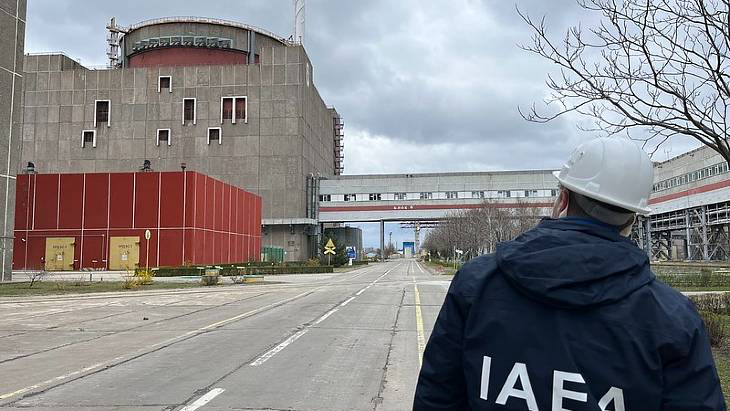
International Atomic Energy Agency Director General Rafael Mariano Grossi has reported that the agency's experts at Zaporizhzhia Nuclear Power Plant heard "hundreds of rounds of small arms fire" for about an hour on Saturday evening.
IAEA warning after gunfire near Zaporizhzhia nuclear plant
IAEA staff have been stationed at the site for nearly three years (Image: IAEA)

The latest update from the IAEA says that when they conducted a site walkdown on Sunday morning "they saw numerous small calibre casings lying scattered on the ground near reactor units 5 and 6. There was no sign of broken windows or other physical damage. The IAEA team at the ZNPP is seeking further information about the incident".

It said that the large number of shots, repeatedly fired from about 22:00 on Saturday, "was unusual, the team members reported".

Grossi said: "Such military activity at or near a major nuclear power plant is clearly unacceptable."

It follows the "apparent increased use of drones near nuclear power plants" in Ukraine and the report of a strike on the city of Energodar, where most of the Zaporizhzhia plant's staff live.

"We are seeing a clear escalation in drone strikes during this war, also affecting Ukraine’s nuclear power plants and potentially putting them in further danger. As I have repeatedly stated, any military attack on a nuclear site - with or without drones - jeopardises nuclear safety and must stop immediately," Grossi said.

Zaporizhzhia Nuclear Power Plant has been under Russian military control since early March 2022. It is located on the frontline of Russian and Ukrainian forces. The IAEA has had experts stationed at the plant since September 2022 as part of safety and security efforts.

Hitachi platform aims to enhance nuclear plant operations

Monday, 14 July 2025
Japan's Hitachi Ltd has developed a new Metaverse Platform for Nuclear Power Plants that leverages a metaverse and AI technology which it claims streamlines operations, including nuclear power plants' safety enhancement, new plant construction, maintenance, and decommissioning.
Hitachi platform aims to enhance nuclear plant operations
Conceptual image of a data-driven power plant (Image: Hitachi)

In the installation of new equipment or modification in nuclear power plants, precise planning and reliable execution are essential to complete on-site work within the shortest possible timeframe, Hitachi says. However, access to nuclear power plants is often restricted by regulations, limiting the frequency and duration of site surveys. In some cases, controlled zones are not accessible during operation, restricting on-site surveys. These constraints require extensive coordination among stakeholders, with electric utilities playing a central role in sharing information and revising work plans.

In response, Hitachi has developed the Metaverse Platform for Nuclear Power Plants to further enhance productivity by enabling accurate understanding and seamless sharing of site conditions among stakeholders, real-time schedule coordination, and reduction of rework.

The platform recreates nuclear power plants in a metaverse using high-precision point cloud data and 3D CAD data, and aims to enhance productivity in information sharing, schedule coordination, and asset management among stakeholders by utilising it with partners such as electric utilities and contractors.

It is also designed to serve as the foundation of a Data-Driven Power Plant, which Hitachi aims to establish to address the diverse needs and challenges faced by electric utilities –such as improving equipment reliability, enhancing work management, and increasing operational efficiency – through data-driven value creation and problem-solving. 

This new platform embodies Lumada 3.0, which uses Hitachi's domain knowledge and AI to convert data into value to solve challenges faced by customers and society, and was developed together with GlobalLogic as One Hitachi, integrating Hitachi's decades-long expertise in the nuclear energy business with its group-wide advanced digital technologies. 

Hitachi says the platform facilitates the collection, aggregation, and analysis of on-site data, thereby supporting optimal investment planning and plant maintenance through data-driven insights.

Modernisation of Zelenogorsk uranium enrichment production completed


Monday, 14 July 2025
The six-year modernisation project at the Electrochemcial Plant in Zelenogorsk involved installing new generation gas centrifuges.
Modernisation of Zelenogorsk uranium enrichment production completed
(Image: TVEL)

The project was part of TVEL, Rosatom’s fuel division’s, separation equipment modernisation programme and took place with a phased replacement of previous generation gas centrifuges with generation 9+ ones, it said.

Sergey Filimonov, Director General, said: "It is symbolic that a significant historical milestone in the modernisation of the main equipment was reached in the year of the 80th anniversary of the nuclear industry. The technical re-equipment of our enterprise is significant for the successful implementation of the production programme of the Fuel Division of Rosatom in the coming years, including for providing nuclear fuel for new nuclear power units of Russian design in the country and abroad."

Backgound

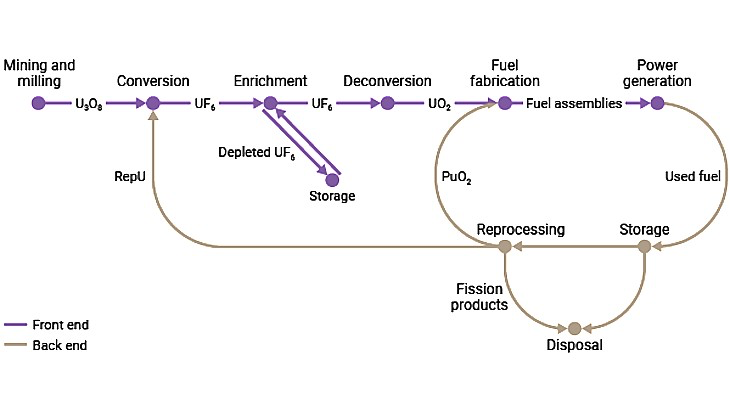
Unenriched, or natural, uranium contains about 0.7% of the fissile uranium-235 (U-235) isotope. ("Fissile" means it's capable of undergoing the fission process by which energy is produced in a nuclear reactor). The rest is the non-fissile uranium-238 isotope. Most nuclear reactors need fuel containing between 3.5% and 5% U-235. This is also known as low-enriched uranium, or LEU. Advanced reactor designs that are now being developed - and many small modular reactors - will require higher enrichments still. This material, containing between 5% and 20% U-235 - is known as high-assay low-enriched uranium, or HALEU. And some reactors - for example the Canadian-designed Candu - use natural uranium as their fuel and don’t require enrichment services.

Enrichment increases the concentration of the fissile isotope by passing the gaseous UF6 through gas centrifuges, in which a fast spinning rotor inside a vacuum casing makes use of the very slight difference in mass between the fissile and non-fissile isotopes to separate them. As the rotor spins, the concentration of molecules containing heavier, non-fissile, isotopes near the outer wall of the cylinder increases, with a corresponding increase in the concentration of molecules containing the lighter U-235 isotope towards the centre. For more detail: A guide: Uranium and the nuclear fuel cycle


Trump’s Tariff Threat Looms Over Brazilian Oil Exports

  • Former President Donald Trump has threatened 50% tariffs on Brazilian imports, specifically targeting crude oil, which is Brazil’s top export to the United States.

  • Analysts suggest that while these tariffs could create short-term disruptions, Brazil’s state-controlled oil company Petrobras is in a position to redirect its oil exports to other countries with limited long-term impact.

  • The Brazilian Petroleum Institute has expressed concern over the tariff threats, while Petrobras is already facing internal pressures from lower oil prices and is revising its strategic plan to focus on cost reduction.

Brazil has become the latest target of U.S. President Donald Trump’s ire after the Republican frontrunner threatened 50% tariffs on the South American giant for allegedly persecuting right-wing ex-president Jair Bolsonaro. In a post on Truth Social, Trump called on Brazilian President Luiz Inácio Lula da Silva to halt what he described as a “Witch Hunt that should end IMMEDIATELY!” Bolsonaro is currently on trial for allegedly attempting to overturn the results of the 2022 election.

Tensions have escalated. Lula has promised retaliation if the U.S. moves forward with the punitive tariffs, telling local outlet Record, “If he charges us 50%, we’ll charge him 50%.” But with Brazil’s oil exports to the U.S. on the line, Lula will likely be hoping for a less volatile resolution.

Crude oil is Brazil’s top export to the United States, valued at $5.83 billion in 2024, according to official trade data. It has so far been exempt from the 10% baseline tariffs Trump proposed in April on most foreign imports. Last year, Brazil exported an average of 1.78 million barrels per day (bpd) of crude globally, with approximately 243,000 bpd shipped to the U.S., per ANP and EIA data.

But analysts believe any disruption would likely be short-lived. “These tariffs may generate short-term noise in trade flows and impact margins on spot contracts, but do not represent a structural risk,” BTG Pactual analysts wrote in a recent client note.

According to BTG analysts Gustavo Carvalho and Luiz Cunha, the tariffs would have limited impact on Brazil’s state-controlled oil company Petrobras (NYSE: PBR). “Despite the U.S. having a significant share of derivatives exported, in absolute terms we believe this is a very small volume, and that Petrobras could easily redirect this export to another country.” In Q1 2025, just 4% of Petrobras’ total exports went to the U.S.

Still, not everyone is as sanguine. The Brazilian Petroleum Institute (IBP) says it views Trump’s threats with “concern” and has urged the Lula administration to seek a diplomatic solution.

Petrobras is already facing headwinds from lower oil prices and ongoing cost pressure. In May, the company announced it would revise its five-year strategic plan to focus on cost reduction while preserving current-year investments. “When the price goes up, we feel more comfortable throwing ideas around. When the price goes down, it is time to tighten our belts,” CEO Magda Chambriard said, adding the company would simplify projects and cut costs amid ~$65 Brent prices.

That marks a shift from Petrobras’ earlier tone. Since Lula took office in 2023, the government had pushed the company to ramp up domestic spending to create jobs and stimulate growth. Petrobras originally unveiled a $102 billion capex plan for 2024–2028, which it later increased to $111 billion for 2025–2029.

More recently, Petrobras said it is evaluating the sale of its onshore fields in Bahia state—known as the Polo Bahia Terra cluster—due to high production costs and underwhelming yields. The asset, long considered underperforming, has become increasingly uncompetitive compared to Petrobras’ lucrative pre-salt offshore reserves, which now account for more than 70% of Brazil’s oil output.

Five years ago, Petrobras began the process of offloading Bahia Terra but paused following Lula’s election. “When oil is at $100 a barrel, it makes more sense than at $65 a barrel,” Chambriard said, adding: “We haven’t yet decided what to do—whether to keep it, outsource the operation, or simply pass on the asset.”

Steep tariffs on oil could further skew the trade balance between the two countries. In 2024, Brazil ran a $6.8 billion trade deficit with the U.S.—one of the few nations that buys more from the U.S. than it sells to it. Top U.S. exports to Brazil include fuels, aircraft, machinery, and electronics.

By Alex Kimani for Oilprice.com


The Rise of Balcony Solar Power

  • Balcony solar panels enable apartment dwellers to generate their own renewable energy without rooftop access.

  • Germany leads Europe in adopting balcony solar, while the U.K. and U.S. are evaluating safety and regulatory frameworks.

  • Compact plug-in solar systems offer an affordable, accessible way to reduce household energy bills and carbon footprints.

The world’s solar power capacity has risen dramatically in recent years, as governments have invested in a green transition and energy companies have taken advantage of favourable renewable energy policies. In addition to the growth in utility-scale solar power, more households across a wide range of countries have invested in solar panels. In line with the increase in demand, solar companies have started to offer a wider range of panels, suitable for non-conventional spaces, to provide more consumers with solar power.

The silicon photovoltaic (PV) cell was created in 1954, marking a breakthrough in solar power and allowing researchers to power an electric device for several hours a day. Since then, scientists have been working tirelessly to improve the efficiency of PV technology. In addition to increasing efficiency from around 14 percent in the 1990s to up to 23 percent today, investments in the solar energy sector have helped researchers to develop lower-cost solar panels that are more accessible to consumers around the globe. They have also been able to develop small-scale solar panels with a high efficiency to use in small or non-conventional spaces.

In 2022, in the U.S., small-scale rooftop solar generated enough energy to power around 5.7 million homes, marking a tenfold increase from the previous decade. An Environment America Research and Policy Centre and Frontier Group report found that residential solar energy systems produced 64 percent of all electricity from small-scale solar installations in the U.S. that year. And now, thanks to new technology, the global residential solar power market may grow even further as companies offer more versatile, small-scale solar panels in the form of “balcony solar”.

Balcony solar allows people living in smaller housing, with limited outdoor space, to fit a small number of panels onto their balconies and terraces to generate power for the household. This technology has become popular across Europe, particularly in France, Italy, the Netherlands, and Germany, as consumers look to drive down energy bills and switch to green. The panels can be plugged directly into power sockets, removing the need for professional installation. Their small size means the panels produce around 10 percent of the energy of residential rooftop systems.

Many Europeans simply hang these small-scale panels off their balconies to produce power during daylight hours. In Germany, around 1.5 million apartments now have balcony solar power. Official data suggests that approximately 220,000 PV devices were installed across Germany during the first half of 2024. Consumers have been encouraged by the German government to install solar panels, offering users feed-in tariffs and providing a fixed price for every unit of electricity sent to the grid. Germany limits balcony solar units to 800 watts of power production as part of its safety standards.

In the U.K., “plug-in” solar power is prohibited, but this may soon change. The U.K. currently requires solar systems and wiring to be installed by a professional. This is also the case in Belgium, where the government is concerned about the impact of having unregistered systems feeding into the electricity grid. However, in the U.K., the government recently said it would launch a safety study “with the aim of unlocking opportunities for plug-in solar over the next few years” to help the U.K. triple its solar capacity by 2030. The use of balcony solar could help drive down consumer energy costs and allow renters to gain access to solar power without having to rely on their landlord to install rooftop solar.

Gemma Grimes, the director of policy at trade body Solar Energy U.K., explained some of the reasons for restricting plug-in solar technology. “[It] is due to a range of considerations, including aesthetics, structural/building safety and consumer safety. There are other practical considerations, including the location of electric sockets and cable protection – we do not tend to have electrical sockets installed on balconies in this country,” said Grimes. “The installation of all electrical equipment comes with risks, and it is important that any risks are fully understood prior to widespread rollout. We are aware of examples on the continent – including Germany – and are keen to learn from their experience,” she added.

Meanwhile, in the U.S., there is no official safety standard for balcony solar, which has prevented knowledge and uptake of the technology. There are several barriers to rolling out plug-in panels in the U.S., with regulators stressing that they cannot simply replicate the German model as the electrical system is different. For example, there is no ground fault circuit interrupter in the U.S., meaning appliances do not cut out as necessary to minimise the risk of electric shock. However, some states, such as Utah, have begun to introduce legislation to encourage greater uptake, a move which may be followed by other states.

By Felicity Bradstock for Oilprice.com

The Pentagon Pizza Index: Late Night Munchies and Global Crises

  • The Pentagon Pizza Index theorizes that a sudden increase in pizza orders near the Pentagon often precedes major global military or political events.

  • The logic behind this theory is that Pentagon and intelligence staff order pizza when working late due to brewing crises.

  • Historical "coincidences," such as spikes in pizza orders before the US invasion of Grenada and Operation Desert Storm, have made this pattern difficult to ignore for journalists and open-source investigators.


I came across a fascinating article on Radio Free Europe/Radio Liberty about the so-called Pentagon Pizza Index, a quirky theory suggesting that surges in late-night pizza deliveries to the Pentagon signal major geopolitical events. Ashamedly, I have to admit, it was my first time hearing about this indicator. Intrigued by the idea that something as ordinary as pizza orders could hint at global crises, I dug deeper into historical examples and other unconventional indicators. What I found is a pattern that’s hard to dismiss, blending open-source intelligence (OSINT) with everyday behavior to spot when the Pentagon is abuzz with activity. Here’s what I uncovered about this peculiar index and its surprising correlations with major conflicts, along with other rogue signs to look for that could suggest something big might be brewing.

Historical Instances of the Pentagon Pizza Index

Grenada Invasion (1983)

In October 1983, the U.S. invaded Grenada to oust a Marxist regime amid Cold War tensions. On the eve of the operation, pizza deliveries to the Pentagon nearly doubled, according to Frank Meeks, a Domino’s franchise owner in the Washington, D.C., area. His drivers reported an unusual flurry of orders to government buildings, a pattern that aligned with late-night planning sessions as the Reagan administration prepared for the surprise invasion. This early example set the stage for the Pizza Index’s reputation as a curious predictor of military action.

Operation Desert Storm (1991)

As the U.S. geared up for Operation Desert Storm in January 1991, pizza orders to the Pentagon and CIA spiked dramatically. Meeks again noted his delivery teams working overtime to supply government offices, with reports indicating a near doubling of late-night orders. The surge coincided with intense preparations for the Gulf War, as coalition forces readied to expel Iraqi troops from Kuwait. This correlation caught the attention of journalists, cementing the Pizza Index as a quirky but persistent theory.

Panama Invasion (1989)

In December 1989, the U.S. launched Operation Just Cause to remove Panamanian leader Manuel Noriega. The night before, pizza deliveries to the Pentagon reportedly doubled, mirroring the Grenada pattern. Frank Meeks’ Domino’s outlets were inundated with orders, with drivers noting heightened security and activity at government facilities. This spike aligned with late-night strategy sessions, adding another data point to the growing legend of the Pizza Index.

Kosovo Conflict and Clinton Impeachment (1998)

December 1998 was a chaotic period, with the U.S. launching Operation Desert Fox against Iraq while President Bill Clinton faced impeachment hearings. During this time, pizza deliveries to the White House and Pentagon surged, with The Washington Post reporting a 32% increase in extra-cheese pizza orders to the White House alone. Meeks’ drivers confirmed a similar uptick at the Pentagon, suggesting that simultaneous crises—military and political—kept staff fueled with late-night pizza.

Iran-Israel Conflict (2024–2025)

More recently, the Pizza Index has gone digital, with social media accounts like @PenPizzaReport on X tracking real-time delivery trends. On April 13, 2024, as Iran launched drone and missile attacks on Israel following a consulate bombing, pizzerias near the Pentagon saw “busier than usual” indicators on Google Maps and delivery apps. Similar spikes occurred before the assassinations of Hamas leader Ismail Haniyeh and Hezbollah chief Hassan Nasrallah in 2024. In June 2025, surges on June 1 and June 12–13 preceded Israel’s airstrikes on Iran’s nuclear sites and a U.S. bombing campaign against Iranian facilities, reinforcing the index’s relevance in the OSINT era.

Other Potential Indicators

The Pentagon Pizza Index isn’t the only unconventional signal of brewing crises. Analysts and OSINT enthusiasts have identified other patterns of life that deviate during high-stakes moments, offering additional clues about government activity. Below are some of the most intriguing.

Increased Lights in Government Buildings

When Pentagon or White House offices stay lit late into the night, it’s often a sign of intense activity. During the Gulf War and other crises, observers noted more office lights on at odd hours, suggesting staff were burning the midnight oil. This simple visual cue, visible from public vantage points or satellite imagery, complements delivery data as a marker of unusual government operations.

Rideshare and Traffic Activity

Spikes in Uber or Lyft activity near government facilities can indicate an influx of personnel, from military officials to crisis consultants. During the 2024 Iran-Israel conflict, OSINT analysts cross-referenced pizza surges with rideshare data, noting increased drop-offs at the Pentagon. Unusual traffic patterns around military bases, detectable via apps like Waze, also hint at heightened activity.

Unusual Flight Patterns

Military aircraft movements, tracked via platforms like Flightradar24, often signal preparations for operations. Before major Middle East conflicts in 2024 and 2025, OSINT trackers observed repositioning of U.S. Air Force bombers and transport planes. These anomalies, paired with other indicators like pizza spikes, provide a broader picture of potential military action.

Energy Consumption Spikes

Sudden increases in electricity usage at government buildings can reflect prolonged operations. Public utility data or OSINT tools have occasionally detected these spikes during crises, such as the Gulf War, when secure facilities ran at full capacity. While less accessible to the public, this indicator is a favorite among data-driven analysts.

Quiet Social Venues

When Pentagon staff skip their usual after-work haunts, it’s a red flag. The @PenPizzaReport account has noted unusually quiet nights at places like Freddie’s Beach Bar near the Pentagon, as seen during the June 2025 Israel-Iran escalations. Empty barstools on typically busy nights suggest personnel are staying late at work, possibly for crisis planning.

Hotel Booking Surges

A sudden demand for hotel rooms near defense hubs can indicate the arrival of external personnel, like contractors or visiting officials. This was observed during Operation Desert Storm and other major operations, with hotels near the Pentagon reporting unexpected bookings. OSINT trackers now monitor platforms like Booking.com for such trends.

Social Media and Delivery Driver Chatter

Delivery drivers often share stories on Reddit or X about unusual orders to government buildings. A legendary Reddit comment from a Domino’s driver claimed the Pentagon began splitting orders across multiple restaurants after a leak during the 1991 Gulf War. Such anecdotes, while anecdotal, provide human context to data-driven indicators.

Wireless Signal and Geolocation Pings

Tech-savvy OSINT hobbyists use tools like Raspberry Pi to detect Bluetooth or Wi-Fi signals from delivery drivers’ phones near government facilities. A cluster of signals at midnight near a Pentagon entrance, for instance, can confirm delivery activity. This method, though niche, has gained traction during recent crises like the 2024–2025 Middle East tensions.

Conclusion

The Pentagon Pizza Index, born from decades of curious coincidences, offers a unique lens into the rhythms of crisis planning. From the Grenada invasion to recent Middle East escalations, surges in late-night pizza orders have consistently aligned with major geopolitical events. Other indicators, like glowing office lights, quiet bars, or unusual flight patterns, complement this theory, showing how everyday behaviors can betray high-stakes activity. While the Pentagon dismisses the index as correlation without causation, its persistence, amplified by social media and OSINT tools, makes it a captivating piece of modern folklore. Next time you’re near a D.C. pizzeria, check Google Maps’ “Popular Times”—you might just spot the first sign of a global crisis in a stack of pizza boxes.

By Michael Kern for Oilprice.com