Tuesday, July 15, 2025

Decades of Neoliberalism Entrenched US Inequality. Trump’s Budget Made It Worse.


Factoring in tariffs, the lowest 20 percent of income earners may lose $300; the top 1 percent will be $58,000 richer.


Truthout
July 11, 2025

Donald Trump’s so-called “Big, Beautiful Bill,” which was signed into law last week, has been described as a monstrous piece of legislation. In this exclusive interview for Truthout, world-renowned progressive economist Robert Pollin provides an overview of this “disgraceful” federal budget bill. Pollin is distinguished professor of economics and co-director of the Political Economy Research Institute at the University of Massachusetts Amherst. The interview that follows has been lightly edited for clarity and length.

CJ Polychroniou: Trump’s so-called “Big, Beautiful Bill” has now become law, achieving what ultra-conservatives have been fighting for decades, which are huge tax breaks and major cuts to social safety net programs. Of course, there is a lot more reactionary stuff included in this megabill, such as hundreds of billions of dollars devoted to Trump’s anti-immigration agenda and derailing the green transition by taking an axe to clean energy and boosting, in turn, fossil fuel production. In sum, I think Ed Kilgore’s claim that this 940-page bill “is, in fact, the single most sweeping piece of legislation in American history” is quite accurate, although some of its effects won’t be felt for some time. Can you discuss specifically the economic and social repercussions of Trump’s megabill, especially in light of the view that the U.S. is the most unequal high-income country in the world?

Robert Pollin: Trump’s federal budget bill is disgraceful along multiple dimensions. We can start with its egregious distributional impacts. The bill will make the rich still richer through tax cuts while attacking the living standards, including the health and food security, of working people and the poor.

Trump and company claim that people at all income levels will benefit from the bill’s tax cuts. There is a tiny sliver of truth in this. According to the Institute on Taxation and Economic Policy (ITEP), the Trump tax provisions will deliver an average of $40 in savings to the lowest 20 percent of income earners in 2026. Meanwhile, the richest 1 percent will end up $66,000 richer. This recalls the famous observation by Anatole France in 1894 that, “The law, in its majestic equality, forbids rich and poor alike to sleep under bridges, to beg in the streets, and to steal their bread.”

But even these figures do not conclude the story. ITEP also notes that, once we also account for the impact of Trump’s tariffs — with these tariffs being a tax on imported products — those in the lowest 20 percent income bracket will not keep their $40 in benefits, but rather end up worse off by about $300. Meanwhile, the richest 1 percent are still better off by about $58,000.

Related Story

JD Vance Says Medicaid Cuts for Millions “Immaterial” Compared to Funding ICE
Vance handwaved away the Medicaid cuts — expected to lead to thousands of deaths yearly — as “minutiae.”  By Sharon Zhang , Truthout July 1, 2025


Much more punishing still for lower-income people are the spending cuts to Medicaid, the health insurance program that now covers 85 million low-income and disabled people, along with other health funding cuts. The Congressional Budget Office (CBO) estimates that, through the Trump measure, at least 17 million people will lose their coverage by 2034. In addition, cuts to the federal food security program (SNAP), on which 42 million people now depend, could eliminate this support for up to 5 million people.

Moreover, this purposeful Trump project to shower money on the rich while depriving lower-income people of health care and food arrives after nearly 50 years of neoliberal policy dominance had already skewed income and wealth inequality to extreme levels. For example, the average wage for non-supervisory workers as of 2023 was roughly equal, at about $28 an hour, to where it was in 1972 (controlling for inflation), even though average worker productivity had increased two-and-a-half-fold over this period. Meanwhile, the average CEO’s pay was 30 times higher than the average worker in 1972, but exploded to 290 times higher by 2023. In other words, the average worker’s annual income remained roughly constant at around $50,000 per year over this 50-year span, while the average CEO’s pay skyrocketed from $1.5 million to nearly $15 million.


We have opportunities right now for major climate policy victories at the state and local levels, even in the face of Trump.

Under Joe Biden’s four years in office, some modest progress was made toward countering this rising inequality trend, including through Biden’s support for union organizing drives and through enforcing existing (but long-neglected) anti-monopoly laws. Trump and company are now committed to wiping out these small gains. This is while Trump stridently proclaims his commitment to working people and while, to date, large segments of the working class have been willing to give Trump the benefit of the doubt.

Of course, one centerpiece of Trump’s appeal to the U.S. working class has been his brutal attacks on immigrants, including those with legal status as well as undocumented people. To support this program, the bill allocates an average of more than $20 billion per year through 2029 to build new immigrant detention centers and expand Immigration and Customs Enforcement (ICE) operations. This funding more than doubles the current ICE budget. Trump and company claim that undocumented immigrants have flooded into the country, that most of them are criminals, that they are stealing jobs from U.S.-born workers, and that they are draining the public schools, hospitals and other programs of resources without paying taxes to support these public programs.

None of these claims are remotely true. In fact, according to the best available evidence, the population of undocumented immigrants in the U.S. has not changed significantly since 2005, varying between about 11–12 million people overall. Moreover, all immigrants, including undocumented immigrants, are less likely to commit crimes than the U.S.-born, including both violent and nonviolent crimes. In terms of taxes and financing public programs, as of the most recent 2022 data, undocumented immigrants paid nearly $100 billion in federal, state, and local taxes, amounting to an average of nearly $9,000 per undocumented immigrant. Furthermore, more than one-third of all taxes contributed by undocumented immigrants are funding programs that they are unable to access. That is, they are paying into Social Security, Medicare, and unemployment insurance, but are receiving no benefits in return. This is also while, in 2023, the official unemployment rate for U.S.-born workers was 3.6 percent, the lowest figure on record.

What about the environmental repercussions? How does Trump’s “Big, Beautiful Bill” impact U.S. climate policy, and what does it mean for global climate change?

Trump’s bill is one more weapon amid his relentless wave of attacks against any and all efforts to avert the mounting climate catastrophes. Even prior to the bill’s passage, the Trump administration had already introduced, according to Columbia University’s Climate Backtracker, more than 200 measures to “scale back or wholly eliminate climate mitigation and adaptation measures.”

Trump has also fired hundreds of government scientists and installed climate change deniers into critical government positions. The Trump bill itself repeals or phases out the tax credits for solar and wind energy investments, electric vehicle purchases, and making home energy-efficiency improvements that were important features of the Biden Inflation Reduction Act (IRA).

The impact of the overall Trump program on the climate will be severe, as intended. U.S. carbon dioxide (CO2) emissions — the main cause of global heating — have fallen by roughly 20 percent over the past 20 years. Biden’s policies did contribute to this downward trend, even while the rate of emissions reductions remained insufficient relative to the global climate stabilization goal of net zero emissions by 2050. Trump’s policies will stop even these modest gains over the short term. If Trump’s program is allowed to remain in place, the likelihood for achieving zero emissions by 2050 becomes nil.

How can we fight back effectively? For starters, we need to proclaim loudly the reality that clean energy investments are delivering money and jobs in all regions of the U.S., including in red states. Thus, wind power is thriving in Texas, Iowa, Oklahoma, and Kansas. Moreover, at the end of Biden’s presidency, West Virginia had received about $5 billion and Pennsylvania about $9 billion in new clean energy investment commitments tied to Biden’s IRA. It is hard to believe that working people in these and other states will be okay with these projects folding, and the jobs generated by them foregone, all thanks to Trump.

The CBO estimates that the tax cuts in Trump’s bill will generate an average of $450 billion per year in government revenue loss over the next 10 years.

Still more: Investments in clean renewable energy and high efficiency are now, by far, the cheapest ways to deliver energy to consumers. Even Trump’s own Energy Department’s most current report on comparative electricity costs confirms this. It estimates that electricity generated by onshore wind and solar projects that begin operating in 2030 will cost between 3–3.2 cents per kilowatt hour. The natural gas price will be more than twice as high, at 6.5 cents.

We have opportunities right now for major climate policy victories at the state and local levels, even in the face of Trump. One important example was the passage of the Climate Change Superfund law in New York State last December, right before Trump took office. Under this measure, oil and gas companies will pay an average of $3 billion a year for the next 25 years for climate adaptation and resilience measures throughout the state. This victory in New York followed from the successful campaign to enact a similar measure in Vermont earlier in 2024. Comparable bills are now advancing in Massachusetts, California, and Maryland.

This federal budget bill is projected to add trillions of dollars to the nation’s debt load and widen deficits. Is the U.S. in the “fast lane” to what Elon Musk calls “debt slavery?”

Elon Musk and his late, unlamented leadership of the so-called Department of Government Efficiency (DOGE), demonstrated both unbridled malice and a buffoonish level of ignorance regarding the operations of the federal government. Moving on to at least minimally serious analysts, the CBO estimates that the tax cuts in Trump’s bill will generate an average of $450 billion per year in government revenue loss over the next 10 years. Increased spending on attacking and deporting immigrants as well as increased military spending will cost the government another roughly $30 billion per year. This brings the total average costs of Trump’s bill to nearly $500 billion per year.

Meanwhile, according to the CBO, the spending cuts for health care, food security, and clean energy will together amount to an average total of about $170 billion per year. Overall then, the CBO estimates that Trump’s bill will expand the federal deficit by about $330 billion per year over the next decade (i.e., $500 billion in tax cuts and spending increases minus $170 billion in spending cuts). This will be on top of the government’s 2024 budget deficit of nearly $1.9 trillion.

The 2024 federal deficit was equal to about 6.3 percent of last year’s U.S. gross domestic product (GDP). This 6.3 percent of GDP budget deficit is larger than at any other non-recession period since World War II. The government did run much larger deficits to counteract the 2008-09 Great Recession and the 2020-2021 COVID lockdown. But we are not now experiencing any kind of comparable economic crisis. As of 2024, the government’s accumulated debt was also at a peacetime high of 97 percent of GDP. This is nearly three times higher than the 2007 pre-Great Recession figure, which was 35 percent of GDP.

The most critical point is that the current deficits are not serving to prevent an economic collapse. They are rather simply helping rich people get richer, while attacking the living standards of working people and the poor, as well as continuing to lavish exorbitant funds on the military.


By running large fiscal deficits now … the government is effectively paying rich people to lend it money rather than making them pay minimally decent shares of their income and wealth in taxes.

Is the government about to go broke as a result? The most important indicator here is how much we have to pay to cover these debts — i.e., the interest that the government pays on the U.S. Treasury bonds. In 2024, the government paid nearly $900 billion in interest to its creditors, equal to 3.8 percent of GDP. That is below the 4.9 percent of GDP that the government paid during the Ronald Reagan/George H.W. Bush presidential era. We did not hear Reagan, Bush, or any other Republican politician of that era scream then that the sky was falling. Nor did the sky fall.

Still, the government’s $900 billion in 2024 interest payments totaled more than it spent on education, scientific research, public infrastructure, environmental protection, and global humanitarian aid combined. Moreover, government interest payments were at $350 billion as of 2021, 1.5 percent of GDP. Thus, the 2024 interest payments were nearly three times larger than only three years prior. This huge spike in interest payments was caused both by the ballooning of government debt obligations, but even more so, by the sharp rise in interest rates that the government now has to pay its creditors. The average interest rate on five-year U.S. government bonds rose from 0.9 percent in 2021 to 4.1 percent in 2024. Interest rates on government debt are likely to stay high now under Trump, as the budget deficit expands and the value of the U.S. dollar falls relative to other major currencies (the dollar’s value has fallen by more than 10 percent relative to other major currencies since Trump returned to office).

The government’s creditors are mainly rich individuals and foreign governments. The government does have the wherewithal to keep forking over these interest payments to its creditors. Yet, by running large fiscal deficits now, when we are not fighting a recession or a world war, the government is effectively paying rich people to lend it money rather than making them pay minimally decent shares of their income and wealth in taxes. Correspondingly, the government’s interest payments that are now lining rich people’s pockets — and will flow into these pockets even more abundantly thanks to Trump’s bill — also represent hundreds of billions of dollars that could otherwise be devoted to public health, public education, food security, and building a green economy.
US Sanitation Workers Demand Higher Wages as Trash Pickup Strikes Spread Nationwide

As work stoppages spread, the Teamsters’ president says a waste disposal company is at “war” with sanitation workers.
July 11, 2025

More than 400 waste collection workers walked off the job after their contract with waste management company Republic Services expired on July 1, 2025.David L. Ryan / The Boston Globe via Getty Images

Alocal sanitation workers strike that began on July 1 in Boston, Massachusetts, and left trash unpicked across the city is now spreading nationwide in a series of labor actions coordinated by the Teamsters union as frustrated workers demand better pay and benefits from Republic Services, a major waste disposal company.

The Teamsters said in an email on Friday that about 550 sanitation workers were on strike in multiple cities while 1,600 others refused to cross picket line extensions in solidarity with the strikers at local Republic Services sites in Massachusetts, Georgia, Illinois, Washington State, and California. For example, workers in the Bay Area launched a temporary trash pickup stoppage this week in solidarity with fellow workers striking over negotiations with Republic Services for better pay at a regional landfill near Stockton.

“Republic Services has been threatening a war with American workers for years — and now, they’ve got one,” said Teamsters General President Sean M. O’Brien in a statement on Wednesday.

While trash collection has resumed in some Boston residential neighborhoods, trash bags continued to pile up this week outside businesses and in dumpsters as sanitation workers demand higher wages, better benefits, and paid time off, according to local reports. The Boston City Council voted unanimously on July 9 to support the workers in their strike, which council members said was both a labor issue and a public health issue.

In a statement to local media this week, Teamsters Local 25 in Boston told Republic Services on July 3 that it was prepared to extend the picket line to other cities if the company failed to begin contract negotiations with the union by July 7, but the company did not meet the deadline. Republic Services is a private contractor in charge of waste pickup and disposal in cities across the country, and work stoppages spread coast to coast this week after Local 25 extended the picket line to job sites beyond Boston.

Related Story

Wage Stagnation Has Made “Minimal Quality of Life” Out of Reach for Most in US
New research finds the cost of maintaining a “dignified” life in the US has doubled since 2001. By Sharon Zhang , Truthout  May 19, 2025


Republic Services did not respond to a request for comment from Truthout by the time this story was published. In a statement to local media in Boston, the company said it stands ready to meet with the Teamsters Local 25 “when they are ready to re-engage.”

“We will continue to focus on providing service and doing right by our employees,” Republic Services said. “We call on Teamsters’ leadership to immediately stop the instigation, intimidation, and criminal acts, and resolve this situation.”

The right to join a union and go on strike is protected by federal labor law, so it’s unclear what “criminal acts” Republic Services could be referring to in its response to Local 25 in Boston. Raising the specter of criminal prosecution may itself be an intimidation tactic. O’Brien said the Teamsters are not backing down because Republic Services “abuses and underpays” sanitation workers serving communities across the country.

“They burn massive profits and funnel money to undeserving, corrupt executives,” O’Brien said. “The Teamsters have had it with Republic. We will flood the streets and shut down garbage collection in state after state. Workers are uniting nationwide, and we will get the wages and benefits we’ve earned, come hell or high water.”

In a statement, the Teamsters union says Republic Services has refused to bargain in good faith and settle fair labor contracts with sanitation workers despite months of negotiations in cities around the country. Instead, the company has resorted to “union-busting tactics” and “illegal threats” in order to provoke a nationwide strike. Teamsters General Secretary-Treasurer Fred Zuckerman said Republic Services is one of the most “depraved employers we’ve ever come across.”

“Republic has lied, stalled, and broken the law to try to squeeze every last dime out of workers. But these corporate thieves have underestimated our members,” Zuckerman said in a statement on July 9.

The war of words comes as work stoppages spread, potentially delaying trash pickup for millions of people. However, Zuckerman said the Teamsters will not give up until they receive a fair contract from Republic Services.

“To the millions of Americans seeing their trash pile up because of Republic’s strike, remember one thing: this corporation has hauled in $77 billion,” said Victor Mineros, director of the Teamsters Solid Waste and Recycling Division, in a statement. “Republic can easily afford a fair and competitive contract that meets the needs of everyday hardworking Americans.”

While Truthout was unable to verify that Republic Services has brought in $77 billion in revenue, an earnings statement released to investors shows the company had a net income of $2 billion in 2024. Republic Services reported revenue growth at 5.6 percent over the three months ending in December 2024, and the company returned nearly $1.2 billion to shareholders last year.

Adan Alvarez, a waste management worker in southern California, said his local Teamsters union is not technically on strike against Republic Services. Instead, their union contract allows workers to refuse crossing a picket line, and workers in southern California announced a work stoppage after Local 25 in Boston extended its picket line this week. Alvarez and fellow workers are responsible for safely transporting hazardous materials, and their contract with Republic Services expires next year.

“The reason we support one another is there is strength in numbers,” Alvarez told Truthout in an interview.

Mineros said sanitation and waste management workers perform “dangerous, high-stakes jobs” that protect local communities and the environment from pollution and hazardous waste.

“They deserve a contract that respects their contributions — not lowball proposals and corporate stonewalling. The company must bargain in good faith,” Mineros said.

Meanwhile, after more than a week of work stoppage, an unrelated trash pickup and city services strike in Philadelphia, Pennsylvania, came to an end after eight days in the early hours of Wednesday morning after members of the local American Federation of State, Council and Municipal Employees (AFSCME) union reached a tentative finalized a contract with city officials. However, rank- and- file workers still need to approve the contract, and some union leaders left the final negotiations in frustration.

The deal includes a one-time $1,500 bonus and a 3 percent annual wage increase for three years, for a total of 9 percent by 2028, according to reports. Union leaders pushed for a 5 percent annual wage increase after originally proposing an 8 percent annual increase. The average salary for a sanitation worker is $46,000 a year in Philadelphia, which the union argues is not a living wage.

Greg Boulware, president of the AFSCME local representing public workers in Philadelphia, told the Philadelphia Inquirer that the strike is over and “nobody’s happy” as he left negotiations with the city on Wednesday. If the rank and file reject the deal, Boulware said the strike could potentially resume.

“We felt our clock was running out,” Boulware said.
Sex Workers Are Being Abducted by ICE — and Abandoned by Respectability Politics

Sex workers targeted by ICE need the migrant justice movement’s full solidarity.
July 12, 2025


Since January 2025, police raids on massage parlors have intensified, targeting immigrant women suspected of sex work. Amid nationwide protests against Immigration and Customs Enforcement (ICE), these workers — among ICE’s most systematically targeted — are largely excluded from community defense.

“I’m scared to go to work,” a migrant massage worker in New York City told Red Canary Song, a New York-based collective of Asian and migrant sex workers. “Police cars, plainclothes cars, we all hide when [we] see them … we’ll be arrested as soon as we go out.”

On June 11, ICE and local police in Baton Rouge, Louisiana, raided nine massage parlors, detaining 10 Chinese women — their names and whereabouts have not been released. They disappeared into ICE’s sprawling detention system, with facilities from the U.S. to El Salvador and South Sudan. Yet not a single organization called for their release.

Over 90 days in January and February, nearly 1,000 arrests in Queens, New York, targeted immigrant sex workers and street vendors. In Arizona, over 200 arrests were made. In Texas, 11 parlors were closed in February and May under emergency powers that bypass criminal charges. Across 20+ cities this year, police collaborated with ICE in similar raids.

Most go unreported, buried in sealed indictments. In Sanctuary Cities, ICE exploits legal loopholes to deport people through administrative channels, without judicial oversight, masking the true scale of its operations.

Related Story


Attacks on Asian Women Are Fueled by Criminalization, War and Economic Injustice
The mass shooting in Georgia also exposes the violence of imperialism, economic exploitation and immigration policy. By Rachel Kuo & Salonee Bhaman , Truthout  March 23, 2021


In other labor sectors, worksite raids sparked massive outpourings of solidarity and creative resistance, including “Adopt a Day Laborer” campaigns and street vendor buyouts. But sex workers are left to fend for themselves.

Few immigrant rights organizations defend migrant sex workers. Support mainly comes from other sex workers in underfunded grassroots groups like Red Canary Song, Trans Immigrant Project, and DecrimSexWorkCA, the last of which has organized ICE patrols, and distributed over $20,000 in emergency relief to undocumented and other sex workers since 2023. Their model is mutual aid, not charity

.
Specifically created for immigrant sex workers in New York City, this flier presents information from a Know Your Rights training that the Trans Immigrant Project created, explaining how to safely report sexual violence from police.Courtesy of Mateo Guerrero

“Our undocumented sex worker fam are terrorized and without resources,” wrote Cocoa Makati, coordinator of DecrimSexWorkCA. Sex work is migrant women’s day labor; massage parlors are their “Home Depot.” Street-based sex workers are street vendors. Like other precarious workers, they build safety networks to resist raids.

But the broader immigrant rights movement calibrates its messaging to appeal to moderate respectability — complying with lines drawn between the “deserving” and the disposable. When ICE targets sex workers, many remain silent.

The result is devastating — masked abductions, multiagency entrapments, worksite raids. To some, these actions appear unprecedented. But for those organizing with sex workers, they’re all too familiar. For years, ICE has used migrant sex workers as testing grounds for its most aggressive tactics.

During Operation Restore Roosevelt in Queens, massage workers described “turning to riskier and riskier clients and accepting clients they don’t feel good about,” said Yin Q, a lead organizer with Red Canary Song. They feel “they are being asked to perform more services for lower fees,” she added.
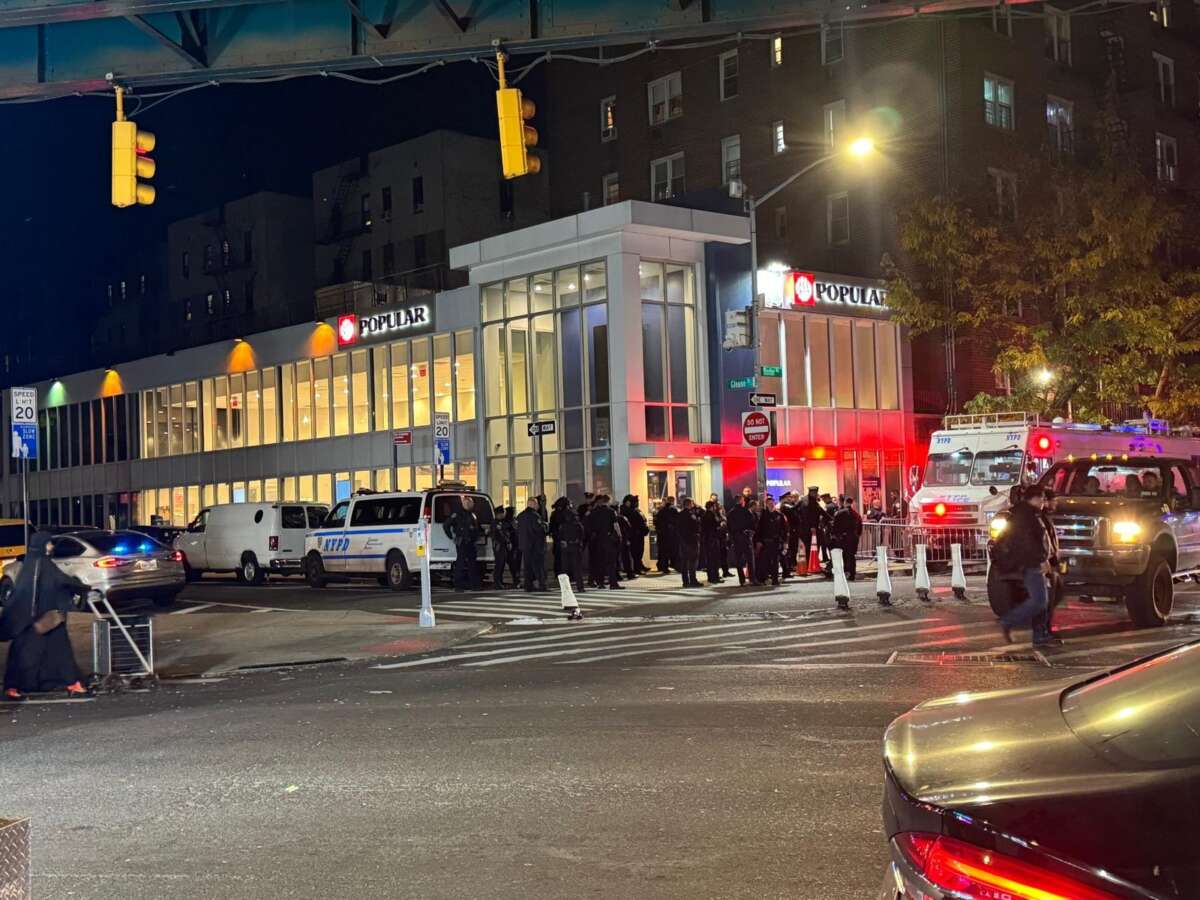
Police officers conduct raids in Jackson Heights, Queens, during Operation Restore Roosevelt in January 2025.Mateo Guerrero

Many fear leaving their workplace at night to go home. “They bring vans to arrest people, waiting to fill them. Undercover cops take photos, and patrol officers come after,” said Mateo Guerrero of the Trans Immigrant Project.

Guerrero described how the intensified raids led to increased police sexual abuse. A trans Latina sex worker was stripped on the street in winter, and mocked in police custody, Guerrero told Truthout. Others were forced to provide oral sex in a police car to avoid arrest, Guerrero said. In March, two NYPD officers were indicted for sexually assaulting and burglarizing a massage parlor while on duty.


The broader immigrant rights movement calibrates its messaging to appeal to moderate respectability — complying with lines drawn between the “deserving” and the disposable.

“Sexual harassment is the number two form of police violence,” Guerrero said. “Under Operation Restore Roosevelt, it dramatically increased.”

Chilling fear spread throughout the community. In vibrant Jackson Heights, known for its LGBTQ bars and Mexican food carts, the streets became empty. “Not just trans folks — the general migrant community was afraid to go out for a beer.”

Despite mounting evidence of abuse, most immigrant rights groups hesitate to support sex workers. “There’s respectability politics because of political conditions, and I understand that as a strategy,” Guerrero said, “but leaving our folks behind is harmful in the long term.”

That’s because policing and deportations begin on the margins — with sex workers, trans migrants, street vendors. Once normalized, these tactics expand to the broader public.
Testing Their Tactics: Following the Money in Anti-Trafficking

Technologies funded to police sex work now monitor everyone. ICE’s surveillance tools and ballooning budgets were built over decades by targeting sex workers under the guise of anti-trafficking.

The Justice for Victims of Trafficking Act (2015) authorized the creation of the Cyber Crimes Center within ICE, enabling wiretaps and internet surveillance. Between 2014 and 2018, DHS funneled over $3 million to local police for license plate readers to combat trafficking — now used in broader workplace raids.

Authorities justified travel bans, surveillance, racial profiling, raids, detentions, deportations, asset seizures, even sexual assault as anti-trafficking measures to protect women and children. But these measures do more harm than good, exposing migrants to additional forms of violence. Most funding went to prosecutions and public campaigns promoting false statistics and racist stereotypes, not victims’ services — fueling misguided vigilantism and MAGA fearmongering around child trafficking.

Both Democrats and Republicans supported the expansion of ICE through anti-trafficking legislation. First established as part of the Department of Homeland Security (DHS) in the aftermath of 9/11, ICE structured its operations as two departments in 2023: Enforcement and Removal Operations (ERO), which carries out deportations, and Homeland Security Investigations (HSI), which conducts investigations. This division creates a loophole that lets police in Sanctuary Cities share data with ICE through HSI.

Under Donald Trump’s first term, Congress gave DHS $819,000 for the “Blue Campaign”, expanding HSI’s anti-trafficking focus to target massage parlors. Under Biden, ICE’s 2023 budget increased to $8.48 billion, adding $15 million to its Center for Countering Human Trafficking and $2 million for surveillance. Today, HSI’s multibillion-dollar budget funds workplace enforcement operations, fusion centers, and joint police task forces.

Law enforcement increasingly uses facial recognition, license plate readers, Stingrays, Mobile Fortify, and other surveillance technologies — allegedly to help victims of trafficking, but in practice, to build cases for prosecution and deportation.

State and local law enforcement agencies use Traffic Jam (Marinus Analytics) to scrape escort ads and match faces to biometric databases — without evidence of trafficking. Data brokers like Babel Street and ShadowDragon scrape data from over 200 social platforms, including online games and dating websites. Officers use fake accounts to monitor and entrap targets, buying geolocation data and using geofence warrants to monitor their movements. They gather search queries, and metadata from chat apps like WhatsApp, to profile suspected sex workers.

To enhance what they term “early detection,” DHS recently launched StreamView, a program that uses AI to scan livestreams from public cameras for “suspicious behavior” — like walking on streets where known sex workers walk. Ordinary acts become grounds for arrest, when performed by people with short skirts or foreign accents. This practice legitimized profiling and surveilling the public based on patterns, rather than evidence, of criminal activity.

The National Human Trafficking hotline, run by anti-trafficking organization Polaris, proudly began partnering with Palantir in 2012. Palantir now holds a $30 million contract to build a “master database” for ICE, and is in talks to develop a larger database on all U.S. citizens.

The One Big Beautiful Bill (HR 1) allocated $2.5 billion to ICE specifically for AI systems and biometric data collection — including facial recognition, iris scanning, and DNA — shared between ICE, the Department of Homeland Security, Department of Justice, and state law enforcement. Much of this funding will go to Palantir, which has already secured over $1.3 billion in federal contracts in 2025. The Customs and Border Protection (CBP) also received over $6 billion for the expansion of Autonomous Surveillance Towers (AST) and biometric screening technologies. This bill turns previously small-scale biometric pilots into foundational national infrastructure.

In New York, ICE accessed over 480 plate readers logging 16.2 million scans in a week — tracking people without warrants or probable cause. In California, police shared plate data with ICE despite sanctuary laws. ICE uses these tools to raid farms, construction sites and food processing plants in Nebraska, California, New Mexico, and Pennsylvania. The technology that once policed sex workers now targets all migrant workers.
Bad Girls Make History: The Page and Mann Acts

The first U.S. immigration law and the nation’s first federal policing agency were both born out of the criminalization of immigrant sexuality.

The Page Act of 1875 barred entry to the U.S. for Chinese women, all suspected of prostitution — the first law excluding immigrants by race, gender, and perceived morality. It set the stage for the Chinese Exclusion Act of 1882, which closed the formerly open borders of the country.

The Mann Act of 1910 criminalized interstate travel for “immoral purposes,” a vague category used to police interracial relationships and sex work by targeting Black and migrant men. The FBI — the nation’s first federal police agency — expanded through the enforcement of the Mann Act. Today’s raids echo the same moral panic of the “white slave trade” — invoking imagined threats and racialized assumptions about migrant immorality to justify broader policing and immigration control.

Mainstream immigrant advocacy champions the “good migrant” — the student, mother, farmhand, and domestic worker. But immigration enforcement began not with “respectable immigrants,” but those hardest to defend. Migrant sex workers defy the “good/bad migrant” binary — and that’s powerful. Most Asian massage workers are older women escaping poverty wages in other more exploitative jobs. Sex work is precarious, but for many, it offers more autonomy — feeding families and providing some with the only available startup capital for other businesses, like bakeries.
Sex Work Is Labor — and a Line of Defense

As Red Canary Song urgently warns: “Neighborhoods at the margins are testing grounds for how policing and neighborhood vigilantism can expand and become embedded into the daily life of the city … the plan is to normalize the horror.”

For years, undercover officers posed systematically as clients, soliciting services in plain clothes, before arresting sex workers with impunity to earn overtime. It’s now a national tactic — turning workplaces into traps, as masked ICE agents raid immigrant workplaces to meet federal quotas.

Reversing the expansion of ICE under anti-trafficking rhetoric requires eliminating the legal loopholes that allow local police to collaborate with ICE. It requires removing the 10-year travel ban and “moral turpitude” clause from immigration law — a vague provision used to deport sex workers and other migrants for minor nonviolent offenses.

Protecting migrants also means confronting whorephobia, racism, and criminalization. Otherwise, the state will keep using the same fascist playbook: target sex workers and the most marginalized first, then expand its reach to others. Defending the rights of migrant sex workers is essential to a broader movement for immigrant justice.


Kate Zen is a first-generation Chinese immigrant, civic technologist, and co-founder of Red Canary Song. A former organizer with the Street Vendor Project, they focus on informal and gig economy worker rights. They’ve contributed to feminist hacktivist and liberatory tech projects, and served on the Community Advisory Board of the Surveillance Technology Oversight Project. At Columbia and NYU, they organized around domestic violence, youth homelessness, and women’s economic empowerment. Kate co-founded the Chinatown Literacy Project, directed Chinatown Youth Initiatives, and organized with migrant massage workers at Butterfly in Toronto.


Chanelle Gallant is a movement writer, organizer, strategist and consultant and co-author of Not Your Rescue Project: Migrant Sex Workers Fighting for Justice (Haymarket Books, 2024). She co-founded the Migrant Sex Workers Project, SURJ-Toronto and has provided training and advocacy on sex work and racial justice, from city hall to the United Nations. Chanelle sits on the national board for Showing Up for Racial Justice and Catalyst Project and has helped to move millions into organizing through donor advising and grassroots fundraising. She holds an MA in Sociology and was a Lambda Literary Fellow. Find her at chanellegallant.com


The US Public Loves the National Park Service. Trump Is Destroying It Anyway.

Trump is pushing for cuts that could require 350 of the 433 sites run by the National Park Service to shut down.
July 13, 2025

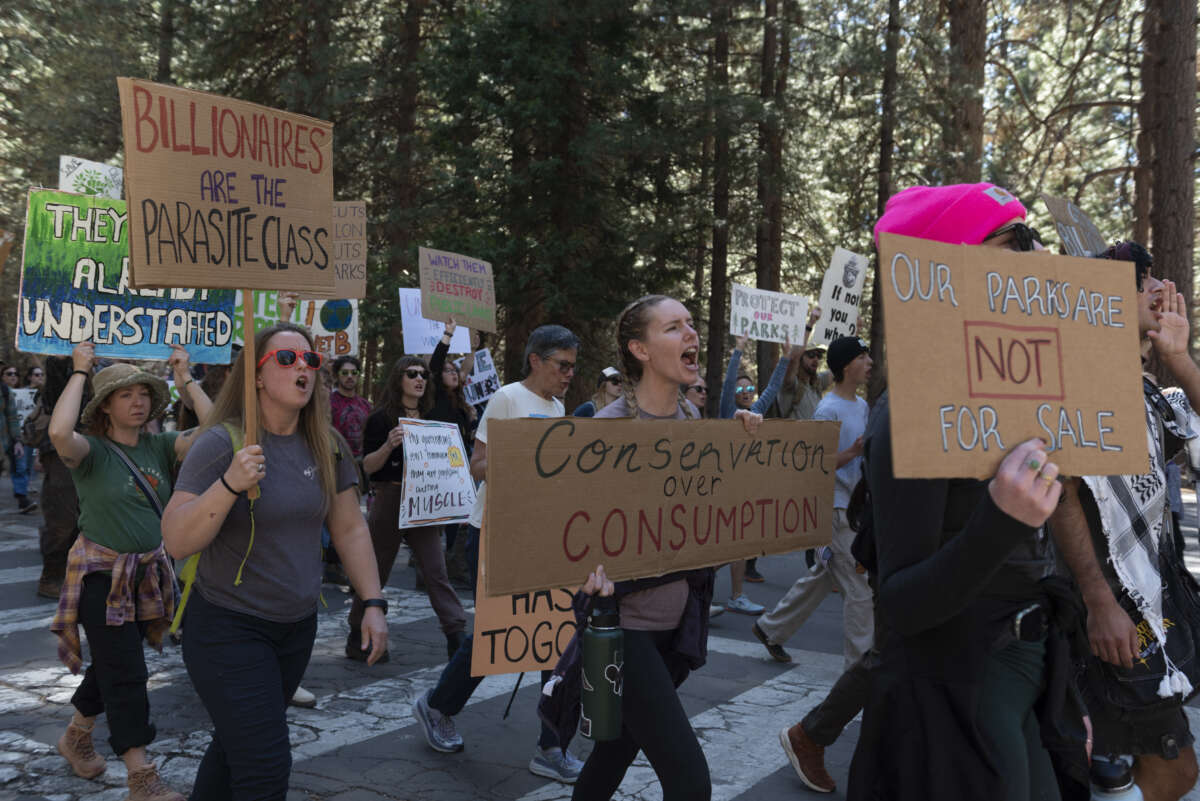
People demonstrate during a protest against federal employee layoffs at Yosemite National Park, California, on March 1, 2025.LAURE ANDRILLON / AFP via Getty Images

If there is one thing Americans love, it’s our national parks. A record-setting 331 million people visited the 63 national parks in 2024 — a number roughly equivalent to the entire U.S. population. Park visitors spend tens of billions each year on lodging, restaurants, and travel expenses, significantly boosting local economies. The National Park Service is the most popular government agency, with just 7 percent of polled Americans rating it as unfavorable. And the people want it funded: Just 17 percent of polled U.S. residents support reducing funding for the National Park Service and other agencies that manage federal lands.

Yet none of this has deterred Donald Trump and congressional Republicans from seeking to devastate the National Park Service.

Trump’s proposed FY 2026 budget would slash $1.2 billion from the National Park Service budget — the largest proposed cut in the agency’s 109-year history, according to the National Parks Conservation Association (NPCA), a nonprofit advocacy organization. Trump’s budget proposes cuts to National Park Service recreation and preservation programs, natural resource programs, and cultural programs, as well as cutting both seasonal positions and more than 5,500 full-time roles.

NPCA estimates that cuts of this magnitude would require the elimination of 350 of the 433 sites run by the National Park Service, which in addition to the 63 national parks, include historic sites, monuments, battlefields, preserves, seashores, and more. The Center for American Progress calculated the cuts would amount to an inflation-adjusted 55 percent reduction in spending per visitor from 2011.

Even some congressional Republicans expressed concerns over the austerity of Trump’s National Park Service budget — although they proposed cuts of their own. The reconciliation bill, which passed the Senate on July 1, rescinds $267 million in funding from the Inflation Reduction Act earmarked for the National Park Service.

Related Story

Forest Protectors Launch Tree Sit and Lawsuits to Stop Ecocidal Logging in WA
Forest protectors are defending mature forests from logging after dam removal and restoration on the Elwha River. By Curtis Johnson , Truthout July 6, 2025

The budget cuts are just the latest in a string of attacks on the agency. From inauguration through May 21, NPCA tracked 56 actions from the Trump administration that damage national parks and public lands, noting that “the list of attacks feels endless.”

Many of these attacks involve staff reductions. The National Park Service has lost an estimated 13 percent of its staff since January, through a combination of layoffs, pressured buyouts, and hiring freezes. This has battered an agency that already lost 20 percent of its staff between 2010 and 2023, thanks to underfunding.
DOGE in Charge

To top it off, the Department of the Interior, which oversees the National Park Service and 10 other agencies, is being run by DOGE.

In April, Trump’s Secretary of the Interior, Doug Burgum, the ultra-wealthy former governor of North Dakota, handed over significant control of the Department to Tyler Hassen, who initially came to the Department of the Interior as a DOGE operative. In a secretarial order, Burgum authorized Hassen to make policy decisions, transfer funds, and make staffing changes.

Cuts of this magnitude would require the elimination of 350 of the 433 sites run by the National Park Service.

Hassen has no government experience. He spent two decades as an executive at an oil rig company, where he made nearly $4 million annually. According to the AP, Burgum changed Hassen’s title from “assistant secretary” to “principal deputy assistant secretary,” a loophole that allows him to skirt rules banning conflicts of interest and requiring Senate confirmation. Kathleen Clark, a government ethics expert at Washington University in St. Louis, told the AP this amounts to fraud.

“Delegating sweeping authorities and responsibilities to a non-Senate confirmed person in violation of the Vacancies Reform Act is baffling and extremely troubling,” Democratic Sen. Martin Heinrich of New Mexico wrote in a May letter to Burgum.

Visitors to Arches National Park in July 2025 witnessed this creative protest against the Trump administration’s cuts to the National Park Service: a giant statue of Elon Musk’s head with a sign reading “Make America Wait Again” and “Longer Lines Thanks to DOGE Cuts.”Nancy Charmichael

“If Doug Burgum doesn’t want this job, he should quit now,” said Jennifer Rokala, executive director of the Center for Western Priorities, in a statement. “Instead, it looks like Burgum plans to sit by the fire eating warm cookies while Elon Musk’s lackeys dismantle our national parks and public lands.” (Burgum has allegedly requested Department of the Interior employees to bake cookies for him and his guests.)

Rokala continued: “DOGE’s unelected bureaucrats in Washington have no idea how to staff a park, a wildlife refuge, or a campground. They have no idea how to manage a forest or prepare for fires in the wildland-urban interface. But Doug Burgum just gave DOGE free rein over all of that.”

In April, Hassen attempted to fire Anthony Irish, an attorney who had been with the Interior for two decades, after Irish expressed concerns about giving DOGE access to a personnel payroll system. Irish was placed on investigative leave.

In a January survey of voters from eight Western states, conducted by the State of the Rockies Project, 87 percent (including the vast majority of Republicans) said that decisions about public lands should be made by career professionals such as rangers, scientists, and fire fighters, not appointed outsiders from other industries.

Yet, under Trump, the appointed outsiders are in charge, while the National Park Service sheds career professionals in droves.

National Park Service staffing levels were first hit by the administration’s 90-day hiring freeze in January, which has been extended. The Department of the Interior also offered multiple rounds of pressured buyouts. And in February, the administration fired 1,000 probationary employees who had been in their roles for less than a year. Although they were later reinstated by a federal judge, the Department of the Interior appealed the decision and delayed rehiring, and ultimately not all returned to work.

Burgum testified before the Senate Appropriations subcommittee in May that the park service had “about 26,500 people.” Yet a Washington Post review of internal Interior data found there were actually 18,066 full-time and seasonal employees. And while there were just 448 people working in IT and HR positions across the entire Park Service, Burgum further claimed: “We got several thousand people working in IT, and I don’t know what they do.”

A Worse Visitor Experience

Since the various National Park Service cuts and staff reductions went into place this year, visitors have encountered closed ranger stations, campgrounds, lakefronts, and bathrooms. Some parks have warned that search and rescue efforts will be delayed.

The cuts would amount to an inflation-adjusted 55 percent reduction in spending per visitor from 2011.

Staff reductions only amplify the many dangers caused by the climate crisis. Temperatures are rising twice as fast in national parks, which tend to be in climate sensitive regions, than in the country as a whole. This means a bare-bones National Park Service staff is dealing with more wildfires, as well as more guests suffering from dehydration, heat stroke, and heat-induced heart attacks. Yet, the Trump administration is doing everything in its power to deny and accelerate climate change.

Starting in June, the National Park Service added signage with QR codes to national parks around the country, asking visitors to report language in the parks that is “negative about either past or living Americans or that fails to emphasize the beauty, grandeur, and abundance of landscapes.” This followed a Trump executive order calling for federal lands to remove information that could “inappropriately minimize the value of certain historical events or figures.”

It isn’t the first attempt to erase history at National Park Service sites. In February, the agency removed references to queer and transgender people from the Stonewall National Monument website.

But if the National Park Service assumed park visitors would be eager to help with the censorship project, they were wrong. In fact, the first nearly 200 visitor submissions contained not one sincere suggestion, according to an analysis by the publication, Government Executive. Instead, most submitters criticized the project, writing comments like: “The entire purpose of parks like this one is to learn from the mistakes of the past so we can avoid repeating them. Please do not water down the reality of the experience for future visitors.”

Privatization of Parks and Public Lands

Destroying the National Park Service is just the first step toward privatization of the parks, warned former National Park Service Director Jonathan B. Jarvis and Gary Machlis, a former science adviser to the director, in a May op-ed in The Guardian. After slashing the budget and workforce, they predicted, “the administration will claim the private sector can better run (read ‘exploit’) the parks that the administration purposely set up to fail.” Their op-ed paints a grim picture of national parks marred with resorts, “ticketed bison petting zoos,” zip lines, and golf courses.

While these fears have not yet come to fruition, Trump and his allies do appear determined to sell off and privatize public land. In March, Trump issued executive orders calling for increased timber production and increased mining on federal land. In April, his USDA rolled back Biden protections, opening thousands of acres of land in Nevada and New Mexico for drilling and mining.

The AP reviewed a draft copy of the Department of the Interior’s new strategic plan, which includes increasing “clean coal, oil, and gas production through faster permitting,” and reducing regulations to “generate more revenue from lands and resources for the U.S. Treasury.”

In one high-profile attempt at privatizing public land, Republican Sen. Mike Lee of Utah attempted to use the budget reconciliation bill to force the Bureau of Land Management and the U.S. Forest Service to sell between 2.2 and 3.3 million acres of public land within five years, while making more than 250 million additional acres available for sale. When his proposal was stripped from the bill by the Senate’s parliamentarian, Lee inserted a scaled-back version, which he ultimately withdrew in the face of opposition from several western Republican senators.

While advocates celebrated the removal of Lee’s proposals, other public land remains under threat. The Idaho Capital Sun noted in July that public land advocates are “fighting a multifront battle” as the Trump administration seeks to revoke environmental protections; roll back protected statuses; and expand logging, mining and drilling operations. Referring to Lee’s proposal, the paper cautioned: “Given the vocal backlash to the initial sell-off plan, advocates expect future attempts to be shaped behind closed doors and advanced with little time for opponents to mount a defense.”

In the State of the Rockies Project survey, respondents overwhelmingly want Congress to prioritize conservation over energy development on national public lands, and oppose selling public land for housing development. Yet public opinion on the parks and federal land seems to matter little to Trump and his conservative allies.

This marks a shift even from Trump’s first term, when he signed the bipartisan Great American Outdoors Act, which provided billions in funding for the national parks system. At the bill’s signing, Trump called himself “the same or almost as good” a conservationist as Theodore Roosevelt. In fact, Interior Secretary Burgum also venerates the 26th president; Politico called him a “Teddy Roosevelt stan” whose pet legislative project as North Dakota Governor was the creation of a Theodore Roosevelt Presidential Library.

Yet, Trump and Burgum’s ongoing decimation of the National Parks Service prioritizes short-sighted spending cuts over Roosevelt’s vision of the parks as a treasure to protect for future generations.

“Leave it as it is. You can not improve on it,” Roosevelt said of the Grand Canyon in 1903, which he designated as a national monument. “What you can do is to keep it for your children, your children’s children, and for all who come after you, as one of the great sights which every American if he can travel at all should see.”


This article is licensed under Creative Commons (CC BY-NC-ND 4.0), and you are free to share and republish under the terms of the license.


Katie Rose Quandt is a freelance journalist in the Bronx who writes about justice and inequality. Follow her on Twitter: @katierosequandt.
Trump Revoked Rules Meant to Protect Against Disasters Like Texas Floods

A common-sense rule created building requirements for projects receiving federal funds. Trump revoked it twice.
July 12, 2025

The Cade Loop off Texas State Highway 39 is shown in Ingram, Texas, on July 5, 2025.Jason Fochtman / Houston Chronicle via Getty Images

President Donald Trump traveled to central Texas on July 11, one week after flash floods ravaged the region. With 120 people confirmed dead and another 170 still missing, the Trump administration and Texas Republican state leaders are facing intense scrutiny for management and budgetary decisions that could have potentially mitigated the devastation. Officials at the National Weather Service have said that Trump’s recent staffing cuts did not impact weather forecasting or alerts, and Texas Gov. Greg Abbott has bristled at questions about whether a different government response could have lessened the death toll. “Who’s to blame?” Abbott said, in response to a reporter’s question on July 8. “Know this, that’s the word choice of losers.”

But Trump’s National Weather Service cuts are just one facet of a policy agenda that has long been outright hostile to emergency preparedness and climate science writ large. On his first day in office, Trump issued an executive order revoking a set of federal flood protections known as the Federal Flood Risk Management Standard. The rule — which was also revoked by Trump during his first term and reinstated under Joe Biden’s presidency — required federally funded infrastructure projects to comply with certain design requirements. Critical buildings such as schools, libraries, water treatment plants, public highways, and fire stations would have to be rebuilt to withstand flooding and rising seas — either located outside of vulnerable floodplains or constructed to be more resilient — in order to receive disaster aid from the Federal Emergency Management Agency (FEMA).

The National Association of Home Builders, the lobby group for the home-building industry, vehemently opposed the rule when former President Barack Obama first proposed it in 2016. The group claimed that the regulatory burden would increase construction costs; echoing the industry line, Trump called various infrastructure permitting rules a “massive, self-inflicted wound on our country” when he first rolled them back in 2017.

The reality, however, is that the rule was based on common sense: As the climate crisis worsens, structures destroyed by floods should be rebuilt in ways that would reduce the risk of the same thing happening again. The goal of the standards were not only to protect human lives and homes, but also to save taxpayer money, preventing a never-ending cycle of destroy-rebuild-repeat. On paper, this is a policy Republicans should support: Trump, of course, often cites the need to save taxpayer dollars as an excuse to cut vital public programs, including his proposal to start “phasing out” FEMA, purportedly to leave disaster management to the states. Rebuilding structures outside of floodplains would reduce the amount of FEMA money funneled to disaster repair — but by acknowledging that climate change exists, the rules simply don’t fit Trump’s agenda.

Now, with those guidelines thrown out the window, the recovery response to the floods could replicate a destructive pattern. The hilly terrain and thin topsoil of the Texas Hill Country has always made the region particularly vulnerable to flash flooding. That risk will only grow as storms get more intense and destructive.

Related Story

Trump Dodges Questions on Texas Floods, National Weather Service Cuts
Several National Weather Service offices in Texas are considerably understaffed.
By Chris Walker , Truthout July 7, 2025


“Why on earth would the federal government want it to be rebuilt to a lower standard and waste our money so that when the flood hits, if it gets destroyed again, we’re spending yet more money to rebuild it?” Chad Berginnis, executive director of the Association of State Floodplain Managers, said in an April interview with Grist.

The consequences of Trump’s first rollback of the Federal Flood Risk Management Standard began to come into view last fall, after Hurricanes Helene and Milton slammed the Southeastern U.S. According to The New York Times, at least five water treatment plants in Florida that were exempt from tougher national building standards received about $200 million in federal funding. Those plants sustained damage from the storms, including water line breaks and power losses. Another seven water plants, rebuilt to lower flood standards with $100 million in public funds, were identified as high risk but escaped damage during Milton and Helene. Berginnis told the Times that “hundreds of millions if not billions” have been spent on buildings that are unprepared for intense floods.

Whether any of those structures were impacted by these floods remains to be seen. But from Texas to North Carolina, Los Angeles to Maui, it’s clear that nowhere is truly safe from the devastating impacts of the climate crisis. As we push for the phaseout of planet-warming fossil fuels, we must also make strides to protect communities that are already in harm’s way. The only “word choice of losers,” as Governor Abbott put it, is pretending that the emergency isn’t already here.
Ex-UN Special Rapporteur Says Francesca Albanese Deserves Nobel Prize, Not US Sanctions


The US is punishing UN Special Rapporteur Francesca Albanese for her scathing reports on Israel’s genocide in Gaza.
July 14, 2025

United Nations Special Rapporteur on Occupied Palestine Francesca Albanese speaks during a "Stop Genocide, Free Palestine" meeting in Madrid, Spain, on June 23, 2025.
Marcos del Mazo / LightRocket via Getty Images

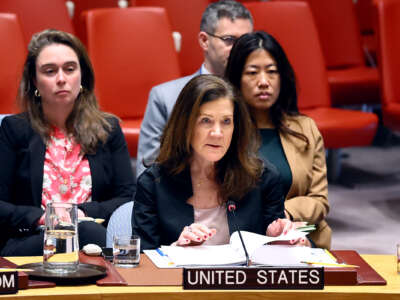
The day after Donald Trump welcomed indicted war criminal Israeli Prime Minister Benjamin Netanyahu to the United States for the third time in less than six months, U.S. Secretary of State Marco Rubio imposed sanctions against UN Special Rapporteur on Occupied Palestine Francesca Albanese for her clear-eyed critiques of Israel’s genocide.

In a July 9 press statement, Rubio charged that Albanese “has directly engaged with the International Criminal Court (ICC) in efforts to investigate, arrest, detain, or prosecute nationals of the United States or Israel, without the consent of those two countries.” He alleged that Albanese “has spewed unabashed antisemitism, expressed support for terrorism, and open contempt for the United States, Israel, and the West … including recommending that the ICC, without a legitimate basis, issue arrest warrants” for Netanyahu and former Defense Minister Yoav Gallant.

“No comment on mafia style intimidation techniques,” Albanese responded to the sanctions in a text message to Al Jazeera. “Busy reminding member states of their obligations to stop and punish genocide. And those who profit from it.” She queried why she had been sanctioned: “for having exposed a genocide? For having denounced the system? They never challenged me on the facts.”

In the height of irony, war criminal Netanyahu nominated serial lawbreaker Trump for the Nobel Peace Prize. But it is Albanese who deserves that prize.

“The UN Special Rapporteur on Occupied Palestine deserves the Nobel Peace Prize, not the U.S. punitive pushback by way of targeted sanctions denying her entry into the country and freezing any American assets she may have,” Richard Falk, who served as UN Special Rapporteur on Occupied Palestine from 2008 to 2014, told Truthout.

Related Story

US and Hungary Stand Alone at ICJ in Favor of Israel’s Blockade on Gaza
Thirty-seven states, the UN and international NGOs all condemned Israel’s blockade at the International Court of Justice.  By Marjorie Cohn , Truthout  May 5, 2025


“This was an intimidating attack on Albanese, an unpaid civil servant, for her brave truth-telling and expert knowledge fully in accord with expectations of the job to report periodically to the UN Human Rights Council and the General Assembly,” Falk added. “Her well-documented reports have broken the mainstream silence in the West on Israel’s genocidal assault, carried out before the eyes and ears of the world, shocking many by its transparency and sadism over a period of more than 20 months. She has also exposed shameful patterns of U.S. complicity with Israeli criminality.”

In the height of irony, war criminal Netanyahu nominated serial lawbreaker Trump for the Nobel Peace Prize. But it is Albanese who deserves that prize.

As they dined together in Washington, Netanyahu told Trump he had nominated him for the Nobel Peace Prize. The nomination, which Netanyahu sent to the Nobel Committee 10 days after the U.S. bombed nuclear facilities in Iran, rewarded Trump for his unwavering support for the crimes of the Zionist regime in both Palestine and Iran. Trump has continued and increased Joe Biden’s financial, political, and diplomatic assistance to Israel’s (now) 21-month-long genocide in the Occupied Palestinian Territory, which has killed more than 58,000 Palestinians. Trump also dutifully complied with Netanyahu’s plea to bomb Iranian nuclear sites, dropping several 30,000-pound bunker buster bombs on Iran. U.S. participation in Israel’s international crimes is patently illegal.

“Anatomy of a Genocide”

On July 1, 2024, Albanese filed her report “Anatomy of a Genocide” with the UN Human Rights Council. The summary begins, “After five months of military operations, Israel has destroyed Gaza.” That was one year ago. Not content with destroying Gaza, Israel continues to slaughter, starve, and displace the Palestinian people.

In this report, Albanese thoroughly documents Israel’s commission of genocide which is prohibited by the Genocide Convention. She cites the International Court of Justice’s (ICJ’s) order that Israel prevent and punish genocide and ensure humanitarian aid, which Israel has ignored. Albanese finds that “Israel has strategically invoked the international humanitarian law framework as ‘humanitarian camouflage’ to legitimize its genocidal violence in Gaza.” Israel, she charges, “appears to represent itself as conducting a ‘proportionate genocide.’” The crime of genocide, Albanese notes, entails “both individual and State responsibility.”

Israel’s actions “have been driven by a genocidal logic integral to its settler-colonial project in Palestine, signalling a tragedy foretold,” Albanese continues. “[D]isplacing and erasing the Indigenous Arab presence,” she writes, “has been an inevitable part of the forming of Israel as a ‘Jewish State.’”

Since illegally acquiring Palestinian territory by force in 1967, “Israel has advanced its settler-colonial project through military occupation, stripping the Palestinian people of their right to self-determination,” the report reads. “Genocide cannot be justified under any circumstances, including purported self-defence.” The ICJ has repeatedly held that Israel, as occupier, does not have a right to self-defense against the occupied Palestinians.

Albanese recommends that UN member states immediately implement an arms embargo on Israel, and investigate and prosecute war crimes, crimes against humanity, and genocide under principles of universal jurisdiction.

“Genocide as Colonial Erasure”

On October 1, 2024, Albanese filed her report “Genocide as Colonial Erasure.” In it, she expands her analysis of Israel’s genocide beyond the July 1 report. She cites the ICJ’s Advisory Opinion of July 2024, finding Israel’s occupation of Palestinian territory illegal, and reaffirming that the unlawfulness of the occupation “vitiates [Israel’s] claims of purported self-defence.” Albanese writes that “the only lawful recourse available to Israel is its unconditional withdrawal from the whole of that territory.”

When this report was filed, at least 90 percent of Palestinians in Gaza had been forcibly displaced, “many more than 10 times,” Albanese writes. Israeli officials and religious leaders “continue to encourage erasure and dispossession of Palestinians, setting new thresholds for acceptable violence against civilians. The Nakba, which has been ongoing since 1948, has been deliberately accelerated.”

“As Israeli leaders promised,” Albanese writes, “Gaza has been made unfit for human life.” She found “an intent to destroy [the] population [of Gaza] through starvation … Hungry crowds waiting for food have been massacred.”

Indeed, between May 27, when the sham Gaza Humanitarian Foundation (GHF) began operations, and July 7, the UN Human Rights Office documented 798 killings “including 615 in the vicinity of the GHF sites and 183 presumably on the routes of aid convoys.” The deaths were mostly due to gunshot injuries received while trying to access aid.

Albanese characterized “the pattern of targeting children” as “shocking.” Moreover, she concludes, “The overall aim is to humiliate and degrade Palestinians as a whole,” citing sadistic torture en masse, piling up decomposing bodies in the street, “young children left limbless before they could even crawl,” and the destruction of homes so the people have nowhere to return to.

The report finds that “[c]ontinual, unproven attributions of Hamas affiliation … help disguise the systematic targeting of civilians, de facto erasing Palestinian civilian-ness altogether.” It states that “The State of Israel is predicated on the goal of Palestinian erasure; its entire political system is directed towards this goal.”

Indeed, a centerpiece of the recent talks between Trump and Netanyahu was the complete ethnic cleansing of Palestinians from Gaza. They referred to “Trump’s vision of relocating Gazans,” with Netanyahu claiming that they were “getting close to finding several countries” to accept Palestinians who want to leave the Gaza Strip, although no country has publicly agreed to do so. Netanyahu asserted that the plans for forced relocation would give the Palestinians the “freedom to choose” whether to leave Gaza.

“Freedom to choose is so Orwellian,” Peter Beinart, editor-at-large at Jewish Currents, said on Democracy Now! “Palestinians have actually been … asking for the freedom to choose, the real freedom to choose, since 1948, because the vast majority of Palestinians in Gaza are not from Gaza.” He added, “They were expelled from their homes in what’s now Israel … So, they do want the freedom to choose. They want the freedom to return to the places from which their families were expelled.”

Albanese urges UN member states to initiate a full arms embargo and sanctions against Israel; formally recognize Israel as an apartheid state; support the deployment of an international protection force in the Occupied Palestinian Territory; develop a protective framework for Palestinians who are displaced outside Gaza; support independent and thorough criminal investigations of apartheid and genocide; investigate and prosecute corporations involved in crimes in the Occupied Palestinian Territory; and ensure unhindered humanitarian aid to Gaza. She also urges the ICC prosecutor to investigate Israel genocide and apartheid.

“From Economy of Occupation to Economy of Genocide”


Albanese’s most recent report, “From Economy of Occupation to Economy of Genocide,” was filed on June 30. “Arms companies have turned near-record profits by equipping Israel with cutting-edge weaponry to unleash 85,000 tons of explosives — six times the power of Hiroshima — to destroy Gaza,” she said when presenting her report to the UN Human Rights Council.

In the report, Albanese investigates the corporate machinery that sustains the Israeli settler-colonial project of displacement and replacement of the Palestinians in the occupied territory. As political leaders and states evade their obligations, “many corporate entities have profited from the Israeli economy of illegal occupation, apartheid and now genocide,” the summary reads.

The report lists more than 60 corporate entities, including weapons manufacturers, arms dealers, travel agents, real estate brokers, aerospace companies, tech firms, banks, asset management firms, pension funds, surveillance and incarceration technologies, charities, insurers, and universities. She mentions Lockheed Martin, Chevron, Microsoft, Alphabet, Google, Amazon, IBM, Hewlett Packard, Caterpillar, Airbnb, BlackRock, Palantir, Elbit, Allianz, Massachusetts Institute of Technology, AXA, Drummond, BNP, HD Hyundai, and Volvo.

Citing the Guiding Principles on Business and Human Rights, Albanese writes: “States have the primary obligation to prevent, investigate, punish and remedy human rights abuses by third parties, and may breach their obligations if they fail to do so.”

The corporate sector, which has provided Israel with weapons and machinery to destroy homes, schools, hospitals, places of worship, and productive assets, “has contributed to the creation of the conditions for Palestinian ethnic cleansing.” Corporations have sustained “Israeli expansion in occupied land while facilitating the replacement of Palestinians” and “turned the occupied Palestinian territory into a captive market.”

Albanese analyzes how “the forever-occupation has become the ideal testing ground for arms manufacturers and big tech” and “[a]rms companies have turned over near record profits by equipping Israel with cutting-edge weaponry that has devastated a virtually defenceless civilian population.”


“These sanctions on Albanese carry defiance of international law to another level, by inverting justice and punishing those who dare document what the U.S. government insists on covering up.”

She urges member states to impose sanctions and a full arms embargo on Israel; suspend or prevent trade agreements and investment relations; and impose sanctions, including asset freezes, on entities and individuals participating in activities that may endanger Palestinians.

Albanese urges corporate entities “to promptly cease all business activities and terminate relationships directly linked with, contributing to and causing human rights violations and international crimes against the Palestinian people, in accordance with international corporate responsibilities and the law of self-determination” and pay reparations to the Palestinian people.

In addition, she urges the ICC to investigate and prosecute corporate executives and/or corporate entities for international crimes.

Finally, Albanese “urges trade unions, lawyers, civil society and ordinary citizens to press for boycotts, divestments, sanctions, justice for Palestine and accountability at the international and domestic levels; together, the people of the world can end these unspeakable crimes.”

To Stand With Albanese Is to Stand With the Palestinian People

July 9 marked the 20th anniversary of the Boycott, Divestment, Sanctions (BDS) movement, a nonviolent campaign launched by Palestinian civil society to hold Israel accountable under international law. “We decided that, at a minimum, in order for Palestinians to exercise our inalienable right as an indigenous people in our homeland to self-determination, three rights must be achieved,” BDS co-founder Omar Barghouti said in an interview with Mondoweiss. “An end to the military occupation, an end to the system of racial domination, segregation and apartheid, and the right of refugees to return and receive reparations.”

Barghouti noted that before October 2023, not one country supported a military embargo of Israel. Now 53 states have official policies of military embargo. The Norwegian pension fund, the largest sovereign state fund in the world, divested from Israeli bonds and several companies that contribute to apartheid. Large churches throughout the U.S. are divesting from Israel, and U.S. universities are divesting in response to student encampments and mobilizations. There are corporate, academic, sports, and cultural boycotts as well.

“Sanctioning Francesca Albanese confirms the U.S.’s brazen contempt for international law and the UN, betraying the vision of why it was established under U.S. guidance in 1945, as a beacon of light after the carnage and genocide of World War II,” Falk told Truthout. “These sanctions on Albanese carry defiance of international law to another level, by inverting justice and punishing those who dare document what the U.S. government insists on covering up. We should have learned by now that hiding genocide from legal and moral scrutiny compounds the tragedy and brings added shame to its governmental and corporate accomplices.”

The Trump administration’s sanctioning of Albanese “is a blatant affront to the Palestinian people’s demand for justice, truth, and accountability; an act of support for and incitement to genocide; and an intervention designed to dismantle one of the core independent oversight mechanisms of the multilateral international system,” several organizations and individuals, including this writer, wrote in a public statement initiated by the International Association of Democratic Lawyers. “To stand with Francesca Albanese is to stand with the Palestinian people in their quest for justice in the face of occupation, genocide, and war crimes — and to defend the universal values of international law.”

This article is licensed under Creative Commons (CC BY-NC-ND 4.0), and you are free to share and republish under the terms of the license.


Marjorie Cohn is professor emerita at Thomas Jefferson School of Law, dean of the People’s Academy of International Law and past president of the National Lawyers Guild. She sits on the national advisory boards of Veterans For Peace and Assange Defense, and is the U.S. representative to the continental advisory council of the Association of American Jurists. Her books include Drones and Targeted Killing: Legal, Moral and Geopolitical Issues.
ABOLISH SCOTUS
Supreme Court allows Trump to resume Education Department dismantling
ACTIVIST JUDGES 


By AFP
July 14, 2025

A divided US Supreme Court gave President Donald Trump the green light on Monday to resume dismantling the Education Department.

The conservative-dominated court, in an unsigned order, lifted a stay that had been placed by a federal district judge on mass layoffs at the department.

The three liberal justices on the nine-member panel dissented.


Trump pledged during his White House campaign to eliminate the Education Department, which was created by an act of Congress in 1979, and he moved in March to slash its workforce by nearly half.

Trump instructed Education Secretary Linda McMahon to “put herself out of a job.”

Around 20 states joined teachers’ unions in challenging the move in court, arguing that the Republican president was violating the principle of separation of powers by encroaching on Congress’s prerogatives.

In May, District Judge Myong Joun ordered the reinstatement of hundreds of fired Education Department employees.

The Supreme Court lifted the judge’s order without explanation, just days after another ruling that cleared the way for Trump to carry out mass firings of federal workers in other government departments.

Justice Sonia Sotomayor, in a dissent joined by justices Elena Kagan and Ketanji Brown Jackson, said in the Education ruling that “only Congress has the power to abolish the Department.”

“The majority is either willfully blind to the implications of its ruling or naive, but either way the threat to our Constitution’s separation of powers is grave,” Sotomayor said.

Traditionally, the federal government has had a limited role in education in the United States, with only about 13 percent of funding for primary and secondary schools coming from federal coffers, the rest being funded by states and local communities.

But federal funding is invaluable for low-income schools and students with special needs. And the federal government has been essential in enforcing key civil rights protections for students.

After returning to the White House in January, Trump directed federal agencies to prepare sweeping workforce reduction plans as part of wider efforts by the Department of Government Efficiency (DOGE) — previously headed by Elon Musk — to downsize the government.

Trump has moved to fire tens of thousands of government employees and slash programs — targeting diversity initiatives and abolishing the Education Department, the US humanitarian aid agency USAID and others.
US pro athletes reject antitrust exemptions for college sports


By AFP
July 14, 2025

Professional players unions for the five major US sports leagues — baseball, soccer, basketball, football and hockey — appealed on Monday for American lawmakers to reject antitrust exemptions or legal liability shields in new regulations for college athletes.

While compensation for professional players seemingly knows no limit, college athletes in the US have only been allowed to begin profiting from their performance and reputation in recent years.

Now, professional players are weighing in as Congress works to develop a national framework for student athlete profit-sharing, with pros saying they felt a duty to protect future union members while they played in college.

“Granting an antitrust exemption to the NCAA and its members gives the green light for the organization and schools to collude and work against student athletes,” the unions’ statement said.

“Historically, antitrust exemptions have been used to set prices, limit wages, and restrict access to opportunities provided by open markets, all while shielding abuse from legal recourse.”


The joint statement was sent by the Major League Baseball Players Association (MLBPA), Major League Soccer Players Association (MLSPA), National Basketball Players Association (NBPA), National Football League Players Association (NFLPA) and National Hockey League Players Association (NHLPA).

The US House of Representatives Committee on Energy and Commerce is considering the Student Compensation and Opportunity through Rights and Endorsements (SCORE) Act after a House settlement last month ensured National Collegiate Athletic Association (NCAA) athletes will receive revenue sharing from their schools for Name, Image, and Likeness (NIL) profits.

In a statement last week Congressman Gus Bilirakis, a Florida Republican, said a national framework governing such profit-sharing was long overdue, and praised the SCORE Act saying it “delivers the stability, clarity and transparency” student athletes and colleges need.

A 2021 Supreme Court decision held that the NCAA is subject to antitrust laws.

In their joint statement, the players’ unions called for transparency and fair-dealing.

“It is not hard to imagine a situation where NCAA and its members collude to restrict revenue sharing and deny student athletes fair compensation with the confidence of immunity against legal action. Indeed, they have been doing exactly that for decades.

“The NCAA should not have a blank check to impose their will on the financial future of over 500,000 college athletes.”