Tuesday, July 29, 2025

World countries gather at UN to revive two-state solution efforts

World  countries gather at UN to revive two-state solution efforts
UN Secretary General António Guterres. / bne IntelliNews

By bna Cairo bureau July 28, 2025

In a historic move to revive the long-stalled two-state solution, the international community has launched a high-level conference at the United Nations General Assembly in New York, aimed at turning the vision of a Palestinian state alongside Israel into reality after nearly eight decades of conflict, war, and unfulfilled promises.

The two-day conference, which began on July 28, is jointly sponsored by Saudi Arabia and France under the title "For the Peaceful Resolution of the Palestinian Issue and the Implementation of the Two-State Solution." While the US chose not to participate, it notably did not object to the initiative, signalling a subtle shift in its posture.

The event follows French President Emmanuel Macron’s announcement of plans to recognise the State of Palestine—a move likely to trigger wider recognition. Asked about this, US President Donald Trump said, “Let them do what they want,” which a senior European official called a sign that “the US is not making any special effort to stop the momentum.”

Dozens of foreign ministers convened at the UN to back the two-state solution, including France’s Jean-Noël Barrot, Saudi Arabia’s Prince Faisal bin Farhan, Egypt’s Foreign Minister, UK Foreign Secretary David Lammy, Germany’s State Minister for Foreign Affairs, Florian Hahn, and Palestinian Prime Minister Mohammad Mustafa. 

Neither Israel nor the US attended. Asked if UK PM Keir Starmer might recognise Palestine like Macron, Trump replied, “I wouldn’t mind him taking that stance”—highlighting a lack of US pushback, unlike Netanyahu’s firm opposition.

In his opening remarks, UN Secretary-General António Guterres expressed gratitude to Saudi Arabia and France for sponsoring the event. “The Israeli–Palestinian conflict has persisted for generations, defying diplomacy and countless resolutions... defying international law,” he said, noting that the two-state solution now appears “more distant than ever.”

While he condemned “the horrific Hamas terrorist attacks of October 7, 2023 and the taking of hostages,” he also made clear, “Nothing justifies the destruction of Gaza or the starvation of its population.”

Guterres warned of the ongoing “expansion of settlements, rising settler violence against Palestinians, and the creeping annexation of the occupied West Bank,” describing it as part of a “systemic reality that is dismantling the foundations of peace in the Middle East.”

He called the conference “a rare opportunity—it can and must be a turning point, a moment that drives irreversible progress toward ending the occupation.” He reiterated the need for “two independent, democratic, and sovereign states, living side by side in peace and security, recognised by all, based on the pre-1967 lines, with Jerusalem as the capital of both.”

Saudi Foreign Minister Prince Faisal bin Farhan stressed that the two-state solution is key to regional stability. “This conference marks a pivotal moment on the path to implementing that solution,” he said. “Stability in the region begins with granting the Palestinian people their legitimate rights.”

He welcomed Macron’s announcement and called for an immediate end to the humanitarian catastrophe in Gaza, revealing that Saudi Arabia and France had facilitated the transfer of $300mn from the World Bank to support Palestine.

French Foreign Minister Barrot echoed these sentiments: “We cannot accept the targeting of civilians in Gaza,” he said. “The war has gone on too long and must stop.”

He continued: “We must work to make the two-state solution a tangible reality. It meets the legitimate aspirations of the Palestinian people, and this conference must be a turning point in making it happen. We have launched an irreversible momentum towards a political solution in the Middle East.”

Barrot added, “It was absolutely necessary to restart the political process—the two-state solution—which today faces greater threats than ever before.”

Palestinian Prime Minister Mohammad Mustafa said, “The Palestinian people must not be condemned to eternal displacement and occupation.”

He called for an immediate end to the violence in Gaza, describing the situation as “one of the most horrific massacres in history.”

Mustafa expressed gratitude to Saudi Arabia and France for co-hosting the conference, stating, We are grateful to Saudi Arabia and France for leading this historic conference, which sends a powerful message to the Palestinian people that the world stands with them.”

“This conference is a message to Israelis to move toward peace,” and praised France’s brave step in committing to recognise the State of Palestine, "he added.

Egyptian Foreign Minister Badr Abdelatty said, “Egypt has intensified its humanitarian assistance in recent weeks by delivering urgent aid to Gaza to ease the suffering of its people. It is essential to sustain and strengthen these efforts in cooperation with international partners.”

“We welcome the French president’s commitment to recognising the State of Palestine and aspire to build international consensus toward full recognition of Palestinian statehood.” Abdelatty said

“We are engaged in intensive consultations with Qatar and the US to coordinate a major international conference for Gaza’s reconstruction, to be held once a ceasefire is reached. This conference will serve as a vital platform to attract global support and boost development efforts in the Strip,” he added. 

The two-state solution conference is expected to provide fresh momentum toward a summit anticipated in  September, which may be held in either Paris or New York, alongside high-level meetings during the 80th session of the United Nations General Assembly.

France says 'no alternative' to two-state solution for Israel, Palestinians

France told a UN conference co-chaired with Saudi Arabia on Monday that there is "no alternative" to a two-state solution between Israel and the Palestinians.


Issued on: 28/07/2025 

RFI

Conference co-chairs French Foreign Minister Jean-Noël Barrot and Saudi Arabia's Foreign Minister Faisal bin Farhan Al-Saud attend a ministerial high level meeting during a United Nations conference on a two state solution for Israel and the Palestinians, at UN headquarters on 28 July, 2025, in New York City. AFP - TIMOTHY A. CLARY

"Only a political, two-state solution will help respond to the legitimate aspirations of Israelis and Palestinians to live in peace and security. There is no alternative," French Foreign Minister Jean-Noël Barrot said at the start of the three-day meeting.

Days before the conference, French President Emmanuel Macron announced that he would formally recognise a State of Palestine in September.

In an interview with French weekly La Tribune Dimanche, Barrot said that other European countries will confirm "their intention to recognise the State of Palestine" during the conference, without confirming which.

"All states have a responsibility to act now," said Palestinian prime minister Mohammad Mustafa at the start of the meeting, calling for an international force to deploy to help underwrite Palestinian statehood. "Recognise the state of Palestine without delay."

France is hoping that Britain will take this step. More than 200 British members of parliament on Friday voiced support for the idea, but Prime Minister Keir Starmer reiterated that recognition of a Palestinian state "must be part of a wider plan."

According to a database created by French news agency AFP, at least 142 of the 193 UN member states – including France – now recognize the Palestinian state proclaimed by the Palestinian leadership in exile in 1988.

Thousands of lives lost


In 1947, a resolution of the UN General Assembly decided on the partition of Palestine, then under a British mandate, into two independent states – one Jewish and the other Arab. The following year, the state of Israel was proclaimed.

For several decades, the vast majority of UN member states have supported the idea of a two-state solution, Israelis and Palestinians living side-by-side.

But after more than 21 months of war in Gaza, the ongoing expansion of Israeli settlements in the West Bank, and Israeli officials declaring designs to annex occupied territory, it is feared a Palestinian state could be geographically impossible.

The current war in Gaza started following a deadly attack by Hamas on Israel, which responded with a large-scale military response that has claimed tens of thousands of Palestinian lives.

This week's conference comes at a moment when "the prospect of a Palestinian state has never been so threatened, or so necessary," Barrot said.

Beyond facilitating conditions for the recognition of a Palestinian state, the meeting will focus on three other issues – reform of the Palestinian Authority, disarmament of Hamas and its exclusion from Palestinian public life, and normalisation of relations with Israel by Arab states.

Growing international pressure


However, no new normalisation deals are expected to be announced at the meeting, according to a French diplomatic source.

On the other hand, "for the first time, Arab countries will condemn Hamas and call for its disarmament," Barrot said.

The conference "offers a unique opportunity to transform international law and the international consensus into an achievable plan and to demonstrate resolve to end the occupation and conflict once and for all, for the benefit of all peoples," said Palestinian ambassador to the UN Riyad Mansour, calling for "courage" from participants.

Israel and the United States were not taking part in the meeting, amid growing international pressure to mount on Israel to end nearly two years of war in Gaza.

Despite "tactical pauses" in some military operations announced by Israel, the humanitarian catastrophe in the ravaged coastal territory is expected to dominate speeches by representatives of more than 100 countries as they take the podium.

Bruno Stagno, chief advocacy officer at Human Rights Watch, said "more platitudes about a two-state solution and peace process will do nothing to advance the conference's goals, nor to halt the extermination of Palestinians in Gaza."

(with AFP)


Vatican Communication Office Urges Two-State Solution As France Backs Palestinian Statehood


By 

By Kate Quiñones


The Vatican’s Dicastery for Communication reiterated its long-standing call for recognition of Palestine statehood amid the ongoing Israel-Hamas conflict after France announced last week it would recognize the region’s statehood.

The editorial manager for the Vatican’s Dicastery for Communication, Andrea Tornielli, called for a “two-state solution” and recognition of Palestine as a state in a July 27 editorial

In the editorial, Tornielli cited France’s recent movement toward recognition. Last week, French President Emmanuel Macron announced in a post on X that France would recognize Palestine as a state — a plan that was quickly rejected by various Western countries including the United States, the United Kingdom, Germany, Italy, and Australia. 

In addition to affirming Palestine as a state, Macron called for the demilitarization of the terrorist group Hamas that runs the government of Gaza. He demanded the release of the hostages, called for humanitarian aid for Gaza, and said that Palestine must accept demilitarization and fully recognize Israel.

In 2015, the Vatican signed its first treaty with the “State of Palestine.” Tornielli recalled the “comprehensive agreement” between the two parties, noting that the treaty affirmed the right of the Palestinian people to an “independent, sovereign, democratic, and viable” state.


While Pope Francis was the first of the popes to use the term “State of Palestine” upon his 2014 visit to the Holy land, Tornielli pointed out that Pope Benedict XVI affirmed both that “the State of Israel has the right to exist and enjoy peace and security” and that “the Palestinian people have the right to an independent and sovereign homeland.”

Before Benedict, in the early 1990s, Pope John Paul II established relationships with both the State of Israel and the Palestine Liberation Organization, according to Tornielli. 

“It is to be hoped that the High-Level International Conference for the Peaceful Resolution of the Palestinian Question and the implementation of the two-state solution, grasping the urgency of a common response to the Palestinian drama, will decisively pursue a solution to finally guarantee this people a state with secure, respected, and recognized borders,” Tornielli wrote in the editorial.

Notably, the Vatican’s support of the “two-state solution” runs counter to the stances of many Western countries. The United States, the United Kingdom, Germany, Italy, and Australia rejected Macron’s Palestine statehood plan outright, while President Donald Trump dismissed Macron, telling reporters at the White House: “What he says doesn’t matter. It’s not going to change anything.” 

Macron said in his post that he plans to announce the recognition at the United Nations General Assembly in September. 

While U.K. Prime Minister Keir Starmer rejected the plan, he explained in a statement he supported the “two-state solution” but said it must ensure “lasting security for Palestinians and Israelis.”

On a local level, the Representative Council of Jewish Institutions of France called the decision a moral failure and said it risks security for Jews worldwide, while top American Jewish groups declined to attend a meeting with the French government after his statement. 

Israeli Prime Minister Benjamin Netanyahu “strongly” condemned Macron’s decision, saying the move “rewards terror and risks creating another Iranian proxy, just as Gaza became.” 

“A Palestinian state in these conditions would be a launch pad to annihilate Israel — not to live in peace beside it,” Netanyahu said. “Let’s be clear: The Palestinians do not seek a state alongside Israel. They seek a state instead of Israel.”


CNA

The Catholic News Agency (CNA) has been, since 2004, one of the fastest growing Catholic news providers to the English speaking world. The Catholic News Agency takes much of its mission from its sister agency, ACI Prensa, which was founded in Lima, Peru, in 1980 by Fr. Adalbert Marie Mohm (†1986).


EU proposes to suspend Israeli access to European research fund over Gaza war
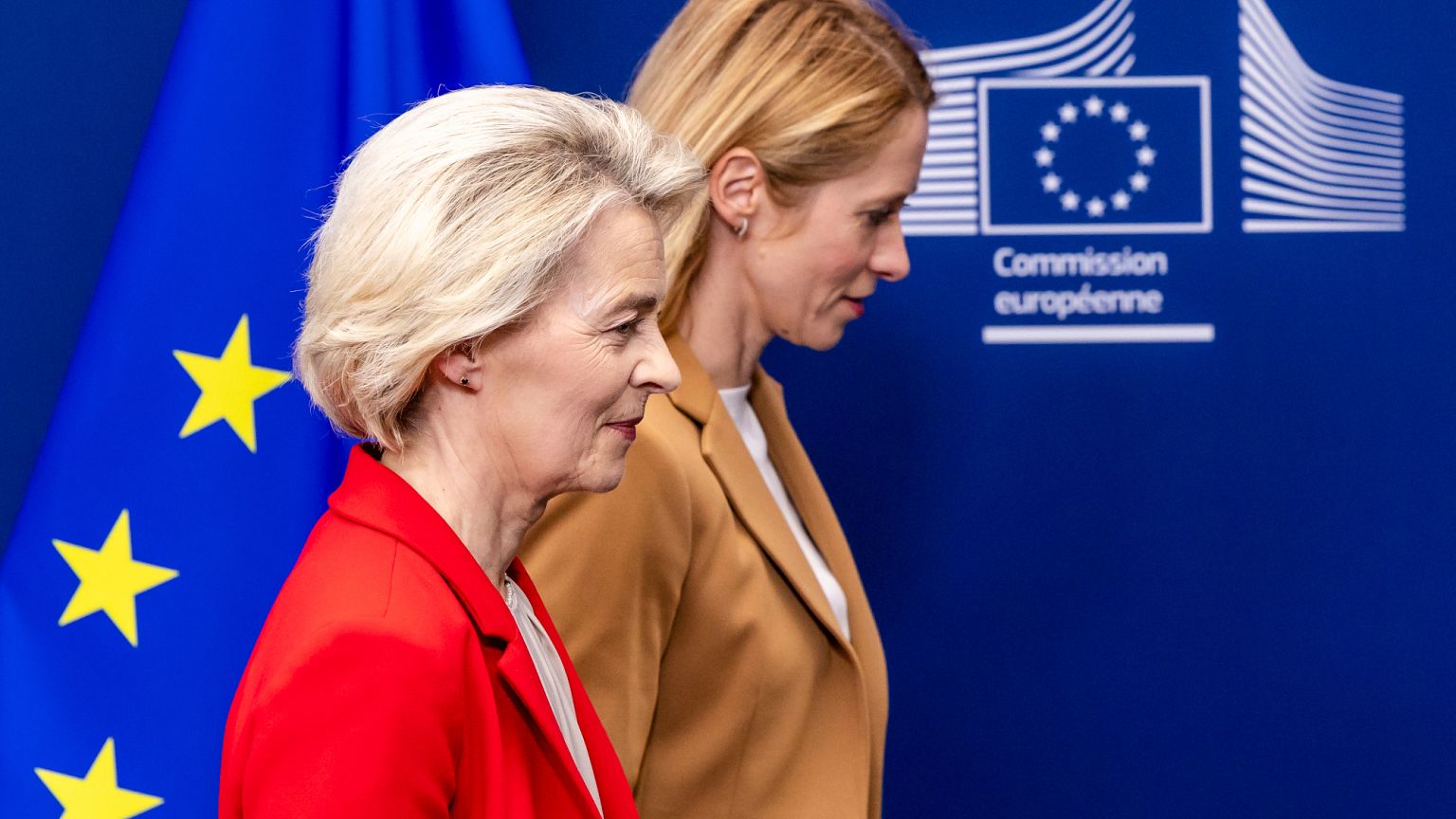
European Commission President Ursula von der Leyen, left, and European Union foreign policy chief Kaja Kallas leave after a media briefing at EU headquarters in Brussels.
Copyright (AP Photo/Geert Vanden Wijngaert)

By Shona Murray
Published on 

The European Commission is tabling the suspension of Israel's access to the EU's Horizon Research fund as a consequence of the worsening humanitarian crisis in Gaza. It comes after an accord between the two sides for Israel to substantially increase aid to Gaza has not materialised, say EU sources.

The European Commission has issued proposals to EU member states to partially suspend Israel's access to the EU's Horizon Europe research and innovation programme in response to Israel's ongoing actions in Gaza.

EU Commissioners met on Monday today to discuss the move in response to the failure of Israel to implement a negotiated agreement to "substantially" improve access to food and medical supplies to Palestinians in Gaza. 

The move would affect the participation of Israeli start-up businesses with "disruptive innovations and emerging technologies that have potential dual-use applications, such as cyber-security, drones and artificial intelligence", a statement from the European Commission said.

Until this decision, EU Commissioners including President of the European Commission, Ursula von der Leyen have collectively refused to support any action against Israel.

The proposal will be discussed and potentially voted on by member states as early as Tuesday when EU ambassadors from all 27 member states will convene. 

Suspending Israel from the Horizon programme was one of ten options the European Commission and member states were presented with on foot of a report confirming Israel was in breach of international law due to the dire situation for civilians across the Palestinian Territories.

Partially suspending Horizon would not require unanimous support across all 27 countries, and member states such as Austria, Germany, Hungary and the Czech Republic are still unlikely to agree to taking action against Israel. 

However, the motion could pass with the qualified majority voting, which means larger state such as Italy would have to support it in order to meet the requirements.

Dutch Prime Minister Dick Schoof said the humanitarian situation in Gaza is "catastrophic" and demanded "the people of Gaza be given immediate, unfettered, safe access to humanitarian aid."

In a post on social media, Schoof also said his government could take even stronger action against Israel.

The Hague supports the plan to suspend Israeli participation in Horizon, adding the Netherlands will "also press for further European measures, for example in the realm of trade", he said.

On 10 July the EU negotiated a "significant" improvement of humanitarian aid access into Gaza, including an increase of food trucks, and an agreement to "protect the lives of aid workers", after the EU High Representative for Foreign Affairs Kaja Kallas dispatched a delegation to Tel Aviv, including Christophe Bigot, the EU's Special Envoy to the Middle East. 

But strong consensus within the EU is that Israel has not enacted its part of the deal.

"Clearly the situation in the last few days in Gaza is still awful, and although some more aid is getting in, distribution has been deadly," a highly placed source told Euronews.

The UN estimates over 1000 people have been killed at food distribution sites alone, and dozens have died of starvation in recent days. 

"I hope they're discussing actual measures and not just the situation in Gaza, we need action, not more declarations of how terrible it is," said another EU diplomat close to the matter.

"Focusing on one option forces member states to make a decision, I'm not sure how economically this will impact Israel, but it shows political pressure is really mounting" on Israel, said this diplomat, adding that they considered the Commission "has washed its hands of the matter" up to this point.

Egyptian President El-Sisi rejects displacement of Palestinians, urges Trump to end Gaza war

Egyptian President El-Sisi rejects displacement of Palestinians, urges Trump to end Gaza war
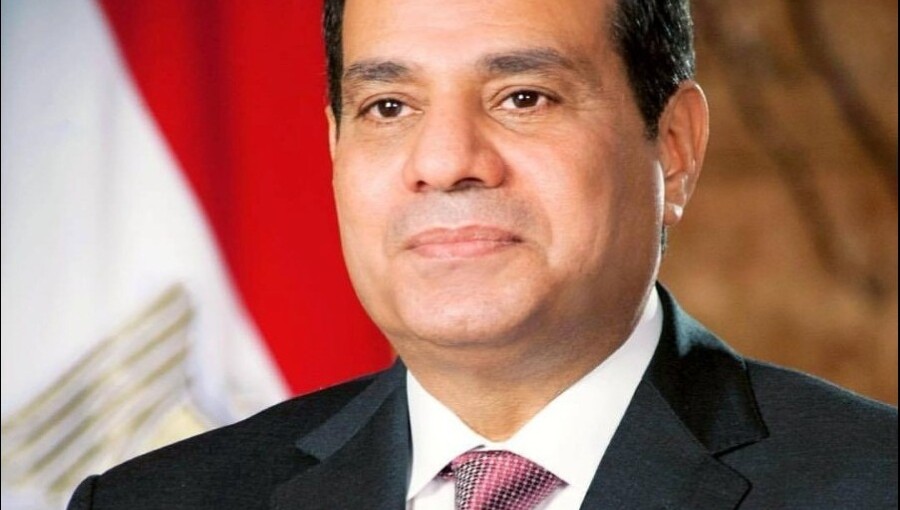
Egyptian President Abdel Fattah El-Sisi delivered a televised address on the situation in Gaza. / President El-Sisi official Facebook page
By bna Cairo bureau July 28, 2025

Egyptian President Abdel Fattah El-Sisi said on July 28 that there is an urgent need to end the war in Gaza and support a two-state solution, reaffirming that Egypt’s stance on the Gaza conflict remains firm, Al Ekhbariya reported. 

In a televised speech addressing the situation in Gaza, El-Sisi noted Egypt’s ongoing diplomatic efforts since the outbreak of the war on October 7.

The humanitarian crisis in Gaza has reached catastrophic levels, with thousands of civilians lacking access to food, clean water and medical care. Continuous bombardment and destruction have left much of the infrastructure in ruins, displacing families and devastating communities. Hospitals are overwhelmed, operating without essential supplies, while children and the elderly bear the brunt of the ongoing suffering.

“Since October 7, we have worked closely with our partners in Qatar and the US to achieve three key goals: ending the war, delivering humanitarian aid and securing the release of hostages,” El-Sisi added.

He described the humanitarian conditions in Gaza as “tragic” and “unbearable,” stressing the urgent need to increase aid flows into the enclave. He also clarified that the Rafah border crossing, primarily used for people, cannot operate independently of the situation on the Gaza side.

El-Sisi affirmed that Egypt has consistently stressed the need to deliver humanitarian aid to the Gaza Strip, noting that under normal circumstances, the territory requires 600 to 700 aid trucks daily. He added, “Over the past 21 months, we have worked to ensure the entry of the largest possible volume of aid.”

The Egyptian Red Crescent confirmed on July 27 that over 100 trucks carrying more than 1,200 tonnes of food, including approximately 840 tonnes of flour, were dispatched via the Kerem Shalom (Karam Abu Salem) crossing. Egyptian state television broadcast footage of trucks loaded with aid pallets en route to the crossing point.

President El-Sisi continued: “We have a very large volume of aid ready to enter the Gaza Strip… and we cannot block it – our morals and values do not allow that. But for aid to pass through, coordination is essential, and the Palestinian side of the Rafah crossing must be open to facilitate it. Many details are being addressed in discussions with both the Palestinian and Israeli sides, with strong and sincere involvement from our brothers in Qatar and the US.”

El-Sisi firmly rejected any plans for the displacement of Palestinians, warning that such actions would undermine any prospect of peace. “Forcible displacement would empty the idea of a two-state solution and any hope for a peaceful resolution,” he explains.

Addressing Egyptians, the president affirmed Egypt’s commitment to its Palestinian brothers: “We will never take a passive role. Our support is sincere and unwavering.”

In a notable appeal, El-Sisi called on former US President Donald Trump to use his influence to help end the conflict. “I make a special appeal to President Trump to do everything in his power to stop the war, deliver aid, and end the suffering,” El-Sisi urged, expressing confidence in Trump’s ability to intervene effectively.

Monday, July 28, 2025

The Cost Of Silence: Why Global Inaction Is Betraying The People Of Sudan – OpEd


By 

Growing instability and conflict pivots continue to exacerbate catastrophe across Sudan. The Sudanese Armed Forces (SAF) and the Rapid Support Forces (RSF) remain uninterested in negotiating after three years of fighting, despite influencing “the largest displacement crisis in the world” as well as extensive famine. Whether a peaceful transition to a civilian government is the best course remains unclear, but the Sudanese people still deserve more solutions during this period of struggle. 


Following the overthrow of Omar al-Bashir’s government in 2019, SAF General Abdel Fattah al-Burhan and his followers claimed that Sudanese Prime Minister Khamil al-Taib Idris had a constitutional right to lead in Bashir’s place, allied with the Muslim Brotherhood-affiliated National Congress Party (NCP). As of 2023, the US has sanctioned the SAF for detainee torture, humanitarian aid interference, civilian mistreatment, starvation and chemical weapon proliferation. RFS leader Mohamed “Hamedti” Hamdan Daglo, considering these ongoing abuses, has emphasized that Sudan deserves its own civil administration, as life there is becoming increasingly difficult.

This infighting has gone on to displace over 14 million people, 3.3 million of whom have inadvertently threatened neighboring country stability by fleeing across the Sudanese tri-border region into Libya, Chad and Egypt. While RSF elements have recently taken partial control of the Libya-Sudan boundary, eager to stop illicit traffickingvia its roots, worsening tensions between Israel and Iran only further complicate their effort. If Sudanese allies go on ignoring ties between the SAF and Tehran, bloodshed from all parties could extend as far as the Red Sea, leaving every nation in the Horn of Africa a victim to violence. 

Additional donations or sanctions alone, therefore, may not deliver Sudan what peace it deserves. The African Union, US and UK must use more active diplomatic measures to bring al-Burham and Hemedti together as soon as possible. If these leaders cannot find common ground soon, hope for the Sudanese is all but uncertain. 

  • The views expressed in this article are the author’s own and do not necessarily reflect Fair Observer’s editorial policy, where this article was published.

Fernando Carvajal

Fernando Carvajal served on the UN Security Council Panel of Experts on Yemen from April 2017 to March 2019 as a regions and armed groups expert. He has nearly 20 years of experience conducting fieldwork in Yemen and is a specialist in Yemeni politics and tribal relations.

India: Obstinate Maoists, Stubborn Government – Analysis


By 

By Deepak Kumar Nayak


On July 20, 2025, four to five unidentified cadres of the Communist Party of India-Maoist (CPI-Maoist) killed two villagers, Kawasi Joga (55) of Chutwai village and Mangalu Kursam (50) of Bada Tarrem, with sharp-edged weapons, after reportedly dragging the duo from their homes under the Tarrem Police Station limits in the Bijapur District of the Bastar division of Chhattisgarh. It is said that, due to the joint action of the Centre and the state against Naxalism, the Maoists repeatedly vent their anger by killing innocent villagers on the pretext of they being ‘informers’. The Jagargunda Committee of the Maoists claimed responsibility for the attack.

On July 16, 2025, a Central Reserve Police Force (CRPF) General Duty Constable (CT/GD), Parneswar Koch of Kokrajhar, Assam, was killed in a gunfight between the Security Forces (SFs) and the Maoists in the Birhordera Forest under the Gomia Police Station area in the Bokaro District of Jharkhand. SFs also gunned down two Maoists during the encounter. The identities of the killed Maoists are being ascertained.

On July 16, 2025, Kawasi Hunga (38), a resident of Perampalli village, was reportedly attacked and killed with sharp weapons by 4 to 5 unidentified CPI-Maoist cadres in Perampalli village under Usoor Police Station limits in Bijapur District. According to a preliminary investigation, the attackers, dressed in plain clothes, barged into the village around midnight and accused Hunga of working as a ‘police informer’ before killing him. 

These recent killings orchestrated by the Maoists are a demonstration of the inflexible stand the rebels have adopted, notwithstanding their demands for peace talks and a ceasefire. 

According to partial data collated by the South Asia Terrorism Portal (SATP), at least 60 persons (35 civilians and 25 SF personnel) have been killed by the Maoists in the Left-Wing Extremism (LWE)-affected districts across the country in the current year, thus far (data till July 27, 2025). During the corresponding period of 2024, 61 persons (44 civilians and 17 SF personnel) were killed, while another 40 (36 civilians and four SFs) were killed in the remaining period of 2024. Significantly, at least 156 persons (111 civilians and 45 SFs) have been killed by the rebels since January 20, 2024, when Union Home Minister (UHM) Amit Shah proclaimed that the entire country would be 100 percent free from the Naxal problem within the following three years.


During the period from January 20, 2024, to July 27, 2025, the Maoists have engineered at least 78 incidents of explosion (58 in Chhattisgarh, 12 in Jharkhand, five in Telangana, two in Odisha, and one in Maharashtra), carried out at least 13 arson-related incidents (seven in Jharkhand, five in Chhattisgarh, and one in Andhra Pradesh), and exchanged fire with the SFs on at least 176 occasions (108 in Chhattisgarh, 25 in Jharkhand, 12 in Madhya Pradesh, 15 in Odisha, eight in Maharashtra, three in Telangana, two in Andhra Pradesh, and one each in Bihar, Karnataka, and Kerala), and called for a bandh (general shut-down) on at least eight occasions across the country.

Interestingly, following the killing of the ‘general secretary’ of the party (the highest executive post), a ‘Politburo member,’ ‘Central Committee (CC)’ member, and a Central Military Commission (CMC)’ member, Nambala Keshava Rao aka Basava Raju, on May 21, 2025, in an operation in Narayanpur, Chhattisgarh, the CPI-Maoist ‘CC’ on May 28, 2025, again proposed that it was ready for peace talks on the condition that the Government halt its anti-Maoist operations in the region and stop the establishment of new armed forces’ camps in various States, including Chhattisgarh. The Maoist statement read, “We are always ready for peace talks in the interest of the public. Therefore, on this occasion, we are proposing to create a positive atmosphere for peace talks in front of the Central and State governments.”

Without receiving any positive response from the central government, the rebels repeated their appeal on April 2, 2025, April 18, 2025, and April 25, 2025, to stop anti-Naxalite operations (‘Operation Black Forest,’ also called ‘Operation Kagar’), to call back SFs, and to suspend the campaign for a month, after which the Maoists would hold peace talks when a favourable environment had been created. Significantly, the leaders of different political parties, people’s organisations, and rights groups have staged demonstrations on different occasions in Telangana in support of immediate ‘talks’.

Meanwhile, according to a July 4, 2025, report, the National Investigation Agency (NIA), following the interrogation of a CPI-Maoist operative, Rajesh Deogam, of the West Singhbhum District of Jharkhand, found that the overground workers (OGW) and sympathisers of the Maoists’ central zone have been actively involved in extortion and harbouring cadres of the banned organisation. NIA found that Deogam had been actively supporting the criminal conspiracy of the proscribed organisation to commit terrorist acts, organise meetings, and extort money from contractors and traders. The case was related to the recovery of a large amount of money and various incriminating materials pertaining to key CPI-Maoist member Misir Besra in March 2024.

An unnamed senior security official privy to the development claimed, “Between January-February, the central zone of the CPI (Maoist) held a meeting where it was decided to intensify extortion, arms collection and other activities to revive the Maoists. We have the anticipation that following pressure from the security agencies, the ultras would try to revive the organisation by any means.”

The meeting, according to the official, took place in the jungles of Chhattisgarh. Some of the OGWs and sympathisers who were present at the meeting had been instructed to handle arms, collect ‘levy’ (extortion money), and harbour cadres of the banned organisation. The central zone of the Maoists involves areas of Chhattisgarh, Jharkhand, Odisha, Bihar, Maharashtra, and Andhra Pradesh.

Another report on July 17, 2025, indicated that the extremists were now operating in smaller groups, with many of their top leaders shifting their bases to isolated places to evade arrest or gunfights with forces. Reports indicate that stronger Maoist units have shifted their base to the inaccessible terrain of south Bastar, abandoning their traditional attires/uniforms in order to avoid detection. Officials familiar with the development disclosed that, following the neutralisation of Basava Raju, larger groups of Maoists were instructed by the top leadership to reconstruct themselves into smaller units and shift their bases to the Indravati Park Area to avoid aerial surveillance and detection. The tough terrain of the park area, which to date lacks forward operating bases and roads, makes it difficult for the security forces to launch frequent operations, providing a safe haven to the outlaws. Additionally, the forested region is, believed to have a heavy concentration of pressure-activated IEDs placed by the Maoists with the aim of inflicting grievous harm on any advancing parties of security personnel, making it a risky affair for the latter. The other notable change in the strategy relates to the mingling of Maoist cadres with the local residents. According to reports, the increased presence of Maoists in plain clothes among locals has been observed lately by intelligence units.

A July 16, 2025, report revealed that the proscribed CPI-Maoist has admitted to heavy losses amid intensified anti-insurgency operations and called for a flexible guerrilla war by mobilising the broad masses in the class struggle to counter the campaign against insurgents. The CPI-Maoist’s ‘CC’ circulated a 22-page document dated June 23, 2025, among its cadres and sympathisers, acknowledging the killing of 357 Maoists over the last year. Further, the Maoist document analysed the reasons for the debacle and blamed improper implementation of the committee’s secret method of functioning, and the rules and tactics of guerrilla war.

The document read, “The guerrilla war goes as per the tactics like ‘breeze’ and ‘flowing water.’ Like the breeze is to be in constant mobility instead of staying in one place. The meaning of flowing like water is to not climb the hills that come in its way, not to fight decisive wars with the enemy that is many times stronger like water flowing from slopes, but to implement tactics to save its strength.”

It reiterated the ‘CC’ and ‘Politburo’ circulars released in February and August 2004, that the Maoists must spread out into wider areas, not confining themselves to small ones.

The document read, further, “We must be decentralised, class struggle must be made in coordination of legal-illegal, open-secret forms of struggle and organisation. The attempts of the government to eliminate the movement before March 31, 2026, should be defeated by strictly following the tactics of the central committee and Politburo, including strengthening the party and protecting the PLGA [People’s Liberation Guerrilla Army].”

The CPI-Maoist added that it was mounting pressure on the government through civil society groups in 9-10 states to stop anti-insurgent operations. The ‘CC’ called upon the party cadres and people to observe “Martyrs’ Week” from July 28 to August 3 in their areas of influence across the country. 

Despite these tactical realignments, on the other hand, on June 29, 2025, reiterating the resolve to make India free of Maoists by March 31, 2026, Union Home Minister (UHM) Amit Shah ruled out talks with the extremists’ while they still held weapons. Making it clear that there would be no talks with Maoists holding guns, he asked the LWEs to give up arms and join the national mainstream. Stating that the Maoists who want to surrender are free to do so, UHM Shah thus declared, “Shun violence, give up arms and surrender. If you don’t surrender, we have resolved that by March 31, 2026, we will end Naxalism from this country.”

Indeed, taking a tough stand against the rebels, since January 20, 2024, the SFs have neutralised at least 573 Naxalites (465 in Chhattisgarh, 35 in Jharkhand, 28 in Maharashtra, 15 in Telangana, 14 in Madhya Pradesh, nine in Odisha, four in Andhra Pradesh, two in Bihar, and one in Karnataka) across the country, so far (data till July 27, 2025). 

Meanwhile, since January 20, 2024, at least 713 Naxalites have been arrested (data till July 27, 2025). Mounting pressure also resulted in the surrender of at least 1,417 Naxalites across the country.

Amidst all this, the top leadership of the rebels has been systematically decimated over the past years. According to an SATP estimate, some 30 of 43 members of the Maoist ‘CC’ and ‘Politburo’ have now been neutralized – arrested, killed, or surrendered – with Nambala Keshava Rao aka Basava Raju, the party’s ‘chief,’ killed on May 21, 2025, in the Narayanpur District by the Chhattisgarh Police, the latest among these.

Besides, the CPI-Maoist’s 22-page document dated June 23, 2025, admitted, “The 357 Maoists killed included 136 women. Four of them died of ill health and improper treatment, one in an accident, 80 in “fake encounters”, and 269 in encirclement attacks. Four of those killed were members of the Central Committee, including Basavaraju, 16 state committee rank leaders, 17 People’s Liberation Guerrilla Army (PLGA) members, six from people’s organisational wings, and 34 common people. The details of 36 people are not available.”

The target set by the Centre to eliminate Naxalism by March 31, 2026, appears attainable, but Maoist adaptations are already in play. The purpose of the rebels will no longer be to advance their revolution in the foreseeable future, but to survive beyond the target date, even as heavy handed SF operations create a pool of resentment among at least some segments of the population. It remains to be seen whether the aggressive coordinated approach against the CPI-Maoist in all the Naxalite-affected states fashions the comprehensive victory the Centre seeks, or leaves behind a volatile detritus that may rise in rebellion once again, as it has done before.

  • Deepak Kumar Nayak
    Research Associate, Institute for Conflict Management
SATP

SATP, or the South Asia Terrorism Portal (SATP) publishes the South Asia Intelligence Review, and is a product of The Institute for Conflict Management, a non-Profit Society set up in 1997 in New Delhi, and which is committed to the continuous evaluation and resolution of problems of internal security in South Asia. The Institute was set up on the initiative of, and is presently headed by, its President, Mr. K.P.S. Gill, IPS (Retd).