Thursday, August 07, 2025

A Nobel Moment: Recognizing Francesca

Albanese’s Moral Courage


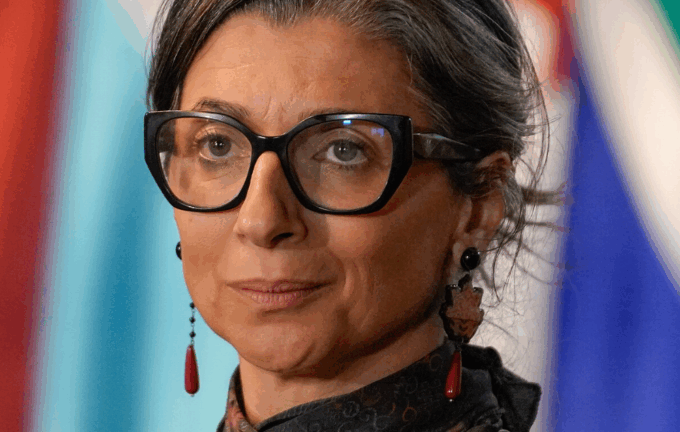
Francesca Albanese, Wikipedia.

In a world dominated by Western hegemony and silence in the face of injustice, UN Special Rapporteur Francesca Albanese stands apart. Through her immense courage under fire, Albanese has supplanted herself as the preeminent voice of the dispossessed and a crusader of Palestinian human rights. Captivating the international community, her persistence and audacity to challenge the Western-ruling elite has placed her firmly in their crosshairs. While international law has largely been ineffectual at stopping the Gaza Genocide, Albanese has long made the legal claim to hold those in power responsible.

“When the history of the genocide in Gaza is written, one of the most courageous and outspoken champions for justice and the adherence to international law will be Francesca Albanese, the United Nations Special Rapporteur,” writes Journalist Chris HedgesIn “Anatomy of a Genocide” and “Genocide as Colonial Erasure,” Albanese centers the conflict from its colonial inception to its current genocidal manifestation, using precise terminology that other reports avoid. She embodies the core values of the Nobel Peace Prize, staking her claim as the 2025 recipient.

Over time, the credibility of the Nobel Prize has been severely tarnished, with some earning the prestigious recognition for political convenience rather than genuine merit. A notable case is war criminal Henry Kissinger for his role as National Security Advisor and Secretary of State during the Richard Nixon and Gerald Ford Administration. Kissinger’s blood-soaked legacy of terror can be found throughout Southeast Asia, Africa, and the “Death Squads” of Latin America.

“Kissinger bears significant responsibility for attacks in Cambodia that killed as many as 150,000 civilians,” according to Ben Kiernan, former director of the Genocide Studies Program at Yale University and one of the foremost authorities on the U.S. air campaign in Cambodia. That’s up to six times the number of noncombatants thought to have died in U.S. airstrikes in Afghanistan, Iraq, Libya, Pakistan, Somalia, Syria, and Yemen during the first 20 years of the war on terror. Grandin estimated that, overall, Kissinger — who also helped to prolong the Vietnam War and facilitate genocides in Cambodia, East Timor, and Bangladesh; accelerated civil wars in southern Africa; and supported coups and death squads throughout Latin America — has the blood of at least 3 million people on his hands,” reported by The Intercept. Kissinger is one of the truly heinous political figures in American history.

Another notable figure with a checkered past is President Barack Obama. Aptly nicknamed the “The Drone King,” for his countless drone attacks on majority civilian populations, Obama’s presidency reigned in wars in the Middle East, devastating the lives of millions. Inheriting the Afghanistan and Iraq war from the previous administration, President Obama inflicted his own brand of terror in Libya and Syria. Cloaked in a veneer of invincibility, Obama punished Libya with penetrating NATO-led strikes, precipitating the fall of Muammar Gaddafi, and plunging Libya into a failed state where open-air slave markets thrive. The playbook for every western-lead intervention in the Middle East, Obama seeked regime change under the cover of humanitarianism.

“West African migrants are being bought and sold openly in modern-day slave markets in Libya, survivors have told a UN agency helping them return home. Trafficked people passing through Libya have previously reported violence, extortion and slave labour. But the new testimony from the International Organization for Migration suggests that the trade in human beings has become so normalised that people are being traded in public.“The latest reports of ‘slave markets’ for migrants can be added to a long list of outrages [in Libya],” said Mohammed Abdiker, IOM’s head of operation and emergencies. “The situation is dire. The more IOM engages inside Libya, the more we learn that it is a vale of tears for all too many migrants,” reported by the Guardian.

Trails of blood inflicted by Obama’s presidency on the Global South can also be traced back to the 10-year dirty war in Syria. In the CIA’s failed operation “Timber sycamore,” they armed “Moderate Rebels,” with the aim of overthrowing Assad’s Regime, instead turning the conflict into a proxy war, with several armed factions vying for dominance in the region. Although this attempt at overthrowing Assad’s regime failed, their strategic goal was finally accomplished this year, installing a former Al-Qaeda leader in Syria as President.

Unfolding before our eyes is the systematic annihilation of the Palestinian people, or what Franz Fanone calls, “The Wretched of the Earth.” The Zionist regime guilty of wholesale slaughter, will soon replicate this horror in the West Bank, part of the greater Israel project. Through overt acts of moral courage, Albanese has stood against these malignant forces of darkness, documenting crimes against humanity in Gaza and the West Bank.

Recently, as of June 16-July 11, 2025, Albanese released a report detailing corporate complicity in the genocide, titled “From Economy of Occupation to Economy of Genocide.” In summary, it lays out damning evidence, detailing myriad corporations as “machinery sustaining Israel’s settler-colonial project of displacement and replacement of the Palestinians in the occupied territory.” Their responses spanned the gamut of conventional Zionist talking points since October 7. Case in point, Google Co-Founder Sergey Brin reduced the report to being “antisemetic.” These types of attacks on Albanese’s credibility are indicative of not only what she’s endured during the duration of her career, but also the broader Palestinian solidarity movement. The elites will relentlessly try to undermine her, regardless Albanese will endure and present the legal framework for the Gaza Genocide.

Not a stranger to death threats or character assassinations, the Trump Administration unleashed politically motivated sanctions on Albanese for her commitment to Palestinian human rights and unwillingness to acquiesce to the demands of the U.S. and the Zionist regime. Another potential roadblock towards a world grounded in human dignity, Albanese will proceed with courage and grace despite it all.

Faith in humanity can be restored by presenting this honor to Special Rapporteur Francesca Albanese, while simultaneously rehabilitating the credibility of the Nobel Prize. The unfortunate truth is rarely do we see agents of truth and justice colliding with expressions of hate and white supremacy win. Winning this award would further validate her claim as a champion of human rights and her valiant fight to halt the Gaza Genocide. As someone who took an unpaid position as Special Rapporteur, representing the Palestinian territories, it wouldn’t surprise me if this highly coveted award played an insignificant role in her journey for truth and justice.

Foiling the Anti-Protest Sceptics: The Pro-Palestinian Sydney Harbour Bridge March


There were the doomsdayers, the moaners, and, let’s face it, the ill-wishers, hoping that a march across one of the most famous bridges in Australia would not take place. Despite this, some 100,000 people attended the March for Humanity gathering, which began in Sydney’s central business district on August 3rd, before crossing to the Sydney Harbour Bridge to North Sydney—the pressing topic: a demand to end the barbarous conflict in Gaza. Instances of drama, violence, and mayhem were conspicuously lacking. “There was nothing of the sort; there was a beautiful, peaceful mass protest without any incidents,” said Palestine Action Group organiser Joshua Lees.

The number of those attending is not clear, though they far exceeded what organisers envisaged. The PAG claims that the numbers may well have been as high as 300,000; NSW police put it at 90,000. It would have never taken place had the NSW Labor government had its way.  Premier Chris Minns had vocally opposed the protest, claiming in a statement on July 28 that his government could not “support a protest of this scale and nature taking place on Sydney Harbour Bridge, especially with one week’s notice”. The city could not be allowed to “descend into chaos.” This apocalyptic drivel was unsurprising given NSW’s continuing dislike of lawful assembly and peaceful protest.

The NSW police had also sought, and failed, to obtain a prohibition order in the state Supreme Court. The order would not have banned attendees from the protest but would have removed any protections from prosecution under various laws, including the blocking of roads and traffic. On August 2, Justice Belinda Rigg explained her reasons for rejecting the police request, citing the compelling case advanced by Lees. “The public interest in freedom of expression at this time, in the manner contemplated for the reasons advanced, is very high.” Ditto that of “not being disrupted or having safety risked”. But imposing a year’s planning schedule, or that of many months was “not a practical reality in the circumstances in which this particular exercise of freedom of expression is sought to be achieved.” Rigg was also reassured by PAG’s “commitment to and experience in prosocial protest, the expertise of their organisers and marshals, and the significant history of their active communication and co-operation with police.”

The approach from the police was typically jittery, nervous, and worried. “I can honestly say in my 35 years of policing that was a perilous situation,” reflected acting Assistant Commissioner Adam Johnson. “I was honestly worried that we were going to have a major incident with potential loss of life.” He went on to insist that any reservations on his part and those of his fellow officers had nothing to do with being against the protest but the dictates of public safety. “Quite clearly, today showed us that we had to scramble … We had to really think about how we could get people safely out of that confined space and back into the city safely.”

At around 3 pm, the march was halted, with protestors told that they had to turn around and return to the CBD. According to Acting Deputy Commissioner Peter McKenna, “We could not get those people, the number, the significant size of that crowd off the northern egress route without risking crowd crush.” While regarding the operation “a success in that no one was hurt,” he was not recommending a rerun “every Sunday at that short notice.”

The numbers also left the New South Wales Police Minister Yasmin Catley worried. What mattered to her was the cool organising of an event, free of risk and passion. It did not matter to her whether the subject matter entailed protesting against dead children, famine, or grotesque foreign wars; what mattered was good organisation on the home front. “Something of this magnitude would take absolute months, many months [to plan]. In fact, the [Sydney] marathon takes at least 10 months to organise the logistics to ensure that it happens without incident.” How wrong she and the police commissioners proved to be.

Senator David Shoebridge of the Greens thought this display of support for Palestinians and a swift conclusion of the conflict was more emphatic than anything done by the federal government in response to the crisis. “Over 100,000 Australians marched across the symbolic heart of Sydney today, and together we showed more leadership on one rainy afternoon than our PM and Foreign Minister have shown in 2 years from the comfort of their offices.” In somewhat mangled words in the Guardian Australia, Sarah Malik gave the impression attendees had fought off a supernatural event: “The rain couldn’t stop us.” This “felt like a collective wave of energy, hope and determination against institutional and governmental intransigence, denial, obfuscation and enabling that has so many of us feeling despairing, disgusted and disquieted.”

The display of flag waving, placards, and banners was impressive. But such events can risk becoming objects isolated from tangible fruition.  Those participating can then claim that this was the first event to shift the tide, or an event that finally convinced those decision makers that something should be done. Marches can provide murmurs and trembles. They do not necessarily shake the edifice or threaten foundations.  What the march across the bridge revealed to the Albanese government was that something critical must be done beyond platitudes that claim balance and eschew anger. His political strategists will be taking note.

In a modest way, the protest most probably encouraged Canberra’s approval of an additional A$20 million in humanitarian aid to Gaza.  But the hardened sceptics suspicious of lawful assembly remain, none more so than Minns himself. For the state premier, people surely had better things to do than worry and vent in public about humanitarian issues in a distant conflict. Think about the economics of the whole thing instead: “We can’t shut down the bridge every weekend”. And just to sour matters, he publicly stated that legislation that would ban protests across the Harbour Bridge had not been ruled out. How woefully predictable.

Binoy Kampmark was a Commonwealth Scholar at Selwyn College, Cambridge. He lectures at RMIT University, Melbourne. Email: bkampmark@gmail.comRead other articles by Binoy.

The Rabbi and the Robdozers – Heavy Machinery and Patriotic Demolition in the Service of Genocide


Rabbi Avraham Zarbiv is a well-respected holy man in Israel with some devoted followers. He is a dayan, a judge in the rabbinical courts of Tel Aviv, dispensing wisdom in matters of religion and Jewish law. He’s also a reservist in the Sayeret Givati brigade of the IDF and is currently serving in Gaza. There, he has earned a degree of fame for his skills as an operator of the Caterpillar D9 armored bulldozer, the IDF’s tool of choice for the erasure of Palestinian homes. He claims to average more than 50 demolitions a week. According to Zarbiv, his unit has learned to ‘play the D9’ like a musical instrument.

Rabbi Zarbiv is part of the wider effort to lay waste to Gaza and render it uninhabitable for Palestinians. His stated motives are religious; war, for him, is a harbinger of the coming of the messiah. But he is one of many directly or indirectly employed to demolish buildings in Gaza. The motivation for others is more straightforward: money, revenge, or, in a context where the demolition of Palestinians’ homes is seen as a service to one’s country, patriotic duty.

Domicide is a key aspect of the genocide in Gaza. According to recent reports, around 92% of homes and 70% of all buildings in the Gaza Strip have been severely damaged or destroyed. Gaza has a population of over 2 million, and from the scale of the destruction, it appears that all houses are considered bases of resistance. If we put morality aside, as the IDF seems to have done, the scale of the flattening of Gaza is an impressive achievement, considered as an initial stage of population transfer. There is no access given to foreign journalists for a reason – Gaza is unrecognizable, and the destruction is wholesale. So, how do you transform such a vast area into a moonscape of concrete and ashes in under two years? Overwhelming air power certainly helps, but on the ground, two things have been particularly important: willing personnel, such as the good rabbi, and the right equipment.

It takes certain modifications for a Caterpillar D9 bulldozer manufactured in the US to become an armored D9. Israel Aerospace Industries [IAI], which offers an ‘extensive range of innovative solutions’ in ground combat situations, is responsible for these. The Israeli armored version of the Cat D9 has a mounted machine gun, grenade launcher, and smoke projector. It is armoured to protect the operator and has, of course, been battle-tested over years of occupation. So familiar an asset is it that the D9 has its own affectionate nickname in IDF slang: the ‘Doobie’, or Teddy Bear in English. Rachel Corrie died underneath one. Together with excavators, wheel loaders, and other heavy machinery, it has been used for years in West Bank house demolitions. The D9 can not only demolish buildings but also create the new ‘corridors’ of Gaza and clear border security zones. It has hardly been reported in the West, but with the aid of such equipment, whole villages in southern Lebanon along the international border have recently been erased, Gaza style.

In wartime, the Israeli economy has been strikingly robust. The assault on Gaza has been a boost to certain sectors, and it has been especially profitable for those with initiative who can hire or invest in large machinery. As well as utilizing its personnel for demolitions, the IDF has been shown to be outsourcing the destruction in Gaza. Lucrative work has been available for equipment operators. Owners of excavators can earn 5,000 shekels a day. Those who work as contractors with the Ministry of Defence are paid based on the number of houses demolished. This is war as a continuation of business by other means, as Brecht might have observed. Rabbi Zarbiv is merely the celebrity face of patriotic demolition. So many are working on the razing of Gaza that infrastructure projects in Israel are facing significant delays due to shortages of operators and equipment.

But Zarbiv’s days could be numbered as a D9 specialist. Quite apart from the complaint lodged against him with the ICC for alleged war crimes, he could soon be redundant as a result of the recent introduction of the ‘Robdozer’, developed by IAI. This is a destroyer of homes that is unmanned and can be remotely operated, like a drone, from the air-conditioned comfort of an office. Future versions are envisioned to be fully autonomous. Genocide and destruction will be even easier than they are now. If pilots who drop bombs indiscriminately can be considered heroes in Israel’s militarized culture, so too can those who operate drones or bulldozers remotely, or those who program an autonomous D9 – no doubt according to the values of the ‘most moral army in the world.’ These advancements in remote-controlled technology represent another contribution to the ongoing disconnection of Israelis from the consequences of their wartime actions.

The IDF has recently received another shipment of D9s after the Biden administration delayed delivery. Israelis take pride in their myth of the start-up nation. But besides having a thriving software and high-tech sector, Israel has invested significantly in heavy machinery, appropriately enough for an apartheid state that wants to control and shape the land it occupies. But it needs external help. In UN Special Rapporteur Francesca Albanese’s recent report on Israel’s ‘economy of genocide’, Caterpillar Inc. is allocated its own paragraphThis year, the company signed a further multi-million-dollar contract with Israel.

Punitive demolition has long been a part of the history of this conflict. As the Palestinian poet Mohammed El-Kurd put it, bulldozers have been ‘undoing God’ for some time. What is new is the prominence of their role in this unprecedented destruction. New, too, is the amount of money being made in the process, not just by Israelis, but by international firms producing heavy machinery like Caterpillar and JCB. We are witnesses to the razing of entire cities, towns, and villages, to lives being shovelled aside like rubble, all to clear the way for the next phase of Zionism. Western companies and governments are providing the wherewithal.

Anthony Fulton covers issues relating to Israel-Palestine Read other articles by Anthony.
Netherlands

Polski Strajk: first strike amongst temporary workers, mainly Polish migrant workers, in AH and Jumbo distribution centres

Saturday 2 August 2025, by John Cozijn


Since 25th June, approximately 150 temporary workers, mainly Polish migrant workers, have been on strike at the logistic platforms of Albert Heijn [major Dutch supermarket chain] to protest against the "sham collective agreement" and demand equal pay and treatment. [1] The strike began simultaneously at the distribution centres in Pijnacker and Geldermalsen, then quickly spread to Zwolle and Tilburg.


On Monday 14th July, the strike extended to several Jumbo [second-largest Dutch supermarket chain] distribution centres. The number of strikers rose to approximately three hundred. After three weeks, the strike was temporarily suspended to allow for expansion of the movement. Additionally, it was imposed that consultation with the ABU [General Association of Temporary Employment Agencies] and the NBBU [Dutch Association of Mediation and Temporary Employment Agencies] would take place at the end of August to discuss a proper collective agreement, one of the demands.

For Karin Heynsdijk, leader of the FNV Flex union [Dutch trade union federation for flexible workers]: "These past weeks, something that no one would have believed possible has happened: temporary workers, almost all migrant workers, have mobilised to defend their rights. Despite intimidation from temporary employment agencies, despite their precarious position in the labour market and despite the financial risks they face."

"This is the first time that temporary workers have decided on their own to go on strike, and what’s more, they are all immigrants," declares Cihan Ugural, FNV trade unionist.

The strike was organised by the strikers themselves, with support from the FNV Flex union. Paulina Nietupska is one of the strike leaders. She has worked for nine years as a temporary worker at the Albert Heijn distribution centre in Tilburg. "People must wake up. We are not slaves. We pay our taxes here, we send our children to school here and we come to live here. We are like the Dutch."
Against the "sham collective agreement" and for equal treatment

The employers’ organisations ABU and NBBU had previously concluded a collective agreement with the small LBV union [a lesser-known Dutch trade union], but this is completely unsatisfactory and described as a "sham collective agreement" by the strikers.

In the ultimatum launched before the strike, the union demanded a collective agreement providing equal pay for equal work, complete transparency on working conditions and better protection for migrant workers. According to the FNV union, the collective agreement that was signed allows temporary employment agencies to invent their own conditions "in the absence of any verifiable equivalence," according to a union statement. According to the Central Bureau of Statistics (CBS) [Dutch national statistics office], "temporary workers earn on average 37% less than their colleagues on permanent contracts. Even taking into account training and experience, a 13% difference remains."

There are also other differences in terms of social benefits. Temporary workers only receive 20 to 25 days of leave per year. They don’t receive a 13th month [common European practice of paying an extra month’s salary as bonus]. Permanent employees have breaks two to three times longer. And in April, temporary workers saw their bonuses and holiday days reduced and their targets revised upwards. This, whilst temporary workers often work for years - 9 years in Paulina’s case, mentioned above in this article, 10 to 15 years for others - in the same place and are in reality permanent employees.

And then there’s housing. Being dependent on the temporary employment agency is already a problem in itself. Some rooms are decent, but others are really poorly equipped, where no one should live. They have, for example, rooms without windows and without access to daylight. Mould, which constitutes a health hazard, is also frequent. And this for rents that are no lower than market rates.

This mobilisation is very important, believes Cihan Ugural, from the FNV. "Whether it’s schedules, pay, leave, maintaining salary during illness, etc. They see the difference with permanent employees every day."
The strike’s extension

Initially, the strikers focused on the distribution centres. They organised meetings there, conducted highly visible actions and shared their story with their colleagues. They also travelled by bus to other distribution centres.

But from 4th July, they also intensified their actions outside to be more visible and attract more media attention. On that day, strikers from Tilburg, Pijnacker, Zwolle and Geldermalsen gathered in Buizenpark in Rotterdam. This park is located next to the new immigration museum. The objective was twofold. On one hand, they attempted to present the museum with a banner on which the strikers had inscribed their names. Indeed, with this strike, migrant workers are writing a page of history, and in some time, this banner will become a museum piece. On the other hand, after two weeks of strike, they wanted to get away a bit from the deserted industrial zones and have a good time together.

On 8th July, more than a hundred Polish temporary workers on strike went to the headquarters of the employers’ organisation VNO-NCW [Confederation of Netherlands Industry and Employers] and the Ministry of Social Affairs and Employment in The Hague [seat of Dutch government].

Under the slogan "Equal pay now! Stop de sjoemelcao" [Dutch: Stop the dodgy collective agreements], they made their demand heard to be treated the same way as workers on permanent contracts.

A petition was presented to the VNO-NCW, which begins with the following text: "I’m fed up! I do the same work as my colleagues on permanent contracts. But I receive a lower salary, I have fewer rights and less security. This isn’t fair. I demand equal treatment and I want to have my say about my working conditions. And this starts with an honest collective agreement." After presenting the petition, a discussion had to take place to see what the VNO-NCW leaders had to offer temporary workers.

The strikers then went to the Ministry of Social Affairs and Employment. The situation of temporary workers was explained to two civil servants, including the spokesperson for Minister Eddy van Hijum [Dutch minister], notably through a speech by Paulina.

After a two-hour break in Koekamp park in The Hague, where the FNV had amongst other things organised a barbecue, the strikers continued their action by informing their colleagues at the Jumbo distribution centre in Bleiswijk about their strike and encouraging them to join them. The objective was to broaden the strike and strengthen it.

On 11th July, the strikers were supposed to go to OTTO’s office [major temporary employment agency] to conduct an action there, but the most important temporary employment agency employing Polish migrant workers refused to discuss with the strikers, who are predominantly Polish.

The strikers then decided to go to the ABU and demonstrate there against the rigged collective agreement. But there too, the riggers refused to speak to the strikers.
OTTO and Albert Heijn’s counter-offensive

The temporary employment agency OTTO and Albert Heijn resort to various intimidation tactics and spread false information to counter the strike. For example, they told some that they could be dismissed or transferred if they decided to strike, that striking was "illegal" and that they were actually already treated equally. Furthermore, they called upon strike-breakers by transferring staff from other distribution centres to centres where the strike was ongoing. This practice has already been banned by the courts in the past.

The other temporary employment agencies concerned are Carrière, Covebo and Tempo Team [Dutch temporary employment agencies].
Jumbo joins the movement

On 14th and 15th July, temporary workers from Jumbo logistics platforms also joined the strike, in Bleiswijk (Jumbo online), Breda, Veghel and Woerden [Dutch cities]. A picket line was maintained for several hours.

The strikers at Jumbo are also migrant workers, but mainly Bulgarians and Romanians. Contact with the Polish AH strikers was established because they live in the same workers’ hostels. At Jumbo, it was the first strike, which encountered some organisational problems at the beginning. But with support from the Polish strikers and FNV flex, these could be resolved.
Strike not suspended, then suspended

On Friday 11th July, the strikers went not only to the ABU, but also to the FNV. The FNV indeed wanted to suspend the strike due to the summer period. But as the strike was beginning to resonate, including in other companies, the strikers wanted nothing to do with it. That’s why, after their visit to the ABU, they went to the FNV headquarters. After presenting their point of view convincingly, the strikers got their way and the strike therefore should not be suspended.

But during the past week, it appeared that the current strike rested on a narrow base and that it was necessary to extend it. It was therefore decided to suspend the strike from week 30 (21st to 27th July) in order to be able to focus fully on broadening contacts with other temporary workers. This means establishing contacts at workplaces and places of residence. From there, the movement can be broadened and strengthened if necessary.

With the negotiations that will take place at the end of August to achieve a good collective agreement, a first result has already been obtained. In parallel, OTTO has distributed to its temporary workers a document containing concrete commitments.

The FNV is currently setting up an emergency service for temporary workers who participated in the first phase of the strike. If they are victims of intimidation or other abusive practices at their workplace, a reaction will be immediately initiated.

As Karin Heynsdijk, leader of FNV Flex, says: "What we have built these past weeks will not be abandoned. We remain organised, we remain visible and, if necessary, we will continue the strike. After August, we will return even stronger and with even more people."

Paulina Nietupska, strike leader, employed by OTTO at the AH distribution centre in Tilburg: "We went on strike because we want the same rights. The same work, the same salary and the same guarantees as permanent staff. And we won’t give up until this is sorted out."
Solidarity is essential

Precarious and migrant workers constitute an important part of the working class, often difficult to organise. The success of this strike can give a boost to this work. It is therefore essential to organise solidarity to support and strengthen the strike.

But mutual solidarity is one of the weaknesses of the FNV and the working class. This solidarity must be organised and encouraged. Members of the "Solidair met Palestina" [Solidarity with Palestine] network union have taken the first step by creating a "FNV Solidair Polski Strajk" application. This application is accessible to everyone. The objective is to organise and encourage solidarity from this group.

The strikers, who have temporarily suspended their movement, really need additional support. Additional pressure on temporary employment agencies and on Albert Heijn and Jumbo could contribute to obtaining a good collective agreement.

19 July 2025

Translated for ESSF by Adam Novak.
Source - Grenzeloos.


Attached documentspolski-strajk-first-strike-amongst-temporary-workers-mainly_a9109.pdf (PDF - 920.3 KiB)
Extraction PDF [->article9109]

Footnotes

[1] This article draws notably on the FNV statement concerning the strike suspension and on articles published by Doorbraak and socialisme.nu .


John Cozijn is active in the climate movement, is part of the new Facebook group FNV Solidair Polski Strajk and is a member of SAP – Grenzeloos.


International Viewpoint is published under the responsibility of the Bureau of the Fourth International. Signed articles do not necessarily reflect editorial policy. Articles can be reprinted with acknowledgement, and a live link if possible.
Corruption (Ukraine): a victory

Sunday 3 August 2025, by Patrick Silberstein


Significant demonstrations took place during the last ten days of July in Ukraine against the adoption of a law that would reduce the independence of bodies responsible for fighting corruption by placing them under the control of the prosecutor general, directly appointed by President Zelensky’s office.


According to the Kyiv Independent [Ukraine’s English-language newspaper], the demonstrations on 30 July were essentially addressed to Parliament to demand that MPs decide to withdraw the controversial law. According to the daily, the protesters largely refrained from slogans hostile to Zelensky, who had nevertheless been criticised during the first few days. It is therefore, at this moment in time, the parliamentarians, the government and Parliament who are in the crosshairs of the democratic protest movement. The majority bloc of Zelensky’s party [Servant of the People] is moreover beginning to crack under the pressure of this popular mobilisation where young people carry significant weight.

How should we interpret the fact that Zelensky, who had put his full weight behind this decision, is not (no longer) directly being challenged? Undoubtedly because the protesters perceive the dual reality in which the country finds itself: on one side there is the Zelensky whose neoliberal policies and authoritarian tendencies are perceived as harmful by part of the population and who has just been called to order; and on the other, the Zelensky "war leader", "soul of the resistance" to Russian aggression, in whom Ukrainians place their trust.

This is undoubtedly one of the essential political elements to retain from the moment that has just opened with the warning shot shaking Kyiv [Ukraine’s capital]. This is in a certain way the meaning of the declaration of a protester collected by the Kyiv Independent: "I think the authorities will now engage more in dialogue with the population, having seen the strength of its reaction." Or that of another who declared to Suspilne [Ukraine’s public broadcaster]: "The country is going in the wrong direction, which is why people are taking to the streets to put it back on the right path. We hope the authorities will hear the voice of the people." Or again: "It is important for us to live in a rule of law state. Corruption destroys the country from within, whilst they are already trying to destroy it from outside."

The attitude is not, for me, without evoking – in an obviously totally different situation – what Chileans said about the Allende government: "It’s a shit government, but it’s ours."

The campistes [French far-left political tendency that aligns with authoritarian regimes perceived as anti-Western] and other zealots, like French MP Hadrien Legrave, will be able to denounce the Zelensky who attacks democratic freedoms, others will be able to forget, more or less voluntarily, that Ukrainian democratic mobilisation is taking place under Russian bombs and despite martial law which forbids demonstrations.

For our part, we will know, with the Ukrainian left and the social movement, to walk on both legs as we have done since the beginning of the large-scale war.

There will be no victory over Russian imperialism without democracy and there will be no democracy in case of victory by Russian imperialism.

1 August 2025

Translated for ESSF by Adam Novak.


Attached documentscorruption-ukraine-a-victory_a9110.pdf (PDF - 905.2 KiB)
Extraction PDF [->article9110]

Ukraine
“For the Neofascists, the Law of the Jungle is the Only One That Makes Sense”
You give us corruption, we give you revolution!
Ukraine’s New Cabinet: Neoliberal Reforms Threaten Wartime Solidarity
Free the Children! End the Starvation and Genocide!
Support the Russian-Ukrainian resistance against accelerating fascism worldwide

Patrick Silberstein is a French writer and activist. He is a member of European Network for Solidarity with Ukraine ESU/RESU (France) and the Editorial Solidarity Brigades.


International Viewpoint is published under the responsibility of the Bureau of the Fourth International. Signed articles do not necessarily reflect editorial policy. Articles can be reprinted with acknowledgement, and a live link if possible.
Protests follow arrest of union leaders in Panama

Monday 4 August 2025, by José Cambra

Workers and indigenous peoples are mobilizing against the neoliberal agenda of the government of president José Raúl Mulino in Panama. Antônio Neto, from the Brazilian magazine Movimento, interviewed José Cambra on 27 June 2025 about the reasons for the movement, the relationship with US imperialism and the elements of the program of rupture that has become a symbol of popular resistance against austerity and authoritarianism.


Why have Panamanians been on strike for 54 days?

In recent months, Panama has become the epicentre of the struggle of Latin American peoples against unbridled capitalism, against neoliberalism, which is expressed in strikes. An indefinite strike was launched on 23 April by teachers in primary and secondary schools across the country. This was followed on 28 April by indefinite strikes by banana workers in the province of Bocas del Toro, on the Panamanian Atlantic coast, near the border with Costa Rica, as well as by construction workers, led by the Single National Union of Workers in Building and Allied Industries (Suntracs).

These strikes have several reasons. They are taking place, and this is important, a year after the inauguration of a president named Mulino, in the style of Bolsonaro in Brazil, Milei in Argentina, Duque in Colombia or Trump in the United States. This man won the elections by inheriting the political capital of former President Martinelli, who was tried and convicted for acts of corruption. Ricardo Martinelli was president between 2009 and 2014 and, becoming ineligible after his convictions, endorsed Mulino as his candidate.

Mulino campaigned on the theme “Martinelli is Mulino, Mulino is Martinelli” to restore economic prosperity to Panamanians. Ricardo Martinelli’s two terms in office were marked by a period of economic prosperity in the sense that there were many jobs because of megaprojects (megaprojects, hotbeds of corruption at the origin of the conviction of Martinelli, currently exiled in Colombia).

But in Mulino’s first year in office, there has been no job creation. On the other hand, there has been Law 462 on the reform of social security. This law endangers the $9 billion reserves of the Caja de Seguro Social, which in Panama manages the medical care of almost all of the country’s residents as well as retirement and pensions. The management of 90% of these reserves will be entrusted to the Bank of Panama and the Caja de Ahorros de Panama, two public banks, but whose directors are subservient to Mulino and are authorized to subcontract this management to the private sector. And the management of the remaining 10% will be entrusted directly to the private sector. The law even stipulates that it is mandatory to buy US debt securities. In other words, they endanger the reserves of the Caja de Seguro Social.

This law also reduces the pension from 60% to 30% and raises the minimum age. According to calculations by economists at the University of Panama, instead of retirement at 62 for men and 57 for women, people will now have to work until 80 to earn 60% of their salary, otherwise they will only receive 30% or less. This set off alarm bells, the Alianza Pueblo Unido por la Vida and other popular organizations denounced this situation, and responded to the president’s invitation to participate in round tables at the presidency, without effect because the president refused to negotiate. During the Assembly’s examination of the law, a consultation, broadcast on television, was organised and lasted about two months. Of the 500 people, the absolute majority were of the opinion that the system of solidarity should be completely restored, measures should be taken against tax evasion by employers, by the bourgeoisie, and also a high tax rate should be guaranteed so that those who earn the most, those who have the most profits, are those who contribute the most, because capital in this country is practically exempt from taxes.

But to this was added an element that exploded the situation. The United States proposed, according to Trump, to regain control of the canal that had been ceded to Panama by international treaties 25 years ago, at the beginning of this century. The Mulino government, instead of denouncing this act to the UN Security Council, signed a memorandum of understanding with Pete Hegseth, the US Secretary of Defense, authorizing the installation of three military bases in Panama, on its former sites, and Hegseth declared that there were already a thousand soldiers in Panama. This presence of US troops is a violation of the Torrijos-Carter Treaty. This is seen by the people as a capitulation on the part of the Mulino government.

Added to this is the intention to reopen the First Quantum mine, which has brought the company 48% of its global profits and was declared unconstitutional by the Supreme Court of Justice in 2023, after impressive mobilizations. A mega-march brought together a quarter of a million people in a country of 4,300,000 inhabitants. On the same day, one million people mobilized throughout the country. This level of mobilization forced the Supreme Court to declare unconstitutional, not only the mining agreement, but also, due to an ecological problem of environmental protection, open-pit mining. This did not prevent the president from declaring that he is going to reopen the mine, to release for First Quantum the millions of dollars of copper that they had stored in the mine. In addition, a cargo of coal has just arrived at the mine’s port to resume using the power generation site, an effective step towards reopening the mine.

These events are in total contradiction with the spirit of 2023 and are the main demands of the mobilization that began with the teachers on the 23rd, followed by the banana factory unions and the construction unions on the 28th. Today, after 54 days of teachers’ strike, the banana growers reached an agreement with the Chamber of Deputies to establish a law that would restore the rights they had and that had been called into question by the reform of Law 462. But as entire communities were mobilized, the province was effectively under the control of the union and the communities. 24 roadblocks controlled the access roads. The president gave the order last Thursday (12 June) to advance militarily against the province, and on Friday, June 13, Operation Omega (“to the end”) entered the province, confronting the groups defending the dams, mainly groups of the indigenous Noé, Bulé and Nazo peoples and the banana workers who have resumed the struggle. The main leader of the Banana Workers’ Union, Francisco Espín, and 3 others were arrested, accused of glorifying crime.

The struggle intensified. Clashes have taken place throughout the province of Bocas del Toro, against the police, against the riot police and against the National Border Service – which legally should not be used in an internal police operation. Similarly, the indigenous peoples of Noé have blocked the Inter-American Highway, the most important in the country, and are fighting against the police. This also happened last week in a village called Arimey of the Emberá indigenous people, which is on the other side of the border that separates the provinces of Bocas del Toro and Chiriquí, close to Costa Rica. And now in the province of Darín, where the Emberá who fought to defend their roadblock live, two of their traditional leaders have been arrested and paraded shackled at the wrists and legs, like criminals. They were brought before the adversarial penal system on Friday, June 13 and released, in view of the absence of charges.

The other indigenous peoples, the Kuna, the Dule, expelled all government authorities in their region and closed all schools in support of the teachers’ strike. They know that if this struggle is lost, the mine will be immediately reopened and the memorandum of understanding with the United States will be validated.

In the Panamanian constitution, everything concerning the canal or its adjacent areas must be submitted to the Chamber of Deputies and, if approved, submitted to a referendum. The government refuses to do so. In other words, this government has ceased to be a government of bourgeois representative democracy and has become a government that ignores the constitution and the laws, typical of far-right governments and governments that are civil dictatorships. We are therefore facing a struggle in which the question of defending the rule of law and democratic freedoms is at the forefront.

The general secretary of Suntracs was forced, in accordance with a decision taken by the union, to take refuge in the Bolivian embassy, because they were going to arrest him, put him in the most dangerous prison in the country. Just like the comrades who are leaders of the indigenous peoples of Arimay, in Berán, who are in Mega Joya prison, are in danger, as is Jaime Caballero, a Suntracs leader, who is also incarcerated in Mega Joya. In other words, they criminalize protests, even student protests. The salaries of 22,000 teachers have been suspended. Many others are on strike.

There are mobilizations every day. Teachers, construction workers and other union sectors are mobilizing and traveling through communities. The strike is even stronger in the interior of the country than in Panama City, because Panama City has two million inhabitants, it is a very large geographical extension. Inside the country, the entire population joined the teachers and the marches.

In Latin America, we are experiencing a wave of far-right authoritarian governments that have implemented a whole program of neoliberal counter-reforms. Panama is in a different situation, as its governments have failed to implement their programme as a whole. What is the reason for this? Is Panama the weak link in Latin American capitalism?

In Panama, the reformist leaderships of the mass movement do not have the same strength as in other countries. We have leaders involved in the struggles such as those of the construction union, the Association of Teachers of the Republic or the teachers’ unions. Panama is going through what we call a crisis of legitimacy: in 2019 there were elections, a few months later the government tried to impose constitutional reforms, and one of those reforms was to cut the budget of public universities. The next day 10,000 students took to the streets, invaded and occupied the Assembly, which returned to this aspect of the reform. Ten days later, a rally of 4,000 young people, including LGBT+ movements, trade unionists and young academics, was repressed by the police and marked the beginning of a little more than a month of mobilizations by young people, mainly women, aged 17 to 35, against the reform and against the parliament. This fight forced the government to go back on the entire constitutional reform in 2019.

The pandemic came in 2020, we were in lockdown in 2020-2021, but in 2022 there was an increase in the price of gasoline that pushed people to participate in blockades throughout the country against rising fuel prices, rising food prices, lack and high cost of medicines, and low budgets for education. The only thing that was achieved was an increase in the education budget and a brake on the rise in the price of gasoline, but the other issues remained unresolved, and the teachers’ strike resulted in an agreement to end the salary cuts. In 2023, the situation exploded, because the previous objectives had not been achieved, and because the mining company First Quantum channelled the accumulated discontent, bringing together 250 people. There is a distance between the population and the traditional politicians, and there is a problem of legitimacy: people say no, we will not let it happen.

In reality, from the Alianza Pueblo Unido por la Vida the idea is that we are a catalyst for the population to express itself. There are leaders ready to fight, a teachers’ movement whose vanguard has been fighting for 20 or 25 years. It is therefore a vanguard with a tradition of struggle.

But the repression is so strong that there has not yet been a widespread social uprising. The government’s policy, whether there are struggles or not, is to repress: if a neighbourhood asks for water or has housing problems and so on. This causes fear, but it also accumulates discontent for a widespread explosion.

Unlike Brazil, where Bolsonaro has capitalized on the discontent of part of the population, Panama’s far-right government has no social base. Martinelli is now under attack because it is said that it is because of him that we have Mulino. Martinelli, who has a social base of support and sympathy among the population, is starting to have this kind of problem.

The teachers’ strike has broad popular support in neighbourhoods, cities, and families. Apart from teachers, construction workers, banana workers, indigenous people, as well as isolated individuals, their communities are very involved in the strike. There are community support campaigns, which bring food, money to support them in their struggle?

That’s right. Towards the third week of the teachers’ strike, a wave of assemblies and meetings of mothers and fathers began. Especially mothers. So, they got together and said that their school supported the teachers who are unemployed. And if there were teachers who didn’t go on strike, parents said they wouldn’t send their children to school. So, this is a strike that started with maybe 60% of the teacher on strike. Then, in the third week, that number rose to 80%.

From the first week, high school students, in uniform, participated en masse in the demonstrations in the provinces. We are witnessing the awakening of an actor which had been repressed during the Noriega era. The role that teachers play today was once played by high school students. They had a student federation that had associations in each school. Each class had a representation. There was an organized structure and mass mobilizations. Noriega ended it in 1985. He expelled the leaders and destroyed the organization.

We are considering the possibility of continuing the strike until 2 July, when the Assembly resumes its work. There is a nationwide picket movement in front of the homes of MPs who voted in favour of the law. Several MPs already fear for their electoral future and say they are ready to consider certain changes, certain reforms of the law as such.

How long can the movement last? Do you think it is possible to demand that MPs reform the law?

Waiting until July is the government’s tactic to exhaust the movement, with the threat of cutting wages. This has already been done for about twenty thousand teachers. In addition, there are entire provinces where the school principals have not been paid. In Veraguas, in Bocas del Toro. Some of our colleagues have not been paid for three fortnights, others for two fortnights, others for one. In addition, the government is laying off workers en masse and replacing them with unemployed educators. This has been challenged in the Supreme Court as these dismissals are illegal. Appeals have been lodged with the Supreme Court. If our appeal is taken into account, there would be a contraction between the executive and the Supreme Court. This is part of the motivation to remain on strike, to force the Supreme Court to rule and force the restitution of wages. It would be a hard blow for the government.

There have only been two times in history when teachers have had their salaries cut during a strike. They are doing this because the goal of this far-right government is to destroy the Suntracs and destroy the teachers’ organization. It thinks in this way to destroy the leadership that is standing in the way of his plan. We are therefore in a total confrontation, where there is no possible compromise.

We’re at an impasse, aren’t we? The government does not have the strength to crush the movement, to impose the pension reform, to impose the agreement with the USA, to impose the reopening of the mine, and the movement...

This is true, and the movement is not strong enough to defeat the government. We need greater impetus from the communities. Mulino was welcomed as a saviour by the financial oligarchy. But the situation of ungovernability also affects its profits. Consumption has decreased. The fact that 20,000 teachers are not receiving their salaries means that bank and mortgage loans are not being repaid to the banks.

This creates a difficult economic situation. If the situation worsens, if the population mobilizes even more strongly, there will be a spectacular defeat for the government. Of the magnitude of the one they want to inflict on us.

Is the bourgeois part of the real economy that derives its profits from tourism, from physical markets, already putting pressure on the government to back down?

Last week, ten days ago, he met with them, spoke to them and asked them to wait, to give him a few days to end the movement. That’s why the president’s speech is to say that there is no problem, that Bill 462 has passed... And people say, “My God, there are two Panamas here, the president’s and the one you see on the street.”

What we have not yet achieved is a simultaneous national revolt. And I am even talking about the people’s right to demonstrate. There have been protests that have relatively paralyzed the country, but not everywhere, as happened in 2023. And this is what the president says: I will not allow the country to be closed again.

There is also an international solidarity movement, and we are deeply grateful to all our comrades in Brazil and all the other countries who led the international campaign that began before Monday, 9 June.

There have been demonstrations at the International Labour Organization, at the congress of the Trade Union Confederation of the Americas, at the International Trade Union Confederation. There were even coordinated actions on 9 June in different countries, both in Latin America and in Europe and elsewhere. [1] In other words, there was indeed a movement of teachers’ unions, left-wing political organizations, comrades of the Fourth International and so on.

At the heart of this is solidarity with Suntracs, which is the most affected organisation. Its accounts, its union dues, have been seized by two consecutive governments since 18 November 2023. Its most important leader had to take refuge in the Bolivian embassy. Another important leader is in prison. And another is targeted by a reward of 10,000 dollars for his location alone! A manhunt is underway. The union’s premises were invaded. In other words, the whole issue of freedom of association and the ILO agreements have been violated.

Of all the government’s attempts to crush the movement, one of them almost succeeded, and that was the attempt to negotiate with the banana union to reform the social security law. There were at least two attempts. One of them was that of a government minister who met with them in Boca del Toro and returned without an agreement. And now there has been a new attempt that has resulted in the arrest of the union leader, right? In other words, the government’s attempts to divide the movement have not worked. So, what will happen now?

The Assembly of Deputies approved the reforms agreed with the union in Bill 45. Despite this, they have maintained the strike in Changuinola, which is the area where the union is strongest.

The president then decided to send the police and militarized forces to the scene, the clashes began, and the trade unionists closed Changuinola again. The government wants to crush the movement. But as the movement is very strong, the slightest misstep can set off the powder keg. And we are resisting precisely so that the people can participate, and we can defeat the government.

Defeating the government means defeating, as you rightly said, not only the Social Security Reform Act, but also mining, all these government attempts. In addition, the government itself is putting itself in danger, because this is a president who does not have a vice president. And he is in danger, for example, with the complaint that we filed against him in the Assembly of Deputies, in accordance with the constitution of Panama, according to which he violated the international personality of the state by approving US military bases in Panama.

This violation of the constitution is the only valid reason to impeach a president. If the balance of power were to change and a major crisis broke out, it would be possible for the president to be impeached and for new elections to be held within five months, as provided for in the constitution. In other words, it would open up a different situation.

This is not yet on the agenda. This is not a possibility at the moment, but it shows the way to a defeat of the government that would have become an ineffective instrument for the bourgeoisie, a government that is absolutely defeated.

27 June 2025

Translated by International Viewpoint from the French translation in Inprecor.

Attached documentsprotests-follow-arrest-of-union-leaders-in-panama_a9111.pdf (PDF - 934.2 KiB)
Extraction PDF [->article9111]

Footnotes

[1] Marcelo Di Stefano, leader of the CSA who comes from the Argentine CGT, contributed to this. There were several actions around 9 June, in Brazil in front of the embassy and at the consulates in Rio and Santos. A Belgian trade union delegation accompanied by MEPs, including LFI, went to the embassy in Brussels and so on.


Trade unions/workplace organizing
Polski Strajk: first strike amongst temporary workers, mainly Polish migrant workers, in AH and Jumbo distribution centres
Ukrainian union leader comments on U.S. left
Swedish Dockworkers’ Union Leader Sacked for Gaza Solidarity Action
He’s suddenly a risk to ‘national security’
French Dockers Block Weapons to Israel
Panama
Solidarity with Panama 9 June
Panama is the epicenter of the struggle in Latin America
General Strike in Panama – against extractivism, pension reform and the return of U.S. troops

José Cambra
José Cambra is a trade-union leader in Panama.


International Viewpoint is published under the responsibility of the Bureau of the Fourth International. Signed articles do not necessarily reflect editorial policy. Articles can be reprinted with acknowledgement, and a live link if possible.


Lebanon

Georges has returned, Ziad has left us!


Tuesday 5 August 2025, by Nicolas Dot-Pouillard


On 25 July 2025, Georges Ibrahim Abdallah, finally released, returned to his native Lebanon where he was welcomed as a hero. The next morning, Ziad Rahbani, musician, theatre and radio personality, son of the legendary couple Fairouz and Assi Rahbani, took his last breath in a hospital in the Hamra district of Beirut. The Lebanese – and Arab – left is moving from euphoria to tears.


It took only two days for the Lebanese media to mention a word that has gone out of fashion: the left. Two spectres of Marx attract their attention. The first, Georges Ibrahim Abdallah, a former militant of the Lebanese Revolutionary Armed Factions (FARL), returned from the French prison of Lannemezan on 25 July 2025 to head for his native village of Qobeyat, in northern Lebanon, after a long incarceration of four decades. The second, the musician and man of the theatre Ziad Rahbani, was a member of the Lebanese Communist Party (PCL). Son of the Lebanese diva Fairouz and the composer Assi Rahbani (1923-1986), an extraordinary musical genius with biting irony, he passed away the day after the return of Georges Ibrahim Abdallah, at the Khoury hospital in the Hamra district of Beirut, leaving the country in shock.


Only 24 hours apart, in different registers and repertoires of action, Georges Ibrahim Abdallah and Ziad Rahbani both tell a certain history of the Lebanese left, between pen and gun: one a Guevarist, the other more in the image of Bertolt Brecht, but both driven by the same anti-colonial passion, fiercely in solidarity with the Palestinians in their native Lebanon. They were also both Christians assigned to the Lebanese civil registry, in a country frozen in the rigid rules of political confessionalism, Georges Ibrahim Abdallah being a Maronite, and Ziad Rahbani being Greek Orthodox. But this confessional assignment in no way prevented them from supporting resistance, even “Islamic,” in Lebanon. The departure of the former and the return of the latter are concentrated in a very short historical moment. Chance or fate, it would have been difficult not to connect them.

In the shadow of the PFLP

In this resonance between Georges and Ziad, there is first of all Palestine and the left, or the left because Palestine. Born in April 1951, Georges Ibrahim Abdallah, a teacher by trade, was first politically socialized in the ranks of the Syrian Social National Party (SSNP), a secular party claiming to unify a “greater Syria” and to reject the old borders of the French mandate period. At that time, the SSNP was particularly well established in the Christian lands of northern Lebanon. In the second half of the 1970s, like so many Lebanese at the time, Abdallah joined the ranks of a Marxist, nationalist and Leninist Palestinian party: the Popular Front for the Liberation of Palestine (PFLP) of George Habash (1926-2008).

It was still the time — the 1970s — when the socially emancipatory narrative of the Lebanese left blended easily with the aspiration for Palestinian national liberation. The old PCL founded in 1924, the Progressive Socialist Party (PSP) of Kamal Jumblatt (1917-1977) or the very young Communist Action Organization in Lebanon (OACL) born at the end of the 1960s, were allies of the Palestine Liberation Organisation (PLO), in the context of the civil war (1975-1990). It was also the time of a real “Palestine International”: thousands of fighters from the radical left and national liberation movements from Western Europe, Asia, South Africa, Latin America and all the Arab countries left for Lebanon, in the Palestinian refugee camps, to train in the profession of arms. They joined Palestinian political formations: the PFLP or the Democratic Front for the Liberation of Palestine (DFLP) — in a Marxist decolonial vein — but also the Fatah of Yasser Arafat (1929-2004), the chair of the PLO.

Wounded in 1978, during the first Israeli invasion of southern Lebanon, Georges Ibrahim Abdallah later became one of the founders of the FARL, a small Marxist organization close to the PFLP, striking Israelis and Americans abroad. They claimed responsibility for a series of targeted attacks in France in the first half of the 1980s, including the assassinations of the US military attaché in Paris, Charles R. Ray (18 November 1982), and Yacov Barsimantov, second counsellor of the Israeli embassy and Mossad liaison officer (3 April 1982).

Since then, the history of the FARL has been revealed over the years, but sparingly: the clandestine organization protects its own people from Israeli reprisals in Lebanon. The organisation, which disappeared from the post-Lebanese civil war political landscape in the early 1990s, nevertheless issued rare statements paying tribute to those who had died in recent years. This is how the Lebanese public learned, in December 2016, of the death of Jacqueline Esber, “comrade Rima” by her nom de guerre, Georges Ibrahim Abdallah’s companion. Born in 1959 in the village of Gibrayel, not far from that of the Abdallah family, members of the FARL, it was she who shot Yacov Barsimantov in Paris in April 1982. No one knows how she returned to Lebanon, escaping the French police, or how she defied the furious eye of the Israeli services during several decades of semi-clandestinity in Lebanon.

As for Georges Ibrahim Abdallah, the rest of the story is known, from his arrest in Lyon in October 1984 for using Algerian “true-false papers” to his sentencing three years later to a life sentence for complicity in murder. A relentless French media campaign – from both the right and the left – wrongly blamed the “Abdallah clan” (Georges and his brothers) for the series of attacks committed in France from 1985 to 1986 by the Committee of Solidarity with Arab and Near Eastern Political Prisoners (CSPPA). Eligible for release since 1999, Georges Ibrahim Abdallah has always had his requests for release rejected, becoming the longest-serving political prisoner in Western Europe, until 17 July 2025, when the Paris Court of Appeal authorized his conditional release as of 25 July. On that day, he returned to Lebanon.

The turning point of Tal El-Zaatar


Ziad Rahbani’s Palestinian story is less well known, or rather, it is often silenced. The musician, the composer, the man of the theatre, the “son of Fairouz and Assi Rahbani”, the one who invented an absolutely inimitable musical style, borrowing as much from jazz as from oriental music: all this was happily celebrated at his death in a façade of consensus, beyond political divisions and confessional affiliations. And yet, nothing is less consensual in Lebanon than having crossed into the ranks of the PFLP – the same Marxist-Leninist organization to which Georges Ibrahim Abdallah belonged.

In 2012, Ziad Al-Rahbani was on the set of the pan-Arab news channel Al-Mayadeen. Interviewed by its director Ghassan Ben Jeddou, the musician remembered the first moments of the Tal El-Zaatar massacre in the summer of 1976. A Palestinian refugee camp nestled in the Christian east of Beirut, it was besieged by the Maronite militias of the Kataeb (the Phalanges) of Bashir Gemayel (1947-1982), the Guardians of the Cedar of Etienne Saqr and the Tigers of the National Liberal Party (PNL) of the former Lebanese president Camille Chamoun (1900-1987), all assisted by the Syrian army, which then turned against the Palestinians.

The young Ziad, in his twenties, witnessed the bombings from the top of the family home in Rabieh, in the heights of Beirut. He also remembers the visits of Kataeb leaders (Karim Pakradouni, Michel Samaha) and representatives of the Syrian services (Ali Douba, Nazi Jamil, Ali Al-Madani) to the family home, the evenings sometimes ending with dancing on the tables, while the massacre was nearby. He then discreetly recorded the conversations, and reported the content of the secret discussions to the PFLP. The massacre of Tal El-Zaatar made him decide to flee the Christian east, to go to western Beirut, in a form of political and family rupture.

This was followed by a rich collaboration of several years with the Palestinian organization – and with its Lebanese twin, the Arab Socialist Action Party (PASA). He composed several songs for the PFLP, without ever signing them, and worked with its film department. He composed the soundtrack for the film adaptation of “Return to Haifa,” a short story by the writer, intellectual and former PFLP spokesperson Ghassan Kanafani (1936-1972), assassinated by the Mossad in Beirut. The film was released in 1982, under the direction of Iraqi director Kassem Hawal.

Ziad then moved closer to the PCL, of which he became a member. The Marxist party was then at the heart of the armed resistance to the Israeli occupation of southern Lebanon, following the murderous offensive of the summer of 1982. It launched, along with other left-wing and nationalist formations, the Jammul (Jabhat al-Muqawama al-Ouataniya al-Loubnaniya, Lebanese National Resistance Front), which had been harassing Israeli troops since September 1982.

In 1984, Ziad Rahbani composed the anthem of the PCL on the occasion of the sixtieth anniversary of the founding of the Party. From then on, the hammer and sickle would never leave his neck on television sets. He regularly collaborated with the major media of the PCL – the radio station Sawt el-chaab (“The Voice of the People”) and the newspaper Al-Nidaa (“The Call”) – and participated in the cultural universe of the PCL alongside communist artists, such as Khaled El-Haber or Sami Hawat.

With the latter, he made the album “Ana Mouch Kafer” (I am not a miscreant) in 1985. The revolutionary spark did not die out with time: when the journalist and writer Joseph Samaha, a former member of the Organisation for Communist Action in Lebanon (OACL), launched the left-wing daily Al-Akhbar (The News) in the summer of 2006, Ziad immediately offered him a regular column entitled... “Mal ’amal?” (“What is to be done?”), in reference to Vladimir Lenin’s book.

Revolutionary melancholy

On July 28, 2025, in front of the gates of Al-Khoury Hospital, on the occasion of the lifting of Ziad Rahbani’s body, it was this same daily newspaper that was distributed free of charge to a dense crowd that had come to greet the artist one last time. Its front page displays a map of Palestine on a background silk-screened with a photo of the musician, in Andy Warhol mode, with the sole slogan: “Al-wadeh dawman!” (“Always clear!”), to signify that he has never deviated from his convictions. Two days earlier, the newspaper devoted all its front pages to Georges Ibrahim Abdallah, under the title: “He has not surrendered.... And he came back free.”

Al-Akhbar is not alone in establishing a link of continuity in time between the figures of Georges Ibrahim Abdallah and Ziad Rahbani. It was more or less the same crowd, the same actors, the same known and unknown faces that met on Friday for the return of Georges Ibrahim Abdallah to Beirut international airport, and on Monday for the departure of Ziad Rahbani to his final resting place. The demonstration of a somewhat melancholic left followed the hearse on rue Hamra which carried, as a true artistic, journalistic and cultural artery of the 1960s and 1970s, everything that the Lebanese intellectual left could dream of. Red flags of the PCL or white flags of the former Lebanese National Resistance Front (Jammoul), hammers and sickles, but also the four colours of Palestine, marked the two days of 25 and 28 July 2025.

One last link has escaped no one: the remarkable presence of Hezbollah at both events. Party of God MP Ibrahim Al-Moussawi welcomed Georges Ibrahim Abdallah in the lounge of honour of Beirut airport, alongside the chair of Hezbollah’s political bureau, Mahmoud Qomati, the secretary-general of the PCL Hanna Gharib and the Nasserist MP for Saida, Osama Saad. The Shiite Islamic group also organized a popular welcome in the southern suburbs of Beirut, when the convoy of the former prisoner took the road to the Lebanese mountains: a communist of the Christian faith was celebrated as a hero of the national resistance to Israel. Three days later, it was the same Ibrahim Al-Moussawi who, alongside another Hezbollah deputy, Ali Fayyad, walked on rue Hamra Street behind the coffin of an artist who was more surely an atheist than a believer. No doubt a disbeliever, the left-wing musician has never hidden his sympathy for the Shiite group in the context of repeated wars with Israel.

The Lebanese public still remembers the photo of the artist at a Victory Festival held shortly after the end of the 33-day war between Israel and Hezbollah in July and August 2006: on his cap screwed on his head, was written “Nasr min-Allah” (a victory of God), a formula playing on the surname of the former secretary general of the organization. Hassan Nasrallah, assassinated by Israel in September 2024. With the 2011 uprising in Syria and the gradual entry into a long civil war, the Lebanese and Arab lefts divided on the subject, between supporters of the revolt against former president Bashar Al-Assad and sympathizers of an “axis of resistance” to Israel led by Hezbollah, but to which the Syrian regime also belonged. Ziad Rahbani did not escape the controversy, accused by some of being too complacent with the Lebanese Shiite party and its regional allies.

Prioritizing opposition to Israel – the still occupying power in southern Lebanon – the left, embodied by figures as diverse as Georges Ibrahim Abdallah and Ziad Rahbani, was finally less animated by the societal concerns of the new Lebanese social movements of the 2010s than by a main contradiction between “imperialism and its enemies”, in a deep continuity with the 1960s and 1970s – all in a context of medium-intensity Israeli war on Lebanon since the last official cessation of hostilities in November 2024, and of genocidal war on the Gaza Strip.

The former communist and irreverent composer will have achieved without his knowledge an unprecedented national unity, sometimes feigned.
Georges has returned, Ziad has left. But the resonance effect between the return of one and the departure of the other has a limit: the “official Lebanon.” Georges Ibrahim Abdallah was certainly given a warm welcome by the people at the exit of Beirut airport, mixing old and young generations of activists, and the mainstream media covered the activist’s return to his native country live. But neither the presidency nor the prime minister sent delegations to welcome the former prisoner from Lannemezan – even though his convoy back to Qobeyat was, for security reasons, officially accompanied by state security. The fear of anger from the United States, already burned by the French court’s decision, was far too great. The imperturbable 74-year-old militant now welcomes uninterruptedly, from the top of the mountains of Qobeyat, an incalculable number of sympathetic political, trade union and religious delegations – including many young people – seeming to say: this is only the beginning, let’s continue the fight.

For Ziad Rahbani, on the contrary, there was no ostracism: the funeral and burial organized in the Christian village of Bikfaya, north of Beirut, attracted all of official Lebanon: ministers and former ministers, parliamentarians of all political persuasions, businessmen, and everything that Lebanon can understand of a world of show business connected to the Lebanese confessional elites. The former communist and irreverent composer achieved an unprecedented national unity, sometimes feigned, without his knowledge. No doubt it was also a question of meeting in Bikfaya around the only consensual figure still alive in Lebanon, national icon and mother of the deceased, Fairouz, to give the fleeting illusion of a patriotic communion at a time of deep internal splits over the future of the country and the future of Hezbollah’s weapons.

Ziad is already subject to commercial recuperation: the Virgin company called on the population to take part in a marathon in his honour on Saturday, 1 August starting from Zeytouna Bay – a small Beirut marina privatized for luxury boats – in a country hit every week by Israeli bombings.

No one yet knows who will win the battle: the old anti-capitalist, anti-colonial and anti-confessional dreams of Ziad Rahbani, or the steamrollers of capital, always able to recuperate the dead to create a living commodity.

4 August 2025

Translated by International Viewpoint from Orientxxi.

P.S.


If you like this article or have found it useful, please consider donating towards the work of International Viewpoint. Simply follow this link: Donate then enter an amount of your choice. One-off donations are very welcome. But regular donations by standing order are also vital to our continuing functioning. See the last paragraph of this article for our bank account details and take out a standing order. Thanks.

Attached documentsgeorges-has-returned-ziad-has-left-us_a9112.pdf (PDF - 927.1 KiB)
Extraction PDF [->article9112]

Lebanon
Israel does not want peace!
Where is Syria headed?
Solidarity with Palestine and the Struggle from Below
Lebanon’s Ceasefire is No “Divine Victory”
Trump and the Middle East: What Lies Ahead?

Nicolas Dot-Pouillard
Associate researcher at the French Institute for Research in the Near East (Ifpo) and consultant for several international organisations. Based in Beirut, he is the author of three books:
➞ Tunisie, la révolution et ses passés (Iremmo/ L’Harmattan, 2013),
➞ De la théologie à la libération. Histoire du Jihad islamique palestinien (with Wissam Alhaj and Eugénie Rébillard, La Découverte, 2014)
➞ La Mosaïque éclatée. Une histoire du mouvement national palestinien, 1993-2016 (Actes Sud, 2016).


International Viewpoint is published under the responsibility of the Bureau of the Fourth International. Signed articles do not necessarily reflect editorial policy. Articles can be reprinted with acknowledgement, and a live link if possible.