Thursday, August 07, 2025

Creating a Cover for Genocide

Preventing Criticism of Israel by Defining It as Antisemitic


by  | Aug 5, 2025 | 

Originally appeared at TomDispatch.

In July 2025, the Massachusetts legislature’s Judiciary Committee heard testimony on a bill to make it the 38th state to follow the federal government, 45 other countries (almost all of them in the global North), and more than 50 U.S. local governments in adopting a strange definition of antisemitism.

In 2016, the International Holocaust Remembrance Alliance (IHRA), a group of 35 mostly European countries, drafted what it called a working definition of antisemitism. The Alliance had been founded in 1998 to promote Holocaust education and, in its own words, to “strengthen governmental cooperation to work towards a world without genocide.” All too sadly, right now, its definition is being used to do the opposite: it’s helping to criminalize opposition to genocide.

Is It Really About Antisemitism?

Most anti-racist organizations, like the NAACP, the American-Arab Anti-Discrimination Committee, the League of United Latin American Citizens, and Stop Anti-Asian and Pacific Islander Hate, do not, in fact, offer a specific definition of racism. Instead, they simply work to combat discrimination and fight for equal opportunity and basic human and civil rights.

Jews in the United States don’t, in fact, face the same kinds of systemic racism the people that formed the above organizations face. Unlike them, Jews tend to be disproportionately high income, highly educated professionals.

So, in the IHRA’s list of examples of antisemitism, not one refers to inequality or structural discrimination. Instead, they focus mostly on ideas and speech — and in particular things said about Israel. And what those examples, in fact, tend to do is turn the definition of antisemitism into a thinly veiled tool for use in prohibiting criticism of any sort of Israel.

The IHRA’s definition itself appears relatively straightforward, even if it focuses on thought and speech rather than structures of racism: “Antisemitism is a certain perception of Jews, which may be expressed as hatred toward Jews. Rhetorical and physical manifestations of antisemitism are directed toward Jewish or non-Jewish individuals and/or their property, toward Jewish community institutions and religious facilities.”

What follows, however, is a confusing and contradictory amalgam of 11 “examples of antisemitism in public life,” six of which focus on political debate that raises questions about Zionism, Israel as an ethnostate, or Israel’s actions.

Creating legal avenues to suppress what would otherwise be protected political speech about Israel is a major reason that the IHRA and its allies have felt the need to turn their definition into law. And advocates for the legal adoption of that definition claim that it’s necessary because antisemitism is on the rise in this country. But the expansive and confusing examples of antisemitism that the definition relies on actually make it impossible to know whether such a statement is, in fact, accurate. The organizations that use the IHRA definition to track antisemitism won’t tell us whether what is on the rise is actually antisemitism or simply opposition to Israel and its increasingly unnerving actions in the Middle East.

In addition, the IHRA text is based on the assumption that all Jews, by definition, identify fully with Israel and with the nature of Israel as a Jewish state. And so, for the IHRA, challenging “the state of Israel, conceived as a Jewish collectivity” is in itself an example of antisemitism.

Yet the document also denounces as antisemitic the stereotyping of Jews and, in particular, “accusing Jewish citizens of being more loyal to Israel, or to the alleged priorities of Jews worldwide, than to the interests of their own nations.”

Notice a contradiction? While the IHRA claims that stereotyping or caricaturing Jews, or attributing a particular version of pro-Israel politics to Jews, is antisemitic, its own definition stereotypes, caricatures, and attributes a particular politics about Israel to Jews.

Legal and Logical Contradictions: A Double Standard for Israel

After suggesting that “the state of Israel, conceived as a Jewish collectivity” must not be challenged, the Alliance then does step back and agree that “criticism of Israel similar to that leveled against any other country cannot be regarded as antisemitic.”

However, there is no other country that is conceived as a Jewish collectivity. To demand that criticism of Israel must be “similar” to that leveled against other countries to be legitimate is just another way of saying that no such criticism can truly be legitimate.

The closest example of a country with a diverse population conceived as the collectivity of a single group might be apartheid South Africa, which of course was the target of widespread global condemnation. Another parallel today might be Hindu nationalism in India under Prime Minister Narendra Modi. But criticism of Hindu nationalism, like that of White nationalism in South Africa, has never been proscribed or punished for being a form of discrimination. (No matter that Donald Trump deemed White South Africans an oppressed minority!)

In yet another contradiction, the document denounces “applying double standards [to Israel] by requiring of it a behavior not expected or demanded of any other democratic nation” as constituting antisemitism. In fact, however, its definition applies a double standard to Israel by proscribing language and criticism that no institution proscribes with respect to any other country.

The United States imposes no legal prohibitions on challenging ethnonationalism in other lands. I am free to criticize India, Hungary, or any other country, democratic or otherwise, that in any way privileges one race, ethnicity, or religion over others — but I can’t criticize Israel for doing the same when it comes to Palestinians. I’m free to criticize racism, discrimination, and racist violence anywhere else on earth — but not in Israel. If any other country creates the equivalent of concentration camps or commits genocide, we can denounce it and try to stop it — but if Israel does that, I will be accused of antisemitism for telling the truth about what Israel is doing.

According to the IHRA, we can state those truths about any other country committing war crimes and genocide, but not about what Israel is doing in Gaza. Given what we are witnessing in Gaza, that is not just a double standard, it’s impunity for genocide.

Is Accusing Israel of Genocide Antisemitic?

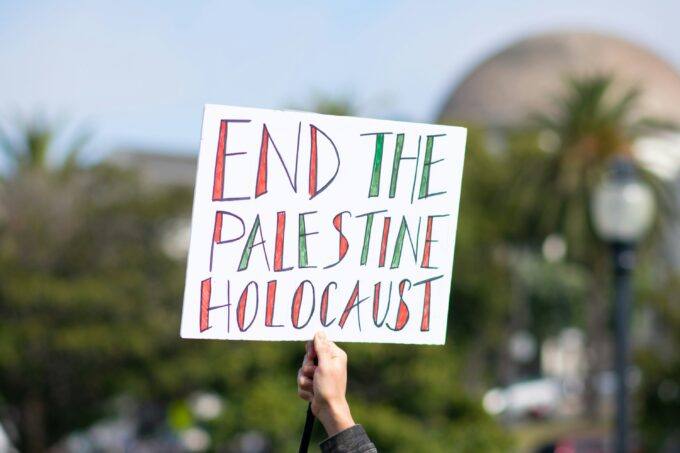
The IHRA further adds that “drawing comparisons of contemporary Israeli policy to that of the Nazis” is a manifestation of antisemitism. This prohibition extends not only to direct comparisons, but to any claim that Israel is by its very nature an ethno-state, or that it is currently engaging in genocide, creating concentration camps, planning for mass expulsions, or engaging in other war crimes or crimes against humanity.

But what does it mean if a country is granted blanket impunity against any accusation of racism, war crimes, or human rights violations? The IHRA would prohibit journalists, human rights organizations, international organizations, international legal groups, and scholars from investigating, or denouncing what the country is doing, much less taking action to restrain it. Indeed, some people from these groups have been accused and sanctioned for their investigations, while others self-censor out of fear of being seen as antisemitic.

In short, the IHRA itself commits two of the acts that it claims to oppose: it creates a double standard for Israel and an impenetrable cover for committing genocide.

Major human rights organizations like Amnesty International and Human Rights Watch have concluded that Israel is indeed committing genocide in Gaza. Close to two dozen countries — almost all from the global South — along with the Non-Aligned Movement, the Arab League, and the African Union, have joined with South Africa to accuse Israel of genocidal acts before the International Court of Justice. And all of those claims have been duly condemned by Israel and its allies.

Israeli genocide historian Omer Bartov proceeded cautiously with his own judgment. In November 2023, he wrote: “As a historian of genocide, I believe that there is no proof that genocide is currently taking place in Gaza, although it is very likely that war crimes, and even crimes against humanity, are happening.” He believed then that genocide was indeed possible in Gaza and urged the world to mobilize to prevent it.

Despite global protest, Israel’s assault on Gaza only continued. In July 2025, Bartov wrote: “My inescapable conclusion has become that Israel is committing genocide against the Palestinian people. Having grown up in a Zionist home, lived the first half of my life in Israel, served in the I.D.F. [Israeli Defense Forces] as a soldier and officer and spent most of my career researching and writing on war crimes and the Holocaust, this was a painful conclusion to reach, and one that I resisted as long as I could. But I have been teaching classes on genocide for a quarter of a century. I can recognize one when I see one.” Ongoing denial of the genocide, he added, “will cause unmitigated damage not just to the people of Gaza and Israel but also to the system of international law established in the wake of the horrors of the Holocaust, designed to prevent such atrocities from happening ever again.”

In fact, Bartov observes, there is now an overwhelming consensus among genocide scholars (who study comparative genocide or different genocides worldwide) that what we are witnessing in Gaza is indeed a genocide. Holocaust scholars mostly hold the opposite view and many have argued, in line with the IHRA, that any such accusation against Israel could only be motivated by antisemitism. “The Holocaust has been… relentlessly invoked by the state of Israel and its defenders as a cover-up for the crimes of the IDF,” concludes Bartov, citing an array of publications that accuse genocide scholars of antisemitism for simply describing what Israel is doing in Gaza and quoting Israeli officials about their aims.

What About Other War Crimes — Or Any Crimes at All?

Yet another IHRA example of antisemitism refers to “blood libel,” which it doesn’t define, but which generally refers to the grim myth that Jews killed non-Jewish children to use their blood in rituals. The IHRA text cites “using the symbols and images associated with classic antisemitism (e.g., claims of Jews killing Jesus or blood libel) to characterize Israel or Israelis” as examples of antisemitism.

And such accusations haven’t just been made against critics of the present war in Gaza outside of Israel. When Israeli politician Yair Golan spoke out against Israeli atrocities in Gaza, Prime Minister Benjamin Netanyahu immediately accused him of “blood libel.” When the Israeli newspaper Ha’aretz published an investigative report with soldiers’ testimonies about being ordered to shoot at Gazans approaching humanitarian aid sites, the paper was subject to the same accusation. When Israeli opposition politicians accused Netanyahu of prolonging the war in the service of his own political interests, the Israeli ambassador to the U.S. accused them, too, of “blood libel.”

Is it antisemitic for the World Court to hear a case accusing Israel of the crime of genocide in Gaza? Benjamin Netanyahu has openly claimed so, as did the Anti-Defamation League, the American Jewish Committee, and the U.S. Combat Antisemitism Movement. Is it antisemitic for genocide scholars to study this particular case of mass killing, just because its perpetrator happens to be Israel? Is it antisemitic for Israeli journalist Dahlia Scheindlin to point out that “Israel’s plan to herd 600,000 Palestinians into a special camp at Gaza’s southern border with Egypt” is in fact a plan to create the equivalent of a concentration camp?

The impunity that such a proscription attempts to grant Israel is immense.

There’s More: It’s Legally Binding

Although the IHRA originally insisted that its definition was “non-legally binding,” it is, in fact, becoming so. The group itself and major Jewish organizations in the United States have launched political campaigns to promote their definition and turn it into law.

By mid-2025, 46 countries had adopted the definition. President Trump implemented it with an executive order in 2019, citing Title VI of the Civil Rights Act of 1964 that prohibits discrimination based on race, color, or national origin for any program that gets federal financial assistance. As a result, Title VI proscriptions can now be applied to a person who criticizes Zionism, who uses the term genocide to describe Israel’s slaughter in Gaza, or who advocates the nonviolent Boycott, Divestment, and Sanctions movement or indeed any withdrawal of U.S. support for what Israel is now doing.

The Biden administration maintained Trump’s policy and the current Trump administration, and universities now pressured into following in its footsteps, have used it to fire, punish, or, in the case of the government, deport people under the guise of preventing antisemitism. In fact, Harvard University’s decision in January 2025 to become the first Ivy League university to join the trend, adopting the definition (followed by Yale in April), specifically designated “Zionists” as a protected class. Thus, the policy prohibits “antisemitic, racist, sexist, homophobic, anti-Zionist, anti-Arab, Islamophobic, anti-LDS, or anti-Catholic” behaviors.

The IHRA document was not written to be turned into law, and even some of its authors have protested this use. Yet there it is in law and policy throughout the United States and Europe.

Weaponizing Antisemitism as a Shield to Enable Genocide

The IHRA’S definition goes far beyond the obvious one, that of stereotyping, prejudice against, or harm against Jews, and has little to do with preventing genocide. It is an eminently political definition that tries to prevent criticism of Israel by defining such criticism as antisemitic. Turning it into law heavily limits freedom of speech and political debate — and has nothing to do with antisemitism.

As Israel, in fact, continues to carry out mass killings of Palestinians, attempting to destroy every institution of Palestinian life and culture in Gaza, and herding them into militarized camps, this definition has been mobilized to try to silence any hint that it might be engaging in war crimes, creating concentration camps, or committing genocide.

Follow TomDispatch on Twitter and join us on Facebook. Check out the newest Dispatch Books, John Feffer’s new dystopian novel, Songlands (the final one in his Splinterlands series), Beverly Gologorsky’s novel Every Body Has a Story, and Tom Engelhardt’s A Nation Unmade by War, as well as Alfred McCoy’s In the Shadows of the American Century: The Rise and Decline of U.S. Global Power, John Dower’s The Violent American Century: War and Terror Since World War IIand Ann Jones’s They Were Soldiers: How the Wounded Return from America’s Wars: The Untold Story.

Aviva Chomsky, a TomDispatch regularis professor of history and coordinator of Latin American studies at Salem State University in Massachusetts. Her most recent book is Is Science Enough?  Forty Critical Questions about Climate Justice.


Opinion
Years of impunity against Jewish extremist terror have created a monster
(RNS) — Impunity, not justice, remains the rule.
Char marks, which Palestinians say are from an attack by Israeli settlers, are visible in the cemetery near the St. George Greek Orthodox Church in the West Bank village of Taybeh, July 14, 2025. (AP Photo/Nasser Nasser)

(RNS) — It was 3 a.m. when David Azar’s phone rang. The assistant pastor of an evangelical Christian congregation in Ramallah, north of Jerusalem in the West Bank, had been visiting late in the city on Sunday (July 27) and decided to spend the night at his in-laws’ home rather than risk the 8-mile drive back to his village of Taybeh.

On the other end of the line was his brother Jeries, pleading for help. Their family car had just been torched, and he was terrified he, with his wife and 2-year-old child, might meet the same fate as the Dawabsheh family, who had been burned to death, including their infant son, when Jewish settler extremists attacked the nearby village of Duma in 2015.


The attack on Taybeh was not the first, nor was it isolated. On July 7, a group of settlers set fires near Taybeh’s cemetery and the Church of St. George, which dates back to the fifth century A.D. and is one of the oldest religious landmarks in Palestine.


Visiting Taybeh on July 19, U.S. Ambassador Mike Huckabee, a Christian Zionist and a close ally of the Israeli prime minister, promised that those settlers responsible for previous attacks would be held accountable. The ambassador told CBS News: “To commit an act of sacrilege by desecrating a place that is supposed to be a place of worship, it is an act of terror, and it is a crime. We will certainly insist that those who carry out acts of terror and violence in Taybeh, or anywhere, be found and prosecuted. Not just reprimanded, that’s not enough. People need to pay a price for doing something that destroys not just what belongs to others, but what belongs to God.”

What’s also not new in Taybeh, however, is the protection the settlers enjoy from security forces, nor how they are emboldened by Israeli political leaders. Two senior Israeli ministers, the minister for national security and the finance minister, live in illegal settlements in the occupied territories. Both are central figures in a government that has actively encouraged settler expansion and shielded those who commit acts of violence.

Israeli police and military personnel visited the scene of the attack on the Azar house in Taybeh and conducted an initial investigation, but, true to precedent, no accountability is expected. Impunity, not justice, remains the rule.

According to the Rossing Center, an Israeli nongovernmental organization, there were 111 documented incidents of harassment or violence against Christians in Israel and East Jerusalem in 2024 alone. Between 2005 and 2020, Yesh Din, another Israeli human rights group, tracked 1,664 police investigation files related to settler violence against Palestinians. Of those, 94% were closed without indictment, and only about 3% led to convictions.

For years, Palestinians have warned that the Israeli-Palestinian political conflict must not be allowed to morph into a religious war, but it is now taking a dangerous religious turn. Yet Israeli radicals have increasingly assumed powerful positions, undermining long-standing understandings at Islamic and Christian holy sites. In Jerusalem, the fragile status quo at Al-Aqsa Mosque, Islam’s third-holiest site, is being steadily eroded.

In Hebron, the Israeli government recently stripped the local municipality of its role in managing the Ibrahimi Mosque, also known as the Cave of the Patriarchs, and holy to both Jews and Muslims. Israeli media report that it is still unclear whether the site will now be administered by the Israeli army or by the council of the illegal Kiryat Arba settlement.

The rise of Jewish supremacist ideologies, meanwhile, and the absence of a political horizon are creating a volatile and perilous future, especially for Palestinian Christians, whose numbers are rapidly dwindling. Observers are beginning to draw uncomfortable parallels between the rise of Jewish supremacy in Israel and the resurgence of white supremacy in the United States. Both reflect an alarming trend of extremist ideologies gaining mainstream traction and undermining pluralism and the rule of law.

A political solution to the conflict is still considered the best way forward. A high-level conference is currently being held at the United Nations in New York, co-sponsored by France and Saudi Arabia, to revive a political process based on the U.N. General Assembly’s framework for a two-state solution. However, some of the main players are balking. Israel’s current government openly rejects the creation of a Palestinian state, and Washington has said it will not participate in the conference.

Meanwhile, the future for Palestinian Christians becomes bleaker. They remain disproportionately active in political, social and economic life, despite being a shrinking minority. Yet as terror like that faced by the Azar family hits home, the pressures to emigrate grow stronger. While Palestinian Christians consistently express a deep desire to preserve their presence in the Holy Land, continued violence and intimidation risk turning churches into empty monuments, museums without worshippers.

Christian leaders often implore visitors to the Holy Land to engage not just with ancient stones, but with the living stones — the people who have sustained Christianity here for centuries. The question now is whether anyone in power will act to protect them before it’s too late.

(Daoud Kuttab, a Palestinian Christian journalist, is the publisher of Milhilard.org, a news website dedicated to Christian Arabs in Jordan and the Palestinian territories, and the author of “State of Palestine NOW.” The views expressed in this commentary do not necessarily reflect those of Religion News Service.)


Opinion

As Gaza starves, churches must lead on Palestinian recognition

(RNS) — The protection of the Palestinian people is a matter of faith and conscience.


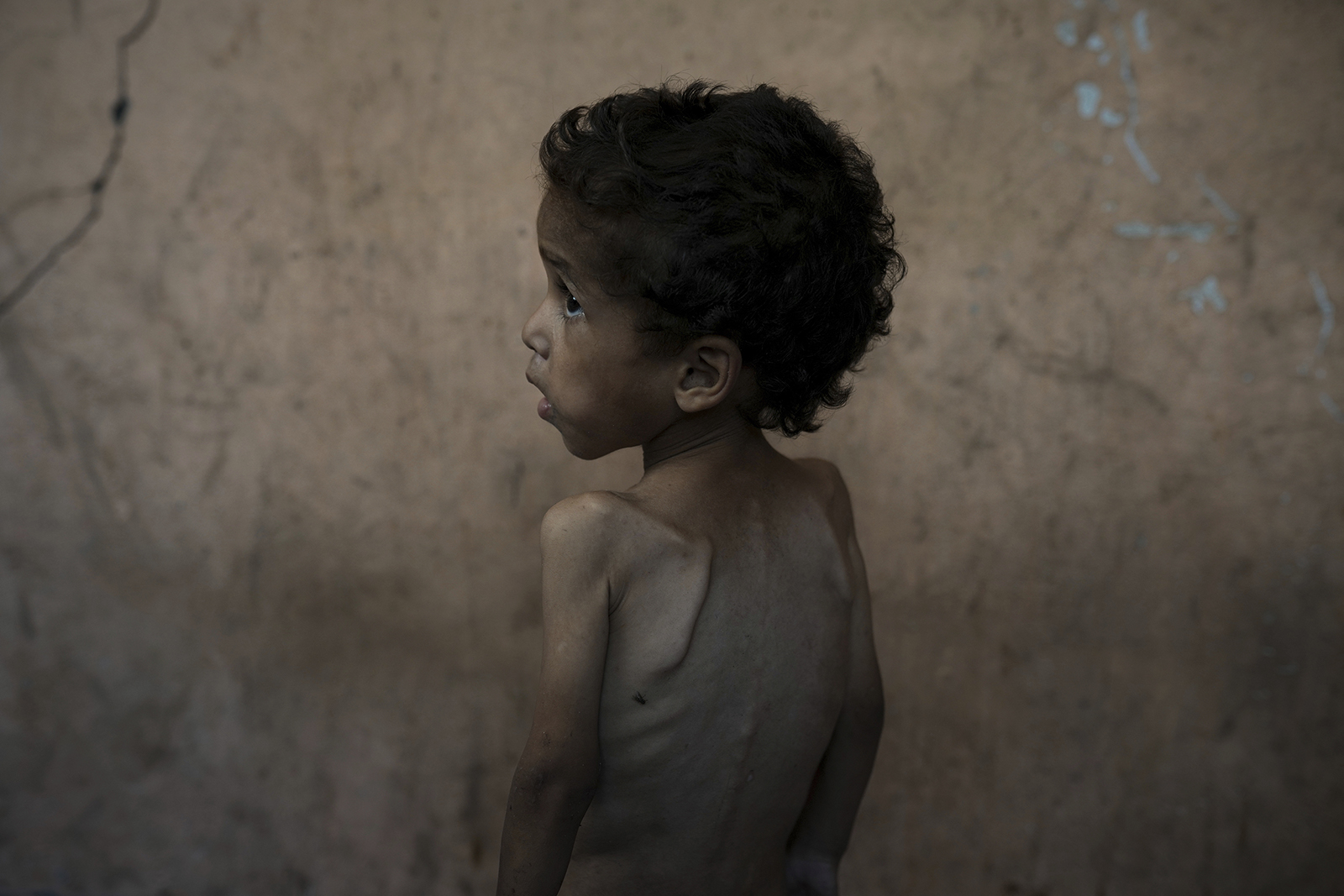
Yazan Abu Ful, a 2-year-old malnourished boy, stands shirtless for a photo at his family's home in the Shati refugee camp in Gaza City, July 23, 2025. In Gaza, malnutrition is often worsened by preexisting conditions and compounded by illnesses linked to inadequate health care and poor sanitation, largely the result of the ongoing war. (AP Photo/Jehad Alshrafi)


Jim Wallis
August 6, 2025
RNS


(RNS) — Starvation, especially mass starvation, must transcend politics. What we are witnessing in Gaza is exactly that: the brutal starvation of a population. This crisis should unite people and nations in urgent common purpose to stop it and save lives — particularly because, as is the case in Gaza, the first to suffer and die are often children.

According to the United Nations, nearly 1 in 3 people are going multiple days without eating and hospitals are reporting rising deaths from malnutrition and starvation. The Gaza Health Ministry said more than 600 people have been killed while trying to reach food aid at the new Gaza Humanitarian Foundation sites, The New York Times reported.

The risk is particularly great for children and pregnant women. Ross Smith, the director of emergency preparedness and response at the U.N. World Food Programme, reported that nearly 100,000 women and children are suffering from severe acute malnutrition. Doctors Without Borders said the two clinics it runs in Gaza were treating over 700 pregnant and breastfeeding women for malnutrition.

The Washington Post shared this sobering and traumatic story:

In Gaza City’s Sabra district, Ayat al-Soradi, 25, said she was so malnourished during her pregnancy this year that she gave birth to her twins, Ahmed and Mazen, two months early. They each weighed about two pounds, and for almost a month, she had watched over them in their incubators as the nurses fed them with powdered milk.

We must not shy away from the deadly reality facing millions in Gaza. Evidence of starvation has seemingly pushed the conversation around Gaza and Palestine to new levels in Israel, the U.S. and Europe.

In the United States last week, 27 Democratic senators, an unprecedented number, voted to block more than $675 million in offensive weapons sales to Israel. A similar vote garnered only 15 Democratic senators in April 2025, down from 18 in November 2024.


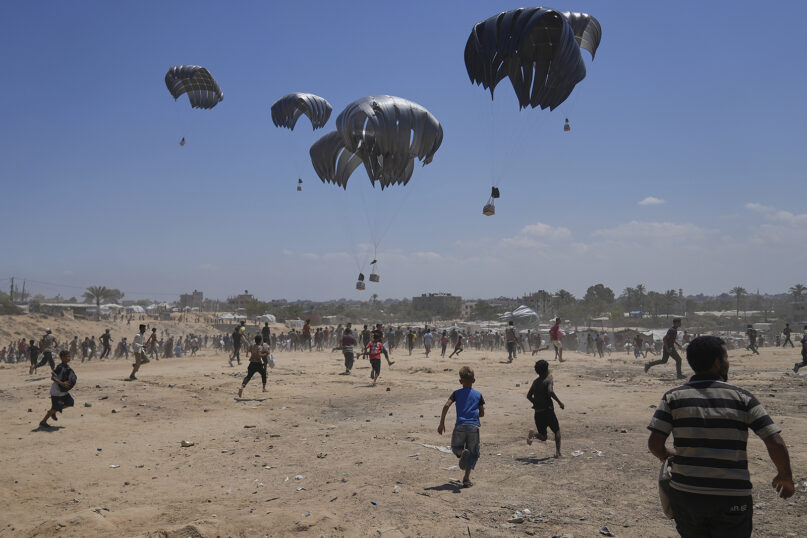
Palestinians rush to collect humanitarian aid airdropped by parachutes into Zawaida in the central Gaza Strip, Aug. 4, 2025. (AP Photo/Abdel Kareem Hana)

I’m currently in Europe, where the conditional commitment to recognize a Palestinian state by British Prime Minister Keir Starmer is front-page news. French President Emmanuel Macron has signaled plans to do the same. And now, Canadian Prime Minister Mark Carney has promised to recognize Palestine at the U.N. General Assembly in September — joined by a growing number of other countries. Their message is clear: If urgent commitments around humanitarian aid and the safety of Palestinians are not met, recognition will move forward. With neither Israel nor the U.S. providing these assurances, the recognition of a Palestinian state is now a moral imperative — one grounded in protecting both peoples.

While the recognition of the Palestinian state in this current moment is largely a symbolic action (given the reality of U.S. veto power in the U.N. and the illegal Israeli settlements that have violently encroached into Palestinian territory), it is an important step in the process of bringing about a tenable, fair and secure two-state solution or another alternative solution that recognizes the dignity and sovereignty of two peoples sharing the same land. While such a prospect may seem politically hopeless now, a just and meaningful sharing of the land is the only alternative to endless war and suffering for all — including the suffering that continues to fall most heavily on the Palestinian people.

There is widespread agreement that Hamas cannot be a part of a future Palestinian state, because of its terrorist atrocities and its rejection of a two-state solution. Likewise, Prime Minister Benjamin Netanyahu’s right-wing Israeli government would never accept a two-state solution and continues to carry out violent policies against civilians — including attacks on people waiting in line for food.

We must remember what terrorism truly means: the unlawful use of violence and intimidation, especially against civilians, in the pursuit of political aims. By that definition, both sides are guilty.

A fair and just sharing of the land requires new leadership on both the Israeli and Palestinian sides. Netanyahu’s extreme right-wing government is pushing for the annexation of the West Bank and complete control over Gaza, while Donald Trump has even suggested turning Gaza into a resort bearing his name.

Israel’s denial of the starvation in Gaza — and its refusal to take responsibility despite being the occupying power in full control — has created an international moral crossroads.

Governments hold the power here, and any U.N. resolution in September recognizing a Palestinian state can be vetoed by the United States.

But what if churches in the U.S. and around the world took the lead in recognizing a Palestinian state? That would send a clear moral message — the recognition and protection of the Palestinian people is a matter of faith and conscience, grounded in a commitment to sovereignty, security and multifaith pluralism for all. Elevating these moral truths in the public narrative is now essential. It may be the only path forward.


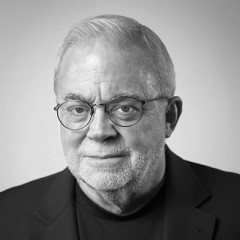
The Rev. Jim Wallis. (Courtesy photo)

(The Rev. Jim Wallis is Archbishop Desmond Tutu chair and director of Georgetown University’s Center on Faith and Justice and the author, most recently, of New York Times bestseller “The False White Gospel: Rejecting Christian Nationalism, Reclaiming True Faith, and Refounding Democracy.” The views expressed in this commentary do not necessarily reflect those of RNS.)


Gaza’s Starvation, Israeli Lies and the Tail that Wags the Dog

August 5, 2025

Whenever Israel yields to international pressure and allows aid trucks into Gaza, it devises other methods to ensure that food is never delivered. On the same day, July 26, Israel announced airdrops and “humanitarian corridors” for UN convoys, its forces murdered 53 humans seeking aid in those corridors. Aid distribution points, rather than feeding the starving population, Israel turns them into killing zones. Time and again, since December 2023, Palestinians have been paying with blood for a loaf of bread or a bottle of water.

In less than two months, death by Israeli bullets at the so-called Gaza Humanitarian Foundation (GHF) has reached over 1,054, averaging about 20 murders daily. Since July 26 when Israel announced the new “humanitarian (death) corridors,” the murder toll has more than doubled compared to those killed daily at GHF distribution centers, 325 last week alone. Meanwhile, the tokenistic airdrops by Arab collaborators is nothing short of a disgrace.

The $60 million Donald Trump brags about giving to GHF is blood money funding the deaths of hungry Palestinians. For the starved, GHF stands for Gaza Humiliation Front, not a lifeline, but an Israeli murder-line. Instead of wasting American taxpayer money on GHF death traps, Trump should consider restoring U.S. funding to UNRWA, the only agency that has offered real hope to Palestinian children for more than 75 years.

Steve Witkoff’s visit to a GHF center in Gaza, followed by his statement that there is no starvation, was a textbook case of confirmation bias. His tour did not show the absence of starvation, but rather his willful blindness not to see. Witkoff sought out information that would reinforce his predetermined narrative to whitewash starvation.

To be sure, no one had seriously expected him to witness starvation at a carefully staged (safe) site, far removed from the people. He declined an invitation to visit a hospital in Gaza to see the starved children, and hear directly from the life-saving medical professionals. Instead, he chose a photo op and listen to the mercenaries of death at GHF.

The engineered starving in Gaza, supported by the U.S., has always been a central pillar of Israel’s psychological warfare; a calculated strategy aimed at expelling the population or driving them into a survivalist frenzy. Israel, and the U.S. funded GHF, have become the perfect linchpin of this Israeli designed contraption. Replacing a well-established UN infrastructure that operated 400 distribution centers, GHF offered only four aid points. These limited sites made it easier for Israel to surveil, shoot at the starving, and leave the survivors to fight over the meager crumbs that remained.

GHF role was exposed by Anthony Aguilar, a retired U.S. Special Forces officer, West Point graduate, and recipient of the Purple Heart and Bronze Star. Choking back tears, Lt. Col. Aguilar recounted the story of a child who “walked 12 kilometers to reach” one of GHF’s food distribution sites. “He got nothing but scraps, thanked us for it…” and then he was shot dead by the Israeli army. I urge readers to listen to the powerful three minutes testimony from a decorated U.S. military officer.

Still, the Israeli-managed “free” Western media has too often acted as Israel’s public relations arm. It downplays Israel’s horrific crimes and markets Israeli falsehood, such as the baseless claim that the resistance steals food aid. This fabricated narrative persisted even after USAID concluded that Israel failed to provide any evidence supporting that food aid was being diverted. Or they excuse the lack of food on a faulty distribution system, not the Israeli blockade. When in fact, other than for Israeli military hindrance, under UN oversight, there has been no issues delivering food to all of Gaza. Israel’s objective is simple: deflect responsibility by blaming the starving for their own starvation.

Even after these lies were debunked, the Trump administration continued to parrot Israeli disinformation. Notably, however, following his trip to Scotland, Trump’s tone has noticeably softened, acknowledging for the first time, the taunting images of starving babies. Perhaps, a few days outside the Washington bubble of his Israel-first advisors, has offered him a rare glimpse of reality.

Meanwhile, it took one video of an emaciated Zionist captive for Israelis to cry Holocaust. But not the food blockade against 2.3 million humans (including the Israeli captive soldiers), nor the images of starving Palestinians murdered at Israel’s humiliating food lines, or babies with hollow eyes, abdominal bloating, and skeletal limbs. These barely get their attention. Instead of showing human empathy, they chose to dismiss the haunting photos of dying infants, maybe because these children were less “chosen.”

Early last June, I wrote on the Israeli scheme to “lie, deny, and distort the truth.” In the article, I detailed a long list of Israeli lies and how the American media disseminated the disinformation with little to no effort to verify or challenge. You see, Israel does not just enjoy political impunity from the U.S. administration; it also has the freedom to lie with complete immunity from the American media.

The daunting question remains, how many lies must Israel tell before the media call them out, just as they do with the American President, Donald J. Trump—or other nations?

A recent example of how the Israeli-managed “free” media misrepresents facts is the latest failed ceasefire talks. Listening to U.S. media, BBC and government mouthpieces, one might conclude that the Palestinian negotiators rejected a “generous” offer for a ceasefire. In reality, the talks collapsed because Netanyahu sought only a pause to secure the release of captive Israeli soldiers, refusing to agree to end the waror the starvation blockade.

No rational party would accept, let alone consider, such a half-measure. When Palestinians rejected a proposal short of a lasting ceasefire, Netanyahu cried foul. President Trump, and his envoy Witkoff, rushed to absolve his intransigence and refusal to accept a permanent ceasefire, and then blamed the Palestinians.

The reluctance, or perhaps intimidation of the Arab mediators like Qatar and Egypt to publicly challenge Washington’s pro-Israel stance has only deepened the media distortions. The mediators’ silence allowed Netanyahu’s false narratives to dominate international discourse, while serving as a fig leaf for the blatant submissive American bias.

Nonetheless, the tide could be turning. France and UK’s recent promise to recognize the state of Palestine, although long overdue, signals the growing frustration with Netanyahu’s lies and deceit. The European officials made it clear, they were no longer willing to tolerate the Israeli farce. The symbolic act, however, would never atone for Britain’s original sin: the 1917 Balfour Declaration, which promised European settlers a homeland in Palestine, while failing to enshrine the rights of the indigenous Palestinians on their land. Nor does it exonerate France who conspired with Britain in the secret 1916 Sykes-Picot Agreement to carve up the eastern part of the Arab world.

Still, recognition matters. Fourteen other countries are poised to follow France’s lead next month. The growing calls demanding Netanyahu to agree to a ceasefire, is also telling. These governments have finally realized, what their subjects had long known, that the absence of peace is not due to Palestinian rejectionism, but to Netanyahu’s deception and insatiable thirst for the never-ending wars.

Despite the dominance of Israeli-embedded journalists and pundits in Western media, the world is finally waking up to the true face of Israel. Alternative media has, to a great extent, succeeded in piercing through the wall of Israeli lies, offering an unfiltered view into the lived horrors of starvation and the genocide. No amount of Israeli propaganda can obscure the images of skeletal ribs jutting from the bodies of dying children. The sight of starving infants suckling on their bony fists, indicts the liars more powerfully than any polished Israeli hasbara could ever hide.

To that end, a recent Gallup poll shows a clear shift in the U.S., where American support for the Israeli military action in Gaza has dropped to 32%, and disapproval has soared to 60%. For a while, Israel was enabled to “fool all the people some of the time,” and it continues to “fool some of the people all the time,” but ultimately, and as the latest poll shows, it “cannot fool all the people all the time.”

Yet babies are starving, the genocide continues and there is no ceasefire is in sight. This is only possible because Netanyahu and AIPAC continue to wag the dogs of Washington.

Jamal Kanj is the author of Children of Catastrophe: Journey from a Palestinian Refugee Camp to America, and other books. He writes frequently on Arab world issues for various national and international commentaries.


How one Gaza family dedicates each day to

finding enough food to survive

DEIR AL-BALAH, Gaza Strip (AP) — Hunger has grown throughout the past 22 months of war because of aid restrictions, humanitarian workers say.


Samy Magdy and Wafaa Shurafa
August 4, 2025

DEIR AL-BALAH, Gaza Strip (AP) — Every morning, Abeer and Fadi Sobh wake up in their tent in the Gaza Strip to the same question: How will they find food for themselves and their six young children?

The couple has three options: Maybe a charity kitchen will be open and they can get a pot of watery lentils. Or they can try jostling through crowds to get some flour from a passing aid truck. The last resort is begging.

If those all fail, they simply don’t eat. It happens more and more these days, as hunger saps their energy, strength and hope.

The predicament of the Sobhs, who live in a seaside refugee camp west of Gaza City after being displaced multiple times, is the same for families throughout the war-ravaged territory.

Hunger has grown throughout the past 22 months of war because of aid restrictions, humanitarian workers say. But food experts warned earlier this week the “worst-case scenario of famine is currently playing out in Gaza.”

Israel enforced a complete blockade on food and other supplies for 2½ months beginning in March. It said its objective was to increase pressure on Hamas to release dozens of hostages it has held since its attack on Israel on Oct. 7, 2023.

Though the flow of aid resumed in May, the amount is a fraction of what aid organizations say is needed.

A breakdown of law and order has also made it nearly impossible to safely deliver food. Much of the aid that does get in is hoarded or sold in markets at exorbitant prices.

Here is a look at a day in the life of the Sobh family:

A morning seawater bath

The family wakes up in their tent, which Fadi Sobh, a 30-year-old street vendor, says is unbearably hot in the summer.

With fresh water hard to come by, his wife Abeer, 29, fetches water from the sea.

One by one, the children stand in a metal basin and scrub themselves as their mother pours the saltwater over their heads. Nine-month-old Hala cries as it stings her eyes. The other children are more stoic.

Abeer then rolls up the bedding and sweeps the dust and sand from the tent floor. With no food left over from the day before, she heads out to beg for something for her family’s breakfast. Sometimes, neighbors or passersby give her lentils. Sometimes she gets nothing.

Abeer gives Hala water from a baby bottle. When she’s lucky, she has lentils that she grinds into powder to mix into the water.

“One day feels like 100 days, because of the summer heat, hunger and the distress,” she said.

A trip to the soup kitchen

Fadi heads to a nearby soup kitchen. Sometimes one of the children goes with him.


“But food is rarely available there,” he said. The kitchen opens roughly once a week and never has enough for the crowds. Most often, he said, he waits all day but returns to his family with nothing “and the kids sleep hungry, without eating.”

Fadi used to go to an area in northern Gaza where aid trucks arrive from Israel. There, giant crowds of equally desperate people swarm over the trucks and strip away the cargo of food. Often, Israeli troops nearby open fire, witnesses say. Israel says it only fires warning shots, and others in the crowd often have knives or pistols to steal boxes.

Fadi, who also has epilepsy, was shot in the leg last month. That has weakened him too much to scramble for the trucks, so he’s left with trying the kitchens.

Meanwhile, Abeer and her three eldest children — 10-year-old Youssef, 9-year-old Mohammed and 7-year-old Malak — head out with plastic jerrycans to fill up from a truck that brings freshwater from central Gaza’s desalination plant.

The kids struggle with the heavy jerrycans. Youssef loads one onto his back, while Mohammed half-drags his, his little body bent sideways as he tries to keep it out of the dust of the street.

A scramble for aid

Abeer sometimes heads to Zikim herself, alone or with Youssef. Most in the crowds are men — faster and stronger than she is. “Sometimes I manage to get food, and in many cases, I return empty-handed,” she said.


If she’s unsuccessful, she appeals to the sense of charity of those who succeeded. “You survived death thanks to God, please give me anything,” she tells them. Many answer her plea, and she gets a small bag of flour to bake for the children, she said.

She and her son have become familiar faces. One man who regularly waits for the trucks, Youssef Abu Saleh, said he often sees Abeer struggling to grab food, so he gives her some of his. “They’re poor people and her husband is sick,” he said. “We’re all hungry and we all need to eat.”

During the hottest part of the day, the six children stay in or around the tent. Their parents prefer the children sleep during the heat — it stops them from running around, using up energy and getting hungry and thirsty.

Foraging and begging in the afternoon

As the heat eases, the children head out. Sometimes Abeer sends them to beg for food from their neighbors. Otherwise, they scour Gaza’s bombed-out streets, foraging through the rubble and trash for anything to fuel the family’s makeshift stove.

They’ve become good at recognizing what might burn. Scraps of paper or wood are best, but hardest to find. The bar is low: plastic bottles, plastic bags, an old shoe — anything will do.

One of the boys came across a pot in the trash one day — it’s what Abeer now uses to cook. The family has been displaced so many times, they have few belongings left.


“I have to manage to get by,” Abeer said. “What can I do? We are eight people.”

If they’re lucky, lentil stew for dinner

After a day spent searching for the absolute basics to sustain life — food, water, fuel to cook — the family sometimes has enough of all three for Abeer to make a meal. Usually it’s a thin lentil soup.

But often there is nothing, and they all go to bed hungry.

Abeer said she’s grown weak and often feels dizzy when she’s out searching for food or water.

“I am tired. I am no longer able,” she said. “If the war goes on, I am thinking of taking my life. I no longer have any strength or power.”

___

Magdy reported from Cairo.
Associated Press religion coverage receives support through the AP’s collaboration with The Conversation US, with funding from Lilly Endowment Inc. The AP is solely responsible for this content.