Friday, August 08, 2025

'Plastic pollution really begins when we're making plastics and extracting oil, gas from the ground'

Issued on: 07/08/2025 - FRANCE24

The 184 countries gathering to forge a landmark treaty on combating plastic pollution are seeking a way forward to tackle a global crisis wrecking ecosystems and trashing the oceans. For in-depth analysis and a deeper perspective, FRANCE 24's Eve Irvine welcomes Martin Wagner, Professor in the Department of Biology at NTNU: Norwegian University of Science and Technology.

Video by: Eve IRVINE


Plastic pollution treaty talks deadlocked


Geneva (AFP) – Negotiations on a global treaty on plastic pollution are being blocked by oil-producing countries and getting bogged down in a "dialogue of the deaf", sources at the talks told AFP on Thursday.


Issued on: 07/08/2025 - FRANCE24

Plastic waste has been found from the bottom of the seas to the tops of mountains
 © LAKRUWAN WANNIARACHCHI / AFP


Ten days of talks on finalising an international, legally-binding accord opened on Tuesday amid optimism from organisers that a deal could be done to tackle the scourge of plastic rubbish and microplastics trashing the planet.

But by Thursday, after countries had staked out their positions, the mood had darkened, negotiating sources said.

"We are in a dialogue of the deaf, with very few landing zones... I don't see progress," said a diplomatic source from a country in a coalition of nations pushing for a strong treaty, including plastic production reduction targets.

"What's worrying is that we have lots of points of disagreement; we're not quibbling about one problem."


The "Like-Minded Countries" (LMC) group, chiefly comprising oil-producing states, is opposed to any targets for limiting plastic production.

In total, 184 nations are taking part in the talks at the United Nations in Geneva.

Technically, the talks are a resumed session of the fifth -- and supposedly final -- round of negotiations, which ended in a flop in Busan, South Korea, in December.
'Hostage situation'

Rather than drifting towards common ground, "positions are crystallising", an observer from a non-governmental organisation told AFP after attending discussion groups, where the technical articles of the treaty are being thrashed out by negotiators.
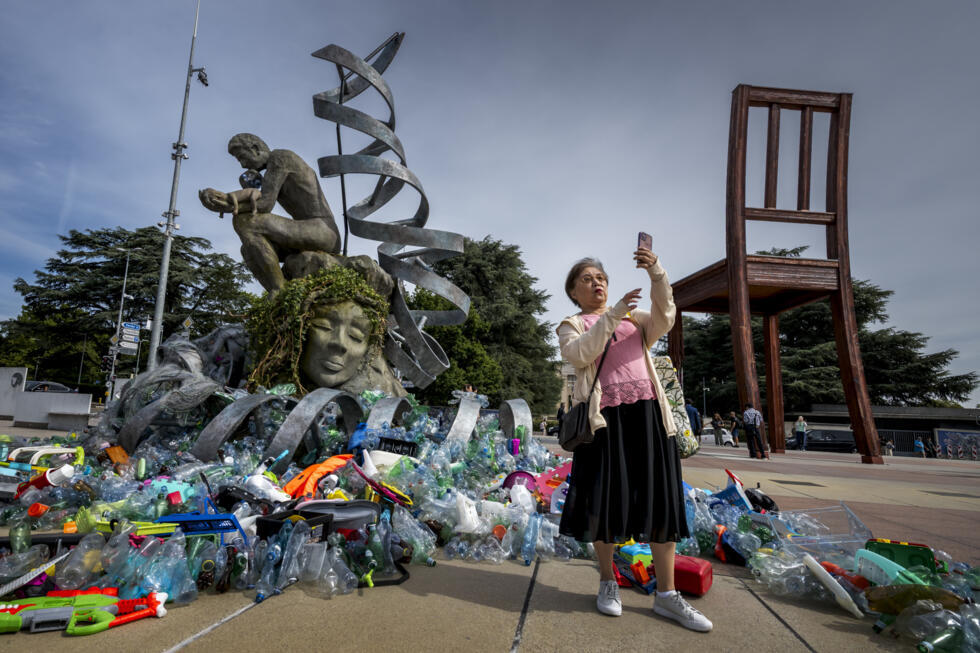
"The Thinker's Burden" statue by Canadian artist Benjamin Von Wong will gradually be covered by plastic waste outside the Geneva negotiations for a UN plastics treaty
 © Fabrice COFFRINI / AFP


Written documents submitted by nations to the UN negotiations website, consulted by AFP, confirm that Saudi Arabia, the Arab countries group, Russia, Iran, Kazakhstan and Malaysia reject binding measures on cutting plastic production.

Most of these countries want the petroleum origin of plastic to be left outside the bounds of any eventual treaty, and want the agreement to focus solely on what happens downstream, such as waste collection, sorting, recycling.

However, the initial, universally-adopted resolution establishing negotiations towards a treaty envisaged a deal covering the entire life cycle of plastic.

"If the text is only to help developing countries manage their waste better, we don't need an international treaty to do so," the diplomatic source stressed. "We are in a stand-off with countries quite prepared for there to be no treaty".
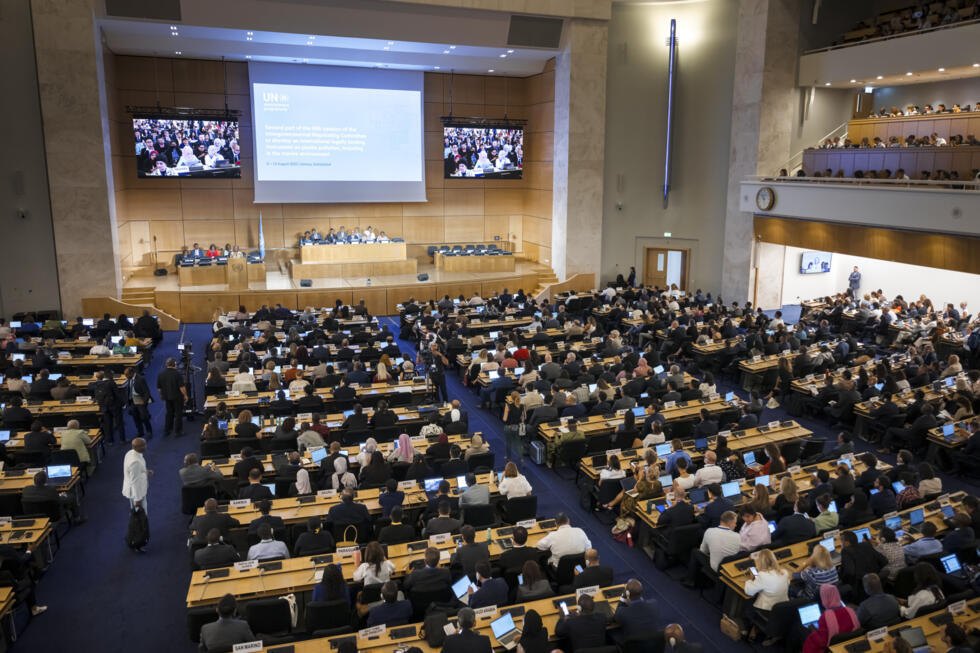
Ten days of talks on finalising an international, legally-binding instrument on plastic pollution opened on with optimism © Fabrice COFFRINI / AFP

The Center for International Environmental Law (CIEL) said that while the most ambitious countries had scaled back some aspirations in a bid to find consensus, the LMC group had not budged, meaning the middle ground was now much lower.

CIEL spokeswoman Cate Bonacini said: "That's not a negotiation; that's a hostage situation, especially when you know you're running out of money, people want to end the process. They're going to try to spend us down and tire us out."

"We heard countries on day one questioning whether this should be a treaty about plastic at all. That's really indicative of where some countries are," she told AFP.
Health risks

No consensus has emerged one an article of the draft text, on creating a list of chemical substances considered potentially hazardous to the environment or human health. The chemical industry has opposed such a list.
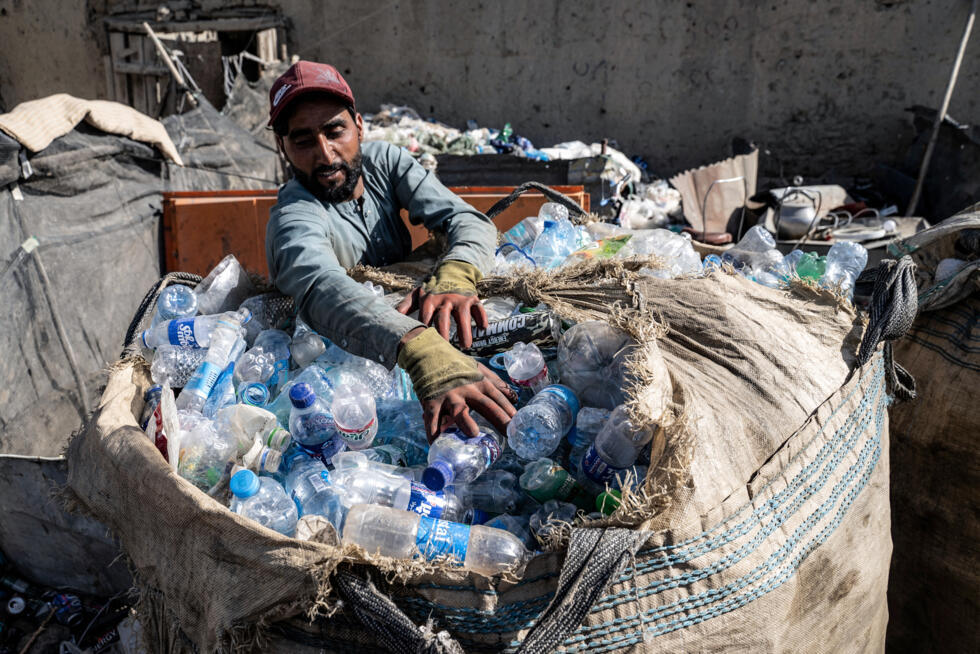
An Afghan worker loads plastic bottles into a sack at a recycling yard in Kabul © Wakil KOHSAR / AFP


The World Health Organization urged countries to ensure the treaty contains enforceable health protection.

"Plastic pollution poses significant and growing risks to human health," WHO chief Tedros Adhanom Ghebreyesus told reporters.

"These risks disproportionately impact vulnerable populations, including workers with occupational exposure... and communities near extraction production and disposal sites.

"Many of the chemicals added to plastic during their manufacture are hazardous, including endocrine disruptors, linked to hormonal imbalance, reproductive disorders, infertility, kidney disease and cancer."
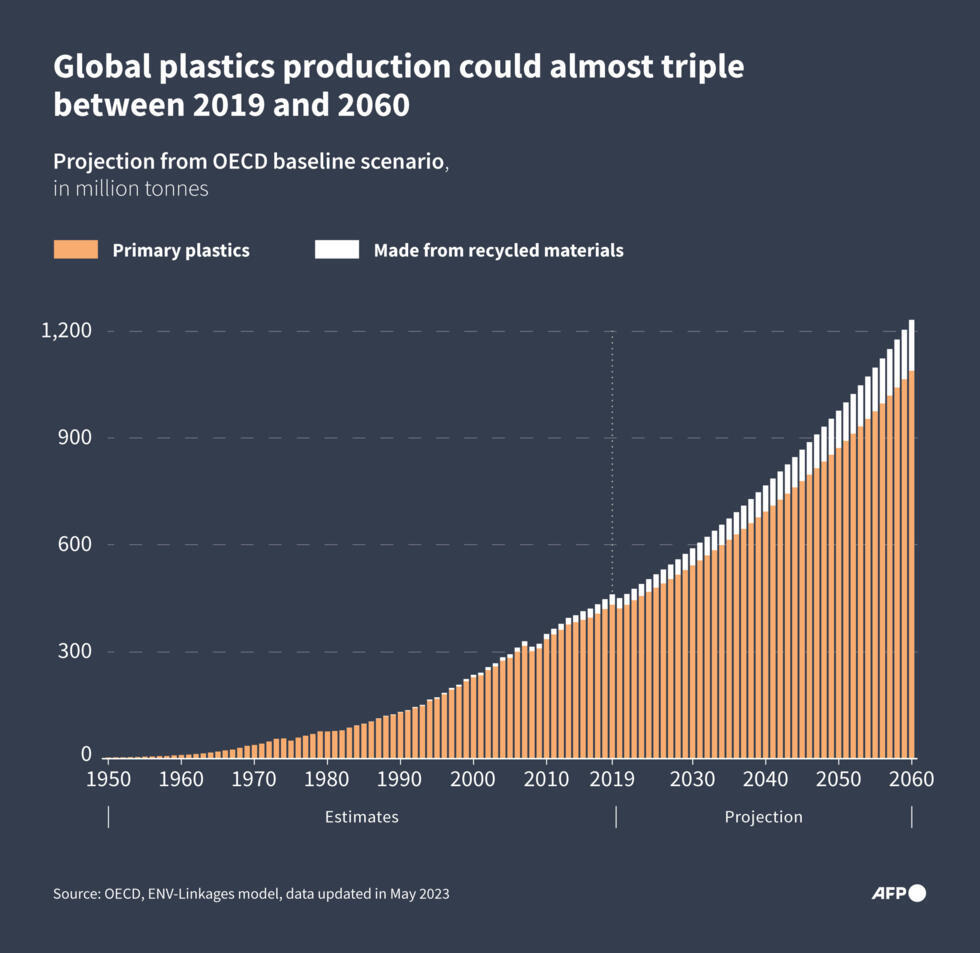

Global plastics production could almost triple between 2019 and 2060 © Sylvie HUSSON, Christophe THALABOT / AFP


Rudiger Krech, the UN health agency's environment chief, added that on plastic and human health, "the more we look the more we find.

"Twenty years ago we didn't know how dangerous it can be.

"We're now looking at the nano-plastics that can be found in many people's brains; we can also see that this is connected to many diseases."

© 2025 AFP


A French sailor's personal 'Plastic Odyssey'

Paris (AFP) – Simon Bernard's private war on plastic pollution began in 2016.


Issued on: 07/08/2025 -

Shocked at plastic waste on a once pristine beach, Simon Bernard launched what he called a 'plastic odyssey' © JOEL SAGET / AFP

From the deck of the cargo ship he was working on, Bernard was stunned to discover mountains of rubbish piled up in Hann Bay, once a white sandy beach that had become an open sewer in the Senegalese capital Dakar.

Thickets of rubbish were almost everywhere along the coast, "washing into the sea with the tides and waves," the 34-year-old sailor told AFP in an interview.

It was, he said, a terrible shock. "At sea, you don't see the plastic."

Deeply moved by seeing fishermen pulling tangled webs of plastic from their nets, Bernard -– newly graduated from France's Merchant Navy -– enlisted another engineer, Alexandre Dechelotte, to embark on what he dubbed "Plastic Odyssey".


The plan was to complete a round-the-world expedition aboard a 40-metre (130-foot) laboratory ship to raise awareness at their many ports of call -- especially among children -– about the devastating impact of the 20 tonnes of plastic waste dumped into the oceans every minute of every day.

The three-year expedition, which partnered with local associations along their route, is almost complete.

'Avoid using it'

Bernard secured financial sponsors, starting with a major French cosmetics brand that promoted the partnership as part of its commitment to increase the proportion of recycled plastic in its products.

But he said he was under no illusions: he knows that his initiative has had a modest impact on the global fight against plastic pollution.

He is also aware of earlier projects with similar goals that fell short of their ambitions.

The Ocean Cleanup launch by 18-year-old Dutch inventor Boyan Slat in 2013 – targeting the notorious Great Pacific Garbage Patch between Hawaii and California -- attracted money and attention but was hampered by design flaws and logistical limitations. A recent reboot of the system has shown greater potential for plastic removal at scale.
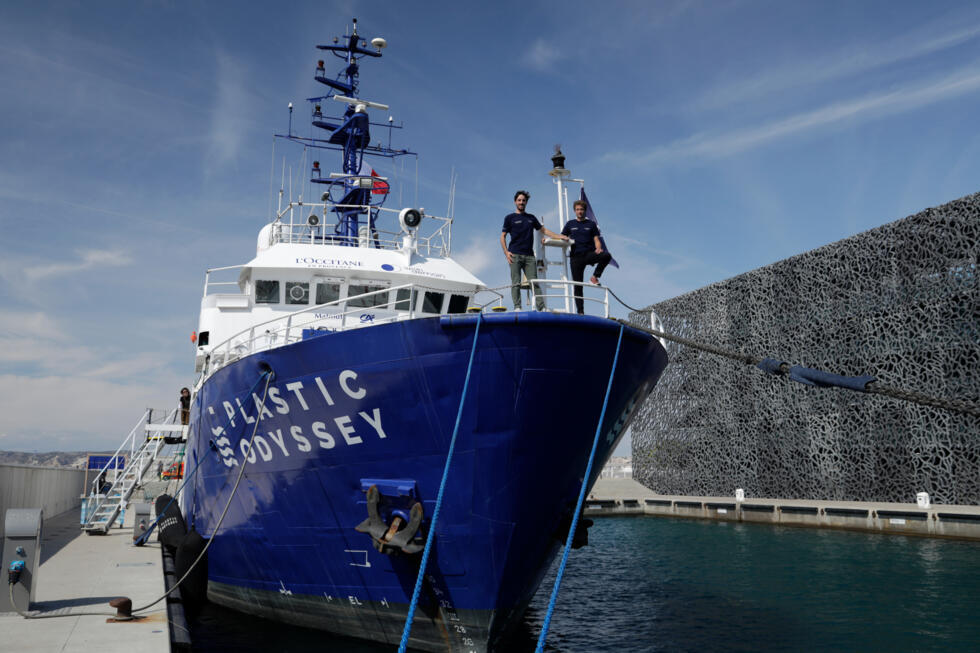

The three-year expedition partnered with local associations along the route
 © Nicolas TUCAT / AFP

Another initiative launched from France in 2018, the SeaCleaners, also reported disappointing yields of plastic pollution, and folded operations last year under the shadow of financial mismanagement.

But Bernard said the cause was too important to ignore, and aimed to prove that even small-scale efforts were critical in striving for a future with less plastic. Plastic Odyssey today has a staff of 35.

"The real solution to plastic pollution is to avoid using it," he said.

Nearly 200 nations are huddled in Geneva this week and next to forge a treaty to tackle the plastics crisis, and one of the most divisive issues on the table is whether to aim for reducing plastics production at the source, rather than simply cleaning up pollution after the fact.

30 stopovers

Giving up his dream of piloting ferries off the Normandy coast, Bernard left France on October 1, 2022. He is currently in Mayotte, a French territory in the Indian Ocean, and is nearing the end of his 30 three-week stops in three continents.
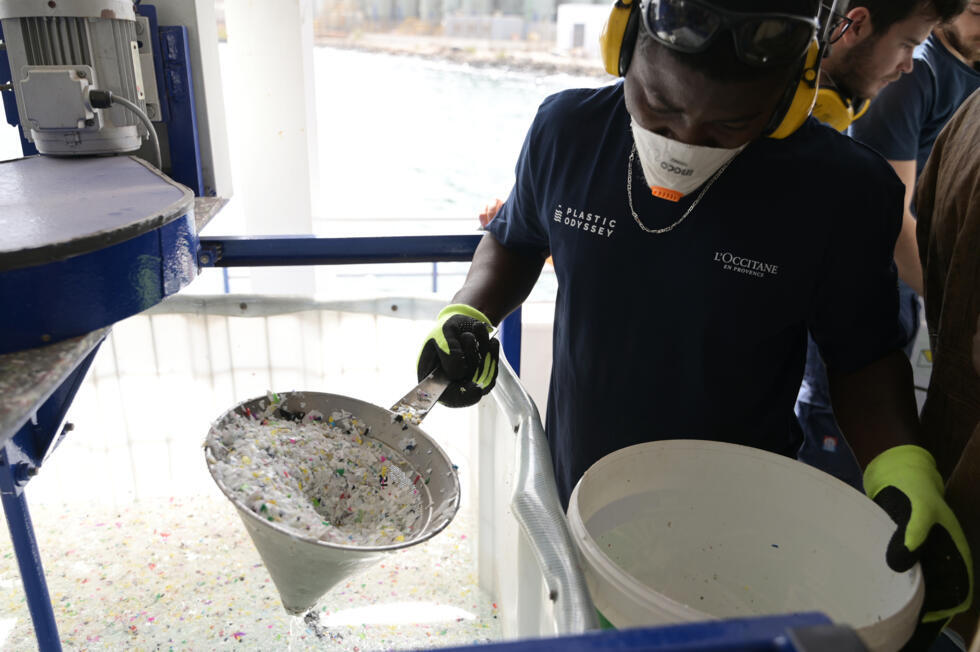

The Plastic Odyssey has catalogued more than a hundred local solutions for doing without plastic © SEYLLOU / AFP/File

His odyssey has taken him across the Mediterranean Sea as well as the Atlantic, Indian and Pacific oceans.

During stops in Marseille, Beirut, Dakar, Recife, Madras (Chennai) and two dozen other ports, he met with local associations, start-ups and companies working to collect, sort or recycle plastic.

He marvels, he said, at the "inventiveness" of the people he met, especially those who have lost everything.

He recalled an entrepreneur in Lebanon who collected recyclable household waste door-to-door from 60,000 people in a country that no longer has a public service for disposing of plastic.

Two and a half years into his adventure Bernard gave up his apartment, and he now lives on the boat.

The Plastic Odyssey has catalogued more than hundred local solutions for doing without plastic, which is derived from petroleum.

Bernard has adopted several of them, including one "that works very well on board the boat" to make water drinkable, eliminating the need for plastic bottles.

"This has saved us 25,000 bottles of water in two years -- almost a tonne of plastic," he calculated.

© 2025 AFP

Deadly Indian Himalayan flood likely caused by glacier collapse, experts say

New Delhi (AFP) – A deadly wall of muddy water that swept away an Indian Himalayan town this week was likely caused by a rapidly melting glacier exacerbated by the rising effects of climate change, experts said on Thursday

Issued on: 07/08/2025 - FRANCE24

Experts said the deadly flood that swept away an Indian Himalayan town was likely caused by a rapidly melting glacier fuelled by the effects of climate change \\© Biju BORO / AFP

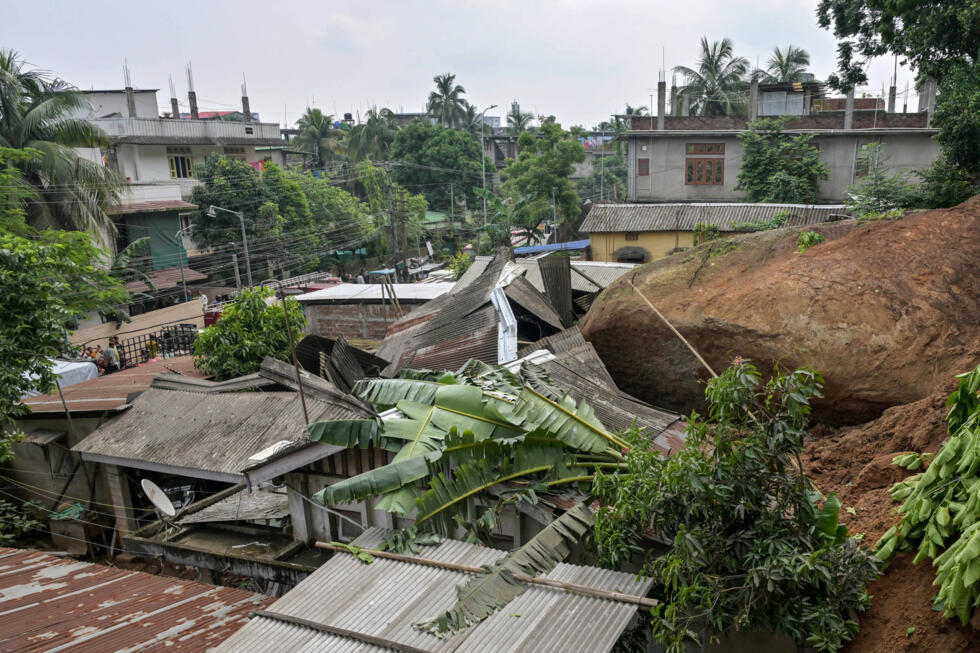
Scores of people are missing after water and debris tore down a narrow mountain valley, smashing into the town of Dharali in Uttarakhand state on Tuesday.

Several people could be seen in videos running before being engulfed as waves uprooted entire buildings, leaving others smothered in freezing sludge.

At least four people have been confirmed killed, but at least 50 others are missing.

Government officials said shortly after the disaster that the flood was caused by an intense "cloudburst" of rain.

However, experts assessing the damage suggested that it was only the final trigger, adding to days of prolonged rains that had already soaked and loosened the ground.

P.K. Joshi, of New Delhi's Jawaharlal Nehru University, an expert on Himalayan hazards, said it appeared the flood was caused by the collapse of debris -- known as moraine -- that had dammed a lake of meltwater from a retreating glacier.

"Given the persistent rainfall over preceding days and the sudden discharge observed, a glacial lake outburst flood (GLOF) or collapse of a moraine-dammed lake is suspected as the primary trigger," Joshi told AFP.

That would have contributed to a "sudden high energy flash flood", he said, noting that glacial terrain upstream of the town included "unstable sediment zones".

Cloud cover has obstructed satellite imagery to check for the exact source of the debris, and Joshi cautioned that there was not enough satellite data for a "definitive confirmation".

'Disaster severity'

Safi Ahsan Rizvi, an adviser to the National Disaster Management Authority, also said that it was "likely" that the cause was a "glacio-fluvial debris landslide".


Significant water accumulation preceding the collapse of a glacial lake likely caused the deadly flood that swept away an Indian Himalayan town, experts said 
© Biju BORO / AFP

Sandip Tanu Mandal, a glaciologist at New Delhi's Mobius Foundation, also pointed to the "possibility of a GLOF", caused by "significant water accumulation in the lake due to increased melting and rainfall".

Mandal noted that while heavy, the amount of rain immediately before the flood was "not very significant" in comparison to the vast volumes of water that poured down the valley.

That would indicate the source was a potentially collapsing lake.

Himalayan glaciers, which provide critical water to nearly two billion people, are melting faster than ever before due to climate change, exposing communities to unpredictable and costly disasters, scientists warn.

The softening of permafrost increases the chances of landslides.

Joshi said the latest disaster "highlights the complex and interconnected nature of Himalayan hazards".

Rapid development and building downstream meant that the damage caused was multiplied.

"The land use patterns in the floodplain exacerbated the disaster severity," Joshi said.

© 2025 AFP

Flash floods and landslides hit Himalayan village, dozens missing


Issued on: 07/08/2025 - FRANCE24

Rescue teams in northern India are struggling with heavy rain and blocked roads following a deadly flash flood and landslides in a Himalayan village earlier this week, which left dozens missing and four dead. Disaster relief workers and the military are working to clear debris and search for survivors.

‘Unprecedented’ wildfire in southern France driven by drought and climate change, officials say


A wildfire burning has grown to become the country’s biggest since 1949.


Copyright Richard Capoulade/UGC via AP

By Rosie Frost
Published on 07/08/2025 - 

Hotspots across southern Europe have been scorched this summer, stoked by high temperatures and drought.


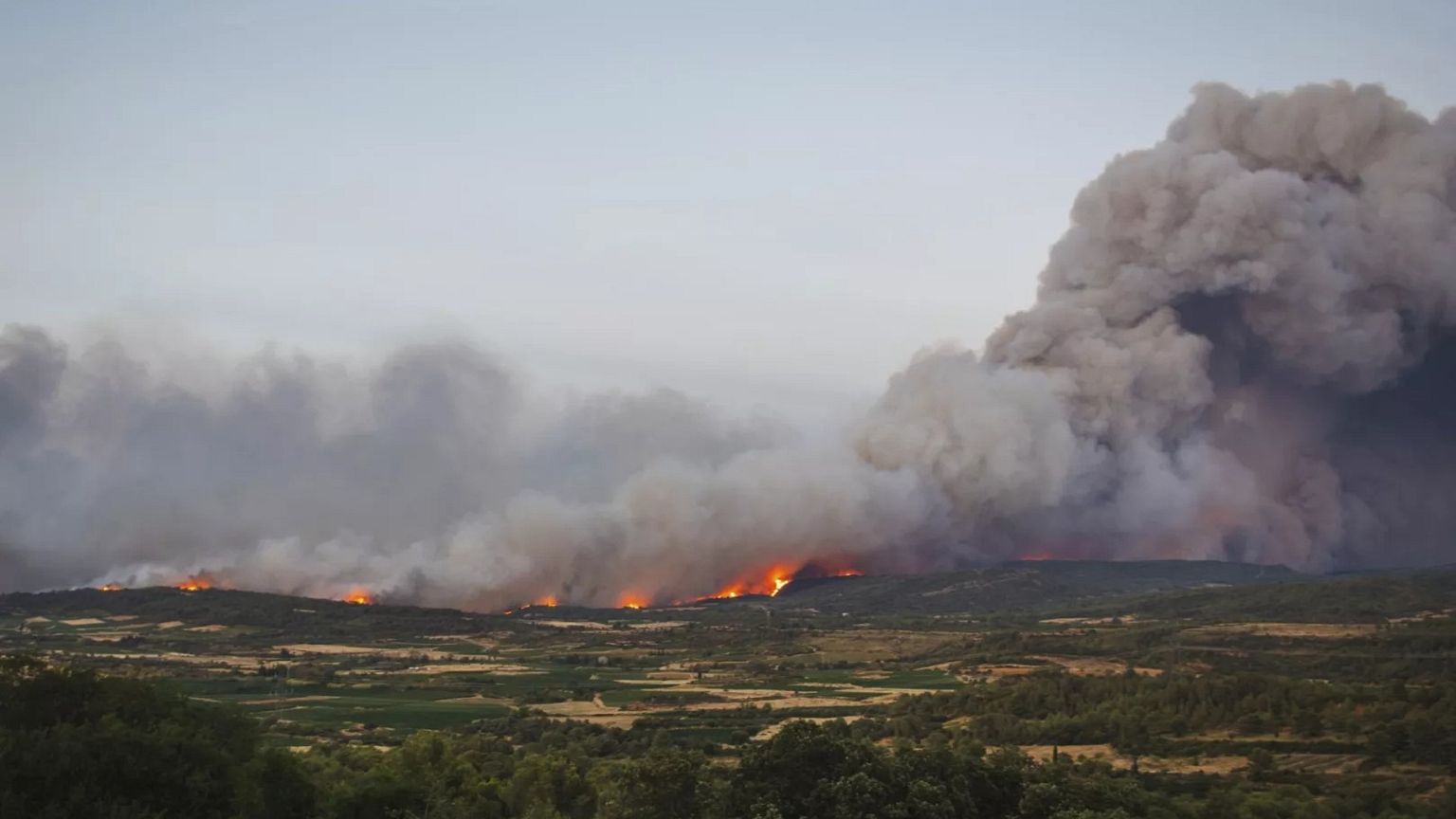
A wildfire burning in the south of France has grown to become the country’s biggest since 1949.

It has claimed one life and burned more than 16,000 hectares - an area one and a half times the size of Paris - in the south of France.


French Prime Minister François Bayrou described it as a “catastrophe of unprecedented scale”.

The blaze, which began on Tuesday afternoon near the village of Ribaute in the Aude region near the border with Spain and not far from the Mediterranean Sea, has been raging for three days.

In the first 12 hours of the fire, it spread across 11,000 hectares of land - an area roughly equivalent to the size of Paris. Within 24 hours, it had destroyed the same amount of land as wildfires usually burn across France in a year.

Related

Portugal experiencing new heatwave with temperatures likely to reach 41ºC

Now it has burned more than 16,000 hectares to become the biggest fire since the creation of France’s national fire database in 2006, the national emergency management service has said.

Images shared by Météo-France show that the smoke plume from the blaze is visible from space.

France’s largest fire in over 70 years

The fire spread quickly due to strong winds, dry vegetation and hot summer weather, officials have said.

“The night was cooler, so the fire is spreading more slowly but it remains the most significant fire France has seen since 1949,” France’s minister for ecological transition, Agnès Pannier-Runacher, told France Info radio.

“It is a fire that is clearly a consequence of climate change and drought in this region.”

Michael Sabot, deputy director of the Aude fire department, told France's BFM-TV that “unfavourable weather conditions” meant the blaze “certainly” wouldn’t be brought under control on Thursday.

Forecast high temperatures and strong, more than 40km per hour winds would further dry out vegetation, he said. After a cooler start to the week, Météo-France has forecast intensifying heat in the south with temperatures of up to 40°C and a high risk of wildfires.
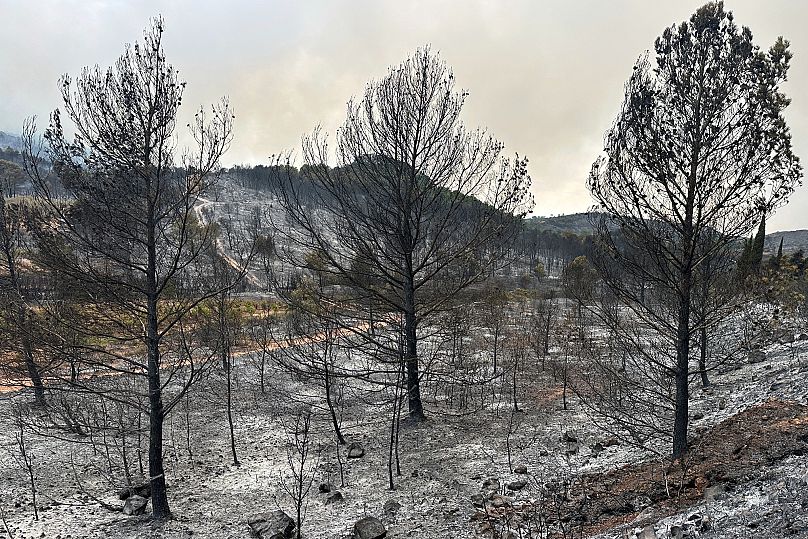
Burned trees during France's biggest wildfire this summer, near Durban-Corbieres, southern France. AP Photo/Hernan Munoz

While current weather conditions play a role, prolonged dry weather has also increased the fire risk.

Mediterranean regions of the country are experiencing significant drought, meaning vegetation and trees are highly susceptible to fires, Météo-France says. It adds that recently, even tall trees have been affected, allowing for very intense fires - a sign of just how severe this drought is

The Aude region in particular has been facing water use restrictions due to a “drought crisis” since 1 August, with a lack of rainfall in recent months playing “a major role in the spreading of the fire”, according to the environment ministry.

It adds that in the neighbouring Pyrénées-Orientales, rainfall has reduced by around 60 per cent since 2022.

An investigation into the exact cause of the fire is ongoing.
Is climate change fuelling wildfires in the Mediterranean?

This year has so far brought an extremely active and damaging fire season in Europe.

Monitoring from the European Forest Fire Information System shows that wildfires have burned 353,862 hectares of land since the beginning of 2025 - more than twice the area burned during the same period last year.

Related


Europe’s wildfire emissions soar to record highs as extreme heat and drought fuel summer blazes

Hotspots across the Mediterranean have been scorched this summer, stoked by heatwaves and drought. Southern Europe has seen multiple large fires, with scientists warning that climate change is exacerbating the frequency and intensity of heat and dryness, making the region more vulnerable to fires.

According to European Drought Observatory data, more than half of Europe, including the Mediterranean, experienced the worst drought conditions in the first part of July since monitoring began in 2021.

Scientists have warned that climate change is making droughts worse and changing rainfall patterns in Europe. Where regions like the Mediterranean would previously have had a chance to recover, balance or prepare for a lack of water in summer in wetter seasons, they can no longer depend on rainfall in the same way.


Wildfire in southern France kills woman and forces mass evacuations

One person has died and several firefighters have been injured after a wildfire tore through 11,000 hectares of forest between Lagrasse and Ribaute in southern France.

 07/08/2025 - RFI

Firefighters were battling to contain a wildfire that swept through 11,000 hectares in southern France. AFP - IDRISS BIGOU-GILLES

The victim, described as an elderly woman, was found dead in her house in Saint-Laurent-de-la-Cabrerisse as more than 1,500 firefighters battled the blaze that broke out on Tuesday afternoon.

Seven aircraft dropped thousands of tonnes of water to stop the fire reaching homes in the villages of Lagrasse, Fabrezan and Saint-Laurent-de-la-Cabrerisse.

Water drops resumed on Wednesday morning. More than 300 firefighters from nearby regions were due to arrive as reinforcements.

Several roads were closed to allow emergency crews to get through faster, said Aude police on Tuesday night.

Early on Wednesday, the A9 motorway – a major route between France and Spain – was shut in both directions between Narbonne and Perpignan because of thick smoke on the road.

Maud Bonnel from VINCI Autoroutes told Radio VINCI Autoroutes: "The Lézignan exit on the A61 is closed because the departmental road that continues from there leads to the fire.

"We are awaiting instructions from the fire brigade, but the fire has not been contained."

Holidaymakers at the Lagrasse and Fabrezan campsites were evacuated as a precautionary measure, along with around 30 houses in the village of Tournissan.
'Conditions right for fire'

"The fire was spreading in an area where all the conditions are right for it to spread. This fire will keep us busy for several days," Lucie Roesch, secretary general of the Aude prefecture, told BFMTV.

Since the beginning of summer, several fires have broken out in the Aude department, which has been affected by drought and high temperatures.

One at the start of July, the largest in the department since 1986, burned through 2,000 hectares and mobilised nearly 1,000 firefighters near Narbonne.

"We've gone from losing an average of 300 to 400 hectares per year in the early 2000s to nearly 1,000 hectares today," Jean-Paul Baylac, head of forest fires at the Aude departmental fire and rescue service, told the French news agency AFP.

On Tuesday night, President Emmanuel Macron took to social media to call for calm.

"All the nation's resources are being mobilised," he said."

(with newswires)


'Wildfires in south of France becoming more widespread, challenging to manage over past 10-15 years'

Issued on: 07/08/2025 -

France’s largest wildfire in decades continued to burn and spread Thursday, though at a slower pace, after having already ravaged more than 160 square kilometers (62 square miles) in the south of the country and claiming one life, local authorities said. The blaze, which started Tuesday and tore through the Corbières massif in the Aude region, has remained uncontained despite the deployment of over 2,100 firefighters and several water bomber aircraft. For in-depth analysis and a deeper perspective, FRANCE 24's Delano D'Souza welcomes Lieutenant-Colonel Frédéric Harrault, spokesperson for the of the French Civil Security and Crisis Management Agency (DGSCGC).


Video by: Delano D'SOUZA

Third-hottest July on record wreaks climate havoc

Paris (AFP) – The third-hottest July worldwide ended a string of record-breaking temperatures, but many regions were devastated by extreme weather amplified by global warming, the European climate monitoring service said Thursday.


Issued on: 07/08/2025 - 

Heavy rains flooded parts of South Asia © Niharika KULKARNI / AFP/File

Heavy rains flooded Pakistan and northern China; Canada, Scotland and Greece struggled to tame wildfires intensified by persistent drought; and many nations in Asia and Scandinavia recorded new average highs for the month.

"Two years after the hottest July on record, the recent streak of global temperature records is over," Carlo Buontempo, director of the EU's Copernicus Climate Change Service, said in a statement.

"But that does not mean climate change has stopped," he said. "We continue to witness the effects of a warming world."

A misleading dip

As in June, July showed a slight dip compared to the preceding two years, averaging 1.25 degrees Celsius above the pre-industrial (1850-1900) era.

2023 and 2024 warmed above that benchmark by more than 1.5C, which is the Paris Agreement target set in 2015 for capping the rise in global temperatures at relatively safe levels.

That deceptively small increase has been enough to make storms, heatwaves and other extreme weather events far more deadly and destructive.

"We continued to witness the effect of a warming world in events such as extreme heatwaves and catastrophic floods in July," Buontempo said.

Last month, temperatures exceeded 50C in the Gulf, Iraq and -- for the first time -- Turkey, while torrential rains killed hundreds of people in China and Pakistan.

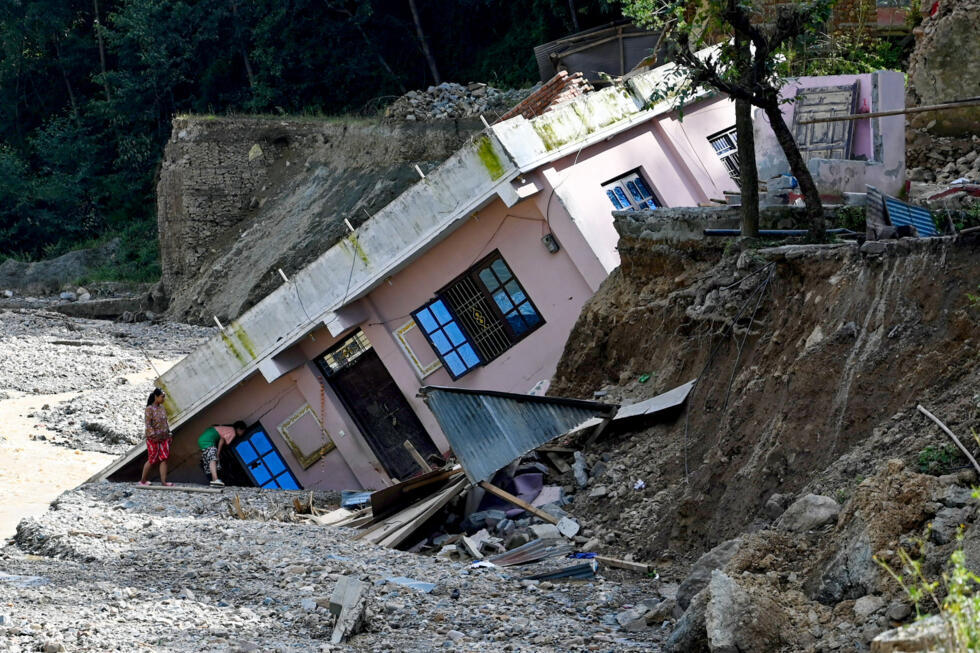
Women look at a building uprooted following heavy rains at a landslide-affected village outside Nepal's capital © Prakash MATHEMA / AFP/File


In Spain, more than a thousand deaths were attributed by a public institute to the heat in July, half as many as in the same period in 2024.

The main source of the CO2 driving up temperatures is well known: the burning of oil, coal and gas to generate energy.

"Unless we rapidly stabilise greenhouse gas concentrations in the atmosphere, we should expect not only new temperature records but also a worsening of impacts," Buontempo said.

Regional contrasts

Global average temperatures are calculated using billions of satellite and weather readings, both on land and at sea, and the data used by Copernicus extends back to 1940.

Local residents try to extinguish the fire of a burning house during a wildfire in Kryoneri near Athens © Angelos TZORTZINIS / AFP/File


Even if July was milder in some places than in previous years, 11 countries experienced their hottest July in at least a half-century, including China, Japan, North Korea, Tajikistan, Bhutan, Brunei and Malaysia, according to AFP calculations.

In Europe, Nordic countries saw an unprecedented string of hot days, including more than 20 days above 30C across Finland.

More than half of the land in Europe and along the Mediterranean basin experienced the worst drought conditions in the first three weeks of July since monitoring began in 2012, according to an AFP analysis of data from the European Drought Observatory (EDO).

In contrast, temperatures were below normal in North and South America, India and parts of Australia and Africa, as well as in Antarctica.


Seas still overheating

Last month was also the third-hottest July on record for sea surface temperatures.

Locally, however, several ocean records for July were broken: in the Norwegian Sea, in parts of the North Sea, in the North Atlantic west of France and Britain.

In Europe, some countries saw an unprecedented string of hot days 
© Thibaud MORITZ / AFP/File


The extent of Arctic sea ice was 10 percent below average, the second lowest for a July in 47 years of satellite observations, virtually tied with the readings of 2012 and 2021.

Diminishing sea ice is a concern not because it adds to sea levels, but because it replaces the snow and ice that reflect almost all the Sun's energy back into space with deep blue ocean, which absorbs it.

Ninety percent of the excess heat generated by global warming is absorbed by the oceans.

In Antarctica, sea ice extent is the third lowest on record for this month.

- 'Records to be broken' -


"Human activities are causing the world to warm at an unprecedented rate," Piers Forster, Director of the Priestley Centre for Climate Futures at the University of Leeds, told AFP in commenting on the new data.

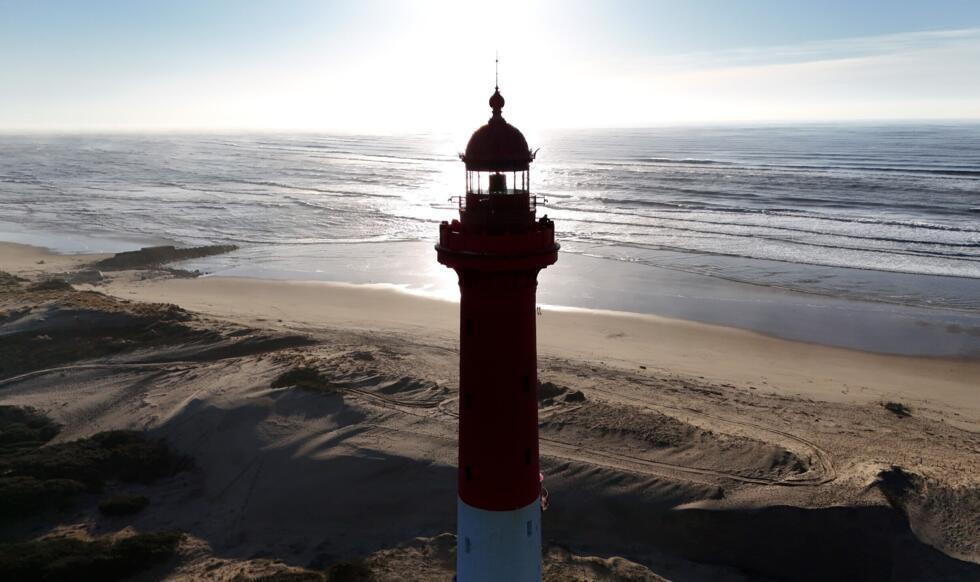
This aerial picture shows a French lighthouse threatened by coastal erosion © Christophe ARCHAMBAULT / AFP/File


On top of the human-driven warming, he explained, there are year-to-year changes caused by natural phenomena, such as the El Nino -- a shift in wind patterns across the southern Pacific -- and volcanic activity that helped push global temperatures past the 1.5C threshold over the last two years.

"These variations are now reducing, dropping us back from the record-breaking temperatures," said Forster, who heads a consortium of 60 top scientists that track core changes in Earth's climate system.

"But the reprieve is only temporary," he added. "We can expect the the high records to be broken again in the near future."

© 2025 AFP
Trump moves to kill $7 billion in solar panel grants

CUTTING NOSE TO SPITE FACE


Washington (AFP) – President Donald Trump's administration on Thursday moved to kill a $7 billion program designed to bring rooftop solar to low-income and disadvantaged communities across the United States.


Issued on: 08/08/2025 - FRANCE24


The Solar For All grant program was created under the 2022 Inflation Reduction Act, former president Joe Biden's landmark climate legislation.

Sixty recipients -- a mix of state agencies and nonprofits -- had already been selected across both Democratic-led and Republican-led states. The initiative aimed to help more than 900,000 households slash their electricity bills by hundreds of dollars a year.


In a video posted to X, Environmental Protection Agency Administrator Lee Zeldin said last month's "Big Beautiful Act" repealed the Greenhouse Gas Reduction Fund, under which Solar For All was housed. He said he was now obligated to follow the law.

Zeldin alleged -- without elaboration -- that the program's funds were being siphoned off by the administrative costs of "middlemen," calling the setup a "grift."


He also criticized its exemption from requirements to buy American goods, claiming it amounted to "great news for China."


Of the $7 billion obligated so far, just $53 million has been spent, according to an analysis by research firm Atlas Public Policy.


Tom Taylor, a senior policy analyst at Atlas, told AFP there had been a general understanding that once contracts were signed, obligated funds couldn't be clawed back. "But the Trump administration is now testing that theory," he said.

Environmental groups erupted in anger.


"President Trump pledged to cut energy bills in half, but once again his administration is trying to make it more expensive to keep your home cool or the lights on," said Adam Kent, director of green finance at the Natural Resources Defense Council.

Progressive Senator Bernie Sanders accused Trump of acting to protect fossil fuel interests. "Donald Trump wants to illegally kill this program to protect the obscene profits of his friends in the oil and gas industry," he said in a statement, vowing to "fight back to preserve this enormously important program."

The administration has already worked with Congress to repeal tax credits for wind and solar, tightened restrictions on federal leases for renewable energy projects, and rescinded designated offshore wind areas.

It has also proposed ending regulations on greenhouse gas emissions from power plants and vehicles -- and released a report suggesting climate change could be beneficial.

© 2025 AFP
US to rewrite its past national climate reports

Washington (AFP) – US President Donald Trump's administration is revising past editions of the nation's premier climate report -- its latest move to undermine the scientific consensus on human-caused global warming.

REVISIONIST & REVANCHIST HISTORY

Issued on: 07/08/2025 - FRANCE24

Trump's energy secretary, Chris Wright, is the former executive of major fracking company Liberty Energy © ALEX WONG / GETTY IMAGES NORTH AMERICA/AFP/File

The decision, announced by Energy Secretary Chris Wright during a CNN appearance Tuesday night, follows the government's revocation of the Endangerment Finding, a scientific determination that underpins a host of regulations aimed at curbing greenhouse gas emissions.

Asked by CNN's Kaitlan Collins why previous editions of the National Climate Assessment were no longer available online, former fracking company CEO Wright responded: "Because we're reviewing them, and we will come out with updated reports on those and with comments on those."

First published in 2000, the National Climate Assessment has long been viewed as a cornerstone of the US government's understanding of climate science, synthesizing input from federal agencies and hundreds of external experts.

Previous editions warned in stark terms of mounting risks to America's economy, infrastructure, and public health if greenhouse gas emissions are not curtailed. But in April, the administration moved to dismiss the hundreds of scientists working on the sixth edition.

Under the Global Change Research Act of 1990, the government is legally obligated to deliver the climate assessment to Congress and the president.

Trump's administration and the Republican-controlled Congress have pressed forward with their pro- fossil fuel agenda -- dismantling clean energy tax credits through the so-called "Big Beautiful Bill" and opening more ecologically sensitive lands to drilling.

Last month's proposed revocation of the Endangerment Finding by the Environmental Protection Agency was accompanied by the release of a new climate study from the Department of Energy, authored by climate change contrarians.

The study questioned whether heat records are truly increasing and whether extreme weather is worsening.

It also misrepresented the work of cited climate scientists, according to several who spoke to AFP, and suggested that rising atmospheric carbon dioxide could be a net benefit for agriculture.

© 2025 AFP
Trump offers FAKE data to justify firing of labor stats chief

Washington (AFP) – US President Donald Trump on Thursday alleged that jobs data had been "purposely" altered by the government's commissioner of labor statistics to bolster his predecessor Joe Biden, presenting different figures in the wake of her firing.


Issued on: 08/08/2025 - FRANCE24

US President Donald Trump displays charts which he says show that an official appointed under Joe Biden had 'purposely' changed figures to make the veteran Democrat's administration look better © Brendan SMIALOWSKI / AFP

In the Oval Office, where journalists were convened for a "major" announcement, Trump and economist Stephen Moore of the Heritage Foundation, a conservative think tank, displayed charts with what they said was the real data.

"This shows that over the last two years of the Biden administration, the BLS overestimated job creation by 1.5 million jobs. Mr. President, that's a gigantic error," Moore said.

Trump "did the right thing in calling for a new head of the Bureau of Labor Statistics," added the economist, a longtime advisor to the Republican president.

"It might not have been an error, that's the bad part," Trump said. "I don't think it's an error, I think they did it purposely."

According to what Moore called "unpublished census data," in the first five months of Trump's new term, the "average median household income adjusted for inflation for the average family in America is already up $1,174."

Trump called that result "incredible."

The Bureau of Labor Statistics regularly revises employment data after its initial publication -- both up and down, and sometimes significantly.

In early August, it sharply revised down employment growth for May and June -- to the tune of 258,000 fewer jobs created.

The revision infuriated Trump, who sacked commissioner of labor statistics Erika McEntarfer, who was confirmed in that role in January 2024.

"We had no confidence. I mean the numbers were ridiculous," Trump told reporters Sunday.

In his first term, Trump had wanted to name Moore to the board of the Federal Reserve, the US central bank, but he opted against doing that in the face of criticism of Moore's qualifications and allegedly sexist comments the economist had made in the past.

© 2025 AFP


Nawrocki sworn in as Poland's president, setting up showdown with Tusk government

Nawrocki sworn in as Poland's president, setting up showdown with Tusk government
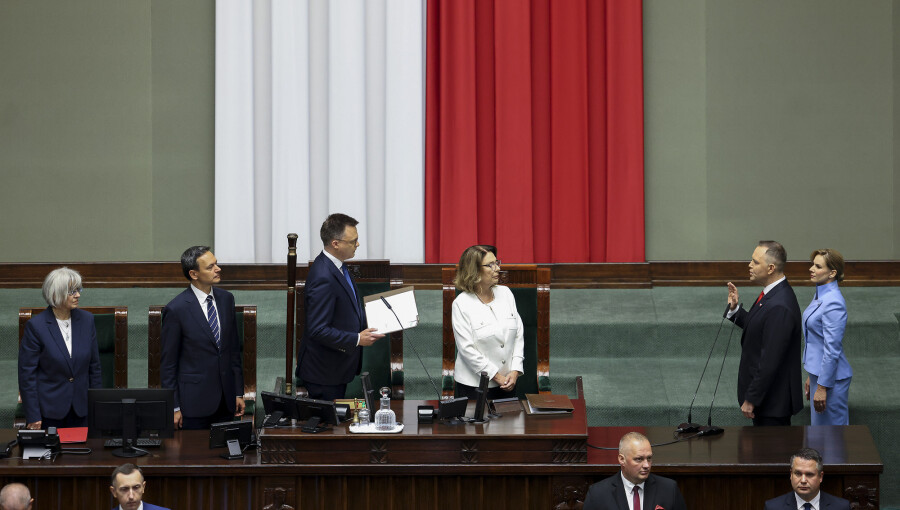
Karol Nawrocki is sworn in in the National Assembly on August 6, 2025 / Łukasz Błasikiewicz for President's Office
By Wojciech Kosc in Warsaw August 7, 2025

Karol Nawrocki was sworn in as Poland’s new president on August 6, marking the start of what is expected to be a prolonged political standoff with Prime Minister Donald Tusk’s coalition government.

Nawrocki, a historian backed by the right-wing Law and Justice (PiS) party and a newbie in top politics, used his inaugural address to deliver a scathing critique of the government. 

“It is impossible to continue governing in this manner, and Poland should not look like it does today,” Nawrocki said.

The 42-year-old won the June 1 presidential runoff by a narrow margin — 50.89% to 49.11% — defeating Warsaw Mayor Rafał Trzaskowski, the candidate backed by Tusk’s ruling coalition. The result dealt a major blow to Tusk, who had hoped to secure alignment between the presidency and government to push through delayed reforms. 

Instead, Tusk now faces another term under a head of state that can be expected to oppose his efforts, replacing former president Andrzej Duda, a staunch ally of PiS.

Nawrocki is expected to veto key legislation from the government, which lacks the parliamentary majority required to override presidential rejections. Both sides are preparing to use this gridlock to their advantage ahead of the next general election in 2027, each aiming to blame the other for inaction.

“I have worked with three presidents as prime minister so far. What will it be like with the fourth? We’ll manage,” Tusk said on social media.

Tusk also called Nawrocki's inauguration day "sad and disappointing". "We all believed that honesty, goodness, and love would prevail. What has happened puts our faith to a serious test," Tusk said in a video message.

In his first speech as president, Nawrocki pledged to block Poland’s adoption of the euro, saying he would support cooperation within the EU but “never agree to the European Union taking away Poland’s powers, especially in matters that are not enshrined in the European treaties.” 

Nawrocki also pledged to oppose attempts by the government to roll back PiS’s judiciary reforms, which cost Poland a delay in accessing EU funds before 2023. 

The president restated his campaign pledges to resist any increase in the retirement age, oppose illegal immigration and preserve the Polish złoty. Nawrocki also called for more housing investment.

Nawrocki indicated he would revive some policies dropped by the current government, including a plan to double the tax-free income threshold. That measure is no longer on the government’s agenda due to fiscal concerns.

What the cooperation between Nawrocki and the Tusk-led ruling majority will look like might become clearer within days, when parliament sends Nawrocki a bill combining electricity price caps for households — a policy Nawrocki has backed — with measures liberalising onshore wind development, which he and his voter base may oppose. 

The only area where Nawrocki and Tusk may find common ground is defence. 

Poland spends the highest share of GDP on defence in Nato and plays a central role in supporting Ukraine. 

“I will support all efforts to modernise the Polish army to make it the largest Nato land force within the European Union,” Nawrocki said, adding that he would “engage closely with the US” and “lead in building a resilient and responsible security architecture on Nato’s eastern flank”


Poland’s new president brings hard line on refugees, abortion and rule of law

Karol Nawrocki’s inauguration as Poland’s new president on Wednesday has set the stage for a turbulent power struggle with Prime Minister Donald Tusk’s pro-European government and raised fears among Poland’s Ukrainian community.


Issued on: 06/08/2025 - RFI


Supporters of Karol Nawrocki, president elect supported by Poland's right-wing Law and Justice (PiS) party, gather in front of the Supreme Court building in Warsaw, Poland, Tuesday, 1 July 2025. AP - Czarek Sokolowski

The historian and author used his swearing-in speech to parliament to make his position clear: “No to illegal immigration, no to the euro.”

Nawrocki’s election campaign was marked by a rise in nationalist rhetoric and repeated criticism of Ukrainian refugees living in Poland. His victory has unsettled many at home and abroad.

His rhetoric is making it easier for people to express anti-Ukrainian views, warned Oleksandr Pestrykov of the Ukrainian House Foundation in Warsaw – calling it a form of social segregation.


“Seeing Nawrocki speak in this way, someone who doesn't like Ukrainians but would have been ashamed to say so, can now say it openly,” Pestrykov said.

On the campaign trail, Nawrocki described Ukrainian refugees as “ungrateful” and a “burden on society”. His slogan “Poland First, Poles First” came with pledges to give citizens priority in healthcare and education, cut pensions for Ukrainians and restrict benefits to Poles only.


Supporters of Karol Nawrocki, president elect supported by Poland's right-wing Law and Justice (PiS) party, gather in front of the Supreme Court building in Warsaw, Poland, Tuesday, 1 July 2025. AP - Czarek Sokolowski

Supreme Court confirms validity of Poland's presidential election


Calls for unity mask deep divides

Despite his hardline message, Nawrocki has also tried to appear as a unifier. In a video released before the inauguration, he urged Poles to “unite” and spoke of “a new chapter in the history of our beloved Poland”.

He said he would be an “active president” from the outset, ready to propose laws and push government action.

But cooperation with Tusk’s government may prove difficult. The prime minister has already expressed doubts about Nawrocki’s intentions. “I have no doubt that Mr Nawrocki will do everything to annoy us,” Tusk said. He also warned that he would not let the president “demolish” his government.

Nawrocki, who has no prior experience in elected office, narrowly defeated liberal candidate Rafal Trzaskowski in the 1 June election. The close result revealed deep divisions in Polish politics.

Although the president does not run the government, the role comes with real power – including veto rights and a say in foreign and defence policy.

Nawrocki had the backing of former US president Donald Trump during his campaign. But analysts say he lacks international experience. With Ukraine a key issue, this could become a source of friction.

From Washington to Warsaw: how MAGA influence is reshaping Europe’s far right


Foreign policy split


Nawrocki’s support for Ukraine appears conditional, said Jean-Yves Potel, a historian and political scientist. “Nawrocki seems to want to impose conditions on the Ukrainians, particularly regarding Ukraine’s entry into NATO and the European Union. He wants to exert pressure on this issue,” Potel told RFI.

Still, he said Tusk remains Poland’s key foreign policy actor. “He is not going to follow Nawrocki,” he said.

Ukrainian President Volodymyr Zelensky congratulated Nawrocki after his win and expressed hope for continued cooperation.

Following a phone call between the two, Zelensky said they had agreed to exchange visits and work together on practical matters. He said he was “thankful for the readiness to work together”.

Even so, Nawrocki’s remarks about Kyiv’s “lack of gratitude” and his opposition to NATO membership for Ukraine suggest a cooler relationship than under former president Andrzej Duda. The shift could affect Poland’s role in the regional response to Russia’s war.

Polish nationalists stage anti-immigration demonstration ahead of polls

Abortion deadlock

Tensions are also expected to continue in the lead-up to Poland’s next parliamentary elections in 2027. Nawrocki has openly attacked the Tusk government, calling it “the worst in the history of democratic Poland”.

One major fault line is abortion. In predominantly Catholic Poland, the procedure is only allowed in cases of severe foetal abnormalities or when the mother’s life is at risk. Tusk wants to relax the law. Nawrocki has said he will block any such move.

“He promises to block any law in this direction,” said Potel. “But on the other hand, within Tusk’s coalition, there are Christian Democratic currents that refuse to liberalise abortion.” As a result, no major change may be possible, despite public pressure.

Not all observers think the situation will spiral into open conflict. Piotr Trudnowski, from the Klub Jagiellonski think tank, said “both parties should realise that engaging in intense confrontation is obviously not the way forward.”

The months ahead will show whether compromise is possible – or whether Poland’s political divide grows deeper under Nawrocki’s presidency.

.

DR Congo urges world to recognise 'Genocost' tied to decades of resource war

The Democratic Republic of Congo held a national day of remembrance this weekend for what it calls the “Genocost” – a term used to describe mass deaths linked to the exploitation of the country’s natural resources.


Issued on: 04/08/2025 - 
Civil society workers participate in a burial of civilians killed during the clashes between M23 rebels and the Armed Forces of the Democratic Republic of the Congo, at the Genocost cemetery, in Goma, North Kivu, on 2 September 2024
. REUTERS - Arlette Bashizi


By:Melissa Chemam with RFI

President Félix Tshisekedi used the occasion to call on parliament to adopt a resolution recognising the violence in eastern Congo as genocide.

"I solemnly call upon both houses of parliament to examine as soon as possible the adoption of an official resolution proclaiming the recognition of genocide committed on our territory," Tshisekedi said on Saturday.

He said the deaths of thousands of civilians in the east of the country meet the legal definition of genocide under the 1948 UN convention. He also promised to take the campaign for recognition to international forums.

The annual Genocost commemoration takes place every 2 August. It was first held three years ago. This year, a new memorial was opened near the National Museum in Kinshasa.


Repeated conflict


Eastern Congo, rich in minerals and bordering Rwanda, has faced repeated conflict since the Rwandan genocide in 1994. Violence has escalated again since early 2025.

The term “Genocost” was first used in London in 2013 by a member of the Congolese Action Youth Platform (CAYP). It followed the UN’s Mapping Report, which documented large-scale crimes in eastern Congo dating back to 1996. The report said several neighbouring countries, including Rwanda, Uganda and Burundi, shared responsibility.

For CAYP France, the creation of a national remembrance day is a major step. Gloria Menayame, a legal expert with the NGO, told RFI it was a “victory” but said more needs to be done.

But, she also said that it "feels unfinished".

"The adoption of the Genocost campaign is something we welcome," she said. "What we didn’t want was this partial appropriation that only takes what suits the authorities. There’s a lot of talk about international responsibility or the creation of an international tribunal. But they forget to put in place mechanisms to address crimes at the national level. We believe our government has the means, but lacks the will."


Long road to recognition

The idea of the Genocost began gaining support after 2013, as calls for reparations grew. Civil society groups pointed to a long history of resource-driven violence going back to colonial times.

Supporters of the campaign renamed a square in Kinshasa “Genocost Square” and began holding events there every 2 August. The date marks the start of the Second Congo War in 1998.

But the government only adopted the term officially in late 2022, after the M23 rebel group returned to action and tensions with Rwanda increased.

One key aim of the campaign is the creation of an international criminal tribunal for the DRC.

Tshisekedi also said he would raise the issue at the United Nations General Assembly in September.


Theoretical issues


Some legal experts say the Genocost concept remains controversial. Ithiel Batumike, a researcher at the Congolese think tank Ebuteli, told RFI the term is based on real anger and frustration over decades of violence, but it still needs to be defined more clearly in legal terms.

"All Congolese believe it is time to stop this spiral of violence," he said.

"The big questions all Congolese are asking themselves: 'Until when?' and 'Why does the international community act as if it doesn't see everything that is happening in Congo, when it is paying sustained attention to other crises where it has actually intervened to stop the massacres?'"

Another issue is the role of Congolese leaders and military officials in the conflict.

Menayame said some members of the Congolese government have been named in UN reports as being involved in crimes committed in the country.

These include several generals active in conflict zones. She said their actions should not be ignored.

Indonesia cracks down on pirate protest flag

Jakarta (AFP) – Indonesia is cracking down on a viral pirate flag that is spreading as a symbol of political protest ahead of independence day.


Issued on: 08/08/2025

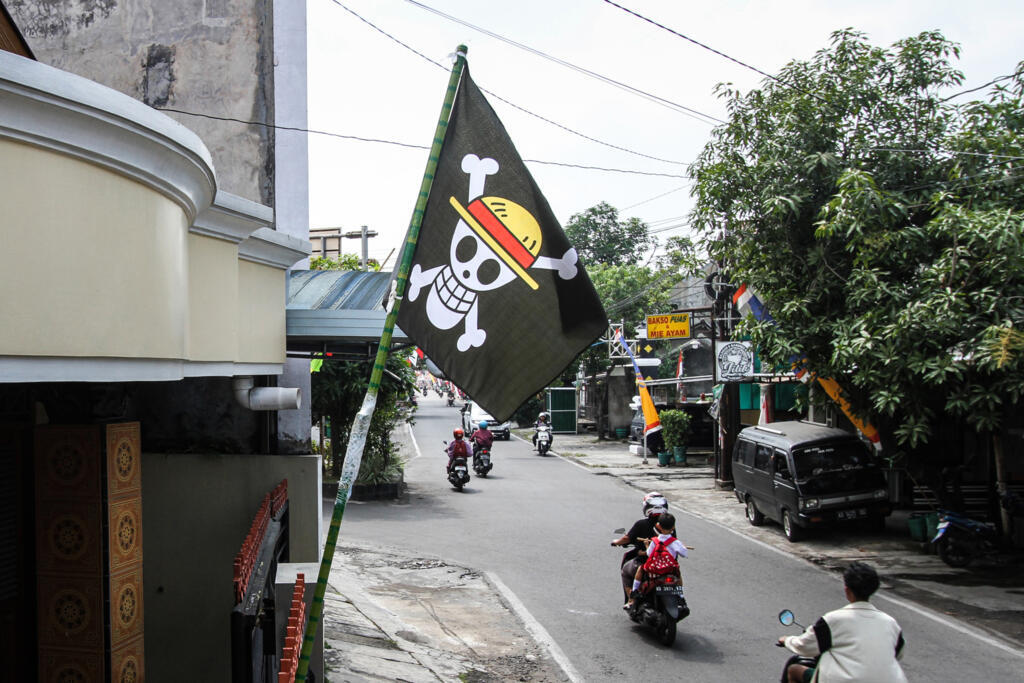
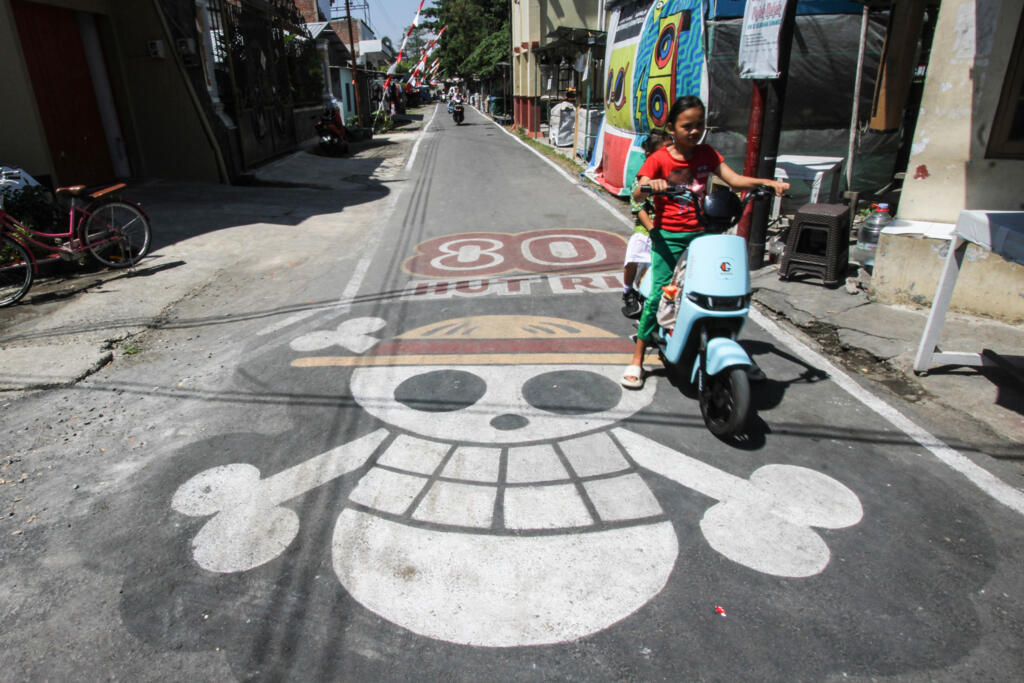
A Jolly Roger skull and bones is spreading as a symbol of protest in Indonesia 
© DIKA / AFP

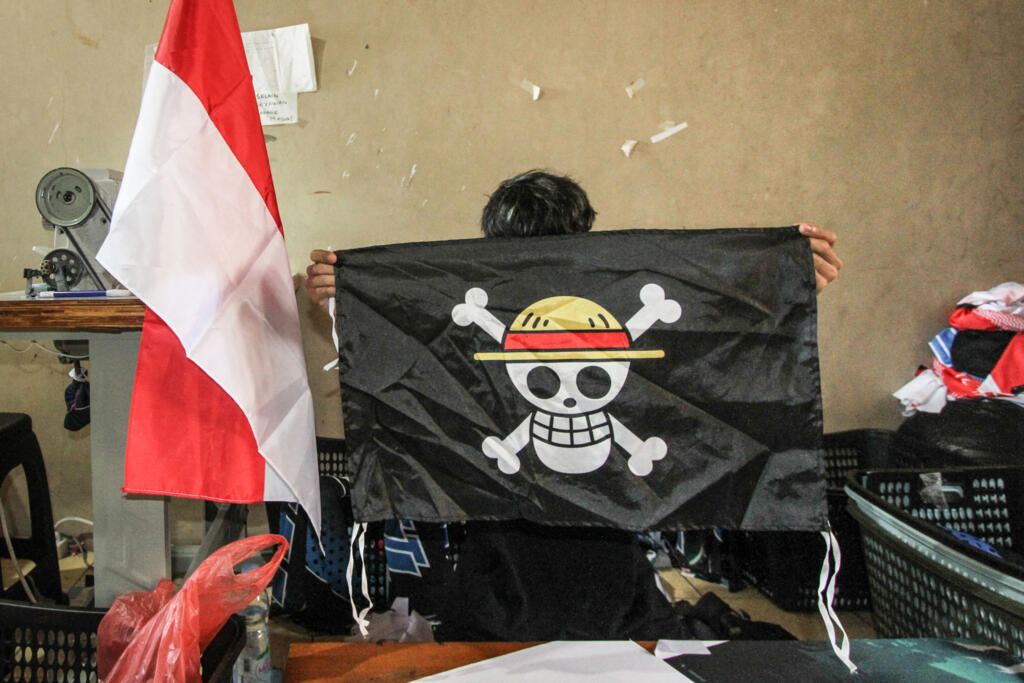
The Jolly Roger skull and bones with a straw hat -- from Japanese anime series "One Piece" -- has been fluttering from a rising number of trucks, cars and homes.

"ONE PIECE" ANIME AND LIVE ACTION SERIES ARE ON NETFLICKS

Officials warn the "provocation" -- seen by many as a protest against President Prabowo Subianto's policies -- should not fly alongside the country's red-and-white flag.


The pirate banner was taken up by disgruntled truck drivers earlier this summer, but has recently snowballed into an online and real-life movement.

"I personally raised the One Piece flag because the red and white flag is too sacred to be raised in this corrupt country," Khariq Anhar, a 24-year-old university student in Sumatra's Riau province, told AFP.

"I believe freedom of speech in Indonesia exists, but it is very limited. Voicing your opinion is getting more dangerous."


Government officials say the pirate flag's use is an attempt to divide the nation and warn it may be banned from flying next to Indonesia's colours © DIKA / AFP


Government officials say the flag's use is an attempt to divide the nation.

They warn it may be banned from flying next to Indonesia's colours, or being raised on August 17 -- the 80th independence anniversary after Japan's surrender at the end of World War II.

"It is imperative we refrain from creating provocation with symbols that are not relevant to this country's struggle," chief security minister Budi Gunawan said in a statement last week.

Ministers have cited a law that prohibits flying a symbol higher than the national flag as the basis for any punishment.

Under that law, intent to desecrate, insult or degrade the flag carries a maximum prison sentence of five years or a fine of nearly $31,000.

State Secretary Minister Prasetyo Hadi on Tuesday said Prabowo had no issue with the "expression of creativity", but the two flags "should not be placed side by side in a way that invites comparison", local media reported.
'Just a cartoon'

A presidency spokesman did not respond to an AFP question about its position on the pirate flag, which was put two days earlier.

Experts say unhappy Indonesians are using the flag as a way to express anti-government feeling indirectly, with some of Prabowo's economic and defence policies causing concern about democratic backsliding.

"Symbols like the pirate flag let people channel frustration without spelling it out," said Dedi Dinarto, lead Indonesia analyst at advisory firm Global Counsel.


The pirate banner was taken up by disgruntled truck drivers earlier this summer, but has recently snowballed into an online and real-life movement © DIKA / AFP

"It reflects a public sentiment that parts of the country have been 'hijacked'."

Others, like food seller Andri Saputra, who has flown the pirate ensign below an Indonesian flag at his home for a week, say they want to be able to decide what symbols they display.

"I want to be free to express my opinion and express myself," the 38-year-old said in Boyolali regency in Central Java.

"This is just a cartoon flag from Japan."

Online culture has been a popular channel for Indonesian dissatisfaction against perceived government corruption and nepotism.

Japanese anime is popular in Indonesia, and in the best-selling 'One Piece' manga series created in 1997, the flag represents opposition to an authoritarian world government.

In February, protests known as 'Dark Indonesia' began against Prabowo's widespread budget cuts, sparked by a logo posted on social media showing a black Indonesian mythical Garuda bird alongside the words 'Emergency Warning'.

In the popular 'One Piece' manga series created in 1997, the flag represents opposition to an authoritarian world government © DIKA / AFP

Other rallies in 2016 and 2019 were also sparked online, and Dedi says the government may be worried that "this follows the same digital playbook".

There is also a generational divide, with older locals viewing the Indonesian flag as hard-won after centuries of colonial rule, while younger Indonesians see the new movement as an expression of disappointment.
Police raid

"They just want Indonesia to get better, but... they can only express it through the 'One Piece' flag," said Ismail Fahmi, founder of Indonesian social media monitor Drone Emprit.

Police in Banten Province neighbouring capital Jakarta and West Java Province, Indonesia's most populous, have threatened action if the flag is flown next to the nation's colours.

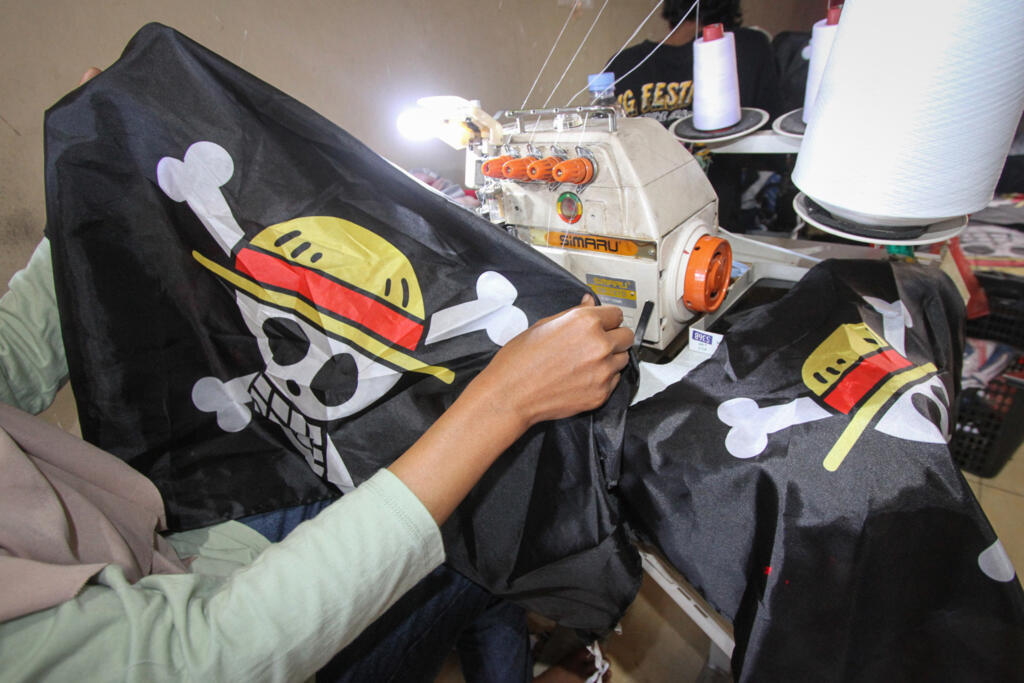
One printing business owner in Central Java told AFP on condition of anonymity that his facility was raided by plain-clothes police on Wednesday evening to halt its production of the pirate emblem.

A factory owner says plain-clothes police raided his facility to stop production of the emblem © DIKA / AFP


Rights groups have called the response excessive and say Indonesians are allowed to wave the flag by law.

"Raising the 'One Piece' flag as a critic is a part of the freedom of speech and it is guaranteed by the constitution," said Amnesty International Indonesia executive director Usman Hamid.


Despite the government's threats, some young Indonesians are still willing to risk walking the plank of protest.

"Last night my friend and I went around the town while raising a One Piece flag," said Khariq on Wednesday.

"If the government has no fear of repressing its own people, we shouldn't be scared to fight bad policies."

© 2025 AFP