Friday, August 08, 2025

Kashmir: Police raid shops after India-imposed book ban

KASHMIR IS INDIA'S GAZA
DW with AFP, AP24 
AUGUST 7, 2025

Books by notable authors including Booker Prize winner Arundhati Roy were banned. The government accused the authors of "exciting secessionism" and "misguiding the youth" against India.

The Indian authorities targeted book shops after the government's ban on 25 books
Image: Dar Yasin/AP Photo/picture alliance

Police in the Indian-administered Kashmir region carried out raids on book stores after the government banned 25 books, over what it called "exciting secessionism."

The government accused the authors of the banned books — who include Booker Prize winner Arundhati Roy, as well as academics — of "playing a critical role in misguiding the youth" against India.

Earlier in February, authorities carried out a similar raid, seizing books including Islamic literature from homes and shops in the Muslim-majority region, disputed between India and neighboring Pakistan since their 1947 independence from British rule.

How did Kashmiri separatists respond to the book ban?


"The operation targeted materials promoting secessionist ideologies or glorifying terrorism," police said in a social media statement. "Public cooperation is solicited to uphold peace and integrity."

Separatist leader Mirwaiz Umar Farooq condemned the ban, saying it "only exposes the insecurities and limited understanding" of the Indian government, also calling the decision "authoritarian."

"Banning books by scholars and reputed historians will not erase historical facts," Farooq posted on his X account.


Why is India banning books in Kashmir?


Kashmir saw last year the first local elections since New Delhi stripped the region of its special status in 2019 and divided it into two territories.

The vote brought to power a largely powerless government, with India's top administrator in Kashmir, Manoj Sinha, still wielding substantial authority in the region as the national government's representative.

The order banning the books was issued on the sixth anniversary of India's imposition of direct rule over Kashmir.

India has been accused of repression and human rights abuses in Kashmir in an attempt to silence dissent.

Edited by: Rana Taha

Felix Tamsut Reporter for DW News@ftamsut
Latest rhino count a mixed bag for world's five species


DW with AP
AUGUST 7, 2025

While Black rhino numbers have grown, other rhino populations face an existential threat, a new report finds. Poaching is on the rise in South Africa, which has more rhinos than anywhere else.

While rhino poaching is falling globally, the animals are still at riskImage: Christoph Schöne/Zoonar/picture alliance


The latest global rhino count shows a mixed bag for the world's five rhino species in Africa and Asia.

The numbers of Black rhinos, found only in the wild in eastern and southern Africa, grew from 6,195 to 6,788.

That's according to a report published Thursday by rhino specialist groups and commissioned by the CITES secretariat.

The increase of 593 animals is "a win for this critically imperiled species," the International Rhino Foundation said in reaction to the report.

The global population estimates don't include rhinos in zoos but rather only those in the wild or in national parks.

The number of greater one-horned rhinos, native to northern India and southern Nepal, also nudged upwards slightly from 4,014 to 4,075.

The greater one-horned rhino is a conservation success story — only around 200 of them remained in India at the beginning of the 20th century.

Now, the largest rhino species on earth is considered to be in recovery, the report finds.

Officers count rhinos in India's Kaziranga national park where the population is recoveringImage: Anupam Nath/AP Photo/picture alliance


Indonesia's rhino species on critically endangered


But there is bad news for other rhino species.

Southeast Asia's rhino species, which are only found in Indonesia, "remain on the edge of extinction," according to the report.

The population of the Sumatran rhinos is virtually unchanged from 2022 estimates, with just 34-47 animals remaining.

The smallest and only hairy rhino species in found mostly in the dense tropical forest and lowland swamps of the Indonesian island of Sumatra.

Poaching and habitat loss from palm oil plantations seriously threatens their survival.

And the number of Javan rhinos has dropped significantly from an estimated 76 to just around 50, due entirely to poaching.

There is only one known population of Javan rhinos left, at a national park on the Indonesian island of Java.

White rhinos at risk from poaching

In Africa, the number of white rhinos fell from 15,942 to 15,752.

That's a drop of 190 animals since the last count in 2021, primarily due to increased poaching pressure, extended droughts and management limitations, the report says.

Globally, the illegal trade in rhino horn has decreased in recent years.


South Africa sees marked rise in rhino poaching

But the rhino report stressed that poaching was taking on a worrying new trend in South Africa, which has more rhinos than anywhere else.

At least 91 rhinos killed in South Africa in the first quarter of 2025 alone.

South Africa currently accounts for two-thirds of illegal rhino horns seized around the word, with most headed for Malaysia and Vietnam.

It is often looking for new ways to deter poachers and one group of scientists launched a project last week to inject radioactive material into the horns of rhinos.

The scientists say it's harmless for the animals but allows horns to be detected by border authorities when they are being smuggled.


Edited by: Wesley Dockery
'As with Maidan and other revolutions in Ukraine, civic mobilisation is an extremely effective tool'

Issued on: 07/08/2025 - 
 FRANCE 24

Ukraine has appointed a new head of an economic crimes investigation unit, after rolling back an attempt to overhaul its anti-corruption agencies following public protests and concerns from key allies. Oleksandr Tsyvinsky, a renowned anti-graft detective, has been named Director of Ukraine's Economic Security Bureau. For in-depth and a deeper perspective, FRANCE 24's Mark Owen welcomes James Wasserstrom, Diplomat, independent warzone anti-corruption expert and CEO Founder of The Integrity Sanctuary. Mr. Wasserstrom assisted the Ukrainian government in the selection process that led to the appointment of Oleksandr Tsyvinsky.

Video by: Mark OWEN


Ukraine's funeral workers bearing the burden of war

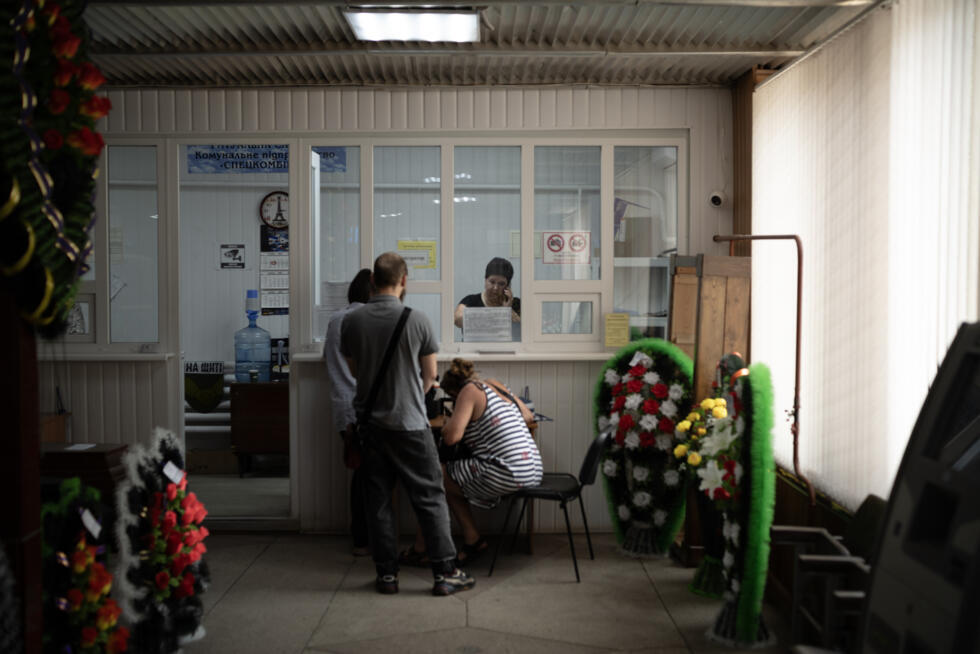
Sumy (Ukraine) (AFP) – At a funeral home in the northeastern Ukrainian city of Sumy, Svitlana Ostapenko paced around as she prepared the dead for their final journey.


Issued on: 07/08/2025 

Svitlana Ostapenko prepares a cross and wreaths for the funeral of a soldier © Florent VERGNES / AFP

After five years of working in the funeral home, she was used to seeing dead bodies, but the growing number of dead -- including young people from Russia's invasion -- was starting to overwhelm even her.

"Death doesn't discriminate between young and old," the funeral director told AFP, breaking down in tears.

Ukraine's funeral workers, who are living through the war themselves and have been repeatedly exposed to violent death throughout Russia's invasion launched in early 2022, are shouldering a mounting emotional toll while supporting grieving families.

What's more, Ostapenko's hometown of Sumy near the Russian border, has come under bombardment throughout the invasion but advancing Russian troops have brought the fighting to as close as 20 kilometres (12 miles) away.

Every day, Ostapenko lays the region's dead in coffins.

"One way or another, I'm getting by. I take sedatives, that's all," the 59-year-old said.

There has been no shortage of work.


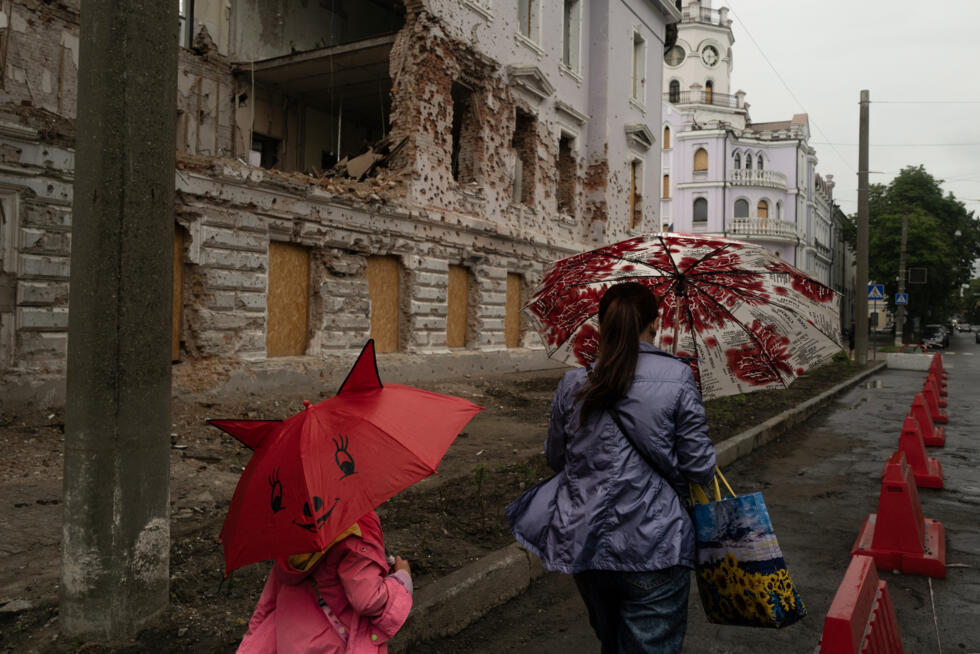
Residents pass the facades of historic buildings that were damaged by missiles © Florent VERGNES / AFP/File


On April 13, a double Russian ballistic missile strike on the city killed 35 people and wounded dozens of others.

Residents pass without giving a second thought to the facades of historic buildings that were pockmarked by missile fragments.

"We buried families, a mother and her daughter, a young woman of 33 who had two children," said Ostapenko.

During attacks at night, she said she takes refuge in her hallway -- her phone in hand in case her services are needed.

'Not just numbers'

Every day, the Ukrainian regional authorities compile reports on Russian strikes in a war that has claimed tens of thousands of lives.

Petro Bondar, Svitlana's colleague, said he noted the names of the victims in his notebook to "understand how much grief these bombings cause."

"They're not just numbers," he told AFP.

"They were living people, souls."

Igor Kruzo knew them only too well.

His job is to immortalise their names in granite tombstones, along with portraits he paints stroke by stroke.

The 60-year-old artist and veteran said he found it difficult to live with the faces he has rendered for gravestones.

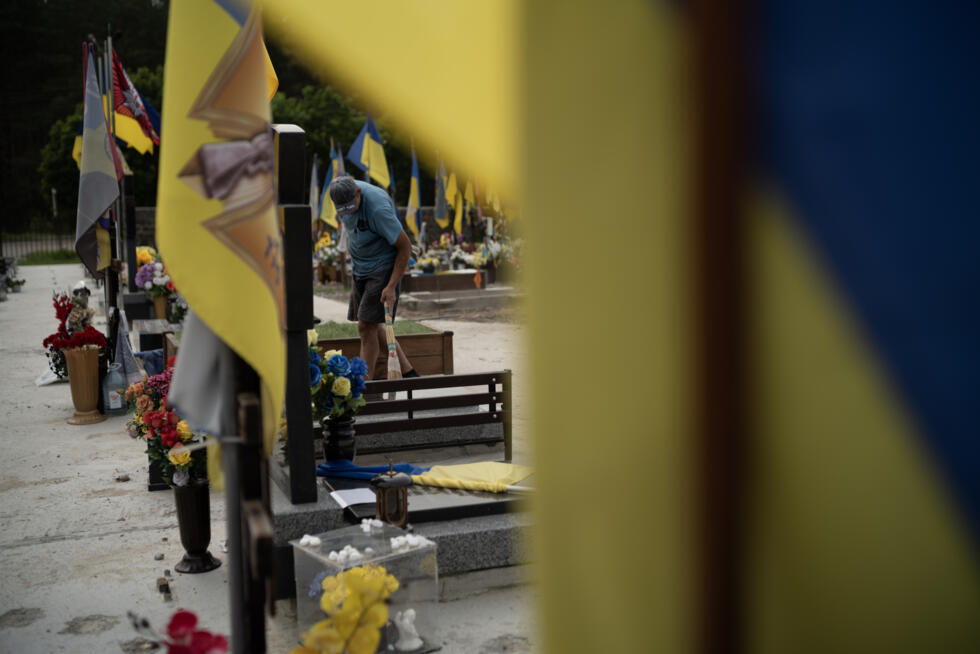
A funeral worker cleans a new grave at a cemetery in Sumy © Florent VERGNES / AFP


Soldiers, civilians, children, "all local people," he said.

"When you paint them, you observe their image, each with their own destiny," he said, never speaking of himself in the first person, avoiding eye contact.

At the cemetery, bereaved families told him about the deaths of their loved ones.

"They need to be heard."

The conversations helped him cope psychologically, he said.

"But it all cuts you to the bone," he added.

He used to paint elderly people, but found himself rejuvenating their features under his brush.

Ostapenko prepares funeral arrangements for a family whose son was killed at the front in Sumy © Florent VERGNES / AFP


He remembered a mother who was killed protecting her child with her body at the beginning of the war. "A beautiful woman, full of life", whom he knew, he said.

"And you find yourself there, having to engrave her image."

In recent months, his work had taken an increasingly heavier toll.

In the new wing of the cemetery reserved for soldiers, a sea of yellow and blue flags was nestled among the gravestones.

Enveloped by pine trees, workers bustled around a dozen newly dug holes, ready to welcome young combatants.
Dreams of the dead

In February, Ukrainian President Volodymyr Zelensky announced that 46,000 Ukrainian soldiers had been killed since 2022, and "tens of thousands" more were missing or in captivity -- a figure that observers believed to be an underestimate.

Russia has not published its combat losses, but a tally by the independent newspaper Meduza and the BBC estimates the military death toll at more than 119,000.

"The dead appear in my dreams," Kruzo said.

He said he saw soldiers crying over graves, or his daughter's friends lying lifeless in the cemetery aisle.

"For the past three years, all my dreams have been about the war. All of them."

Ironically, he said he was drowning himself in work because "it's easier".

He said he had never broken down, that he was tough man who served in the Soviet army, but that he was living in a "kind of numbness."

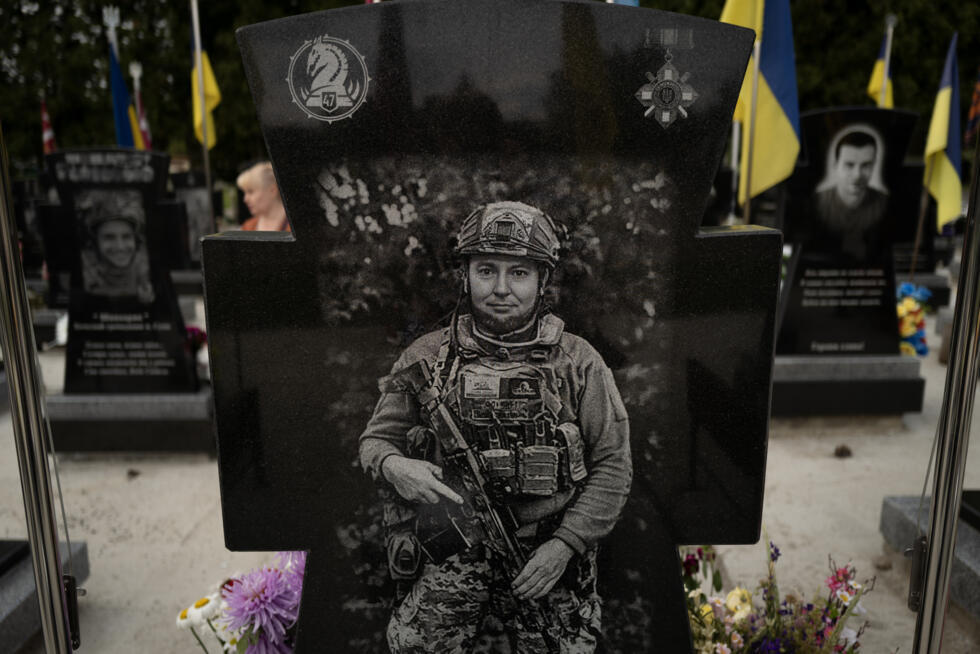
The portrait of a Ukrainian soldier engraved on his gravestone in a cemetery in Sumy
 © Florent VERGNES / AFP

"I don't want to get depressed," he said, taking a drag on his cigarette.

Behind him, a young, pregnant woman fixed her eyes on the portrait of a soldier smiling at her from the marble slab set in the earth.

© 2025 AFP


Streaming platform Mubi facing pressure from film industry over Israeli military ties

Mubi facing pressure from film industry over Israeli military ties - from left to right: Aki Kaurismäki, Sarah Friedland, Ari Folman, Nadav Lapid
Copyright Mubi - AP Photo


By David Mouriquand
Published on 

A growing number of filmmakers are calling on Mubi to cut ties from investment fund Sequoia Capital, which backs several Israeli defence-tech start-ups.

Global streaming platform Mubi is facing backlash over investor ties to Israeli military, with filmmakers calling on the production company and film distributor to end its relatioship with investment firm Sequoia Capital.

The growing pressure aimed at the upstart distributor, which ushered The Substance to awards success last year, centres on a recent $100 million investment it received from the Silicon Valley-based private equity firm. 

Sequoia Capital backs a number of Israeli defence-tech start-ups, including Kela Technologies, a firm founded by veterans of the Israeli military in the wake of the October 7 Hamas attack, and military drone manufacturer Neros. 

Filmmakers with ties to Mubi have signed an open letter, first published by Variety on 30 July. Creatives like Aki KaurismäkiMiguel GomesRadu JudeSarah Friedland and Joshua Oppenheimer strongly criticise the VOD platform's ties to Sequoia Capital.

According to Variety, the number of signatories now stands at 63, with additional names including the Israeli directors Ari Folman and Nadav Lapid.

“Mubi’s financial growth as a company is now explicitly tied to the genocide in Gaza, which implicates all of us that work with Mubi,” reads the letter. 

It continues: “We too believe that cinema can be powerful. And we know that we can’t always control how audiences will respond to our work, and whether or not it will move and inspire them. But we can control how our work reflects our values and commitments – ones that are wholly ignored when our work is brought into alliance with a genocide-profiteering private equity firm.” 

Scroll down to read the letter in full. 

A UN report has found that Israel’s military actions are consistent with genocide. Israel has continually denied that their actions in Palestine can be equated to genocide and argued that it has not partaken in any war crimes. A spokesperson recently called the claims of genocide “baseless” because it is not acting with “intent.”

When controversy over the Sequoia Capital investment first broke in June, Mubi said in a statement posted on Instagram that it had entered into the partnership “to accelerate” its “mission of delivering bold and visionary films to global audiences”

It added that Sequoia’s investments did “not reflect the views of Mubi.”  

“We take the feedback from our community very seriously, and are steadfast in remaining an independent founder-led company,” it concluded.

Here is the full statement addressed to Mubi:  

Dear Mubi leadership, 

We write as filmmakers who have a professional relationship to Mubi to express our serious concern regarding Mubi’s decision to accept $100 million in funding from Sequoia Capital, a private equity firm that, since late 2023 has chosen to double down on investing in Israeli military technology companies with the goal of profiting from the Gazan genocide. In 2024, Sequoia heavily invested in Kela, a military tech startup founded by a former senior manager of Palantir Israel and multiple Israeli military intelligence veterans, as well as military drone manufacturer Neros, and the unmanned aerial vehicle manufacture, Mach Industries. 

Mubi’s financial growth as a company is now explicitly tied to the genocide in Gaza, which implicates all of us that work with Mubi. We too believe that cinema can be powerful. And we know that we can’t always control how audiences will respond to our work, and whether or not it will move and inspire them. But we can control how our work reflects our values and commitments—ones that are wholly ignored when our work is brought into alliance with a genocide-profiteering private equity firm. 

Gaza is enduring mass civilian killings, including of journalists, artists, and film workers, alongside the widespread destruction of Palestinian cultural sites and heritage. We don’t believe an arthouse film platform can meaningfully support a global community of cinephiles while also partnering with a company invested in murdering Palestinian artists and filmmakers. 

We approach our work with care for the people and communities they represent, and the audiences who will watch it, because as artists we are accountable to more than the bottom line. Yet Mubi’s decision to partner with Sequoia demonstrates a total lack of accountability to the artists and communities who have helped the company flourish. We believe that it is our ethical duty to do no harm. We expect our partners, at a minimum, to refuse to be complicit in the horrific violence being waged against Palestinians. 

We ask you to heed the call made by Film Workers for Palestine and take action that meaningfully responds to the artists and the audiences who are such an integral part of Mubi’s success. 

Mubi has yet to respond publicly to the letter.

Palestinians bury activist shot dead by West Bank settler

Umm Al-Kheir (Palestinian Territories) (AFP) – Mourners attended on Thursday the funeral of Palestinian activist Awdah Hathaleen in the occupied West Bank whose body was handed over by Israel more than a week after a settler killed him.


Issued on: 07/08/2025 - 

Palestinians say Israel tried to prevent mourners from reaching activist Awdah Hathaleen's funeral © mosab shawer / AFP

"He was killed by a hateful settler, his body was held for 11 days, and more than 20 people from the village were arrested" following the late July incident in the southern West Bank, said the slain activist's brother, Aziz Hathaleen.

The settler accused of the fatal shooting "was released at that very moment", Aziz told AFP in the family's hometown of Umm al-Khair, where Palestinians gathered to bury his brother's body despite Israeli restrictions.

Awdah Hathaleen, 31, was linked to Oscar-winning documentary film "No Other Land", which focuses on the efforts of Palestinians in Masafer Yatta -- a string of hamlets including Umm al-Khair -- to prevent Israeli forces from destroying their homes.

He was killed on July 28, with residents identifying the man holding the gun in a video of the incident as Yinon Levy, a settler sanctioned by the Britain, who was briefly detained but released the next day.

Umm al-Khair resident Ibrahim Hathaleen told AFP that "we were prevented from receiving the martyr's body" for days after his death, and Aziz said Israel had given the family several conditions to allow the funeral.

The activist's brother argued that the Israeli moves were meant to prevent a large gathering that would draw attention to his work opposing Israeli settlement in Masafer Yatta.

"The first condition was that he not be buried in the area at all, and the second was that no mourning tent be set up", said Ibrahim, who is also related to Awdah Hathaleen.

An AFP journalist in Umm al-Khair said the Israeli army had set up checkpoints around the village and prevented some Palestinians and foreign activists from reaching the funeral site.

About 100 mourners still managed to attend the funeral, many of them in tears, kissing Awdah's body before joining prayers at a local mosque, the AFP journalist reported.

Masafer Yatta, where he lived, is an area on the hills south of the Palestinian city of Hebron which has been declared a military zone by Israel.

The fight of the area's Palestinian residents against Israeli settlement expansion and violence from troops and settlers was the subject of "No Other Land", which won Best Documentary at the Oscars in March.

Shortly after Hathaleen's killing, the film's co-director Yuval Abraham posted a video of the incident on Instagram showing a man -- identified as Levy -- brandishing a gun and arguing with a group of people.

Violence in the West Bank, which Israel has occupied since 1967, has surged throughout the Gaza war that began in October 2023.

At least 968 Palestinians, including militants but also civilians, have been killed by Israeli soldiers or settlers since the Gaza war broke out.

At least 36 Israelis, including civilians and soldiers, have been killed there in Palestinian attacks or during Israeli military operations over the same period, according to official Israeli data.

© 2025 AFP
Gaza farmer grows vegetables in tent city to 'survive another day'

Gaza City (Palestinian Territories) (AFP) – With food scarce and aid hard and sometimes deadly to come by, Gaza farmer Ibrahim Abu Jabal is growing vegetables in the harsh conditions of a sprawling displacement camp to sustain his family.


Issued on: 07/08/2025 - 

Tents and shelters for Palestinians displaced by the war in Gaza City 
© Omar AL-QATTAA / AFP/File

Abu Jabal, 39, has turned a small patch of soil near the family's tent in Gaza City into a vegetable garden, where he tends to rows of tomatoes, cucumbers and peppers, surrounded by tens of thousands of other Palestinians displaced by the Israel-Hamas war.

"Our bodies need tomatoes, cucumbers," he told AFP.

"And these products are expensive here. Not just expensive -- they're not even available. There are no tomatoes, and even if there were, we wouldn't have the money to buy them."

The displaced farmer has cultivated the sandy plot of 120 square meters (about 1,300 square feet), using seeds from dried vegetables and relying on an erratic water supply.

"Due to the situation we're going through... and the soaring prices of vegetables, I had to return to my old profession," said Abu Jabal.

Water in Gaza, much like food, is in precariously low supply, and to keep his garden green, Abu Jalal usually has to carry large jugs he fills from a nearby pipe where water flows only one hour a day.

Israel is under growing pressure to bring an end to the war in Gaza, where UN warnings that famine was unfolding have heightened global concern for the territory's more than two million Palestinian inhabitants living through a humanitarian crisis.
Aid access 'blocked'

The Israeli offensive, triggered by Palestinian militant group Hamas's October 2023 attack on Israel, has killed at least 61,258 people in Gaza, mostly civilians, according to figures from the Hamas-run territory's health ministry, which are considered reliable by the United Nations.

The Hamas attack that sparked the war resulted in the deaths of 1,219 people, the majority of them civilians, according to an AFP tally based on official figures.

Israel in late May began easing a complete aid blockade that had lasted more than two months, but only a trickle of food and other basic supplies has entered Gaza since then.

Before the war, agriculture accounted for around 10 percent of the Gaza Strip's economy, with about a quarter of the population at least partially supported by agriculture and fishing.

But on Wednesday the UN's Food and Agriculture Organization said that just 1.5 percent of the territory's farmland remained accessible and undamaged, citing the latest satellite data.

"People are starving not because food is unavailable, but because access is blocked, local agrifood systems have collapsed, and families can no longer sustain even the most basic livelihoods," the agency's Director-General Qu Dongyu said.

Hungry Gazans have increasingly been forced to brave chaotic scenes at a handful of distribution points managed by the Israel- and US-backed Gaza Humanitarian Foundation.

On July 22, the UN rights office said Israeli forces had killed more than 1,000 Palestinians trying to get food aid in Gaza since the GHF started operations in May -- nearly three-quarters of them in the vicinity of GHF sites.

Abu Jabal said his nine-year-old daughter had been injured near a charity kitchen.

Referring to the GHF operation, he said that "the American aid does not satisfy people's hunger."

"For someone who has nine children like me, what can a single box of aid really do?"

© 2025 AFP
Israel ultra-Orthodox vow to push back after students' arrest

Jerusalem (AFP) – Israel's ultra-Orthodox Jewish community pledged to resist government moves to call up seminary students for military service on Thursday, as demonstrators took to the streets to protest the arrest of two objectors.

Issued on: 07/08/2025 - 

Ultra-Orthodox Jews protest in Jerusalem against the arrest of two brothers for failing to obey their call-up orders after a longstanding exemption for full-time seminary students expired. © Menahem KAHANA / AFP

"The authorities will face a united global ultra-Orthodox Judaism fighting for its soul," the spiritual leader of ultra-Orthodox Jews of European descent, Rabbi Dov Landau, told the community's leading newspaper Yated Neeman under the front-page headline "War".

The exemption of many ultra-Orthodox men from the military service performed by other Jews has long been a contentious issue in Israel but it has become more so as the Gaza war has dragged on, putting a strain on army reservists.

Prime Minister Benjamin Netanyahu's government has depended on the support of two ultra-Orthodox parties for its majority in parliament.

But its failure to pass new legislation to give full-time seminary students continued exemption from military service has tested that support.

Both ultra-Orthodox parties have withdrawn their ministers from the government, while one has also stopped supporting it in parliament.

The ultra-Orthodox community represents 14 percent of Israel's Jewish population, about 1.3 million people, and around 66,000 men of military age previously benefited each year from exemptions.

The Israeli army announced in early July that tens of thousands of conscription orders would be sent out to ultra-Orthodox Jews.

Earlier this week, authorities arrested two brothers, both full-time seminary students, after they failed to heed their call-up papers.

In Jerusalem on Thursday evening, ultra-Orthodox Jewish demonstrators gathered to protest the arrests, with police later using water canon to disperse the crowd.

mib-hba-ds-glp/ami

© 2025 AFP

Former Israeli ambassador and French historian urge Macron to sanction Israel

Two prominent voices with deep ties to Israel and the Middle East are urging President Emmanuel Macron to back up his announcement that France will recognise Palestinian statehood with concrete action over the crisis in Gaza.


Issued on: 06/08/2025 - RFI

A protest against Benjamin Netanyahu's government in Tel Aviv on 5 July 2025 calls for the end of the war and immediate release of hostages held by Hamas. AP - Ohad Zwigenberg

Former Israeli ambassador to France Elie Barnavi and historian Vincent Lemire have called on Macron to impose sanctions on Israel, underlining the “absolute urgency” of such action given the worsening humanitarian crisis.

“Mr President, if immediate sanctions are not imposed on Israel, you will end up recognising a cemetery. We must act now to ensure food and medical aid can reach Gaza at scale,” they wrote, in an opinion piece published in the French newspaper Le Monde on Tuesday.

They argued that only firm and tangible sanctions would influence Israeli public opinion – and, by extension, the country's government – "to end the famine, to achieve a lasting ceasefire, to secure the release of all hostages, to protect Palestinians in the West Bank, to save Israel from itself".

France to recognise Palestinian statehood, defying US-Israel backlash


No excuse for 'inaction'


Barnavi and Lemire also dismissed the idea that a lack of European consensus is a valid excuse for inaction, pointing to the diplomatic momentum created on 24 July when Macron announced France’s intention to recognise a Palestinian state at the United Nations General Assembly in September – an initiative since supported by the United Kingdom, and Canada among others.

“You have the opportunity to lead a coalition of willing European states. This is a moment for leadership – and for urgency,” they said, going on to highlight the Israeli parliament’s recent vote in favour of annexing the West Bank, which passed by 71 votes to 13.

The pair also criticised what they see as “double standards” within the European Union, noting that while 18 rounds of sanctions have been imposed on Russia, none have targeted Israel.

Yet, they argue, sanctions on Israel would likely prove “immediately effective” due to the country's geographic and economic vulnerability.

“Mr President, don’t mistake diplomatic fanfare for facts on the ground. Since your announcement on 24 July, the diplomatic landscape may have shifted – but conditions in Gaza remain unchanged,” they warned. “The promise of recognition has never put food on anyone’s plate.”

Barnavi served as Israel’s ambassador to France from 2000 to 2002. Lemire is a professor of history at the University of Paris-Est Gustave-Eiffel and formerly headed the French Research Centre in Jerusalem, from 2019 to August 2023.


DAUBING IS NOT VIOLENT

Israeli airline's Paris offices daubed with red paint, slogans

Paris (AFP) – Red paint and slogans were daubed at the entry to the offices of national Israeli airline El Al in Paris, with Israel Thursday urging French authorities to take action over the "barbaric act".


Issued on: 08/08/2025 -

The offices were daubed with red paint © STEPHANE DE SAKUTIN / AFP



Anti-Israel and pro-Palestinian slogans and inscriptions, including "Free Palestine" and "El Al Genocide Airline", were written on the entrance which, along with the pavement, was also daubed with red paint overnight Wednesday to Thursday.

"I condemn the barbaric and violent act against El Al and expect the law enforcement authorities in France to locate the criminals and take strong action against them," Israel's Transport Minister Miri Regev wrote on X.

The act was the result of announcements by President Emmanuel Macron that "make gifts to" Palestinian militant group Hamas, she added -- an apparent reference to his announcement last month that France plans to recognise a Palestinian state.

Israel's ambassador to France Joshua Zarka, visiting the scene, described the vandalism as an "act of terrorism" that aims to "terrorise El Al employees, terrorise Israeli citizens, scare them and try to make them feel that they are not welcome."

According to El Al, quoted by Israeli TV channel N12, "the incident occurred while the building was empty and there was no danger to the company's employees.

"El Al proudly displays the Israeli flag on the tail of its aircraft and condemns all forms of violence, particularly those based on anti-Semitism," the national airline added.

French Transport Minister Philippe Tabarot condemned the "acts of vandalism" on X, saying that "acts of hatred and antisemitism have no place" in France.

Authorities have opened an investigation into acts of property damage committed on the grounds of race, ethnicity, nationality or religion, Paris's public prosecutor's office told AFP.

In early June, several Jewish sites in Paris were sprayed with green paint. Three Serbs were charged and placed under arrest and are suspected by investigators of having acted to serve the interests of a foreign power, possibly Russia.

The October 2023 attack by Hamas on Israel that sparked the war between Israel and Hamas resulted in the deaths of 1,219 people, the majority of them civilians, according to an AFP tally based on official figures.

Out of 251 hostages seized during Hamas's attack, 49 are still held in Gaza, including 27 the Israeli military says are dead.

The Israeli offensive has killed at least 61,258 people in Gaza, mostly civilians, according to figures from the Gaza health ministry which are considered reliable by the United Nations.

bla-dmv-sjw-ekf/jj
Israel's Netanyahu says wants to take control of all of Gaza, doesn't intend to 'govern' it

LEASE IT TO KUSHNER REALTY INC.

Issued on: 07/08/2025 - FRANCE24

Prime Minister Netanyahu told Fox News that Israel does not intend to govern Gaza permanently but 'intend to take control', remove Hamas, and hand over administration to a new authority. He said no detailed military plan exists yet, ahead of a crucial cabinet vote. This comes amid an unprecedented clash between Netanyahu’s government and the Israeli military over Gaza policy, as FRANCE 24's Noga Tarnopolsky explains.


Video by: Noga TARNOPOLSKY


Protests erupt with Israelis divided over government's plan to "control" Gaza

Issued on: 08/08/2025 - FRANCE24


Families of the hostages still being held in Gaza led widespread protests on Thursday against the Israeli government's plans to "control" the territory, demanding instead an end to the war and a release of all the remaining captives. Members of government also castigated the Prime Minister Benjamin Netanyahu's plan, with his military chief of staff concerned that his troops would be too depleted, and opposition leader Yair Lapid claiming the human and financial price of maintaining a hold over all of Gaza would be too steep after almost two years of fighting.

Video by:  Monte FRANCIS


Israel to 'take control' of Gaza City after approving new war plan

Jerusalem (AFP) – Israel's military will "take control" of Gaza City under a plan proposed by Prime Minister Benjamin Netanyahu and approved by his security cabinet, his office said in a statement Friday.


Issued on: 08/08/2025 - 

Israel's security cabinet approved new war plans that involve taking over Gaza City
 © Jack GUEZ / AF


Nearly two years into the war in Gaza, Netanyahu faces mounting pressure at home and abroad for a truce to pull the territory's more than two million people back from the brink of famine and free the hostages held by Palestinian militants.

Under the plan to "defeat" Hamas in the Gaza Strip, the Israeli army "will prepare to take control of Gaza City while distributing humanitarian assistance to the civilian population outside combat zones", the premier's office said.

Before the decision, Netanyahu said Israel planned to take full control of Gaza but did not intend to govern it.

He told US network Fox News on Thursday that the military would seize complete control of the territory, where it has been fighting Hamas since the Palestinian militant group's October 7, 2023 attack on Israel.

He added that Israel did not want "to keep" the Gaza Strip, which Israel occupied in 1967 but withdrew troops and settlers from in 2005.

Netanyahu said Israel wanted a "security perimeter" and to hand the Palestinian territory to "Arab forces that will govern it properly without threatening us".

"That's not possible with Hamas," he added.

Israelis fearful for the lives of hostages still held in Gaza demonstrate outside the prime minister's office against the government's plans to expand the war. © AHMAD GHARABLI / AFP

His office on Friday said a majority of the security cabinet had adopted "five principles" aimed at ending the war: "the disarming of Hamas; the return of all hostages -- living and dead; the demilitarisation of the Gaza Strip; Israeli security control in the Gaza Strip; the establishment of an alternative civil administration that is neither Hamas nor the Palestinian Authority".

An unspecified "alternative plan" was rejected by the cabinet, it added.

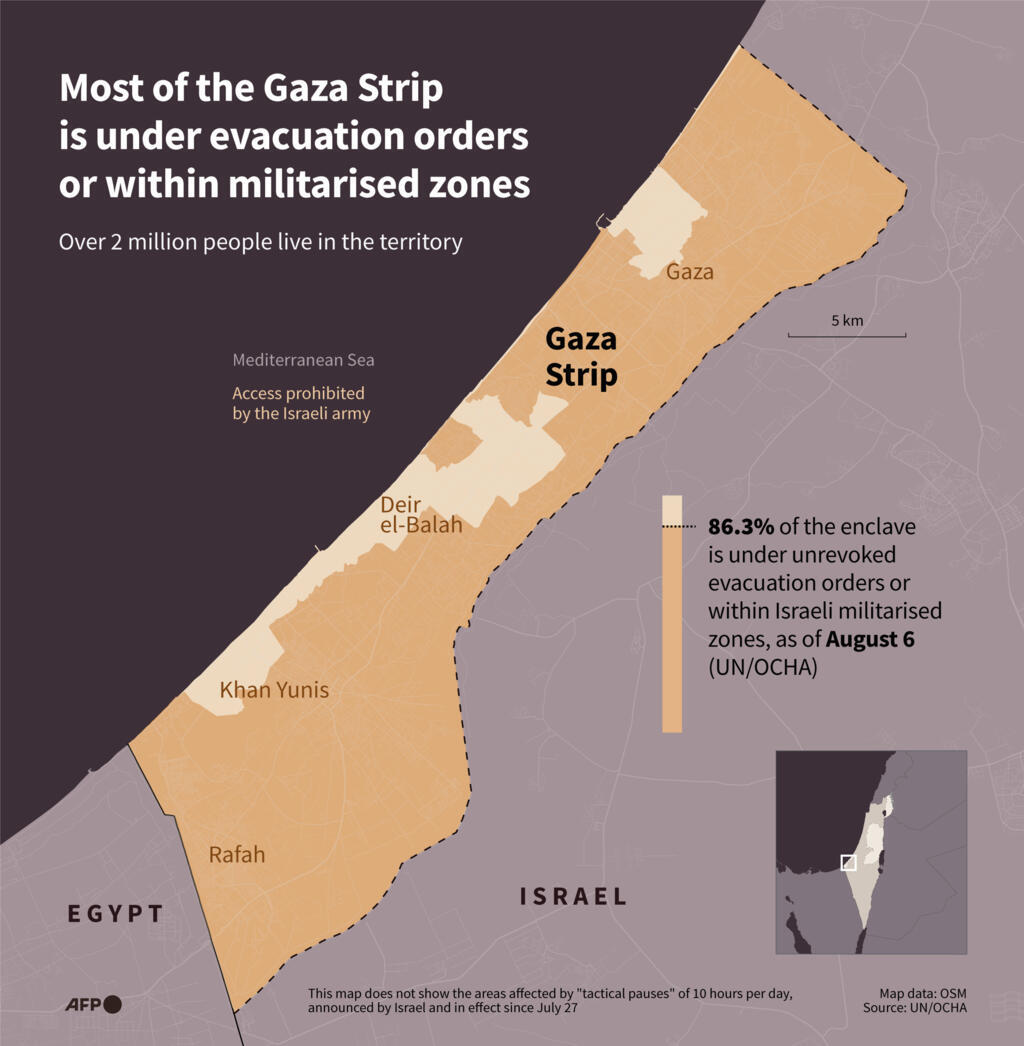
The Israeli army said last month that it controlled 75 percent of the Gaza Strip, mainly from its positions in the territory along the border.

An expanded Israeli offensive in Gaza could see ground troops operate in densely populated areas where hostages are believed to be held, Israeli media have reported.

'More destruction, more death'

The plans to expand the war have sparked growing concern in Israel about what it means for the remaining hostages.

Israeli opposition leader Yair Lapid denounced the cabinet's move on Friday, calling it "a disaster that will lead to many other disasters".

He said on X that the plan would result in "the death of the hostages, the killing of many soldiers, cost Israeli taxpayers tens of billions, and lead to diplomatic bankruptcy".

As the cabinet meeting began Thursday, hundreds rallied near the prime minister's office in Jerusalem, calling for a deal to free the hostages.

"The only way to bring the hostages home is to halt the war and end the suffering of the hostages and all those living through this terrible conflict," said protester Sharon Kangasa-Cohen.

In Gaza, fears grew over what an expansion of Israeli operations would entail.

Most of Gaza is under evacuation orders or within militarised zones 
© Olivia BUGAULT, Pauline PAILLASSA, Julie PEREIRA / AFP

"Ground operations mean more destruction and death," said Ahmad Salem, 45.

Hamas said in a statement that "Netanyahu's plans to escalate the aggression confirm beyond any doubt his desire to get rid of the captives and sacrifice them in pursuit of his personal interests and extremist ideological agenda".

Out of 251 hostages captured during Hamas's 2023 attack, 49 are still being held in Gaza, including 27 the military says are dead.

Ahead of Thursday's meeting, rumours were rife in the Israeli press about disagreements over the plan between the cabinet and military chief Eyal Zamir, who was said to oppose fully occupying Gaza.

'Unrealistic costs'

International concern has been growing over the suffering of Palestinians in Gaza, where a UN-backed assessment has warned that famine is unfolding.

The World Health Organization said at least 99 people have died from malnutrition in the territory this year, with the figure likely an underestimate.

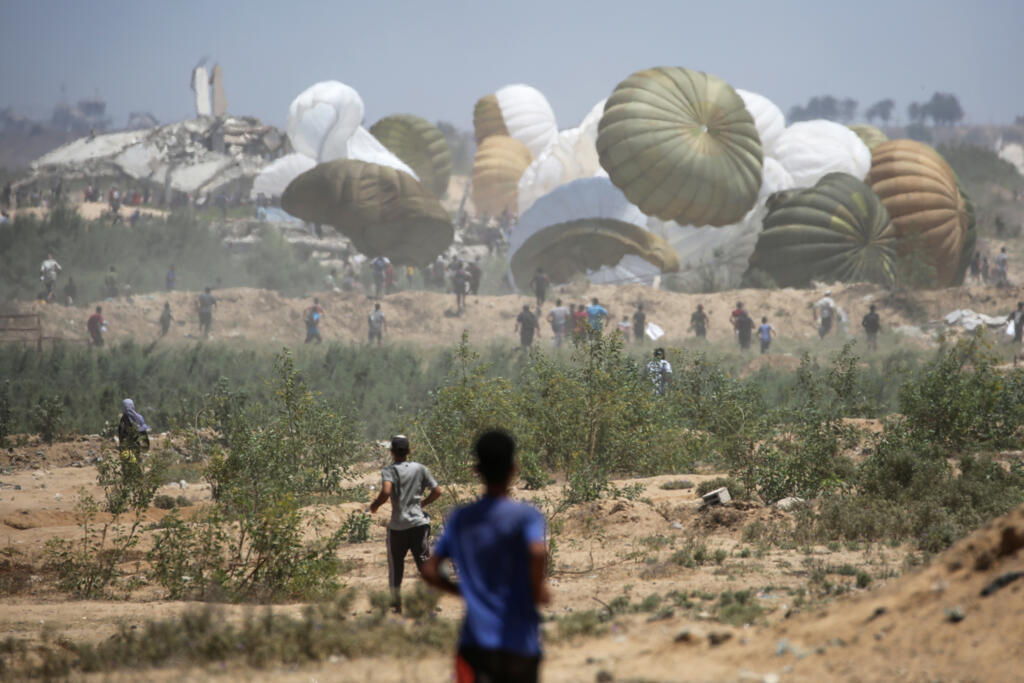
Palestinians rush to the site where parachuted aid packages in the Nuseirat area in the central Gaza Strip © Eyad BABA / AFP

Displaced Gazan Mahmoud Wafi said that the prices of available food remained high and erratic.

"We hope that food will be made available again in normal quantities and at reasonable prices, because we can no longer afford these extremely high and unrealistic costs," the 38-year-old told AFP.

In late July, Israel partially eased restrictions on aid entering Gaza, but the United Nations says the amount allowed into the territory remains insufficient.

Amjad Al-Shawa, head of the Palestinian NGO Network in the Gaza Strip, told AFP that lengthy inspection procedures at entry points meant few trucks could come in -- "between 70 to 80 per day -- carrying only specific types of goods".

The UN estimates that Gaza needs at least 600 trucks of aid per day to meet residents' basic needs.

Israel's offensive has killed at least 61,258 Palestinians, according to Hamas-run Gaza's health ministry.

The 2023 attack on Israel resulted in the deaths of 1,219 people, according to an AFP tally based on official figures.

© 2025 AFP


Relatives of hostages protest with Gaza flotilla ahead of Israeli security meeting


Issued on: 07/08/2025 - FRANCE24


Relatives of Israeli hostages sailed in a flotilla toward Gaza, waving flags and posters of their loved ones held by Hamas, calling for international support. The protest comes ahead of Prime Minister Netanyahu’s security cabinet meeting Thursday, where he may seek approval to expand military operations in Gaza despite opposition, including from hostage families.

Video by:  Yuka ROYER


Dr. Gershon Baskin: 'Hamas is ready for a deal that will release all Israeli hostages in 24 hours'


Issued on: 07/08/2025 -FRANCE24

Former hostage negotiator Dr. Gershon Baskin tells FRANCE 24 that he has spoken directly with Hamas, saying the militant group is "ready for a deal that will release all the Israeli hostages in 24 hours". Now the Middle East director of the International Communities Organisation, Dr. Baskin says the war in Gaza should end immediately, adding: "Hamas has been defeated, it can no longer govern Gaza." He says Prime Minister Benjamin Netanyahu, for his part, "needs to continue the war for his own political survival". Dr Baskin is a co-director of the Alliance for Two States and has advised Israeli, Palestinian and international leaders on the peace process.


Video by: Delano D'SOUZA


'How much worse could it get?' Gazans fear full occupation

Gaza City (Palestinian Territories) (AFP) – "When will this nightmare end?" wonders Amal Hamada, a 20-year-old displaced woman who, like most Gazans, feels powerless before the threat of full Israeli occupation after 22 months of war.


Issued on: 07/08/2025 -FRANCE24

Palestinian children carry water past line after line of tents housing displaced families in the sand dunes of Mawasi on Gaza's Mediterranean coast. © - / AFP

Rumours that the Israeli government might decide on a full occupation of the Palestinian territory spread from Israel to war-torn Gaza before any official announcement, sowing fear and despair.

Like nearly all Gazans, Hamada has been displaced several times by the war, and ended up in Deir el-Balah in central Gaza, where the Israeli military carried out operations last month for the first time in the war.

"We've lived through many wars before, but nothing like this one. This war is long and exhausting, from one displacement to another. We are worn out," the woman told AFP.

Like her, Ahmad Salem, 45, wonders how things can get worse in a territory that already faces chronic food shortages, mass displacement and daily air strikes.


"We already live each day in anxiety and fear of the unknown. Talk of an expansion of Israeli ground operations means more destruction and more death," Salem told AFP.

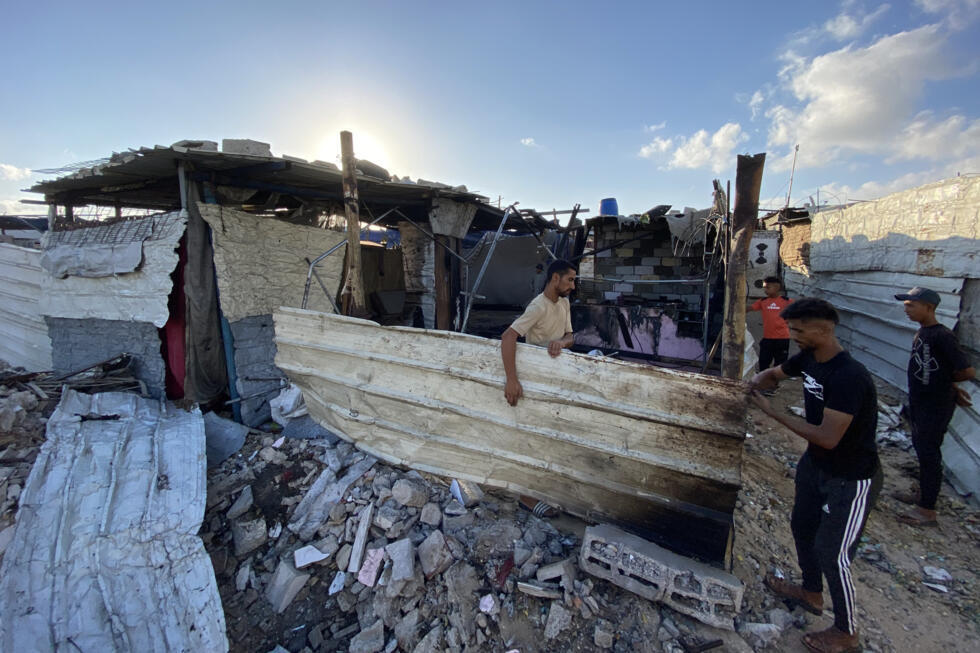
Palestinians recover what they can from the debris of an Israeli strike on the makeshift camp in Mawasi. © - / AFP


"There is no safe space in Gaza. If Israel expands its ground operations again, we'll be the first victims," he said from a camp west of Gaza City where he had found shelter.

Israeli Prime Minister Benjamin Netanyahu was to chair a meeting of his security cabinet later on Thursday to seek approval to expand military operations in Gaza, including in densely populated areas.
'Just animals'

“We read and hear everything in the news... and none of it is in our favour," said 40-year-old Sanaa Abdullah from Gaza City.

"Israel doesn't want to stop. The bombardment continues, the number of martyrs and wounded keeps rising, famine and malnutrition are getting worse, and people are dying of hunger", she said.

"What more could possibly happen to us?"

Precisely 22 months into the devastating war sparked by Hamas's October 2023 attack, Gaza is on the verge of "generalised famine", the United Nations has said.

Its 2.4 million residents are fully dependent on humanitarian aid, and live under the daily threat of air strikes.

The Israeli army announced in mid-July that it controlled 75 percent of Gaza, including a broad strip the whole length of the Israeli border and three main military corridors that cut across the territory from east to west.

The UN Office for the Coordination of Humanitarian Affairs (OCHA) says that more than 87 percent of the Gaza Strip is under unrevoked evacuation orders or designated as an Israeli military zone.

The remaining areas are the most densely populated. The city of Khan Yunis in the south, Gaza City in the north, and Deir el-Balah and its adjacent refugee camps in the centre.

"Now they speak of plans to expand their operations as if we are not even human, just animals or numbers," Abdullah laments.

"A new ground invasion means new displacement, new fear and we won’t even find a place to hide", she told AFP.

"What will happen if they start another ground operation? Only God is with us."

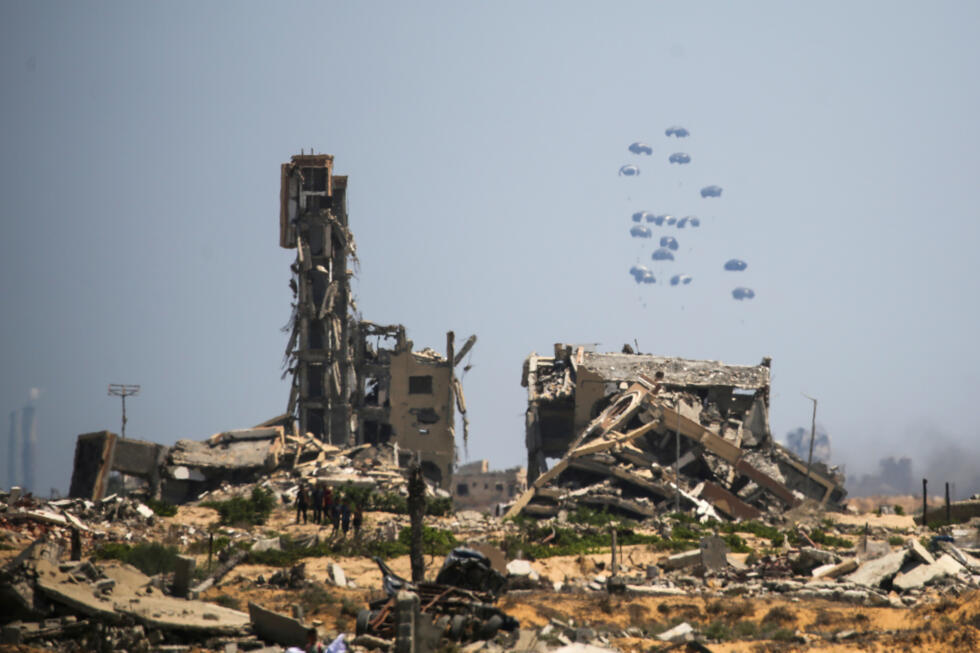
Arab and European militaries airdrop aid over bombed out buildings in central Gaza. © Eyad BABA / AFP


A widening of the war "would risk catastrophic consequences for millions of Palestinians and could further endanger the lives of the remaining hostages in Gaza", senior UN official Miroslav Jenca told the Security Council on Tuesday.

The October 2023 attack that sparked the war resulted in the deaths of 1,219 people, the majority of them civilians, according to an AFP tally based on official figures.

Israel's retaliatory offensive has killed at least 61,258 people in Gaza, mostly civilians, according to figures from the Gaza health ministry which the United Nations considers reliable.

© 2025 AFP
New species teem in Cambodia's threatened karst

Phnom Proek (Cambodia) (AFP) – A biologist might go a lifetime without discovering a new species. It took a team exploring Cambodia's limestone karst a single night to find three.


Issued on: 08/08/2025 - 

Conservationists searching for new species in a cave in Phnom Proek district in Battambang province, Cambodia © TANG CHHIN Sothy / AFP

The trio of newly discovered geckos illustrates the incredible and often overlooked biodiversity in these harshly beautiful landscapes, and the risks posed by the cement industry's appetite for limestone.

"You can quite literally go into a cave, collect a few specimens, and most likely there'll be some that are new to science," said Pablo Sinovas, a snake specialist and Cambodia country director at conservation NGO Fauna & Flora.

"That's one of the magical aspects of karst ecosystems."

Karst landscapes, like Vietnam's famed Halong Bay outcroppings, are ancient structures, formed millions of years ago from coral.

Rain erosion creates their characteristic fluted, pockmarked exteriors and vast interior caves and tunnels.

It also isolates one piece of karst from another, creating evolutionary islands where species develop differently, explained gecko expert Lee Grismer, a professor at La Sierra University.

"Species are being created in these harsh environments."

AFP joined a team in July that is surveying karst near the Cambodia-Thailand border to better understand these ecosystems and build the case for their protection.

Pablo Sinovas, Cambodia country director at conservation NGO Fauna & Flora, with a lizardfound in a cave at Phnom Proek district in Battambang province © TANG CHHIN Sothy / AFP


The work is challenging.

There is an ongoing risk of mines and unexploded ordnance, and days into the survey in Battambang province, the team was forced to move away from the border as fighting erupted between Thailand and Cambodia.
Venomous inhabitants

There is also the delicate task of navigating sharp karst at night, and avoiding hidden holes.

Some harbour venomous inhabitants, though finding one delights the team.

rain erosion creates their characteristic fluted, pockmarked exteriors and vast interior caves and tunnels © Suy SE / AFP


"Great spot," shouted Grismer, as the green head of a type of pit viper -- recently discovered in Thailand and not previously recorded in Cambodia -- emerged from a karst overhang and was collected by his colleague.

The work started after dark, when the millions of bats that roost in the karst have streamed out to hunt.

Armed with headlamps, the team clambered over vines, ducked beneath dripping stalactites and dodged insects attracted by their lights.

In one cave, a plate-sized whip spider sat impassively, while elsewhere a scorpion scurried from under a rock, her offspring on her back.

The team looked for the slightest movement or the glint of an eye to find animals sometimes no bigger than a pinky finger.

Each catch was placed in a bag with enough air to keep it alive until cataloguing time in the morning.

The meticulous process is essential to proving a species is new and preserving it for future study.

It starts with a surreal photoshoot in the team's sparse hotel room.

Karst rocks were piled artfully on black velvet taped to a table and the wall, and then the models came out: frogs, snakes and geckos.

Geckos on the loose

Photographing species where they were collected is risky.

A biologist might go a lifetime without discovering a new species. It took a team exploring Cambodia's limestone karst a single night to find three © TANG CHHIN Sothy / AFP


"These animals can escape and you've lost your new species," explained Grismer.

But even in the hotel room, several geckos made a break for it, sending scientists scrambling behind a fridge or into a bathroom to retrieve their precious finds.

Each animal was then euthanised, tagged and measured. Its DNA-rich liver was extracted for sequencing that will create a kind of family tree tracing its evolutionary history.

If an animal appears on their own branch, they are new to science.

Of the approximately 40 specimens collected in a single night, three seemed clear contenders: a large speckled gecko, a bent-toed gecko with a distinctive banded tail and a web-toed gecko.

Grismer, 70, has found dozens of new species in his career but said each find reminds him of his childhood excitement about animals.

"That same emotion, intensity and power... just comes rushing back."

Finally, the specimens are injected with formaldehyde and artfully arranged in boxes to display as many of their features as possible.

Cement demand

Fauna & Flora hopes the research will convince the government to protect more karst in the country, and said officials have already signalled interest at the local level.

Scientists capture the geckos and photograph them © TANG CHHIN Sothy / AFP

But it can be a hard case to make in a country with growing demand for cement domestically and for export.

Prime Minister Hun Manet in May said Cambodia produces 11 million tons of cement annually and praised the sector for reducing imports, creating jobs and contributing tax, while insisting quarrying should be done "responsibly".

Tuy Noeun, a local villager guiding the scientific survey, said he and other residents believe spirits inhabit the karst, but would still be happy to see a cement firm move in.


Unique species emerge from evolutionary islands © Nicholas SHEARMAN / AFP

"We want jobs for our people," he said.

Sinovas of Fauna & Flora hopes the survey will at least inform decision-making and help protect areas home to particularly rare species, comparing them to Cambodia's famed Angkor Wat temple complex.

"Would you turn Angkor Wat into cement?" he said.

"You wouldn't because it's a national treasure. Well, some of these species should be considered national treasures as well."

© 2025 AFP