It’s possible that I shall make an ass of myself. But in that case one can always get out of it with a little dialectic. I have, of course, so worded my proposition as to be right either way (K.Marx, Letter to F.Engels on the Indian Mutiny)
Friday, August 08, 2025
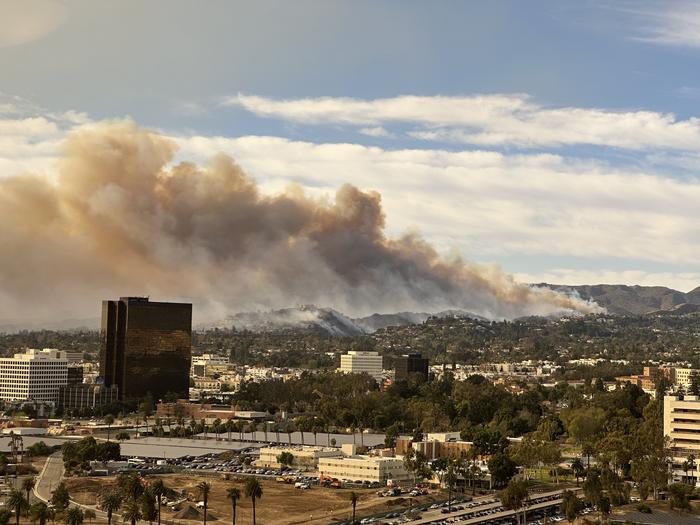
Wildfire collaborative responds to community concerns about air quality
New study seeks to answer Los Angeles residents’ questions about how to find reliable air quality information during fires
When several wildfires ignited in Los Angeles in early January of 2025, Miriam Marlier’s friends and neighbors came to her with questions about how to find reliable air quality information.
During the January fires, “people were urgently trying to find out whether the air was safe to breathe, where to find information about air quality, and whether the information was comprehensive enough for them to make decisions to protect themselves and their families,” explained WFFRC postdoctoral associate Claire Schollaert.
In response to these urgent questions, Schollaert, Marlier, and colleagues quickly launched a study to assess whether publicly available data sources captured an increase in air pollution during the fires, how air quality changed over space and time, and how the trends differed between data sets. The findings were published inEnvironmental Science and Technology Letters in July, and provide insights into how these tools can better support public health response during smoke events.
“This study is the first to my knowledge that quantifies how the LA Fires affected air quality at very fine spatial and temporal resolutions,” said Hansen. “It serves as a valuable baseline from an extraordinary event.” The study analyzed hourly data from nearly 750 low-cost and regulatory air pollution air pollution sensors throughout LA.
During large wildfires, government agencies generally recommend that residents check the Environmental Protection Agency’s air quality index, which is fed by data from regulatory monitors. The AirNow Fire and Smoke Map, another commonly recommended tool, relies on data from EPA monitors, low-cost PurpleAir sensors, and satellite data. But these tools utilize different data sources and often consider different time periods, potentially leaving residents confused.
“Smoke exposure is the main way that most people are impacted by fires,” said Schollaert. “Providing the public with understandable and accurate air quality information is crucial to reducing risk.”
For the study, the researchers compared Los Angeles air quality data from EPA regulatory monitors, low-cost PurpleAir sensors, and satellites. “We wanted to understand the smoke plume dynamics from the perspective of multiple, often complementary, air quality data sources,” explains Marlier.
Findings confirmed that the fire events did degrade air quality in the city, particularly on January 8 and 9. But air quality varied markedly from hour to hour and day to day during the course of the fires, and “the Santa Ana winds, which played a role in spreading the fires, also did a decent job of pushing smoke from the Palisades fire offshore pretty quickly,” said Schollaert. Those same winds, however, spread smoke from the Eaton fire across the most populated parts of the county before pushing the plume out over the Pacific.
The team found that while regulatory monitors are essential, they often miss local variability due to limited spatial coverage. Integrating low-cost sensors and satellite data on public risk communication platforms can help fill critical gaps. This growing network of sensors can work with regulatory systems, to strengthen them, offering more responsive public health strategies and better community protection.
Satellite observations capture broader patterns of smoke movement through the atmosphere and could help to further fill in gaps between on-the-ground monitors, but the data are not as accessible to the public.
Smoke impacts were largely consistent across these different data sources, the team found, but differences in spatial distribution and averaging times could lead to discrepancies in air quality readings, which could be confusing to users.
Based on their findings, the authors call for more ground-based sensors to improve air pollution monitoring, and for the improved integration of satellite data into user-friendly air quality platforms. Preferably, these additional sensors and data sources would be integrated into the most commonly used air quality index resources, said Schollaert.
“People want one number that lets them know whether it’s safe to go running outside or take their kid to the playground,” said Schollaert. “It’s our job as researchers to try to figure out how to make that information as reliable as possible.”
“We live in an era of data saturation,” said Hansen. “Often these datasets tell us slightly different things at different resolutions of space and time. Now more than ever, effective actionable science is about harmonizing and synthesizing these diverse datasets to provide consistent, robust, and digestible insights to the public, managers, and policy makers.”
Responsiveness to real-world needs is baked into the WFFRC approach, and the new study provides one example of how this strategy can lead to meaningful impacts and important scientific insights.
Daily hazard mapping system data, LA Fires, January 7–12
Daily hazard mapping system smoke plumes with average daily PM2.5 concentrations from AirNow (large circles) and PurpleAir (small circles) from the first 6 days of the fire impacted period (January 7–12).
Credit
Schollaert et al; graphic compiled by Leslie Tumblety / Cary Institute of Ecosystem Studies
This research was made possible, in part, by funding from the Gordon and Betty Moore Foundation under grant #11974. The paper is a contribution of the Western Fire and Forest Resilience Collaborative and the Climate and Wildfire Research Initiative at UCLA.
Western Fire and Forest Resilience Collaborative (WFFRC) is an interdisciplinary research program of Cary Institute of Ecosystem Studies focused on advancing fire ecology and forest resilience science across the western U.S. By connecting science with practice, WFFRC aims to advance fire and forest resilience strategies that are ecologically sound, science-informed, and adaptable to rapidly changing environmental conditions.
Cary Institute of Ecosystem Studies is an independent nonprofit center for environmental research. Since 1983, our scientists have been investigating the complex interactions that govern the natural world and the impacts of climate change on these systems. Our findings lead to more effective resource management, policy actions, and environmental literacy. Staff are global experts in the ecology of: forests, freshwater, disease, and cities.
In early 2025, wildfires spread in Los Angeles, destroying tens of thousands of homes and businesses. During the fires, smoke blanketed the region and online maps provided residents with rapid air quality information. Now, a study in ACS’ Environmental Science & Technology Letters compares the data that went into the maps from federal monitoring stations, low-cost sensors and satellites. Their results highlight the importance of combining multiple data sources to form easily accessible information for the public.
“Timely and accurate air quality information is crucial for the public to reduce their smoke exposure during wildfire events,” says Claire Schollaert, the study’s corresponding author. “Combining federal monitors, low-cost sensors, and satellite data can provide a more complete picture of local air quality, which can help people make safer choices in real time.”
Wildfires create smoke and haze that can be harmful to breathe. To reduce smoke exposure and mitigate potential health risks, public health experts recommend checking the local Air Quality Index (AQI) before stepping outside. The AQI ranks outdoor air from “Good” to “Hazardous,” calculating values from the levels of air pollutants present, including fine particulate matter (PM2.5). The U.S. Environmental Protection Agency’s (EPA) AirNow Fire and Smoke Map and the PurpleAir low-cost sensor network are online platforms that provide AQI information from ground monitors. Additionally, the AirNow Fire and Smoke Map provides smoke plumes from the National Oceanic and Atmospheric Administration’s (NOAA) Hazard Mapping System. Satellite observations of near-real time air pollution are also collected but aren’t readily available on these popular online platforms. In a retrospective of the January 2025 LA wildfires, Schollaert and colleagues compared the data provided in these three publicly available datasets to understand where overlaps and informational gaps may occur.
The researchers obtained air quality monitoring data for LA County from eight EPA stations in the AirNow network, 728 low-cost particulate matter sensors, and satellite data of smoke plume outlines and pollutant concentrations. During the fire period, when the Eaton and Palisades wildfires ignited and intensified (Jan. 7-12, 2025):
EPA stations detected elevated PM2.5 levels in downtown LA and Compton, reaching “Unhealthy” and “Unhealthy for Sensitive Groups” AQI categories, respectively.
Twelve of the low-cost sensors located closer to the fires (within 4.7 miles, 7.5 kilometers) had PM2.5 levels in the “Hazardous” AQI range.
Satellite images tracked the movement of light- to heavy-density smoke in the atmosphere, which generally matched places on the ground with elevated PM2.5 levels.
The stationary ground monitors showed that high AQI values generally aligned with the locations of thick smoke plumes seen by the satellites, though this was not always the case. Additionally, each data source has its advantages and disadvantages: The EPA monitors are highly accurate but limited in number, the low-cost sensors are less accurate but more prolific, and the satellites cover even more ground but don’t always reflect the conditions on the ground. But combined, these tools could be useful for people in smoke-impacted areas to make informed decisions about their exposure risks in near real time, the researchers say.
The authors acknowledge funding from the Gordon and Betty Moore Foundation and Climate and Wildfire Research Initiative at the University of California, Los Angeles.
###
The American Chemical Society (ACS) is a nonprofit organization founded in 1876 and chartered by the U.S. Congress. ACS is committed to improving all lives through the transforming power of chemistry. Its mission is to advance scientific knowledge, empower a global community and champion scientific integrity, and its vision is a world built on science. The Society is a global leader in promoting excellence in science education and providing access to chemistry-related information and research through its multiple research solutions, peer-reviewed journals, scientific conferences, e-books and weekly news periodical Chemical & Engineering News. ACS journals are among the most cited, most trusted and most read within the scientific literature; however, ACS itself does not conduct chemical research. As a leader in scientific information solutions, its CAS division partners with global innovators to accelerate breakthroughs by curating, connecting and analyzing the world’s scientific knowledge. ACS’ main offices are in Washington, D.C., and Columbus, Ohio.
Looking down the Leavens Creek watershed, where a fatal debris flow event occurred following the Eagle Creek Fire. Notice the steep, rocky channels and waterfalls that debris flows travel down.
In the wake of a wildfire, there’s often an assumption that burned landscapes will be more susceptible to landslides. But new research from the University of Oregon suggests it’s not always that simple.
An analysis of the Columbia River Gorge, which runs along the border between Oregon and Washington, shows that steep, rocky watersheds in that area have been prone to debris flows and rockfall for thousands of years. Those events didn’t measurably increase after the Eagle Creek Fire, which scorched 47,000 acres of the gorge over the course of three months in 2017.
UO geologist Josh Roering and members of his lab published their findings Aug. 8 in Science Advances, highlighting the importance of context and geological history in landslide risk assessments. The study also could help inform safety and hazards awareness projects in the gorge, in both burned and nonburned areas.
After the Eagle Creek Fire, Oregon land managers were concerned about landslides, especially in the vicinity of the Interstate 84 transportation corridor that runs through the gorge. Their fears were, in large part, informed by what’s transpired in places like Southern California, where post-fire slides have caused devastating casualties and millions of dollars in damage.
That phenomenon can happen because as wildfire destroys vegetation and groundcover, slopes become more prone to debris movement, erosion and rock fall, Roering said, which can be more easily triggered by rain and storm events.
“When Eagle Creek burned up such a massive area of the Columbia River Gorge, the natural question was: Is that going to happen here?” Roering said. “The gorge provided a great laboratory to examine how fire affects steep and rocky landscapes.”
In his lab’s latest project, Roering and doctoral student Maryn Sanders analyzed recent debris flows in the gorge to better understand the likelihood of slope movement after a fire and to explore how to predict when debris flows will occur. Debris flows occur when loose sediment — like mud, rocks and other debris — rapidly moves down a slope, often fueled by a storm or heavy rain.
Sanders and her team turned to a remote-sensing technology known as airborne lidar, or light detection and ranging, which allows them to see through the tree cover so they can analyze physical changes on the ground below, like where erosion has occurred. That tool, alongside field observations, helped them map out debris flows so they could assess movement across the study area.
As Sanders mapped the data, she found that many debris flows were concentrated in the watersheds near Dodson, just a few miles east of Multnomah Falls on the Oregon side of the gorge. Those are some of the steepest and fastest eroding watersheds in the state.
The debris flows in that region have been especially frequent and destructive. They’ve caused fatalities and threatened additional human lives, homes and infrastructure, which make them even more vital for state agencies to understand.
Sanders noticed a few interesting characteristics of the landscape as she studied the data, which suggested fire might not be the most significant cause of slope movement in that area. It also hinted that steep, rocky terrain behaves differently than slopes in a place like Southern California.
The researchers found massive amounts of sediment accumulation in fan-like formations at the base of the rocky catchments in gorge watersheds. At first glance, those features looked unassuming because they were covered in vegetation, but with lidar imaging it was clear something more notable was going on beneath the surface.
“The size and makeup of the fans suggest that frequent debris flows have been happening in these watersheds for a really long period of time, in the magnitude of thousands of years,” Sanders said.
She also observed that the slopes were collecting sediment much faster than more stable terrain does, likely through temperature fluctuations that cause rockfall. That sets them up to produce debris flows more frequently, typically every few decades.
Sanders took a closer look and analyzed the erosion rates in the area. She found frequent debris flows throughout its geological history and saw that the landscape had behaved in a consistent manner over thousands of years, something that remained relatively unchanged after the 2017 fire.
“Because we found similar rates of erosion before and after the fire, we believe the rocky environment was not as sensitive to fire,” she said. “Our analysis suggests that fire plays a relatively small role in triggering these events and emphasizes how important it is to consider the history of place.”
Still, the frequency, size and nature of debris flows in the gorge remains an ongoing cause for concern. The researchers are in the final stages of developing a tool that could help the Oregon Department of Transportation and other stakeholders predict debris flows in the gorge. That would help them make better use of safety features like roadside warning signs and closures, alerting travelers about the heightened risk of landslides during intense storms.
“These watersheds are highly active and inherently hazardous, irrespective of fire,” Sanders said. “We want our research to help agencies like ODOT better understand this geologically-complex landscape."
Journal
Science Advances
Article Title
The influence of wildfire on debris flows in a landscape of persistent disequilibrium: Columbia River Gorge, OR, USA
Article Publication Date
8-Aug-2025
Surveying Tumalt Creek, a debris flow channel near Dodson, OR. Note the large boulders that are moved around by powerful debris flows.
Credit Brook Hunter
Looking up the Leavens Creek watershed, with the deposit of the fatal Leavens Creek debris flow in the foreground.
The steep, rocky Rock of Ages Creek that was burned, but no debris flows occurred.
Credit Oregon Department of Transportation
GNOMES OF ZURICH TARIFFED
Trump tariffs: Did Swiss gold refiners fuel the crisis?
Many were baffled when Donald Trump slapped a steep 39% tariff on imports from Switzerland. The Swiss aren't known for flooding the US with cheap goods, but their outsize role in gold refining is distorting trade data.
Switzerland refines more than two-thirds of the world's gold
Image: Sven Hoppe/dpa/picture alliance
Why did Switzerland get hit with a 39% tariff?
US President Donald Trump's argument is straightforward: He believes trade partners of the United States benefit from broad access to the US market, while often restricting access to their own, creating persistent trade imbalances.
In the case of Switzerland, Trump balked at the Alpine nation's $48-billion (€41.2-billion) trade deficit, which he said showed Swiss firms were "taking advantage" of the US. For that and the country's apparent unwillingness to address the imbalance, he put a much higher tariff on Swiss imports than the European Union's 15%.
At 39%, the tariff rate is the highest among developed countries and may inflict major damage on trade with the US, Switzerland's most important trading partner. Around 18% of Swiss exports crossed the Atlantic last year.
Despite intense talks and a high-stakes visit to Washington by President Karin Keller-Sutter, Switzerland failed to clinch a framework deal like the EU, Japan or United Kingdom.
Keller-Sutter couldn't even get an appointment with Trump and instead met with US Secretary of State Marco Rubio, who doesn't oversee trade policy, and walked away empty-handed.
The tariff, which took effect on Thursday (August 7, 2025), hits luxury and consumer goods hardest, with watches, skin care and cosmetics products, precision instruments and chocolate expected to face large price rises in the US. Why is Swiss gold the problem?
The Swiss gold refining sector has drawn scrutiny because it plays a surprisingly big role in the economy, making the trade imbalance look much larger.
The Trump administration has counted the billions of dollars of gold that passes through Switzerland every year in its tariff calculation.
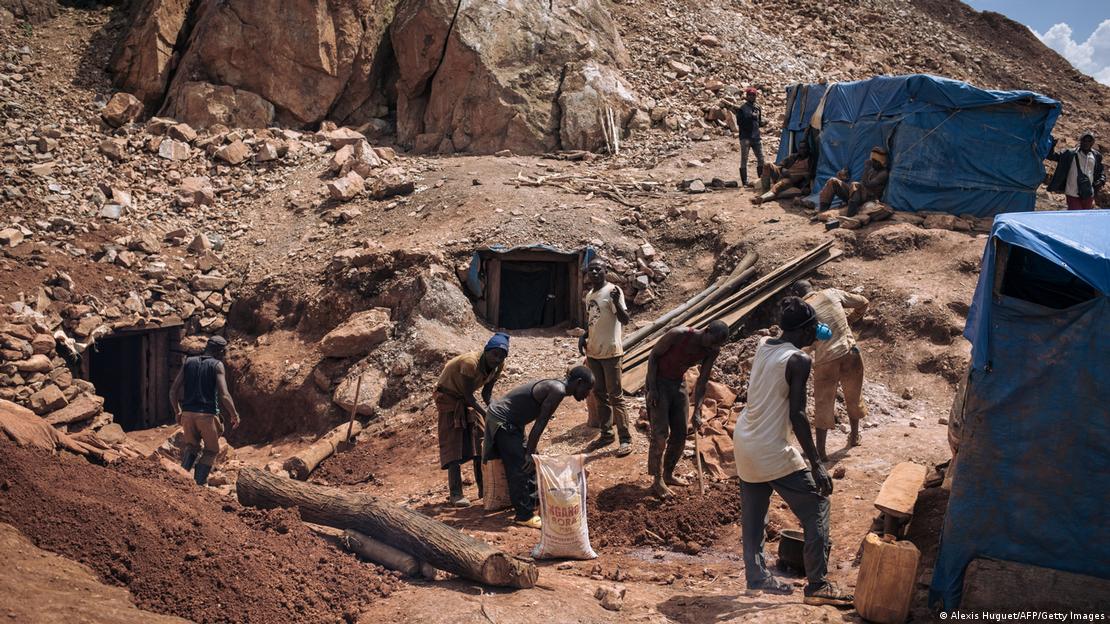
On the face of it, the Swiss make a fortune from refining gold from Africa, Asia, Australia and South America.
More than 2,000 tons of gold are imported annually, much of it from intermediary banks in London, New York and elsewhere, and later reexported.
Despite being the world's largest gold refining hub, Switzerland's gold sector is tiny, with just five major refiners employing around 1,500 people.
While the value of the precious metal they are processing is huge, Swiss refiners say the profit they make on processing gold into bullion bars, investment-grade coins and precision parts for watchmaking, electronics and jewelry is tiny.
Recent soaring demand for gold globally has also boosted refining in Switzerland, further distorting trade data.
"While gold exports have received attention because they have surged this year, historically, Switzerland has run a trade deficit in gold with the US, so gold is not a key contributor to Switzerland's structural trade surplus with the US," Adrian Prettejohn, Europe economist at Capital Economics, said in a note.
Key facts about Switzerland's role in gold production
Switzerland refines about 70% of the world's gold
The Alpine nation makes gold bars, coins out of mined/recycled gold
Refined gold is typically of 99.99%, a global benchmark for quality
2024: Swiss imports of precious metals and gemstones: $127.3 billion*
2024: Swiss exports of precious metals and gemstones: $184.7 billion*
Q1 2025: Swiss exported $36 billion of gold to the US*Gold makes up 90% of precious metals and gems trade
Source: Swissinfo, Swiss Federal Office for Customs and Border Security, Bloomberg
Is Washington misrepresenting Switzerland's gold trade?
The Swiss National Bank (SNB) has argued that gold should be excluded from Washington's tariff calculation since refiners earn just a small fee for processing the metal.
Most of the value comes from the gold itself, not Swiss labor or production, SNB said.
Although the total value of Switzerland's trade in gold to the US was worth more than $36 billion in the first quarter of this year, the industry is making profits of just a few hundred million dollars per year.
The remaining trade deficit is mostly made up of the exports of pharmaceuticals, watches and precision-engineered goods.
Simon J. Evenett, a professor of geopolitics and strategy at the Lausanne-based IMD Business School, told Bloomberg that "Gold is special," as it "isn't really manufactured in Switzerland. Processed is a better word."
Despite a call for gold not to be included in the trade balance data, Washington has yet to show any willingness to change course.
After the raw gold is mined elsewhere, it is sent to Switzerland for processingImage: Alexis Huguet/AFP/Getty Images
How has the Swiss business community reacted?
Switzerland's non-gold producers argue they will take the hit from the tariffs, even though they're mostly not to blame for the imbalance.
Business association Economiesuisse has urged the government to continue talks aimed at cutting the tariffs, which are likely to have a severe impact on economic growth.
Hans Gersbach, an economist at the Zurich-based KOF Swiss Economic Institute, estimated that the levies would cut Swiss GDP by 0.3% to 0.6% over the next year, if they remained in place for long.
Swiss products will soon be uncompetitive for US consumers versus similar goods produced in the EU or Britain, which clinched a 10% tariff deal.
The London-based Capital Economics estimated that negotiators will likely bring the 39% tariff rate down, but that Switzerland would have to accept a higher rate than the 27-member EU bloc.
How will the Swiss respond to Trump's tariff?
The Swiss executive branch, the Federal Council, held an emergency meeting on Thursday afternoon following Keller-Sutter's unsuccessful Washington trip.
After the meeting, the council said it is not currently considering tariff countermeasures in response to the 39% tariff.
In a statement, the council said the government would focus on relief measures for export-oriented Swiss businesses and continue talks with Washington to find a solution.
During the most recent talks, a promise to hike investments in the US by $150 billion fell on deaf ears, according to the Reuters news agency.
Keller-Sutter's proposal for a 10% tariff rate was also rejected by US officials, Reuters reported, citing sources in the Trump administration.
To show goodwill against the looming tariff threat, the government in Bern even dropped tariffs on nearly all US imports last year, which gives US producers virtually free access to Swiss markets.
They even floated the idea of importing US liquefied natural gas (LNG), even though Switzerland is a landlocked country, which presents logistical challenges.
Now the voices demanding countermeasures are growing louder. Green Party leader Lisa Mazzone has proposed a 5% export duty on precious metals to counterbalance the effect of Trump's tariffs.
Swiss President Karin Keller-Sutter left Washington empty-handed this week
Image: Anthony Anex/KEYSTONE/picture alliance
How will the new tariffs impact global trade in gold?
Switzerland's refining sector had breathed a sigh of relief, hoping it could continue operating without disruption as Trump didn't initially include gold in his tariff regime.
But on Thursday, the Financial Times (FT) reported that the US has imposed tariffs on one-kilo gold bars, citing a letter from US customs authorities.
If the letter is confirmed, it could mean Swiss-processed gold exports to the US may also be subject to a 39% tariff, which would deal a major blow to the sector.
Wider conflicts and ongoing trade tensions have also raised costs for shipping, insuring, and financing gold transactions, which could now move higher still.
Gold is often shipped in small, high-value consignments. Even modest route changes, like during the recent Red Sea attacks, can add thousands in costs per shipment.
These costs won't cripple the gold sector, but will eat into narrow profit margins.
"With a tariff of 39%, exports of gold bars will definitely be stopped to the US," Christoph Wild, president of the Swiss Association of Manufacturers and Traders in Precious Metals, told Reuters.
Ironically, the 39% levy may help demand for gold internationally, as more investors seek safe-haven assets during periods of uncertainty.
Comex gold futures trading for December delivery reached a new alltime high of $3,534 per troy ounce on Friday, in reaction to the FT report.
Edited by: Ashutosh Pandey
Editor's note: This article was first published on August 7, 2025, and was updated on August 8 to reflect a report about likely new US tariffs on one-kilo gold bars. Nik Martin is one of DW's team of business reporters based in Bonn.
August 7, 2025 Another boat recently capsized in the Bab al-Mandab Strait between Africa and the Arabian Peninsula, killing dozens. Despite all the dangers, many migrants are willing to risk the crossing.
Yemen, on the eastern side of the strategic Bab al-Mandab Strait separating the Arabian Peninsula from the Horn of Africa, is the goal for thousands of irregular migrants
Image: Karim Sahib/AFP/Getty Images
At least 92 people drowned when a vessel they were using to cross the Bab al-Mandab Strait from Djibouti to Yemen sank last weekend. The International Organization for Migration (IOM) said around 200 people were on board. Most of the deceased and missing are Ethiopians.
Despite the dangers of crossing Bab al-Mandab (meaning the "Gate of Grief"), which connects the Red Sea with the Gulf of Aden, more people are using this so-called Eastern Route every year. In 2023, around 395,000 people attempted to cross, according to the IOM. Last year, it was about 446,000, representing a 13% increase.
From 2023 to 2024, most of the 234,000 migrants using this route were from Ethiopia, with people from Somalia the second-highest number. According to the IOM, 90% of migrants are fleeing economic crises, while most others are escaping armed conflict and persecution. A much smaller portion consists of Yemenis returning to their country after initially fleeing the civil war there, according to Nathalie Peutz, an anthropologist at New York University Abu Dhabi.
Apart from the constant maritime traffic, strong tides, winds, waves and reefs add to the dangers. "If you don't know the route very well, you can get into real difficulties," said Martin Plaut, a London-based expert on the Horn of Africa who has studied migration trends.
According to Peutz, migrants often use small fishing boats in their attempts to cross. "The passengers are crowded in so much that when the sea becomes rough, the boats sometimes sink," Peutz told DW, adding that when smugglers see that they are overloaded, "they actually force people to jump overboard or throw them overboard."
Most migrants consider Yemen a stopover. From there, they hope to find work in the wealthy Gulf states, particularly Saudi Arabia. Between 2023-2024, the number of arrivals fell by over a third because authorities were intercepting boats off the coast. Those who do reach Yemeni territory face considerable dangers, including detention, extortion and abuse by smugglers, according to the IOM.
At the border between Saudi Arabia and Yemen, Saudi border guards have shot hundreds, if not thousands, of irregular migrants and refugees in the past. Still, the sea crossing is considered the most dangerous part of the Eastern Route. "It is very busy, with huge tankers and other large ships traveling along it," said Plaut.
The strait forms one of the world's most important maritime trade routes. Ships from Asia navigate Bab al-Mandab before entering the Red Sea, the Suez Canal and the Mediterranean. From there, the ships head for the major European ports. Little chance of rescue
The situation is exacerbated by the absence of an official sea rescue program, similar to those in the Mediterranean. In the Bab al-Mandab, a ship in distress can only hope for help from a passing cargo ship. But after numerous cases of piracy, captains have become wary.
"Of course, they wonder who is in the water," said Plaut. "Pirates have used all sorts of ruses to get on board. And when they board the ship, they produce their weapons and take the crew captive." As a result, many captains are now hesitant to help migrant boats in distress.
Large container ships in the Red Sea, one of the world's busiest trading routes, are a danger to small vessels crossing the Bab al-Mandab StraitImage: Solomon Muchie/DW
While the US Navy and other militaries are present in the area, Peutz said their priority is to "stop piracy and attacks on oil tankers. But no one is protecting migrationroutes." Migrants caught between rock and a hard place
Peutz said that despite the risks, there are many reasons migrants still attempt the crossing. Many people, for example, do not have travel documents because obtaining them is expensive and time-consuming.
"A lot of the younger migrants leave on the spur of the moment. Sometimes they don't tell their parents or their family — they know they will be persuaded otherwise," Peutz said.
Some migrants arriving in Saudi Arabia do not want to be officially recognized as such because it limits their prospects.
"If they have a kafeel [local sponsor], they are bound to a contract," Peutz explained.
"Some kafeels have been known to keep their employees' passports, making it difficult for them to leave abusive workplaces. This is particularly true for female workers. Working outside of this system allows greater employment opportunities."
Eshete Bekele contributed to this article, which was originally written in German.
Edited by: Chrispin Mwakideu
Death toll climbs in Yemen migrant boat sinking with dozens still missing
The death toll from a migrant boat disaster off Yemen has climbed to 96, underscoring the growing human cost of perilous journeys across the Red Sea.
The overcrowded boat, carrying mostly Ethiopian nationals, sank on Sunday while en route to Abyan governorate in southern Yemen – a regular landing site for people-smuggling operations headed for Gulf countries.
Yemeni officials and a source from the International Organisation for Migration (IOM) said two more bodies had been found by Tuesday. Local fishermen had initially buried the bodies after they washed ashore, before the IOM confirmed them as victims.
Earlier, a Yemeni security source and a local official had reported 94 bodies recovered, with many already buried. The official added that more corpses continued to wash up in the days after the sinking.
An AFP journalist who visited the site reported seeing at least two bodies on the beach. Makeshift tents were scattered along the shore, and groups of African migrants were being moved out of the remote coastal area.
Security forces in Abyan province, backed by local authorities, launched a sweep of the shoreline to dismantle migrant camps run by trafficking networks.
Brigadier General Ali Nasser Buzaid, the top security official in Abyan, said the dead included both men and women.
The IOM and local officials estimate that the boat was carrying around 200 people.
On Monday, two Yemeni security sources reported that 32 individuals had been rescued, though dozens remain unaccounted for.
Despite the ongoing civil war that has gripped Yemen since 2014, the country continues to serve as a major transit route for irregular migration, particularly from Ethiopia, where many face limited opportunities and instability.
The situation in Ethiopia's Tigray region has added further urgency to the migrant exodus.
The recent resurgence of conflict in the north – marked by reports of violence, displacement, and humanitarian challenges – has pushed more people to seek refuge elsewhere and embark on the perilous journey across the Red Sea.
(with AFP)
Kashmir: Police raid shops after India-imposed book ban
Books by notable authors including Booker Prize winner Arundhati Roy were banned. The government accused the authors of "exciting secessionism" and "misguiding the youth" against India.
The Indian authorities targeted book shops after the government's ban on 25 books
Image: Dar Yasin/AP Photo/picture alliance
Police in the Indian-administered Kashmir region carried out raids on book stores after the government banned 25 books, over what it called "exciting secessionism."
The government accused the authors of the banned books — who include Booker Prize winner Arundhati Roy, as well as academics — of "playing a critical role in misguiding the youth" against India.
Earlier in February, authorities carried out a similar raid, seizing books including Islamic literature from homes and shops in the Muslim-majority region, disputed between India and neighboring Pakistan since their 1947 independence from British rule. How did Kashmiri separatists respond to the book ban?
"The operation targeted materials promoting secessionist ideologies or glorifying terrorism," police said in a social media statement. "Public cooperation is solicited to uphold peace and integrity."
Separatist leader Mirwaiz Umar Farooq condemned the ban, saying it "only exposes the insecurities and limited understanding" of the Indian government, also calling the decision "authoritarian."
"Banning books by scholars and reputed historians will not erase historical facts," Farooq posted on his X account.
Why is India banning books in Kashmir?
Kashmir saw last year the first local elections since New Delhi stripped the region of its special status in 2019 and divided it into two territories.
The vote brought to power a largely powerless government, with India's top administrator in Kashmir, Manoj Sinha, still wielding substantial authority in the region as the national government's representative.
The order banning the books was issued on the sixth anniversary of India's imposition of direct rule over Kashmir.
While Black rhino numbers have grown, other rhino populations face an existential threat, a new report finds. Poaching is on the rise in South Africa, which has more rhinos than anywhere else.
While rhino poaching is falling globally, the animals are still at riskImage: Christoph Schöne/Zoonar/picture alliance
The latest global rhino count shows a mixed bag for the world's five rhino species in Africa and Asia.
The numbers of Black rhinos, found only in the wild in eastern and southern Africa, grew from 6,195 to 6,788.
That's according to a report published Thursday by rhino specialist groups and commissioned by the CITES secretariat.
The increase of 593 animals is "a win for this critically imperiled species," the International Rhino Foundation said in reaction to the report.
The global population estimates don't include rhinos in zoos but rather only those in the wild or in national parks.
The number of greater one-horned rhinos, native to northern India and southern Nepal, also nudged upwards slightly from 4,014 to 4,075.
The greater one-horned rhino is a conservation success story — only around 200 of them remained in India at the beginning of the 20th century.
Now, the largest rhino species on earth is considered to be in recovery, the report finds.
Officers count rhinos in India's Kaziranga national park where the population is recoveringImage: Anupam Nath/AP Photo/picture alliance
Indonesia's rhino species on critically endangered
But there is bad news for other rhino species.
Southeast Asia's rhino species, which are only found in Indonesia, "remain on the edge of extinction," according to the report.
The population of the Sumatran rhinos is virtually unchanged from 2022 estimates, with just 34-47 animals remaining.
The smallest and only hairy rhino species in found mostly in the dense tropical forest and lowland swamps of the Indonesian island of Sumatra.
Poaching and habitat loss from palm oil plantations seriously threatens their survival.
And the number of Javan rhinos has dropped significantly from an estimated 76 to just around 50, due entirely to poaching.
There is only one known population of Javan rhinos left, at a national park on the Indonesian island of Java.
White rhinos at risk from poaching
In Africa, the number of white rhinos fell from 15,942 to 15,752.
That's a drop of 190 animals since the last count in 2021, primarily due to increased poaching pressure, extended droughts and management limitations, the report says.
Globally, the illegal trade in rhino horn has decreased in recent years.
At least 91 rhinos killed in South Africa in the first quarter of 2025 alone.
South Africa currently accounts for two-thirds of illegal rhino horns seized around the word, with most headed for Malaysia and Vietnam.
It is often looking for new ways to deter poachers and one group of scientists launched a project last week to inject radioactive material into the horns of rhinos.
The scientists say it's harmless for the animals but allows horns to be detected by border authorities when they are being smuggled.
'As with Maidan and other revolutions in Ukraine, civic mobilisation is an extremely effective tool'
Issued on: 07/08/2025 - FRANCE 24
Ukraine has appointed a new head of an economic crimes investigation unit, after rolling back an attempt to overhaul its anti-corruption agencies following public protests and concerns from key allies. Oleksandr Tsyvinsky, a renowned anti-graft detective, has been named Director of Ukraine's Economic Security Bureau. For in-depth and a deeper perspective, FRANCE 24's Mark Owen welcomes James Wasserstrom, Diplomat, independent warzone anti-corruption expert and CEO Founder of The Integrity Sanctuary. Mr. Wasserstrom assisted the Ukrainian government in the selection process that led to the appointment of Oleksandr Tsyvinsky.
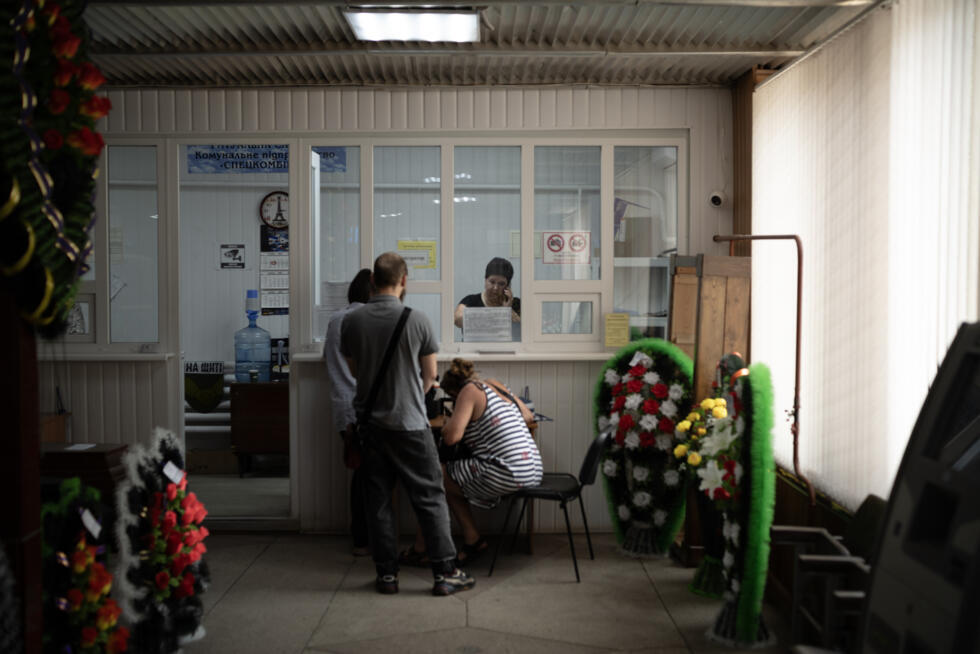
Ukraine's funeral workers bearing the burden of war
Sumy (Ukraine) (AFP) – At a funeral home in the northeastern Ukrainian city of Sumy, Svitlana Ostapenko paced around as she prepared the dead for their final journey.
After five years of working in the funeral home, she was used to seeing dead bodies, but the growing number of dead -- including young people from Russia's invasion -- was starting to overwhelm even her.
"Death doesn't discriminate between young and old," the funeral director told AFP, breaking down in tears.
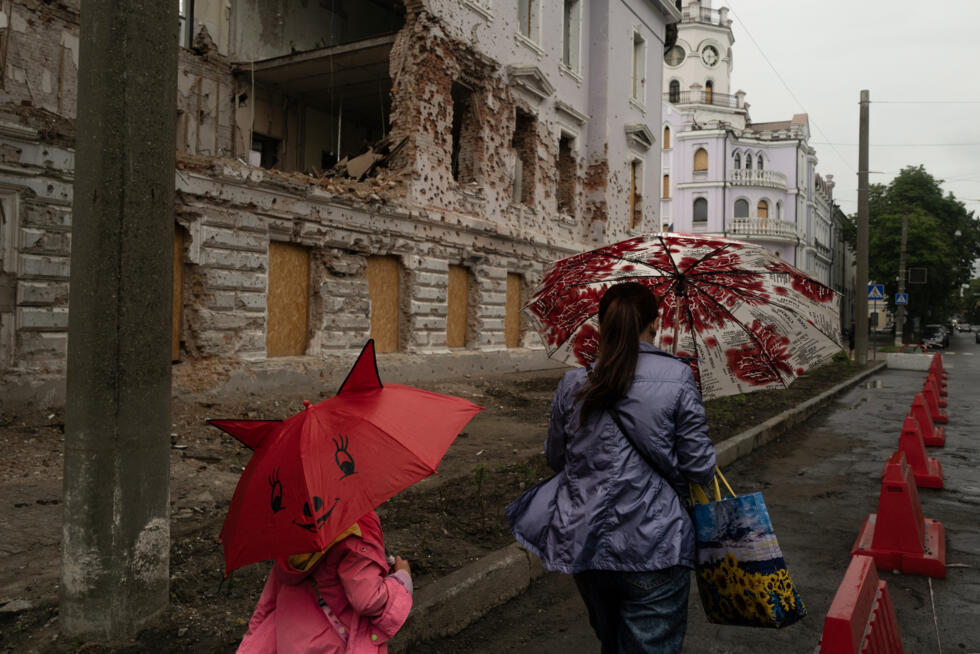
Ukraine's funeral workers, who are living through the war themselves and have been repeatedly exposed to violent death throughout Russia's invasion launched in early 2022, are shouldering a mounting emotional toll while supporting grieving families.
What's more, Ostapenko's hometown of Sumy near the Russian border, has come under bombardment throughout the invasion but advancing Russian troops have brought the fighting to as close as 20 kilometres (12 miles) away.
Every day, Ostapenko lays the region's dead in coffins.
"One way or another, I'm getting by. I take sedatives, that's all," the 59-year-old said. There has been no shortage of work.
Soldiers, civilians, children, "all local people," he said.
"When you paint them, you observe their image, each with their own destiny," he said, never speaking of himself in the first person, avoiding eye contact.
At the cemetery, bereaved families told him about the deaths of their loved ones.
"They need to be heard."
The conversations helped him cope psychologically, he said.
"But it all cuts you to the bone," he added.
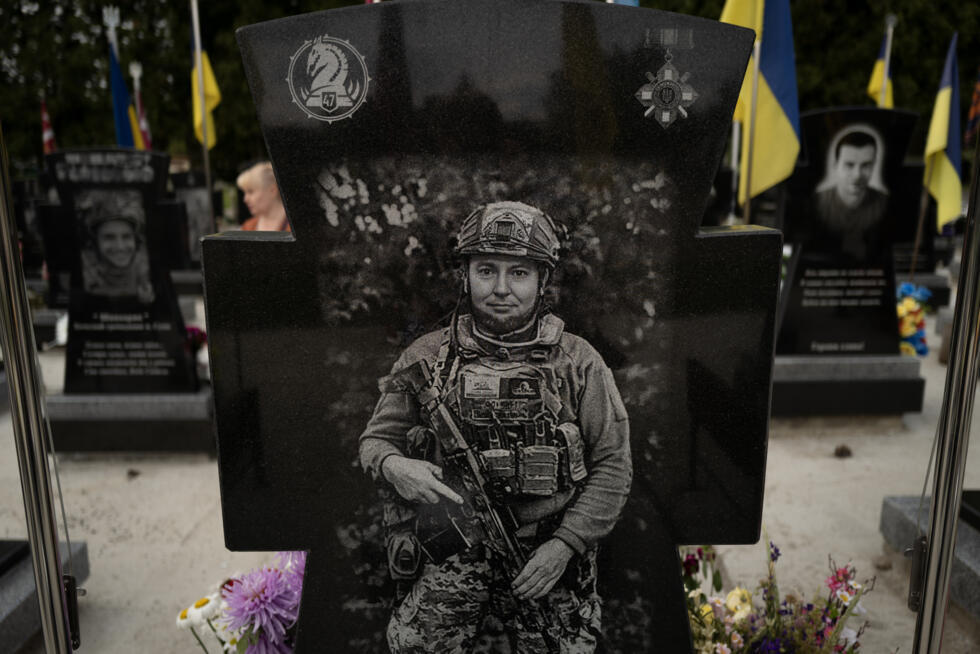
He used to paint elderly people, but found himself rejuvenating their features under his brush.
He remembered a mother who was killed protecting her child with her body at the beginning of the war. "A beautiful woman, full of life", whom he knew, he said.
"And you find yourself there, having to engrave her image."
In recent months, his work had taken an increasingly heavier toll.
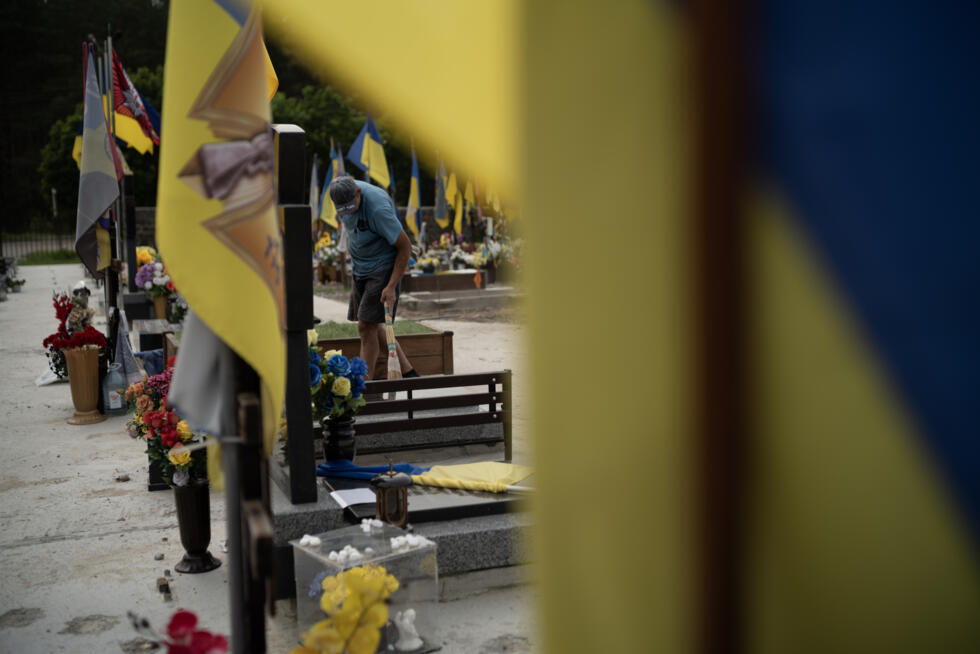
In the new wing of the cemetery reserved for soldiers, a sea of yellow and blue flags was nestled among the gravestones.
Enveloped by pine trees, workers bustled around a dozen newly dug holes, ready to welcome young combatants. Dreams of the dead
In February, Ukrainian President Volodymyr Zelensky announced that 46,000 Ukrainian soldiers had been killed since 2022, and "tens of thousands" more were missing or in captivity -- a figure that observers believed to be an underestimate.
Russia has not published its combat losses, but a tally by the independent newspaper Meduza and the BBC estimates the military death toll at more than 119,000.
"The dead appear in my dreams," Kruzo said.
He said he saw soldiers crying over graves, or his daughter's friends lying lifeless in the cemetery aisle.
"For the past three years, all my dreams have been about the war. All of them."
Ironically, he said he was drowning himself in work because "it's easier".
He said he had never broken down, that he was tough man who served in the Soviet army, but that he was living in a "kind of numbness."
The portrait of a Ukrainian soldier engraved on his gravestone in a cemetery in Sumy
A growing number of filmmakers are calling on Mubi to cut ties from investment fund Sequoia Capital, which backs several Israeli defence-tech start-ups.
Global streaming platform Mubi is facing backlash over investor ties to Israeli military, with filmmakers calling on the production company and film distributor to end its relatioship with investment firm Sequoia Capital.
The growing pressure aimed at the upstart distributor, which ushered The Substance to awards success last year, centres on a recent $100 million investment it received from the Silicon Valley-based private equity firm.
Sequoia Capital backs a number of Israeli defence-tech start-ups, including Kela Technologies, a firm founded by veterans of the Israeli military in the wake of the October 7 Hamas attack, and military drone manufacturer Neros.
Filmmakers with ties to Mubi have signed an open letter, first published by Variety on 30 July. Creatives like Aki Kaurismäki, Miguel Gomes, Radu Jude, Sarah Friedland and Joshua Oppenheimer strongly criticise the VOD platform's ties to Sequoia Capital.
According to Variety, the number of signatories now stands at 63, with additional names including the Israeli directors Ari Folman and Nadav Lapid.
“Mubi’s financial growth as a company is now explicitly tied to the genocide in Gaza, which implicates all of us that work with Mubi,” reads the letter.
It continues: “We too believe that cinema can be powerful. And we know that we can’t always control how audiences will respond to our work, and whether or not it will move and inspire them. But we can control how our work reflects our values and commitments – ones that are wholly ignored when our work is brought into alliance with a genocide-profiteering private equity firm.”
Scroll down to read the letter in full.
A UN report has found that Israel’s military actions are consistent with genocide. Israel has continually denied that their actions in Palestine can be equated to genocide and argued that it has not partaken in any war crimes. A spokesperson recently called the claims of genocide “baseless” because it is not acting with “intent.”
When controversy over the Sequoia Capital investment first broke in June, Mubi said in a statement posted on Instagram that it had entered into the partnership “to accelerate” its “mission of delivering bold and visionary films to global audiences”
It added that Sequoia’s investments did “not reflect the views of Mubi.”
“We take the feedback from our community very seriously, and are steadfast in remaining an independent founder-led company,” it concluded.
Here is the full statement addressed to Mubi:
Dear Mubi leadership,
We write as filmmakers who have a professional relationship to Mubi to express our serious concern regarding Mubi’s decision to accept $100 million in funding from Sequoia Capital, a private equity firm that, since late 2023 has chosen to double down on investing in Israeli military technology companies with the goal of profiting from the Gazan genocide. In 2024, Sequoia heavily invested in Kela, a military tech startup founded by a former senior manager of Palantir Israel and multiple Israeli military intelligence veterans, as well as military drone manufacturer Neros, and the unmanned aerial vehicle manufacture, Mach Industries.
Mubi’s financial growth as a company is now explicitly tied to the genocide in Gaza, which implicates all of us that work with Mubi. We too believe that cinema can be powerful. And we know that we can’t always control how audiences will respond to our work, and whether or not it will move and inspire them. But we can control how our work reflects our values and commitments—ones that are wholly ignored when our work is brought into alliance with a genocide-profiteering private equity firm.
Gaza is enduring mass civilian killings, including of journalists, artists, and film workers, alongside the widespread destruction of Palestinian cultural sites and heritage. We don’t believe an arthouse film platform can meaningfully support a global community of cinephiles while also partnering with a company invested in murdering Palestinian artists and filmmakers.
We approach our work with care for the people and communities they represent, and the audiences who will watch it, because as artists we are accountable to more than the bottom line. Yet Mubi’s decision to partner with Sequoia demonstrates a total lack of accountability to the artists and communities who have helped the company flourish. We believe that it is our ethical duty to do no harm. We expect our partners, at a minimum, to refuse to be complicit in the horrific violence being waged against Palestinians.
We ask you to heed the call made by Film Workers for Palestine and take action that meaningfully responds to the artists and the audiences who are such an integral part of Mubi’s success.
Mubi has yet to respond publicly to the letter.
Palestinians bury activist shot dead by West Bank settler
Umm Al-Kheir (Palestinian Territories) (AFP) – Mourners attended on Thursday the funeral of Palestinian activist Awdah Hathaleen in the occupied West Bank whose body was handed over by Israel more than a week after a settler killed him.
"He was killed by a hateful settler, his body was held for 11 days, and more than 20 people from the village were arrested" following the late July incident in the southern West Bank, said the slain activist's brother, Aziz Hathaleen.
The settler accused of the fatal shooting "was released at that very moment", Aziz told AFP in the family's hometown of Umm al-Khair, where Palestinians gathered to bury his brother's body despite Israeli restrictions.
Awdah Hathaleen, 31, was linked to Oscar-winning documentary film "No Other Land", which focuses on the efforts of Palestinians in Masafer Yatta -- a string of hamlets including Umm al-Khair -- to prevent Israeli forces from destroying their homes.
He was killed on July 28, with residents identifying the man holding the gun in a video of the incident as Yinon Levy, a settler sanctioned by the Britain, who was briefly detained but released the next day.
Umm al-Khair resident Ibrahim Hathaleen told AFP that "we were prevented from receiving the martyr's body" for days after his death, and Aziz said Israel had given the family several conditions to allow the funeral.
The activist's brother argued that the Israeli moves were meant to prevent a large gathering that would draw attention to his work opposing Israeli settlement in Masafer Yatta.
"The first condition was that he not be buried in the area at all, and the second was that no mourning tent be set up", said Ibrahim, who is also related to Awdah Hathaleen.
An AFP journalist in Umm al-Khair said the Israeli army had set up checkpoints around the village and prevented some Palestinians and foreign activists from reaching the funeral site.
About 100 mourners still managed to attend the funeral, many of them in tears, kissing Awdah's body before joining prayers at a local mosque, the AFP journalist reported.
Masafer Yatta, where he lived, is an area on the hills south of the Palestinian city of Hebron which has been declared a military zone by Israel.
The fight of the area's Palestinian residents against Israeli settlement expansion and violence from troops and settlers was the subject of "No Other Land", which won Best Documentary at the Oscars in March.
Shortly after Hathaleen's killing, the film's co-director Yuval Abraham posted a video of the incident on Instagram showing a man -- identified as Levy -- brandishing a gun and arguing with a group of people.
Violence in the West Bank, which Israel has occupied since 1967, has surged throughout the Gaza war that began in October 2023.
At least 968 Palestinians, including militants but also civilians, have been killed by Israeli soldiers or settlers since the Gaza war broke out.
At least 36 Israelis, including civilians and soldiers, have been killed there in Palestinian attacks or during Israeli military operations over the same period, according to official Israeli data.
Gaza farmer grows vegetables in tent city to 'survive another day' Gaza City (Palestinian Territories) (AFP) – With food scarce and aid hard and sometimes deadly to come by, Gaza farmer Ibrahim Abu Jabal is growing vegetables in the harsh conditions of a sprawling displacement camp to sustain his family.
Issued on: 07/08/2025 -
Tents and shelters for Palestinians displaced by the war in Gaza City
Abu Jabal, 39, has turned a small patch of soil near the family's tent in Gaza City into a vegetable garden, where he tends to rows of tomatoes, cucumbers and peppers, surrounded by tens of thousands of other Palestinians displaced by the Israel-Hamas war.
"Our bodies need tomatoes, cucumbers," he told AFP.
"And these products are expensive here. Not just expensive -- they're not even available. There are no tomatoes, and even if there were, we wouldn't have the money to buy them."
The displaced farmer has cultivated the sandy plot of 120 square meters (about 1,300 square feet), using seeds from dried vegetables and relying on an erratic water supply.
"Due to the situation we're going through... and the soaring prices of vegetables, I had to return to my old profession," said Abu Jabal.
Water in Gaza, much like food, is in precariously low supply, and to keep his garden green, Abu Jalal usually has to carry large jugs he fills from a nearby pipe where water flows only one hour a day.
Israel is under growing pressure to bring an end to the war in Gaza, where UN warnings that famine was unfolding have heightened global concern for the territory's more than two million Palestinian inhabitants living through a humanitarian crisis. Aid access 'blocked'
The Israeli offensive, triggered by Palestinian militant group Hamas's October 2023 attack on Israel, has killed at least 61,258 people in Gaza, mostly civilians, according to figures from the Hamas-run territory's health ministry, which are considered reliable by the United Nations.
The Hamas attack that sparked the war resulted in the deaths of 1,219 people, the majority of them civilians, according to an AFP tally based on official figures.
Israel in late May began easing a complete aid blockade that had lasted more than two months, but only a trickle of food and other basic supplies has entered Gaza since then.
Before the war, agriculture accounted for around 10 percent of the Gaza Strip's economy, with about a quarter of the population at least partially supported by agriculture and fishing.
But on Wednesday the UN's Food and Agriculture Organization said that just 1.5 percent of the territory's farmland remained accessible and undamaged, citing the latest satellite data.
"People are starving not because food is unavailable, but because access is blocked, local agrifood systems have collapsed, and families can no longer sustain even the most basic livelihoods," the agency's Director-General Qu Dongyu said.
Hungry Gazans have increasingly been forced to brave chaotic scenes at a handful of distribution points managed by the Israel- and US-backed Gaza Humanitarian Foundation.
On July 22, the UN rights office said Israeli forces had killed more than 1,000 Palestinians trying to get food aid in Gaza since the GHF started operations in May -- nearly three-quarters of them in the vicinity of GHF sites.
Abu Jabal said his nine-year-old daughter had been injured near a charity kitchen.
Referring to the GHF operation, he said that "the American aid does not satisfy people's hunger."
"For someone who has nine children like me, what can a single box of aid really do?"
Israel ultra-Orthodox vow to push back after students' arrest
Jerusalem (AFP) – Israel's ultra-Orthodox Jewish community pledged to resist government moves to call up seminary students for military service on Thursday, as demonstrators took to the streets to protest the arrest of two objectors.
"The authorities will face a united global ultra-Orthodox Judaism fighting for its soul," the spiritual leader of ultra-Orthodox Jews of European descent, Rabbi Dov Landau, told the community's leading newspaper Yated Neeman under the front-page headline "War".
The exemption of many ultra-Orthodox men from the military service performed by other Jews has long been a contentious issue in Israel but it has become more so as the Gaza war has dragged on, putting a strain on army reservists.
Prime Minister Benjamin Netanyahu's government has depended on the support of two ultra-Orthodox parties for its majority in parliament.
But its failure to pass new legislation to give full-time seminary students continued exemption from military service has tested that support.
Both ultra-Orthodox parties have withdrawn their ministers from the government, while one has also stopped supporting it in parliament.
The ultra-Orthodox community represents 14 percent of Israel's Jewish population, about 1.3 million people, and around 66,000 men of military age previously benefited each year from exemptions.
The Israeli army announced in early July that tens of thousands of conscription orders would be sent out to ultra-Orthodox Jews.
Earlier this week, authorities arrested two brothers, both full-time seminary students, after they failed to heed their call-up papers.
In Jerusalem on Thursday evening, ultra-Orthodox Jewish demonstrators gathered to protest the arrests, with police later using water canon to disperse the crowd.