Friday, August 08, 2025

North Atlantic faces more hurricane clusters as climate warms


Fudan University
Record-breaking Atlantic hurricane season draws to an end 

image: 

This image from NOAA's GOES-16 satellite on September 14, 2020, shows five tropical systems spinning in the Atlantic basin at one time. From left to right: Hurricane Sally in the Gulf of Mexico, Hurricane Paulette east of the Carolinas, the remnants of Tropical Storm Rene in the central Atlantic, and Tropical Storms Teddy and Vicky in the eastern Atlantic. A total of 10 named storms formed in September 2020 — the most for any month on record. 

view more 

Credit: NOAA


Tropical cyclone cluster events over the North Atlantic. This image from NOAA's GOES-16 satellite on September 14, 2020, shows five tropical systems spinning in the Atlantic basin at one time. From left to right: Hurricane Sally in the Gulf of Mexico, Hurricane Paulette east of the Carolinas, the remnants of Tropical Storm Rene in the central Atlantic, and Tropical Storms Teddy and Vicky in the eastern Atlantic. A total of 10 named storms formed in September 2020 — the most for any month on record. (Image credit: NOAA)

Tropical cyclones, commonly known as typhoons or hurricanes, can form in clusters and impact coastal regions back-to-back. For example, Hurricanes Harvey, Irma and Maria hit U.S. sequentially within one month in 2017. The Federal Emergency Management Agency failed to provide adequate support to hurricane victims in Puerto Rico when Maria struck because most rescue resources and specialized disaster staffers were deployed for the responses to Hurricanes Harvey and Irma.

A new study published in Nature Climate Change confirms these hurricane clusters are becoming more frequent in the North Atlantic in recent decades—a trend projected to continue in the near future.

Tropical cyclone clusters describe the event that two or more tropical cyclones present simultaneously within the same basin. This phenomenon is not rare, as historically only 40% of tropical cyclones appeared alone. Beyond the combined impacts of individual storms, tropical cyclone clusters can cause disproportionate damage as coastal communities and infrastructures need time to bounce back from the impact of the first storm. Understanding tropical cyclone clusters and their future is thus important for coastal risk management.

Analysing the historical observation of tropical cyclones, the authors found that during the past few decades, the chances for tropical cyclone cluster decreased in the Northwestern Pacific basin, while increased in North Atlantic basin. “We tried to develop a probabilistic framework to understand this trend” said Dazhi Xi, a climatologist at HKU who co-led the study and developed the methodology, “If tropical cyclone clusters are formed by chance, then only storm frequency, storm duration, and storm seasonality can impact the chance. So, as a first attempt we simulate the formation of tropical cyclone clusters by probabilistic modelling, considering only these three mechanisms, and hoped we could find why tropical cyclone clusters changed in the past decades”.

However, the probabilistic model is only partly successful. For some years, it significantly underestimates the chance of tropical cyclone cluster. It is because some storms coexist with other storms not simply by chance, rather, they have physical linkage. “The previously seemed failed statistical model now soon becomes a powerful tool that can distinguish physical-linked tropical cyclone cluster with those by pure chance” said Wen Zhou, a climatologist at Fudan University and the corresponding author of the study. For those years that the probabilistic model fails, the authors find that synoptic scale waves, a series of train-like atmospheric disturbances, enhance the chance of tropical cyclone cluster formation.

The study further discovered that the La-Nina-like global warming pattern, characterized by slower warming in the Eastern Pacific compared to the Western Pacific, is the reason behind the observed shifts in tropical cyclone cluster hotspot. “The warming pattern not only modulates the frequency of tropical cyclones in the North Atlantic and Northwestern Pacific basins, but also impacts the strength of the synoptic scale waves, together causing the shift of tropical cyclone cluster hotspot from Northwestern Pacific to North Atlantic basin” said Zheng-Hang Fu, a PhD student at Fudan University who co-led the study.

The research establishes a probabilistic baseline model for investigating tropical cyclone cluster events and their underlying physical mechanisms. This framework not only explains the observed shift of tropical cyclone cluster hotspot from the Northwestern Pacific to the North Atlantic basin, but also provides a transferable methodology applicable to other ocean basins worldwide. Importantly, the authors identify the North Atlantic as an emerging hotspot for tropical cyclone clusters in recent decades. This finding calls for heightened attention from Atlantic coastal nations, urging them to develop proactive strategies against these compounding hazards.

References:

Fu, Z.H., D. Xi, S.-P. Xie, W. Zhou, N. Lin, J. Zhao, X. Wang, and J.C.L. Chan, 2025: Shifting hotspot of tropical cyclone clusters in a warming climate. Nature Climate Change, 15. https://doi.org/10.1038/s41558-025-02397-9

Wildfire collaborative responds to community concerns about air quality

New study seeks to answer Los Angeles residents’ questions about how to find reliable air quality information during fires


Cary Institute of Ecosystem Studies

Smoke from the Palisades Fire over LA on January 8, 2025 

image: 

 Smoke from the Palisades Fire over LA on January 8, 2025 

view more 

Credit: Jeff Suer


When several wildfires ignited in Los Angeles in early January of 2025, Miriam Marlier’s friends and neighbors came to her with questions about how to find reliable air quality information.

Marlier is a UCLA scientist and a member of the Western Fire and Forest Resilience Collaborative (WFFRC), a program of Cary Institute of Ecosystem Studies led by Cary forest ecologist Winslow Hansen. Guided by decision makers, the collaborative conducts research to inform solutions to the Western US fire crisis.

During the January fires, “people were urgently trying to find out whether the air was safe to breathe, where to find information about air quality, and whether the information was comprehensive enough for them to make decisions to protect themselves and their families,” explained WFFRC postdoctoral associate Claire Schollaert.

In response to these urgent questions, Schollaert, Marlier, and colleagues quickly launched a study to assess whether publicly available data sources captured an increase in air pollution during the fires, how air quality changed over space and time, and how the trends differed between data sets. The findings were published in Environmental Science and Technology Letters in July, and provide insights into how these tools can better support public health response during smoke events.

“This study is the first to my knowledge that quantifies how the LA Fires affected air quality at very fine spatial and temporal resolutions,” said Hansen. “It serves as a valuable baseline from an extraordinary event.” The study analyzed hourly data from nearly 750 low-cost and regulatory air pollution air pollution sensors throughout LA.

During large wildfires, government agencies generally recommend that residents check the Environmental Protection Agency’s air quality index, which is fed by data from regulatory monitors. The AirNow Fire and Smoke Map, another commonly recommended tool, relies on data from EPA monitors, low-cost PurpleAir sensors, and satellite data. But these tools utilize different data sources and often consider different time periods, potentially leaving residents confused.

“Smoke exposure is the main way that most people are impacted by fires,” said Schollaert. “Providing the public with understandable and accurate air quality information is crucial to reducing risk.”

For the study, the researchers compared Los Angeles air quality data from EPA regulatory monitors, low-cost PurpleAir sensors, and satellites. “We wanted to understand the smoke plume dynamics from the perspective of multiple, often complementary, air quality data sources,” explains Marlier. 

Findings confirmed that the fire events did degrade air quality in the city, particularly on January 8 and 9. But air quality varied markedly from hour to hour and day to day during the course of the fires, and “the Santa Ana winds, which played a role in spreading the fires, also did a decent job of pushing smoke from the Palisades fire offshore pretty quickly,” said Schollaert. Those same winds, however, spread smoke from the Eaton fire across the most populated parts of the county before pushing the plume out over the Pacific. 

The team found that while regulatory monitors are essential, they often miss local variability due to limited spatial coverage. Integrating low-cost sensors and satellite data on public risk communication platforms can help fill critical gaps. This growing network of sensors can work with regulatory systems, to strengthen them, offering more responsive public health strategies and better community protection.

Satellite observations capture broader patterns of smoke movement through the atmosphere and could help to further fill in gaps between on-the-ground monitors, but the data are not as accessible to the public. 

Smoke impacts were largely consistent across these different data sources, the team found, but differences in spatial distribution and averaging times could lead to discrepancies in air quality readings, which could be confusing to users. 

Based on their findings, the authors call for more ground-based sensors to improve air pollution monitoring, and for the improved integration of satellite data into user-friendly air quality platforms. Preferably, these additional sensors and data sources would be integrated into the most commonly used air quality index resources, said Schollaert. 

“People want one number that lets them know whether it’s safe to go running outside or take their kid to the playground,” said Schollaert. “It’s our job as researchers to try to figure out how to make that information as reliable as possible.”

“We live in an era of data saturation,” said Hansen. “Often these datasets tell us slightly different things at different resolutions of space and time. Now more than ever, effective actionable science is about harmonizing and synthesizing these diverse datasets to provide consistent, robust, and digestible insights to the public, managers, and policy makers.” 

Responsiveness to real-world needs is baked into the WFFRC approach, and the new study provides one example of how this strategy can lead to meaningful impacts and important scientific insights. 

Daily hazard mapping system data, LA Fires, January 7–12 


Daily hazard mapping system smoke plumes with average daily PM2.5 concentrations from AirNow (large circles) and PurpleAir (small circles) from the first 6 days of the fire impacted period (January 7–12).

This research was made possible, in part, by funding from the Gordon and Betty Moore Foundation under grant #11974. The paper is a contribution of the Western Fire and Forest Resilience Collaborative and the Climate and Wildfire Research Initiative at UCLA.

Western Fire and Forest Resilience Collaborative (WFFRC) is an interdisciplinary research program of Cary Institute of Ecosystem Studies focused on advancing fire ecology and forest resilience science across the western U.S. By connecting science with practice, WFFRC aims to advance fire and forest resilience strategies that are ecologically sound, science-informed, and adaptable to rapidly changing environmental conditions.

Cary Institute of Ecosystem Studies is an independent nonprofit center for environmental research. Since 1983, our scientists have been investigating the complex interactions that govern the natural world and the impacts of climate change on these systems. Our findings lead to more effective resource management, policy actions, and environmental literacy. Staff are global experts in the ecology of: forests, freshwater, disease, and cities.

Journal

DOI

Public data reveal extent of air quality impacts during 2025 Los Angeles wildfires

Journal

DOI

Article Title

Debris slide risk doesn’t always rise after a wildfire, study finds


Researchers found no increase in landslides in the Columbia River Gorge after a major fire


University of Oregon

Looking down the Leavens Creek watershed 

image: 

Looking down the Leavens Creek watershed, where a fatal debris flow event occurred following the Eagle Creek Fire. Notice the steep, rocky channels and waterfalls that debris flows travel down.

view more 

Credit: Google Earth


In the wake of a wildfire, there’s often an assumption that burned landscapes will be more susceptible to landslides. But new research from the University of Oregon suggests it’s not always that simple.  

An analysis of the Columbia River Gorge, which runs along the border between Oregon and Washington, shows that steep, rocky watersheds in that area have been prone to debris flows and rockfall for thousands of years. Those events didn’t measurably increase after the Eagle Creek Fire, which scorched 47,000 acres of the gorge over the course of three months in 2017. 

UO geologist Josh Roering and members of his lab published their findings Aug. 8 in Science Advances, highlighting the importance of context and geological history in landslide risk assessments. The study also could help inform safety and hazards awareness projects in the gorge, in both burned and nonburned areas.  

After the Eagle Creek Fire, Oregon land managers were concerned about landslides, especially in the vicinity of the Interstate 84 transportation corridor that runs through the gorge. Their fears were, in large part, informed by what’s transpired in places like Southern California, where post-fire slides have caused devastating casualties and millions of dollars in damage.  

That phenomenon can happen because as wildfire destroys vegetation and groundcover, slopes become more prone to debris movement, erosion and rock fall, Roering said, which can be more easily triggered by rain and storm events.  

“When Eagle Creek burned up such a massive area of the Columbia River Gorge, the natural question was: Is that going to happen here?” Roering said. “The gorge provided a great laboratory to examine how fire affects steep and rocky landscapes.” 

In his lab’s latest project, Roering and doctoral student Maryn Sanders analyzed recent debris flows in the gorge to better understand the likelihood of slope movement after a fire and to explore how to predict when debris flows will occur. Debris flows occur when loose sediment — like mud, rocks and other debris — rapidly moves down a slope, often fueled by a storm or heavy rain.  

Sanders and her team turned to a remote-sensing technology known as airborne lidar, or light detection and ranging, which allows them to see through the tree cover so they can analyze physical changes on the ground below, like where erosion has occurred. That tool, alongside field observations, helped them map out debris flows so they could assess movement across the study area. 

As Sanders mapped the data, she found that many debris flows were concentrated in the watersheds near Dodson, just a few miles east of Multnomah Falls on the Oregon side of the gorge. Those are some of the steepest and fastest eroding watersheds in the state.  

The debris flows in that region have been especially frequent and destructive. They’ve caused fatalities and threatened additional human lives, homes and infrastructure, which make them even more vital for state agencies to understand. 

Sanders noticed a few interesting characteristics of the landscape as she studied the data, which suggested fire might not be the most significant cause of slope movement in that area. It also hinted that steep, rocky terrain behaves differently than slopes in a place like Southern California.    

The researchers found massive amounts of sediment accumulation in fan-like formations at the base of the rocky catchments in gorge watersheds. At first glance, those features looked unassuming because they were covered in vegetation, but with lidar imaging it was clear something more notable was going on beneath the surface. 

“The size and makeup of the fans suggest that frequent debris flows have been happening in these watersheds for a really long period of time, in the magnitude of thousands of years,” Sanders said. 

She also observed that the slopes were collecting sediment much faster than more stable terrain does, likely through temperature fluctuations that cause rockfall. That sets them up to produce debris flows more frequently, typically every few decades.  

Sanders took a closer look and analyzed the erosion rates in the area. She found frequent debris flows throughout its geological history and saw that the landscape had behaved in a consistent manner over thousands of years, something that remained relatively unchanged after the 2017 fire.  

“Because we found similar rates of erosion before and after the fire, we believe the rocky environment was not as sensitive to fire,” she said. “Our analysis suggests that fire plays a relatively small role in triggering these events and emphasizes how important it is to consider the history of place.” 

Still, the frequency, size and nature of debris flows in the gorge remains an ongoing cause for concern. The researchers are in the final stages of developing a tool that could help the Oregon Department of Transportation and other stakeholders predict debris flows in the gorge. That would help them make better use of safety features like roadside warning signs and closures, alerting travelers about the heightened risk of landslides during intense storms.  

“These watersheds are highly active and inherently hazardous, irrespective of fire,” Sanders said. “We want our research to help agencies like ODOT better understand this geologically-complex landscape."

GNOMES OF ZURICH TARIFFED

Trump tariffs: Did Swiss gold refiners fuel the crisis?
DW
August 8, 2025,

Many were baffled when Donald Trump slapped a steep 39% tariff on imports from Switzerland. The Swiss aren't known for flooding the US with cheap goods, but their outsize role in gold refining is distorting trade data.

Switzerland refines more than two-thirds of the world's gold
Image: Sven Hoppe/dpa/picture alliance


Why did Switzerland get hit with a 39% tariff?

US President Donald Trump's argument is straightforward: He believes trade partners of the United States benefit from broad access to the US market, while often restricting access to their own, creating persistent trade imbalances.

In the case of Switzerland, Trump balked at the Alpine nation's $48-billion (€41.2-billion) trade deficit, which he said showed Swiss firms were "taking advantage" of the US. For that and the country's apparent unwillingness to address the imbalance, he put a much higher tariff on Swiss imports than the European Union's 15%.

At 39%, the tariff rate is the highest among developed countries and may inflict major damage on trade with the US, Switzerland's most important trading partner. Around 18% of Swiss exports crossed the Atlantic last year.

Despite intense talks and a high-stakes visit to Washington by President Karin Keller-Sutter, Switzerland failed to clinch a framework deal like the EU, Japan or United Kingdom.

Keller-Sutter couldn't even get an appointment with Trump and instead met with US Secretary of State Marco Rubio, who doesn't oversee trade policy, and walked away empty-handed.

The tariff, which took effect on Thursday (August 7, 2025), hits luxury and consumer goods hardest, with watches, skin care and cosmetics products, precision instruments and chocolate expected to face large price rises in the US.

Why is Swiss gold the problem?


The Swiss gold refining sector has drawn scrutiny because it plays a surprisingly big role in the economy, making the trade imbalance look much larger.

The Trump administration has counted the billions of dollars of gold that passes through Switzerland every year in its tariff calculation.

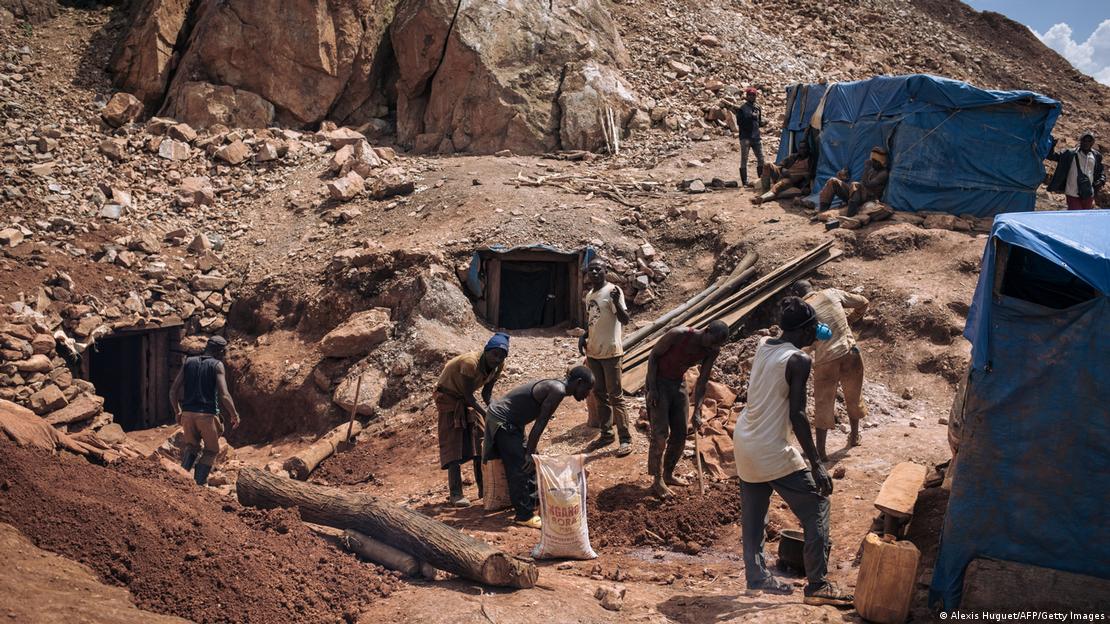
On the face of it, the Swiss make a fortune from refining gold from Africa, Asia, Australia and South America.

More than 2,000 tons of gold are imported annually, much of it from intermediary banks in London, New York and elsewhere, and later reexported.

Despite being the world's largest gold refining hub, Switzerland's gold sector is tiny, with just five major refiners employing around 1,500 people.

While the value of the precious metal they are processing is huge, Swiss refiners say the profit they make on processing gold into bullion bars, investment-grade coins and precision parts for watchmaking, electronics and jewelry is tiny.

Recent soaring demand for gold globally has also boosted refining in Switzerland, further distorting trade data.

"While gold exports have received attention because they have surged this year, historically, Switzerland has run a trade deficit in gold with the US, so gold is not a key contributor to Switzerland's structural trade surplus with the US," Adrian Prettejohn, Europe economist at Capital Economics, said in a note.


Key facts about Switzerland's role in gold production

Switzerland refines about 70% of the world's gold

The Alpine nation makes gold bars, coins out of mined/recycled gold

Refined gold is typically of 99.99%, a global benchmark for quality

2024: Swiss imports of precious metals and gemstones: $127.3 billion*

2024: Swiss exports of precious metals and gemstones: $184.7 billion*

Q1 2025: Swiss exported $36 billion of gold to the US*Gold makes up 90% of precious metals and gems trade

Source: Swissinfo, Swiss Federal Office for Customs and Border Security, Bloomberg


Is Washington misrepresenting Switzerland's gold trade?

The Swiss National Bank (SNB) has argued that gold should be excluded from Washington's tariff calculation since refiners earn just a small fee for processing the metal.

Most of the value comes from the gold itself, not Swiss labor or production, SNB said.

Although the total value of Switzerland's trade in gold to the US was worth more than $36 billion in the first quarter of this year, the industry is making profits of just a few hundred million dollars per year.

The remaining trade deficit is mostly made up of the exports of pharmaceuticals, watches and precision-engineered goods.

Simon J. Evenett, a professor of geopolitics and strategy at the Lausanne-based IMD Business School, told Bloomberg that "Gold is special," as it "isn't really manufactured in Switzerland. Processed is a better word."

Despite a call for gold not to be included in the trade balance data, Washington has yet to show any willingness to change course.

After the raw gold is mined elsewhere, it is sent to Switzerland for processingImage: Alexis Huguet/AFP/Getty Images

How has the Swiss business community reacted?

Switzerland's non-gold producers argue they will take the hit from the tariffs, even though they're mostly not to blame for the imbalance.

Business association Economiesuisse has urged the government to continue talks aimed at cutting the tariffs, which are likely to have a severe impact on economic growth.

Hans Gersbach, an economist at the Zurich-based KOF Swiss Economic Institute, estimated that the levies would cut Swiss GDP by 0.3% to 0.6% over the next year, if they remained in place for long.

Swiss products will soon be uncompetitive for US consumers versus similar goods produced in the EU or Britain, which clinched a 10% tariff deal.

The London-based Capital Economics estimated that negotiators will likely bring the 39% tariff rate down, but that Switzerland would have to accept a higher rate than the 27-member EU bloc.

How will the Swiss respond to Trump's tariff?


The Swiss executive branch, the Federal Council, held an emergency meeting on Thursday afternoon following Keller-Sutter's unsuccessful Washington trip.

After the meeting, the council said it is not currently considering tariff countermeasures in response to the 39% tariff.

In a statement, the council said the government would focus on relief measures for export-oriented Swiss businesses and continue talks with Washington to find a solution.

During the most recent talks, a promise to hike investments in the US by $150 billion fell on deaf ears, according to the Reuters news agency.

Keller-Sutter's proposal for a 10% tariff rate was also rejected by US officials, Reuters reported, citing sources in the Trump administration.

To show goodwill against the looming tariff threat, the government in Bern even dropped tariffs on nearly all US imports last year, which gives US producers virtually free access to Swiss markets.

They even floated the idea of importing US liquefied natural gas (LNG), even though Switzerland is a landlocked country, which presents logistical challenges.

Now the voices demanding countermeasures are growing louder. Green Party leader Lisa Mazzone has proposed a 5% export duty on precious metals to counterbalance the effect of Trump's tariffs.

Swiss President Karin Keller-Sutter left Washington empty-handed this week
Image: Anthony Anex/KEYSTONE/picture alliance


How will the new tariffs impact global trade in gold?

Switzerland's refining sector had breathed a sigh of relief, hoping it could continue operating without disruption as Trump didn't initially include gold in his tariff regime.

But on Thursday, the Financial Times (FT) reported that the US has imposed tariffs on one-kilo gold bars, citing a letter from US customs authorities.

If the letter is confirmed, it could mean Swiss-processed gold exports to the US may also be subject to a 39% tariff, which would deal a major blow to the sector.

Wider conflicts and ongoing trade tensions have also raised costs for shipping, insuring, and financing gold transactions, which could now move higher still.

Gold is often shipped in small, high-value consignments. Even modest route changes, like during the recent Red Sea attacks, can add thousands in costs per shipment.

These costs won't cripple the gold sector, but will eat into narrow profit margins.

"With a tariff of 39%, exports of gold bars will definitely be stopped to the US," Christoph Wild, president of the Swiss Association of Manufacturers and Traders in Precious Metals, told Reuters.

Ironically, the 39% levy may help demand for gold internationally, as more investors seek safe-haven assets during periods of uncertainty.

Comex gold futures trading for December delivery reached a new alltime high of $3,534 per troy ounce on Friday, in reaction to the FT report.

Edited by: Ashutosh Pandey

Editor's note: This article was first published on August 7, 2025, and was updated on August 8 to reflect a report about likely new US tariffs on one-kilo gold bars.
Nik Martin is one of DW's team of business reporters based in Bonn.
Red Sea death trap: Why so many migrants drown
DW
August 7, 2025

Another boat recently capsized in the Bab al-Mandab Strait between Africa and the Arabian Peninsula, killing dozens. Despite all the dangers, many migrants are willing to risk the crossing.


Yemen, on the eastern side of the strategic Bab al-Mandab Strait separating the Arabian Peninsula from the Horn of Africa, is the goal for thousands of irregular migrants
Image: Karim Sahib/AFP/Getty Images

At least 92 people drowned when a vessel they were using to cross the Bab al-Mandab Strait from Djibouti to Yemen sank last weekend. The International Organization for Migration (IOM) said around 200 people were on board. Most of the deceased and missing are Ethiopians.

Despite the dangers of crossing Bab al-Mandab (meaning the "Gate of Grief"), which connects the Red Sea with the Gulf of Aden, more people are using this so-called Eastern Route every year. In 2023, around 395,000 people attempted to cross, according to the IOM. Last year, it was about 446,000, representing a 13% increase.

From 2023 to 2024, most of the 234,000 migrants using this route were from Ethiopia, with people from Somalia the second-highest number. According to the IOM, 90% of migrants are fleeing economic crises, while most others are escaping armed conflict and persecution. A much smaller portion consists of Yemenis returning to their country after initially fleeing the civil war there, according to Nathalie Peutz, an anthropologist at New York University Abu Dhabi.

Djibouti's dangerous migration route  07:38

Risking rough waters to reach Gulf states

Apart from the constant maritime traffic, strong tides, winds, waves and reefs add to the dangers. "If you don't know the route very well, you can get into real difficulties," said Martin Plaut, a London-based expert on the Horn of Africa who has studied migration trends.

According to Peutz, migrants often use small fishing boats in their attempts to cross. "The passengers are crowded in so much that when the sea becomes rough, the boats sometimes sink," Peutz told DW, adding that when smugglers see that they are overloaded, "they actually force people to jump overboard or throw them overboard."

Most migrants consider Yemen a stopover. From there, they hope to find work in the wealthy Gulf states, particularly Saudi Arabia. Between 2023-2024, the number of arrivals fell by over a third because authorities were intercepting boats off the coast. Those who do reach Yemeni territory face considerable dangers, including detention, extortion and abuse by smugglers, according to the IOM.

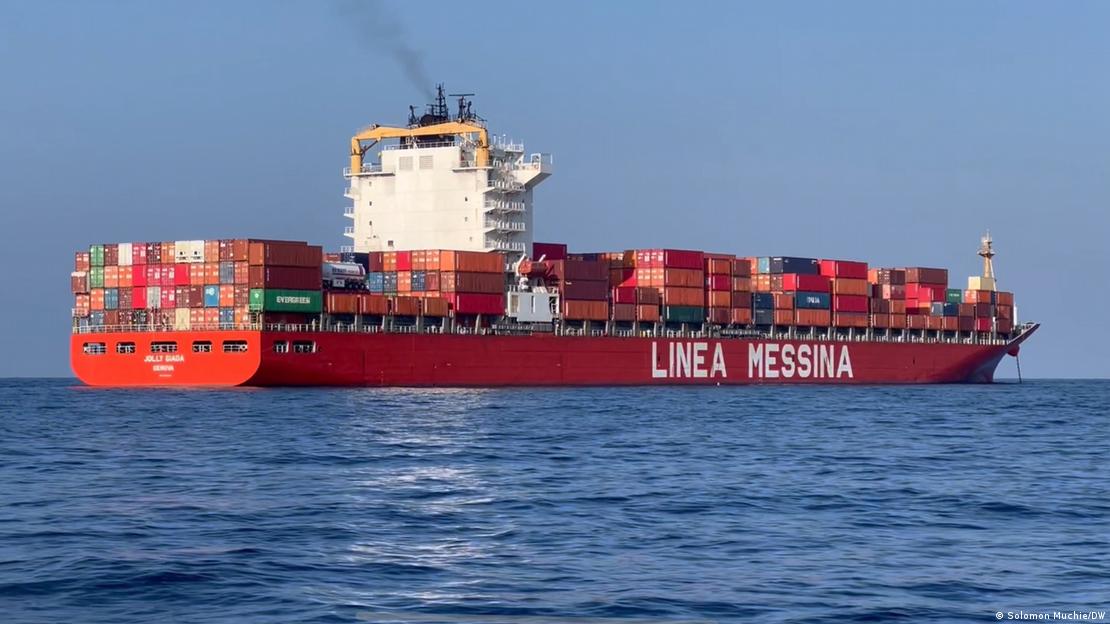
At the border between Saudi Arabia and Yemen, Saudi border guards have shot hundreds, if not thousands, of irregular migrants and refugees in the past. Still, the sea crossing is considered the most dangerous part of the Eastern Route. "It is very busy, with huge tankers and other large ships traveling along it," said Plaut.

The strait forms one of the world's most important maritime trade routes. Ships from Asia navigate Bab al-Mandab before entering the Red Sea, the Suez Canal and the Mediterranean. From there, the ships head for the major European ports.

Little chance of rescue


The situation is exacerbated by the absence of an official sea rescue program, similar to those in the Mediterranean. In the Bab al-Mandab, a ship in distress can only hope for help from a passing cargo ship. But after numerous cases of piracy, captains have become wary.

"Of course, they wonder who is in the water," said Plaut. "Pirates have used all sorts of ruses to get on board. And when they board the ship, they produce their weapons and take the crew captive." As a result, many captains are now hesitant to help migrant boats in distress.

Large container ships in the Red Sea, one of the world's busiest trading routes, are a danger to small vessels crossing the Bab al-Mandab StraitImage: Solomon Muchie/DW

While the US Navy and other militaries are present in the area, Peutz said their priority is to "stop piracy and attacks on oil tankers. But no one is protecting migrationroutes."
Migrants caught between rock and a hard place

Peutz said that despite the risks, there are many reasons migrants still attempt the crossing. Many people, for example, do not have travel documents because obtaining them is expensive and time-consuming.

"A lot of the younger migrants leave on the spur of the moment. Sometimes they don't tell their parents or their family — they know they will be persuaded otherwise," Peutz said.

Some migrants arriving in Saudi Arabia do not want to be officially recognized as such because it limits their prospects.

"If they have a kafeel [local sponsor], they are bound to a contract," Peutz explained.

"Some kafeels have been known to keep their employees' passports, making it difficult for them to leave abusive workplaces. This is particularly true for female workers. Working outside of this system allows greater employment opportunities."

Eshete Bekele contributed to this article, which was originally written in German.

Edited by: Chrispin Mwakideu


Death toll climbs in Yemen migrant boat sinking with dozens still missing

The death toll from a migrant boat disaster off Yemen has climbed to 96, underscoring the growing human cost of perilous journeys across the Red Sea.


Issued on: 06/08/2025 - RFI

African migrants sit aboard a boat in the southern Yemeni port city of Aden on 26 September 2016. © Saleh Al-Obeidi / AFP

The overcrowded boat, carrying mostly Ethiopian nationals, sank on Sunday while en route to Abyan governorate in southern Yemen – a regular landing site for people-smuggling operations headed for Gulf countries.

Yemeni officials and a source from the International Organisation for Migration (IOM) said two more bodies had been found by Tuesday. Local fishermen had initially buried the bodies after they washed ashore, before the IOM confirmed them as victims.

Earlier, a Yemeni security source and a local official had reported 94 bodies recovered, with many already buried. The official added that more corpses continued to wash up in the days after the sinking.


Dismantling migrant camps


An AFP journalist who visited the site reported seeing at least two bodies on the beach. Makeshift tents were scattered along the shore, and groups of African migrants were being moved out of the remote coastal area.

Security forces in Abyan province, backed by local authorities, launched a sweep of the shoreline to dismantle migrant camps run by trafficking networks.

Brigadier General Ali Nasser Buzaid, the top security official in Abyan, said the dead included both men and women.

The IOM and local officials estimate that the boat was carrying around 200 people.

On Monday, two Yemeni security sources reported that 32 individuals had been rescued, though dozens remain unaccounted for.


Ethiopia's migrant exodus


Despite the ongoing civil war that has gripped Yemen since 2014, the country continues to serve as a major transit route for irregular migration, particularly from Ethiopia, where many face limited opportunities and instability.

The situation in Ethiopia's Tigray region has added further urgency to the migrant exodus.

The recent resurgence of conflict in the north – marked by reports of violence, displacement, and humanitarian challenges – has pushed more people to seek refuge elsewhere and embark on the perilous journey across the Red Sea.

(with AFP)