Tuesday, August 12, 2025

UK

EXCLUSIVE: Unite leadership not currently considering funding new Corbyn-Sultana Party


11 August, 2025 
Left Foot Forward

There have been no discussions about funding ‘Your Party’, Unite says


TweetShareWhatsAppMail


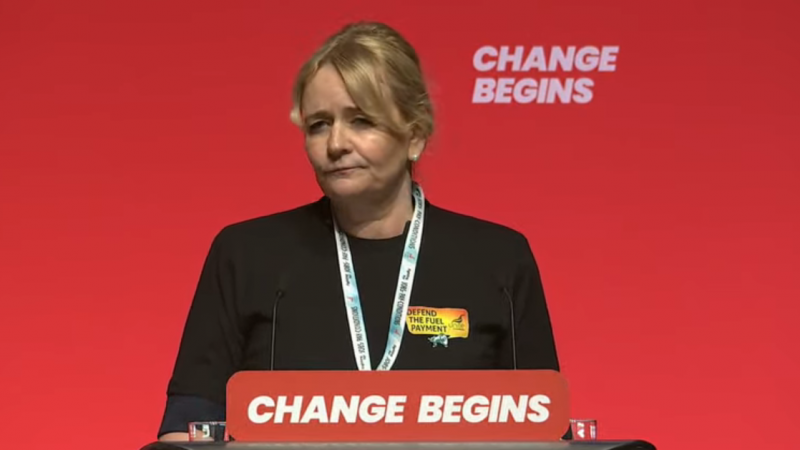
At the Durham Miners’ Gala, Unite’s general secretary Sharon Graham hinted at the prospect of Unite disaffiliating from Labour, sparking questions about whether the trade union might consider backing the new Corbyn-Sultana party.

A Unite spokesperson told Left Foot Forward that there have been “no discussions” with the temporarily-named Your Party about providing funding.

The spokesperson added: “Unite voted to continue affiliating with Labour two years ago and, under current policy, cannot fund another political party.”

Left Foot Forward understands that any decision on disaffiliation from Labour would not be made until Unite’s next rules conference in 2027.

In her speech, Graham hinted that Unite could “leave” or disaffiliate from Labour, and that the union will “forge a new vehicle for our class” and be “an authentic voice for the working class”.

Separately, sources linked to Jeremy Corbyn have told The Times that they are confident that Unite could be persuaded to disaffiliate from Labour and direct funds to candidates his new party runs.

A Unite spokesperson said: “As the general secretary said in her Times interview on 18 July with Patrick Maguire – people are always lobbying for Unite to affiliate to various parties.

“Unite is now focussed on the jobs, pay and conditions of its members, not party politics. We have no intention of getting involved in more Westminster melodrama.

“But that having been said. There can be no doubt that workers are feeling abandoned by Labour and the wrong choices it is making.”

They criticised the party’s lack of a jobs plan, and neglect of industries such as oil and gas, as well as its support for “fire and rehire” tactics in Birmingham, warning it is “inevitable that workers will vote for other parties if Labour does not deliver for them”.

Corbyn and Zarah Sultana have been contacted for comment.

Olivia Barber is a reporter at Left Foot Forward


‘Even the spectre of Corbyn’s party could prove fatal for Starmer and Labour’
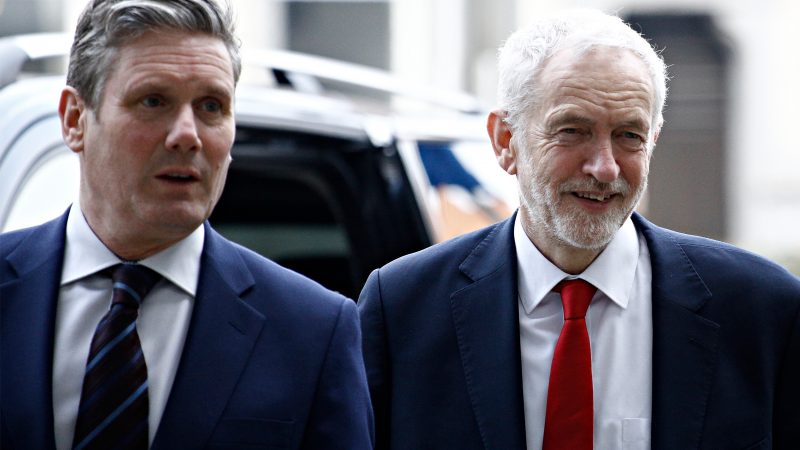

© Alexandros Michailidis/Shutterstock.com

We still know very little about Jeremy Corbyn’s new party. Currently operating under the placeholder “Your Party”, its name, personnel and even its leader remain to be decided. Nebulous as this new political party remains, even the mere prospect of a resurgent British Corbynite Left is enough to cause Labour some serious headaches.

Labour has had a torrid first year in government. Keir Starmer’s personal ratings have plummeted, and the party is now averaging a paltry 22% in the polls. There have been several unforced errors, but fundamentally they are now experiencing the fallout from the widespread voter dissatisfaction and distrust that only 13 months helped deliver them a massive majority.

Currently, just two in five voters (39% according to Politico’s poll of polls) would vote for the two major parties. Both the Conservatives and Labour had a higher vote share in 2019 than the two parties combined today. In fact, Corbyn achieved 40% when he led Labour to a narrow defeat in the 2017 election (40%).  This fragmentation will only increase with the introduction of Corbyn’s party.

‘Corbyn is a threat that Labour should take seriously’

Hypothetical polling (which is historically unreliable and should be handled with caution) from More In Common suggests that “Your Party” could immediately jump to 10% in the national opinion polls. Whilst new parties have historically struggled to get off the ground (for example the short-lived Change UK), Corbyn is a threat that the Labour Party should take seriously, not least because of just how unpopular Keir Starmer is with the public.

YouGov polling suggests that just under one in five of the electorate are open to voting for a new Corbyn-led party (although a large majority of these are open to others too), including almost a third Labour 2024 voters. Crucially, YouGov also has Jeremy Corbyn with a higher net favourability and a higher raw favourability than the current Prime Minister, and more than two-fifths (43%) of Labour 2024 voters have a positive view of the former leader.

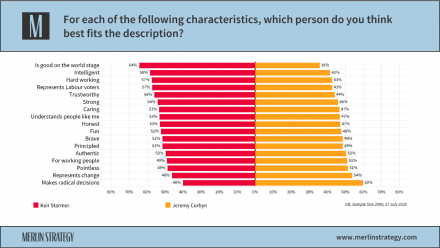
Our polling suggests this could just be the start. In a head to head against Keir Starmer, Jeremy Corbyn performs strongly in key areas amongst the general public, Reform voters and Labour 2024 voters who gave Keir Starmer his majority. Just under two-fifths (39%) Labour 2024 voters say Jeremy Corbyn better fits the description “Understands People Like Me” and a third (34%) say Corbyn is better at “representing Labour voters”. In a straight choice between Jeremy Corbyn and Keir Starmer more of the public opt for Corbyn on attributes such as “For working people”, “Represents Change”, and makes “Radical Decisions”.
May will provide sense of potential of ‘Your Party’

In fact, such is the dislike of current Reform voters towards Keir Starmer they prefer Corbyn to Starmer on all positive metrics apart from is “Good on the World Stage”. These include: “Understands People Like Me”, “Fun”, “Honest”, “Trustworthy” and “Principled”. Whilst this does not mean that Reform voters *like* Jeremy Corbyn, it underlines the strength of dislike felt towards the current Prime Minister, and ‘mainstream’ politics in general.

We are already seeing enthusiasm for Corbyn’s new party amongst the groups that you might expect. Four in ten younger voters are open to voting for ‘Your Party’, and he is the most popular politician amongst 16-17 year-olds (whom Labour have just given the vote). The potential support at the moment is stronger in London than in the Midlands, North and Rest of the South.

It is also thought the new party will include the four so-called “Gaza Independent” MPs, who will likely pose an even bigger challenge to Labour at the next election. There are 60 seats in the country where the number of votes won by ‘others’ (independents) was bigger than the majority, and most of these were on a Gaza ticket. We should be able to get a real sense of their potential to expand in May’s local elections in Birmingham and London.

Labour 2024 voters summing up their view of Starmer and Corbyn in one word


‘Voters have been unsure what Starmer stands for’

However, it is not just amongst these demographics or in these urban areas that Labour should worry about Corbyn and whatever it is his new party turns out to be. Regardless of whether Corbyn’s party succeeds there will be a desire for voters to the left of Starmer’s Labour for more ‘authentic’ representation.

Keir Starmer’s recent U-turns on a range of issues including Welfare Reforms and his anti- immigration rhetoric “Island of Strangers” speech explains why attributes regarding authenticity, principles and honesty are some of Keir’s worst performing. Since he became leader Starmer’s floating principles have been a consistent line of attack, first by Boris Johnson and then Rishi Sunak. Turning against his own speech on immigration will only serve to alienate more voters as his principles and honesty come into even greater question. Voters have consistently been unsure of what Keir Starmer stands for, and that is only getting worse.

Just half of those who voted Labour in 2024 have a clear or broad idea of what Keir Starmer stands for, down from 75% prior to the election. His lack of principles make him the opposite of a conviction politician and it is no surprise his two greatest political threats, Farage and Corbyn, are politicians who have consistently drawn attention due to their radical, but seemingly authentic, views on immigration and/or austerity. Even the spectre of a Corbyn-party is enough to sharpen these attacks on Starmer, and could prove fatal for the embattled PM by the time of the next election.



Diane Abbott: She’s Walked the Line

“Diane Abbott has proved herself a consistent friend of workers in struggle over many years, which just might be another factor explaining why she is not welcome in Keir Starmer’s PLP.”

By George Binette

In contrast to all too many members of the Parliamentary Labour Party (PLP), Diane Abbott has visited a fair few picket lines in her 38 years as the MP for Hackney North & Stoke Newington. That might explain why several unions were keen to contribute to her re-election campaign last year after the Labour leadership finally re-admitted her to the PLP in late May 2024.

In total, Diane’s campaign received £9,000 from three Labour affiliates – the CWU, FBU and Unite – and £5,000 from what is arguably Britain’s most militant major union, the RMT, which found itself expelled from Labour more than two decades ago. There was never any real doubt that Diane would retain her seat last July, though her protracted suspension from the PLP and the party leadership’s support for Israel’s merciless war on Gaza did erode her previously thumping majority. The unions that contributed to her campaign did so in recognition of the role she had played both at Westminster and in showing solidarity publicly for workers fighting back.

During my six-and-a-half-year stint as her local party’s Trade Union Liaison Officer, I frequently called on Diane to send messages of support and visit picket lines. She invariably responded. In June and early July lecturers belonging to the NEU stood outside Hackney’s BSix college. Though Diane was ultimately unable to make a picketing session, her message of support received a warm welcome, not least because she had joined these NEU members when they had walked out in previous disputes, not least during her time as Shadow Home Secretary.

A week before the General Election, when many Labour candidates would have found alternative routes to avoid a picket line, the candidate for Hackney North & Stoke Newington joined Unite members battling for union recognition at the Sanctuary housing association, which now manages some 980 flats on the borough’s Kingsmead estate.

Within the hour, Diane was standing at the entrance to the nearby Homerton Hospital with BMA members striking as part of their long-running pay dispute with the then Tory government, where she also met with angry women, several of them UNISON members, working on an outsourced contract with the Danish-based multinational ISS. These workers, cleaners and catering staff, had worked throughout the Covid pandemic and yet had not received the so-called Covid bonus of at least £1,655 awarded to all directly employed NHS staff.

In June 2022 Diane addressed a lively RMT-organised rally at the start of the mini-strike wave that both reflected and accelerated the collapse in support for the Tory government. Less than a month later, she twice joined striking RMT members from London Underground on blazing hot mornings outside the Seven Sisters depot in neighbouring Haringey. They were defending their Transport for London pension scheme in an ultimately successful battle.

Before the year was out, she appeared next to CWU members at Stamford Hill’s Royal Mail delivery office in quite different weather conditions – one reason she received a rapturous reception from posties at a December 2022 strike benefit her CLP organised. Just under a year later she addressed a rally outside Amazon’s London headquarters midst frigid temperatures in solidarity with GMB members in Coventry striking in pursuit of union recognition.

Diane Abbott joins a CWU picket line outside a Royal Mail delivery office in Stamford Hill.
Diane Abbott joins the Amazon workers’ solidarity rally in Shoreditch on 27 November 2023.

In short, Diane Abbott has proved herself a consistent friend of workers in struggle over many years, which just might be another factor explaining why she is not welcome in Keir Starmer’s PLP.


  • George Binette is a former secretary of Camden UNISON and the former Trade Union Liaison Officer for Hackney North & Stoke Newington CLP between autumn 2017 and spring 2024.
  • You can add your name to a petition in support of Diane Abbott here.
  • If you support Labour Outlook’s work amplifying the voices of left movements and struggles here and internationally, please consider becoming a supporter on Patreon.


Texas Warns Wastewater Injection Threatens Key Permian Oil Reserves

The Texas General Land Office (GLO) has formally objected to a plan by Pilot Water Solutions LLC to drill three new saltwater disposal wells in the Permian Basin, warning the project could contaminate state-owned crude reserves in North America’s top oil field, according to the Dallas Morning News.

Founded in 1836, the GLO manages 13 million acres of state land and generates billions of dollars for Texas public schools through oil and gas leasing. It argues the proposed disposal sites in Loving County near the New Mexico border pose “significant risk” to mineral interests under its control. 

Bloomberg reports that ConocoPhillips, one of the Permian’s largest producers, has joined the opposition, noting that in the area near the proposed wells it is producing less than 40% of expected oil volumes while generating nearly twice the forecast water output.

For every barrel of oil pumped in the Permian, as many as five barrels of wastewater are produced, presenting a growing operational and environmental challenge. Reuters notes that disposal capacity is under mounting strain, with costs climbing and injection-related earthquakes drawing regulatory scrutiny.

The Railroad Commission of Texas will hold a hearing later this month to assess the Pilot Water Solutions proposal. State officials are weighing contamination risks alongside concerns about induced seismicity linked to high-volume wastewater injection.

Environmental groups and local ranchers have long warned about the hazards of underground wastewater disposal, but record Permian output has made the problem more acute. The GLO’s opposition is the first real indication we are seeing that water management is no longer just a peripheral environmental issue, but is now a direct threat to oil production economics in the nation’s most prolific basin.

By Charles Kennedy for Oilprice.com


Syria Eyes Pipeline Lifeline as Post-Assad Power Struggle Escalates

Syria’s caretaker government is moving to restore the Kirkuk-Baniyas oil pipeline with Iraq, a strategic corridor that had the capacity to move up to 300,000 barrels per day to Syria’s Mediterranean coast before war and sanctions shut it down in the early 2000s. Syrian Energy Minister Mohammed al-Bashir will travel to Baghdad in the coming days to discuss rehabilitation plans, according to Iraqinews.com.

For Damascus, reconnecting to Iraq’s oil network could provide critical transit revenues, reduce reliance on costly maritime imports, and restore its position as a regional energy hub. For Baghdad, reopening the route would offer an alternative export outlet to Europe, bypassing chokepoints in the Strait of Hormuz and diversifying away from Turkey-dependent pipelines, as highlighted by Shafaq News.

The proposal comes as post-Assad Syria navigates a shifting geopolitical landscape. Regional powers, including Turkey, Iran, and Gulf states, are recalibrating their strategies, while Western capitals weigh how to engage without ceding influence to rivals. Analysts told the Yetkin Report that the Kirkuk-Baniyas revival could weaken Ankara’s leverage over Iraqi exports and reshape Mediterranean energy flows.

The revival of the Kirkuk-Baniyas could also have far-reaching consequences for Baghdad’s relations with the Kurdistan Regional Government (KRG) in northern Iraq. For over two years, northern exports have been hampered by the shutdown of the Iraq-Turkey pipeline to Ceyhan, a route that runs through territory controlled by the KRG.

A functioning Baniyas route would give Baghdad a northern export corridor that bypasses both KRG-controlled infrastructure and Turkish territory. Analysts note that this could diminish Erbil’s bargaining power in budget talks and shift Iraq’s export calculus toward Syrian cooperation. The change could also heighten tensions if Baghdad attempts to channel crude from disputed fields in Kirkuk and Nineveh through Syria without KRG consent.

By Charles Kennedy for Oilprice.com

Monday, August 11, 2025

  U.S. Bureau of Labor Statistics (BLS)

Trump Nominates Outspoken BLS Critic EJ Antoni to Run Agency

President Donald Trump has nominated economist EJ Antoni, a prominent figure at the conservative Heritage Foundation, to serve as commissioner of the U.S. Bureau of Labor Statistics (BLS). The move comes just ten days after Trump abruptly dismissed former commissioner Erika McEntarfer, accusing her of manipulating employment data for political purposes.

Announcing the pick on Truth Social, Trump wrote, “Our Economy is booming, and E.J. will ensure that the Numbers released are HONEST and ACCURATE. I know E.J. Antoni will do an incredible job in this new role.”

The nomination sets up a potential Senate confirmation battle and will reignite debate over the independence of the agency that produces some of the most closely watched economic statistics in the world.

Antoni, who holds a doctorate in economics, is currently chief economist at the Heritage Foundation and previously worked at the Texas Public Policy Foundation. He has taught courses in labor economics, money, and banking, and was a contributor to “Project 2025,” a controversial conservative blueprint for restructuring the federal government.

Over the past several years, Antoni has been openly critical of BLS data, especially under the Biden administration. He has described some Consumer Price Index (CPI) readings as “phoney baloney” and, during the Biden administration, claimed the Labor Department existed in "the land of make-believe”. 

The BLS, a division of the Labor Department, produces key data such as the monthly nonfarm payrolls report and the CPI. These figures influence everything from Federal Reserve interest rate decisions to Social Security cost-of-living adjustments and are closely monitored by global investors.

McEntarfer’s firing followed a July jobs report that showed weaker-than-expected growth and included historically large downward revisions to previous months’ figures. Trump claimed the report was “rigged” to benefit Democrats, though economists widely reject the notion of political bias in BLS methodology.

Large revisions are common because the payrolls report is released only days after a month ends, leaving limited time for data collection. These numbers are revised twice in the following months as more employer surveys are received, and undergo an annual benchmark revision.

Given the BLS’s role in shaping market expectations, the leadership shake-up has rattled some economists and investors, raising concerns about the potential politicization of the data.

Antoni will also inherit significant logistical challenges, including declining survey response rates and the need to maintain quality in inflation and labor market data despite resource constraints. In some regions, funding shortfalls have forced the BLS to impute—rather than collect—up to 35% of prices in the CPI basket.

If confirmed, Antoni will lead a workforce of roughly 2,000 employees tasked with producing the statistics that underpin much of U.S. economic policymaking.

By Charles Kennedy for Oilprice.com


Chevron Brings Thai Partner Onboard for Key Offshore Energy Project

Chevron Offshore (Thailand) Limited (COTL), a subsidiary of U.S. energy major Chevron, has partnered with BCPR, an affiliate of Thailand’s Bangchak Group, to advance petroleum exploration and development in the Gulf of Thailand. The two companies will jointly work on Block G2/65 under a production sharing contract (PSC), aiming to bolster Thailand’s energy security.

The partnership was formally launched at a ceremony presided over by Dr. Prasert Sinsukprasert, Permanent Secretary of the Ministry of Energy, following the issuance of a supplementary PSC by the Minister of Energy. Dr. Prasert hailed the deal as a milestone, noting that it brings a new Thai investor into the petroleum sector while offering BCPR staff hands-on experience in developing fields with complex geology. The collaboration, he said, would help prepare BCPR to become a future operator in Thailand’s upstream industry.

Chevron’s President for Thailand Exploration and Production, Chatit Huayhongtong, described the deal as a fusion of Chevron’s global exploration expertise with Bangchak’s leadership in Thailand’s midstream and downstream sectors. “This partnership will advance Block G2/65 while facilitating knowledge transfer and developing human resources to strengthen long-term energy security,” he said.

Under the agreement, Chevron—operator of Block G2/65 since securing the PSC in 2023—has transferred 30% of its rights and obligations to BCPR. The block remains in the exploration phase.

Bangchak’s Group CEO, Chaiwat Kovavisarach, said the venture reflects a shared vision to enhance Thailand’s energy resilience and builds on BCPR’s international experience, including its investment in Norwegian oil and gas player OKEA.

Senior officials from the Department of Mineral Fuels, Chevron, and Bangchak attended the signing, underscoring strong institutional backing for the project. The partnership is also framed as part of Thailand’s broader strategy to expand domestic exploration to meet rising energy demand while reducing reliance on imports.

Chevron’s move in Thailand comes just weeks after receiving approval to acquire Hess Corporation, a merger expected to create significant synergies in four core regions. The Gulf of Thailand partnership with BCPR signals that Chevron is also keeping its Southeast Asian upstream portfolio firmly in focus.

Norway Plans Biggest Frontier Oil and Gas Licensing Round in Years

By Michael Kern - Aug 11, 2025


Norway is initiating its 26th oil and gas licensing round in unexplored frontier areas to increase exploration and resources, aiming to counter an anticipated decline in production from the early 2030s.

Energy Minister Terje Aasland stated that Norway intends to be a long-term supplier of oil and gas to Europe and needs more discoveries, especially in frontier regions, to maintain value and jobs.

Despite its ambitious transition to electric cars, Norway acknowledges its continued reliance on oil and gas, having become Europe's largest pipeline natural gas supplier and boasting the world's biggest sovereign wealth fund from energy revenues.


Norway has started to plan its 26th oil and gas licensing round in little explored frontier areas as it looks to boost exploration and resources to stem an expected decline in production from the early 2030s.

Norway’s Energy Ministry has launched work on announcing the new licensing round for the unexplored areas soon, Energy Minister Terje Aasland has said.

“Norway wants to be a long-term supplier of oil and gas to Europe, while the Norwegian continental shelf will continue to create value and jobs for our country,” Aasland said.

If Norway is to deliver on this commitment, companies must make more oil and gas discoveries and boost exploration, including in frontier regions, the minister added.

Norway, unlike the UK, strongly supports oil and gas development and exploration for undiscovered resources on its shelf.

In recent years, oil and gas operators on the Norwegian shelf have advanced infrastructure-led exploration which allows them to fast-track the development of newly-discovered resources via tie-ins to nearby infrastructure.

However, further exploration efforts and new discoveries would be crucial to slowing the expected decline in Norway’s oil and gas production in the 2030s, the Norwegian authorities have said.

Frontier areas could be the answer to adding more resources as companies continue to search for the next elephant field in Norwegian waters.

Norway expects its oil liquids production to rise by 5.2% in 2025 from 2024, also thanks to the start-up of the Johan Castberg oilfield in the Barents Sea in the Arctic earlier this year.

Norway has become the largest supplier of pipeline natural gas to Europe, replacing Russia in 2022, and boasts the biggest sovereign wealth fund in the world thanks to revenues from oil and gas.

Norway also has the highest per-capita ownership of electric cars and a most ambitious transition state. Even so, Norway has acknowledged it cannot give up oil and gas anytime soon.

By Michael Kern for Oilprice.com


Musk’s Tesla Eyes UK Electricity Market Amid EV Sales Slump

Tesla is seeking to expand its UK footprint beyond electric vehicles by entering the retail energy market. The company has applied to Ofgem, the UK’s energy regulator, for a licence to supply electricity to homes and businesses across England, Scotland and Wales. If approved, Tesla could start offering power as early as next year, competing directly with Britain’s largest energy providers.

Best known for its electric cars, Tesla also operates a growing solar energy and battery storage business. In the UK, the company has sold more than 250,000 EVs and tens of thousands of Powerwall home batteries—giving it an established base of potential electricity customers.

Tesla already runs an energy supply business in Texas, where its Tesla Electric program offers EV owners cheaper charging rates and pays them for returning excess electricity to the grid. A similar model could be introduced in the UK, potentially linking EV charging, home solar generation and battery storage into one integrated service.

The application, signed by Andrew Payne, head of Tesla’s European energy operations, was submitted late last month. Ofgem typically takes up to nine months to process such requests

The move into energy supply comes as Tesla faces headwinds in its core EV business. July sales fell sharply across Europe, with UK registrations dropping nearly 60% and German sales down more than 55%. Across 10 major European markets, deliveries slumped by 45% in the month. Rising competition—particularly from Chinese automaker BYD—has intensified pressure on Tesla’s market share.

The company has also faced political controversy. CEO Elon Musk’s high-profile clashes and shifting alliances with political leaders, including a public falling out with U.S. President Donald Trump, as well as involvement in right-wing politics in Europe, have drawn criticism from some customers.

For Tesla, securing a UK energy supply licence could open a new revenue stream, leverage its existing battery and solar products, and deepen customer loyalty by creating an end-to-end clean energy ecosystem—just as its EV sales growth shows signs of slowing.


Ford to Invest $5 Billion in EV Production Despite Subsidy Rollback

Ford will invest $5 billion in the production of a new line of EVs and batteries, despite the Trump administration’s removal of EV subsidies.

The carmaker said the investment, in its Louisville assembly plant and the BlueOval battery park in Michigan, will “create or secure” as many as 4,000 jobs for the production of the EV line that will start with a pickup that will have a price tag of just $30,000, and the manufacturing of advanced LFP batteries for electric vehicles.

The pickup and future models from the new family will be produced with Ford’s new Universal EV Platform that promises to make the cars both affordable and high-quality. The first car to get off the assembly line is scheduled for 2027, Ford also said.

“We took a radical approach to a very hard challenge: Create affordable vehicles that delight customers in every way that matters – design, innovation, flexibility, space, driving pleasure, and cost of ownership – and do it with American workers,” Ford president and chief executive Jim Farley said.

Ford, like the other big carmakers in the U.S., has been losing billions from its EV adventure, despite subsidies, tax incentives, and a massive campaign promoting EVs as a better alternative to internal combustion vehicles. Over the last two and a half years, Ford has accumulated EV losses of $12 billion, according to The New York Times. Of that, $2.2 billion was lost in the first half of this year alone. Sales of EVs during this time have been slowing down, with the first-half total down 12% on the year.

In this context, it is a little surprising that Ford is doubling down on EVs, especially under the Trump administration, which clearly has no love for battery-powered vehicles. Perhaps the size of the investment in local manufacturing capacity may soften hearts in Washington.

By Irina Slav for Oilprice.com